
Protecting and reimagining these landscapes is not only technical but also collective: a responsibility that binds the resilience of forests and the resilience of cities together.
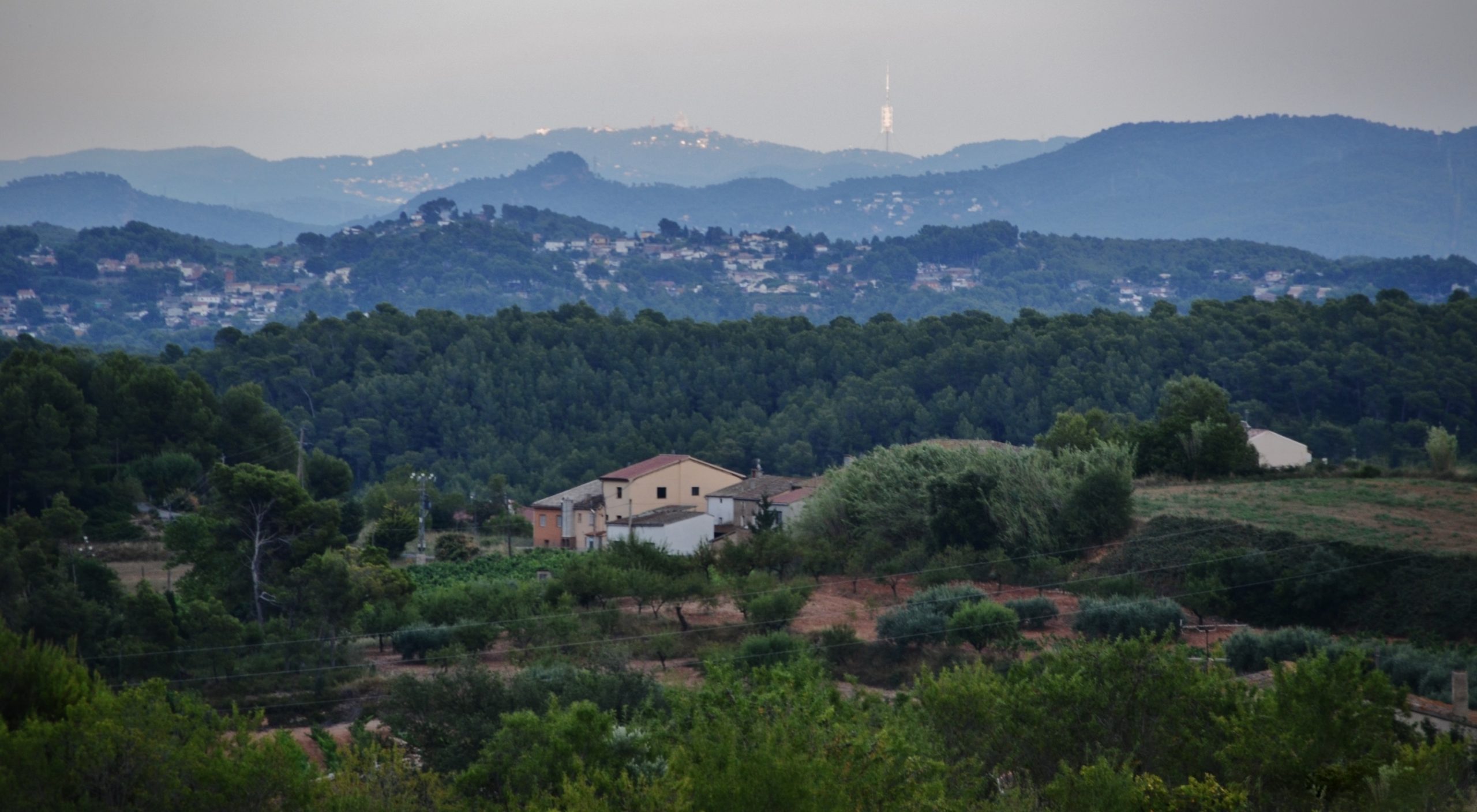
I live on the outskirts of Barcelona, in its metropolitan area, on the far side of the Collserola mountain range and forest. Like many cities, Barcelona is defined and constrained by its physical geography: the Mediterranean Sea to the south, the rivers Llobregat and Besòs to the west and east, and the Collserola range to the north. The relationship between Barcelona and the sea has been ambivalent—worthy of an essay in itself—but here I want to reflect on the other great boundary of the city: the mountains and forests of Collserola. In fact, in everyday language, Barcelonians orient themselves through these limits: we say something is “on the mountain side” or “on the sea side” of the street. Such expressions reveal how deeply the city’s identity is anchored in its natural contours.
The Romans, when founding Barcino, were acutely aware of this geography. Collserola shielded the settlement from the cold northern winds and provided streams of clean water, many of which still lend their names to streets today. The famous Ramblas itself derives from the Arabic ramla, meaning sandy riverbed. For centuries, Collserola sustained Barcelona through such a symbiotic relationship. It was a hunting ground, a source of wood for heating and construction, and the site of farms that supplied agricultural products. In the nineteenth century, the bourgeoisie built summer villas on its slopes to escape the suffocating heat of the city. Parc Güell is one example of this phenomenon. At other times, the forest became a place of refuge—harboring criminals, those fleeing conflict, or people too poor to own a house, who constructed informal dwellings on its margins. Entire neighborhoods such as Torre Baró, Horta, or Turó de la Peira bear the traces of this history. In my own family memory, Collserola is associated with resilience and survival. My grandparents recalled how, during the Spanish Civil War, the forest served as a vital reservoir of food and firewood, with families smuggling produce from farms in exchange for other scarce goods.
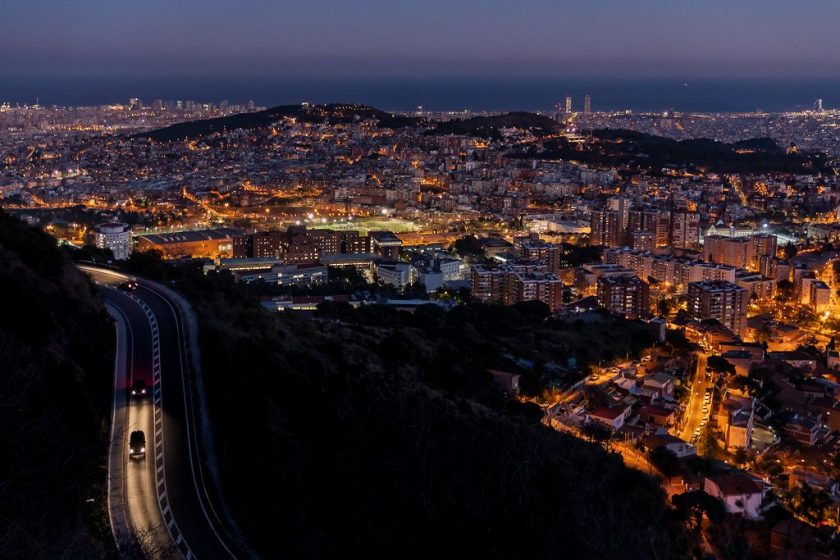
But Collserola is not only a functional resource; it also shapes the symbolic imagination of Barcelona. Its highest peak, Tibidabo, crowned by its church and century-old amusement park, dominates the skyline. Tibidabo is one of the city’s quintessential icons, alongside the Sagrada Família, FC Barcelona’s stadium, or the Agbar Tower. It is also, for me, the place I usually take visitors when they come to Barcelona. At dusk or dawn, the views are extraordinary: the city lies at your feet, framed by the shimmering Mediterranean Sea. Around you, the forest stretches in all directions, and if you turn your back to the urban core, you can discern the conurbations of the metropolitan region. Beyond them rise the silhouettes of Montseny and Montserrat, and on clear winter days, the snowcapped peaks of the Pyrenees. Tibidabo thus condenses both the intimate and the panoramic, the local rootedness of Barcelona and its wider geographical horizons.
Yet, Collserola’s role has shifted dramatically with metropolitan growth. Whereas once the forest surrounded Barcelona, today it is surrounded by the city and its infrastructures. Living on the other side of the range, in Cerdanyola, I experience how Collserola now sits as a green island encircled by dense conurbations and transport corridors. Over the decades, its uses have changed: dumpsites and cemeteries in the 1970s, legal protection in the 1980s, and the designation of a natural park in the 2010s. But the relationship remains deeply ambivalent. For a long time, Collserola was treated not as part of the city, but as an external resource: a supplier of goods, views, water, fresh air, and land for infrastructures such as highways, train tracks, and tunnels. Protection as a park curtailed further housing developments but also forced the abandonment of many farms that had long sustained the area. Some rural buildings have been transformed into residences; others lie in ruins. The retreat of agriculture has allowed the forest to expand more than ever before, yet in a largely uncontrolled fashion. This process has fostered biodiversity but also generated tensions, such as with the proliferation of wild boars (jabalíes), whose growing presence in nearby towns has become a social and ecological challenge.
The abandonment of traditional practices such as farming, grazing, or wood extraction may seem a logical strategy for protecting a “natural” forest. Yet, Collserola is not a pristine wilderness. Its landscapes have been shaped for centuries through the introduction of non-native plants, trees, and animals. Abandonment has produced unintended consequences: it has favored the proliferation of certain species of plants, animals, and insects while simultaneously heightening the risk of large-scale fires in a Mediterranean climate. What appears to be ecological preservation has, in fact, generated new vulnerabilities.
This urban–forest paradox is hardly unique to Barcelona. Around the world, metropolitan regions grapple with similar dilemmas at the edge of the city. California illustrates the risks of forest proximity with brutal clarity. The hills around Oakland or Los Angeles offer recreational amenities and scenic beauty, yet they sit at the wildland–urban interface, where houses and flammable vegetation collide (Collins, 2008). The 1991 Oakland Hills fire and the 2018 Camp Fire exemplify how climate change and urban expansion intensify fire regimes (Williams & Abatzoglou, 2016; Pyne, 2015). Governance responses—fuel management, zoning, building codes—struggle to match the escalating threat (Keßler & Devisscher, 2022).
In British Columbia, Vancouver’s proximity to temperate rainforests provides ecological services and underpins its branding as a “green city.” Yet this abundance produces tensions: mass tourism, habitat fragmentation, and governance complexity across provincial and First Nations authorities (Bryant, 2015). Climate change adds insect outbreaks and new fire risks (Turner et al., 2007). Vancouver highlights how forests associated with amenity still demand continuous negotiation.
The case of São Paulo demonstrates the metabolic dependence of urban regions on forested hinterlands. Its Cantareira forests are essential to the water supply for millions (Carvalho-Ribeiro et al., 2010). The 2014–2015 drought exposed the precarious dependence of the metropolis on this ecological infrastructure, showing how forests are not merely recreational landscapes but metabolic systems that sustain urban life (Swyngedouw & Kaïka, 2000).
Similarly, Cape Town’s Table Mountain National Park symbolizes the city’s identity and attracts global tourism, yet wildfires have repeatedly devastated adjacent neighborhoods and cultural assets (Moreno & Oechel, 1995). Coupled with water scarcity, the park illustrates how global environmental pressures manifest acutely in urban–forest interfaces.
Mexico City struggles with deforestation in its southern periphery, where informal housing encroaches upon the Ajusco forests, jeopardizing both biodiversity and aquifer recharge (Aguilar & Santos, 2011). In Nairobi, the remnants of indigenous forest have been carved up by roads and real estate development, sparking conflicts between conservationists and urban expansion (Kabira, 2020). And in Athens, the forests of Mount Hymettus and Mount Penteli—once celebrated as cultural landscapes—are now recurrently consumed by wildfires that threaten peri-urban settlements (Kondyli, 2014).
These examples demonstrate that we can no longer practice urban planning as if forests and other ecosystems lie outside the equation. The urban–forest divide—so convenient for architects, engineers, developers, and real estate—has always been more conceptual than real, much like the erosion of the urban–rural dichotomy. What is needed is a systemic approach in which all ecological elements are integrated into metropolitan planning. Collserola demonstrates that forests at the urban edge must be treated as metropolitan infrastructures (Rueda, 2019). They regulate air, store carbon, sustain biodiversity, and carry symbolic value (Díaz et al., 2018). Yet their governance is complicated by overlapping jurisdictions and limited resources (Alberti, 2016).
Comparative models offer insights: community-based fire prevention in California (Collins, 2008), Indigenous co-management in Vancouver (Bryant, 2015), or water–forest linkages in São Paulo (Carvalho-Ribeiro et al., 2010). These suggest the need for adaptive, inclusive governance frameworks that integrate ecological and cultural dimensions. Collserola also reminds us that current vulnerabilities are the legacy of historical land-use shifts. The terraces, kilns, and farms that once structured the mountain are gone, but their traces shape today’s forest. Revitalizing mosaic landscapes through agroecology or silviculture could reduce risk and restore resilience (Sancho Reinoso, 2020).
This insight is not without precedent in Barcelona’s own history. In the nineteenth century, when the medieval walls were demolished, the engineer Ildefons Cerdà designed the Example plan based on principles he outlined in Teoría General de la Urbanización (1859). His vision included detailed studies of natural water flows, prevailing winds, and other physical features shaping the site of expansion. At that time, Collserola lay beyond his focus. But today, in the twenty-first century, a similar exercise is urgently needed: one that integrates forests, mountains, lakes, wetlands, and other ecological systems into metropolitan planning. Recuperating certain traditional land uses through agroecology or multifunctional forestry could consolidate a more sustainable, environmentally sound approach to urbanism.
Finally, Collserola emphasizes the imaginative dimension. Personal and collective memories—like my grandparents’ survival stories or my own visits with guests—demonstrate how deeply the mountain is woven into Barcelona’s lived experience. Governance must attend not only to ecological data but also to these narratives, which sustain our collective commitment to preservation (Cronon, 1991; Alberti, 2016).
Cities and forests are entangled in paradoxes of provision, risk, and imagination. Global examples from California, Vancouver, São Paulo, Cape Town, Mexico City, Nairobi, and Athens demonstrate the shared dilemmas of abundance, vulnerability, and governance under climate change (Williams & Abatzoglou, 2016; Grimm et al., 2008). Collserola is Barcelona’s version of this paradox. From provisioning landscape to cultural icon to vulnerable green lung, it embodies the opportunities and risks of urban–forest interfaces (Boada & Saurí, 2002; Sancho Reinoso, 2020).
The challenge is to recognize forests as shared metropolitan infrastructures, demanding coordinated governance, historical awareness, and cultural imagination. Protecting and reimagining these landscapes is not only technical but also collective: a responsibility that binds the resilience of forests and the resilience of cities together.
Antonio Luna
Barcelona
References
Alberti, M. (2016). Cities that think like planets: Complexity, resilience, and innovation in hybrid ecosystems. University of Washington Press.
Banham, R. (2001). Los Angeles: The architecture of four ecologies. University of California Press.
Bixler, R. P., Dell’Angelo, J., & Chaffin, B. C. (2020). The political ecology of wildfire risk. Journal of Political Ecology, 27(1), 495–513.
Boada, M., & Saurí, D. (2002). El parque natural de Collserola: El verde metropolitano. Revista Bibliográfica de Geografía y Ciencias Sociales, 7(391).
Boada, M., & Saurí, D. (2003). Barcelona: From city to park. In K. Bishop & L. Phillips (Eds.), Beyond the city: The urban–rural interface (pp. 89–108). Routledge.
Bryant, R. L. (2015). The international handbook of political ecology. Edward Elgar.
Carvalho-Ribeiro, S. M., Lovett, A., & O’Riordan, T. (2010). Multifunctional forest management in northern Portugal: Moving from scenarios to governance for sustainability. Land Use Policy, 27(4), 1111–1122.
Collins, T. W. (2008). The political ecology of hazard vulnerability: Marginalization, facilitation and the production of differential risk to urban wildfires in Arizona’s White Mountains. Journal of Political Ecology, 15, 21–43.
Cronon, W. (1991). Nature’s metropolis: Chicago and the Great West. W.W. Norton.
Díaz, S., Pascual, U., Stenseke, M., et al. (2018). Assessing nature’s contributions to people. Science, 359(6373), 270–272.
Garrido, J., & Riera, P. (2017). Forest fire prevention in the Barcelona Metropolitan Area: An economic assessment. Forests, 8(11), 417.
Gómez-Baggethun, E., & Barton, D. N. (2013). Classifying and valuing ecosystem services for urban planning. Ecological Economics, 86, 235–245.
Grimm, N. B., Faeth, S. H., Golubiewski, N. E., et al. (2008). Global change and the ecology of cities. Science, 319(5864), 756–760.
Keßler, C., & Devisscher, T. (2022). Living with wildfire risk in Mediterranean Europe: Understanding risk perception, adaptation and policy pathways. Environmental Science & Policy, 133, 1–10.
McNeill, J. R. (1992). The mountains of the Mediterranean world: An environmental history. Cambridge University Press.
Moreno, J. M., & Oechel, W. C. (1995). Global change and Mediterranean-type ecosystems. Ecological Studies, 117. Springer.
Parés, M., March, H., & Saurí, D. (2013). Atlantic gardens in Mediterranean climates: Understanding the production of suburban natures in Barcelona. International Journal of Urban and Regional Research, 37(1), 328–347.
Pyne, S. J. (2015). Between two fires: A fire history of contemporary America. University of Arizona Press.
Rueda, S. (2019). Ecología urbana y ciudad compacta. Icaria.
Sancho Reinoso, A. (2020). Forest transitions and peri-urban landscapes: The case of Collserola, Barcelona. Urban Forestry & Urban Greening, 54, 126776.
Swyngedouw, E., & Kaïka, M. (2000). The environment of the city … or the urbanization of nature. In G. Bridge & S. Watson (Eds.), A companion to the city (pp. 567–580). Blackwell.
Turner, B. L., Lambin, E. F., & Reenberg, A. (2007). The emergence of land change science for global environmental change and sustainability. PNAS, 104(52), 20666–20671.
Williams, A. P., & Abatzoglou, J. T. (2016). Recent advances and remaining uncertainties in resolving past and future climate impacts on global fire activity. Current Climate Change Reports, 2(1), 1–14.

Leave a Reply