If we want cities that are cooler, healthier, and more resilient, we need to start with our hands in the soil. One small forest at a time.

about the writer
Rafael Ribeiro
RAFAEL RIBEIRO is a co-founder of formigas-de-embaúba. Rafael researches and works at the intersection of education, ecology and art. Between 2010 and 2016, he worked with financial structuring and fundraising for energy and infrastructure projects in Latin America and acted as a mentor in several institutes supporting social organizations. He is pursuing a Master’s degree in Anthropology of Nature and holds a Law degree from the University of São Paulo.

about the writer
Sheila Ceccon
Sheila Ceccon is co-founder and Pedagogical Director of formigas-de-embaúba. She worked for ten years at the Paulo Freire Institute, where she was responsible for the socio-environmental dimension of the institution’s projects. She later coordinated the Environmental Education Department of the Municipal Secretariat of Education of Atibaia (São Paulo) for five years, leading training programs for teachers and school administrators across the public school system.
Sunlight hits the concrete courtyard of a large public school complex in the northern outskirts of São Paulo, Brazil. It is a dense urban area with few trees and limited access to green space. Yet in the courtyard of CEU Parque Novo Mundo, children pick pitanga berries, teachers rest in the shade of young trees, and a group of women gather to plant cassava, maize, and fruit trees in a thriving mini-forest.
What was once an underused corner of a highly urbanized neighborhood has become a community meeting point. The space offers learning, rest, and respite in a region shaped by informal settlements, narrow streets, and extreme summer heat.
This transformation reflects the work of formigas-de-embaúba, a nonprofit organization that creates urban mini-forests in public schools and community facilities across São Paulo. Since 2021, these community-based plantings have been developed alongside environmental education programs. The forests are small, dense, and highly diverse, inspired by the work of Japanese botanist Akira Miyawaki and adapted to Brazil’s social and ecological reality.
At their core, these spaces are Nature-Based Solutions (NbS). They use ecological processes to address challenges such as heat islands, flooding, biodiversity loss, and unequal access to green space. In the communities where we work, largely located in the city’s peripheries, the forests also become places of climate justice by providing comfort and food in areas that historically received fewer public investments in green infrastructure.
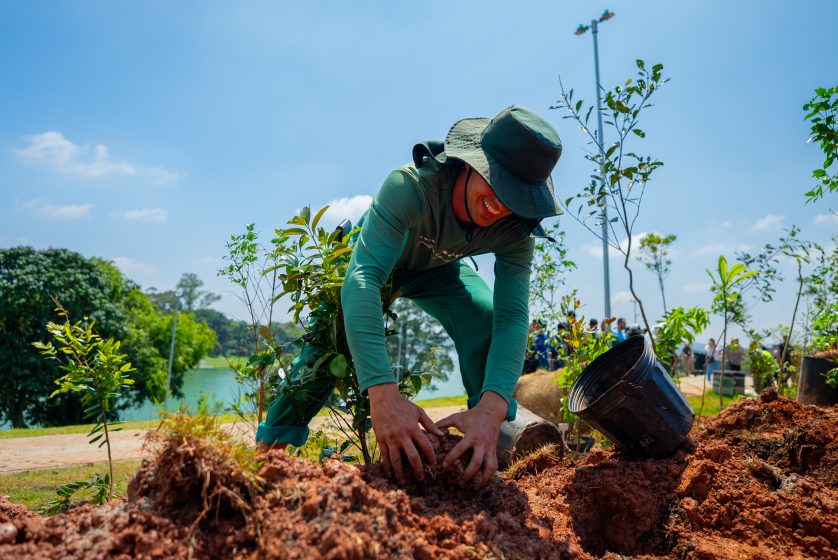
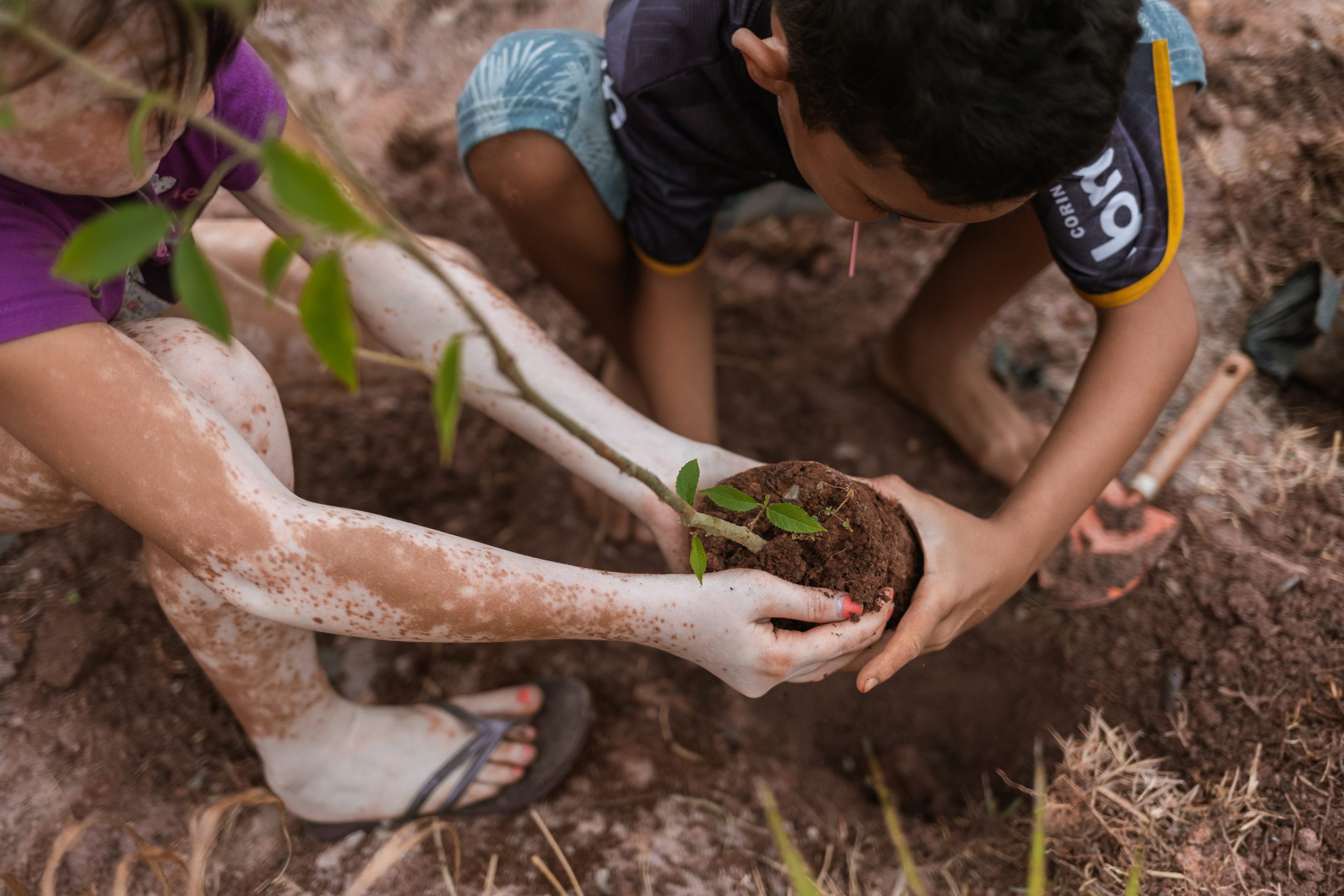
Across six years of collaborative work, we have planted 52 mini-forests, with more than 30,000 trees representing 135 native and food-producing species, and engaged approximately 62,000 people in the process. Each mini-forest begins with a collective decision: a shared desire among students, teachers, local residents, and the organizations that care for the space. This cooperative foundation is essential. When people co-create the forest, they are more likely to protect it, use it, and recognize it as part of their daily life.
What mini-forests change
In public schools, the forests function as outdoor classrooms. Students learn about climate, soil, food systems, and biodiversity not through abstract lessons but by planting, observing, and caring for a living ecosystem. The experience makes the scientific concepts tangible and rooted in daily life.
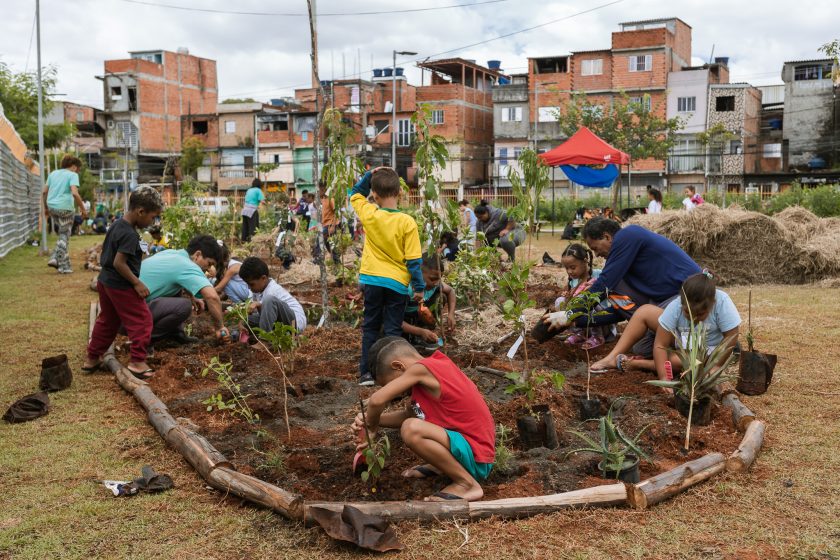
The environmental effects are equally concrete. During recent heat waves, soil temperatures inside the mini-forests were measured at up to 20 °C cooler than nearby paved areas. The dense canopy reduces direct sunlight, accelerates soil building, increases infiltration, and creates microhabitats for insects and birds.
These forests also feed people. Many include fruit trees and edible plants traditionally cultivated by local communities. In a city where food deserts overlap with heat islands and socioeconomic inequality, the mixture of shade and food production becomes especially meaningful.
Why these forests matter for global cities
São Paulo, with more than 12 million residents, exemplifies the pressures faced by fast-growing cities in the Global South: extreme heat, sprawling informal housing, fragmented governance, and uneven access to nature. But these pressures are not unique. Cities around the world face the same tensions, regardless of income level or latitude.
Urban mini-forests in Brazil highlight a broader idea: climate adaptation can be built from the ground up, through community participation and low-cost ecological interventions.
This resonates with international conversations in urban ecology, stewardship, resilience, and planning. It also connects with debates at TNOC about new ecosystems, place-based learning, and the role of community agency in ecological restoration.
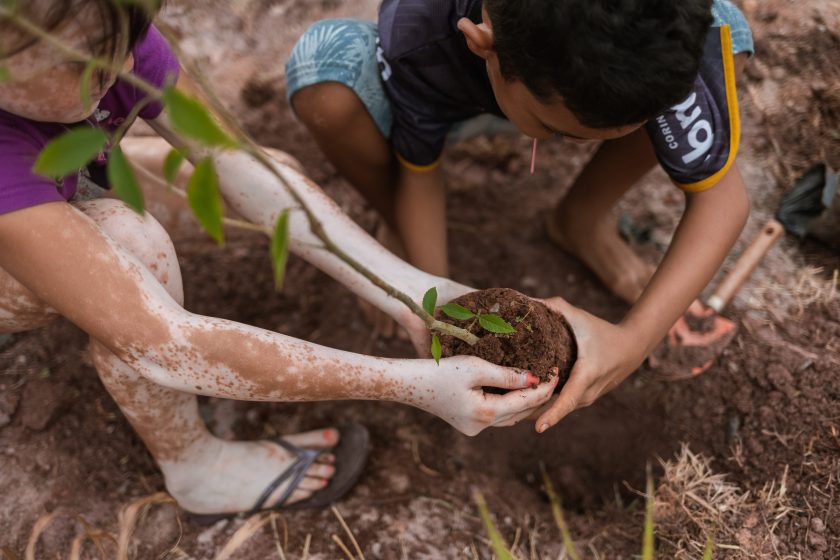
Mini-forests contribute to these discussions not by scale, but by demonstrating how small, decentralized ecological infrastructures can be replicated across urban landscapes, especially in high-density and low-income areas.
If every public facility with appropriate open space in Brazilian cities — such as schools, health centers, social service hubs, and housing complexes — hosted even one mini-forest, the result would be a network of climate refuges capable of cooling large swaths of territory, supporting urban biodiversity, and creating new forms of civic engagement with nature.
The social dimension of the work
Planting a mini-forest requires around 3 to 6 months of preparation. The process begins with conversations with the school or institution, followed by open air environmental education activities, where communities learning about soil, climate change, and ecological restoration.
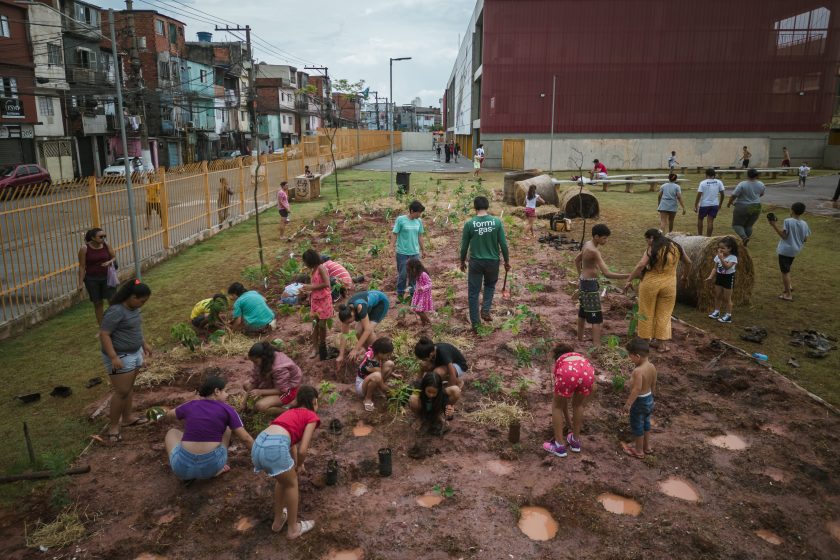
In many schools, the planting day becomes a celebration. Families, neighbors, and staff join in. For children who rarely have access to green space, putting their hands in the soil is a moment of discovery. For teachers, it offers a living extension of their curriculum. For the community, it represents investment and care in places where public maintenance is often inconsistent.
The forests then continue to grow through collective stewardship. Some communities organize gardening meetings; others harvest fruit together or hold outdoor storytelling sessions under the shade of the young trees. These forms of shared use reinforce the idea that the forest belongs to everyone and grows with everyone.
Evidence that change is possible at scale
In 2025, the work received national recognition with Brazil’s Empreendedor Social award from Folha de S.Paulo and the Schwab Foundation, which highlighted the social and ecological innovations developed through this participatory model. The award underlined something fundamental: efforts led by civil society can guide public policy, especially when they combine science, community participation, and practical climate solutions.
The next step is scale. Expanding urban mini-forests to other regions of Brazil will require:
- Partnerships with local governments
- Collaboration with other nonprofits and community groups
- Integration of NbS into education, health, and climate adaptation policies
- Accessible training materials for teachers and municipal staff
- A replicable ecological methodology suited to different biomes
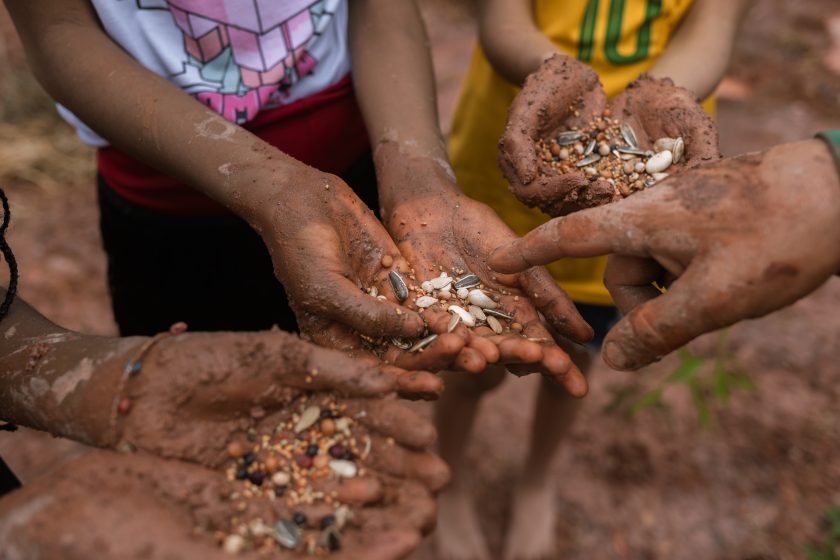
We are beginning to dream of a network model. Several organizations and cities across Brazil also want to create their own versions of mini-forests, adapting the technique to local soils, species, and cultural contexts. Shared tools we are starting to create — such as species selection guides, monitoring protocols, and open educational resources — will help multiply the approach without centralizing it.
A takeaway for global readers
Urban nature cannot be an afterthought or a luxury. It must be part of how cities understand themselves and respond to climate challenges. Mini-forests show that high-impact ecological restoration does not require vast parks, large budgets, or heavy machinery. It requires:
- community desire
- ecological diversity
- consistent care
- political recognition that nature is infrastructure
The future of cities will not be built only by architects, planners, or ecologists. It will be built by the collective action of residents who plant, care for, and reclaim the land around them.
Our experience suggests a simple idea: If we want cities that are cooler, healthier, and more resilient, we need to start with our hands in the soil. One small forest at a time.
Rafael Ribeiro & Sheila Ceccon
São Paulo

Leave a Reply