

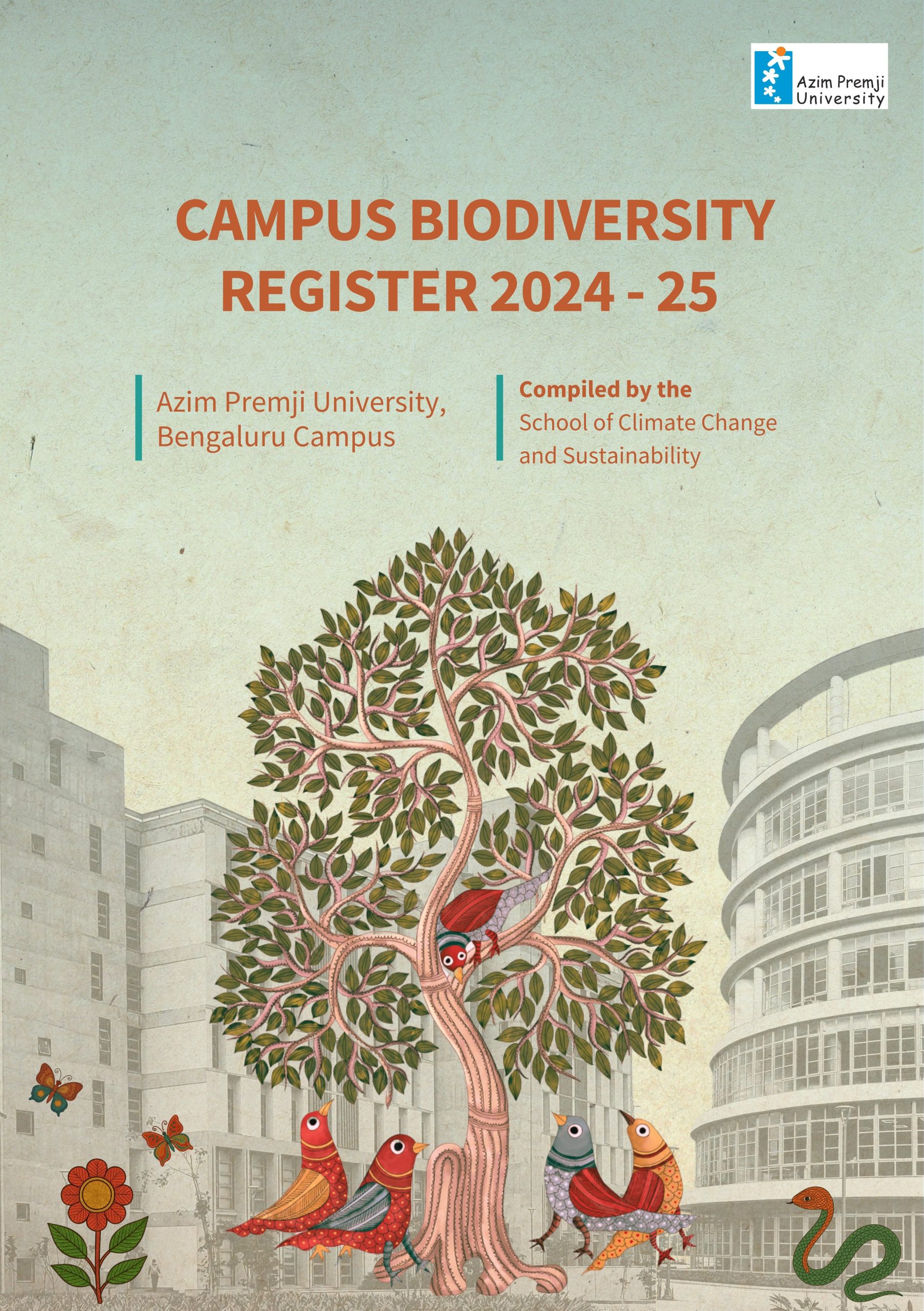



We hope to invite everyone to slow down, notice more, and care a little more for the non-human species we share our campus space with.
Urbanising cities in the Global South have a multitude of challenges—rapid demographic changes placing pressure on environmental resources, services, and infrastructure unable to keep pace with unplanned urbanisation, and urban sprawl creating a dystopian peri-urban landscape. Often, urbanisation is accompanied by loss of urban green and blue spaces, as built-up infrastructure replaces urban ecosystems.
While the loss of urban ecosystems has implications for the ecological resilience of a city, another concern is the resulting disconnect that urban residents, especially youth and children, have with nature. Richard Louv, in his book “Last Child in the Woods”, wrote about the Nature Deficit Disorder and its adverse impacts on the health and well-being of children. In addition, this gradual separation from nature could also result in devaluing nature, which can have consequences not just for ecosystems in the immediate vicinity but also reduced values for conservation.
A question that we, as educators in the field of environment and sustainability, have is: How can we reconnect youth with nature in ways that can foster a sense of stewardship towards nature?
Spread across 90 acres in Sarjapura in peri-urban Bengaluru, the Azim Premji University campus has become home to trees, plants, insects, birds, reptiles, mammals, and butterflies. Since the campus became functional in 2021, along with the green cover, different species have made our campus their home.
The University’s undergraduate programme, which is fully residential, includes a BSc in Environmental Science and Sustainability that is interdisciplinary and emphasises a social-environmental systems perspective in its curriculum and pedagogy. One of the courses in the programme uses a place-based pedagogy, where students engage with nature in and around the campus where they live—and learn. As part of this course, and working with members of the university, we at the School of Climate Change and Sustainability have attempted to document the biodiversity on campus through our Campus Biodiversity Register.
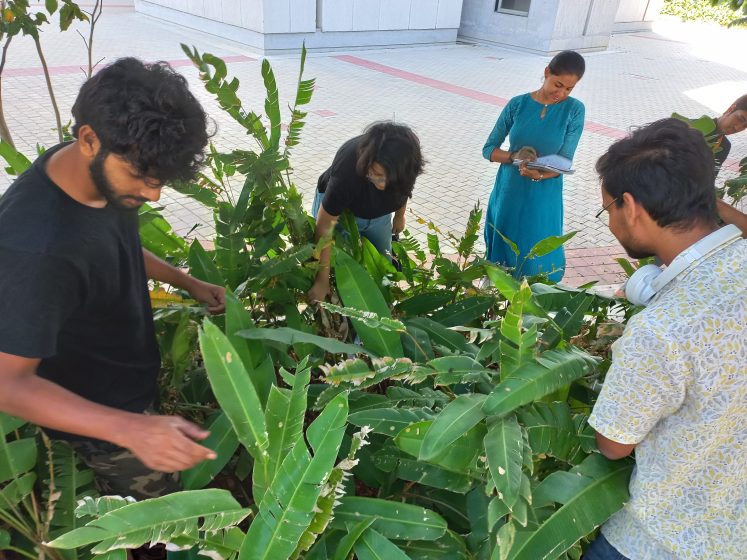
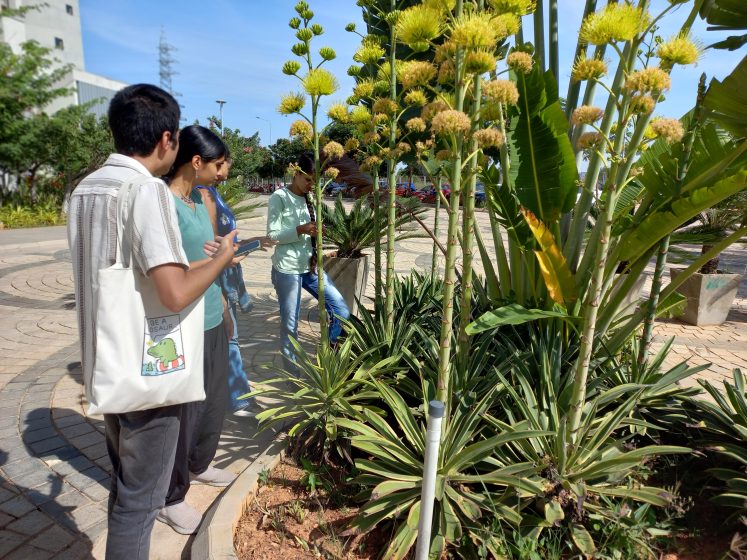
Photo: School of Climate Change and Sustainability
Fostering environmental stewardship: Why keep a biodiversity register?
The Biological Diversity Act 2002 mandates that a People’s Biodiversity Register (PBR) be maintained, documenting the flora and fauna of an area, in addition to highlighting the use of traditional ecological knowledge in supporting livelihoods and subsistence use of local communities. At the heart of the PBR is the principle that the local biodiversity be documented by those who form a part of the landscape, including teachers and students of educational institutions.
Our Campus Biodiversity Register, too, is an attempt in this direction. In addition, the idea behind the register is to draw attention to the non-human species we share our space with. And that biodiversity is not only a charismatic species, found in distant landscapes, but is all around us, along our paths and outside our windows. By recording different species on campus, the register also collects baseline data of biodiversity in peri-urban landscapes such as the one our campus is situated in, which are constantly adapting and changing with rapid urbanisation. This baseline data can help us track changes over time, whether it is of tree cover or how species sightings shift.
At the same time, the process itself matters. Our register is put together using data collected by different members of the University—students, faculty, security and maintenance staff, and members of the School of Climate Change and Sustainability. In this process of observing and documenting the biodiversity on campus, we also hope to foster a sense of stewardship towards nature, especially in the case of our students.
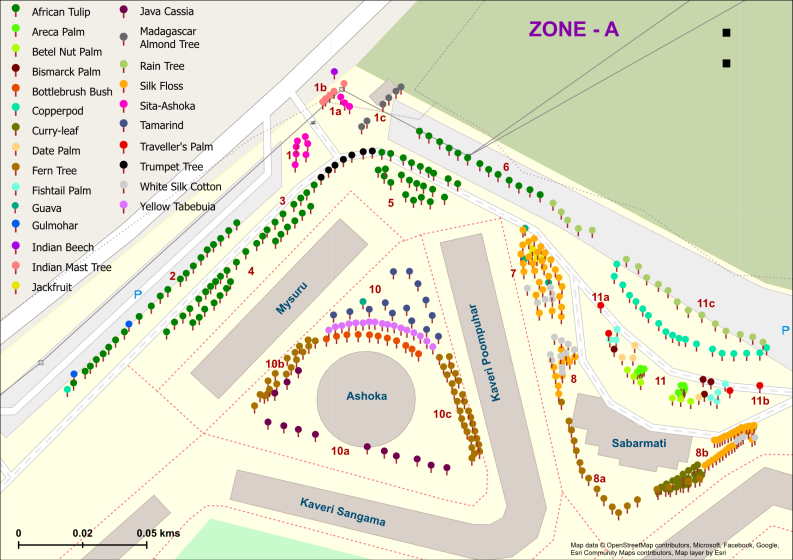
The register brings together three main efforts: a tree survey, records of snake sightings, and a student-led BioBlitz. Our campus is divided into zones, and the tree survey and BioBlitz were conducted in one Zone (Zone A) that extends across 4,486 square metres, while the snake sightings are from across the campus. Together, they tell the story of campus life beyond human beings.
Trees in our lives
Members and students conducted the tree census between April and September 2024, recording the species, tree height, girth, and GPS point. We recorded 436 trees belonging to 25 species in the selected zone.
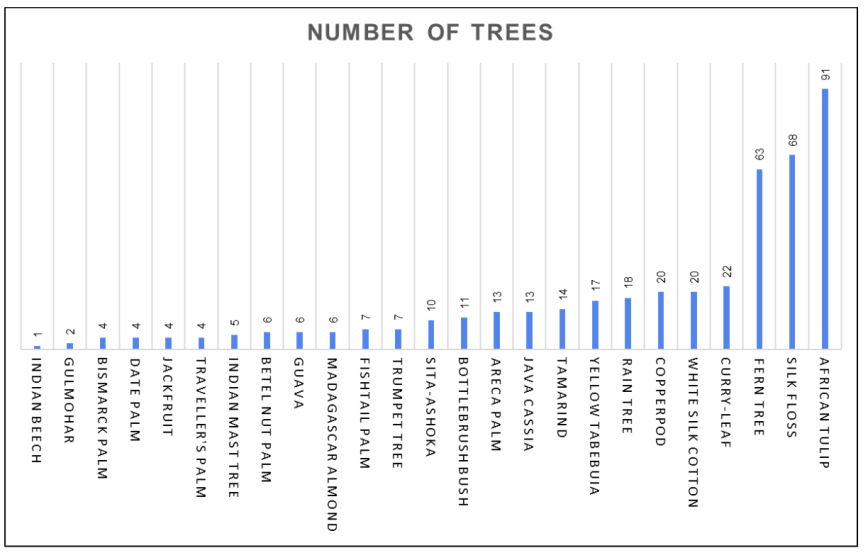
The highest number of trees (91) was of the African tulip (Spathodea campanulata), which stands out for its striking reddish-orange flowers. The other flowering species in this zone were silk floss (Ceiba speciosa), which has pinkish flowers, yellow tabebuia (Tabebuia aurea), copperpods (Peltophorum pterocarpum) with their golden yellow flower, the trumpet tree with flowers in different shades of pink (Tabebuia rosea), and the Sita-Ashok (Saraca asoca) with bunches of yellow-red in the flowering season that are a contrast against the dark green of the leaves. The zone also has patches of tamarind (Tamarindus indicus) and curry leaves (Bergera koenigii). Some fruit trees, such as the guava (Psidium guajava) and jackfruit (Artocarpus heterophyllus), are still growing—and we look forward to the fruits in the years to come. The zone also has a patch of six different species of palms and other species of flowering, ornamental, and shade-giving trees.
Among the trees surveyed (excluding palms), the tallest was a rain tree (Samanea saman) measuring 8.5 metres. The widest girth belonged to a Sita-Ashok tree, measuring over 190 centimetres. Using these measurements, we also estimated the stock of carbon stored in the trees. In Zone A alone, the 398 trees (excluding palms) were estimated to store about 11.8 metric tonnes of carbon.
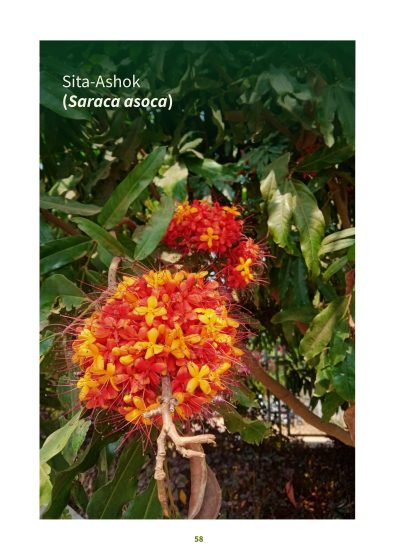
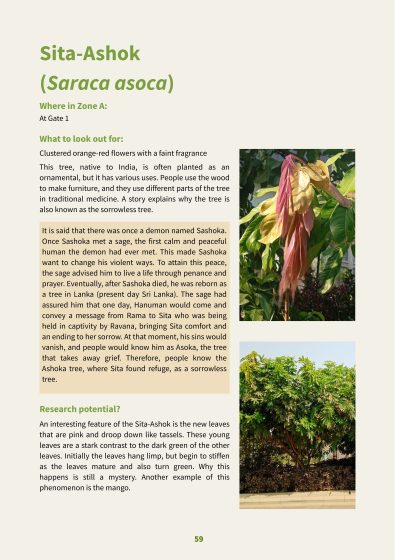
In this section on trees, alongside measurements we included myths, legends and interesting tit-bits associated with each tree―memories of children playing with water-filled African tulip buds, Oochikay (spelled “Oochi-kay” or “Unchi-kay” in South India, likely in Tamil/Kannada), the cultural and mythological importance of the Ashoka tree, rooted in its association with Sita’s stay in the Ashoka Vatika during her captivity in the Ramayana, and research insights into how certain trees may help reduce pollution.
Co-existing with snakes
Our university campus in Bengaluru is also a habitat for different species of snakes. Whenever a snake is spotted, the snake is carefully caught, bagged, and released safely into the scrub habitat outside the campus. The university follows a clear protocol that focuses on safety for both people and snakes. We have organised sessions led by experts from the Madras Crocodile Bank Trust/Centre for Herpetology, where a few of the staff members were shown how to handle and remove snakes safely, and awareness sessions were held for our campus security and gardening staff. We have also created posters in English, Kannada, and Hindi on the “Do’s and Don’ts” around snakes that are placed across the Bengaluru campus for everyone’s safety.
Between July 2023 and February 2025, 44 snake sightings were recorded, of which we were able to identify 37 across nine species. These included both venomous and non-venomous snakes, with non-venomous snakes being spotted more often. The most common snake was the non-venomous Indian rat snake (Ptyas mucosa). The venomous species included three of the Big Four—common krait (Bungarus caeruleus), Russell’s viper (Daboia russelii), and the spectacled cobra (Naja naja). Our snake incident reports also showed that the highest frequency of sightings was between 12.00 and 4.00 pm, and the maximum number of sightings were in June 2023.
Learning by observing: Students and the BioBlitz
One of the liveliest parts of the register comes from the campus BioBlitz. In September 2024, 38 undergraduate students from the BSc Environmental Science and Sustainability programme explored Zone A to document biodiversity.
At the start of the BioBlitz, students are encouraged to keep their phones away during the first recce and simply observe the biodiversity in the spaces assigned to them. The idea is to slow down and pay attention, to notice patterns, movements, and small details that are often missed when we focus only on documenting. While recording species is important, learning to observe and appreciate the ecosystem around us is just as valuable.
On the following day, students returned to the same spaces, and together they recorded, by taking photos, 263 observations across plants, insects, birds, spiders, mammals, and reptiles (Table 1: Observations from BioBlitz). Back in the classroom, they used tools like iNaturalist and Google Lens to identify as many species as they could.
| Table 1: Observations from BioBlitz | |
| Biodiversity type | Number of observations |
| Plants | 145 |
| Insects | 61 |
| Trees | 41 |
| Birds | 9 |
| Spiders | 3 |
| Mammals | 2 |
| Reptiles | 2 |
| Total | 263 |
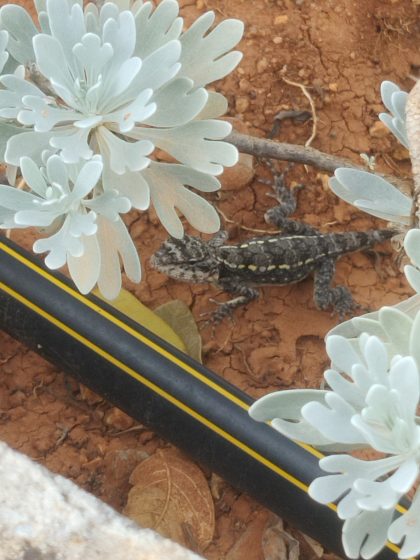
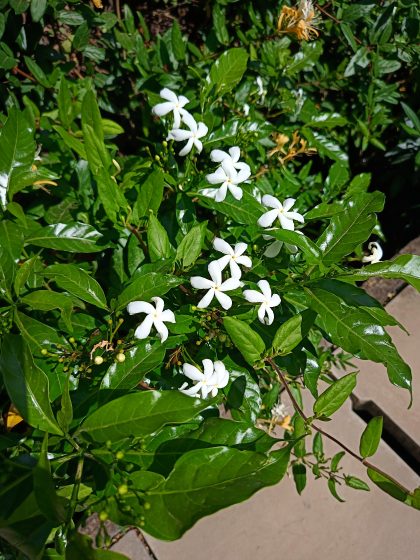
Plants made up most of the verified observations. These ranged from common grasses to well-known species like tulsi (Ocimum tenuiflorum) and hibiscus (Hibiscus rosa-sinensis). Students were often fascinated by plant names and stories, such as the plant called “mother of millions” for its ability to reproduce quickly, or the many names given to the snake plant across cultures.
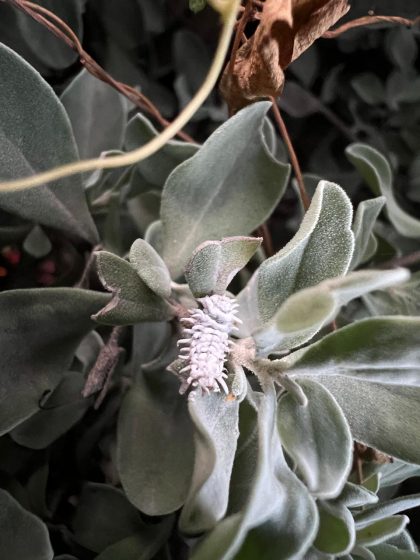
Insects were harder to identify, but left a strong impression. Bees, butterflies, ants, wasps, grasshoppers, and millipedes revealed how much life exists at small scales. Simple activities like ant-watching helped students see familiar spaces in new ways.
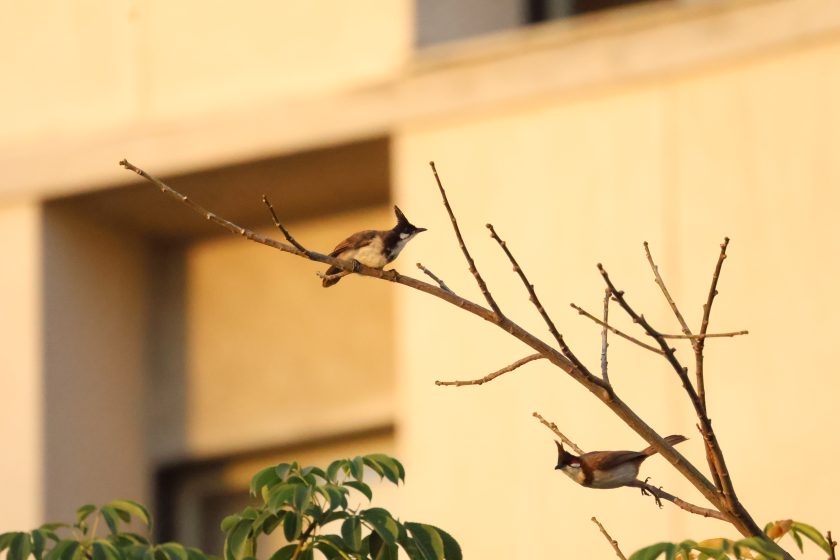
Bird sightings included species such as bulbuls, spotted doves (Spilopelia chinensis), and the purple-rumped sunbird (Leptocoma zeylonica). Reptiles like the Indian rock agama showed how some animals adapt well to human-dominated landscapes.
The Campus Biodiversity Register: A repository that enables a reconnection with nature
When we think of a university campus, we usually picture academic blocks, libraries, student residence buildings, sports arenas, playgrounds, cafeterias, and busy walkways. On our campus, all of these exist too, but through our Campus Biodiversity Register, we also wanted to draw attention to the quieter and often unnoticed aspects of nature around us.
We hope to continue updating the Campus Biodiversity Register each year, involving different members of the University. In this process, we hope to invite everyone to slow down, notice more, and care a little more for the non-human species we share our space with. We hope that the sense of stewardship towards nature will extend beyond our campus in these times of environmental and climate crises.
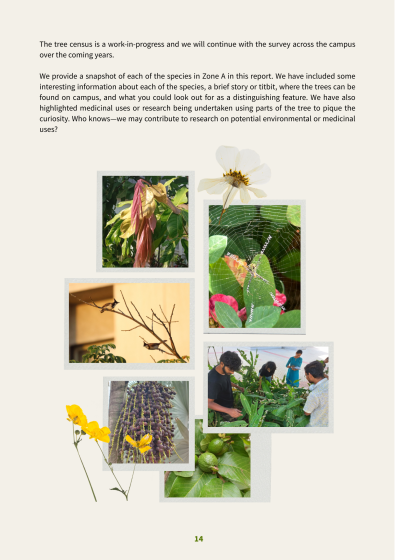
Link to Azim Premji University’s Campus Biodiversity Register 2024-25
Aswathy Arun, Seema Mundoli, and Harini Nagendra
Bengaluru, Bangalore, and Bangalore

Leave a Reply