
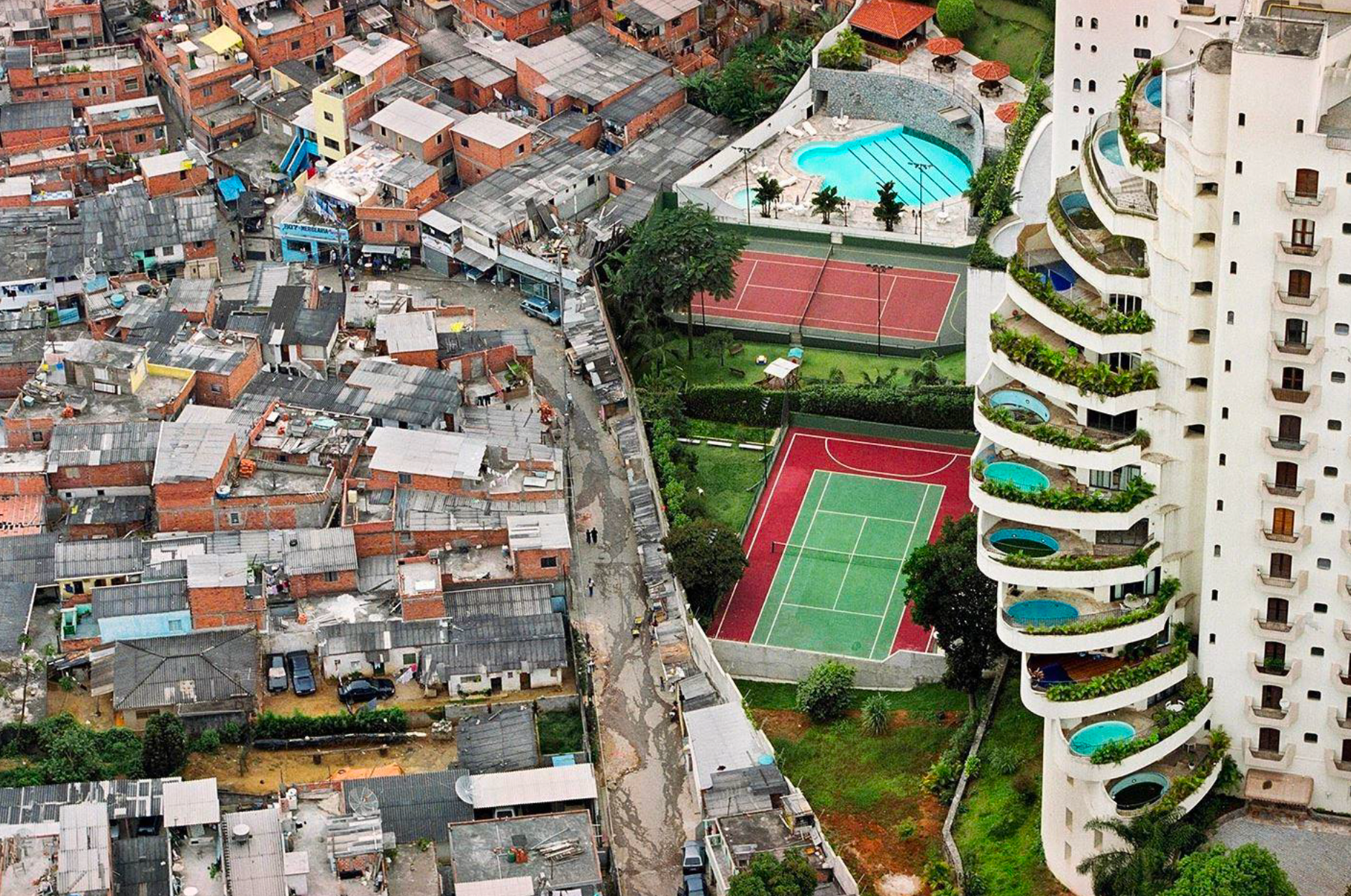

The edge is where systems meet, where tensions are visible, and where the work of translation happens. “Living on the edge” isn’t a warning, but an ethic—a call to stay close to where systems meet, where contradictions are sharp, and where possibilities begin.
One of my former political ecology teachers, Robert Biel, has had this incredible ability to use political theories to connect the deeply theoretical with the banal everyday, the micro with the macro, and the natural with the social sciences. He would use simple threads to link geopolitics with music and ecology with architecture. One day in class we listened to a song called “The Edge” by the band Formidable Vegetable ― a small song with a wide claim. It goes like this:
“The ‘fringes’ of any system are often where the most interesting, innovative and productive things take place. If you’re not living on the edge, you’re taking up too much space!”
That was my door into one of Holmgren’s twelve core permaculture principles: what lies in margins holds overlooked potential.
In ecology, some ecosystems have identifiable cores, for instance a forest interior vs its edge. The “core” is where microclimate, soil, and species interactions are least disturbed by external influences. The permaculture principle of valuing the edges relates to the understanding that they are spaces of exchange between systems, and they are most productive. Hence the spiral in permaculture, the snail’s curl design to maximize edge and invite life where boundaries touch.
In social sciences like human geography, the core-periphery framework is used to describe how power, capital and resources concentrate in certain places or groups while others are marginalized ― a pattern produced by historical, social and political processes (think world systems theory). In this context, those at the core wield greater influence and benefit from the system’s structure, while those at the periphery experience exclusion. With the phrase “if you’re not living on the edge, you’re taking up much space”, the song amplifies this notion that those at the core have more power and live well.
Cities around the world are often organized through hierarchies of a “core” and a “periphery”. The peri-urban is typically described as a dynamic interface―sometimes a grey zone―between the rural and the urban, where land-use shifts, where infrastructure and services are limited, and where low-income or newly migrated populations often reside. Informal settlements in these areas are frequently portrayed as sites of vulnerability due to cumulative risks and exclusion, yet many also see them as places of opportunity, precisely like in the song lyrics stating that edges are often where most interesting, innovative, and productive things take place.
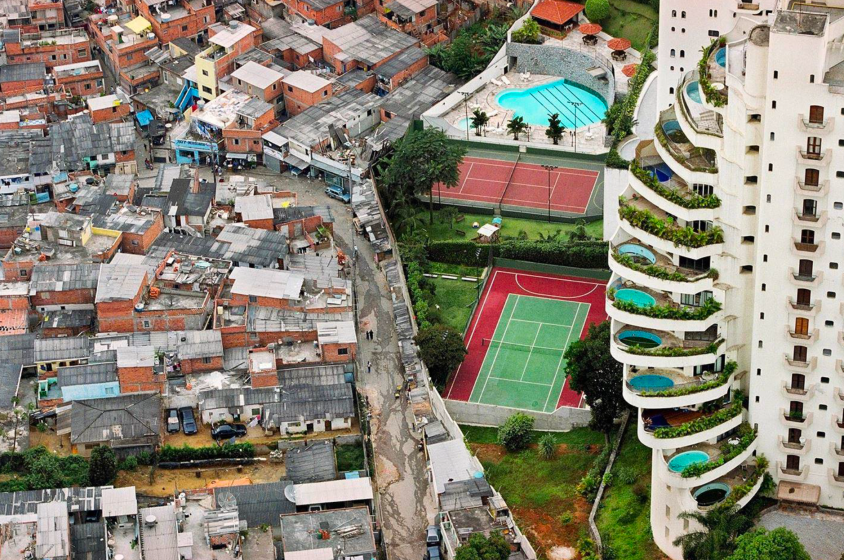
Edge-thinking gave me a way to read green infrastructure in São Paulo’s periferia: not as a checklist of fixes, but as contested choreography where space, water, and rights try to share a stage. In my research on “green infrastructure at the edge” in São Paulo, Brazil, I built on these notions to better understand the implications of building green infrastructure in favelas, and more specifically in two so-called favelas ―or pereferias (peripheries)―to demonstrate the enormous challenges of implementing such projects in places where space and land-use are highly disputed.
I conceptualize green infrastructure on edges in 3 main ways:
- Green infrastructure on river edges
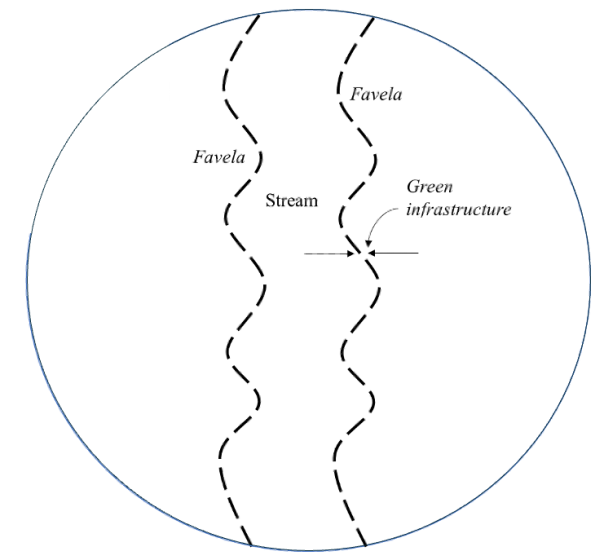
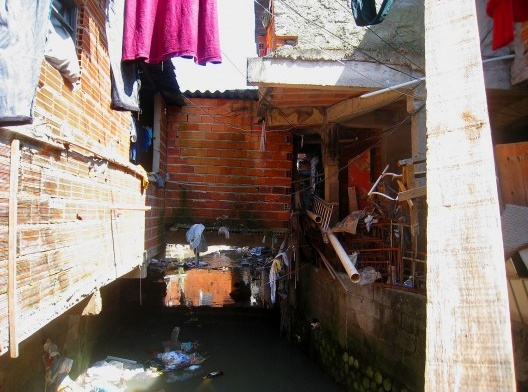
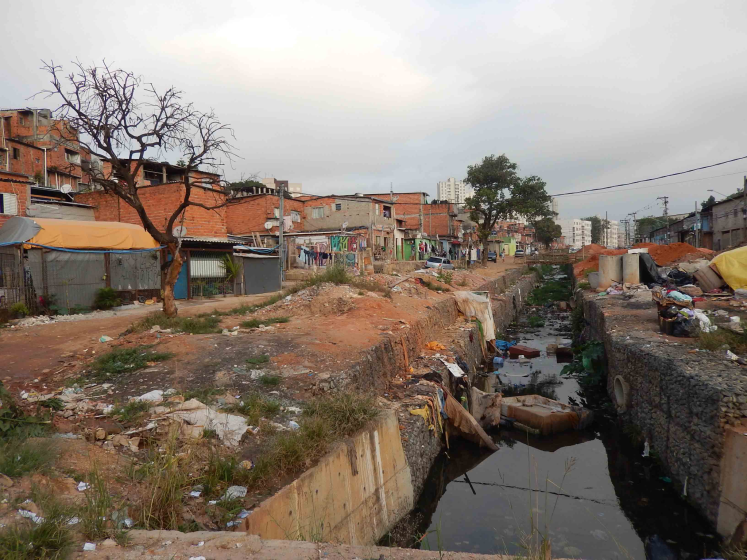
Restoring vegetated riverbanks lets the river breathe in the wet season and takes pressure off tired, unmaintained, or simply inefficient drains. But in the community of Sapé, where houses perch on margins and over culverts (Photos 2 and 3), “making room for the river” is not a neutral engineering fix; it translates into making less room for someone’s home. River-edge greening, then, is never apolitical—it’s a choice with distributional consequences that must be publicly negotiated.
- Green infrastructure on city margins
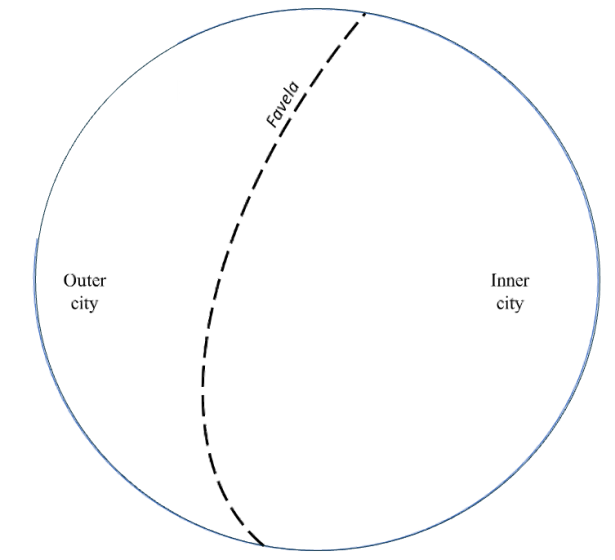
Investments in urban greening, green infrastructure, and other NbS are often unevenly distributed, with higher-income or formally planned areas more likely to receive and maintain them, while informal and underserved neighborhoods frequently see fewer projects. Several factors drive this pattern: insecure tenure (authorities fear that improvements might be read as de facto recognition), regulatory and zoning barriers, a policy preference for “hard” infrastructure first, liability and maintenance concerns, financing models tied to property values, and limited participation channels for residents. Yet, these same neighborhoods can benefit most when projects are co-designed and rights-sensitive: green infrastructure can reduce heat and flood risk, improve health, and support urban biodiversity; its multifunctionality can complement grey systems and help fill service gaps at lower cost, while creating safe, convivial public space.
- Green infrastructure on the world’s edges
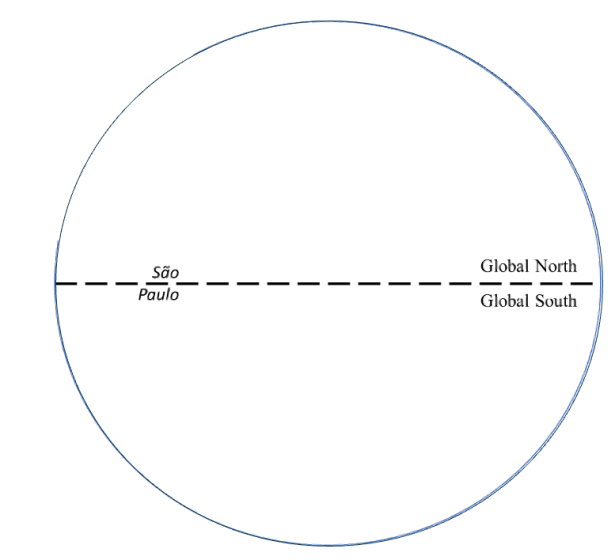
This one is complex to articulate in a few sentences. But it emerged from political ecology, and Dobson’s Citizenship and The Environment helped me refine it. The idea of the “good citizen” or “good neighbor” increasingly includes being a “good environmentalist”, but the behaviors used to measure that ideal are often narrow, moralizing, and largely shaped by Global North norms. When these standards are exported, they can misfit local contexts—from cities in the Global South to low-income neighborhoods elsewhere—and slip into narratives that blame residents for not adopting prescribed “green” behaviors or for “not valuing nature.” That framing is misleading. People hold diverse human–nature relationships shaped by history, infrastructure, risk, and everyday trade-offs. For example, in Sapé, some residents advocated burying a local river not because they dismissed its value, but because they believed culverting could reduce solid-waste dumping and ease conflicts—an attempt, however contested, to protect the river and address social tensions. This is why uncritical transfer of models and messages can be harmful: effective green infrastructure and NbS must be co-designed with communities, attend to local priorities and constraints, and avoid turning environmental care into a test of moral worth.
Ultimately, thinking about edges—ecological, social, and political—can teach us that the most generative spaces are also the most overlooked. The edge is where systems meet, where tensions are visible, and where the work of translation happens. It is always a comfortable place, but it is where new forms of collaboration and care can emerge. At multiple scales, from the micro to the macro, the challenge is the same: design and govern for edges, not against them. That’s actually where we should draw a distinction between “edges” and “margins”: margins contain, but edges connect. A just ecological transition depends on how we treat the edges—not containing or worse, erasing them, but actually learning from them and using them as spaces of connection. Edges can teach us how to do green infrastructure and nature-based solutions in inclusive ways.
“Living on the edge” isn’t a warning, but an ethic—a call to stay close to where systems meet, where contradictions are sharp, and where possibilities begin. Cities, after all, are gardens of edges; our task is to tend them with care.
Loan Diep
New York City




Leave a Reply