


Urban landscapes are increasingly seen as spaces that need to take wildlife management into consideration. What does this mean for how we think about animals and nature in cities, what role can human urbanites play in tolerating and caring for wildlife, and what can urban landscapes teach us about sustainable wildlife management more broadly?
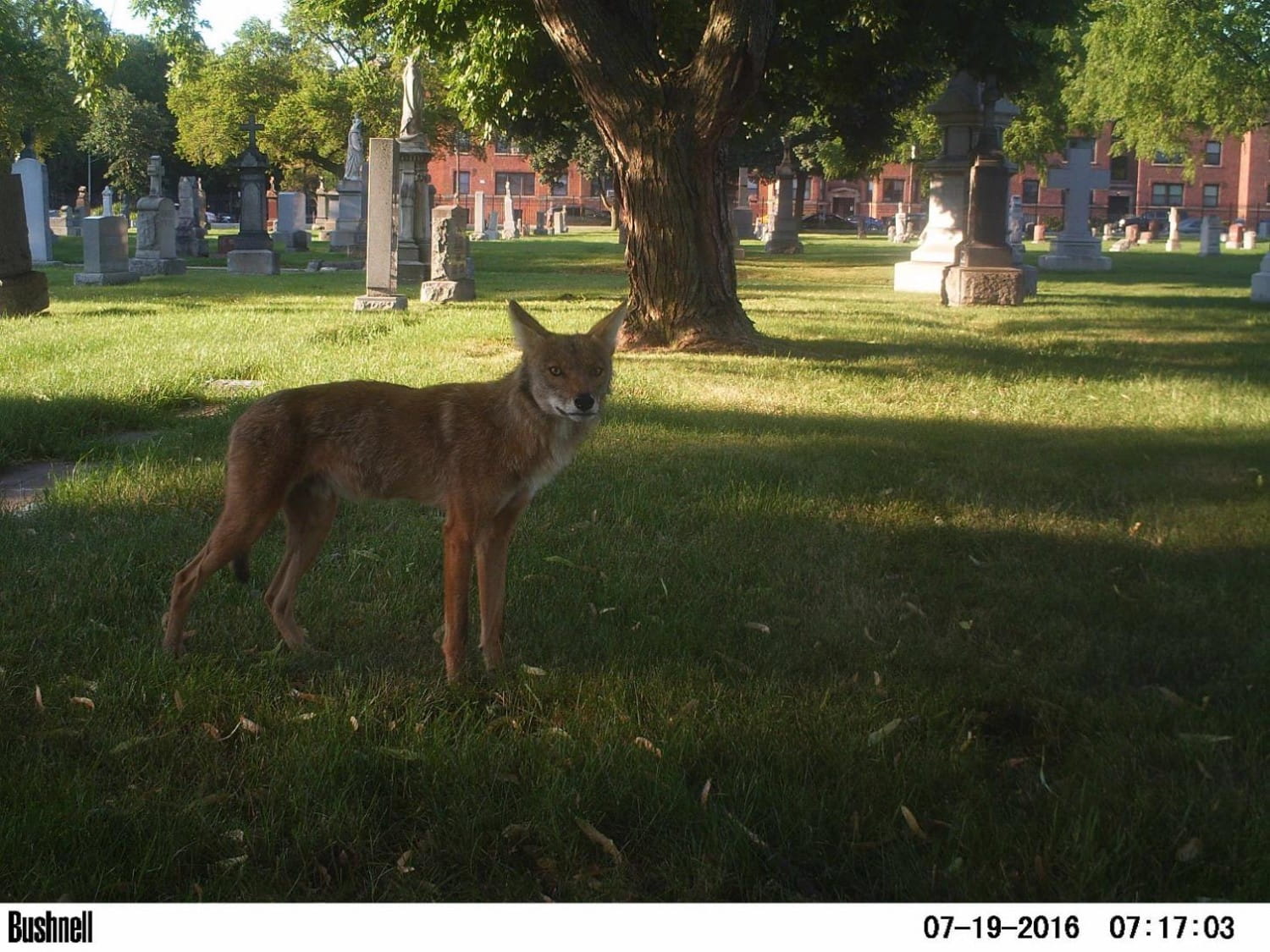
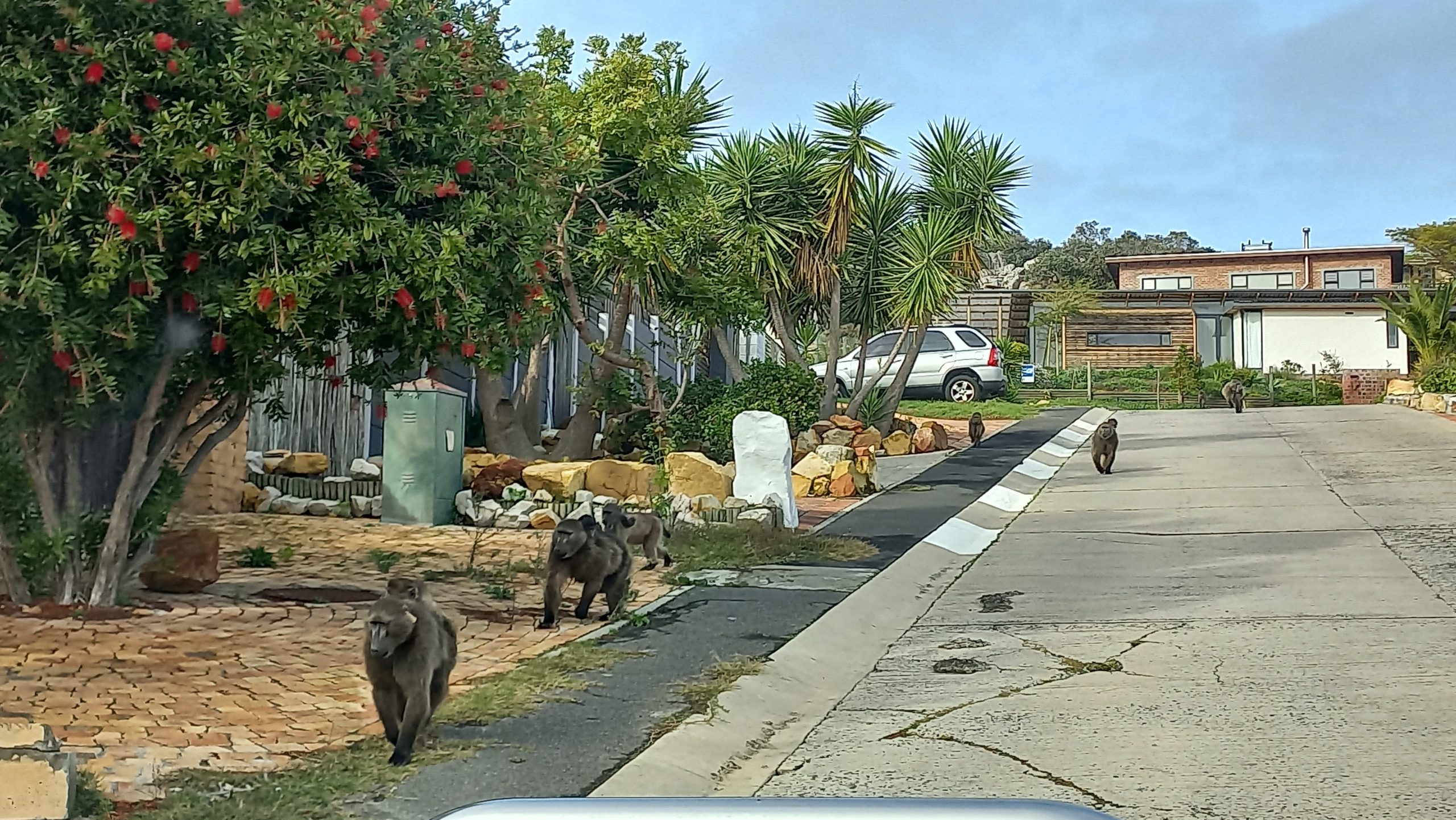
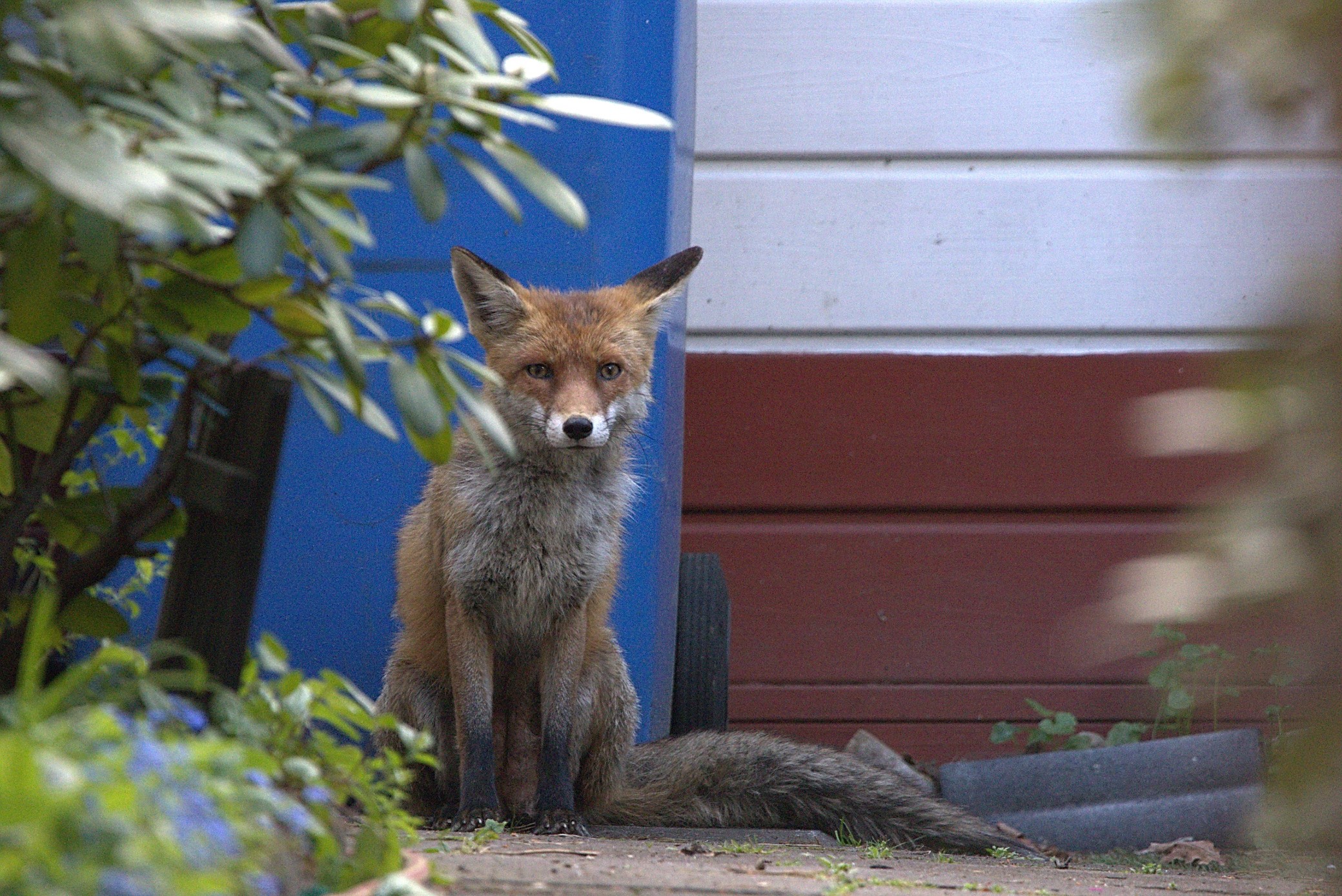
A fox trots down a street in Berlin at dusk. A troop of baboons moves through a residential garden in Cape Town. A coyote is caught on a camera trap behind a Chicago strip mall, one data point among hundreds of thousands flowing in from cities across the world. Do these urban dwellers get a say in how their urban habitat is organised?
We work on urban wildlife from slightly different angles. One of us operates at the intersection of urban ecology and social science to understand what shapes human-wildlife relationships in cities. One studies how different and sometimes competing views of living with urban wildlife can be navigated without hardening into polarisation. One tracks wildlife across multiple cities to understand how animals use urban space and how people and wildlife can coexist. And one of us approaches urban wildlife from an international biodiversity policy perspective, drawing on work across multilateral environmental agreements and global biodiversity policy processes. Yet, from all perspectives, we see the same thing: that cities are not peripheral or accidental wildlife habitats.
Cities have never been devoid of wildlife. Cities support diverse wildlife communities, including threatened species (Ives et al. 2016), and bring people and wildlife into close and frequent contact. Clearly, urban planning and the management of green spaces, water bodies, old trees, and habitat corridors can support biodiversity alongside human health, urban cooling and a sense of place (Murray et al. 2022; Kowarik et al. 2025). However, sharing cities with wildlife raises challenging questions that are increasingly discussed in frameworks such as One Health, environmental justice and multispecies justice and that remind us that urban nature is not experienced equally (Schell et al. 2020; Murray et al. 2022; Fidino et al. 2024; Raymond et al. 2025). At the same time, urban wildlife research is increasingly moving beyond individual cities, with shared approaches allowing us to compare urban wildlife patterns across cities and continents (Magle et al. 2019).
This growing recognition of cities as shared human-wildlife spaces is now beginning to be reflected in global wildlife policy. Sustainable wildlife management (SWM) has long been addressed under the Convention on Biological Diversity (CBD), primarily in relation to the sustainable use and conservation of wild species and their contributions to livelihoods. In October 2026, the CBD’s seventeenth Conference of the Parties (COP17) in Yerevan, Armenia adopted new voluntary global guidance on the sustainable management of wildlife applicable to multiple species and multiple practices. Developed through a broad participatory process involving Parties, Indigenous Peoples and local communities, in collaboration with the Collaborative Partnership on Sustainable Wildlife Management, particularly the CITES and CMS Secretariats, the guidance explicitly extends its consideration to urban contexts. The new guidance calls for SWM to be integrated into urban planning, including through nature-based solutions, updated urban wildlife management guidelines, approaches for preventing and responding to human-wildlife conflict, and initiatives that strengthen wildlife literacy and involve urban residents in wildlife stewardship. This is more significant than simply adding a new biotope; it challenges implicit ideas that cities are meant only for humans and certain non-human species. We therefore think that this calls for a broader reflection on what urban SWM actually means for the people and wildlife who are expected to share the same spaces every day.
What does Sustainable Wildlife Management mean for cities?
In the CBD context, SWM is defined as “the sound management of wildlife species to sustain their populations and habitat over time, considering the socioeconomic needs of human populations”. The newly adopted voluntary global guidance encompasses “multiple species across terrestrial, inland water, marine and coastal ecosystems and to both extractive and non-extractive practices, including fishing, the gathering of plants, fungi and algae from the wild, logging, the harvesting of terrestrial and aquatic animals and wildlife-based tourism”. The guidance focuses on three key areas: i) inclusive and participatory decision-making, ii) the inclusion of multiple systems of knowledge and the recognition of rights, and iii) the equitable distribution of costs and benefits. While the guidance covers a broad range of wild species and practices, we focus here on wild animals and their interactions with people in urban environments. So, what happens when we take the guidance’s three areas of focus seriously in cities?
Who gets to participate? Cities are dense and diverse, which means that urban wildlife management concerns many different actors ranging from residents, planners, wildlife managers, public health authorities, conservation organisations, landowners, to animal welfare groups, among others. More actors mean greater risk of conflicting ideas about which species belong in cities, how much wildlife people should be expected to tolerate, or when management is justified. But there is another interesting question. Cities are increasingly understood as landscapes shaped and constantly renegotiated not only by humans, but also by other living beings (Andersson et al. 2026; Raymond et al. 2025). Some urban animals reach celebrity status and profoundly influence city-dwellers’ view of nature (von Essen et al. 2026). How can, and when should, more-than-human stakeholders be given a stronger voice in urban wildlife management? Approaches such as Animal-Aided Design (Apfelbeck et al. 2020) and Biodiversity Sensitive Urban Design (Garrard et al. 2018) already try to incorporate the needs of wildlife more explicitly into how cities are planned and designed. Can such experiences be built on to better integrate the needs of human and other beings?
Whose knowledge counts? Governance systems often default to scientific, administrative and professional expertise over other forms of knowledge, but cities bring together many different perspectives, experiences and sometimes strongly conflicting views of wildlife (Straka et al. 2022; Psiuk and Enqvist 2024). A resident who has observed foxes, baboons or coyotes in the neighbourhood for several years may notice patterns that won’t be captured in a short-term ecological survey undertaken by scientists. Or a municipal gardener, for example, may have a particularly nuanced understanding of how local maintenance practices affect nesting birds and insects, which complements scientific evidence on the effects of local- and landscape-scale variables. Of course, ecological data remain essential for testing assumptions and informing management. However, the interesting challenge for us is to find ways in which different kinds of knowledge can inform each other, while, importantly, recognising differences in evidence, power and responsibility. As dynamic places, cities can be well suited to more experimental approaches for fostering empathy and understanding between different ways of knowing, such as deliberative democracy innovations or arts-based processes (Enqvist et al. 2025, Daw et al. 2026). These approaches might not make conflicts about wildlife disappear. But they may help us to listen to each other when it becomes increasingly difficult, and to find new ways to coexist.
Who benefits and who pays? Urban wildlife can bring birdsong that enhances our wellbeing, pollination of our gardens, the excitement of the sight of a fox at dusk or seeing bats emerge from a roost, and opportunities for learning to live with wildlife and stronger connections to place. But living with wildlife can also come with costs, some of which remain hidden (Barua et al. 2013). For instance, property damage, a raided garden, a car collision, stress, fear, or exposure to zoonotic diseases. Hence, both risks and benefits need to be shared fairly rather than falling entirely on whoever happens to live closest to the animals in question, which is often the historically marginalized and disadvantaged groups (Schell et al. 2020). People with the privilege of shielding themselves from negative interactions while enjoying positive experiences may advocate for more protection and tolerance of wildlife, without understanding or caring about how it impacts others. This raises fundamental questions about how to fairly allocate costs and benefits around living with wildlife in urban areas, including the practical justice of whose voices are heard when decisions are made. This is also reflected in the IUCN Guidelines on Human-Wildlife Conflict and Coexistence, which emphasise that coexistence is context-specific and requires attention to governance, power, equity and the different needs and perspectives of affected groups (IUCN SSC HWCCSG 2023). Following the newly adopted voluntary global SWM guidance under the CBD, fair human-wildlife coexistence in urban areas requires careful consideration of how costs and benefits can be shared equitably, regardless of people’s sociodemographic backgrounds or whether their homes are located near a forest, waterbody, or parking lot. Who pays is also a question for cities themselves, as COP17 separately recognised the role of subnational governments, cities and other local authorities in implementing the Kunming-Montreal Global Biodiversity Framework and requested information on the extent to which biodiversity finance reaches the subnational and local levels, including barriers to accessing funding.
Learning across landscapes
Cities are interesting places for learning how to live with wildlife and therefore for advancing approaches to sustainable wildlife management. Cities bring large and socially diverse human populations into close proximity with wildlife. They often have complex and fragmented systems of governance and lack a clear scientific baseline for what constitutes a “natural” ecosystem. Questions about wildlife in urban areas can quickly become questions about different values, competing interests, inequality, and which wildlife species people are willing, or able, to live with. Consequently, urban environments and urban wildlife management research and practice can offer important lessons for SWM about proximity, social pluralism, polarisation, and environmental inequality. Cities also allow for innovative, experimental approaches that might not be suitable for other contexts but can inform and inspire wildlife management more broadly.
Urban wildlife management informed by the focus areas, principles and approaches reflected in the new CBD guidance can, in turn, draw on experiences developed beyond cities. Under the CBD and in related international processes, much of the international policy guidance on sustainable wildlife management has focused on wildlife use, particularly in relation to rural livelihoods and food security, drawing on extensive experience of working with communities who live closely with wildlife and whose livelihoods depend on sharing landscapes and natural resources with wildlife. Urban wildlife management could learn from these experiences, particularly when it comes to negotiating competing needs, sharing costs and benefits, integrating different knowledge systems, and developing participatory approaches. This is not a simple urban-rural divide, as human-wildlife relationships occur along gradients, and many of these challenges cut across urban, peri-urban, and rural landscapes. Allowing knowledge and practices to travel across these contexts could help us find new and innovative ways for people and wildlife to prosper together. The newly adopted CBD guidance provides an opportunity to bring these experiences together and translate them into more inclusive, ecologically sustainable, and context-sensitive approaches to wildlife management across urban and non-urban landscapes.
Tanja M. Straka, Johan Enqvist, Kim Gruetzmacher, and Seth Magle
Freising/Berlin, Cape Town, Berlin/Bonn, and Chicago
References
Andersson E, Enqvist J, Tengö M, Aaltonen V (2026) Transforming the nature of cities — stewardship and more-than-human agency. Current Opinion in Environmental Sustainability 80:101628. https://doi.org/10.1016/j.cosust.2026.101628
Apfelbeck, B., Snep, R. P., Hauck, T. E., Ferguson, J., Holy, M., Jakoby, C., … & Weisser, W. W. (2020). Designing wildlife-inclusive cities that support human-animal co-existence. Landscape and Urban Planning, 200, 103817.
Bagstad, K. J., & Wiederholt, R. (2013). Tourism values for Mexican free-tailed bat viewing. Human Dimensions of Wildlife, 18(4), 307-311.
Barua, M., Bhagwat, S. A., & Jadhav, S. (2013). The hidden dimensions of human–wildlife conflict: Health impacts, opportunity and transaction costs. Biological Conservation, 157, 309-316.
Daw, T.M., West, S., Downing, A. et al. (2026) What role for deliberative minipublics in sustainability transformations? An emerging topic for sustainability science. Sustainability Science 21, 1365–1381. https://doi.org/10.1007/s11625-025-01789-2
Enqvist J, Psiuk K, Metelerkamp L (2025) Mobilizing stewardship through theater: Pathways to transform polarizing conservation conflicts. Earth Stewardship 2:e70028. https://doi.org/10.1002/eas2.70028
Fidino, M., Sander, H. A., Lewis, J. S., Lehrer, E. W., Rivera, K., Murray, M. H., … & Magle, S. B. (2024). Gentrification drives patterns of alpha and beta diversity in cities. Proceedings of the National Academy of Sciences, 121(17), e2318596121.
Garrard, G. E., Williams, N. S., Mata, L., Thomas, J., & Bekessy, S. A. (2018). Biodiversity sensitive urban design. Conservation letters, 11(2), e12411.
IUCN (2023). IUCN SSC guidelines on human-wildlife conflict and coexistence. First edition. Gland, Switzerland: IUCN.
Ives, C. D., Lentini, P. E., Threlfall, C. G., Ikin, K., Shanahan, D. F., Garrard, G. E., … & Kendal, D. (2016). Cities are hotspots for threatened species. Global Ecology and biogeography, 25(1), 117-126.
Kowarik, I., Fischer, L. K., Haase, D., Kabisch, N., Kleinschroth, F., Konijnendijk, C., … & von Haaren, C. (2025). Promoting urban biodiversity for the benefit of people and nature. Nature Reviews Biodiversity, 1(4), 214-232.
Magle, S. B., Fidino, M., Lehrer, E. W., Gallo, T., Mulligan, M. P., Ríos, M. J., … & Drake, D. (2019). Advancing urban wildlife research through a multi‐city collaboration. Frontiers in Ecology and the Environment, 17(4), 232-239.
Murray, M. H., Buckley, J., Byers, K. A., Fake, K., Lehrer, E. W., Magle, S. B., … & Schell, C. J. (2022). One health for all: advancing human and ecosystem health in cities by integrating an environmental justice lens. Annual Review of Ecology, Evolution, and Systematics, 53(1), 403-426.
Psiuk, K., & Enqvist, J. (2024). Control or coexist with urban baboons: Exploring residents’ views and values in Cape Town. Conservation Science and Practice, 6(9), e13203.
Raymond, C. M., Rautio, P., Fagerholm, N., Aaltonen, V. A., Andersson, E., Celermajer, D., … & Schlosberg, D. (2025). Applying multispecies justice in nature-based solutions and urban sustainability planning: Tensions and prospects. Npj Urban Sustainability, (1).
Schell, C. J., Dyson, K., Fuentes, T. L., Des Roches, S., Harris, N. C., Miller, D. S., … & Lambert, M. R. (2020). The ecological and evolutionary consequences of systemic racism in urban environments. Science, 369(6510), eaay4497.
Straka, T. M., Bach, L., Klisch, U., Egerer, M. H., Fischer, L. K., & Kowarik, I. (2022). Beyond values: How emotions, anthropomorphism, beliefs and knowledge relate to the acceptability of native and non‐native species management in cities. People and Nature, 4(6), 1485-1499.
von Essen, E., Enqvist, J., Mumby, H., & Aivelo, T. (2026). Loved, loathed, and livestreamed: Celebrity wildlife as mediated governance objects in urban environments. Digital Geography and Society, 100195.
Leave a Reply