

“The older we grow, the more we miss our childhood and the playgrounds of our youth. And the more I walk through the streets of modern Damascus, the more I long for the old neighborhoods.
I long for the past, for my purity, for the little girl who was two girls at once: one who played, and one who quietly watched the others play.A girl who loved to play and jump rope with the girls of the neighborhood in Souq Sarooja, on stone pavement between weathered walls, in an alley so narrow the houses seemed almost to kiss each other, their walls pulled together with love. And behind their windows and high wooden shutters, the curious, enchanting eyes of the women watched from within.”
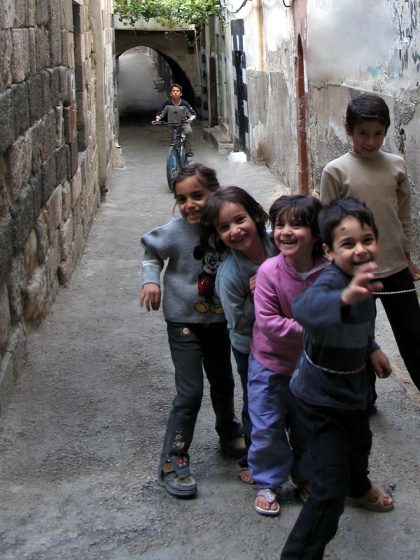
Those were the words of a woman who truly loved Damascus, Siham Turjuman, an author who wrote about every detail of daily life in Damascus in her book Yamal Al-Sham. She was born in 1932 and grew up in Souq Sarouja, one of the famous neighborhoods of Old Damascus. The spaces described by the author were not designed for play, yet they functioned as such. The idea of playgrounds did not exist yet in Damascus. However, the spatial layout of narrow alleys and courtyards supported spontaneous play and social interaction, often under the natural surveillance of the mothers in the neighborhood. Damascus has changed drastically since the 1940s. However, these forms of informal play are still visible in the old fabric of Damascus. The close social networks and spatial density of these neighborhoods helped preserve a child-friendly environment.
During the twentieth century, Damascus began to expand more. Some districts were planned during or shortly after the French Mandate period by French planners such as Danje and Ecochard, while other districts emerged through local projects or informal growth. The quality of public spaces began to differ widely from one neighborhood to another. In many neighborhoods, green spaces and public parks are entirely absent, while other affluent neighborhoods have plenty. This inequity, whether intentional or not, has created challenges for families who live in the less fortunate areas of Damascus. They had to travel long distances to the public parks on weekends, which resulted in overcrowding in the available playgrounds.
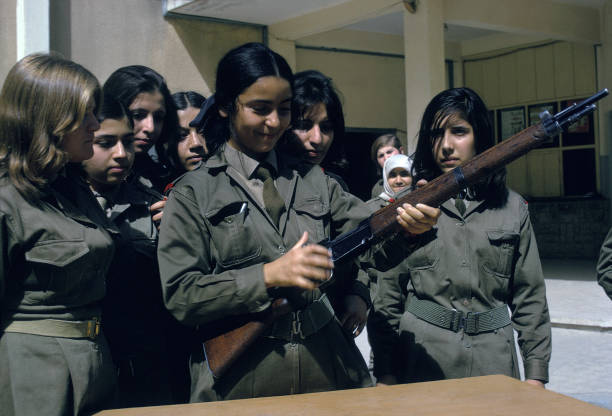
With Hafez al-Assad’s rise to power in 1970, Syria entered a dark phase marked by an atmosphere similar to George Orwell’s 1984. Even children were drawn into this system of political control. They were forced into a military-style uniform and military classes. Schools were designed like a prison with portraits of the leader and slogans on the walls. Unsurprisingly, the children’s needs in the city were further neglected.
The city of Damascus was planned in some areas and simply grew in others, without consideration for children’s urban needs. Like any other city, it has public parks and playgrounds, and the climate is more inviting to outdoor play than in neighboring countries. Yet, other types of public spaces are mostly inaccessible to children. Streets and pedestrian areas are not suitable for strollers, and older kids have no opportunities for play in the city center. Mothers often avoided taking their children with them to the shops in the city center.
When Bashar al-Assad came to power in 2000, he tried to present himself as a reformer, different from his father. The military-style school uniforms were replaced with regular clothing, and small urban interventions were introduced to improve specific areas in the city. From my own childhood experience in the late 1990s and early 2000s, I was fortunate to grow up in one of the more affluent neighborhoods of Damascus, where three public parks surrounded our block. I remember how some fences were removed to make green spaces more open and accessible. Playgrounds were renovated with safer floors and equipment. Those parks became more inviting and fuller of families, especially during the weekends.
However, many other parts of the city remained neglected, lacking green areas or playgrounds. Ahmad Ghalia, an architect and planner who grew up in a district dedicated to internally displaced people after 1967, Al-Tadamon, wrote about his perception of Damascus and said: “The park was, without doubt, a distant ritual — geographically and spiritually — from what was happening in Tadamon, where I didn’t even know that parks existed in Damascus. It wasn’t until I turned eighteen and was finally able to cross Bab Musalla that I discovered ‘civilization’ and the parks — the result of the refined, human-centered French planning of so-called planned Damascus.”
Revolution
In 2011, the revolution began with a group of children in Daraa who were “playing” and wrote on a wall some sentences against the regime. An act of play led to their arrest and torture, and that was the first flame of the revolution.
During the revolution, the regime directed most resources toward military operations. Many public spaces became restricted, with some even occupied by armed groups. In central Damascus, from 2012 to 2014, public parks became unsurprisingly vacant. While my own neighborhood remained relatively stable, the sound of shelling could be heard day and night as the regime targeted nearby suburbs. Children stayed home, living with fear and anxiety, yet were considered relatively fortunate for being able to continue school, unlike their peers a few kilometers away who were facing hunger, destruction, and death.
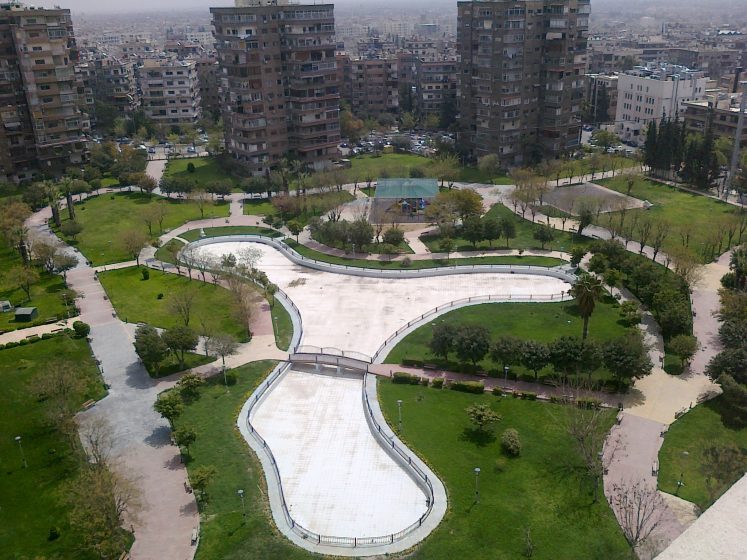
By 2014, much of suburban Damascus had been destroyed, while the city center became congested. Many schools and parks became shelters for displaced families, mostly women and children.
In these conditions, a study was conducted in 2014 by Abboud to investigate how children played in the city center of Damascus. 64 children aged 10 to 14 were reviewed. The study found that children, especially girls, faced restrictions on outdoor play due to safety concerns. Most children were not allowed to move independently and were driven to school and other places by their parents. Despite this, children expressed a strong desire for more freedom, access to public spaces, and opportunities for outdoor play. The study focused mainly on the urban design of modern Damascus and its impact on play compared to the old city, not considering the influence of war and displacement. However, it reflects how children need to play outside and enjoy a sense of freedom, even in the middle of conflict.
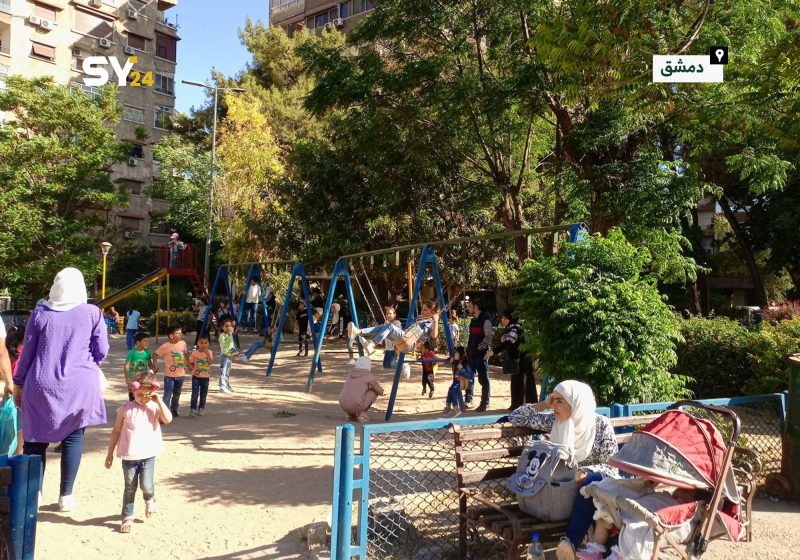
In the following years, many people left Syria, while those who stayed suffered from the difficult economic situation. Bombings decreased in the city center, but daily life became harder. Long power cuts, rising prices, and waiting hours for bread and gas became the daily struggles. Public parks and other free spaces became essential, as people needed an affordable escape.
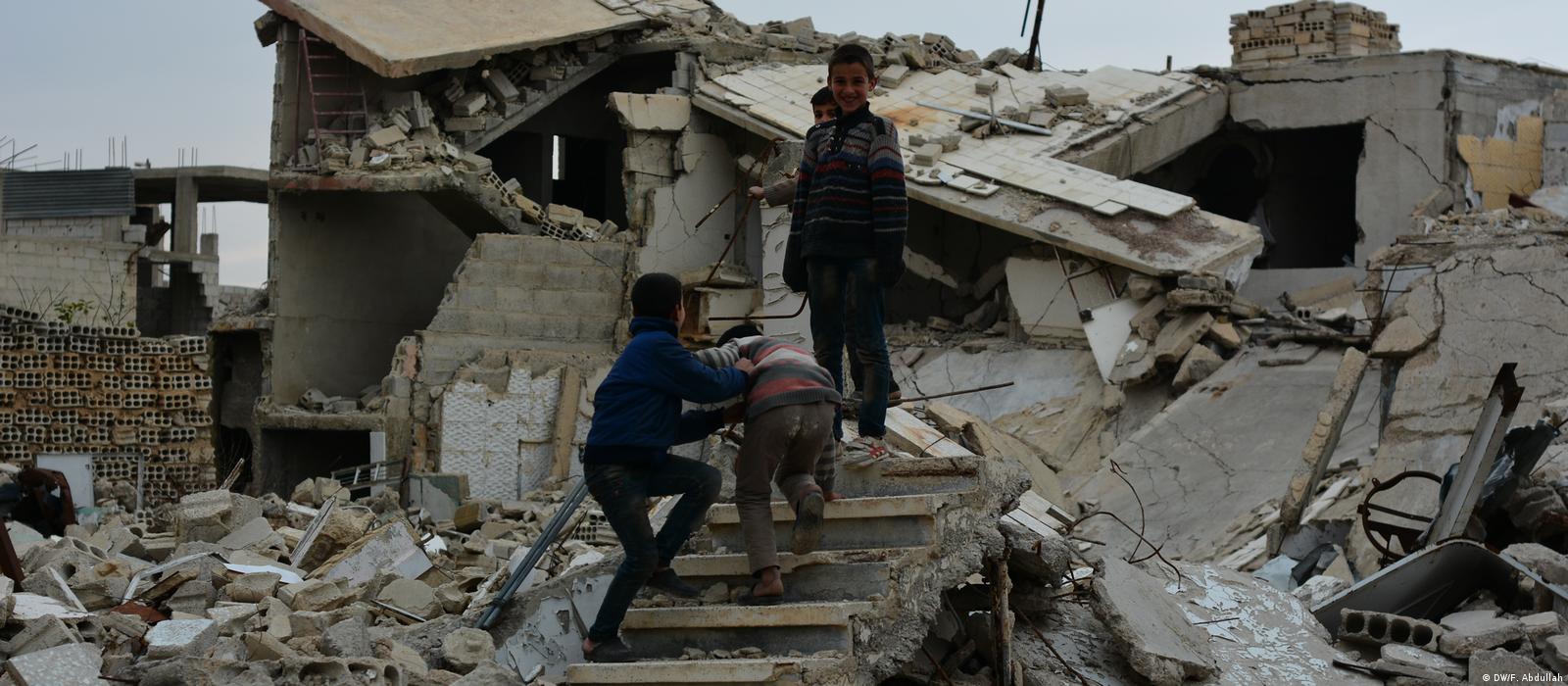
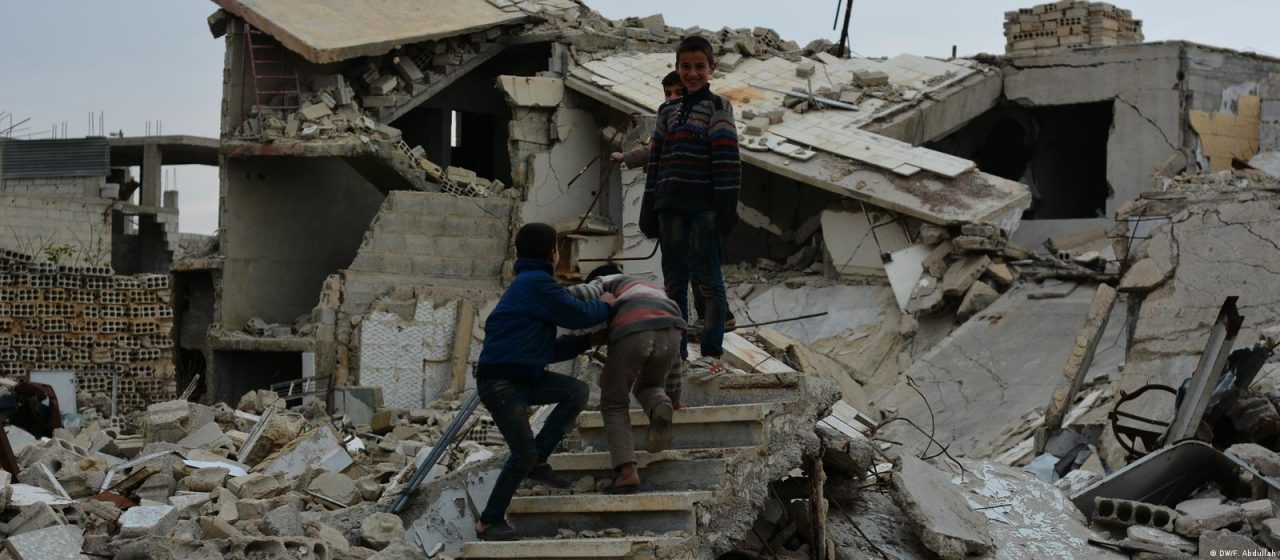
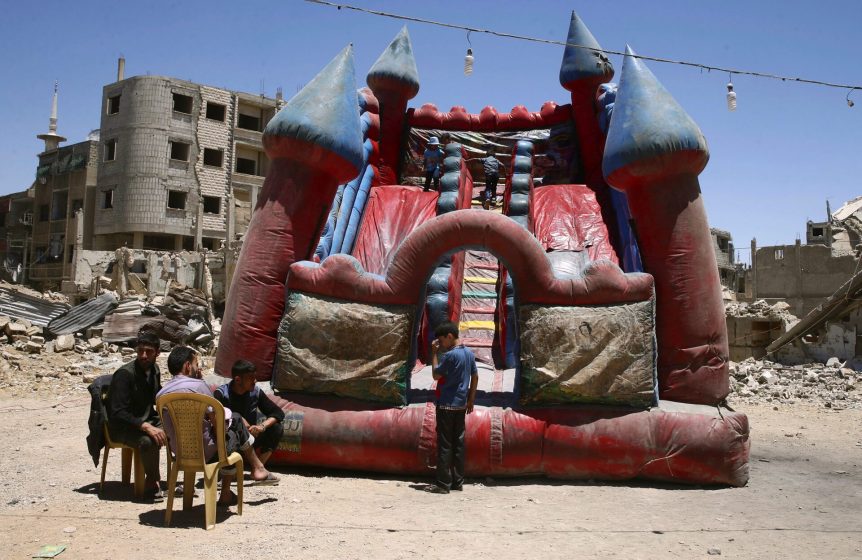
In the suburbs outside the regime’s control, such as Douma, the situation was more severe. These areas continued to be bombed, the electricity was absent, and the residents were facing all kinds of difficulties. Children, however, still found moments of play among the destroyed buildings.
Post-conflict
On 8 December 2024, the tyrant fled to Russia, and his regime collapsed. All the destroyed areas became accessible, and many Syrians started to visit their villages and neighborhoods, searching for traces of their homes and seeing whether they could resettle there. As of April 2025, UNHCR estimates that over 400,000 refugees have returned from neighboring countries, while more than 1 million internally displaced persons have returned to their areas of origin.
Although many things have improved, prisoners are free, and the people are living without fear for the first time in decades, the economic situation has not improved much yet. Public parks continue to serve as one of the few free and accessible public spaces for many residents. However, maintenance is still limited, as the country is dealing with major administrative and infrastructural challenges. In a short online piece published in 2025 about public parks in Damascus, several users were interviewed. Abu Ibrahim, a retired taxi driver, summarized the situation: “People come here to escape their misery, but look at the garbage. Children are playing among the waste. There are no proper toilets, no lighting, no security, not even municipal supervision. It needs complete rehabilitation.”
In the destroyed neighborhoods, where child-friendly spaces were absent even before the war, the situation is significantly worse.
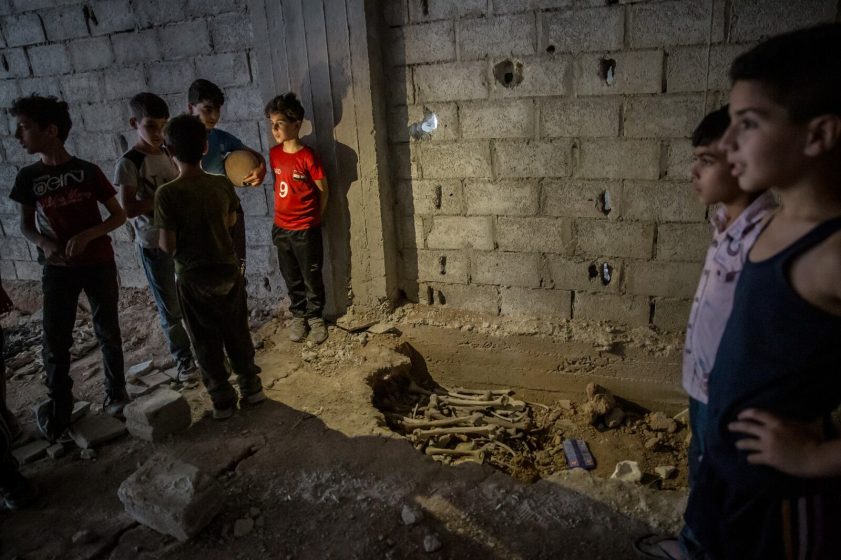
One of the most tragic examples is the neighborhood of Tadamon, the site of an infamous massacre committed by the al-Assad regime. Today, the physical traces of destruction remain visible, and human remains are still occasionally found under the rubble. Unfortunately, children have access to these damaged spaces and are sometimes seen playing among the ruins. This situation raises serious ethical and psychological concerns about the informal use of post-conflict urban environments by children.
Damascus is entering a new phase of reconstruction. Rebuilding and reclaiming public spaces should go beyond infrastructure. It is a question of social recovery and children’s right to safe and inclusive environments. Displacement and resettlement are difficult experiences, but they can also enhance social diversity by bringing together people from different social and cultural backgrounds. Public spaces such as parks and playgrounds offer an opportunity for interaction. Children tend to connect more than adults; they can build friendships that can go beyond social boundaries. These connections may bring the parents as well, fostering a sense of belonging in the community.
Making sure that the children are growing up freely, playing, moving around, and contacting other children is a strong sign that Syria is finally beginning to heal.
Raghad Qiblawi
Aachen
References
Abboud, H. (2017). Investigating the built environment of Damascus traditional city as a child friendly built environment. Tishreen University Journal for Research and Scientific Studies – Engineering Sciences Series, 38(3), 589–606.
UNHCR. (2025, April 11). UNHCR needs intensify as 400,000 Syrians return. UNHCR. https://www.unhcr.org/news/briefing-notes/unhcr-needs-intensify-400-000-syrians-return
Book: Yamal Al-Sham, Siham Turjuman, 1969
I Studied Architecture to Be Able to Understand Damascus, Ahmad Ghalia, 2021. https://shorturl.at/aO8lG
Public Parks in Damascus: A Shelter for the Poor Facing Inflation and Continuous Power Cuts, 2025 https://www.sy-24.com/151809/
Leave a Reply