So, this is it, I think. We have always been sustained within this web of connections.
How might humanity reweave its relationship with a fraying world and rebuild a regenerative civilization that can flourish alongside the living Earth?
Such thoughts were crossing my mind as I walked through the mountains.
No—this is not the moment for such thoughts.
“Listen to the voices of the mountains and rivers,” the senior priest says. “Do not try to see with your eyes. See with your ears. Only then can we truly begin.”
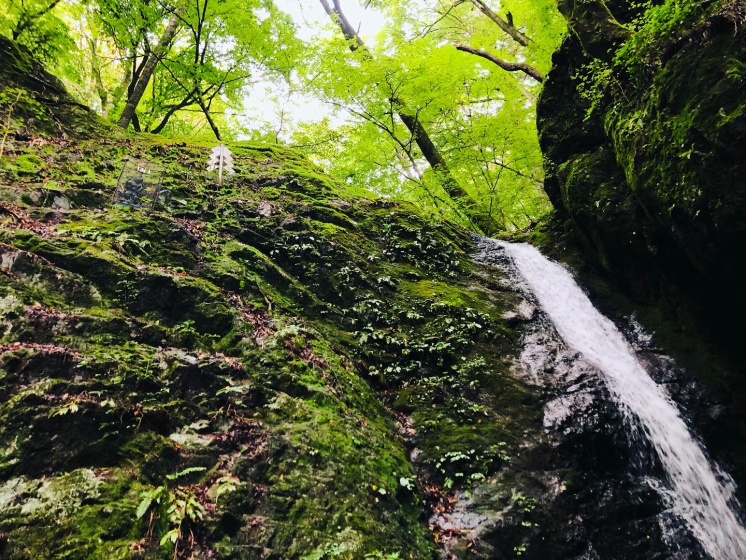
The roar of the stream suddenly swells, and a waterfall appears before us.
After performing torifune, a preparatory ritual before entering sacred water, we step beneath the falls for misogi, the Shinto rite of purification. Even in midsummer, the water at this altitude—over 1,000 meters above sea level—is cold enough to make the body tremble. Yet gradually, a warmth begins to rise from within. Before long, cold and warmth intermingle, and the boundary between the water and myself slowly dissolves.
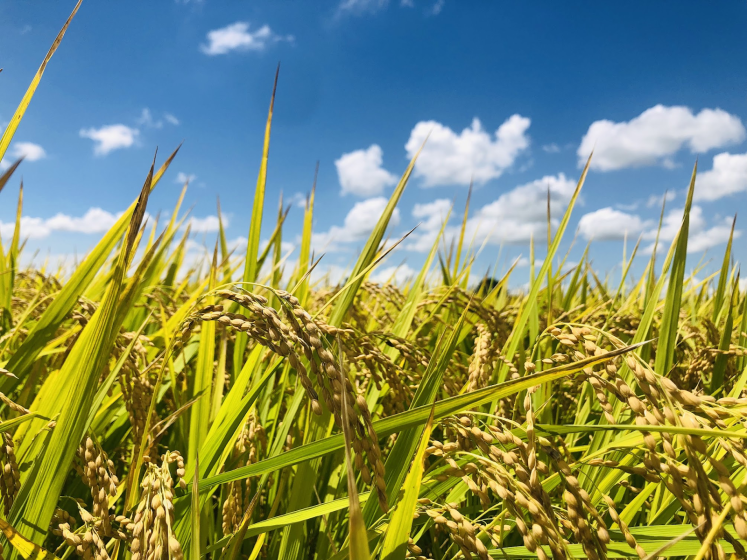
This sensation reminds me of the first time I tasted the new rice harvested from a paddy we had cultivated ourselves. The moment I savored the cooked rice, everything contained within that single grain came rushing into me like a flickering reel of memories: the spring water flowing down from the back mountain, the many small creatures living in the soil, the long days of planting and harvesting with friends, the mole crickets we encountered while shaping the ridges of the fields, the pouring sunlight, the blessing of the rain.
The life of the rice becomes my life. The paddy is me, and I am the paddy. Where does the paddy end, and where do I begin? The boundary between us, I realized, was far more ambiguous than I had ever imagined.
Dissolving the Self: At a Turbulent Turning Point in Civilization
Originally, the Japanese language had no word equivalent to the modern concept of “nature.” When the Western idea of nature was introduced in the nineteenth century, the term shizen (自然) was adopted as its translation. Before that, however, the same characters were read as jinen.
Jinen—that which is so of itself.
Rooted in Buddhist and Zen thought, the word refers to a state that spontaneously arises within relationships, simply as it is. It resonates with the concept of engi (縁起)—the understanding that nothing exists independently but emerges dynamically and interdependently within a web of relations. For those who lived before us, the notion of “nature” as something externalized and separate from human life was perhaps never necessary.
Yet, as we came to confine ourselves within the modern idea of the individual—the “self”—we also began to lose the ability to experience the body as a living medium that connects us with the myriad phenomena of the world. Instead, we came to regard it merely as a physical vessel. In the process, the natural world was increasingly seen as a resource to be dominated and extracted, and we built economic and social systems in which the more actively humans intervene, the more deeply the Earth’s ecosystems are damaged.
Human activity has now expanded to such an extent that it has given rise to what geologists call the Anthropocene. At the beginning of the twentieth century, anthropogenic mass accounted for only about three percent of the planet’s total biomass. By 2020, however, the mass of human-made materials had surpassed the total mass of all living things on Earth. Alongside accelerating climate change and the accumulation of artificial materials across the planet, scientists warn that we may already have entered the sixth mass extinction in Earth’s history—the first driven by human activity.
At this turning point in human civilization, what might we relearn from Japan’s traditional ways of seeing the world—perspectives grounded in deep interconnectedness with all existence? And how might such insights help us weave a new trajectory toward the future?
Living on this volcanic archipelago, where four of the planet’s major tectonic plates converge—a geological condition of remarkable rarity—and traveling through its landscapes, I gradually found myself drawn to these questions.
Ryuiki: What one of Japan’s oldest sacred peaks taught me
Who are we, truly? And by what forces are we sustained?
Following that question, I eventually found myself drawn to a particular place.
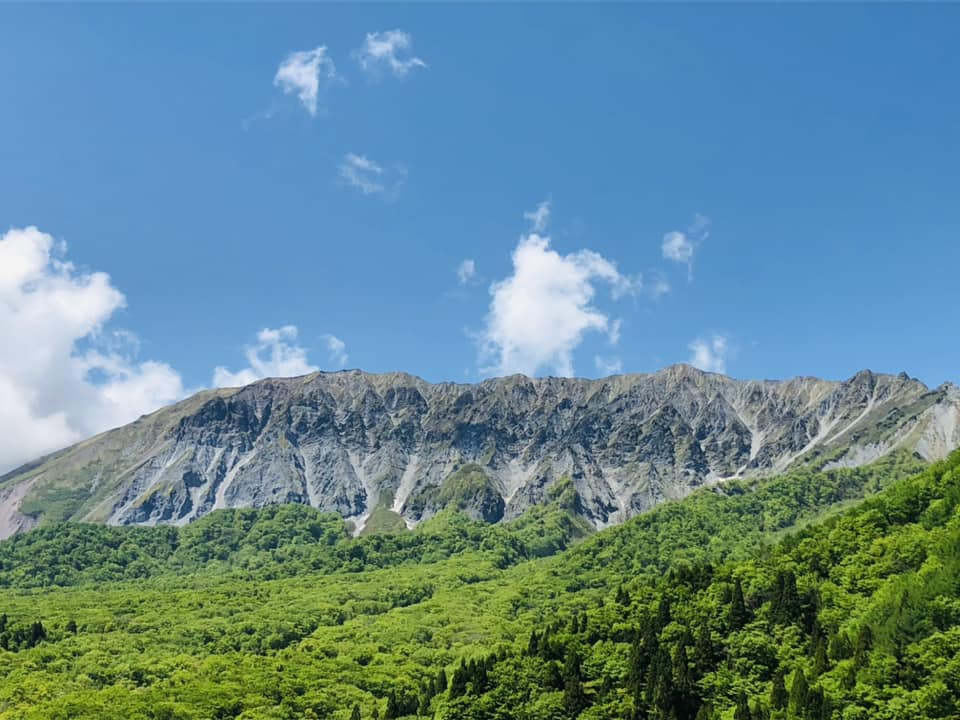
Mount Daisen in Tottori Prefecture—one of Japan’s oldest sacred peaks.
Daisen rises along the San’in coast on the Sea of Japan side of western Japan. It forms part of the landscape of the Izumo myths recorded in the Kojiki (712) and appears in the Izumo Fudoki (733) land-pulling myth as “Hinokami Peak of Hoki Province,” making it one of the earliest recorded divine mountains in Japan.
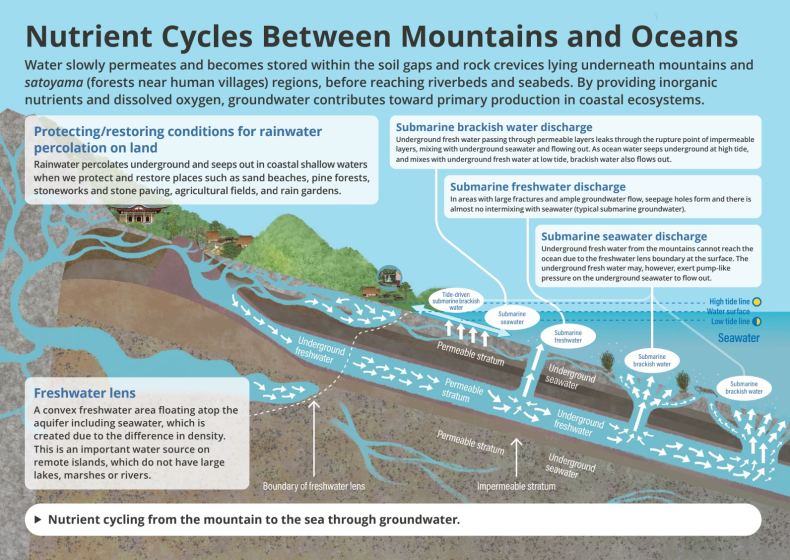
This solitary peak, rising to about 1,700 meters, is covered in expansive beech forests that support a distinctive ecology and hold abundant water. Rainfall and snowmelt slowly filter through deep layers of humus and complex underground aquifers, eventually emerging like a pump from the mountainsides and even from the seafloor as springs—waters that continue to enhance the basic productivity of the coastal ecosystem.
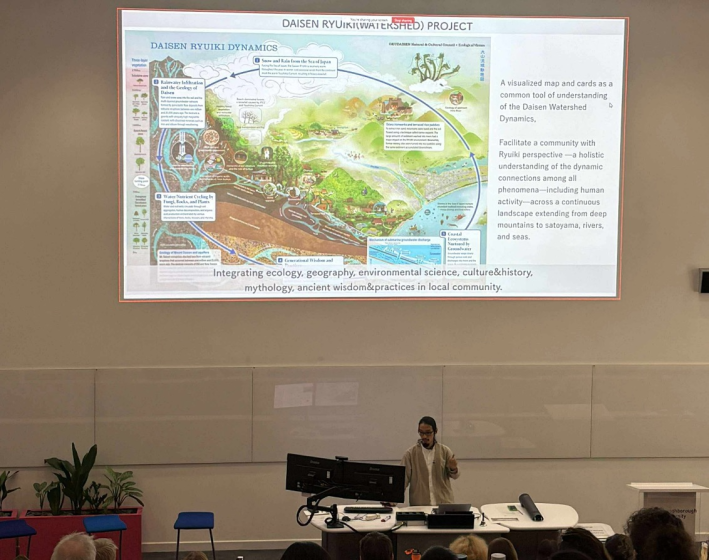
Together with the town of Kofu at the foot of the mountain, the Oku-Daisen Nature and Culture Council, and local business partners, I have been working on a project that explores the rich water circulation of Mount Daisen as a dynamic network of relationships between people and the natural environment. We describe this interconnected system—from the deep mountains through satoyama landscapes, rivers, and finally to the sea—as “ryuiki” (often translated as watershed), redefining it as a living continuum shaped by the interactions of all forms of life, including human activity.
Through this work, we have created a visualization called the “Daisen Ryuiki Dynamics Map”, which illustrates these layered connections. Alongside it, we also offer experiential programs for individuals and organizational leaders, inviting them to physically and mentally experience this ryuiki as an integrated whole. By sensing these deep relationships directly, participants explore ways to redesign their social activities, businesses, and ways of living in alignment with the principles that sustain life in the natural world.
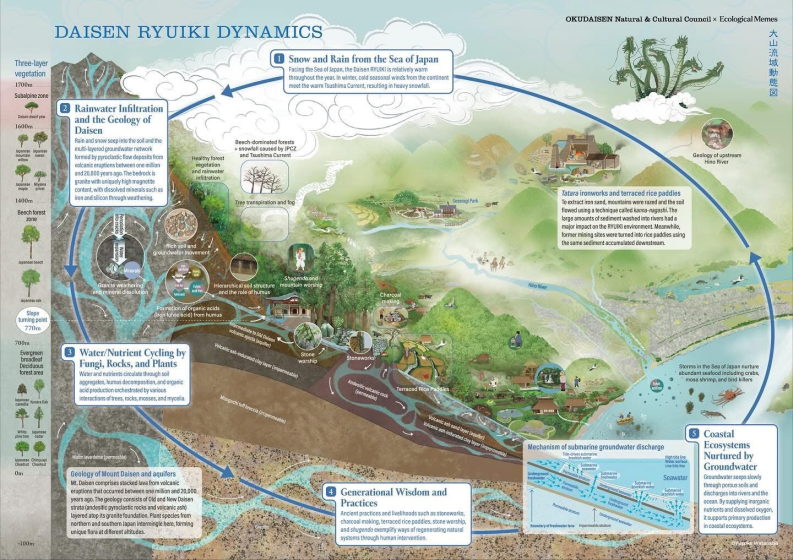
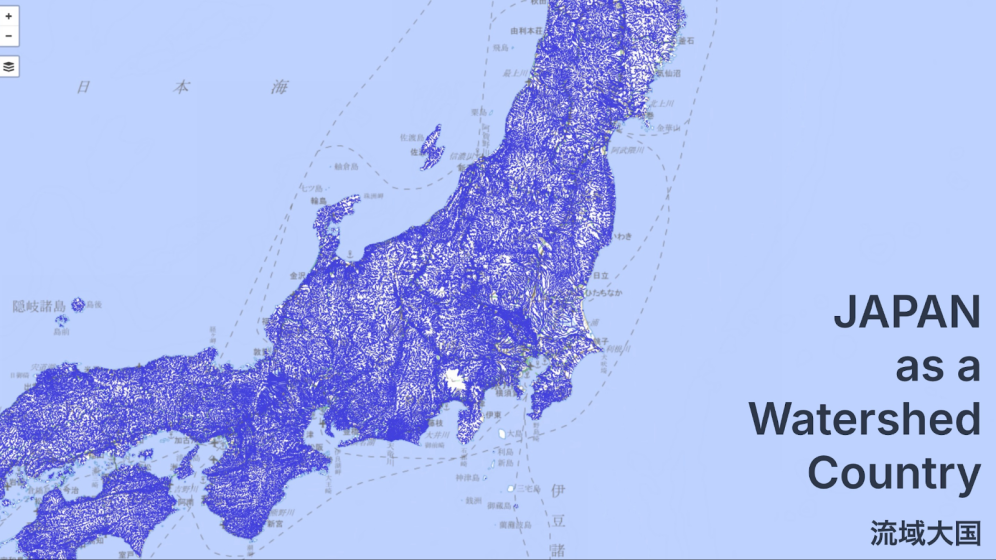
Ryuiki does not refer simply to a watershed in the hydrological sense of a catchment or basin. Rather, it is a geographic, climatic, cultural, economic, and ecological concept—a fundamental field in which human life is sustained through dynamic interaction with the natural environment and the continuous flow of water. It represents the smallest unit within which multiple layers of time and space accumulate: from the geological formation of landforms, to the myths, beliefs, and cultural practices rooted in a place, and onward to the present patterns of human life and economic activity. The embodied sensibility and perspective required to perceive these continuous dynamics is what we call “Ryuiki Awareness.”
Ryuiki Awareness is the capacity to sense this ever-changing, dynamic whole—to recognize that we ourselves are part of the workings of all things, to become aware of the ryuiki flowing through our own lives, and to live from that awareness.
In this series of essays, drawing on years of exploration through Ecological Memes—including field research, learning programs, and exhibitions and symposia held both in Japan and abroad—I hope to explore the wisdom embedded in ryuiki. Along the way, I will also introduce aspects of Japan’s views on nature, as well as the cultural and spiritual traditions shaped by Shinto, Buddhism, and everyday ways of living. Through the landscape of the Daisen Ryuiki, I hope to reflect on why the perspectives of ryuiki may offer a crucial clue to the civilizational transition now unfolding across the world, as our relationship with water and life is increasingly called into question.
Yaoyorozu no Kami (Multitudinous Gods)
One of the first things that astonished me when I began visiting Mount Daisen was the sheer abundance of its spring water.
Even along the road from Yonago Airport, the nearest airport, springs producing 20,000 to 30,000 tonnes of water a day appear here and there across the landscape—some of them recognized as part of Japan’s One Hundred Famous Waters. Mountain spring water is largely unaffected by fluctuations in air temperature, and so it remains almost constant throughout the year. At the springs around Daisen, no matter the season, the water is usually around 12 to 14 degrees Celsius.
I place my hands together and take a sip. Even in summer, the water is refreshingly cold. Water that has slowly filtered through the mountain over long years seeps gently into my heated body. It is the finest feeling imaginable.
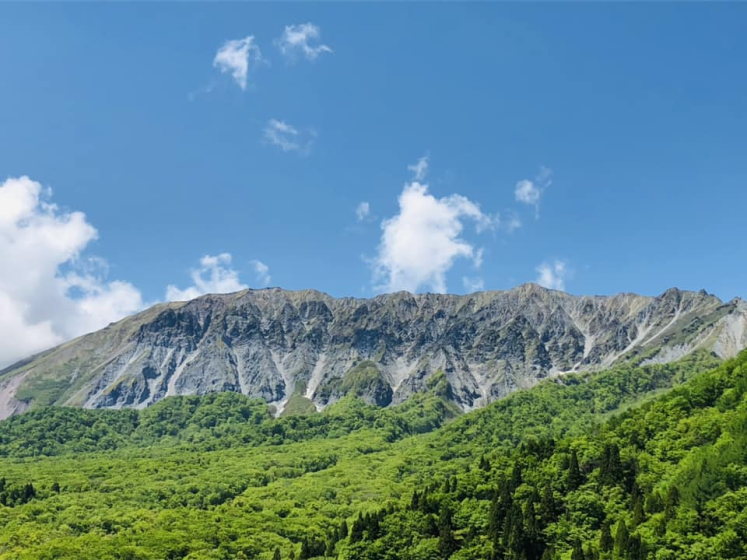
Mount Daisen is sometimes called the “Mount Fuji of Hoki Province”, yet its beautiful form differs greatly from that of Mount Fuji’s symmetrical stratovolcano. Daisen is a far more complex volcanic body, formed through multiple eruptions in which highly viscous magma created a series of lava domes. As a result, the mountain reveals entirely different faces depending on the direction from which it is viewed.
This intricate volcanic geology—and the distinctive vegetation that has grown from it—forms the foundation of Daisen’s remarkable water circulation system, making it one of the richest watersheds even within Japan, a country known for its abundance of watersheds.
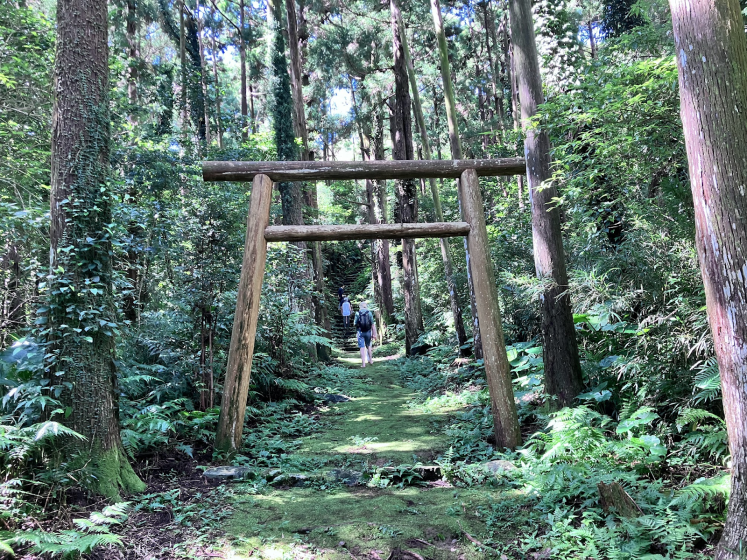
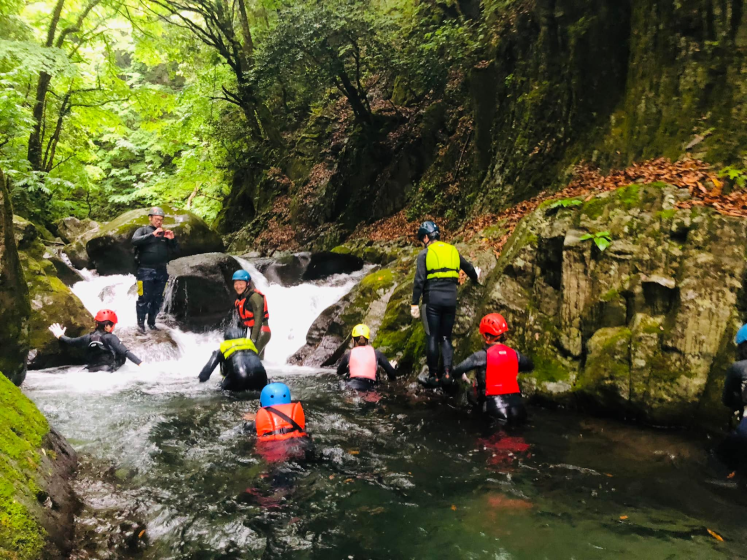
Afterward, we climb higher into the mountains. At around 800 meters above sea level, we visit an ancient shrine to pay our respects to the deity of the mountain before entering the Kinoe River—a mountain stream where ascetics of Mount Daisen are believed to have once trained. Here we practice sawanobori, climbing upstream through the current as a ritual of embodying the mountain’s waters.
As we move deeper into the stream, the water becomes astonishingly clear. It is not only surface water flowing here. From the riverbed itself, subterranean water wells upward, pulsing from below.
Rain and snow brought by winds from the Sea of Japan slowly seep into the thick humus of the beech forests, filtering through the mountain’s intricate underground channels. Eventually, the water rises again—like a pump—from the mountainsides and the riverbed.
Looking down, I see white sand glittering in the sunlight. The riverbed is filled with grains of feldspar and quartz—weathered from andesite and dacite rich in silica—forming a luminous landscape of silver beneath the flowing water.
When I lift my gaze, I notice that the rock faces rising along the two banks tell very different geological stories. Mount Daisen is one of Japan’s largest dacitic stratovolcanoes, formed through multiple eruptions between roughly one million and twenty thousand years ago. The layers created by these eruptions are stacked here in complex formations.
On one bank, moss-covered masses of rough rock lie piled together—remnants of what geologists call Old Daisen, the ancient volcanic body dating back roughly one million years, along with deposits left by subsequent large-scale debris avalanches, when the entire sections of the mountain collapsed. On the opposite bank rises a dramatic cliff of columnar jointing—vertical fractures formed when lava cooled and solidified rapidly in a single event. The former belongs to what is known as “Old Daisen”. The latter is “New Daisen”, a younger volcanic phase from around 20,000 years ago, when pyroclastic flows and lava filled the valleys carved by the older mountain.
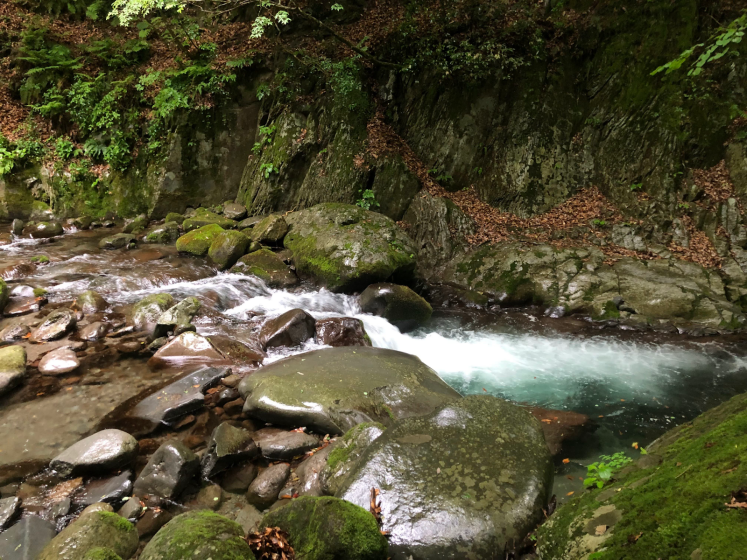
As if responding to that story unfolding on a geological scale, the giant rocks here—softly covered in moss—are threaded through with tree roots and fungal mycelium that penetrate deep into the stone itself. From within them, spring water seeps slowly and continuously to the surface. The sensation returns of what I had felt earlier along the shrine approach: the texture of ancient trees embracing great boulders, the quiet dripping of iwakura—sacred rocks. Their subtle resonance seems to sound again.
That resonance seeps into my body together with the pressure of the springs, flowing onward—eventually making its way to the sea.
Rock, microbes, rain, trees, moss, fungi, wind, tides, sunlight…
All these beings, over vast stretches of time, influence one another and together nurture the cycles of life.
What if it were this entire living totality to which our ancestors bowed, placing their hands together before a shrine?
What if they called the workings of all things kami?
The poet Sansei Yamao (1938–2001), who lived on Yakushima Island, described the essence of Japanese animism as a subtle shift in perspective: not that kami dwell within all things, but that all things themselves are expressions of kami.
“Animism is the intuition—and the conviction—that every phenomenon and every being in the universe is an expression of a single life. That one life is what we have long called kami.”
—Sansei Yamao, Animism as Hope
In this sense, yaoyorozu no kami—the “multitudinous gods” that symbolize Japan’s view of nature—are neither GOD nor god in the Western sense. They are the living manifestation of the vast, generative activity of all things in existence.
The Connection Between Forest and Sea
Leaving the mountain behind, I make my way toward the sea.
The place called Yodoe, overlooking the Sea of Japan and the Shimane Peninsula, takes its name from an old expression meaning “a quiet inlet.” Since ancient times, it has been known as a naturally sheltered harbor.
Walking along the shoreline, I suddenly notice a faint sensation beneath my feet—a coolness distinct from the surrounding seawater. It is submarine spring water, welling up from beneath the seafloor.
At Mount Daisen, the vast amounts of rain and snow brought from the Sea of Japan slowly seep into the earth. Passing through intricate underground channels formed by layers of volcanic strata deposited during eruptions between roughly 1 million and 20,000 years ago, the water travels underground for 20 to 30 years in this area before finally emerging from the seabed like a natural pump.
Carried within this groundwater are nutrients produced by the forest—dissolved oxygen, mineral elements, and fulvic acid iron—substances that form the foundation of coastal ecosystems. Fulvic acid iron is a chelated compound created when fulvic acid—produced as fallen leaves and organic matter decompose through microbial activity in forest soils—binds with iron ions in the ground. Iron is an essential trace element for life, yet it is poorly soluble and difficult for organisms to absorb. By binding with fulvic acid, it becomes available in a form that phytoplankton, seaweeds, and plants can readily take up.
Through this invisible circulation of materials, the forest nourishes the sea. This is one of the quiet but vital cycles through which a rich forest gives rise to a rich ocean, as noted by the late Shigeatsu Hatakeyama, the founder of “The Forest is Longing for the Sea”, and Dr. Shogo Arai, a researcher of submarine spring water.
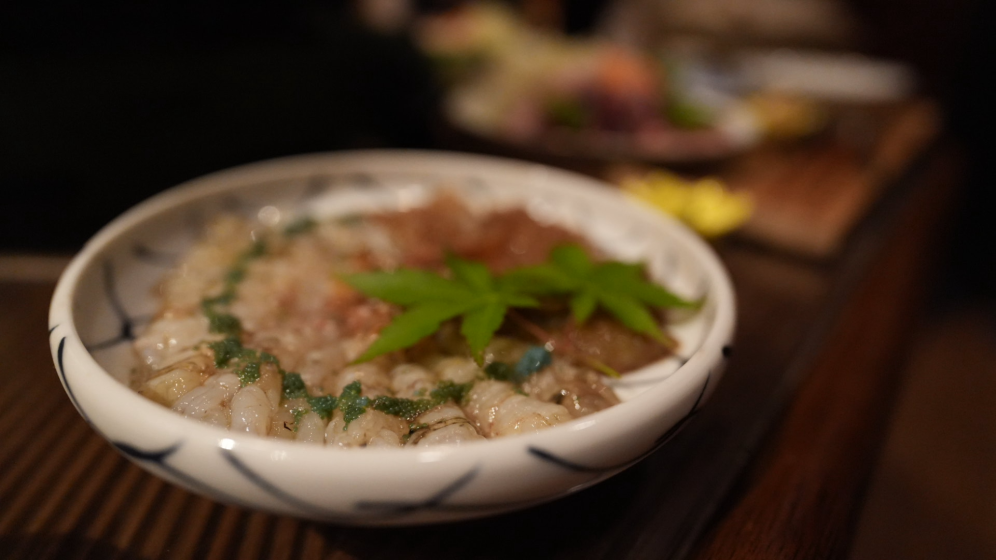
These connections between forest and sea nurture abundant marine life—life that eventually flows onto our tables.
In this region, the arrival of spring is announced by the first tender shoots of wakame seaweed, which appear between February and March after the beginning of the lunar spring. When I place locally prepared ita-wakame—wakame carefully harvested and pressed into thin sheets by local fishermen—on my tongue, it feels as if the Sea of Japan itself is flowing into my body. There are also delicacies found only here, such as mosa-ebi, a shrimp native to the Sea of Japan whose delicate freshness rarely allows it to reach distant markets. And then there is wild rock mozuku (kuromo), a seaweed that settles and germinates on the seabed after winter storms churn the coastal waters, nourished by snowmelt rich in nutrients flowing down from the mountains. Locals sometimes call it “bozu-goroshi (monk-killer)” because eating it is said to make people so healthy that Buddhist priests would have no funerals left to perform.
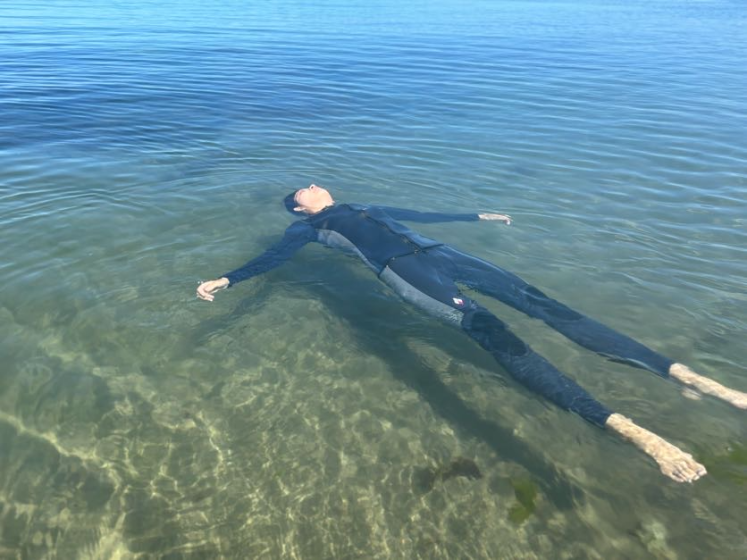
Floating gently in the sea like a drifting jellyfish, I turn and look up. There stands Mount Daisen—the mountain I had been climbing only moments before—quietly watching over me.
So, this is it, I think. We have always been sustained within this web of connections.
Yodoe developed as a hub of exchange with the Asian continent and the Korean Peninsula during the Yayoi and Kofun periods (roughly 300 BCE–600 CE), when permanent settlements began to form here. Archaeological evidence even suggests that the basic layout of the present village may have remained largely unchanged for nearly six thousand years. The surrounding region—including the Mukoyama Kofun cluster in nearby Yonago—contains an extraordinary concentration of ancient burial mounds, rivaling those found around Nara. Particularly notable are the yosumi-tossutsu-gata funkyubo, burial mounds with projecting corners at the four sides, a distinctive funerary form unique to the San’in region. Their presence suggests that this area once belonged to a unique cultural sphere centered on the Sea of Japan, shaped through long-standing exchanges with the continent.
Mount Daisen first came into being through volcanic eruptions roughly one million years ago. How might this mountain have watched as the tiny and fleeting beings called humans appeared only tens of thousands of years ago—building civilizations here while gradually forgetting their connection to the living world?
And yet, perhaps that is not the whole story.
Each time I visit Daisen, what I feel most strongly are the warm traces of people who have lived in deep relationship with this mountain: small roadside shrines quietly standing in the forest, the remains of charcoal kilns hidden among the trees, the vast beech forests and abundant springs that still endure, and the local grandmothers who speak with intimate knowledge of the mountain’s gifts and the lives they sustain. Even today, people in this region still press their hands together and say that the success of their rice fields and vegetable gardens comes “thanks to Daisen-san”.
Certainly, much has been lost through modernization. Yet the memory carried by earlier generations still seems to breathe quietly in this land.
It is not a call to retreat into a romanticized past or a purely naturalistic way of life. Rather, it points toward something else: a clue to a symbiotic civilization—one that receives the gifts of nature with humility and reverence, participates in the great cycles of life as part of them, and cultivates enduring relationships with the living world.
To see kami in the workings of all things, to bow in gratitude, and to recognize ourselves as participants within that same living activity—it feels to me as if the very origin of Ryuiki Awareness resides here.
Read Part 2
But how, exactly, did this perspective of deep interconnectedness take root and sustain itself within the cultural and historical fabric of the Japanese archipelago? In Part 2, we explore this by tracing the threads of Japanese myth and history.
Yasuhiro Kobayashi
Tokyo
Leave a Reply