

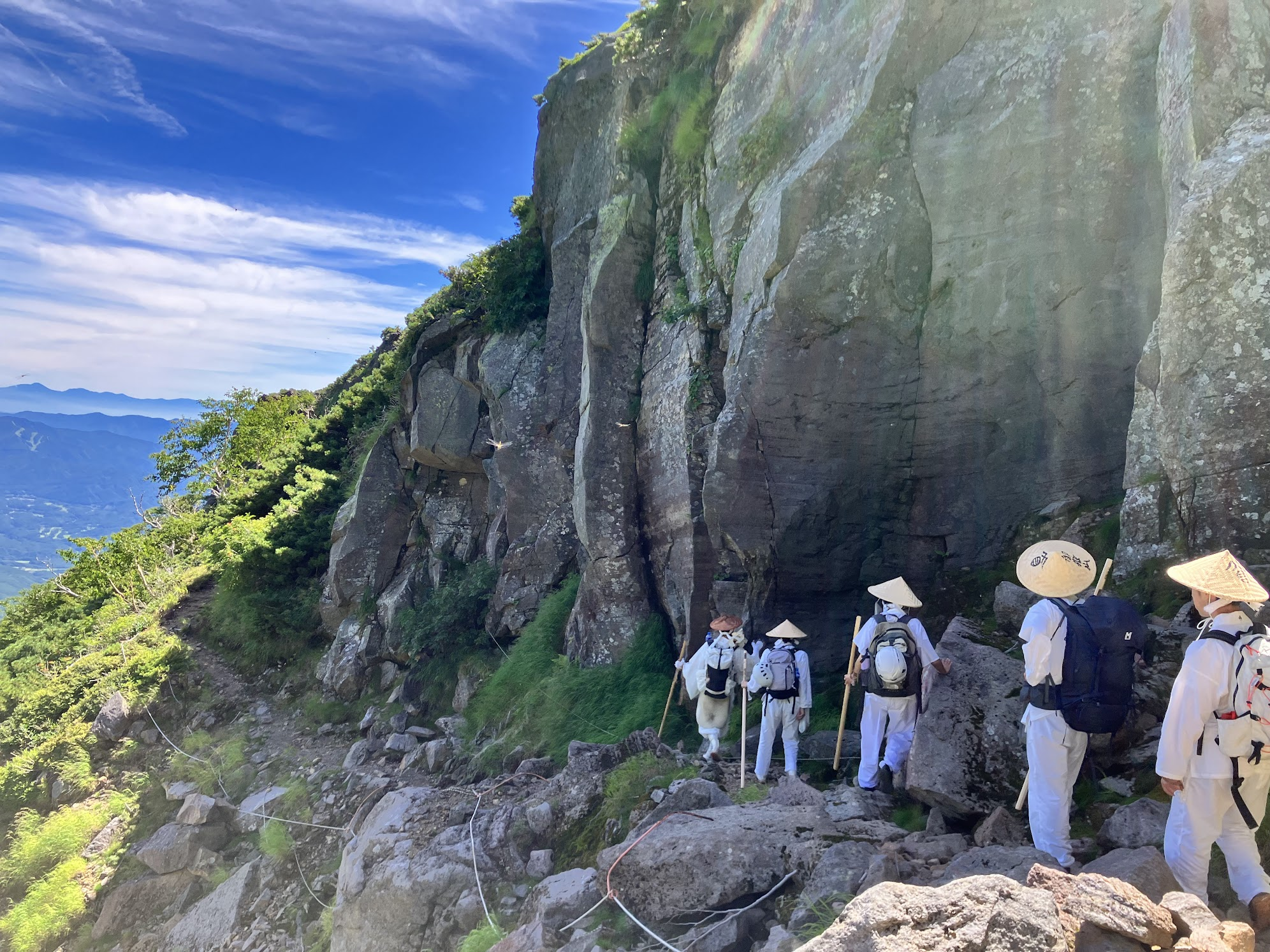
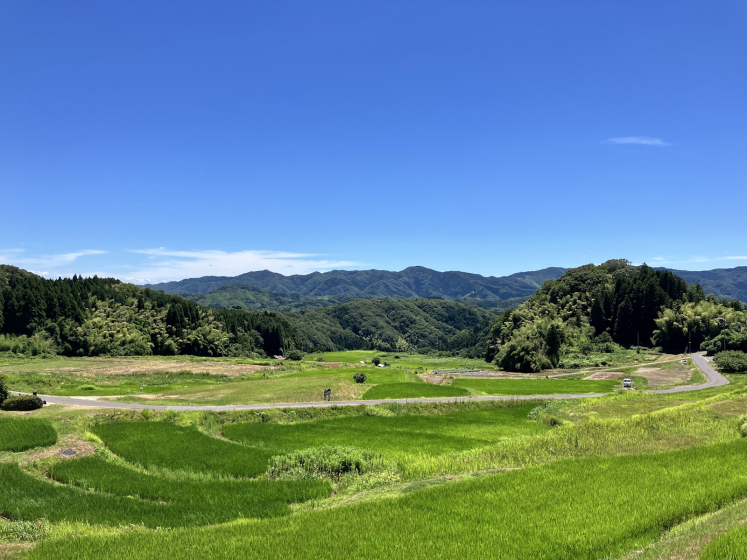
How much of the mountains must our ancestors have cut away to produce such a landscape?
As we saw in Part 1, Ryuiki Awareness is the capacity to perceive the world as an interconnected whole, in which all existence is dynamically linked. In Part 2, we turn to cultural history and ancient myths to explore how this awareness came to be cultivated on the Japanese volcanic archipelago.
Shinbutsu-Shugo and the Faith of Marebito
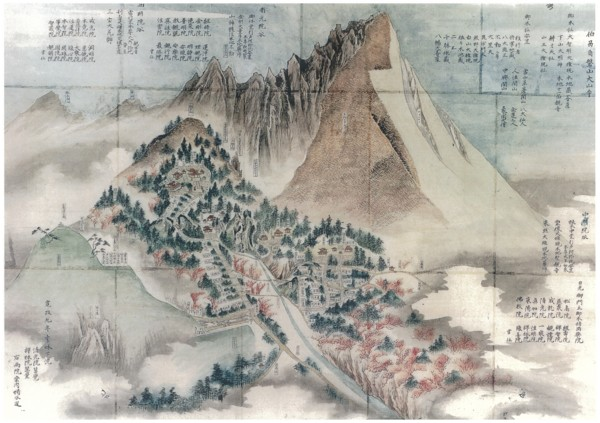
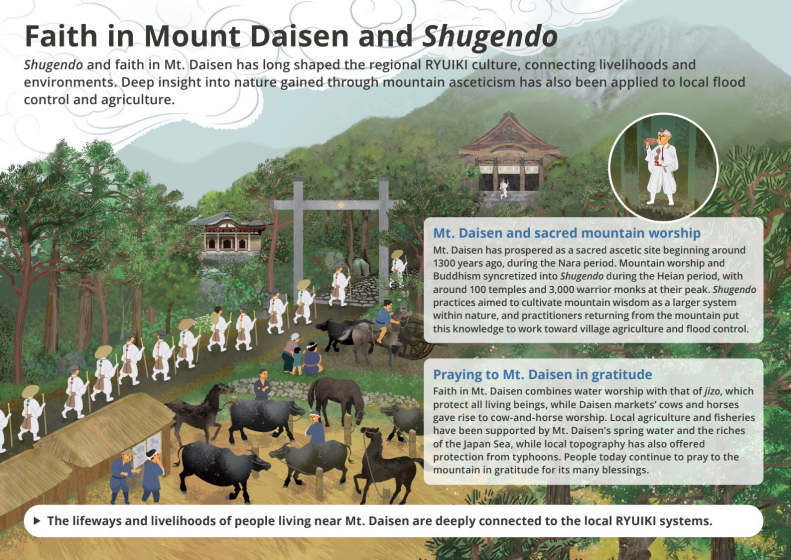
Mount Daisen has also flourished for some 1,300 years as a sacred mountain of Shugendo practice since the founding of Daisenji Temple in 718. Over the centuries, various forms of devotion took root here: the Daisen faith, which combines reverence for water with devotion to Jizo—the Bodhisattva of Compassion believed to save all living beings—and the cattle and horse faith associated with the historic Daisen livestock market. At its height, the mountain supported more than one hundred temple lodgings and as many as three thousand warrior monks, reaching a level of prosperity rivaling Mount Hiei and Mount Koya.
Turning off the path on the way to Daisenji and following a moss-covered stone walkway deeper into the forest, one eventually arrives at Ogamiyama Shrine.
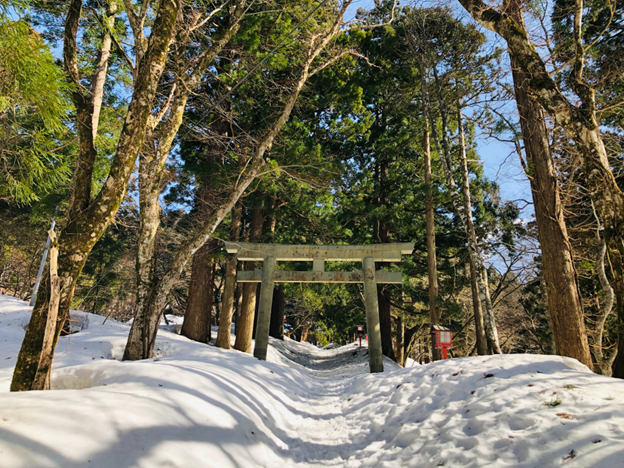
When guiding visitors from overseas, I am often asked why temples stand within shrine precincts, or why Buddhas and kami are worshipped together. The tradition known as shinbutsu shugo—the syncretic blending of Buddhism and Shinto—is, I believe, one of the most significant forms of wisdom that has shaped Japanese spiritual culture, and its traces remain deeply embedded in everyday life even today.
Readers who have climbed mountains in Japan may have encountered the term “gongen (権現)”. This refers to the idea that Buddhas or bodhisattvas manifest temporarily as local kami—a concept known as honji suijaku, a uniquely Japanese expression of the fusion between Buddhist and indigenous shinto beliefs. According to the founding legends of Daisenji, the entire mountain itself is regarded as a manifestation of gongen, and every plant growing upon it is understood to be part of the body of Jizo Bodhisattva.
“Even the soil is an attendant of Jizo; every tree and blade of grass is a form of Jizo’s compassionate activity.”
—Daisenji Engi no Maki (Scroll of the Origins of Daisenji), preserved at Tomyoin Temple
As an aside, in Japanese sushi restaurants, rice is still referred to as “shari”. This term is derived from busshari, or Buddha’s relics—the faith centered on worshipping the cremated remains of Shakyamuni Buddha. In syncretic Japan, the Buddha’s relics and the animistic spirit of the rice plant have become one.
Until the Meiji-era policy of shinbutsu bunri—separation of Shinto and Buddhism—Japan lived with this culture of shinbutsu shugo for more than a thousand years. Buddhism first arrived from the Asian continent in the sixth century (traditionally dated to 538 or 552), and after the Battle of Baekgang many migrants from the Korean kingdom of Baekje settled in Japan, helping Buddhism take root in the archipelago. Over time, the indigenous forms of reverence that had long existed—worship of natural forces and ancestral spirits—came to be called Shinto to distinguish it from Buddhism.
Shinto, however, has no founder and no sacred scripture. Rather than a religion in the doctrinal sense familiar in the West, it may be better understood as a set of cultural practices and forms of wisdom for living in relationship with nature.
In an environment that brings abundant blessings yet can also unleash earthquakes, tsunamis, typhoons, and volcanic eruptions, human beings have little choice but to live with reverence for the unseen forces beyond our control—approaching them with awe, gratitude, and a deep attentiveness to the workings of the natural world. To live in such a landscape is to recognize oneself not as separate from those forces, but as a participant within them. Perhaps, this is the soil from which the worldview known as jinen, mentioned in Part 1, quietly emerged.
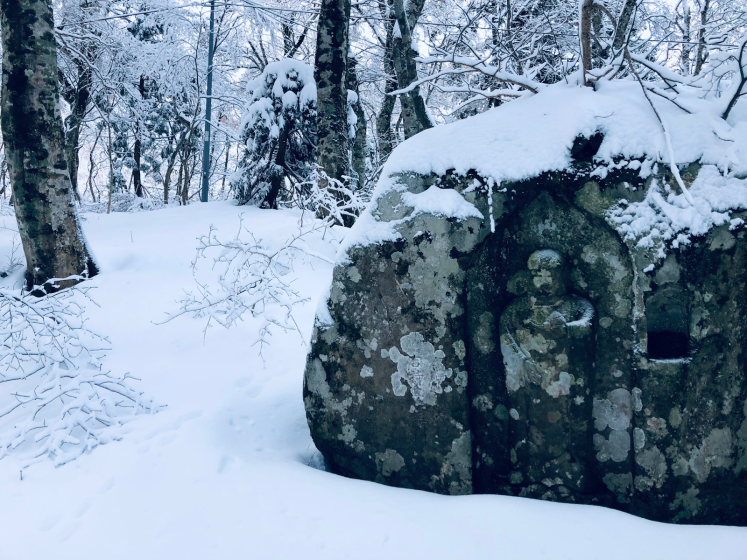
Market born of Jizo Bodhisattva Worship.”
This capacity to receive what arrives from outside—allowing it to blend with what already exists rather than replacing it—may be said to run deep in the cultural DNA of Japan.
The ancestors of the Jomon people are believed to have lived on the Japanese archipelago since at least 18,000 years ago. Later, migrants associated with the Yayoi culture arrived from the Asian continent, bringing wet-rice agriculture. For a long time, the prevailing theory held that modern Japanese people emerged simply from the mixing of these two populations—the so-called “dual-structure model”.
Recent genomic research, however, has revealed a more complex picture. During the Kofun period (late 3rd–late 6th century CE), further waves of people from East Asia arrived and mingled with those already living here, significantly diversifying the genetic composition of the population (Cooke et al., 2021, among others).
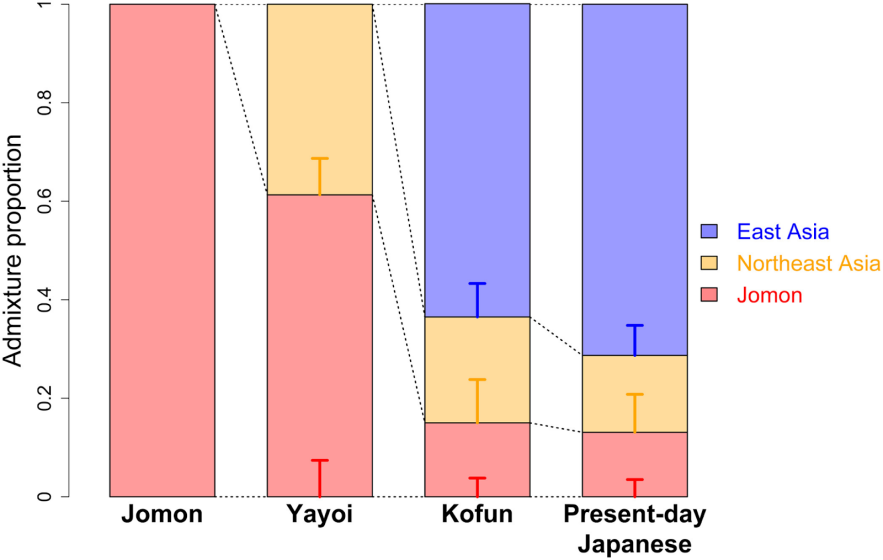
What is remarkable is that on this archipelago at the far eastern edge of the Eurasian continent, the various genes and cultures that flowed in from the mainland did not erase what had come before. Instead, they accumulated in layers.
The folklorist Shinobu Orikuchi described this cultural disposition through the concept of marebito. Marebito are beings who come from beyond—from another world or distant realm—and the custom of welcoming them, he argued, forms one of the most fundamental foundations of Japanese culture and belief. The spirit of omotenashi, or hospitality, reflects this same ethos, and its influence can be seen across Japanese traditions: in festivals and ritual performances such as Noh and Kabuki, as well as in cultural practices like the tea ceremony and Ikebana.
Within marebito culture, welcoming the other—whether ancestral spirits, traveling strangers, or deities said to drift ashore from distant lands—is believed to bring prosperity and stability to the community.
Yet, receiving those who arrive from outside—people or cultures with different ways of being—and welcoming them with genuine respect is far from easy. If we look across human history, many civilizations expanded until their resources were exhausted, lands turned barren, and populations could no longer be sustained. Conflict and conquest followed, and successive dynasties replaced one another, cultures overwritten rather than blended.
How, then, in a small island nation like Japan, was such cultural layering possible?
The Land of Arrival
Let us return to Mount Daisen.
The ancient province of Izumo, which includes the Daisen region, once served as one of Japan’s gateways to the Asian continent. If you turn a map of Japan upside down, it becomes strikingly clear: cross the sea from the Korean Peninsula along the Tsushima Current, and you arrive almost exactly in the vicinity of Daisen.
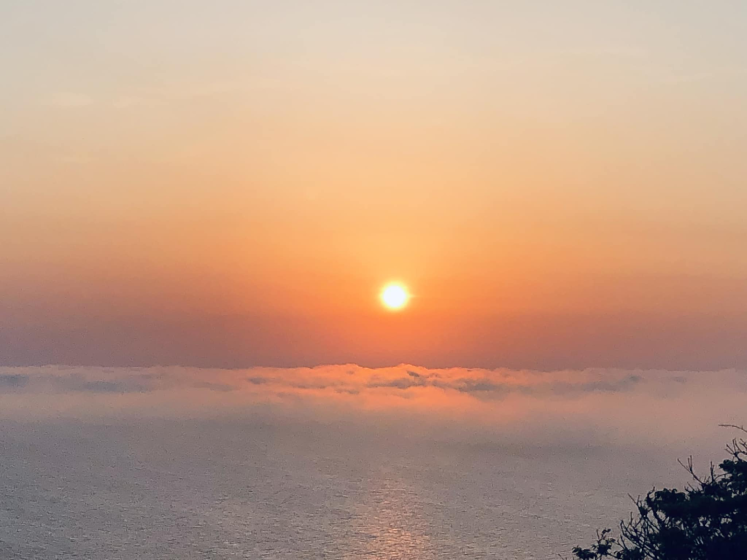
From around 800 meters above sea level near Daisenji, looking out over the Sea of Japan, a long arc of sandy coastline can be seen stretching toward the Shimane Peninsula. This is Yumigahama—the bow-shaped sandbar I passed earlier on the road from Yonago Airport to the mountain.
In the land-pulling myth recorded in the Izumo Fudoki, the water deity Omizunu drives a stake into Mount Daisen and uses Yumigahama as the rope with which he pulls land from Noto toward Izumo. In ancient times, when the present Shimane Peninsula was still an island and a navigable strait existed between Kizuki—where Izumo Grand Shrine now stands—and Mihonoseki, the calm inland waters that are today Lake Shinji and Lake Nakaumi formed a sheltered inlet. For migrants and castaways carried by the Tsushima Current, this would have served as a natural harbor. At the same time, it formed a long waterway leading toward the Sakai Channel in eastern Izumo—the Yatsukamizu, which may well have been the true form of the water deity Omizunu.
Scholars suggest that this land-pulling myth does not stray far from the geological history of the Shimane Peninsula itself (Okamoto, 2022). Between roughly 20 and 10 million years ago, the Japanese archipelago separated from the Eurasian continent, and the Sea of Japan was formed. As tectonic uplift gradually raised the seafloor, the Shimane Peninsula emerged.
How the memory of such ancient geological transformations might have been preserved in myth remains uncertain. Yet, if the people of antiquity were able to read the folds and faults of the land and translate them into narrative, their insight is nothing short of remarkable. Even as scientific understanding advances, it may be that modern people are becoming less able to perceive what earlier generations once saw as self-evident.
The vast sandbar of Yumigahama, however, was shaped not only by geology but also by human activity—specifically, the traditional iron-smelting technique known as tatara.
In the Izumo region, where granite rich in high-quality iron sand (masa-tsuchi) is widely distributed, tatara iron production using iron sand and charcoal had been practiced for more than a thousand years. Especially from the early Edo period in the seventeenth century, a method called kanna-nagashi became widespread. Mountainsides were cut away, and weathered rock layers containing iron sand were washed through channels, allowing the heavy iron particles to separate from ordinary soil and sediment.
Until Western-style iron production was introduced in the Meiji era, the Chugoku Mountains, including the Daisen area, produced nearly 80 percent of Japan’s total iron output. Vast amounts of earth were excavated in the process, and the sediment carried downstream is believed to have played a major role in forming the Yumigahama Peninsula.
This enormous sandbar stretches roughly 20 kilometers in length and 4 kilometers in width—one of the largest of its kind in Japan. Its total area is almost the same size as Manhattan Island. The volume of sediment required to create it is estimated at around one billion cubic meters—the equivalent of roughly 800 Tokyo Domes, or about one-tenth the volume of Mount Fuji.
How much of the mountains must our ancestors have cut away to produce such a landscape? To modern eyes, this might appear to be a staggering act of environmental destruction. And yet, remarkably, the forests of the Chugoku Mountains were not exhausted. On the contrary, they continued to function as part of a sustainable cycle. How was such a balance possible?
Susanoo
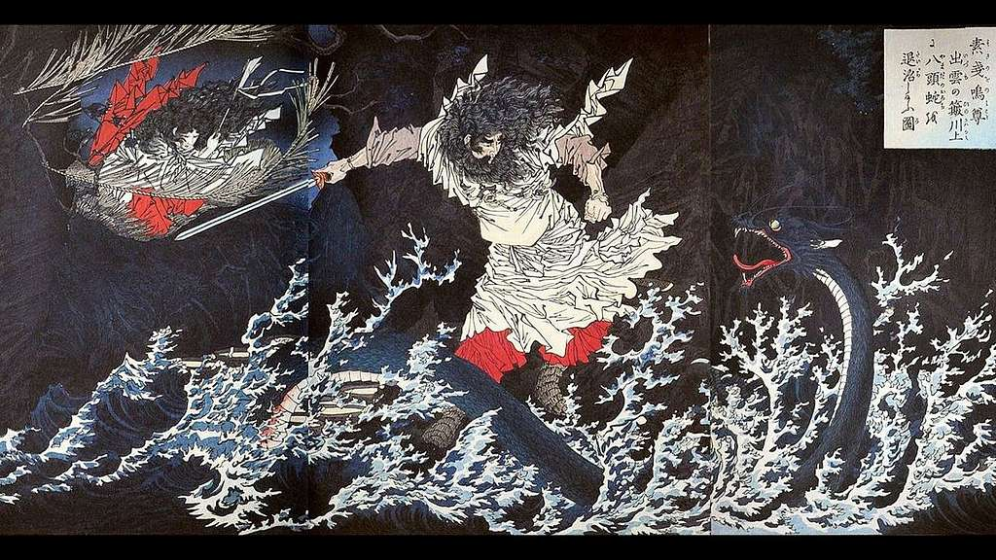
In the myths of ancient Izumo, the deity said to have brought advanced ironworking, rice cultivation, and flood-control technologies to the region is the visiting god Susanoo. He is best known for subduing the Yamata no Orochi, the eight-headed serpent—often interpreted as a metaphor for the violently flooding rivers of the Izumo region, particularly the Hii River and the Hino River.
As we have seen, tatara iron production required cutting away mountains to obtain iron sand and felling vast numbers of trees to produce charcoal. To extract more than 10 tonnes of iron sand, over 100 tonnes of earth had to be washed away continuously for three days and nights. Producing 3 tonnes of raw steel required roughly 15 tonnes of charcoal—equivalent to about 95 tonnes of fresh timber, or nearly 1.5 hectares of forest.
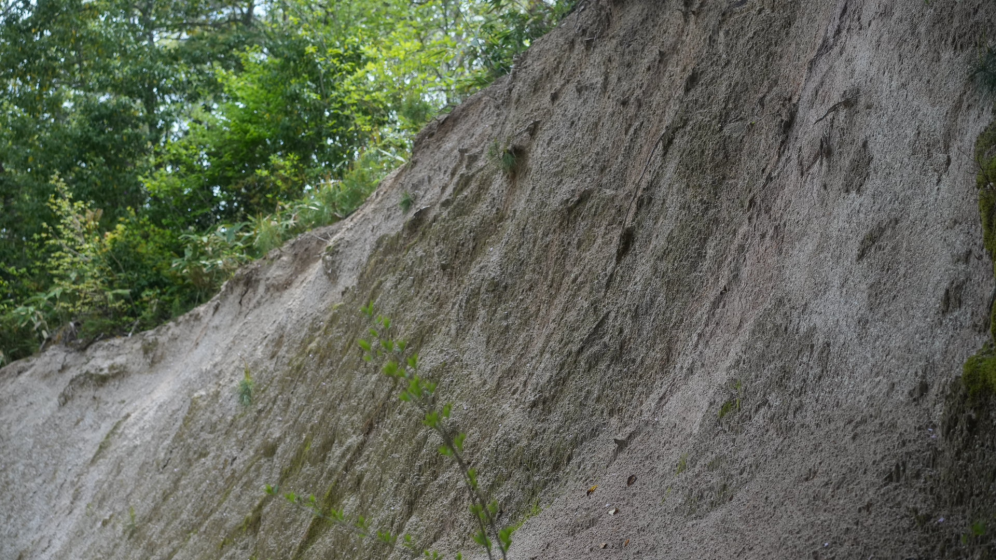
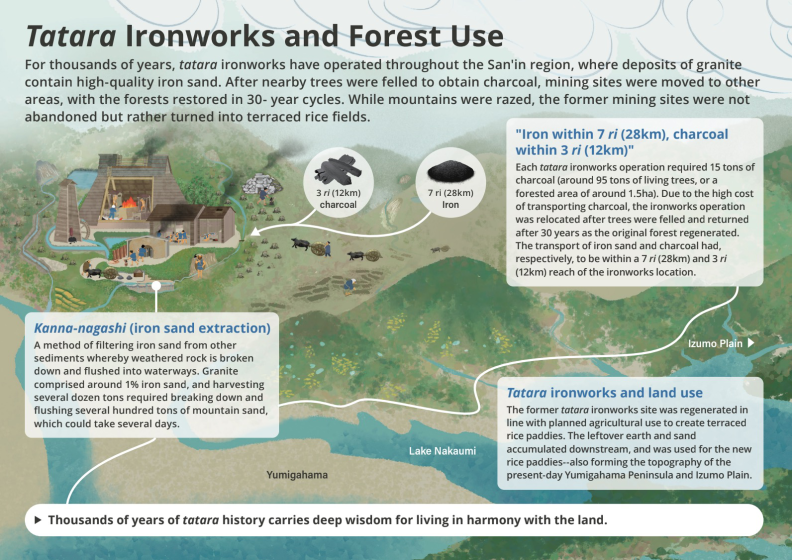
The scale is staggering. If iron production of this kind continued unchecked, it is easy to imagine mountains stripped bare and rivers thrown into disorder. When slopes are cut away and the soil loses its ability to absorb rainwater, rainfall runs quickly across the surface instead of soaking into the ground, and rivers begin to flood.
In this light, the Yamata no Orochi—the rampaging river—becomes easier to understand. The Kojiki describes the serpent’s belly as “constantly bleeding”. This image may well reflect rivers turned reddish and turbid by oxidized iron carried downstream with massive quantities of disturbed sediment.
According to the myth, Susanoo not only brought ironworking technology from the continent but also introduced sophisticated methods of flood control and forest management. By taming the raging rivers symbolized by the Yamata no Orochi, he is said to have protected the vast rice fields—represented in the story by Kushinadahime, the princess of the rice paddies—and established in this land a civilization in which iron production and agriculture could coexist.
Susanoo is also remembered as a deity of reforestation. In legend, he plucked hairs from his beard and body, designating each to become a particular species of tree and instructing where it should be planted. Furthermore, the Yashiori no Sake used to subdue the Yamata no Orochi—brewed repeatedly to produce a powerful drink—also suggests a sophisticated knowledge of fermentation.
As the historian Tsunetada Mayumi once remarked, “kanna-nagashi was itself a form of nation-building”. After iron sand had been washed from the mountains, the valleys left behind and the newly deposited sediment plains were developed into rice paddies. Iron production, agriculture, and forest regeneration became part of a single integrated system. In this sense, the making of Izumo was not simply industrial or agricultural development, but the construction of a sustainable civilization.
Interpretations of myth vary, of course, and this is only one possible reading. Yet the story of Susanoo may well have served as a cultural vessel for transmitting practical knowledge: a body of insight into ecosystems, water management, and even the invisible work of microorganisms. It may represent the memory of ancient natural scientists—or of a whole tradition of ecological and technological wisdom—that learned how to calm the forces of a turbulent landscape and guide them toward renewal.
Ne no Kuni
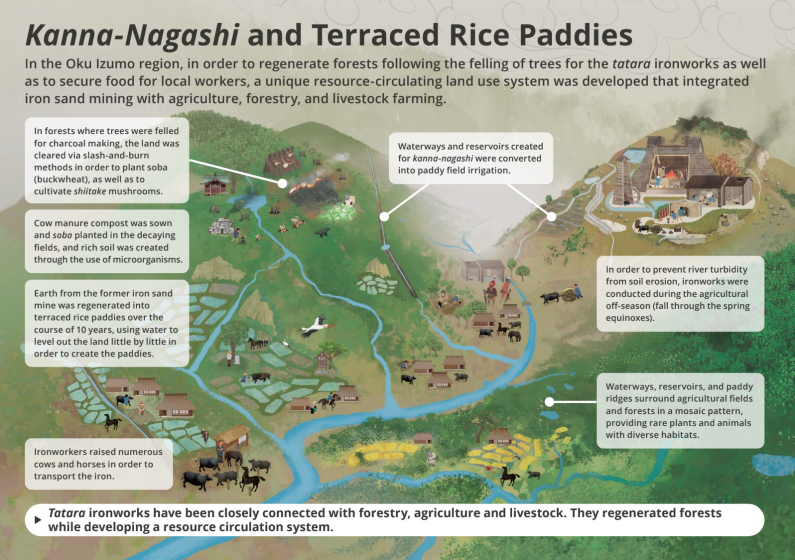
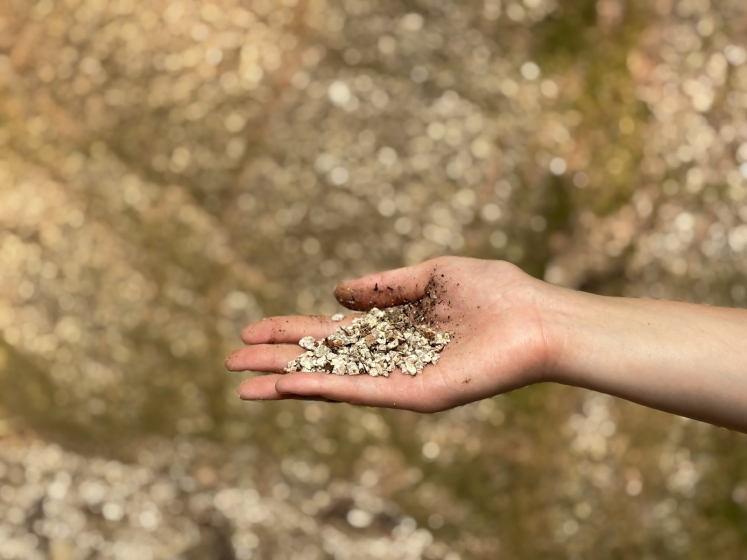 When visiting sites where tatara ironmaking once took place, one encounters masa-tsuchi—granitic sandy soil that crumbles easily in the hand. In such a state, the land could hardly support rice cultivation. To transform these cut slopes and sediment-filled valleys into terraced paddies and farmland would have required careful soil regeneration through the decomposition of organic matter by microorganisms.
In fact, historical evidence suggests that the people of this region did precisely that. Even as they developed the large-scale mountain-cutting technique known as kanna-nagashi, they did not simply abandon the landscapes left behind by iron production. Instead, drawing on deep knowledge of soils, forests, and microbial processes, they undertook the restoration of both farmland and woodland. Cattle manure compost and microbial activity were used to rebuild soil on former smelting sites, enabling them to be converted into terraced rice paddies in less than a decade—a remarkable achievement recorded today as part of the Oku-Izumo Agricultural Heritage (2015).
At the same time, iron production was carefully timed. To prevent river pollution caused by sediment runoff, smelting and iron sand extraction were carried out only during the agricultural off-season, from autumn until the spring equinox. In this way, tatara ironmaking was closely integrated with forestry, farming, and livestock management. Together, these practices formed a circular system of resource use, in which forests were continually regenerated while supporting both iron production and agriculture.
 This land’s climate may also have played an important role in making such regeneration possible. The San’in region is known for its persistently high humidity and some of the most intense summer heat in Japan—conditions that naturally stimulate microbial activity, accelerating decomposition and the rebuilding of soil.
From my own experience working on ryuiki restoration projects, I have come to feel that nature responds far more quickly than we often imagine. When stagnation in the land is eased and water and air begin to flow again, birds arrive almost immediately. As soils gradually recovered at former tatara sites and water began to gather in newly formed terraces, birds must have come then as well, dropping seeds of many kinds of trees.
Migratory birds in particular travel vast distances, carrying plant seeds far from their parent trees and contributing to the regeneration of forests and the establishment of vegetation along their migration routes. Recent studies have even revealed that migratory birds navigate using cryptochrome proteins in their retinas that allow them to perceive the Earth’s magnetic field (Xu J. et al., 2021). Their remarkable ability to return to the same locations each year is thought to depend on memorizing the magnetic signatures of particular landscapes.
The San’in region contains abundant magnetite, which would likely produce a strong geomagnetic signature. And after all, this is Tottori—a place name often linked to the totori-be, ancient guilds skilled in capturing and raising birds. Many place names associated with birds are also found in regions connected to iron production. Perhaps connecting all of this to forest regeneration is a stretch of the imagination—but the thought lingers.
In any case, the ancient people of Izumo were likely a community of highly skilled practitioners who possessed integrated knowledge of flood control, infrastructure, soil regeneration, and iron production.
Interestingly, the realm ruled by Susanoo in the Izumo myths is called Ne no Kuni, the “Root Country”—a place associated with death and rebirth. It is difficult not to wonder whether this idea is connected to a deeper understanding of the invisible cycles beneath the soil: the hidden processes through which life continually decomposes and regenerates.
Later, between the sixth and seventh centuries, the ancient state of Izumo was incorporated into the political order of the Yamato court—an event mythologized as the “transfer of the land” (kuni-yuzuri). From that point on, the Yamato state and its legal system came to shape the official political history of Japan. Yet even while acknowledging Yamato authority, the Izumo people continued to play a central role in ritual and religious practice.
This kind of layered structure—where incoming political powers govern while indigenous traditions retain ritual authority or cultural influence—appears repeatedly throughout Japanese history and mythology. What is particularly striking in the case of Izumo is that in regions such as Hokuriku, northern Kanto, and Tohoku—areas where people connected to Izumo are said to have dispersed after the transfer of the land—the deities of Izumo, including Susanoo, remain strongly present even today (Okamoto, 2022).
The idea of Ne no Kuni itself flows deeply through Japanese folk belief. Like the Okinawan concept of Nirai Kanai—a distant realm from which visiting deities and ancestral spirits arrive—it is often understood as a timeless land connected with the cycles of death and renewal.
Perhaps the “Root Country” ruled by Susanoo was not only a symbolic realm of rebirth, but also a metaphor for a network of knowledge quietly spreading beneath the surface—like the underground mycelial networks through which forest trees exchange information through the soil.
Those who carried and transmitted such knowledge across the mountains and rivers may have been figures such as shugensha—practitioners of mountain asceticism—or kiji-shi, itinerant woodworkers who traveled widely through Japan’s forests.
The Wisdom of Shugendo
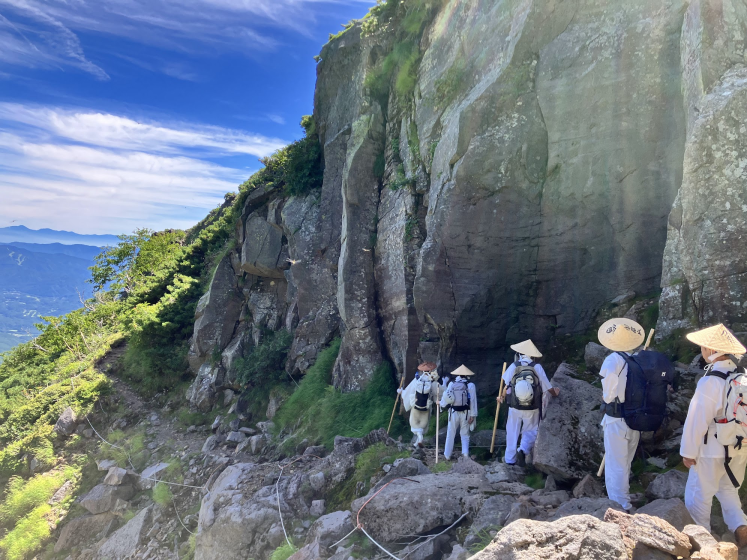
Shugendo is a form of mountain asceticism that weaves together Shinto-based nature worship and Buddhist doctrines. Before the early Meiji era—when the policies of shinbutsu bunri (the forced separation of Shinto and Buddhism) and haibutsu kishaku (the suppression of Buddhism) were enacted, and Shugendo was officially banned in 1873 (Meiji 6)—it is said that more than 170,000 shugensha (yamabushi) were active across the country. With a population of approximately 33 million at the time, this would mean that roughly one in every 200 people in Japan was a shugensha—an astonishing proportion.
The philosopher Umehara Takeshi (1925-2019), who explored the deeper layers of Japanese culture, stated that “kami-goroshi” (the killing of the gods) occurred twice in modern Japan. The first was during the Meiji era, with the implementation of shinbutsu bunri. It was not only Buddhist deities that were erased; countless unnamed “kami” (gods) that had dwelled in local shrines and small altars across the archipelago were also lost. Under the formation of “State Shinto” as a pillar of the modern nation-state, a dualistic framework separating Shinto and Buddhism was imposed, dismantling the syncretic world of shinbutsu-shugo (the amalgamation of Shinto and Buddhism) that had long characterized Japanese spirituality. Kami became increasingly abstract, and the palpable sense of their presence in everyday life gradually faded. This system of State Shinto was itself dismantled after Japan’s defeat in the war—marking, in Umehara’s view, a second “killing of the gods”.
What is important here is that the role of the shugensha extended far beyond that of religious practitioners. Through physical training in sacred mountains, they cultivated deep insight into the natural world. They functioned, in a sense, as knowledge carriers —transmitting what they learned from the mountains to local communities and applying it to water management, agriculture, medicine, and food practices. They were also involved in mining activities and in the search and distribution of medicinal herbs.
Furthermore, they formed extensive networks connecting the sacred mountains with the populace (believers), and they carried not only goods and local products, but also knowledge and political information across the mountain ranges.
Read Part 1
In this sense, belief systems in Japan, such as Shugendo and mountain worship, were not merely for religious practice and prayer. They functioned as cultural infrastructures—ways of cultivating profound insight into the natural world through venturing deep into mountains and waters, and of circulating that insight, along with goods and information, across regions. What we have called Ryuiki Awareness—the capacity to perceive the dynamic wholeness of the natural world and the continuum from mountain to sea—was not only cultivated but actively transmitted through these networks.
But what exactly did this embodied knowledge of nature look like? And how was it sustained across time? In Part 3, we follow these questions, exploring the contemporary significance of Ryuiki Awareness and the importance of learning to live with multiple ways of knowing.
Yasuhiro Kobayashi
Tokyo

Leave a Reply