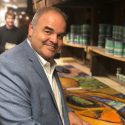
Xavier Cortada
Miami
Xavier Cortada is a Cuban-American artist and a member of the Florida Artists Hall of Fame. His interdisciplinary career bridges art, science, and activism, engaging people locally and globally in creative problem-solving. A former lawyer, Cortada began his artistic journey in the 1990s by working with marginalized communities to address critical issues such as mental health, drug abuse, and youth gang violence. He later partnered with U.S. embassies and USAID to create collaborative murals across four continents, tackling concerns like juvenile justice, AIDS, and disabilities. For these efforts, he received numerous awards, including the U.S. State Department Millennium International Volunteer Award and the CWLA Champion of Children Award. In 2007 and 2008, through the National Science Foundation and the New York Foundation for the Arts, Cortada became the only artist to create work at both of the Earth’s poles. His polar projects launched multiple large-scale environmental justice initiatives including “The Underwater,” a community-led sea level rise campaign that has been recognized by the White House’s 5th National Climate Assessment and the American Academy of Arts and Sciences. Cortada has spent the last three decades creating more than 150 public artworks—spanning murals, installations, and participatory projects—which have mobilized thousands of people and led to the restoration of over 25 acres of Miami’s coastal wetlands. His practice demonstrates how socially engaged art can cultivate a broad base of people who help build the political will necessary for systemic change. Cortada brought global attention to these innovative efforts through his TED Talk, “A Creative Approach to Community Climate Action,” and press coverage by the New York Times, Washington Post, CNN, PBS NewsHour, NPR, and BBC. Known as Miami’s pioneer eco-artist and appointed as Miami-Dade’s inaugural artist-in-residence, Cortada has also been commissioned to create art for the White House, the World Bank, CERN, and many other prestigious institutions. His collaborations, such as creating a real-time water cycle visualization project with USDA forest service scientists where acid rain was discovered in New Hampshire, highlight his ability to intersect art and science in groundbreaking ways. In recognition of his impact, Cortada has received a National Academies of Sciences, Engineering, and Medicine Excellence in Science Communications Award, a Creative Capital Award, and an Environmental Law Institute National Wetlands Award. www.cortada.com