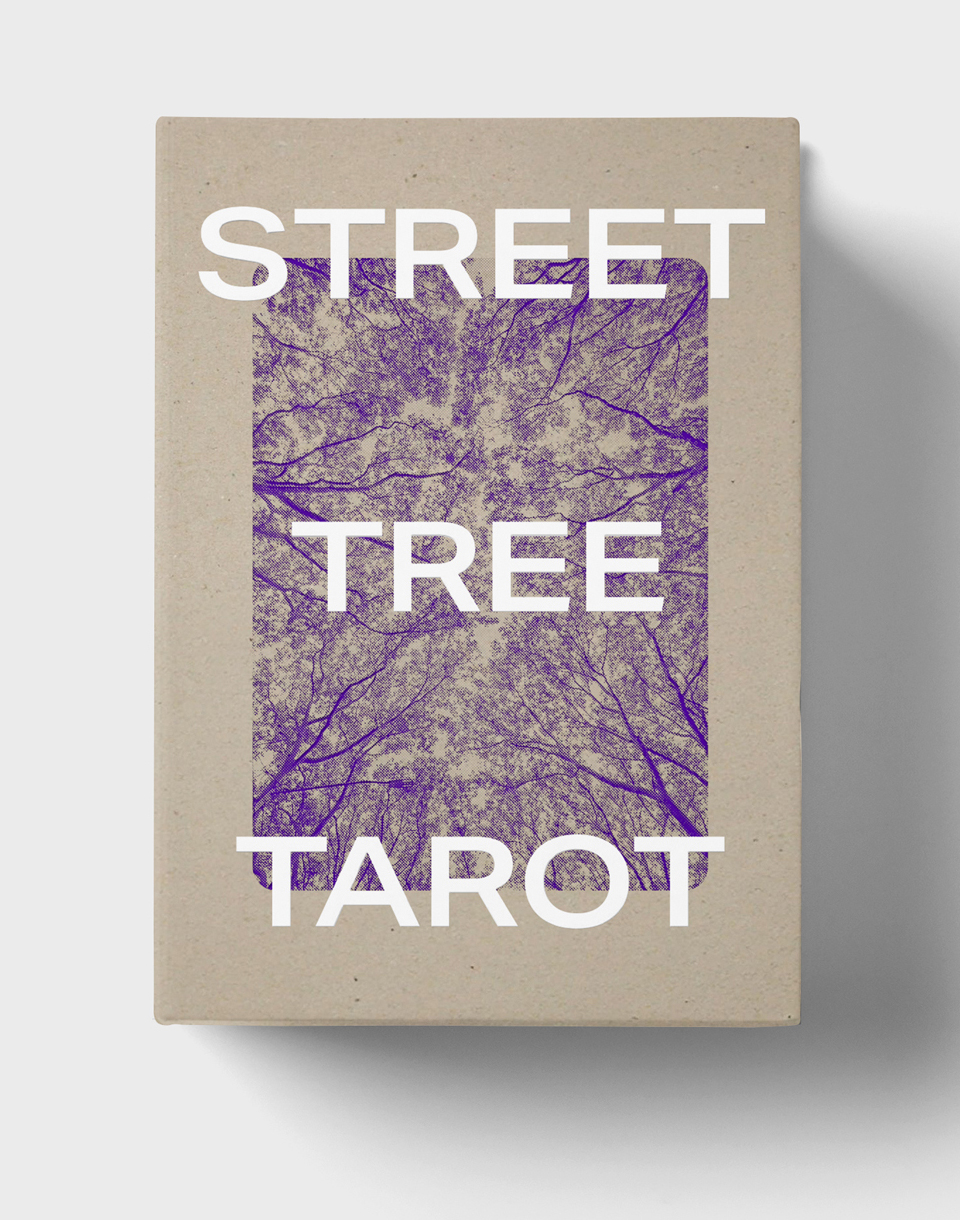


Matthew López-Jensen, the artist, author, and educator behind New York City Street Tree Tarot. The Street Tree Tarot deck is a photography deck designed to be used like any other tarot deck, but with the hope that users will bring their own meaning to the cards and develop new patterns and ways of interacting with trees and stewardship. The crowdfunded tarot deck will be published in June of 2026 by Verlag Kettler. Lindsay Campbell sat down with Matthew and asked questions about the project, street trees, and the creative process.
Lindsay Campbell: How did you first get interested in street trees?
Matthew López-Jensen: When I was young, I would climb every tree with a branch low enough to reach. I loved spending time up high and out of view. Sometimes I’d bring a book. It’s not a huge surprise that my first creative projects as an artist focused on human/tree relationships. Every Tree in Town, an archive of over 3,000 trees in Willimantic, Connecticut, explored the relationship between spruce trees and immigration patterns during the Industrial Revolution. Among Trees and Stones, an archive of beech trees at Green-Wood Cemetery, explored the layered relationships between beech trees, landscape painters, and the rural cemetery movement. I’ve also photographed trees in parks all over New York City.
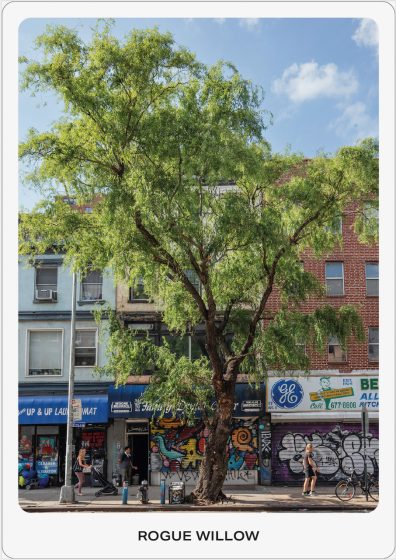
Street trees, the ones growing between the curb and sidewalk, are in a category all their own. Street trees are out of place and must work harder than other trees. That they can survive growing out of little squares in the sidewalk is nothing short of a miracle. They struggle to access water, spread their roots, and reach nutrients. They also deal with so many other stresses: dog waste, bike chains, over-pruning, extreme heat, vandalism, chemical dumping, construction, scaffolding, overhead wires, perpetual impacts from trucks, on top of ongoing blights. When they do survive, it is often because the humans on the block have stepped up to care. It is this care, the fact that every street tree can also be a site for environmental activity, that made me especially interested in street trees. Their resilience is inspiring. They hold space in the built environment like works of art.
LC: Tell me more about your process of walking, observing, selecting subjects, photographing, and editing. Do you consider this project a type of archive?
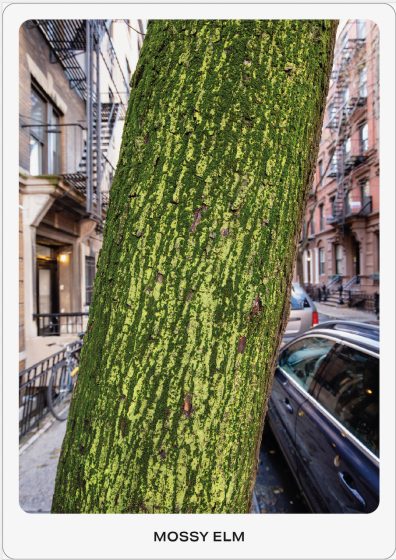
ML: This project started as an archive of street trees and stewardship. I walked all over the five boroughs looking for street trees in all shapes and forms and for any evidence of care around the trees. I photographed street trees that were broken, regenerating, dead, or dying, enormous, loved, ignored, decorated, or defaced. There are so many street trees, almost 700,000 in New York City, but some trees have character and call out for attention (just like people). I photographed the gardens and decorations that are sometimes installed in the small tree beds surrounding street trees. I also photographed tree guards installed to protect the trees and surrounding gardens. The City has a very standard version of a tree guard, but these are cost-prohibitive for some, too bland for others. As a result, homemade tree guards are found all over. These vernacular structures reflect community pride, creativity, and thrift.
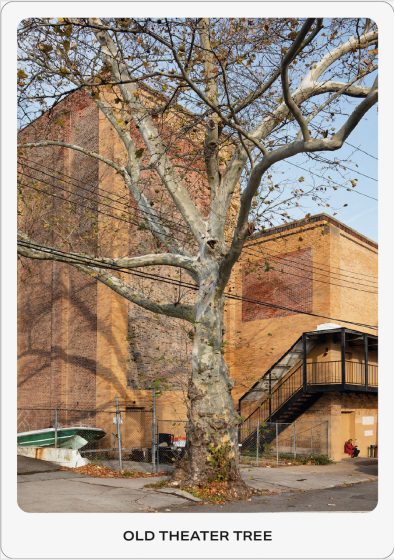
Walking is structured into my creative practice, like sharpening pencils or cleaning brushes. The act of collecting is also a technique I use to create work about place. When you build an archive or collection, be it of objects or photographs of things, layers of meaning and history reveal themselves. One offshoot of my street tree work is an archive within an archive at The New School. To create The New School Forest Archive, I cataloged every street tree and tree bed on every block with a university building. I created a unique data collection form for each tree, made measurements, recorded stewardship activity, sketched the tree guards, and included a photograph of the tree. The archive was exhibited as a tactile work of art and then donated to the school’s archive. It offers a very comprehensive record of what is (or was) growing around campus buildings. The project included a walking map to some of the more sensational trees and an essay about some of the discoveries along the way. The intention of the archive was to highlight the educational potential of these trees as sites of learning and care. The New School doesn’t have a campus; it only has sidewalks. Why not treat the trees on the sidewalks as though they were an extension of the system that benefits from their presence?
LC: How have you interacted with NYC Parks and the wider urban forestry community in creating this work?
ML: Street Tree Tarot grew out of my time as artist-in-residence with the New York City Urban Field Station (NYCUFS). I knew I wanted to focus on street trees, but my time as a resident helped expand my focus to stewardship. The walking and photographing and research parts were the first step. Becoming a Citizen Pruner through Trees New York was also a fantastic way to help and understand street trees. Now, when I scan a street tree, I can see evidence of care that I might not have noticed. I can estimate when pruning happened and tell if the tree is healing properly. I am also a part of forest restoration initiatives in my neighborhood and part of the coalition that helped craft City of Forest Day. I’ve been given the occasional “tree tip” from friends in these advocacy spaces and have donated images for publication in different forms. I’ve also had the opportunity to exhibit the work in museum and gallery settings. The exhibition Who Takes Care of New York? at the Queens Museum was a great example of the work manifesting alongside other artists and researchers exploring urban landscapes and stewardship.
LC: Why tarot?
ML: I have been using tarot as a teaching tool in the classroom for years. It is a great storytelling tool that encourages conversation and self-reflection. It is also a fantastic tool for teaching about symbols in art. Historic still-life and landscape paintings are filled with meaning and stories presented as collections of objects, foods, plants, and animals. I have students create their own decks, by hand, based on a series of personal prompts. The final decks they create take a wide range of forms, generate great conversations, and become amazing additions to their portfolios.
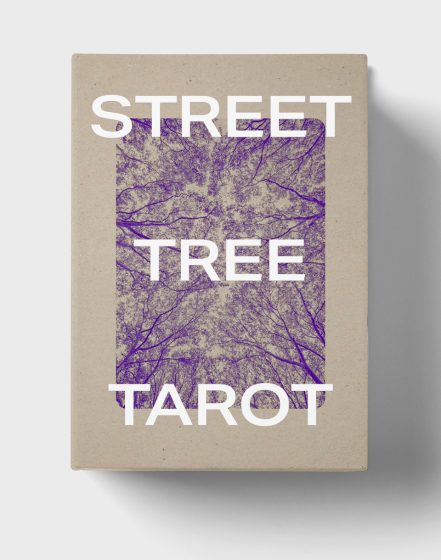
The Kickstarter for Street Tree Tarot is live, and it’s a great place to see the deck in action (and the best way to help make it a reality).
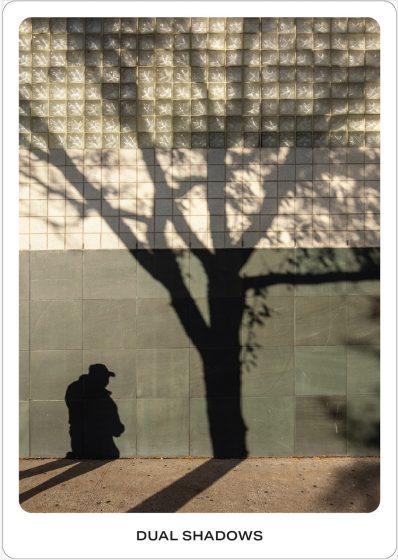
ML: New York City Street Tree Tarot is both an artist book and a teaching tool. The tactile nature of the 78-card deck is conducive to learning. Users can hold the cards, rearrange them, spread them out, and see connections between scenes that would not be possible in a typical book. I also wrote an interpretive text for each card, and these are organized in the companion booklet. The texts help users read each card as a tarot card while also sharing facts about trees, stewardship, and urban ecology. For tarot lovers, the deck contains layers of inspiration derived from traditional decks. The Lovers, Tower, World, Fool, and Death cards all have parallels. There are major and minor arcana. Instead of suits, there are tree guards, acts of care, tree shadows, and tree damage. Even without any background in tarot, users will establish their own interpretations and relationships with the imagery.
One of the challenges with a project like this is that it blurs boundaries and, therefore, isn’t so easy to fund. It’s not a standard photography book, it’s not a stewardship how-to guide, and it’s not strictly scientific. The word “tarot” also makes some people nervous. It’s why crowdfunding has been so important to making the project a reality. It is very much a labor of love. Even if the Kickstarter hits the target amount, the production will cost much more than is raised.
LC: How have people responded when you have given these readings?
ML: Using my mock-up deck with friends and at different events (like the World Forum on Urban Forests) is what inspired me to push the deck into publication. The reactions were emotional and immediate. The deck is photo-based and place-based, so the imagery is instantly accessible. Tree lovers, gardeners, horticulturalists, stewards, and everyone familiar with these spaces have developed deep connections to trees and plants. Some of these connections are unlocked when spending time with the scenes featured in the cards. For example, if you draw the Pierced Tree card, you are confronted with a London Plane tree being deeply scarred by the surrounding tree guard. One might instantly connect to the tree’s suffering while wanting to revolt against the forces doing the damage.
Flipping through the deck also seems to transform how people see street trees out in the world. Suddenly, they experience them more intensely. The trees have always been around as part of the City, but now they are more present during a walk around the block. Users start to notice the damage and resilience exhibited by street trees and the potential for each tree bed to be a garden–or at least cleaned and mulched. Usually, folks already have a favorite street tree, and now they have a renewed sense of pride and commitment to care for the trees on their block.
LC: What is your relationship to NYC trees like now that you have completed this project?
ML: Well, I have a date with a friend and fellow Citizen Pruner to visit our local trees next weekend. We’ve got some work to do! I’ll continue to advocate for more resources for stewardship. Planting trees only gets us halfway. Local stewardship is good for the trees and builds community, but stewards need support and resources. When trees appear on a block, seemingly out of nowhere, there should be a group of locals ready to steward and educate the community. Investing in care should be an extension of expanding the urban canopy. Most cities treat street trees as “green infrastructure,” and that’s fine if it means money is being allocated for planting. But street trees are also beings, and that idea is lost at so many levels. I hope the tarot deck helps people “feel” for trees.
LC: How does this project connect to your overall artistic practice?
ML: Most of my projects are designed to find new ways (or old ways) of connecting people to the landscape. Pictures on a wall are great, sometimes, but alone, they don’t do much good. A picture of a tree that is a picture of a tree is a picture of a tree. And don’t get me wrong, I love any pictures of trees. But I need to have a connection between what I’m making and showing indoors and what is going on outdoors. I’ve used walks, maps, writing, and outdoor education as tools to expand these conversations and help people connect to local landscapes.
LC: What are some of your favorite photos in the series and why?
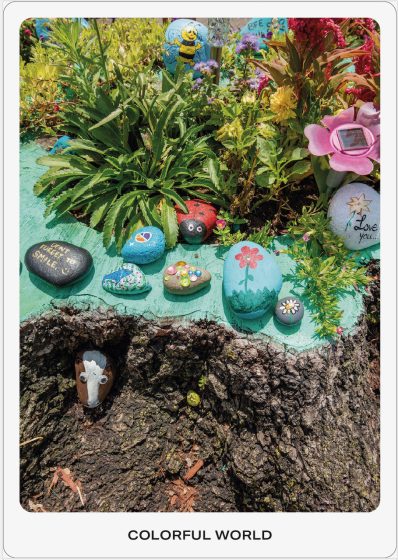
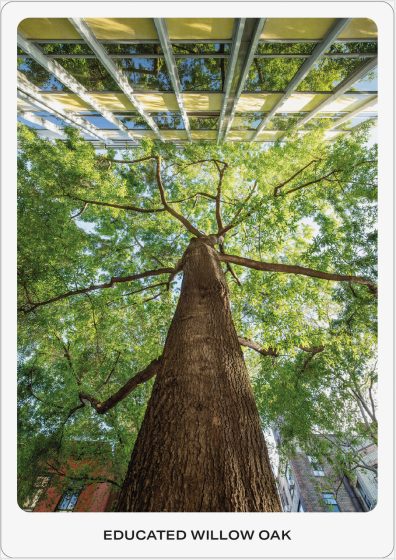
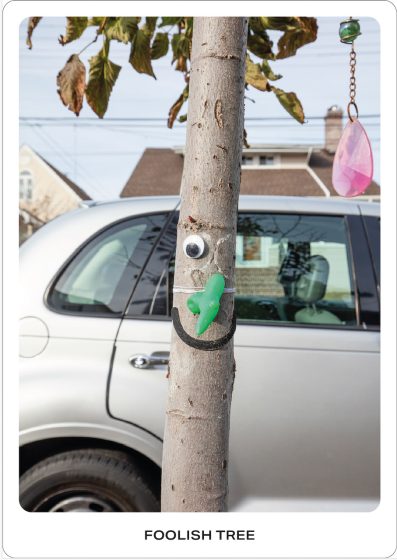
ML: I’ll include some of my favorite cards, but I think I’ll let readers respond without my commentary. Each of the cards featured in this post is a favorite, but for different reasons. Really, they are favorites among favorites. I expound on each scene in the booklet that comes with the tarot deck.
Matthew López-Jensen & Lindsay Campbell
New York City


Leave a Reply