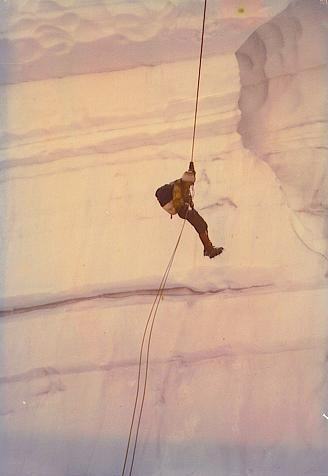
Right after I graduated from Cornell, I took off for the North Cascades wilderness. First as a student and later an instructor for the National Outdoor Leadership School, I spent summers in Glacier Peak Wilderness Area, ice climbing out of crevasses, backpacking through Pacific Northwest old growth forests, and scaling ancient volcanoes. For me, this was true wilderness.
In my early 30s, I moved back to Ithaca, NY. Initially, I did not appreciate the rural upstate NY landscape—compared to the North Cascades, the wild spaces were tame and pockmarked with ugly houses. Years later, I have come to find solace in nearby nature. This time of year, I gaze up at ice-veiled waterfalls and ski along frozen creeks. Still, compared to the North Cascades, these are but slivers of nature among neighborhoods. At night, they are bathed in city light. Have I become victim to “extinction of experience?”
The lepidopterist Robert Pyle first introduced the term “extinction of experience” in 1975, writing:
“As cities and metastasizing suburbs forsake their natural diversity, and their citizens grow more removed from personal contact with nature, awareness and appreciation retreat. This breeds apathy toward environmental concerns and, inevitably, further degradation of the common habitat….So it goes, on and on, the extinction of experience sucking the life from the land, the intimacy from our connections… people who don’t know don’t care. What is the extinction of the condor to a child who has never known a wren?”
Ecopsychologist Peter Kahn describes a similar phenomenon, which he calls “environmental generational amnesia.” As each generation’s experience of “wildness” is diminished—as areas of intact wilderness are carved into smaller patches and eventually yards, and as children no longer gaze at stars in the night sky—humanity’s wildness “baseline” shifts. Although Kahn recognizes vacant lots as places to experience “wildness” in cities, he, similar to Tim Beatley in describing the nature pyramid, argues:
“Domestic, everyday, local nature… is … only half of what we need to flourish, as individuals and as a species. The other half that we need to keep alive—in our experiences and in our language—is the importance of wildness, of places that are large in scope, self-organizing, and unbounded, and autonomous and self-regulating systems, and of interactions that can be grand and awe inspiring and also frightening and difficult.”
For many living in cities, Kahn’s wildness—“the other half that we need to keep alive”—is unattainable. Are city dwellers simply out of luck—not able to flourish?
For me, the opportunity to traverse glaciers, summit peaks, and hear the trilling of the Swainson’s thrush reverberate amongst towering old-growth, was a peak experience—it enabled me to flourish. But 20 years after I left the Pacific Northwest to come back east, I had another experience that has also enabled me to flourish—this time in the Lower East Side of Manhattan.
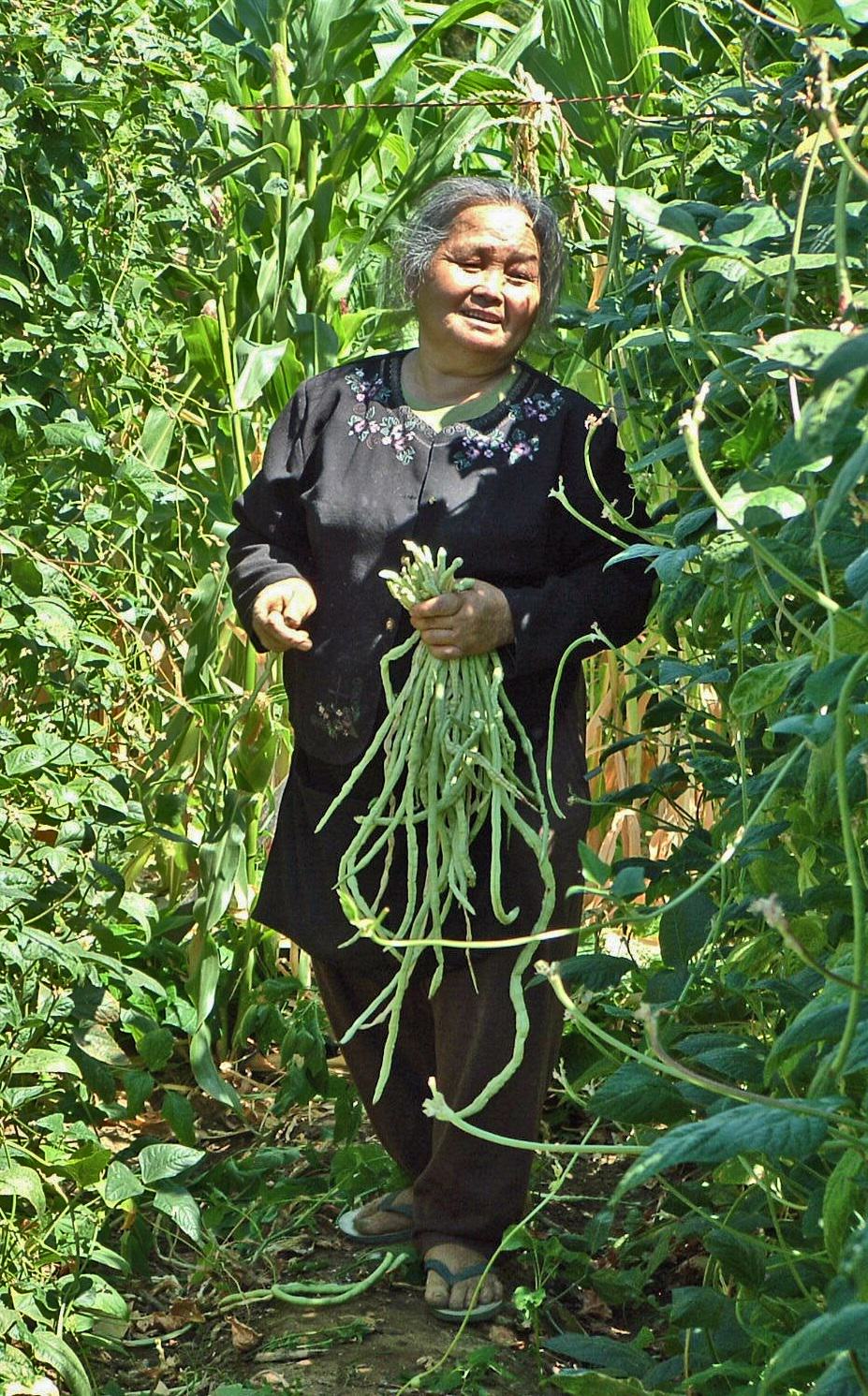
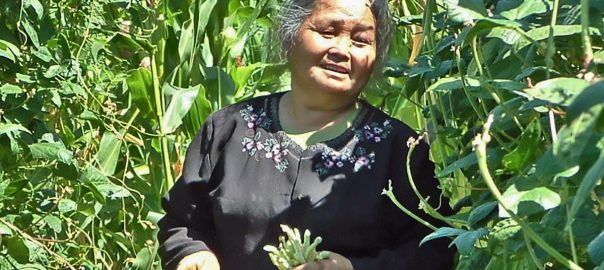
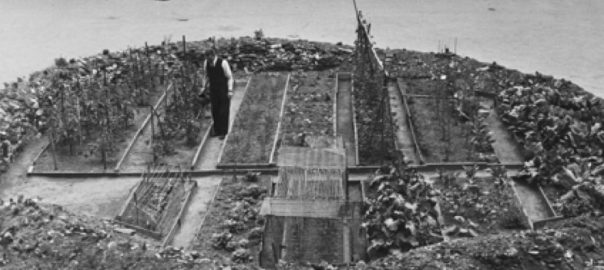
Like my North Cascades experience, my Lower East Side experience was a nature experience—but it was embedded in human culture. It was my first visit to a community garden. There I saw older Bangladeshi immigrants who had transplanted their intercropping traditions—amaranth, pigeon peas, flowering coriander and marigolds—to raised beds in New York City. For me, the cultural aspects of this experience were more powerful than—yet still connected to—nature. The immigrants were creating a sense of community through connecting to nature—creating civic ecology practices to support people and nature. A community garden is not Tim Beatley’s idea of recreating unplanned ecological spaces in cities. Rather, community gardens represent the emergence of unplanned cultural spaces that connect to nature—in ways that enable the spirit to flourish.
Here is my dilemma. I know that even if my children were to go on a mountaineering expedition in the Glacier Peak Wilderness, their experience of wildness would be different than mine. They would experience human impacts—glaciers retreating, species invading—of which I was unaware. Although some may claim that my children’s experience would simply be different, to me, it would be diminished. But does this matter?
If our concern with extinction of experience is related to health, as Beatley’s nature pyramid suggests, then I am less worried. I believe that urban places, perhaps especially the chaotic, self-organized places represented by community gardens and civic ecology practices more broadly, create new experiences that enable us to flourish.
But if our concern, like Pyle’s, is about what we will want to conserve, then we may need to embrace an urban reality. People in the future may work passionately to save a different kind of nature in cities—one that celebrates human’s caring for nature and communities. And whose acts of caring offer their own richness of experience.
Marianne Krasny
Ithaca



Leave a Reply