
about the writer
David Maddox
David loves urban spaces and nature. He loves creativity and collaboration. He loves theatre and music. In his life and work he has practiced in all of these as, in various moments, a scientist, a climate change researcher, a land steward, an ecological practitioner, composer, a playwright, a musician, an actor, and a theatre director. David’s dad told him once that he needed a back up plan, something to “fall back on”. So he bought a tuba.
Introduction
We talk a lot about adding nature to cities in the TNOC network and the wider urban greening community. But cities are often zero sums. Additions of any kind rarely come without trade-offs, and we seldom discuss them in ways that fully acknowledge the costs. More trees, habitat, wetlands, biodiversity, ecological processes, and green space? Wonderful. Who would argue against cleaner air, cooler streets, healthier ecosystems, and richer connections between people and the natural world? Yet these benefits are rarely free. In many places, more nature may require less of something else: affordable housing, parking, road space, development potential, sports fields, commercial activity, public services, maintenance budgets, consumption, or expectations of convenience, growth, and access.
The challenge is especially acute in cities facing limited land, strained finances, aging infrastructure, political conflict, and competing social needs. Which is … just about everywhere. Maybe a few cities can afford to do more of everything. (OK, name one. I’ll wait.) Most cannot. In reality, creating room for nature often means making difficult choices about what receives space, funding, attention, and political support.
This roundtable asks us to imagine cities beyond the edges of our professional and green-focused expertise. We believe that cities need more nature. Sure. But since cities are constrained by finite space, finite budgets, competing priorities, and contentious politics, what should we stop doing—or do less of—to make room for it? What activities, investments, habits, assumptions, or aspirations should be reconsidered? What trade-offs are acceptable, and who should bear the costs of them?
Or alternatively, maybe we can find ways for the perfect expression of nature to not be an enemy of good — or at least better — expression of nature. Are there strategies in which we try to fit nature into opportunistic or small spaces that nevertheless provide some of the benefits we aspire to? Perhaps we can value, celebrate, and sing the praises of these imperfect additions, too. Or build differently or less.
It’s not easy, is it?
These are reflections on the benefits, hard choices, necessary sacrifices, adjustments of aspirations, and transformative opportunities that accompany a more nature-rich urban future. We need to be specific. Be provocative. Be fierce, including with ourselves.
about the writer
Joe Mulligan
Joe is a Founding Principal of KDI where he co-directs the non-profit firm and leads their global research and impact work. A chartered civil and environmental engineer, researcher, and planner, he has over twenty years of professional experience in the design and delivery of water, wastewater, and drainage systems. He is passionate about the joint application of science and local knowledge to develop responsive and viable infrastructure projects from the frontiers of climate action.
Joe Mulligan
Working in Wetlands
A fundamental city question for contemporary society: either speed up and use more energy to squeeze more in; or slow down, “have” less (maybe have “enough”?), and leave more space for nature to do its thing.
“Times Eight”. This is the factor I would use to calculate the area for natural treatment wetlands vs. conventional sewage treatment in site development. It’s a tough ratio! But at a planning scale, you need a rule of thumb to start putting things in place, and x8 came from studying built wetland projects. It’s a real thing.
The wetlands sound like a great idea at first to everyone; we start to imagine, articulate, and sketch a bucolic watery oasis, buzzing with insect and bird life, perhaps educational opportunities. Plus it helps a bit with the LEED ND scoring (or BREEAM Communities, GBI Township etc.), and they look lovely in the project marketing splash.
But then, of course, other factors come in: how to accommodate the gross floor area, the desired parking places ― and the worthy commitment to on-site renewables does need space! Wetlands are off the menu this time. They are just too big! Next time…
To decentralise or not to decentralise
I have spent a good two decades planning, engineering, and building different urban drainage systems at very different scales across public works, private developments and community schemes. Following Karvonen’s prompt to “use drainage as a lens to unpack the dilemma of urban nature”, I have always put decentralisation and natural treatment in the mix.
In that period I was lucky to work with and be inspired by some of the pioneers of natural treatment systems. Engineers and landscape architects who collaborated to unlock and prove the full potential of wetlands not only as robust treatment systems, but also as aesthetic locations, home to plants, wildlife refuges, and sites of recreation and education. To make the case for the x8 factor. Of course, they don’t always make sense in the dominant political and economic logic and physical and ecological reality of place; some schemes stayed on the shelf at concept or schematic level, while others saw the light of day.
Dilemmas indeed; debates and constraints of space and economics are always at the fore. A notable example from the folders was Kuala Lumpur’s international financial district where I led the infrastructure planning in 2012-2013. In a super-dense development space, nature was on the block across the whole site. Our team was able to make the economic case (reduced water tariffs), sustainability case (50% water use reduction), and resilience case (self-reliant) for a decentralised wastewater treatment. A membrane bioreactor with a small spatial footprint (40 times smaller than wetlands!) and super high-energy consumption ― a system today operated by Veolia Water Technology serving a population of 50,000 people. Wetlands never made it past the first pitch.
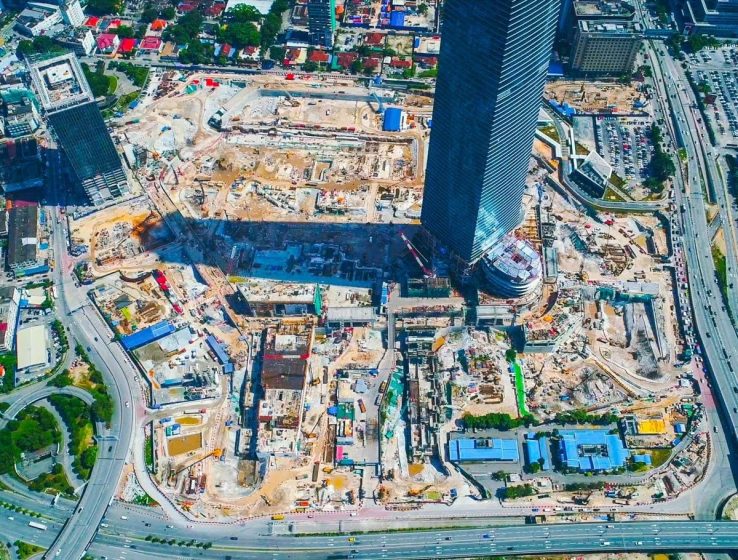
Impossible odds, and in the wastewater optioneering a set of choices that seems to reflect a wider and fundamental city question for contemporary society: either speed up and use more energy to squeeze more in, or slow down, “have” less (maybe have “enough”?), and leave more space for nature to do its thing.
Nature from the margins
Sometimes inspiration comes from the most unlikely places. My more recent work of the last decade with KDI colleagues in the informal settlements of Nairobi, Dar es Salaam, in the booming towns of Embu and Kisumu, and from the desert communities of the Eastern Coachella Valley, shows how innovation can take root and opportunities to see nature from the margins, and from small places, emerge.
As my colleague Vera Bukachi and I said in 2017, where climate hazard, space constraints, and community dynamics are always turned up to 11, “leaving little physical or political space to manoeuvre”, you start local and build together or go home (Green Infrastructure and Tin Roofs). To navigate these tensions in informal settlements, our strategy has been not only to co-design, build, and evaluate small-scale drainage and NbS projects (including wetland projects), but also to create a network of people, institutions, and physical systems that work together to extend reach and fight for space beyond individual sites to the settlement, city, and watershed. “Niche experimentation” for urban nature transition at scale (ref. Mguni et al).
This leverages and celebrates what Elmqvist, colleagues, and KDI friends working with Kibera residents described in 2018: “an ingenuity of mind and body to create workable living environments” and “a precious pool of applied design-thinking which should inspire all types of designers, planners and engineers” (see Urban Tinkering).
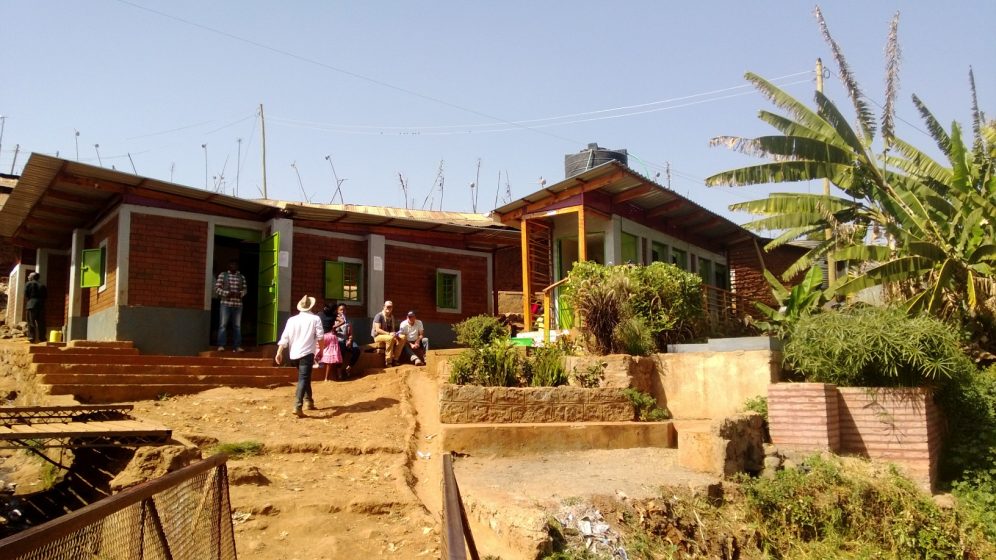
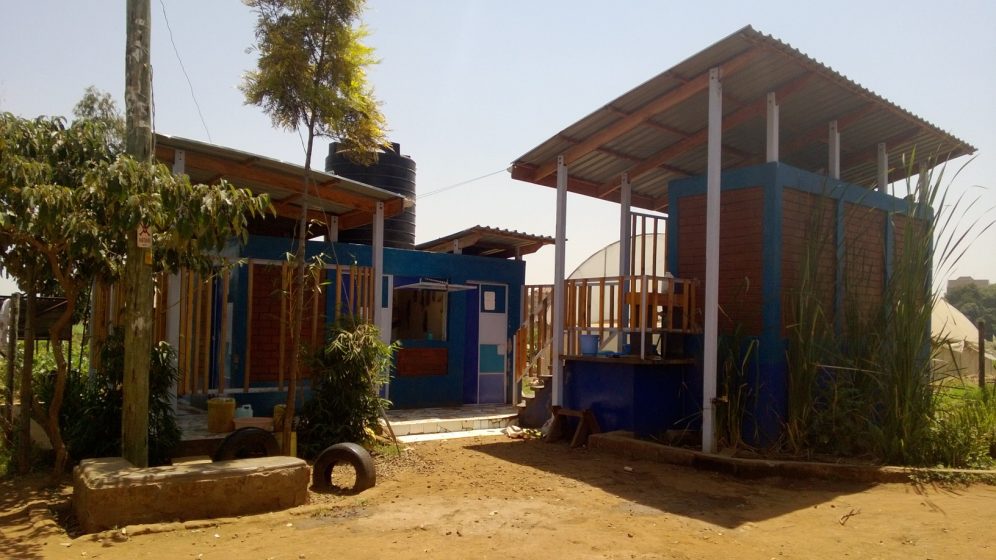
These experiences also taught us to fiercely protect and fight for the urban nature that exists, especially in rapidly growing towns like Embu that still have intact but pressurised urban natural assets. It’s hard to “build back” nature.
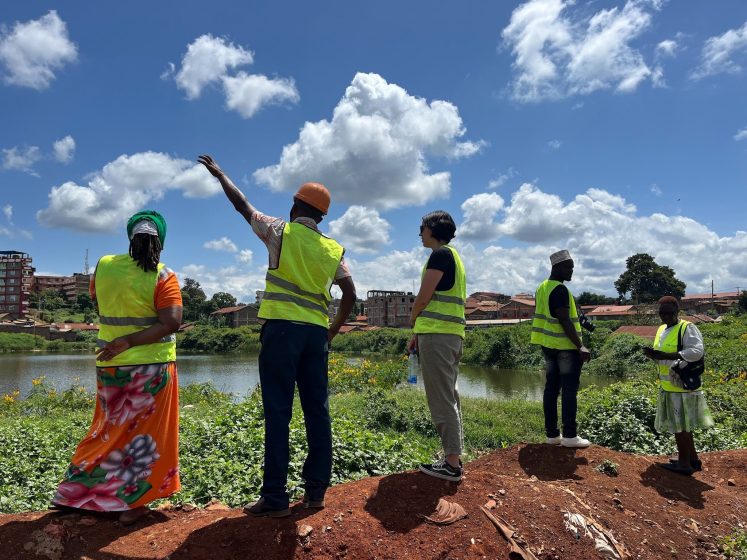
I see the next generation of urban enthusiasts, environmental engineers, political activists, landscape architects, ecologists, and systems integrators taking this challenge forward with a push for space and for justice ― for people and nature ― in the burgeoning urban arenas of the majority world. The struggle continues!

about the writer
Susannah Drake
Susannah Churchill Drake FAIA FASLA is an acclaimed urban designer specializing in climate change adaptation. Her award-winning work is consistently at the forefront of innovative urban climate adaptation. She is currently pursuing a PhD in Geography, Planning and Design at the University of Colorado, Denver.
Susannah Drake
Bidadari Park in Singapore is an expansion of greening, but with a big trade-off: approximately 68,000 Malay graves were exhumated and relocated. The authoritarian single-party rule of the City/State determined that benefits to living populations carried more weight than cultural and religious burial traditions. I cannot imagine this happening in New York City, where some of the best places for both parks and housing exist in cemeteries.
Singapore and New York: The grass really is greener on the other side of the fence (world).
A visit to Bidadari Park in Singapore helped me remember why I became a landscape architect. The park, designed by Henning Larson, is both an important natural resource and a critical storm water management project. Raptors, herons, and migratory birds flock to its dense woodland canopy and shores of Alkaff Lake, a 1.8-hectare stormwater retention pond. Butterfly populations seemed to match that of the dense public housing surrounding the thirteen-hectare site. As a designer in Brooklyn, New York, I aspire to make beautiful, ecologically productive landscapes that serve urban dwellers like Bidadari. Unfortunately, my pursuit of innovation over the decades often butted up against siloed public agencies and city budgets that did not value open space creation and management. Seeing Bidadari Park made me wonder if it is even possible to enable parks like those being created in Singapore in New York City. What does it take for society to understand and value the investment in care needed to make successful park space?
Earlier this summer I spent two weeks in Singapore with faculty and students from the University of Colorado Denver. Greenery is everywhere in the city. It is part of their branding. Seeing the manicured medians, towers veiled in plants, and green poche across every surface initially made me skeptical of the city’s environmental claims. Tim Beatley notes in his 2016 Island Press publication “Handbook of Biophilic City Planning and Design”, Singapore’s motto transitioned from “Singapore – Garden City” to “Singapore- City in a Garden.” A garden was what I saw, and yet there were additional layers that were revealed as I dug deeper. The city is now promoting “Singapore – City in Nature,” with a vision plan outlined in the Singapore Green Plan set to be achieved by 2030. The transition from use of the term “Garden” to “Nature” reflects an important evolution in thinking about urban design. Green space is no longer merely used for beautification and recreation; it is also playing a more holistic role as part of larger ecological, infrastructure, and economic systems. Tours of the Urban Redevelopment Authority, Marina Barrage water treatment facility, and a meeting with Elaine Tan, Director of the Centre for Livable Cities, made clear that the Green Plan was unfolding before our eyes. Visits to parks and open spaces across the city reinforced and confirmed progress toward aspired goals.
Bidadari Park is an example of a move in this direction but is not without trade-offs. To make way for the park, approximately 68,000 Malay graves were exhumed and relocated to a site in northwest Singapore. The authoritarian single-party rule of the City/State determined that benefits to living populations, and an eye toward current and future sustainability, carried more weight than cultural and religious burial traditions. A decision was made, and a plan was carried out, which created an incredible public resource. I cannot imagine this happening in New York City, where some of the best places for both parks and housing — resilient to future sea level rise — exist in cemeteries that are located on high ground of terminal moraines that run through Brooklyn and Queens. The politician running for office on a platform of moving the dead to make safe, healthy spaces for the living would surely lose! In Brooklyn, we would say — “Fuhgeddaboudit!”
I am not suggesting that New York start looking at cemeteries as possible sites for housing and parks. What I am suggesting is that there may be lessons learned from Singapore’s planning that could provide more benefits to more people than we are currently delivering in New York City. Singapore is comparable in geographic size to the five boroughs, with about seventy-five percent of the population. Critics of Singapore’s politics suggest that its single-party parliamentary political system creates an authoritarian structure that hampers personal freedom. The benefit of this loss of freedom — to an outsider’s eyes — was a clean city with virtually no homeless population, affordable housing, a high-functioning transportation system, and a robust and evolving park and green infrastructure network. I found artistic and personal expression in offbeat galleries, hawker markets, and activities of people in parks and open spaces. Somehow, Singapore manages to achieve the aspirations of New York’s current Socialist Mayor of New York, through very different political means.
Meanwhile, back in Brooklyn, I recently led a tour of the Gowanus Canal. Gowanus, Brooklyn is a former tidal estuary that was channelized and used for industry and combined sewer overflows that left the area very polluted. The area is strangely also a hot new development zone, thanks to superfund cleanup activity and city planning rezoning to add new housing. Seven Forefront Fellows, along with Cat Betances from the Urban Design Forum, joined me on a tour of Sponge Park, a grant- and community-funded project that I developed in the nascent years of my firm dlandstudio’s formation. Two decades have passed since I first explored adaptation of various forms of urban infrastructure to improve ecological and community health. The project inspired a global movement to create Sponge Cities. Sponge Parks are now cited as the answer to many municipal water management challenges around the world, and yet, the City of New York seems unable to expand its urban green infrastructure systems – beyond the pilot stage — to a scale that will have truly meaningful impact.
The fellows were among a larger cohort of young designers, community advocates, artists, and policy makers tasked with understanding and untangling critical urban design challenges facing the city. On our visit, the Sponge Park street end was lush and healthy thanks to the work of the Gowanus Canal Conservancy. Like many parks across New York, if not for the efforts of a local conservancy, the landscape would receive little to no care. Across five mayoral administrations, I have learned that maintenance is considered a low priority in city budgets. As a result, our parks, playgrounds, and public facilities are renovated at very high cost and then allowed to decay.
Under the creative leadership of Mayor Mamdani (elected in 2025), there is an aspiration to provide broad collective benefits to society. Perhaps he will develop Mellon Foundation Director, Justin Gerrett Moore’s idea of a Department of Care. Is it possible that an authoritarian system like Singapore, combined with efforts of the Urban Design Forum and Regional Plan Association, could provide a roadmap for this mayoral administration? As Heather McGhee suggests in her book, “The Sum of Us,” society needs to move beyond the notion of a zero-sum game to systems that benefit all. As climate change impacts continue to outpace the city’s ability to quickly adapt, human and economic losses will rise. Collective action is critical. We have the knowledge and ability to evolve with nature if we respect and embrace its power. I became a landscape architect to plan and design with nature and see tremendous potential if politics enables progress.
about the writer
Isobel Fletcher
Isobel Fletcher is CEO Horizon Nua. Experienced project management professional with 25+ years’ working across Horizon Europe, Horizon 2020, FP7, LEADER and Lifelong learning programmes.
Isobel Fletcher
We must stop demanding that every corner of the city be paved, parked on, or power-washed.
The Power of Stopping: Hard Choices for a Green Urban Future
Cities are a zero-sum game of space and capital. We talk endlessly about adding nature to our cityscapes, but additions require trade-offs. To make room for functioning, biodiverse ecosystems, clever design isn’t enough. We must actively, intentionally stop the choices that shut nature out. Cities don’t have to bear the entire burden; awareness and education are critical to stop making the choices that have shut nature out until now.
We must stop tolerating widespread nature illiteracy. The power to demand structural change lies entirely with people, but if citizens do not understand the natural world, they cannot fight for it. Without this literacy, a local shopkeeper sees a native wildflower meadow as a patch of messy weeds, and a politician views a wetland as wasted development space. We must stop treating ecological education as a luxury and instead use our cityscapes to show how living ecosystems keep us alive. Literacy is the foundation; until we understand our dependence on nature, we will continue to vote for its exclusion.
We must stop hiring traditional grey-infrastructure minds to run our cities. If our local councils are staffed predominantly by old-school highway engineers, we will keep getting concrete solutions. We must stop shutting out ecological expertise from the early stages of planning. Cities need to employ more urban ecologists, landscape architects, and engineers specifically trained in Nature-based Solutions (NbS) who understand how living systems interact with urban structures.
We must stop prioritising the absolute convenience of the private car. This is the single largest hog of urban space and municipal budgets. To integrate nature, we have to stop road-widening schemes, stop enforcing minimum parking requirements, and stop resurfacing vast expanses of tarmac. Barcelona’s ‘Superblocks’ and Paris’s urban forest initiatives succeeded because they made a conscious choice to stop prioritizing drivers. When we stop allocating multiple lanes to traffic, a parking lane can become a rain-garden, and a road can become a green cycle corridor. This spatial sacrifice immediately restores habitats, reduces noise, and stops the toxic runoff that fractures urban biodiversity.
We must stop treating existing urban ecosystems as disposable. Development projects routinely clear-cut mature trees, promising to “replant” them elsewhere. We must stop accepting these false equivalences. A sapling cannot replace an eighty-year-old oak that anchors an entire ecosystem of insects and birds. Protection is our most cost-effective strategy; we must stop allowing weak planning laws to greenlight the destruction of established habitats.
Finally, we must stop building sterile, “low-maintenance” public spaces. Wide-open, unshaded concrete plazas are born from a bureaucratic desire for easy cleaning. Nature is beautifully fluid, and a broke council cannot top-down manage every square metre of growth. By collaborating with social enterprises and empowering community groups to steward urban wilds, we build local capacity and foster the exact nature literacy we desperately need.
Ultimately, making room for nature requires us to do less. We must stop demanding that every corner of the city be paved, parked on, or power-washed. By stepping back and relinquishing our strict control over the urban landscape, we allow the built environment and the natural world to finally coexist.
about the writer
Paul Downton
Artist, writer, ‘ecocity pioneer’. A former architect with a PhD in environmental studies, Paul is distressed by how the powerful idea of ecological cities has been perverted, citing ’Neom’ as a prime example. Still inspired by his deceased life-partner Chérie Hoyle (1946-2024), Paul is continuing his graphic novel / epic poem / art project called ’The Quest for Wild Cities’ that he promised Chérie he’d finish along with his 80% complete ‘Fractal Handbook for Urban Evolutionaries’!
Paul Downton
Benign Neglect
Welcome the weeds. Let the grass and vines and trees and flowers grow through the cracks in the pavement and celebrate the irrepressible energy of Wildness and Life!
This may be the hardest Roundtable invitation yet. To begin with, I’d suggest a framework on which to organise the range of options for what we might not do, all constrained by some kind of perceived reality:
1: ideal response
All nominally ideal responses are relative to whatever it is that’s understood to limit any given response and are conditional – ‘The ideal solution would be to (insert proposed solution), but (insert perceived limitation)’.
Even the idea of an “ideal” solution assumes it can’t be achieved in the here and now of the “real” world. Typically, what is seen as ideal is simultaneously understood as effectively impossible under current conditions. Thus, to achieve any ideal solution, the prevailing current conditions need to somehow be changed. That is an intrinsically revolutionary proposition, and so its proponents are automatically characterised as trouble-makers.
2: compromise response
Particularly in “Western” adversarial cultures, a compromise approach to problem-solving sees the solution as being a kind of marriage of the watered-down positions of opposing parties. It operates on the assumption that, no matter how desirable, ideal solutions cannot be achieved. Thus, something is better than nothing, incrementalism is realism, and that eventually, in some yet-to-be-achieved future, the ideal will be the new normal. This, of course, is an even more unrealistic position than that of the idealists. It is seen in the concept of ‘moving towards sustainability’, or being slightly pregnant. Sadly, compromise is characterised by the idea that both sides somehow lose equally.
3: politically acceptable response
This is similar to the compromise response, but whereas compromises have the potential to be based on rational analysis of physical conditions, e.g., it may be logically obvious that everyone living in a continually inundated flood-plain will need to move to higher ground, the politically acceptable response starts from consideration of extant conditions of relative power and money expressed in the human social structures. In any case, Nature has no vote and relies on the lobbying skills and strength of self-appointed human representatives.
4: everyone wins
If there’s a Holy Grail, it would be action or inaction that resulted in a win for every organism, an ideal compromise response that was politically acceptable whilst contributing to the cycles of sustenance in Nature.
The baseline is that we must Stop killing things!
Things not to have – for which there are often effective alternatives:
- Concrete
- Unnecessary hard and/or impermeable surfaces above and below ground
- Chemical warfare (poisons)
- Impermeable barriers – e.g., fences should be permeable and trafficable for small creatures; hedges provide potential good examples
- Large building footprints – especially homogenous land-blanketing developments
- Reflective glass and very transparent façades – our buildings murder avian life through thoughtless use of already expensive resources
- Dark finishes and surfaces unless there is a thermal imperative, e.g., solar hot water panels
- Vegetation that does not contribute positively to the local biosphere – leave out from urban planting lists anything that does not broadly belong to the region as it was prior to urbanisation and other human manipulation
- Water features that do not contribute to general species’ health, air conditioning, and air quality
- Pollution!
- Barriers to legislation and practice that have the potential to innovate in support of the natural process
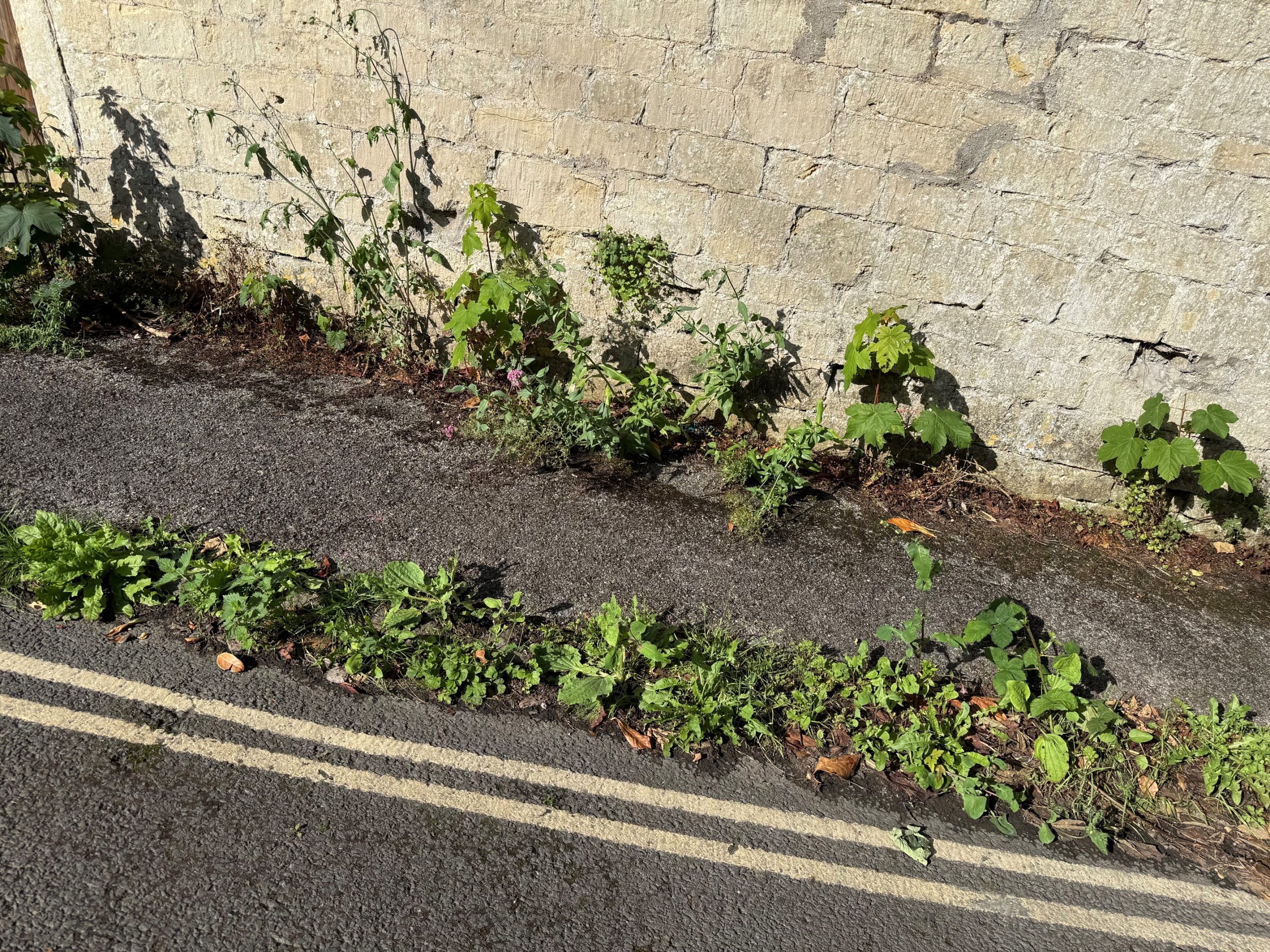
I am inclined to think that often the solution to maintaining and adding nature to cities is benign neglect. This becomes a viable solution if conventional concerns about desirable urban aesthetics can be put to one side. Welcome the weeds. Let the grass and vines and trees and flowers grow through the cracks in the pavement and celebrate the irrepressible energy of Wildness and Life!
Left to its own devices, Nature always finds a way to add itself to cities. Facetiously, I am tempted to add “leave out the maintenance budget” – but that would force a very close look at what really matters in the urban environment and should perhaps be a required thought experiment for all planners, designers, and urban managers if nothing else. It shouldn’t require apocalyptic examples like the Chernobyl meltdown to make the point. Some of the best-known examples in actual urban management are where manicured parkland is replaced with wildflower meadows.

about the writer
Samarth Das
Samarth Das is an Urban Designer and Architect based in Mumbai. Having practiced professionally in Ahmedabad, Mumbai, and subsequently in New York City, his work focuses on engaging actively in both public as well as private sectors—to design articulate shared spaces within cities that promote participation and interaction amongst people.
Samarth Das
As citizens, we have to reclaim our role as custodians of the city’s natural assets and actively participate in their preservation and enhancement.
Making Space for Nature: Reclaiming urban nature in an era of relentless development and climate uncertainty
Having spent two weeks this summer immersed in Indonesia’s richly biodiverse landscapes, I have returned to my home city of Mumbai feeling rejuvenated, refreshed, and more convinced than ever of the invaluable role that urban greening and natural ecosystems play in our lives. The prompt for this roundtable has compelled me to confront a fundamental question: how far are we prepared to go to make space for nature in our cities?
Re-imagining Mumbai through an ecological lens
Mumbai is a city that is overburdened and struggling to keep pace with its own infrastructure ambitions. It is governed through a fragmented planning system marked by poor coordination among agencies and priorities that appear increasingly aligned with real estate interests rather than public well-being. Consequently, the quality of Mumbai’s urban environment and daily life has deteriorated to unacceptable levels over the better part of the last two decades. The Vision for the city is, unfortunately, relegated to swathes of colour on the city’s Development Plans, rather than aspiring for meaningful improvements in the lived experience of the city. Planning, urban design, and architectural policies remain overwhelmingly focused on the built form, while larger concerns of ecological resilience, environmental health, and quality of life are sidelined. What Mumbai urgently needs is an ecology-centred planning framework that places environmental sustainability and public well-being at its core.
Protecting and restoring the city’s natural assets
Urban growth must be accommodated through the optimisation of densities within already urbanised areas, while the model of greenfield expansion should be abandoned entirely. Although this position may be criticised as “anti-development,” it is a necessary response to the ecological realities of our time. In this context, all land currently earmarked for future development under the Development Plan should be redesignated as No-Development Zones (NDZs). These areas should be protected and actively reforested to establish substantial carbon sinks, reverse ecological degradation, and safeguard critical ecosystem services. These areas should be woven into a city-wide network of public spaces, advancing decentralised greening strategies and guaranteeing universal access to nature. Such interventions are indispensable for reducing urban heat island effects, improving environmental quality, and strengthening the city’s contribution to climate change mitigation. Along with this, we must include our existing natural assets, such as rivers, creeks, wetlands, nullahs, lakes, and forests, into the city’s geographic and demographic understanding. Often ignored, marginalised, and abused, these natural assets represent some of the city’s greatest opportunities for ecological restoration and the reintegration of nature into the urban fabric.
Reforming governance and development policies
At the governance and policy level, unchecked development driven by a “build-more” syndrome, coupled with weak regulatory oversight, continues to undermine our urban green assets. Current regulations often prioritize construction over environmental stewardship, with little accountability for the protection of existing trees, plantations, and green spaces. As a result, every new development project further erodes the city’s natural assets.
A particularly damaging practice is the construction of basements extending to plot boundaries, which frequently necessitates the complete removal of peripheral trees. Neighbourhoods once characterized by low-rise, low-density development and abundant green cover are being transformed into overcrowded, densely built environments with severely diminished ecological value. Policy reforms must recognize, protect, and celebrate existing green cover as a critical urban asset. While densification is necessary—and, as argued above, can play an important role in sustainable urban growth—it must be pursued alongside robust compensatory landscape replacement and tree protection policies. Such measures are essential to ensure that urban development does not come at the expense of ecological resilience and environmental quality.
Citizen stewardship and collective
We must also acknowledge our own complicity in the prevailing neo-liberal market model that equates progress with endless growth, consumption, and construction. Nowhere is this more evident than in the redevelopment frenzy that has gripped the city, where developers entice existing residents with larger homes while benefiting hugely through the sale of new apartments in the open market at inflated costs. While redevelopment can address legitimate housing needs, it must be balanced against its environmental costs and its impact on the city’s already fragile ecological fabric.
Meaningful climate action cannot be separated from active civic engagement. Every responsible resident must consciously carve out time in their daily lives to support nature and advocate for its protection. This requires mobilising within neighbourhoods to demand greater tree cover, resist unnecessary tree felling, and promote the planting of indigenous species rather than pursuing the misguided promise of rapid greening through alien varieties that often prove ecologically unsustainable. As citizens, we have to reclaim our role as custodians of the city’s natural assets and actively participate in their preservation and enhancement.
Although individual actions and lifestyle changes can meaningfully strengthen nature’s presence within our cities, lasting impact requires a coordinated, multi-pronged approach. The responsibility cannot rest solely with citizens; proactive leadership and meaningful intervention from civic authorities are indispensable to safeguarding and expanding urban green cover as cities continue to grow.

about the writer
Jordi Marfa
Jordi Marfà Vives is an architect, urban planner, and educator based in Barcelona, Spain. He is closely associated with RMIT Europe, focusing on the city’s innovative urban regeneration strategies.
Jordi Marfa Vives
Unpaving is a measure that can be implemented gradually, slowly transforming the demands we place on our public space.
To make room for nature in our cities, we could stop paving the entire surface of our streets. This would have several consequences. If this unpaving affects areas used for parking cars and motorcycles, it will be more difficult for us to get around using those modes of transport. And if we leave this unpaved space with a soil substrate, spontaneous vegetation will grow, or perhaps some citizens will be motivated to plant and care for it. And we will surely reduce the temperature and noise reverberation in this area, which isn’t a bad thing in these times.
As a dense and vibrant city, Barcelona’s public space is subject to many demands and uses. If we look at the surface of the streets, we can see that a lot of space is dedicated to motorized traffic, pedestrian accessibility, and access to parking lots and businesses. It is important to have spaces for leisure, which is why we have benches and bar terraces. And we often have to let the numerous motorcycles crisscross the city park on the sidewalks. That’s why the trend has been to pave as much as possible to guarantee space for these uses. And, while we’re at it, cut cleaning and maintenance costs.
If we look at the subsurface, we find it quite occupied as well. The sewer system and all urban utilities occupy a large part of it. In addition to the usual services of street lighting, water supply, gas, and electricity, pneumatic waste collection systems, neighborhood-level climate control, and other infrastructures have been added. And that’s not to mention the underground parking garages and subway tunnels, which are sometimes located very close to the surface.
In Barcelona, we’re lucky that most of our streets have trees. But surface requirements mean that the tree pits are very small, sometimes only the size of the trunk. And the requirements of the subsurface are so numerous that the tree roots have to perform real acrobatics to navigate all the obstacles. I’m not surprised that roots lift the pavement or break sewer pipes to get the water and air they need. What I find incredible is that in these conditions the trees can still obtain the nutrients they need to grow.
Unpaving is a measure that can be implemented gradually, slowly transforming the demands we place on our public space. We can start by reducing the space dedicated to motorcycle parking and creating larger tree pits. In this way, existing trees will receive more water and oxygen without the need to increase their maintenance. If the neighbors who live in front of them are motivated to plant something, they can be given training on which plants and treatments are most suitable for each location.
Over the last 150 years, we have significantly improved living conditions in cities by reserving space for the various urban services and for the new needs that have emerged in our lives. Today, all of these services related to urban metabolism are guaranteed as infrastructure and are regulated by ordinances that define the conditions and space they require for proper functioning. To continue improving the well-being of those of us who inhabit cities (humans and others), we must begin reserving the necessary space for urban greenery to grow and thrive.
La despavimentació és una mesura que es pot implementar gradualment, transformant lentament les demandes que imposem al nostre espai públic.
Per a donar espai a la natura a les nostres ciutats podríem deixar de pavimentar tota la superfície dels nostres carrers. Això tindria diverses conseqüències. Per una banda, si aquesta despavimentació afecta zones ocupades per aparcament de vehicles i motocicletes, ens costarà més desplaçar-nos amb aquests mitjans de transport. I si aquest espai sense pavimentar el deixem amb substrat vegetal hi creixerà flora espontània, o potser alguns ciutadans es motivaran a plantar i cuidar-lo. I segurament reduirem la temperatura i la reverberació del soroll en aquest àmbit, que tampoc ve malament en els temps que corren.
Com a ciutat densa i vital, l’espai públic de Barcelona està sotmès a molts requeriments i usos. Si ens fixem en la superfície dels carrers, podem observar que es dedica molt espai per a la mobilitat rodada, per a l’accessibilitat de les persones, els accessos a aparcaments i comerços. Convé tenir espais per al lleure i per això disposem bancs i les terrasses dels bars. I sovint també cal deixar que les nombroses motos que creuen la ciutat aparquin a les voreres. Per això la tendència ha sigut pavimentar tot el possible per a garantir l’espai per aquests usos, i ja posats reduir la despesa en neteja i manteniment.
Si mirem el subsòl també el trobem força ocupat. El sistema de clavegueram i tots els serveis urbans n’ocupen gran part. Als serveis habituals d’enllumenat, abastament d’aigua, gas i electricitat, s’hi han anat sumant els de recollida pneumàtica de residus, climatització a nivell de barri i altres infraestructures. I això sense comptar els aparcaments soterrats i túnels del metro que a vegades es troben situats molt a prop de la superfície.
A Barcelona tenim la sort de que la major part dels nostres carrers disposen d’arbrat. Però els requeriments en superfície fan que els escocells siguin molt petits, a vegades de la mida del tronc. I els requeriments del subsòl son tants que les arrels dels arbres han de fer autèntiques acrobàcies per a sortejar tots els obstacles. No em sorprèn que les arrels aixequin el paviment o trenquin els tubs de clavegueram per a obtenir l’aigua i l’aire que necessiten. El que sí em sembla increïble és que en aquestes condicions els arbres puguin obtenir els nutrients per desenvolupar-se.
Despavimentar és una mesura que es pot produir de forma progressiva, transformant a poc a poc els requeriments que li demanem al nostre espai públic. Podem començar per reduir l’espai dedicat a l’aparcament de motocicletes i fer uns escocells més grans. D’aquesta manera els arbres existents rebran més aigua i oxigen, sense necessitat d’incrementar el seu manteniment. Si els veïns que hi viuen al davant es motiven a plantar-hi alguna cosa, se’ls pot donar una formació sobre quines plantes i quins tractaments son els més adients per a cada lloc.
En els darrers 150 anys hem millorat sensiblement les condicions de vida de les ciutats gràcies a reservar un espai als diferents serveis urbans, a les noves necessitats que han anat apareixent a les nostres vides. Avui, tots aquests serveis relatius al metabolisme urbà, son infraestructures garantides i tenen unes ordenances que regulen les condicions i l’espai que necessiten per al seu correcte funcionament. Per a seguir millorant en el benestar dels que habitem les ciutats (humans i altres) cal que comencem a reservar l’espai necessari per a que el verd urbà es pugui desenvolupar de forma saludable.
about the writer
Rob Pirani
Robert Pirani is the program director for the New York-New Jersey Harbor & Estuary Program at the Hudson River Foundation. HEP is a collaboration of government, scientists and the civic sector that helps protect and restore the harbor’s waters and habitat.
Rob Pirani
This is not easy, requiring more time and effort from overstretched public agencies, a willingness to trade off one habitat type for another.
Losing Control to Sustain Nature
The roughly 2,400 kilometers of shoreline in New York’s Hudson River Estuary are all contested spaces. To sustain nature and human use along these waterways for our precarious future, we need to give up our desire to control those spaces.
These shorelines are massively productive ecosystems. The two meters of twice-daily tidal flux and the nutrients that it carries are the lifeblood for sloping intertidal areas. Covered and uncovered by the tides, the resulting marsh wetlands, as well as sandy beaches and mudflats, are critical spawning, nursery, and foraging habitat for hundreds of species of fish and wildlife.
But this abundance competes with other essential human needs in our crowded region. Shorelines are hardened with bulkheads, platforms, or riprap to stabilize them for water-dependent maritime and industrial uses. Transport, homes, commercial buildings, and public parks are also in this coastal zone, whether by choice or happenstance.
Shoreline hardening decreases the areal extent of this three-dimensional intertidal habitat. Whether by limiting tidal fluctuations, preventing erosion, and/or providing a means of filling in open water, these structures reduce the important complexity afforded by natural shorelines. The hardened shoreline can also prevent the settlement of sediment and cause waves, wakes, and currents to scour and deepen adjacent soft shorelines.
Limited waterfront space leads to difficult and contested choices. New York’s waterfront (and waterfront designers and engineers) show the scars of projects completed or abandoned, and nature preserved or lost. All told, about 30% of the shoreline of the Hudson River Estuary, including marshes and tributaries up to the head of tide, is hardened with bulkheads and other engineered structures.
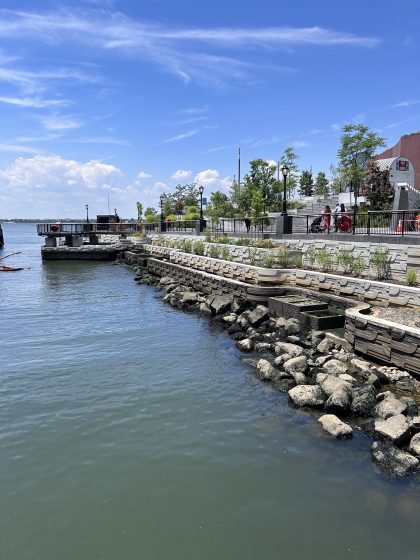
One answer to these seemingly zero-sum choices is to stack functions. Let’s make hardened infrastructure make up for lost ecological services through better materials, forms, and design. There are a growing number of such living shorelines (currently 35 and counting here in our Estuary). These nature-based solutions ― in theory and sometimes practice ― allow us to avoid the difficult questions posed by the editors at TNOC. Mollusk-friendly molded concrete adds complexity to straight-edge bulkheads. Creating shoreline slopes and terraces allows tides to roll in and out. Establishing offshore subtidal reefs and living breakwaters creates new habitat while absorbing destructive energy. These tactics can also work to reduce erosion of existing beaches and wetlands, helping protect habitat in the face of increasing storms and rising seas.
But the more accurate answer is we do need to give up something. Control.
Our coastlines have always been dynamic spaces. Nature is well adapted to daily, seasonal, and storm-driven erosion or growth. But the acceleration of change brought by our shifting climate requires us to consider the cost of imposing certainty for cities and nature.
To sustain human use of the shoreline as sea level and the risk of flooding rise, we must embrace living in transition. Resilient cities require many things, from public awareness to flood-proofing critical infrastructure. Underlying all of these tactics is a need to change the mindset that considers coastal uses as static enterprises. Whether it is the daily maintenance of roads and public spaces now subject to tidal flooding or helping people permanently move from flood-prone neighborhoods, we need to give up the idea of permanence when considering waterfront land use.
But sustaining nature in our coastal cities in the face of climate change also requires a shift in mindset. Conservation of nature has its roots in the idea of permanent protection. Regulatory processes are grounded in the mandate of doing no harm. This often translates to leaving nature as it is. But “as it is” is no longer as it was and certainly not as it will be. One example: Despite conservation and restoration of hundreds of hectares of tidal wetlands in the past decades, our estuary continues to lose wetland acreage, with sea level rise being a key driver. We cannot just say no or simply set land aside.
Enabling nature-based solutions could help answer the questions posed by climate change. But implementing at scale requires the conservation community and environmental regulators to allow for novel approaches and adaptive management, losing perceived control and management certainty. This is not easy, requiring more time and effort from overstretched public agencies, a willingness to trade off one habitat type for another, and increased resources for monitoring and adaptive management. But less control is what is required by our changing nature.

about the writer
Oliver Hillel
Oliver Hillel is a specialist in nature-based urban planning and design; urban-rural linkages for the green and blue economy; and tourism destination management, working in Montreal, Canada. Oliver is Vice-President of Instituto Orizzonte, a Brazilian NGO focused on territorial and water governance and nature-based solutions, and an associate expert of the UN-Tourism affiliated World Centre of Excellence for Destinations.
Oliver Hillel
Resilience will not emerge from more concrete. It comes from the space deliberately left for nature to operate — and from the humility to recognize that many cities already knew this, long before the experts arrived.
The Leaner City: Why Cities Must De-invest to Reclaim Life
As I lived and worked in cities in many countries, a paradox becomes difficult to ignore. The commitment to urban sustainability is remarkably similar in the Global South and the Global North. What differs is material intensity. And that excess is harming us in too many ways.
Richer countries have developed a near-pathological addiction to “hard” resilience: oceans of concrete, vast expanses of asphalt, infrastructure engineered often beyond the rational threshold of need. Cities in the developing world, constrained by capital and grounded in traditional knowledge, tend instead toward surgical, local, and lighter-touch solutions. That apparent deficit is, in fact, a model. Our model cities built too much. The corrective is not to build smarter — it is to build less, and to actively repurpose what no longer serves. Here are two ideas on categories of de-investment.
Hardware: break the concrete monopoly
The modern developed city can look like a seamless, impermeable monolith — roads wider than necessary, parking lots larger than justified, foundations deeper than required. The result is a system that demands constant, expensive maintenance ― Montreal’s famous orange cones are a friendly reminder… We can scale back redundant grey infrastructure and reclaim that space for linear parks, swales, rain gardens, and nature-based water management. Treat rainwater as a resource, not an infection to be flushed. Shift investment from grey pipes to the pores of the city. The Global South, forced by financial reality into precisely this discipline, did it first. The North can now do it by choice.
Software: The myth of cleanliness
The second de-investment cuts deeper — into cultural expectations. Northern cities are addicted to a pathological aesthetic of cleanliness. Every autumn, enormous quantities of fuel and labor are deployed to rake up fallen leaves, truck them out of urban centres as “waste”, and then, come spring, import compost or chemical fertilizers to replace the nutrients just exported. The absurdity is staggering.
Modern medicine partially solved this problem. Over the past generation, healthcare has made a decisive shift away from the 20th-century model — broad-spectrum antibiotics, synthetic chemicals, the aggressive elimination of anything perceived as “mess” — toward a more sophisticated understanding of the microbiome, of prebiotics and probiotics, of the systemic danger of over-intervention. We now know that health is not the absence of disorder; it is the presence of thriving, dynamic balance.
Our cities, meanwhile, are still largely operating under the old paradigm. We treat the urban landscape exactly as we once treated the body: problem calls for an artificial fix, usually more concrete or more aggressive cleaning. The city is suffering from the urban equivalent of high cholesterol — clogged by excessive infrastructure and high-energy inputs that block the flow of life. Just as we use prebiotics to cultivate a healthy gut, we need nature-based solutions to cultivate a healthier city. Pavement colonized by moss, a pile of decomposing leaves: these are not failures of maintenance. They are the city’s immune system at work. Removing all of it is like performing a sterile appendectomy on the urban ecosystem.
A lesson in humility
There is a deeper irony at play here. When international development banks arrived in Latin American, Asian, and African cities promoting nature-based solutions as bold innovation, they were met with dismay. These practices are not new. Porous landscapes, organic waste cycles, decentralized infrastructure: this is how cities functioned for millennia. Colonisation and the Industrial Revolution disrupted that inheritance. The North then exported development paradigms and blueprints to the South, incentivising its adoption, and is now returning to announce its own rediscovery as a gift. The lesson is not to teach. It is to listen.
Resilience will not emerge from more concrete. It comes from the space deliberately left for nature to operate — and from the humility to recognize that many cities already knew this, long before the experts arrived. Let’s tread a bit lighter in our urban development models.
about the writer
Tim Beatley
Tim Beatley is the Teresa Heinz Professor of Sustainable Communities, in the Department of Urban and Environmental Planning, at the University of Virginia, where he has taught for the last twenty-five years. He is the author or co-author of more than fifteen books, including Green Urbanism, Native to Nowhere, Ethical Land Use, and his most recent book, Biophilic Cities.
Tim Beatley
Reasoning through nature tradeoffs. What do we need less of in cities?
Nature is part of what helps to dispel distrust and build or restore levels of trust.
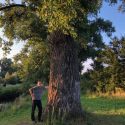
There are many tradeoffs to consider when we make more room for nature in cities. I am ready to accept a level of extra (though very small) danger from falling tree limbs to live in a neighborhood of large and majestic trees. There may be some additional costs connected with maintaining and taking care of these trees (and perhaps an occasional disruption of power resulting from a downed tree in a storm), but they deliver so much (birds, coolth, awe, beauty) that the cost is infinitesimal in comparison.
At a more collective level, protecting those large trees requires a strong tree code. And a tradeoff here entails the giving away of a small amount of individual freedom (losing the right to remove the tree without collective approval). Like so many other tradeoffs in a modern society, this is a good one–we agree to abide by traffic regulations or building codes even though they reduce our individual freedoms to a negligible degree because we all benefit greatly from the exchange. And more broadly, it is hard to imagine the full exercise of free life (a more positive version of freedom as advocated by Timothy Snyder[1]) without the sheltering presence of trees and the nurturing role of nature more broadly.
I want to live in a city where a glimpse (or glimpses) of wild nature is a daily occurrence. Sometimes there is a small level of danger or inconvenience: say, the steps we need to take to ensure safe coexistence with bears or coyotes or mountain lions, if we are lucky to share our world with them. And collective investments in coexistence (public education programs, warning and response capabilities; e.g., the capture and safe relocation of a mountain lion in Redwood City, CA[2]) are justified by the immense value and benefit we all enjoy from seeing (and knowing of) that wild nature nearby.


Often, the tradeoffs involve getting more of something we need and want (nature), and less of something we don’t need (or need as much of), and in that way are win-win tradeoffs. One obvious example of these kinds of tradeoffs involves car-dependence and the ubiquitous paved surfaces of cities. Many of us believe that cities need a lot less concrete and a lot more flowers and trees. Taking up that concrete generates many cost savings as well. Most of the impervious hard surfaces in a city are roadways and parking lots. Space devoted to cars is especially excessive in American cities, 25-40% of a city. We need less of that, hopefully, as we transition to visions of cities that emphasize walking, strolling, and new connections with nature (think Biophilic Cities!) Can we build (and subsidize) treeways, not freeways?[3]
Many cities around the United States are already reducing or outright eliminating required parking minimums: parking for cars is definitely something we hear less of. The Parking Reform Network, which keeps track of these things, has an online map of the now 123 cities that have already eliminated parking requirements. New developments like Culdesac,[4] in Tempe, Arizona, show what is possible without parking: some 55% percent of the development available for greenery, trees, and community gathering spaces.
Some cities are beginning to set ambitious goals for desealing–taking up that concrete and asphalt and returning it to permeable soil that retains stormwater, replenishes groundwater (LA County, for example[5]). And of course permits new forms of nature–pollinator gardens, meadows, new trees and forests. We need less turfgrass in our cities as well. That will continue to be a challenge to our conventional aesthetics. I have a neighbor who replaced almost his entire front yard with native it is/was a remarkable step in civic generosity, yet shockingly, some neighbors apparently think this verdant oasis is ugly.
We have started to plant microforests on my campus and in my city. We have five already and they have grown vigorously and gloriously in a short period of time. These intensively planted Miyawaki forests are popping up in cities around the world.[6] The tradeoff here is often economic: no more mowing is needed, reducing time, cost, energy consumed, and carbon emitted. This is not a zero-sum tradeoff but a positive-sum outcome: everyone is better off, and the many benefits (health, stormwater retention, new habitat) more than outweigh any additional costs. Indeed, such investments in urban nature pay impressive dividends.[7] Regenerating nature in cities is often this way.
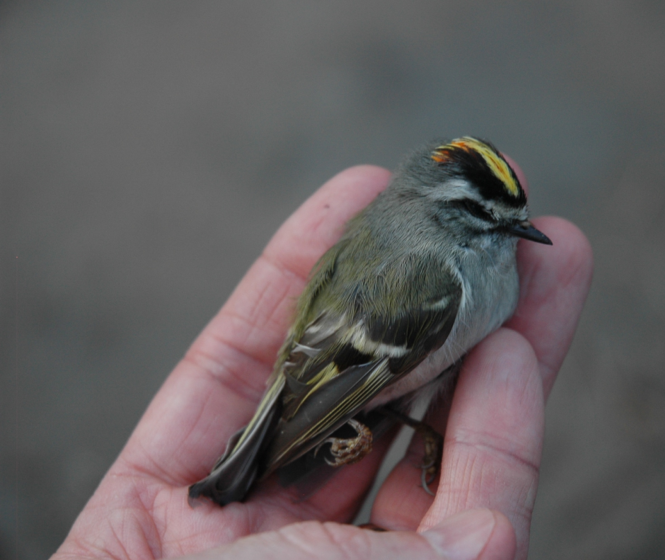
Often, the tradeoffs can’t be resolved (or shouldn’t be) through reference to cost-benefit, or return-on-investment thinking. They often involved more immutable values and duties. Just doing the right thing when it comes to nature. Designing urban buildings that don’t cause massive death and the pain and suffering of millions of birds, for example, falls into this category. While it turns out that installing fritted glass and other building materials that virtually eliminate the risk for birds is also a cost-effective way of reducing energy consumption (e.g., as in the example of the Jacob Javits Center in New York City), most of us believe we are simply duty-bound to prevent these unnecessary deaths.
There are many other things we need less of in cities that investing in nature helps with: less violence and crime (evidence from tree-planting in vacant lots in Philly, for example), less loneliness and isolation, less stress in our lives, less hunger (think community orchards and community gardens), and less pessimism about the future. The considerable and mounting evidence around exposure to nature suggests that these reductions are all but certain.
We also need less human noise (especially the kind generated by cars). We know the health impacts are significant, but they also mask what we need more of in cities: the beautiful life-affirming sounds of the natural world: the katydids and tree frogs and rustling tree leaves, and of course, birdsong. I have argued that abundant universal native birdsong ought to be a primary metric for judging a good city. I think we ought to measure it more systemically and evaluate our urban planning progress against it.

Another thing we need less of in cities, and society more broadly, is distrust. A 2025 Pew poll found sharp reductions in the level of trust Americans have in fellow Americans.[8] In this poll, only about one-third of respondents agreed with the statement “most people can be trusted” (SO, it seems we believe most people cannot be trusted!) This level of social distrust was much lower in the 1970s. This is no small problem, as Pew notes, trust is “the oil that lubricates the frictions of daily life.” Without it, a city becomes a difficult and unpleasant place to live, where perceptions of reciprocity and mutuality give way to fear and anger.
Nature is part of what helps to dispel distrust and build or restore levels of trust. This is no small task, but Natural settings–that neighborhood park, community garden, or forest trail–and the collective engagements with nature and each other that occur in these spaces–help to build community, mutual understanding, tolerance and care, and yes, importantly, trust. In a recent interview with the pastor of a Baltimore church, Stillmeadow Community Fellowship, a ten-acre adjacent forest has become a space in which to build understanding and trust. In an interview with the church’s pastor, Michael Martin, he explains the unique ability of this nature-space to bring people together and to help them overcome perceived differences. “It’s really hard to not be friendly and connected to people when you’re digging a hole to plant a tree in,” he told me.
Achieving less distrust means more opportunities to come together to do things like bird-watch (and bird-listen), to collect seeds and to plant trees, to watch together the changing seasons and the daily sky, and to observe the everyday wildness large and small.
[1] Timothy Snyder, On Freedom, Crown, 2024.
[2] “Mountain lion captured in Redwood City yard,” June 16, 2026, found here: https://www.eastbaytimes.com/2026/06/16/mountain-lion-redwood-city/
[3] I am not sure who first came up with this motto, but perhaps Margaret Chappelle an anti-highway activist in Edmonton, Canada, responsible to saving the MacKinnon Ravine; See https://citymuseumedmonton.ca/2021/11/02/margaret-chappelle-the-artist-who-saved-the-mackinnon-ravine/?fbclid=IwY2xjawSmhKcBHWKSTsJGRXLixm38g2EQVbr-Vr9SzjrSDCilhJ94SAsLpe3CC6VFoLL-AQ#_ftnref52
[5] https://www.latimes.com/opinion/story/2026-01-28/la-pavement-natural-infrastructure
[6] See Hannah Lewis, Mini-Forest Revolution: Using the Miyawaki Method to Rapidly Rewild the World, Chelsea Green, 2022.
[7]A recent study by Earth Economics found that in the case of the microforests planted in Elizabeth City, New Jersey, there are almost $11 dollars in community benefits generated for every dollar spent. See https://groundworkusa.org/microforests-in-elizabeth-nj/
[8] See Pew Research Center, “Americans’ Trust in One Another,” May 8, 2025, found here: https://www.pewresearch.org/2025/05/08/americans-trust-in-one-another/

about the writer
Nina-Marie Lister
Nina-Marie Lister is Professor and Director of the Ecological Design Lab at Toronto Metropolitan University and was recently Visiting Professor of Landscape Architecture at Harvard GSD. She has been awarded the John R. Bracken Fellowship and the Margolese National Design for Living Prize for her work in ecological design. Lister’s funded research and more than 150 publications connect people and nature in cities through nature-positive relations with a focus on green infrastructure design for biodiversity recovery, climate resilience, more-than-human design, and human wellbeing.

about the writer
Anastasia Mourogova Millin
Anastasia brings 21 years of corporate banking experience, strategically supported by her in-depth knowledge of the commercial real estate sector. Anastasia most notably helped launch Canada’s first Schedule A impact bank – Vancity Community Investment Bank, and under that mandate she oversaw a $1.3-billion existing real estate portfolio as well as brought in $250-million in new loans to B Corps, social enterprises and not for profits. Subsequently, Anastasia – in her role as global director of Capital and Investments at Dark Matter Labs – focused on structuring emerging asset classes including civic infrastructure, nature based solutions for climate adaptation, regenerative soil, and biodiversity, all in order to re-imagine the existing systems of capital formation, deployment and value aggregation.

about the writer
Jeremy Guth
Since 1999, Jeremy has been co-creating initiatives to reconnect large landscapes for biodiversity: in the west with the Yellowstone to Yukon Conservation Initiative (Y2Y) and in the east with the Open Space Institute’s Transborder Fund and the Quebec Ecological Corridors Initiative. He has been a director of the Woodcock Foundation since 2003 and developed the foundation’s large landscape conservation program with a particular focus on the preservation of ecological connectivity between Canada and the United States.
Nina-Marie Lister, Anastasia Mouragova Millin, & Jeremy Guth
We need to stop trading off nature and instead invest in nature as infrastructure.
Investing in Nature as Infrastructure: Livable Cities Need Nature as a Core Asset
On March 31, Canada’s Prime Minister Carney announced the Force of Nature Strategy, followed on April 27th by the Canada Strong Fund. The two might appear to be a trade-off between protecting nature and investing in engineered infrastructure. But this is a false dichotomy, and these initiatives cannot come at the expense of one another. They should be seen as integrated initiatives: nature is vital infrastructure for life on earth, and we need new tools to finance its permanence.
We are all familiar with civil-engineered “grey” infrastructure: e.g., roads, bridges, sewers, pipelines, rails, etc. Many people are becoming equally aware of the critical value of nature. Without biodiversity, the basis of nature, there is no foundation for our economy (and the “free” ecosystem services such as pollination, food, forests, soils, clean water, etc., on which humans depend). According to the United Nations, biodiversity is our best natural defence against climate change. But what we often miss is the direct value relationship between nature, private assets, and grey infrastructure. Consider an urban park (as we did in this recent project): when designed with biodiversity and climate resilience in mind, the park’s green spaces slow and absorb storm water, provide habitat for pollinating insects and birds, and mitigate urban heat. The park supplements the performance of grey infrastructure as storms become more severe without the need for additional investment. Over time, the park creates a “nature premium”, adding value to every adjacent home and commercial property. For example, New York City’s High Line generated a premium on growth to the properties within 500 feet or 150m of the park over an 11-year period (from its construction in 2007 to 2018) was 60% or US$3.4 billion.
Funding nature has been largely left to philanthropy and government. But if we consider nature as infrastructure, it could be financed in the same way as traditional grey infrastructure investments: high upfront amounts for fixed long-term returns. While grey infrastructure and private assets depreciate over time, nature does the opposite, leading to returns that grow over the long term. Herein lies the connection between the $3.8-billion Force of Nature Strategy and a $25-billion Canada Strong sovereign wealth fund. Alone, each is insufficient to restore and protect Canada’s biodiversity, provide effective climate change adaptation, and boost key grey infrastructure investments. But together, they amplify their reach well beyond what their public funding can support. This is NOT a tradeoff!
By investing in nature as a critical asset and integrating the two recently-announced strategies, Canada can supplement $3.8 billion in public funds with an allocation to a portfolio of infrastructure interventions catalysed through the $25-billion Canada Strong Fund. How could this work? For one example, as we’ve shown through our Safe Passages project, we can connect and protect ecosystems with wildlife crossing systems across Canada’s transportation corridors. Investment in this infrastructure provides cost-efficient and safer transportation as crossings reduce the incidence of wildlife vehicle collisions by 90% while enhancing biodiversity by reconnecting living landscapes, ecosystems that were severed by roads or rails.
As Ombrello Solutions has shown, the additional upfront capital investment is marginal, but the value-added is significant. In urban areas, private assets such as real estate benefit from nature’s premium, which also helps them avoid becoming stranded over time as demographic patterns change. Office properties, shopping malls, and rental towers become more attractive to tenants as adjacent natural parks mature and flourish. Nature-based infrastructure reduces liabilities from insurance premiums to clean-up costs, for example, those that drivers may face following a wildlife collision, or those that properties incur due to increased flooding, heat waves, and ice storms.
We think of nature as a publicly funded asset that needs a public outcome “buyer”. Our research team is asking: “What if we think of nature as an infrastructure investment that generates private value and hence gets repaid from value distribution by private asset owners”? This is not a trade-off or another tax. It is a synergistic win-win-win approach to capital allocation, nature-based infrastructure development, and the twin outcomes of biodiversity protection, recovery, and climate resilience.
Pillar 3 of the Force of Nature strategy revises how Canada values and invests in nature. If we approach nature as infrastructure from a capital structuring and repayment perspective and we broaden our definition of future returns on investment to include natural capital, then we will be far more likely to have prosperous, healthy cities and a resilient future. The global nature deficit (the aggregate cost to stop and recover biodiversity loss) is already at US$600 billion annually, and we cannot rely on public funding to close that gap. Nor is it reasonable to treat our critical life support as a tradeoff for other public goods. Rather, our governments need to invest in the innovation of new financial tools for nature, using the infrastructure of capital markets that will attract global investment in biodiversity protection and recovery. We need to stop trading off nature and instead invest in nature as infrastructure.

about the writer
Gillian Dick
Gillian is the Manager of Spatial Planning – Research & Development team, Development Plan Group at Glasgow City Council. She has a BSc (Hons)Town Planning, Heriot-Watt University and BSc (Hons) Human Geography, The Open University. She is a chartered member of the Royal Town Planning Institute and is the past Chair on their Partnership and Accreditation Panel. She is the chair of the Technical University Dublin Partnership Board, and a member of the RTPI Education and lifelong learning committee. She is an Exec member of AGI Scotland and is also a member of the Scottish Landscape alliance Exec.
Gillian Dick
Nature isn’t an add-on. It is core infrastructure. Treating it that way means accepting that something else—often something familiar—has to give.
I work in a city where we have both a clear ambition and a stubborn reality. Glasgow has set a target for 20% tree canopy cover, and in some areas, we’re there already. In others, we’re closer to 10%. The political will to plant more trees is strong. The difficulty is where they actually go.
Like many cities, we’ve defaulted to the street. If we’re going to grow more densely, then trees in streets can help reduce urban heat, improve air quality, and make everyday spaces livable. That aligns neatly with Scotland’s National Planning Framework 4 (NPF4), which places nature recovery, climate adaptation, and “blue and green infrastructure” at the heart of future places.
But the street is already full.
Our pavements are contested spaces. They need to accommodate walking, wheeling, buggies and accessibility for all. They host fixed infrastructure—traffic lights, signage, utilities—and growing demands for flexible use: outdoor seating, canopies, cycle parking. At the same time, we’re seeing more pressure for servicing functions: bin storage from flatted developments, drainage infrastructure to manage surface water, and vehicle crossings. Every metre is already doing several jobs.
So, when we say, “plant more trees”, what we often mean in practice is: what are we willing to remove?
NPF4 encourages us to think about “compact urban growth” and making better use of existing places, rather than expanding outward. But compact growth intensifies competition for space and budget. It also increases the heat island effect. If we are serious about nature, then we need to stop pretending that it can simply be added without trade-offs.
One uncomfortable answer is that we may need to do less for cars. Not just in terms of traffic, but in terms of space: fewer parking bays, fewer dropped kerbs, less priority given to vehicle access in every street. Another is that we may need to be more selective about the commercial use of pavements. Outdoor seating has value for local economies, but it occupies the same space where trees, rain gardens, or accessible movement might sit.
A second trade-off is financial, and it is less visible but just as important. We are relatively good at funding capital delivery—planting trees, building new spaces, delivering developments. We are much worse at funding long-term stewardship. There is no equivalent of “revenue for nature” that sits alongside the capital for bricks and mortar. And so, quietly, we design schemes that we know we can afford to maintain, which often means less nature, or simpler forms of it.
NPF4 is clear that development should “conserve, restore and enhance biodiversity” and secure positive effects for nature. But delivering that in dense urban sites brings us back to the same question: what gives? Do we accept fewer housing units on-site to accommodate green infrastructure? Do we push nature off-site, relying on contributions elsewhere, even if that weakens everyday access to it?
Cities are zero-sum to a degree. Space is finite. Budgets are finite. Political capital is finite. The shift we need is to be more honest about that.
For me, making room for nature means three things we should do less of.
First, fewer assumptions that every street must do everything. Some streets may need to prioritise movement; others could prioritise greening and water management more strongly.
Second, less prioritisation of convenience—particularly for vehicles and short-term uses of public space—where it conflicts with long-term environmental resilience.
Third, less reliance on one-off capital delivery, and more insistence that stewardship is part of the project from the beginning.
If we take NPF4 seriously, nature isn’t an add-on. It is core infrastructure. Treating it that way means accepting that something else—often something familiar—has to give.
about the writer
Karen Seto
Karen Seto is Professor of Geography and Urbanization at Yale. She is an expert on urbanization in China and India, forecasting urban growth, and climate change mitigation.
Karen Seto
The path to greener cities may not be about building more, but rather, building less.
Making Space for Nature by Building Less
Discussions about urban nature often focus on what we need to add: more parks, more canopy cover, more green roofs, more ecological corridors. While these strategies are important, we could also do less of some things in cities in order to have more space for nature. Across cities, large amounts of land and energy are dedicated to infrastructure that serves a small portion of the urban population but provides little to no benefit to the majority of urban residents. Three opportunities to reclaim urban space for nature are: 1) reduce the width of roads, 2) move parking below ground or into multi-story structures, and 3) reduce nighttime lighting.
Roads are among the most land-intensive uses in cities. In many modern cities, roads are designed to accommodate automobiles, not people or nature. As a result, roads are often significantly wider than they need to be. Wide roads take up valuable land; they also increase stormwater runoff, intensify urban heat, and create both barriers and hazards for wildlife. Narrower roads could achieve many of the same transportation goals while saving land for nature, such as bioswales, rain gardens, habitat corridors. By reclaiming a few feet from each side of a road network, cities could create new space for nature.
Parking lots occupy some of the most valuable land in cities. In many American cities, surface parking lots occupy more space than parks. These large, often impervious surfaces generate heat, prevent water infiltration, and contribute little to urban vitality. Consolidating parking into multi-story garages or placing parking lots underground could reduce the land required for vehicle storage. The land liberated from parking can then be transformed into parks, community gardens, wetlands, or other green infrastructure.
A third opportunity lies in reducing nighttime lighting. Artificial illumination has become so widespread that many urban residents do not experience a truly dark night sky. While lighting can improve safety and visibility, much of it is excessive, unnecessary, or poorly designed. Excessive nighttime lighting disrupts the behavior of insects, birds, bats, and other wildlife that rely on natural light cycles. Migratory birds can become disoriented, pollinator populations can decline, and ecological functions can be altered. Humans are also affected, as excessive nighttime light can disrupt sleep and circadian rhythms. Better lighting strategies—such as lower-intensity fixtures, directing light only where needed, employing motion sensors, and turning off unnecessary lighting during late-night hours—can reduce energy consumption while restoring ecological functions in and around cities.
These three strategies share a common principle: making space for nature does not always require creating entirely new infrastructure. Rather, the greatest opportunity may be from reducing the land required for existing urban uses. Narrower roads, more efficient parking arrangements, and less nighttime lighting are all ways to create space for biodiversity, improve environmental quality, and restore ecological function. The path to greener cities may not be about building more, but rather, building less.

about the writer
Mary Rowe
Mary W. Rowe is an urbanist and civic entrepreneur. She currently lives in Toronto, Canada, where she is Executive Director of the Canadian Urban Institute. She is an impassioned leader with diverse experience in the business, government, not-for-profit and philanthropy sectors.
Mary Rowe
Instead of years of political machinations around congestion pricing, start to reduce vehicle use in cities through voluntary campaigns. No drive Sundays. Or leave-the-car-at-home days. Start bonusing positive behaviours.
Instead of “adding” nature to cities, let’s expose the nature that already “is” in cities. This would mean, STOP mowing, stop manicuring, stop ‘perfecting’ green spaces, and move to a totally permissive approach to green spaces, front and back yards, laneways, and vacant lots. In cities in North America, vacant lots are seen as eye sores and encouragers of vagrancy and squatting. Fencing is the default, but what if instead we encouraged community uses, providing light equipment and material support for communities to self-organize these spaces? Business Improvement Areas, civic groups could be supported to steward orphaned spaces, with meanwhile uses that could include vending, pop-ups, and even the hardest landscapes could be naturalized with the addition of planters, soil amendments, other natural features that communities themselves would come up with. Some may propose a cooling centre (tents and misters); others a dog park; still others a temporary sports court.
Similarly, instead of elaborate rules and protocols, why not remove onerous rules and compliance requirements to encourage greening balconies, roofs, front stoops, boulevards. Remove punitive approaches and replace with permissive: literally let a thousand flowers bloom. Encourage even the smallest places: verges, boulevards, lay-bys, underpasses.
Instead of years of political machinations around congestion pricing, start to reduce vehicle use in cities through voluntary campaigns. No drive Sundays. Or leave-the-car-at-home days. Start bonusing positive behaviours: free coffee for pedestrians and transit takers. One day a week no parking days. Designate days as no-AC days. Or open window days: for buildings and cars.
Boldest idea that others will legitimately propose – who knows the feasibility better than I: don’t let homeowners pave their parking. Period.

about the writer
Dave Kendal
After careers as an academic, landscape planner, software engineer and noise maker, Dave started Future in Nature in 2022 to have a greater impact on nature-related policy and programs in Australia and around the world. He helps cities and botanic gardens to adapt landscapes to climate change, enable biodiversity to thrive, and to develop our ecological, social and cultural relationships with nature. He has been an adviser to local, state, and federal governments in Australia, and the European Commission, and has worked as an academic at the University of Tasmania, the University of Melbourne, and the Royal Botanic Gardens Victoria.
Dave Kendal
Quietening could be an opportunity to reopen the door to an acoustic nature culture — to build a culture that connects with nature’s noise through performance, music, and movement.
Making Space for Nature’s Noise
Cities are noisy. Along with heat, air pollution, and light pollution, noise is a pervasive environmental characteristic of cities around the world. Noise pollution can have a major impact on human health, increasing stress and disturbing sleep. Noise can also interfere with natural processes such as animal communication; for example, birds and frogs alter their mating calls in response to environmental noise. Sound is used as an indicator of ecosystem health ― we fear a silent spring.
Natural sounds are important. They can improve the health and wellbeing of people, with assemblages of natural sounds particularly beneficial. They are critical to ecosystem function, with the fitness of many animal species dependent on mating and warning calls, and species such as bats are reliant on echolocation for movement and foraging.
Natural sounds are a fundamental component of the human-nature relationship. Newborn infants are sensitive to natural environmental sounds. Natural sounds indicate the presence of food or environmental threats. Natural sounds live in cultural practice through dance and music, such as in Sami yoiking. Humans mimic animal sounds. Animals can also mimic human sounds. Superb Lyrebirds living near Melbourne, Australia, notoriously mimic the chainsaws used to log the forests they live in.
We can make space for nature noise in cities in ways that have other significant benefits to health and wellbeing, and perhaps with more manageable trade-offs than in other kinds of space. A key occupier of the noise space in cities is transport ― particularly road transport (trucks and cars) that are so ubiquitous. Cycling and walking are much less intrusive. While public transport and rail freight are also noisy, it is more spatially constrained and require fewer trips than private vehicles. EVs are quieter than petrol/diesel/gas vehicles primarily due to reduced engine noise. Electrification of the transport system will reduce noise and contribute to other challenges, such as reduced greenhouse gas emissions and reduced air pollution.
Other possibilities are reducing noise footprints by acoustic barriers along roads and railway corridors. Sure, these require some physical space, but relatively little considering the impact on urban noise they have. Increasingly, noise barriers are being included in development projects. Better planning and design can improve noise outcomes (when they are considered). Nature itself can also contribute to noise suppression. Vegetation can suppress high-frequency sounds (although not so much the low-frequency rumble of roads and railways — earth mounds are more effective here). And where nature replaces roads or railways, an urban noise generator is removed.
Perhaps the biggest space trade-off is in our minds. Urban living has filled our heads with anthrophony, replacing the biophony and geophony of pre-industrial life. Can we imagine urban living without a background of road noise, rumbling trains, and sirens? Quietening this anthrophony could unlock our attention to focus on nature’s noise — but our need to fill out attention space could be a major obstacle. Can we reattune our attention and cope with a quieter life? Soundscape ecology practitioners and researchers such as R. Murray Schafer and Bernie Krause have explored and revealed urban nature soundscapes — but can we do more? Society no longer needs to listen to nature’s noise for food and safety. So why should we listen to and dialogue with nature? Quietening could be an opportunity to reopen the door to an acoustic nature culture ― to build a culture that connects with nature’s noise through performance, music, and movement.
about the writer
Steward Pickett
Steward Pickett is a Distinguished Senior Scientist Emeritus at the Cary Institute of Ecosystem Studies in Millbrook, New York. His research focuses on the ecological structure of urban areas and the temporal dynamics of vegetation.
Steward Pickett
IF cities are spatial arenas in which all parcels are subject to profit maximization by an elite, THEN citizens can only imagine they are in control.
The fierce may not be easy, but without vision, trade-offs that admit nature to cities ― or better, that admit that nature is a necessary part of cities ― will be impossible. It may be that some currently familiar visions of cities have been “naturalized” and limit our thinking about trade-offs. How we think about tradeoffs and who is in control of them may be a key starting place.
Let’s take one traditional view, which admittedly reflects my experience in the US. According to political economist Harvey Molotch (1976), cities are “growth machines.” Right up front, Molotch (1976:309) says, “A city … is conceived as the aerial expression of the interests of some land-based elite. Such an elite is seen to profit through the increasing intensification of the land use of the area in which its members hold a common interest.” Who constitutes this elite? Instantly, it is apparent that there is more on the table than space/nature conflicts. For example, elite control of space affects unemployment, differential property upkeep, prejudicial policing, redlining of financing, real-estate profiteering and speculation, gentrification, affordable housing, and educational resources. In the United States, the hegemonic elite has something to do with the ideology of white supremacy, access to capital, controlled business networks, and exclusionary arrangements for residence and amenities. This is all about who has the power to make decisions about and to benefit financially and psychologically from space allocation by the growth machine. Even in cities with Black officials in charge, the growth machine elite may have co-opted otherwise liberal leadership to achieve growth objectives (Byrnes and Gillis 2017).
How to get more nature in cities, and what to give up? Let’s start with the crumbs. There are traditions in both Europe and the US that understand the value of interstitial spaces where nature can insert itself (Pickett 2010). Because I was trained as a plant community ecologist, I have always been fascinated by the slivers and neglected spaces where volunteer plants can engage in years or even decades of relatively unfettered succession. I see hope in such “neglected” (for now) places. Christopher Brown, in his 2024 book entitled A Natural History of Empty Lots: Field Notes from Urban Edgelands, Back Alleys, and Other Wild Places, reflecting his life in Austin, TX, and Matthew Gandy (2022), who in Natura Urbana finds wildness in Berlin and in British cities, would seem to agree. Gandy notes that Americans don’t have many terms for nature in cities as Europeans do, and most that do exist in this country are derogatory: brownfield, wasteland, vacant lot. In Berlin, however, there is a rich vocabulary of wild places in cities. But lawyerly passages in Brown’s book provided me with governance insights that were new to me, and which may be relevant to the trade-off problem.
Christopher Brown is both a lawyer and a science fiction author. (You read that right.) His book explores the wildness and industrial dereliction of lands associated with an urban river course in Austin. He ultimately decides to build a nature-welcoming house on an old industrial parcel, and that is a fascinating story in its own right, including his family’s various encounters with wild plants, invertebrates, birds (including vultures – rarely admired in urban nature writing), snakes, and mammals.
The thing that caught my eye was his statement that US cities are state-chartered institutions to govern land use. Here’s a quote: “Municipal governments ― as you learn if you try to influence their decisions ― do not function like democracies. They function like quasi-public companies, because that’s really what they are in the law: municipal corporations chartered by the state to govern local land use, infrastructure, and public safety” (Brown 2024:278). When you combine the growth machine concept of Molotch and the land-use corporation insight of Brown, we get a sense of the beast we are up against. If cities are growth machines and undemocratic tools chartered to advance the agendas of the “land use” elite, a social-political-real estate complex, we see why the powers-that-be want ordinary residents to buy into the zero-sum model that seemingly protects the properties everybody else owns or rents, too. And there is a certain logic: IF cities are spatial arenas in which all parcels are subject to profit maximization by an elite, THEN citizens can only imagine they are in control. Brown again (2024:276): “The members of the City Council and all their appointed boards were, and are, dominated by people funded by real estate interests.” And since the legal precedent for property ownership and control in the US rests on colonialization and displacement as fundamental to the process, and that jibes with individual householders’ concerns with their own wealth and freehold, getting beyond the zero-sum game will be difficult. It is made even more difficult because corporate consolidation means that few business, industrial, or institutional leaders will have a stake in YOUR city.
If changing our growth machine philosophy and legal frameworks seems Quixotic, maybe the practical near-term is to identify fringes, slivers, edgelands, and wastelands that have value for natural processes and provide access for city-dwellers to them. Every action to promote their cultural and human values is on the positive side. Perhaps as more and more of these are inserted on the docket of municipal procedures, benefits can accumulate. A small example from Baltimore is the change in the city’s definition of an urban forest from a minimum of 10 acres to a minimum of 5 acres. This simple step has alerted more communities to the natural resources in their neighborhoods and has broadened the base for urban forest protection and management in the city. What we can ― philosophically or politically ― do less of is to buy into the growth machine.
References
Brown, C. 2024. A Natural History of Empty Lots: Field Notes from Urban Edgelands, Back Alleys, and Other Wild Places. Timber Press.
Byrnes, B., and C. Gillis. 2017. Black Urban Regime. In The Blackwell Encyclopedia of Sociology, 1–3. John Wiley & Sons, Ltd. doi:10.1002/9781405165518.wbeosb029.pub2.
Gandy, M. 2022. Natura Urbana: Ecological Constellations in Urban Space. MIT Press.
Molotch, H. 1976. The City as a Growth Machine: Toward a Political Economy of Place. American Journal of Sociology 82. The University of Chicago Press: 309–332.
Pickett, S. T. A. 2010. The wild and the city. In State of the wild: a global portrait 2010, ed. K. H. Redford and E. Fearn, 153–159. Washington DC: Island Press.
about the writer
Mathieu Hélie
Mathieu Hélie is a software developer on weekdays and a complexity scientist and urbanist on weekends. He publishes the blog EmergentUrbanism.com .
Mathieu Hélie
A city’s natural life comes from meeting spaces and creation spaces, not from open spaces.
To find space for nature in cities, we first consider what kind of nature belongs in a city. The deep ocean and the Antarctic are natural ecosystems, but they are obviously not fit for a city. Human beings have been creating cities since before records began, and so cities themselves could be considered natural to human life, just as some animals shape landscapes to their lifecycles. Where cities stop being natural is when their shape is adjusted to optimize the function of machines or processes, or to sustain biomes that clearly cannot complete their lifecycle in that context.
There are two specific machines that could be swiftly removed from cities to make space for nature: the lawnmower and the leaf blower. These machines are symptomatic of an incorrect relationship to natural beings: the maintenance of large areas of open grass against the nature of this grass in an ecosystem, which depends on a relationship with herbivores. City grass has no access to herbivores and is kept stable with mowers, blowers, pesticides, and herbicides. Mechanical and chemical processes keep the grass community stable against the context in which it grows.
Despite this, open grass is widespread in North America’s cities. Grass, in at least half of its uses, removes space that could be used by people to rest, to enjoy the streets, or to invite others. People are pushed to narrow edges, sidewalks sandwiched between strips of grass and dangerous cars.
It seems to me, as I encounter one patch of grass after another, that we have used this plant to cover up for our lack of imagination, pretending to act naturally through its maintenance. We have also enforced it with draconian laws against more creative use of this land, as witnessed by the decades-long challenges before the courts of homeowners turning their lawns into fully-human gardens.
While grass has been used to fill in open space required by the pollution and danger presented by automobiles, what has most crucially vanished from cities are open meeting spaces, spaces where a human does not have to negotiate right of way when encountering another human but one can simply say hello neighbor and choose to linger or keep moving, a space where human’s communal nature can be expressed. Streets once fulfilled that purpose, but they have been irrevocably claimed for traffic. We have a chance to claim the lawns for humans.
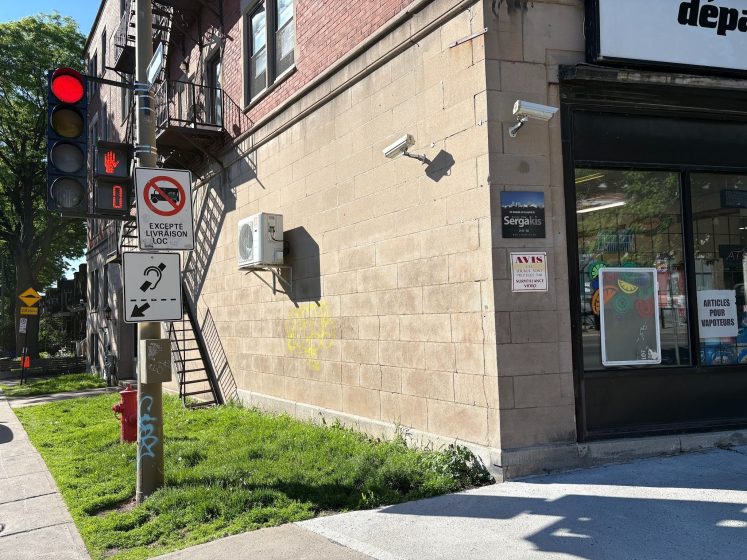
During my early teenage years, my father moved us to a new suburban development at the urban edge. Across the street was an unfinished house whose construction had been seemingly abandoned mid-progress. Neighboring that unfinished house was an empty lot with a towering old tree. Some curious kids exploring the abandoned worksite soon discovered a stockpile of leftover construction materials and began building a tree house, which quickly attracted the attention of all the neighboring young people.
That summer, I made more friends than I had ever made in childhood. We eventually attracted too much attention from adults and had to tear down our community achievement. Both sites later reassumed their real estate destiny and became suburban houses with lawns, the tree removed. I never saw any of these new friends again.
A city’s natural life comes from meeting spaces and creation spaces, not from open spaces. Lawns are unnatural aesthetic objects providing status and resale value to real estate products. Laws mandating lawns that are imposed by local communities or neighborhood associations are the most easily removed of all barriers. They are defended only by our lack of imagination on how to provide permeable ground and to make harmonious use of this necessary buffer between residence and traffic.

about the writer
Carolina Figueroa-Arango
Carolina Figueroa is a political scientist, founder of SELVAR, a think-and-do tank advancing nature-based solutions in cities across Latin America and the Global South, and Director of Protected Areas for the city of Bogotá. Her work focuses on biodiversity conservation, climate adaptation, and the integration of nature into urban planning and decision-making across Latin America and the Global South. She has led interdisciplinary projects on urban wetlands, ecological restoration, and nature-based solutions in collaboration with communities, governments, academia, and international organizations. Carolina is also co-lead of the Urban Conservation Strategies Specialist Group of the IUCN World Commission on Protected Areas and author of the book Integrating Nature-Based Solutions in Cities from the Global South.
Carolina Figueroa Arango
Degraded urban spaces should be reframed not as as opportunities for renaturalization, not liabilities.
Four strategies to promote nature in the limited urban space
Cities have been designed, traditionally, for grey infrastructure and people, very often erasing natural ecosystems to promote “functional infrastructure” for humans. Urban development has treated nature as a problem rather than as an opportunity, and this approach is reflected in cities with limited natural spaces, lacking ecological connectivity in the urban landscape, and having several management problems. These spaces don’t have a clear role in the urban agenda. As follows, I reference four approaches based in the context of the Global South that have the potential to improve the existence of natural spaces in our cities, despite limited space and budgets.
Primary Ecological Structure (PES). Many cities have adopted the concept of a primary ecological structure: a network of natural areas—such as protected areas, rivers, forests, parks, and ecological corridors—that provides essential ecosystem services. While these areas are often protected through land-use restrictions, cities frequently lack the resources needed to address threats such as pollution, waste, illegal extraction, and informal urban expansion. Defining a primary ecological structure should go beyond mapping existing assets; it should be a forward-looking strategy that anticipates urban growth and secures sufficient space for long-term ecological functionality and resilience. This means two things: 1) in urban expansion contexts, the PES should guide the way we design new urbanized areas and 2) connecting stepping stone areas within the PES should guide socio-ecological connectivity efforts.
Nature-based solutions (NbS) as a vehicle for nature’s contribution to people (NCP). Nature-based Solutions (NbS) provide a practical framework for managing urban nature as a source of multiple benefits for people while maintaining ecological integrity. NbS provide a practical way to translate NCP into urban planning and management. As conservation moves beyond a purely biological focus, NbS help integrate ecological, social, and cultural values, recognizing that urban nature supports biodiversity, health, well-being, social cohesion, and climate resilience while also requiring management of risks such as pollution, illegal dumping, and insecurity. This perspective, aligned with the IPBES NCP framework, helps cities to shift from viewing nature only from a biological perspective toward managing it as essential urban infrastructure that supports both ecological integrity and human quality of life.
Urban Protected Areas. These areas are the core of the primary ecological structure and often the first places where urban residents connect with nature. While essential for biodiversity conservation, they frequently face pressures from urban expansion and limited management capacity. As cities grow, many protected areas become isolated ecological islands, reducing connectivity, genetic exchange, and species survival. Urban protected areas are key for nature and for people. Their location is the basis for organizing socio-ecological connectivity in the urban landscape.
From restrictive regulation to enabling incentives and mechanisms. The private sector is a critical yet often underutilized driver of urban transformation. Rather than relying a restriction-based regulation, cities should create incentives that align economic interests with ecological outcomes. In Bogotá, the transfer of development and construction rights mechanism allows owners of land located in protected environmental areas to transfer their property to the city in exchange for development certificates. These certificates represent buildable floor area that can be used or sold for development in designated urban zones, creating a market-based mechanism that supports conservation while accommodating urban growth. At the same time, degraded urban spaces should be reframed not as liabilities, but as opportunities for renaturalization.

about the writer
Ewa Iwaszuk
Ewa Iwaszuk is a research fellow at Ecologic Institute. She focuses on climate and sustainability, with a particular interest in urban climate policy and nature-based solutions. She explores how cities can use natural systems to build resilience, address climate impacts, and support biodiversity. Ewa collaborates with various organizations to help develop practical strategies that make cities more sustainable and climate-friendly. Her work highlights the role of local governments in integrating nature into urban planning to create healthier, more resilient urban spaces.
Ewa Iwaszuk
No man’s lands are disappearing, and perhaps in dense cities, they cannot simply be wished back into existence.
Making Room for August
If you say Eurosummer, I say: it’s 1994, and I am standing knee-deep in a sea of thistles, in the middle of no man’s land, between The School and The River, my childhood kingdom. My knees are scratched and bruised, my forearms covered in mosquito bites, my shins burned by nettles. The hot air stands still, but the landscape around me is loud, alive with the movement of grasshoppers, bumblebees, beetles, and the odd dragonfly. This was not a village, mind you, but a city of over half a million inhabitants. I am surveying my kingdom of weeds: tall grasses, broadleaf plantains, dandelions, thistle, sorrel, goutweed, and yarrow. And my favourite of all, the tansy, with its Polish name, “wrotycz”, which to me sounded like a medieval weapon.
A poet described the dizzying intensity of the Eastern European August more eloquently than I ever could: “Herbs, flowers, and weeds of all kinds, overlooked by the magnificent day, proliferated luxuriantly and silently, delighting in that pause in which they could dream beyond the margins of time, on the outskirts of an endless day.”
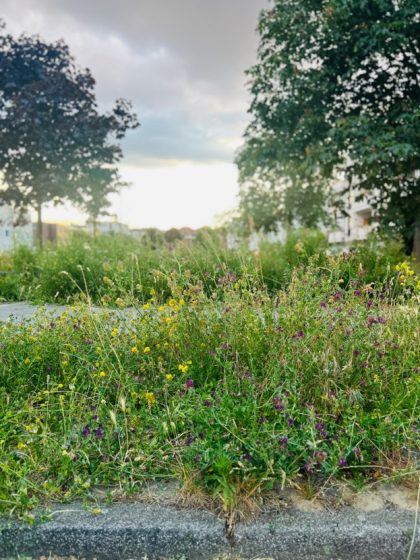
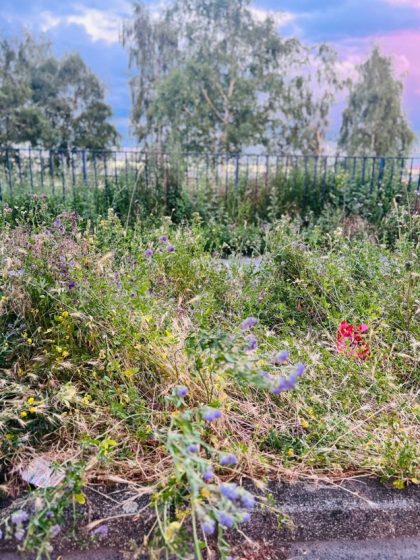
Bruno Schulz’s “August” was published in 1934, sixty years before I stood under the afternoon sun in my childhood tansy kingdom. My grandfather was four at the time, and it brings me comfort to imagine his childhood played out in a similar landscape of overgrown meadows and late-summer heat, before it abruptly ended when his village found itself on the frontline of World War II. Twenty-six years later, my father would be playing on the banks of the very same river that demarcated one edge of my kingdom. He’d later tell me how he and his brothers would go down to the river to bathe and look for crayfish beneath the stones. They live only in the cleanest of waters. “A few years later”, he’d say, “when chemicals began to be spread across the fields, both the crayfish and our bathing came to an end.” Thinking that we share this intergenerational experience of the similar, though changing, loud, vibrant, giddy Eastern European August gives me a strange sense of safety in the context of an otherwise tumultuous family history. But will my son get to experience the same?
There’s a new trend in parenting. There are a million new trends in parenting, but this is the one the social media algorithm has correctly deduced will resonate with me anyway: children, apparently, need to be outside. They need irregular ground beneath their feet, low branches to duck under, stones to pocket, and insects to observe with the solemn concentration of scientists. In other words, “sensory input”. They need free roaming. They need unsupervised play. They need, perhaps most of all, what is now called nervous system regulation. The tired, calm feeling that came after hours outside, or the way fear rose and fell when you climbed too high in a tree. All that my childhood offered was a combination of limited entertainment options and my parents’ extraordinary, from today’s perspective, decision to let a six-year-old play outside completely unsupervised.
So when I ask myself what cities could do less of to make room for nature, my answer is not only that cities should do less maintenance, although they should. Maybe what I am after is less of an insistence that every patch of urban land must declare its purpose. Of course, it is not as simple as that. Vacant land is owned. Overgrowth can conceal real danger. A thicket may be a habitat, but it may also be experienced as neglect. In cities marked by housing shortages and unequal access to green space, it is not enough to say: leave things wild. Someone will always be able to ask, reasonably, why this land is not doing more.
Perhaps my son will never walk through grass taller than himself without that experience being designed for him by an adult. No man’s lands are disappearing, and perhaps in dense cities they cannot simply be wished back into existence. But cities can still leave some railway banks shaggy, let schoolyards have corners of mud and nettles, leave thickets in parks, next to lawns and playgrounds. Leave some room for August.

about the writer
Andrew Grant
Andrew formed Grant Associates in 1997 to explore the emerging frontiers of landscape architecture within sustainable development. He has a fascination with creative ecology and the promotion of quality and innovation in landscape design. Each of his projects responds to the place, its inherent ecology and its people.
Andrew Grant
Ultimately, nature needs a home in the city to thrive. That suggests humans need to give up some of the space we dominate and dictate the use of to create space for biodiversity.
Making Room for Urban Nature
The obvious response is the Grey to Green strategy of replacing areas of highways, car parking spaces, and hard, unused spaces in schools, hospitals, and other public spaces with multifunctional biodiverse planting schemes. With excellent examples from Sheffield in the UK to Paris, Barcelona, and many other towns and cities, this must be the key focus for delivering more nature in urban environments. Of course, this is largely dependent on public funding and winning over the car lobby. In the UK, there is no guarantee this will be available on any scale to deliver the impacts required in the short term. Meanwhile, there are smaller-scale interventions or changes in management that can begin to have an impact. For example, there should be more tolerance of plants in pavements and along roadside kerbs and verges that would once have been obliterated by chemicals or mowers but now provide miniature corridors of green throughout the urban fabric. Here’s an example in my local street in Bath, UK.
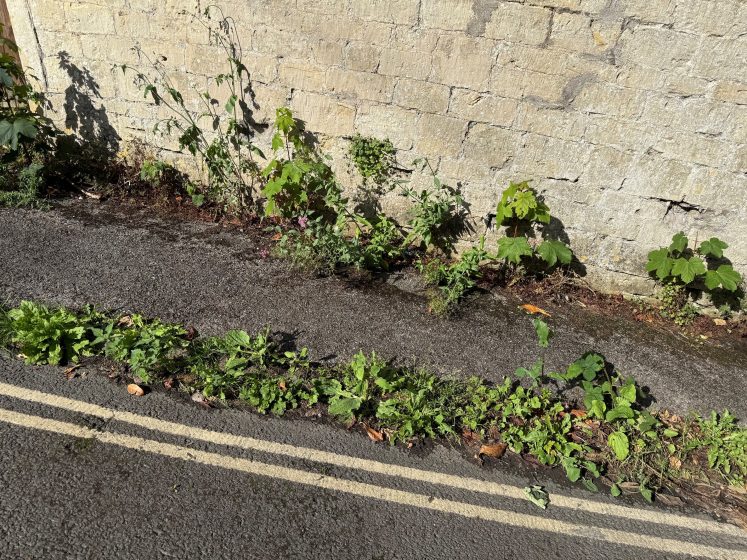
What else can we give up, making space for nature? If removing hard surfaces is challenging, then you must look at the transformation of existing green spaces through management and change of function. For example, the vast areas of municipal mown grass should be managed to create species-rich flowering meadows, municipal golf courses could be closed and managed for biodiverse woodland and grasslands with much greater public use and access than the limited use by golfers. In Bath, two municipal golf courses were closed a few years ago, and they are evolving into wonderfully nature-rich spaces for the local community and a home for more inclusive activities. Here is an image of this year’s Forest of Imagination at the former Entry Hill Golf Course.
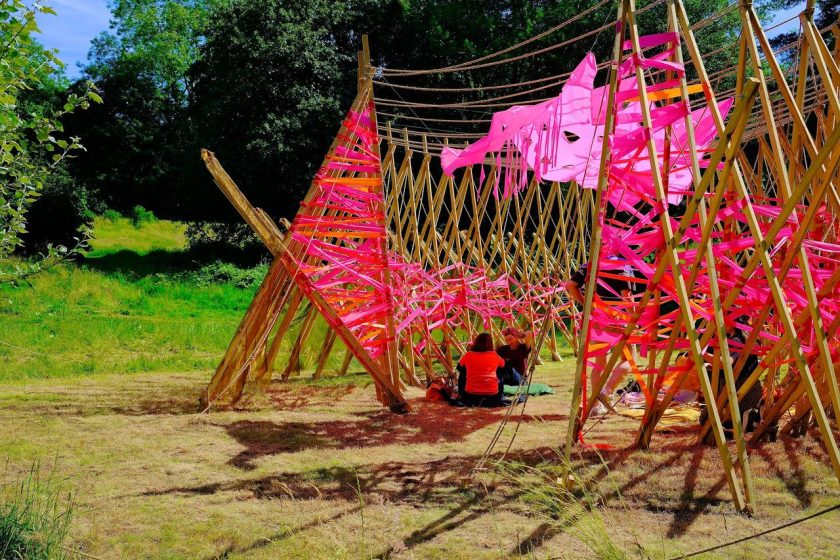
What can we give up as individuals? Time. Volunteering to help local community management of green spaces where the focus is on the management of species-rich grasslands, hedgerows, woodlands, and productive landscapes. Money. How about giving up that bottle of wine or subscription to Prime and passing that saving on to a local or national urban nature initiative? Here are volunteers who maintain the Lyncombe Hill Fields in Bath. Formerly an area of low-grade grassland grazed by horses, it is now a thriving diversity of habitats supporting many more species.
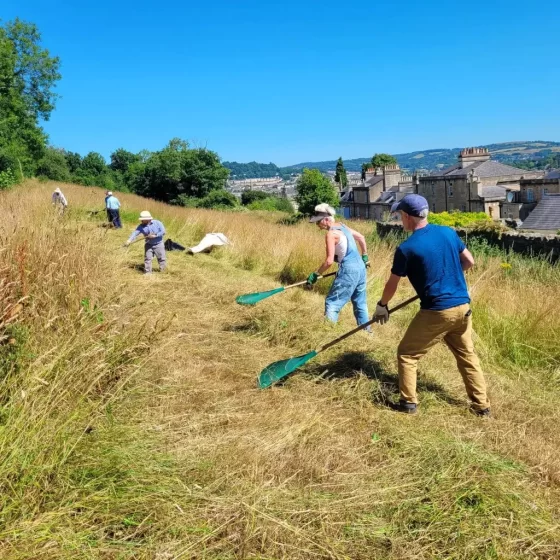
Well, the above are helpful options but will probably just mean we are tinkering with the issue rather than addressing the core problem, which might be summarised as the diminution of the value and importance of nature in the way we are governed, brought up, and educated. Can we replace the Department of Transport with the Department of Nature (within which mobility and transport are embedded)?
How about embedding nature studies within every academic subject to transform traditional teaching and learning from nursery school to University:
- Art and Design: Replace traditional studio theory with biophilic forms and structures, environmental art, botanical illustration, and eco-architecture.
- Literature: Shift from classical texts to nature writing and ecological narratives.
- History: Replace isolated chronological studies with the history of human-environment interactions and local landscapes.
- Mathematics: Substitute abstract word problems with calculating carbon footprints, biodiversity statistics, and local ecosystem metrics.
Ultimately, nature needs a home in the city to thrive. That suggests humans need to give up some of the space we dominate and dictate the use of to create space for biodiversity. E. O. Wilson’s Half-Earth plan proposed to devote half the surface of the Earth to nature. Could we imagine planning half of the area of Cities given over to Nature?

about the writer
Charles Karangwa
Charles Karangwa is the Global Head of Nature-based Solutions Centre at IUCN. He was appointed to advise Her Excellency Razan Mubarak, IUCN President and COP28-COP 29 High Level Climate Champion on Matters related to Nature-based Solutions. Before joining IUCN Headquarter in Switzerland, He served as Regional Head of Land Systems, Covering Forests, Drylands, Nature Based Solutions, Sustainable Agriculture at IUCN Africa Region.
Charles Karangwa
To make room for nature, cities must do less of what makes them hard and fragile, and more of what makes them living, adaptive, inclusive, and resilient.
Nature is the infrastructure of resilient cities
If cities are a game of limited space, limited budgets, and competing priorities, then one thing is clear: we must do less of treating nature as optional.
For too long, urban development has treated nature as decoration, a park where land is left over, a tree added after the road is designed, a green roof used to soften an otherwise hard project. But in an age of rising heat, floods, water stress, air pollution, biodiversity loss, and social inequality, this way of thinking is no longer enough.
Nature is not a luxury in cities. Nature is infrastructure.
A wetland that absorbs stormwater is infrastructure. An urban forest that cools streets and filters air is infrastructure. A river corridor that gives water space to move safely through the city is infrastructure. So are healthy soils, mangroves, parks, gardens, green corridors, and street trees. They are part of the living system that allows cities to function, adapt, and thrive.
So, what should cities do less of?
They should pave less. Seal less soil. Design less around cars and more around people, water, shade, biodiversity, and public life. They should invest less in grey infrastructure that performs only one function, and more in nature-based solutions that deliver many benefits at once: cooling, flood protection, cleaner air, health, recreation, carbon storage, biodiversity, and social connection.
Cities should also do less fragmented planning. Too often, transport, housing, water, health, climate, parks, and finance are managed as separate systems. Nature does not work that way. A tree is not only a landscape feature. It is part of the water cycle, the climate system, the health system, the biodiversity system, and the social fabric of a neighbourhood.
This does not mean cities should stop building. Cities must continue to provide homes, jobs, mobility, and services. The real question is whether we build against nature or with it. Resilient cities are not those that cover every risk with concrete. They are those that make space for natural systems to reduce risk, absorb shocks, and improve everyday life.
There is also a deeper human truth. Without nature, cities become harder, hotter, and more fragile but also less joyful. Streets without shade, neighbourhoods without birdsong, rivers hidden in concrete, children growing up without daily contact with living systems: these are not signs of progress. They are signs that we have misunderstood urban prosperity.
A city without nature may still function, but it becomes boring. It loses beauty, generosity, memory, and soul. The future city is not one that adds greenery where convenient. It is one that understands nature as a partner in development. To make room for nature, cities must do less of what makes them hard and fragile, and more of what makes them living, adaptive, inclusive, and resilient.
Nature is not the opposite of the city. Nature is what allows the city to endure.

about the writer
Lucie Lederhendler
Lucie Lederhendler is the Artistic Director of the Art Gallery of Southwestern Manitoba, a community-engaged, contemporary public art gallery, where she began as curator in 2021. Her research is concerned with the ecosystems of mythologies and the mythologies of ecology. She is a lecturer in art history at Brandon University.
Lucie Lederhendler
There is no ideal “return to nature” in an urban space because nature is inherently feral.
I jumped at the chance to respond to this prompt because I knew just what experience I wanted to reference: a conversation with the architectural firm tasked with designing a building that would house my public art gallery, the downtown branch of the public library, and the municipal history museum. The new facility―a “cultural hub”―would require each of us to reduce our footprint substantially. Nonetheless, a shared grand entrance was a necessity. The rooftop garden terrace, which stubbornly showed up in design after design, was not. I was surprised to find myself advocating against it.
It seemed like such a perfect microcosm of this bigger question, and an opportunity to reflect on why a person, community, or council would ever vote against nature. I expected to simply elaborate on my cultural and geographic positionality: what we were not willing to sacrifice was the gathering of humans during the times of year when we are not welcome in nature. What resulted was much more complex―an unfolding of intertwined and contradictory arguments, descriptions, prescriptions, and hopes. Here in my umpteenth draft, I try to simply locate all of those, rather than try to build towards a certainty.
Starting with the first point, already mentioned: (1) it is right and good that not everyone is welcome everywhere. Just as careful language can alienate bigots out of safe spaces, and mosquitoes do their best to keep the deepest Amazon free of Sandals® resorts, the punishing cold of Manitoba’s long winter is an invitation for humans to gather indoors.
(2) During the time that a rooftop terrace would be an amenity, our community is away, engaging the natural world in a different way, camping, cottaging, or engaging in 18-hour days of agricultural work.[1]
(3) There was no question that there would be landscaping at the entrance. The street-level plantings were considered under an entirely different heading―a kindness to the city rather than a luxury for guests. It’s entirely a matter of access, which, of course, equates to a matter of exclusion.
(4) The demands of urban space are such that few things can be justified by a single service (with the obvious exception of parking spaces), both in terms of maintenance and care. Keeping the street-side plantings free of sharps, litter, and vandalism serves the ecosystem of street-side behaviour. Add the demonstrated psychological benefits of urban greenery,[2] and sidewalk plantings are some of the heaviest lifters of any plan for public space.
(5) As low-maintenance as an urban planting can be, roots and concrete are an unnatural pairing and need stewardship that is responsive to any number of things: vandalism, quick freezes and floods, trash-holing[3], and invasive weeds, to name a few. There is no ideal “return to nature” in an urban space because nature is inherently feral. What we’re talking about is obviously gardens, and gardens need care.
(6) Maintenance is to care as tolerance is to invitation. The former can be written into policy and assigned in a staff meeting, but the latter are linked to a soul®, to an individual driven by passion. At the level of government, the Parks Department staffer who lives for food security might be succeeded by one who is all about the rain garden, or native pollinators, and, with no ill-will, the bellflower will crowd out the sage in two years.[4]
(7) The “third place” was coined in a 1989 book and has been championed as a force towards true democracy and equality, especially in the sector of cultural spaces, ever since. One of the book’s co-authors has been writing more recently about the flawed understanding―third places are not the third of three, but one of many.[5] There is a tangled matrix of place that we navigate daily. Some carry a reasonable expectation of privacy, some of safety, some of connection, some of welcome, some of engagement, and some―a great deal of others―of the antithesis of all of these.
8) Refer to point four to answer the question more concretely: Less driving in the downtown core.
[1] (The city of Brandon is quite quirky in that it *ends* at the end of a road, not at a beltway, not at the river, just the *end*. As single-family developments begin to seep out at these edges, on these flatlands, it’s the ownership of agricultural land that holds the line.)
[2] See, for example: Shan Gao, Yumeng Ma, Chanyi Wang, Hangyuan Xue, Kejin Zhu, Siqi Hou, Chi Feng, Assessing urban greenery impact on human psychological and physiological responses through virtual reality, Building and Environment, Volume 272, 2025, 112696, ISSN 0360-1323, https://doi.org/10.1016/j.buildenv.2025.112696.
[3] Defined as the tendency of people to put their trash in any container with space, not unique to the city of Montreal, but special to it: https://cultmtl.com/2018/07/fucknomtl/
[4] I am referring to this garden initiative, for which the hardscaping is still vibrantly hosting the gatherings the designers envisioned, but the gardens have been sorely neglected: https://winnipegarchitecture.ca/places/a-r-mcdiarmid-civic-complex-greenspace-brandon/
[5] See Karen Christensen, https://karenchristensen.substack.com/p/the-7-places-and-spaces
about the writer
Lorena Zárate
Lorena Zárate is co-coordinator of the Global Platform for the Right to the City and former president of the Habitat International Coaltion.
Lorena Zarate
Better, not just more, is the kind of growth we want. Let’s focus at least as much energy on not losing the nature and the built environment we already have.
Want more nature in cities? Then take care of the “built environment”
Adding is not the only way to have more nature. Stopping the loss of what you already have is equally needed —and many times a better strategy. Taking better care of trees, rivers, but also buildings, in order to limit urban sprawl and resource consumption.
While very pertinent heritage regulations preserving historic buildings and urban landmarks are widespread, it is way more difficult to find policies (and budgets) for adequate maintenance and repair of everyday infrastructure, community facilities, and social housing. Equally problematic is the lack of action regarding vacant and underutilized residential stock and other already built assets, paired with the frenzy of exclusionary real estate development and high-cost urban expansion. Conservation of nature urgently requires a broader conversation about conservation of the so-called built environment, so we build less, we build differently, and we make better use of what is already built.
The need to build less
Red flags on a very concerning trend have been raised high for some time now: urban land consumption is growing much faster than the urban population. The monitoring of the specific indicator as part of the Agenda 2030/Sustainable Development Goal 11 shows little progress in addressing/reversing this very problematic tendency worldwide. It is well known that urban sprawl has negative consequences in many different dimensions. The direct environmental impacts are seen in the loss of forests, water sources, and land for food production. People’s lives are affected by increasing commuting times and transportation costs, which in turn lead to higher levels of pollution. Peri-urban and rural towns are quickly incorporated into metropolitan areas, creating tensions and conflicts over land use priorities, administrative boundaries, and allocation of resources for new basic infrastructure and services. At the same time, efforts to increase density in urban areas should explore more the “missing middle” (multi-family housing types and tenure options that sit between high-rises and single-family homes) and take appropriate measures to avoid associated gentrification effects.
The imperative to build differently
There is little surprise in the fact that cities are responsible for 70% of greenhouse gas emissions. Composed in their vast majority out of concrete, steel, and aluminum, housing, transportation, and the construction sectors are by far the major contributors to the clearly unsustainable urban carbon footprint. From extraction to distribution and use, buildings and infrastructures made of industrialized materials eat up more than 40% of global energy demand. A growing awareness about the imperative to build differently is now easy to find across sectors and regions, but progress on international commitments and sustainable standards remains very slow and not always incremental. Civil society organizations, peasants’ movements, and Indigenous Peoples have decades of peer exchanges, capacity building, research, and advocacy to promote the use of local, renewable materials, and the recognition and support of traditional, sustainable building techniques.
The urgency to make better use of what is already built
Empty housing, underutilized infrastructure and facilities —including many large brand-new venues built for international sports and cultural events— are a common feature in cities of all sizes around the world. In megalopolises such as São Paulo and Seoul, it is estimated that the number of vacant residential units is higher than the number of people living in the streets. The social and environmental function of land and property is a fundamental principle in global agendas, but examples of its implementation are still rare. (Check what the Montevideo municipality has been doing for inspiration.) Housing and neighborhood improvement programmes of the self-built stock in the global south are more common, although insufficient in their scale, impact, and continuity. Stronger regulation to avoid speculation is needed, together with meaningful and innovative public-community collaborations to put the existing stock to better use, while improving socio-spatial justice and mobilizing climate action.
Growth sounds like a natural thing to wish for, but is it for everything, everywhere? In many cases and places, growth means destruction. Ideas and initiatives presented under “development” frameworks carry several losing dimensions affecting people and nature. The right to housing and the right to the city propose a framework for action that cares about the commons, with more balanced urban-rural linkages and greener solutions. Better, not just more, is the kind of growth we want. Additions might be necessary, but it is not the only way to go, and in many cases it is certainly not the best one. Let’s focus at least as much energy on not losing the nature and the built environment we already have.

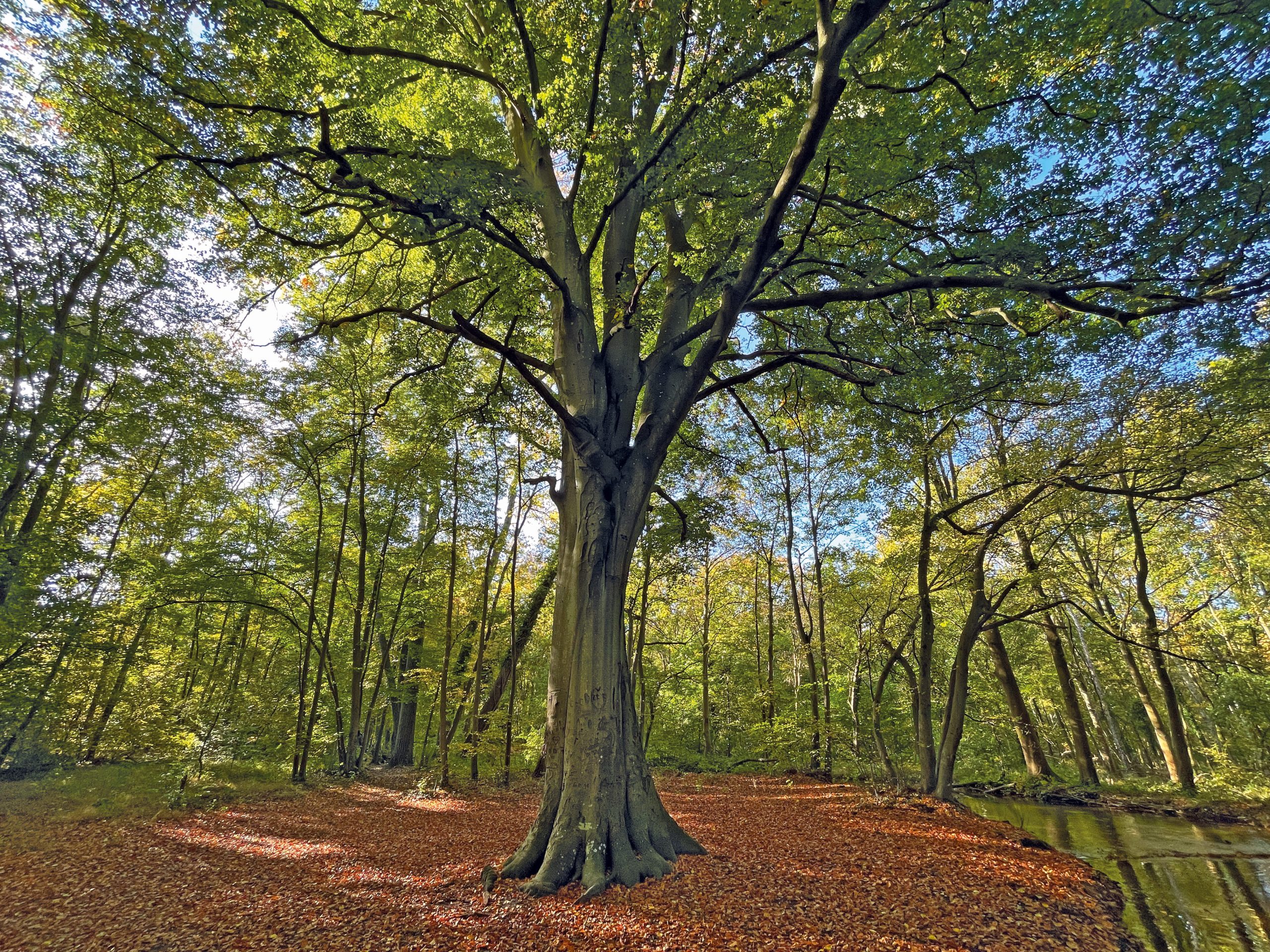
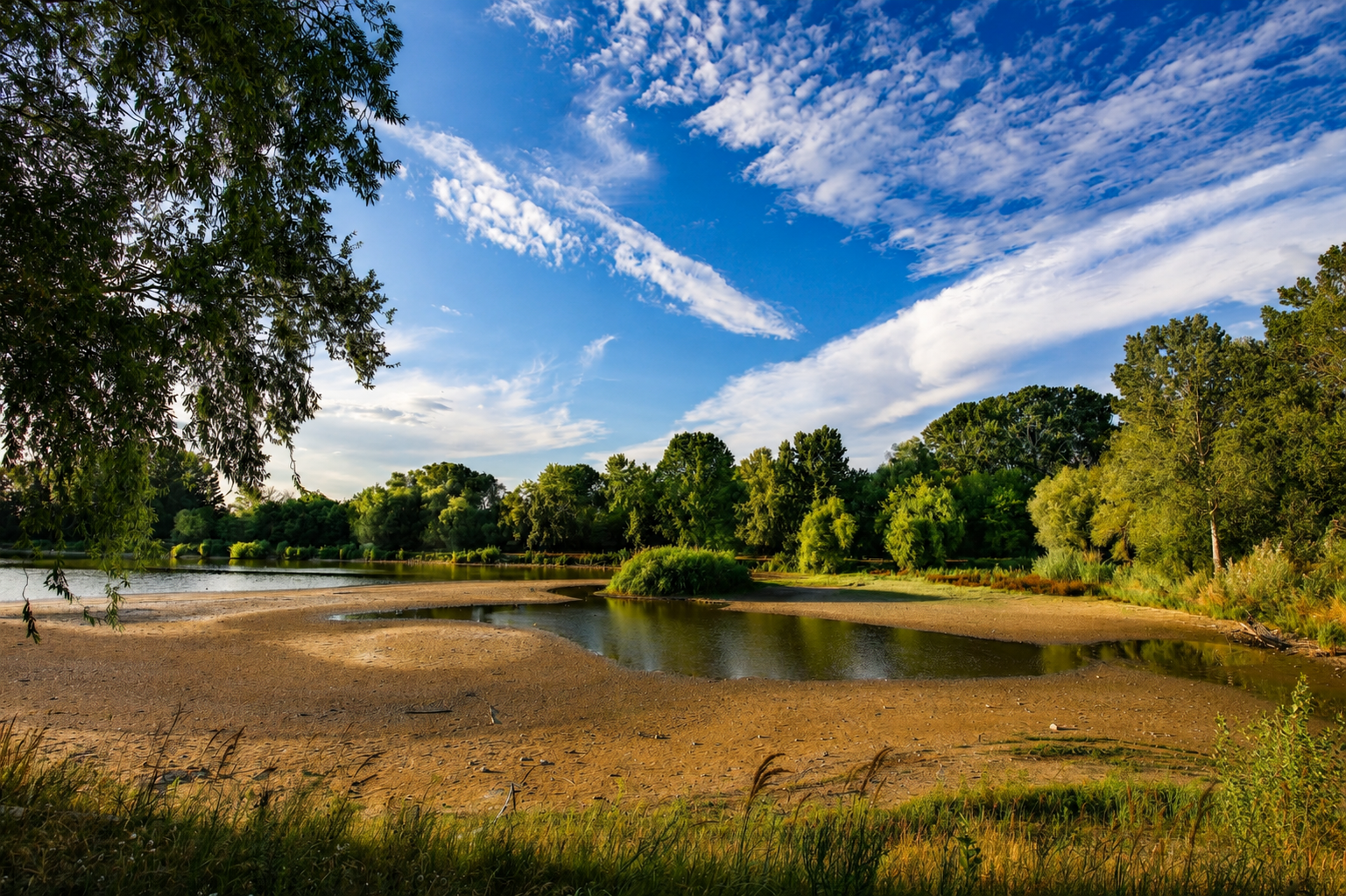
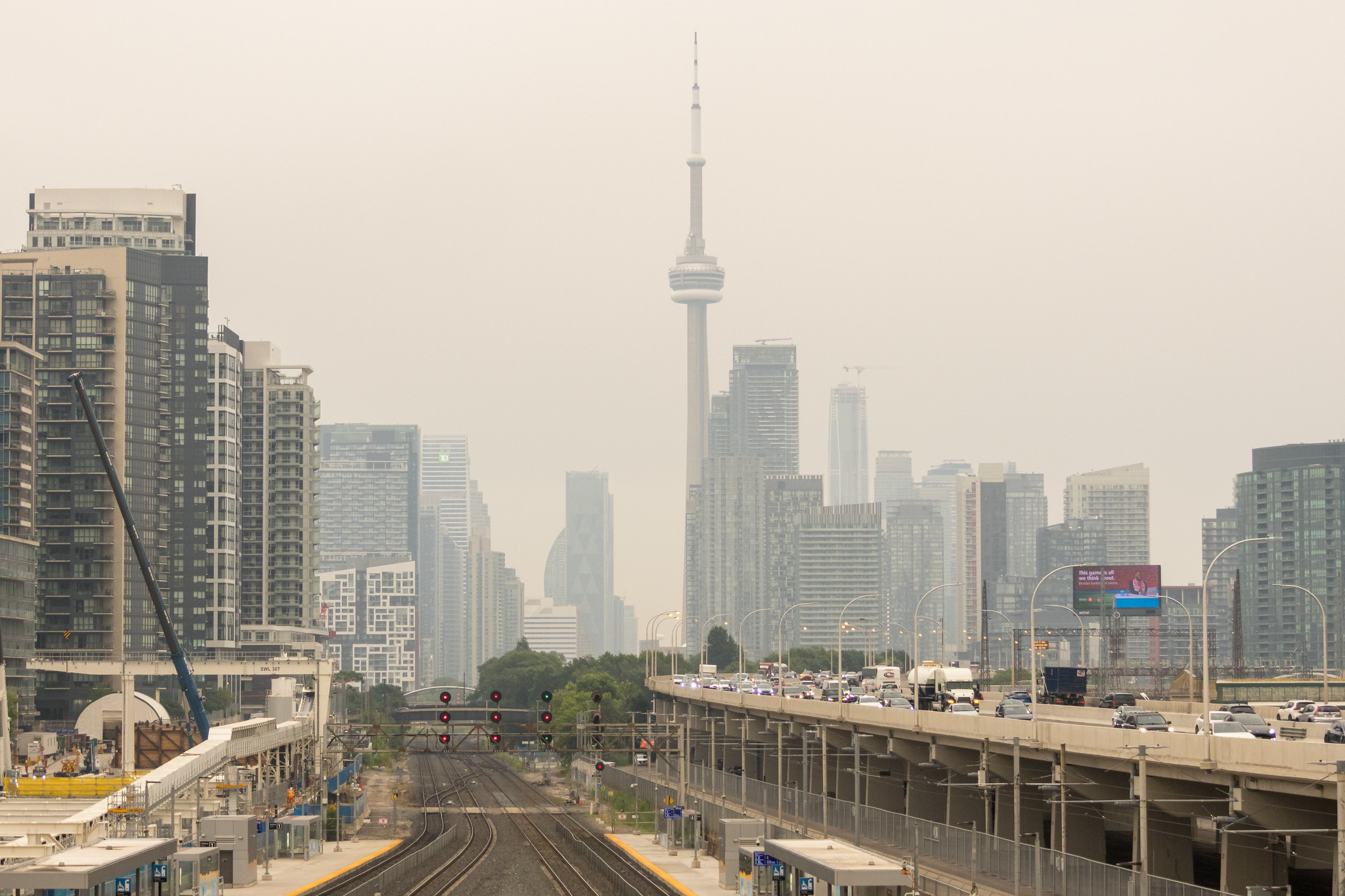
Leave a Reply