
about the writer
Olivia Bina
Olivia Bina researches our evolving relationship with nature and its implications for 21st-century challenges. She focuses on nature-based urban transformative change, critiques of scarcity and growth, and the unlimited potential of human-nature connectedness to progress beyond traditional notions of development. Olivia is Senior Researcher at the Institute of Social Sciences-University of Lisbon (Portugal), and Fellow of the World Academy of Art and Science. She holds degrees in Political Sciences, Human Geography and Landscape Architecture; loves trees, catching an early moon-rise, gardening and creating something beautiful from a lump of clay.

about the writer
Eric Sanderson
Eric Sanderson is Vice President for Urban Conservation at the New York Botanical Garden, and the author of Mannahatta: A Natural History of New York City. His upcoming book, Before New York: An Atlas and Gazetteer, will be released in 2026.
Introduction
This Roundtable is meant to explore the multiple ways in which Botanical Gardens, often situated at the heart of our cities, might facilitate a more entangled, respectful, and diverse co-evolution of the vegetal and built environment. This is not a futuristic agenda.
We are living in an era when plants will be critical in addressing global challenges and in shaping more generous futures. As the news of more, more extreme, more durable heatwaves travels across the proverbial ‘four corners of the world’, calls for nature-based solutions (NbS) rise with equal urgency, especially from the urbanized world, where the heat-island effect is a matter of life and death (Iungman et al 2023). NBS are designed to use the properties of nature to address multiple sustainability challenges and are increasingly used across cities and their surrounding rural and coastal areas. What matters to this roundtable is that the botanical world is the main source/embodiment of such solutions in urban areas, as illustrated by the hundreds of cases in the Urban Nature Atlas global dataset (https://una.city/) documented as explicitly plant/green-space dependent, including reference to habitats or biodiversity.
Yet, the success of botanical NbS depends on deep knowledge of these living systems that are so much more than an infrastructure in shades of green. Success also requires technical skills, spatial design, and cultural perception — how people see, value, and relate to plants and green space. And it needs a stronger focus on equitable access (Chen et al. 2025).
Naturescapes and Non-a joined forces to launch the “Botanical Turn” competition, inviting architects and designers to see botanical gardens as active urban infrastructures. The challenge: how can botanical gardens help reshape the urban landscape and redefine the relationship between plants, people, and the built environment?
This Roundtable is meant to explore, relate, imagine, and narrate the multiple possible ways in which Botanical Gardens, often situated at the heart of our cities, might facilitate a more entangled, respectful, and diverse co-evolution of the vegetal and built environment. This is not a futuristic agenda. The Botanical Gardens Conservation International (Cavender et al. 2019) commissioned a report on “The role of botanic gardens in urban greening and conserving urban biodiversity” and found that they are: (1) contributing to urban forestry and resilient landscapes; (2) supporting and advancing urban agriculture; and (3) conserving urban biodiversity. And that is not all (Hassouna et al. 2023; Primack et al. 2021). They also play an important role in advancing botanical knowledge essential to adaptation strategies for climate change in urban areas and beyond (BGCI 2024; Grover 2025), and they contribute to reversing the phenomenon of “plant awareness disparity”: the human (mainly “western”) tendency to ignore or undervalue plant life—that has become a widespread perceptual condition, with profound consequences (Daniel et al. 2023). This matters, as it shapes not only what we notice, but what we design for, care for, and imagine as part of the urban environment.
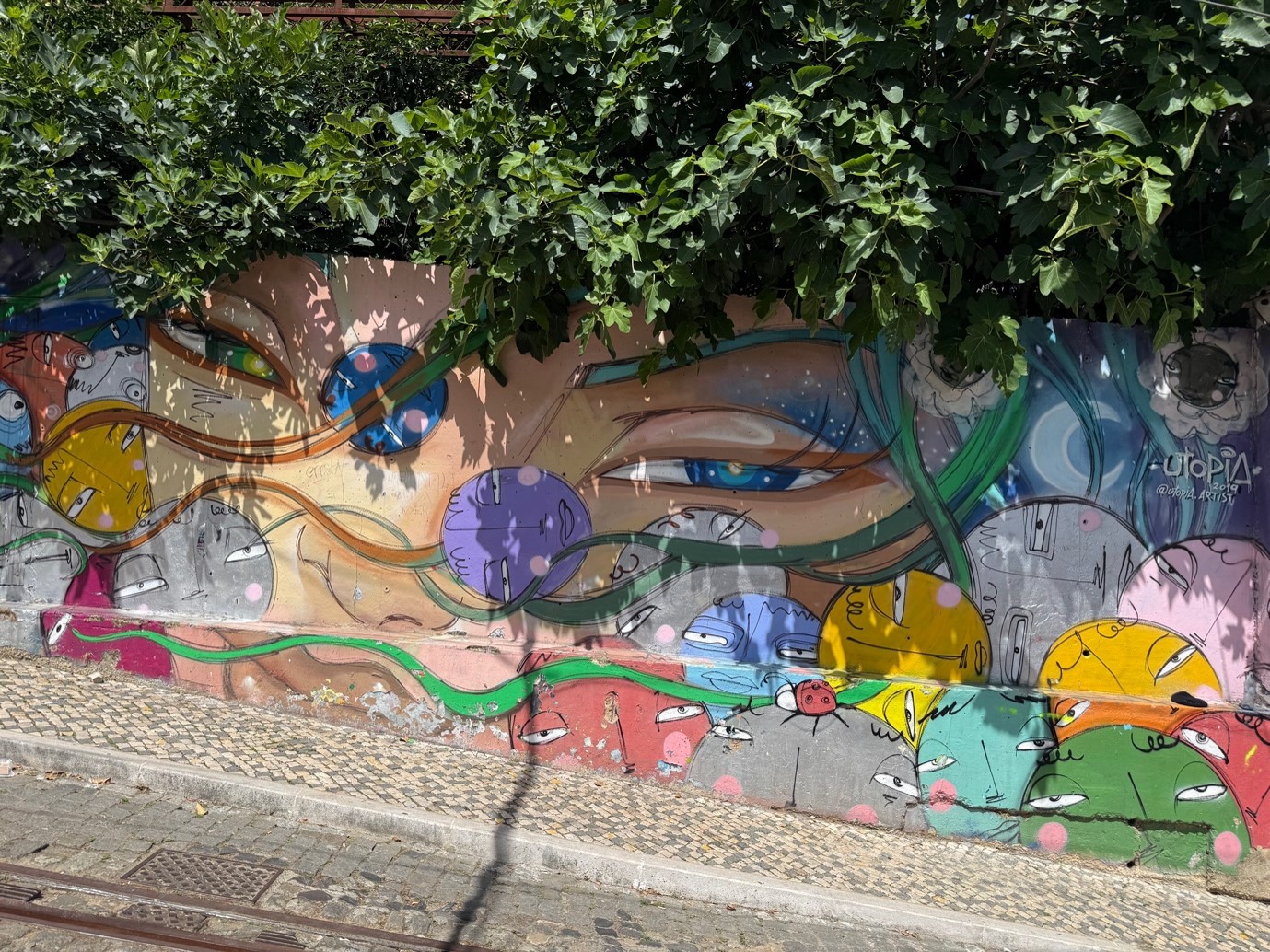
But much more can and needs to be done to bring Botanical Gardens into the life of the city, beyond their walls to help usher in a more liveable and thriving urban future. This roundtable brings together voices from 4 continents―some engaged in leading botanical gardens, some exploring their future potential, others looking at botanical gardens from the perspective of urban planning, landscape architecture, NbS, art, and through the lens of municipalities, universities, communities, and artists engaged in weaving stronger connectedness between botany and cities. It builds on the “Botanical Turn” initiative funded by the EU research project Naturescapes (Bina et al. 2026), inviting contributors to see botanical gardens not as bounded enclaves, but as living urban infrastructures—repositories of knowledge, biodiversity, and layered cultural histories, with roots that can reach far beyond their walls.
We ask: What are ways to extend the values and benefits of botanical gardens beyond their walls? How might their influence seep into streetscapes, shape urban design, or illuminate the intertwined ecological, cultural, and economic landscapes that cities inhabit? What might it mean for botanical gardens to spill outward—into neighbourhoods, edges, and imaginations—reshaping how we live with plants, and how cities themselves take form?
References:
BGCI (2024) Climate Change Alliance of Botanic Gardens, https://www.bgci.org/news-events/climate-change-alliance-of-botanic-gardens/
Bina, O., Lêdo Marques, A. and Silva, D. (2026) Botanical Turn, online competitions Non-a, https://www.naturescapes-project.com/interventions
Cavender, N., Smith, P. and Marfleet, K. (2019) The role of botanic gardens in urban greening and conserving urban biodiversity, BGCI Technical Review, https://www.bgci.org/wp/wp-content/uploads/2019/06/Technical-Review-Urban-Greening.pdf.
Chen, S., Shives, E., Lund, K., Murphy-Dunning, C. and Seto, K. C. (2025) An approach to prioritize urban tree planting to mitigate heat and advance equity in New Haven, Urban Forestry & Urban Greening, 113, 129039. https://doi.org/10.1016/j.ufug.2025.129039.
Daniel, J., Russo, A. and Burford, B. (2023) How might we utilise the concept of botanic gardens’ in urban contexts to challenge plant blindness?, Biodiversity and Conservation, 32, 2345-2364. 10.1007/s10531-023-02607-w.
Grover, E. (2025) Nurturing Nature Initiative: Why Botanical Gardens Are Key to Climate Resilience, https://www.nybg.org/planttalk/nurturing-nature-initiative-why-botanical-gardens-are-key-to-climate-resilience/ (accessed: 20/6/26).
Iungman, T., Cirach, M., Marando, F., et al. (2023) Cooling cities through urban green infrastructure: a health impact assessment of European cities, The Lancet, 401, 577-589.
Hassouna, S. (2023). Cultivating biodiverse futures at the (postcolonial) botanical garden. Transactions of the Institute of British Geographers, 49, e12639.
Primack RB, Ellwood ER, Gallinat AS, et al. (2021) The growing and vital role of botanical gardens in climate change research. New Phytologist 231(3): 917-932.

about the writer
Todd Forrest
Todd Forrest is Arthur Ross Vice President for Horticulture and Living Collections at The New York Botanical Garden. He oversees the team of managers, horticulturists, and curators who steward the Garden’s plant collections, natural areas, gardens, and glasshouses and has been a leader in the development of the Garden’s celebrated program of interdisciplinary exhibitions.
Todd Forrest
To make good on our promise to understand, celebrate, and protect nature, NYBG—and all botanical gardens—must engage partners outside of our walls with humility, curiosity, and hope.
Cultivating Collaborations in the Bronx and Beyond
In 1988, the New York Botanical Garden (NYBG) created Bronx Green-Up (BGU), a program dedicated to providing horticultural advice and technical assistance to community gardeners in the Bronx. The idea behind BGU was simple: NYBG would share its gardening expertise with Bronxites who, with limited resources beyond their determination and ingenuity, were motivated to do the work necessary to create thriving green spaces in abandoned corners of their neighborhoods.
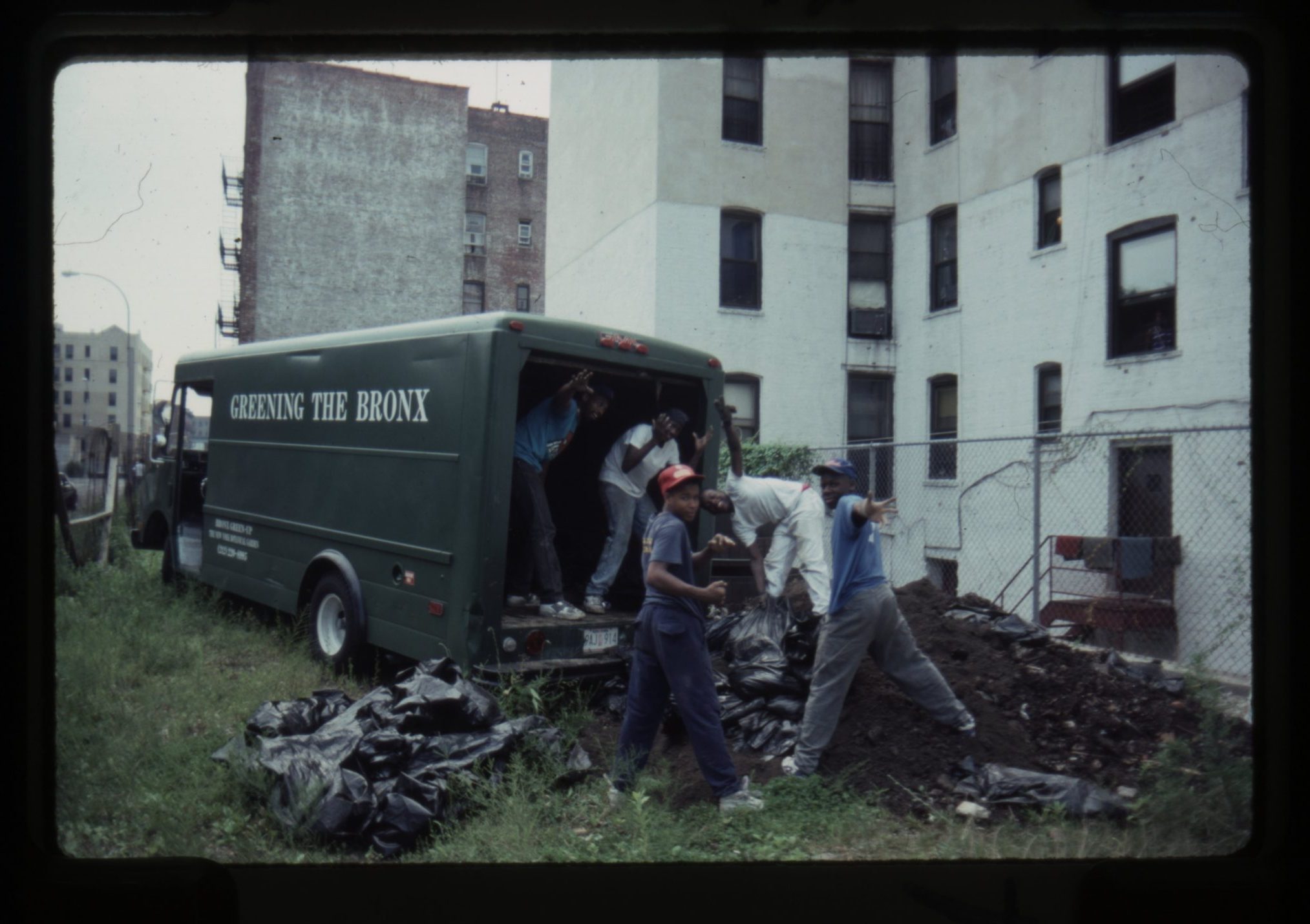
In the early days of BGU, founding director Terry Keller and a small team of community-minded horticulturists drove a beat-up old van loaded with gardening tools across the Bronx, offering support to Verna Judge, Cordelia Gilford, Marty Rogers, Karen Washington, Marie Brooks and so many other remarkable Bronx residents who had either already created gardens or were hoping to do so.
If those early BGU staff left NYBG’s gate believing their role was to provide expertise to neighbors in need, something changed as they worked alongside gardeners at the corner of Prospect Avenue and E. 182nd Street—or any of more than one hundred other sites where Bronx community gardens and urban farms now thrive. Of course, community gardeners might have had a technical question or two and were certainly glad to have someone help haul rubble or pull weeds for a while, but mostly they sought partnership. They viewed the BGU team as collaborators, not experts. The most important thing a BGU team member could do for them was listen, embrace their vision, and joyfully conspire to bring that vision into being.
It turns out that over the past 38 years we have learned as much, or more, from community members we have “served” than they have learned from us. This experience has taught us that the first step to sharing our values beyond our walls is to venture out into the world as co-conspirators, not experts. We apply this lesson to neighborhoods of all scales and geographies: from our home borough of the Bronx to the Amazon Basin, where NYBG has worked for decades, to the global community of scientists tackling the climate and biodiversity crises.
Collaboration is a guiding principle of our recent strategic plan, appropriately called Branching Out. A key initiative of that plan is the Bronx River Watershed Health and Resilience Program, created to support and amplify ongoing efforts to protect the Bronx River, which flows through densely populated communities on its 25-mile course from suburban Westchester County to the East River in New York City. This cherished yet significantly challenged urban ecosystem offers an essential connection to nature for millions of New Yorkers.
A critical partner in this project is the Bronx River Alliance, founded in 2001 to clean up the Bronx River for the benefit of the communities along its banks. NYBG contributes scientific, horticultural, and educational resources to the partnership while the Bronx River Alliance brings deep stakeholder relationships and ample on-the-ground urban ecological restoration experience. Together, we are far more effective than either of us could be alone.
That is the lasting lesson we have learned from Bronx Green-Up and other partnerships we have cultivated around the world. To make good on our promise to understand, celebrate, and protect nature, NYBG—and all botanical gardens—must engage partners outside of our walls with humility, curiosity, and hope. These collaborations are not merely a good way to get things done; they are an expression of the very values upon which our institutions were founded.

about the writer
Eugenio Morello
Eugenio Morello is Associate Professor of Urban Planning and Design at the Politecnico di Milano, where he chairs the PhD Programme in Urban Planning, Design and Policy. His research explores the intersections between urban planning, climate adaptation, biodiversity, nature-based solutions, and digital technologies, with a particular focus on urban regeneration and environmental quality.
Eugenio Morello
The challenge is not to spread botanical gardens beyond their walls, but rather to cultivate forms of hospitality that emerge from the encounter between receiving space and what it receives.
Treasuries of surprises, places to withdraw from the routines of everyday urban life. Spaces for reflection and care. Places where diversity and exoticism are welcomed and sought after. These are the sensations I experience whenever I cross the threshold of a botanical garden. Above all, it is a multisensory experience. I see the journeys that many species have made to become part of the garden, the stories of those who have patiently cared for them and wished to preserve them there, giving them a different home, beyond the ecological conditions they would have encountered in nature. This compels me to shift my perspective and identify with the plants themselves, which, despite everything, spend their lives in a place they would never have chosen. Who knows? We may never know whether they are sentient or consenting. Exotic species that no urban greening guideline would recommend for the city, because they do not belong to the regional context or reflect the character of the local flora.
No, it is not easy to imagine botanical gardens beyond their walls. Visitors take home the experience of the garden itself, together with the love, dedication, and years of care invested by countless people in cultivating plants and shaping the garden as a whole. This influences our own willingness to care for other species and to multiply their presence in the places we inhabit, beginning with our homes. Whenever I think of plants, I also think of books, perhaps because together they are the main elements of what I consider a domestic landscape. Encountering books in a library as children encourages us to read and eventually to make books part of our homes as adults. Books and plants both allow us to travel; they speak of lives and imaginaries that are not our own, distant from us. We imagine plants in their native habitats in order, at least in part, to recreate the microclimatic conditions they require. We seek either to create environments suited to them or to find the corner of the house that best matches their nature.
Perhaps this attention to the qualities of places and to their capacity to welcome others is the true botanical attitude that should extend into our cities. The challenge is not to spread botanical gardens beyond their walls, but rather to cultivate forms of hospitality that emerge from the encounter between receiving space and what it receives, understanding their mutual needs for cohabitation. I think of the diversity of habitats already present in cities, and how each offers an opportunity to welcome other-than-human species, enriching places with meaning and giving everyone a home. Every site can become the setting for a new and different story. Tiny climatic and experiential environments that suit someone, or something. Biotic and abiotic simulacra, capable of making our reality more complex and meaningful, in landscapes too often designed at a scale that overlooks forms of life both smaller and larger than ourselves. Designed spaces intersect with spontaneous ones, where even a single seed can begin a new urban narrative, new stories to observe, or simply leave free to unfold. Spaces of hospitality and competition between species and the city, between green and grey, where it is possible to take root, make room, or slowly move elsewhere. A new aesthetic and measure of space that moves beyond the human scale and constructs multidimensional, multispecies landscapes.

about the writer
Robin Lasser
Robin Lasser produces photographs, sound, video, site-specific installations and public art dealing with environmental and social justice issues.
Robin Lasser
Botanical Garden: Postcards to a Cooler Future / Robin Lasser
La Cañada Flintridge, California
July 12 – October 12, 2025 / Curated by: Edith and Jolly de Guzman
Roots of Cool: A Celebration of Trees and Shade in a Warming World
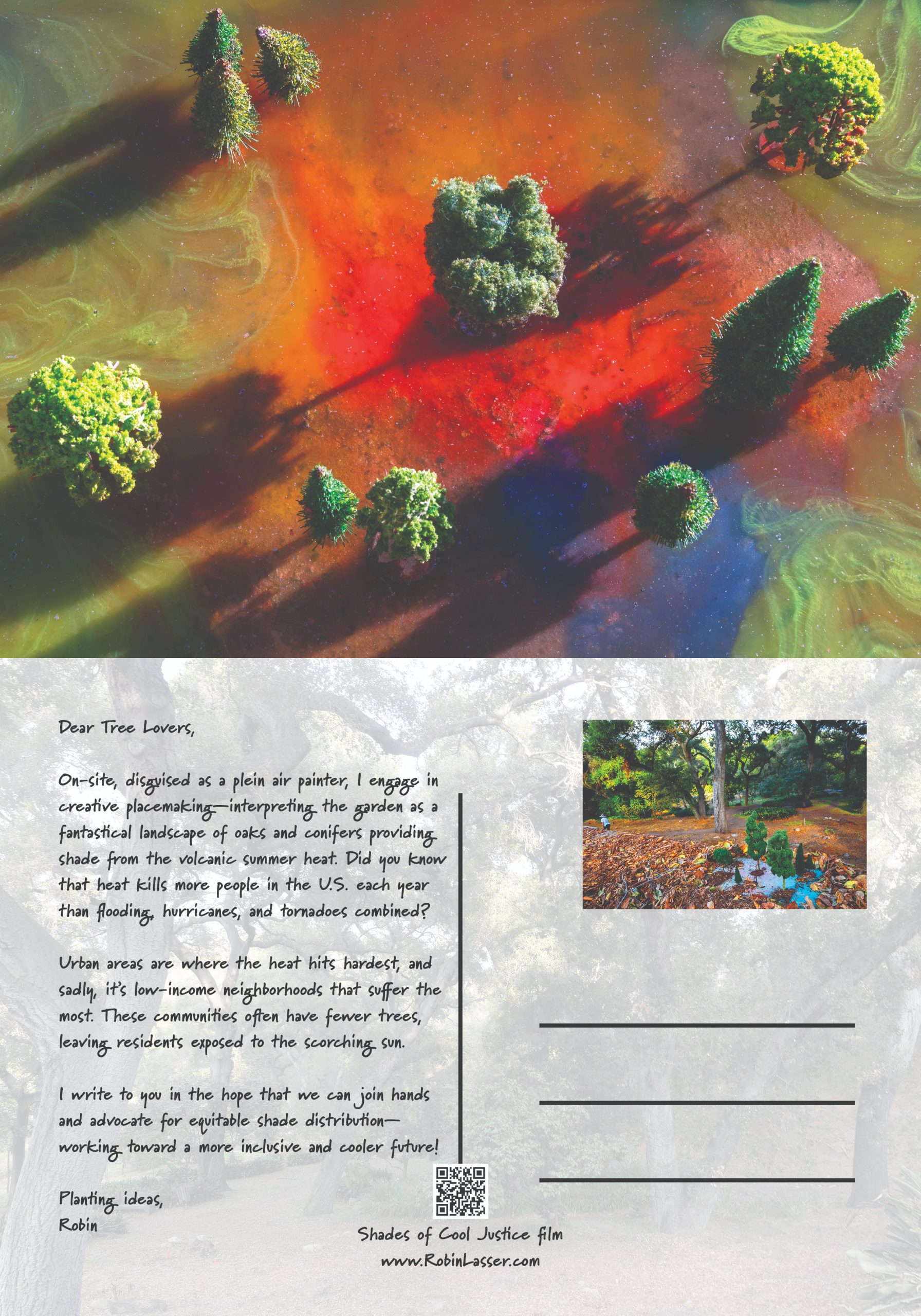
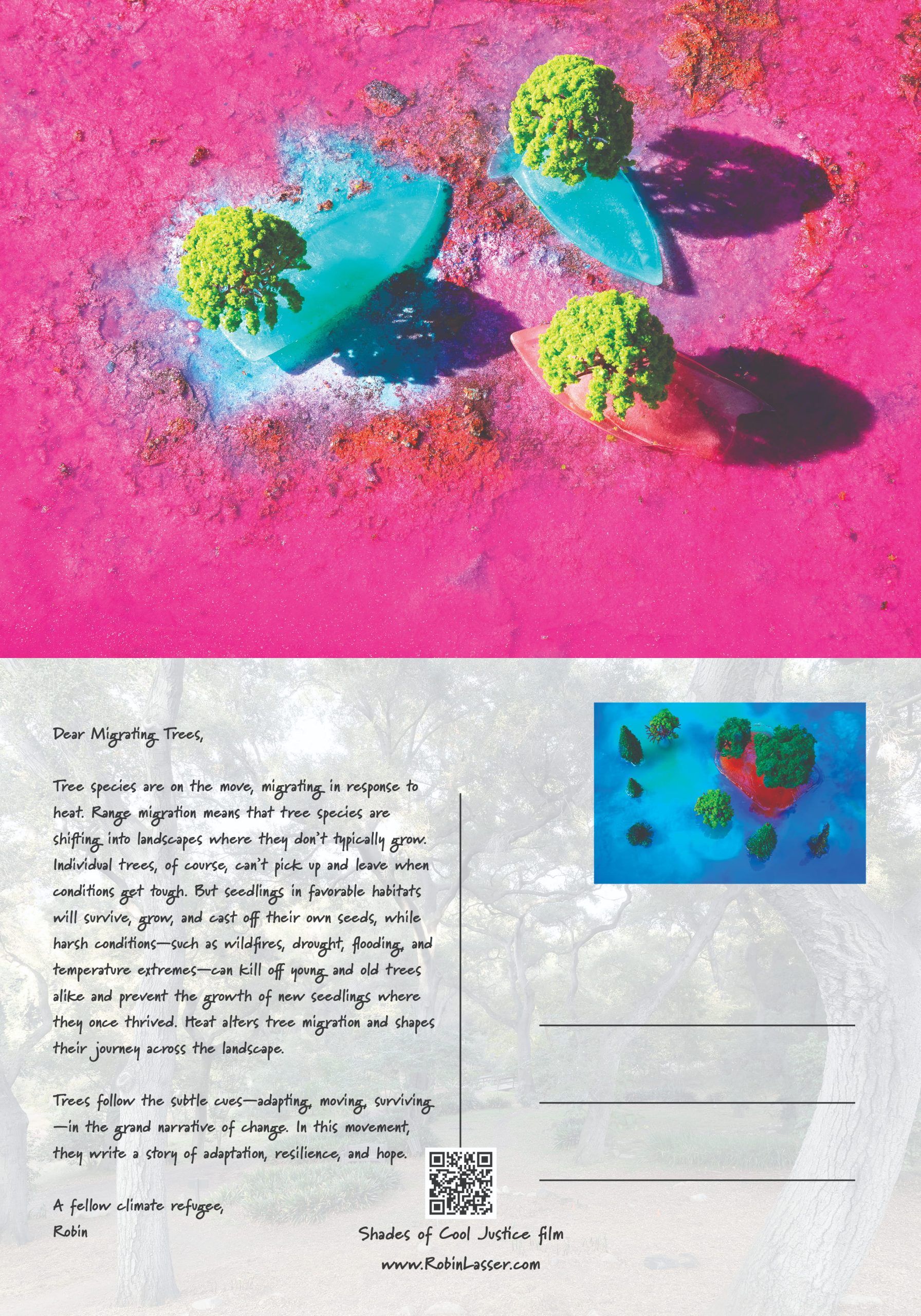
Postcards to a Cooler Future is a large-scale outdoor installation of oversized postcards that functions as a form of poetic wayfinding—love letters written in a time of climate change. One side of each three-foot-tall postcard features photographic tableaux inspired by the urban trees of Los Angeles, the remarkable tree collection at Descanso Gardens, and the restorative qualities of urban shade in a warming world. The reverse side presents reflective texts contemplating the resilience of nature and its evolving role in the face of climate change. Installed along the garden paths, the postcards invite visitors to engage with the landscape through both image and language.
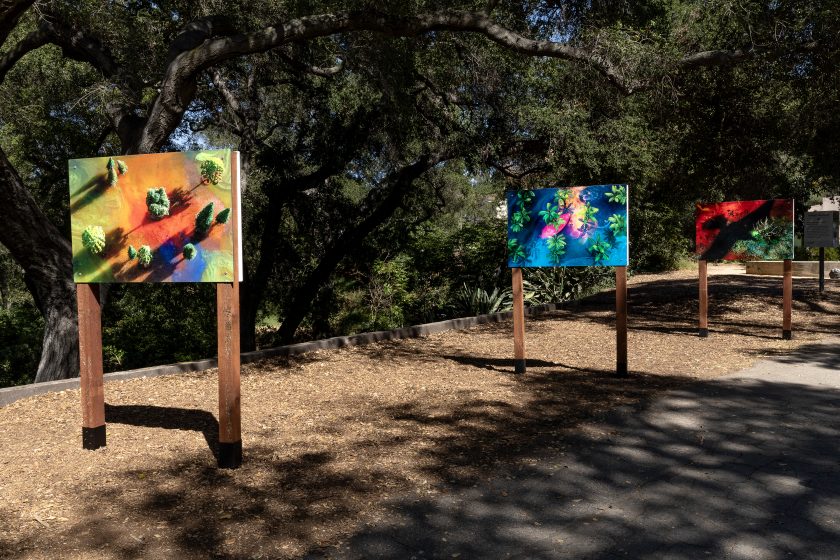
My contribution to the roundtable responds to the prompt, “What are the ways to extend the values and benefits of botanical gardens beyond their walls?” through three visual and textual postcards that address:
- Shade inequity in urban environments.
- Tree migration as a strategy for climate adaptation.
- Tree species–best choices for urban shade.


about the writer
Laura Toro
Laura is a ecologist at Missouri Botanical Gardens dedicated to understanding how degraded tropical forests can be restored in a cost-effective manner. She uses experimental fieldwork, laboratory approaches, and synthesis methods to identify the abiotic and biotic barriers that hinder biodiversity recovery in the tropics. Laura collaborates closely with restoration practitioners, land managers, policymakers, non-profits, research centers, and universities.
Laura Toro
Botanical gardens should connect us to our roots. When immigrant kids visited the climatron — the only tropical forests in St. Louis, Missouri — they all mentioned that the forest smelled like the forests back home, a smell they missed.
As a tropical ecologist, I believe that to extend the benefits and values of botanical gardens across the world, we need three things:
First, botanical gardens need to be seen as spaces of congregation and learning, as the one in my hometown was for me growing up. My first recollection of a botanical garden was when we celebrated my grandfather’s 80th birthday at the Medellín Botanical Garden. My entire family got together at this magical place that had a forest where my cousins and I climbed trees during the day and played hide-and-seek for hours under the light of fireflies, while the adults danced and mingled. Through the years, I visited this magical place several times thanks to my middle-school field trips. During these visits, I saw for the first time plants that flourished during the dinosaur era, the cycads, and the tallest palm tree on earth, the Quindio wax palm. Thankfully, I am not the only lucky one who has fond childhood memories of a botanical garden. Every time people learn that I work at a botanical garden, they share an anecdote of their own.
Second, botanical gardens have to go to the people. My visits to botanical gardens have exponentially increased through the years. I ended up studying biology at a university located a block from the botanical garden. My professors used the garden grounds as a living laboratory to teach us about floral morphology, pollination, and even tree architecture. Beyond the biological patterns I was finally seeing as a young “scientist”, I started to realize the role that the botanical garden and its employees played in our city and beyond its limits. Thanks to the guidance of the botanical garden, our city was becoming greener, and more native plants that supported the local fauna were being planted everywhere. At the same time, the botanical garden scientists started several conservation initiatives in collaboration with local communities beyond the city boundaries to protect plants that were at risk of extinction, like magnolias. Having more gardens partnering with cities to increase and support the local biodiversity is essential to increase climate resilience and boost people’s mental and physical health.
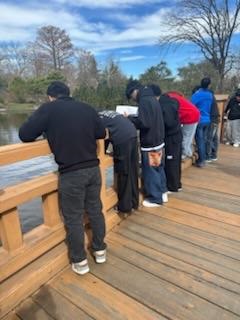
Finally, botanical gardens should connect us to our roots. Last year, I had the privilege to work with middle schoolers who migrated from Latin American countries and were learning English. The goal of this visit to the Missouri Botanical Garden was to show these kids that people like them — migrants — can be scientists who study the biodiversity of their home countries. This experience went beyond talking to them about my research and where I worked; we connected with our roots. We visited the climatron — the only tropical forest found in St. Louis, Missouri — and there, they all mentioned that this forest smelled like the forests back home, a smell they missed. They also got to see some of the ornamental and medicinal plants that their grandmothers and aunts grew. They told me the names of most of them and described how their grandma’s first visit to a botanical garden was one of the few ways they had to connect with their families back home. Fortunately, members of the botanical garden education team have established several activities with these kids, including building a garden to grow the herbs their moms and grandmas use for cooking their traditional food.
Exposing people, and especially the ones who have experienced any trauma, to nature ensures healthier populations and resilient ecosystems.

about the writer
Duarte Santo
Duarte Santo is an architect, landscape and urban designer, researcher and educator, whose work sits at the intersection of landscape, ecology, migration, and material systems. He studies landscapes as mediators of mobility, belonging, and the urban commons, and as fields co-produced by more-than-human agencies. His research spans translocal ecologies, material flows, island futures, and participatory, AI-assisted design, developed through studios, seminars, and exhibitions and grounded in two decades of work on Madeira and other archipelagos. Trained across Porto, Barcelona, London, and the US, with recent teaching at Cornell, he links critical inquiry with material logics, ecological performance, and inclusive design.
Duarte Santo
The question is not only how the garden gets out but why we ever imagined it was only in.
A Knot in the City’s Flows
The botanical garden is often imagined as an enclosure: a place where rare or vulnerable living things are gathered, classified, cultivated, and protected. To ask how its values might extend beyond its walls is therefore a generous and necessary question. But the image of roots suggests something more complex. Roots do not simply radiate outward from a centre; they also draw inward. They take as much as they give.
In Lisbon, the rare palms of the Jardim Botânico, the jacarandas shading streets, the balcony and allotment plants tended by families with roots in Cape Verde, Angola, Brazil, or South Asia, and the salt-tolerant ecologies of the Tejo estuary can seem to belong to different worlds. Yet, they are connected by shared circulations of seeds, water, labour, memory, knowledge, and care. So, the question is not only how the garden’s value can flow into the city but also how the garden and the city already sustain one another, and how they might do so more consciously and more justly.
The garden is less a bounded compound than a knot in the city’s flows: a place where living processes are gathered, redirected, and passed on. Extending the garden beyond its walls therefore becomes a practice of reciprocity, and three forms of it matter most.
The first concerns what the garden holds. One of its governing verbs has long been custody: to guard, keep, classify, and preserve. But custody can become capture when plants and knowledge are separated from the worlds that sustained them. A contemporary botanical garden should therefore be a custodian not only of collections, but of circulation. Seeds, cuttings, knowledge, and skills should move through the city and return transformed. In practice, this might mean neighbourhood propagation networks, shared seed libraries, support for street-tree stewards, and partnerships with resident-led gardens. Maintenance is not institutional overhead, but design continued by other means: the seasonal labour through which relationships remain alive.
The second concerns how the garden relates. The tempting model is annexation where the vacant lot becomes a satellite, the community plots an outpost, and the institution enlarges its territory. Even well-intentioned greening can contribute to rising land values and displacement when residents have little control over land or investment. An alternative is entering into relation without absorption, where a seed library, migrant/diasporic garden, or neighbourhood stewardship group should retain its own knowledge, identity, and agency. Through affiliation, governance then becomes a material of design where the garden convenes, funds, learns, and shares authority instead of simply owning or directing. Expertise moves in more than one direction, belonging to the institution, but also to the gardener, seed keeper, or resident who has carried a cutting across generations or geographies.
The third concerns where the garden lives. The city is not the garden’s context but the living medium through which the garden exists. Air carries heat and pollen across the wall. Water and nutrients move through soils that ignore property lines. Birds, bees, and butterflies recognise no institutional boundary. And because plants and people travel together, this medium is cultural and imaginative as much as temporal and ecological: A bougainvillea can carry a childhood from another climate; a mango tree can hold the memory of a homeland across an ocean. Plants allow people to inhabit several places at once, weaving longing, adaptation, and belonging into the city’s translocal imagination and ground.
Every wall both shelters and confines: the enclosure that protected a rare collection also severed it from its world; the microclimate that lets a tender thing survive also leaves it unable to survive outside. The task is not to demolish the botanical garden’s wall, but to redesign it as a membrane: porous to exchange, attentive to what it protects, and deliberate about what it allows to move. A garden conceived this way is not a centre extending outward, but a mutualist within the city’s metabolism: sustaining and sustained. Its success should be measured not only by the diversity held inside its walls, but by the reciprocities it keeps alive across the city. These, then, are the ways beyond the wall: to circulate instead of collecting, to affiliate rather than annex, to engage the city as an active medium. The question, in the end, is not only how the garden gets out but why we ever imagined it was only in.
Note: The essay proposed three shifts: from custody to circulation, from annexation to affiliation, and from treating the city as context to treating it as medium. None of these is hypothetical. Botanical gardens are already testing versions of each, however, unevenly and/or imperfectly.

about the writer
Martha Fajardo
Martha C. Fajardo is a Colombian landscape architect, urban planner, and founder of Grupo Verde SAS, a pioneering practice in landscape architecture and regenerative urban design. She currently serves as Co-Chair of IFLA Working Programme 18 Sponge Planet Initiative. She is a Past President of IFLA, a Board Member TNOC, and Chair of the Latin American Landscape Initiative. She focuses on landscape-led water resilience, NbS, ecological restoration, regenerative territories, and integration of traditional knowledge into contemporary design. She collaborates with international organizations, including the World Bank, AFD, and CAF, developing innovative methodologies that connect water security, resilient mobility, and landscape architecture.
Martha Fajardo
Botanical diversity should no longer be contained; it should become part of everyday urban life.
Beyond the Walls: Reimagining botanical gardens as the ecological intelligence of the living city
For more than four centuries, botanical gardens have been extraordinary institutions. They have collected species, advanced scientific knowledge, protected native flora, and inspired generations to appreciate the living world. Yet their greatest contribution may still lie ahead. Today, biodiversity loss, climate change, rapid urbanization, and social inequality are no longer isolated environmental challenges—they define the future of our cities. In this new reality, the traditional botanical garden, celebrated as a beautiful destination enclosed within walls, is no longer enough.
The question is no longer how people visit botanical gardens.
The question is how botanical gardens can begin to inhabit cities
Nearly thirty years ago, I had the privilege of co-designing the Master Plan for the Botanical Garden of Quindío, Colombia, together with Japanese landscape architect Noboru Kawashima under the leadership of environmentalist Alberto Gómez Mejía. Set within fifteen hectares of Andean cloud forest, the garden was conceived not simply as a collection of plants but as a living landscape where conservation, research, education, and public experience became inseparable. Its butterfly conservatory, national palm collections, native forests, bird habitats, ethnobotanical exhibits, and environmental education programs demonstrated that a botanical garden could become a living laboratory rather than an outdoor museum.
Looking back, however, I realize that the project’s greatest achievement was not the master plan itself. It was the realization that an entire territory could function as a botanical garden. That vision later inspired the Armenia–Quindío Biodiversity Green Plan, where the landscape—not the institution—became the framework for conservation.
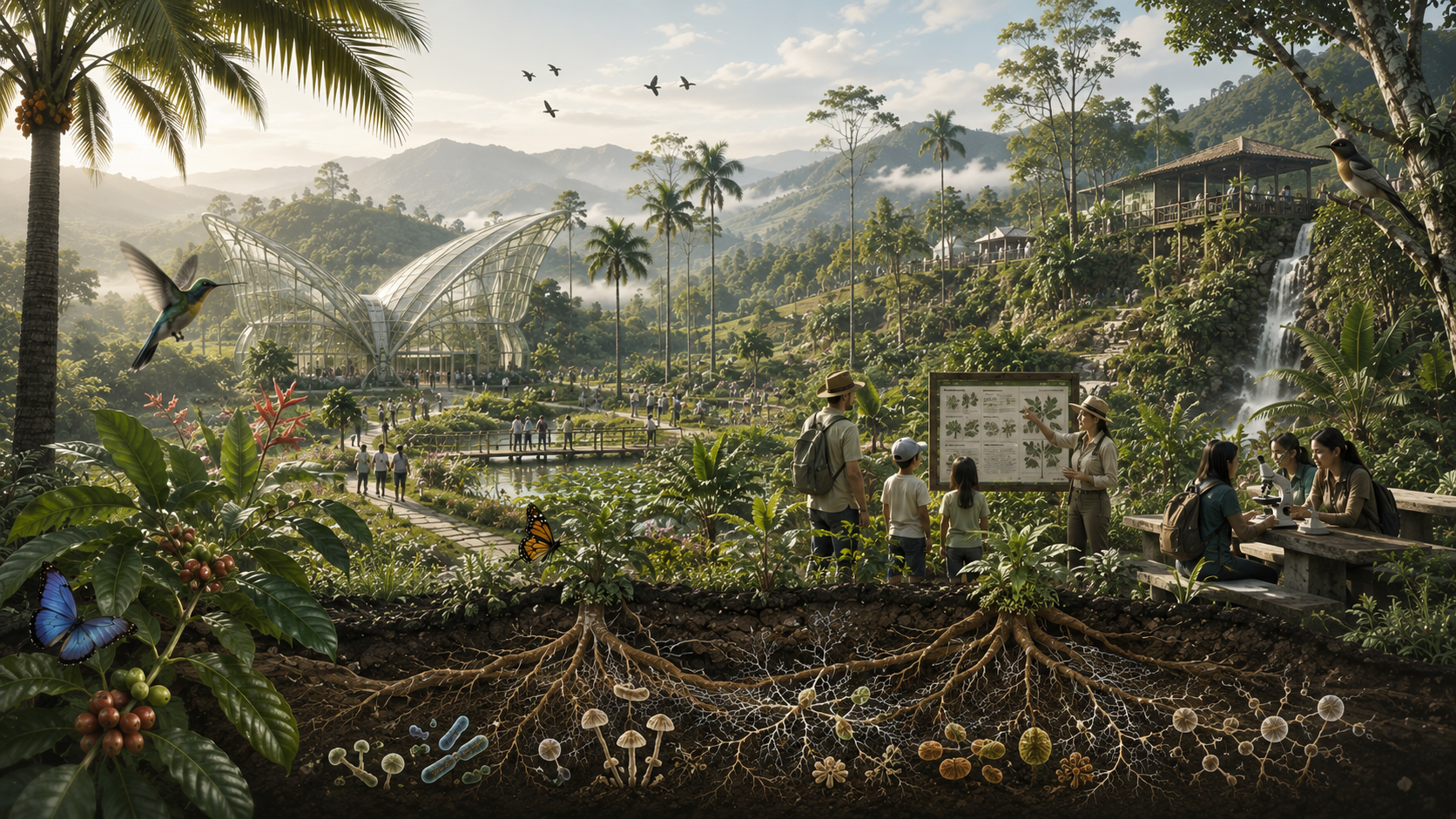
Cities have changed dramatically over the past three decades. Ecological crises now unfold in streets, neighborhoods, schoolyards, transport corridors, rivers, vacant lots, and public spaces. If biodiversity exists throughout the urban landscape, botanical knowledge should exist there as well.
The botanical garden is no longer a destination; it is the ecological intelligence system of the city
Its greatest collection is no longer inside its walls.
It is the city itself.
Imagine botanical gardens as active urban infrastructures—living reservoirs of biodiversity, scientific knowledge, and cultural memory whose influence extends far beyond their physical boundaries. Rather than concentrating conservation within a single site, they could coordinate decentralized networks of pocket parks, green streets, school gardens, community forests, restored wetlands, pollinator corridors, sponge gardens, and urban and peri-urban agriculture. Together, these distributed landscapes become living collections connected through shared ecological knowledge and common scientific protocols.
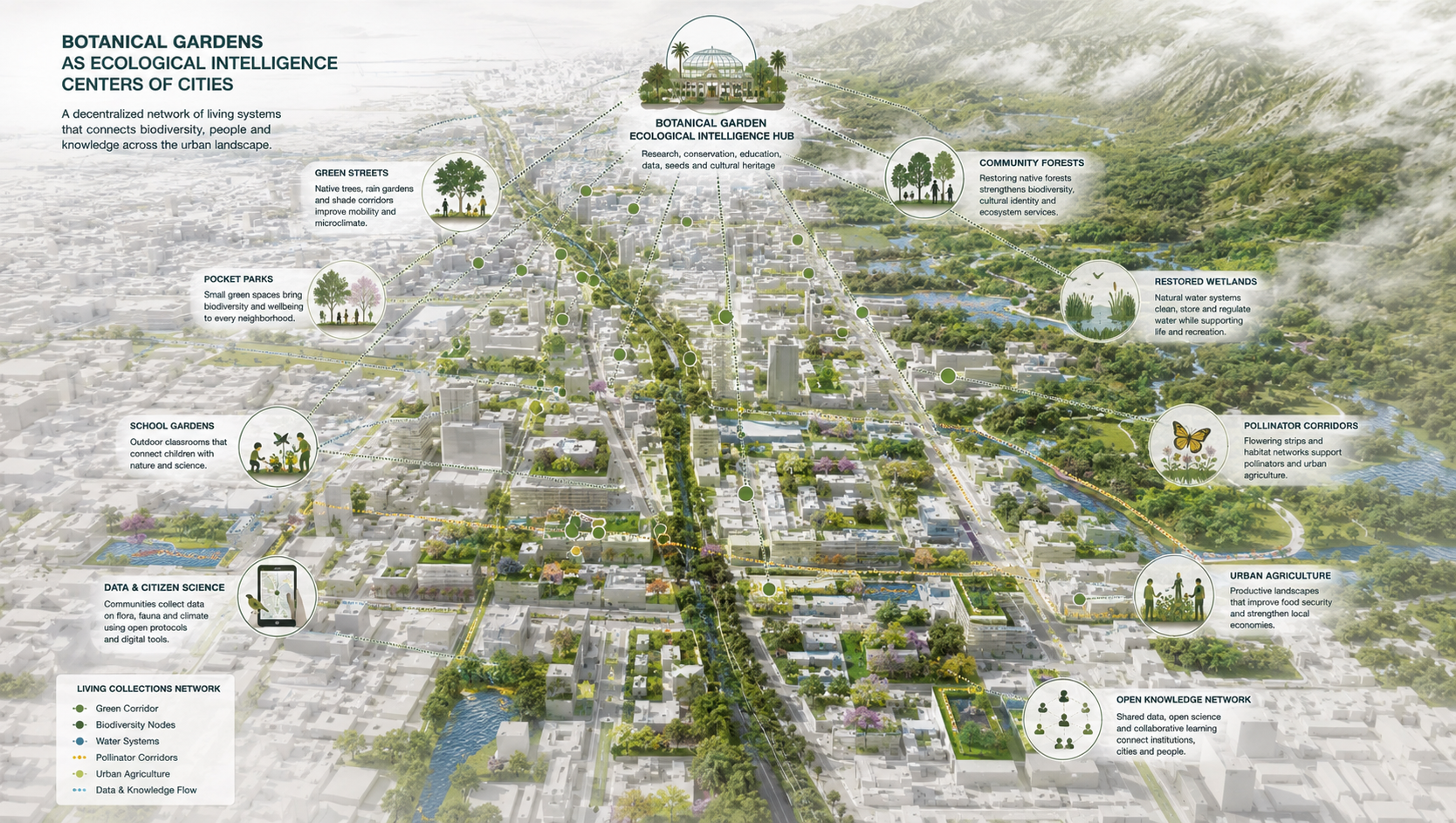
The challenge is not to replace botanical gardens, but to transform them into interconnected systems that reshape the relationship between plants, people, and the built environment.
Botanical diversity should no longer be contained; it should become part of everyday urban life.
Every neighborhood can become an extension of the botanical garden.
→ Visitors become observers.
→ Residents become stewards.
→ Communities become researchers.
→ Every citizen becomes a curator of urban biodiversity.
Knowledge, too, must escape the walls. Open digital collections, citizen science, mobile learning, and AI-assisted tools can bring botanical expertise into schools, neighborhoods, planning offices, and rural communities. The botanical garden becomes an omnipresent network of ecological intelligence, connecting people, plants, and places.
Perhaps its most transformative role lies in urban planning. Cities urgently need institutions capable of translating ecological science into spatial decisions. Botanical gardens already possess this expertise. Beyond caring for collections, they can become permanent partners in designing green infrastructure, urban forests, climate adaptation strategies, watershed restoration, native planting, and biodiversity-sensitive development.
In this role, they do more than preserve biodiversity.
They actively produce it.
Equally important, botanical gardens safeguard cultural memory. Indigenous knowledge, traditional medicine, local agricultural practices, and the historical relationships between people and landscapes are living heritage. Extending botanical gardens beyond their walls reconnects ecological restoration with cultural identity, collective memory, and community well-being.
The greatest botanical gardens of the twenty-first century may not be measured by the size of their collections, but by the landscapes they inspire.
When every street tree contributes to biodiversity, every school becomes a place of ecological learning, every neighborhood participates in conservation, and every public space strengthens both human and ecological health, the botanical garden has fulfilled its highest purpose. It no longer ends at its gates.
It becomes the ecological intelligence of the city.
The city becomes the botanical garden.

about the writer
Nicole Cavender
Dr. Nicole Cavender is the Telleen/Jorgensen Director of the Botanical Gardens at The Huntington in San Marino, California. Since joining in 2021, she has overseen 207 acres of gardens and grounds, including 130 acres of public gardens visited by more than one million people annually. She stewards one of the world’s most diverse living plant collections, including more than 2,500 rare plants that are part of The Huntington’s science and conservation programs.
Nicole Cavender
The Influence of Botanical Gardens Beyond Their Garden Walls
The real value of botanical gardens is the positive change they inspire through learning and engagement, commitment to conservation and science, and encouraging the appreciation of beauty.
Across cultures and throughout history, people have created gardens that reflect diverse values, needs, and relationships with the natural world. Botanical gardens are a special expression of this relationship because they bring together science, education, horticulture, and conservation. Today, one of the most important missions that botanical gardens pursue is to extend their reach to communities beyond their boundaries.
One of the most fundamental ways botanical gardens can make a difference is by helping people select appropriate plants for their needs. This may sound simple, but it has lasting impacts on landscapes, ecosystems, and communities. Trees, in particular, play a foundational role. They often form the framework of a landscape and support the ecology that develops around them. Understanding which trees are best suited to a particular region and how to maintain them can benefit people and the environment for decades or even centuries. Botanical gardens offer the expertise to guide these decisions and can help homeowners, schools, municipalities, and community organizations create more resilient and sustainable green spaces.
Beyond plant selection, botanical gardens enrich communities through active engagement and outreach. Spaces rich in plant diversity are essential to both environmental and human well-being. These places feel more welcoming, beautiful, and restorative. People often experience a greater sense of connection and comfort in places where nature thrives. Through grassroots partnerships that connect them with surrounding communities, botanical gardens can encourage people to experience the therapeutic value of green spaces in their neighborhoods and work environments. Their influence can be felt in community gardens, urban forestry projects, pollinator habitats, and public landscapes that improve quality of life for everyone.
Perhaps even more importantly, botanical gardens restore a vital relationship between people and nature. Within the last century, most people have lost their connections with the land and the role it plays in our lives. Urban settings provide fewer opportunities to interact with plants or learn how natural systems function firsthand. Through school and public programs, family activities, volunteer opportunities, and community projects, botanical gardens help people reconnect with the living world around them.
This invitation to experience nature does not require vast landscapes. A single plant can reveal the complexity and beauty of nature. One flowering plant may attract bees, butterflies, birds, and countless other organisms, creating a small but vibrant ecosystem. Observing those interactions helps people understand that nature is interconnected and that humans are part of that system as well. Our attraction to plants and the natural world is deeply rooted in who we are. Working with the earth, growing plants, and observing seasonal change are experiences that echo across generations and cultures.
Finally, botanical gardens serve as vital repositories of plant diversity and scientific knowledge. The collections of plants in their care include rare species and familiar favorites, and the research that botanists and horticulturists pursue helps address environmental challenges. However, that knowledge is amplified when it can be expanded and applied to everyday life. The plants cultivated, studied, and celebrated within botanical gardens can inspire landscapes everywhere. In this way, botanical gardens become catalysts for broader environmental stewardship.
By promoting informed landscaping choices, supporting community gardening, fostering connections with nature, and promoting plant diversity, botanical gardens extend their benefits far beyond their gates and into the communities they serve. The real value of botanical gardens is the positive change they inspire through learning and engagement, commitment to conservation and science, and encouraging the appreciation of beauty. Their greatest success lies in inspiring people to carry these values into their daily lives.

about the writer
Helen Miller
Helen is Head of Education and Vocational Training at Botanic Gardens Conservation International (BGCI) and has over twenty years of experience working for conservation NGOs in education and training roles, including ten years at BGCI where she specialises in supporting education professionals across BGCI’s network. She has a special interest in participatory approaches and behaviour change methodologies, and the role of botanic garden education in addressing the key conservation challenges of climate change, biodiversity loss and food security.
Helen Miller
The botanic garden of today and tomorrow is an essential hub at the centre of a network working to make cities a greener, healthier, and more sustainable place to live.
Botanic gardens and social hubs
Botanic gardens are places of great beauty, spaces that showcase incredible plants from all corners of the world. A green oasis that offers its visitors a tranquil space in which to relax, admire and learn. However, we often view botanic gardens as isolated spaces set apart from the urban environment in which they sit, offering an escape rather than a connection to the wider places and communities that live around the garden. It is here that I believe we not only do botanic gardens an injustice, but also where lies huge opportunity in what the botanic garden of the future could look like and the benefits it could bring.
Increased urbanization, loss of biodiversity and green spaces, and an increasing reliance on digital technology mean that our connection to nature and our opportunity to spend time in green spaces is at an all-time low. Botanic gardens as living collections of important plant species and centres of expertise in education, conservation and science, are essential spaces to provide visitors with the chance to connect with nature, to learn about biodiversity and promote sustainable actions for people and planet. But over the last two decades botanic gardens have also been showcasing the important conservation outreach role they can play ― looking beyond the garden walls to support urban greening activities, local food growing initiatives, and community projects to make cities more resilient to today’s biggest conservation challenges.
In addition, botanic gardens have been playing an ever increasingly important social role within their cities ― making their spaces and their work more relevant and inclusive to a wider range of audiences, offering wellbeing and mental health programming, spaces for community projects and meetings, and developing partnerships and collaborations that put local people and local priorities at the centre. From developing city-wide natureparks, signing up to city food pacts, partnering with local health services to provide social prescribing, to developing a network of community gardens delivering local food for local people.
Botanic gardens have been demonstrating that they hold an important role within their local environments; considered as safe spaces, they have the opportunity to bring different stakeholders together, and act as key facilitators to help address today’s biggest social and conservation challenges. And it is here where botanic gardens can have an even bigger role, fostering community cohesion and inclusion and finding solutions to our disconnect from nature.
The botanic garden of today and tomorrow is not a walled green space protecting important plant collections within, but an essential hub at the centre of a network of people, partnerships, and businesses all working to make cities a greener, healthier, and more sustainable place to live.

about the writer
Carly Cowell
Dr Cowell has been part of the BGCI team for several years and brings extensive experience in horticulture, plant conservation, international collaboration, and strengthening partnerships across BGCI’s global network of botanic gardens. A plant conservation scientist by training, her work has focused on advancing both in situ conservation of threatened plant species in their natural habitats and ex situ conservation through botanic gardens and seed banks, helping to strengthen the link between science, policy, and practical conservation action.
Carly Cowell
Mobilising botanic gardens means taking their knowledge beyond their own boundaries and applying it where it is needed most, including in the world’s rapidly expanding cities.
Mobilising botanic gardens for greener cities
As the world becomes increasingly urban, there is a tendency to think that creating greener cities is simply about planting more trees. It isn’t. Urban greening is ultimately about putting the right plant in the right place, ensuring it survives and thrives for decades. That is far more complex than it first appears, and one that botanic gardens are uniquely equipped to address. When we think of botanic gardens, many people picture beautiful landscapes, colourful displays and peaceful places to visit. This only touches the surface of what botanic gardens really do. Behind every living collection lies decades, and often centuries, of scientific observation, horticultural expertise and careful documentation.
This is where conservation horticulture becomes so important. It is one of the greatest strengths of botanic gardens, one often overlooked. Conservation horticulture is not simply about growing plants well; it is about understanding how to propagate and cultivate an extraordinary diversity of species, including those that are rare, threatened or simply unfamiliar in urban landscapes. It provides the practical knowledge needed to move beyond the relatively small number of species that dominate our towns and cities and instead build resilient, diverse and climate-ready urban forests and green spaces. Botanic garden living collections are the research laboratories that make this possible. They allow us to ask important questions. Which species tolerate prolonged drought? Which can withstand heat islands, compacted soils or air pollution? Which provide the greatest benefits for pollinators or urban wildlife? Which continue to perform as climates change? These are precisely the questions that cities increasingly need answered, and botanic gardens are uniquely placed to provide the evidence.
I believe this is where botanic gardens have their greatest opportunity. Cities around the world are investing unprecedented resources into nature-based solutions to address climate change, biodiversity loss and declining human well-being. Yet, many of these programmes still rely on limited species choices or short-term planting targets, with relatively little attention given to long-term performance and resilience. Botanic gardens can help change that. They provide not only the science, but also the horticultural expertise and monitoring frameworks needed to ensure urban greening succeeds long after the ribbon has been cut.
BGCI’s mission is “to mobilise botanic gardens and engage partners in securing plant diversity for the well-being of people and the planet”. That mission has never been more relevant than it is today. Mobilising botanic gardens means taking their knowledge beyond their own boundaries and applying it where it is needed most, including in the world’s rapidly expanding cities. If we are serious about creating greener, healthier and more resilient urban environments, then botanic gardens must be recognised not simply as places that display plants, but as scientific institutions that provide the knowledge, evidence and expertise to help cities grow with nature, rather than simply around it.

about the writer
Mathilde Marengo
Mathilde Marengo is an Australian–French–Italian PhD Architect specialised in research and academia, working at the intersection of spatial justice and advanced technology. Based in Barcelona, she is Head of Studio Operations at External Reference, where architecture, visual arts, and digital tools converge through artisanal craft and technologies such as 3D printing. For over a decade, she served as Head of Studies and Director of the Urban Sciences Lab at the Institute for Advanced Architecture of Catalonia. She continues to teach at IAAC and other institutions, supervising PhD candidates while contributing to national and EU-funded research projects, published and exhibited internationally.

about the writer
Marziah Zad
Marziah Zad’s design pursuits are positioned at the intersection of lightweight, generative design and a celebration of existing narratives related to place and identity. Marziah is an architectural designer with global professional experience. Trained as a computational designer, she is interested in how advanced technologies and digital tools impact environments and the local to global sense of culture and identity. She co-founded Ashrafi & Zad Design in 2019 – a progressive, women-led architecture and urban design practice based in Tehran and Barcelona.
Mathilde Marengo and Marziah Zad
The more a city lets its natural roots surface, the more it gives people a shared, physical vocabulary for talking about where they’re from and what they carry.
Places of Care
A botanical garden is usually described by what it holds: species, taxonomies, seed banks, glasshouses. But for the garden to actually exist, first and foremost it relies on a single fundamental action: the action of care. Care in this instance is twofold: someone waters, prunes, labels, protects from frost ― the scientist, more often than not a botanist ―; and someone else walks through, notices, photographs, feels something ― the visitor. Two forms of attention, one for cultivation, one for contemplation, in action side by side, within the boundaries of a garden.
But what if this garden is without boundaries?
The instinct is to think of “spilling outward” as a territorial intervention that involves more planting, softer edges, the application of a botanical logic to streets and plazas. While that is part of it, the more interesting shift is relational. Inside the garden, care has two authors: the scientist and the visitor. Outside, in a neighbourhood, on a rooftop, along a median strip, care multiplies its authors. A shopkeeper who sweeps around a street tree. A child who waters something with a parent, not because they were taught to, but because they were shown. A group of neighbours who claim an unused corner and decide, without any institutional mandate, that something should grow there. Each of these is a different kind of care, with a different meaning attached, and none of them needs a particular expertise or profession to be legitimate.
In this multiplicity lies the magic of relational ties to nature: as soon as a relationship forms with a natural element, care is already established. You don’t need a garden’s authority to grant it. What a garden is uniquely positioned to do is embody the possibility of care, then step back and let it take unfamiliar shapes elsewhere.
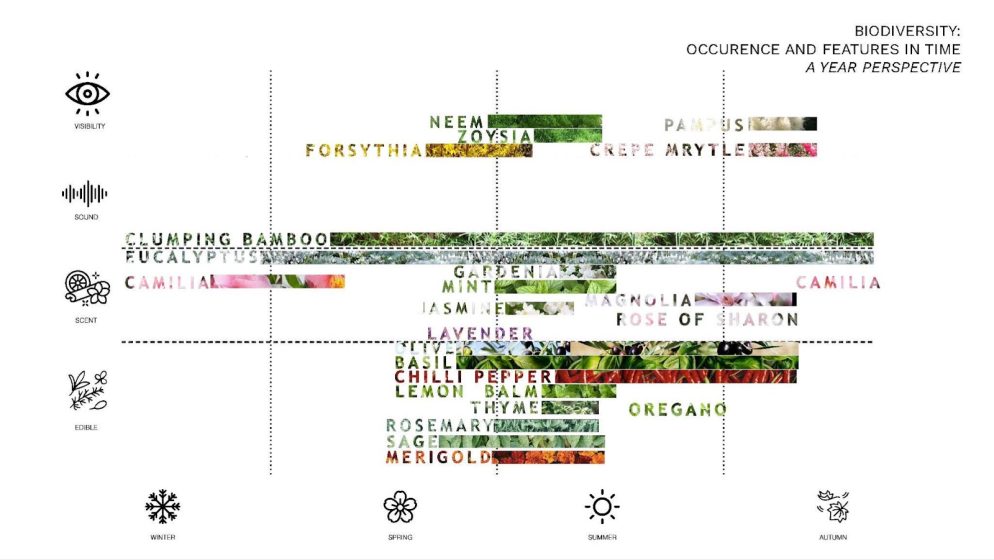
There’s a second layer here: noticing a certain type of vulnerability tends to open our eyes to others. Tend to a struggling plant on a balcony through a heatwave, and we start noticing which neighbours are also struggling, with heat, with isolation, with access to shade or shelter. Ecological attention and social attention aren’t separate considerations. They’re the same but exercised on different subjects. A garden that considers localized vulnerabilities such as stress, environmental neglect or social fragmentation is fundamentally encompassing one sensibility that is applied contextually.
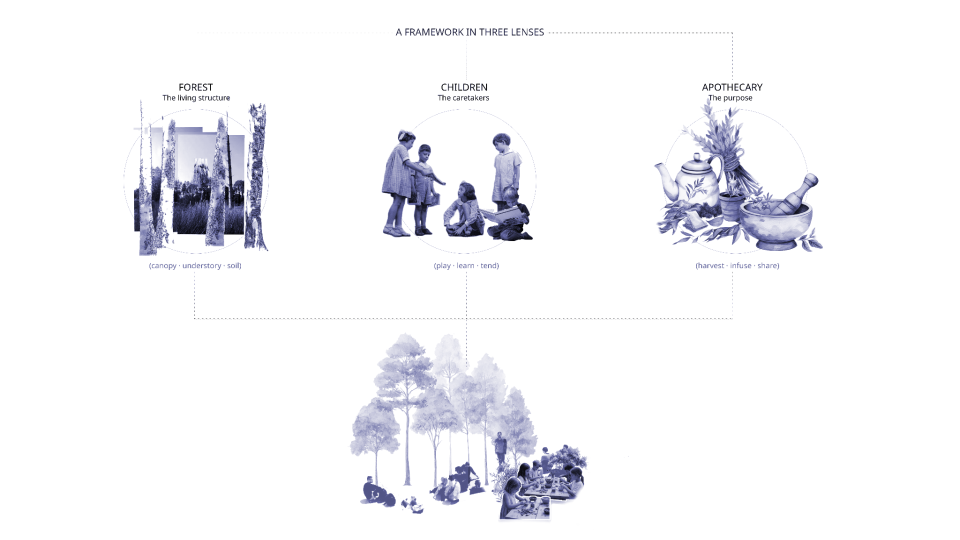
There’s also a latent layer that involves intergenerational continuity. A lot of what connects us to plants was once passed hand to hand and mouth to mouth: which herbs matter, when and where to use them and where to find them, and a lot of that transmission has quietly broken down as families move, cities densify, and daily life detaches from land. Reintroducing plants into everyday urban space should not be seen as nostalgic or romantic. Rather, in a very practical way, it creates small, repeated occasions for that knowledge to move between generations again as something that is not an overly precious heritage but as something usable and transferable.
Ultimately, it is at this intersection that nature and culture are in symbiosis. The more a city lets its natural roots surface, the more it gives people a shared, physical vocabulary for talking about where they’re from and what they carry. Fragile, temporal things like blossoms, seedlings, and red Autumn leaves are often exactly what make a place feel meaningful, precisely because they can’t be taken for granted.
None of this requires botanical gardens to stop being what they are: places of rigor, research, and species-level responsibility. It asks something else of them: to treat the wall not as a boundary to defend, but as a threshold. On one side, care with a capital C, institutional and expert. On the other, something more distributed, and just as real. The city doesn’t need a garden’s permission to care for its plants. But it might need a garden’s example.
about the writer
Olivia Bina
Olivia Bina researches our evolving relationship with nature and its implications for 21st-century challenges. She focuses on nature-based urban transformative change, critiques of scarcity and growth, and the unlimited potential of human-nature connectedness to progress beyond traditional notions of development. Olivia is Senior Researcher at the Institute of Social Sciences-University of Lisbon (Portugal), and Fellow of the World Academy of Art and Science. She holds degrees in Political Sciences, Human Geography and Landscape Architecture; loves trees, catching an early moon-rise, gardening and creating something beautiful from a lump of clay.
Olivia Bina
How Botanical Gardens can change the world[view]
What if the knowledge that botanical gardens hold about how plants build worlds, regulate climates, feed cities, and sustain life – found its way into the curricula of architecture schools, economics programmes, urban planning departments?
In “The Life of Plants”, philosopher Emanuele Coccia (2019) argues that plants are foundational architects of our world. It certainly took them tens of millions of years to clothe this planet in vegetation, soil, and breathable air. Everything we call home rests on what they built. In the Introduction to this Round Table, we explore the vital role of plants in making cities liveable — through what scientists call nature-based solutions (NbS): the trees that cool our streets, the wetlands that absorb floodwater, the green corridors that clean our air. As climate breakdown makes urban heat and flooding facts of daily life for more and more of us, the case for plants should be writing itself. But something is getting in the way.
Cities are becoming harder to live in, and yet the wall between the “built world” and the “natural world” remains stubbornly in place. The United Nations (UNEP 2021) and Intergovernmental Science-Policy Platform on Biodiversity and Ecosystem Services (IPBES 2024) are among the many institutions pointing to the need to confront the worldview that sustains such divide: humans as separate from nature. This way of seeing the world — is not just mistaken. It is dangerous. How we think about our relationship with nature will determine whether we have the future we want, or any liveable future at all.

“and yet the wall between the “built world” and the “natural world” remains stubbornly in place”
This mutilated worldview is fed and maintained in a position of dominance by entrenched anthropocentrism (Edwards et al. 2023), animal centrism, and by “plant blindness” (Albuquerque et al. 2025): the human tendency to ignore or undervalue plant life, failing to understand their ecological roles, diversity, and benefits – in essence, overlooking their importance in ecosystems and human life. Plants as backdrop rather than protagonists. The term plant blindness was first introduced by Wandersee and Schlusser (1999), who argued that this is partly psychological (our brains are wired to notice movement and faces more than static green things) and partly cultural (school curricula, media, and urban environments often underemphasize plants). It has become a widespread perceptual condition, with profound consequences. It shapes not only what we notice, but what we design for, care for, and ultimately what we choose to fund as part of imagined urban futures (Bina et al. 2026). Such a mutilated worldview has a direct impact on NBS practice, as it underpins design biases in city planning. When decision-makers don’t see plants, they choose concrete over canopy, hard surfaces over green corridors, grey infrastructure over living systems. The barrier to greener, more liveable cities is not, in many cases, technical. It is perceptual — and cultural. Expanding tree canopy, restoring green corridors, and integrating vegetation into urban design all depend on public and political acceptance, which is often undermined by phenomena like plant blindness and low plant awareness. This trend is made more severe as we witness a decline in the teaching of botany (Stroud et al. 2022), especially in some of the richest Western countries (USA, Canada, Australia, and many European countries), while Japan, India, and China maintain significant degree-offering institutions in botany.
This is where botanical gardens come in. And this is why I want to make a perhaps surprising claim: botanical gardens could change the world by changing how we see it, by changing our world[view]. The vast network of these institutions of science and living collections spans across the world, providing our urban species with open, accessible, embodied invitations to pay attention – to reverse the blindness, and “the extinction of botanical education” (Stroud et al. 2022). They are places where the abstract becomes concrete: where you can stand under a giant tree and feel what photosynthesis has made possible, watch a seed become something magnificent, or discover that the tomato on your plate arrived at your table via a chain of ecological relationships stretching back millions of years. They are uniquely placed to reverse plant blindness – not (only) through lectures, but through experience. Botanical Gardens are already expanding their role as places of experimentation, as they advise cities on how to conceive and design better, more resilient NbS in cities affected by the heat and floods brought by climate change. Advocating decentralized, modular resilience, phytoremediation and the need to surrender to “Plant Time”; inviting designs for the mycorrhizosphere, rather than persisting with the planting practices that isolate trees in individual concrete “coffins”.
Beyond this precious, tangible extension “beyond their walls”, lies the intangible arena of worldviews, and their most tangible impact in shaping problems, solutions and ultimately the possibility of a future we might want. Thus, as these institutions extend and expand their experimentation mission, we invite the question:
What if the knowledge that botanical gardens hold about how plants build worlds, regulate climates, feed cities, and sustain life – found its way into the curricula of architecture schools, economics programmes, urban planning departments? Thus, bringing a new, systematically botanical worldview to the curricula of otherwise relatively plant-unaware disciplines, and developing strong(er) ties with the universities they often belong to?
What if every child grew up enchanted with the immensity of photosynthesis, the resilience of ecosystems, the simple miracle of a seed? Nurturing an understanding of how plants permeate most dimensions of life and of being alive, and how our relationship with them will dictate how we manage the threats of climate change and how we might reverse ecological collapse?
Then perhaps no adult or child would be “left behind” to confront our changing world without knowing the extraordinary abundance that the world of plants offers to us all, and cities would embrace botanical thinking, and develop urban strategies as flexible, interconnected, and generous as the living systems that surround them. After all, our cities are – in the words of Ailton Krenak, Brazilian leader of the Krenak people of Minas Gerais (Brasil) – “forest ruins”, and we must learn (or remember) to inhabit the Earth building “Florecidades”, a Portuguese neologism made up of the terms floresta (forest) and cidade (city).
References
Albuquerque, U. P., Cantalice, A. S., Oliveira, E. S., et al. (2025) Reframing Botanical Blindness and Imperception Through Evolutionary Lenses, Acta Botanica Brasilica, 39. 10.1590/1677-941X-ABB-2024-0236.
Bina, O., Andresa, L. M. and Silva, D. (2026) Botanical Turn, https://www.naturescapes-project.com/interventions and https://www.non-a.com/botanical-turn/ online competition, Non Architecture publishing.
Coccia, E. (2019) The life of plants: A metaphysics of mixture, John Wiley & Sons.
Edwards, F., Popartan, L. A. and Pettersent, I. N. (Eds.) (2023) Urban Natures, Making Visible, (Re)Connecting and (Re)Politicizing, Berghahn, New York and Oxford.
Krenak, A. (2025) For a florescidade and a florestania : inhabiting the Earth in the Anthropocene, Collège de France, 29 April, Amphithéâtre Marguerite de Navarre, Site Marcelin Berthelot, (accessed 22/5/26) https://www.college-de-france.fr/en/agenda/guest-lecturer/ailton-krenak/for-florescidade-and-florestania-inhabiting-the-earth-in-the-anthropocene
IPBES (2024) Summary for policymakers – Transformative Change Assessment, IPBES/11/12/Add.2, Bonn, Germany. https://doi.org/10.5281/zenodo.11382230.
Stroud, S., Fennell, M., Mitchley, J., Lydon, S., Peacock, J. and Bacon, K. L. (2022) The botanical education extinction and the fall of plant awareness, Ecology and Evolution, 12, e9019.
UNEP (2021) Making Peace With Nature: A scientific blueprint to tackle the climate, biodiversity and pollution emergencies, Key Messages and Executive Summary, United Nations Environment Programme, Nairobi.
Wandersee, J. H. and Schussler, E. E. (1999) Preventing plant blindness, The American biology teacher, 61, 82-86.

about the writer
Nikki Lindt
Nikki is an interdisciplinary artist who works with scientists to translate hidden environmental processes into public experience through sound, painting, and participatory projects. Working across research stations, museums, and public spaces, she creates projects that connect ecological research, cultural practice, and public engagement.
Nikki Lindt
Rather than asking the public simply to visit a garden, they can encourage people to encounter the city itself as an ecological network, one shaped by plants, soils, trees, water, climate, and human histories.
In the Arctic Circle, on Alaska’s North Slope, I knelt beside a field of fascinatingly tiny flowers trying to comprehend their size. They were miniscule, two-inch rhododendron bushes. These were not young plants; some had persisted for decades. Their size reflected a continual negotiation with their environment. Beneath them, permafrost had limited how deeply their roots could grow. Above the winter snowline, browsing caribou repeatedly clipped new growth. What appeared miniature was, in fact, a record of relationships between these plants and soil, climate, animals, and time.
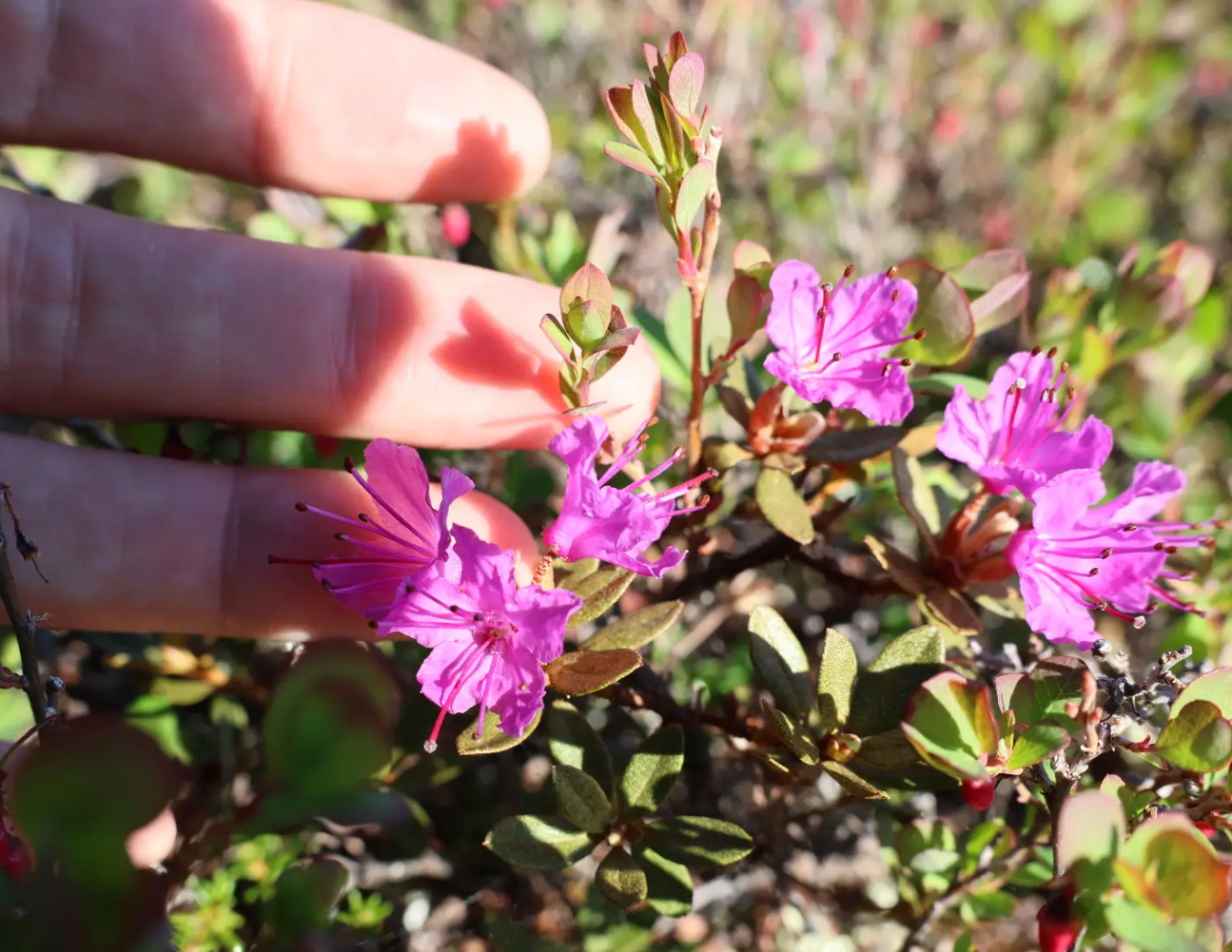
Until someone pointed them out, I had been walking right past them.
That experience stayed with me because it revealed that the value of botanical knowledge lies not simply in identifying plants, but in learning to perceive the relationships they embody. Once I could understand these tiny plants, the landscape itself changed. It became richer, more layered, and filled with stories that had always been there.
Perhaps this is one of the greatest opportunities for botanical gardens today: not only to care for the extraordinary collections within their boundaries, but to cultivate new ways of paying attention that extend far beyond their walls.
Cities are full of overlooked ecologies. Mosses populate concrete walls. Pioneer species emerge through cracks in sidewalks. Urban trees exchange resources through underground fungal networks while pollinators navigate rooftops, vacant lots, and traffic medians. Beneath it all lies another largely invisible world: roots pushing through soil, fungi transporting nutrients, groundwater moving through hidden channels. Botanical gardens are uniquely positioned to reveal these living systems, not only through what visitors see, but through how they learn to observe, question, and even listen.
As an artist, I have been exploring what I think of as subterranean listening: using sound to encounter the hidden life beneath our feet. By amplifying the movements of soil, water, roots, precipitation, and other underground processes, listening becomes another way of understanding plants, not as isolated specimens, but as participants in complex, dynamic communities. While sound is only one pathway, it reminds us that much of what sustains life remains beyond ordinary perception.
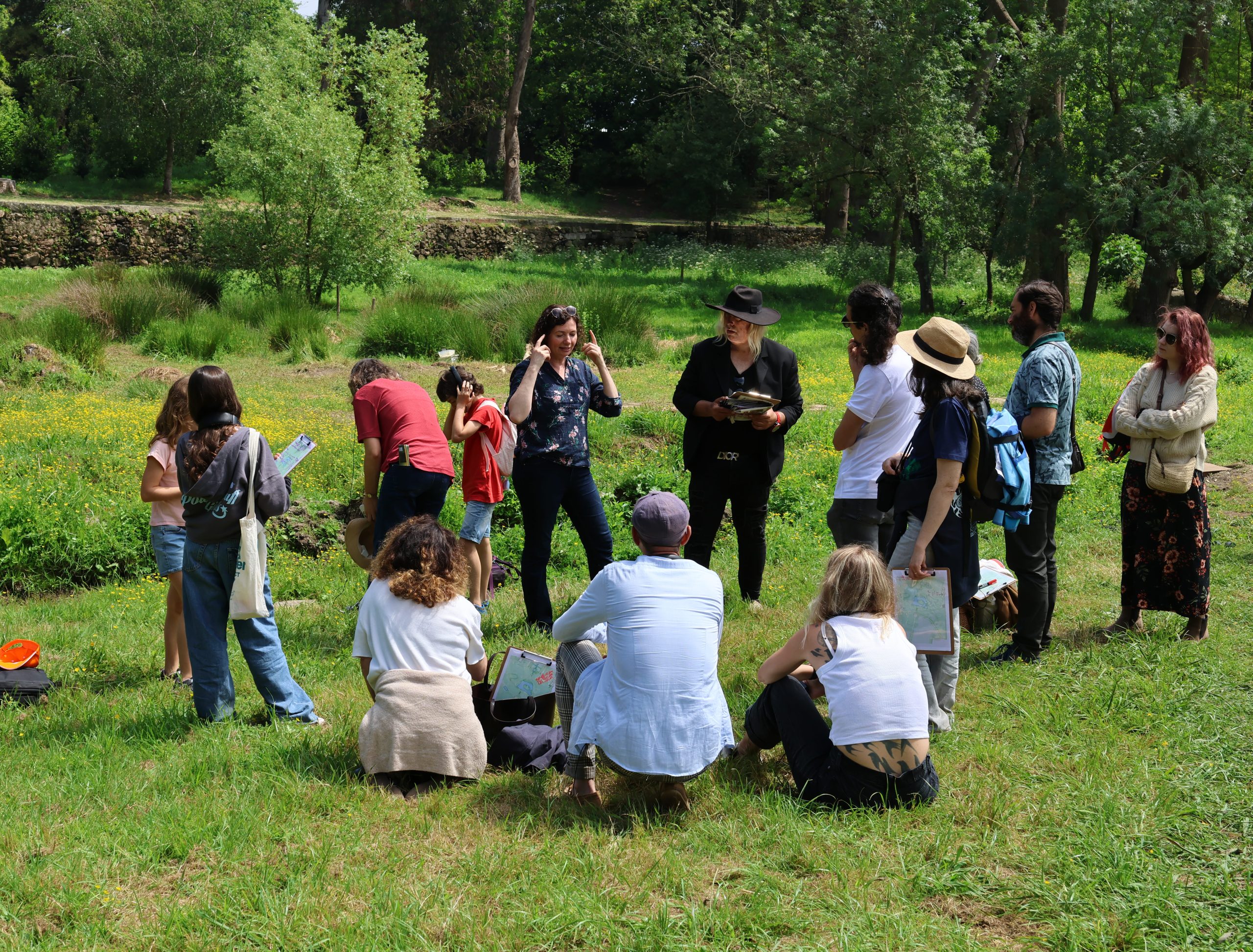
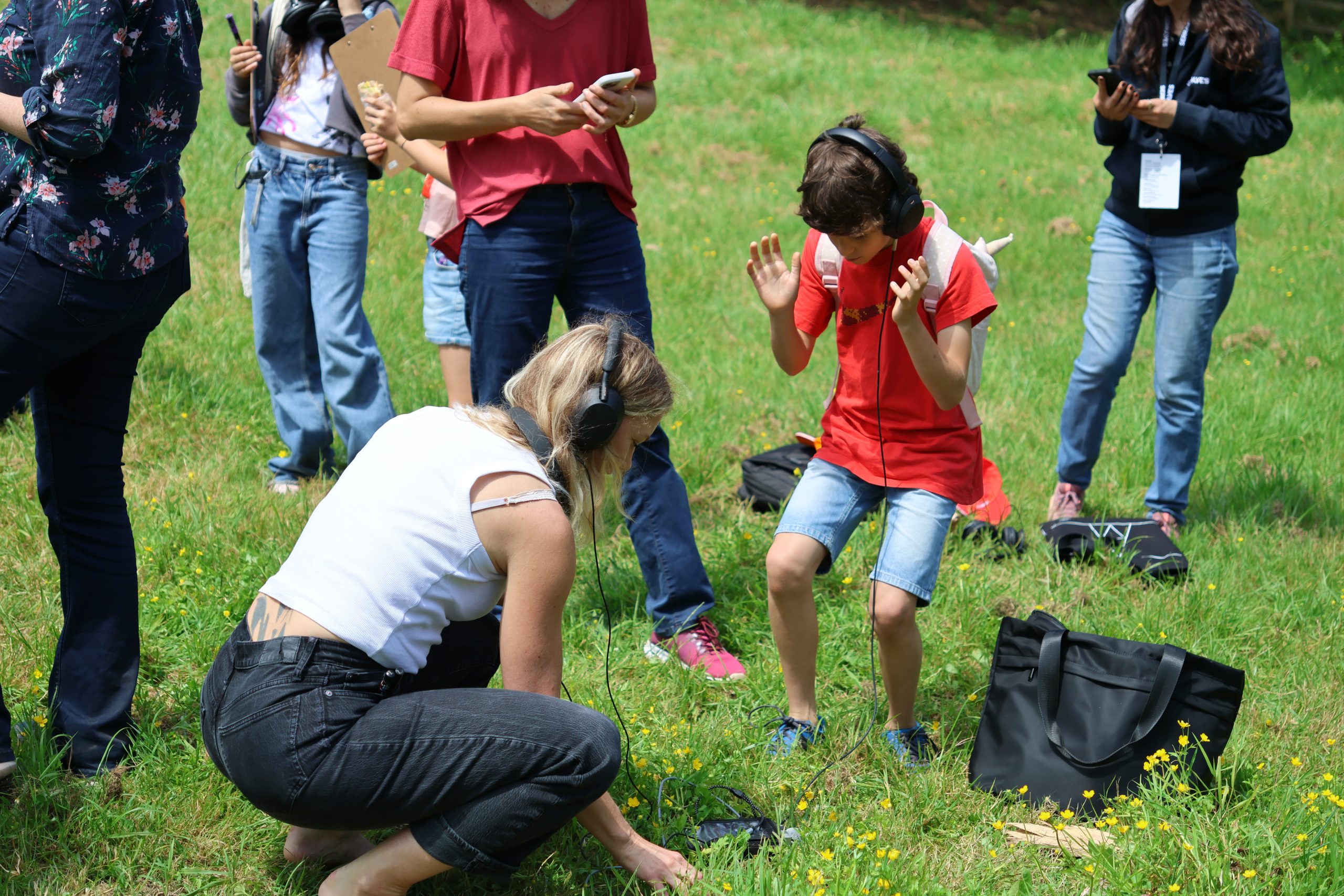
This way of paying attention need not remain inside the botanical garden. Through neighborhood walks, collaborations with artists and scientists, community mapping, sound walks, citizen science, and partnerships with schools, botanical gardens can help people discover the living landscapes already surrounding them. Rather than asking the public simply to visit a garden, they can encourage people to encounter the city itself as an ecological network, one shaped by plants, soils, trees, water, climate, and human histories.
I often think back to those tiny Arctic plants. They showed me that remarkable ecological stories are rarely hidden because they are far away. More often, they are hidden because we have not yet learned how to notice them.
about the writer
Eric Sanderson
Eric Sanderson is Vice President for Urban Conservation at the New York Botanical Garden, and the author of Mannahatta: A Natural History of New York City. His upcoming book, Before New York: An Atlas and Gazetteer, will be released in 2026.
Eric Sanderson
We need to invert the model of botanical gardens: to take the plants to the people, rather than the people to the plants.
Plants to the People: Botanical Gardens in the 21st century
A short perusal of the history of botanical gardens shows they have been working to extend their influence beyond their walls from the very beginning. The first botanical gardens were established in the mid-16th century to train doctors. Medicine at the time was largely plant medicine. The preparation of drugs from plants was described in books called herbals. The problem with the Latin descriptions and printed illustrations in the early herbals is that it was easy to mix up your plants, and instead of helping someone, accidentally poisoning them. The solution: a botanical garden.
A botanical garden, such as the Orto Botanico di Padova, established in 1545, or the Giardino del Semplici in Florence, established the same year, needed to have three elements. First, a garden, so students could see medicinal plants in life, touch them, smell them, and learn to identify them concretely. Second, because plants, like the rest of us, have seasons, botanical gardens need an herbarium. An herbarium is a library of dried plant specimens, displayed to reveal diagnostic characteristics. Third, a library. Botanical gardens need proper storage and management of those herbals and related texts to pass on plant-based pharmaceutical knowledge.
Today, botanical gardens for the most part still have these three kinds of collections: a living garden, an herbarium, and a library. But the medical profession has moved on. Syllabi at medical school no longer mandate classes within the walls of the nearest botanical garden, leaving the managers of botanical gardens to wonder: what do you do if you have a garden, an herbarium, and a library?
Turns out lots of things.
One can expand into other realms of science, notably the field of botany. Add some books to the library, enlarge the garden and herbarium collections beyond medicinal plants, and one has created the foundation for discoveries about plant genetics, evolution, utility, biogeography, invasions, pests and diseases, and biological diversity. Botanical gardens became the keepers of plant naming after the Linnaean revolution of the 18th century, since they could hold the “type” specimen attached to a binomial Latin name and had the collections to support taxonomic and systematic analysis. During the period of European colonization, explorers, officials, and botanists were on the hunt for economically viable species that provided new sources of food, fibers, or other plant products to Western markets. In more recent times, what was once called economic botany has been expanded and decolonized into the study of ethnobotany, recognizing that from time immemorial, all kinds of people have had relationships to and knowledge of plants, not just botanists.
Horticulture, and particularly horticultural education, has been another direction for botanical gardens, especially over the last 200 years or so. Horticulture is the practice of plant cultivation and management in a garden setting. Lots of people like to grow plants; horticulturalists know how to do it. Plants, it turns out, are very odd beings. We take them for granted because they are so common in our lives, but just think how strange and different they are from you and me, or animals in general. Once rooted, plant individuals hardly move. They produce their own food from sunlight. They have half or more of their bodies underground. Moreover, it is not always clear how to coax a plant from a seed, or to yield seeds from a plant. Horticulturalists know how. Plant breeders use the knowledge of genetics to cross plants, to reveal all kinds of new and exciting varieties. Just add a few more books to the library, expand the collection to include seeds (a so-called “seed bank”), build some greenhouses and classrooms, and now botanical gardens are in the business of propagating the propagation of plants.
Note, however, these functions of botanical gardens (the medical, the botanical, and the horticultural) can largely be accomplished within the walls of the garden itself. People come; they learn about plants, grow them, and then go back from whence they came. The values and benefits of botanical gardens are dependent on the flow of people in, through, and out of the garden walls. Even botanists, who travel to the seven continents looking for plant life, eventually return home.
But there is more. In more recent times, botanical gardens have been exploring a new and exciting way of being: as active agents of conservation and restoration outside their walls. Many botanical gardens are based in cities, so have adopted programs of urban conservation, such as the Nature Your City program at the New York Botanical Garden (NYBG), where I work, or the restoration efforts of the Kadoorie Farm & Botanic Garden in Hong Kong, or the conservation efforts of the Chicago Botanic Garden. (There are many examples.) Such programs integrate scientific research with horticultural expertise to make a difference in the cities where gardens are embedded.
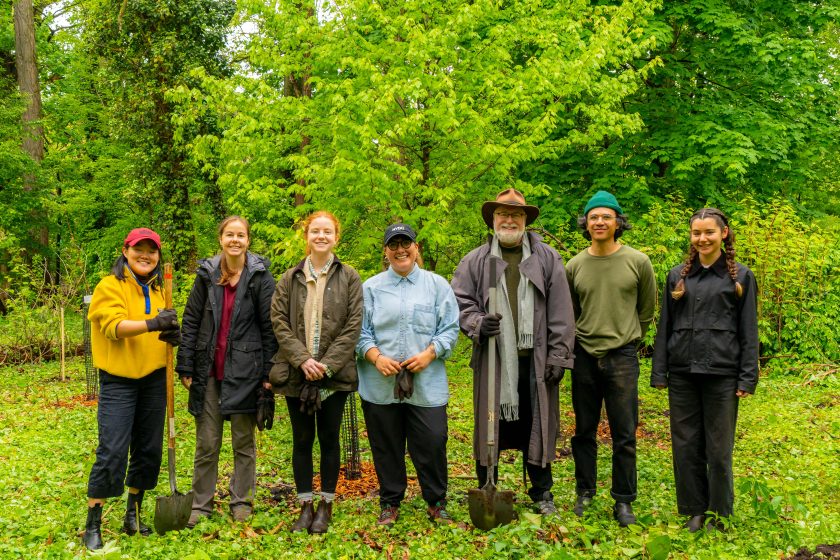
Photo: NYBG
Even more ambitious efforts are underway. Botanic Gardens Conservation International (BGCI) was founded in 1987 as a membership organization of botanical gardens that wanted to work together to advance plant conservation efforts. BGCI organizes several Global Conservation Consortia to coordinate action and evaluate the threatened and endangered status of plant species. The Nurturing Nature Initiative, led by NYBG, is working with BGCI, the Society for Ecological Restoration, and The Global Biodiversity Standard to organize botanical gardens to make a difference for climate resilience through ecological restoration of degraded ecosystems, from cities to farms to forests.
I see conservation and restoration as the greatest growth area for botanical gardens, and it comes not a moment too soon. Given the realities of climate change, biodiversity loss, and urbanization, we need to invert the model of botanical gardens: to take the plants to the people, rather than the people to the plants. We need the botanists (and their friends, the ecologists), horticulturalists, and educators to work with our friends in civil society to create a revolution for plants on Earth. We do what we always have: with gardens (but planted beyond our walls), with plant knowledge (but shared more broadly), and with shovels in our hands and a passion in our hearts to see the world greener and more robust than it was before.

about the writer
Edith de Guzman
Edith is a researcher-practitioner, educator & curator working with diverse audiences on climate change solutions. A cooperative extension specialist with UCLA, she investigates best practices for the sustainable transformation of cities. She has a PhD in environment & sustainability, a master’s in urban planning & a BA in history & art history. She can also be found hiking, playing guitar, or creating art exhibitions that explore the human-environment connection.

about the writer
Jolly de Guzman
Jolly de Guzman is an artist, graphic designer, and curator working in printmaking, photography, collage, drawing, sculpture, and giving new life to found objects. He is co-founder of the online art gallery and art+travel blog dearantler.com with his wife Edith (alongside a swanky eight-point buck named Jed Antler), where they exhibit artwork inspired by the human relationship to the environment, and their wilderness adventures to places near and far. He lives and works in Los Angeles
Edith and Jolly de Guzman
Botanical gardens don’t have to stop at inspiring wonder. They can also inspire action.
Beyond the Garden Gates
Botanical gardens are essential respites from the noise of everyday life. They are places to slow down, breathe a little deeper, and reconnect with nature. But what if their greatest contribution isn’t what happens inside their gates? What if their real measure is the experience people carry home with them?
In her book Sense of Place and Sense of Planet: The Environmental Imagination of the Global, Ursula Heise argues that environmentalism shouldn’t stop at caring for the places closest to us. Instead, she encourages us to develop a “sense of planet” — an understanding that the world’s ecosystems, cultures, and communities are deeply interconnected. What better place to experience these ideas than your local botanical garden?
Give us a few minutes, and we’ll explain.
We’ve had the privilege of collaborating with our favorite local botanical garden — Descanso Gardens, a publicly owned, nonprofit-operated living museum in Los Angeles — to bring together science, art, and civic engagement.
Descanso’s mission sounds deceptively simple: “Connect people with nature and one another.” But in a region as dynamic and diverse as Los Angeles, that task is anything but simple.
Los Angeles is home to the largest foreign-born population of any county in the United States and is home to some of the largest expatriate communities living outside of their homelands — from Mexico, Korea, the Philippines, and Armenia, to name a few. People here bring with them ecological knowledge, gardening traditions, and cultural relationships from every corner of the world. So, what does it actually mean to connect people to nature and to each other when everyone’s idea of “nature” and “culture” is different?
Sometimes the answer is as simple as taking a walk.
A winding path through a botanical garden can transport visitors from oak woodlands to Japanese gardens, from Australian forests to South African landscapes. These living collections connect people across both space and time, allowing someone to discover an unfamiliar ecosystem while also recognizing plants that remind them of home. It’s a shared story that stretches across continents and generations.
But botanical gardens don’t have to stop at inspiring wonder. They can also inspire action.
Many gardens now offer workshops that teach visitors how to garden with native plants, conserve water, support pollinators, or care for urban trees. They introduce people to local organizations restoring streams, planting neighborhood trees, or creating wildlife habitat. These practical experiences answer an important question every visitor eventually asks: “What can I do?” When botanical gardens provide that next step, they extend their impact well beyond their own boundaries.
We’ve seen this firsthand through our work at Descanso Gardens. In 2025, we curated Roots of Cool: A Celebration of Trees and Shade in a Warming World, an exhibition exploring how trees and shade can make our neighborhoods healthier, cooler, and more equitable places. Artworks filled indoor galleries and spilled out into the gardens themselves, inviting visitors to experience shade not just as something pleasant, but as something essential.
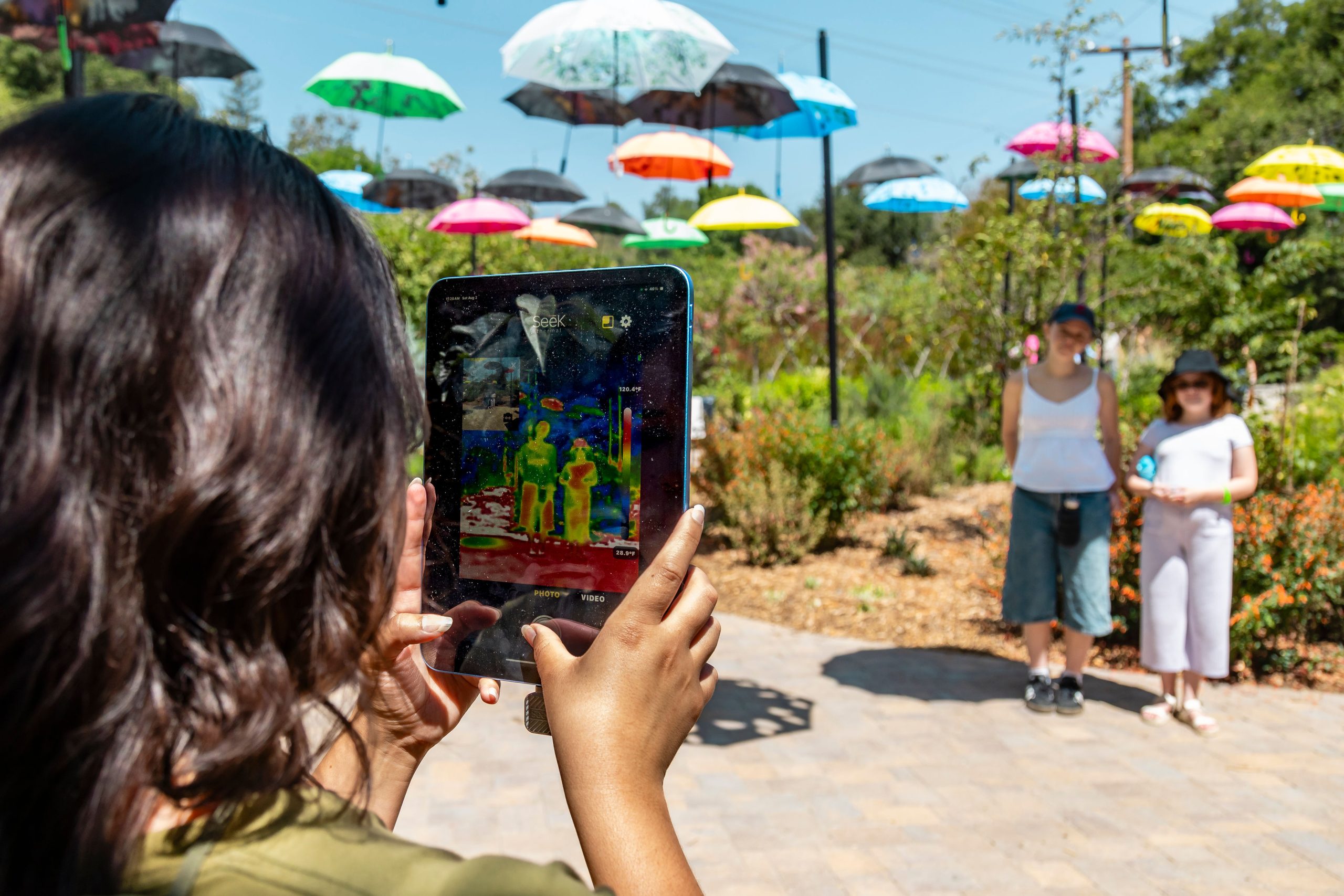
Photo: Shanley Kellis
The exhibition didn’t end with people looking at art. It invited them to participate.
Visitors listened to meditations about shade equity from The Nature of Cities contributors around the world, took part in heat scavenger hunts, received free shade trees to plant at home, and responded to prompts about the future of their own neighborhoods. Through writing and drawing, people shared memories, hopes, concerns, and ideas about what a cooler, greener city could look like.
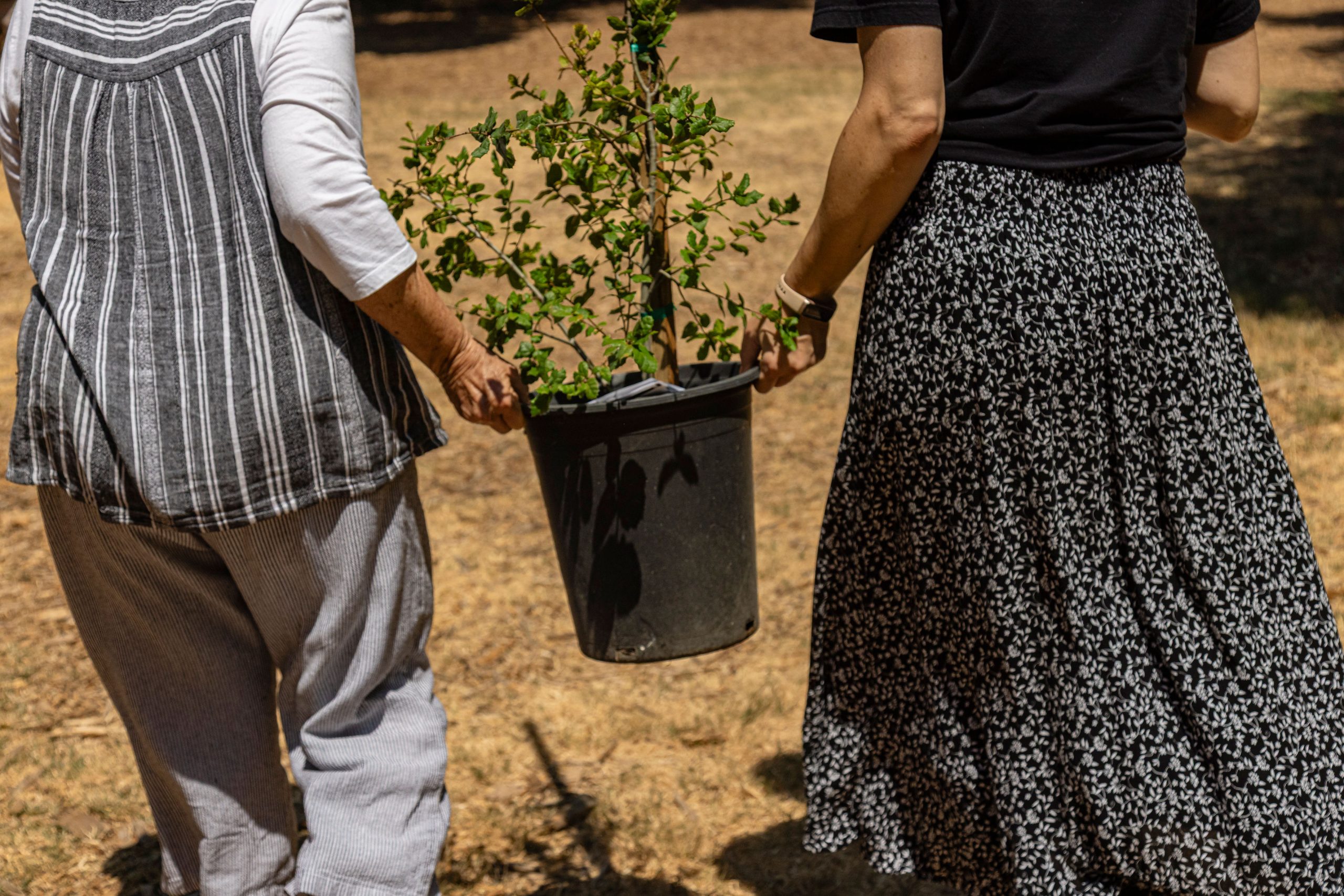
We worked with a team of UCLA students to analyze these responses, and one finding stood out. Faced with the challenge of climate change, visitors overwhelmingly responded not with fear, but with hope. Themes like care, kindness, relief, community, and anticipation appeared far more often than despair. Just as importantly, their responses offered valuable insights into how they experience extreme heat and what kinds of solutions matter most to them. The exhibition became a conversation that generated ideas capable of informing more equitable and locally responsive climate adaptation.
Perhaps that’s one of the greatest opportunities botanical gardens have today. They aren’t simply places to unwind and forest bathe. They’re places that cultivate curiosity, build community, and inspire care for the places where we live. They can help a visitor see a street tree differently, plant a pollinator garden, volunteer with a local organization, or start a conversation with a neighbor.
The walls of a botanical garden may define its physical boundaries, but they don’t have to define its influence. If visitors leave not only inspired by what they saw but motivated to care for the world outside the gates, then something remarkable has been accomplished. A few peaceful hours among plants have been transformed into lasting action — one neighborhood, one tree, and one conversation at a time.

about the writer
Julie-Anne Milinski
Julie-Anne Milinski is a Brisbane based multidisciplinary artist whose practice explores humans’ relationship with their environment to reveal reciprocities and interdependencies with other living things, and the liveliness of the materials we introduce into our shared habitat. Her observations of plants’ agency reconsiders humancentric perspectives of the natural world. Parallel to these concerns is an exploration of narrative through familial craft traditions: macrame, crochet, ceramics, and woodwork, using oblique references to art history as both inspiration and grounding.
Julie-Anne Milinski
As an artist, I have come to see these gardens as places to hone my senses, and to better appreciate the precariousness and tenacity of the more-than-human life in the city.
Botanical Garden as Sensory Mentor
Plants have been a lifelong fascination, and while studying Art at university, I was drawn to artists and writers who trained their gaze on the botanical world, whatever the medium: landscape and still-life painting, sculpture, photography, poetry, and music. Insights and revelations of sensory experiences expressed through an artistic practice can share what may have been a fleeting moment of awe, exquisitely observed. Botanical gardens offer a rich environment to cultivate sensory attention, and that attentiveness can extend into everyday urban encounters with other species.
In Meanjin (Brisbane), we have two botanical gardens, one in the centre of the city on a flood-prone river and the other at Mt Coot-tha, home of the herbarium. They are regular haunts for me to seek inspiration, knowledge, and contemplate ideas. They have both inspired artworks and have been the site of an outdoor artwork, Circle Work, resting. Spending prolonged periods of time both as a visitor and an artist, I experience how the gardens guide our attention with their considered design and plantings, inspiring curiosity and encouraging us to appreciate the species we cohabitate with. Importantly, I see the many ways these gardens extend their reach into the surrounding city.
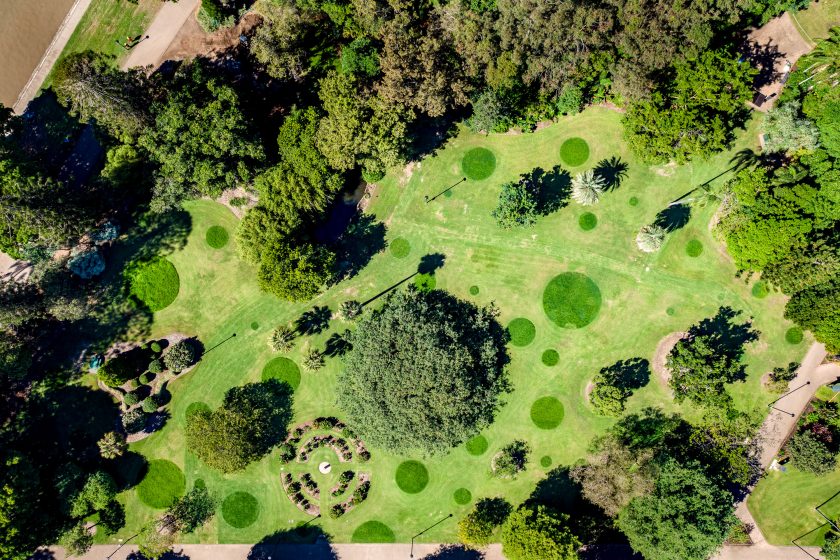
On one side of the garden walls, a sense of order prevails: layouts are accessible, non-threatening, and designed to offer visitors an engaging educational experience with plants arranged along thematic trails. These walls do little to deter local wildlife, including birds, bats, possums, koalas, snakes, lizards, frogs, and insects. This coexistence serves as a reminder: the gardens are a continuum, entangled and porous through the built environment. The multitude of creatures that permeate the garden boundaries distribute seeds and spread plants, further blurring lines of separation.
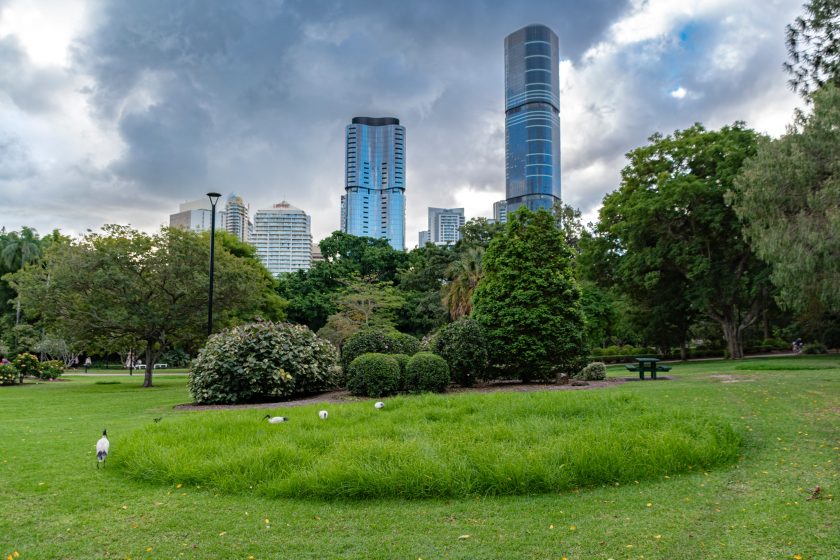
The more time we spend in these gardens, the more we witness the cycles of plants in relation to seasons. On the first anniversary of my father’s death, I visited the bonsai collection at Mt Coot-tha Botanic Gardens. There is poignancy to trees when we consider their lifespan in relation to our own, and in the case of bonsais, there is the evidence of multigenerational human stewardship. The act of shaping the tree invites us to contemplate its essence, highlighting age and maturity as signs of endurance. The oldest tree in the collection is a Ficus rubiginosa established in 1941, its trunk and branches carrying the equivalent of a long human lifespan of survival. Contemplating the bonsai, I reflect on its existence unfolding quietly alongside my father’s. I ponder time ― human time and tree time, seasons and centuries.
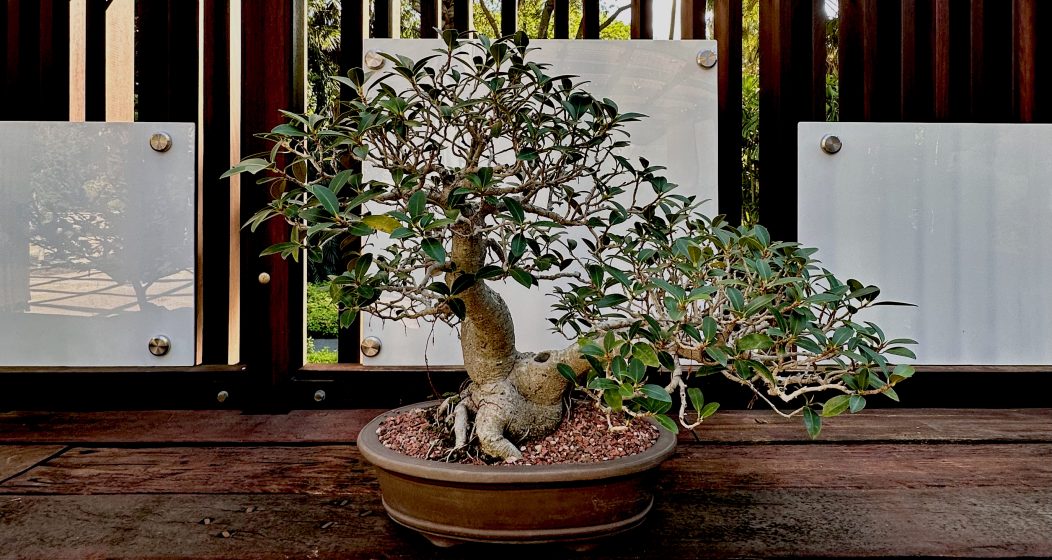


I carry this heightened attentiveness and appreciation with me to a local bushland reserve. I walk here most days, and in stark contrast to the botanical garden, the diversity of the eucalypt forest is not as immediately apparent. After fifteen years, I find my senses keener to small yet wondrous events that occur without fanfare: the sudden eruption of fungi after rain (which I learned to smell before I see), the flicker of crimson honeyeaters in the canopy, koala joeys learning to climb, the aftermath of storms violent enough to uproot old trees and, in doing so, creating nesting holes for rainbow lorikeets. These encounters are fleeting, and as I notice a brightly coloured fungi for the first time, I wonder if it is new to the bushland, or am I just more attuned to their existence? I know not to be complacent; a bush orchid that flourishes one season may not return the next. The forest is a place of continual revelation, not static but alive, adaptive, and deeply intertwined and affected by human presence.
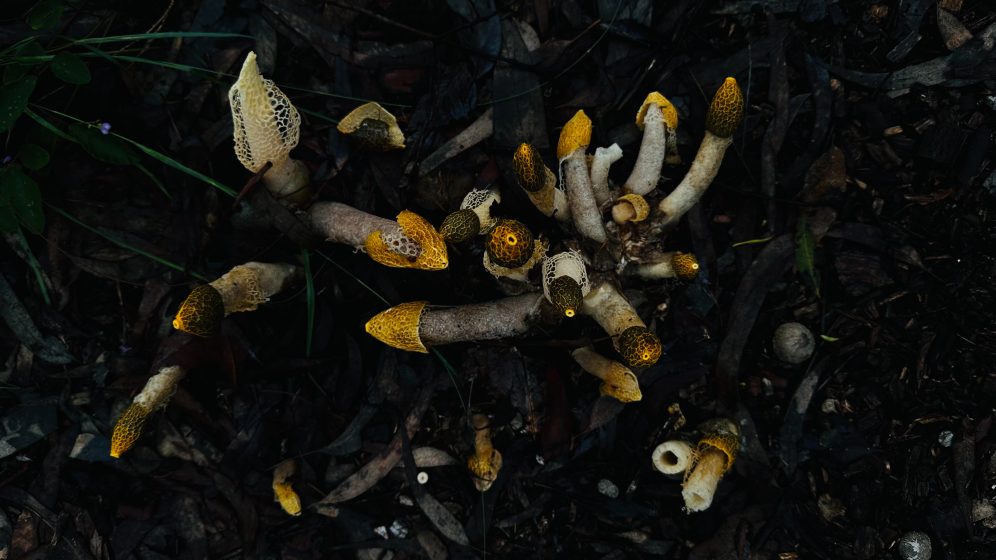
Botanical gardens prepare us for these less mediated environments, guiding our path and our gaze. When they encourage us to think more creatively, beyond the scientific into the emotional realm, we carry this into everyday life to find wonder, meaning and connection in other-species encounters. As an artist, I have come to see these gardens as places to hone my senses, and to better appreciate the precariousness and tenacity of the more-than-human life in the city.

about the writer
Diego Molina
Diego Molina is a Fellow of the Institute for Advanced Studies at the University of Edinburgh and a Visiting Researcher at the Royal Botanic Gardens, Kew. Previously, he was a British Academy Postdoctoral Fellow at the Centre for the GeoHumanities, Royal Holloway, University of London. His research examines the changing relationships between people and plants in urban environments, with a particular focus on the highly biodiverse regions of the Tropical Andes.
Diego Molina
Una red de jardines botánicos que sirvan de nodos en la revegetalización de Lima puede hacer que una de las ciudades más áridas del planeta se convierta en un oasis vegetal resiliente, donde las ventajas de la naturaleza urbana estén democráticamente distribuidas.
Oasis en red: jardines botánicos para una Lima resiliente
Lima es árida, desértica. Ubicada entre las aguas frías del Pacífico y la cordillera de los Andes, la precipitación anual de la ciudad ronda los 5 a 15 milímetros de lluvia. Así, sus cerca de 10 millones de habitantes viven en condiciones similares a las de ciudades saharianas como las de Egipto. La aridez de la ciudad condiciona de una manera radical la forma en la que los limeños viven con sus plantas.
Ante las condiciones de aridez de Lima, los jardines botánicos emergen como actores esenciales en la producción de los espacios verdes de la ciudad. En Lima coexisten varios jardines botánicos que cumplen o han cumplido diferentes papeles a lo largo de la historia de la ciudad. El Jardín Botánico Octavio Velarde Núñez, asociado a la Universidad de La Molina, es el más antiguo y tradicional de ellos y actualmente es un jardín didáctico. Otros jardines dentro del área metropolitana de Lima son el Jardín Botánico de Plantas Medicinales, ligado al Instituto Nacional de Salud (INS), y el Jardín Botánico del Parque de las Leyendas. Adicionalmente, en 2024, el Congreso de Perú aprobó una que reconoce la creación de un jardín botánico nacional como prioridad nacional. Bajo este escenario se han dado los primeros pasos para la creación del Jardín Botánico Parque Zonal Huáscar.
Que Lima cuente con varios jardines y que exista la voluntad política de crear un nuevo jardín botánico en la ciudad invita a pensar la naturaleza de estos jardines más allá de sus bordes físicos. Vale la pena imaginar una red de jardines botánicos como nodos vegetales que conecten diferentes espacios y ecosistemas de la ciudad. Pensados en red, los jardines botánicos pueden contribuir a hacer de Lima un oasis urbano en medio del desierto. ¿Cómo?
Desde una escala de barrio y de espacios domésticos, una red de jardines botánicos puede expandir el conocimiento, semillas y plantas a sus zonas circundantes. Expandirse sobre la ciudad significa informar a los vecinos sobre plantas medicinales, prácticas de agricultura urbana, métodos ancestrales de producción de alimentos, diversidad de semillas y, muy importante, formas inteligentes de administrar el agua. A su vez, estas áreas, al expandirse, pueden entrar en contacto con otras áreas de la ciudad que incluyen otros ecosistemas, conectando así las lomas costeras, los humedales, desiertos y matorrales; ecosistemas sobre los cuales la ciudad se ha expandido a expensas de las otras especies que los habitan. Al hacer esto, los jardines botánicos tienen la posibilidad de infiltrar las terrazas, los balcones, los jardines domésticos y los solares de la ciudad a través de un flujo constante de información, materia y energía.
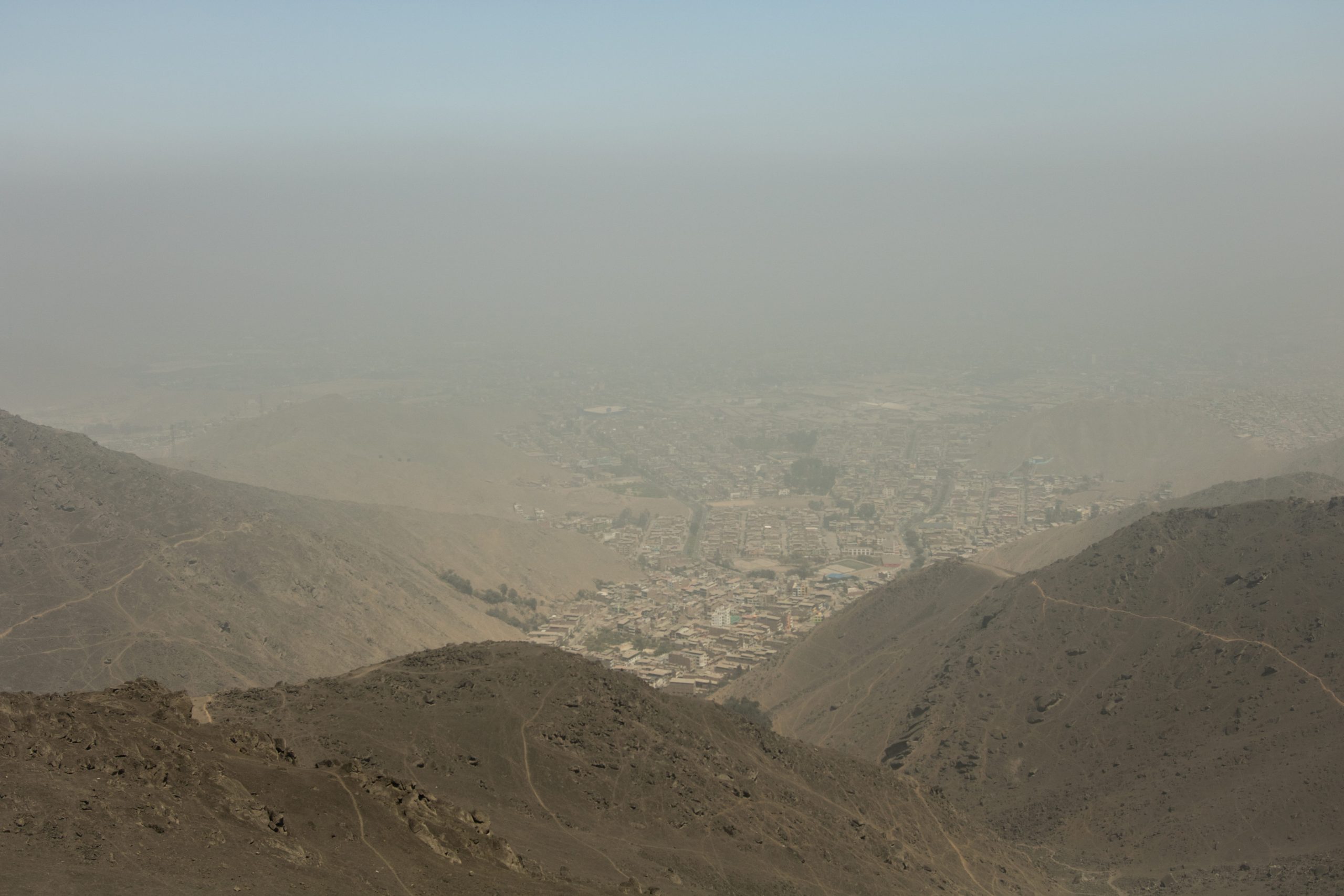
Pensados en red y en una escala más allá de los espacios verdes domésticos, los jardines botánicos de la árida Lima podrían coordinar las estrategias de arboricultura urbana, de diseño y mantenimiento de jardines, y de procesos de restauración ecológica que conecten los barrios revegetalizados. Los jardines botánicos no solo ofrecen una red de semillas, conocimientos, compost y especies, sino que emergen como instituciones democratizadas capaces de hacer de una ciudad como Lima más resiliente ante los embates del cambio climático. Los jardines botánicos nodales y articulados de Lima pueden orquestar instrumentos de Soluciones Basadas en la Naturaleza que ayuden al manejo integrado del recurso hídrico. Desde los jardines botánicos nodales, y junto con las comunidades, se puede pensar en cómo trabajar con las plantas de la ciudad para crear espacios funcionales que alternen lo ornamental y lo funcional; por ejemplo, pensando estrategias de manejo hidráulico que integren tecnologías contemporáneas con ingeniería inca para un manejo eficiente del agua, o pensando formas de combatir las inundaciones que se dan en la ciudad cuando el fenómeno de El Niño trae precipitaciones inusuales que la inundan, causando serias consecuencias sociales y económicas.
En conclusión, una red de jardines botánicos que sirvan de nodos en la revegetalización de Lima puede hacer que una de las ciudades más áridas del planeta se convierta en un oasis vegetal resiliente, donde las ventajas de la naturaleza urbana estén democráticamente distribuidas.
* * *
A network of botanical gardens acting as hubs for Lima’s revegetation could transform one of the planet’s most arid cities into a resilient green oasis, where the benefits of urban nature are democratically distributed.
Lima is arid and desert-like. Situated between the cold waters of the Pacific and the Andes mountain range, the city’s annual rainfall hovers between 5 and 15 millimeters. Consequently, its nearly 10 million inhabitants live in conditions similar to those of cities in the Sahara, such as those in Egypt. The city’s aridity radically shapes the way Limeños live with their plants.
Given Lima’s arid conditions, botanical gardens emerge as essential players in the creation of the city’s green spaces. Several botanical gardens coexist in Lima, each fulfilling—or having fulfilled—different roles throughout the city’s history. The Octavio Velarde Núñez Botanical Garden, affiliated with La Molina University, is the oldest and most traditional of these and currently serves as an educational garden. Other gardens within the Lima metropolitan area include the Medicinal Plants Botanical Garden, linked to the National Institute of Health (INS), and the Parque de las Leyendas Botanical Garden. Additionally, in 2024, the Peruvian Congress passed a measure recognizing the creation of a national botanical garden as a national priority. Against this backdrop, initial steps have been taken toward establishing the Huáscar Zonal Park Botanical Garden.
The fact that Lima boasts several gardens—and that there is political will to create a new one—invites us to consider the nature of these gardens beyond their physical boundaries. It is worth envisioning a network of botanical gardens acting as botanical nodes that connect the city’s various spaces and ecosystems. When conceived as a network, botanical gardens can help transform Lima into an urban oasis amidst the desert. How?
Starting at the scale of the neighborhood and the domestic sphere, a network of botanical gardens can disseminate knowledge, seeds, and plants to surrounding areas. Expanding across the city means educating residents about medicinal plants, urban agriculture practices, ancestral food production methods, seed diversity, and—crucially—smart water management. As they expand, these areas can connect with other parts of the city that encompass different ecosystems, thereby linking coastal hills, wetlands, deserts, and scrublands—ecosystems over which the city has expanded at the expense of the other species inhabiting them. In doing so, botanical gardens have the potential to permeate the city’s terraces, balconies, home gardens, and vacant lots through a constant flow of information, matter, and energy.
Conceived as a network operating on a scale beyond domestic green spaces, the botanical gardens of arid Lima could coordinate strategies for urban arboriculture, garden design and maintenance, and ecological restoration processes that link revegetated neighborhoods. These botanical gardens not only provide a network for sharing seeds, knowledge, compost, and plant species, but also emerge as democratized institutions capable of making a city like Lima more resilient to the impacts of climate change. Lima’s interconnected botanical garden nodes can orchestrate Nature-based Solutions to assist in integrated water resource management. Working from these nodes alongside local communities, it is possible to devise ways to utilize urban vegetation to create functional spaces that blend ornamental and practical purposes; for instance, by developing water management strategies that combine contemporary technologies with Inca engineering for efficient water use, or by devising methods to combat the flooding that occurs when the El Niño phenomenon brings unusual rainfall, causing serious social and economic consequences.
In conclusion, a network of botanical gardens acting as hubs for Lima’s revegetation could transform one of the planet’s most arid cities into a resilient green oasis, where the benefits of urban nature are democratically distributed.

about the writer
Asef Ayatollahi
Asef is an urban planner by education and practice, holding a PhD in Urban Planning, Design, and Policy from Politecnico di Milano. He is currently a Postdoctoral Research Fellow at the Laboratorio di Simulazione Urbana Fausto Curti (LabSimUrb), Department of Architecture and Urban Studies (DAStU), Politecnico di Milano, within the EUI GOCCIA project. His postdoctoral work focuses on exploring and modeling future human-nature relations and urban transformation scenarios. During his PhD, funded by the National Biodiversity Future Center (NBFC), Asef investigated the integration of social impact assessment and ecosystem services into adaptive urban planning for biodiversity, with a focus on the local scale, in collaboration with actors and decision-makers.
Asef Ayatollahi
We have to look at paths for benefit that involve all species on both sides of botanical gardens.
To answer this question, first let’s go back a few steps. One of the aims (if not the main one) of botanical gardens is to provide a space for conserving and studying plant species. For sure, exhibiting them, raising awareness, and familiarizing the public with plant species are important, but they might conflict with the principal idea of conserving species and providing suitable living spaces for them across even very different climates. In most cases, conservation and research have priority over public access and social use. This is why, in most cases, we see limited access to certain areas, many signs and guides along the routes, or public closures at specific times to better maintain plants in optimal condition. Additionally, over time, many species of fauna inhabit or use botanical gardens, making them not only places for plants and us but also special places where, overall, we might even have less priority than other species in a very well-cared-for biophysical environment. Maybe from the perspective of species living there, we might not be very welcome.
From our perspective, botanical gardens offer us learning opportunities and the chance to see exotic plant species which ultimately raise awareness about them, but beyond what happens inside, they are dense, green, biodiverse spaces that contrast with the heat, pollution, and noise of the surrounding environment. This is why we enjoy an evening stroll, a short break from work, a walk, or lunch with our friends and family there. Botanical gardens can reduce our stress, stimulate our emotions, and connect us back with nature. In this case, we have a priority: we use them to improve our state, ease our mind, or learn about new issues.
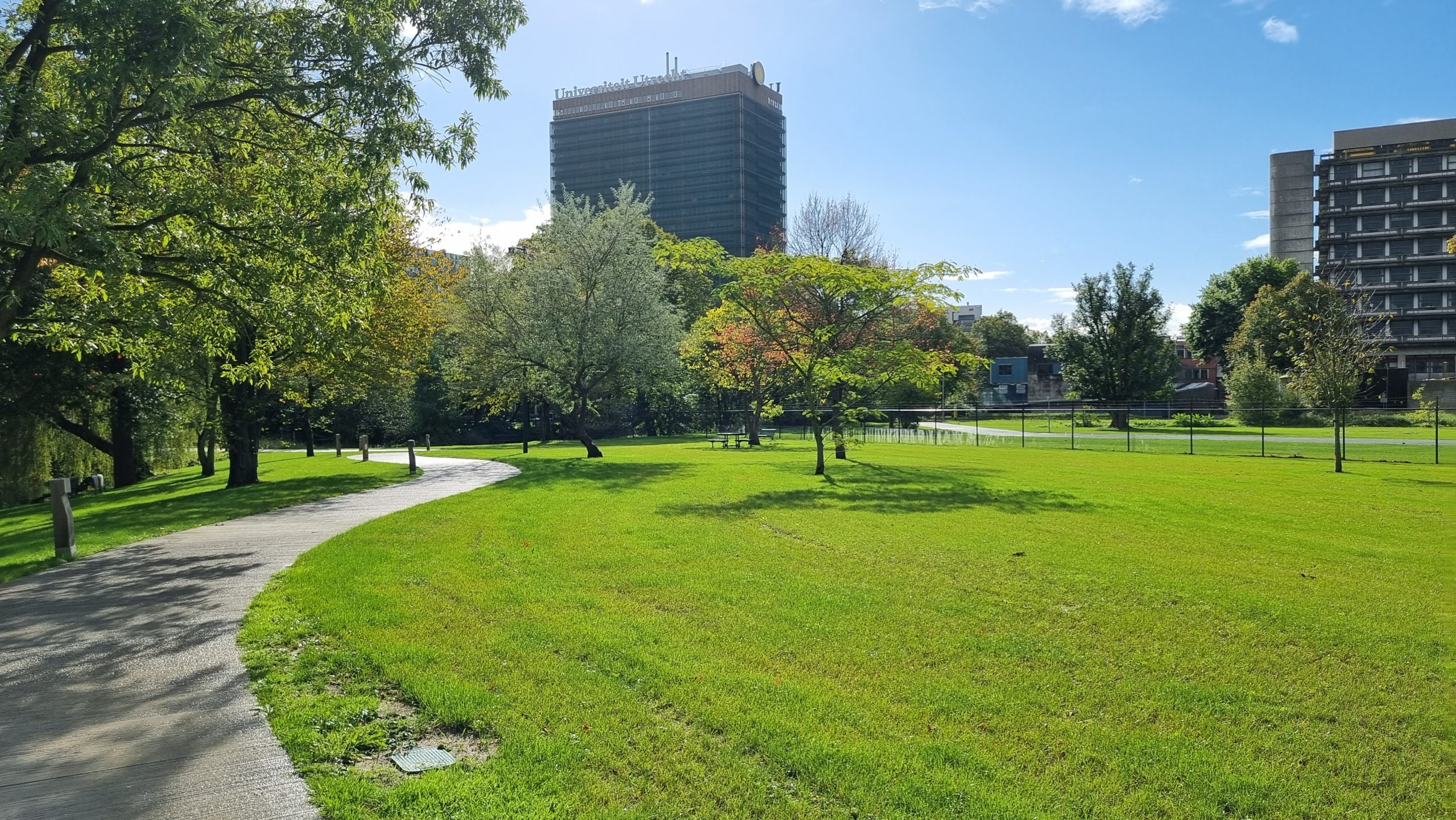
With this background, keeping in mind the interests of all species and environments, I believe there might be 3 ways to do that. First, activate the edges and open up to connect botanical gardens with other green spaces. One of the key ideas in managing urban greenery is connectivity, whereas botanical gardens are usually viewed as walled, limited spaces. Opening up, for sure, does not point toward removing the walls and making it a public space, but rather toward providing better access, connecting walking routes for humans, and creating entry points for small fauna species. This action makes botanical gardens more accessible, visible, and attractive for citizens. Activating the edges does the same trick. In some cases, to better control the environment (for species and visitors’ safety), the edges of botanical gardens are inaccessible or uninviting, leading neighbors to have less interest in interacting with such spaces. Providing more informative and accessible spaces can be crucial for better connecting them to the city’s context. Alongside such places, edges are also passages for smaller species that require additional safety measures (such as reduced speed and extended walking paths or lighting).
The second idea is to boost controlled spaces for informal small-scale events and activities for neighbors and residents. Many botanical gardens have open green spaces that can be used for such purposes, or are used by citizens for their breaks, lunch, or other activities. Use of such space may extend beyond the garden’s surrounding wall for small-scale activities that do not disturb other species but provide a gathering opportunity for neighbors. Some of such places can even be used as heat refuges to reduce stress for different groups in society while avoiding excessive interaction and use of the place. The idea is to make them informal so that citizens can use them as needed, but they must be controlled to avoid harmful interactions between species.
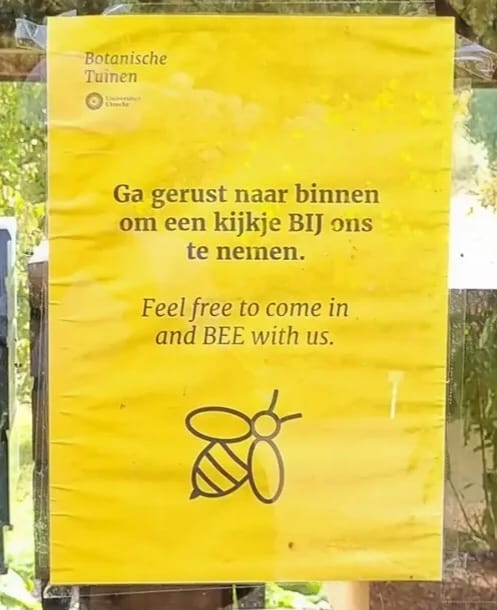
Lastly, making botanical gardens a node for knowledge transfer and exchange. Engagement with plants in these gardens is strictly limited to preserving plant species, but this knowledge can be shared with citizens through small gardening activities, community gardens, and pocket gardens outside the walls of the botanical gardens. In cities like Milan and Utrecht, within a short distance of botanical gardens, there are many volunteers citizens-based communities (or individuals) that are practicing gardening or have an interest in flora species while they have no formal connection to botanical gardens. Providing such a connection and transferring knowledge, planting new flora species, and learning, experiencing, and taking care of them is an experience that botanical gardens can transfer to these communities and break the invisible wall.
To conclude, we are not the only species benefiting from botanical gardens; if we are aiming to enjoy their benefits beyond their walls, in the long term, we have to look at paths that involve all species on both sides of botanical gardens for benefit.

about the writer
Hernando García Martínez
Hernando García Martínez holds a degree in Biology from Universidad Javeriana and a master’s degree in Ecology from the Universidad Autónoma de Barcelona. He currently serves as Director General of the Humboldt Institute, an entity of Colombia’s National Environmental System (SINA) committed to generating, integrating, and communicating scientific knowledge on Colombian biodiversity.

about the writer
Wilson Ramirez Hernandez
Wilson Ramirez Hernandez is the Manager of the Nature-Based Solutions (NBS) Center at the Alexander von Humboldt Institute. Holding a Ph.D. in Ecology with an emphasis in Ecosystem Restoration, he brings over 25 years of experience in Colombia’s biodiversity conservation. Among other leadership roles, he served as Co-Chair of the National Biodiversity Assessment and lead author for the Restoration chapter of the IPBES Global Assessment. Currently, he leads NBS implementation projects across regions such as La Mojana, La Guajira, high-altitude páramos, and urban areas.
Hernando García Martínez & Wilson Ramírez Hernández
Botanical Gardens Can Step Outside Their Walls and Help in Megadiverse Countries
A garden’s real impact is measured by the useful data behind the plants, not just the plants themselves.
Let’s open the gates
For a long time, botanical gardens were like little plant museums. But let’s be honest: in today’s fast-growing cities and countries, we’ve got to totally change how we think about these spaces.
Botanical gardens are actually the secret green engines of our cities. Their roots need to reach way past their gates, shaping how we design our neighborhoods, and showing us how connected we all are to nature. Working at Colombia’s Humboldt Institute, we see this every day; letting nature spill out of the garden isn’t just about making cities look pretty—it is absolutely necessary for our survival, especially in super-diverse countries like ours.
Bringing rare and special plants to the streets
Look around most cities in biodiverse countries, and what do you see? A lot of the same, non-native (sometimes invasive) plants everywhere. We need gardens to lead the charge.
They should be getting rare, unique, and local species out into city parks, streetscapes, and regional tree-planting projects. When we use these special local plants and genetics, we do not just save them from disappearing; we also bring back the natural look, feel, and soul of our home. This fits perfectly with Colombia’s dream of turning cities into Biodiverciudades—cities where local biodiversity is the backbone of our fight against climate change.
How to actually grow things?
Here is the thing: we can’t bring nature back if we don’t know how to grow the plants, especially the singular ones. That is where the science comes in, and it’s a huge deal.
A lot of rare, local plants are really picky. Their seeds might have stubborn sleep cycles, or they might need very specific, healthy soil to grow. Botanical gardens do the hard detective work to figure out these biological mysteries. They turn “impossible to grow” plants into perfect candidates for restoring our landscapes.
By sharing these easy-to-follow, open recipes for growing plants, gardens give commercial and neighborhood nurseries the exact blueprints they need to grow tons of local species. This means we can finally stop relying on the same few easy-to-grow, imported plants to create more heterogeneous landscapes.
The “brain” of nature restoration
Restoration is a team sport; we need botanical gardens to act like a central brain that connects science, local nurseries, and real-world planting projects.
Gardens are the perfect bridge between academic research and getting your hands dirty in the dirt. They take complicated science and turn it into simple, actionable tips for people on the ground.
In Colombia, we do this by teaming up with groups like the Colombian Nursery Network (Red Colombiana de Viveros). Together, we bring different nurseries together, make sure the plants being grown are top-notch, and guarantee that the right local plants end up in the right soil at the right time.
Sharing the secret sauce (open data)
At the Humboldt Institute, we run Colombia’s Biodiversity Information System (SiB Colombia), so we know firsthand that good data changes everything! A garden’s real impact is measured by the useful data behind the plants, not just the plants themselves.
Gardens have heaps of data on how plants grow, where they live, and when they bloom. Making this info into a free, public database helps city planners and scientists figure out how plants will handle climate change. By sharing this data openly, gardens help us track how ecosystems are healing across entire regions, making sure our hard work actually pays off!

about the writer
Claire Martin
Claire Martin is an award-winning landscape architect and Associate Director at OCULUS, known for her systems approach across a range of scales from insect hotels to public spaces, through to statewide greening strategies. With a career spanning nearly two decades, Claire has curated projects across Australia, focusing on material thinking and landscape performance. A Fellow and past National President of the Australian Institute of Landscape Architects, she is a passionate design advocate, landscape communicator and mentor.
Claire Martin
In an era of climate instability, cultural fragmentation, and democratic fragility, the botanical garden as a system not a destination might offer a hopeful model for cities seeking to rebuild common purpose.
Botanical Diversity + Social Cohesion = Climate and Community Resilience
Contemporary cities are defined by mass participation—festivals, protests, cultural events, sports gatherings-and by everyday encounters of dense, diverse populations. These shared public experiences are essential to democracy: they build trust, recognition, and a sense of common purpose. Yet our cities and our communities are increasingly being defined by the climate emergency and nature collapse, growing inequality, division, and distrust.
What kinds of urban infrastructures can strengthen social cohesion in this context of accelerated change? How might a reimagined botanical garden at the scale of the city offer a model for more resilient urban ecosystems and communities?
As historians including Blais (2022), Neves (2024) have noted, colonial botanical gardens functioned as networks of classification, acclimatisation and exchange that moved plants, knowledge, and labour throughout imperial systems. The plants of our twenty-first-century cities carry histories of migration and displacement — systematised through theft, collection, naming, testing, and display. The appropriation of cultural knowledge for medicine, food, fibre, ornament, and profit.[i]
The distributed botanic garden of the 3rd millennium could move from collection to constellation, combining typologies such as streets, parks, gardens, verges, waterways, campuses, cemeteries, median strips, and remnant ecologies with soils, insects, birds, fungi, people, weather, and atmosphere.
These newly emerging cities would no longer be ordered by botanic or development taxonomy but instead could be clustered around local ecologies and regimes of care that invite diverse communities to participate in repair. Botanic cities whose collective stewardship recognises our own contributions alongside those of others, foregrounding social cohesion, to build community resilience, through systems of knowing and unknowing.
Plants can teach us that our survival is relational. Their distribution reveals climate, disturbance, neglect, trade, migration, and memory. The botanic city reminds us that we are ecological, and for many we are culturally and spiritually entangled. To better connect with our environment and with each other enables us to revalue plants, the entities that depend on them, and ourselves as active participants in living systems, rather than consumers of urban amenity.[ii]
Urban micro-habitats, at the neighbourhood scale, flourish and evolve to better withstand climate shocks when co-maintained by communities. Collective effervescence grounded in places of slow public ritual and exchange, not commerce and transaction. By embedding adaptive systems into the fabric of our daily lives, increased community and ecological diversity could build greater redundancy and grow combined resilience.
The botanical garden city eschews classification for belonging, extractive for generative, and display for curiosity. The virtual and the actual might instead begin to co-exist in planning systems informed by Indigenous ecological knowledges, and migration stories, and identities; with shared embodied experiences creating emotional connection and new collective memory.
In an era of climate instability, cultural fragmentation, and democratic fragility, the botanical garden as a system, not a destination, might offer a hopeful model for cities seeking to rebuild common purpose. An armature for social cohesion as ecological infrastructure, and a resilience strategy founded on collective stewardship. That might help communities to learn, care, adapt and belong within, not despite accelerated change.
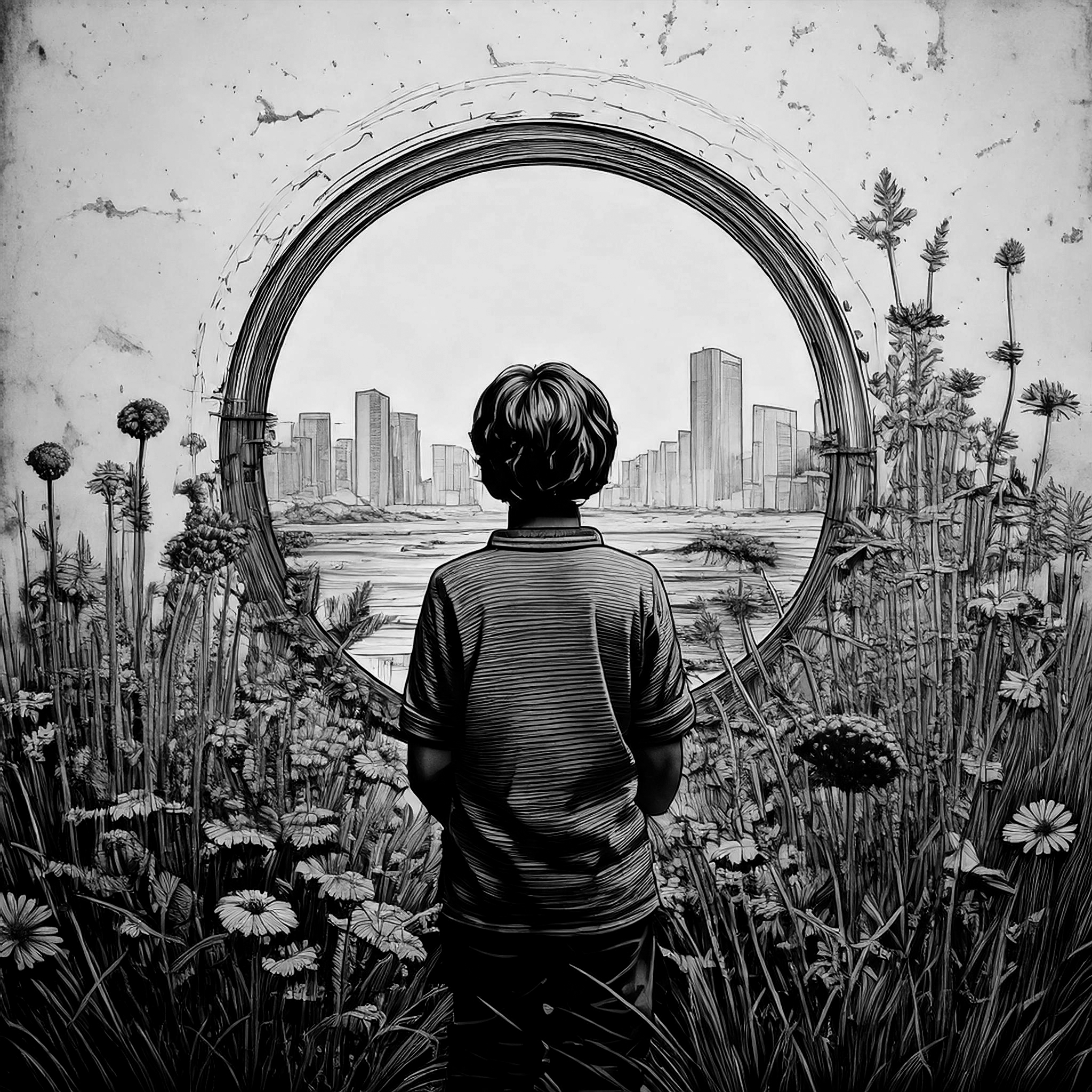

Notes
[i] Hélène Blais, Botanical gardens in colonial empires, Encyclopédie d’histoire numérique de l’Europe [online], ISSN 2677-6588, published on 17/01/22, consulted on 25/07/2026. Permalink: https://ehne.fr/en/node/21589 [ii] Daniel J, Russo A, Burford B. How might we utilise the concept of botanic gardens in urban contexts to challenge plant blindness? Biodivers Conserv. 2023;32(7):2345-2364. doi: 10.1007/s10531-023-02607-w. Epub 2023 Apr 20. PMID: 37255862; PMCID: PMC10116099 — and Neves, K.G. Botanic Gardens in Biodiversity Conservation and Sustainability: History, Contemporary Engagements, Decolonization Challenges, and Renewed Potential. J. Zool. Bot. Gard. 2024, 5, 260-275. https://doi.org/10.3390/jzbg5020018
References
Hélène Blais, Botanical gardens in colonial empires, Encyclopédie d’histoire numérique de l’Europe [online], ISSN 2677-6588, published on 17/01/22, consulted on 25/07/2026. Permalink: https://ehne.fr/en/node/21589
Neves, K.G. Botanic Gardens in Biodiversity Conservation and Sustainability: History, Contemporary Engagements, Decolonization Challenges, and Renewed Potential. J. Zool. Bot. Gard. 2024, 5, 260-275. https://doi.org/10.3390/jzbg5020018

about the writer
Niki Frantzeskaki
Niki Frantzeskaki is a Chair Professor in Regional and Metropolitan Governance and Planning at Utrecht University the Netherlands. Her research is centered on the planning and governance of urban nature, urban biodiversity and climate adaptation in cities, focusing on novel approaches such as experimentation, co-creation and collaborative governance.
Niki Frantzeskaki
It is the very essence of botanical gardens to welcome people and nature in one place that is the most “unnatural of all”, our human habitats.
Not all botanical gardens connect ‘naturally’ to their landscape, and there is a reason for it
Botanical gardens exist in various sizes and shapes in many cities. It is this green oasis where you can learn about the local plants, the way locals like their “urban nature”, or how “nature” fits in what is considered modern in every city. When thinking of how botanical gardens entangle in the urban mosaic of infrastructures and services, I think of three patterns: first in mind comes the historical botanical gardens, those that are in places of cultural and ecological significance, with a long history about their location often connected to post-war infrastructure and planning.
Such a place is the botanical garden of Utrecht University, situated as a piece of a “green puzzle” in the landscape (as part of a green corridor) and a place embraced by university staff, students, and visitors alike as a place to meet, to rest, to reflect and learn about flowers, herbs, and even tropical plants in the glasshouse. The botanical gardens of Tokyo University stand in a similar “historically marked place” that is the oldest botanical garden in Japan, being the ecological landscape for other urban ecological infrastructures to connect to, serving as an eloquent place to meet and learn about Japanese nature, have a cup of tea, and see the excellent landscape architecture that only the Japanese can perform. The history of the place is even captured in poems and pictures of the bushes that decorate the pathways of the garden.
Second comes the botanical gardens that are “guardian places of local flora”, places to protect local nature from development pressures and unimplemented environmental laws. And no, these are not conservatories or reserves necessarily, but some do operate seed banks and research on invasive species or pests harming endangered species. I have visited two such botanical gardens. The botanical park of Chania in Crete is a place that is a haven for local flora, well landscaped and curated, with pathways for people to discover the herbs, plants, trees, and the birds that live in it. At the same time, it is a place of paradox: it allows nature to thrive protected from development pressures as it is a well demarcated and fenced place only accessible with a ticket, while at the same time, its operation is only possible due to serving the tourism industry as an eco-tourism destination with a restaurant and several curated events about local cuisine and culture hosted at time in its premises.
Being born and raised in Chania, my visit to the botanical park brought memories of how the landscape used to be in the village of my parents in Kissamos, how strolling as a teenager in the small streets was full of herbs such as oregano and lavender growing in abundance, weeds that were not removed as they served for feeding the goats, boukamvilia flowers embroidering the house gates. The second botanical garden that reminded me of a guardian place is the botanical garden of the University Museum of Bergen in Norway. What a magical place, like you enter a haven of nature and time ― traveling back to medieval gardens fenced away from what happens in the city and its life. The third type, the spontaneous botanical gardens, those that are not “labelled” or managed yet. However, if you look carefully, feel, experience, and listen to how people and communities relate to them, care for them, and often create them, they are places for restoring urban nature.
It is often the grannies or “green thumb” neighbors that use any left public space to make a green patch with herbs such as lavandas or thyme, with frangipani’s trees or jasmin bushes, or bring pots with these plants either proper ones or repurposed containers from olive oil or olives that serve as perfect “space claiming devices” (as a nonna in Italy explained to me once). These spontaneous botanical gardens are almost everywhere in the Mediterranean cities and villages; you only need to stroll away from the busy streets to discover what locals consider as “their nature”, the one they want their houses covered with and themselves welcomed by. Because it is the very essence of botanical gardens to welcome people and nature in one place that is the most “unnatural of all”, our human habitats.
about the writer
Sarah E. Davies
Sarah E. Davies is a curator, arts worker, and researcher based in Naarm/Melbourne and Berlin. She is completing a practice research PhD at RMIT University, where her research considers facilitative administration as a generative, distributed, and relational way of doing the curatorial. She runs The Mutual Field, a participatory platform that invites artists, thinkers, and the public to contribute and respond to an ever-evolving creative conversation: an invitation to live-with, make-with, and think-with the world otherwise. She remains suspicious of walls.
Sarah E. Davies
Gardens and their multispecies inhabitants are interdependent and regenerative, their agency already distributed and emergent. The institution can be too; to think-with, make-with, and become-with the garden’s intelligence and ways of being.
Becoming-with the garden: Towards a distributed institutional practice
When I received the prompt for this conversation, my immediate thought was, how does a garden have walls? Walls are not of a garden. The walls, boundaries, ownership, collections, histories and classifications are those of the institution built around it. The garden itself, with its soil, plants, roots, pollinators, insects and other wildlife, doesn’t concern itself with walls. Such symbiotic, multispecies life spreads, grows, moves and flows in the ways they see fit. The walls of the institution may signal that its work remains internal, accessible only to those who come inside.
A botanical garden might reach beyond its walls by learning from the gardens and their multispecies inhabitants they research and care for. What if their practices were reconceived to behave symbiotically with others, based on mutuality, developed to be distributed, open-source and reciprocal, rather than contained within their own infrastructure, or one-directional? The institution’s impact, values and practices might start to propagate, like the garden.
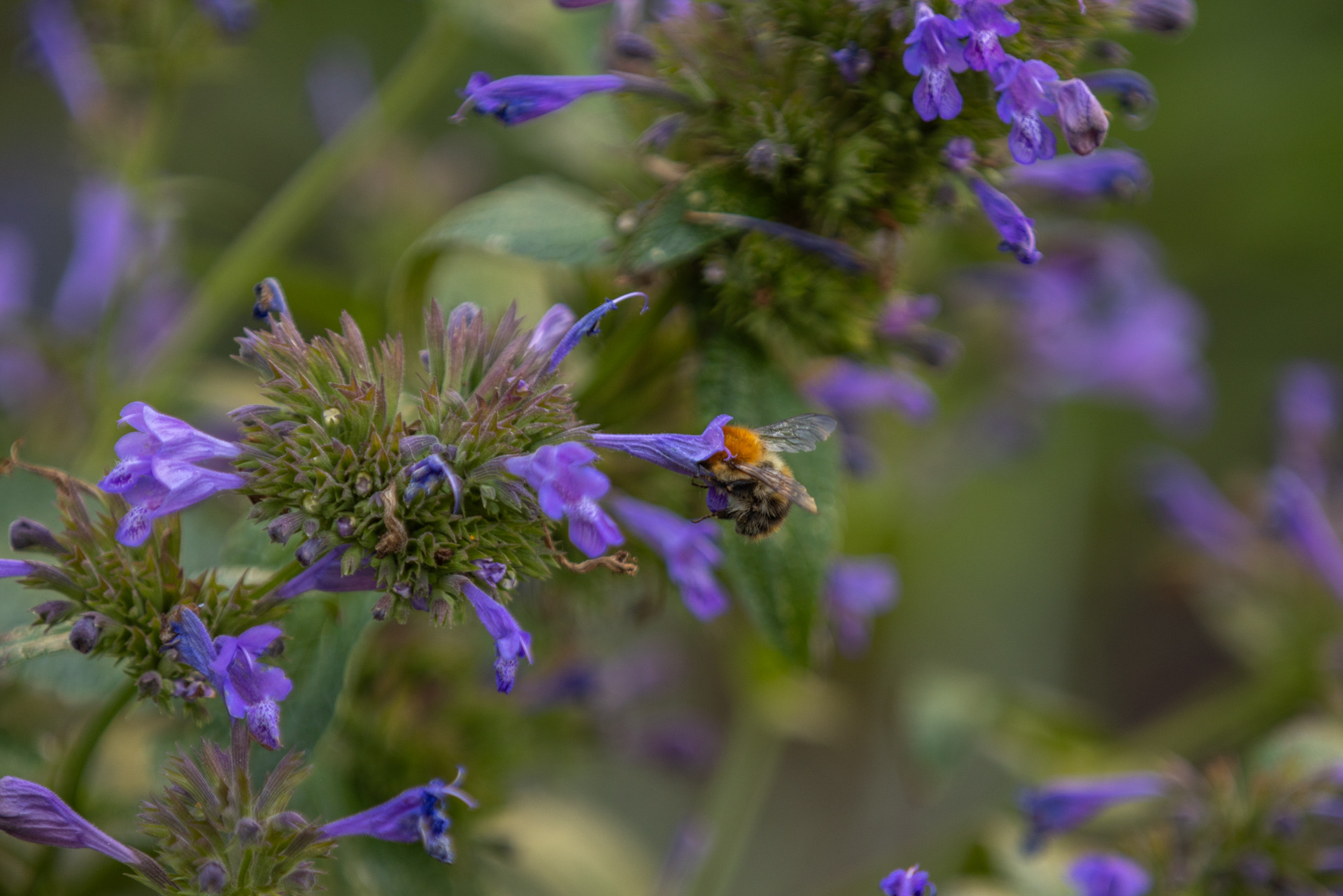
The example I’ll talk through is Alexandra Daisy Ginsberg’s artwork Pollinator Pathmaker, which has been evolving since 2021. It revolves around an open-access algorithm that anyone can use to generate planting schemes, optimised for pollinators to flourish, displacing the human bias of aesthetics. In 2023, LAS Art Foundation commissioned a Berlin edition of the artwork, realised with the Museum für Naturkunde (Natural History Museum) across their forecourt. It remains in place and flourishing, now extended beyond its initial end date. This transdisciplinary approach of the project from the museum, foundation and the artist already signals the ways in which institutions can extend beyond their own walls into further communities and practices across a city.
I worked with LAS and the rest of the project teams to develop an outreach approach. My approach took the artwork’s own premise with the ambitions of the commissioner, and reimagined outreach as a relational ecology, like that of a garden. The approach was developed to be reciprocal and enduring, to function across multiple levels of engagement with diverse communities whose interests intersected with the artwork, to spread across the city, and to continue beyond my involvement. The outreach behaved like a garden and included the more-than-human, such as the algorithm and the garden’s multispecies inhabitants amongst its stakeholders.
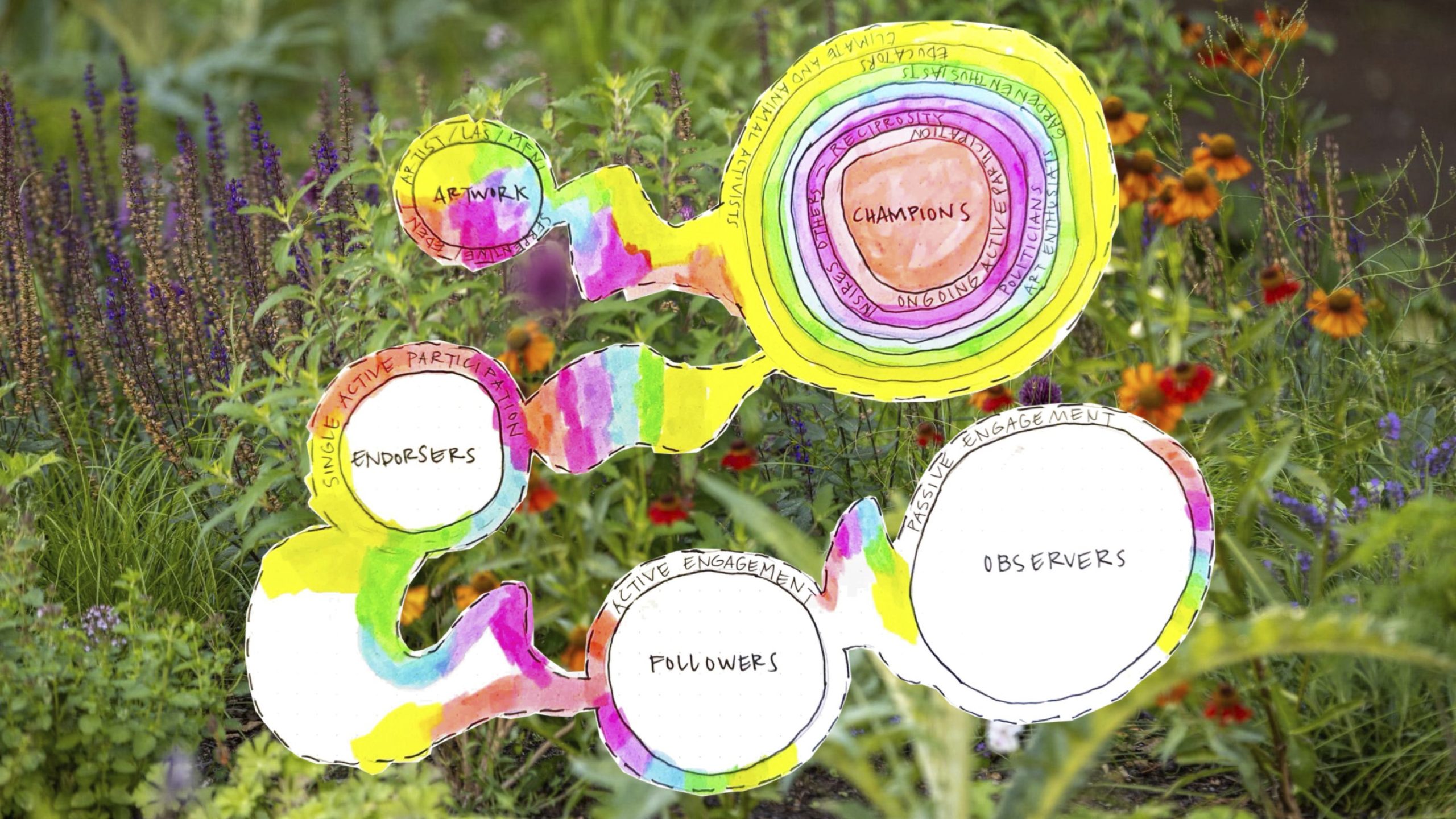
Beyond inviting people to visit the large-scale commissioned garden, the outreach enabled communities to plant further public editions across the city, which might in turn inspire individuals to plant their own at home. These communities were no longer bystanders or passively viewing an artwork, but joining in and co-producing it, sharing and reciprocating.
An example of this was a planting day that was organised with local residents and shop owners at a square in the neighbourhood, Wedding. The day was instigated and supported by a community NGO and the local council. The residents designed the layout of the garden plots themselves using the artwork algorithm, prior to the day. The NGO organised the plants; the foundation’s team came to support the planting. From this event, residents went on to plant their own editions on their balconies above the square, multiplying both the artwork and the potential pathways for pollinators across the neighbourhood. This then spread outward, to the LAS commission at the Natural History Museum in the neighbouring suburb, and further community and private editions in other districts.
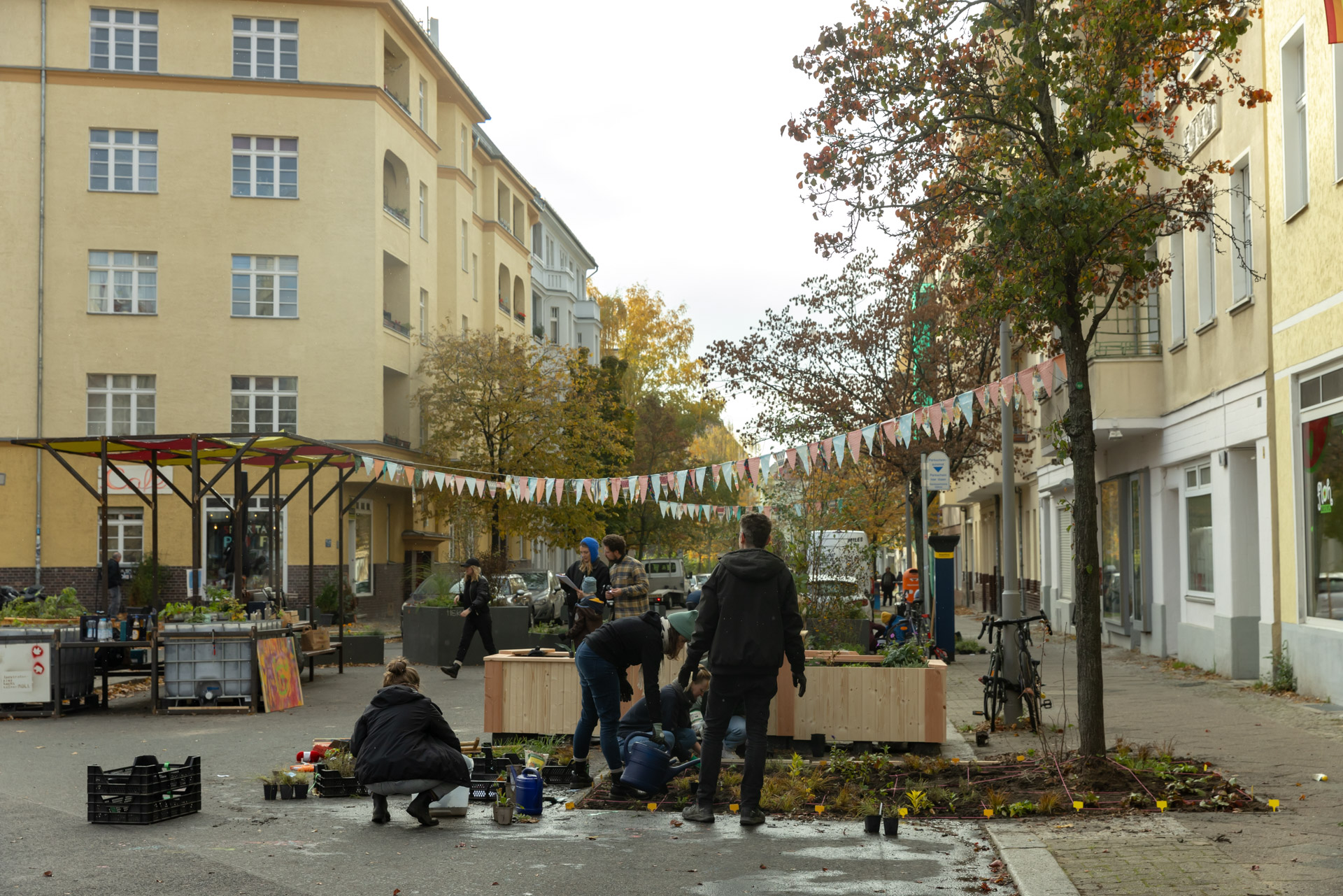
The outreach expanded engagement beyond the walls of the institution, into and across the city, meeting people where they work and live. The relationships developed with fellow organisations and the council meant opportunities for further community plantings elsewhere were seeded from this one moment. The event enabled continued engagement; private plantings on balconies and community planting events, naturally evolving and propagating the project across the city, symbiotically. These relations enabled agency to emerge and be distributed across the NGO who instigated the event, the community, its residents and shop owners, the LAS team, and not least the artist, the algorithm she made that generated the layouts, the plants that grew, the bees, beetles, and butterflies that pollinated, the soil that nurtured and the environmental forces that nourished and spread the garden further. All collectively enabling the artwork to adapt and multiply.
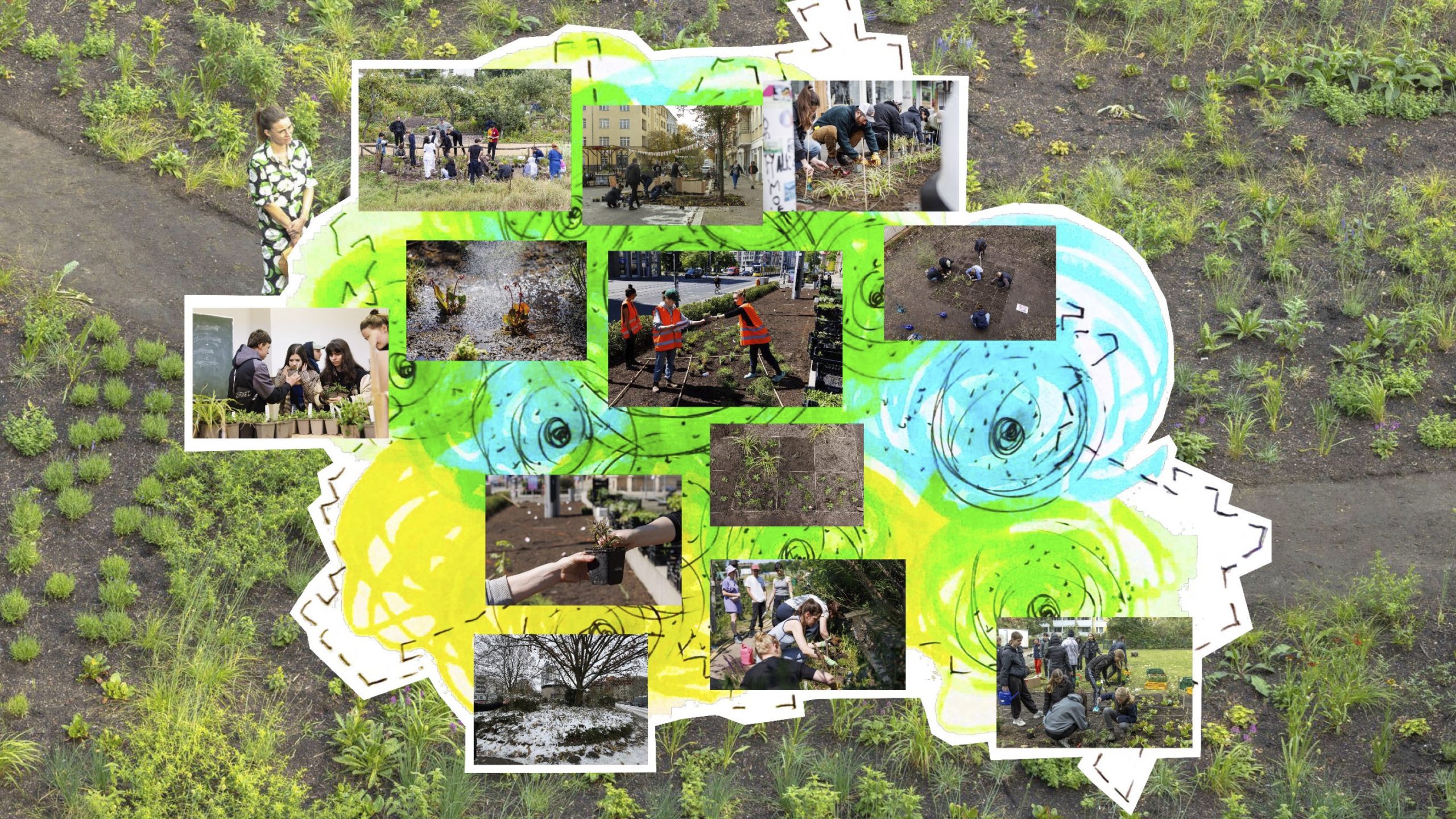
Some readings that have inspired my thinking
Bennett, Jane. Vibrant Matter: A Political Ecology of Things. Duke University Press, 2010.
Kimmerer, Robin Wall. Braiding Sweetgrass. First edition. Milkweed Editions, 2013.

about the writer
Ricardo Cardim
Ricardo Cardim is a Brazilian botanist, landscape architect, curator, and director of Cardim Arquitetura Paisagística. He is a specialist in Climate, Health, and Green Infrastructure within the ATACH Expert Group (World Bank / World Health Organization / United Nations), participating in the Radical Circle in partnership with Heidelberg University. He holds a Master’s degree in Botany from the University of São Paulo (USP), received the UNESCO Atlantic Forest Biosphere Reserve Muriqui Environmental Award, created the Pocket Forest restoration technique, and is the author of two books on native biodiversity and sustainable landscape architecture.
Ricardo Cardim
Perhaps the greatest legacy of a botanical garden will not be the plants it preserves within its walls, but the native landscapes it helps restore beyond them.
After some five centuries of intense global exchange of plant species, a movement initiated during the European Age of Exploration for economic, scientific, and cultural reasons, closely linked to so-called ecological imperialism, and intensified by the post-World War II Great Acceleration, we have arrived at a scenario in which thousands of exotic plant species are widely available for horticulture and landscaping across virtually every continent. This extraordinary circulation of plants has expanded the aesthetic possibilities of gardens and cities, yet it has also produced profound ecological and cultural consequences whose full extent is only now being understood.
As a result of this process, exotic species now dominate urban green spaces and designed landscapes across much of the world. This replacement of regional flora has fostered biological invasions, reduced the representation of native biodiversity, degraded ecological interactions between native plants and fauna that evolved over thousands of years, and contributed to a progressive loss of cultural knowledge about local vegetation—a process of cultural erosion now widely documented by scientific evidence. Brazil clearly illustrates this reality. Despite harboring the greatest plant biodiversity on Earth, it is estimated that approximately 90% of the species used in ornamental landscaping are exotic to the environments where they are planted.
Botanical gardens have played a pivotal role in this history. For centuries, they have served as centers for research, exchange, and the dissemination of global plant diversity, introducing numerous exotic species from different continents and inspiring both public and market interest in the extraordinary richness of the plant kingdom. This contribution was essential to the advancement of botany and remains a vital part of their mission.
However, in light of the current climate crisis, rapid urbanization, accelerating biodiversity loss, and the growing disconnection between people and the native nature of their own regions, I believe botanical gardens urgently need to expand their historical role. They must become leading centers for researching, cultivating, showcasing, and promoting each region’s native flora, acting as true agents of transformation in urban landscapes. Their success should no longer be measured only by the biodiversity preserved within their collections, but by the biodiversity they help restore throughout their cities.
In this context, one of the primary objectives of botanical gardens should be the ecological and cultural restoration of native vegetation across their regions, promoting this biodiversity so that it becomes an integral part of streets, parks, public squares, schools, public and private developments, and gardens. Botanical gardens should provide representative collections of regional native plants, together with scientific knowledge, propagation and cultivation techniques, and environmental education, enabling nursery producers, landscape architects, architects, public officials, and citizens to rediscover their native plant heritage and incorporate it into everyday urban life.
People rarely protect what they do not know. By reconnecting society with its regional flora, botanical gardens promote a process of historical, cultural, and ecological restoration. They strengthen the ecological and cultural identity of place, enhance urban resilience to climate change, support native biodiversity conservation and ecological balance, and help protect increasingly threatened natural remnants. In the twenty-first century, perhaps the greatest legacy of a botanical garden will not be the plants it preserves within its walls, but the native landscapes it helps restore beyond them.

about the writer
Raquel Barata
Graduated in Biology (FCUL, 1996) and PhD in Psychology (ISCTE-IUL, 2014). Head of Education at the National Museum of Natural History and Science of the University of Lisbon and coordinator of projects funded by European programs (Horizon and Erasmus +) for science education. Her research includes the evaluation of non-formal education initiatives at museums including participatory methodologies and social prescribing. She is the author of scientific publications in the area, an accredited trainer of school teachers and supervisor of master and PhD projects.
Raquel Barata
The values of a Botanical Garden beyond its walls are mainly distributed between three dimensions:
- Ecological value: the preservation of threatened species at national and world level by maintaining their genetics both in the living collections and seed banks―this value is increased when BGs include seed banks (the Lisbon Botanic Garden seed banks preserve over 35% of national flora). The seeds can be propagated to other BGs and to replace populations in the areas of origin, if necessary. Also, BGs are island refuges in urban areas given the increase of heat waves, preserving urban ecosystems and related species that depend on their existence in a determined area or green corridor within cities. Examples of ecological value: the preservation of threatened species like Chisophyllum imperiale: the Lisbon Botanic Garden is known for being one of the six BGs that holds the species alive, producing fertile seeds for the seed bank.
- Social value: BGs provide non-formal and informal education about environmental sustainability as a bridge with formal education and long-term learning. Botanical Gardens are also stages for work with communities to co-create their social value and ensure the active participation of citizens. Examples of social value: the work with communities to co-create areas and activities in the BGs. The Royal Botanic Garden of Edinburgh and Meise Botanic Garden are good examples of work done.
- Health value: BGs may also promote human health, both physical and mental, through social prescribing initiatives involving local communities and networks. Examples of health and wellbeing value: the work done by Kew and the Lisbon Botanic Garden project “Museum and Wellbeing: Cultural Prescribing” (https://www.museus.ulisboa.
pt/museus-e-bem-estar- prescricao-cultural) are good examples.
Botanical Gardens around Europe are already working in the first two dimensions, the social dimension being developed only in the last decade. The health and wellbeing dimension at BGs reflects a more recent work that should be developed within BGs by proposing training (the Lisbon BG did a national training on the subject last December) and the joint work among national and international networks.

about the writer
Veronica Fabio
Veronica Fabio is an agricultural engineer and specialist in landscape architecture with a strong commitment to addressing social exclusion and inequality through landscape, environmental management, and public policy. With over twenty years of teaching experience, she has taught undergraduate, postgraduate, and master’s courses in Landscape Planning and Design at the Faculty of Architecture, Design and Urbanism, University of Buenos Aires, as well as at other Argentinian and international institutions. Her professional career combines academic teaching, applied research, and project management in landscape architecture.
Verónica Fabio
Their challenge is not only to preserve plant diversity, but also to foster a socio-ecological understanding of urban life that recognises humans as an integral part of living systems.
Manifesto: Humans are nature too
Cities are socio-ecological systems in which biophysical processes, social practices, and cultural constructions interact. As Fikret Berkes and Carl Folke argue, the social and ecological dimensions are interdependent. From this perspective, urban nature is not merely a collection of separate green spaces, but a situated construction shaped by memories, knowledge systems, and power relations, as Arturo Escobar has observed.
The reduction and fragmentation of vegetated urban spaces are accompanied by a weakening of our capacity to perceive and value plants. James H. Wandersee and Elisabeth E. Schussler coined the term plant blindness to describe this tendency to overlook plant life. Such invisibility limits our understanding of its ecological and cultural functions, weakens practices of care, and hinders its incorporation into urban planning.
The biophilia hypothesis, formulated by Edward O. Wilson, holds that human beings possess an innate affinity with other forms of life. Contact with vegetated environments supports health and well-being and improves environmental conditions. The planetary health perspective expands this approach by recognising that human health depends on the integrity of natural systems. Yet urban life increasingly restricts these experiences of contact.
In this context, botanical gardens bring together living collections, scientific knowledge, heritage, education, and public experience. Their role should not be limited to species conservation; they should also restore society’s capacity to observe, interpret, and care for plants.
This institutional potential coexists, however, with a complex history. As Londa Schiebinger has noted, many botanical collections were developed through networks of plant exploration and circulation linked to colonial contexts. Acknowledging these trajectories allows institutions to examine the provenance of their collections, recognise the local and Indigenous knowledge associated with them, and critically reinterpret their heritage value.
From this perspective, the manifesto proposes five principles:
- Conserve and reinterpret biocultural heritage.
Collections are dynamic systems requiring research, documentation, and monitoring. They also embody landscapes, archives, memories, practices, and cultural relationships. Their management should examine their historical trajectories, document provenance, and recognise the diverse forms of knowledge associated with conserved species. - Advance new forms of plant knowledge.
Botanical literacy must extend beyond taxonomic identification to explain the relationships among plants, soils, water, food, health, culture, and urban life. Direct observation can help rebuild perceptual and cognitive connections with living systems. - Integrate conservation and climate adaptation.
Ex situ conservation should be connected to species recovery, habitat restoration, and the study, selection, and propagation of plant material capable of responding to changing environmental conditions. Botanical gardens can contribute knowledge on genetic diversity and adaptation to strengthen biodiversity and urban resilience. - Extend beyond the walls.
Botanical gardens should establish lasting relationships with universities, schools, hospitals, governments, community organisations, and other social actors. These networks can support programmes in research, education, citizen science, conservation, and the stewardship of urban nature. - Redefine their institutional value.
Their relevance should not be measured solely by the number of species or visitors, but also by the knowledge produced, the territories reached, the partnerships established, the perceptions transformed, and the practices of care sustained over time.
Botanical gardens must consolidate their role as scientific, heritage, and territorial institutions. Without relinquishing their collections, they should broaden their influence across the city and help overcome the conceptual separation between society and nature.
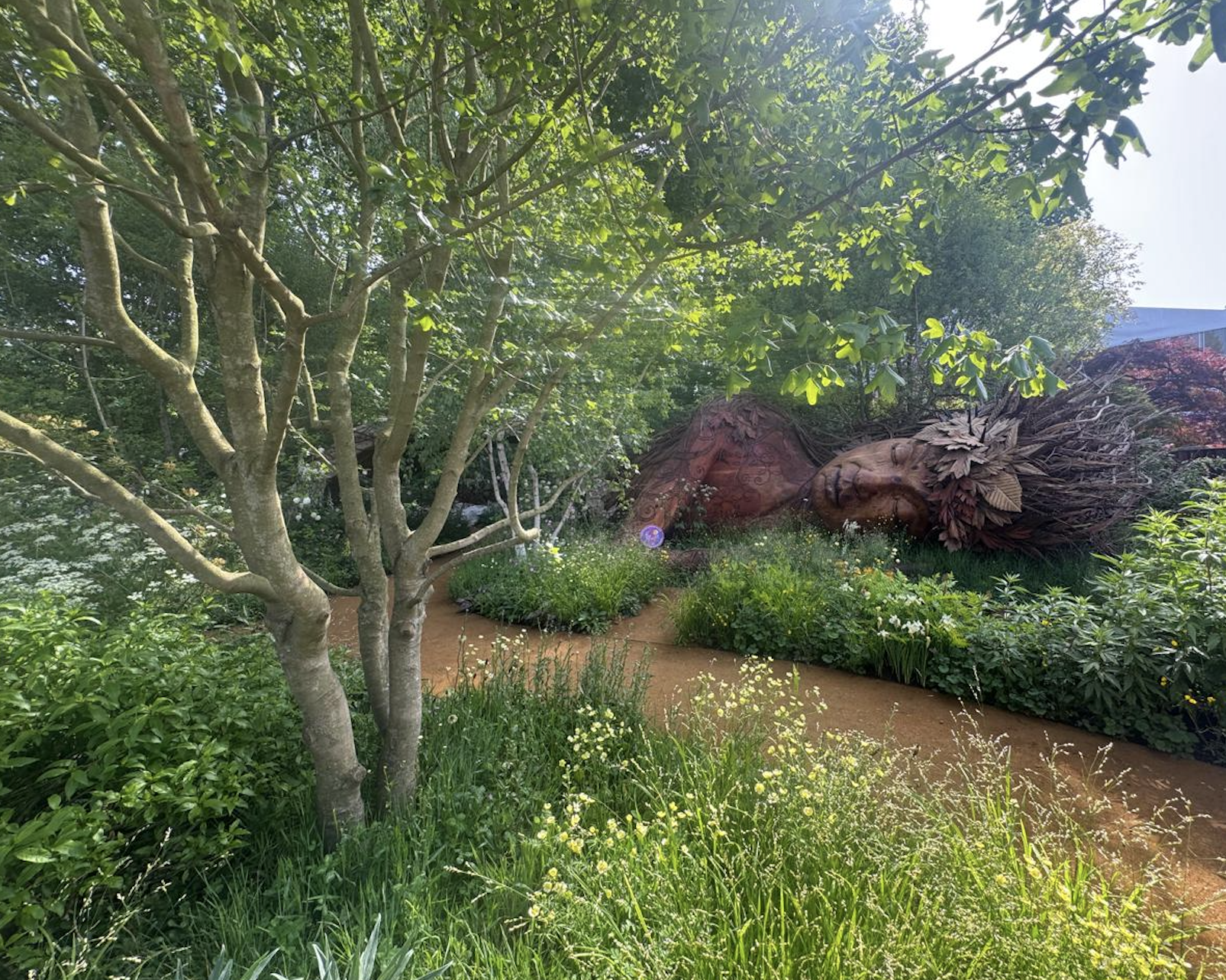
Photo: Verónica Fabio
Accordingly, this manifesto calls for botanical gardens capable of connecting conservation within their walls with scientific, educational, and territorial action beyond them. Their challenge is not only to preserve plant diversity, but also to foster a socio-ecological understanding of urban life that recognises humans as an integral part of living systems.
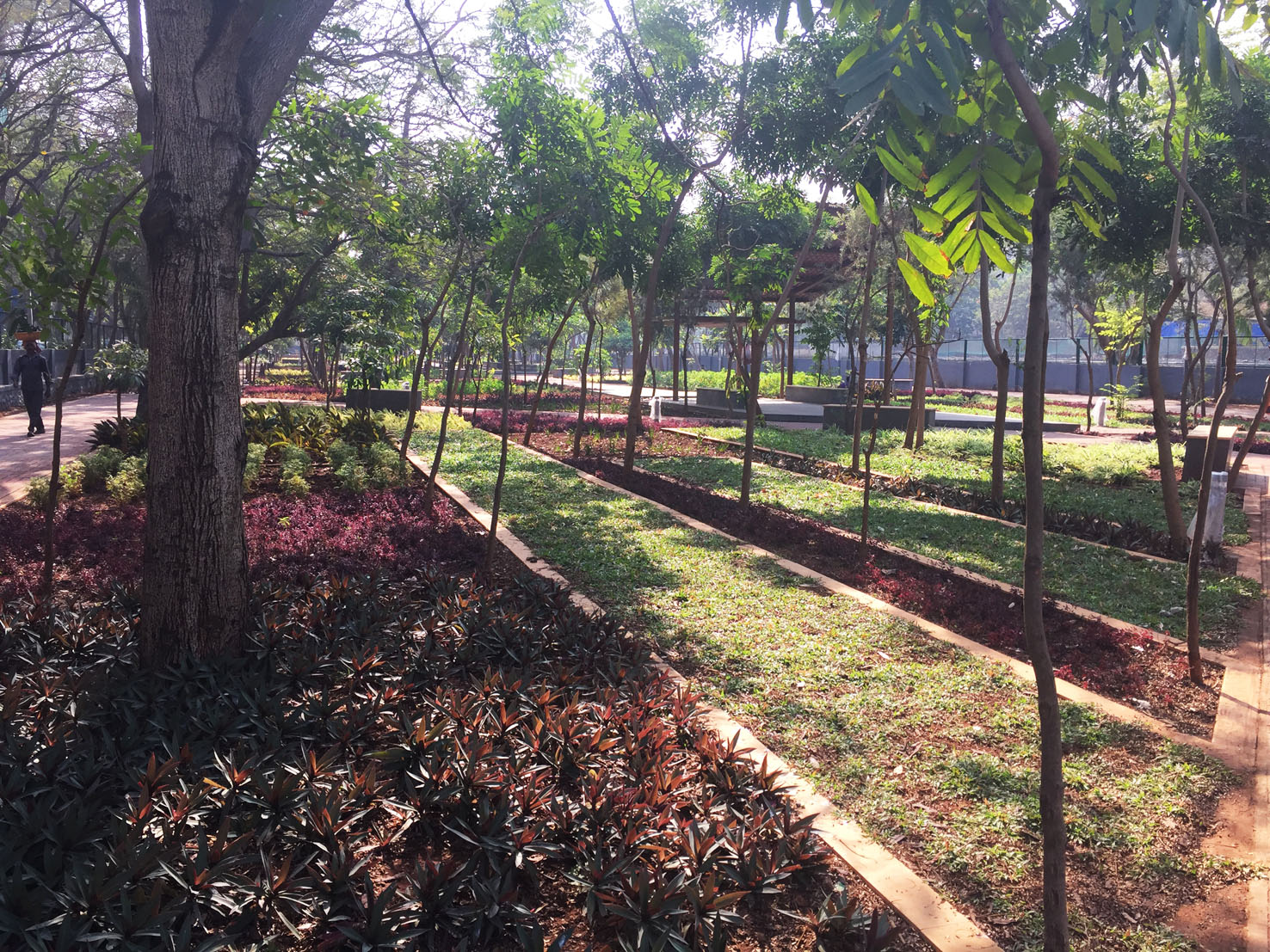
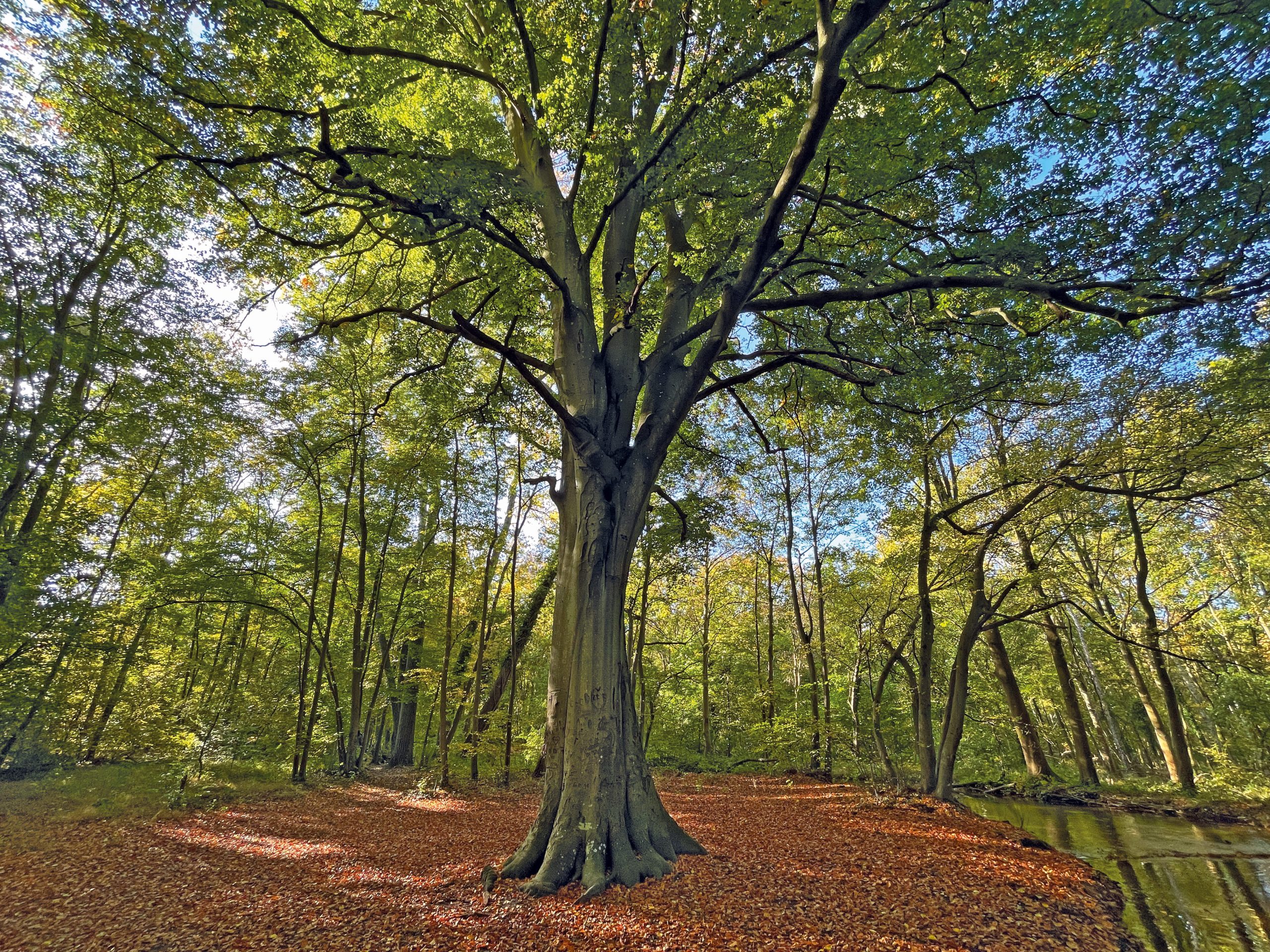
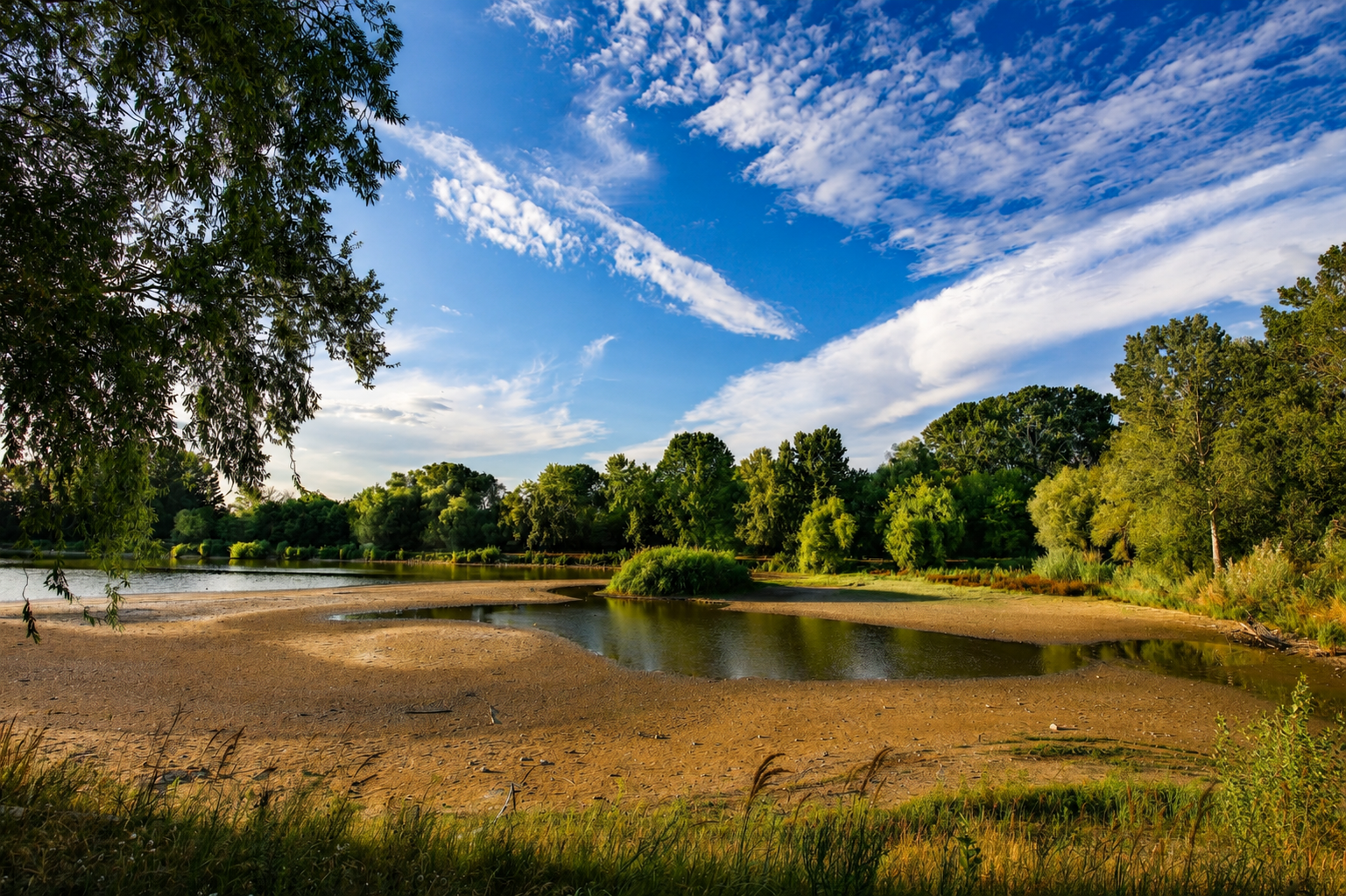
Leave a Reply