Test of using a ‘category’ as a way to display Roundtable posts (eg: a collection of writings by different authors) To use this, you would make a ’roundtable title’ into a ‘category’
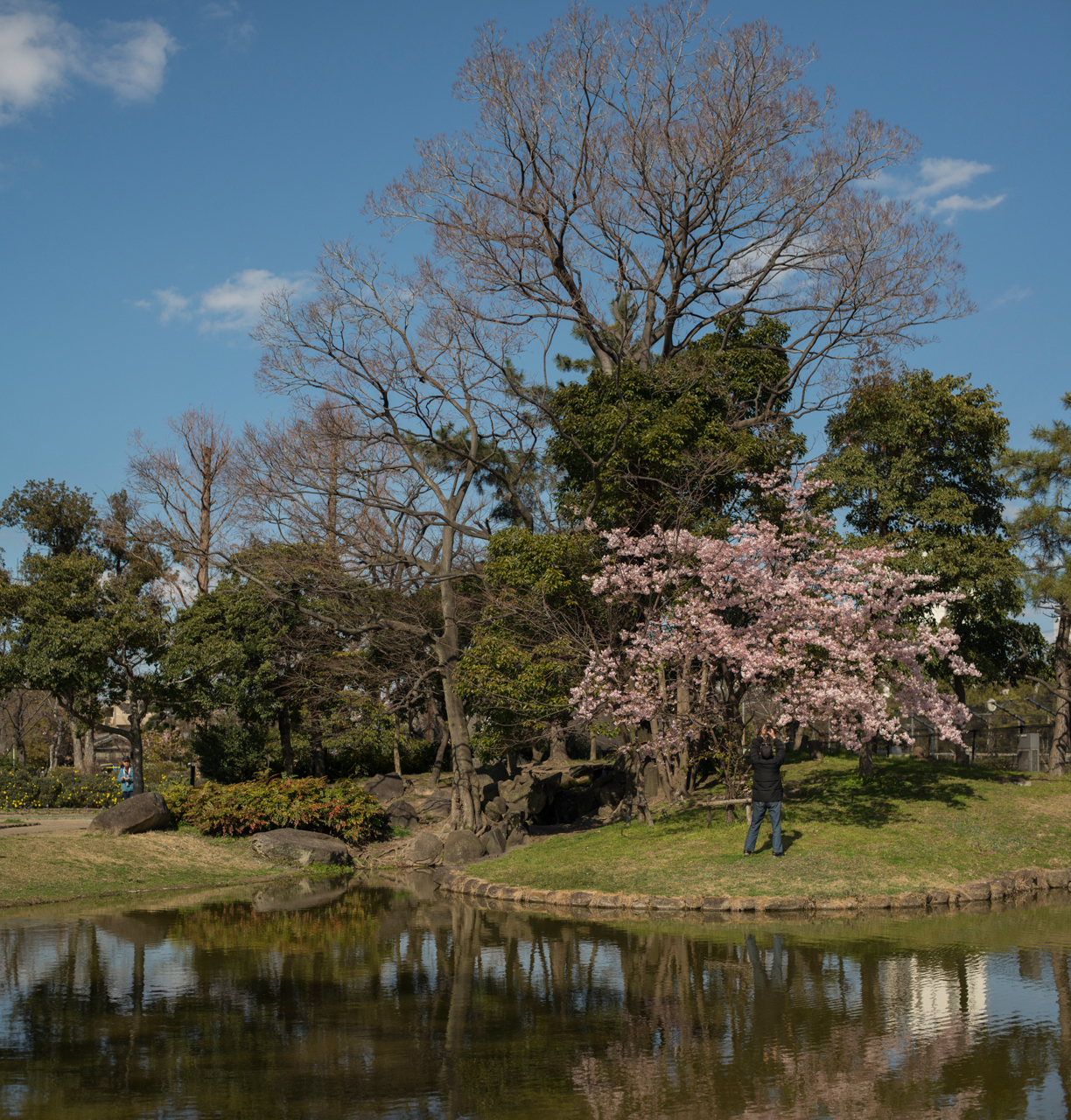
The Nature Futures Framework could support the creation of nature-positive scenarios for cities that should follow two important principles: First, consider the effects of actions well beyond the footprint of the city; second, consider equity in visions of the future.
Over the last few months, the metaverse has captured the attention of many professionals, including urban planners.
While some may fear a Spielberg-like scenario where we stop caring for our physical world, we can also think of the metaverse as a gateway to inclusion ― where most people could help shape cities from the comfort of their living rooms. This is what cities like Seoul envision, with large investments in the metaverse to improve civic services and lower barriers to participation in urban debates.
Credit: Noelle Ong
As this technology and other internet and communications technology (ICT) tools develop — fast ― can we leverage them to change how we design with nature in cities? Can they help develop biodiversity-friendly visions for the future?
Issues with existing nature-related visions
Frameworks that address the question of nature in and around cities are already abound. Some examples at the international level include the “Urban” Sustainable Development Goal, SDG 11, and the New Urban Agenda, which both promote greenspaces in cities: For example, SDG 11 proposes to measure the increase in the share of urban greenspace in a city to “provide universal access to safe, inclusive, and accessible green and public spaces”.
Multiple concepts taught in urban design and landscape architecture schools also paint optimistic visions centred around nature: Designing with Nature, Garden Cities, Biophilic Cities, and so on. All these have inspired greening policies in many cities around the world, including here in Singapore where we moved from a Garden city to a City in Nature in the course of a few decades.
Notwithstanding their contributions, these agendas and visions remain limited for shaping our cities’ nature-positive futures.
First, they typically offer general guiding principles or high-level targets that do not address on-the-ground challenges. For example, the goal of increasing the share of urban greenspace is laudable but insufficient when it comes to addressing complex trade-offs between land for transport, housing, and greenspace.
When concepts are more detailed, they lack an important dimension in that they do not reflect citizens’ values. Yet, for those visions to be legitimate, useful, and used, they need to integrate a plurality of worldviews about nature. In other words, recognizing that people hold different views related to nature, and therefore positive visions for the future of nature in cities will differ vastly between people.
In the “science-policy space, IPCC’s “shared socio-economic pathways” are other examples of narratives that embody various degrees of optimism ― or rather pessimism ― about our ability to mitigate and adapt to climate change. Although laudable, these pathways that make IPCC-scenarios relevant beyond climate models resulted in most scenarios being negative for nature. Probably not useful, therefore, as a tool for shaping hopeful futures for nature in cities.
Credit: Noelle Ong
Making space for positive and inclusive nature visions ―The Nature Futures Framework
Such diagnostic is what drove the development of the Nature Futures Framework by the IPBES working group on scenarios and models. The framework ― NFF in short ― was co-developed to emphasize the importance of plurality in scenario development. In this context, we do not let “experts” develop nature-positive scenarios but acknowledge that local values should drive this process.
In practice, the NFF distinguishes between three types of nature-related values: “Nature for Nature” values, that recognize nature in and for itself (driving, for example, the protection of endangered species); “Nature for Society” values, that emerge from an understanding of the benefits nature provides to people (think promoting urban parks for people’s enjoyment); and “Nature as Culture” values, a fuzzier set of values having in common that they do not set people apart from nature, but rather embrace our relationship with nature (think educational programs developing a sense of nature stewardship in early age).
All these values have overlaps, and, as individuals, we likely hold multiple, perhaps conflicting, values ourselves. Yet, recognizing and mapping such values, for example, using the triangle below, will help understand individual and organizational perspectives on nature, negotiate potential trade-offs, or look for win-win solutions, where multiple types of values are promoted.
The Nature Futures perspectives associated with 3 different types of values. Adapted from: PBL 2018
Using the Nature Futures Framework for cities
The NFF has only just started being applied as a visioning tool for cities, for example, urban growth scenarios in the Atlantic forest of Brazil.
In a recent publication, we explained how the framework could support the creation of nature-positive scenarios for cities: In addition to reflecting different types of values (“for nature”, “for society”, and “as culture”), scenarios developed with the urban NFF should follow two important principles: First, considering the telecoupling effects; i.e., actions taken in a city, such as reducing food waste, may have effects well beyond the footprint of the city, such as in agricultural expansion in sourcing countries. Second, considering equity in visions of the future, both through an inclusive participatory process and in designing for environmentally just futures that provide equitable access to the benefits of nature.
Recently, we also applied the NFF as a screening tool to analyse a particular “pool” of urban visions and determine whether some perspectives were missing. For example, my lab has analysed a set of serious games ― games with an educational or professional purpose ― to show that they were promoting “nature for society” values, and therefore painting a utilitarian picture of urban nature. Could future serious games be developed with a more balanced view of nature?
Similarly, we have used the framework to scrutinize visions for new towns in the Greater Jakarta Metropolitan area, through a masterplan analysis. By identifying the values associated with different visions and practices, we emphasized how new towns could inspire each other and become more “nature-positive” without necessarily involving more financial or land resources.
Both of these projects provide a mirror for existing practice and help researchers and practitioners design or re-design tools that will cater to a broader range of valid, nature-related values.
Yet another framework?
Is the NFF yetanother tool to consider for cities interested in “building greener”? Yes… and that is fine. IPBES is one among many organisations ― with or without the UN system ― promoting participatory processes in urban governance. Its legitimacy and recognition will help the diffusion of the framework and will promote innovation, which is needed for local governments, NGOs, and civil society to accelerate the protection or restoration of urban nature.
Upcoming guidance will help promote the tool in the ways I described above and many other applications. Technology such as the metaverse can enable further applications, of course. As an intelligent urban thinker recently put it: “Urban practitioners should use AI in combination with other tools and methods, such as community engagement and stakeholder consultations, to make informed decisions about sustainable and inclusive urban development.”
But most importantly, NFF guidance will help the scenario and modelling community standardize lessons learnt through engagements and improve the usefulness of the NFF in future applications. It will promote the creation of toolkits and capacity-building materials critically needed for cities with lower resources. While megacities typically have capabilities to catalyse the work on urban nature, secondary cities may benefit from more resources and tools to effectively implement participatory processes for urban nature.
Secondary cities do not have millions to invest in the metaverse or expensive technology but they have real-world issues to address regarding the use of a precious resource: land. With the expected urban population growth, especially in Asia-Pacific, it is critical to provide urban actors with resources to articulate future visions and develop a deep understanding of what right- and stake-holders care about. Research and practice demonstrate over and again that this is a prerequisite to sustainable and inclusive urban planning.
As a community of practice working on urban nature, we can leverage technology ― the metaverse or a flipchart and marker ― to step up the work on participatory planning, scenario visioning, and further advance our shared understanding and progress toward a City in nature. The Nature Futures Framework can help us do that.
Thank you to colleagues in my lab and participants in the IPBES workshop on the Nature Futures Framework (November 2022) for inspiring this post. Special thanks to Shaikh Fairul Edros and Aura Istrate for their active work on the topic and for reviewing this post
Salma Arastu, BerkeleyI hear his voice when I read Channeling the Lifeweb again and again. The words echo in my mind every day and night.
Brandon Ballengée, ArnaudvilleThey encouraged me for decades to continue, to go deeper into the research and ask the question ‘how big is here?’, then to follow fearlessly what I discovered.
Ruby Barnett, Santa CruzThe work of the Harrisons caused a shift that has enabled me to embrace complex systems in a more visceral, thorough way than in my previous work.
Barbara Benish, Santa CruzTheir understanding of the consequences of ‘framing’, of giving humans a vision of the earth’s crisis in a way that is not catastrophic but regenerative, was the Harrison’s gift to us.
Lewis Biggs, ShanghaiWe were all impressed with the quality of the research that went into the production of the various maps, and how very thought-provoking their synthetic approach (art-science-text-image) could be. That for me is their significant legacy.
Tim Collins, GlasgowArtists have always critiqued and revealed belief systems, the program we are about to describe will teach artists to be effective agents of change. We seek to define the pedagogy of engagement.
Janeil Engelstad, SeattleAt the center of their work was love and perhaps this is the greatest legacy that the Harrisons leave.
Les Firbank, LeedsOur art/science dynamic was based on mutual respect and talking through different approaches to common questions, rather than the more usual multidisciplinary approach of artists seeking to illustrate the science.
Cathy Fitzgerald, Hollywood ForestFor me, this is the most profound legacy of the Harrisons’ work – understanding how creativity is an essential driver for holistic ecopedagogy across all education.
Johan Gielis, AntwerpenWhat matters is not the individual forms, but how they are connected. Newton’s specific question was whether this would also teach us about ecosystems and continuity. He challenged and inspired me to look more deeply and broadly at ecosystems and our planet.
Reiko Goto Collins, GlasgowThrough this conversation I have learned three things: 1) metaphor can be physical, 2) physical metaphor can be dysfunctional, and 3) a metaphorical flip informs how we understand a functional metaphor.
Terike Haapoja, New YorkFor Newton, this kind of awakening had happened early in life, when he was driving along a highway in California, seeing the broken landscapes under constant, violent human excavation. Suddenly, he said, he could hear the earth screaming.
David Haley, Walney IslandThrough working, touring, and engaging with Helen and Newton, my ecological arts practice continues to be found and like them, I hope to enable others to seek their ecological arts practices.
John Hyatt, LiverpoolI was interested, amongst other things, in how they kept all parties engaged, brought them together, and kept them involved: the creation of an ecology of collaboration.
Petra Kruse, BonnFrom the very first moment the two of us met with Helen and Newton, we were convinced of their ways to work, and felt it to be very similar to the way we wanted ― and finally achieved ― to work.
JoAnn Kuchera-Morin, Santa BarbaraWhat I have learned from the brief time of working with Newton and viewing the work that he and Helen have accomplished is the collaboration of two bio-eco artists who were interested in investigating the life web from true empirical inquiry and truthful interrogation, using their expert artistry and scientific inquiry.
Aviva Rahmani, New YorkWe had parallel interests across many years, but they understood far better, how to platform and establish visibility for those interests.
Simon Read, LondonI can see a lot of connections and regret that I was never to follow up an acquaintance with the Harrisons since they seemed to be operating in a parallel area both conceptually and technically.
Kai Reschke, BonnFrom the very first moment the two of us met with Helen and Newton, we were convinced of their ways to work, and felt it to be very similar to the way we wanted ― and finally achieved ― to work.
Leslie Ryan, Santa CruzListening to the Harrisons talk about repairing our relationship with the land and working ― always ― to advantage of the life web was a watershed moment for me, a siren call that changed everything.
Jamie Saunders, LeedsTheir work stands as a guide. When I remember, when I am provoked, they hold fast to more than the immediate concerns and less-than-life-enhancing work of day-to-day living. The life-web: see it, breathe it, hear it.
Richard Scott, LiverpoolTheir practice was enabling and real and embodied timeless wisdom for people and nature, and these principles and their artworks will stay with me.
Ranil Senanayake, DavisFrom creating a lagoon in a tank with Helen and Newton, I moved on to create a forest in a garden.
Richard Sharland, AltarnunBoth Helen and Newton had this wonderful gift of memory for stories and information and ideas, which they drew upon to evolve their work, to help others to evolve.
Tatiana Sizonenko, San DiegoNewton’s impact, along with Helen’s, on the field of environmental art practice and research, and socially engaged art more generally, is incalculable.
Beth Stephens, Santa CruzNewton and I were friends. Unlikely friends, but friends, nonetheless. Even though we could not have come from two more radically different worlds, we somehow connected and got a deep kick out of each other.
Ruth Wallen, San DiegoWorking in collaborative partnership, the Harrisons’ use of dialogue, with stories unfolding as they augmented or interrupted each other, amplified the generativity and generosity of their metaphors while spawning more.
Mali Wu, KaohsiungThe Harrisons demonstrated how we could apply wisdom to allow species to coexist and prosper. This is what we should learn anew, and that art can contribute to.
Yangkura, CityAfter I encountered Harrison Studio’s works, I was able to redefine my works with an omnidirectional view. I learned that I must be in a position where I can communicate and collaborate with various types of people who have similar thoughts and integrate them.
Chris is a researcher and producer working across environment and health. His research focuses on the pioneering ecological artists Helen Mayer Harrison and Newton Harrison who he also worked with. He is currently exploring artists’ projects with trees, woods and forests. Chris is a Research Associate with TNoC’s naturePLACE supporting evaluation approaches.
Anne Douglas is a Professor Emeritus, previously Chair in Art in Public Life at the Robert Gordon University, Aberdeen Scotland. She has focused, over the past 25 years, on developing doctoral/postdoctoral research into the changing nature of art in public life, increasingly in relation to environmental change.
In Berlin, the Harrisons characteristically turned their attention to a possibility of healing brought about through ecological understanding, creating a proposal that enfolds the destruction of the infrastructure of terror, reducing it to rubble and then lending itself to new life through the forces of nature.
The Harrisons (Helen Mayer Harrison (1927-2018) and Newton Harrison (1932-2022) are widely acknowledged as pioneers in bringing together art and ecology into a new form of practice. They worked for over fifty years with biologists, ecologists, architects, urban planners, and other artists to initiate collaborative dialogues. The works they made in various places from the second half of the 1970s stand as proposals for putting the well-being of the web of life first. The Harrisons’ visionary projects have, on occasion, led to changes in governmental policy and have expanded dialogue around previously unexplored issues leading to practical implementations variously in the United States, Europe, and Asia.
In writing and inviting people to contribute we sought advice and received extensive help from both the Harrison Studio/Center for the Study of the Force Majeure (CFM); from Kai Resche and Petra Kruse, curators and editors with the Harrisons (and also the Berlin branch of CFM), as well as from David Haley (who was the project manager for Casting a Green Net and Associate artist for Greenhouse Britain: Losing Ground, Gaining Wisdom (2007-09).
We offer the following passage from one of the Harrisons perhaps less well-known works as a prompt, encapsulating their approach:
Trümmerflora, or rubble plants and trees, are a special phenomena unique to heavily bombed urban areas. The bomb acts as a plough, breaking brick, mortar, metal, and wood into fragments and, in a single gesture, mixing these with earth from below. The earth often contains seeds, dormant from the time of first construction on the site, that may have been buried for a century or more. These seeds come to light, and those that can live in this new and special earth, grow and flourish. Other seeds, dropped by wind and by animals, also survive in limited numbers in this new soil, this rubble. Hence the name Trümmerflora, or loosely translated, rubble flowers.
Harrison and Harrison 1990 ‘Trümmerflora: on the Topography of Terrors’ in Polemical Landscapes California Museum of Photography pp 12-13
This 1988 work by Helen Mayer Harrison and Newton Harrison during a period of residency in Berlin emerged in response to overlooking the derelict site that had been the headquarter of the Gestapo, Storm Trooper, and Secret Service Operations, i.e. the bureaucratic center for the Death Camps and Labour Camps of the Nazi regime. Earlier attempts by others to create an appropriate monument or memorial to the horrors of this urban site had failed. As Jewish people, this site was hugely significant. However, the Harrisons characteristically turned their attention to a possibility of healing brought about through an ecological understanding of the site, creating a proposal that enfolds this history, the destruction of the infrastructure of terror reducing it to rubble, lending itself to new life through the forces of nature.
The contributors to this round table, including artists, curators, environmentalists, landscape architects, and scientists, have all reflected on what they learned from meeting and working with the Harrisons. For some, this starts with Portable Fish Farm: Survival Piece #III which caused a furore when it was exhibited at the Hayward Gallery in London in 1971. A number of others were involved in various ways (curator, environmentalist, scientist, artist, and project manager) with the Harrisons’ work Casting a Green Net: Can it be we are seeing a Dragon? (1998) made as part of ‘ArtTranspennine98’, a major regional collaboration between the Tate Gallery Liverpool and the Henry Moore Sculpture Trust. Others have much more recent experiences of Newton Harrison as he continued the practice, including curating an exhibition Eco-art Work: 11 Artists from 8 Countriesfor Various Small Fires in Los Angeles in 2022, and developing the work Sensorium.
Contributors reflect on how working with the Harrisons in various different ways informed, changed, and developed their practices. Some talk about having the strictures of their respective disciplines and working practices lifted and their thinking transformed. Others talk about the love, the love between the Harrisons, and the wider empathy reaching beyond human-centredness that they engendered.
Click here for a more in-depth reflection regarding this roundtable.
Ruth Wallen is a multi-media artist and writer whose work is dedicated to encouraging dialogue around ecological and social justice. Her interactive installations, nature walks, web sites, artist books, performative lectures, and writing have been widely distributed and exhibited. She was a Fulbright scholar and is currently core faculty in the MFA in Interdisciplinary Arts at Goddard College.
Working in collaborative partnership, the Harrisons’ use of dialogue, with stories unfolding as they augmented or interrupted each other, amplified the generativity and generosity of their metaphors while spawning more.
“Somebody’s crazy, they are draining the swamps and growing rice in the desert…” “What if all of that irrigated farming isn’t necessary?”[i] I first heard Helen and Newton Harrison speak about their work at a lecture at the San Francisco Art Institute in 1977.
As a part-time art student, supporting myself working as an environmental specialist for the National Park Service planning office, the Harrison’s approach, distilling in-depth research into art-into metaphor, story, and performative activism―deeply affirmed my intuition to turn to art to promulgate an ecological ethic. They offered an enormously powerful example of employing art to raise crucial questions, spark imaginations, re-envision, and revitalize relationships between fragmented systems, and pose novel, ecologically sound approaches to environmental planning and policy.
Informed by their work, I received my first commission as an artist-in-residence at the Exploratorium. When I wrote to the Harrisons thanking them for their inspiration, they responded most generously, inviting me to come visit. Eventually, I moved to San Diego to study with Helen and Newton in the MFA program at the University of California, San Diego, (UCSD) and stayed in dialogue with them ever since, as mentors became dear friends, a relationship for which I am forever grateful. Of all that I learned from the Harrisons, perhaps the most important was the use of metaphor as a tool for thought. Influenced by the work of Lakoff and Johnson, the Harrisons understood that human thought is largely metaphorical and that the artistic imagination is crucial to identifying metaphors that can transform ecologies. Indeed, when I was a grad student, the creation of metaphor was a central concept taught in introductory art courses at UCSD. As ecological artists, Helen and Newton identified potent metaphors by listening to the wisdom of place, being attentive to the systems within which the place was embedded, and by naming the patterns that emerged, the configurations of relationships often exposed by studying maps. Maps revealed watersheds, the circulatory systems of the earth, a major subject of the Harrison’s work. Metaphors such as the Serpentine Lattice, or Peninsula Europe served as powerful devices to spark provocative narratives, shift conversations, and guide environmental policies. The Serpentine Lattice not only made visible the network of watersheds of the coastal rain forests draining into the Pacific from Alaska to northern California but through the lattice form identified crucial points to begin processes of restoration. Conceiving Europe as a peninsula highlighted the importance of revitalizing the mountainous spines that housed vital sources of fresh water. Working in collaborative partnership, the Harrisons’ use of dialogue, with stories unfolding as they augmented or interrupted each other, amplified the generativity and generosity of their metaphors while spawning more. The serpentine lattice could be funded through an “eco-security system,” like the social security system of the US. It is not surprising that the voluminous compilation of their work not only presents each project but tells the story behind its creation. Both the work itself and these stories contribute to the process the Harrisons termed “conversational drift,” which envisions their work alive in the world, seeding discussion. A visit with the Harrisons was always an invitation to think in larger terms. Indeed, their naming of the “force majeure” and the development of a center dedicated to its study, came out of their continuing quest. But having named the problem of our times, Newton’s last piece comes back to the simple principle that must guide human actions: “Every species, without exception, must give back as much or more than they take” ― a maxim that the Harrisons certainly took to heart.
[i] Helen Mayer Harrison and Newton Harrison, “Sacramento Meditations, 1977,” The Harrison Studio, accessed October, 2022. https://theharrisonstudio.net/sacramento-meditations-1977.
Ranil Senanayake is a Systems Ecologist trained at U.C. Davis, He has developed Analog Forestry as a rural response to the critical need of restoring the worlds lost forests functions. He has served as Executive Director of the Environmental Liaison Center International in Nairobi, Kenya and as the Senior Scientist for Counterpart international, Washington D.C.
From creating a lagoon in a tank with Helen and Newton, I moved on to create a forest in a garden.
I began my relationship with Newt and Helen in 1972 while I was an undergraduate at Berkeley, my first time in America. My name had been given to them as an aquarist and they invited me to San Diego. That meeting led to a multi-year relationship much of it captured in their work The Lagoon Cycle. I moved from lagoons to rice fields to forests and today look at the Global Commons as the widest canvas.
Extracts From: The Lagoon Cycle’ – Helen Mayer Harrison/ Newton Harrison 1985
From The First Lagoon –
Lagoon Maker and Witness
He said
he knew of a creature a crab
and supposed that it could live under
museum conditions
… He said he was from Sri Lanka where the estuaries the lagoons and the ocean are amongst the richest in the world and if you want to know about lagoons you should go there and see them
From The Second Lagoon – Sea Grant
It was August The first shipment of crabs arrived from the marketplace in Colombo….
…… Those we ate were delicious, those we experimented with were hardy
The Third Lagoon – The House of Crabs
(of human behaviour)
While he expected the information gained to be privileged as he expected the information gained to become profit and we expected the information gained to become public as we expected the information gained to be public and he hoped the crabs would behave more reasonably from his point of view which they did not and as he hoped that we would behave more reasonably from his point of view which we did not and as we hoped he would behave more reasonably from our point of view which he did not the lagoon developed a life of its own about which we knew nothing at all
The Seventh Lagoon – The Ring of Fire, The Ring of water
Sometimes I dream of the water buffalo in its wallow in Sri Lanka the one that ran afoul of the gasoline engine and is being replaced by the tractor Now that the tractor does not replicate itself freely nor provide milk nor utilize the weeds as fuel nor produce fertilizer and fuel with its dung
… though the tractor is not graceful on the land and the buffalo will yield to that tractor although the buffalo finally is more efficient and its dialogue with the land more lucid
Clearly there is something about technology that does not like that which is not itself
Yet this is not
a necessary condition
this unfriendliness
to the land
From creating a lagoon in a tank with Helen and Newton, I moved on to create a forest in a garden where the structure and function of the original forest were used to design for restoration. Analog forestry is the methodology with which to design forest-like human ecosystems that provide the functions that the forest once did.
Looking at forest function, it soon became evident that the entire structure was fundamentally dependent on Primary Ecosystem Services provided by the photosynthetic biomass (leaves) of plants. This is the primary act of life, the Force Majeure, if you may. Meeting Newton again in South Korea; this was serendipitous, I designed a project entailing ‘seed clouds’ from the South to the North with the autumn winds was designed for the DMZ. Because wind is an irresistible force, beyond the control of a state. These ideas have progressed to ‘smart contracts’ to valorize PES into the Global Commons.
The Global Commons, as we discussed so often, was the stage for the Force Majure ignoring it was a reason for the ecological collapse today. In our work, to create value and restore the commons, a new value system to power Biocurrency, driven by the living world (www.restore.earth) is now being generated.
Dr. JoAnn Kuchera-Morin Composer, Director, and Chief Scientist of the AlloSphere Research Facility, is Professor of Media Arts and Technology and Music at the University of California, Santa Barbara. Her research focuses on creative computational systems, multi-modal media content, and facilities design. She created and was Chief Scientist of Digital Media for the University of California.
What I have learned from the brief time of working with Newton and viewing the work that he and Helen have accomplished is the collaboration of two bio-eco artists who were interested in investigating the life web from true empirical inquiry and truthful interrogation, using their expert artistry and scientific inquiry.
I first met Newton Harrison very recently in the fall of 2021, when we were both invited to speak at a National Academy of Sciences Salon regarding our research and creative practice involving the Getty Pacific Standard Time 2024 Biennale integrating Arts and Science. Newton was discussing his and Helen’s work regarding their Sensorium World Ocean Project. The project had gathered a vast amount of information concerning the world’s oceans and the condition that our current environment is in due to the pollution from the land into ocean runoff as well as from the thousands of ships on the ocean floor polluting the waters and the plastics and other pollutants in the sea. The project’s current state at that time was an art installation that also had much science involved due to the tremendous amounts of scientific data that they had collected over many years.
In Newton’s own words, he wanted the Sensorium to become a “fully interactive 3-dimensional human-centered interface, where the floors, walls, and even the ceiling act as ‘live’ surfaces, connected to real-time data, information, and modeling/simulation tools. Newton wanted the Sensorium to have a series of functions including education and holistic decision-making, and to allow people to interact directly with the ocean through the interface. Most significantly, Newton wanted the Sensorium to operate as a generalized pre-emptive planning environment where oceanographic problems, mostly of human creation, can be seen and acted upon because their interconnectivity is understood at one glance and all together.” This is exactly what my research and creative practice entail. I am a composer/media artist working on complex systems research and have made a fully interactive/immersive instrument/laboratory called the AlloSphere and complex system software AlloLib that investigates multi-dimensional complex problems through visualization, sonification, and interaction, building immersive installations for artistic/scientific discovery.
Sensorium Project as displayed in the AlloSphere instrument.The beginning for the Sensorium Project as displayed in the AlloSphere instrument.
The AlloSphere instrument can be designed in any shape and size to accommodate any installation space, laboratory, or situation room, and the AlloLib software can scale accordingly from the AlloSphere current size of a three-story 2000 square foot lab that houses 26 projectors, 54 channels of sound, completely multi-user and interactive, to museum-size installations, the desktop, and immersive VR helmets.
Sensorium, developmental sketches, 2023, Courtesy of the Newton and Helen Harrison Family TrustSensorium, developmental sketches, 2023, Courtesy of the Newton and Helen Harrison Family Trust
The AlloSphere instrument and Laboratory is located within the California NanoSystems Institute, where we work with physicists, chemists, biologists, and other scientists in visualizing, sonifiying, and using interactive computation to explore complex systems. My AlloSphere Research Group is now working closely with Newton’s organization, the Center for Study of the Force Majeure, to make a unique and compelling immersive installation for the Getty Pacific Standard Time (PST) 2024 initiative as well as taking this artistic/scientific research to the next level integrating experimental and simulation models into a laboratory dedicated to ocean world research.
What I have learned from the brief time of working with Newton and viewing the work that he and Helen have accomplished is the collaboration of two bio-eco artists who were interested in investigating the life web from true empirical inquiry and truthful interrogation, using their expert artistry and scientific inquiry. They viewed the system holistically and have paved the way for systems solving not just problem-solving.
I include the following media artists/researchers from my AlloSphere Research Group, who are currently working on the Sensorium for the World Ocean Project.
Some of the members of the AlloSphere Research Group:
From left to right: Dr. Gustavo Rincon, Dr. Kon Hyong Kim, Dr. JoAnn Kuchera-Morin, and Myungin Lee.
Dr. Kon Hyong Kim (is Post-Doctoral Researcher with the AlloSphere Research Group at the University of California, Santa Barbara. With a B.S. in Electrical & Computer Engineering from Cornell University and an M.S. and Ph.D. in Media Arts and Technology from UCSB, he focuses on generating various mixed reality environments and high dimensional mathematical artwork. He is the lead Graphics researcher on the Sensorium Project.
Myungin Lee is a Ph.D. candidate in the Graduate Program in Media Arts and Technology at the University of California, Santa Barbara. His research includes digital signal processing and visual/sonic machine learning for interactive computational design. He is one of the lead designers of the content of the Sensorium Project working with the Ocean Health Index database of ocean scientist Dr. Ben Halpern at UCSB.
Dr. Gustavo Rincon Ph.D. Media Arts and Technology, M.Arch UCLA, MFA, CalArts) is a media artist, sculptor, and graphics immersive artist. His research focuses on spatiotemporal architectures and structures, extending from the virtual to the material. As a member of the AlloSphere Research Group his research focuses on shaping spatial structures through self-organizing algorithms. He is the lead in architectural design in the Sensorium project.
Dr. Timothy Wood is Research Director at the Center for Research and Electronic Arts at UCSB and AlloSphere Media Systems Engineer. His research looks at new ways of utilizing human computer interactivity, virtual worlds, and somatic movement practices to deepen and empower our relationship to the body and nature. Dr. Wood received his M.S and Ph.D. in Media Arts and Technology and was a Post-Doctoral Researcher at University of California, San Diego. Dr. Wood is working on human computer interaction for the Sensorium Project.
Dennis Adderton is the Technical Director of the AlloSphere Research Facility and works with Dr. Kon Kim, Dr. Wood, and Myungin Lee on hardware systems design.
Leslie Ryan is the lead design-researcher for the Future Garden climate-adaptation projects within the Center for the Study of the Force Majeure, a research and educational center established by Helen and Newton Harrison. She is a registered landscape architect and long-time consultant and collaborator on the Harrisons’ projects.
Listening to the Harrisons talk about repairing our relationship with the land and working ― always ― to advantage of the life web was a watershed moment for me, a siren call that changed everything.
When I met Helen and Newton Harrison I was fresh out of school with a degree in landscape architecture. The Harrisons didn’t think too much of landscape architects. As a profession, we were too literal, too focused on staying within property lines, and too beholden to clients, all of which tended in their view to alienate us from the natural world rather than foster respect and caring.
Listening to the Harrisons talk about repairing our relationship with the land and working ― always ― to advantage of the life web was a watershed moment for me, a siren call that changed everything. Their art practice modeled what landscape architecture could and should be: recognizing the land and the more-than-human others on the planet as partners with agency, rejecting framing nature as a set of ecosystem services that cast the natural world as a servant in service to human needs, and always looking beyond the spatial and temporal boundaries of here and now.
I soon left the landscape architecture office and joined them as a lowly graduate student and studio assistant in the Visual Arts Department at UC San Diego. Their support would become instrumental in my receiving the American Academy of Rome Fellowship in Landscape Architecture (1995), and Harrison refrains such as “how big is here and how long is now” and “pay attention to the costs of your beliefs” would reverberate throughout my research project while a Master of Environmental Design student at Yale, Newton’s alma mater.
The Harrisons threw me in the deep end when they asked if, for my first project as their assistant, I would draw the rubble flowers for Trümmerflora: On the Topography of Terrors (1988). I didn’t know which plant species would make sense, the site was haunted by a terrifying past, and the thought of nature improvising with the detritus, seeds, and memories buried in the rubble was overwhelmingly beautiful. Spontaneous urban vegetation has since become a significant field of study and the subject of books, papers, and thesis projects in landscape architecture, but at the time it was uncharted territory. There are common threads running through Trümmerflora and Future Gardens, one of the Harrisons’ final projects, as both focus on adaptation to change, natural regeneration, and the emergence of new ecological assemblages. As part of the Center for the Force Majeure, I continue to carry forward the Future Gardens work, with discussions underway for climate-adaptation projects in Central Europe and closer to home at UCSD/Scripps Institution of Oceanography.
The Harrisons’ work mirrored what they saw in natural systems ― an inherent inventiveness and sustained improvisation and play with what was at hand (the practical and the playful were ever-present in their work). I see the Harrisons’ art as a type of rematriation. The fundamental rule of giving back is that what is returned cannot be broken or polluted, and what has been damaged first must be repaired. Indigenous cultures were a constant model for the Harrisons of cultural practices that work with nature rather than against it and how taking from nature could be done in ways that preserved the system.
Harrison porch in Santa Cruz
Each person at Newton’s memorial service in Santa Cruz had their own stories to tell. The Newton I knew was like the god Jupiter, bellowing from a mountaintop and tossing lightning bolts. Helen matched his thunder ― more than once I had to crawl out of sight as those two clashed. And then it would be dinnertime and only salads would be tossed. While the breadth of the Harrisons’ practice isn’t readily distilled into simple guidelines for living well on earth, there are a few elements that stay with me: the importance of invitations, of scale shifts and scanning for information, of redundancies and multiple perspectives, of imagining the potential consequences of our actions and then acting for the benefit of the life web.
As a woman, artist, and mother, I work to create harmony by expressing the universality of humanity through paintings, sculpture, calligraphy and poetry. Inspired by the imagery, sculpture and writings of my Indian heritage and Islamic spirituality, I use my artistic voice to break down the barriers that divide to foster peace and understanding.
I hear his voice when I read Channeling the Lifeweb again and again. The words echo in my mind every day and night.
I met Newton in March 2021 through my friend Heidi Hardin who was a student of Helen Mayer Harrison and Newton Harrison at UC San Diego in the early 70s. I was working on my project ‘Our Earth: Embracing All Communities’ which was inspired by the ecological verses from Quran. I published the book and Heidi Hardin arranged a Zoom meeting presentation about my book and invited pioneer Eco Artist Newton Harrison. I felt honored and was very grateful to learn that he has agreed to attend the Zoom meeting! I thanked Heidi Hardin for this great opportunity to join in conversation with Newton Harrison in this important talk “Women and Web of Life“.
After that first introduction and hearing his encouraging comments, I emailed him my thanks and mailed a copy of my book too. He replied “Very interesting talking with you. I think you have an opportunity to engage your whole country using the Quran’s environmental positions to support your own or what you discover.” He shared his work, and we continued our communications through emails. He kept encouraging me by saying Female empathy and compassion must advance to save all life on Earth. He related an inspiring story of Helen’s compassion and dedication. He offered me to participate in the exhibition Eco-art Work: 11 Artists from 8 Countries at Various Small Fires in Los Angeles which was a great honor for me. I was given another honor to attend his surprise 89th birthday party on November 20th, 2021 with his close friends and that day I told him that I would like to visit him and meet in person. After that, he tried to schedule the time for my visit on March 24th, 2022 and, unfortunately, the cancer diagnosis happened, and the situation changed. I treasure his last email dated 5/17 when he sent me the image of his last work with these words:
“Thanks for your concern and good wishes. My treatments for the cancer have slowed me down. They are radioactive with added chemo. The course of treatment should end in about 2 1/2 weeks, and about 2 weeks after that I might be civil. Don’t want to lose contact. Very much hope things work out with your work and our gallery. Give me a call in about a month and I’ll see if I can’t make an afternoon with you. I am attaching a draft of my most recent work where I briefly become the voice of the Lifeweb, perhaps channeling in such a way that some of the stuff that I said surprised me after the fact.”
All the best, warm regards,
Newton
I hear his voice when I read Channeling the Lifeweb again and again. The words echo in my mind every day and night. My work after our meeting in March 2021 is totally impacted by his teaching. I have followed all projects executed by Helen and Newton Harrison, in particular through their book The Time of the Force Majeure.
I have found myself immersed in research to gain deeper knowledge in science and faith to find remedies to save our planet and its ecosystems. I have found underground network of mycelia that is regenerating, activating, and healing the damaged state of our environment and invisible tiny benefactors Microbes who are an integral and essential part of the web of life. Bridging Science and Faith creates a visual discourse that bridges science, religion, Islamic diversity and diaspora, language engaged with the plight of humanity, the soul, and the soil. Now my artworks juxtapose the ecological phenomena of interconnectedness through mycelial flow with concepts from the Quran as expressed through Arabic calligraphy and Islamic patterns. The new series mirror contemporary issues with possible solutions based on science and spirituality expressed through moving lyrical lines.
Since 1984 work as art historian (PhD) and editor for various publishing houses and museums, among others, as deputy director of the German Bundeskunsthalle (Federal Hall of Fine Arts); responsible management of numerous international projects; since 2001 development of concepts, project management, budgeting, editing, design and production of exhibitions and books for public and private institutions worldwide together with Kai Reschke.
Since 1982 work as curator, consultant, designer and organizer of exhibitions on numerous large-scale projects worldwide, many of them emphasizing on arts and ecology; since 1993 lecturing on
book and exhibition design, planning, production, technology, didactics, and evaluation in collaboration with various national and international government agencies and universities; since 2001 development of concepts, project management, budgeting, editing, design, and production of exhibitions and books together with Petra Kruse.
From the very first moment the two of us met with Helen and Newton, we were convinced of their ways to work, and felt it to be very similar to the way we wanted ― and finally achieved ― to work.
Having known, been friends, and worked with the Harrisons for almost 30 years, we discussed, developed, and implemented many projects with them ― exhibitions as well as books: The most important one was probably The Time of the Force Majeure: After 45 Years Counterforce is on the Horizon, a comprehensive retrospective of Helen Mayer Harrisons and Newton Harrisons work (published in 2016).
Wedding ceremony in San Diego: Kai & Petra and their witnesses Helen & Newton, Nov. 7, 2001
Thereafter, we took part in the activities of the Center for the Study of the Force Majeure, joined the board of directors, and founded a European branch of the center.
Newton & Kai on board the historic sailing vessel »Stella« working on the Sensorium project, June 23, 2019Newton & Petra in Santa Monica, in the background the Harrison’s piece »The California Wash – Terminus of Pico Boulevard at the Santa Monica Promenade (1988), Dec. 29, 2019
I, Petra, had the pleasure to meet Helen and Newton in 1994, when they designed ― together with their son Gabriel Harrison ― the initial Future Garden project Endangered Meadows of Europe.
The exhibition opened in 1996 on the rooftop of the Art and Exhibition Hall of the Federal Republic of Germany in Bonn. As a leading member of the museum’s team, I had the privilege to accompany the process of developing this highly complex project from the very beginning up to its realization and the successive projects that derived from it.
To me, this work seems programmatic for Helen’s and Newton’s systematic approach, and it opened my eyes to the complexity and understanding of ecological systems:
Since an increasing number of agricultural areas are being maximized with regard to productivity or turned into building sites, meadows are one of the most endangered biotopes. A 400-year-old meadow from the Eifel area, which would have otherwise been destroyed, was rolled up, transported to Bonn, and unrolled on the museum’s roof. Collectively, the meadow contained 164 species of plants, among them several from the red list of endangered species, where normally there would be 30 to 35.
The roof garden of the museum had been mowed twice a year so that hay and seeds could be harvested which were then applied to more than 10,000 square meters of a meadow area along the Rhine and other places in Bonn: A Mother Meadow for Bonn: Future Garden 2 was created.
Since then, the concept spread, and many Future Gardens of different kinds were and are still being established all over the world.
I, Kai, first met Petra at the Kunst- und Ausstellungshalle in Bonn, where she was deputy director and I curated an exhibition on Alexander von Humboldt, the great 19th-century holistic scholar. She introduced me to the Harrisons in 1999 when the project Peninsula Europe appeared on the horizon.
There was no time to think about the exhibition itself but the development of a catalogue concept seemed practicable and above all most challenging:
The works conceived by Helen and Newton had so many entirely different formats that they could not possibly be squeezed into one book with a defined size without losing their integrity and comprehensibility.
Consequently, we developed a publication which, at first glance, looked like a book but when opened up consisted completely of adjustable foldouts with an individual size for each work.
The Harrisons were enthusiastic, the bookbinder was not ― and the result was convincing.
So was my first encounter with Newton. A vague feeling of being interrogated soon faded into the notion of having found some kind of ‘brother in spirit’ while studying and contemplating Humboldt’s theories and their essence that “everything is interrelating”: A true holistic thinker considering the arts as important as the sciences for communicating the central issues of human interaction with nature.
Petra and I had both reached a point of cognition with former projects where we had purposely been seeking interdisciplinary advice, but never in such a consequent methodical way as the Harrisons did combining a diversity of disciplines with different knowledge, perspectives, and approaches to collaborate and actually provide the basis for perceptions and results which an isolated individual could not generate.
From the very first moment, the two of us met with Helen and Newton, we were convinced of their ways to work, and felt it to be very similar to the way we wanted ― and finally achieved ― to work:
The permanent dialogue between the two of them;
The ability to find advisors, scientists, politicians, and other collaborators or supporters and form and maintain a powerful team;
To start a discussion and continue it without an end in sight;
To integrate new information into an existing concept;
To change plans, if necessary, without losing the objective;
To be convinced of and devoted to this objective;
To remain open and curious;
To never say: It is not possible.
Thus, a mutually beneficial relationship between the four of us started, developed, and remained more than close ― as Newton put it: We were their friends, designers, editors, and thinkers.
Johan Gielis (1962-) is a Belgian mathematician-biologist, originally trained in horticultural engineering and landscaping. He has worked in plant biotechnology for over 25 years, with special focus on mass propagation and molecular and physiological aspects of tropical and temperate bamboos. In 1997 he discovered the Superformula, based on observations in bamboo.
A botanical Kepler and his Newton
What matters is not the individual forms, but how they are connected. Newton’s specific question was whether this would also teach us about ecosystems and continuity. He challenged and inspired me to look more deeply and broadly at ecosystems and our planet.
My time with Newton Harrison was brief but intense. He had learned of my unified description of natural forms and phenomena and contacted me on December 28, 2021. As an artist, he had worked with Feynman, Murray Gell-Man, and Bohm, so I was surprised that he approached me, a biologist. Initially, he invited me to review his new work in progress Sensorium but, in our email correspondence, we also tried to find common ground (which we both expected might take months or years).
My work, which has its origins in botany, shows that shapes as diverse as starfish, flowers, squares, and cacti, the shape of atomic nuclei, and even our universe itself can be encoded in a geometric transformation called Superformula. So far, we have studied over 40000 individual biological samples, all of which are described by the Superformula; interestingly we found no circles or straight lines, the basic tools of our sciences. Our methods have now become a complete scientific methodology, with surprising new insights into how nature works and speaks to us. The attraction of the Superformula may lie in humanity’s need for a unified and continuous approach to life, nature, and our universe, as opposed to the discrete, random nature of our scientific worldviews.
What matters is not the individual forms, but how they are connected. Newton’s specific question was whether this would also teach us about ecosystems and continuity (he did not think the term sustainability should be used). He challenged and inspired me to look more deeply and broadly at ecosystems and our planet. How can we use these insights to “reshape and redirect the suicidal and ecocidal direction in which our Western civilization has taken us,” as Newton put it.
This is the direction I am currently pursuing with my mathematical friends. It is indeed possible to describe complete systems. The heart, once thought to be a pump, turns out to be a simple helical structure. Furthermore, the entire circulatory system combines the functions of transport with those of exchange, switching between a cylinder (for transporting blood) and a Möbius strip, a one-sided body for exchanging oxygen in the lungs and cells. These models should also work for ecosystems, translating holistic views into precise mathematics, as a language for the sciences and, he hoped, for the web of life.
Like nature, science is a never-ending endeavour, and what is cutting-edge today will be fossilized in the not-too-distant future. The Superformula is seen by many as the linchpin in this evolution. Another realization is that mathematics in its current state is a poor substitute for our deep knowledge. Mathematics is known as the language of science, the science of patterns. It is bad because it fails, as I call it, in its task of describing both patterns and the individual. With the Superformula, we can now study both the general and the particular, and link the discrete and the continuous.
After the publication of my article in the American Journal of Botany, many were excited by the idea of a unified description of the large and the small. This happened earlier in the sciences when the work of Kepler and Galilei inspired Isaac Newton to develop his System of the World half a century later. The American Mathematical Society wrote: “A botanical Kepler waiting for his Newton.”
How fortuitous it then was when Newton H. contacted me. It was not the Newton who would develop an updated world system or theory of everything based on my work. Instead, I got the opportunity to know Newton Harrison, a great artist and human being. However brief, our communication left a deep impression and will continue to be an important inspiration for my work in the sciences.
Helen Mayer Harrison (1927-2018) and Newton Harrison (1927-2018) were artists that pioneered art and ecology, developing an approach that characterised them also as educators. In their artworks, the Harrisons collaborated with planners, scientists, and communities on bioregional scale projects addressing ecosystem health in the context of climate change and the need for adaptation. Helen brought a perspective from her deep knowledge of literature, psychology, and education. She had held senior roles in Higher Education before beginning to collaborate with Newton. He had studied visual art and was already an acclaimed artist before beginning to collaborate with Helen. Their life’s work wove together these different knowledges and experiences, generating a unique and appropriate aesthetic that addressed the wellbeing of the web of life.
Scotland becomes the first country in the history of countries
to intentionally give back more to the life web than it consumes
when the deep wealth of the country is understood
to be in part a vast commons, with the topsoil as vital
The wealth becomes magnified when the topsoil is attended to
beginning by transforming all organic waste into humus
and continuing the regenerating of carbon in the topsoil mat
while banning all inorganic fertilizer
The deep wealth of the country is maintained
by the oxygen that trees give forth
and the COy the trees and all green growing things sequester
When COg sequestering lowers the atmospheric CO2
and the oxygen production is greater than the consumption
the wealth in the atmospheric commons of the country grows
True for all culturally generated CO2 production
but also true for the breath of the 5.3 million people in Scotland
that requires some 1500 square miles of open canopy forest
Assuming 70 trees per acre or 30 trees per person
to compensate simply for the privilege of breathing
Breathing in the country and the consumption of oxygen
and the production of COy equalize as the forest matures
Thereafter wealth grows as the forest commons grow
The moment is urgent….if business as usual continues
Scotland as usual will continue to have
a carbon footprint over three times its physical size
to do nothing risks the death of the life web
to do too little risks near death and a sixth extinction
to do enough we cannot know without the doing of it
The wealth of the country is in its waters especially the rainfall
about 113 cubic kilometers fall a year on average on these lands
If the excess waters that form the aquatic commons of the nation
are redirected into an array of estuarial lagoons
or into drought ridden farming areas
or into bogs and small lakes and wetlands
The redirection expressed in new food that is produced
also the biodiversity of the country increases
and the cost of flood control decreases
So increases the deep wealth of the nation
When the wealth of the Scottish nation becomes great enough
to trade for what it cannot produce
and this wealth springs from the life web in such a way
that the web’s overproduction is harvested
the harvest preserves and can even enhance the system
It is in this way that Scotland becomes
the first nation in the history of nations
to generate its deep wealth ecologically
tuned to the original peoples’ life ways
and the delusion of an invisible hand disappears
The deep wealth of this nation can grow exponentially
when agreement is found in a majority of its 5,300,000 population
to gain a collective responsibility for the well working of the life web
sufficient to stimulate the web to overproduce
in ways that advantage the web and advantage the human community
Scotland has this opportunity
appearing most clearly in the relationship of a modestly sized educated population
to the 30,000 square miles of land variously available
coupled with an initial unity of beliefs at work
Scotland can become the first modern country to stimulate
then put to work the overproduction of the life web as vast public good
In so doing also becoming the first people in modern history
to reach an ecologically informed commons of mind itself a Meganiche
among the multimillion species that nest within the great web of life.
Tatiana Sizonenko is an art historian and award-winning curator working across the Renaissance, Modern, and Contemporary periods. She received her Ph.D. in Renaissance art history from the Visual Arts Department at UC San Diego while also developing expertise in contemporary art. Ms. Sizonenko currently serves as the project curator for Helen and Newton Harrison: California Work at the La Jolla Historical Society, a project funded by Getty Foundation’s Pacific Standard Time, Art + Science 2024.
Newton’s impact, along with Helen’s, on the field of environmental art practice and research, and socially engaged art more generally, is incalculable.
I am the curator of the exhibition Helen and Newton Harrison: California Work, organized by La Jolla Historical Society and funded by the Getty Foundation’s Pacific Standard Time Art + Science 2024. This exhibition will explore the juncture between art and science, art and ecology, and art and social activism in the work of Helen Mayer and Newton Harrison and will be displayed in four locations around San Diego simultaneously: La Jolla Historical Society (organizer), California Center for the Arts in Escondido, San Diego Central Library Art Gallery in downtown, and Mandeville Art Gallery at UC San Diego.
Newton with Peninsula Europe in the background
I met Helen and Newton in 2015, at the Scripps Institute of Oceanography, during the lecture-presentation on their recent Force Majeure projects. My collaboration with Newton started two years later when I first invited him to participate in the Agency of Art exhibition at the historical Mandeville Gallery of Art at UC San Diego. This exhibition highlighted Newton’s role as the founding member of the Visual Arts Department and the Harrisons’ impact on the multi-disciplinary art practice in the Visual Arts program. The Agency of Art juxtaposed the Harrisons’ Peninsula Europe (2000-7) with works of younger artists from the program. Starting as an assistant professor of painting in 1967 at UCSD, Newton would soon completely change direction and embark on making ecological art in the early 1970s in collaboration with his wife Helen. They then collectively made the decision to do no work that did not benefit ecosystems. During his time at UCSD, Newton was a hugely influential teacher and advisor, mentoring artists such as Martha Rosler and Alan Sekula among many others. He also influenced generations of environmental artists and scholars such as Lauren Bon, Tim Collins, Reiko Goto, Ruth Wallen, and many others. His impact, along with Helen’s, on the field of environmental art practice and research, and socially engaged art more generally, is incalculable. Peninsula Europe was chosen to feature the Harrisons’ approach to visual art as complex objects designed to reframe and re-imagine the critical problems of the environment and society today, and so to improve the world and our interactions with it and one another.
Retiring from UCSD in 1993, the Harrisons never stopped working on ecological art projects. In 2009, Newton and Helen, as research professors, founded the Center for the Study of the Force Majeure at UC Santa Cruz’s Digital Arts and New Media Program. After Helen’s death in 2018, Newton continued to work until the last moment of his life. Just two weeks before his passing away, I visited his studio to make final selections of work for this next exhibition. Span across four venues and over the fifty years of their collaboration, 1968-2018, Helen and Newton Harrison: California Work will offer a critical reappraisal of the California-based works and will highlight the Harrisons’ approach to art and ecology often guided by the question “How big is here?” Working with Newton on California Work since 2019, I also encountered in practice their other main guiding principle for making art and establishing a truly ecological society that can be summarized as “listening to the Web of Life.”
The Harrisons proposed to use complex system thinking to treat nature as self-complicating, self-renewing, and self-continuing, a living partner to humans—thus the Web of Life. In our conversations, Newton emphasized that transformative thinking is exciting and works of art can change the world for the better, not just by enriching the life and spirit of those who love it but by proposing new solutions to problems revealed through an artist’s way of seeing combined with science, engineering, and social critique. The Harrisons’ commitment to the Web of Life, which they labelled, rather bluntly, a “Dictatorship of the Ecology,” led them to produce works of art that could act as just such social agents to reshape the world in which we live.
The Harrisons’ intention and guiding presence for listening to the Web of Life will be terribly missed. California Work intends to highlight how the Harrisons used the exhibition format in several ways, often in the sense of a town meeting, but always with the intention of seeing their proposals moving off the walls into planning processes, and ultimately resulting in interventions directed towards social and environmental justice.
San Diego as the Center of a World, Part II and Part IV (1974), photo by the author. Courtesy of the Harrison Family Trust
Mali Wu is a socially engaged Taiwanese curator, installation and conceptual artist. She is a professor at the Graduate Institute of Transdisciplinary Art at the National Kaohsiung Normal University (NKNU), Taiwan.
The Harrisons demonstrated how we could apply wisdom to allow species to coexist and prosper. This is what we should learn anew, and that art can contribute to.
When I co-curated the Taipei Biennale in 2018: ‘Post-Nature—Museums as an Ecosystem’, we immediately thought of inviting the Harrisons, a pioneer couple of ecological art, to participate. During the contact process, we unexpectedly learned that Helen had passed away. And now, to our astonishment, Newton has also left us. While I try to remember some opportunities in meeting with them, I also deeply admire and appreciate very much having them as role models in the art.
On the Deep Wealth 2018
The 2018 Taipei Biennale presented On the Deep Wealth of this Nation, Scotland. One can see Harrisons’ consistent working methods. Through the research, cooperation, and dialogues with experts from different fields, to comprehensively understand the natural resources of a place, then, based on the needs of the developments, and from the perspective of environmental ethics, they provide suggestions for the adjustment of the land use and planning.
This creative method that is both scientific and rational, but also full of ecological care and connective aesthetics is different from the traditional way we used to regard art simply as perceptual expression and object production. Through art, they propose a more integrated, cartographic perspective, trying to reverse the way we build the world. This way of creation not only presents images of an ideal world but also uses art as an intervention, expanding our understanding of art. In “Post-Nature”, many works pointed out the difficulties and challenges faced by the contemporary world but the Harrisons demonstrated how we could apply wisdom to allow species to coexist and prosper. This is what we should learn anew, and that art can contribute to.
Newton, Mali, and Helen at Susan’s house in San Fransico 2005
I knew the works of Harrisons from the development of land art, and thanks to the arrangement of Suzanne Lacy I visited San Francisco in 2005 and met many eco-conscious artists from the West Coast of the United States at the house of Susan Leibovitz Steinman. Artists, including founding members of the Women Eco Artists Dialog (WEAD) and Harrisons et al. It was only then that I realized that these artists paid attention to how art, especially ecological art, can respond to real-world issues, rather than simply seeing art as an expression of opinion. Inspired by this, in 2006, I developed an art project By the River, on the River, of the River – a community-based eco-art project, inviting ecological experts, cultural workers, and community colleges to collaborate with and have public discussions.
In 2007, with the help of David Haley, Helen, and Newton were invited by the Taipei Cultural Foundation to give a lecture and exhibit documents of their projects at Taipei International Artists Village. At the same time, they were also invited to Dapu Township, Chiayi County, where the Zengwen Reservoir, the most important water source in southern Taiwan, is located, to conduct a two-day’s Master Workshop. Through the detailed explanation of their projects over the years and the recitation of the poems they created, we could better understand their extremely cross-discipline, integral, educational, dialogical, and poetic methodologies. And these events have brought significant impact and inspirational approaches for Taiwan in the field of contemporary/ecological/public art.
Today, because the climate emergency is being taken seriously, more and more artists in Taiwan are devoting themselves to environmental art. There is no doubt that the Harrisons have set a benchmark for us.
Janeil Engelstad is the Managing Director of the Global Innovation and Design Lab and an Embedded Artist and Lecturer at University of Washington, Tacoma. The Founding Director of Make Art with Purpose, Engelstad produces Social Practice projects that address social and environmental concerns around the world.
Helen and Newton Harrison: Re-imagining the Context of Art
At the center of their work was love and perhaps this is the greatest legacy that the Harrisons leave.
The following text recounts one of many experiences I had with Newton and Helen Harrison, as well as a sketch of their creative process. The Japanese term, kenzoku, which literally means family and the presence of the deepest connection, expresses our relationship and exchange.
In October 2016, Newton Harrison came to Seattle to participate in 9e2 Seattle (9e2), a festival that marked the 50th anniversary of 9 Evenings: Theatre and Engineering (9 Evenings). Produced by Robert Rauschenberg and Billy Klüver, the original 9 Evenings was the first of several art and technology projects that would evolve into the non-profit group Experiments in Art and Technology (E.A.T.). 9 evenings consisted of hybrid art performances and video, created by ten recognized artists working with some 30 engineers from Bell Labs performed at the New York City 69th Regiment Armory, from October 13 – 23, 1966. The performances were as much about the new technologies the artists employed to realize their work as the themes being explored.i In contrast, 9e2 examined contemporary themes impacting the way people experience life on Earth, such as climate change, AI, and social justice.
Conceived and produced by Seattle writer and cultural producer John Boylan, 9e2 was organized by a curatorial team from the arts and technology fields. Boylan’s purpose was three-fold: to teach and inform (the history of 9 Evenings was little known among the local tech and creative communities); to build connections between local, national, and international artists and technologists; and to explore ideas about how artists, technologists, and other creatives function in the world. “Underpinning this purpose,” Boylan recalled “were the questions: What are you doing? Why are doing it? How are you doing it and, to an extent, what does new art mean?”ii
As a member of the 9e2 curatorial team, I organized a handful of projects and programs, including a conversation with Newton. He was thrilled to participate, for this was an occasion for him to publicly reflect on his conversations with Billy Klüver around the time that E.A.T. was being organized.iii “He had it all wrong,” Newton recounted, “and I told him thus: artists and engineers should not be focused on creative experiments exploring the impact of technology on the individual and society. Rather they should focus on how technology can be of service to ecology and the planet.”iv The growing impact of climate change, Newton believed, had proved the relevance of the environmentally focused work he had produced with his wife and creative partner, Helen Mayer Harrison and the misdirection of Klüver’s focus.v Additionally, Newton appreciated that the larger purpose of 9e2 connected to the Harrisons’ inquiry into the meaning of art and art making in the latter half of the 20th century, as the impact of commerce, industry, and development on the Earth’s eco-systems were becoming more and more evident.
Throughout their careers, Helen and Newton cultivated a wide creative and scientific community and I would wager that almost everyone in this community could tell dozens of anecdotes like the one I shared about 9e2. Long-time academics, Helen and Newton naturally imparted their experiences, ideas, and wisdom through storytelling and conversation. They were also skilled at asking questions that moved and transformed ideas and thinking into deeper reflection and expanded consciousness.
At the forefront of environmental art and interdisciplinary, collaborative design and production, the Harrisons imagined and were utilizing design thinking before companies like Ideo and Stanford’s d.school brought the process into the mainstream. Making Earth, Then Making Strawberry Jam (1969-1970) begins with Newton’s growing ecological awareness and empathy for earth. Through his research, Newton learned that “the topsoil was in danger in many places in the world. So, I took the decision to make earth . . .,” he wrote about the project.vi
The Harrisons would invest months and sometimes years in the empathy phase of their projects. Researching and meeting with people who had expertise in the history, ecology, and politics of the place and/or problem that a project might address. They sought information and expertise from noted professionals, as well as people on the edges of mainstream thinking and from Indigenous people before it was politically correct to do so. Practicing deep listening, they had conversations with the Earth itself. Then, they would define problems in poetic texts that framed their initial research into inquiries, conversations, wonderings, and proposals, which they sometimes called think pieces, such as Tibet is the High Ground:
Thinking about the greening of Tibet approximately 772,000 square miles
Which is eighty percent of the 965,255-square-mile Tibetan Plateau
We imagined a domain that was about eighty percent savannah
And twenty percent open canopy forest
For a productive, self-sustaining & complicating landscape to develop
Bold experimentation becomes an absolute requirement
For instance with glaciers retreating
We imagined assisting the migration not so much of species
But of species ensembles that form the basis
For a succession ecosystem to form
That follows glaciers uphill
We then imagined a water-holding landscape
Where terrain was appropriate
And subtly terraformed so that rains
Stayed on the lands on which they fell
In order to locate species groupings
that would form the basis for generating
a uniquely functional future landscape
Where harvesting preserved the systems
Also, drawing botanical information from the recent Pliocene
When the weather was the same
As that predicated in the near future
Taking on the problem of inventing an edible landscape
Which will be self-seeding and perennial
A landscape unique in its food-producing qualities
As the harvest preserves the system
And this kind of designing as endlessly repeatable
A green plateau can sequester 3 gigatons of carbon a decade
Tibet is the High Ground, 2005vii
Rich with ideas, metaphors and instructions, Helen and Newton’s texts offer tutelage in communion; setting out on a course of action; prototyping, testing, then putting into place projects around the world; a handful that will continue well into this century.
At the center of their work was love and perhaps this is the greatest legacy that the Harrisons leave. Love of life, love of each other, love of people, and love of the planet. This value fueled courage and gave them the freedom to let go, experiment, and knowingly create work that would come to fruition after they passed. This letting go of ego, creating work where Earth was the client, was critical for the Harrisons and should be for all of us who wish to advance solutions that lessen the impacts of climate change and improve life for humanity and the planet.
* * *
i While a few performances, such as Robert Rauschenberg’s Open Score, were an indirect commentary on contemporary issues such as the Vietnam War, Klüver did not position his curatorial work on the impact of technology on society until the organization of E.A.T. About 9 Evenings he wrote: “It is important to realize (understand) that 9 Evenings was a realistic event. It wanted to achieve very specific practical and social goals. Its development was coincident in time with the spreading mysticism about technology, the McLuhan concept that the communication means were extensions of the body, the psychedelic experience as an element of art! 9 Evenings was none of that. (The artists and the engineers) were rigorous, energetic, and authoritarian and would demand completely controlled situations. That the forces behind 9 Evenings should have converged at that time, must have been separate from political developments of the global art, psychedelic kind of situation.” (foundationlanglois.org)
ii J. Boylan, personal communication, February 2023.
iii One of E.A.T.’s first activities was to organize loose, international groups of artists and engineers, by geography, to potentially collaborate with each other. Newton was an early member of the United States’ West Coast group.
iv N. Harrison, personal and public communication, October 2016.
v N. Harrison, personal and public communication, October 2016.
vi Harrison, Helen Mayer & Harrison, Newton. (2016). The Time of the Force Majeure. Munich, Germany: Prestal
vii Center for the Study of the Force Majeure. (2018). The Center for the Study of the Force Majeure. [Pamphlet]. Center for the Study of the Force Majeure.
A resident of north Leeds in the Aire Valley, Jamie has worked in a northern local authority since 1992 as a public servant in local government working in strategy, sustainability and regeneration. He is a former trustee of the Permaculture Association (Britain) and a qualified futurist (MA foresight and futures studies, Leeds Beckett University)
Their work stands as a guide. When I remember, when I am provoked, they hold fast to more than the immediate concerns and less-than-life-enhancing work of day-to-day living. The life-web: see it, breathe it, hear it.
It took the eco-artists from far away, the spirited and determined advocates to reveal, remind and offer encouragement… to recentre on what really matters.
A life force for the life-web…
So, where to begin? With Newton, with Helen, with the Harrison Studio, with those ‘agent provocateurs’ and allies of those of us fortunate to have known them.
I can’t remember the first meeting, though this matters so much less than the essence of Newton, with Helen, through David Haley, creating connections across the Pennines. Teasing out a more ecological, more humane, and more progressive future for the North. A counter-point to the ‘business as usual’ of sprawl and expansion, into places and communities that could be woven back into ‘becoming’ as part of the life-web – as the Harrisons said, “every place is the story of its own becoming”. There it is again, that ‘life-web’. From ArtsTranspennine98 we saw a dragon emerging.
And I was ignorant of it in so many ways. It took the eco-artists from far away, the spirited and determined advocates to reveal, remind, and offer encouragement—and some serious challenge to personal choices and professional practice—to recentre on what really matters. “How big is here?” they asked. For a north in need of thinking deeply about the future ahead, and not playing catch up with that there London and the South or creating a ‘global mega-city region’ of 15m people, this continues to be a critical question.
We meet again many more times than I realise or really thought likely. Each time adding layers to thinking, linking the long past with the deep futures ahead: preferable, probable, possible, plausible. Trying to better understand the best and worst of the bureaucracy of local administration, of localised politics, of siloed and constrained professions, and disconnected communities.
Putting stewardship of place into place to work at the scale necessary for ecological regeneration and care.
Taking on ‘post-disciplinary practice’—with and alongside others—to do the research, to be commercial, to be life-enhancing. To do the work.
And gladly hosting Newton for an English Sunday lunch. And watching from away—as the global-local work of the Harrison Studio expands; from the glaciers, to the watersheds, from the meadows, to the cities, from the uplands to the top of the world. And back from the Pennines to the British Isles as a whole, responding to #astheseasrise. Greenhouse Britain: Losing Ground, Gaining Wisdom—beyond the cleantech and the vested interests and out into the world of deep adaptation, of civic futures and the ‘force majeure’. Getting to grips with what co-evolution really means, over centuries, eras, epochs not just quarterly results, annual reports, and election cycles.
Albion, of many isles, is surrounded by water. As the fundamentals shift and we slowly, furiously, adjust to what is becoming. For our children, our grandchildren. To be more than good ancestors. At the heart of ‘sustainability’—reclaiming the concept from ‘financial viability’ and ‘sustaining the now’ to legacy and the global majority and the ‘more than human world’; of habitats, species, and dynamic complex adaptive systems.
So much more to be grateful for. So much more to reflect on, to embrace, and to share. Far more than ‘artists’, beyond ‘marketable self’ and galleries. Beyond ‘land art’ and environmentally-informed practice. Deep ecological advocacy of the living world. Of a world that will, as Gaia suggests, recalibrate with or without wiser human co-evolution. The American dynamism and bloody-mindedness are challenging, generous, and impatient with many. In later life, an elder when so many need such wisdom for their villages, towns, cities, and places to be post-industrial, post-colonial, post-normal. To be places where we live within the natural world; living well, with health, with care, and with a spirit that speaks to the best of us.
The world is a lesser place for the passing of Helen and Newton and their co-creation and collaborations with family, friends, and strangers. Their work stands as a guide. When I remember, when I am provoked, they hold fast to more than the immediate concerns and less-than-life-enhancing work of day-to-day living. The life-web: see it, breathe it, hear it. It is all around and in conversations, images, poems, and a deep body of work. The echoes and the opportunities remain.
Working through the ethos of life-web advocacy and stewardship may mean we can find the practical, imaginative, creative, collective means of living well in place. Testing out co-existence, beyond the ‘anthropocene’, and living more fully in the ecocene/symbiocene. The eco-art of Newton and Helen is as critical now in guiding those that follow in deep adaptation. Humane, bioregional, and planetary scales would be a fine continued legacy.
Brandon Ballengée (American, born 1974) is a visual artist, biologist, and environmental educator based in Louisiana. Ballengée creates transdisciplinary artworks inspired from his ecological field and laboratory research. Since 1996, a central investigation focus has been the occurrence of developmental deformities and population declines among amphibians and other ectothermic vertebrates.
They encouraged me for decades to continue, to go deeper into the research and ask the question ‘how big is here?’, then to follow fearlessly what I discovered.
Helen and Newton inspired me to open my mind to the possibilities of art moving beyond objects and ideas toward concrete actions that benefit communities ― ecological, biological, and social, and that connection of their special way of viewing challenges with systems thinking.
They also encouraged me for decades to continue, to go deeper into the research and ask the question ‘how big is here?’, then to follow fearlessly what I discovered. Along these lines, Newton encouraged the creation of Atelier de la Nature. Here in 2017, my wife, children, and I purchased heavily farmed land in rural Louisiana. Since this time, we have worked to regenerate the ecosystems from soybean and cane sugar fields into a nature reserve and eco-campus.
As a component of the restoration, Newton along with soil scientist Dr. Anna Paltseva have started a living artwork called Memory in the Life of a Cajun Prairie with the planting of 2.5 acres of native Louisiana “Cajun Prairie”. This type of prairie ecosystem is found nowhere else in the world and is considered an “endangered” habitat with less than 150 intact acres remaining today.
Memory in the Life of a Cajun Prairie is a living artwork that poses three questions. Is Cajun Prairie an effective means of sequestering carbon? As recent studies have shown prairie grasses work better than trees to sequester and store carbon in the soil. How do different types of disturbances affect biodiversity? There is a body of evidence that grazing and annual burning may change species interaction and diversity. Through this kind of collaborative art and science project, can we increase awareness? Can we inspire larger-scale Cajun Prairie habitat restoration?
Memory in the Life of a Cajun Prairie came about through discussions between Newton and me, and our desire to work together on something at the Atelier de la Nature. Between 2017 and 2021, the soil for Memory in the Life of a Cajun Prairie began to be worked by rebuilding topsoil and removal of nonnative species. In February 2022, we seeded over a dozen native prairie plants and took soil samples to record pre-prairie carbon levels. Over the next nine years, the plots of Memory in the Life of a Cajun Prairie will be experimented with by reseeding, carrying out various disturbances to monitor species diversity, and recording the effectivity of carbon sequestering.
Helen and Newton’s ideas will continue to bloom through Memory in the Life of a Cajun Prairie as well as in all of us they inspired so much.
David makes art with ecology, to inquire and learn. He researches, publishes, and works internationally with ecosystems and their inhabitants, using images, poetic texts, walking, sculptural and video installations to generate dialogues that question climate change, species extinction, urban development, the nature of water transdisciplinarity and ecopedagogy for ‘capable futures’.
Through working, touring, and engaging with Helen and Newton, my ecological arts practice continues to be found and like them, I hope to enable others to seek their ecological arts practices.
Seeking An Ecological Arts Practice
Seeking an ecological arts practice, my Masters in Art As Environment course at Manchester Metropolitan University (MMU) concluded in 1996 with an invitation to project manage and lead the research for Helen and Newton’s Artranspennine98[1] project, Casting A Green Net: Can It Be We Are Seeing A Dragon? The project gave me the opportunity to develop arts-led, practice-based processes of research that opened new ways of questioning the Countryside Information System of The Institute of Terrestrial Ecology[2], and led to my Ph.D.. Mapping the ecosystems of Northern England became a ‘whole systems inquiry’ that included the environmental terrain, agricultural, cultural, and economic contexts, as well as the map-makers intentions. Satellite and field study data was supplemented by many car journeys back and forth, between Liverpool to Hull, to see the terrain and talk with many people from different disciplines and walks of life. Thanks to Professor John Hyatt, the project itself and the production of the six large maps was based at MMU’s Department of Fine Arts. We had regular ‘Open Studio’ events to generate conversations with academic, industry, and civic experts, and arts and design students.
Helen Mayer Harrison and Newton Harrison giving the keynote lecture at Evolving the Future conference, Shrewsbury, 2005. Photo: D. Haley
The exhibition opened at Bluecoat Gallery, Liverpool, and in 2000, thanks to Richard Scott of the National Wildflower Centre, was shown at the Society for Ecological Restoration’s (SER) first World Conference, at the Adelphi Hotel, Liverpool. The Harrisons gave a keynote presentation with the work, in the hotel’s capacious lobby. My relationship with SER, as Ecoart Symposium Coordinator/Chair culminated with their World Conference in Manchester in 2015.
In 2005, I was commissioned to curate Evolving the Future, an international three-day conference as part of the Charles Darwin bicentennial celebrations in Shrewsbury. At the end of The Harrisons’ closing keynote lecture, I invited them to consider a project that would focus on mainland Britain as one ecosystem under stress from climate change. We toured the length and breadth of Britain, for a year, meeting many people, to develop a project proposal for potential funders. Finally, Chris Fremantle made a successful application to Defra UK[3], as the Harrisons and I flew to Budapest for a conference. We appointed Chris as Producer, and I became Associate Artist. Gabriel Harrison designed and produced the exhibition and the project became Greenhouse Britain: Losing Ground, Gaining Wisdom. It toured six UK venues (2007-2008) and several in the USA (2009-2010), before becoming integrated into the Harrisons’ Force Majeure (2010) works.
At one point, Defra nearly withdrew Greenhouse Britain’s funding, as they perceived the work to have exceeded the Government’s climate change remit of ‘raising awareness’ to include ‘behaviour change’. We renegotiated the terms of the project to comply with the restrictions, letting the poetics carry the impact further. Meanwhile, a friend from Casting A Green Net, Professor Tony Bradshaw, called me one evening, concerning sea level rise mitigation: “…, but the Environment Agency are developing plans for managed retreat.” I explained that ‘managed retreat’ used engineering and military metaphors, while the Harrisons had coined the phrase, ‘graceful withdrawal’ – metaphors of becoming and acquiescence. And this insight chimed with the Tai Chi concept of ‘yielding’ that has grown through my practice – Yield: give way to gain (Haley 2018). Greenhouse Britain also contained several sub-projects and initiatives including, ecological development of the Lea River Valley, a charrette with Professor Paul Selman’s landscape research students at the University of Sheffield, flood strategies for the River Avon and the River Thames; and opportunities for contained ecological housing/food production to protect the headwaters of all the rivers rising in the Pennines. However, the final UK exhibition at London’s City Hall (2008) met with resistance from the incoming new Mayor of London, Boris Johnson, who saw our work as challenging his proposed Tilbury desalination plant. After a week’s stand-off, Boris Johnson backed down when he realised that the Guardian newspaper was writing an article that depicted his first act as Mayor being the banning of an ecological arts exhibition that offered opportunities to save the Capital from sea level rise.
Helen Mayer Harrison & Newton Harrison: Pendle Valley, researching Greenhouse Britain 2007. Photo D. Haley
Through 2007, while working on Greenhouse Britain, the Harrisons and I toured Taiwan to develop the unrealised Greenhouse Taiwan. However, as we toured, we developed the idea of ‘Post-disciplinarity’ ― around a roundtable, all the disciplines sit with equal status while maintaining the integrity of their discipline. Then, the most urgent problem/question of the day is placed at the centre of the table for all to address, together.
We didn’t always agree. And that was one of the ways we learned from each other. They didn’t always agree. And that was one of the ways they learned from each other. Through working, touring, and engaging with Helen and Newton, my ecological arts practice continues to be found and like them, I hope to enable others to seek their ecological arts practices.
References
Firbank, L. Harrison, H. M., Harrison, N., Haley, D. Griffith, B. 2009. A Story Of Becoming: Landscape Creation Through An Art/Science Dynamic in eds. Winter, M. & Loby, M. What is Land for? The Food, Fuel and Climate Change Debate. Earthscan, London.
Haley, D. 2018 Art as destruction: an inquiry into creation, in ed. Reiss, J. Art, Theory and Practice in the Anthropocene. Vernon Press, Wilmington Delaware, and Malaga, Spain.
[1] Artranspennine98 was an initiative between Tate Liverpool and the Henry Moore Foundation, Leeds, to create a corridor of artworks between the two cities. The Harrison saw the ecological opportunity of ‘rhyming the Humber and Mersey estuaries.
[2] The Institute of Terestrial Ecology merged with other environmental research agencies to become the Centre for Ecology and Hydrology.
[3] Defra UK is HM Government’s Department for Environment, Food and Rural Affairs.
Elizabeth Stephens, Ph.D., is a filmmaker, performance artist, activist, and theoretician. Stephens gained her MFA at Rutgers in 1992 and completed her Ph.D. in Performance Studies at UC Davis in 2015. She is the Founding Director of the EARTH Lab (Environmental Art, Research, Theory, and Happenings) at UC Santa Cruz.
Newton and I were friends. Unlikely friends, but friends, nonetheless. Even though we could not have come from two more radically different worlds, we somehow connected and got a deep kick out of each other.
Newton, how could you have died on us? It still doesn’t seem possible that you are gone. Who is going to watch over the World’s Oceans, or the Life Web or the High Ground? You reminded me, on a regular basis, that everything is connected but that it is human hubris that destroys these connections; self-interest, capitalism, always looking for a profit instead of a reciprocal give and take. But you allowed for those rare human creatures, that act on behalf of the Earth — and of those, you and Helen were champions.
I initially met the Harrisons in 2007 when I was the chair of the UC Santa Cruz art department. Newton called and told my department manager that he wanted to talk to me. At the time, I was aware of the work of the Harrison Studio, but I didn’t know their work nearly as well as I would. Newton was interested in helping the art department form a graduate program, and Helen was firmly retired from being involved in the UC system. My department had its sights set on creating an MFA—which we have since done—however, Newton and I became convinced that we should create a Ph.D. focused on Environmental Art. I even earned a Ph.D. from UC Davis because the UCSC administration told us that we couldn’t launch a doctoral program because no one in the art department had a doctorate. What a fun adventure!!
The first creative encounter I had with the Harrisons was in Green Wedding to the Earth, (2008) part of a larger collaborative project I created with my wife/collaborator Annie Sprinkle. This performative wedding took place in UCSC’s Shakespeare Glen. Newton and Helen delivered the wedding homily. They instructed me and Annie, at the end of their oration, “And now let us go to the mountains!” I did go to the Appalachian Mountains of West Virginia where I grew up. There I made my first environmental documentary, Goodbye Gauley Mountain: An Ecosexual Love Story (2012). That film has had a long and fruitful run. In fact, this morning, someone from Paris emailed me to see if they could screen it. Of course, I said yes.
In addition to work-related memories, I have fond memories of dinners with Helen and Newton, first at their son Gabe’s house. I was astounded and completely impressed when Newton told me he was building a new house at the age of eighty. He designed his house with wide accessible passageways, heated floors, a walk-in tub, spacious art studio, and a room for a caretaker. He built that house for Helen—and I remember the day he told me that Helen suffering symptoms of severe memory loss—likely Alzheimer’s. I watched as he took care of her, powerless to ease her suffering as she entered the last phases of her life. I admired the fierce but tender care that Newton gave to Helen, and I appreciated that he made it possible for her to stay home until the very end. The house that Newton built for Helen accomplished its job. It sheltered her until her death, and it accommodated her caregivers. It allowed Newton to keep doing the work he was compelled to create ― to try to help everyone see and understand the necessary steps to assist our ailing planet and to continue to nurture the “life web.” There I spent hours talking to him about the ideas embedded in his projects, entropy, saving the world’s oceans, and finally, channeling the Earth itself. Although we did not agree on everything, and sometimes we disagreed mightily, we were always able to move beyond our differences, come back to the table, and resume our talks again and again. That house also sheltered Newton in his final days.
Newton and Beth
Newton Harrison was brilliant, and I recognize the huge contributions that he and Helen made to the art world, and especially to environmental art. But honestly, it was those moments of eating together or hanging out on his front stoop, chatting with his neighbors, and petting various dogs that I miss the most. Newton and I were friends. Unlikely friends, but friends, nonetheless. Even though we could not have come from two more radically different worlds, we somehow connected and got a deep kick out of each other. We recognized in the other the desire to try to make a better world than the world that we had inherited, through art. As we watched the Earth sending out increasingly urgent distress signals our mutual recognition created a bond that we recognized and appreciated as we sat together on his stoop and watched his front-yard meadow grow. In a world where the electrifying speed of our lives is exhausting beyond measure, to have a stoop, a little meadow, and a friend to visit, and talk to about art, life, and the state of the Earth, is nothing short of a miracle.
The Collins + Goto Studio is known for long-term projects that involve socially engaged environmental art-led research and practices; with additional focus on empathic relationships with more-than-human others. Methods include deep mapping and deep dialogue.
Art and Change: The emerging social and ecological impetus
Artists have always critiqued and revealed belief systems, the program will teach artists to be effective agents of change. We seek to define the pedagogy of engagement.
A Dialogue from 2000 – with some edits and approval to publish from 2023.
Original Authors: Jackie Brookner, Parsons School of Design, New York Tim Collins and Reiko Goto STUDIO for Creative Inquiry, Carnegie Mellon University Newton Harrison, and Helen Mayer Harrison Emeriti, University of California, San Diego Ruth Wallen, Artist and biologist, San Diego Josh Harrison, Director, Center for the Study of the Force Majeure, UC Santa Cruz
In 2000, we were engaged with the Harrison’s traveling to their home in San Diego with some regularity. Everyone involved in this discussion was struggling with adjunct, temporary, and year-to-year academic contracts. The Harrison’s proposed a dialogue which we might use to shape our individual and collective futures.
Art and Change Pedagogy
Philosophy: Nature as model, as measure, as mentor
Foundation Concept: Symbiosis and the biological imperative
Program: Ecologically engaged, Politically engaged, Socially engaged.
Emerging Issues: The public realm (social and natural) is in need of interventionist care. The visual arts with a history of value based creative-cultural inquiry are best equipped to take on this role. The long term goal, is to develop a cultural discourse which will:
1. expand the social and aesthetic interest in public space to the entire citizen body,
2. re-awaken the skills and belief in qualitative analysis (versus professional-quantitative analysis), and
3. preach, teach, and disseminate the notion that everyone is an artist.
The Problems: Artists are unprepared to take a productive role in civic discourse. Students graduate without the tools and bridging experience to allow them to learn the languages and process in the areas of ecology, politics, and sociology, and are therefore unable to enter into effective creative communication.
While information technologies is a burgeoning area of technical expertise, theory, and expression in the university setting, the emerging biological revolution is all but abandoned to the sciences. There isn’t a single department in the country with a program area which addresses the changing meaning of nature, restoration ecology, and bio-technology.
The traditional subject matter of art as well as the teaching methods taught in US art schools need an additional layering of information and training to expand the efficacy of an artists voice into these complex realms. Artists have always critiqued and revealed belief systems, the program will teach artists to be effective agents of change. We seek to define the pedagogy of engagement.
An Eco-Cultural Engaged Art: We propose a rigorous program of engagement training, providing artists with the theoretical and practical skills allowing them to productively engage the civic realms of politics and society with a primary focus on ecology/biology. In affect, we seek to transfer the language and skills which will allow artists to engage their colleagues in the professions of planning, design, and policy with equity and efficacy. Furthermore, to meet the challenges of a public realm increasingly challenged by private interests and legacy impact, the position of the artist will be defined in relationship to civic discourse rather than primary authorship.
The proposal includes a Graduate Major structure, an Undergraduate Minor/Concentration and a University Level Interdepartmental Credit Foundation Course. This was classic Newton, as he thought through the economics and the progression of creative/intellectual development which would be necessary for this new course of study. We can ‘hear’ both Helen and Newton’s voices throughout this proposal. We can also feel the love and care they put into this.
Simon Read is a visual artist and Associate Professor in Fine Art at Middlesex University. His practice relating directly to his current coastal and estuarine work, started in 1993 through the offer of a residency upon the Upper Thames leading in 1996 to the public commissioned work for the Thames Barrier: “A Profile of the River Thames from Thames Head to Sea Reach”.
The Harrison Studio:
What did you learn from the Harrisons?
I can see a lot of connections and regret that I was never to follow up an acquaintance with the Harrisons since they seemed to be operating in a parallel area both conceptually and technically.
My first introduction to the Harrisons was Portable Fish Farm in the ‘11 Artists from Los Angeles’ show in 1971 when I was a 2nd year student of Fine Art at Leeds University.
At the time, I was utterly non-plussed by the work since I had little concept of how it was compatible with my understanding of sculpture. I would have been unaware of the prescience of the work despite knowing European contemporaries such as Hans Haacke. However, at the time, I took more away from other artists in the show in particular Larry Bell, Bruce Nauman, Ed Ruscha, William Wegman, and the odd man out, Richard Diebenkorn. I think then I would have been looking more at studio work that was heavily influenced by conceptualism and artists’ use of the photograph. I was probably interested in the different schools of thought coming out of New York and California, where the Californian experience was so much more sensual.
I was very aware of the furore caused by Newton’s fish farm, due mainly to my then professor, Lawrence Gowing, who was vice-chair of the Arts Council and who took some responsibility for the show and wrote a spirited defence of the work in (I think) The Times.
After then, there was a long period when I was not so aware of the Harrisons until the Greenhouse Britain project in 2007 and my amazement at their securing funding from DEFRA. At that time, I had been collaborating with the arts consultants Haring-Woods on another project in Peterborough, who invited me to Gunpowder Park in Enfield to discuss further involvement with the Bright Sparks programme, and was currently supporting the Harrisons’ work in the Lea Valley.
Admittedly, my response was sceptical, although I found the principle of a walk-through type of map environment absorbing, I was sorry to have missed the benefit of their presence to animate the project. I was sceptical because I reacted in an Anglo-Saxon way against the somewhat evangelical tone of the project and the belief that you could parachute in and propose a solution for a specific geographic location for which I felt there was insufficient prior knowledge. Although I am instinctively distrustful of proselytising, I can fully appreciate the response of a DEFRA representative that the Harrisons are refreshing in that they feel able to get straight to the point and unabashedly talk about the big idea.
So, upon reflection, I can see a lot of connections and regret that I was never to follow up an acquaintance with the Harrisons since they seemed to be operating in a parallel area both conceptually and technically. My difference lies in the belief that everything must come from somewhere and that the best solutions should be homegrown. This is what lies behind my desire to get under the skin of a project/location and community to be confident that whatever I propose is appropriate to the situation. So, a fundamental difference I’m afraid.
Since then, I have found their Lagoon Cycle project and the watershed works inspiring for their scope and sense of scale and the audacity that it is possible to conceive a project on a continental scale without having to implement it.
I know that Helen had acknowledged the idea of context and influence by saying that the ‘force majeure’ aspect of their operation justifies the use of any strategy, no matter where it comes from. My academic training says that the aspects of culture that you are exposed to and the cultural context that you operate within have a huge bearing on the range of possibilities that you access in the formal strategies that you take. Obviously, nothing is absolutely original, and we all pass the same messages around but how we interpret them is crucial.
I was interested to learn that Newton’s early experience was as a painter, just as it was for me, but he was taught by early exponents of abstraction, if not abstract expressionism, and would have been aware of Clement Greenberg’s belief that the autonomy of the artwork was fundamental and that you should not need to look beyond the work itself for justification. Newton would have absorbed the sense that the phenomenological and behavioural characteristics of an artwork were the only narrative necessary to engage with it. I know that there is a strong means and ends argument here but the departure from the artwork as a vehicle for meaning in favour of the integrity of the work itself is also intrinsic to the Harrison’s belief in the primacy of natural processes and the living landscape itself.
There is also no way that Newton will have been unaware of the influence of conceptualism, which would have been a key justification for putting forward impossible ideas on a colossal scale because there is a cultural context to do so. The idea that the idea is sufficient and does not need to be activated is a basic tenet of conceptualism and indeed is the Harrison’s justification for proposing ambitious or even outlandish projects with such panache and certainty.
The early works such as the fish farm were shown in the context of a group of artists who we know had come directly from a conceptual (albeit Californian) mould. Even the pragmatic use of the unadorned paraphernalia of a fish farm allowed for the absence of a necessity for aesthetics and, as in other artists’ production, the opportunity to colonise criteria other than directly aesthetic for the organisation of material. Even with the context of this show, however, it would be fair to say that Newton Harrison’s work comes over as an outlier and already was on a journey somewhere else, clearly as a result of his alignment with Helen’s thinking.
Helen Mayer Harrison (1927-2018) and Newton Harrison (1927-2018) were artists that pioneered art and ecology, developing an approach that characterised them also as educators. In their artworks, the Harrisons collaborated with planners, scientists, and communities on bioregional scale projects addressing ecosystem health in the context of climate change and the need for adaptation. Helen brought a perspective from her deep knowledge of literature, psychology, and education. She had held senior roles in Higher Education before beginning to collaborate with Newton. He had studied visual art and was already an acclaimed artist before beginning to collaborate with Helen. Their life’s work wove together these different knowledges and experiences, generating a unique and appropriate aesthetic that addressed the wellbeing of the web of life.
From Peninsula Europe: The High Ground – Bringing Forth a New State of Mind 2002
Is Peninsula Europe at a bifurcation point?
At a point of change and self-transformation?
After all, from the Romans through the Middle Ages
through the Renaissance
the Enlightenment
from Modernity to the Now,
that territory we call Europe
has many times rebuilt its landscape
economically, politically, culturally.
It has rebuilt its belief systems
and rebuilt its ecosystems.
Now we imagine a new set of emergent properties
suggesting that this is indeed a bifurcation point in a state of
becoming
a point of reorganisation of its own complexities
into a new form of entityhood.
If so Peninsula Europe becomes the center of a world.
Peninsula Europe moves towards entityhood
when its boundary conditions become
more permeable
to what it understands
as contributing to its wellbeing
and
less permeable
to what does not.
Peninsula Europe moves towards entityhood
when its discourse
can focus on the carrying capacity of its terrains
for industry, farming, fishing
information production
and cultural divergence.
Peninsula Europe moves towards entityhood
as it transforms its wastes
into that which is useful and valuable
while successively reducing the wastes
that are damaging to itself
and when
its organic waste disposal
becomes a vast topsoil regenerating system
insuring green farming
remodeling its food production systems
on natural systems.
Peninsula Europe moves towards entityhood
when its river systems, estuaries, ocean edges,
forests, wetlands, meadowlands, and eco-corridors
are valued sufficiently
and enabled to co-join
into a complex biodiverse life web
self-sustaining in nature
an eco-net of the whole
and its high ground, grassland, and forest communities
contribute ecological redundancy, continuity, and mass
at a continental scale. Peninsula Europe moves towards entityhood
which its diversity of cultures is protected
and they are valued for themselves
and are encouraged to be seen as self-creating entities
adding improvisation and creativity
diversity and uniqueness to the cultural web.
Entityhood happens when each part feeds value to the whole
and the whole complicates itself
following the natural laws of self-organization
and creating a complex entity.
Goto employs an experimental practice of empathic exchange with people, places, and things. She earned her PhD in Ecology and Environmental Art in Public Places in 2012. Collins is driven by the pursuit of transformative experiences and ideas that can empower people, places and things. He received his PhD in Art, Ecology, and Planning in 2007.
Through this conversation I have learned three things: 1) metaphor can be physical, 2) physical metaphor can be dysfunctional, and 3) a metaphorical flip informs how we understand a functional metaphor.
During my Ph.D., I interviewed Helen Mayer Harrison and Newton Harrison Bristol, 2008. The text below is a segment of the conversation.
Helen Harrison: Our normative cultural behaviour, and then you see if there is some way that you can reverse it. When people see the flip, and the reverse, they understand.
Newton Harrison: Let me give you an example. Flood control is a metaphor. Now, what is flood control? Flood control is defined by dams and dikes that hold the river, keep it from flooding and wrecking a town. But the dikes also destroy the river.
Helen Harrison: Flood control is also the destruction of flood plains. Flood plains are meant to be flooding.
Newton Harrison: And the destruction of river life – a lot of destruction in that metaphor. If you flip the metaphor, flood control is the spreading of waters – then you give me the twenty million dollars that you were going to put in the dikes; I will go and buy land above; and a whole load of design will happen which we call ecological design.
Helen Harrison: We will return the flood plain to the river. We will have removed …
Newton Harrison: Reiko is not understanding how one got to begin at the beginning again.
Reiko Goto: Hey, dikes are not metaphor – they are real structures!
(Goto Collins, 2012, p.70).
Through this conversation I have learned three things: 1) metaphor can be physical, 2) physical metaphor can be dysfunctional, and 3) a metaphorical flip informs how we understand a functional metaphor. A metaphorical ‘flip’ is like ‘light and shadow’, ‘pull and resistance’, and ‘joy and sorrow’. It reveals or creates a dual reality.
A dual reality is not imagination, it is also found in the natural environment. For example, Caledonian pine, known as Scots pine (Pinus sylvestris), grows differently in different environments. In forest plantations the competition makes them grow tall and straight.
In open areas, the branches spread out to catch more sunlight.
Both natural events and human actions affect the shape of the tree. The dual reality of the pine tree has two different values: straight-utilitarian value and curvilinear-aesthetic value. Understanding two different values of Caledonian pine can give us choices in how we relate with the tree.
Image left: A small pine forest near Applecross, Scotland. Digital image: Collins + Goto Studio, 2012. Image right: A Caledonian pine in Black Wood of Rannoch, Scotland. Digital image: Collins + Goto Studio, 2013.
Terike Haapoja is a visual artist based in New York. Haapoja’s work investigates the existential and political boundaries of our world, with a specific focus on issues arising from the anthropocentric world view of Western traditions. Animality, multispecies politics, cohabitation, time, loss, and repairing connections are recurring themes in Haapoja’s work.
For Newton, this kind of awakening had happened early in life, when he was driving along a highway in California, seeing the broken landscapes under constant, violent human excavation. Suddenly, he said, he could hear the earth screaming.
Like many, I was introduced to Helen and Newton Harrison’s work in art school. In the early 2000s, when I studied, ecology wasn’t yet trending, and their work seemed like fresh air for someone like me who felt that the most urgent question in the world, the environmental crises, was surrounded by a numbing silence. My own work, however, was video-based and centered on the figure of the animal, and while our works sometimes ended in the same shows, we never met in person.
Then, on one dark evening in 2019, I saw a message request on Facebook, and when I clicked on it I found a message from the legendary Newton Harrison. He had encountered one of my works somewhere and wished to connect. I was delighted and honoured, and we started an exchange that evolved into emails and Zoom calls and lasted until his passing.
One of the first works he sent me was a meditation on sea ecologies called Apologia Mediterraneo. The ten-minute video combines found footage and Newton’s voice-over, reciting a poetic letter addressing the sea and the troubles and pains it has to endure. Newton’s voice radiates empathy and solidarity with the Mediterranean Sea, and this empathy towards and solidarity with the more-than-human world always characterised his attitude and our discussions. He would passionately side with the web of life in our conversations on environmental justice: he wanted to be responsible and accountable to it directly, not to a human political system that represented a species he called ”an ungovernable exotic” that always hoarded resources to ”the human reproductive machine”.
We discussed empathy and what awakens it in people. We agreed that it had to be an embodied, particular experience because one can not convince another to feel for an animal, or an earthworm, or earth itself by rational arguments. For Newton, this kind of awakening had happened early in life, when he was driving along a highway in California, seeing the broken landscapes under constant, violent human excavation. Suddenly, he said, he could hear the earth screaming. From then on, earth was someone, not something.
He talked about his career becoming huge at the age of 88. There was no sign of slowing down, on the contrary: he didn’t want to make compromises or to scale his ideas down, but for the world to change, and his work to become more than a representation of what life on earth could be. He wanted it to be the real thing. Helen’s Town, a homage to Helen in the form of an eco-village with a production timeline of hundreds of years (because that’s how long it takes for trees to grow) was a serious dream and his frustration with curators who instead wanted something gallery size was palpable.
In 2020, when the pandemic had locked all of us in, I invited him to contribute a dialogue with me to a small exhibition I made about art, love, and relationality. My premise was that as artists our practice is always impacted by the relations that carry us, and our muses, whether they are human or more-than-human. In our dialogue, he talked about his lifelong work with Helen and their mutual excitement towards their work and life together, and how it was her who had initially led them to the question of climate change. And how everything that he did was and would be informed by her and their work together, and how her perspective still acts as a moral compass to Newton. Because, he said, ”Helen had the best ethical sense of anybody I ever met in my life, with one exception: Eleanor Roosevelt. So I put the bar high.”
I remain grateful for that Facebook message and that I had the honor of befriending this pioneering ecological thinker for these last years. In an email on the 10th of March, 2020, Newton wrote: “If possible I would love to democratize a little bit of hope in what
appears to be an ongoing and increasingly intense array of
catastrophes.”
Richard Sharland has worked as an artist, community worker and environmental leader in the U.K. since 1975. Manager, Derby Community Arts ( 1982 – 1985), Director of Lancashire Wildlife Trust (1985 -1994), Director Groundwork St Helens (1994 -1999), National Director then COO at Groundwork U.K. (1999 – 2009), Director, Climate Change Planning, Manchester City Council (2009 – 2013) , Director, Terre Verte Gallery (2015 – current )
Both Helen and Newton had this wonderful gift of memory for stories and information and ideas, which they drew upon to evolve their work, to help others to evolve.
I first met Helen and Newton Harrison towards the end of the last century when they created a piece of work for the Art Transpennine exhibition in Manchester/Liverpool/Leeds/Hull. At that time, I was leading a local environmental organisation focused on ecology, wildlife conservation, and climate change: my background as an artist and community development worker informed an approach to my work that was open to innovation and prioritised engaging people and organisations in different ways. I worked with Art Transpennine as a local environmental leader and was part of Helen and Newton’s relationship networking on their project; subsequently, I met up with them when they were working on one or two other projects in the U.K. and in Aachen.
During one of our first encounters, Newton and Helen and I talked about the difference between ‘discussion’ and ‘dialogue’, and I was warmly reminded of the value of open-ended relating, of taking journeys of ideas whose destination is unknown. I say ‘reminded’ because I was already familiar with this from my youth, particularly from my childhood, but it was not the kind of conversation I had often in my workplace, where ‘adult conversations’ were often linear and closed, rather than open, enquiring and wondering.
“We don’t do discussion. We do dialogue ― you know, from the Greek.” I remember Newton saying, as we conversed. Discussions tend to be narrow and linear, they travel toward a conclusion, something fixed that has been determined as the conversation is begun; dialogue, on the other hand, can evolve in a more organic way and often travels to topics and views not envisaged at the outset. As I began to get to know them, I noticed how much Newton and Helen lived their lives and made their work with this approach, always evolving. There was always this creative interplay around them, in how they related ― to each other, to people in conversation, when talking about their work, when doing and being their work. It seemed to me that this made their art not just a response to a place in the world but also manifestly a living extension of themselves, somehow inseparable from them, and thus always itself unfixed, still growing.
So, when I am asked, “what did you learn from the Harrisons?” I first think of this, this way of being, and of connectedness. For me, this lay at the heart of them and their work. It is something fundamental to ecology, that everything somehow relates to everything else, but it often gets forgotten … even though it is ‘the big picture’. Helen and Newton lived alongside and amongst a lot of linear thinking, as we all do, yet they evolved a way of working and being that manifested ecological thinking, that always ventured into the big picture. And that way of being and working seemed to suffuse their approach to everything, particularly their work, the way it evolved, and the way it related to people. I am still learning from that.
Their northern England project of that time – Can it be we are seeing a Dragon? ― was rooted in four large wall maps of the region, each adapted to explore aspects of a more sustainable ecological future. I recall inviting a group of environmentally minded town planners in the region to the studio space where the maps were exhibited to meet Helen and Newton. Newton suggested to them that they were artists just like him, but that his mapping was steered by possibility and an imagination shaped by understanding the limits and opportunities of the ecology of the area, while their mapping was steered by the abstract requirements of policymakers or politicians. In the dialogue that ensued, the planners were surprised and intrigued that these artists from California had much more data about the unsustainability of human life in northern England at their fingertips than they did.
Both Helen and Newton had this wonderful gift of memory for stories and information and ideas, which they drew upon to evolve their work, to help others to evolve. It isn’t something we can all be as gifted in, but the encounter with the planners wasn’t the only one which illustrated their preparedness, their presence. It is something captured by a line from Dylan’s song ‘A Hard Rain’s Gonna Fall’ ― “know your song well, before you start singing”.
Barbara Benish is a California-born artist, who moved from Los Angeles to Prague in 1992 as a Fulbright scholar. She founded ArtMill (est.2004) in rural Bohemia, an international eco-art center. From 2010-2015 she served as Advisor for U.N.E.P. in Arts & Outreach, and since 2015 is a Fellow at the Social Practice Arts Research Center, (University of California, Santa Cruz).
Their understanding of the consequences of ‘framing’, of giving humans a vision of the earth’s crisis in a way that is not catastrophic but regenerative, was the Harrison’s gift to us.
Helen and Newton arrived at the University of California, Santa Cruz, in 2009, the same time I did. When the mandatory faculty luncheon serendipitously had us seated next to one another on that warm fall day, overlooking the Monterey Bay, I felt elated to re-meet the pioneers of environmental art, surprised to find them in Northern California. It was an auspicious meeting, as I started a six-month Artist-in-Residence and teaching position at UCSC. We would become friends during that period, sharing Czech meals, (after learning of Helen’s Czech roots), but mainly talking about plants, rivers, maps, and things of the earth and sea. The Harrison’s were always willing to come to speak in my classes, generous with their time, and anxious to connect to the younger generation who would inherit the earth. They were natural teachers, both in and out of the classroom.
Helen and Newton Harrison with Barbara Benish
Their understanding of the consequences of ‘framing’, of giving humans a vision of the earth’s crisis in a way that is not catastrophic but regenerative, was the Harrison’s gift to us. Keenly aware of the connections of western capitalistic extraction, loss of natural resources, and culture, they kept the dialogue poetic and not didactic. During the times of Newton’s occasional amnesia towards female autonomy or ‘otherness’ in the room, Helen would gently, or forcefully, pull him back in. They were not a duet, but created a symphony between them, with their deep love and understanding of the natural world that was contagious.
Newton came to Prague at the invitation of our organization, ArtDialog, to lecture to several rapt audiences in 2019. We’d shown the Harrison’s work at our space, ArtMill in the Czech Republic, taught it in my lectures at the University, and skyped him in for Q and A’s over the years. He connected with my eldest daughter, Gabriela, who is now running our NGO, and listened to him talk since she was 13 years old. Over the past two years, ArtMill has been hoping to expand the Future Gardens project for Central Europe, working closely with Josh Harrison and the Center for the Force Majeure. Fittingly, the next generation will realize that dream.
Helen and Newton Harrison with Barbara Benish
The last visit with Newton, was on his porch in Santa Cruz, California, not far from our home here. It was summer and we were discussing our upcoming show at VSF in Los Angeles which he was curating. He would show his ‘obituary’ piece, an image of which he printed out on his xerox machine to show anyone stopping in. He knew he was dying, and yet still liked a good joke. When he called me to come over on the phone, he said “and bring me some of your cheesecake” (a forbidden treat due to his diabetes). When we talked about the plans for Future Gardens of Central Europe, which he originally wanted to name after Helen (Helenovice, “Helen’s Village”), home of her ancestors, he raised his hand for me to be quiet. “I’ll consult with the Life Web” …. and he closed his eyes. We were silent for many minutes, and it seemed the yarrow in the front yard was breathing with us. “Yes,” he smiled when he opened his twinkling eyes, “it will be good”.
After I encountered Harrison Studio’s works, I was able to redefine my works with an omnidirectional view. And I learned that I must be in a position where I can communicate and collaborate with various types of people who have similar thoughts and integrate them.
Compared with my studies, which are about the ecological society of the area around the Korean Peninsula where I live, the Harrisons Studio’s ecological society has presented enormous research and scientific information over a considerable amount of time and an incomparably broader perspective.
There are so many people who do research, act, and study for the future environment and ecology. However, the target point of all of them is different and this makes for gaps.
Newton Harrison
For example, some say that trees should be planted for the future, while others say that rescuing dying animals and extinct creatures is more important. We know both are important, but this gap sometimes causes significant friction. I think this friction is because of their situations: they are surrounded by limited budgets and time. In other words, the various kind of limitation seems to make friction. So, I feel it’s quite hard to reach the common ideal goals.
Me, as an artist who deals with environment and ecology, which point should I look at? Where should I stand?
After I encountered Harrison Studio’s works, I was able to redefine my works with an omnidirectional view. And I learned that I must be in a position where I can communicate and collaborate with various types of people who have similar thoughts and integrate them.
I want to share a story that is still inspiring me.
The first time I met Newton Harrison was in 2019 at the Museum of Contemporary Art in Jeju Island, South Korea. I invited Newton Harrison to the exhibition that I curated about ocean environments.
After our successful exhibition opening, we had a tea break and conversation while we were on the way to the airport. It was not a long break. But, in that short time, Newton Harrison and I shared a very romantic story and I think this was the most important story that Newton could tell me as a senior artist.
It was the story of the first meeting between Newton and Helen. How the love began—the first feelings—Newton said that he felt 100% sure of love when he first met Helen. And he told me about both the good and hard times of living together as artists.
There were good times when they were spotlighted and invited to a lot of exhibitions. There were also hard times, of course, when there was no work at all. With all these times, being without consciousness of the outside world is important. This was possible because of being with Helen.
Although this was a very brief conversation, I felt that Newton Harrison had very happy and beautiful memories of his longing for Helen and all the things he’d had with her.
This short conversation at that time became the most important message for me, who was struggling with irregular anxiety while living life as an artist. The most important thing is love which is with a soul mate and Newton proved this. I want to live sincerely and faithfully like Newton Harrison’s words and actions.
Les Firbank is a British ecologist specialising in the sustainable management of land, with a particular focus on European agriculture. He collaborated with the Harrison while working at the Centre for Ecology and Hydrology and then at North Wake Research, both in England. He has recently retired from his chair in sustainable agriculture at the University of Leeds, and is a member of the European Food Safety Authority panel on genetically modified organisms.
Our art/science dynamic was based on mutual respect and talking through different approaches to common questions, rather than the more usual multidisciplinary approach of artists seeking to illustrate the science.
For me, it was about the process and not the product, it was about the collaboration and not the outcome. I’m a professional ecologist (now retired) and first came across Helen and Newton when one of their helpers phoned me up one Friday afternoon to ask for access to some landscape data I had access to. If I had been busier, or if it had been another time of the week, I would have pointed her to our website and left it that. But I was intrigued, Why did you want them? She didn’t know but would get the project leader to call back. Newton called from Manchester and explained they were mapping the north of England. Quite why a Californian artist duo wanted to map England from a base in Manchester baffled me, so I went down to meet them and their team. They were working on the ArtTranspennine98 piece entitled Casting a Green Net: Can it be we are seeing a Dragon? piece, re-imagining the area between Liverpool and Hull. The eventual outcome was a series of hand-coloured large-scale maps of the region. Each showed a different aspect of the area, one with planned housing developments, one with nature areas, and so on. I wasn’t too impressed until I went to the exhibit, and watched people react to the work. They moved in closer and back out, walking from map to map, getting a sense of their area and what was nearby. It was like a GIS but required physical interaction and engagement. For me, the work was the fun. I met with people from the industry, regulators, and the arts, but unlike in most of my meetings, people were able to be open and honest about their thoughts, as it was ‘only’ an arts project. This allowed a level of communication not possible in more formal settings, where the participants have their ‘party lines’ to protect. Communities of practice were set up that persisted long after the project ended.
Gabriel, Helen Meyer, and Newton Harrison on Dartmoor, 2007. Photo by Les Firbank (copyright L. Firbank)
I worked with them again when I moved to Devon in 2007, where with David Haley we started a pilot project to design a sustainable village in the area. We set up a week-long workshop based in an agro-ecological research station in the region, enlisted an environmental GIS specialist Bruce Griffith, and set about our work. We made a good start to the work but, for various reasons, it did not really develop. The story can be found in a book chapter we wrote ‘A story of becoming: landscape creation through an art/science dynamic’ (Firbank, Harrison, Harrison, Haley, and Griffith. In Lobley and Winter (eds)2009, What is land for? Taylor and Francis). Again, the pleasure was the discussions that addressed key questions which academics tended to shy away from, they were too broad. What do we mean by sustainability? How much carbon should one household have access to? Do we need livestock (yes!)? Was this really art? Before I had met the Harrisons I would have said no, this was ecology. But they taught me that anyone has the right to ask these questions and to seek and present answers, framed as they see fit. I framed my work in scientific papers, they used works of art. I used statistical tables; they used poetry and images. They are complementary, reaching different people.
Our art/science dynamic was based on mutual respect and talking through different approaches to common questions, rather than the more usual multidisciplinary approach of artists seeking to illustrate the science. Such questions have since become more widely asked, but tend to be answered too quickly, lacking in rigor. But I have tried to retain this questioning attitude and to pass it on to my students.
John Hyatt is a painter, digital artist, video artist, photographer, designer, musician, printmaker, author and sculptor.
As an artist, Hyatt has exhibited in Australia, Brazil, China, India, Ireland, Portugal, Japan, the UK and the USA. He has a long and varied career and involvement in cultural practices, pedagogy, industry, urban regeneration, and communities. A transdisciplinary theorist, he is a polymath with an interest in arts and sciences.
Strange Attractor of the Harrisons
I was interested, amongst other things, in how they kept all parties engaged, brought them together, and kept them involved: the creation of an ecology of collaboration.
In 1997, I was Head of Department and Professor of Fine Art at Manchester Metropolitan University. I arranged for the Art School to host Helen Mayer Harrison and Newton Harrison whilst they were making work for Art Transpennine ’98, a large exhibition across the Northwest of England, curated by Lewis Biggs, Director of Tate Liverpool, and Robert Hopper, Director of the Henry Moore Sculpture Trust in Leeds. I had worked with Lewis previously when, as an artist, I made a large eco-art, climate change installation for New North at the Tate in 1990 and with Robert when I was Henry Moore Printmaking Research Fellow at Leeds Polytechnic 1988/89. Art Transpennine ’98 spanned the M62 corridor: a development zone identified by the EU, which morphed into later development notions, such as The Northern Powerhouse.
The Harrisons worked with us for some months. They used the school as a central space for a region-wide investigation, inviting all sorts of experts to collaborate and contribute to an evolving, largely unspecified ecological art/science inquiry. I was interested, amongst other things, in how they kept all parties engaged, brought them together, and kept them involved: the creation of an ecology of collaboration.
I assigned an eco-art Ph.D. student of mine, David Haley, to look after the Harrisons’ needs and to interface with the participating students. The project began with drawing practice. Drawing is a research methodology common to both art and science. Large O/S maps of the area were coloured and re-drawn with the assistance of MA Art as Environment students. The colouring in was to change the emphases of the maps. For example, one map was altered to show only water and watercourses. Through this process, a second stage emerged. The shape of the geographic area of inquiry was made visible and I remember Newton, in front of a wall-sized altered map in the Holden Gallery, chatting with me about whether we were “witnessing a Green Dragon”. The maps created a place where the question could be legitimately asked. They became scenery for an enactment of dialogue. This new, greener dragon flew to the north of the territory of the Welsh Red Dragon. It was anchored in and extended historic cultural narratives. These early stages evolved into the final project title, still interrogative – Casting a Green Net: Can it be we are seeing a Dragon?
The primary drawing stage can be interpreted as ‘Casting a Green Net’. The image of the net came from Helen. She imagined a giant standing at the mouth of the Mersey throwing a fishing net across the Northwest. I always presumed the net was a philosopher’s net made of curiosity.
Illustration by John Hyatt
The second part of the title, ‘Can it be…’ sets up an open invitation to create with no right or wrong answer: a new receptacle. ‘we are seeing…’ invokes a communal act of perception. ‘… a Dragon?’ makes a metaphorical transference of map shape to mythic beast and is pure art, disarmingly naïve seeming, that invites multiple perspectival input from wherever it may derive art or science. It does not require a subject expertise to engage. It is available to children or adults, amateur or expert. The title question created and still creates a level playing field for access to the project.
I just want to dwell on this naming of the project out of these fundamental stages. It seems like a simple thing and so it is. It is also incredibly sophisticated and complex. What this question did going forward was act as a ‘strange attractor’ in the sense of how the term is used in Chaos Mathematics. A ‘strange attractor’ is a simple equation or fractal set that is a root for a complex structure and the pattern of behaviour of a whole (eco) system. Here, there are characteristics of the solution/response already carefully embedded in factors of the equation/question: greenness, community, imagination, and power. The imagist, folkloric question, ‘Casting a Green Net: Can it be we are seeing a Dragon?’, was an auto-generative, immaterial centre around which the fields of inquiry could find their overlapping shape determined by greenness, community, imagination, and power.
I have taken this experience into my own practice. For example, the regeneration of a derelict district of Liverpool by re-drawing it and naming it the Fabric District, emerging from its history, and organising an art/science festival in 2018 for the new District around an open non-intellectual/intellectual concept, Time Tunnel 1968-2018, asking, in a city known for its history of cultural radicalism, What has happened since May 1968?
Looking back down my own time tunnel, I remember the Harrisons with affection and respect.
Lewis Biggs is Distinguished Professor of Public Art at Shanghai University (since 2011), and an independent curator (Artranspennine 1998; Aichi Triennale 2013; Folkestone Triennial 2014, 2017, 2021; Land Art Mongolia 2018). He is also Chairman of the Institute for Public Art, a global network of researchers concerned with place creation through culture / art-led urbanism, and supporting the International Award for Public Art.
We were all impressed with the quality of the research that went into the production of the various maps, and how very thought-provoking their synthetic approach (art-science-text-image) could be. That for me is their significant legacy.
I first became aware of ‘the Harrisons’ as a result of the controversy sparked by their contribution commissioned for the exhibition 11 Los Angeles Artists at the Hayward Gallery, London in 1971. Chiefly I recall a curator for whom I had great respect remarking that the artists were ‘charlatans’, which struck me forcibly. Had I paid insufficient attention to my own (still very youthful) enthusiasms for art in deciding which people involved were charlatans and which were not? Where is the line between shaman and charlatan? What is the role of authenticity in art? Is acting an art form? Portable Fish Farm: Survival Piece #III elicited many reactions that were more extreme than ‘charlatan’, and so contributed to the considerable expansion of the frame of reference for art in the following 20 years.
So, when Robert Hopper, with whom I was curating Artranspennine98, suggested in 1996 that we commission Helen Mayer and Newton to contribute to our exhibition, I was delighted to agree. The exhibition invited its audience to travel across the North of England from coast to coast (Hull to Liverpool or vice versa) experiencing around 40 mainly newly commissioned / site-specific artworks or exhibitions in 30 different locations. It was an invitation to artists and audiences to engage with the history and geography of the birthplace of the industrial revolution, the place where the modern understanding and appreciation of ‘landscape’ was invented.
Helen Mayer and Newton were accommodated at Bluecoat Gallery Liverpool, where Bryan Biggs (no relation) the Director was a very welcoming collaborator and host. They were invited to collaborate with local people to explore the possibilities for regeneration in the area and to exhibit the resulting maps at the Bluecoat and on the internet. They proposed that all the rivers should be cleaned, and woods and meadows expanded. That the geological timescale of re-establishing flora and fauna to ‘health’ could be speeded up through better use of existing ‘wastes’ and spoil heaps. The project was titled Casting a Green Net: Can It Be We Are Seeing A Dragon? The image they found in the coast-to-coast map of the country showed the body of the dragon through the industrialised lower ground and valleys, the wings of the dragon in the Pennine hills.
I’m not sure what or whether they contributed to a shift toward social consciousness about the environment. I remember being impressed with how the artists would pounce on specific words that emerged in the public workshops and highlight them for further discussion. A process of simplification presumably resulting from their many years of practice with workshops and focus groups. Bryan remembers how they constantly bickered with each other, and I remember thinking that their approach was aggressively ‘direct’ in that un-English way. But we were all impressed with the quality of the research that went into the production of the various maps, and how very thought-provoking their synthetic approach (art-science-text-image) could be. That for me is their significant legacy, plus the fact that they were gifted communicators: I think of their Rorschach process to ‘discover’ iconic images from maps every time I’m faced by an artist who struggles to find an image or a metaphor that expresses their project.
Dr. Cathy Fitzgerald, Founder-Director of the global online HAUMEA ECOVERSITY. Empowering creative, cultural, and business professionals for wise, compassionate, and beautiful creativity.
Consultant, international speaker, advisor, and mentor on ecoliteracy & accredited ESD transformative learning Earth Charter educator and Research Fellow on Art & Ecology for the Burren College of Art.
For me, this is the most profound legacy of the Harrisons’ work – understanding how creativity is an essential driver for holistic ecopedagogy across all education.
Helen and Newton Harrison’s work has powerfully influenced my thinking and creative practice since the late 90s. I still clearly remember the afternoon coming across a summary journal article about their work in the library of the National College of Art and Design in Dublin, Ireland. I recall feeling intense relief at finding a comprehensive articulation of the multi-constituent aspects of ecological art practice and over time it shone a light on a path for me to develop similar creative ecological endeavours. The Harrisons’ reflections on their dialogical, participatory, question-led practices helped me understand why integrated, more holistic practices are a radical departure from the conventions of modern art, and why they have the social power to inspire people to live well for place and planet. Today, largely inspired by the Harrisons’ practice over many decades, I would argue ecological insights must inform and guide creative practice—and all our activities—for personal, collective, planetary, and intergenerational well-being.
However, with little college or peer support, my progress to develop and articulate a similar practice to the Harrisons was very slow. Around the late 90s, I was also reading art critic Suzi Gablik’s Re-enchantment of Art and Conversations Before the End of Time. For many years afterwards, I was mystified why the Harrisons’ and Gablik’s work was rarely discussed in my undergraduate or postgraduate art studies, or even during doctoral research that I completed in 2018. Looking back, I believe I came to this topic earlier than most because I had previously worked in science and environmental advocacy. It also took me time to appreciate that illiteracy around ecological understanding, common in current art education, profoundly precludes many from understanding the gravity of humanity’s predicament, and correspondingly why ecological insights insist on a paradigm shift in contemporary art and the dominant culture as a whole.
My difficulties to develop an ecological art practice continued through my doctoral studies; I found it difficult to push past artistic conventions and disinterest that the ecological emergency was a crisis of the dominant culture. Even with my background in science, I had to persist to explain my audacity to explore creative practices that crossed disciplinary boundaries and lifeworld experience. Here the published journal articles on the validity and importance of the Harrisons’ pioneering prescient practice, with others following in similar ways, literally gave me permission to continue my practice and research. I will always be grateful, remembering a particularly difficult time around 2011 when I was considering abandoning my doctoral studies, when Helen and Newton wrote to me out of the blue ‘Dear Cathy, from our perspective, very good work!’
Professor emeritus Newton Harrison with Dr Cathy Fitzgerald in San Deigo, in March 2022. Newton invited Cathy to share her research on the relevance of the Harrisons’ ecological art practice for emergent holistic sustainability education at his workshop for The Web of Life
Today, I feel the relevance of the Harrisons’ work is stronger than ever. I can also confirm that the importance of their journey to develop and articulate ecological practice extends beyond the contemporary art world to contribute to envisioning best practices in broader sustainability education. These realisations arose recently after an unexpected opportunity to learn with leading international sustainability educators at Earth Charter International, which hosts the UNESCO Chair of Education for Sustainable Development (ESD). Looking at their key research insights of emergent holistic education for sustainability —integrated approaches to advance wisdom on how we must live well with others and the wider Earth community— I realise that the Harrisons’ real-world ecological art practices, facilitating communities to creatively question and embrace many ways of knowing, exemplify developed participatory, multiconstituent ecopedagogy. Additionally, the Harrisons provide much insight to sustainability educators on how creative practices, in particular, are essential to make sustainability learning inclusive and inspiring to diverse communities. As our society and the art world becomes more ecoliterate, I believe the Harrisons’ (and similar creative-led ecological practices) leadership will be more appreciated. For me, this is the most profound legacy of the Harrisons’ work – understanding how creativity is an essential driver for holistic ecopedagogy across all education.
Ruby (Ruthanna) Barnett, Studio Manager and Senior Researcher at the Harrison Studio and Center for the Study of the Force Majeure from 2017-2021. After earning her Ph.D. in Linguistics, she provided advocacy in housing and homelessness, debt, employment, and welfare. As a lawyer in Oxford, she specialized in immigration and human rights.
The Harrisons – Greater than the Sum of their Parts
The work of the Harrisons caused a shift that has enabled me to embrace complex systems in a more visceral, thorough way than in my previous work.
I worked with Newton from 2017 until 2021. In those first months, Helen visited the studio daily and I had the privilege of witnessing their deep love and tenderness. I traveled extensively with Newton and there is an inescapable intimacy accompanying a person in their 80s on long-distance travel. I prepared slides for talks, checked on his insulin supplies, laundered his clothes, drafted abstracts for conference proposals, and made sure his nose was moisturized.
Newton Harrison 11-1-19
Spending time immersed in the works of the Harrisons, as well as being part of the development of new works, has affected me deeply. My perception is forever changed. Newton liked to use Cezanne‘s Mont Sainte-Victoire series to speak on perspective but, for me, the work of the Harrisons caused a shift that has enabled me to embrace complex systems in a more visceral, thorough way than in my previous work. The form and non-form; the category of both-and; creating momentum, energy, from the oscillation between polarities. Understanding humanity as only one small part of the web of life, while at the same time comprehending the value of my own self-realization as an individual. The difficult and the charming. The tolerance and impatience. The compelling use of beautiful metaphor (“every place is the story of its own becoming”) contrasts with stark truths (“a tree farm is not a forest and tree farm floor is not a forest floor”). The duality is often shown as a conversation between elements—sometimes Newton and Helen themselves (Serpentine Lattice, Greenhouse Britain) or between others (the Lagoon Maker and the Witness in The Lagoon Cycle, the male and female voices in the Sacramento Meditations).
Inspiration for these arose from Helen and Newton’s ‘morning conversations’, developed after reading the Morning Notes of Adelbert Ames Jr., a scientist whose work was in vision and later in perception, developed a practice of setting a problem in his mind before bed, allowing his unconscious mind to work on it overnight and finding often that a solution had come to mind by morning. Helen and Newton experimented with this, conversing over coffee each morning to further elaborate ideas. In the later works, after Helen’s passing, Newton sought to call in her thinking, her voice, since they had actively worked to “teach each other to be each other” in the years prior, knowing that one may eventually be required to carry on the work alone.
The Harrisons knew that we can interfere, manage, or guide the life web only in limited aspects and that there may be unintended consequences. At the same time, choosing to take on the work, the only work of value in our urgent times, is balanced by knowing that all work addressing the continuing of the life web will by its nature be ennobling. It will change, benefit, and grow the one seeking to act. Helen and Newton’s fearless approach allowed them to face the stark reality of our likely future, and to plan pre-emptively, accepting some outcomes as inevitable. They maintained deep love, delight, and playfulness enabling them to model their vision and invite us to learn to “dance with the rising waters”. Helen and Newton’s lives and works embodied the whole being greater and other than the sum of its parts.
Aviva Rahmani began pioneering ecological restoration as transdisciplinary artmaking in 1969. She authored, “Divining Chaos,” and co-authored, “Ecoart in Action” in 2020. Her “Blued Trees” (2015- present), focuses on how legal insights, expressed as art, can resist ecocide. Rahmani lives and works in Manhattan and Maine and is an Affiliate with the Institute for Arctic and Alpine Research, University of Colorado, Boulder. Her undergraduate and graduate work was at CalArts and her PhD is from the University of Plymouth, UK.
We had parallel interests across many years, but they understood far better, how to platform and establish visibility for those interests.
Newton and his life partner Helen taught me how to deconstruct power at scale. I met them both early in our careers, not as a student, but as an equal in the late sixties in San Diego. What I saw was how they took the necessary steps to go from an eco-art point of view to policy implementation. What I saw over the decades was how valuable it is to understand power. We had parallel interests across many years, but they understood far better how to platform and establish visibility for those interests. As a younger, lone woman, without institutional support, I couldn’t break into the discourse, or find support for radical ideas as easily.
Newton and Helen 1979
I think the practical strategies I was testing, for how far simple ideas might become models for reciprocity and collaborative change, intrigued and inspired Newton. They both helped my career at many crucial turning points. Helen gave me my first job in the UCSD Extension in the late sixties and early seventies. In 1969, Newton asked me to form an ill-fated Dance Department at UCSD. He was an ardent supporter, assembling Eleanor and David Antin, and Pauline Oliveros to promote the project until politics shot it down. Newton and I had a more extensive and complex relationship than I had with Helen. Early on in my career, Newton sent me to connect with seminal art figures, whose collegial interests have remained my aesthetic lodestones in the extended art family I inhabited long after they all passed away: the collector, Stanley Grinstein, Allan Kaprow, who gave me a job as his TA and scholarships at CalArts and remained my mentor till his death, and the legendary gallerist Ronald Feldman. In our sometimes-volatile friendship, I was slowly provoked to aggressively carve my place in the art world.
Newton had a sculptor’s eye for form, which Helen deepened into a poetic narrative, serving them brilliantly in gallery and museum settings to frame concepts. He had a shrewd businessperson’s gift of the gab to narrate compelling visions to donors who allowed him to advance groundbreaking ideas in the art world. This, partnered with Helen’s pragmatism and diplomacy, also enabled advances in policy circles in Europe and the UK. Newton, and in a more muted way, Helen blended fierce competitiveness and professional generosity. Newton was intensely interested in two works of mine, Synapse Reality (1970), which made a social sculptural experiment of a small farming commune in Del Mar, California, and Ghost Nets (1990-2000), which restored a degraded former coastal town dump to flourishing wetlands on Vinalhaven Island, Maine. In 1970, Newton taught a class at UCSD on Strategies, anticipating the need Joseph Beuys also foresaw by forming the Green Party, to engage artists in international environmental policy.
In 2022, after decades of participation in the eco-art dialog (1990-present), I had co-founded, Newton curated and arranged the group show, Eco-art Work: 11 Artists from 8 Countries at Various Small Fires in LA. His hope then was to catalyze a market for the burgeoning international eco-art genre which might carry on the hopes they both had to change the world with art. It was only then that Newton seemed to me to be acting on understanding that the change they sought could only come from a larger community in which they were a part but not the center. It was a project that reflected an understanding of how complex the human parts are that might fit together to save humanity from itself.
Helen Mayer Harrison (1927-2018) and Newton Harrison (1927-2018) were artists that pioneered art and ecology, developing an approach that characterised them also as educators. In their artworks, the Harrisons collaborated with planners, scientists, and communities on bioregional scale projects addressing ecosystem health in the context of climate change and the need for adaptation. Helen brought a perspective from her deep knowledge of literature, psychology, and education. She had held senior roles in Higher Education before beginning to collaborate with Newton. He had studied visual art and was already an acclaimed artist before beginning to collaborate with Helen. Their life’s work wove together these different knowledges and experiences, generating a unique and appropriate aesthetic that addressed the wellbeing of the web of life.
From Greenhouse Britain: Losing Ground, Gaining Wisdom 2007
The news is not good and it is getting worse
And for this island
Which is a much loved place
the news is not good and is getting worse
For instance
The Greenland Ice Shelf is breaking up
more rapidly than anyone thought
and this alone could cause an ocean rise
of up to 7 metres
Looking at the first two metre rise
Looking at the storm surge thinking about protection
thinking about where monies might come from
to protect land and people
The news is not good and it’s getting worse
animals are on the run plants are migrating
if the temperatures on the average
rise above 2 degrees Celsius one scenario predicts
Europe, Asia, America, and the Amazon
will lose 30 percent of their forests with concomitant extinctions
Looking at the 4 metre rise
Looking at the shape of the storm surge
we examined what a 5 metre ocean rise might mean
and we are looking at
about a 10,000 square kilometre loss of land
with about 2.2 million people displaced
…
Finally understanding
that the news is neither good nor bad
it is simply that great differences are upon us
that great changes are upon us as a culture
and great changes are upon all planetary life systems
and the news is about how we meet these changes
and are transformed by them or in turn transform them
Richard Scott is Director of the National Wildflower Centre at the Eden Project, and delivers creative conservation project work nationally. He is also Chair of the UK Urban Ecology Forum. Richard was chosen as one of 20 individuals for the San Miguel Rich List in 2018, highlighting those who pursue alternative forms of wealth.
Their practice was enabling and real and embodied timeless wisdom for people and nature, and these principles and their artworks will stay with me.
At the 1999 Society for Ecological Restoration (SER) Conference in San Francisco, a special art group was formed. David Haley from Manchester Metropolitan University proposed and went on to curate The Harrison Studio to contribute to the 2000 SER Conference in Liverpool. The work they presented and spoke about, Casting a Green Net: Can it Be We are Seeing a Dragon? was the first artwork I had seen that visualised and projected landscape-scale restoration within the context of climate change, poetically describing the need for us to “gracefully withdraw”.
The Harrison’s work was so playful and was the first time I’d seen artists enhance and translate classic ecological methodologies, signaling how we need to be bold. The Dragon highlighted the green East-West corridor between the river estuaries of the Humber and the Mersey. The Ordnance Survey maps hung splendidly on the wall of the Adelphi Hotel in Liverpool and made for a very memorable piece because the shape of the biodiversity across the North of England equated to that of a dragon, sparking imagination. Significantly it almost exactly mirrored the original outlines of the proposed new Northern Forest (2018), and it definitely influenced the ambition of our thinking about the Northern Flowerhouse.
Craftivist Peter Carney’s -Weeds to Wildflower Banner- a talisman for sowing. Image Jane McNeil
As the organisation Landlife was closing, our vision for wildflowers as infrastructure and the locally coined ‘Northern Flowerhouse’ took shape, and the Singh Twins designed it up for us. Their art is doubly powerful, as they strengthen each other’s resolve and knowledge base, in the way they depict historic and current exploitation and the way in which they share traditional cultural practices and meanings. Working with my partner, Polly Moseley, enabled me to access and understand more of the calibre and potential of artists on Merseyside and to understand how important the Harrison’s partnership was over time.
In a video conversation, Newton said, “Overburden yourself, reflect and compose and look for original avenues” He talked of “playing catchup”, and spoke of big backyards and massive change ― accommodating the air, the land, the soil, and area ― above all avoiding ‘tower’ thinking of academia, and connecting with and through the citizen. Their work always included messaging, which was accessible and layered, like the messaging through Peter Carney’s banners, which have become our wildflower totems at events. Landlife (1975 – 2017)’s tenet which we attempted to embody was “creative conservation”.
Their Force Majeure “framed ecologically” was about articulating an evolving and boldness of vision ―this theme keeps appearing― and bold vision, and it reminded me of the simple advice from great gardener and writer, Christopher Lloyd, when he witnessed our wildflowers project in Liverpool in 1999, “Be bold” he said. The Harrisons always were direct and unapologetic with their work, including the Endangered Meadows of Europe. They understood the power and symbolism of moving meadow to cover an acre and a half rooftop on the top of the largest and most visited museum in Bonn, Germany, including an opening speech delivered by Angela Merkel. In Liverpool, we have positioned our landmark and gateway sites, around the Everton Lock Up badge, or along much-used trunk roads, and the Mersey Tunnel to achieve visibility, paving the way for a mosaic of habitat, urban or rural. It is about what we can do in different places, together, with real communities of interest, and heart and soul principles, be it Merseyside, Manchester, Cornwall, Morecambe, Dundee, or Auchterarder. And with the irony and humour reflected in Jamie Reid’s “Nature Still Draws a Crowd” (Suburban Press 1977). We worked with Jamie to create a large Ova in a huge field of wildflowers at the Lost Gardens of Heligan last summer. I think the Harrison’s would have approved.
Everton Park- Liverpool fans walk past the meadows on the way to a European Cup match. Image Richard Scott
The Harrisons to me were intriguing, curiosity-raising, and pragmatic. The more you found out about their work, the more depth it offers. Some were shocked by it. Spike Milligan ― a patron of Landlife the charity I worked for for 26 years ― was one. Spike arrived outside the 11 Los Angeles Artists exhibition at the Hayward Gallery in London in 1971 and smashed the Haywards’ glass front doors with a brick! The Harrisons were exhibiting a Portable Fish Farm an ecosystem that could be harvested and eaten. This triggered headlines, Arts Council anxiety, and questions in Parliament. When I discovered this, “Blimey” I thought.
The Harrisons’ philosophy avoids despair and wasting energy. For example, noting Scotland has a million foragers, and every person could have one hectare of land, points towards land reform with poetry and chutzpah. For me, the currency of seed and what you can do with it, experimenting with soil and substrates, and signaling massive change are all vitally important. As ecologists, we should take heart in reflecting on the work of the Harrison Studio, their belief in the power of the spoken word and bardic mystery, and their intolerance of technocracies. With wonderful dialogue of the possible, they brought attention to detail and employed simplicity. For example, in the recreation of Hog Pasture:Survival Piece #IWilma the Pig in 2012, how the Harrisons restaged that with joy, again, featuring meadow pasture and a pig (the pig had been denied by the art gallery the first time round).
Last year in 2022, I launched the Cultural Soil Charter (which grew out of discussion with the Chartered Institute of Ecology and soil advocates across the UK) at the World Congress of Soil Science in Glasgow, and was thrilled this coincided with the British Soil societies staging of Newton Harrison’s On The Deep Wealth Of this Nation, Scotland. I checked back and reflected on Making Earth (1969-70) when Newton made topsoil in front of his studio, and this connected in my mind with Glasgow CCA’s 2022 exhibition of tonnages of live soils. The Eden Project would do this as the origin of their own journey in building a theatre of plants and invite others to observe and participate, to show what we want to do with circular economies for soil, urban substrates, and what we can grow on them.
The Harrisons read this piece on ‘Mixing Mapping and Territory’ (2013):
Where would you begin? Where the terrain permits and the will exists. Choose Your Mountain. That is to say you can begin anywhere.
Their practice was enabling and real and embodied timeless wisdom for people and nature, and these principles and their artworks will stay with me, as Scouse Flowerhouse develops as a co-operative, and the National Wildflower Centre’s creative conservation work grows, in many ways, we will continue to honour and riff off their work.
I go to nature every day for inspiration in the day’s work. — Frank Lloyd Wright
Cities should be collaborative creations, no? Various professions, ways of knowing, modes of action, governments, and the people that live there, work together (we hope) to build their city from their shared and often contested values. And we need to find greener routes to built cities for them to be sustainable. This mixing of different ways of knowing into shared visions toward cities that are better for both people and nature is the core spirit of TNOC. In this spirit, let us celebrate some of the highlights from TNOC writing in 2022. These contributions from around the world were some combination of widely read, especially innovative, and/or disruptive in a useful way. What follows will give you a sampling of 2022’s remarkable content.
In 2022, TNOC continued to lean into the arts — and specifically art-science collaboration — as a productive route to innovation. Such art-centered projects are reflected in these highlights. We also presented our third major event, The Nature of Cities Festival 2022. We continue all of these efforts.
In addition to our projects, we have grown to over 1,000 contributors. We welcome new collaborators and contributors. If you would like to join us in a project, as a support, or as a contributors, visit here.
In our writing we continue to seek the frontiers of thought found at the fizzy boundaries of urban ecology, community, design, planning, infrastructure, and art. Onward and upward, let us hope.
Thank you. We hope to see you again in 2023.
Donate to TNOC
TNOC could use your help. We are a public charity, a non-profit [501(c)3] organization in the United States, with a sister organizations in Dublin (TNOC Europe). We rely on private contributions and grants to support our work. No pay-wall exists in front of TNOC content. So, if you can, please help support us. Any amount helps. Click here.
The Nature of Cities Festival
TNOC Festival 2022 pushed boundaries for a new form of meetings: one that is more inclusive and less carbon consumptive. Check out various outputs of TCOC Festival 2022 and out other events here.
Key to us is lowering barriers to participation. Barriers of all sorts: the costs of travel and lost time at work, language, registration costs (we are very inexpensive and often free). And the the program is largely crowd sourced to reflect the kinds of conversations that you want to have.
Future events are in the works.
Roundtables
Patricia Johanson’s Fairpark Lagoon, Dallas, Texas. Photo by Michael Barera, CC BY-SA 4.0, via Wikimedia Commons
What if scientists and artists worked together to co-create knowledge? This could be in active co-production, or even just in sharing ideas about shared objects of inquiry. This kind of sharing happens relatively rarely — most people in art and science tend to work squarely within their disciplines — but more and more of us are trying to create useful spaces in which artists and scientists interact. As land care and ecosystem regeneration become increasingly paramount, more artists and scientists, and practitioners are dedicating their efforts to participating in such practices together. We are one, with multiple shapes. In the same logic, collaboration between knowledge bases is crucial to addressing problems that haven’t been solved by monolithic thinking, and may have been created by it.
As urban and environmental practitioners and change-makers, whether in the public, private or NGO sectors, we work to respond to the global imperative to bring more nature into our cities, with a seemingly clear understanding of the science that underpins the urgency of the current moment. We know full well that nature provides many benefits which sustain our increasingly urban lives. We also know that this nature is diminishing at unprecedented rates and needs to be protected, conserved, and even restored as a matter of priority. Acknowledging the need to act now is an easy message to promote, and at the strategic planning level, awareness, and advocacy of the need for action are at an all-time high. But do we know what this action entails at a practical level?
Politicians discussing climate change. Montreal, Canada (2015). Isaac Cordal
What will spur action? Recently some climate activists have taken to gluing themselves to or throwing food on famous paintings. There have been quite a few examples. Several activists were recently fined. (Apparently, no paintings have been seriously damaged yet.) “The adults aren’t listening”, say many young people, and it is hard to say they are wrong.
Are such shock tactics useful? Can they change their opinion (in either direction)? Are they directed at the wrong targets? This is a prompt that asks us to reflect on the value of contentious and activist dialogue at intersection of art, science, ecology, activism, cities, and public opinion. A common theme among many of the responses included here — across the YESs, MAYBE, and NOs — is a deep exasperation at our failure to move climate action forward. One thread is that such activism aims at the wrong target. Another is that, well, it may be absurd, but at least it gets people talking about climate change.
As societies and individuals, we only overcome such a system of oppression by recognizing it and dismantling it. Dismantling might require a kind of reverse engineering. Is that too slow? If so, is the approach to figure out where the wrenches are best thrown into the gears? Making us all look away from the larger machinery of racism is one of the racialized machine’s most insidious strategies for its own perverse resilience.
Of course, such oppressive systems do operate all over. The gigantic social-environmental system of racism has dimensions of colonialism at global and within-nation scales. In traditions where race doesn’t provide the operative hierarchy, colorism often stands in. Oppression has other dimensions too: religion and sect, gender, class, migrant status, and access to training and education, among others. Research on such things as the global extent of segregation, or the deep, lasting legacies of colonialism in both the “periphery” and the “mother country,” demonstrate the virtually universal importance of a structurally inequitable system that affects access to nature’s benefits.
Art and Exhibits
One of the things I learned [as the first artist-in-residence at NASA] was that artists and scientists have a lot more in common than you think because scientists don’t know what they are looking for either. — Laurie Anderson
In recent years TNOC has greatly expanded out investment in and comment to art and art-science-practice collaboration. This has taken the broad forms of poetry, fiction, exhibits, comics, graffiti, and residences of artists working with science teams. In every expression, we design to mix voices from artists, scientists, and practitioners together in the joined conversations about the issues we face. Here are a few examples.
The Urban Field Station Collaborative Arts Program is a virtual, community-centered artist residency brought to you by the USDA Forest Service, The Nature of Cities, and local partners. Selected artists engage with land managers and researchers to better understand, represent, and communicate about urban social-ecological systems through works of art and imagination. The program’s mission is to promote understanding of and engagement with urban ecology through art. The Urban Field Station Network understands cities as social-ecological systems, and this year’s call for artists focuses on the theme of connectivity.
Photo Credits: Edith de Guzman, Rosamaria Marquez, Genaro Molina, Los Angeles Times
To tackle the issue of urban heat, a group of 18 artists and activists in Los Angeles’ vibrant Highland Park neighborhood raised awareness of shade as an equity issue in an outdoor public art installation called Shade in LA | Rising Heat Inequity In A Sunburnt City.
In a warming world, shade equity is an issue that disproportionately affects low-income and working-class communities, people of color, and communities in developing nations who are more likely to work outdoors, rely on public transportation, and live in denser neighborhoods with a lack of trees and shade.
The Underground Sound Project is a collection of underground sound recordings made by artist Nikki Lindt over the course of the past year in the five boroughs of NYC and in rural Cherry Valley, NY. The recordings are made by placing microphones underground, underwater and even inside trees.
The Soundwalk is experienced along the trail in Prospect Park, NY. Along the path you will encounter features, such as a stream, old growth tree, soils, wildflowers, and many more. Via a sign with a QR code at designated locations along the walk, you will be able to experience the corresponding subsurface sounds. The soundwalk can also be experienced remotely with headphones.
As a way of looking at the intersections between people, nature, and cities, for SPROUT’s second issue we invited poets to think about the edges of the eco-urban. Specifically, we were interested in how poets interpreted what constitutes the edge (or edges) of city life with its marginalia, liminality, and transitional spaces. The contributions that make up the issue offer us a window through which to view the edge(s) as places of (re)invention and (dis)comfort—where the edge can synchro- nously signal endings and beginnings. In the in-between, the edge offers up a fresh, creative space—a space where things overlap and push us to consider new ways of working, seeing, and being in the world.
Essays
Devastating floods in Mumbai on July 26, 2005. Source: PK Das & Associates
With over 140 km of coastline and 480 sq.km land area, Mumbai is one of the most vulnerable cities to climate change-induced hazards such as sea-level rise, storm surge, and urban flooding amongst many others. With significant climate change impacts already affecting us, we need to go one step further than to simply suggest methods of mitigation and focus more on radical adaptation and change the way we look at development in our cities.
Governments and communities around the world are embracing Nature-based Solutions (NbS) as a major climate adaptation strategy. In order to address the challenges of the 21st century, we cannot rely on 20th-century managerial paradigms and must embrace new multi-scalar governance arrangements centering beneficial human relations with nature and reduce our dependence on technological extractivism.
View of Soi Ratchawithi 6, still from walk-through video shot by Bung, one of the students in the workshop (January 2021).
Video data gathering captured the spatial and temporal distribution pattern — the flux/flow — of the ecology of small lanes in Bangkok. We present this distributive architectural system of local urban ecological data gathering as fundamental in collectively addressing the twin crises of social justice and climate change. It suggests that we should stop seeing cities in terms of centers and peripheries, a residual concept of colonial metropolitanism, but as patchy distributive ecological systems, where every point in the system has value.
Maranna the majestic peepul tree Illustration: Neeharika Verma
Historically, thopes have been an integral part of the rural landscape, planted with fruit and timber yielding trees, and cared for by the local community. But, in recent times, there have been transformations to these thopes, especially in the peri-urban interface of cities such as Bengaluru, the capital of Karnataka. Our story is about one such thope that transformed from a grove of towering mango (Mangifera indica) and jamun (Szyzygium cumini) into a landscaped park with lawns and ornamental plants.
Breaking down the components of urban heat resilience, including heat contributors, impacts, and strategies (Ladd Keith and Sara Meerow)
Faced with the growing threat of extreme heat, cities everywhere need to plan for urban heat resilience — proactively mitigating and managing heat across urban systems and sectors. Here are seven key principles and eight strategies or urban heat resilience. Yet, compared with other hazards like flooding, heat governance, or the actors, strategies, processes, and institutions that guide decision-making for mitigating and managing heat as a hazard are underdeveloped.
As the clearly expressed will of the people vis-à-vis environmental rights, Section 19 will both constrain and guide legislative action. The amendment provides a floor below which environmental protections cannot sink, and all laws will have to take account of that environmental floor. Going forward, Section 19 offers important guidance to New York’s legislature as it debates a wide range of new legislation across a host of topics including eliminating structural racism, criminal justice reform, public education, transportation and energy needs, housing and development, and climate change.
As urban practitioners, it’s important to understand the significance of these city rankings and indices, how they may or may not be useful, and be clear and mindful of their limitations. In this post, we present the preliminary findings from our research on city rankings and indices, exploring who are the users of city rankings, and how they use rankings in practice. We also identify the limitations of city rankings and propose future prospects and recommendations.
One of the author’s favorite lunch spots, overlooking the northeastern edge of Seoul city.
The images in this series were taken over a period of seven years, during which I made frequent visits to Bukhansan. This is what a sustainable ecological culture means: It is not about sustainable materials or sustainable economics or sustainable political laws themselves—these all change with the winds—but rather, about figuring out an underlying cultural mindset that helps us to understand who we are, and how we relate to each other and to this living earth.
Singapore is one of the most densely populated cities in the world. Photo: Lincoln Garland
While urbanization certainly has had many very negative impacts on the natural world, is the hostility that environmentalists and the wider public hold for it justified, or is there a much more important factor driving biodiversity loss? The impact of urbanization needs to be kept in perspective compared with the much greater threat to biodiversity coming from our unsustainable global food system. If we were to dismantle major urban centers and spread their populations over the surrounding countryside, far more pastoral paradise would be consumed and carbon footprint per capita would rise dramatically.
Distribution of home prices in areas within and outside of the 2030 annual flood zones. Data by Urbanmetry
As millions and billions are being spent on Environmental, Social, and Governance (ESG) innovation investments, my thoughts are swimming toward not letting our weakest drown in the coming floods. A fundamental dilemma of Climate Tragedies in old cities is the memories and history that will undoubtedly sink with it. Our institutions and leaders have a moral obligation to exercise their resources to assess the risks at hand and generate a response plan to minimize the impact to its citizens.
As we work to heal the earth, the earth heals us. ― Robin Wall Kimmerer
The Nature of Cities was launched 10 years ago, in June 2012. I believe it has been a success, with over four million reads and around 1,000 contributors. I believe it has been valuable in framing and propelling dialogue in its promotion of collaboration and transdisciplinarity that are essential to cities that are better for both people and for nature; cities that are resilient, sustainable, livable, and just.
It is the long history of humankind (and animal kind, too) that those who learned to collaborate and improvise most effectively have prevailed. — Charles Darwin
All four.
Not just the one or two we might pursue from the confines of one discipline, but all four, which can only achieved by reaching beyond the edges of our knowing to engage with someone else’s. Indeed, the wicked problems we so often talk about these days would seem to logically demand similarly rich approach to solutions — that is, transdisciplinary solutions that are as complex and nuanced as the problems.
The world is before you and you need not take it or leave it as it was when you came in. — James Baldwin
The three quotes you see to the right knit together, for me, a sense of we can achieve if we (1) seek inspiration in nature; (2) share, collaborate, and innovate with each other; and (3) are fierce with ourselves about the imperative of progress. These ideas have been driving forces in the ongoing evolution of TNOC.
We have published almost 1,300 essays and roundtables in these 10 years, and worked on a variety of projects. I believe that all work at TNOC has great value; the 30 pieces highlighted here represent a selection that were particularly widely read, singular, or key in some way. There are many others that could easily have made this list.
Onward and upward, we can hope. In our work we continue to seek the frontiers of thought and action found at the fizzy boundaries of science. practice, community, design, planning, infrastructure, and art.
Thank you for participating with us over 10 years. Let’s continue to collaborate and act for progress.
* * *
Ten years ago, the birth of TNOC was fired by conversations with many people, but two in particular: Mike Houck in Portland, and Erika Svendsen in New York. From Houck, I received his passion about fierce activism in service of a nature that was right outside the door; an urban nature that wasn’t many miles away, accessible to only a few, but right outside. The idea of accessible nature nearby is foundational to any concept of urban environmental justice. From Erika, I was moved by the idea of people working together in community to create and steward the natural work around them. An urban environment that centers both nature and people is key to any real progress in green and livable cities. Erika, Lindsay Cambell, and Liza Paqueo of the the US Forest Service are among TNOC’s greatest friends.
There are many more people I appreciate for influencing what TNOC has become, growing from 12 writers to over 1,000. First to mention is our board: Mike Houck (Portland); Martha Fajardo (Bogotá); Mark Rowe (Toronto); Marcus Collier (Dublin); Siobhán McQuaid (Dublin); Chantal van Ham (Brussels); Gilles Lecuir (Paris); Pippin Anderson (Cape Town); and Huda Shaka (Dubai) — plus former board members Thomas Elmqvist (Stockholm); Rodolpho Ramina (Curitiba); Valerie Gwinner (Washington/Vaison du Romain); and David Tittle (London). A million thanks also to remarkable core TNOCers M’Lisa Colbert, Patrick Lydon, Carmen Bouyer, Claudia Mistelli, Karen Tsugawa, and Emmalee Barnett.
Finally, thank you to all our sponsors and partners. You can see who they are at the footer of this page.
Donate to TNOC
TNOC is a public charity, a non-profit [501(c)3] organization in the United States, with a sister organization in Dublin (TNOC Europe). We rely on private contributions and grants to support our work, and to demonstrate grassroots support to our organizational funders. No pay-wall exists in front of TNOC content. So, if you can, we could use your help. Click here to donate.
The Nature of Cities Festival
We have presented three large global events at TNOC, starting with TNOC Summit in Paris in 2019. Two versions of an entirely virtual TNOC Festival followed in 2021 and 2022. The common thread in the three was a commitment to having many different ways of knowing and modes of action all at the same meeting. We also, especially in the virtual Festivals, tried to make sure that everyone could participate to disrupt the notion that international urban meetings were only available to the people who can afford them. Key to us is lowering barriers to participation.
Graffiti and street art can be controversial. But it can also be a medium for voices of social change, protest, or expressions of community desire. What, how, and where are examples of graffiti as a positive force in communities?
In many cities, graffiti is associated with decay, with communities out of control, and so it is outlawed. In some cities, it is legal, within limits, and valued as a form of social expression. “Street art”, graffiti’s more formal cousin, which is often commissioned and sanctioned, has a firmer place in communities, but can still be an important form of “outsider” expression.
Corridors have been promoted by conservation biologists to restore connectivity of habitats and to facilitate the movement of plants and animals. The exchange of genetic material between spatially distinct communities has a fundamental impact on ecological processes such as diversity-stability relationships, ecosystem function, and food webs.
Urban green corridors are a good example of where we jump ahead to solutions before defining the problem. Before calling for the establishment or protection of corridors, it’s important to consider what kinds of ecological and social objectives we want in our cities. I think that green corridors have great potential because they can perform multiple functions. However, exactly what these desired functions are needs to be clearly defined first before guidelines for their design can be set.
We asked a collection of scientists and artists, each actively engaged in some form of art-science collaboration, how they approach it. Some are artists, some are scientists, some are both. All are interested in exploring a fizzy boundary of expression at the intersection of artistic and scientific approaches to storytelling.
Key to the question of this roundtable: can we be changed by interactions with other ways of knowing, changes in ways that would enrich both useful knowledge and our interdisciplinary practice?
A farmer took this picture of her son to talk about how proud she was to be a farmer and to train her children to be self-sufficient. Photo: Photo voice project
Sustainability is key to our future, and, as urbanization steadily grows, keys to increased global sustainability must be found in cities and how they use and are provided with resources. In this area there has been much excitement about urban agriculture, which for our purposes here we will define as the production of food in and near cities at scales larger than home or community gardens.
There are many potential benefits to such efforts, including the support of social movements; economic development; creation of local businesses and jobs; environmental education; community building; and local food security. But does urban agriculture have the potential to contribute significantly to urban sustainability by reducing cities’ dependence on food grown at great distance from the city? Can it produce enough to address food insecurity?
Are cities ecosystems in the senses in which we think of classic natural and ecological areas outside of cities? After all, urban spaces are connected mosaics of green space, biodiversity (including people), non-biological structure, biophysical processes, energy flows, and so on. That sounds a lot like a natural ecosystem.
But perhaps more importantly, does thinking explicitly about cities as ecosystems help us? Does it offer us any insight into urban design? For example, are our goals for cities—sustainability, resilience, livability, and justice—advanced by an urban ecosystem concept?
Many of the benefits of green roofs are appreciated and increasingly well-studied: stormwater management, mitigation of heat islands, insulation, biodiversity, increased longevity of the waterproof membrane, green space for enjoyment, and so on.
With all these benefits, why don’t more buildings—especially large ones—have green roofs? Shouldn’t they? Should all public buildings and large new construction be required to have green roofs?
Answering these questions obviously requires complicated technical and political calculations about the real and perceived values of green roofs, what they cost to build and maintain, and whether greens roofs are “worth it”.
Necklace, by Ligia Ceballos de Wiesner. Photo María José Velasco.
We are all confined to our homes—if we are lucky. Which is something, since most of us are “outdoor types”, “people types”. Can we find meaning, motivation, and renewed spirit for action in this contemplative but deeply strange time? We find ourselves wondering, doubting, planning our next steps or perhaps second-guessing our last ones. We are trying to keep all the parts of lives still stuck together and not flying apart.
Now that we have seen how our cities around the world truly function at their most vulnerable, what possible excuse do we now have to not emerge solely committed to fixing it? Maybe in searching for a new post-Covid “normal”, we need to act on the idea that the old normal was a big part of the problem.
In the creation of better cities, urban ecologists and landscape architects have a lot in common: to create and/or facilitate natural environments that are good for both people and nature. Mostly. Some may tilt toward the built side, some to the wild. Some may gravitate to people, others to biodiversity, form or ecological function, or social function, or beauty.
There are a lot of shared values. And yet, they are still two distinct professions, ecology and design, and so there are ways in which we may say similar sounding things but mean something different. What is something your partner in environmental city building, the other profession, just doesn’t get about you? And what would it take it fix it?
“Ice Receding/Books Reseeding” projects. “Cleo reading TOME II.” 300-pound ephemeral ice sculpture embedded with native riparian seeds. Photo: Basia Irland
As human beings who inhabit bodies made mostly of water, connecting to water as an element means connecting to a large part of who we are. Yet more than this, the artists in this roundtable teach us that if we pay close attention, water can help us connect in profound and useful ways to the environments around us.
Water is vital, spiritual, and restorative. It is a common that connects us all, to each other, and to our biosphere. The conversations here take various forms, from the performative to the media-based, from poems to sculptures to design, and from community and civic engagement, to methods of collaborative caring for water and for each other. We are pleased to have you discover these conversations with us, and invite you to further enrich them by responding to the work and perspectives together.
Jane Jacobs and Elinor Ostrom were both giants in their impact on how we think about communities, cities, and common resources such as space and nature. But we don’t often put them together to recognize the common threads in their ideas.
Jacobs is rightly famous for her books, including The Death and Life of Great American Cities, and for her belief that people, vibrant spaces and small-scale interactions make great cities—that cities are “living beings” and function like ecosystems. Ostrom won a Nobel Prize for her work in economic governance, especially as it relates to the Commons. She was an early developer of a social-ecological framework for the governance of natural resources and ecosystems. These streams of ideas clearly resonate together in how they bind people, economies, places, and nature into a single, ecosystem-driven framework of thought and planning
We have assembled a list of 90 must-reads on cities from a diverse group of TNOC contributors—a nature of cities reader’s digest. The recommendations are as wide-ranging as the TNOC community, from many points of view and from around the world. They are a reflection of the breadth of thought that cities need. And, as my grandmother would have said: “This will keep you off the street and out of trouble”.
The prompt seems easy, but it turns out to be difficult to recommend the one thing everyone should read on cities, and what we have created here is a remarkable and diverse reading list. You will likely think of other essential works yourself, and when you do, leave them here as a comment.
There has been a growing belief in the need for “equity” in how we build urban environments. The inequities have long been clear, but remain largely unsolved in environmental justice: both environmental “bads” (e.g. pollution) and “goods” (parks, food, ecosystem services of various kinds, livability) tend to be inequitably distributed. Such problems exist around the world, from New York to Mumbai, from Brussels to Rio de Janeiro to Lagos. Indeed, among many there is a sense that “equity” is not enough. Perhaps we need a more active expression of the social and environmental struggles that that underlie issues of equity and inequity in environmental justice and urban ecologies: one that is explicitly “anti-racist”, and which recognizes and tries to dismantle the systemic foundations of the inequities.
The Just City Essays
The Just City Essays: 26 Visions for Urban Equity, Inclusion and Opportunity was a collaboration of the J. Max Bond Center on Design for the Just City at the City College of New York, The Nature of Cities, and Next City; funded by the Ford Foundation. It has been among the most widely read publications at TNOC, and among other things, was the required reading of all freshman at Stanford University in 2019.
Art and Exhibits
Science does not know its debt to imagination. — Ralph Waldo Emerson
As COVID-19 began, The Urban Ecological Arts Forum at The Nature of Cities, sometimes known as FRIEC, started bringing to life virtual exhibition spaces, highlighting current exhibitions on urban ecological themes that would otherwise be impossible to experience due to the closure of cultural facilities. We have expanded this idea of a regular series or “installations” that traverse the shared frontiers of art, science, and practice. This commitment to art engagement has expanded to fiction, poetry, comics, graffiti, and, in collaboration with the US Forest Service, artist residencies.
This is our second volume of short fiction about current and future cities. We wanted to explore how to imagine cities. We asked authors to be inspired by an imagining, an evocative phrase: “City in a wild garden.” In this volume, there are stories of transformation, loss, and despair, and also stories of great beauty and hope, with nature and people that emerge from trials, in which people and the wild have merged in fundamental ways. Forty-nine stories from 20 countries are in this book, including the six that we judged to be “prize-winners,” by authors from the United States, India, and Brazil.
SPROUT is an eco-urban poetry journal that curates space for trans- and multi-disciplinary collaborations between poets, researchers, and citizens with a focus on geographical diversity, polyvocality, and translation. For the first volume, in inviting new work to reflect expansively about space, the contributors took up the call to carve out space(s) for themselves. The collected product reflects a multitude of poetic practices. What brings them all together is a particular attentiveness to the liminal, the in-between, the beingness of being-in-space, and acts of seeing out (or, indeed in) wards, into space.
@mohamedali_nizar_saleh | In Kintambo township, a porter who rites his rickshaw to pull it out of a large puddle full of trash.
The hidden flows exhibition emerged out of a need to enrich current conversations about resources, infrastructure and services in African cities. There is ongoing research, through the lens of urban metabolism, to measure and track how resources flow through our cities, in order to support decision making and policy generation. Traditional urban metabolism research approaches rely on extensive quantitative data. Gathering these data accurately is difficult in most cities and even more so in African contexts because of the way resources move – not through typically piped and cabled network infrastructures – but in ways which are reliant on decentralized systems and on private [informal] individuals and organizations.
Beaver Village from Undiscovered City, 2018- ongoing. Courtesy Julia Oldham.
This exhibition was originally mounted at the Queens Museum in September 2019, and highlights the stories, geographies, and impacts of diverse civic stewards across New York through art, maps, and storytelling. The virtual iteration which you are about to experience is provided through a collaboration between the Forum for Radical Imagination on Environmental Cultures (FRIEC) at The Nature of Cities, and the USDA Forest Service, NYC Urban Field Station.
The show features artists whose work aligns with the themes of community-based stewardship, civic engagement, and social infrastructure: Magali Duzant, Matthew Jensen, Jodie Lyn-Kee-Chow, and Julia Oldham. Through photography, drawing, book arts, and performance, these artists reflect upon, amplify, and interpret the work of stewards and the landscapes and neighborhoods with which they work.
Photo Credit: Edith de Guzman, Rosamaria Marquez, Genaro Molina, Los Angeles Times
To tackle the issue of urban heat, a group of 18 artists and activists in Los Angeles’ vibrant Highland Park neighborhood raised awareness of shade as an equity issue in an outdoor public art installation called Shade in LA | Rising Heat Inequity In A Sunburnt City.
In a warming world, shade equity is an issue that disproportionately affects low-income and working-class communities, people of color, and communities in developing nations who are more likely to work outdoors, rely on public transportation, and live in denser neighborhoods with a lack of trees and shade.
The Underground Sound Project, featured on CBS Mornings, is a collection of underground sound recordings made by artist Nikki Lindt over the course of the past year in the five boroughs of NYC and in rural Cherry Valley, NY. The recordings are made by placing microphones underground, underwater and even inside trees.
The Soundwalk is experienced along the trail in Prospect Park, NY. Along the path you will encounter features, such as a stream, old growth tree, soils, wildflowers, and many more. Via a sign with a QR code at designated locations along the walk, you will be able to experience the corresponding subsurface sounds. The soundwalk can also be experienced remotely with headphones.
Essays
Sense of Place Jennifer Adams, New York. David A. Greenwood, Thunder Bay. Mitchell Thomashow, Seattle. Alex Russ, Ithaca
A place may also conjure contradicting emotions—the warmth of community and home juxtaposed with the stress of dense urban living. Sense of place—the way we perceive places such as streets, communities, cities or ecoregions—influences our well-being, how we describe and interact with a place, what we value in a place, our respect for ecosystems and other species, how we perceive the affordances of a place, our desire to build more sustainable and just urban communities, and how we choose to improve cities.
Inner green areas. Photos: Maria Ignatieva and Per Berg
Hammarby sjöstad (Hammarby Lake City) is an urban development project directly south of Stockholm’s South Island. This is no doubt the most referenced and visited spot among Scandinavian examples of implemented eco-friendly urban developments. Today, the Lake City offers a more sustainable framework for everyday life compared to the average Swedish city but hardly challenges its inhabitants to lead a more resilient life.
Urban garden in Manhattan, New York City. Photo by David Maddox.
Vacant land has been overlooked for far too long. If cities were to invest in the social-ecological transformation of vacant land into more useful forms, they would be creating the potential to increase the overall sustainability and resilience of the city. Depending on the kinds of land transformations urban planners and designers dream up, vacant land could provide increased green space for urban gardening and recreation, habitat for biodiversity, opportunities for increasing water and air pollution absorption and many other regulating, provisioning, and cultural ecosystem services.
A 134 ha remnant native Plains Grassland reserve located 20 km from Melbourne’s Central Business District. Photo: M. J. McDonnell
The actions we undertake under the banner of “creating biodiversity-friendly cities” are about more than just conservation, they are about managing urban biodiversity in a broader sense. Frequently in our discussions of this topic, two distinct but interdependent ideologies tend to emerge. First, we begin by talking about how to preserve the area’s unique plants, animals and ecosystems, which is largely the foundation for the conservation objective in managing biodiversity. However, discussions are increasingly incorporating a second notion, which centres on our motives for managing biodiversity, and in urban areas these are largely expressed as a desire to manage biodiversity for the multiple benefits it provides to people.
The Green Cloud Project. Photo Credit: The Nature Conservancy
The Nature Conservancy (TNC), along with other key partners, launched an innovative pilot projec—Green Cloud—on an old building in Gangxia village, transforming its rooftop into a “living sponge” space. The project utilizes three-dimensional light steel structures that are simple to construct and have the capacity to hold over 420 plant containers filled with plants mostly native to Southern China. The original concrete rooftop is transformed by vegetation, which is capable of absorbing and preserving rainwater, creating a nature-based stormwater management system for the residential building, achieving a 65% of run-off control rate. As a result, a living “green cloud” is formed on a rooftop of Gangxia village.
Nature in View, Nature in Design: Reconnecting People with Nature through Design Whitney Hopkins, London
Poorly conceived design visibly divided us in urban areas from our wilds and contributed to our recent ability to see nature as something isolated from us. Yet reinvigorating our bond with nature is a challenge architecture and urban design are well placed to address. Architects and designers have control over our built environment; by changing the way we design cities and buildings to connect to rather than disconnect from nature, we can change our proximity to nature and shift our physical relationship to the environment.
In rapidly growing Indian cities, change seems like the only constant. Heritage buildings are torn down, roads widened, lakes and wetlands drained, and parks erased to make way for urban growth. Nature is often the first casualty in a constant drive towards development. Yet the street tree stubbornly survives across Indian cities. The lives of street trees are emblematic of the multiple entanglements that characterise the nature-society dialectic animating the ever expanding urban in the global south—entanglements that knit together the past and present, the secular and sacred, and the global and local.
Landscape-like eco building; Monterey Bay Shores Ecoresort. Designed by Thomas Rettenwender and Brent Bucknum for Rana Creek Habitat Restoration and BSA Architects.
During modern era of human development, growth of towns and cities displayed a separation between nature and human activities. This was not the case in premodern times, when human settlements either integrated or co-existed peacefully with the nature. The realization that nature embraces the city has powerful implications for how cities are built and maintained and for the health, safety, and welfare of each resident. Social factors are a key component of a viable and healthy eco system.
I believe, indeed fear, that until we are happy to really acknowledge the value of each other’s method, any real transdisciplinary engagement, so critical to urban ecology and more broadly global sustainability, will continue to elude us. Simon Lewis (quoted in Zoe Corbyn’s piece “Ecologists shun the urban jungle”), commenting on the failure of ecologists to engage in the social really, calls us on it when he attributes this to the fact that it helps make complex systems more analytically tractable.
In other words, when upacking a complicated multidisciplinary problem, we often have more fealty to the method that to understanding.
Colorful houses at the base of the Rocinha Favela in Rio de Janeiro, Brazil. Image shot 2010. Source: Alamy.com
Recognized as a global phenomenon, no country can claim to be free of informal settlements, although the numbers of people suffering can vary largely depending on the region: these problems now affect up to 60 percent of the world’s population—or even more—in some Sub-Saharan African and Southeast Asian cities, and the number of people affected in these locations is expected to double over the next two decades. Neither informal nor irregular, these are, above all, human settlements. Or even better: they are the city produced by the people: the people who claim their rights to live, build, and transform the city.
While figuring out the intricacies of our own body’s metabolism is no simple feat, doing a holistic assessment of something as complex as a modern industrial city, with all its physical and cultural microcosms, can seem daunting. With citizen-generated maps and diagrams based on real-life conditions and structured around a holistic framework, the patterns that emerge allow for both residents and planners to ask questions that can lead to both local and regional ecological improvements.
The same broad categories of infrastructure, environment, equality and access to amenities apply to all urban centres, almost irrespective of scale. Yet there’s something in—or of/about—The African City that defies easy categorisation. African cities, to paraphrase Soja above, are places where “everything comes together,” in an almost dizzying panoply of contradictory binaries. Black/white; rich/poor; chaotic/controlled; hi-tech/lo-tech, as though there is no space or appetite for the nuance, the in-between, or the subtleties that make up any urban narrative in which most citizens somehow locate, negotiate and recognise themselves.
A shared garden lot in Kazan (Russia). Photo: Nathalie Blanc
These are times of crisis. One might even think that the COVID-19 crisis looks like a an alternative expression of crises that are already building, especially ecological ones. Neglecting gender and the unequal dimension of access and decision-making rights would doom environmental movements to failure. Let us be imaginative. What does it mean to revisit what the promise of equality means in terms of integrating the importance of gender in socio-environmental inequalities?
41% of the total land area in the densely built city of Mumbai must be reserved as open spaces. A change in the mindset, along with not so radical changes in the development plan, can make this city very eco sensitive and a sustainable urbanized centre to live in. The ‘Open Mumbai’ plan takes into consideration the various reservations in the existing development plan of the city. The recreation grounds, playgrounds, gardens, parks, rivers, nullahs, hills are already marked in the development plan; we are recognizing them and linking them with marginal open spaces and pavements along roads.
Crow family conversation. Credit: Ifny Lachance(CC BY-SA 4.0)
One of Metro Vancouver’s greatest spectacles is its twice daily crow migration that occurs every dawn and dusk, 365 days a year. Whereas biophilia is a popular meme for urban and ecological design, rarely is biophobia addressed. Perhaps it’s easier to pretend the “undesirables” don’t exist, but that’s just not realistic. The “crows of Vancouver” posed a reality check on the consistency of my narrative. In this era of biodiversity loss and the rising consequences of an over-engineered world our most common species represent an opportunity to reconnect with the dwindling wildness of the Anthropocene.
As an artist, having the opportunity to develop a project at the scale of a city has been a remarkable experience. WaterMarks has grown out of a three-year engagement with the city of Milwaukee. City government, academic institutions, and many nonprofits have been essential contributors to the development of this urban-scaled project. Focusing on water, the project has three important goals in mind: address environmental issues as a gateway to sustainable development; engage communities as active partners; help identify Milwaukee as a global water center. Call and response is a means of dialogue: Physical interventions call out some aspect of the natural systems and infrastructure and, through community engagement activities, the people of Milwaukee respond to and activate the sites.
Fundación Cerros de Bogotá has been inviting children from Bogota and the surrounding region to paper our walls with their landscape drawings. Last year alone, children from diverse backgrounds sent us more than 2,000 drawings of Bogotá’s mountains and their surroundings. In pondering all of these children’s drawings and listening to their stories about their interests, we began to realize that these children would be our greatest allies in bringing about the changes we have been dreaming about.
Before becoming India’s information technology hub, Bengaluru was known for its numerous lakes and green spaces. Rapid urbanization has led to the disappearance of many of these ecosystems. Those that remain face a range of challenges: residential and commercial construction, pollution and waste dumping, privatization, and so on. Today, Bengaluru’s lakes are principally seen as garbage dumps and sewage ponds that can have either of two fates: one, be transformed into recreational oases to suit the needs of wealthy residential neighborhoods, or two, be encroached upon until none of the original shapes and functions can be traced. But how does this affect the lives of the people living at the very margins of Bengaluru’s beloved yet contested lakes?
I frequently lead natural history walks around the 160-acre Oaks Bottom Wildlife Refuge, Portland’s first official urban wildlife refuge that lies on the east bank of the Willamette River, not far from the city center. The mural overlooks the refuge and the tale of its origins invariably intrigues my guests. I certainly learned a lot by working with muralists, artists, building owners, foundations, and the public while helping create the 55,000 square foot wetland mosaic. When it comes to community murals, nothing substitutes for persistence and perseverance. But the results are worth the effort.
I live in a country that lives the dream of conquering the desert and building new cities. Cairo is the second largest city in Africa with a booming population crossing 23 million over an area representing less than 5 percent of the whole country’s land. New ideas such as green roofs could add a decent amount to Cairo’s green spaces, given the huge amount of abundant flat concrete roofs. The idea has triggered the government’s attention in the form of two national campaigns.
There is now a huge and growing body of evidence that green infrastructure or green-blue infrastructure (soil, vegetation, and water) that provides the setting for our cities, provides us with a range of benefits (also described as ecosystem services), including reduction in flooding, purification of air and water, summer shade and cooling, better health and wellbeing, places to relax and mingle, as well as food and habitat for wildlife. Having begun to appreciate the benefits of putting green infrastructure onto buildings, architects, engineers, horticulturalists, and others have developed techniques to do this.
Floating cities. Flying cities. Domed cities. Drowned cities. Cities that flip over once a day to expose different populations to sunlight. Cities underground, in the oceans, or in orbit. Cities on moons, asteroids, or other planets. Cities of memory, of surveillance, or of violence.
Speculative fiction in the twentieth and twenty-first centuries has offered an enormous range of urban visions of the future, many of them dystopian, a few utopian, and quite a few somewhere in between.
For good reason: Cities have taken on a new centrality for human futures.
What is the essence of a city? What is the kernel of urban civilisation, which, as we know, is engulfing the planet? Urban life is spreading from a minority’s lifestyle to be the predominant fate of human and increasingly nonhuman beings. As I thought in a first glimpse, being stopped at that glowing traffic island, the essence of a city is a constant immersion of everything and everybody in human affairs.
Saint-Henri, June 2020. Lucie Lederhendler (2020) Acrylic, gouache, and graphite on paper. 20″ x 16″.
I have been working on a mind map of emptiness, inspired by an old Wiccan meditation practice of gazing into a bowl of water and trying to see the middle of the water. In the middle of a large sheet of newsprint, I encircled the word “emptiness” and build outwards with interlocking shapes. This is the experiment design phase of my practice, so it is yet to be seen if it will become a work of art, writing, or exhibition.
When commuters once again gather at the metro station, they will join the sound of fauna and the fragrance of flora in an atmosphere of palpable connections. Perhaps we may insist on sharing that space with a revived sense of the need for a radical redistribution of resources and care.
We can imagine sustainable cities—ones that can persist in energy, food, and ecological balance—that are nevertheless brittle, socially or infrastructurally, to shocks and major perturbations. That is, they are not resilient. Such cities are not truly sustainable, of course—because they will be crushed by major perturbations they’re not in it for the long term—but their lack of sustainability is for reasons beyond the usually definitions of energy and food systems. So, here’s my vision of the just city. It’s green. It’s full of nature’s benefits, accessible to all. It is resilient, and sustainable, and livable, and just.
Marina Alberti, SeattleActivism can change the world only if its forms reflect its values. Activism wins when it is creative, not destructive.
Carmen Bouyer, ParisWe have many solutions to solve the environmental and social challenges we are facing today, but we are not acting much. This is nonsense. Citizens are saying we are ready for change, we are desperate, look at what we are doing… absurd stuff — like spraying mashed potatoes on a painting.
Bibi Calderaro, New YorkAlthough I do not advocate for violence, if shock is what puts the violence of Climate Change on the front page for a while, then I’d rather have shock.
M’Lisa Colbert, MontrealI believe we are in a state of emergency, and we live in a world where capturing audiences and increasingly short attention spans seem to be the only way to gain some momentum around an issue. So, why not glue yourself to a Van Gogh?
Marcus Collier, DublinTo deliberately damage art as a form of protest seems misinformed and doomed to backfire as the cynicism takes hold. But here we are, talking about it now and even though there is still a lot of cynicism, dramatic acts grab attention.
Tim Collins, GlasgowGluing one’s head or hand to the frame, or the glass of a painting while tossing tomato soup about is not the same as ignoring the environmental impact of anthropogenic, carbon-based climate change.
Stuart Connop, London New fossil fuel licencing is now front-page news and, it is possible that some people that were not aware of the scale of this new licencing are now more informed. But does this mean it is helping?
Ben Davis, BrandonFamous art pieces are recognized currency that will always appreciate, and emblematic of reassuring continuity, where their familiarity through media proliferation alludes to static institutions and inert dominant beliefs. They beg to be disrupted and problematized.
Edith de Guzman, Los AngelesVan Gogh is said to have sold only one painting in his lifetime, yet his works are among the most prized in the world. Contrast that with our inability to ascribe value to a livable planet, and all of a sudden what these climate activists are doing begins to make more sense, at least to me.
Paul Downton, Melbourne The shock value of the glue and food/paint splatter has been enormous because we’ve evolved into a society that values artistic objects more than living landscapes.
Chisai Fujita, KyotoMy profession is to write about art, but you know what? Screw it! Throw soup at art. In the end, maybe it is better than a nature art festival with half a million cars lined up to see it.
Alysha Farrell, BrandonThe actions demand a scrutinizing look at a system that places less value on the flourishing of life (real sunflowers) than it does on the fossil-fueled fetishization of objects in an im/material world. More extreme provocations are called for in a time crumbling under a proliferation of global crises.
Sumetee Gajjar, Cape TownHumankind, and especially those who have caused and continue to generate the highest levels of global emissions, unfortunately, do not care to see the links between their wealth, consumption practices, and the social and environmental predicaments other humans find themselves in.
Nancy Grimm, PhoenixDefacing famous art draws attention to the act, not the crisis, and centers on the activist, not the reason for the activism.
David Haley, Walney IslandHistory loves the romance associated with activists as they create memorable events. The stories in the books of most of the world’s religions, nation hoods, and social movements feature activists who needed to disrupt oppressive conditions.
Cecilia Herzog, Rio de JaneiroOn one hand, I love art and am shocked by this “vandalism”. On the other, I know that the message of the critical situation our civilization is now, is not reaching the public.
Cathel Hutchison, GlasgowIt is precisely because of the significant power differentials that exist between activists and climate-wrecking corporations and their compliant governmental allies, that we need to embrace a diversity of strategies and tactics, as well as work together with a rich mosaic of activists and perspectives.
Pantea Karimi, San JoseTo bring attention to climate change, we need more conversations, and more scientific facts to be shared through conferences, local community events, at schools by discussing it with youth, and through art exhibitions, which are focused on the subject to bring awareness.
Christopher Kennedy, New YorkHere’s the thing: the earth has already been so significantly “defaced” that I’m not quite sure we understand what shock or urgency looks like anymore. Or perhaps more importantly, how best to build empathy for the more-than-human world.
Robin Lasser, San JoséI don’t consider shock or violence a sustainable, engaging, or empathic strategy for anything, including societal transformation regarding climate change. Perhaps investigating our connections to everything ― living and dead, regional, and galactic ― has a chance of inspiring sacrifice, and love has a chance of engendering action.
Lucie Lederhendler, BrandonThese performative gestures of threat and violence are powerful enough to disrupt societal complacency in the face of the climate crisis. Science has deciphered what is unavoidably unfolding, but activists are shouldering the responsibility of shifting the paradigm from awareness to meaningful action.
Patrick Lydon, DaejeonI dig punk rock, and throwing soup at art is a nice punk rock try. What we need now are more compelling stories, not about the world we currently inhabit, but about the world we want to inhabit, and how we can get there.
Krystal Mack, BaltimoreWhen science needs a little boost to really get folks on board, everyone knows shock value protests are always a great move.
Claudia Misteli, BarcelonaArt has been part of human life since the very beginnings of humanity and has forged our civilization. Attacking something that is an inherent part of human life is a contradiction.
Nea Pakarinen, FreiburgThe message from the activists is loud and clear: nothing is sacred if we are treating our planet like trash. Rings true right?
Mitchell Pavao-Zuckerman, College ParkShock alone is not enough to change minds and make people act, but relationships between art, ecology, and activism can reframe how we see our planet and our place in it.
Cristian Pietrapiana, New YorkPersonally, I think that people and governments have to act now. if not ‘yesterday’, even though it might mean adjusting habits and making personal sacrifices in order to navigate the transitions needed to reach a more sustainable way of living.
Rob Pirani, New YorkBold statements that our shared heritage is at stake, whether it is our art or our shared planet, remind us that business as usual is not really going to cut it.
Baixo Ribeiro, São PauloThe climate urgency really calls for more radical solutions to get people’s attention.
Martin Rokitzki, FreiburgIt appears as if those in power are unwilling to redistribute power and wealth. In which case those among us, who are frustrated at the lack of transformational action will see sufficient cause to rebel. The risk is that it may not remain performative, which the recent acts by climate activists were.
Andrew Rudd, New YorkAgainst the increasingly numbing news about climate change which risks becoming background noise, that is already useful.
Tanya Ruka, Te Whānganui-a-TaraThe time for fighting over whether climate change does or doesn’t exist is long past. The most effective activism does something constructive to alleviate the issues around us.
Peter Schoonmaker, BeirutSo far, everything that climate activists have tried has failed to slow our global economic juggernaut. Doesn’t mean they shouldn’t keep trying. But art destruction looks like a dead end. Why? Four Reasons.
Ania Upstill, New YorkI don’t think this can be done effectively with scientific knowledge alone but instead needs to be combined with an artistic approach that appeals to our senses, to our love of humanity and its accomplishments, and encourages an appreciation of our place in the global ecosystem.
Stéphane Verlet-Bottéro, ParisAt the crossroads of institutional critique, action painting, and happenings, there is a performativity of the gesture that is carefully thought through: a new protest sport that blurs art and life (or rather, extinction)
Domenico Vito, MilanSuch forms of action, besides being wasteful and damaging —and climate change is not about waste but about regeneration — can be very counter-effective for the climate movement.
David loves urban spaces and nature. He loves creativity and collaboration. He loves theatre and music. In his life and work he has practiced in all of these as, in various moments, a scientist, a climate change researcher, a land steward, an ecological practitioner, composer, a playwright, a musician, an actor, and a theatre director. David’s dad told him once that he needed a back up plan, something to “fall back on”. So he bought a tuba.
“How do you feel when something beautiful and priceless has been defaced?” asked the climate activist after throwing food on an iconic painting.
The “something” to which the activist referred was the Earth itself.
We have been talking about climate change for a long time now — the recent climate COP in Egypt was, what?, the 27th edition —but still progress, if you can call it that, is excruciatingly slow. We are running out of time.
Is science not enough to convince people to act? It seems not. One-hundred year storms every three years? Nope. 250,000 extra deaths and health costs of $US2-4B a year (an estimate from the WHO)? Not enough. Millions of climate-displaced people? Not even that.
So, what will spur action? Recently some climate activitists have taken to gluing themselves to or throwing food on famous paintings. There have been quite a few examples. Several activists were recently fined. (Apparentely no paintings have been seriously damaged yet.) “The adults aren’t listening”, say many young people, and it is hard to say they are wrong. But some new research in the United States suggests that people are indifferent to or slightly turned off by disruptive protests. Museums curators are upset, saying the the activist don’t know how fragile the works are, and museums are places of dialogue (which somehow seems to miss the point).
Are such shock tactics useful? Can they change opinion (in either direction)? Are they directed at the wrong targets? This is a prompt that asks us to reflect on the value of contentious and activist dialogue at intersection of art, science, ecology, activism, cities, and public opinion. A common theme among many of the responses included here — across the YESs, MAYBE, and NOs — is a deep exasperation at our failure to move climate action forward. One thread is that such activism aims at the wrong target. Another is that, well, it may be absurd, but at least it gets people talking about climate change. (Or does it?)
The prompt for the roundtable was “Are shock tactics such as defacing famous art useful?” For the record, this group, a mixture of artists, scientists, and practitioners (not a scientific sample!), votes like this:
Yes: 12
Maybe: 12
No: 8
I don’t know: 1
There is no consensus here, which is consistent with the hands-in-the-air exasperation most of us feel. Glue yourself to a van Gogh? Why not? Nothing else works.
Banner image: “Politicians discussing climate change”, Montreal, Canada (2015), by Isaac Cordal. It seems to capture the state of play fairly well.
Nancy B. Grimm is an ecologist studying interactions of climate change, human activities, resilience, and biogeochemical processes in urban and stream ecosystems. Grimm was founding director of the Central Arizona–Phoenix LTER, co-directed the Urban Resilience to Extremes Sustainability Research Network, and now co-directs the NATURA and ESSA networks, all focused on solving problems of the Anthropocene, especially in cities. Grimm was President of the Ecological Society of America (ESA) and is a Fellow of AAAS, AGU, ESA, SFS, and a member of the NAS. She has made >200 contributions to the scientific literature with colleagues and students.
Defacing famous art draws attention to the act, not the crisis, and centers on the activist, not the reason for the activism.
No.
Yes, I am frustrated that insufficient action is being taken to avert the climate crisis in the face of overwhelming evidence of its current and future impacts. Yes, I feel helpless against a power structure that seems continually to be all talk, no action. Our opportunities as individual citizens to influence policy seem to be too few and too weak to meet the urgency of the problem. As a scientist, I work on the impacts of climate change and strategies for adaptation and resilience and co-create future visions that can help steer cities toward meaningful actions. I worry that this too is insufficient and has little influence.
Yet, actions intended to incur shock and dismay to draw attention to the crisis are not effective. First, we must consider who the audience is. Museum visitors likely view the activists as eccentric and radical, and the press latches on to their actions as outlandish stunts that are newsworthy for their weirdness. The outrageousness allows those who really need to hear the message to ignore it as fringe behavior. In effect, these actions can marginalize all climate activism.
And the analogy doesn’t transfer well. “How do you feel when something beautiful and priceless has been defaced?”, asked when comparing precious art to the precious Earth, is probably more apt as an analogy for countless other global changes, such as land transformation wrought by mining and industrial agriculture, or modification of shorelines, rivers, and water bodies. Global-warming impacts manifest through more unseen, though certainly deadly, changes like increases in severity or frequency of storms, sea-level rise, extinctions due to phenological mismatches, or extreme heat events that put people’s lives at risk.
Climate scientist Katherine Hayhoe has been a vocal advocate for talking about climate change—in our homes and workplaces, with our friends and colleagues. The logic for this strategy is that a sea change in mass sentiment is needed, which can be a powerful driver of policy change. Talking about climate change is something that everyone can do. Would shock climate activism get climate conversations started? Perhaps. But the conversations should instead center on why and how to change our lifestyles, and how to elevate the rank of climate change among “issues we care about” above that of the economy or the price of gasoline, how we can effectively lobby for change with our pocketbooks and our votes.
Defacing famous art draws attention to the act, not the crisis, and centers on the activist, not the reason for the activism. There are more and better ways to support policies to mitigate climate change and to strengthen local capacity for resilience and adaptation in support of climate equity and justice.
An American ecological writer and artist based in East Asia, Patrick uses story and community-based actions to help us rediscover our roles as ecological beings. He writes a weekly column called The Possible City, and is an arts editor here at The Nature of Cities.
I dig punk rock, and throwing soup at art is a nice punk rock try. What we need now, are more compelling stories, not about the world we currently inhabit, but about the world we want to inhabit, and how we can get there.
Maybe it is a start.
Does context matter?
Some thirty years ago, the artist Ai Weiwei painted the Coca-Cola logo onto a 2,000-year-old urn. A few years later, he broke two such ancient vases on purpose, photographing the act. The images became an artwork known as Dropping a Han Dynasty Urn. Most of the international art community hailed these as ‘brilliant’ works of art.
When asked why he dropped the 2,000-year-old vases, Weiwei commented that “Chairman Mao used to tell us that we can only build a new world if we destroy the old one.”
Could Mao’s instructions help us today? Maybe ‘destroying’ old social values is a bit extreme. But one could hardly argue with the need to at least ‘let go’ of most of our aggressively anthropocentric value systems.
Can we let go?
Most humans actually want to. The wall between us and that ‘letting go’ in most cases, is simply the fact that we are afraid of not knowing where we’ll land after we have let go. This fear is understandable, and it seems to come mostly from our not having met the right stories—narratives of what a possible, equitable, regenerative world might look and feel like in our own corner of the world.
Does story matter?
One could argue that the thing which separates the current spat of climate activism from artworks like Dropping a Han Dynasty Urn, is the absence of a cohesive story embedded into the act. Story is a necessity. For the whole of human history, so far as we know, story is the tool that has built our world, reminded us who we are, why we are here, and most importantly, what we value.
Our culture is a story. Things like currency, status, power, material wealth, science, the nuclear family, precious artworks. These are, all of them, cultural stories; viewpoints of how to see the world. There is no finite value, for instance, in a pile of paper with numbers on it, or in a blockchain of 1’s and 0’s. The value comes from a collective societal belief in a story. “Ah, money has value. Ah, this artwork is priceless.” These are all stories; epiphanies transcended into shared values through continued cycles of retelling and believing.
Is it wrong to value money or artwork more than we value human survival? I don’t know. What I do know is that money and art are both good examples of how the value system of our society works. Both offer compelling stories, and compelling stories work.
Our biggest issue in our inability to deal with climate change then, is not that we do not know how to solve it — both science and practice show that we do know how. The issue is that we have not yet written and/or shared enough good stories about the way forward, stories about the possible world that biologists, farmers, solar punks, sustainable urbanists, and others are trying to show us.
I dig punk rock and throwing soup at art is a nice punk rock try. What we need now, are more compelling stories, not about the world we currently inhabit, but about the world we want to inhabit, and how we can get there.
Illustration from “SHORT #23: The Guadalupe Parkway of Juanjuan’s Dreams” on The Possible City
This is partly why last year, City as Nature began a series of illustrated stories called The Possible City. It is also part of why places like The Nature of Cities are so important, gathering points where we can thoughtfully share and take in such diverse opinions.
The more effort we put into such interactions, the more we transform and nurture the sort of values that will bring us through these times, and into what is possible.
Carmen Bouyer is a French environmental artist and designer based in Paris.
We have many solutions to solve the environmental and social challenges we are facing today, but we are not acting much. This is nonsense. Citizens are saying we are ready for change, we are desperate, look at what we are doing… absurd stuff — like spraying mashed potatoes on a painting.
MAYBE
It is clear that governments are not acting fast enough to tackle the climate crisis. Their responsibility is huge when it comes to implementing the systemic changes that can propel the transition to a solidarity-based and environmentally aware society cherishing all forms of life. Some actions we might expect now: unlocking massive funding to support climate action (just like in the case of a pandemic or economic crash), implementing dissuasive and persuasive taxation and accountability favouring life-sustaining practices, installing ambitious carbon taxes tightly combined with social redistribution measures, move indicators from the goal of eternal economical growth (in a finite world) to the goal of collective well-being expansion, and much more. We are ready for a paradigm shift. Do you see this happening in your country? Well here in France, in a very timid way. How to alert people and governments of our readiness to engage in a new society model?
In my view, it is not a surprise that climate activists would question places like museums. For many here in Europe, museums represent a form of archetypal repository of our culture, a form of paramount. Places that were important parts of our artistic heritage are preciously kept to inform our present. But one can ask: How are museums paving the way for a cultural transition to a desirable future? Based on which narratives and tangible actions? When targeting famous artworks all over Europe, this civil disobedience movement ― sometimes called “Splashtivism” ― is highlighting the level of schizophrenia displayed in such cultural institutions, mirroring our society as a whole. We have many solutions to solve the environmental and social challenges we are facing today, but we are not acting much. This is nonsense. Citizens are saying we are ready for change, we are desperate, look at what we are doing… absurd stuff — like spraying mashed potatoes on a painting. In a way, they are using the language of absurdity that is ruling our world.
To me, museums also exemplify a form of relationship to art as separated from practice, outside of life, encapsulated in objects neatly preserved in a white box. This setting reinforces the myth of separation that is currently destroying the Earth: to be separated from the natural world thanks to our human genius, to be an observer, an extractor of resources, rather than an active participant, responsible for preserving healthy life cycles along with other species. But as much as I wish for this myth of separation to fall, I also value the fact of preserving heritage objects for current and future generations to learn from. We need to ask ourselves how to put this heritage into motion to spur new cultural forms that respect life today. A key element for our discussion is that the “splashtivists” are making sure not to destroy the art pieces. That aspect is crucial to the debate. Some are even working with experts to make sure they do no damage at all, like the protestors who glued their hands to the Botticelli painting in Florence. The chosen artworks are all protected by glass, a care not to damage that not all of their social activists’ predecessors had. From the anti-authoritarian Situationist to the British suffragettes, other activists destroyed artworks altogether to push their ideas forward. It is not the case here, showing that heritage and environmental preservation should go hand in hand. Another important aspect of the debate is that climate activist groups acting in museums are also involved in many “classic” civil disobedience actions such as blocking polluting industrial sites and protesting at the headquarters of banks or oil companies. But such actions receive very little media attention, so new strategies to get the public gaze have been envisioned successfully: they turned their attention to the artists.
I would like to propose a hypothesis. What if the activists were finally bringing those targeted artworks to life?
Bringing forth the ‘revolutionary’ aspect those artworks had when they were made. They represented shockingly meaningful, subversive, beautiful, skillful reflections of the state of the nature of their time. Leonardo da Vinci, just like Nicolas Poussin, Monet, Manet, Van Gogh, and other targeted artists, were marvelling at nature in its effusion of trees, waters, flowers, fields, montagnes, night skies… Along with Goya, Vermeer, Raphaël, and others, they literally dedicated their lives to the exploration of nature, also in the form of human characters in their diversity of expressions, revealing the dynamics and beliefs of whole human societies. While many of those artists were tightly connected to the structures of power, one can feel their rebellious nature in how deeply they honoured the intricacies of life in its various shape-shifting ways. It feels that this spirit of passionate attentiveness and respect for nature is loudly called back by activists, as they symbolically activate those artworks in support of the thriving of life on earth today.
A question for each of us, let’s imagine Paris, New York, London, and other cities famous for their museums. You probably know a few of their museums’ names and some of the art pieces they protect. Let’s imagine that for each of those cities you would also know the name of the natural wonders that inhabit them and that their citizens eagerly protect as important parts of their culture. On your trip to Paris, you would not only visit the Louvre (free from stolen artefacts), but also the lush, restored banks of the Seine, the fertile agricultural fields of ‘le triangle de Gonesse’ and ‘plateau de Saclay’, the hectares of allotment gardens in Aubervilliers (Les Jardins des Vertus) and of Montreuil (Les Murs à pêches) and many more. Remarkable examples of historical, ecologically, and socially significant sites currently under threat. Let’s name them and visit them as we do with artworks in museums. What are the nature artworks you like the most around your home? Go visit them with the kids, with your tourist friends, take care of such places and they will be protected. They don’t have to be as showy as the Niagara Falls, simple ones, we find beauty in the small and the common, that’s the Van Gogh painting “Les Tournesols” (the Sunflowers) right there.
“It is not the language of painters but the language of nature which one should listen to, the feeling for the things themselves, for reality is more important than the feeling for pictures.” said Vincent Van Gogh.
Christopher Kennedy is the associate director at the Urban Systems Lab (The New School) and lecturer in the Parsons School of Design. Kennedy’s research focuses on understanding the socio-ecological benefits of spontaneous urban plant communities in NYC, and the role of civic engagement in developing new approaches to environmental stewardship and nature-based resilience.
Here’s the thing: the earth has already been so significantly “defaced” that I’m not quite sure we understand what shock or urgency looks like anymore. Or perhaps more importantly, how best to build empathy for the more-than-human world.
Maybe, but here’s the thing: the earth has already been so significantly “defaced” that I’m not quite sure we understand what shock or urgency looks like anymore. Or perhaps more importantly, how best to build empathy for the more-than-human world. Actions like the ones at Courtauld Gallery remind us that we do need to test the boundaries of what agitates and excites the imagination to confront a crisis of worldviews that seems unwilling to understand the true scope of our climate crisis. This leaves us with a persistent question: what kinds of art, science, or activism will actually connect with people and enable large-scale societal change? And how do we compete with the likes of TikTok and a media-rich escapist environment so pervasive in our culture today?
If we consider these acts from a research perspective, a study by Sommer and Klöckner (2021) might be helpful. Their research highlights how artworks that inspire novel solutions and offer a way for communities to participate are often more impactful than conventional methods (e.g., mainstream news media, and scientific reports). Why? Because they can elicit a personal and emotional connection, which scholars and media critics continue to emphasize are more effective than providing facts or employing scare tactics concerning impacts or risks.
Is the recent wave of ‘climate shocktivism’ able to accomplish this personal connection? Maybe not fully, but I think we need all the tools at our disposal. And that may very well include Deborian spectacles like the ones being produced by Just Stop Oil and other groups. However, if we really want to indeed inspire a systems-level change, then we also need something more entrenched in our everyday experiences. Something long-term that is both gradual and “in-your-face”. Interventions into the food system (supermarkets, farms), the energy system (your car and gas station), the social systems (schools and courts), and economic systems (your work and livelihood) for which we depend upon. And while many artists or activists make attempts to do this, and even propose new systems (see Ant Farm, Bonnie Sherk, Eve Mosher, Superflex, Future Farmers, etc.), it’s rare that these interventions manifest into the kind of change at the scale we need. Ultimately, art, science, or activism in isolation will never be effective or sufficient. What we need is a multiplicity of strategies alongside transglobal policy that calls for a fundamental rethinking of our fossil fuel-obsessed culture, and actually holds corporations and actors accountable.
A splash of paint and a glued hand may not deliver that to us ultimately. Nor will condemnation from the art world that merely labels these actions a “stunt”. Perhaps these, like Thunberg’s climate strike, are examples of actions we need to see and debate as we imagine new practices and acts of creative resistance. Ones that help us shift our worldviews away from a human-centered narrative toward one of mutual flourishing.
Marcus is a sustainability scientist and his research covers a wide range of human-environment interconnectivity, environmental risk and resilience, transdisciplinary methodologies and novel ecosystems.
To deliberately damage art as a form of protest seems misinformed and doomed to backfire as the cynicism takes hold. But here we are, talking about it now and even though there is still a lot of cynicism, dramatic acts grab attention.
Yes.
In the early 1980’s, when I was an undergrad, a huge environmental issue on our campus was ‘acid rain’. Acid rain is brought about by industrial emissions of nitrogen oxides (NOX) and sulphur dioxide (SO2) carried and deposited across borders. This often results in large-scale fish die-off in lakes far from where the emissions originated. The resulting international transboundary emissions agreements have largely taken acid rain off the agenda but, in my university at the time, no such agreements were in place and some students got very concerned. To raise concern, several prominent students took to wearing motorcycle helmets all day in order to indicate the deadly threat of acid rain. Even though acid rainfall does not cause injury to human heads like a motorcycle crash would, a subtle parallel was being drawn. But it was too subtle. The wearing of motorcycle helmets by non-bikers was viewed by other students as indicative of misinformed ‘activists’ ― just a bit silly. Acid rain was, and still is, a serious environmental issue, and indicative of a transboundary issue that can impact regions disproportionately. Making a dramatic visual statement seemed to be a good idea, but if it is too subtle then it is doomed to failure and even ridicule. Cynicism can be a hard barrier to break.
At the same time in the early 1980’s we did not yet use the phrase ‘climate change’, rather we spoke of ‘global warming’ ― a phrase that was not at all accepted or understood, and for many (especially in cold, rainy Ireland) it was something to look forward to, perhaps! Some of us tried to draw attention to the potential future perils of global warming. However, we were mindful of the unfortunate helmet wearers, so we tried desperately to find a new way to make our protests: something symbolic, something dramatic. But all we could manage were some loud marches with a lot of placard waving, and then some lecture picketing and distribution of information pamphlets. Predictable results: no media coverage, no policymakers meeting us to discuss our concerns, no debates in government, no protest songs, nothing. This was very frustrating, and for many it still is. However, as desperate as we were to make our point, we would never, in a million years, have considered damaging art to make our protest. Art is a sacred cow, an untouchable, something that is universally appreciated and respected, even if not understood. To deliberately damage art as a form of protest seems, as with the helmet wearers, misinformed and doomed to backfire as the cynicism takes hold. But here we are, talking about it now and even though there is still a lot of cynicism, dramatic acts grab attention. So, this overtly extreme form of protest has achieved its purpose in drawing public and media attention to the climate issue, as well as driving more people to visit galleries, but… where to go from here?
David makes art with ecology, to inquire and learn. He researches, publishes, and works internationally with ecosystems and their inhabitants, using images, poetic texts, walking, sculptural and video installations to generate dialogues that question climate change, species extinction, urban development, the nature of water transdisciplinarity and ecopedagogy for ‘capable futures’.
Four of Many Stories
History loves the romance associated with activists as they create memorable events. The stories in the books of most of the world’s religions, nation hoods, and social movements feature activists who needed to disrupt oppressive conditions.
Maybe… ‘getting people’s attention’ is not the most important issue?
Maybe… ‘activists’ still have a role to play, but maybe the time requires different forms of action?
Maybe… science was never ‘enough’, as its methods don’t represent everyone, particularly the most climate vulnerable?
Maybe… the arts have a part to play in addressing the nexus of climate, species, and cultural crises, by shifting the way we think?
Maybe… it’s time for other stories?
A Story of Settlement and Rebellion
In Eurasia, around 7500 BCE, the Neolithic period ended with the first Agricultural Revolution. Sedentary living made settlements necessary in the Fertile Crescent and the inception of cities, made institutions of power, subjugation, and Modernity possible; and the corollary of rebellion necessary.
From this time, the Abrahamic religions share the story of Exodus, when Moses rebelled against Pharaoh over the enslavement of his people. That this story is now understood to be a myth, does not matter, for its the art of storying (the making and telling of stories) that is important in the creation of a belief system that has supported Modernity’s obsession with controlling sedentary culture to the present day. Indeed, colonial (and neo-colonial) expeditions and exploitation relied on the dominance of one people and their domain over others.
This story begat other stories that, over time, provided the narratives and methods of religion and science, state and corporation, to perpetuate normative, industrialised, urban, Western mindsets. However, this is not necessarily “human nature”. Within the Amazon, for instance, Aztec-like townsfolk maintained a symbiotic relationship with nomadic people who maintained the forest to benefit all.
A Story of Personalities and Transformations
History loves the romance associated with activists as they create memorable events. The stories in the books of most of the world’s religions, nation hoods, and social movements feature activists who needed to disrupt oppressive conditions. However, from the prophets and saints of antiquity to Mahatma Gandhi, Dr. Martin Luther King Jr., and Nelson Mandela, some activists convert their activism into more meaningful and enduring transformations. But, have such transformations made the world a better, more peaceful, more just, and more inclusive place?
A Story of Oppression and Theatre
Oppression can suppress populations to comply with their oppressors, or as Augusto Boal wrote in Theatre of the Oppressed, it can prompt creative response. He marks the dramatic moment when an actor from the Athenian chorus spoke out against the city authorities’ control of performances and became the first protagonist. This act of activism provided the opportunity to transform the art form and civil society, simultaneously. Boal, himself, used this insight to develop a form of theatre in which audiences became the protagonists to potentially engage in their own emancipation.
A Story of Armageddon and Evolution
Planetary epochs and human advancement are described as revolutions, but the term is more readily applied now to political, or civil transitions – the end of one regime and the start of another. The scale and complexity of the climate emergency may, however, be understood as Armageddon (the Christian concept of a catastrophic conflict between good and evil, likely to destroy the human race) or Tandava (Shiva Nataraja’s dance of evolutionary creation and destruction) or Panarchy* (an unpredictable transitionary period within an ecological adaptive cycle). Maybe, the inevitable cascading tipping points, predicted by science, render the actions of activists like JSO, XR, and others somewhat futile. Or are they? If nothing else, their activism has provoked this TNOC Roundtable of thirty-six articles from people around the world and they will be read by many more.
Maybe… such provocations will evoke** a post-apocalyptic reconnection with nature for those who may survive and cities may support their ecosystems, for no story is ever complete…?
Bibi Calderaro is a transdisciplinarian who weaves research, theories and practices from art, education, technology and ecology, blending diverse knowledge fields. Her work circulates internationally since 1995 aiming to build ecological solidarity within and beyond the human.
Although I do not advocate for violence, if shock is what puts the violence of Climate Change on the front page for a while, then I’d rather have shock.
Yes.
“…The truth is that no human endeavor can succeed on a planet beset by catastrophic climate change. None of our values, joys, or relationships can prosper on an overheated planet. There will be no “winners” in a business- as-usual scenario: Even wealthy elites are reliant on stable ecosystems, agriculture, and a functioning global civilization…”1
These are Margaret Klein Salamon’s words, the young psychologist behind the Climate Emergency Movement (CEM), one strategic thinker and funder backing the last wave of shock climate activism. Salamon’s research gives historical context to CEM’s logic. Their theory of change and strategizing are based on the fact that anthropogenic climate warming is not only not under control, but it is getting worse. CEM claims that Climate Change (CC) needs to be made the priority #1 for all governments and people alike and proposes a WWII-scale veering of all societal endeavors toward climate action―no more emissions and drawdown.2 Prioritizing this ‘emergency mode’ is what might halt CC in 10 years of full-on, dedicated work. Historically, this mode can also orient individuals to set aside their egos and willingness to thrive on their own and create a sense of community that works toward a shared goal―climate action.
I reached Salamon’s name by navigating a few key global newspapers where this last wave of shock activism made their front page for a while, after which inflation, the midterms, COP27, etc. took center stage in unconnected-loop-mode-as-usual. In another report from the same coverage, I read Aileen Getty― “The unfortunate truth is that our planet has no protective glass covering.”3 Despite my reticence to quote the daughter of a fossil fuel magnate, I admit that the resources and attention they draw are much needed and done quite “softly” — their language, far from radical, does not alienate.
So, should a piece of art ‘suffer’ to get the message across at a huge scale and fast pace? Activists were actually careful to glue themselves to art with glass protection, and suffering is one characteristic that has been extended to the more-than-human in the latest ontological turn, but artworks have not yet reached the set of suffering beings.4 One can also extrapolate without much imagination and predict that any piece of art along with whole collections will “suffer” a tremendous amount when the museums that house them and protect them for the enjoyment of the public5 become flooded by sea level rise, something that will occur in major coastal cities if governments do not make zero emissions and drawdown their #1 priority, now. Along with the museums and the artwork, those who are suffering CC are the public in general who, depending on where they live, are already feeling the immense repercussions of CC denial and greed.
My reflections on this inquiry as an artist, researcher, and educator for climate action are multiple, as they should be. Dr. Salamon is more convincing than most politicians, and activists are the only ones risking it all now so that life on the planet continues. Also, behaviors that engage ‘business as usual’ from all fronts of society are not just denialist, they are plain suicidal as individual response, but genocidal and biocidal―so, criminal and violent―on the part of governments. Violence has that complexity about it―never plain, straightforward, or immediate. It is layered, reciprocal, and, although I do not advocate for violence, if shock is what puts the violence of Climate Change on the front page for a while, then I’d rather have shock.
1 https://margaretkleinsalamon.medium.com/leading-the-public-into-emergency-mode-b96740475b8f
2 This means no more fossil fuel licenses and the capture of carbon at an expedited rate.
3 Aileen Getty; https://www.theguardian.com/commentisfree/2022/oct/22/just-stop-oil-van-gogh-national-gallery-aileen-getty
4 On the contrary and historically it is artists who have suffered and also struggled to make art popular. The “artworld” instead is still an elitist space for the circulation of art and in this sense supportive of the “status quo.”
5 I am here quoting some museum directors in the same coverage of this news.
Peter Schoonmaker leads the outdoor education program at American Community School Beirut, and is president of Illahee, a non-profit organization focused on designing new models for cooperative environmental/social/economic problem solving.
So far, everything that climate activists have tried has failed to slow our global economic juggernaut. Doesn’t mean they shouldn’t keep trying. But art destruction looks like a dead end. Why? Four Reasons.
Is defacing art helpful in climate activism?
Sadly, no. But not much else is either. Scientists and policymakers have been aware of climate change since the 1950s. And the general public has been well-enough informed about environmental issues since at least the first Earth Day, if not earlier (see A Silent Spring 1962, A Sand County Almanac 1949, Man and Nature 1849, and many others).
We have done plenty of “awareness building.” And it has led to a heartening level of “climate action” in terms of policy change, innovation, and implementation. At local, regional, and national in international scales. Renewable portfolios, take-back laws, efficiency standards, green planning, and sustainable farming are among the many actions we’ve taken to address climate change.
The problem is, it’s not enough. Not even close.
Why? Because the primary driver of climate change is a shared human delusion where we decouple the long-term, large-scale consequences of global economic growth from personal benefits that accrue from that growth in three broad categories: cost, comfort, and convenience. Wealthy nations and their citizens are unwilling to negotiate those three categories in a meaningful way, while less wealthy countries look to get in on the action by optimizing their own “three C’s,” which to them looks a lot like survival.
Climate activists are understandably frustrated that, after twenty-seven UN Climate Change Conferences in the last three decades, concrete, enforceable climate commitments linked to actual performance are, um, elusive.
I understand the frustration. As someone who followed Amory Lovins as an undergraduate in the 1970s, did my first climate change research in the 1980s, worked in the environmental field for decades, and suffered blow-hard business-as-usual incrementalists masquerading as “innovators,” I’ve LIVED that frustration.
So, I’m open to new approaches. I’m open to rattling a few cages. But so far, everything that climate activists have tried has failed to slow our global economic juggernaut. Doesn’t mean they shouldn’t keep trying. But art destruction looks like a dead end. Why? Four reasons.
First, doing bad things to art (destroying, defacing, appropriation, theft) puts you in pretty bad company, whether it’s the Taliban and Isis destroying statues and temples, the British Museum (Elgin Marbles), World War II Germany, or the various criminals who have smashed and grabbed works by Rembrandt, Raphael, Munch, and on and on). Do climate activists really want to be part of that club?
Second, destroying art to make a point doesn’t actually win friends and influence people. Don’t believe me? Ask the Taliban after they blew up the Bamiyan Buddas in 2001, or Isis after they leveled the temples of Bal Shamin and Bel in Palmyra in 2015. Okay, raising awareness to save the planet is not the same as imposing religious dogma. But the point stands. Find me a case of art destruction that changed attitudes and enlightened minds.
Third, defacing priceless art has a diffuse (small) public impact because of the ever-churning news cycle, briefly garnering the attention of a public that likely runs the spectrum from a few “approvers” to more “it’s sad they felt the need to do that, but I get it” to maybe more “these activists are nuts.” And then everyone moves on; attention moment over.
And finally, art attacks miss the crucial audience: powerful, wealthy decision-makers. If you want to influence this latter group, you have to threaten the things they truly care about. You think that’s art and culture? Think again, it’s power and wealth. The divestment movement has tried this with some, but not enough, success.
So, climate activists, you want impact? Look for high-impact, systemic, enduring, cage-rattling strategies. Defacing art isn’t one of them.
Baixo is President of the Choque Cultural gallery in São Paulo.
The climate urgency really calls for more radical solutions to get people’s attention.
Yes and no.
The climate urgency really calls for more radical solutions to get people’s attention. In fact, the population has not been sensitized by the scientists’ warnings and time is passing without the world reacting to the height of the urgency. That said, the attitude of the activists who threw food at historical paintings seemed, at first, something valid: after all, it really caught the attention of many people and caused reflections on the urgency. However, the repetition of this same type of action ends up causing the opposite effect: it creates dislike for the movement represented by the activists and for actions in favor of climate awareness.
Edith is a researcher-practitioner, educator & curator working with diverse audiences on climate change solutions. A cooperative extension specialist with UCLA, she investigates best practices for the sustainable transformation of cities. She has a PhD in environment & sustainability, a master’s in urban planning & a BA in history & art history. She can also be found hiking, playing guitar, or creating art exhibitions that explore the human-environment connection.
Van Gogh is said to have sold only one painting in his lifetime, yet his works are among the most prized in the world. Contrast that with our inability to ascribe value to a livable planet, and all of a sudden what these climate activists are doing begins to make more sense, at least to me.
Is it helpful? If helpful means influencing the conversation, then YES.
When I first started hearing about the various actions by climate activists targeting works of art, I was one part aghast and two parts perplexed. I was dismissive at first, wondering how disrespecting one thing could possibly result in respecting another. Then I heard an interview with Phoebe Plummer, one of the activists, and was floored by the articulate and focused responses. I began talking with some friends, colleagues, and family about these actions and quickly realized that while opinions varied greatly, reactions across the board were palpably strong. These activists were succeeding in breaking through the noise.
As an artist, it hurts me to see works of art targeted. But as a researcher-practitioner focused on applied research that has a tangible impact, I can’t help but appreciate that these activists are willing to do something drastic and stick their necks out to change the conversation ― trying to secure a livable future that is potentially even bigger than the preservation of art and culture.
The value we instill on art is notoriously arbitrary, and most of the time I find it to be either grossly undervalued or outrageously inflated — no happy medium to be found! Van Gogh is said to have sold only one painting in his lifetime, yet his works are among the most prized in the world. Contrast that with our inability to ascribe value to a livable planet, and all of a sudden what these climate activists are doing begins to make more sense, at least to me. The value we place on art is subjective, but the value we should be willing and able to ascribe to a livable future for all critters and habitats should strive to be unshakably objective. So why is it that we are witnesses to the value of art being inflated but can’t seem to agree that a sustainable future should be worth more than anything else? We are all in this planetary boat together and it behooves us to agree that despite our differences, we need that boat to stay afloat — if only so we can still enjoy what art and culture have to offer.
Chisai is an art writer, journalist, and researcher of contemporary art. In the 2000s, she started her career and managed independent web art magazine, living in Tokyo. After moving to Kyoto in 2012, she researches contemporary art in Asian countries. She wants to connect and research it deeply in the 2020s. If you are interested in Asia, please ask her!
My profession is to write about art, but you know what? Screw it! Throw soup at art. In the end, maybe it is better than a nature art festival with half a million cars lined up to see it.
Maybe, No. In order to answer this, I need for you to take a short trip with me, to East Asia. You see, before COVID-19, I would travel from my home in Kyoto to see exhibitions and meet artists in China, Hong Kong, Taiwan (please pay attention to distinguish these areas!), Korea, etc. once a month. There are two reasons. First, the cost of the Shinkansen (High-speed railway in Japan) from my home Kyoto to metropolitan Tokyo was similar to a flight from Japan to anywhere in East Asia. Second, artworks and artists in Japan are less dynamic and interesting to me than my neighboring countries.
In October, I went to Taiwan after the reopening of the borders. It was to see a friend’s exhibition in Kaohsiung, Taiwan. Apart from the exhibition, this friend drove his own car and we went to the “Mattauw Art Festival” in Tainan. This is a ‘remote’ arts festival, he said would feel similar to Japan’s “Echigo Tsumari Arts Festival”.
In Japan, Echigo Tsumari started in 2000 and began a trend of giant, sprawling rural arts festivals. Today there are more than 100 such ‘remote’ art events in Japan. The large festivals draw more than half a million visitors a year. Now multiply those two figures by a lot of gasoline, because when we travel to art festivals in the mountains, or near the sea, or into some other part of the countryside we need cars to get to most of these artworks. When you finally get there, most of the works at these art festivals have no deep meaning. Although they seem to fit in nature, you could say that ‘nature’ is greater than any of the artworks in these art events. That’s why we remember the beauty of nature more than artworks.
So we finally arrived at the “Mattauw Art Festival“ in Taiwan. I thought, yes, it resembles Japanese rural art events, but he said “I am sorry” when we arrived. Why? He might have thought that artworks were more attractive than impressive nature and apologized to me. But in fact, I think he was apologizing to nature. Perhaps he was sorry that he used much gasoline and polluted the air in order to enjoy such a remote festival?
Me too. After all, I got here on a too-cheap flight, in a too-much-oil-burning airplane. And all I can think is: do I take part in environmental pollution? Are not these artworks environmental pollution? Are we really satisfied to see such works? Are these works helping to change us, or which is more important environmental or satisfaction? Do we need to go see artworks by car or plane? Will I swim to Taiwan the next time?
The bottom line is that we unconsciously pollute the environment every day. All of us participate in climate change. My profession is to write about art, but you know what? Screw it! Throw soup at art. In the end, maybe it is better than a nature art festival with half a million cars lined up to see it.
Stéphane Verlet Bottéro (b. 1987) is an artist working at the intersection of social practice, installation, education, writing, gardening, and cooking. He is interested in the entanglements of community, materiality, body, and place. Based on site-specific research and durational interventions, his practice seeks to open spaces to unlearn and unsettle ways of inhabiting the world.
At the crossroads of institutional critique, action painting, and happenings, there is a performativity of the gesture that is carefully thought through: a new protest sport that blurs art and life (or rather, extinction).
Maybe.
Much has been said already about the efficiency, symbolism, and aesthetics of climate activists’ spectacular throwing of soup, puree, oil, flour, ink, glue, at artworks that are all somewhat iconic of western modernity ― from Constable’s pre-industrial revolution, bucolic Hay Wain to Warhol’s fossil fuel-infatuated BMW Art Car. At the crossroads of institutional critique, action painting, and happenings, there is a performativity of the gesture that is carefully thought through: a new protest sport that blurs art and life (or rather, extinction). Most of these actions took place at museums that safeguard a eurocentric history of art and, consequently, of how art and environmental history mutually inform each other.
Commenting from Paris, I haven’t read in the French media and art criticism microcosm, any reference to another striking militant gesture by Congolese activist Emery Mwazulu Diyabanza, who in 2020 attempted to liberate and exfiltrate a 19th ritual pole from Chad out of the Quai Branly museum. A French equivalent to the British Museum, Quai Branly is located a few steps away from the Eiffel tower, another symbol of European industrial power, and was chosen by Diyabanza and his partners for its emblematic role in the debate on colonial theft and the restitution of African heritage.
Putting these gestures in dialogue would have seemed obvious, but the refusal to make the connection is not really surprising. In the North, most white middle-class ecologists who can afford to get arrested, tend to reproduce the totalizing view of the Anthropocene human/nature binary that silences not only its continuous relation to slavery and imperialism but also the practices and resistance of people subjected to them in the South. Little is done, in environmental movements and media, to connect the race to save the Earth with the struggle to repair the scars of colonialism. Malcom Ferdinand has coined the concept of double fracture ― environmental and colonial ― of modernity, to discuss how such silencing reinforces imperialist domination on plural ways of inhabiting the world sustainably.
In the Report on the restitution of African cultural heritage, Bénédicte Savoy and Felwine Sarr argue that nothing can replace what has been unrooted and compensate for the colonizers’ crimes; however, restitution of artworks and artifacts can operate at a symbolic level to start fixing the relationship that was broken. Environmental repairing must face the racial premises of capitalist extraction and rethink the claim to a habitable planet through the radical lens of restitution.
As long as climate actions refer to the museum as a white affair, the possibility to interpret them remains stuck on one side of history. If, beyond the pragmatic imperatives of urgency and spectacle, these initiatives seek to engage more closely and consistently with anti-colonial activists who also use the museum as a site of expression and contestation, I believe we really have a chance to overcome history and open spaces where the restoration of planetary relationships can truly begin.
Lucie Lederhendler is the Artistic Director of the Art Gallery of Southwestern Manitoba, a community-engaged, contemporary public art gallery, where she began as curator in 2021. Her research is concerned with the ecosystems of mythologies and the mythologies of ecology. She is a lecturer in art history at Brandon University.
Visual artist Ben Davis has an expanded practice, working across a diverse range of media and approaches, often collaboratively, to explore land and meaning through lenses of social justice, eco-aesthetics, and postcolonial theory. Through his research, he unsettles and responds to the physical and socially-constructed terrain of a location. He has exhibited widely, and since moving to Canada, has taught at Brandon University while also being actively involved in community arts education.
Alysha Farrell is an Associate Professor in the Faculty of Education at Brandon University. Her research focuses on the emotional dimensions of teaching in the face of the climate crisis. She uses arts-based methods like narrative photography, playwriting, and forum theatre to share stories about what it feels like to live and learn in a warming world.
Louder for the People in the Back
These performative gestures of threat and violence are powerful enough to disrupt societal complacency in the face of the climate crisis. Science has deciphered what is unavoidably unfolding, but activists are shouldering the responsibility of shifting the paradigm from awareness to meaningful action.
Unanimous YES.
To tease apart the assumptions that inform our “yes”, we offer excerpts from a conversation we (an artist, an educator, and a curator, each at different times inhabiting all three roles) had at a local pub. We chose to frame our response as a barroom métissage because this type of conversing and life writing invites contradictory ways of being, relating, knowing, and acting in precarious times. As such, the following is a weaving of perspectives:
These performative gestures of threat and violence are powerful enough to disrupt societal complacency in the face of the climate crisis. Science has deciphered what is unavoidably unfolding, but activists are shouldering the responsibility of shifting the paradigm from awareness to meaningful action. They can be reconfigured in our minds as self-proclamation performed in the vernacular of modern media fluency.
The events entangle the artists’ hands, the hands of the activists, and the manicured fingers of those who work in the commodification of art objects.
The accusations, retweeting, and vitriol on social media responded to this messiness in two apparent ways. One, our global vulnerability is laid out; our fingers and fates are interlocked. You can’t touch a surface or another being without being touched. Two, we have yet to collectively name the anticipatory grief that roils underneath the material and metaphoric losses precipitated by the climate crisis. Without a goodbye, we sow seeds of unmetabolized sorrow.
The art objects themselves are many things. At one time, they were selected to be a part of the canon in an unspoken consensus formed by the enfranchised few. Because their participation in the canon endures today, they are also integral to the market as commodified objects. The idea that they are priceless as heritage objects play into the conception of “rare genius,” when, in fact, their heritage value is in their canonical status. That is, they tell a story of priorities that are shifting or static. Meanwhile, the damage done to the frames, walls, and public access to these works will resonate very much with the workers whose time, expertise, and labour are exchanged for currency.
They are recognized currency that will always appreciate, and emblematic of reassuring continuity, where their familiarity through media proliferation alludes to static institutions and inert dominant beliefs. They beg to be disrupted and problematized.
They are also a vehicle for attention. We are reminded of the horses racing at the Epsom Derby under which Emily Dickson ran in 1913 to protest against women’s suffrage and fight for women’s votes.
These art objects, now, are indistinguishable from ourselves.
The actions demand a scrutinizing look at a system that places less value on the flourishing of life (real sunflowers) than it does on the fossil-fueled fetishization of objects in an im/material world. More extreme provocations are called for in a time crumbling under a proliferation of global crises.
The value of these protests lies in the ease with which they strategize today’s communication. Projects that compete for the world’s attention inevitably must be deliberate gestures that threaten violence toward “untouchable” artworks. Resilience manifested as radical acts and civil disobedience imagines a shared fracture and requests pause for reflection. This particular brand of passion, screaming into the storm out of desperation instead of staying silent out of hopelessness, is the sole option left to insist on the changes that we have to make, sure, to stop global temperature rise, but mostly to ready ourselves for the inevitable adjustments we will have to make to the ways we live together.
*In the spirit of responsibility, gratitude, and reconciliation, the authors acknowledge the Anishinaabe, Cree, Oji-Cree, Dakota, and Dene peoples as the rightful inhabitants of this territory designated as “Treaty Two,” and honour the Red River Métis, on whose homeland we reside.
Andrew Rudd is the Urban Environment Officer for UN-Habitat’s Urban Planning & Design Branch in New York, where he leads substantive advocacy for the urban dimension of the 2030 Agenda for Sustainable Development (including the SDGs).
Against the increasingly numbing news about climate change which risks becoming background noise, that is already useful.
Yes.
Emily Brocklebank and Louis McKechnie have our attention. Against the increasingly numbing news about climate change which risks becoming background noise, that is already useful. Now we are debating several questions which would probably not otherwise have attracted such a diverse crowd. Do activists have to destroy art or anything of value? Can they make their point with less collateral damage? Is there some other way?
Considering these questions reminded me of the debate around the protests against George Floyd’s murder. Many were peaceful protests organized by Black Lives Matter. Others involved more spontaneous destruction of property and looting of shops. Critiques of both had more or less the same gist: disruption is not the right way to solve injustice; in a civilized society we use accepted channels.
Yet, in the US and elsewhere, there is a long history of law enforcement not being held accountable for lethal use of force, particularly against Black people. When institutions constituted to represent and protect citizens from harm fail to do so, what recourse is there? Trevor Noah explained it well: ‘When people burn things, they say it’s not the right way…it’s never the right way to protest because that is what protest is. It cannot be right because you are protesting against the thing that is stopping you.’ In other words, no—there is no other way than to protest.
Another critique is that protest can backfire, swaying public opinion against the right to dissent. I actually think it has laid bare perverse ideas of value. How can property be worth more than life? How does the destruction of a glass storefront even compare to the destruction of a person’s life? Is the limited damage of several paintings really on par with the annihilation of countless species? Activism has forced a reckoning with these questions. Many people finding answers will catalyze change.
In her ruling for the Courtauld Gallery, the district judge wrote ‘it is not in a state where it can return to its original state…it is not minor, insignificant, temporary, or trivial.’ That she was referring to the painting’s frame rather than the planet’s fate is ironic, to say the least. It betrays a deadly lack of proportionality that these activists are bringing to light. They are drawing a useful analogy that will change some minds for the better. In other words, yes—there is another way to value life. Whether enough minds are changed in time to avert a climate tipping point remains to be seen but this is a collective effort, and we must all do what we can to try.
M’Lisa Lee Colbert is a social scientist, and an urban farmer. She is currently working to improve access to locally grown produce year-round at an affordable price, in Montreal.
I believe we are in a state of emergency, and we live in a world where capturing audiences and increasingly short attention spans seem to be the only way to gain some momentum around an issue. So, why not glue yourself to a Van Gogh?
Maybe. It might be helpful. Similar acts of protest like road-blocking pipeline installations and inhabiting vacant buildings until the city accepts your communities’ bid over the condo developer’s bid are all forms of protest that have been proven to work. The difference is that those were attached to real carefully strategized goals ― there was a plan that made taking that risk a useful contribution and a small step for the wider cause. In the case of this painting and other incidents like this, I worry they risk setting the cause back by trivializing it. I had trouble formulating my thoughts on this one, so I hashed this out with my family over the recent holiday. I believe we are in a state of emergency, and we live in a world where capturing audiences and increasingly short attention spans seem to be the only way to gain some momentum around an issue. So, why not glue yourself to a Van Gogh? As my mother said, it’s not his fault his paintings are so famous and expensive. He died penniless and in relative obscurity like a lot of great artists do. My sister said that at the end of the day it’s a performative act, and not meant to be ‘real action’, you’re preaching to the choir basically. My father’s take was one where he thinks good energy is being wasted. He’d like to see all those youth just run for office and go where they need to go to get the job done. Imagine if you had Senators and Bureaucrats who cared enough about climate change, they’d glue themselves to paintings, in our governments!? I think seeing things like this makes me more sad than thrilled. Climate change got more attention, but it’s a debased kind of attention. It’s disingenuous, fleeting, and ego-ridden. I have no doubt that the passion and the urgency are real in the person committing these acts, but I disagree with the outlet. Do something real to solve the problem you are worried about. In the process of the doing and getting your hands dirty ― whether you’re tree planting, working to indict companies skipping out on environmental assessments, teaching kids in a classroom, or painting the beautiful landscapes we all stand to lose ― you’ll find more solace, bravery, and good energy to do more, in actually working towards the change you want to see. As my mother said, don’t resort to destruction because something is being destroyed. Grow, create, regenerate, or re-build something, among many other more helpful options. So, I don’t agree that gluing yourself to a Van Gogh is helpful, but I think acts of protest that may obstruct or destroy may be useful tactics, but it depends on the context. Lastly, on the level of personal growth for these kids who did the gluing, I think this experience probably helped them grow, if not the cause directly. It takes guts to subvert standing orders and normalized accepted behaviour (even if we are just talking about museum etiquette), if that’s channeled somewhere meaningful, it could lead to something really inspiring one day!
Marina Alberti is Professor of Urban Design and Planning and Director of the Urban Ecology Research Lab at the University of Washington. Her research focuses on complexity, resilience, and eco-evolutionary dynamics in urban ecosystems.
Art as a Force that Changes the World: Why a New Imagination is Necessary to Draw Attention to the Climate Crisis
Activism can change the world only if its forms reflect its values. Activism wins when it is creative, not destructive.
My answer to your question: I don’t know!
What I know is that the image of two climate activists defacing a painting was hard to watch, it was a punch to my stomach, upsetting, and hard to understand. All that I believe in and all that I love put against each other. Activism can change the world only if its forms reflect its values. Activism wins when it is creative, not destructive. Symbolically the action did not make sense. There is something that the Earth and art have in common, they do not have a monetary value. Historically, art has been a form of protest. Why target art?
I say I do not know, rather than NO simply because I am trying to suspend my judgment and understand the action, beyond my emotional response. I do not condemn the form of protest per se. Each of us has a different perspective as to what form of protest we are willing to engage in and consider acceptable or effective, from civil disobedience to guerrilla warfare. But why against art? I know that the intention was not destructive, but the symbolic action was. Besides my emotional response, I have been asking myself whether the form of protest and its justification, the choice of targeting art reflects a cultural bias, a vision of what generates change that is of one community of the global north. How do people from other cultures relate to the image of climate change activists placing their survival to climate change against art? How would people of a future generation judge such action?
Climate change and protecting the Earth’s future are global problems. The urgency and scale of transformative action that addressing climate change will require are beyond what movements have ever experienced before. They call for a new global activism that connects places, cultures, and generations. Protest will need to engage a diversity of actors, expand its imagination, and speak a diversity of languages. Creating a global, pluralistic movement is not a trivial task. Protest is a multidimensional phenomenon that reflects the complex interplay between society, history, and culture. To be effective, the forms of activism that we choose to fight climate change as the solutions that we propose require a global, intercultural, and intergenerational perspective. They require imagining a future where humans and the planet cooperate. As a universal language and catalyst for transformation, art has the power to change the world and create a better future for both people and the planet.
Sumetee Pahwa Gajjar, PhD, is a Cape-Town based climate change professional who has contributed to scientific knowledge on transformative adaptation, climate justice, urban EbA and nature-based solutions. I currently work at the science-policy-research interface of climate change, biodiversity and vulnerability reduction, in the Global South.
My research interests continue to be focused on urban sustainability transitions, through collaborative governance, just innovations and climate technologies.
Martin is the founder and the current Managing Director of PlanAdapt, based in Freiburg, Germany. He heads and manages the PlanAdapt Coordination Hub. Martin also leads the continuous co-design and curation process behind the Climate Co-Adaptation Lab – PlanAdapt’s Collaboration and Innovation Platform.
Humankind, and especially those who have caused and continue to generate the highest levels of global emissions, unfortunately, do not care to see the links between their wealth, consumption practices, and the social and environmental predicaments other humans find themselves in.
Yes, it is helpful, in that it is an act that showcases the level of despair that some of us feel, and share. Humankind, and especially those who have caused and continue to generate the highest levels of global emissions, unfortunately, do not care to see the links between their wealth, consumption practices, and the social and environmental predicaments other humans find themselves in. We come from some of the highest emitting societies of the world (Germany, India, South Africa), and feel that ‘getting our priorities right is key’ and by now warm words are not enough. The intended audience of the climate activists who have been defacing “precious” works of art are the very privileged and powerful among us, who have enough wealth to own such works of art, and possibly the means as well to drive a recalibration of societal trajectories.
We understand that the intent of the climate activists was to deface famous works of art and glue themselves to the spot, in order for their frustration and anger to be heard since they could not be removed from the site of the ‘crime’. While the paintings were not actually damaged, the series of well-orchestrated acts of frustration have succeeded in creating a reaction, as evidenced in all the articles and comments about them, while earlier protests, science, and appeals have not solicited such a wide societal reaction, to date. The shock value of these tactics has spurred dialogue, debate, and polarisation in some cases, in places where privilege otherwise softens a scientifically-informed and locally-grounded response to the climate crisis.
Unfortunately, the actual beautiful and priceless “thing” that the paintings are meant to represent, the earth and all life on it, remains under existential threat and does not have a glass cover protecting it. It is a gift whose resources we have inherited and needs all of us to care for and protect it. Are we, as the carers of this planet, a world society and, between countries, able to manage a rights-based, peaceful transition / transformation process, with the necessary scale and speed? As an appropriate response to the current socio-economic and environmental crises facing humanity? Or are conflict and disruption (sometimes forcefully) needed? As disruptive as these acts have been, they are also reminiscent of the Chipko Andolan, whereby rural women in India clung onto trees that they did not want authorities to cut down. The defaced famous paintings serve the dual purpose of standing in for our precious planet, and for hurting the privileged, where it hurts.
Historically, it appears as if those in power are unwilling to redistribute power and wealth. In which case those among us, who are frustrated at the lack of action, believe the science that predicts large areas of the earth as becoming unliveable, well before the end of the century, due to the climate crisis, and see current practices culminating in further exacerbated biodiversity loss, will see sufficient cause to rebel. We will also find support among those of us who find our writing, research, and scientific endeavours failing to achieve the desired shifts toward transformational change. The risk is that it may not remain performative, which the recent acts by climate activists were. We are in an era of hard questions and challenges when tweaking around the edges will not be sufficient, to avoid doom and gloom.
These acts by the climate activists lead to the basic question:
What kind of action would the wealthy and powerful react to so that an agreed, consensus-based, peaceful transition / transformation process (at the necessary scale and speed), can be commenced? Such a rights-based process must incorporate the difficult task of redistribution of wealth (including dismantling the supremacy of private ownership of land and property rights) and the injustices associated with current agreements, whereby those who have contributed the least to climate change, suffer the most, and will continue to do more so in the future.
Domenico Vito, PhD engineer, works in European projects on air quality in Italy. He has been an observer of the Conferences of the Parties since 2015 – the year the Paris Agreement. Member of the Italian Society of Climate Sciences, he is active in various environmental networks and has been active participant in YOUNGO, the constituent of young people within the Framework Convention of Nations Unite.
No.
Such forms of action, besides being wasteful and damaging —and climate change is not about waste but about regeneration — can be very counter-effective for the climate movement.
Climate activism is one of the most important ways to participate in climate action. Anyway, even climate activism can turn into a “misuse” of the power it has. I will be clear I will not agree with such a way to pursue climate activism even if I can deeply understand the feelings inside who made it.
Such forms of action, besides being wasteful and damaging —and climate change is not about waste but about regeneration — can be very counter-effective for the climate movement. If street demonstrations have raised attention and brought the public opinion in favour of tackling climate crises, hitting culture and historical heritage can indeed move people away from sustaining climate activism and in final climate action.
So, even if I feel the emotion of who is lead to such action, in general, I will not feel to support them. Anyway, I take them as a signal of the discomfort civil society has towards a lack of ambition in current planetary governance.
Originally from Buenos Aires, Pietrapiana lives and works in New York City. His work has been exhibited at Exit Art NY, AES Gallery NY, Local Project, The Argentine Consulate in NYC, El Bodegon Cultural de Los Vilos Art Center in Chile and Centro Cultural Recoleta in Buenos Aires, among other venues and part of the Pfizer Corporate Collection, The Springfield Museum of Art and private collectors.
Personally, I think that people and governments have to act now. if not ‘yesterday’, even though it might mean adjusting habits and making personal sacrifices in order to navigate the transitions needed to reach a more sustainable way of living.
Maybe.
As a visual artist myself, I have incorporated the overarching theme of our climate crisis into my own practice, in order to bring awareness and make it part of the conversation. I admit that I can be quite obsessive when it comes to pollution, plastic, and mass consumption of disposable items that end up in landfills. But, according to science, aka facts, we are at a point where we, collectively, have to force ourselves to stop and think before buying or consuming the abundance of product choices that a post-industrial society offers.
Pietrapiana “Seatbelt”
That is ―in reality― the point.
When it comes to this environmental crisis, yes, progress is dangerously slow, (especially when big players like China, Russia, and India do not sit at the table of COP 27).
The clock has been ticking for decades now.
The scientific community and environmental leaders have been ringing the bell for years, but few were listening, and many were in denial or simply did not care.
We are coming out of a global pandemic, people have somehow lost trust in governments, and I get the feeling that those disillusions and frustrations fall into the funnel of living the moment, pursuing pleasure, and instant gratification. I am not an academic, but cannot avoid thinking of what legacy most people will then leave to their beloved offspring.
Personally, I think that people and governments have to act now. if not yesterday, even though it might mean adjusting habits and making personal sacrifices in order to navigate the transitions needed to reach a more sustainable way of living.
The climate crisis is not something that happens to others while we remain safe and untouched.
It affects us all and respects no borders.
The crude reality is that when it comes to our climate crisis (proven that was caused by us), nuclear threat, and the vaguely touched topic of infotech combined with biotech, we are all on the same boat.
And that boat is our planet Earth.
This scenario is challenging us all to think differently, be aware of our habits, and adjust our behaviors accordingly.
At this point, all methods to bring awareness and provoke civil actions are worth trying. I am not here to pass judgement on other actions taken, but after many years of psychotherapy, I tend to think that we might want to channel our frustrations through proper and hopefully effective routes, like addressing government officials, fossil fuel giants, and other sources of global pollution.
Serious legislation and enforcement are long overdue.
Nations seem polarized as well as the societies within their borders. Reactions are short-lived and easy to manifest. Maybe what we need here is to take the hard, difficult road of adjusting our consumption habits, and engaging those who oppose or deny this reality in conversations that are inclusive, patient, and generous in essence, in order to inspire action and hammer out serious agreements.
Civility, open and respectful conversations are not a sign of weakness. It is easy to “be bad”.
It takes strength and character to stay on course. If we do care for our present and future generations (who are our kids today), we have to try to be and do good. We all know the difference.
The climate/environmental crisis is happening to us now and it is urgent. We have no time to point fingers and argue what has happened since the Industrial Revolution. That would be a waste of time.
And time is of the essence.
Indulge me in closing this with a passage from John Steinbeck’s 1960/2 Travels with Charley:
“American cities are like badger holes, ringed with trash ―all of them― surrounded by piles of wrecked and rusting automobiles, and almost smothered with rubbish. Everything we use comes in boxes, cartons, bins, the so- called packaging we love so much. The mountains of things we throw away are much greater than the things we use. In this, if in no other way, we can see the wild and reckless exuberance of our production, and waste seems to be the index.”
The Collins + Goto Studio is known for long-term projects that involve socially engaged environmental art-led research and practices; with additional focus on empathic relationships with more-than-human others. Methods include deep mapping and deep dialogue.
Head to glass – aye.
Gluing one’s head or hand to the frame, or the glass of a painting while tossing tomato soup about is not the same as ignoring the environmental impact of anthropogenic, carbon-based climate change.
Earth is a living web of aquatic, terrestrial, and atmospheric entities that have fundamental intrinsic value, benefitting all forms of life. Our world is a living thing yet it has no moral standing. It has resource value and ecosystem service value.
Paintings in a museum have intrinsic cultural value, and as a result, are of moral concern, the benefits of such objects are limited to human interest. Historic paintings also have significant exchange value.
Intrinsic means essential, inherent, or a fundamental, constitutional value of a thing; good in and of itself, valuable because of its existence, in its own right.
Moral standing is the innate ability to recognize ethical duty and extend moral concern and consideration to others. It is a more-than-human, interspecies condition of care.
Ethical duty suggests responsibility and care for people, places, and things that have value.
In the case of the Just Stop Oil activism in art galleries, historic paintings are instrumentalized as the focal point of resistance and media coverage. The glue-teams protest a global culture of late-capital modernity that has instrumentalized the carbon forms found in nature as the foundation of social, economic, and political expansion. The difference between our two examples is an assumed ethical duty and a degree of harm caused by instrumentalization. Gluing one’s head or hand to the frame, or the glass of a painting while tossing tomato soup about is not the same as ignoring the environmental impact of anthropogenic, carbon-based climate change. The first and second waves of northern industrializing countries would go on to become colonizing states. They are responsible for legacy pollutants and have not as yet made significant reductions in current pollutants or taken responsibility for impacts that will primarily impact countries (often former colonies) in the global south.
I have been thinking about how we got this way. I was eight years old in the summer of 1964 when my mom and dad announced, we were going to the World’s Fair in New York City. I have a vivid memory of that experience. I recently reminded myself that the grand displays were sponsored by Ford, Dupont, General Electric, General Motors, IBM, ITT-Bell Systems, Sinclair Oil, Westinghouse, the National Space Agency, and the Department of Defence (NASA/DOD). The whole family was besotted by this peek into the future. Imagine a man in a jet suit, plans to explore the moon and the deep oceans, and telephones where you could see the people talking to you. The World’s Fair opened our minds to computers and space travel and helped us see into the past where the oil came from that made all things possible. Various displays claimed we would monitor the earth from space and control climate from the poles of the earth. The sea would reveal new resources. Even at age eight, I was besotted with modern ideals and the potential production of new things, the promise of an exciting and ever-better future.
Over the past centuries, the narrative of modern development has moved across the world like a juggernaut with the viral idea that a fair share of continuous improvement to the quality of life could be had by any nation that opened itself to capitalist democracy. Resource development would lead to new industries, technologies, and global development. It has been the most powerful narrative in world history. It divides the world into winners and losers, those that have and those that have not.
Today we live in the information age, at a time of massive human-initiated changes to the planet, yet somehow here we are writing about outrageous gestures, that whet the appetite for TikTok activism that seek emotional and moral entanglement. Maybe we are all at fault, unwilling to criticize gestures that initiate no imaginative response while fulfilling the erotic desire for individual publicity. There is no absolution to be found in the enactment of this spectacle or in our response to it. So, I agree with the Judge in the Hague, who reduced the sentences of the Vermeer-glue- team so as not to discourage future protests. Head to the glass until enlightenment 2.0 emerges and life as we know it begins to change. Head to the glass.
————————————-
Otherwise: Head to glass, and hand to frame a potted history. According to Reuters, (Oct 27), two Just Stop Oil (JSO) protesters entered the Mauritshuis museum in the Hague, Netherlands with the intent to 1) glue a head to a painting, 2) glue a hand to the wall, 3) toss some tomato soup on each other. The target was a 1665 work by Johannes Vermeer. Since then (Oct 30) in Berlin protesters glued themselves to a railing surrounding a dinosaur in a Berlin Natural History Museum. And on July 22nd in Italy members of ‘Ultima Generazione’ (Last Generation) glued their hands to Sandro Botticelli’s Primavera at the Uffizi Gallery in Florence Italy. On the 5th of July, five JSO protesters glued themselves to the frame of a copy of Leonardo da Vinci’s ‘Last Supper’ at London’s Royal Academy. The painting depicts Jesus’ announcement of the betrayal of Judas, which the protesters equated with the betrayal of future generations by today’s global leaders. On the 4th of July, JSO protesters glued their hands to the frame of John Constable’s ‘The Hay Wain’ (1821) at the National Gallery, London. They also covered the painting with their own dystopian interpretation. In a Guardian article (July 1, 2022) JSO was involved in glue protests in relation to a Turner painting in Manchester, a Vincent van Gogh Painting at the Courtald Gallery in London, and a Horatio McCulloch work in Glasgow, and various other sites and works.
Pantea Karimi is an Iranian-American multidisciplinary artist, researcher, and educator based in San Jose, California. Her art explores historic, religious, scientific, and political themes. Karimi utilizes virtual reality (VR), performative video, animation, sound, print, drawing, and installation.
To bring attention to climate change, we need more conversations, and more scientific facts to be shared through conferences, local community events, at schools by discussing it with youth, and through art exhibitions, which are focused on the subject to bring awareness.
How do you feel when something beautiful and priceless has been defaced?” asked the climate activist after throwing food on an iconic painting. The “something” the activist referred to was the Earth itself.
As an artist, I can’t justify seeing any artworks being attacked or ruined even for a good cause. It is wrong! Art for centuries has chronicled the earth story. Van Gogh’s Olive Trees picturing a hot climate warms our spirit, while Turner’s Stormy Sea chills our spine. These paintings tell the story of climate.
We have been talking about climate change for a long time now, but still, progress is slow, and we are running out of time. Is science not enough? Yes, science is enough for featuring facts, but it is not enough to reach the masses who are not avid readers or active listeners. It happens that it doesn’t reach everyone the same way. Science has to be simplified and accessible for non-scientists.
What will spur action? Recently some climate activists have taken to gluing themselves to or throwing food on famous paintings. (Apparently, no paintings have been seriously damaged yet.) Are such shock tactics useful? No! to me they are property and cultural acts of vandalism. To bring attention to climate change, we need more conversations, and more scientific facts to be shared through conferences, local community events, at schools by discussing it with youth, and through art exhibitions, which are focused on the subject to bring awareness. As an artist, I would like to see more collaborations among scientists, artists, and institutions where we can express issues and reach the masses.
Claudia is a social designer, communicator, and journalist who believes that care, creativity, and collaboration are key to building more just, vibrant, and nature-connected places. Born between Colombia’s coffee region and the Swiss Alps, she now lives in Barcelona, blending cultures and perspectives in her work. At The Nature of Cities, she co-leads European projects and TNOC Festival, sparking connections and meaningful action. Claudia also volunteers with the Latin American Landscape Initiative (LALI), helping amplify regional voices and build bridges across Latin America through storytelling, communications, and a deep love for people and place.
Art has been part of human life since the very beginnings of humanity and has forged our civilization. Attacking something that is an inherent part of human life is a contradiction.
I answer this question with a No, and immediately this cartoon by the Spanish cartoonist Flavita Banana comes to my mind. We see a group of artworks making a counter-protest against the attacks they are suffering from environmental activists, joining together as an “association of paintings that have nothing to do with global warming.
And it is at this point that I ask myself, why is it that, instead of going against art, we use it as an ally to protest and raise awareness about the impact of climate change?
Some artists have used art to raise awareness and nurture people’s critical spirit around climate change and the importance of taking immediate action.
The Galician artist, Isaac Cordal, questions these concrete men with water around their necks the commitment of political leaders and society, in the fight against global warming, and their lethargy and inability to act.
Politicians discussing climate change. Montreal, Canada (2015). Isaac Cordal
“We live in a society full of uncertainty; I am interested in using creativity as a strategy of struggle to try to understand the world we have created, and if possible, to change it. Answer the artist in an interview.
Another artist, Silvestre Santiago originally from Santander, has been leaving signs in major cities across Europe for years about the impact of global warming on the Earth.
“The world is going down the drain” by Silvestre Santiago
“The world is going down the drain” is one of his many works that challenge us and make us reflect on the consequences of climate change and our responsibility for it.
Yes, art can also be an instrument of awareness-raising and a tool for mobilizing people against climate change. But is it enough? Raise awareness, but to whom? Hardly to those people who hold the power to make decisions.
But if in order to draw attention, it is decided to attack or destroy art, there is certainly something wrong going on here.
To vindicate the life of the planet by attacking art is to attack something that forms part of our life, of who we are as a society and our culture. Art has been part of human life since the very beginnings of humanity and has forged our civilization. Attacking something that is an inherent part of human life is a contradiction.
Why attack art? Perhaps because art represents another form of power. For some short-sighted people, it may be just that. For the rest, art is much more. That’s why vandalizing works of art arouses more rejection than conscience because it is an attack against what we are.
Let us raise our voices against climate change, but let art be our great ally in doing so, not the target to attack.
An indigenous artist of Ngati Pakau, Ngapuhi descent, Tanya works with Mātauranga Māori (ancestral knowledge and navigational tools) to design pathways of transitional Indigenous Futures and Indigenous Speculative Design. She is currently working with dedicated indigenous and non-indigenous textile researchers, academics, scientists, engineers, growers, and local Iwi (tribes). Documenting the journey to develop circular designed, native plant fibre materials and textiles that will help to connect people back to the land through indigenous ways of knowing. As Executive Director for Native Land Digital, she is honoured to be a part of the team and is dedicated to the representation of indigenous tribal voices and their homelands.
The time for fighting over whether climate change does or doesn’t exist is long past. The most effective activism does something constructive to alleviate the issues around us.
No.
Why are we manifesting dystopian future worlds devoid of hope?
I respectfully acknowledge the global human suffering of many cultures around the world because of the already prevalent climate issues. From my perspective, indigenous nations have lost and continue to lose connection to everything they consider home. In Aotearoa (New Zealand), we continue to lose access to our ancestral wild foods because of agricultural pollution in our sacred waterways. For generations, our tribal councils have been fighting to protect the whenua (land) and arawai (waterways). Every year we watch as our tupuna glaciers recede further revealing the scarred underlying rocks beneath. Further across the Pacific, small island nations such as Tuvalu are facing rising sea levels threatening their island homes. However, rather than give up they are empowering their youth to actively advocate and show strength as leaders. Standing Rock saw indigenous tribal nations come together to stop the Keystone XL pipeline from crossing sacred land. The O’ahu Water Projectors are also fighting for safe clean water against the US Navy. Yet so much of this work by indigenous leaders and their communities goes unnoticed and unpublished. Indigenous nations are continually the first hit in times of environmental corruption, yet they continue to show mana collectively working for environmental justice by aiming directly at the corporations creating the devastation, and because of this indigenous lives have been lost.
Environmental trauma from extreme weather events, whether experienced personally or not surfaces as feelings of grief, helplessness, fear, avoidance, anxiety attacks, depression, anger, and in severe cases suicide. Eco-anxiety, Climate-anxiety, or Climate Crisis depression were first documented in 2007. There is growing evidence to support the correlation between extreme weather events and increased depression. In the UK, a 2020 survey of child psychiatrists highlighted 57% of children and young people were distressed about climate crisis. In the US 75% are concerned about environmental issues and 25% are highly distressed. Comparatively, many indigenous peoples experience the same symptoms. We understand that we belong to the natural world, therefore, we honour and respect the environment because the natural world is the source of our spiritual knowledge systems. To claim ownership of the land our ancestors were actively disconnected from the natural world in an attempt to assimilate or extinguish them. In this way, our tupuna (ancestors) experienced ‘worlds end’ and, collectively as their descendants, we have witnessed the emptiness of new worlds devoid of our cultural beliefs.
As a female indigenous artist and environmental activist, this form of vandalism within the gallery space saddens me. In my opinion, public galleries and museums are spaces for learning, dreaming, and inspiration. Ironically, even though these places are commonly bereft of indigenous stories I feel these superglue the hand to the frame, throwing oil onto paintings and subsequent copycat activations make a mockery of the hard work that is actually happening within our communities. It is equally saddening that this type of “activism” flows out into digital spaces and is picked up by social media platforms and viewed by millions, feeding into and enhancing negative feelings of powerlessness and fear. There is no empowerment in the performance of these actions.
This type of activism makes the assumption that the global populace is oblivious to climate issues, that we are all thoughtlessly walking into an abyss at the end of the world. The time for fighting over whether climate change does or doesn’t exist is long past. The most effective activism does something constructive to alleviate the issues around us. Environmental activists, artists, designers, scientists, urban planners, architects, policymakers, and all peoples who share a love for the ecosystems that sustain us are collectively thinking about how we can work together to do the real work. All energy and resources should be directed towards the most common and simple actions. We should be encouraging our collaborative relationships and building respect toward each other by serving our more-than-human relations. We can choose to manifest future worlds that are beneficial to all, simply by choosing to showcase this way of being.
Robert Pirani is the program director for the New York-New Jersey Harbor & Estuary Program at the Hudson River Foundation. HEP is a collaboration of government, scientists and the civic sector that helps protect and restore the harbor’s waters and habitat.
Bold statements that our shared heritage is at stake, whether it is our art or our shared planet, remind us that business as usual is not really going to cut it.
Yes
But what makes public discourse?
Here is a scenario you might be familiar with: Your committee’s deliberations stretched past lunch and into the late hours of the afternoon. The group had run through the icebreakers, developed a theory of change, prioritized actions, brainstormed metrics, and was now considering next steps and assigning responsibilities. The excitement of the challenge and finding common understanding had faded. The uncertainty of knowledge, familiar disagreements, and the need for additional data, study, funding, and time loomed ahead.
No one expects that developing a collective response to climate change is easy. The imperative for action can easily run aground on the slow pace of developing scientific, technical, and political understanding and consensus.
But the imperative is there. It is sometimes easy for the scientists, planners, managers, and policymakers among us to lose sight of that during needed, but sometimes endless, deliberations.
The tragic consequences of extreme weather can impel action (and the availability of funding). But post-disaster decision-making is unlikely to lead to thoughtful responses. And once the disaster has left the headlines, people and politicians forget. Daily life resumes. And the will to make substantial, long-lasting, and effective change seems to fade as well.
Gluing one’s head to a painting is not a response to climate change. It’s just a cry for help. But political theatre and creative protests keep climate change and its consequences in the public eye and in the collective discourse. While muddling through our climate crises is perhaps inevitable, muddle we must. The only wrong thing to do is to stop trying to find answers.
Bold statements that our shared heritage is at stake, whether it is our art or our shared planet, remind us that business as usual is not really going to cut it.
Ania Upstill (they/them) is a queer and non-binary performer, director, theatre maker, teaching artist and clown. A graduate of the Dell’Arte International School of Physical Theatre (Professional Training Program), Ania’s recent work celebrates LGBTQIA+ artists with a focus on gender diversity.
I don’t think this can be done effectively with scientific knowledge alone but instead needs to be combined with an artistic approach that appeals to our senses, to our love of humanity and its accomplishments, and encourages an appreciation of our place in the global ecosystem.
Maybe. I think these actions can be valuable for raising attention, but I don’t know how helpful they will be in the long run. There’s a part of me that loves the actions these climate activists are taking ― especially given that these paintings are protected with glass and are in no danger of being destroyed. The tactics are certainly effective at raising awareness ― I’ve seen more coverage of climate activism recently than I have for a long time. Part of that is the shock value. The images of iconic paintings with food spread across them are certainly striking. There’s an audacity that’s difficult to ignore. Who would dare deface the Mona Lisa, the most famous painting in the world?
So why my doubt? I question the assumptions these activists are making about their audience. The most obvious is that most, or all, people agree that the Earth is beautiful and priceless. I certainly agree, and I find the metaphor moving and powerful. Sadly, I’m not convinced that everyone agrees with this premise, nor am I convinced that defacing artwork will change anyone’s mind about the intrinsic value of the Earth. Another assumption is that simply raising awareness of climate change and environmental degradation will either a) spur greater overall public action or b) inspire world leaders to take faster action. But I’m not sure anyone who doesn’t already agree will be convinced by a metaphor, no matter how elegant or moving. I love humans, but we are slow to change our minds or actions, and when we do it is usually in response to something directly related to our lives, and in which we have a stake. While climate change does, or will, affect all of us, we have a hard time envisioning exactly how or what those impacts will be, and we can’t fathom actions we could take to prevent it. A strong call to action is powerful. What I find most powerful about my work with Theatre of the Oppressed is that our shows are framed to practice actions in the world to advance social justice. We show the problem, and the audience tries out solutions. The actions are concrete, and so are the outcomes. Adding a metaphor to a call to action (‘the painting is the Earth’) doesn’t necessarily make action feel more urgent or more achievable.
I also wouldn’t be surprised if public opinion is against them. These actions could encourage people to believe that climate activists are insane; that they are destructive; and that they are selfishly promoting their beliefs at the expense of others’ enjoyment of precious cultural artifacts. I don’t think we want to set up a scenario where we give more ammunition to the idea that we must choose between human culture and pleasure (art) and the natural world (the Earth). I believe better effects will come from actions that encourage people to see themselves as a part of the Earth and to build an understanding of how we will all be affected by climate change. I don’t think this can be done effectively with scientific knowledge alone but instead needs to be combined with an artistic approach that appeals to our senses, to our love of humanity and its accomplishments, and encourages an appreciation of our place in the global ecosystem. For such actions, we need scientists to share their understanding of natural systems. We need artists to think outside the box and create something beautiful and affecting. We need activists to bring their boldness and passion. I’d love to see what we can all accomplish together.
Cecilia Polacow Herzog is an urban landscape planner, retired professor at the Pontifical Catholic University of Rio de Janeiro. She is an activist, being one of the pioneers to advocate to apply science into real urban planning, projects, and interventions to increase biodiversity and ecosystem services in Brazilian cities.
On one hand, I love art and am shocked by this “vandalism”. On the other, I know that the message of the critical situation our civilization is now, is not reaching the public.
Maybe. The activists who are harming unique artworks, trying to call attention to the systemic planetary emergency that is impacting societies and the biosphere, are driving attention around the world. I am not sure what I think about those actions. On one hand, I love art and am shocked by this “vandalism”. On the other, I know that the message of the critical situation our civilization is in now is not reaching the public. As what has happened for decades with scientists’ alerts based on robust knowledge. I don’t think these attacks on famous paintings are effective for the intended target. In fact, they call it one-day news attention, and that’s it… Luckily the artworks have not been severely damaged.
Our civilization has surpassed some planetary boundaries and the speed to exceed others is evident. The system is too powerful and destructive and needs to keep the unsustainable growth myth that supports capitalism. Businesses as usual have been greenwashed to seduce consumers, no structural change has been effectively done yet. The consumerism and advertisement are guiding most people’s choices in the direction of self-destruction, accumulating monetary wealth in the hands of very few families. At the same time, having half of humanity out of the game, but those don’t count toward the market… Actually, they are part of the humanitarian crisis that is the other side of the coin of the predator capitalist system… The poor people did not cause the climate crisis, but they are the ones who suffer the most.
At the opening of the COP27, António Guterres, Secretary-General of the United Nations, gave a serious alarm stating: “We are on a highway to climate hell with our foot still on the accelerator.” Although I believe everyone should do what is possible to take their foot off the accelerator, I doubt that the extreme activists’ behavior will have a real long-lasting effect to contribute to the urgent transition that humanity must do.
Art is a powerful means of inspiration and provokes emotional, personal changes. That’s what an unaccountable number of artists have been doing. They are engaged in illuminating unseen critical ecological and social issues. They have gained worldwide visibility, using their talents to get the message to the public in a constructive manner, such as Yann-Arthus Bertrand, Sebastião Salgado, Mary Mattingly, Dr. Alexandra Daisy Ginsberg, Olafur Eliasson, Doug Aitken, Nicole Dextras, Vik Muniz, among so many others. Several museums, cultural, and art centers have been promoting exhibitions to raise awareness about the pressing ecological and social issues. The approach of inspiring change, using art to make people feel how we could have better cities in harmony with nature and ourselves, is another way to make the public have a vision of a better present and future, that’s how Patrick Lydon works. I love his approach.
I believe real change comes from the people, with so many examples around the world, but needs real articulation. There is a need to overcome denial, diversion, and divide, as Michael E. Mann writes in the seminal book: The New Climate War.
I hope that the empowerment of new wiser leaders, young and historically excluded people, will enable a turn in the economic system. A paradigm shift is undergoing, forests and biomes are being intrinsically valued for the benefits they bring to the planet and humanity. In this process, the artists have been front-runners to call attention to the urgent ecological and humanitarian challenges. I believe nature-based solutions are the emerging transformation that will enable the rise of a nature-positive economy, an ecological economy.
Dr Stuart Connop is an Associate Professor at the University of East London’s Sustainability Research Institute specialising in biomimicry/ecomimicry in urban green infrastructure design.
New fossil fuel licencing is now front-page news and, it is possible that some people that were not aware of the scale of this new licencing are now more informed. But does this mean it is helping?
Maybe. Following the latest defacing of artwork (the black oily substance thrown on the Klimt masterpiece) the fact that we are discussing this here, means that, on some level, the protagonists have succeeded in their goal. New fossil fuel licencing is now front-page news and, it is possible that some people that were not aware of the scale of this new licencing are now more informed. But does this mean it is helping? I am not so sure … I understand and share the frustration but, whilst the underlying message is meant as a metaphor for how we are treating the planet, for me, the overriding message comes across as one of irreverence and criminality, turning many people against climate activists at a time when their voices need to be heard the most. This is, even more, the case with protests in the UK recently where Just Stop Oil campaigners have caused significant disruption to transport infrastructure. These divisive methods create more negative headlines (criminal damage, individuals missing funerals, etc.) than they do raise a positive message. This provides fuel for anti-environmentalism messaging in mainstream, and social, media. As a parent of two young children, I try to teach them to treat others (including the planet) as they would want to be treated themselves. To me, defacing art is the opposite of this ethos. It teaches that anything is dispensable as a means to an end. Indeed, following the latest art protest, the activists have even argued that the devastating effects that climate change will have, outweighs any potential damage to the paintings. This short-term ‘means-to-an-end’ argument is the very justification for why the majority of us continue to live way beyond the planetary means, and why only a small proportion of the global population lives in harmony with the planet.
Science and science communicators have done an excellent job in raising awareness of the challenges of climate change, but the planet is trapped in a stalemate between increased global awareness of the imperative to address climate change and a public majority divided between feelings of powerlessness and a lack of willingness to sacrifice their quality of life in order to drive the necessary global change. Politicians are stuck in the middle of this inertia, trapped between making long-term strategic decisions for the good of the planet and making decisions for the good of their short-term popularity in the ballot box. To change policies like fossil fuel licencing, there needs to be a shift in political will, and it seems to me that the only way to do this is through unifying public opinion around solutions rather than dividing it with shock-tactic awareness-raising approaches.
Scientists have a key role to play in this: evaluating and providing evidence for emerging solutions that empower people to make changes that balance social justice and environmental sustainability. Whilst both the COVID-19 pandemic and the crisis in Ukraine have been linked to significant tragedy, some of the indirect impacts arising from these challenges have done more for driving individual positive climate change mitigation behaviour than any shock tactic activism has managed. On my climate change adaptation project, for example, COVID-19 meant that air travel miles were slashed, but the project was still delivered successfully. Restricting travel, turning down thermostats (for those who can), and reducing consumerism, can all be positive steps to reducing one’s ecological footprint. Scientists need to be evidencing and communicating the impact of such behaviour changes in terms of global carbon emissions, to quantify the effects that both policy changes and individual behaviour changes can have, how this can be done in a way that minimises negative impacts on individuals, and the power of this change if done by a critical mass of individuals.
Is there still a need for environmental activism to highlight bad political decisions? Absolutely, science can only take us so far and there need to be mechanisms alongside scientific communication pathways that raise awareness of the impact of short-termism in political decisions. But perhaps this would be more helpful if done in a way that commands similar headlines, but is more solution orientated, is creative and respectful, sets the right example, and doesn’t impact institutions such as museums that, in my experience, are already advocates for education and awareness raising in relation to global challenges like climate change.
Nea is interested in how social interaction and tailored communication can affect our behaviors, specifically in the context of sustainable transitions. She has a M.Sc. in Sustainable Development, and has studied international journalism, marketing and communications. Nea has worked at the International Trade Centre Ethical Fashion Initiative, European Centre in Infectious Disease Prevention Control and ICLEI – a network of sustainable cities and towns, in development, media and communications roles.
The message from the activists is loud and clear: nothing is sacred if we are treating our planet like trash. Rings true right?
Yes – albeit my initial reaction upon seeing the news was what has Van Gogh done to deserve this? Why not choose a Picasso instead? But one has to admit the stunts are effective. People are growing immune to the effects of the barrage of climate doom and gloom in the news – and this made headlines far and wide. Further, the action ruffled the feathers of the high art circles who thought they might not have to deal with the climate change debate. Like in the ending of the movie ‘Don’t Look Up’ (spoiler alert) after the asteroid that everyone ignores (climate change) destroys the whole planet human artifacts float lost in space, as nothing more than detritus ― all of their imbued meaning lost without their host. “Attacking” timeless and classic art is poignant as we are running out of time. Note I will now talk of the young and the old, in very generalised terms ― there are exceptions! The younger generations are getting tired and cannot comprehend the resistance to change among the older generations. Slow and steady here does not win the race. I would expect this to be the spark for more drastic acts of ecoterrorism. Is throwing tomato soup or gluing oneself to art the most productive path for change? No, but I understand the frustration and desperation watching endless COPs and IPCC reports go by without drastic actions. Change when one is comfortable is difficult, and many affluent western nations and certain generations are just that. The previous generations feel like they worked hard for this wealth, prosperity, and power ― they did not expect the carpet being swiped out below their carefully built foundation at this stage in their lives. As we get past a certain age there is the expectation that things will become more settled and that we get to reap the benefits of our hard work. One can empathise with the resistance to having been told that what you strived for was wrong, your lifestyle damaging, and you need to change now now now! However, much of this striving for stableness ― or shall we say staleness, comes from the desire to ignore the inevitable ― death. People want to lull themselves into a false security as they age to avoid the unavoidable. But the thing is ― change is the only constant. We would do better as a species acknowledging this and embracing the other side of life, maybe by acknowledging how fleeting and precious our time is, we would treat things as more sacred. So what do I think a more productive path is to address climate change? Dialogue, understanding, and empathy. Incremental and persistent small changes reverberate into bigger transformations. But shock tactics do not hurt (we hope) either.
The message from the activists is loud and clear: nothing is sacred if we are treating our planet like trash. Rings true right?
I am a socio-ecologist committed to fostering wilder places and spaces for nature, as well as better connecting urban and rural areas. I am also a climate activist who has engaged in my fair share of disruptive actions – one of my favourites can be found here.
It is precisely because of the significant power differentials that exist between activists and climate-wrecking corporations and their compliant governmental allies, that we need to embrace a diversity of strategies and tactics, as well as work together with a rich mosaic of activists and perspectives.
YES.
Disruptive tactics are necessary.
When employed effectively, they can act to challenge and destabilize entrenched power and expose injustice. Indeed, it is precisely because of the significant power differentials that exist between activists and climate-wrecking corporations and their compliant governmental allies, that we need to embrace a diversity of strategies and tactics, as well as work together with a rich mosaic of activists and perspectives.
In this way, I find myself more or less supporting recent attention-grabbing actions by Just Stop Oil (JSO) activists, including the infamous spraying of tomato soup on Van Gogh’s Sunflower painting in the National Portrait Gallery in London. Indeed, while I think I was more amused than anything else by the action itself, I feel their exposure of the disparity in the value assigned to ‘nature’ and particular officially-sanctioned cultural objects ― described as ‘priceless’, but effectively meaning they would sell for a very high price ― is both timely and necessary.
I have visited some of the most celebrated galleries in the world ― including the Prado in Madrid, Hermitage in St Petersburg, and the Museum of Pre-Columbian Arts in Santiago, Chile. Many of the famous artistic pieces they house are undoubtedly products of both cultural and individual genius, and their preservation and display are a source of great pleasure to millions. Nevertheless, the value and privilege assigned to some of these cultural objects, often enact a highly unequal, racist, and even speciest approach to preservation.
Beyond Cheap Nature
Part of this relates to the unspoken understanding that nature is or else should be cheap. In spite of the fact that the value of nature is increasingly acknowledged by a whole spectrum of actors ― from politicians, to developers, and the public at large ― the prevalence of a ‘cheap nature’ mentality remains widespread. It manifests in a lack of available funding for the maintenance of many city parks, even while they provide health and well-being benefits to thousands; a lack of official recognition given to urban wildlife on vacant and derelict land, even while these can be some of the richest sources of biodiversity in cities; and the extraordinary efforts that local activists must pursue to protect even the most highly designated protected areas from the flimsiest development proposals.
While increasing public access to and recognition of nature is essential, there needs to be a much more nuanced conversation about how and what we reciprocate to other species. Part of the challenge here is that the domineering neoliberal model of development constantly looks to narrow the field of responsibilities, including to other species, and increase opportunities for exploitation to monetary gain. Against this, regulation that mitigates the worst effects of this exploitation ultimately comes up short. This is exemplified in the fact that, in spite of genuine advances in the understanding of urban wildlife and the formulation of pro-wildlife policy, the most significant impacts of cities on wildlife remains poorly addressed – namely their ecological impacts through their global material and energy supply chains.
Returning to JSO’s tomato soup attack, it clearly ruffled some feathers in the UK press and generated heated condemnation and support. Was it merely performative? Maybe, maybe not. Activists like BP or Not BP have quite effectively employed disruptive tactics to force galleries such as the National Portrait Gallery to drop their fossil fuel sponsorship. Perhaps this desecration of an officially sanctioned artistic piece ― in consonance with attacks on colonial statues by Black Lives Matter activists ― can be understood as an escalation tactic in the ongoing conflict between an elite cultural regime and those who would see it take true account of its costs?
Robin Lasser produces photographs, sound, video, site-specific installations and public art dealing with environmental and social justice issues.
Trees Talk: They May Save US If We Listen
I don’t consider shock or violence a sustainable, engaging, or empathic strategy for anything, including societal transformation regarding climate change. Perhaps investigating our connections to everything ― living and dead, regional, and galactic ― has a chance of inspiring sacrifice, and love has a chance of engendering action.
NO
I don’t consider shock or violence a sustainable, engaging, or empathic strategy for anything, including societal transformation regarding climate change. Perhaps investigating our connections to everything ― living and dead, regional, and galactic ― has a chance of inspiring sacrifice, and love has a chance of engendering action. Immediate ventures require personal sacrifice for the health of our planet and all who experience this place as home. “Our house is on fire,” thank you Greta Thunberg for asking us, “what will we do?” Our children are rightly outraged by climate change, and the havoc my generation creates. Do we expect our children to clean up our mess? If not, who will? Perhaps the trees and their cooperative underground communication systems may offer a viable clue as nature struggles to adapt to a warming world.
Robin Lasser, Trees Talk, 24”x 72” archival ink jet postcard, Big Basin Redwoods State Park, 2022
Do violent acts, metaphorical or otherwise, targeting artworks inspire social change, movement, action? Let us consider the burning of books by the Nazis or the 2001 destruction of the two giant Buddhas in Bamiyan, Afghanistan by the Taliban. Are these acts of cultural violence an effective way to achieve cultural transformation?
Consider more recently, the actions of Wynn Bruce, a climate activist who set himself on fire in the plaza of the United States Supreme Court Building in Washington D.C. This act of self-sacrifice reflects the depth of his conviction that the value of an individual life is negligible compared to the havoc we are irrevocably bringing to our planet. This act of ultimate sacrifice carries a different weight than throwing soup on an iconic artwork, created by a male western Caucasian artist.
What call and response do such actions provoke in your nervous system?
Personally, I take refuge, wisdom, and inspiration from the trees. When the single organism vast aspen grove is threatened in any way, vital messages must be transmitted through a cryptic underground fungal network; interconnections to help sustain the health and vitality of the collective organism. These signals have evolved in unique and highly specialized ways so that subtle but effective messages move efficiently among highly interconnected trees, and cue appropriate defense responses. This network is pervasive throughout the entire forest floor, connecting all the trees in a constellation of tree hubs and fungal links. “The most shocking aspect of this pattern is that it has similarities with our own human brains. In it the old and young are perceiving, communicating, and responding to one another by emitting chemical signals…. It is enough to make one pause, take a deep breath, and contemplate the social nature of the forest and how this is critical for evolution. The fungal network seems to wire the trees for fitness. These old trees are mothering their children.” (Suzanne Simard, Finding the Mother Tree: Discovering the Wisdom of the Forest)
Robin Lasser, Trees Talk, 24”x 72” archival ink jet postcard, Big Basin Redwoods State Park, 2022
Damage from global warming represents the culmination of decades of rampant industrialization throughout the world and any effort to slow or reverse this condition will require a shared global recognition of cause and effect and a highly integrated and organic transcultural messaging system much like the communication system nature has provided the aspen grove. The trees offer wisdom, and they may save us, if we listen.
Do these museum interventions align with this challenge?
Artist, writer, ‘ecocity pioneer’. A former architect with a PhD in environmental studies, Paul is distressed by how the powerful idea of ecological cities has been perverted, citing ’Neom’ as a prime example. Still inspired by his deceased life-partner Chérie Hoyle (1946-2024), Paul is continuing his graphic novel / epic poem / art project called ’The Quest for Wild Cities’ that he promised Chérie he’d finish along with his 80% complete ‘Fractal Handbook for Urban Evolutionaries’!
How Dare They!
The shock value of the glue and food/paint splatter has been enormous because we’ve evolved into a society that values artistic objects more than living landscapes.
Yes. The activist shock tactic of being glued to the frame of a Van Gogh is worth it and will eventually help change public opinion regarding action on climate change.
On one hand, you have the climate of an entire planet worsening daily and threatening the existence of billions of people, and on the other hand, as a means of drawing attention to this existential threat, you have some works of art being ritually threatened with damage which, at its worst, would mean the loss of monetary value of an object which is nominally worth millions of dollars to its owner but which brought little or no financial reward to the original artist.
The shock value of the glue and food/paint splatter has been enormous because we’ve evolved into a society that values artistic objects more than living landscapes. When a living landscape is threatened with destruction it is dismissed as the cost of doing business but when an art object is agreed to be financially valuable the idea of damaging it attracts international headlines. The activists effectively pretended to damage some works of art? How dare they!
The asymmetry of the ‘balance’ in that equation is utterly offensive. One side is about maintaining the conditions for all of us to be able to live on this planet, the other side is about protecting bank accounts.
It is remarkable that some works of art have phenomenal monetary value, but that value is negotiable and disputable. It is less a recognition of the value of the artists’ work and more to do with the commodification of creative ‘product’. In World War 2, the Nazis recognised the monetary value of the works of imagination they stole from Jewish owners, but regarded the living, breathing Jewish population of real people as worth less than nothing. Thus, Jews were dispensable, the art they owned was not.
The bizarre perversity in the way humans think about value is made worse by consumerist capitalism and its transactional approach to social relations. That perversity is at the heart of the glue-food-paint-splatter phenomenon, and it is why such activism is useful ― and inevitable.
The same forces are at play in the (ongoing) history of slavery in which human beings are reduced to commodities to be made into slaves whilst their lives as living, loving people are dismissed as irrelevant. The only reason to pay attention to a slave’s well-being was (is) to keep them alive and functional as a kind of exotic machine. Slaves needed to take extreme action to change the status quo, e.g., the 1831 Jamaica Slave Rebellion was brutally crushed but two years later the Slavery Abolition Act was passed (https://libcom.org/article/1831-jamaica-slave-rebellion). The slaves are complaining? How dare they!
The same forces were (are) at work in the movement for women’s liberation. Edwardian women were valued for what they could do to maintain the lives, status, and power of men provided they accepted the roles assigned to them by male society. When Emily Davison was killed trying to pin a scarf on the king’s horse in the middle of a major race (https://www.theguardian.com/society/2013/may/26/emily-davison-suffragette-death-derby-1913), her death was seen as tragic but her actions as indefensible. How dare she!
When civil society fails to deliver, and the legal system makes it ever harder to engage in peaceful demonstrations (as it is now in the UK, USA, and Australia), people can become remarkably uncivil and resort to violence. Or they can throw some paint to make a point. I’m with the art activists.
Krystal C. Mack is a self-taught designer and artist using her social practice to highlight food and nature’s role in collective healing, empowerment, and decolonization. Through comestible and social design, Krystal seeks to publicly unpack and heal personal traumas relevant to her lived experience as a disabled Black woman.
When science needs a little boost to really get folks on board, everyone knows shock value protests are always a great move.
Yes.
No, science is not enough.
We learned this during the COVID-19 pandemic.
Even with a substantial amount of science around social distancing, masking, and vaccination, many people still ignore the researched and proven facts presented to them, even when their lives and loved ones’ lives are at stake, science can at times be not enough or even too much to believe in.
So, when science needs a little boost to really get folks on board, everyone knows shock value protests are always a great move.
Actually, I think they’ve been scientifically proven to be a great move, but you know how fake science can be…
But I do believe that shock value protests are useful up to a point.
They can bring attention (positive or negative) to an issue.
They can create opportunities for public discourse around protest strategy.
And these types of protests could help folks think critically about the effects of climate change and how they’re present in our lives today.
The Just Stop Oil activists succeeded in their more immediate goal to spread their message of ending our global reliance on oil.
But when it comes to getting those in power to end their dependence on oil?
Dr. Mitchell Pavao-Zuckerman is an Associate Professor at the University of Maryland. He is an ecologist studying the interactions of decision making, design, and environmental change on ecosystem processes in urban landscapes.
Shock alone is not enough to change minds and make people act, but relationships between art, ecology, and activism can reframe how we see our planet and our place in it.
No.
These activists attempt to spur action by connecting climate change, art, and science, and, while they are right to make those links, they miss the mark.
While we might also be tempted to say, ‘listen to the science!’ ― science and facts about climate change alone are not enough to motivate action. People understand our planet is changing. Headlines constantly show the increasing role climate change is playing in the frequency and intensity of extreme weather events like drought, floods, heatwaves, and fires. Motivating people to act on climate change is more a matter of communication. We already have enough facts and know enough about climate change. So, people in general already know about climate change ― as Just Stop Oil themselves recognize, “it’s not even about raising awareness now, it’s about demanding action.” If that is the case, what role can art take in raising awareness of climate change?
People may have trouble connecting with the global scale of climate change and need some local touchstone to help make that global scale more intimate. The environmental writer Mitchell Thomashow suggests that personal links between art and science, such as keeping a nature journal, would help us observe changes around us over time, changes in places we are emotionally connected to ― this could motivate people to act by connecting them to a planetary scale change.
On the recent art protests, eco-philosopher Tim Morton said, “that’s the point of [the soup protest], to make everything suddenly uncanny…deliberately or not, to stop people and make them see things differently.” Art itself can do that too. Protestors and activists can cut out the middleman and seek out collaborations with artists and scientists. We could flip the conversation and see how the art itself can be an intervention, a tactical innovation, and a form of protest to raise awareness of climate change, help build coalitions, and spur people to action. Shock alone is not enough to change minds and make people act, but relationships between art, ecology, and activism can reframe how we see our planet and our place in it.
A great example of this is a work of art that is a collaboration between the artists Justin Brice Guariglia and Tim Morton, titled, We Are the Asteroid. In this piece, an electronic construction message sign is altered to display a set of ‘eco-haikus’. These messages are jarring and disruptive (just like throwing soup on a painting). These messages make things uncanny and in doing so, make us see things differently. We reconceptualize our place and role ― equivalent to a cosmic event ― framed within a warning sign that is common in our urban spaces. Throwing soup might be shocking and uncanny (pun intended?) ― but it seems to make people angry and not necessarily see themselves and their relationship with the Earth differently.
We Are The Asteroid – by Guariglia and Morton – photo by MPZ
The performative nature of the recent art protests (no paintings were harmed in the making of this protest) is shocking, but not enough to help us reframe our relationship with nature and act urgently to meet the challenges we face.
Unknown – Street graffiti in Paris – photo by MPZ
References
Thomashow, M. 2001. Bringing the biosphere home. MIT Press.
Aside from the huge number of swanky resorts and their reputation as a honeymoon destination, the Maldives is probably best known for their less fortunate status as the nation most under threat from climate change.
I recently had the great pleasure and privilege of a holiday on a boat in the Maldives. I had never sailed before, and am by no means an ocean-going character (indeed I took a year of swimming lessons in anticipation of this holiday), so the whole experience of being at sea was wonderfully novel to me and got me thinking about nature in all sorts of new ways. The Maldives is tiny, ranking the smallest country in Asia, and made up of over 1000 islands spread out over the Indian Ocean.
A bird’s eye view of the Maldives. Photo: Pippin Anderson
Their population is small, at around 533 900 people all living on a cumulative 298 km2 (115mi2) of land. Aside from the huge number of swanky resorts and their reputation as a honeymoon destination, the Maldives is probably best known for their less fortunate status as the nation most under threat from climate change. If scientific projections are correct the nation will be inundated by 2100. Their cabinet famously held an underwater meeting ahead of the 2009 U.N. Climate Summit in Copenhagen as a symbolic cry for help.
A cabinet meeting held underwater prior to the 2012 UN Climate meeting in Copenhagen sought to draw attention to the plight of the Maldives who are predicted to be underwater by 2100. (https://www.reuters.com/article/us-maldives-environment/maldives-sends-climate-sos-with-undersea-cabinet-idUSTRE59G0P120091017) Photo: Mohammed Seeneen
What I found revelatory about my trip however was far more basic and straightforward. It is that in the Maldives, and no doubt numerous other coastal and island places, urban nature for them is mostly underwater. Not only is the bulk of daily experienced nature underwater, but with climate change and associated sea-level rise, there is more of this nature encroaching all the time.
Many of the islands are so small that you can stand on the beach where you land and look down the main street right through to the ocean on the other side.
Photo: Pippin AndersonFrom the beach, you can sometimes see right through town to the sea on the other side. Photo: Pippin Anderson
The proximity of the sea and life in the sea is astoundingly ever-present. And the beaches are littered with shells and in a few strides into the water you are surrounded by sea life. Roads are often compact sand, and when it rains, or the tide is high, this sand is wet giving the uneasy sensation of almost being underwater all the time.
When the sandy roads are wet, from rain or a high tide, you get a giddy feeling that with just a little more water you could swim through the town. Photo: Pippin Anderson
It felt unclear to me where the sea ended, and the land began. It’s not to say there is no terrestrial nature. Indeed, there seems to be a concerted effort on the part of residents to grow what greenery they can, but this feels incidental compared to the vast nature presented by the surrounding sea.
Balconies full of greenery and life in the capital city Male. Photo: Pippin Anderson
While I might take a walk to my local greenbelt, or visit the neighbourhood park, it would seem to me any equivalent outing in the Maldives would involve a beach or the sea. I was delighted by an urban park that demonstrated exactly this, where a portion of the sea had been cordoned off at the end of a block and shaded gazebos set up on the sand for mothers who looked on while small children splashed about in the water.
A portion of cordoned off sea forms a park in the city of Male. Photo: Pippin Anderson
Another city park has paths set among stretches of beach sand in the manner of paths crossing a public lawn.
This city park, in Male, uses beach sand in the way other cities might use lawn. Nature in the Maldives is set against a backdrop of sand and sea and this in turn occupies their urban nature spaces. Photo: Pippin Anderson
Almost all nature in the Maldives is sea, sand, and ocean-related and this infuses many of their urban public park spaces.
So, what must it feel like when this nature, the nature you grow up with, the nature that fills your childhood parks, the nature you love, starts to encroach on your city? I try and imagine the terrestrial equivalent. I guess it would be living in a city and the trees and lawns start to creep closer to your house. Grass runners inching their way up the steps towards your front door. Saplings sprouting in your living room. It’s hard to imagine. But for the Maldivians this is reality. Climate change will almost certainly bring nature even closer, threatening their cities, towns, and lives.
The Sinamale bridge, and airport expansion, both being constructed by the Chinese, are among a number of large engineering projects that also appear to be shoring up the islands in anticipation of sea level rise. It’s an expensive project—as island building always is—and it’s hard to know how viable it really is. There is a lovely piece of urban nature-based graffiti beautifully and cleverly painted onto a street in Hulhumale, the airport island just next to the capital of Male, which depicts dolphins breaking through the street, with a wooden bridge across the divided, broken, and submerged tarmac.
A magnificent piece of urban nature-based graffiti painted onto a road speaks of the mounting concern around sea level rise. Photo: Pippin Anderson
This piece of art seems to suggest nature is revered, and loved, but also is a clear statement of panic and concern over sea level rise. The piece is striking. It says to the viewer the sea is just beneath us, and it’s about to get a whole lot closer.
I do acknowledge these musings are undoubtedly naïve. The brief insights gained are enough to let me know my reading of these landscapes is grossly limited. I can cast my eye across a public park or a nature reserve and have some sense of diversity and system health, but in this nature, I am at a loss. I am sure the sea presents textures and colours that are easily understood by locals and lost on me. I cannot imagine what living with this kind of nature must mean for one’s everyday life, but its beauty is readily evident, and the nature is breathtaking.
Looking out across the natural vistas of the Maldives. Landscapes unlike any I have encountered or imagined before. Photo: Pippin Anderson
While I cannot claim an understanding of these seascapes, the experience has shifted my terrestrial thinking and turned me on my head. I look at my terrestrial landscapes now with greater depth. I think I see the air and the soil now in ways I did not before. I see my landscapes as immersed, embedded, upside down, fluid, and connected; less separate entities and more clines.
Rebecca Bratspies, New YorkThe grim reality is that far too many communities of color, and low-wealth communities must fight tooth and nail for clean air, clean water, and a healthy environment. This situation is neither accidental nor inevitable.
PK Das, MumbaiI argue participation in planning and design ought to be a right too. Planning that is inclusive takes all existing reality—life forms, activity, and places as the basis of planning.
Marthe Derkzen, ArnhemThe prompt ‘How can we uproot structural inequity in the provision of nature?’ sounds as if something radical needs to happen, something that makes the earth shiver, a need to completely revise what we are doing now. But in reality, oftentimes, a small turn of direction can make a big difference.
Joost Gerretschen, ArnhemOne group that ‘scores’ low on nature quantity, quality, and access, are residents of social housing units. They often live in small rental houses in working-class neighborhoods with little public greenery and may not have the means and/or little opportunity to visit parks, forests, and other nature areas. For them, having a garden can potentially make a big difference.
Rob McDonald, BaselEcologists should advocate for nature as a universal service if we are serious about uprooting structural inequality in nature access, and then be willing to engage in the messy policy discussions about how this policy can be achieved consistent with other goals of city residents, including affordability.
Maria Mejia, BogotáWho gets the best piece of urban green first has to do with abilities to create stories of protection; secondly, the ability to mobilize it and make it popular but these possibilities are, of course, linked to race, gender, class, and historical implications
Praneeta Mudaliar, IthacaFostering meaningful diversity and inclusion within environmental departments will inevitably be accompanied by significant growing pains, as the chorus for addressing structural inequities becomes louder.
Steward Pickett, PoughkeepsieStructural inequality is globally ubiquitous, reflecting consumer capitalism, profligate resource extraction, settler colonialism, and violent enclosure of indigenous lands.
Stephanie Pincetl, Los AngelesThe provision of nature is something that humans have been active agents in delivering for millennia. The degree of structural inequality today is an artifact of the triumph of capitalism, that rode into the far reaches of the globe on the back of Imperialism and fossil energy.
Rebecca Rutt, CopenhagenThe lens of environmental justice brings social disparities into focus but, historically, has imparted a partial view emphasizing human inequality. We do not believe we will ever ease the great disparities across the human species if we do not also deconstruct the artificial separation of humans from the rest of nature.
Huda Shaka, JeddahI would suggest that nature provision is embedded into social infrastructure planning policies and procedures, especially since nature does provide many social services.
Henriette Steiner, CopenhagenHow can we humans place all species in the realm of deserving benefits and broader well-being? How can we remember that ‘nature’ is not there waiting to be provided, but a web of life within which we are deeply embedded? How can we deepen awareness of our own dependency on everything else
Ebony Walden, RichmondOnce we see differently, we can act differently and be disruptors. Otherwise, we will try to solve the problem with the same heart, mindset, and biases that created the problem. To be disruptors we have to uproot these things in ourselves, first and on an ongoing basis.
Steward Pickett is a Distinguished Senior Scientist Emeritus at the Cary Institute of Ecosystem Studies in Millbrook, New York. His research focuses on the ecological structure of urban areas and the temporal dynamics of vegetation.
An Invitation to Nature for All: Uprooting Structural Inequity
As an African American born in the (then officially) segregated South of the United States, I have always understood the oppressive effects of racism. My understanding was originally shaped by two myths that in fact helped reinforce the oppression. Myth One is the idea that racism is in the hands of individual bad actors. Racism emerges from the words and deeds of individuals who happen to be bigots.
Myth One suggested that the oppression of racism could be overcome by countervailing individual action: whatever individual people of color chose to do, we had to work harder at it than the bigots. Of course, that is an oppressive assumption in itself: “Just spend your life being more productive than the people who hate you. No problem. Work harder and the doors to natural benefits in city and country will open.” If that sounds ridiculous, that’s because the “solution” can only live in a world governed by a second myth.
Myth Two was that racism in the United States was an affliction of the empowered white majority alone, leaving people of color unaware of how Myth One distracted everybody from the social, economic, and cultural system that was the deep source of individual bigotry in the first place. In other words, the first myth is a symptom of the operation of the oppressive system purposefully obscured by Myth Two. The second myth makes us blind to the fact that we are all participants – oppressors and oppressed — in an interlinked system of social, cultural, and economic processes. Even while chafing against it, sometimes the oppressed unknowingly support the system by accepting one or both of the myths. One doesn’t overcome such a large, oppressive system by working longer, harder, or more cleverly. Oppressors have too much at stake in the system to admit that it even exists, or that it favors them, or that it is anything other than the outcome of supposedly inherent, negative attributes of the oppressed.
Forget both myths. As societies and individuals, we only overcome such a system of oppression by recognizing it and dismantling it. Dismantling might require a kind of reverse engineering. Is that too slow? If so, is the approach to figure out where the wrenches are best thrown into the gears? Making us all look away from the larger machinery of racism is one of the racialized machine’s most insidious strategies for its own perverse resilience.
Of course, such oppressive systems do not just operate in the United States. The gigantic social-environmental system of racism has dimensions of colonialism at global and within-nation scales. In traditions where race doesn’t provide the operative hierarchy, colorism often stands in. Oppression has other dimensions too: religion and sect, gender, class, migrant status, and access to training and education, among others. Research on such things as the global extent of segregation, or the deep, lasting legacies of colonialism in both the “periphery” and the “mother country,” demonstrate the virtually universal importance of a structurally inequitable system that affects access to nature’s benefits.
This round table asks scholars, activists, scientists, and humanists having diverse perspectives, experiences, and geographic spheres to examine how to address the myths supporting inequity that they see at work; to explore how the situations in different global regions, countries, or different social-cultural perspectives shape the modes and opportunities for dismantling the network of structural inequities confronting marginalized and excluded groups and persons. What stands in the way of access to nature’s benefits, and the avoidance of any hazards that can emerge from nature’s energies? How do we sweep those barriers away?
My heart is scattered across Colombia, Germany, the United States. and the Philippines. I have worked with incredible teams (Asian Development Bank, German Cooperation Agency, PIK Institute, etc.). Now back home, I’m currently leading the BiodiverCities by 2030 Initiative at the Humboldt Institute of Colombia. Editor of Urban Nature: Platform of Experiences (2016) and Transforming Cities with Biodiversity (2022). Volunteer at Fundación Cerros de Bogotá. Friend of TNOC since 2013.
Who gets the best piece of urban green has to do with abilities to create stories of protection, secondly, the ability to mobilize it and make it popular but these possibilities are, of course, linked to race, gender, class, and historical implications.
“Carnival for Life” or Carnaval por la vida was a 5.000-people mobilization organized by activists of comuna 18 and corregimiento La Buitrera in Santiago de Cali (Colombia) in 2014. The aim was to raise awareness of the need to protect the Meléndez River—the City’s pride back in the 50s and now significantly transformed. An important front of this struggle was El Morro (“The Hill”), an area locals attached environmental and cultural values to but designated for housing developments by the City Administration. The Meléndez River medium-low basin is home to a low-income, working-class community. Read more here: https://epub.uni-bayreuth.de/4520/
I’m interested in how urban biodiversity conservation is no longer a field lying exclusively on scientific knowledge, but rather what we are witnessing is that it is becoming an issue for civic engagement, for collaborations between activists, scientists, researchers, artists, and they are shaping new stories to protect nature in cities. In two words, my interest would be the civic turn that urban nature is taking!
Who gets the best piece of urban nature and why?
Place yourselves in Stockholm, Sweden. Civic associations stopped the building of motorways and houses in a park by interlinking royal heritage values with animal habitat preservation. On the other side of town, however, a similar effort at a green area led to a very different outcome—the Stockholm City Council ignored local resistance and previous decisions to invest in a landscape park and went ahead with plans to build 4000 flats.
What I aim to illustrate here is that even if we are talking about advocates, there are profound differences in how power is distributed across civic mobilizations. So, who gets the best piece of urban green has to do with abilities to create stories of protection, and secondly, the ability to mobilize it and make it popular. However, these possibilities are, naturally, linked to race, gender, class, and historical implications.
Bottom line, let’s follow power distribution to understand who gets the best piece of urban green and why.
What do you think needs to be “uprooted” to achieve equity of the benefits of nature in cities?
If you are an urban ecologist: Ask yourself how often you think about nature i.e., parks, lakes as black boxes, spreading benefits equally across the city. Feel encouraged to unpack power relations, and acknowledge structural and historical aspects such as race, gender, and class.
If you’re an advocate: Create a narrative, a story to protect that piece of nature you are aiming to keep. Add power to your story by ‘picking up’ artifacts (often produced by other actors) and align them with their program to give it ‘weight’. Artifacts can be Scientific reports, maps, numeric values, projections of scenarios, lists of species or ecosystem services, etc., Also, physical structures e.g., buildings.
If you are a local authority: Listen, stabilize good innovations to then connect between them. Why not create a laboratory to understand and transform environmental conflicts in your city? Also, support platforms that spread good ideas and practices. Value experimentation and encourage learning.
What are a couple of important ways you see to dismantle structural inequity?
Enhance tools and mechanisms of participation;
Do not be afraid of addressing conflict but understand what’s at stake in each case;
Do not be skeptical about experiments. Here is one of my favorite aspects of the so-called Transformative Change theory: transformation means, in essence, developing a shared vision of the future, a common idea of well-being and inclusion (a space where the rules of the dominant system do not predominate)
Do you have an inspiring or important example in your city or region you think people should know about?
Yes, I do. The social movement in defense of urban wetlands in the city of Bogota. It is an example of how place-based engagements can create significant agency leading to new forms of knowledge production and even new policy frameworks. Here are some highlights:
Since the early 1990s up-to-date, the struggle has never ceased. As Certeau pointed out in 1984: “Whatever it wins [the powerless], it does not keep. It must constantly manipulate events in order to turn them into opportunities.”.
Twenty years back, advocates opened up a new layer the city had overlooked: the ecological value of urban wetlands.
Advocates involved in these place-based struggles overcame local barriers and developed community actions based on embedded bonds of solidarity – 15 different networks engaged with urban wetlands.
Collaboration between advocates and academics led to the possibility of re-framing the city policy. Technical knowledge was produced thanks to the interest in this social mobilization, this evidence ultimately supports the work of advocates and helps create a larger impact. (Read more: https://journals.sagepub.com/doi/full/10.1177/2399654420929355)
Dr. Stephanie Pincetl is Adjunct professor and Director of the U.C. campus-wide Center for Sustainable Communities at the UCLA Institute of the Environment. Pincetl conducts research on environmental policies and governance and enjoys bringing together interdisciplinary teams of researchers across the biophysical and engineering sciences with the social sciences to address problems of complex urban systems and environmental management.
The provision of nature is something that humans have been active agents in delivering for millennia. The degree of structural inequality today is an artifact of the triumph of capitalism, that rode into the far reaches of the globe on the back of Imperialism and fossil energy.
How to uproot structural inequality in the provision of nature and its benefits to people is a substantive question in the first quarter of the 21st century where we are experiencing an acceleration of the enclosure of nature, of country sides where people have exercised a living for hundreds, if not thousands of years, cultivating, harvesting, and nurturing trees, herbs, crops, coppices, prairies, and meadows. The increasing concentration of land ownership, whether in private hands such as agribusiness companies, mining companies, timber companies, or in public hands such as Chinese municipalities, is forcing more people into cities and transforming nature. They are rationalizing complex landscapes productive of food, fiber, and diverse life, into extractive landscapes, depleting them rapidly.
Humans have been organically mixed into nature and what we perceive to be natural processes since they have arisen on the planet, planting, harvesting, burning, cultivating, and building. But until the rise of Western Imperialism and the harvesting of the Earth for the growth of capitalism, natural system transformation was not ubiquitous, and extractivism, at the scale made possible with fossil energy, was more modest, and in many places, remediable. Thus, the provision of nature is something that humans have been active agents in delivering for millennia. The degree of structural inequality today is an artifact of the triumph of capitalism, that rode into the far reaches of the globe on the back of Imperialism and fossil energy. Unraveling that coupled situation is the task before us today, and structural inequality will not be uprooted until we do.
The current growth in incursions for soy and cattle in the Amazon encouraged and fostered by the Brazilian government and at the service of agribusiness, is a particularly obvious example. The continued conversion of rainforests in Sumatra and Kalimantan for palm oil (250,000 hectares a year), or the Cambodian push for more sugarcane fields, is pauperizing the local inhabitants, transforming them into labor for the commodity, and no longer able to cultivate food for themselves or the region, and maintaining biodiversity. Rather, in the search for cheap commodities, the countryside and nature, continue to be the sacrifice zones for capital.
Once we were concerned with Enclosure, this was in the context of industrializing Europe, and particularly the UK, recognizing that this process squeezed people off the land and concentrated wealth, as well as access to resources – those shallow coal veins – leaving behind toxic slag and poisoned streams to feed the growing industrial machine. We saw how this process forced people into cities to become wage laborers. But we tend to be blind to this process today, and the consequences for nature and its benefits for people, not only in terms of soil fertility and health, diverse foods, and wildlife but also for human health and well-being.
These commodity frontiers as they have been described, are still extant, inexorably continuing to transform country sides to supply ever larger urban agglomerations devoted to consumption activities. High-energy modernist urbanism is dependent on extraction from afar, perpetuating inequality between cities and rural areas, and destroying natural processes. While much has been written about the need for ‘nature’ in cities, to make them more habitable, there is a greater need to understand urbanization as a coupled process with continued enclosures. Only by curbing inputs into cities will structural inequalities begin to be addressed, and natural systems able to endure.
Rebecca Bratspies is the Oliver Houck Professor of Environmental Law at Tulane University. A scholar of property law, environmental justice, and human rights, Rebecca has written scores of law review articles. Her most recent book is Teaching Environmental Law In Context (with Carmen Gonzalez).
If we are going to uproot environmental inequality, we must take two critical steps. First, we must “see” the problem. Second, we must reorient the machinery of urban environmental decision-making to prioritize protecting the most vulnerable.
We all deserve to live in healthy communities. Yet, the grim reality is that far too many communities of color, and low-wealth communities must fight tooth and nail for clean air, clean water, and a healthy environment. This situation is neither accidental nor inevitable.
Consider New York City. The city’s racial segregation was carefully planned. This link shows a map of the New York City neighborhoods that were redlined nearly a century ago. It is a map of structural racism — of the government’s deliberate decision to exclude racialized Black and brown neighborhoods from the economic prosperity of the New Deal.
The choices New York City has made since then have only reinforced the inequalities driven by structural racism. Tracking where the city sited its power plants, its wastewater treatment plants, and its waste transfer stations creates a map of New York City’s environmental racism. Unsurprisingly, this map is virtually identical to the redlining map, and also closely tracks the neighborhoods targeted by the city’s unconstitutional stop and frisk policy and that continue to suffer most from mass incarceration.
Now take this map of structural and environmental racism and add neighborhoods with few green spacesor street trees. Add neighborhoods where environmental enforcement is lax. Add neighborhoods where kids struggle with asthma and miss too much school because they are sick. Add neighborhoods where residents bear a disproportionate cardiopulmonary disease burden. Then add the neighborhoods most vulnerable to the city’s heat island effect, and finally add the neighborhoods where COVID-19 hit first and hardest. Once again it is largely the same map. This is the map of New York City’s environmental injustice, the places where the polluting industry has the biggest impact on the health and welfare of residents, and the city has failed to address the environmental needs and priorities of the community.
These combined maps grew out of both the legacy of past de jure racialized exclusion and of current de facto racial discrimination. Past and present combine to create structural inequality in the provision of nature and its benefits to people. Yet, history is not destiny. The future does not have to be an endless replication of environmental inequality, but it will take active intervention to uproot environmental inequality and build a greener, fairer, more equitable city.
If we are going to uproot environmental inequality, we must take two critical steps. First, we must “see” the problem. That means acknowledging that profound inequalities exist in our cities with regard to air quality, water quality, tree canopy, and access to green spaces. And it means confronting the reality that these inequalities are, in fact, structural. They cannot be reduced to market forces, or about the accumulation of private preferences. Instead, environmental inequalities are a manifestation of the racialized, structural inequality that sits at the core of so much public decision-making. Once we recognize that the problems are structural, it becomes clear that the solutions must be structural as well.
This brings us to the second step. We must reorient the machinery of urban environmental decision-making to prioritize protecting the most vulnerable. In 2021, New York took an important step toward this goal by adding Art. I, Sec 19 to the state constitution. This amendment reads, in its entirety, “Every person shall have the right to clean air, clean water, and a healthful environment.” In adopting this language by an overwhelming majority, New Yorkers put themselves on the right side of history. They joined the United Nations, and 150 states in recognizing that clean air, clean water, and a healthy environment are basic human rights that belong to everyone. Everyone! Not just those with enough money, not just those living in the right zip code, or having the right complexion, accent, or religion.
Putting the right to a healthy environment at the center of urban decision-making can be a way to get us from environmental racism to environmental justice. By drawing a clear starting point that no communities are sacrifice zones, this approach to urban decision-making reorients priorities.
Rebecca Rutt is committed to neighborhood commoning, grassroots activism, and works as an Associate Professor at the University of Copenhagen, Denmark.
Henriette Steiner is an Associate Professor at the Section for Landscape Architecture and Planning at the University of Copenhagen. Through her research and teaching, Henriette strives to inspire more self-reflective, diverse, equitable, and compassionate spatial practices for designing cities and landscapes. Her most recent books are Tower to Tower: Gigantism in Architectural and Digital Culture (MIT Press 2020) and Touch in the Time of Corona: Reflections of Love, Care and Vulnerability in the Pandemic (De Gruyter, 2021). Both books are co-written with Kristin Veel.
Nature for All: How can we uproot structural inequity in the provision of nature and its benefits to people?
The lens of environmental justice brings social disparities into focus but, historically, has imparted a partial view emphasizing human inequality. We do not believe we will ever ease the great disparities across the human species if we do not also deconstruct the artificial separation of humans from the rest of nature.
As we reread the prompt for this blog post, we stumbled over the last words ‘benefits to people’. Why this? The provision of nature for human benefit is deeply subject to structural inequalities, affecting physical and psychological access and decision-making spaces. These are classic dilemmas of environmental justice, and extremely urgent to redress ― if we care about social justice. But we would also like to argue that at the heart of environmental injustices exists a profound injustice also to the wider ecosystems that surround us and the trees, grasses, birds, and insects to name a few, with whom we cohabitate and on whom we deeply depend.
The lens of environmental justice brings social disparities into focus but, historically, has imparted a partial view emphasizing human inequality. We do not believe we will ever ease the great disparities across the human species if we do not also deconstruct the artificial separation of humans from the rest of nature.
Human history is rich with kinship relations with other species[1]. Today’s dominant yet false separation of humans from, and value positioning over, the rest of nature, originates in historical circumstances and is an outcome, especially of just a few hundred years of ‘scientific revolution’ and human ‘Enlightenment’. The developments of this time entailed a narrative of domination and mastery of humans over all else. Not least, René Descartes’ ‘dualist ontology’ created the ontological building blocks by which we today can speak casually of ‘natural resources’ and ‘ecosystem services’, “as if to emphasize [Nature’s] subordination and servitude”[2].
This way of thinking enabled a rising capitalist economic order, which benefited from the mechanization, and so ‘death’ of the rest of nature, to legitimize its plunder. All of this unfolded to the general deterioration of quality of life for the majority of humans and other species. Just read Carolyn Merchant’s seminal book The Death of Nature, Women, Ecology and the Scientific Revolution from 1980 for a profound and thought-provoking account of these historical, epistemological shifts and the tolls they have taken on humans and the rest of nature. These shifts are crucial to grasp if we are to equip ourselves to act in the face of the current socio-ecological crises.
Historically, our numerous and diverse human cultures of reciprocity and interdependencies with other species and natural ecosystems have largely been pushed to the background. They have been replaced by an idea of human exceptionalism, constructed primarily in the image of the white, wealthy, male born of a capitalist and industrialized West. This divide and conquer strategy, these false dichotomies that separate and order our world, are repeated also within human societies, based upon other problematic divisions of gender, racializations, and more that enable exploitation. Not all species count, not all humans count. Such false binaries and dichotomies are the means by which social and environmental injustices have been produced and continue to be upheld.
So, how can we humans place all species in the realm of deserving benefits and broader well-being? How can we remember that ‘nature’ is not there waiting to be provided, but a web of life within which we are deeply embedded? How can we deepen awareness of our own dependency on everything else, and cultivate a sense of moral duty to reciprocate the gifts we receive from the rest of nature[3]? What work must we do in our scholarship, communities, and societies?
What we must do, we believe, is recognize the existing and imagine a host of new alternatives. Feminist degrowth scholar Stefania Barca tells us that emancipatory ecological revolution demands telling the ‘other stories’, those “excavated from the oblivion of the master’s narrative”.[4] We must acknowledge the relationships between and contributions of different actors across human and non-human worlds ― including trees, birds, grasses, reptiles, shrubs, and a site’s climatic and soil conditions ― and envision ways to equitably co-exist. We must look to contemporary efforts to displace the prominence of capitalist economies, such as ‘community’ and ‘solidarity’ economies based upon provisioning, sufficiency, care, and commoning[5]. We must look to the decolonization work of bodies, minds, and landscapes by many Black and brown feminist scholars and indigenous and local communities. And we can look to the many community gardens, commoning initiatives, and social movements for racial, gender, food, water, and housing justice.
All of this is not to say that we should disregard human equity in acts of landscape and city (and rural) planning, but it is a call to an alternative way of thinking about relationships and our ways of being in the world. By doing so, we exercise our imaginations and participate in building more equitable and compassionate modes of living and working together ― not just with other humans but with the other species and ecosystems upon which we depend. We must do this in ways that are joyful, humble, and caring, mindful of and traversing the limits to the conceptual apparatus and ways of living we have inherited and on which our present world was built.
[1] See for instance seminal work in ecofeminism such as Carolyn Merchant’s 1980 book, The Death of Nature, Women, Ecology and the Scientific Revolution, Donna Haraway’s work including the 2016 book Staying With the Trouble: Making Kin in the Chthulucene, or other recent work including Arturo Escobar’s 2017 book, Designs for the Pluriverse: Radical Interdependence, Autonomy, and the Making of Worlds, and Jason Hickel’s 2020 book, Less is More – How Degrowth Will Save the World.
[2] Hickel, J. 2020. Less is More – How Degrowth Will Save the World. Harmondsworth: Penguin.
[3] Please read Robin Wall Kimmerer’s 2013 book, Braiding Sweetgrass.
[4] Barca, S. 2020. Forces of Reproduction: Notes for a Counter-Hegemonic Anthropocene. Cambridge Press.
[5] See work by e.g. Gibson-Graham such as the 2006 book A Postcapitalist Politics, and with Dombroski, the 2020 Handbook of Diverse Economies; Bollier and Helfrich such as their 2019 book Free Fair and Alive: The Insurgent Power of the Commons; Kallis, Paulson, D’Alisa, and Demaria’s 2020 book The Case for Degrowth, and many more.
Praneeta Mudaliar is an Assistant Professor of Environmental Natural Resources Policy and Stewardship at the University of Toronto Mississauga. Her interdisciplinary social scientific research and teaching spans the commons, collective action, climate justice, climate policy, and decolonizing conservation.
Fostering meaningful diversity and inclusion within environmental departments will inevitably be accompanied by significant growing pains, as the chorus for addressing structural inequities becomes louder.
Institutions of higher education (IHEs) have been complicit in perpetuating and maintaining structural inequity, racism, and white dominance since their inception. In Ebony and Ivy: Race, Slavery, and the Troubled History of American Universities, Craig Steven Wilder writes, “The first five colleges in the British American colonies—Harvard…William and Mary…Yale…Codrington…and New Jersey—were instruments of Christian expansion, weapons for the conquest of Indigenous peoples, and major beneficiaries of the African slave trade and slavery (p.17). While the United States’ long-overdue reckoning with racism has been fraught, environmental departments in IHEs have been silent. Acknowledging the racist origins of the environmental movement and the racist founding of their institutions can be a first step toward uprooting structural inequity in the provision of nature and its benefits to people.
The silencing, minimizing, and erasing of Black, Indigenous, and People of Color (BIPOC) students and faculty is distressing at best and infuriating at worst. During my own education, I, a Brown person from India, could not shake off the feeling of being an outsider. In graduate school, we studied the preservation and conservation debate between John Muir and Gifford Pinchot through Ken Burns’ documentary, The National Parks: America’s Best Idea. The documentary was gripping and yet unsatisfactory in its uncritical depiction of John Muir as the “father of preservation” at the expense of the genocide of Indigenous peoples. We watched the 1970 Dixie cup commercial where an “Indigenous” person sheds a tear as trash, callously thrown out of a car window, lands at his moccasins. The narrator says, “People start pollution. People can stop pollution.” We did not explore the hypocrisy of corporations to shift responsibility onto people for keeping the environment clean, nor did we discuss the whitewashing of an Italian actor to portray an Indigenous person. Even my dissertation on race and caste erased me. Instead of discussing how a Brown person conducts fieldwork in an all-white context, my dissertation committee questioned me on the validity and reliability of qualitative methods in my dissertation defense. I was left questioning my place in the environmental field because I did not see my experiences represented in what I was studying. The environmental field as well as these departments universalized whiteness.
Correcting this legacy of environmentalism in environmental departments to benefit the environmental movement will take all faculty to engage in intentional planning and effort. Awareness of the prejudiced history of environmentalism can help students intervene for altering the racist trajectory of this history. Yet, moving beyond content is essential. While writing anti-racism plans to support BIPOC students and faculty is fashionable, the actual work that faculty must do in educating themselves on the historical reality of systemic racism and developing self-awareness about different experiences falls to the wayside. Faculty can learn to articulate what dominant culture is and how language, tropes, and norms of the environmental discipline drive BIPOC students away to departments where they might feel more heard, seen, and welcomed. Faculty can reevaluate the ways in which they deemphasize social and racial identities in teaching about the environment—as well as in everyday interactions. Faculty can reflect on how they adopt colorblind ideologies, foster meritocracy, and “help” or “save” minoritized folx that pushes students away.
Fostering meaningful diversity and inclusion within environmental departments will inevitably be accompanied by significant growing pains, as the chorus for addressing structural inequities becomes louder. Instead of ignoring the racist origins of environmentalism and the racist founding of IHEs, engaging in uncomfortable conversations, and working through the discomfort will retain more BIPOCs in the environmental field and better equip them to meaningfully empower and touch the lives of people and nature.
Ebony Walden is a writer, consultant, award-nominated filmmaker and travel enthusiast who has visited nearly 50 countries and all 50 U.S. states. She is the founder of Ebony Walden Consulting, an racial equity focused consulting firm and the creator of Black Beyond Borders, a web series and podcast highlighting culture, cuisine and repatriation experiences across the African diaspora. Ebony writes weekly at Beyond Borders, a newsletter focused on travel and transformation. When she is not in Senegal or traveling the globe, she lives in Richmond, Virginia.
We Must Become Disruptors
Once we see differently, we can act differently and be disruptors. Otherwise, we will try to solve the problem with the same heart, mindset, and biases that created the problem. To be disruptors we have to uproot these things in ourselves, first and on an ongoing basis.
As a DEI consultant and urban planner, my work is at the intersection of systemic racism and place. I help leaders and organizations create more just and inclusive communities by disrupting the ways in which racism and inequality show up in themselves, their organizations, and the places they shape and inhabit in the built and natural environments. In my consultancy, I admonish clients to work on three levels in order to uproot the ways in which poor people and people of color are disproportionately impacted by climate change, pollution, health, wealth, housing, and transportation inequities in our cities. We must first address the biases within ourselves, disrupt damaging practices within institutions, and collaborate differently.
Start with yourself
I would dare to say that the inequalities we see in society are a manifestation of centuries of believing in a false hierarchy of human value, that certain people are superior and others inferior ― and thus access to resources, treatment across society, and life outcomes have become reflective of that lie. In order to disrupt this lie, we have to replace it with the truth. The place we have maximum control to do that is within ourselves. I like to encourage clients to begin to see and analyze the ways in which race, racism, and systemic inequality have impacted their lives, the places they have lived, and their perspectives (what biases and stereotypes do they hold?) as well as get a deeper understanding of the history and root causes that have gotten us here. In your city, what specific policies and practices have caused some of the inequalities you see? Can you make the connections?
Once we see differently, we can act differently and be disruptors. Otherwise, we will try to solve the problem with the same heart, mindset, and biases that created the problem. To be disruptors we have to uproot these things in ourselves, first and on an ongoing basis.
Disrupt Institutional Practices
As placemakers, we are a part of and frequent institutions within our communities. How are these organizations continuing the status quo of inequality? Are the boards and leadership representative of the community? Are the organizational cultures inclusive? Do they have policies and practices that are causing inequities in pay? hiring? advancement? Are their programs and services leading toward equitable outcomes in cities? Are they incorporating the most vulnerable and those with lived experience in their decision-making?
In order to uproot systemic inequity, we need to assess and disrupt the behaviors, practices, and processes that lead to inequitable outcomes within our institutions (using both qualitative and qualitative data) to best understand where we are and what changes to our behavior, culture, or processes will lead to more equitable outcomes.
Collaborate Differently Across Sectors
There are no single-issue communities, what happens in housing impacts education, transportation, the environment, etc., and vice versa. Therefore, we must partner more and partner differently. Horizontally, we must work across sectors ― asking ourselves who is already working on these issues, who is missing, and are there other vantage points that would be important to incorporate? Vertically, not just working with those in traditional power and leadership, but with leaders who are at the grassroots level and everywhere in between. Centering the voices of people that have been historically on the margins and compensating them for their expertise is key. Nothing about us without us is an important principle as well as lifting up, advancing, and funding people of color-led organizations.
If we want to uproot structural inequality, we must all become disruptors ― starting with ourselves, while also working institutionally and partnering vertically and horizontally for change.
P.K. Das is popularly known as an Architect-Activist. With an extremely strong emphasis on participatory planning, he hopes to integrate architecture and democracy to bring about desired social changes in the country.
Nature for All
I argue participation in planning and design ought to be a right too. Planning that is inclusive takes all existing reality—life forms, activity, and places as the basis of planning.
We have two important questions before us in this round of discussions—overcoming structural inequity and accessing nature services and their benefits by all. Let us deliberate.
1 Overcoming structural inequity
Inequity in the access to nature and its benefits is a structural issue, intertwined with larger inequity questions—exclusion, oppression, discrimination, and abuse of vast sections of people, places, and the environment. This wide spectrum of inequity, injustice, and violent conflicts is being relentlessly carried out by the ruling dispensation through many divisive means—religion, caste, race, faith, gender, classes, and so on. Addressing or dealing with one or the other issue individually will not yield any significant structural change in the prevailing conditions of inequity.
The way forward is to comprehensively address these fundamental inequity issues across the various divide that have over the years violently fragmented and severely damaged the ecology of places—people & nature; and build close relationships across various social, environmental, and political rights struggles. As a matter of fact, access to nature and nature services equally by all could form an effective means for spearheading the larger coalition and unity objective. The issues relating to nature and its services, particularly their segregation from people’s lives, has come to be one of the most critical concern–having resulted in catastrophic climate events and the compounding existential crisis of the planet itself.
Alongside the need for building larger forces of unified struggles, an understanding of the significance of nature and its services little understood is a necessary step. Knowledge dissemination through wider public campaigns, dialogues at all levels—including engaging governments, protests, and deeper study and research are necessary tools for the achievement of the objective of overcoming inequity at all levels, including nature and its benefits.
2 Accessing nature services and benefits by all
Benefits of nature and its services must be equally accessed by all. As a matter of fact, such access must be considered a right. Not a matter of decision and discretion in the hands of a few who direct the supply and provision. Being a right would mean decision-making in the hands of collectives in which all the people―being increasingly aware, participate equally, towards the achievement of the objective of democratizing natural elements and assets.
In what form do we relate to nature and its benefits, establish close relationships between people and nature, and thereupon access equally? Such forms, also being the means in providing wider awareness and knowledge, re-enforces the resolve of the various movements demanding equity and justice for all. For example—it is the restoration, conservation, re-invigoration, and integration of nature and its services with development objectives, through participatory planning, and design of our places of habitation at all levels—cities, towns, and villages. Therefore, I argue participation in planning and design ought to be a right too. Planning that is inclusive takes all existing reality—life forms, activity, and places as the basis of planning.
This would mean an exercise by the collective of movements in evolving through participatory means an open data and mapping of the natural areas, thereafter the understanding of their impact and benefits, with an objective of promoting nature-led planning as the way forward. To make this process successful, it would be prudent to address planning at the neighborhood level as a bottom-up process in city/town planning.
The catastrophic climate events and the existential crisis warrants the urgency for re-inventing our places of habitation—the expansion of commons. A paradigm shift from the ways by which business is carried out as usual—top-down authoritarian planning with an objective of colonization of the commons, including nature, to individual and corporate interests.
Hopefully, the above understanding of the macro-issues and the need for mobilization of people’s collective forces would facilitate and enable a structural shift towards the achievement of equity of nature and all its benefits for all.
Dr. Robert McDonald is Lead Scientist for the Global Cities program at The Nature Conservancy. He researches the impact and dependences of cities on the natural world, and help direct the science behind much of the Conservancy’s urban conservation work.
Ecologists should advocate for nature as a universal service if we are serious about uprooting structural inequality in nature access, and then be willing to engage in the messy policy discussions about how this policy can be achieved consistent with other goals of city residents, including affordability.
To think about how to uproot nature inequality, we need to be clear about its causes. These are complex, and vary a lot by society (and indeed, one study found very little nature inequality in Singapore) and the type of natural feature. In the United States, where I have conducted the bulk of my research, tree canopy cover is very unequally distributed, for at least two (related) reasons. Structurally, most households of low income or of people of color are in dense neighborhoods often near the urban core, whereas most households of high income or of non-Hispanic whites are in less dense suburban or exurban neighborhoods. This leads to a degree of structural inequality in tree cover since denser neighborhoods have higher impervious surface cover and hence lower tree canopy cover on average. One could argue that income inequality (or past discriminatory policy) leads to land inequality which leads to inequality in tree cover. Even after controlling for differences in density, poor and minority neighborhoods tend to have lower tree cover than equivalently dense higher-income or white neighborhoods. This residual inequality can be more directly attributed to unequal investment in tree planting and maintenance, either on public or private sector land.
Concerted efforts by the public sector to invest in tree cover improvements in currently less-green neighborhoods could go a long way toward rectifying tree cover inequality. This is especially true for “residual” inequality, which my coauthors and I estimate could be rectified in US cities by planting 62 million trees for around 18 billion dollars. But for structural inequality, solutions must also be found on private land, whether yards or buildings, simply because it is difficult to plant enough trees on public land in dense neighborhoods to reach tree cover levels in less dense neighborhoods. Other solutions must be sought.
I would argue that the provision of nature in cities is undergoing a transition to being thought about in a way equivalent to other urban services, such as the provision of water, sanitation, and electricity. Sanitation and drinking water provision was, for instance, thought of for centuries primarily as the responsibility of individual households, with some important exceptions (the aqueducts and sewers of the Romans among them). In the 19th century, however, the germ-theory of disease and other factors led to the development of what has been called the Sanitary City. Sanitation and water (and later electricity and phone service) became universal services supplied by the state to all, an expectation of urban citizens. In the same way, there is a movement toward thinking of access to nature as a universal right. This movement goes stronger each day, as the evidence of the mental and physical health benefits of nature grows.
Imagine if workplaces and schools were required to have a certain minimal level of nature, with thresholds varying depending on the circumstances of the building. This would parallel the requirement for natural lighting as much as possible in the European Union workplaces. Imagine if homes, before they were sold or rented, were required to have certain minimal levels of nature, with the threshold varying by building circumstances. This would parallel requirements of services such as water, sanitation, and electricity.
Urban planners, of course, have many factors to consider. They must balance competing demands such as traffic flow, energy use, cost of construction, and residents’ preferences. Creating affordable housing is often a key concern and should be considered in any plan. A mandate for equitable provision of nature would require someone (city governments, landowners, employers, or individuals) spending money and would increase property values of greened neighborhoods relative to not-yet-greened ones. But universal mandates for water and sanitation provision also require substantial public and private sector investment, one which we now think of as worthwhile (and do not blame for gentrification often, because services are provided universally). Ecologists should advocate for nature as a universal service if we are serious about uprooting structural inequality in nature access, and then be willing to engage in the messy policy discussions about how this policy can be achieved consistent with other goals of city residents, including affordability.
Huda’s experience and training combine urban planning, sustainable development and public health. She is a chartered town planner (MRTPI) and a chartered environmentalist (CEnv) with over 15 years’ experience focused on visionary master plans and city plans across the Arabian Gulf. She is passionate about influencing Arab cities towards sustainable development.
How can we uproot structural inequity in the provision of nature and its benefits to people?
I would suggest that nature provision is embedded into social infrastructure planning policies and procedures, especially since nature does provide many social services.
There are three important underlying points within this question that are important to highlight and unpack. I will work backward…
Benefits
It is critical to acknowledge that not all experiences of nature are equal. For example, research shows that the mental health benefits gained from experiencing nature depend greatly on the quality of the experience. This is influenced by factors such as the level of interaction (how many senses are engaged) and the level of exposure (how much time is spent).
What this means is that we need to go beyond KPIs which focus on the quantitative aspects of nature provision (e.g., area of green space, number of trees, length of shoreline). In order to plan and assess for equal benefits, we need to investigate how nature is experienced and what benefits result from this experience.
There is also interesting research that demonstrates that “people of lower socio-economic status reap greater benefit from urban green space than more privileged groups”. In other words, sometimes the people who have the least access to nature spaces (see structural inequity section below) are exactly the people who would benefit the most from these spaces. A disappointing reality and one which must change.
Provision
The word “provision” struck me because I typically think of nature as an available resource to be protected and made accessible, rather than a good or service to be provided. However, if the starting point is a fully developed/urbanised city based on 20th-century models, then provision is probably an accurate word to use.
This then begs the question: who is providing? Should nature provision be a government service/responsibility? Can it be delegated to the private sector (e.g., developers)?
The closest model we have is the provision of social infrastructure and community services. Developers of large-scale projects (full neighbourhoods and master plans) are typically required to provide social infrastructure facilities (e.g., schools, hospitals, mosques… etc.) to gain planning approval. One could think of a situation where developers (public or private) are required to provide a minimum level of ‘environmental infrastructure’ or simply nature.
Structural inequity
The question assumes that structural inequity in nature provision exists. What does the data say? There are some relevant studies from the US on the inequality of nature based on race and income. There is also an interesting case made around intergenerational inequalities particularly given the climate crisis.
I feel that this is still a relatively new research area, and that more investigation is required to fully understand the inequities in nature provision and access across all community groups including across race, age, and gender, and the causes (structural or otherwise). In cities specifically, access to nature will be linked not only to the provision but also to mobility options and choices (what good is a park to a child if they need to drive to it?).
Now that we’ve unpacked the three points, back to the overall question: How can we uproot structural inequity in the provision of nature and its benefits to people?
Currently, environmental planning requirements are focused on mitigating negative environmental impacts. This is a reactive mindset which is based on protection and compensation rather than provision.
I would suggest that nature provision is embedded into social infrastructure planning policies and procedures, especially since nature does provide many social services. Within this governance structure, adequate attention should be given to the level of interaction facilitated by the nature spaces. This is a function of both the physical characteristics of the spaces (e.g., is the space in a safe and accessible location?) and the programmed events and activities (e.g., are educational walks available in all spoken languages?).
Once there is a structured governance framework for nature provision, uprooting the structural inequity will require regular assessment, open dialogue, and transparent decision-making.
Steward Pickett is a Distinguished Senior Scientist Emeritus at the Cary Institute of Ecosystem Studies in Millbrook, New York. His research focuses on the ecological structure of urban areas and the temporal dynamics of vegetation.
How can ecologists, as part of the social-economic “industry” of conservation, resilience, and greening stop getting in the way of nature for all?
Structural inequality is globally ubiquitous, reflecting consumer capitalism, profligate resource extraction, settler colonialism, and violent enclosure of indigenous lands.
Structural inequality is globally ubiquitous, reflecting consumer capitalism, profligate resource extraction, settler colonialism, and violent enclosure of indigenous lands. Ecologists can unintentionally reinforce a “conservation-industrial complex” that constrains nature for all by supporting structural inequity. Ecologists’ lapses include supporting conservation based on displacement of indigenous peoples or those experiencing poverty; embracing a view of resilience that references past social or environmental states in which social oppression is embedded; and assuming that greening is a neutral solution suitable for all social and ecological situations. Ecologists might begin to correct their lapses by examining problematic concepts that reinforce structural inequity in conservation, resilience, and greening. Here are some examples.
Non-white. Used to label all racialized groups incurring lower status in some societies, this term has three faults. First, it obscures the variety within socially assigned categories and their equally diverse ecological situations. Such homogenization can environmentally or economically disadvantage certain people in conservation decision-making. Second, it “accidentally” honors white folks by naturalizing their assigned hegemonic position. Third, it is wrong to define people by what they are not, implying that they lack something. “Disabled,” suffers from this same problem.
All Green is Good. Green ecological infrastructure in cities can reduce the burden on engineered infrastructure and can increase ecosystem services. However, assuming that green infrastructure is good for all people at all times may be a mistake. GI may have costs and hazards that are differentially apportioned among residents. For example, some communities fear negative social implications of green infrastructure or worry that they must spend time and money maintaining it. Dialog with communities that might be impacted — in any way — by green infrastructure should start early in projects and be ongoing to address fears and burdens of GI.
Green gentrification is just the market in action. Greening can lead to increased rents and housing prices, conversion of apartments to short-term rentals, or more aggressive policing of the unhoused or long-time residents of color. Fear of gentrification is real in neighborhoods hosting disempowered or under-resourced people. The market is often seen by ecologists and residents alike as an inevitable consequence of greening. That assumption should be rejected. When ecologists’ work supports greening, they should also use their social position to speak for policies that limit the damage an unfettered housing market can cause. Ecologists who accept this challenge must work with other experts and activists.
Avoid socially loaded terms. Vernacular terms transported into technical contexts may still carry social baggage. When such terms act as “industry standards,” their implications for systemic inequities are rarely evaluated: What does “invasive” species connote about human immigration? Does “exotic” suggest dismissive othering of people’s social or ethnic identities? Does the negative implication of “non-native species” parallel judgements from nationalist movements? Does “resilience” draw comfort from reactionary movements, or seek to maintain past social rankings? Does “sustainability” suggest keeping inequitable social structures? Even the seemingly innocent study of vegetation dynamics has terms with social baggage. “Succession” justifies societal stability. Likewise, “colonizing species” may ignore global resource extraction, displacement, and genocide. “Pioneer species” explores the same colonialist frontiers. This is no mere call for superficial political correctness because these terms tacitly reference social assumptions supporting systemic inequity.
Don’t normalize criteria of inequity. Social categories are socially constructed for political or economic purposes. But many categories supporting inequity have been “naturalized,” that is, assumed to be givens that just describe the way things are. Terms like race, poverty, privilege, education, and wealth are often treated in research as inherent characteristics of groups. Consequently, what these terms assume about merit or disadvantage has been hidden. Such terms should be seen as tools of structural inequity. Race is particularly problematic. Introduced by Linnaeus in 1753 as a geographic and physical descriptor of human variety, it became a Euro-centric hierarchy of social worth in the 10th edition of Systema Naturae (1758-59). Since then, many people assumed that race was a biological criterion, leading to decades of misguided and ultimately rejected racist research and eugenics, aiming to support the alleged human racial hierarchy.
Ecologists must understand that race is actually a socially constructed tool, in spite of the fact that some heritable physical features may be used as racialized markers. Any stability of race is social, not biological. Similarly, individuals or populations are not inherently poor, privileged, educated, wealthy, or vulnerable to hazards. Social and spatial circumstances affect what status people experience. This suggests alternative ways of speaking: “people who are experiencing poverty”, “people benefitting from privilege”, or “people identified as members of a racialized group”.
Don’t just work in your own “backyard.” Social-ecological researchers often work in locations that are familiar to them in terms of racial categories, economic status, or social class. This, of course, can bias data that are available to support conservation, resilience, and greening efforts, especially when those results are to be applied to areas with different social characteristics. Similarly, research questions may be biased as a result of the social spectrum represented by a research team. Posing conservation and greening research questions that go beyond those asked by a team that reflects only white or middle- or upper-class concerns, may be crucial to address structural inequities. Working in unfamiliar places and asking novel questions are best accomplished when research teams include people who are schooled in or have lived in a variety of situations, and who are sensitive to the ethics of such work.
Ecology is not morality. Ecological knowledge is a way of understanding how various material worlds work. Those worlds of course include humans, other organisms, institutions (in the broadest sense), biogeochemical processes, and interactions among all these. Humanistic concerns, religions, ethical thinking, and moral tenets can influence the interactions involving humans in all their richness, and certainly affect how the material understanding of ecology is shaped and applied. However, the morals and ethics surrounding ecology and its use are social phenomena, not the result of scientific knowledge alone. Ecology is sometimes cited to mean that human action should favor equilibrium or balance, that ecosystems demonstrate almost teleological progress toward socially desired conditions, or that systems are closed and self-adjusting toward some end. None of these things does ecological science require, although it can empirically illustrate the material implications of those assumptions. As powerful and consequential as social values about closure, endpoint, or balance are, those guides are just that – human and social values. Ecology can be put in service of a community’s or a polity’s accepted values, but ecological data themselves do not supply those values. Ecologists concerned with ethics and values, and ecology as a socially embedded process of generating knowledge about material worlds, must be in dialogue with other communities and thinkers in a wide variety of other human pursuits, ranging from art, to politics, to law, and religion at the least.
Dr. Marthe Derkzen is a researcher and lecturer with the Health and Society chair group. She studies urban nature from a social justice perspective with an interest in climate adaptation, local food, healthy neighborhoods and stewardship of the commons.
Joost recently graduated from Wageningen University and Research (WUR) in the field of environmental sciences, having specialized in the relationship between urban climate adaptation and socio-economic inequalities. He now works for the Dutch Association of Municipalities (VNG).
The prompt ‘How can we uproot structural inequity in the provision of nature?’ sounds as if something radical needs to happen, something that makes the earth shiver, a need to completely revise what we are doing now. But in reality, oftentimes, a small turn of direction can make a big difference.
The prompt ‘How can we uproot structural inequity in the provision of nature?’ sounds as if something radical needs to happen, something that makes the earth shiver, a need to completely revise what we are doing now. But in reality, oftentimes, a small turn of direction can make a big difference. I will share an example from my hometown Nijmegen in the Netherlands where a few good-intended people are making big, green changes.
In the Netherlands, as in many countries, a decisive factor in structural inequity in nature provision (and many other things) is where you live: in a spacious suburban residential area or in a working-class neighborhood? In an apartment or a detached house? And do you rent or own your home? Inequity in the provision of nature and its benefits to people are related to quantity (the amount of nature available), quality (does it serve people’s needs), and access (for anyone anytime). One of the groups that ‘scores’ low on nature quantity, quality, and access, are residents of social housing units. They often live in small rental houses in working-class neighborhoods with little public greenery and may not have the means and/or little opportunity to visit parks, forests, and other nature areas.
For this group, having an attractive garden can potentially make a big difference. But if you work long hours, fall ill, if your children keep you busy, or you just don’t have a green thumb, designing and maintaining a garden can become too much. Also, in some cities, it used to be practiced to completely remove a garden and strip it back to sand or tiles when a new renter would move in. So, in many social housing areas, sealed front and back yards keep nature far away. The private sphere is hard to influence, and there is no tax on sealed surfaces (yet), so if you want to make a change, you need to get personal.
Start talking to your neighbors. That is what they thought at the housing corporation Portaal and community center De Broederij in Nijmegen. In 2021, they piloted the Groenpost: a team of community center volunteers, living in the neighborhood, who maintain gardens of residents who are not or who are no longer capable to take care of their gardens. In a few months, several gardens have been transformed so that residents can start enjoying their outdoor space. Sometimes, a vegetable garden is brought back to life, other times it is weeding that gives a garden a fresh new look. The goal is not to turn the garden into a nature paradise, but to let residents enjoy and make use of their garden rather than perceiving it as a burden or something to be ashamed of. And a goal of the Groenpost pilot that is at least equally important, is to grow social contacts among neighbors.
Gardens transformed via the Groenpost project. Photos: De Broederij
The gardenwork performed by the volunteers brings them benefits also. The Groenpost volunteers are not otherwise employed, and admit they have few social contacts themselves. The Groenpost is a reason to leave home, helps structure the week, and gives meaning to their lives. Volunteers indicate that the work brings them joy and energy and that it benefits their mental health. They experience feelings of purpose, self-esteem, and independence. Working in a team also brings along responsibility and a feeling of togetherness, reducing the risk of loneliness according to one participant. The fact that the volunteers are personally acquainted with many issues that are common among residents of this neighborhood, helps them in establishing contacts. Decreasing social isolation and increasing social control drive the participants to continue their Groenpost work.
Mid-2022, DeBroederij, Portaal, two other housing corporations, and the local government have signed an agreement to collaborate and continue with the Groenpost pilot. This is just a small example of how structural inequity in nature provision can be uprooted by good intentions and personal action – and that governments should play a role in facilitating citizen engagement.
As millions and billions are being spent on Environmental, Social, and Governance (ESG) innovation investments, my thoughts are swimming toward not letting our weakest drown in the coming floods.
While the award-winning movie Parasite (2019) by Bong Joon-ho was iconic in many ways, a terrifying scene haunts me more often than others. The scene is one where the one of the central families of the movie, the Kims, rush back to their semi-basement apartment only to discover it is flooded with sewer water. The director then engraves into our minds the still frame of Ki-jung, the daughter of the Kim family, sitting on the lid of the toilet while smoking a cigarette to stop the sewage from backflowing into their apartment. What bothers me most is that this seemingly ridiculous scene is likely going to be the reality for thousands come 2030.
In the past few months, while diving into our work on climate risk issues in Malaysia, we found some uncomfortable data points that could turn the fiction of Parasite into reality. Greater Klang Valley, the city we do most work in, is slated to be impacted by sea level rise. By 2030, the models by Climate Central Organisation show that areas as far as 30 km inland from the coast will be at risk of annual floods (Figure 1).
Figure 1. 2030 Scenario of Annual Floods in Klang Valley, Climate Central Organisation (1)
Greater Klang Valley is a city formed along the Klang River. As sea level rises in the next 8 years, the areas that will be flooded also happen to be the locations that house the oldest neighbourhoods and population, as they are often also built closest to the river. More devastatingly, our data shows that the floods will disproportionately impact the lower income groups in their relatively affordable homes (Figure 2). Our conservative count shows a minimum of 8,000 families to be affected by sea level rise in Klang alone. While we worry about the elderly population in these locations, we also lose sleep over the young middle class who might be burdened with a 30-year mortgage on top of rising inflation. Are the floods going to send them spiraling into debt and poverty?
Figure 2. Distribution of home prices in areas within and outside of the 2030 annual flood zones. Date by Urbanmetry
How real are these models?
When presented with a less than ideal outcome, stakeholders often argue the veracity of the model. After all, weather forecasting is only accurate up to 5 days forward, 90% of the time. The confusion comes from the fact that these annual flood models don’t predict rainfall, the wind, or the temperature. It predicts how high the sea levels will rise and depending on where you are, will you be above or underwater.
While we debate the veracity of these models, if and when it would flood our neighbourhoods, keep in mind that most scientists believe that our sea level rise models underestimate the flooding problem we face. In the Climate Central models, only the low elevation areas would be at risk, albeit with the rising tides from the river. The model does not take into account the problem of rising groundwater. In a fascinating article “The Creeping Menace: Rising Groundwater”, Kendra Piere-Louis explains the risks of rising sea levels pushing groundwater up, flooding areas beyond the sea level rise models. In the same article, Professor Kristina Hill, an associate professor at University of California, Berkeley, was quoted to say that “We’ve way underestimated the flooding problem”.2
What can we do about it?
A fundamental dilemma of Climate Tragedies in old cities is the memories and history that will undoubtedly sink with it. Folks have strong emotional attachment to their homes hence they would understandably be reluctant to leave. Even if they can be convinced to uproot, once flooded, the monetary value of these assets and its ability to act as financing collateral diminishes. Often, the affected are left without a financially feasible option to relocate.
Our institutions and leaders have a moral obligation to exercise their resources to assess the risks at hand and generate a response plan to minimize the impact to its citizens. For preventive measures, local councils and state governments should integrate climate risk assessments as part of their development assessment plans, to be prioritized along with overall environment impact assessments and traffic impact assessments. This is to mitigate the heavy costs of relocation and post-disaster reliefs.
Recently, cities such as New York and Sydney are considering government buyouts of flood-prone homes. However, this process is often legally painful and expensive, making it difficult for emerging economies to consider. For governments who can’t afford a buyout, options under consideration include flooding and damages insurance that could cushion Climate Change impacts. Nonetheless, there is great urgency in innovative thinking on this subject to begin to build a safety net for these folks.
As millions and billions are being spent on Environmental, Social and Governance (ESG) innovation investments, my thoughts are swimming toward not letting our weakest drown in the coming floods.
Sea level rise during high tide by 2030 is modelled by Climate Central based on the IPCC’s AR6 Leading Consensus (IPCC 2021) model and Climate Central’s proprietary CoastalDEM land elevation model. The model assumes global emissions of heat-trapping pollution continue to rise at current trajectory with 95th percentile sensitivity.
Funmi Adeniyi, Cape Town We aren’t only scientists or artists — we are translators. We, particularly when talking about sustainable urbanisation and regeneration, need to queer this idea of who is “allowed” to express creativity or provide solutions, and must support to develop more linkages between and across these different ways of being.
Madhur Anand, Guelph In my poetry, I have confront head on many scientific topics and some of my own ecological research through various forms, including found poems from my own scientific articles.
Eduardo Blanco, Senlis As a scientist, I am happy to systematise this information in graphics, tables, and other cartesian representations. However, it is not the only way to represent it and definitely not the more accessible. So here is the first opportunity: to use art to create a shared and collaborative understanding of place.
Carmen Bouyer, Paris It’s striking how artists and scientists are complementary to each other’s way of relating to the world. They possess a sort of yin and yang polarity that can allow the weaving of the emotional with the practical, the ephemeral with the systematic, the unique with the replicable, the subjective with the objective, the intuitive with the rational.
Lindsay Campbell, New York There are benefits to bringing together multiple perspectives, to tackle the truly wicked problems that we haven’t been able to solve with narrow, disciplinary solutions.
Paul Currie, Cape Town In African cities, the arts and the sciences were not always separated. Art was part of science; science was part of art – the ways of understanding and making meaning of our environment made use of both scientific and artistic process.
Edith de Guzman, Los Angeles Combined, art and science can deliver a one-two punch of fact and emotion — leaving the viewer/visitor/participant to complete the exchange by reaching a deepened understanding, a change of heart or mind, or better yet, being moved to take action.
Chris Fremantle, Ayrshire If we want more co-creative collaborative work to transform cities, then we need ways to talk about success that are useful to artists and scientists and also environment managers and policymakers as well as to community groups and elected representatives. All of them.
David Haley, Ulverston Co-created projects by artists and scientists may be interesting, but a co-learning dialogue with diverse, local people and other-than-humans, like pigeons, may be more insightful and creative.
Sarah Hines, Washington So many of our human needs and behaviors, when magnified times 7 billion or more, seem to conflict with creating benefits for nature. But this is precisely where the well-defined problem, a well-loved place, or a provocative piece of art or performance or data, can advance the conversation and practice.
Ito Keitaro, Munakata We considered how to implement Green Infrastructure in the local community to provide ecosystem services for local residents. Preserving areas such as wildlife habitats and spaces where children can play is a crucial issue nowadays.
Dave Kendal, Hobart Work as individuals and in small groups, rather than the large groups and teams that dominate contemporary science. This allows a few voices to explore the limits of their thinking, rather than retreating to the shared, consensus, agreement of most science.
Christopher Kennedy, New York Regenerative artworks hold immense promise but also present a cautionary tale. They highlight a common friction many artists encounter when attempting to emulate ecological processes while also experimenting with aesthetic forms and concepts.
Nikki Lindt, New York We need this untapped laden potential of collaboration to ignite new ideas, well-being, new experiences, new perspectives, and needed solutions.
Patrick Lydon, Daejeon Though science and art both give us reason to wonder and imagine and to move closer to nature-truth, both are also capable of missing the mark if operating alone. If science writes the truth of what we can see, then art undulates truth in the spaces between. In weaving together these stories we will find how to move forward.
Mary Miss, New York Maybe the easier part of the question is how artists and scientists can co-create projects: get two curious open-minded people from different fields who are willing to take a serious look at vocabulary and give them time to explore each other’s ways of seeing and thinking.
Mary O’Brien, San Francisco Bay Area For art to remediate the damage humans have done to our own environments will require specific knowledge, as well as emotion; aesthetics as well as solid data—the kind of collaboration that many damaged rivers and lands could use right now.
Marguerite Perret, Topeka We are all time travelers, but if we employ creativity and science as essential tools for personal and environmental resilience, we can embrace a sense of purpose-based optimism in the face of the many challenges we face in the present and future.
Cristián Pietrapiana, New York Maybe scientists are the best-qualified ones to identify a problem and then brainstorm with artists and participating audiences on possible viable solutions.
Baixo Ribeiro, São Paulo We realized that we could go beyond simple artistic interventions in schools if we opened a creative dialogue with teachers and the entire school community. We ended up developing a methodology that combines art and science in the solution to one of the biggest problems of Brazilian education, which is school dropouts due to a lack of student’s interest in their schools. | Percebemos que podíamos ir além das intervenções artísticas pontuais nas escolas, se abríssemos um diálogo criativo com os professores e toda a comunidade escolar: funcionários, pais, vizinhos das escolas, agentes culturais do bairro e assim por diante.
Eric Sanderson, New York Scientists and artists need to help people accommodate the change that is already here, and the more dramatic and consequential change yet to come. We need to change minds to change cities.
Wendy Wischer, Salt Lake City As an Eco Artist, I am compelled to focus on environmental issues; finding pathways, and creating experiences, that translate data into personal meaning in hopes of finding impactful ways to connect people more deeply with the environments they live in and with each other.
Ania Upstill, New York We listen to the rich narratives of scientific knowledge and help translate them into words or images that invite passersby to learn these stories, to understand more of the land and sea around them; we arrange for a mural or poetry to be placed on the outside of the wall that is begging for decoration, ask for a storytelling bench for where we have seen people looking for a place to sit.
David loves urban spaces and nature. He loves creativity and collaboration. He loves theatre and music. In his life and work he has practiced in all of these as, in various moments, a scientist, a climate change researcher, a land steward, an ecological practitioner, composer, a playwright, a musician, an actor, and a theatre director. David’s dad told him once that he needed a back up plan, something to “fall back on”. So he bought a tuba.
Let’s embody our wish for flourishing urban nature in the very fabric of our projects by embodying diversity within our teams.
Storytelling about humans and nature
We know that different ways of knowing produce different insights. Scientific knowledge produces key knowledge about urban social and natural systems and how they might be sustainable and regenerative. Similarly, artistic practice and expression yields its own knowledge, which often connects us to deeper emotional paths of understanding. Both are approaches to storytelling about humans, nature, and how they connect to each other. It is important to acknowledge that they share some methods (e.g., curiosity) but not all.
What if scientists and artists worked together to co-create knowledge? This could be in active co-production, or even just in sharing ideas about shared objects of inquiry. This kind of sharing happens relatively rarely — most people in art and science tend to work squarely within their disciplines — but more and more of us are trying to create useful spaces in which artists and scientists interact.
What new territory of understanding might we encounter with such interactions? We have explored these ideas before at TNOC, in roundtables and also in our art-leaning exhibits, which routinely feature artists and scientists side-by-side.
In this roundtable, we ask a collection of scientists and artists, each actively engaged in some form of art-science collaboration, how they approach it. Some are artists, some are scientists, some are both. All are interested in exploring a fizzy boundary of expression at the intersection of artistic and scientific approaches to storytelling. Key to the question of this roundtable: can we be changed by interactions with other ways of knowing, changes in ways that would enrich both useful knowledge and our interdisciplinary practice?
A cohabitation of multiple worlds
There are many layers to regenerative practices as we may understand them, ranging from the personal to the collective, from the social to the environmental, all interconnected. We envision coalitions that bring together artists and scientists, along with technicians, gardeners, citizen’s groups, and more to regenerate life systems in the urban landscape. We see projects that restore, protect or facilitate the expansion of urban forests, urban rivers and wetlands, bettering the quality of water, air and soil, as well as plants/animal/fungi habitats. In turn, urbanites are being restored, protected, and expanded in their possibilities of expression as all of those lifeforms return to their daily awareness and experience in cities.
Embodying diversity as a group
As land care and ecosystem regeneration become increasingly paramount, more artists and scientists and practitioners are dedicating their efforts to participating in such practices together. For example, in France what seems to be a small movement is set to grow as we remember that collaboration between species is a matter of survival and wellbeing for humans and all other life forms. We are one, with multiple shapes. In the same logic, collaboration between knowledge bases is crucial to addressing problems that haven’t been solved by monolithic thinking, and may have been created by it.
Let’s embody our wish for flourishing urban biodiversity in the very fabric of our projects by embodying diversity within our teams. As we practice combining various ways of being and forms of intelligence, we become more flexible, aware, and open. We become more likely to understand, respect, and learn from the intelligence of other people, but also of plants, animals, soils, and more.
Lindsay K. Campbell is a human geographer affiliated with The Nature of Cities and CUNY Graduate Center, Department of Earth and Environmental Science. Her current research explores the dynamics of environmental governance, civic engagement, and natural resource stewardship.
There are benefits to bringing together multiple perspectives, to tackle the truly wicked problems that we haven’t been able to solve with narrow, disciplinary solutions.
Throughout my career as a research social scientist with the USDA Forest Service, I have sought out engaging with the arts as another “way of knowing” that is complementary to scientific knowledge — both of which have relevance to the work of land management and environmental stewardship.
Build understanding of and engagement with urban social-ecological systems through arts.
Facilitate transdisciplinary collaboration between artists, scientists, and land managers.
Curate events and public programs that explore ideas emerging from these collaborations.
We work in multiple modes including: artist residencies, convenings, and exhibitions, and I’ll offer some reflections and examples of each here to show how we co-create regenerative ideas and actions in cities.
With the residencies, we embed artists with agency teams of scientists and land managers, curating collaborations instead of commissioning artwork. We promote mutual curiosity and reciprocal sharing of ideas and approaches. We are less interested in bringing in artists “after the fact” to promote, design, or translate our scientific findings, instead, we are interested in artists-as-investigators, and how we can work across disciplinary divides. We are interested in the way artists push us at all stages of knowledge production to:
Pose new questions we wouldn’t otherwise;
Engage different methodologies for understanding place and the environment – including more embodied and emotional approaches; and
Communicate differently about our insights and reach the public in new ways.
Each of these stages is an opportunity for us to produce new knowledge, reflect critically on our practices, and transform our work. For example, one of our 2016 UFS Artists in Residence, Mary Mattingly, created Swale, a floating food forest. The project began with the observation that foraging is prohibited on NYC parkland and posed the question: “why can’t food be free?” The residency helped catalyze reflective conversations between the public, land managers, and researchers about how and why we might adjust the rules around foraging and food in parkland in the future. And the images of and experiences on Swale had a broad public reach — sparking fascination, learning, and delight.
Our convenings take many forms, but I draw attention here to our Stewardship Salons. We began this work with a Native Hawaiian master teacher, Kehuki Kealiikanakaoleohaililani, who led a 2-day workshop with NYC and Hawaii practitioners to give them exposure to native Hawaiian lifeways in order to enliven and expand their land management and conservation work. Kekuhi encouraged us to “start with who we know” in organizing these learning spaces, so we created a rotating series of salons. We facilitate place-based, co-learning between land managers, scientists & artists, engaging diverse cultures of care in the cosmopolitan city of NYC and creating a non-hierarchical space for dialogue. In this work, we share biocultural stewardship practices and surface place-based narratives about the land that are sometimes less often shared, read critically together, are embodied in space through walks and sharing food, and strengthen our own community of practice. I have heard in our evaluations that the artists find the salons to be one of the most grounded ways of learning about the practice of stewardship in NYC. Our natural resource management colleagues are eager for professional development, and space to reflect and think. And as qualitative researchers, we have much to learn from sharing lived experiences of place. So, there is something to be gained for all of us, engaging as both students and teachers in learning from place (See also McMillen et al. 2020).
Finally, we curate exhibitions, both in-person and online. Who Takes Care of New York? Debuted at the Queens Museum in 2019 and was adapted to virtual with The Nature of Cities in 2020. We brought together social scientists, data visualization specialists, curators, and artists to co-produce an exhibit that brought stewardship to life through maps, photographs, publications, videos, and public performance. With this work, we sought to amplify the voices, stories, and practices of stewards and to inspire attendees about their power to create positive change in their neighborhoods. Our exhibition takes on many modes:
We notice, connect with, and care for the urban forest through landscape photography.
We amplify the voices and actions of stewards through mapping and artist publications.
We make stewardship networks more visible through data visualization and performance art.
We adapt to change, envision, and enact new worlds through spatial mapping and through photo collages rooted in interviews with stewards.
Ultimately, I believe that care is not finite. If we can see it more clearly, perhaps we can grow it, and maybe that’s the most transformative action we can take in our urban ecosystems.
Reflections on process – Looking back on these different forms of art-science-land manager collaborations, I have a few reflections on what it takes to make them successful and why they are so important:
Collaboration takes time: you can’t just put people in a room and expect collaborations. You have to invest in the relationship: the structured meetings, but also the studio visits, the coffee chats, the walks in the field. Sometimes the best ideas are scribbled on a napkin over coffee.
Transdisciplinarity requires resources, and those can be hard to come by. We tend to fund things in silos — takes a leap of faith by a funder to support people “coloring outside the lines” — and learning-by-doing.
This work requires mutual respect and willingness to flex. If you just want to stay in your lane and do what you are trained to do, then co-production is not for you.
But, ultimately, I’ve learned they create opportunities -They provide different entry points for folks who have historically been excluded from science and decision-making roles in urban ecology, so they offer opportunities from a diversity, equity, inclusion, and justice (DEIJ) perspective to meaningfully expand our community of practice.
Finally, there are benefits to bringing together multiple perspectives, to tackle the truly wicked problems that we haven’t been able to solve with narrow, disciplinary solutions.
Sarah has spent her career in the Forest Service linking scientists and scientific information with communities and decision makers at local to national scales to inform stewardship and develop social-ecological connections and resonance. Sarah has an AB in biological anthropology from Harvard University and an MS in environmental policy and MBA from the University of Michigan.
So many of our human needs and behaviors, when magnified times 7 billion or more, seem to conflict with creating benefits for nature. But this is precisely where the well-defined problem, a well-loved place, or a provocative piece of art or performance or data, can advance the conversation and practice.
We adults sometimes suffer from the misconception that consensus must be achieved before cooperation begins. Yet, watch any group of preschoolers around a pile of blocks or Legos, or on a playground, and you may see how cooperation may (emphasis on the may) arise organically even without consensus. The object in question — the blocks, Legos, or playground — serves as a “boundary object”, sitting in the middle among different perspectives (Star, 2010). The boundary object allows individuals to work together even if they have different perspectives, goals, motivations, or understandings (Grove et al, 2022). It opens up possibilities for communication and exploration, for co-creation.
Thinking about it in another way, how many times have you, as an adult, not known quite what to say or how to start a conversation with another person? Oftentimes, we unknowingly reach for boundary objects to get the conversation going — a compliment on a piece of clothing, on new glasses or a haircut, or even a piece of art hanging in someone’s office. Sure, this is not quite the same as co-creating something with someone, but it’s where we often start as adults — by reaching for something tangible that can spark interest, conversation, and sharing stories and perspectives. I believe that children are innately wired to create and to co-create. I believe also that they are wired to care, to express empathy and love, especially if they are raised with care and love. Adults share much of this same motivation, but it may manifest in different and more professionalized forms, or it may be snuffed out altogether by society’s attempts to replace creation and care with consumerism. Why not tap into what we know is there, deeply rooted, inside each of us?
For our purposes, it may be useful to think about potential boundary objects that may exist in cities to bring lots of different types of people together. Such boundary objects could be a problem, a place, or an object (such as art), acts of creation (performances), or even data systems. We can look for these boundary objects, however mundane they may seem, or we may create new ones. Their purpose is to discover, illuminate, and advance perspectives where before there was little exchange or interaction. In many cities throughout the country, the USDA Forest Service has been advancing systems solutions to complex problems by using boundary objects. “How do we reduce wood waste in Baltimore?” is a simple question that used “the problem” of urban wood and “the place” of Baltimore. The more we asked this question to different people the more perspectives and threads we heard — the problem was no longer just wood or Baltimore, yet the question was incredibly useful to begin to map all the different components of a system — one that included vacant buildings, neighborhood trees (or lack thereof), employment, health, social cohesion, recidivism, stewardship, art and design, and so much more. Thus, the systems diagram also became a boundary object.
Baltimore Urban Woods Systems diagram, by Morgan Grove. From Grove et al, 2022.
While boundary objects are incredibly useful, they do not always inherently promote regeneration or regenerative projects — but they do get us closer. Regenerative projects can be thought of as endeavors that create reinforcing, positive benefits for people and nature. Creating positive benefits for nature is not always easy, obvious, or self-evident. So many of our human needs and behaviors, when magnified times 7 billion or more, seem to conflict with creating benefits for nature. But this is precisely where the well-defined problem, a well-loved place, or a provocative piece of art or performance or data, can advance the conversation and practice. This is where learning, love, and care can complement boundary explorations to find regenerative possibilities.
“What would it take….?” is a favorite phrase that I like to use with respect to boundary objects. “What would it take for this neighborhood to have a better food supply?” “What would it take to reduce how vulnerable this neighborhood is to extreme heat?” “What would it take to help every person and creature who lives here feel welcome and loved?”
Zoom all the way out: there is a little blue dot, orbiting in space. It has billions of people — many wrestling with insecurities around their basic needs, plummeting biodiversity, skyrocketing greenhouse gas, and other toxic emissions trapped in its atmosphere, problems with too much and too little water, and more. It is our ultimate boundary object. “What would it take…?”
References:
Grove M, Carroll J, Galvin M, Hines S, Marshall LL and Wilson G (2022). Virtuous cycles and research for a regenerative urban ecology: The case of urban wood systems in Baltimore. Front. Sustain. Cities 4:919783. doi: 10.3389/frsc.2022.919783
Star, S. L. (2010). This is not a boundary object: Reflections on the origin of a concept. Sci. Technol. Hum. Values 35, 601–617. doi: 10.1177/0162243910377624
Carmen Bouyer is a French environmental artist and designer based in Paris.
It’s striking how artists and scientists are complementary to each other’s way of relating to the world. They possess a sort of yin and yang polarity that can allow the weaving of the emotional with the practical, the ephemeral with the systematic, the unique with the replicable, the subjective with the objective, the intuitive with the rational.
Art and science, specific complementarity and common language
A common barrier I see to art-and-science collaboration is a misunderstanding of the ways in which we can profoundly enrich each other’s work. We often overlook the methodologies and ideals we actually share. That’s why I would like to expose the harmonies and communalities that touch me and that might serve as grounds for co-creation.
It’s striking how artists and scientists are actually complementary to each other’s way of relating to the world. They possess a sort of yin and yang polarity that can allow the weaving of the emotional with the practical, the ephemeral with the systematic, the unique with the replicable, the subjective with the objective, the intuitive with the rational. It’s crucial to acknowledge that we all carry our unique blend of all of these qualities.
The common element I see is a profound curiosity for the world and the way it works, visible and invisible. The general method seems similar as well: practices based on intensive research phases followed by many experimentations and the creation of a formalized result designed to be shared with a large number of people. This end result would touch its audience through highlighting common, frequently expressed patterns and ideas – discovered or seen through different lenses – in the realms of the practical or the emotional, using numbers or symbols.An ideal behind this shared quest to describe the world with much precision is often the possibility of improving the ways we all live together and our collective wellbeing.
Examples of ways of weaving artistic and scientific processes to regenerate ecosystems in cities
In ecosystem regeneration, interdisciplinary work is present at every step. The first collaborator is local land in all of its diversity of expression. It is the guide, the conductor of the orchestra. It is the species and the people who live there, as well as the caretakers of the land — gardeners, farmers, neighbors, technicians. Sometimes artists and scientists are from the place in which they work, but many times they are not and so their first task is really to learn, then co-create. From my professional experiences as an ecological artist and also as a witness to art and science collaborations I would like to give a few examples of how the artists can add their methods to scientific ones in service to the regeneration of a place at various stages of the project.
1. Learning from what already exists in and about the place
Artists will do research about the cultural practices and stories related to the place. They will get in touch with the local, tangible and intangible cultural heritage (oral traditions, stories, songs, poetry, musics, dances, handicrafts, costumes, festivals, rituals, etc.) as well as so-called contemporary art forms (painting, sculpture, photography, installation, performance, and video art), theater, cinema and literature. These researches will highlight cultural ways of relating to the local land, serving as milestones to design culturally relevant regenerative projects.
2. Getting to know a place through a data collection phase
Artists can propose sensing methodologies to learn from the land and get in touch with the realities of the place to regenerate. For example through classic documentation (sound recording, drawing, photography, video, etc) as well as collective approaches (shared meals, walks, discussions, workshops) artists can collect data and document what the land looks, sounds, tastes, smells and feels like. Artistic events can be designed to enable participants to experience the space in new and unexpected ways to learn from its specificities and nurture their bond with it. Through methods like deep listening, meditation, movement, dance, collective action, assembly, and more, the project team, locals, and visitors, are invited to explore their perception of the space. Artistic teams can also create open spaces, stages of some sort, where the sharing of existing land-based knowledge can happen, be highlighted, and celebrated.
In this sensing approach, artists usually bring a special awareness to the non-measurable parts of the local reality — the intuitive, emotional, symbolic, and spiritual, and by doing so complementing the evidence-based scientific approach.
3. Structuring a regenerative project for the space
When the time comes to design the regenerative project, artists might propose methodologies based on imagination. Using fiction and storytelling tools opens the space for things hard to tell and even the unknown to be expressed in metaphors. Centering fluid imagination unables the expression of the subjectivity of all the people involved. It is also a space where non-human forms of intelligence can be given a voice, through stories. Once verbalized, those important realities can be embedded in the making of informed design choices. In this co-creation phase, art can also be used to test ideas, by giving them shape, using 3D rendering, photo-collage, animation, fictional text, poetry, songs, theater, performance, and more. These media can be used as templates to compare various design options and make the best decisions in conversation with the local communities and various actors of the project. As we work collectively, artists might also offer safe spaces for the participants’ emotions to be expressed and integrated – often using simple games, offering a space to write, to tell — creating accessible spaces for conflict resolutions and co-construction.
Another important aspect is the artist’s capacity to bring her-his sense of aesthetic to the landscape design choices. The creatives might propose shapes and forms that will contribute to the beauty, meaning, even the feeling of sacredness of the regenerated space.
4. Regenerating the land
As we restore landscapes, we restore our cultural ways of relating to them. Ecological regeneration is inseparable from cultural regeneration. This may be in the form of songs, crafts, films, books, dances, collective activities, and more. Highlighting and restoring ancient land-based stories and celebrations, as well as amplifying new ones ties people to the land and to each other, ensuring the longevity of land stewardship. It roots land regeneration into collective healing, vitality, and joy.
Artists can amplify the positive effects of such regenerative projects by sharing their stories through film, photo reportage, audio piece, illustration, and more, diffusing the new narrative about the place, and offering clues for other people wishing to regenerate places elsewhere. The artist might have documented the whole project from its start and create a form of classic archive, or tell the stories in a very personal, non-conventional way.
As the regenerated space blossoms, artist teams often imagine activities that celebrate it and invite people to connect with it, to inhabit it. For instance, through the programmation of outdoor art events, such as art workshops, concerts, plays, screenings, or by installing art pieces in or around the space. This too makes it buzz with life!
Mary Miss has reshaped the boundaries between sculpture, architecture, landscape design, and installation art by articulating a vision of the public sphere where it is possible for an artist to address the issues of our time. She has developed the “City as Living Lab”, a framework for making issues of sustainability tangible through collaboration and the arts.
Maybe the easier part of the question is how artists and scientists can co-create projects: get two curious open-minded people from different fields who are willing to take a serious look at vocabulary and give them time to explore each other’s ways of seeing and thinking.
Maybe the easier part of the question is howartists and scientists can co-create projects: get two curious open-minded people from different fields who are willing to take a serious look at vocabulary and give them time to explore each other’s ways of seeing and thinking. At CALL we give them a specific task which is to lead a Walk through a neighborhood addressing an issue particular to that place. The artist speaks from her own point of view, knowledge, and experience as does the scientist.
We have considered whether there might be a curriculum developed that introduces both parties to these territories they may be unfamiliar with. Finding support for such a program or the time for this joint engagement is always a challenge as it is to fund projects. Funding becomes a primary issue and an area that we must endeavor to develop. Can foundations and granting agencies be encouraged to shift their support toward this kind of preparation as well as the projects themselves?
One of the most challenging aspects of this work is learning how to work in an open, equitable way with communities where the issues are often most pressing. And how are true partnerships with the people of a place developed? In the midst of busy lives with many challenges, how is it possible to create engagement? And since these issues have taken years or decades to develop, they will not be addressed by singular encounters. How are projects sustained over time? What kinds of relationships need to be developed with city agencies, NGOs, academic institutions, or community organizations to support ongoing engagement with communities? And how is the vision of the original partners maintained?
Cynthia Rozenzweig, along with many others, has emphasized the importance of making changes, having an impact at scale. It means that developing projects for cities is of the greatest importance. While doing that, how can we think in terms of providing models that are pathways for others? Asking questions seems to be the starting point for all this challenging, inspiring, often frustrating work. It will help us collectively imagine a future of greater sustenance.
Madhur Anand is the author of the book of poems A New Index for Predicting Catastrophes (McClelland & Stewart/PHRC, 2015) and the experimental memoir This Red Line Goes Straight to Your Heart (Strange Light/ PHRC, 2020), both considered trailblazing in their synthesis of art and science. She is a full professor of ecology at the University of Guelph, and was appointed the inaugural director of the Guelph Institute for Environmental Research.
I confronted head on many scientific topics and some of my own ecological research through various forms, including found poems from my own scientific articles.
I’m unusual in that I co-create as both an artist and a scientist. In my first collection of poems, “A New Index for Predicting Catastrophes” (McClelland & Stewart, 2015), I confronted head on many scientific topics and some of my own ecological research through various forms, including found poems from my own scientific articles. “Parasitic Oscillations”, my second collection of poems builds toward a body of work to balance the various aspects of living and practicing as both a poet and (global ecological change) scientist in the Anthropocene, a time of unraveling. It takes a focused approach to interrogating (rather than trying to extinguish) the inevitability of undesired cyclic variation (the so-called “parasitic oscillations” from signal processing) caused by feedback (noise) in the amplifying devices of both poetry and science, fields that are still disparate in our world.
A new question emerges: how might we utilize these oscillations caused by feedback to bring our multiple understandings of the world closer together, to talk to one another while embracing the inevitability of noise? Feedback is examined through several interacting currents and recursive structures: my own work between the arts and the sciences, living between North American and Indian culture, as well as examining contemporary environments through the lag effects of the (colonial) past.
These interdisciplinary conversations need to happen more broadly in society, we need to have artists and scientists meeting more regularly for co-creation to occur. We are trying to develop these spaces at the Guelph Institute for Environmental Research.
Marguerite Perret conducts collaborative, arts-based research that scrutinizes the narratives inherent at the interstices of art, science, healthcare and personal experience.
We are all time travelers, but if we employ creativity and science as essential tools for personal and environmental resilience, we can embrace a sense of purpose-based optimism in the face of the many challenges we face in the present and future.
Navigating wormholes: A re-imagining of time and place
The transition from town to pit is through a small wooden shed-like Visitors Center, where visitors pay a $3 fee to enter a long narrow arched tunnel lined with concrete walls painted white and illuminated with a continuous line of outdated fluorescent light fixtures overhead. It has a dystopian 1960s sci-fi sensibility, reminiscent of low-budget movies that featured homemade time machines. This portal opens onto a small, covered observation deck with a striking view of a disarmingly beautiful copper green lake set in a granite crater that measures 7,000 feet long by 5,600 feet wide and reaches a depth of 1,600 feet. Then it occurs to you — you are not traveling through time. The Berkeley Pit in Butte, Montana is a wormhole where the past, present, and future collide.
Time Tunnel at the Berkeley Pit,. Photo: Bruce Scherting, 2022
Theoretical physicist Sabine Hossenfelder suggests that the past still exists, while the future is already happening. Certainly, this is true of the Berkeley Pit, the largest superfund site in the United States. The discovery, extraction, and processing of rich copper deposits in Butte in the 19th and 20th centuries facilitated electrification and technological modernization of the world. But this past remains present as toxic water from a deep bedrock aquifer endlessly rises through a vast network of underground mine shafts, flooding the pit. Maintaining pit water levels through treatment and redistribution to prevent contamination of drinking water or entering the watershed or killing wildlife, is a forever problem.
I am visiting the pit as part of a fellowship grant focusing on superfund and brownfield sites in Montana and Kansas — two disparate states connected by the Missouri River. Both superfund and brownfields involve physical locations that have been compromised by commercial or industrial activity. The difference, as defined by the U.S. Environmental Protection Agency, is a degree of contamination. Currently, there are 1,334 superfund and 450,000 brownfield sites nationwide
Berkeley Pit, satellite view courtesy Google Earth, screen shot, 2022
In Topeka, there are 19 brownfields along the Kansas River, which empties into the Missouri. I am developing an interdisciplinary art/science research project to re-imagine these and other less dangerous but still environmentally degraded sites. Because communities struggle with finding the financial and civic support to rehabilitate these properties, they often remain invisible, ignored, or forgotten, like ghosts on the landscape.
A common criticism of many reclamation initiatives is the lack of creativity and innovation in their approach, but collaborations can lead to fresh ideas and inventions. The goal is to advocate and build support for an ecologically sound plan by engaging a broad audience intellectually, emotionally, and through the senses. And while this project is primarily rooted in the sciences and visual arts, implementing change will require the participation of an expanded network that includes governmental agencies, and community representatives.
One planned component is a re-imagining of these sites through augmented reality (AR) interventions developed by art students working closely with university biology faculty and their students. A website will direct visitors to physical locations, where, by positioning their phones or other portable devices over a marker, they will be able to view still and animated conceptualized proposals offering alternatives to distressed properties and links to the underlying science-based content. A self-guided tour will be available to the public in summer 2023 and featured in an international AR festival later that year.
EPA Map of Brownfields along the Kansas River, screen capture, 2022
In complement, I will be working with field biologists and collections managers surveying and mapping current and historic biodiversity at these sites. For over a decade, I have worked in biological collections at museums and universities in the U.S. and internationally. Collections are data, reflecting changes in the diversity and the movement of species over time. Success in rehabilitating these areas will require an integrated approach to assessing and evaluating mitigation and reclamation efforts to ensure fragile ecologies are not destroyed while following best remediation practices. A related project will involve working with a biologist and students in designing habitat enhancements for riparian species that live along the Kansas River and the Shunga Creek tributary.
Truly inter and trans-disciplinary collaborations require investment in relationships in which all partners are respected for their knowledge and are open to learning from each other. Partners need to be committed to creating something new together jointly from the development and design of the project through implementation. They must also be flexible and responsive to each other when things change as the project evolves. We are all time travelers, but if we employ creativity and science as essential tools for personal and environmental resilience, we can embrace a sense of purpose-based optimism in the face of the many challenges we face in the present and future.
Ania Upstill (they/them) is a queer and non-binary performer, director, theatre maker, teaching artist and clown. A graduate of the Dell’Arte International School of Physical Theatre (Professional Training Program), Ania’s recent work celebrates LGBTQIA+ artists with a focus on gender diversity.
We listen to the rich narratives of scientific knowledge and help translate them into words or images that invite passersby to learn these stories, to understand more of the land and sea around them; we arrange for a mural or poetry to be placed on the outside of the wall that is begging for decoration, ask for a storytelling bench for where we have seen people looking for a place to sit.
There are many different ways of looking, and there are many different ways of listening. As a theatre artist, I look for how people use space, for opportunities for them to explore movement and texts with their voices and bodies. I listen for narrative arcs, compelling stories, emotionally charged messages, and sounds that create a sense of geographical location. I know that scientists look and listen for patterns in natural systems, patterns in land use, and qualitative and quantitative data that can be analyzed. All of this information — what I have been trained to gather and what scientists are trained to gather — is valuable, and it is particularly valuable when combined.
I recently took a walk with a scientist, Dr.Michelle L. Johnson from the USDA Forest Service Northern Research Station around our shared neighborhood of Astoria, Queens. One of the neighborhood projects she pointed out to me was the restoration and planting of a shoreline riparian zone. The first thing that struck me about the area was the lines of shiny ties strung over the planted area, dancing in the sunlight. I wondered if they were an art project; instead, I learned they were there to attempt to keep birds from eating the new plantings. The second thing that struck me was the large amount of trash washed up by the tide into the catchment area of the new riparian zone. Michelle pointed out the ineffective nets that had been set up to prevent the trash build-up, worn down and twisted by the tides. We saw the baby plants that had been seeded into the zone, how some were doing better than others, and where the sea wall had been patched to resist flooding.
As I listened, I thought about how privileged I was to experience this explanation, this rich description of the shoreline’s life. If Michelle hadn’t been with me, I would have walked by unaware, perhaps momentarily enjoying the sparkle of what I now know are decorations designed to keep away hungry birds. Maybe I would have still noticed the trash, with some consternation. But without this narrative that Michelle so generously supplied, I would have had very little conception of what was actually going on in the riparian zone, of the importance of this work to combat rising tides and to keep the basements of the nearby low-income New York City Housing Authority apartments from flooding. How many people, I wondered, walk by each day without a second glance at this project? How many people are missing this narrative?
I can imagine a project where, alongside scientists and engineers, artists are involved to co-create in this riparian zone. We take the invitation of a bird-repellent system of shiny tags and turn it into an intentional art piece that brings joy to onlookers and still effectively keeps away hungry avians. We listen to the rich narratives of scientific knowledge and help translate them into words or images that invite passersby to learn these stories, to understand more of the land and sea around them; we arrange for a mural or poetry to be placed on the outside of the wall that is begging for decoration, ask for a storytelling bench for where we have seen people looking for a place to sit. In all of this work, we listen to and learn from our scientist collaborators, and they listen to and learn from us, each sharing the information that we have gathered. We share, we learn, we create something beautiful together – something richer than we could have created alone.
Wendy Wischer is an artist and educator currently living and working in Connecticut. With investigations in a variety of media from sculptural objects to installations, video, projection, sound, alternative forms of drawing and public works. Much of the artwork is based on blurring the separation between an intrinsic approach to working with nature and the cutting edge of New Media.
As an Eco Artist, I am compelled to focus on environmental issues; finding pathways, and creating experiences, that translate data into personal meaning in hopes of finding impactful ways to connect people more deeply with the environments they live in and with each other.
The wording of the prompt is something to take note of — regenerative implies healing and restoration to something injured or damaged so we begin from a place where healing is needed. Since it can also refer to a spiritual renewal, we can consider the possibility of renewing our relationships with our environments and communities. We can use climate change as an opportunity to repair our relationship with the planet.
For artists and scientists to co-create regenerative projects, a platform is needed where they can come together to discuss and share ideas. A platform that values the input of both equally, while recognizing that each discipline may have different values. We need a platform that embraces imagination as well as scientific research, of the past, and an understanding of the current changes, while also incorporating innovation around the future.
At the same time, community engagement is a critical component that isn’t mentioned in the prompt. Community input is necessary for projects to be relevant and respond to the values of the specific community. There are elements of the history and culture around a city that can be valuable to restorative endeavors. Community engagement also holds the possibility of creating citizen stewardship of the projects which is necessary for them to be, and remain, sustainable. We have to let go of the individual and work with each other for each other. We need to foster public trust and social coordination.
Some of the conversations around restoration question what we are restoring to. On a planet that is changing rapidly, we need to factor this transformation in which means embracing these changes as part of the healing. Adaptation will need to be at the foundation of any successful project.
Often, the artist, similar to the scientist, seeks connections or patterns that are not obviously apparent to everyone. This search for a common thread by the artists can broaden the intellectual and scientific research by exploring areas not directly related to the observable evidence. They can explore areas that may be apart from the original question and in a different direction than the conclusion, yet prove to have links in a variety of ways from emotional, psychological, cultural, and discursive connections that then offer new ways of seeing and understanding the original data or questions.
I believe that art and creative problem solving can play a significant role in helping us understand the complexity of the world around us, see critical issues from multiple perspectives, and communicate with each other in ways that embrace diversity and foster respect and responsibility. The success of this is expanded greatly when combined with a deeper scientific understanding of these critical issues. This is where interdisciplinary collaboration shines, as we can do far more together than in one discipline alone.
As an Eco Artist, I am compelled to focus on environmental issues; finding pathways, and creating experiences, that translate data into personal meaning in hopes of finding impactful ways to connect people more deeply with the environments they live in and with each other.
Chris is a researcher and producer working across environment and health. His research focuses on the pioneering ecological artists Helen Mayer Harrison and Newton Harrison who he also worked with. He is currently exploring artists’ projects with trees, woods and forests. Chris is a Research Associate with TNoC’s naturePLACE supporting evaluation approaches.
If we want more co-creative collaborative work to transform cities, then we need ways to talk about success that are useful to artists and scientists and also environment managers and policymakers as well as to community groups and elected representatives.
How do we know what success looks like in co-creation?
Artists and scientists have different measures of success. Stuart Jefferies in his recent book Everything, all the time, everywhere: how we became postmodern (2021) characterises this in terms of data and storytelling. He argues that these are basically incompatible ways of knowing. But if we want more co-creative collaborative work to transform cities then we need ways to talk about success that are useful to artists and scientists and also environment managers and policymakers as well as to community groups and elected representatives.
As part of a team evaluating Cultural Adaptations, an EU funded transnational urban climate adaptation project, we adopted an approach widely used in evaluating environmental and innovation focused knowledge exchange. Knowledge exchange, whilst a technical term in academia and public policy, is actually a really useful way to think about any engagement between different communities, whether those are within academia, or even between cities in different countries, or between environment managers and inhabitants. In every case those involved need to realise that different perspectives and understandings have value, some learning needs to take place, perhaps some policies or practices might change. This is particularly important in the context of co-production. Attitudes towards valuing all sorts of different ways of knowing have to shift, and if people choose to keep working together in the long term, that is a sign of significant impact.
The approach we used, originally developed by Laura Meagher, Catherine Lyall, and Sandra Nutley and developed with David Edwards, picks up on these characteristics. It focuses on the manifestations of interactions between people over time, particularly coming from different disciplines and practices. The focus is put on conceptual shifts, capacity building, instrumental impacts, attitudinal shifts, and enduring connectivity. The following table provides a useful unpacking of these characteristics of knowledge exchange impact.
Type of Impact
Description
Conceptual
Seeing or feeling things differently (“a-ha” moments). One of the basic characteristics of the arts is to ask us to imagine the world as different In the context of art science co-creation of regenerative cities, the aha moments that the arts can create are critical to imagining change.
Capacity building
Developing knowledge and skills of practitioners, managers, and policymakers. Capacity building includes everything from formal research through to communities learning new things about their city and different behaviours that enable it to become regenerative
Instrumental
New ways of doing/making. Changes in policy/regulation/standards. Whilst this is often seen as the objective of projects and measured in terms of policies and funding, it is often dependent on aha moments and capacity building before policies and practices change in substantive ways.
Attitudinal shifts
Increased willingness to work collaboratively / across sectors. Valuing co-creative collaborative work and investing the time and resources to deliver it is critical. Shifts in organisational commitment to co-creative and collaborative work are significant indicators.
Enduring connectivity
Lasting relationships and ongoing interactions. We recognise that cross-disciplinary working is challenging because we revert to our silos so people working together across arts and sciences, between academia, environment management, and communities beyond a first project is a significant sign of impact.
Each of these can be documented in qualitative and also in quantitative terms.
In the evaluation of the Cultural Adaptations project we saw evidence of the impact of artists working with environment managers on urban climate change adaptation projects across all these categories. The artists proposed new approaches to green/blue infrastructure, drew attention to intergenerational perspectives, empowered inhabitants to set briefs, and led senior managers in place-based approaches to strategy (see the project website for more detail). Sustainability managers and policy makers led cultural sector partners in exploring what the implications of adaptation are and in developing plans.
In fact, the project was possible because of long-term work between Creative Carbon Scotland, the arts organisation, and Sniffer, the environment organisation leading on adaptation work in Scotland.
There were many ‘aha’ moments in the project, for instance, by the environment managers interviewing to recruit artists realising the breadth and social engagement of arts practices. Conceptual shifts can be moments of realisation of a different perspective, or a significant shift in the conceptualisation of a problem. We noted instrumental impacts in terms of additional funding invested to involve the cultural sector in climate change adaptation policy development, and we certainly noted attitudinal shifts towards collaborative working.
I had worked with another team and used the framework in the context of a design-led innovation programme, written up in Impact by Design (2016). Laura Meagher and David Edwards (2020) have recently published a paper on the framework which also explores potential causal factors.
References:
David M. Edwards and Laura R. Meagher, ‘A Framework to Evaluate the Impacts of Research on Policy and Practice: A Forestry Pilot Study’, Forest Policy and Economics 114 (May 2020): 101975, https://doi.org/10.1016/j.forpol.2019.101975.
Chris Fremantle and Leslie Mabon. ‘Cultural Adaptations Evaluation Report’. Edinburgh: Creative Carbon Scotland, 2021 https://doi.org/10.48526/rgu-wt-1513437
Chris Fremantle et al., ‘Impact by Design: Evaluating Knowledge Exchange as a Lens for Evaluating the Wider Impacts of a Design-Led Business Support Programme.’, 2016.
Stuart Jeffries. Everything, All the Time, Everywhere: How We Became Post-Modern. London ; New York: Verso Books, 2021.
David loves urban spaces and nature. He loves creativity and collaboration. He loves theatre and music. In his life and work he has practiced in all of these as, in various moments, a scientist, a climate change researcher, a land steward, an ecological practitioner, composer, a playwright, a musician, an actor, and a theatre director. David’s dad told him once that he needed a back up plan, something to “fall back on”. So he bought a tuba.
Knowledge development needs to center the idea of a joined conversation: reach out in all directions, and be open to being changed by what you encounter. Through collaboration, we may create something we could not have created by ourselves.
We’re all part of the elephant
In my life as a theatre artist, collaboration across the boundaries of discipline and method is common because in is required … essential to the success the whole. If the set and costumes and lights, and music don’t “talk” to each other, we fail. If the design elements do not support the actors and text, or even fight them, we fail. If the actors are in a scenic dark — literal or metaphysical — and the audience doesn’t follow the story the playwright intended, we fail. Indeed, an oddity of theatre reviews for a designer is that it is better to disappear in supportive anonymity than be singled out for being “the only valuable thing in a horrible production”. For what is a produced play if not a wicked problem of a story telling truth? This is as true of productions Shakespeare or Lorrane Hansberry as it is of Lin Manuel Miranda, Lynn Nottage, Steven Sondheim, Sarah Ruhl, or Tristan Tzara.
Ok, maybe not Tristan Tzara.
Cities, as we more and more often say, are similarly wicked problems of scientific and technical knowledge, public opinion, policymaking, on the ground application, community, design, and storytelling. The storytelling I am talking about is both communicative (tell the story, from some angle) and exploring the story, perhaps from a new angle. That is, we explore the common challenges from the perspectives and strengths of our disciplines to learn something new, perhaps (or even probably) that some other discipline could not have discovered. This is as true for architecture and engineering as it is for ecology, sociology, community building, and artistic expression.
For this reason, we say: “through collaboration, we may create something we could not have created by ourselves”.
But we often don’t trust each other, and trust is the most fundamental, necessary but not sufficient requirement of collaboration. I have always been moved by Pippin Anderson’s thesis (in an essay at TNOC) that trust in other people’s ways of knowing is trained out of us, because our training is in great part focused on learning about how to recognize what is true and right — that is, learning a method to explore “truth”. The unintended consequence is that we learn to distrust or not even see other methods of inquiry. (Witness the persistent and tiresome criticisms of qualitative scientists by quantitative scientists.)
To collaborate across disciplines — and perhaps even aspire to transdisciplinarity — requires us to witness, trust, and be changed by other ways of knowing. I want to emphasize the latter in particular: that we should aspire to our own work within a discipline being changed by something we learn from another discipline’s approach to knowledge.
Yes. Right on.
To me, a starting place is to at least try to collaborate more, and make working teams that are more mixed — even mixed up? — in terms of discipline. The set designer doesn’t arrive at the end of the theatre production process to “dress” the actors; they are part of the production of the very beginning to working together to advance the ideas of the play.
Art may sometimes seem like a distant planet to science, but artists share many of the core personality traits of scientists: curiosity, imagination, a belief in the transformative power of ideas. But science and policy often seems to lag in their connection to art as a way of knowing and a source of ideas. (Practitioners often seem much more sophisticated in their integration with artists.) It may not be that scientists are the problem. Many scientists I talk to are personally enthusiastic about interdisciplinary collaboration and transdisciplinary action. More friction comes from the structures of science — hoary journal formats, narrowly conceived funding mechanisms, professional discouragements from out-of-the-box collaborations. [Three cheers for the European Commission, who seem to at least strive for a more modern and integrated approach to cross-disciplinary collaboration.]
In the realm of science and practice in urbanism, we often talk about creating multi-faceted and multi-disciplinary teams, but examples are more rare that we would like. I hope we can find new ways to mix science, policy, practice, and art into projects right from the start. In this way, all the knowledge centers of the project can learn from each other, and in particular, come to trust in other peoples ways of knowing. I firmly believe that this is the route to deeper and more usefully integrated knowledge — knowledge that can reach more people and can “meet them where they are”.
The elephant
The Elephant is a well-known metaphor about systems thinking in which people can identify the parts of the object that they are familiar with (or perhaps think is most important), but don’t know it is an elephant. Discussion of the amusing image often doesn’t proceed much beyond the idea that that elephant is the whole system, the entire entity, of which narrower perspectives and points of view are unaware. What is worth adding is that the elephant doesn’t work without all its parts, and all those parts interact (or should). If we think of the elephant as knowledge, does it work without acknowledging all forms of knowledge? Not really, no. Does a city’s sustainable ecological design work if the knowledge centers of ecology, transportation, energy, social services, creative expression, etc. do not work together? Not really, no.
As I have come to come to like to say, knowledge development needs to center the idea of conversation across ways of knowing: reach out in all directions, right from the beginning of a new idea, and be open to being changed by what you encounter.
Baixo is President of the Choque Cultural gallery in São Paulo.
We realized that we could go beyond simple artistic interventions in schools if we opened a creative dialogue with teachers and the entire school community. We ended up developing a methodology that combines art and science in the solution to one of the biggest problems of Brazilian education, which is school dropouts due to a lack of students’ interest in their schools.
I answer the question with an example of a project that involves art and science, as a way of making education in schools much more exciting.
The project began about fifteen years ago and aimed to animate public schools in poor neighborhoods on the outskirts of São Paulo, through artistic actions involving graffiti and other youthful languages so dear to students. Since the beginning of the 2000s, we have been dealing with these new languages in the field of contemporary art, through exhibitions, urban interventions, seminars, publications, and a cultural center formed by a gallery and an engraving workshop: the Choque Cultural.
We realized that we could go beyond simple artistic interventions in schools if we opened a creative dialogue with teachers and the entire school community: employees, parents, school neighbors, cultural agents in the neighborhood, and so on. We ended up developing a methodology that combines art and science in the solution to one of the biggest problems of Brazilian education, which is school dropouts due to a lack of students’ interest in their schools.
There are several reasons that lead to this lack of interest, according to the good research we have: lack of perspectives for the future, lack of belonging to the school, disconnection between the school and its territory, lack of integration between the communities that intersect in the school, lack of integration with the neighborhood, the city, and the world. All these shortcomings are further accentuated by the lack of adequate infrastructure in Brazilian public schools. For these reasons, our project has grown and gained greater importance, as it brings back the lost interest in the school environment and, consequently, strengthens the community spirit.
Our methodology is based on the following principle: the school must form autonomous and critical citizens, capable of transforming their future, acting creatively and collaboratively. Based on this premise, we undertake actions that stimulate the transformation of the school environment, making it more interesting and personalized, through collaborative artistic productions that count on the participation of all in the processes. Over the years of experience, we have created action chains that adapt to the different types of communities we serve: from the very precarious to those organized into broader networks.
The chains of actions can be summarized in the following topics: (1) Tasks for painting and creative occupation of areas of common use in schools with the participation of the entire school community; (2) Planting of vegetable gardens and orchards, installation of compost bins and recycling stations, installation of diverse workshops for collaborative work; (3) Mapping and connecting cultural agents in the territory for the administration of classes in the workshops and for the extension of the performance of the school community in spaces in its neighborhood; (4) Systematization of local experiences and development of network programs with a view to scalability.
After the experience reached more than 100 schools, formed a network with hundreds of teachers, and served thousands of students, we began to receive attention from universities and some awards. And we think that this recognition is very important because it can put us in contact with more artists and scientists capable of expanding our experience, taking it to other cities, and even to other countries where education suffers from the same evils as Brazil.
Painted school for kids in São Paulo. Photos by Fernanda Ligabue
* * *
Percebemos que podíamos ir além das intervenções artísticas pontuais nas escolas, se abríssemos um diálogo criativo com os professores e toda a comunidade escolar: funcionários, pais, vizinhos das escolas, agentes culturais do bairro e assim por diante.
Respondo à pergunta com um exemplo de um projeto que envolve arte e ciência, como forma de dinamizar a educação nas escolas.
O projeto começou a cerca de quinze anos e visava animar escolas públicas de bairros pobres da periferia de São Paulo, através de ações artísticas envolvendo graffiti e outras linguagens juvenis tão queridas pelos estudantes. Desde o começo dos anos 2000 já vínhamos lidando com essas novas linguagens no campo da arte contemporânea, através de exposições, intervenções urbanas, seminários, publicações e de um centro cultural com galeria e oficina de gravuras: a Choque Cultural.
Percebemos que podíamos ir além das intervenções artísticas pontuais nas escolas, se abríssemos um diálogo criativo com os professores e toda a comunidade escolar: funcionários, pais, vizinhos das escolas, agentes culturais do bairro e assim por diante. Acabamos por desenvolver uma metodologia que une arte e ciência na solução de um dos maiores problemas da educação brasileira, que é a evasão escolar por falta de interesse dos alunos pelas suas escolas.
São vários os motivos que levam a esse desinteresse, segundo as boas pesquisas que dispomos: falta de perspectivas de futuro, falta de pertencimento à escola, desconexão entre a escola e seu território, falta de integração entre as comunidades que se intersectam na escola, falta de integração com o bairro, a cidade e o mundo. Todas essas carências são ainda acentuadas pela falta de infraestrutura adequada nas escolas públicas brasileiras. Por esses motivos, nosso projeto foi crescendo e ganhando maior importância, pois traz de volta o interesse perdido no ambiente escolar e, por consequência, fortalece o espírito comunitário.
A nossa metodologia parte do seguinte princípio: a escola deve formar cidadãos autônomos e críticos, capazes de transformar seu futuro, agindo criativa e colaborativamente. A partir dessa premissa, empreendemos ações que estimulam a transformação do ambiente escolar, tornando-o mais interessante e personalizado, através de produções artísticas colaborativas e que contam com a participação de todos nos processos. Ao longo dos anos de experiência, criamos cadeias de ações, que se adaptam às diferentes tipologias das comunidades que atendemos: desde as bem precárias até as organizadas em redes mais amplas.
As cadeias de ações podem ser resumidas nos seguintes tópicos: (1) Mutirões de pintura e ocupação criativa das áreas de uso comum das escolas com a participação de toda a comunidade escolar; (2) Plantação de hortas e pomares, instalação de composteiras e estações de reciclagem, instalação de diversificadas oficinas para trabalhos colaborativos; (3) Mapeamento e conexão de agentes culturais do território para administração de aulas nas oficinas e para a extensão da atuação da comunidade escolar em espaços do seu bairro; (4) Sistematização das experiências locais e elaboração de programas em rede com vistas à escalabilidade.
Depois da experiência ter alcançado mais de 100 escolas, formado uma rede com centenas de professores e atendido a milhares de alunos, começamos a receber a atenção de universidades e alguns prêmios. E achamos que esse reconhecimento é muito importante, pois pode nos colocar em contato com mais artistas e cientistas capazes de ampliar a nossa experiência, a levando para outras cidades e, até mesmo para outros países onde a educação sofra dos mesmos males que a brasileira.
Eric Sanderson is Vice President for Urban Conservation at the New York Botanical Garden, and the author of Mannahatta: A Natural History of New York City. His upcoming book, Before New York: An Atlas and Gazetteer, will be released in 2026.
Scientists and artists need to help people accommodate the change that is already here, and the more dramatic and consequential change yet to come. We need to change minds to change cities.
I think the most important word in the prompt is “regenerative”. It is the kind of word that reflects the challenges that the nature of cities face in the third decade of the 21st century.
It is becoming clear that we have built too far and too fast. We are on the precipice of a great unbuilding and in that unbuilding lies an opportunity for regeneration. It is the role of artists and scientists to help city leaders and residents see, understand, and respond as three assumptions on which cities have long been built begin to fail.
First, we assumed the climate it is stable. It is not. Climate change is poised to wreak havoc through the horrific consequences of severe storms, heatwaves, floods, and droughts. Cities have extended into places they were never meant to be, such as land-filled salt marshes and shallow bays, in old wetlands and regardless of streams, and into fire-prone forests, flood-prone riparian zones, and vast, waterless deserts. Those extensions were based on assumptions about the stability of the climate, the availability of water, and the height of the sea. As the climate changes, it’s proving those assumptions were falsely placed.
Second, we assumed that easy energy from fossil fuels would last indefinitely into the future. It will not. For thousands of years, people largely lived close to where they worked, and that need created the density that cities needed. Over the last 70 years or so, cities have sprawled outward on the assumption that there was enough easy energy to reassemble the city whenever it was needed through the commute. People who could afford the commute live far away in their own private parks of suburban spaces and drive their personal vehicles on highways into the heart of cities, then drive back. Thus, we diluted density, killing central cities; debilitated transportation, by siphoning money, space, and attention from more effective modes; and enabled sprawl, which enabled climate change and also put urban structures in the way of the climate.
Third, we have assumed that there will always be more people willing to take the urban gamble. Yet as the 21st-century proceeds, cities will increasingly compete for their critical resource — people. The demographic transition is proceeding apace, with profound consequences for humanity and the planet. Large parts of the Americas, Europe, and Asia are already approaching stationarity in terms of the balance between birth rates and death rates, where population growth, where it still exists, is sustained mainly through immigration. Yet, every immigrant is also an emigrant; net immigration to one geography means net population losses from another. These demographic changes, which appear to be an inevitable consequence of the urban lifestyle over the decades, have two critical implications. First, we won’t need as much infrastructure in the future as we have heretofore. In fact, what was considered essential urban infrastructure in the past will become a burden on cities to fund and maintain in the future. Second, these considerations suggest that whichever cities act first and decisively to identify the critical infrastructure and preserve it in climate-safe localities, will also gain a decisive advantage in the future competition over the distribution of a future urban citizenry.
These considerations suggest that one role of artists and scientists, working singly and collectively, is to normalize the idea of regeneration, which includes unbuilding in some places and building wisely in others. Scientists and artists need to help people accommodate the change that is already here, and the more dramatic and consequential change yet to come. We need to change minds to change cities.
The change will be difficult, but it is also an opportunity for adaptation, for resurrection, for regeneration.
David makes art with ecology, to inquire and learn. He researches, publishes, and works internationally with ecosystems and their inhabitants, using images, poetic texts, walking, sculptural and video installations to generate dialogues that question climate change, species extinction, urban development, the nature of water transdisciplinarity and ecopedagogy for ‘capable futures’.
Unreal Estate: A Dialogue with Pigeons
Co-created projects by artists and scientists may be interesting, but a co-learning dialogue with diverse, local people and other-than-humans, like pigeons, may be more insightful and creative.
With two-thirds of an expanding/migrating human population expected to live in cities by 2050, how will we/they cope with the nexus of climate, species, and cultural crises? Are cities fit for purpose? Are regenerative city projects relevant and what can artists and scientists contribute? To start this brief inquiry, I asked some pigeons what they thought about the situation…
The pigeons told me that since their cultivation in Mesopotamia about 9,000 years ago, cities have always been about ecology and economics, culture and power. Initially created within the Fertile Crescent, as fortified trading posts to protect and barter cereals for other goods, these settlements offered sedentary forms of culture and social order. Alongside agriculture and animal husbandry, writing, philosophy, construction, planning, and money emerged as marks of civilization. And the rest, as they say, is history. However, such organisation was completely dependent on the natural resources of water, biodiversity, and a clement climate.
Feral Pigeons, Central Manchester. Photo: David Haley
Meanwhile, around the same time that cities were invented in Mesopotamia, rock doves were worshiped, domesticated, and eaten by people. Some rock doves escaped to evolve into town or feral pigeons, adapting to and thriving from urban development. Feeding on people’s excess grains, these pigeons found shelter and nesting sites in urban construction. Their symbiotic contribution was to give excrement, as precious organic fertiliser, for the expanding agricultural systems that advanced human sustenance and well-being.
Fast forward to the present day… Now regarded as ubiquitous pests and the subject of much misinformation, pigeons and their excrement are thought to generate disease, deface civic buildings, and devalue the real estate owned by international investment corporations. Instead, synthetic fertiliser is now procured from industrialised carbon-based processes that profit agro-industrial global markets, while millions of city dwellers go hungry. Forced to migrate from subsistence farming to become dependent on faltering urban infrastructure and systems, city streets are paved with homeless and destitute people, rather than gold. This shift in values mirrors the nexus of climate, species, and cultural crises. Pigeons, however, are one of only six animals that can understand the reality of mirrors … a capability that now seems lost to humans.
Regenerative Designs, like decolonisation, have become “hot topics” recently and there are many things that our existing cities and future cities can learn from them. Indeed, there are things that they can learn from each other to co-create better ways of living and being. Remaining vigilant to avoid the pitfalls of dogmatic framework methodologies, we need to be simultaneously critical of the power within the systems we deploy and open to other ways of becoming. In other words, cities need to be able to emerge with planetary and human evolution, rather than trying to dictate it; something pigeons have done despite human attempts to cull them from cities. Regeneration must, also, be understood in the context of natural death and renewal of all living systems. If cities are to have future meaning, we must accept collapse as well as regeneration.
Co-created projects by artists and scientists may be interesting, but a co-learning dialogue with diverse, local people and other-than-humans, like pigeons, may be more insightful and creative. Such citizen participation could be more useful when it comes to regenerating how we live as a whole. We may then be able to attribute real value to how cities, serve their inhabitants by being embedded in ecology and culture, rather than extractive global economics and power for the few.
This is the message brought home from the perspective of a flock of feral town pigeons, one of the most intelligent, successful, and resourceful species on our planet.
Nikki is an interdisciplinary artist who works with scientists to translate hidden environmental processes into public experience through sound, painting, and participatory projects. Working across research stations, museums, and public spaces, she creates projects that connect ecological research, cultural practice, and public engagement.
We need the untapped laden potential of collaboration to ignite new ideas, well-being, new experiences, new perspectives, and critical solutions.
Over the years, many fields of knowledge (and professionals) have become more and more specialized and isolated, rich in very specific veins of understanding. These isolated vessels of knowledge have explosive potential, just as harbor cities, where historically the collision of new ideas and different ways of thinking collided synthesizing into completely new streams of thought.
We are living in very challenging, complex, and critical years due to human’s ongoing damaging ecological and social impact on the planet. We need this untapped laden potential of collaboration to ignite new ideas, well-being, new experiences, new perspectives, and needed solutions.
Within the vast range of possibilities of collaboration and exchange, there is a pairing that has been particularly important to me as an ecological artist: art and science.
I have found the process of collaboration to be unique each time around. Collaboration has the potential to be an exciting synthesis of knowledge, ideas, working methods, and personal outlook. All of these aspects may not be apparent in the resulting work, but in strong open collaborations it all ends up in the communication pipeline, leading to rich discussions and personal growth for all involved.
My most recent collaboration, The Underground Sound Project, a Soundwalk, is a project which consists of stops along a trail in Prospect Park, Brooklyn (New York). Via a QR code linking to short videos on the project website, visitors are able to hear subsurface sounds corresponding to the features along that trail, such as trees, streams, soils, etc. The human impact on underground sound is also revealed in the project.
The Underground Sound Project was created during my time in the Urban Field Station Collaborative Arts Program Residency. There I was paired with a team consisting of ecologists, land managers, social scientists, and others.
I wanted the project to spark feelings of connectedness with nature, empathy with trees and other living non-human beings, and the ecosystem itself. I also wanted the work to speak to the changes the city faces through climate change.
During the development of the soundwalk, I had multiple conversations with ecologist Novem Aueyung and her team at NYC Parks, learning about the lives of trees, plants, and microorganisms in urban forests as well as the function of the non-living aspects of the ecosystem.
We had discussions about peoples’ relationship to their natural areas, their potential connection to and empathy for trees, and the broader ecosystem but also the rich history existing within these ecosystems. Through this collaboration, I was able to find locations to record sound all over NYC that were relevant to climate change and the challenges facing the city. We zoned in on highlighting spots that had inherent meaning in their interaction with the city, for example, the wetlands restoration project in Hunters point, which serves as one of the city’s examples of stormwater retention. And Oakwood beach, where after being inundated by hurricane Sandy, local residents and officials have been looking for the best path forward, whether that means protecting the area from future flooding or creating a buy-out system for housing so the area can act as a natural buffer for future storm events.
When creating the narrative for the sound walk social scientists, Erika Svensen and Lindsay Campbell reflected with me on creating a context where visitors of many backgrounds could relate and feel connected through their own relationship with NYC’s natural areas. For example, we had discussions about interweaving reflections on the complex relationship and history of the park’s human inhabitants to the more ecological narratives of the natural areas.
Ultimately, these discussions also inspired me to set up a focus group with a local community who, at times, felt disenfranchised from natural areas in New York City. Through this focus group, I was driven and learned how to take some steps to help create a feeling of welcomeness, inclusiveness, and safety for visitors within the context of the project.
These are only two examples in the process of how The Underground Sound Project grew through collaboration, there were many others, expanding the depth of the soundwalk. I also hope that the exploratory nature of collaborating with an artist helped open their eyes to an unknown frontier right beneath our feet, and in turn who knows where that will lead?!
Christopher Kennedy is the associate director at the Urban Systems Lab (The New School) and lecturer in the Parsons School of Design. Kennedy’s research focuses on understanding the socio-ecological benefits of spontaneous urban plant communities in NYC, and the role of civic engagement in developing new approaches to environmental stewardship and nature-based resilience.
Regenerative artworks hold immense promise but also present a cautionary tale. They highlight a common friction many artists encounter when attempting to emulate ecological processes while also experimenting with aesthetic forms and concepts.
In 1976, John Seymour published The Complete Book of Self-Sufficiency, a call to revive traditional farming and permaculture practices. Throughout, Seymour highlights Albert Howard’s (1943) “The Law of Return” — anything you take from the land must be returned to the soil in order to ensure ecological health and resilience. The concept is arguably a westernized re-articulation of practices used by Indigenous communities and others that stress the importance of reciprocity and stewardship in land management practices. Robin Wall Kimmerer explores this beautifully in her book Braiding Sweetgrass (2015), explaining that today, landscapes are not necessarily “broken” but rather our relationship with land is fractured. She advocates for what Enrique Salmón describes as “kincentrically managing the land”, an act of reciprocal caregiving that honors the needs of more-than-human communities alongside human ones.
Over the past decade, the popularization of regenerative practices in agriculture and urban design is perhaps a contemporary take on this ethos with artists and designers experimenting with a range of strategies from bioremediation to novel platforms for social engagement. These efforts draw from a long history of artists exploring the notion of regeneration, especially in urban environments, a response partly to legacies of systemic racism and urban disinvestment. In North America, one of the earliest contemporary examples is Patricia Johanson’s Fair Park Lagoon (1981) in Dallas, Texas. Working with local scientists, city planners, and engineers, Johanson designed large terra cotta-colored sculptural forms from gunite that create pathways and habitats to restore the degraded Leonhardt Lagoon.
In another well-known work, Revival Field (1991- ongoing), artist Mel Chin collaborated with agronomist Rufus Chaney to create a land-based sculpture that doubled as an experiment in phytoremediation, a form of bioremediation that uses hyperaccumulating plants to absorb substances such as heavy metals in an attempt to remediate the Pig’s Eye Landfill in St. Paul, Minnesota. More recently, other artworks like Francis Whitehead’s SLOW Cleanup, (2008-2012) similarly experiment with phytoremediation to restore land contaminated by gas station storage tanks, revealing the spatial distribution of racial and economic inequity on Chicago’s West and South sides.
Patricia Johanson’s Fairpark Lagoon, Dallas, Texas. Photo by Michael Barera, CC BY-SA 4.0, via Wikimedia Commons
Regeneration, however, is not simply about environmental remediation. There is a myriad of practices globally that one could contextualize as being regenerative socially, economically, or technologically (see, for instance, Shai Zakai’s Concrete Creek (1999-2002) or Zheng Bo’s Plants Living in Shanghai (2013)). Regardless of the focus, what is perhaps most important is the ability of these artworks to bridge siloed disciplines and inspire new collaborative practices that can uncover the hidden dimensions of a particular challenge. An approach that Elizabeth Grosz describes as a necessary disorientation or “making strange”, can motivate new perspectives and more earnest, open dialogue within planning processes. Yet, despite evidence of the benefits artists provide in these contexts, creative collaborations with urban planning offices or scientists remain patchy and underfunded and are easily co-opted by museums or developers who assume an artist can simply be inserted into a place to solve a presumed “problem”. Choreographer Sarah Wilbur describes this as a “philanthropic route to gentrification”, emphasizing the need to create inclusive platforms for diverse stakeholders to have a voice in any attempt at so-called “creative placemaking”, or in this case “regeneration”.
Regenerative artworks thus hold immense promise but also present a cautionary tale. They highlight a common friction many artists encounter when attempting to emulate ecological processes while also experimenting with aesthetic forms and concepts. Perhaps we need to revisit Howard’s Law of Return with a multispecies perspective in mind and find ways to meld traditional ecological knowledge with new regenerative practices to cultivate an art-science knowledge nexus. More than this, now is the time to bring artists to the planning table — precisely because they open a space for new ideas and ways of working which are sorely needed as urbanization and climate change accelerate globally.
Edith is a researcher-practitioner, educator & curator working with diverse audiences on climate change solutions. A cooperative extension specialist with UCLA, she investigates best practices for the sustainable transformation of cities. She has a PhD in environment & sustainability, a master’s in urban planning & a BA in history & art history. She can also be found hiking, playing guitar, or creating art exhibitions that explore the human-environment connection.
Combined, art and science can deliver a one-two punch of fact and emotion — leaving the viewer/visitor/participant to complete the exchange by reaching a deepened understanding, a change of heart or mind, or better yet, being moved to take action.
Living in a post-truth era means that many of our fellow humans experience an outsized amount of their daily interactions through content generated by virtually anyone with access to the internet. It is a Shakespearean irony that at this very moment — when we have more access to information than ever before — the sheer volume of information seems not to be making us any wiser but rather drowning us in a sea of content overload and confusion.
The act of connecting art and science can be an antidote to this predicament. Combined, art and science can deliver a one-two punch of fact and emotion — leaving the viewer/visitor/participant to complete the exchange by reaching a deepened understanding, a change of heart or mind, or better yet, being moved to take action. At the intersection of art and science, we see Aristotle’s artistic proofs in action: logos (in our case, science) and pathos (art) come together to point to ethos (the viewer or participant’s interpretation).
Interdisciplinary partnerships to bridge these spaces can provide profound ways to practice these connections. Such a partnership is taking place in Los Angeles between Avenue 50 Studio, a nonprofit arts presentation organization, and The Los Angeles Center for Urban Natural Resources Sustainability (or LA Urban Center), an information and research destination hub that generates new science and delivers information and technology to broad audiences. A grant provided by the latter and by the US Forest Service Region 5 is enabling a series of art and science programming that is engaging artists and scientists around the climate crisis. The programming has included art shows and art talks on drought, wildfire, and extreme heat; a public art installation on shade equity; and panel discussions with both artists and scientists working in these spaces. The opportunity to forge this partnership between Avenue 50 Studio and the LA Urban Center came out of a mutual understanding by each entity that when it comes to engaging audiences on environmental issues, engaging only through the lens of art or science means missing the chance to challenge ourselves, grow, and forge new understandings.
We saw these ideas in action when this partnership of entities supported a group of 17 artists and activists in LA’s vibrant Highland Park neighborhood to raise awareness of shade as an equity issue in an outdoor public art installation called “Shade In LA | Rising Heat Inequity In a Sunburnt City.” Organized by community-based arts organization Arroyo Arts Collective, artists used umbrellas as their canvas to present a full spectrum of takes on the topic — from how the legacies of racist exclusionary housing policy still cause low-income neighborhoods to be hotter, to the role of tree canopy in providing physical and mental respite on hot days. The partnership is taking an action-oriented approach, and the opening event was paired with a free tree adoption event by the nonprofit organizations North East Trees and City Plants, with support from the LA Department of Water and Power, with more than 70 shade and fruit trees adopted by community members.
Public engagement — through the truths that art and science can deliver — can move people from observers/consumers to actors bringing positive change. In LA, we are fortunate to have a constellation of organizations looking to do just that, day after day.
Shade In LA artist Aleka Corwin speaks at the opening of the public arts installation. Photo: Genaro Molina, Los Angeles TimesArtists’ umbrellas suspended high above the opening of the public arts installation Shade In LA. Photo: Genaro Molina, Los Angeles TimesShade In LA curator Jolly de Guzman and the author at the opening of the public arts installation. Photo: Genaro Molina, Los Angeles Times
An American ecological writer and artist based in East Asia, Patrick uses story and community-based actions to help us rediscover our roles as ecological beings. He writes a weekly column called The Possible City, and is an arts editor here at The Nature of Cities.
Though science and art both give us reason to wonder and imagine and to move closer to nature-truth, both are also capable of missing the mark if operating alone. If science writes the truth of what we can see, then art undulates truth in the spaces between. In weaving together these stories we will find how to move forward.
Science and art are human stories. We often associate one with fact, and the other with fiction, however, both play their role in uncovering the particular kind of nature-truth required to bring about regenerative cities.
Part of our job as humans has always been to develop stories, like art, like science, that are capable of describing partial glimpses of this truth. Today, however, the human family is beginning to realize that as we bring together, understand, and respect more of these partial views of each one’s truth, the story becomes more full, more powerful, and more capable of bringing us into a place where our cities, our cultures, and the things we do come into alignment with nature’s truth. And nature’s truth, of course, is our home. This is where the secrets of regenerative cultures are held.
Installation view of “A City Designed by Trees” at the 2022 Daejeon Art & Science Biennale, with “Dangsan Namu” in the foreground.
Our City as Nature studio celebrates this nature-truth in the current exhibition A City Designed by Trees, commissioned for the 2022 Daejeon Art & Science Biennale.* Weaving together both fact and fiction, the exhibition touches on ideas from soil scientists, farmer practitioners, trees, quantum physicists, and many others. Though seemingly disparate, these ideas come together as part of a fictional, multi-media narrative that shows what cities might look like if we learned how to listen to the trees. Visitors—children, mothers, students, and all sorts—are also asked to share their own tree stories in a prominent place within the exhibition too. All are validated as meaningful.
The trees also have their say, in multiple ways. In the back of the gallery, a fictitious punk rock song — claimed to be written by local trees — is played as a music video. A “water goddess” and “tree spirits” perform. Alongside the video, a collection of drawings mix the whimsical and the practical into single narratives. In one drawing, park maintenance crews replace lawn mowers with goats, and the result is regenerative maintenance and a city-branded goat ice cream. In another, 10-lane streets are converted into forests with regenerative natural farms and tramways. Finally, a large area is dedicated to the Bomunsan Forest Protocols and a ‘master plan,’ purportedly dictated by trees. Here, a local mountain is depicted in an imagined future where forests, streams, meadows, and wetlands are allowed right-of-way through cities instead of car highways. Is this what trees would do if they had their say?
Installation view of “A City Designed by Trees” at the 2022 Daejeon Art & Science Biennale, showing drawings by two children who visited the exhibition, alongside quotes from experts in the “Tree Story Forest”.
The work also reminds us of the importance of local cultural knowledge. Here in Korea, there are trees called Dangsan Namu, old trees of various species (Zelkova, Camphor, Ginkgo) which act as the guardians and wise elders of most villages and neighborhoods. They are sadly unknown in new urban developments, and often felled for the sake of a parking lot or apartment complex. To remind the visitors of the importance of these tree elders, the entrance of the exhibition features a newly anointed Dangsan Namu. When entering the gallery, guests are asked to bow and say hello to the tree before proceeding. This kind of cultural knowledge is linked to similar practices in other cultures in Japan, Ireland, and India, and then linked again to science by way of Fukuoka Masanobu, Diana Beresford-Kroeger, Robin Wall Kimmerer, and others. Such links, across and through ways of knowing and seeing are the basis for resilience, and vital for the act of creating new, regenerative stories.
This entire gallery space is, of course, also a story. Much of it contradicts the stories we tell ourselves as modern ‘developed’ societies. Most of it aligns with the stories of scientific knowledge, but some of it contradicts those, too. Yet, in this very interplay is the admission that nature-truth exists in ways that cannot be completely seen nor described by any one discipline.
A future urban plan titled “Bomunsan and a City Designed by Trees” by City as Nature, drawn in graphite, pigment pen, charcoal, and chalk on unbleached hanji, 140x70cm
Though science and art both give us reason to wonder and imagine and to move closer to nature-truth, both are also capable of missing the mark if operating alone. If science writes the truth of what we can see, then art undulates truth in the spaces between. In weaving together these stories—to which each person finds a foothold of validity in this world—we will find how to move forward. This beautiful woven fabric looks strange or foreign sometimes. It challenges what we hold to be true, and then asks that we challenge it back, not in pursuit of being right in an individual sense, but in pursuit of moving closer to a regenerative story together. If we can hold onto that, then artists and scientists, leaders from various political and cultural backgrounds, and people of all walks and ways can stand together with this nature-truth, on this earth, in this universe, and gaze out at a possible future.
Originally from Buenos Aires, Pietrapiana lives and works in New York City. His work has been exhibited at Exit Art NY, AES Gallery NY, Local Project, The Argentine Consulate in NYC, El Bodegon Cultural de Los Vilos Art Center in Chile and Centro Cultural Recoleta in Buenos Aires, among other venues and part of the Pfizer Corporate Collection, The Springfield Museum of Art and private collectors.
In trying to answer the question, maybe scientists are the best-qualified ones to identify a problem and then brainstorm with artists and participating audiences on possible viable solutions.
Habits are tough to change. From mass plastic consumption to the so-called ‘fast fashion’, trash, pollution, and depletion of resources seem to be some of the many human legacies engraved in human habits. We tend to forget though, that once a natural system is destroyed, is very hard to get it back.
Before attempting to change toxic habits, the first step is to be aware of them. In my work as a visual artist, I humbly try to point at issues mostly related to the overarching theme of our climate crisis. This ongoing series of interventions made on newspapers somehow invites viewers to get into each piece ―if they wish― read the news, analyze the context, and ultimately develop independent and critical thinking, much needed in the age of fake news and manipulative social media.
I would guess that regenerative projects need people’s support and participation, starting with awareness.
In trying to answer your question, maybe scientists are the best-qualified ones to identify a problem and then brainstorm with artists and participating audiences on possible viable solutions.
Art has many purposes and takes but, in this case, it can:
help look at the problem, approach it from a different angle, in other words, think differently
act as a communication tool for the public/community at large
become a teaching agent, where artists can be paired with scientists and develop lesson plans that could later be presented to teachers and students. In my latest exhibitions focused on climate change, I have worked with teachers and students from Middle College High School in Queens, NY. We could present them with documents, problem-solving activities, and hands-on projects.
In my limited experience with scientists-that deserve all my respect―they sometimes could be ‘caught’ in deep details of research, and artists may come in handy in order to ‘translate’ the issue in a more viable way for the public to read.
I have been reading on climate change for the last six years and have been incorporating it into my practice. A collaboration with a scientist would be a project that I would be interested in participating in.
Besides my regular work, please allow me to attach two video clips done for past exhibitions that might help illustrate my work.
Eduardo is an environmental engineer specialised in sustainable urban development, regenerative design, and biomimicry. After five years of consulting for Brazilian municipalities, Eduardo is now researching and practicing regenerative design and ecosystem-level biomimicry at Ceebios, a French biomimicry network. Eduardo is also an amateur artist, experimenting with visual art techniques such as urban sketching, watercolour, and embroidery.
As a scientist, I am happy to systematise this information in graphics, tables, and other cartesian representations. However, it is not the only way to represent it and definitely not the more accessible. So here is the first opportunity: to use art to create a shared and collaborative understanding of the place.
Artists have imagined new futures for our urban realities for a while, creating visions and representations of desired worlds. An excellent example is Luc Schuiten’s work. With his “vegetal cities”, the artist creates a utopic version of existing cities, in which human and non-human beings are fully integrated and in symbiosis. Besides that, artists are also great at interpreting society. They gather and process data with sensible approaches and highlight societal aspirations, needs, and struggles, creating references and dreams for a new path.
On their side, scientists also are great at that task. Nevertheless, here the method is not sense-oriented but structured. In a formalised method, scientists gather and treat data to draw insights. These outcomes delineate visions of new futures, impacting public policies and the real world. One example is the work done by the International Panel on Biodiversity and Ecosystem Services (IPBES), which defined the need for transformative changes in our society to fight the ecological and climatic crisis. In urban design, such transformative changes include designing projects that protect biodiversity, restore ecosystems, and enhance their functioning.
These two practices, scientific and artistic, somehow converge. Not in their methods but definitely in their outcomes. Despite this, artists and scientists rarely work together. The good news is that opportunities exist for regenerative projects.
Regenerative design is interested in creating projects anchored on the site reality and fostering positive impacts for society and nature over time. An engaging narrative, nurturing hope in the middle of the crisis. Unfortunately, regenerative projects still struggle to see the light and reach implementation. Despite being an amateur visual artist, I am a scientist and regenerative practitioner. From my experience, I would say that regenerative design practice (or even just sustainable urban design practice) has two main weak points limiting its advancement today: (1) Project teams still fail to understand the site reality and anchor the project to the site reality and needs, and (2) The project team designs in a top-down and technocratic manner.
Nevertheless, we could tackle these two limitations by integrating more sense-oriented and artistic approaches to the formal and scientific methods for regenerative design. For instance, we need to understand the local ecosystem and its flows, the non-human beings sharing that space with human society, the local community, and their culture and needs. As a scientist, I am happy to systematise this information in graphics, tables, and other cartesian representations. However, it is not the only way to represent it and definitely not the more accessible. So here is the first opportunity: to use art to create a shared and collaborative understanding of the place. The opportunities are vast. One could do a socio-ecological diagnostic based on drawings done by the community about their perceptions of the place or still an artistic performance that could highlight the role of a local species or the local cultural and ecological heritage.
In the sequence, we could use art to engage society in the creative design process, promoting co-designed and bottom-up projects. We could use artistic narratives, poetry, or paintings to create representations of the community’s expectations and visions for the project site. We could also use art to highlight a forgotten site asset that deserves to be remembered and heard during the design process, like a previously covered and artificialised river.
Finally, art can bring us together, and create a shared space and language in the regenerative design process, that today remains too scientific-centred. Not everyone can make a regenerative master plan, but everyone can draw a simple sketch or write a small poem about the world they dream of living.
Mary O’Brien is a multi-disciplinary artist—a writer and sculptor who initiates the research and community engagement plans for Studio of Watershed Sculpture the practice she co-founded with artist Daniel McCormick. Using an aesthetic lens, the Studio creates restorative interactions on damaged lands and waters through a scientific trajectory.
For art to remediate the damage humans have done to our own environments will require specific knowledge, as well as emotion; aesthetics as well as solid data—the kind of collaboration that many damaged rivers and lands could use right now.
Do No Harm
In a recent social media post, a science-minded citizen lamented the harm cairn-making had on a small North Carolina river. Among the post’s commenters, were many perturbed by the sight of a massive group of stacked rocks behind the floating carcass of a large salamander. But others decried the criticism, defending the freedom to create. An artist wondered what the fuss was about: Don’t we have more to be concerned with like toxins in the water, and dams?
Flood Plain Woven Wall, Studio of Watershed Sculpture with The Nature Conservan-cy, Nevada and Center for Art + Environment. Photo: Mary O’Brien
Sure, dams and toxic run-off do tremendous damage to rivers, but the damage created by pulling rocks out of the river to create social-media iconography goes beyond the river. The rock-balancing is not real science, nor is it really art. It certainly is not informed art. Conflating river rocks with artifacts and assuming they can be arranged better by human manipulation is an attitude stuck in an anthropocentric point of view.
The acts of rock-stackers have a wide-ranging impact. In the case of the North Carolina river, the habitat of the hellbender has been disturbed. Known as the “last dragons”, the hellbender is a threatened giant, salamander species dating back 65 million years. It is unlikely the river will recover before the next mating season. The National Park Service rightfully labels these acts as “ephemeral vandalism”. Accepting these damaging structures as art weakens the intersection where science and art should collaborate.
Art in natural environments is a juncture where the professions of art and science can collaborate in meaningful ways. Environmental Art must be informed enough to both respect the science and carry the emotions of those seeking the beauty of natural spaces. For art to remediate the damage humans have done to our own environments will require specific knowledge, as well as emotion; aesthetics as well as solid data — the kind of collaboration that many damaged rivers and lands could use right now.
Artists have an especially important mandate to work and share insights with scientists. Artists can express scientific information in ways no other profession can, reaching populations with information and ideas that might not otherwise be heard. Scientists can learn how influential their data will become when expressed as art. Scientists and artists practice similar approaches to their work, and like the “leave-no-trace” ethic of wilderness travel, a do-no-harm principle needs to permeate both professions.
As a start, artists who work in the natural environment could learn about the damage scientific ignorance can cause. They can experience this from those who know and care for the natural systems of our lands and waters. Scientists can acknowledge that professional artists need to acquire a deep knowledge of the issues their works embrace. No longer are Environmental Artists those who paint water towers or dig up habitats to make monumental earthworks.
This tendency to make the world respond to “our way”, often leads to conflict. By that definition, we are at war with our environment. This is where artists and scientists can practice the do-no-harm ethic in restoring the places and systems for which they are passionate.
When artists incorporate science into their works, they can develop expertise to remediate some of the issues that scientists have already figured out. They can create hard-working projects that serve communities. We would do well to heed the demise of the hellbenders. Humans may not be able to adequately repair the damage we have done to our earth, but we can collaborate to give it the advantage it needs to heal itself.
Sky Opening, Studio of Watershed Sculpture with Interlochen Center for the Arts, Interlochen, Michigan. Photo: Chris Hintz
After careers as an academic, landscape planner, software engineer and noise maker, Dave started Future in Nature in 2022 to have a greater impact on nature-related policy and programs in Australia and around the world. He helps cities and botanic gardens to adapt landscapes to climate change, enable biodiversity to thrive, and to develop our ecological, social and cultural relationships with nature. He has been an adviser to local, state, and federal governments in Australia, and the European Commission, and has worked as an academic at the University of Tasmania, the University of Melbourne, and the Royal Botanic Gardens Victoria.
Work as individuals and in small groups, rather than the large groups and teams that dominate contemporary science. This allows a few voices to explore the limits of their thinking, rather than retreating to the shared, consensus, agreement of most science.
Who are the Horse Lords of Science?
Engaging with the climate and biodiversity crises we face is a key step on our journey towards regenerative ways of living. Eminent scientists want us to consider extreme climate scenarios more seriously. Yet science isn’t very well equipped to explore post-apocalyptic futures. But art is. Classic films such as The Day the Earth Stood Still to Princess Mononoke explore the implications of human destruction of nature. Music also travels through dramatic climate change (from Billie Elish and metal drummer John Mollusk ft. Greta Thunberg) and environmental destruction (Joni Mitchell to Napalm Death).
I wonder if there is anything we can learn as scientists from the ease that music and film traverse diverse apocalyptic futures and trigger awareness in youth and broader society? I see a few lessons in how to better embrace and share our looming destruction:
Work as individuals and in small groups, rather than the large groups and teams that dominate contemporary science. This allows a few voices to explore the limits of their thinking, rather than retreating to the shared, consensus, agreement of most science.
Be political and aware, not ambivalent. Many scientists decry they have a political position. Yet all science is political. Revealing and embracing the political is a fundamental step
These two lessons will inevitably lead to a third: embrace and celebrate diversity and inclusion. Engaging with multiple ways of knowing (culturally diverse, first peoples) allows us to explore multiple post-apocalyptic visions and inequality in the drivers and outcomes of the trajectories we are on.
I also wonder whether there is anything we as musicians can learn from scientists and the science of nature and society about creating music for the apocalypse? Perhaps:
Embrace limitations and focus – today’s music software and tools allow unlimited possibility of expression. Yet meaning comes from deep engagement and limits, perhaps those we impose on ourselves or artificially introduce. Increasingly, some of those limitations come directly from science – either as field recordings or using scientific data in composition and arrangement.
Draw inspiration from evidence. There is an enormous body of scientific knowledge on environmental harms, but also environmental solutions (e.g., nature-based solutions) that can inform our art and be the grain of truth at the heart of our art.
I’m inspired by the possibilities of artists and scientists working together, co-creating works to increase awareness of the biodiversity and climate crisis, and take some positive, regenerative steps toward solutions. Taking cues from the lessons above, we could:
Work together in small teams where our distinctive and diverse voices are allowed full expression — even extreme expression.
Scientists should be encouraged to explore the limits of science, to go where others fear to tread
At the same time, artists can use scientific data to limit possibilities and focus their expression.
Be political!
Most great bands release a couple of great records, then split due to “musical differences” or stagnation of ideas — perhaps the tenure system at universities entrenches stagnation. Collaboration with artists could be an antidote to this stagnation. Rather than getting the (Ph.D. or postdoc) band back together — let’s rail against our scientific past and look for new artistic collaborations to produce transgressive, experimental art/science.
Paul Currie is a Director of the Urban Systems Unit at ICLEI Africa. He is a researcher of African urban resource and service systems, with interest in connecting quantitative analysis with storytelling and visual elicitation.
Funmi holds a Ph.D. in Law (Human Rights Protection) and has more than a decade of cross-sectoral experience in the private, public and academic spaces. Funmi works at ICLEI Africa as a people-centered rights-based expert on various projects.
We aren’t only scientists or artists — we are translators. We, particularly when talking about sustainable urbanisation and regeneration, need to queer this idea of who is “allowed” to express creativity or provide solutions, and must support to develop more linkages between and across these different ways of being.
Creativity and creation in African cities
When asked to develop a reflection on the role of scientists and artists, we suppose the first question we need to ask is: which ones are we?
Can we not be both? We understand the need for those classifications in terms of subject matter or discipline, but we don’t necessarily have to be binary in our thinking. What is clear to us is that we — and society? — are caught in a normative position about the specific ways of knowing and practicing that scientists are expected to follow and that artists are expected to follow. For natural scientists, we expect that they follow clear rules and methods with a specific structure — particularly one that is “replicable” — to arrive at clear answers or solutions; while artists are expected to explore, try new processes, and are given specific license to create and be creative — and to a degree are expected to be inscrutable, abstruse, or perplexing.
We aren’t only scientists or artists — we are translators. We appreciate that there are different ways of expressing creativity in arts and in sciences, but these processes are named differently, and we, particularly when talking about sustainable urbanisation and regeneration, need to queer this idea of who is “allowed” to express creativity or provide solutions, and must support to develop more linkages between and across these different ways of being.
We are translators. We sit in the tension points between multiple ways of knowing and doing. And our role is, typically through deep listening, to put ourselves in the shoes of others and to try to understand their interests, and then to work out how to frame them through alternative lenses. Ideally, in this process, we’re helping people to articulate their own needs and agendas and helping them to articulate them to others.
This intermediary and translation role, at its core, aims to speed understanding and articulation across different sectors and different areas of urban development and ideally, help build trust and align complementary actions. This role acknowledges that because people experience and understand the realities of the world in different ways, the realities of the world are actually different. Everyone has developed their worldviews through their different lived and taught experiences. The reality of the same city could be very different if understood through the lens of an urban spatial plan or if it is understood through deep observation or through the daily hustle of a vendor.
The problem statement of much of our work in unpacking urban systems was framed well by a colleague in Dar es Salaam: “we planners aren’t thinking about urban dynamics; yes, we have trends and numbers in mind, but we aren’t looking at who is also planning and making the city. We can see the moto taxis riding and parked on the streets, but if we look at the plans, there is no demarcation for moto parking, and therefore they don’t exist! There are two separate systems, and they overlap very little”.
So, our job as translators is to bring these systems together into a bit more alignment and harmony — and the best way to do this is through co-productive process.
Elements such as equality, diversity, accessibility to knowledge, and reciprocity are central to co-productive processes. We embed these in the ways that we create space for different kinds of people and welcome their different walks and their different practices — whether as scientists, artists, or as practitioners on the ground — to come together and reflect on the work that they do and iterate better ways of doing. Co-production also urges these different interests to take a step back and reflect on how they are contributing to the change that they hope to see — this in itself is a creative act. It is in making sure that the spaces we create, and curate are diverse and not exclusive of contrarian voices. Practically, this is what we’ve been able to do with the RISE Africa platform, where the space for co-production of knowledge and better ways of doing is created amongst scientists, artists, practitioners, students, and different people.
Beyond inclusivity, we also consider the accessibility of knowledge. It is the norm that many regenerative projects are not inclusive of different thoughts, different voices. This matters in African urbanism because the premise of what cities are, and could be, is similarly based on normative assumptions and normative practice from the global North: Our urban planners and engineers have been trained based on principles developed in the North and therefore, their everyday practice, and what they consider to be good practice, may not intrinsically be based on the contextual possibilities in their own cities. Democratising spaces and embracing different forms of knowledge from different disciplines and different peoples is key to shifting these norms and creating true regenerative projects that speak to the lived realities of people on the ground.
Co-production has become the term for acceptable development processes, particularly in the Global South. However, it is often not questioned on whose terms these co-productive processes take place. Given that the central ideology of co-production emanates from people trained through tertiary education, typically of scientific background, the normative position is that it is a structured, scientific approach, based on a set of rules that are then imposed upon all participants in such a process. We realise, through working in global South contexts, that in order to successfully coproduce you need to embed artistic lenses and processes into the meaning-making process — the use of ‘boundary objects’ here is valuable in translating across realms of knowledge. The HiddenFlows photographic exhibition is a great example of how we invited photographers to share images of how resources moved through their cities and served as a valuable artifact around which we could organise several policy conversations.
To understand the contextual possibilities in African cities we must take a few steps back, probably centuries back to understand how co-creative processes worked in Africa and still work in Africa. In African cities, the arts and the sciences were not always separated. Art was part of science; science was part of art — the ways of understanding and making meaning of our environment made use of both scientific and artistic process. To have that understanding split into boxes, where we do not see the convergence, is foreign. It is alien to many African cities and to the understanding of how we co-produce and how we do things in Africa. And so, to align developments in Africa, we must review the background of what development means, or what co-productive processes mean. We must understand that binary classifications are not working for us, and we need to re-embed creativity in everyday practice.
Keitaro is a professor at Kyushu Institute of Technology and teaches landscape ecology and design. He has studied and worked in Japan, the U.K., Germany and Norway and has been designing urban parks, river banks, school gardens, and forest parks.
We considered how to implement Green Infrastructure in the local community to provide ecosystem services for local residents. Preserving areas such as wildlife habitats and spaces where children can play is a crucial issue nowadays.
Is this collaborative work with nature and science? Landscape design corresponding to nature
Ecosystem Services (ES) are the ecological characteristics, functions, or processes that directly or indirectly contribute to human well-being. Green Infrastructure (GI) is characterized by its multiple benefits. These days, GI is defined as infrastructure and land use planning which enhances regional and national sustainability in Japan.
This project started in 2008, and the restoration plan was developed in cooperation together with local residents. We also considered how to implement GI in the local community and could provide ecosystem services for local residents. Preserving areas such as wildlife habitats and spaces where children can play is a crucial issue nowadays. The planning site had the potential to be a place for children to learn local ecology.
Therefore, we designed the riverbank fishway not only for nature restoration but also as a place for children’s ecological learning. This chapter demonstrates the process of GI construction on the river Onga estuary in Japan to contribute to regional biodiversity conservation and provide ecological learning for children. It also should be noted that the purpose of urban landscape design or planning is to connect nature and people’s daily lives. In other words, an integrated approach in terms of “nature rehabilitation” and “lifescape” will be essential to create vernacular places in the future.
Design issues
At the first stage of this project, the presented image of the fishway was trapezoid-shaped. I thought it might have a function for fishway, however, it would not be beautiful for regional landscape. Therefore, I used the curvature of the Nishi River which flows next to the Onga River, when I determined the shape of the fishway for local landscape and ecological functions. It was difficult for designing the shape of the fishway, so I quoted the curvature of the Nishi-river because that natural river shape would reflect the land shape of this site (Figures 1 and 2).
Figure 1.Figure 2.
And after discussing current issues, we designed the shape of the new riverbank fishway by using a 1/200 scale study model. The tide and brackish water are distinguishing phenomena at the river mouth zone, and very important for many water creatures to build their habitats. After 10 years of construction, the river sand shaped the curve naturally. It was interesting to see our curvy shape for the corridor is corresponding to the natural design. Is this collaborative work with nature and science (Figure 3)?
Figure 3.
The new riverbank fishway was designed for biodiversity conservation and landscape design as well. Additionally, concerning accessibility to the water area for the users, the levee crown was connected to the water area by a gentle slope. The gentle slope angles were designed to consider children’s play space based on Gibson’s affordance theory(1979). Thus, these designs and changes would be beneficial for enhancing water biodiversity, and children can observe and learn about the abundant water ecosystem with easy access to the water surface. Finally, the area at the end of the lower riverbank fishway was designed for a tidal flat that can attract not only water creatures but also birds.
References:
Ito. K.(2021) Designing Approaches for Vernacular Landscape and Urban Biodiversity, Urban Biodiversity and Ecological Design for Sustainable Cities, pp. 3-17, Springer DOI: 10.1007/978-4-431-56856-8_1
Ito. K. et al. (2021) Landscape Design and Ecological Management Process of Fishway and Surroundings, Urban Biodiversity and Ecological Design for Sustainable Cities, pp. 105-121, Springer. DOI: 10.1007/978-4-431-56856-8_5
This is what a sustainable ecological culture means: It is not about sustainable materials or sustainable economics or sustainable political laws themselves—these all change with the winds—but rather, about figuring out an underlying cultural mindset that helps us to understand who we are, and how we relate to each other and to this living earth.
In the most densely populated city in the developed world, people walk to work through a forest instead of driving in traffic. They take vacations on the metro, family picnics on the edge of a cliff, and routinely walk from their doorstep into a vast urban national park called Bukhansan. This photo essay, originally published at The Possible City, is a reflection on time lived in Seoul, and also an inquiry. It asks what it means to have access to nature, and whether examples from Korea might help other cities become more resilient.
The images in this series were taken over a period of seven years, during which I made frequent visits to Bukhansan. While reading, I suggest the images can serve as points to stop and meditate. Take a deep breath and spend some time with each image, see what you notice, and consider how it makes you feel before continuing. That’s just a suggestion. However you do it, I hope you enjoy the little journey with me!
**
View of Jokduribong and the cityscape of Seoul, South Korea in Bukhansan National Park. Photo: Patrick M. Lydon, CC BY-SA
It’s an hour now since the sun was supposed to come up. Outside the apartment window, a low mist hangs around the east side of this small valley. The granite cliffs of Bukhansan National Park poke out through it in places, rising above the tops of several dozen apartment towers.
Later in the day, I have a lunch meeting in the Bulgwang district, about twenty minutes from here on the metro. On this particular morning, however, I throw on a jacket and leave home early. There is something important that needs attending to.
Outside, autumn is waning. The light wind coming down the valley will soon be flicking away the last of the leaves. The metro station is due West of here, but I decide to walk east instead, along the stream and up into the mist at the foot of the mountains.
Getting from here to the Bulgwang district on foot will take a few hours of hiking—through forests, past small farms and mountain Buddhist temples, and across the pass just below Dobongsan—but I will eventually arrive, by my own feet, at the same physical place the subway would take me. I do not always get up early enough for this commute. I much prefer it when I do though.
Sunlimsa Temple on a Winter morning, one of hundreds of temples and hermitages in and around Bukhansan National Park in Seoul. Photo: Patrick M. Lydon, CC BY-SA
The extra time it takes to reach my destination via the mountain may seem ridiculous when compared to driving, or taking the subway, or even walking along a sidewalk — indeed, all of these methods are faster than the mountain path. However, this “hike to work” has never once seemed like wasted time. Instead, it feels more like a gift of time, where I can experience the reality of life on this earth in ways that are not possible through the more rapid means of human movement.
In the forest, this word reality means something different from our typical urban usage of the word. Reality, here, is in the things that might at first seem mundane. It is in the fallen leaf, supporting the health of spores and microbial life that make a healthy soil possible; it is in the mist I walk through, supporting the life of the moss, lichen, and green algae as they absorb atmospheric carbon from their home on a shaded rock; it is in the water that trickles up from a spring, a tributary for all of the life—fish, waterfowl, plant, human, and otherwise—that takes place downstream.
The very freedom of being able to move through this landscape, to experience it, and to take part in these small bits of wonder offers a much-needed dose of ecological reality. However, it is also a privilege that not many urban dwellers are allowed to enjoy.
Partly for that reason, this ecological reality might seem far remote from our own daily realities and struggles. In truth, however, it is far closer than we think. The reality of walking through a mountain is of course different than the reality of our bank accounts, our jobs, our social lives, and appointment schedules, but it is profoundly connected to them, for all of these latter realities, in various ways, rely on the former. Without healthy forest ecosystems, and healthy watersheds within and around them, all life on this Earth suffers greatly.
An uncommonly clear day in Seoul as seen from the northwestern edge of Bukhansan National Park, with the old city center and Soul Namsan Tower in the center. Photo: Patrick M. Lydon, CC BY-SA
The ultimate reality of the forest is that its health allows for the very possibility of a healthy city existing. There are plenty of cities that dismiss such ideas as unimportant and emanating from these cities we find piles of data on the ill effects of such a dismissal. People who live in cities without healthy forests are more likely to suffer from ill health, have higher instances of preventable diseases, tend to die earlier, have higher stress levels, higher blood pressure, and even higher rates of mortality during the pandemic.
Can forests really do that? Apparently, they can, and they do.
The fact that healthy forests, meadows, and riparian corridors are not weaving their way through every neighborhood is a good sign that we are not paying close attention to how absolutely reliant our health is, on the health of ecosystems inside and around our cities.
Making space for resilient, biodiverse, living forests and watersheds inside our cities, and allowing practical access to these spaces, plays a big role not only in human resilience and health but, more broadly, in helping cultivate more ecological mindsets and habits.
Sunlight filters through morning mist in Seoul’s Bukhansan National Park. Photo: Patrick M. Lydon, CC BY-SA
Entering the edge of the forest, I pass Sunlimsa, the first of several Buddhist temples on this walking route. The temple reminds me of something my father-in-law says when he talks of meditation: Every day, every time, you should ask, who am I?
He tells me this repeatedly whenever we visit while holding his hands in a Buddhist meditation pose. Who am I. Who am I.
I like this provocation. It never seems to get old, because who am I is not a question we really ever find a concrete answer to. So far as my father-in-law is concerned, the answer is more a state of acknowledgement, an acceptance of the conditions in each moment, rather than a conclusion.
It can be immensely difficult to wrap our heads around such a concept. Credit much of this difficulty to the human tendency of considering our role in nature only as intellectual beings. We commonly do this through reports, presentations, and meetings, or through data, measurements, and statistics. This is one way of looking at the components of human and earth, and at times it can be very useful. But there are other ways to know our relationship with the earth. A commute through a small, forested mountain shows us something beyond our existence as intellectual beings.
People picnic atop (and along the sides) of a peak in the eastern edge of Bukhansan National Park. Photo: Patrick M. Lydon, CC BY-SA
Here in the mountain, we can see the reality of who we are as ecological beings. Here in the mountain, it becomes clear that the climate movement cannot succeed, the regenerative city movement cannot succeed, no ecological movement will ever truly succeed unless this frame of reference—one where we are all embedded in nature in various ways—becomes part of the story.
Continuing up along a ridgeline, mist dissipates, a bit of sweat emerges. Blue sky above. Looking to the left from atop the ridge, the peaks of Bukhansan rise from the forest, with a Buddhist temple tucked into the foliage. Looking to the right, the densely packed alleys of the old Bulgwang district ramble through their magnificent maze.
We walk the line between two worlds here. A good place to ask that question, who am I?
** Answers Come When We Are Close to Nature **
Standing on this ridge line between the urban and the forest world, I turn to address the mountain with some thoughts. I ask:
This whole deal of walking through the forest and mountain to get to work in the city seems like a fantasy. Should I slap myself? Or, is the fantasy far more likely to be down there? Down in that place where we engage in the dream of endless economic growth, but somehow never really acknowledge the actual human and ecological costs of it. Surely, that kind of economic growth must be the unrealistic fantasy of these ages, and you, Bukhansan, you must be the solid and stable reality.
I wait for an answer. It is calm. No breeze. Somehow not a sound in this moment. The mountain seems to be ignoring my question. Maybe I was a bit fanatical. However, it is, calmly watching over all fantasies as they come and go, Bukhansan offers no judgment.
Looking into Seoul’s Bukhansan National Park from atop the park’s east ridge, about an hour’s hike from the nearest subway station. Photo: Patrick M. Lydon, CC BY-SA
I continue along the ridge, now taking in the view of Seoul’s northern edge. This city has the highest population density in the world among cities in developed countries. It might seem miraculous that in the midst of this mega city, walking through nature is a feasible way to get around. In a way, however, Seoul’s density necessitates access to nature. People need it here more than most. It should be no surprise then, that Bukhansan National Park—the forested mountain area which forms much of the city’s northern edge—is the most visited national park in the world for its size.
Seoul denizens tend to love their nature access, and they use it well, for more than just recreation. People come into the mountain for the spring water, for ceremony and ritual, and we know an 87-year-old woman who still walks here multiple times a year, to forage seasonally as she has done since she was a child. She reminds us too, how the act is one of both giving and taking; it must be done in a way where both sides are enriched.
In most large cities around the world, access to such places—if they even exist—is often restricted or privatized. The ability for urban dwellers to have deep interactions with nature has historically been of trivial concern at best. Yet recently, this world seems to be realizing what so many Korean urban-dwellers have long known: meaningful access and communal care for nature should be a fundamental public right and responsibility in every city.
That statement is more than a feeling.
Over the past several decades, science has well established the need for urban nature for both psychological and physical wellness. Yet local access to nature is not just important to humans; it is critically important for the environment itself, and perhaps most importantly, for the success of movements related to climate, resilience, and the long path we must walk as a global society toward achieving ecological regeneration.
A group of retired women from Seoul returns home down the mountain in the morning. Like many of the elders here, they tell me of their regular walks into Bukhansan for leisure, exercise, and to drink water from one of the many springs. Photo: Patrick M. Lydon, CC BY-SA
If these issues are all so interconnected, and if the roots of sustainability and resilience come from an acceptance of the duty to honor these interconnections—between ourselves and the living environments which support our lives here—then a true large-scale ecological solution can only come from a large scale movement to put ourselves back into these ecologies.
Can we really accomplish something as radical as putting entire cities back into balance with nature?
A bit further on along the ridge is a resting spot. I pour a mug of oolong tea from a tumbler. This is my favorite “café” in the Fall. A simple south-facing seat on a granite cliff, with a few Korean red pines around. The shape of the valley gives it a gentle warm air most days. Miraculously, it seems to be warm and calm here, even when cold gusts are whipping around the apartments back down in the valley.
Our greatest urban planners and builders might not have known my hiking route, but they knew the secrets of my favorite café on the side of a cliff just as well, and they incorporated this understanding into how they built cities. Cities have been built along principles garnered from nature for centuries. Among our most celebrated architects and scientists, the best of them knew that the place to find true ecological solutions is here in nature.
Such a pursuit into the field of nature-based solutions, however, requires a dedicated personal inquiry into nature herself.
When Einstein wrote “Look deep into nature, and then you will understand everything better,” when Frank Lloyd Wright told us “Study nature, love nature, stay close to nature. It will never fail you,” they were not merely being poetic. They were directly pointing us here. The answer to our greatest world issues is always in front of us, but only reveals itself when we take time and effort to remain curious, aware, and engaged with nature.
One of the author’s favorite lunch spots, overlooking the northeastern edge of Seoul city. Photo: Patrick M. Lydon, CC BY-SA
A favorite lunch spot, overlooking the northwest edge of Seoul city. (photo, Patrick M. Lydon, CC BY-SA)
Neither Einstein nor Wright could have claimed “access to nature” as an end-solution. Instead, they claimed something far more profound; that cultivating a relationship with nature is a foundation, a first step in healing our relationship with the rest of this earth, and in coming up with right solutions to our human problems.
This is true whether these problems are related to science, architecture, business, or the general art of building cities. If we don’t have opportunities to be in nature every single day, our ideas quickly stray from the ecological foundations that inform concepts like regenerative design and nature-based solutions. Without nature in our lives, the propensity for anthropocentric concepts to become unhinged from reality is immense. Without an anchor in the real world of nature, even the most well-meaning of projects can float off into fairytale castles, built on clouds of capitalism, materialism, or egotism.
When asked where to start in re-connecting an entire city into the ecosystem then, the answer seems obvious: start by re-connecting individual people to nature in meaningful ways.
Though missteps have been made here, many major Korean cities are lucky to have a large number of active everyday people who demand access to nature. Cities like Seoul offer good examples of urban areas that are trying to move in the direction of nature-connectedness, being helped by a vocal populace.
In many cases, this means un-doing a great amount of damage inflicted by a modern urban planning regime. For decades here, urban development has either ignored nature, destroyed nature, or followed the Corbusian scheme of body-slamming nature, so that it might submit to the image of man. Unfortunately, this path largely continues today in Korea, where the national standard still seems to include leveling entire landscapes to built walls of apartment towers, car-based infrastructure, and grandiose wind-swept public spaces devoid of activity. Even the so-called ‘smart cities’ such as Songdo still follow this paradigm. Yet there are clues of something else here in Seoul, too. In the older parts of the city—places where streams, forest gardens, and urban structures pay attention to and honor the landscape—there are signs of another possibility.
Fall foliage in Naksan Park, where Seoul Fortress Wall runs along the eastern edge of the old city center. Photo: Patrick M. Lydon, CC BY-SA
In much of East Asia, the historical roots of urban planning follow what is sometimes called the feng shui of a city. This concept can still be found in places, embedded in the materiality, shape, and orientation of people and city, growing in relation to the landscape and seasons.
Outside of East Asia, similar concepts have long existed too, from Camillo Sitte’s argument for a ‘natural art sense’ in our building, to the insistence of Lewis Mumford and his mentor Patrick Geddes that cities are natural phenomena, to Christopher Alexander’s Pattern Language. There are countless architects and planners in-between who have said as much about ‘natural design’.
As we look again at our cities today and remind ourselves what we love most about them, so too do we find similar themes. Our most treasured urban spaces are the ones that seem to sing in beautiful harmony, a song between a landscape and its inhabitants.
Fall foliage in the small urban forest at Deoksugung Palace in Seoul. Photo: Patrick M. Lydon, CC BY-SA
Is it too lofty a goal for our cities to sing in harmony with citizens? Can we not again build cities that function in beautiful harmony with the landscape?
For some of us, harmonious cities might be unthinkable. Certainly, in contemporary cities, concepts like feng shui or a city built to artistic fundamentals have been dismissed as nonsense. As a result, buildings in modern cities have no relation with their environment, let alone with each other. Towering structures shout egotistically about themselves. Humans are drowned in a sea of glass and steel. Creeks are paved over without remorse. Meadows are sprayed with weed killer. Mountains and forests are made private or bulldozed from existence. The land in cities is often polluted so badly that humans are routinely poisoned by their own food and water.
How could we possibly start a conversation about urban-nature connection, when our cities and the industries that build them seem to be in such a state of disconnection?
During my own youth, growing up in Silicon Valley of California, the impossibility to walk into an urban field, forest, or mountain seemed like an unhappy reality that just had to be accepted. If anyone really wanted to get into nature from the city, they would need to jump in a car and burn a tank of gas to do it. A dedicated coalition of land stewards has helped to change this situation somewhat since my childhood, and a few tech companies are even helping embrace urban nature. But at times it seems like developing virtual reality still takes precedence over building a connection to actual reality.
Having lived in Korea, Japan, and Scotland during the past decade, the view I held of this reality—and of what it means to have access to nature—has been gently pushed in some amazingly hopeful directions.
** Global Sacred and Cultural Connections to Nature **
In Japan, for instance, there exist deeply rooted social connections to nature. For some thousands of years of recorded history, there have been remarkably constant undertones of seeing forests, mountains, and water sources as sacred.
Traditions that express these undertones have moved delicately through the years. These traditions span multiple disciplines and practices including rituals, cultural legends and stories, arts and crafts but also, ways of foraging, fishing, farming, and building cities. Though on the surface each of these practices is different—and indeed, even within each discipline, the regional differences might appear to be endless—they all rely in their own ways on knowing nature, as a prerequisite to taking action.
Torii gates line a path through the forest at Fushimi Inari Taisha in Kyoto, Japan. Photo: Patrick M. Lydon, CC BY-SA
To know nature is to enter into a relationship with the environment. To know nature is have an intimacy with the materials we use in our work. To know nature is to have an intimacy as well, with the ecosystem which produces those materials. When our jobs continue to rely on this particular kind of relationship and intimacy, we enshrine in that work, an ecological understanding that can be maintained from one generation to the next.
This is what a sustainable ecological culture means. It is not about sustainable materials or sustainable economics or sustainable political laws themselves—these all change with the winds—but rather, about figuring out an underlying cultural mindset that helps us to understand who we are, and how we relate to each other and to this living earth.
This cultural mindset is not something that can necessarily be rigidly dictated or planned. Instead, it must be fluid, and this fluidity seems to happen most effectively when we incorporate ourselves and our work into that nature, as a part of our daily habit. It comes from the practice.
You could call this a spiritual practice. Not necessarily a religious practice, but an individual practice that acknowledges the aliveness—or animating force—of the world, and which seeks to participate fully in this aliveness.
A man stops to photograph the cherry blossoms along the riverside at Minamitenma Park in Osaka, Japan. Photo: Patrick M. Lydon, CC BY-SA
In much of the West, there is sometimes a belief that the spiritual and practical must be at odds with each other. Yet much of the culture that we find so fascinatingly beautiful in places like Japan—or Korea—recognizes the opposite to be true. The importance of relationships between humans and their environments is both practical and spiritual. These two ways of seeing and doing are not at odds with each other but are necessary complements to one another.
In practice, this way of thinking has been chipped away at by many human forces. However, in various ways, natural elements in Japan are still thanked, honored, and cared for to this day.
This accounts for at least part of the reason why, though urban areas here are often extremely dense, you’ll always find nature integrated into tight spaces in unique ways, and the ability to walk, bicycle or take public transit to expansive parks, nature reserves, mountains, pilgrimage trails, forested shrines, rivers, and recreation areas is readily available.
A bridge crosses the small lake in the Botanical Garden at Nagai Koen, Osaka, Japan. Photo: Patrick M. Lydon, CC BY-SA
Similarly in Scotland, the understanding that a balanced human existence requires access to nature is well understood. In fact, it is enshrined in law.
Everyone in Scotland has the right to move respectfully through nearly all public and private land, or even to set up a camp and sleep. This Outdoor Access Code, as it is called, is both a right and responsibility, a pact where those who venture into the landscape are expected to “Respect the interests of others, care for the environment, and take responsibility for their own actions.”
The code was enacted on account of a people who see importance in expanding our connection to and understanding of “natural and cultural heritage.”
A somewhat typical view in the Pentland Hills, sheep and all, near Little Sparta the garden of Ian Hamilton Finlay in Scotland. Photo: Patrick M. Lydon, CC BY-SA
It is liberating, when nature is ample and accessible, where “trespassers will be shot” is not an option for dealing with land access, and where one can literally walk, rest, and enjoy being in nature, almost anywhere, anytime.
Such an access code, however, also requires a cultural understanding. This understanding takes time, it takes willingness, and it takes education of a population from youth through adulthood, about the responsibilities we humans have as members of this earth community. We must know not only how to take, or even how to give, but how to relate with and understand the living world.
In Scotland—as in most of the industrialized world—this understanding has waned, and this waning sometimes creates situations where legislations like the Outdoor Access Code are abused. However, we should be reminded that it is only with such rights in the first place, that an understanding of our responsibilities can truly be rekindled.
The right to access nature is a starting point on the path to sustainable, nature-connected cultures.
Arthur’s Seat, a popular destination for just about everyone who lives in or visits the Scottish capital of Edinburgh. Photo: Patrick M. Lydon, CC BY-SA
You and I have just done a little bit of globe-trotting through Japan and Scotland. Apologies for that. We are supposed to be hiking through a mountain in Seoul, and yet, here we are walking through Shinto shrines and meadows.
Nevertheless, it is telling how similar threads of thought run through these—and many other—cultures, no matter how different they might seem. These threads might be hidden where we live, but they are there, nevertheless. Just waiting to be woven into something beautiful.
But let us get back to Seoul, and our walk through Bukhansan National Park.
Turning to contemporary Korea, we find a country that is probably most well-known for endless rows of Soviet-style apartment towers, overly car-friendly planning, and severe air pollution. There are many urban politicians, academics, and activists making honest efforts, however, to reverse this image.
Some readers might know of the enviable mass transit proliferation, or even of the projects to tear down urban highways and restore the streams that were buried by those highways. In a slightly more subtle but wider scale movement, however, many Korean cities and towns have built thousands of miles of trails to provide public access through urban mountains and forests.
A winter evening walk above the traffic, through Gung-dong Neighborhood Park in Seoul. Photo: Patrick M. Lydon, CC BY-SA
Though there have been plenty of ugly bumps along the way, Korea is quietly becoming a leader in urban nature access. Yet many of their best efforts have been inspired by looking at solutions from other cultures, in societies that are radically different from their own. Foreign concepts are studied, dissected, and then re-imagined, put back together in unique ways which are adapted to fit the local culture and ecological situations.
Another word for this is innovation.
** Dulle-Gil, and Innovations in Nature Access **
One of Korea’s such innovations for urban nature access is the dulle-gil, a kind of walking route that connects city and nature in a way that benefits people, environment, and commerce.
The dulle-gil came about in part because of an existing culture of walking around local mountains and rivers. On weekends, nature walks are something of a national event, with friends, or even three or four generations of a family going together, into the mountain on foot, with a full-out picnic in tow. Residents of Seoul love their local mountain Bukhansan so much, that on a good-weather weekend the mountain seems more like Disneyland—on the popular peaks, the lines certainly look similar.
Weekend hikers gather on one of the lower peaks in Bukhansan National Park in Seoul. Photo: Patrick M. Lydon, CC BY-SA
Over the years, as the city’s population and tourism increased, the mountain became overly busy. The city went on a decades-long campaign to build more trails in other places around the city, many of them following traditional footpaths and foraging areas that have existed for centuries. The result is that today, an interconnected system of trails links the mountains, streams, hills, and forested land throughout the entire Seoul metropolitan area.
Yet even with all of these trails, on a popular weekend, Bukhansan was still overfull.
Part of the response was a new campaign to build a series of easier walking trails called dulle-gil. These dulle-gil avoid the more perilous mountain climbs and instead aim to connect neighborhoods by a mix of easier trails and local pedestrian-friendly streets. Typical dulle-gil routes are not deep in a mountain but instead flirt between the edge of mountain and city. These trails are popular with young and old who want to explore urban nature, yet who might not enjoy the steep vertical climbs and scrambling over cliffs.
Two views on the Eunpyong section of the Bukhansan Dulle-gil. Such trails offer easier routes that weave their way between urban neighborhoods and natural areas. Photo: Patrick M. Lydon, CC BY-SA
These walking trails form a network that includes the 157km-long Seoul Trail, 63km-long Bukhansan Dulle-gil, 19km-long Seoul City Wall Trail, and several others. Such urban trails have spawned an impressive internal-tourism industry, where residents can effectively become tourists in their own city.
It is not unheard of, for instance, to spend a weekend walking directly from one’s own neighborhood, through forest, field, river, and mountain, to the other side of the city along trails like the Seoul Dulle-gil.
During such an all-day walk, one might take a lunch picnic on a cliff, stop at a nature café with a view of the forest in the afternoon, learn about the species in a local creek, and enjoy an outdoor barbeque in the evening. At the end of the day, there are even plenty of options to stay the night in a hillside guesthouse at the foot of the forest. The next day, home is a short and easy subway ride away.
Dokbawi Station is one of 23 subway stations with easy access to the Dulle-gil in Seoul. Photo: Patrick M. Lydon, CC BY-SA
Cars are not needed for these experiences, thanks to the 23 subway stations with easy access to Seoul Trail, and 17 subway stations that will drop you off near the more central Seoul City Wall trail.
This kind of public transit access is one of Korea’s greatest social and environmental strengths. Even more surprising, much of this infrastructure was built only in the past few decades. In many major Korean cities, governments have gone to great efforts to make sure residents and visitors alike can not only get around the city but can also experience the biodiversity that threads its way in and around dense urban areas.
Paths like the dulle-gil are routes from here to there, and yet they are also opportunities. Places for anyone who walks them, to re-connect with the sacredness of the land. Some researchers even claim that walking these paths is a way to recover the authenticity of the human being. Taken in this light, these urban paths begin to feel reminiscent of other modern-day pilgrimage routes being revived around the world.
Indeed, the idea for these dulle-gil trails began not in cities, but in the more rural regions to the south, surrounding the magnificent Jirisan National Park. The success of these more countryside trails has spread widely, igniting a new interest in domestic travel. The experience of walking these trails has also inspired many young people to consider the charm of rural and village life. With so many of the smaller Korean towns and villages struggling to survive—and so many educated young people likewise struggling to find how they fit into the city—it seems a welcome phenomenon.
Stone walls built to calm the local winds line the streets of a village in Gurye-gun, through which the countryside Jirisan dulle-gil trail runs. Photo: Patrick M. Lydon, CC BY-SA
In a way, these trails are helping to mediate some of the more reckless versions of urbanization that typically pay little attention to human and environmental wellness. A few days walking through picturesque old towns in the countryside, if anything, suggests the possibility of another way.
Can we find our way to a balanced flow between urban, rural, and natural systems—both social and ecological?
** Cities Win When They Celebrate Local Nature **
Continuing my own descent from Bukhansan into the city, I pass through a grove of pines along dusty granite rocks, a signature of urban development here. It is a sure sign that we’re close to the city. Passing through the forest, I arrive at Bulgwang an hour or so early. Fresh mind.
After passing the threshold of the forest, and entering the valley of apartment towers, I feel fortunate to have this breathtaking mountain park in my backyard. It is only so, however, because public demand for nature access here has been persistent.
Hikers gather in the forest along the edge of Bukhansan National Park in Seoul, Korea. Photo: Patrick M. Lydon, CC BY-SA
With continued demand for nature access, the rivers that bring water from the mountain into the Han River are also recently coming alive with natural wetland plants, and waterfowl sharing space with humans. Nature’s own regenerative infrastructure designs are starting to replace degenerative concrete lining and highways that once aimed to quickly move vehicles and water through the city.
A new rhythm of urban slowness is developing, slowly.
None of this was easy. Those who visited Seoul in the 1990s saw a city that seemed to pride itself on the destruction of any living thing for a highway, 14-lane road, or apartment tower. Back then, the slightly more environmentally sane Seoul that is emerging today seemed like an impossible dream. Yet here it is. A seedling, perhaps, but one that is sprouting well.
In all of these positive examples, the point of critical importance seems to come back again to the act of knowing ourselves and our cities in relation to local natural landscapes. Could American cities also undertake urban planning projects with such a seemingly radical foundation as nature-connectedness? If we want to become global leaders—and, somehow, I think we do—then the answer can only be yes.
When citizens and leaders decide that they love nature more than they love speed and convenience, they will succeed in building ecological cities.
Although to be fair, some conveniences do just happen to align with local nature. Conveniences like the spring-fed public foot bath in Daejeon—a city 50 minutes by bullet train from Seoul.
Young people and families gather to relax at the outdoor public hot spring in the Yeusong district of Daejeon. Photo: Patrick M. Lydon, CC BY-SA
What are the local nature-based innovations in other cities around the world? There is no replicable plan for successful projects, and no city implements urban nature or access to it in the same way because our local urban ecosystems—cultural and natural—are all unique. This is not a ‘road block’ to scaling up, but instead an opportunity for local creative solutions together with our environments. It is a chance for cities again to reclaim their uniqueness and an exciting, authentic sense of place.
Instead of removing, restricting, or covering up our ecological features, cities benefit immensely when they learn how to highlight them, putting in place programs that enable free public access, and that encourage civic responsibility and care. When done equitably, such urban nature access benefits small businesses, local economies, and human quality of life across age, race, and income levels, while simultaneously benefitting the environment.
An elderly couple cycle alongside the O River, through Minamitenma Park in Osaka, Japan. Photo: Patrick M. Lydon, CC BY-SA
I imagine cities where this narrative continues, and where:
More people choose to walk, wheel, hike, and bicycle through what slowly becomes an urban-nature heaven, and motorized transit, while still available, finds a niche that does not infringe so heavily on social and ecological life
Preserving, restoring, and providing reasonable access to an interconnected network of nature corridors becomes the standard, and highways and roads become the minor exception
Cities learn to celebrate what makes them culturally and ecologically unique, and the practice of bulldozing that uniqueness virtually disappears
In providing meaningful access to nature in cities, we are not solving all of these problems outright, but we are planting the seeds, increasing opportunity for people to discover new ways of growing more resilient, beautiful, ecological urban lives. Lives where people and the environment both win.
It all starts—as Einstein and Wright hinted—by experiencing ourselves in nature, and the nature in ourselves.
As urban practitioners, it’s important to understand the significance of these city rankings and indices, how they may or may not be useful, and be clear and mindful of their limitations.
So, what happens when a city reaches the top ranks? Have you ever noticed the kind of media attention the city gets? City rankings are indeed very popular and attract a lot of media attention across the globe.
Each year, there are more than 40 city indices published globally. In fact, since 2007, more than 500 different urban indices and rankings have been published worldwide to rank cities from across the globe according to the Business of Cities. These indices show how cities perform when compared with each other in their region or globally based on various indicators including livability, quality of life, competitiveness, sustainability, prosperity, resilience, and others. As urban practitioners, it’s important to understand the significance of these city rankings and indices, how they may or may not be useful, and be clear and mindful of their limitations.
In addition, there are not many rankings that specifically focus on the environment, despite the clear role that cities play amidst the current climate and biodiversity crises. In a recent post on the ecological performance of cities, IUCN and NParks Singapore address this shortcoming by presenting two indices that intend to measure urban nature in cities and set targets towards a nature-positive future. While the City Biodiversity Index has been around for a while, it has recently been revised to improve its robustness and applicability. The other index, IUCN Urban Nature index, which measures the ecological performance of cities, has recently launched its draft and the ongoing pilots in 5 cities will soon provide important insights on its application. Yet, how does one define usability? Or usefulness? And for whom?
In this post, we present the preliminary findings from our research on city rankings and indices, exploring who are the users of city rankings, and how they use rankings in practice. We also identify the limitations of city rankings and propose future prospects and recommendations. Our findings are based on multiple sources of information, including desktop research, literature review, and interviews conducted with the index publishers, urban practitioners, and academic experts.
Who are the users of city rankings and how is it useful for them?
Based on our research, we have considered three main categories of users for city rankings, i.e., a) city ranking producers (including real estate, consulting firms) b) city policymakers and urban planners, and c) researchers and students. Each of them uses city rankings in a different manner and we do acknowledge that there may be other users existing as well.
Similarly, global consultancy firms, such as ARUP and Arcadis, use city rankings as a useful resource for branding and marketing for their own firms. One such example is the ARUP’s City Resilience Index and the framework which is often used by the firm for other projects. On the other hand, Grosvenor, which is one of the largest privately-owned international property companies, produces information that can be used directly for the corporate’s own real estate investments and market visibility.
b) City policymakers, urban planners, and local authorities
City rankings are also used by policymakers for city planning and benchmarking. For example, some cities use their city ranking to benchmark against the best, or at least higher ranked cities and set goals, and Key Performance Indicators (KPIs). One such example is the Global Power City Index used by Tokyo city to set goals and annual KPIs, based on the performance of different indicators each year.
Similarly, there are also various theme-based rankings, for example, transport-related rankings which assess the transport infrastructure in cities and rank them according to public transportation availability, accessibility, and infrastructure provisions for sustainable transport. These rankings help make comparisons on various parameters and inspire other cities to learn from. One such example is the Walking Cities ranking by Institute for Transportation and Development Policy (ITDP) which inspires cities to promote active mobility in cities, thus promoting a healthy air quality environment and cutting transport emissions.
Some cities also use it for domestic comparison, i.e., to assess how different cities are performing at the national or regional level. This is the case for the Global Power City Index used in the United Kingdom or the smart city rankings/ Swachh Bharat Mission (Clean India Initiative) used by the Ministry of Housing and Urban Affairs in India.
City rankings provide access to datasets for researchers. Recently, there has been a steep rise in interest in research on the role and performance of cities in addressing resilience and sustainability issues. City rankings potentially allow researchers to access new data for an individual city, collected and processed by third-party producers. These new data can be used to learn about urbanization trends, including theme-based indicators to understand best practices, e.g., for transport, water, or the environmental and social performance of cities. One such example is the UESI index that offers an interactive tool to compute environmental and social indicators for various cities.
What are some of the limitations to city rankings?
Despite their potential benefits, city rankings do have quite a few limitations. It is important for policymakers, local authorities, and researchers to be mindful of such limitations and consider them whenever necessary.
Limitations to city rankings
Lack of available, accessible, and quality data for assessment. One of the main limitations to city rankings is the lack of quality data available to calculate the index or ranking. Often, city rankings are based on open data sources, and not based on datasets which are officially disclosed or recognized by the city authorities. This lack of data seriously limits the scope of the analyses. For most of the cities, the city-level data are not consistently available and differs drastically. Even if data is publicly available, we usually don’t have information on the way these data are collected, and it may differ from country and city. For example, while making a city-to-city comparison, data may be available for the London city area but, for Tokyo, data might be available only for the metropolitan area.
In addition, in some cities from developing countries, city-level data may be outdated, and the only available data might be from national-level authorities, but updated years ago. Due to financial constraints, most of the cities from the Global South are often unable to update their city-level data annually or make it public, thus missing out on being assessed for city rankings. Conversely, cities from the developed nations of Europe and North America ensure that there is publicly available data, and therefore data accessibility is much easier in these cities. This leads to a clear bias towards the Global North in the majority of city rankings. Therefore, it is important for policymakers to be aware of the potential biases due to data availability when deciding to make use of a city ranking for their own city.
Lack of representation of secondary cities. Relatedly, the method of city selection is rarely explained by the producer of rankings. Most of the cities selected are primarily based on openly available data for cities, a determining factor to include any city in the indices. Some producers also use other available resources to select the city e.g., the Global Power City Index includes cities based on the top 20 major city rankings from Global Cities Index (GCI),Cities of Opportunity, and the Global Financial Centers Index (GFCI). It is more often observed that city rankings focus only on global cities, leading to repetition of the usual suspects at the top and secondary cities not making to the index, thus more often ignoring them.
Disaggregating city-level data. Spatial aspects of a city are important to understand the urban form (sprawl, green space), the geographical situation of the city (natural assets, isolation, connectivity), and others. Hence, spatial datasets are important to determine livability in cities. It is observed that more often the detailed spatial data for cities from the global south is unavailable. As a result, city indices publishers are unable to incorporate spatial data sets in their indicators. It is understood that this could be due to limited resources or publicly available data sets for the producers of these rankings.
Similarly, the neighborhood-level data is more often ignored or not publicly available and captured in these rankings. In cities, neighborhoods are the real essence of city-making, but the producers of city rankings rarely use such nuanced, sub-city-level data. This clearly limits the use of such rankings for urban design and livability purposes.
Lack of (representative) public engagement. Another limitation of city rankings is that they are rarely engaging with the local public. Ideally, publishers of city rankings would understand how an individual city is perceived and lived by the residents, but it is also important to engage them at some point during the city assessment. Even though some of them claim to engage with the city residents, few indices disclose how the public opinion is accounted. Those that do, even suggest a lack of representativity, e.g., EIU the Global Livability Index which is constructed based on subjectively measured data (i.e., data based on the opinion of someone else and relies on the opinion of those creating/capturing the data which are essentially the EIU employees in a particular city). Similarly, IMD-SUTD Smart City Index (SCI) assesses 118 cities worldwide by capturing the perceptions of only 120 residents in each city, which is quite small as a sample size. Almost all the city indices that we came across are based on publicly available secondary data and only a few of them consult the residents, local city authorities, or academia to have their views.
Lack of involvement of academia. Other than a few city rankings which are peer-reviewed by experts from academia, most of the rankings miss out on this expertise. It is often observed that there is an oversimplification of indicators included in the indices and collaborations with academic experts could indeed provide a more integral view of city rankings to guide the index results and suggest improvements.
Lack of transparent methodology. Often, the methodology of city indices is not disclosed publicly or available free of cost. It usually comes with a paid subscription service that policymakers, researchers, or the general public may not be willing to pay for. This leads to misinterpretation of the methodology or the city ranking and interest only on the final ranking instead of fully understanding the detailed methodology or indicators used by the indices.
Lack of learning for other cities. It is also observed that city rankings typically attract attention for winning or losing cities, meaning cities that are ranked at the top or at the bottom. This could be because of the way producers showcase best to worst performing cities, rather than listing them in a way that could trigger learning for cities.
What are the prospects for city rankings in the future?
Overall, we find that, while city rankings are potentially useful for different users, they also come with limitations and constraints which need to be addressed for better outcomes.
First, city ranking publishers need to make sure that there is transparency and a clear indication of the methodology used in city rankings. As mentioned earlier, if the methodology is available publicly without any paid subscription, there could be a better understanding and response to the rankings.
Secondly, city rankings should not just focus on ranking the cities but, in fact, should also indicate ways of improvement or learning for other cities. This could help in having city collaborations and engagements to improve different themes or indicators lacking in respective cities.
Thirdly, in general, the visual appeal of these rankings can be more informative, visually enticing, and insightful with the possibility to change some of the user preferences while exploring these rankings.
In addition, we identify some of the prospects for city rankings and where they could particularly be useful.
Prospects for city rankings in the future
Stimulating Public interest for the city residents: Generally, extreme rankings tend to stimulate public interest in urban policymaking. Once a city ranking is published, the individual performance of that city generates media attention and recognition (or shame!) in the regional and local media. With the rise in public participatory planning approaches in cities, these rankings may be starting points for city-wide discussions between the experts, residents, and local authorities, to how their city can be improved in specific indicators.
Addressing the demand for Environmental Indicators in Global Indices: With the rise in climate change and biodiversity issues, there is a renewed interest in indices and rankings that include environmental indicators. To our knowledge, no existing city ranking covers all the important environmental or nature-related aspects, including the use of nature-based solutions for biodiversity and climate change. However, the recently launched Urban Nature Index by IUCN Urban Alliance promises to be a new knowledge product helping cities measure and track their ecological performance and sets a benchmark in measuring the environmental performance of cities. Increasing the amount of easily accessible environmental indicators and testing their robustness will help guide cities towards better environmental practices.
Developing theme-based vs Overall city indices: More generally, we note that cities are made of complex urban systems, and it is important to understand them individually and in-depth while ranking the cities. Therefore, we recommend city rankings to be more targeted and meaningful by focusing on theme-based city benchmarking rather than trying to cover all the aspects and losing the fine ingredients present in these themes.
For example, the Walking Cities Index by ITDP is an extremely specific index focused on walkability whereas the Best Cities ranking by Resonance considers transportation as a whole (Fig 4. below), but misses out on an important form of transportation in the city, i.e., walkability. In fact, it only considers ease of getting around using public transportation in the city which is just one part of overall transportation in the city. City ranking producers must be transparent in the themes or sub-themes they assess.
Guidance for these themes can be obtained from the Sustainable Development Goals, which represent a useful guideline for cities: not only Sustainable Development Goal #11, which provides specific targets for cities, but also all other goals that are, in one way or another, related to urban governance.
Best Cities Ranking by Resonance (Source: Resonance)
Incorporating retrospective and prospective dimensions: Given the importance of scenario exploration in urban and environmental governance, indices could also consider future scenarios to consider city trajectories. Based on the city action plans, climate change commitments, and future plans for cities, projections can be made, and they can be ranked for the next 10, 20 years. This could generate greater interest, learning, and invite policymakers from other cities to make better commitments or plans in their cities.
Learning for other cities: It is important for city rankings to initiate learning for other cities. Some good examples that city rankings could take inspiration from are, the Urban Environment and Social Inclusion Index (UESI), or the CDP climate scores who don’t focus on showcasing the top and the bottom cities, but are arranged in a format that promotes comparison of cities as well as allows for improvements or learning for other cities.
Our exploration of city indices is still at the beginning, but our preliminary findings agree with other scholars that, in fact, city rankings should be Taken more Seriously. They have the potential to promote healthy competition and guide cities to nature-positive futures, and it’s up to us urban practitioners, to design or interpret them in the most useful way possible.
For the interviews conducted during this research, we would like to thank the team of Global Power City Index, led by Hiromi Jimbo, Norio Yamato, and Peter Dustan from the Mori M Foundation. We would also like to thank the authors of essay – Taking City Rankings Seriously – Daniel Pejic and Michele Acuto from the University of Melbourne. We also appreciate the time for the short discussion with Angel Hsu (author of Urban Environment and Social Inclusion Index) and Agnieszka Ptak-Wojciechowska, Anna Januchta-Szostak (author of publication – ‘The Importance of Water and Climate-Related Aspects in the Quality of Urban Life Assessment’) for taking out time to answer my questions about city rankings.
To read more on this topic, here are some of the reference papers if you are interested to know more about city rankings.
Perrine is an Assistant Professor at NTU’s Asian School of the Environment. Her research group examines how green infrastructure can contribute to creating resilient and inclusive cities in Southeast Asia. Prior to joining NTU, Perrine was a senior scientist at Stanford University with the Natural Capital Project.
With significant climate change impacts already affecting us, we need to go one step further than to simply suggest methods of mitigation and focus more on radical adaptation as well as change the way we look at development in our cities.
Acknowledging local conditions and ensuring adherence across agencies and citizens will ensure achievements of its goals.
With over 140 km of coastline and 480 sq.km land area, Mumbai is one of the most vulnerable cities to climate change induced hazards such as sea-level rise, storm surge, and urban flooding amongst many others. Further, with only 12% of its land area under green cover and with a population of over 13 million, Mumbai has one of the poorest per capita accessible open spaces at 1.08 sq.m/person, which is much lower than the Urban and Regional Development Plan Formulation and Implementation Guidelines of 10-12 sq.m. for Indian cities. Although Mumbai city’s GDP is slated to touch close to $230bn by the year 2030 – which is larger than that of several countries, this development has come at a large natural and environmental cost – the meagre access to green space for its ever-growing population has been further diminished over the last 4 decades in which time Mumbai has lost over 43% of its green cover, and the situation does not seem to be getting better any time soon.
Personally, I was exposed to the first-hand effects of sea-level rise and storm surges in my time in New York City in 2012 when Superstorm Sandy wreaked havoc on the northeastern coastline of the US. The physical, as well as monetary damages, were too large to comprehend, but the response by the federal and state governments to the event was incredible to witness. Rebuild By Design was a competition that was launched by President Obama in order to have some of the best planners, designers, sociologists, architects, landscape architects, scientists, and many others work on creating long term, sustainable interventions to help prevent a similar loss of life and property in the future. Working as an urban designer within one of the winning teams — SCAPE Landscape Architecture — and on the Rebuild By Design competition opened my eyes to the issues surrounding climate change and its effects in a way I had never before comprehended. The winning proposals like Living Breakwaters by SCAPE off Staten Island, the Big U by BIG Architects in Manhattan, and the Hunt’s Point Lifeline proposal by Penn Design are stellar examples of acknowledging climate change and adapting our urban fabric to be more resilient by addressing the root causes of the issues and by way of systemic changes.
SCAPE/ Landscape Architecture’s winning proposal ‘Living Breakwaters’ for Staten Island/ Raritan Bay. Source: Rebuild by Design
Upon moving back to Mumbai in 2015, I was rather alarmed to see the lack of discussion, or, in fact, any mention of Climate Change hazards let alone planning for their effects. This despite Mumbai having experienced its worst-ever floods in the year 2005 when vast areas of the city were flooded with up to 8 feet of water amidst torrential rain and high tides that paralysed the city for days. The aftermath of the floods saw some peripheral measures being taken such as the installation of check gates in order to prevent backflow of seawater into our natural storm water channels (nullahs) in case of high tide, but no comprehensive changes were set in motion. Mindless construction has followed in the years since the floods, including further destruction of our natural areas such as salt pan lands, wetlands, and mudflats with the government, in fact, proposing these sites as the best areas for generations of large-scale affordable housing. This has ensured that, year after year, the city continues to suffer from any heavy rain event.
Devastating floods in Mumbai on July 26, 2005. Source: PK Das & Associates
Specifically, over the last 8 years, Mumbai city has seen a huge push in city-level transport infrastructure – primarily by way of construction of new Metro rail lines as a means to aid the heavily burdened railway system in the city, as well as an elaborate Coastal road for movement of private vehicles (no planned mass transit systems will use this carriageway). While the Metro is a much-needed initiative in the city, its planning and design have been greatly criticised for lacking a short-term implementation as well as a long-term growth vision. While the southern part of the city has received an underground metro system, the northern part has been planned with elevated metro corridors. The primary reason cited for this differentiation – high costs associated with underground construction. Underground metro construction although more expensive is largely seamless and causes very little disruption to daily life in the city and ensures effortless extension of the lines in the future. (The London Underground— which is the oldest Metro system in the world built in the 1850s continues to grow even today). The overhead metro rail, on the other hand, has forced the hacking and destruction of a countless number of large 50-60-year-old rain trees along our major road arteries in order to make space for the construction and erection of the metro line. The overhead metro also has severe limitations in terms of future expansion and extension since it is weaving through an incredibly dense fabric of the city.
Congestion seen at a typical overhead Metro station in Mumbai. Source: PK Das & Associates
On the other hand, the famed Coastal road —albeit a jewel in the government’s cap — has been proven to be an unnecessary development based on traffic counts and user stats according to transport planners, not to mention the incredible cost of the project ($1.6bn) which could rather have been used for other public infrastructure projects. The coastal road has had a severe impact on the immensely diverse geography of the western coastline. The natural rock beds and their inter-tidal spaces along the coast are home to countless species of marine life. A lot of these areas are also filled with mangroves — which are part of the city’s natural defense mechanism against rising sea levels and coastal flooding due to storm events. The coast is also home to the city’s oldest inhabitants — fisherfolk, referred to as Kolis. Easy and unhindered access to the coastal waters, as well as land areas along the coast for various fishing-related activities, form the basis of the fisherfolk’s livelihood. The incessant landfilling (almost 300 acres) along the coast for the coastal road greatly threatens indigenous activities as well as severely alters the natural anatomy of the coastline. Despite its several cons and clear negative effect on the environment, statutory approvals and all environmental clearances were easily achieved from the Central government — a lot to do with the fact that the ruling party at the centre was also in power in our state.
Glimpses of the immense landfilling off the western coast of Mumbai for the Coastal Road. Source: Times of India and Hindustan Times
These major infrastructure projects coupled with the continuing boom of real estate in the ever-expanding city has meant that we have been in a permanent state of construction which has led to increasing levels of dust and pollution. Despite being a coastal city where the sea breeze aids in carrying most of the polluted air away, Mumbai’s pollution levels have been consistently rising and are similar to the terrible AQI levels seen in northern areas such as New Delhi. What is clearly demonstrated by these projects is a complete disregard towards the state of the environment and its preservation. An immediate shift in our mode of development from purely an engineering and mechanical approach to solving localised problems to a far superior environmental engineering and larger environmental infrastructure approach is the need of the hour if we are to approach and tackle climate change in a holistic manner at a systems level.
Tackling Climate Change is one of the 17 Sustainable Development Goals laid out by the UN- which calls for urgent action to combat climate change and its impacts. The Paris agreement adopted by countries at COP21 in Paris furthers this goal and aims to limit global temperature rise to less than 2 degrees by the end of the century. The agreement requires all countries to take action while recognizing their differing situations and circumstances. Under the Agreement, countries are responsible for taking action on both mitigation and adaptation. As of June 2020, 189 countries have joined the Paris Agreement, India included. In fact, the Government of India had already launched the National Action Plan on Climate Change (NAPCC) in June 2008 and outlined 8 national missions in order to achieve the goals set out in the plan. The National Mission on Sustainable Habitat aims to reduce energy consumption in urban areas used for transport-related infrastructure and urban buildings and promotes an urgent shift to public transport in cities. Taking a cue from the C40 Cities Network, cities are now in the process of developing their own Climate Action Plans to contribute to this vision. (C40 is a network of mayors of nearly 100 world-leading cities that are collaborating to deliver the urgent action needed in order to tackle the climate crisis.) A climate action plan is a detailed and strategic framework for measuring, planning, and reducing greenhouse gas (GHG) emissions and related climatic impacts. Ideally, a climate action plan also includes an implementation strategy that identifies required resources and funding mechanisms. (Source: City of Burlington website)
The Municipal Corporation of Greater Mumbai (MCGM) is developing the City’s first climate action plan with technical support from the World Resources Institute India (WRI). As part of the C40 Cities Network, Mumbai city is encouraged to draft its Climate Action Plan by the end of 2021 and will be doing so in collaboration with and compliance to C40 guidelines and ambitious standards. The Mumbai Climate Action Plan (MCAP): Towards a Climate Resilient Mumbai, primarily focuses on identifying climate change mitigation and adaptation strategies for the city. The 3rd Development Plan of the City – DP 2034 was released last year and aims to guide the city’s development over the next decade. In the city’s history, no previous Development Plan has achieved what it set out to do with local agencies simply not being able to keep up with the promised timelines. With each development plan, earlier initiatives are shelved to make way for new ones leading to a highly unsustainable approach to city planning. The MCAP comes at an important juncture in terms of being able to successfully weave into and carefully facilitate its agenda hand in hand with the goals set out in DP2034. If the MCAP can be successfully integrated into the 12-year plan, it can protect the city’s natural systems, increase resilience capacities of vulnerable groups, and enable resilient urban growth that ensures aggressive reductions to the city’s greenhouse gas emissions. The MCAP is slated to focus on 6 thematic action tracts to specific sectors for mitigation and adaptation. These themes are (1) Sustainable Waste Management, (2) Urban Greening and Biodiversity, (3) Urban Flooding & Water Resource Management, (4) Building Energy Efficiency, and (6) Sustainable mobility.
Mumbai’s unique and diverse ecosystems already offer protection to its citizens from extreme weather-related events such as high tides and floods. The rich diversity of natural assets that are found interspersed across the city’s ever-expanding fabric cover almost 33% of the total landmass and include over 140 km of coastline – which are one of the most bio-diverse zones of the city; 16 km of beaches; 40 km of rivers; over 70 sq. km of creeks, mangroves, and wetlands; 50 km of ‘nullahs’ – open storm water channels; and almost 58 sq. km of hills and forests. In order to have the MCAP truly transform Mumbai into a world-class sustainable and climate-resilient city, the very notion of what open spaces are need to be re-defined to go beyond gardens and parks and include these vast and diverse natural assets. Add the over 320 documented and listed gardens and parks and over 1200 recreation and playgrounds to these natural assets and the MCAP can bring almost 45% of the city’s land area directly under its purview of green and open spaces with policies specifically drafted for their protection.
Some of Mumbai’s natural assets – beaches, creeks, and rivers. Source: Open Mumbai, PK Das & Associates
The MCAP plans to identify pathways for emission reduction strategies for the years 2030 and 2050. Integrating these natural assets into the MCAP will help achieve the following – (1) Enable universal and free access to all types of open spaces in the city – thereby allowing preservation and further expansion of these spaces once they are appropriated by citizens, (2) flood mitigation – by way of protection of mangroves and promoting natural urban drainage systems like our nullahs, permeable pavements, bio-swales and parks to help with maximum water retention and reduce surface runoff during rain events, (3) Reduce urban heat islands and promote carbon sequestration, (4) Develop a local bio-diversity and action plan that can be advocated and implemented by local area residents in their communities thereby contributing to change at a city level and (5) address issues of comprehensive housing and infrastructure solutions for marginalised people living in the buffer areas of these natural assets who otherwise misuse these areas for lack of any options available to them. Over and above this, the MCAP needs to influence the development agenda for infrastructure projects as well and ensure that projects such as the Coastal road and overhead metro go through a much tighter design evaluation process in order to conform to the regulations set in place. In summation, we believe that the following three principles must be adopted under the MCAP in order to achieve the results it is expected to see — (1) Urban Planning & Design are a Right of the common people of the city — and must be an integral part of any design process, not just in the stakeholder consultation stage before the report is published, but should be embedded into the several processes required for implementation as well, (2) Demonstrate change through participatory endeavours at a local, neighbourhood scale which will ensure that local residents can relate to the work being done, and finally (3) Scale-up these local initiatives in order to influence city-wide transformative change.
To ensure a participatory and inclusive process in the development of the MCAP, a series of stakeholder consultation sessions were arranged in the city in September last year where participants included local and state-level government agencies, think tanks, community-based organisations, private enterprises, planners, designers, and citizens of Mumbai participated across various roundtables spanning various topics of waste management, urban mobility, air quality, energy efficiency, urban greening and bio-diversity, and urban flooding and water resource management.
However, as described through the two infrastructure projects of the overhead Metro and the Coastal road, the on-ground realities shed light on the current state of affairs in the financial capital of our country, and, therefore, the distance we need to cover in order to align with some of the initiatives that are being discussed and planned in the MCAP. Close to 50 C40 world cities have successfully developed their own CAPs that are compatible with the Paris agreement ranging from Los Angeles to Kuala Lumpur – clearly, there are several examples to learn from, but it is important to adopt certain unique strategies in order to make a plan truly suitable to the local context. India currently ranks pretty high up in the Climate Change Performance Index of 2022 – in 7th spot with Denmark and Norway leading the charts – but the manifestation of these charts is yet to be seen for any of us here in Mumbai. The MCAP is certainly a much-needed positive step in the quest for tackling Climate change and we truly hope the plan lives up to its hype and facilitates a practical implementation scheme in order to meet its goals.
With significant climate change impacts already affecting us, we need to go one step further than to simply suggest methods of mitigation and focus more on radical adaptation and change the way we look at development in our cities. Initiatives like the MCAP promise a brighter way forward in order to have any chance at a liveable future on our planet.
Maria Aragão, Lisbon As far as plants are concerned and, since even the most naturalized of urban settings is man-made, it is of the utmost importance to have proper knowledge of plants.
Amy Bowen, Lincoln From a UTVC perspective, better knowledge of plants and, thereby, success of nature-based green cities can be catalyzed by science and innovation, collaboration, and knowledge mobilization. Urban forests are novel ecosystems and sound science is needed to underpin the entire value-chain.
Luis Camargo, Bogota Taking a big view perspective, the knowledge of plants should ultimately come from the day-to-day relation established with plants in the city. Appropriating our role as citizen naturalists is an essential aspect of this.
Martha Fajardo, Bogota Learning and respecting the ways of today’s indigenous and traditional peoples, and integrating them into environmental and developmental considerations, will prove indispensable for the survival of our biodiversities.
Andrew Grant, Bath Botanic gardens are places of science where an extraordinary diversity of plants representing multiple biomes and habitats inspire not only wonder in botany but wonder in the physical and emotional impact that can be generated by different plant species.
Richard Hallett, Durham Now, as we plan for the future, we are beginning to think about how to maximize the benefits trees and plants provide the city.
Mark Hostetler, Gainesville A continuum exists between highly manicured landscapes that contain mainly monoculture turfgrass and exotic plants to totally wild yards that contain mainly native plants. The horticultural industry, in my opinion, needs to investigate paths forward to shift towards more alternative landscape designs.
Nikara Mahadeo, Cape Town Rapid urbanisation poses significant challenges, but it also creates the opportunity to develop and design more resilient and sustainable cities, inspired by nature and biodiversity. The integration of nature-based solutions (NBS) in land-use planning and development is one such opportunity in cities.
Peter Massini, Robertsbridge The decisions as to which plants to use to best effect are often keenly contested between ecologists, landscape architects, arboriculturists, and horticulturists; all focusing on different aspects of the ‘performance’ and ‘purpose’ of the plants selected.
Darby McGrath, Lincoln From a UTVC perspective, better knowledge of plants and, thereby, success of nature-based green cities can be catalyzed by science and innovation, collaboration, and knowledge mobilization. Urban forests are novel ecosystems and sound science is needed to underpin the entire value-chain.
Matthew Morrow, New York A robust and intelligent information sharing system with input from plant producers, ecologists, botanists, restoration specialists, horticulturists, landscape architects, gardeners, foresters, and city planners could feasibly create a repository for shared information, the purpose of which would be to grow the collective knowledge of useful plants and plant communities for use in our urban greenspaces.
Max Piana, Amherst Now, as we plan for the future, we are beginning to think about how to maximize the benefits trees and plants provide the city.
Ryan Plummer, Lincoln From a UTVC perspective, better knowledge of plants and, thereby, success of nature-based green cities can be catalyzed by science and innovation, collaboration, and knowledge mobilization. Urban forests are novel ecosystems and sound science is needed to underpin the entire value-chain.
Mohan Rao, Bangalore The horticulture industry plays a vital role in mainstreaming the immense floral diversity that one could leverage to address not merely aesthetic considerations but those of resilience, diversity, and endemicity.
Ian Shears, Melbourne How can the horticultural or ‘green’ professional be the fundamentally important voice of the plants? This ‘voice’ is critical in providing the knowledge of plant needs for growth and health, and the knowledge of what the potential of the plant is to provide maximum benefits.
Keith Sacre, Cambridgeshire Does the horticultural industry have a role to play? Well, of course, it does, but it also has to develop an understanding of what nature-based green cities are and how horticultural and plant knowledge is critical to develop the ability to set specific plant knowledge in context.
Georgia Silvera Seamans, New York We can no longer devote public money and public lands to single-function plants. We cannot limit native understory species to natural areas.
Ernita van Wik, Cape Town Rapid urbanisation poses significant challenges, but it also creates the opportunity to develop and design more resilient and sustainable cities, inspired by nature and biodiversity. The integration of nature-based solutions (NBS) in land-use planning and development is one such opportunity in cities.
Mike Wells, Bath The expertise is out there, but the focus and coordination towards practical application in urban areas are rare. Perhaps a good starting point would be a series of international conferences to establish frameworks of required information and the basis for plant selection in urban landscape design in general.
Dr Audrey Timm is a horticultural scientist specialised in ornamental horticulture. Since joining International Association of Horticultural Producers (AIPH) as Technical Advisor in early 2019, Audrey leads their Green City initiative with the purpose of increasing the quality and quantity of living green in urban environments, and of nurturing a strategic shift in city form and function.
Timothy is an urban development professional with a background in the social sciences and city and regional planning. In his role as a Green City Consultant at AIPH, the world’s champion for the power of plants, Timothy is responsible for progressing strategic partnerships within the Green City programme and for coordinating the AIPH World Green City Awards.
As urban and environmental practitioners and change-makers, whether in the public, private or NGO sectors, we work to respond to the global imperative to bring more nature into our cities, with a seemingly clear understanding of the science that underpins the urgency of the current moment. We know full well that nature provides many benefits which sustain our increasingly urban lives. We also know that this nature is diminishing at unprecedented rates and needs to be protected, conserved, and even restored as a matter of priority. Acknowledging the need to act now is an easy message to promote, and at the strategic planning level, awareness, and advocacy of the need for action are at an all-time high. But do we know what this action entails at a practical level?
We know that there is global recognition of the value of plants in providing solutions for common city problems. However, we propose that there is a common deficit in recognition of what this means in terms of moving from planning to implementation, from theory to practice, and from the strategic realm to the practical. This is often where we, as city shapers, are in danger of falling short.
If we accept the hypothesis that plants are the critical foundations of urban nature, then how do we go about ensuring we procure, prepare, and plant the right plants in the right places when implementing nature-based solutions? How can we enable better decision-making when it comes to plant selection and preparation? Is a closer engagement with the ornamental horticulture industry what is missing?
The global green cities community welcomes bold commitments by politicians, and strategic policy and planning visions of restoring significant areas of habitat or of planting impressive numbers of trees in and around cities in the coming years. We ask the question, however, whether these commitments consider how these ambitions are to be achieved. In many cases, plants need to be carefully selected and procured months, and even years, in advance of implementation, and need to be prepared and grown in such a way as to ensure they are fit for purpose. Where do we find stories of best practice in engaging the horticultural industry throughout the process? Do you know of examples of multidisciplinary cooperation that has ensured that the right plants were planted in the right places to deliver on the intended outcomes of an urban greening project?
Let’s think for a moment about how the global rise in attention and awareness of the benefits of nature-based solutions has strengthened connections, partnerships, and engagement with the ornamental horticulture industry. Are we able to effectively implement urban nature-based solutions and restore urban natural habitats without engaging these critical stakeholders – the breeders and producers of plants? If not, why not? Do we need to be?
Let’s take the Bosco Verticale project in Milan as an example. The two residential skyscrapers feature facades covered with the leaves of 800 trees, 4,500 shrub, and 15,000 other plants. The plants found on the façade make up the equivalent of more than two hectares of woodland and undergrowth concentrated into just 3,000 square meters of urban space – a multiplication factor of almost 7 times. We invite you to take a look at how this urban greening project provides nature-based solutions to a wide range of urban challenges:https://aiph.org/green-city/guidelines/case-studies/case-studies-bosco-verticale-milan/
It might seem obvious that careful plant selection made a significant contribution to the capacity of this project to deliver an impressive range of green solutions. What is less known is the fact that the selection of species was informed by a three-year research project, undertaken with horticulturalists, botanists, and ecologists, during which the plants were pre-cultivated in containers in a nursery to accustom them to the conditions they would be subjected to, while producing perfectly adapted root systems. Planting was then carried out progressively over a three-year period, as the building façades were completed, and was completed two years prior to the first residents of the towers moving in. In this example, the process of planning, selecting, producing, procuring, and planting took more than five years.
What does this mean in terms of our approach to planning and implementing urban nature-based solutions which harness the power of plants?
We invite respondents to consider the critical role of plants and the critical importance of careful planning and plant selection in enabling successful urban greening projects. We welcome stories of best practices where the careful selection of plants and engagement with suitable growers and producers of these plants has led to the implementation of effective nature-based solutions for specific urban challenges? How do we ensure that these consultations take place in advance of implementation so that plants are integral to the success of these solutions, and not just an afterthought?
Have you considered this in your work? If so, what has been your experience, and what lessons have you learned along the way? If not, how might these considerations strengthen and enrich your approach in the future?
We are interested to explore the knowledge gaps and identify where there is room for capacity building in ensuring that we, as practitioners, are sufficiently equipped to drive the transformative shift to urgent action for nature in cities.
Mohan S Rao, an Environmental Design & Landscape Architecture professional, is the principal designer of the leading multi-disciplinary consultancy practice, Integrated Design (INDÉ), based in Bangalore, India
Images from Bangalore and Medellin: who is to say which is where?
The horticulture industry plays a vital role in mainstreaming the immense floral diversity that one could leverage to address not merely aesthetic considerations but those of resilience, diversity, and endemicity.
I distinctly remember the day I was walking in Medellin, Colombia and being ‘surprised’ at my own knowledge of plants – surprised because here I was, halfway across the planet from Bangalore, my home in India – and yet able to recognise and even name a large majority of plants one saw along streets, in home gardens, in every tended landscape. To be perfectly honest, I was quite thrilled for a few hours at least, showing off my knowledge to anyone who cared to listen. Mercifully, this elation quickly deflated; I started thinking about context and geography and the ubiquitous presence of a handful of specimens – shrubs, climbers, ground covers – across continents. Whether in large, formally designed landscapes or home gardens, the limited palette of plant material across geographies struck me as odd, something worth pondering about.
And this round table offers the perfect forum for further pondering. The phrase knowledge of plants in the provocation caught my attention – is it really knowledge of plants that is a barrier for the success of nature-based cities? Or is it something else, something deeper? Humanity’s knowledge of floral diversity, built up so diligently and painstakingly over the last three centuries, is extensive and comprehensive. The issue may be not so much in the knowledge as much as in the way it is leveraged. Limiting the discussion to the horticultural aspect of this knowledge, it is worth noting the horticultural industry – one dare says across the globe – is largely driven by aesthetic considerations; an aesthetic rooted in 19th-century ideals of nature, celebrating the exotic.
The challenges that humanity – and the planet – faces from issues like climate change, extreme weather events, and increasing urbanisation need to be tackled, urgently so. As landscape architects, planners, and designers, it is imperative that we consciously address the larger global issues, however, local one’s scale or area of intervention may be. Interventions in urban landscapes play a crucial role in addressing these challenges. A thoughtful deployment of native plant material can help address drought and flood cycles, enable habitat creation and protection for insects, birds, and pollinators, minimise the chemical load on soil and water systems, help tackle urban heat island effect, ameliorate the microclimate; the list is long and is only limited by one’s aspirations for positive change.
The horticulture industry plays a vital role in mainstreaming the immense floral diversity that one could leverage to address not merely aesthetic considerations but those of resilience, diversity, and endemicity. Like any other industry, the horticulture industry too is driven by perceived demands of the markets – specimens seen as the most in-demand are the ones that get the most attention in developing cultivars, in large scale propagation, and in maintaining large stocks. Concerted efforts by the industry to propagate (popularise?) endemic species with manifold advantages can ensure ecologically valuable species are more accessible to, not just landscape professionals, but to lay gardeners too. It is an important opportunity for the industry to shape the nature of the demand and popularise a more mindful and meaningful planting palette.
I am certain many will relate to the struggles one goes through in trying to source native plants specimens since they are rarely available in conventional nurseries and sourcing from the wilderness is increasingly difficult, if not impossible. While catering to conventional demands for the standardised aesthetic plant material, the industry could easily offer a selection of native specimens, catering equally to the casual enthusiast and the serious practitioner.
The horticulture industry invests substantial time and resources in research and development of cultivars that are hardier, less water-intensive, resistant to pests, etc. It is time for some of these efforts to be dedicated in identifying, nurturing, and propagating suitable endemic species; ones that could easily replace the current standard but limited palette. Such a move would go a long way in mainstreaming endemic flora in everyday horticultural practises. This would lead to popularising an entirely new spectrum of plant material which would meet the aesthetic/productivity demands of the designer and the gardener while sustaining a crucial link in sustaining local ecosystems.
Portuguese Landscape Architect, educated in the United States. Currently the Technical Support to the Board of Directors of the Portuguese Association of Landscape Architects, a TNOC Festival 2022 Curator, running a small private practice, and raising two boys, two dogs, three cats, and three chickens.
As far as plants are concerned and, since even the most naturalized of urban settings is man-made, it is of the utmost importance to have proper knowledge of plants.
Actually, I believe that the success of nature-based green cities is only possible with a better knowledge of the entire urban ecological cycle, which also includes plants, in addition to air, water, soil, fauna, as well as considerations for environmental quality, sustainability, and human well-being within cities and towns. As the rate of urbanization intensifies throughout the globe, and the devastating effects of global warming can no longer be ignored, urban ecosystems and green corridors are a proven important piece of the city. They are the support, the infrastructure, to ensure that people have a healthy and sustainable place to live, work, and visit. The ecological connection between the countryside and the city must not only be restored, but it must be promoted and nurtured as if life in the city depended on it. Because, in fact, it does! Human connection to nature has been the basic support for our existence for millions of years and, in a world where the effects of climate change rule, it is of the utmost importance that cities lead the transition to more sustainable and resilient human living environments, where ecosystem services and biodiversity are promoted.
As far as plants are concerned and, since even the most naturalized of urban settings is man-made, it is of the utmost importance to have proper knowledge of plants. As landscape architects, and thus the professionals assigned to plan and design the exterior environment, we spend hours and hours in college learning about plants, their characteristics, and how they can be better suited. When planning for urban environments, we learn to avoid large canopies that may interfere with overhead cables, trees with aggressive root systems that may structurally damage sidewalks and underground infrastructures, or plants that are prone to cause allergies and to favor plants with low water requirements and low maintenance, just to mention a few. It is very important to stay updated on this matter as new cultivars are constantly appearing. And this is why it is so important to have a fluid communication between designers and producers. We (designers) need to know what is available in the market. I mean, what is the point of making a pretty plan if it cannot be implemented because the plant pallet chosen cannot be purchased, right? Or worse, forces the builder to have it shipped from other regions, or even countries as is the case in Europe, exponentially increasing the products’ ecological footprint and contributing even more to the fast-pacing increase of adverse impacts of climate change…. and higher probability of failure.
On the other hand, producers need to know what the designers want so that they can produce it. It is a symbiotic relationship that is greater than the sum of its parts. Landscape architects must be more assertive about native plants and be advocates for a more expressive presence of this group of plants, especially in the urban environment. Their benefits are enormous: they are better adapted to the existing local conditions, which means they require less maintenance and, therefore, have a smaller environmental and financial cost for the cities and their constituents; they more effectively contribute to lowering the temperature and, because they are part of the existing local ecosystem, there are most likely several species of plants and animals in the surroundings that depend on them to thrive and prosper; in addition, by using native plants we are reducing the introduction of potentially invasive plants which threaten the proper balance of the whole system. There is, of course, a place for the use of exotic ornamental plants and landscape architects must know the when and where. And, because we have been passed that knowledge, we have the professional and ethical obligation to be more assertive about the use of native plans and advocate for their use, especially in the urban environment.
Landscape architects have been given the knowledge and have been imparted with the responsibility to plan, design, and manage the exterior man-made environments, so we have the professional and ethical obligation to be more assertive and advocate for the importance of the naturalization of the urban environments, the ecological connection to the surrounding rural areas, the generalized use of green infrastructures in lieu of (the currently still) more standard (and less effective) systems, and the use of native plants.
Horticulture Industry: Shifting Conventional Norms in Cities
Figure 1. A relatively new Gainesville, Florida home with more natural landscaping. It has no lawn and does not require mowing. It conserved trees in the front yard and has native plants that were installed by the landscaper. Photo: Mark Hostetler)
A continuum exists between highly manicured landscapes that contain mainly monoculture turfgrass and exotic plants to totally wild yards that contain mainly native plants. The horticultural industry, in my opinion, needs to investigate paths forward to shift towards more alternative landscape designs.
I am going to take a slightly different angle on this roundtable prompt. When talking about eco-friendly yards and common spaces in green cities, design professionals, city planners, homeowners, and even the horticulture industry often say, “Well, it cannot be too messy!” My immediate thought is: What is too messy? Aesthetic preferences are in the eye of the beholder and are shaped by experiences, culture, societal norms, and values. A continuum exists between highly manicured landscapes that contain mainly monoculture turfgrass and exotic plants to totally wild yards that contain mainly native plants. The horticultural industry, in my opinion, needs to investigate paths forward to shift towards more alternative landscape designs.
Enter “cues to care theory.” Cues to care (Nassauer, 1995) is a phrase used to describe actions undertaken by humans that indicate a landscape is well cared for and meets cultural expectations for maintenance. According to this theory, there is a common expectation in societies that landscapes will be looked after, managed, and maintained to acceptable standards. This cues to care theory is used in the context of creating eco-friendly yards. If we can figure out how much minimum “cues” are needed to make a landscape acceptable, we can incorporate more native plants and wildness into yards. For example, are one trimmed hedge and 20% mowed lawn the expected ingredients?
Thus, what is needed is research that demonstrates what are the “cues” in landscape designs and how far can front/back yards and common spaces be pushed down the ecological continuum before people revolt? To date, very little appropriate research has been conducted to determine the cues needed for different cultures and situations (see more details from this blog) (Hostetler, 2020). From my experiences, landscapes tend to be dominated by conventional “cues” or designs by landscape architects and environmental horticulture professionals, even for eco-friendly landscapes. For example, ‘we need at least 50% mowed lawn’ is a cue that I have heard repeatedly.
To see greater adoption of eco-friendly landscapes in cities, there needs to be a movement in the horticulture industry to take chances. They need to try out different designs that have a reduced monoculture turfgrass footprint. Mavericks are there in the industry, but conventional inertia is quite strong. Perhaps the users (homeowners) are resisting, and subjective norms still perpetuate the adoption and management of conventional landscapes. But I also think the horticulture industry is not presenting enough alternative choices. An understanding of native plants that work well in different soil types will greatly aid in shifting the momentum. In fact, no plant will do well in sterile fill dirt that is typically used for grading on lots in new developments. The industry should push for compost-amended soils and for conserving the topsoil as much as possible.
Further, we do not know how malleable citizen preferences are, and we cannot “shift” preferences if most landscaping designs are based on mowed lawns and colorful vegetation. For example, if homeowners were presented with the environmental and economic costs of a manicured yard versus an alternative yard, perhaps they would be more willing to adopt a more eco-friendly yard. In particular, if an entire neighborhood, from the beginning, was designed with very little turfgrass and had lots of native plants, would not the homeowners in these neighborhoods have a different acceptance level? A new subjective norm? I bet so.
Ultimately, the goal is to have both attractive and ecologically functioning human-dominated landscapes. The challenge of shifting landscape preferences remains but the horticulture industry could play a significant role in shifting norms. Imagine, in your mind’s eye, patches of natural landscaping with complex vertical height structures that are bordered with landscaping rocks, trimmed hedges, etc. (all native plants). These bordering features would indicate human intent while simultaneously providing a more chaotic, natural landscape in the yard itself. Perhaps even educational signage is required to raise levels of awareness for novel yards (see neighborhood signs). Exploring peoples’ preferences when incorporating more natural landscaping needs to be researched and the environmental horticulture industry and maverick developers/homeowners need to try out new designs. Such studies and local examples will lead to the reduction of environmental impacts and create landscapes that are better for wildlife and humankind alike.
Martha C. Fajardo is a Colombian landscape architect, urban planner, and founder of Grupo Verde SAS, a pioneering practice in landscape architecture and regenerative urban design. She currently serves as Co-Chair of IFLA Working Programme 18 Sponge Planet Initiative. She is a Past President of IFLA, a Board Member TNOC, and Chair of the Latin American Landscape Initiative. She focuses on landscape-led water resilience, NbS, ecological restoration, regenerative territories, and integration of traditional knowledge into contemporary design. She collaborates with international organizations, including the World Bank, AFD, and CAF, developing innovative methodologies that connect water security, resilient mobility, and landscape architecture.
LALI Re-orienting nature-based solutions with ancestral-cosmovision thinking.
Learning and respecting the ways of today’s indigenous and traditional peoples, and integrating them into environmental and developmental considerations, will prove indispensable for the survival of our biodiversities.
As a concept, Nature-Based Solutions (NbS), is a big IUCN call and “invention”. We appreciate the funding of timely initiatives by the European Commission (Horizon 2020), bringing together Latin American and European partners to strengthen international cooperation on NbS and ecosystem restoration providing knowledge in co-creating suitable “nature-based cities”.
Special emphasis on these EU policy agenda aims in ‘Innovating with nature’. However, at the Latin American Landscape Initiative, we find ourselves in a stage of inspiration on how to nurture and appropriate this vision for Latin America, making sure our collective brings in the cosmovision of ancestral peoples and local communities and a less utilitarian outlook on nature.
Latin America’s experience with nature dates to indigenous knowledge systems and values that travel through rural and urban settings. This vision sees spirituality, healthy landscapes, and ecosystems as vital for supporting human life and social cohesion. Learning and respecting the ways of today’s indigenous and traditional peoples, and integrating them into environmental and developmental considerations, will prove indispensable for the survival of our biodiversities.
Nearly half of Latin America’s indigenous population now live in urban areas, in areas that are less secure, less sanitary, and more susceptible to disaster. But, people-nature’s values, beliefs, which considers their voices, cultures, and identities are not sufficiently included in city planning, design, and implementation, then NbS can be unjust, hopeless, and fail to provide multiple values, ethics for nature, beings, and society.
Latin America is a continent with historical and cultural unity and a vibrant and changing social and economic reality. In this vast territory with diverse morphologies, climates, ethnicity, and development patterns, there are also strong and lasting unifying ties, such as a common historical, indigenous past, and the bonds through which we built our present societies. In this context, the landscape is the tangible expression of these constants of unity within diversity. Inspiring by both the cosmovision of Latin American indigenous peoples and the European Landscape Convention we created the Latin American Landscape Initiative (LALI).
LALI comes as a declaration of fundamental ethical principles to promote the recognition, valuation, protection, management, and sustainable planning/design of Latin American landscapes through the adoption of agreements that recognize local, regional, and national diversity and values, tangible so much as intangible, of landscape, as well as principles and processes to safeguard it.
LALI work through clusters, which translates itself as a network, a system that is nourished by cooperation, cocreation, pacts, and the charitable work of key people in Latin America. It grows and becomes stronger through its Clusters. The Ancestral Landscapes Cluster is one of those which aims to recognize, recover, and disseminate the values -tangible and intangible- of ancestral communities/landscapes, inhabited and given meaning by the different native peoples of Latin America, to contribute to their appreciation, understanding, and protection.
The understanding is embedded in a cosmology that reveres and considers nature as sacred and acknowledges humanity as a part of it. The Network invokes indigenous people’s values, asking the world to reevaluate our relationship to “Pachamama”; therefore, we can turn away from ruining, privatizing nature, to create solutions by re-sacralizing our relationship with Mother Earth.
This is part of the contribution that LALI and its Ancestral Landscape cluster, can give to the highly recognized nature-based solution concept to make better, greener equity and more sustainable cities.
Founder and Director of the Organization for Environmental Education and Protection (OpEPA). Luis is currently the Regional Latin America Vicechair of the IUCN Commission on Education and Communication.
Taking a big view perspective, the knowledge of plants should ultimately come from the day-to-day relation established with plants in the city. Appropriating our role as citizen naturalists is an essential aspect of this.
Reflecting on this prompt, I think that as citizens, our knowledge of plants comes from several sources, such as botanical, functional, emotional, and esthetic. Each direction serves a different function in the appropriation and incorporation of plants into our conception of nature-based green cities.
What are nature-based green cities? For me, the concept of a nature-based green city goes beyond the traditional conception of a city with parks and tamed nature corridors created primarily for recreation and the control of waterways. I imagine cities where multiple strategies are incorporated into the base conception of the city and how humans relate with nature within the city. Nature – biological corridors as part of the main green-urban structures, food gardens, smart nature buildings (green rooftops, green buildings, etc.), parks, urban protected areas, rewilded areas, natural waterways, wetlands, etc. and naturalized learning/playing spaces throughout the city.
The transition from traditional to nature-based green cities is not easy and requires understanding and political commitment. Cities must be re-molded to welcome nature back in. For this transition to occur, we must have better knowledge of plants as urban planners, as park managers, and as citizens in general. Taking a big view perspective, the knowledge of plants should ultimately come from the day-to-day relation established with plants in the city.
Appropriating our role as citizen naturalists is an essential aspect of this. Identifying different plants and their function in the same manner as we identify brands and their function would be a start. This would require not only access and contact with more plants and “natural spaces” but a “marketing” strategy in learning that allows every citizen to learn about and understand their natural environment (species, function, interrelations, and interdependencies).
City forests and biological corridors become a fundamental approach for access and contact. Stemming from these pockets of nature, green walkways that connect smaller parks and green areas full of key and diverse local species serve as bridges for fauna to move through the city, creating flows of non-human life. Green buildings are integrated, providing islands of green for birds and pollinators of all kinds.
There can be three types of spaces for human interaction within these green mazes: parks, nature classrooms, and food gardens. Parks as spaces for recreation can integrate planned, naturalized, and rewilded areas to ensure access to different expressions of nature. Inside parks or as intentional spaces, nature classroom created for formal and non-formal learning allows local schools and organizations to move out of the traditional classroom into plant-rich environments for learning, creating neutral spaces for learning encounters between groups allowing for learning ecosystems to emerge. Finally, food gardens in homes, rooftops, community gardens, and food forest strategies within the main green-city structures allow citizens to establish a more intimate relationship with the plant food sources that nourish us.
Darby McGrath is the Senior Research Scientist for Environmental Horticulture and Program Lead for the Plant Response & Environment at the Vineland Research and Innovation Centre. She has a MES and PhD from the University of Waterloo. She is also an adjunct professor at the University of Waterloo and Brock University.
Amy Bowen is the Director of Consumer, Sensory and Market Insights at the Vineland Research and Innovation Centre. Amy has a PhD in Biological Sciences with a specialization in Plant Science, Oenology, and Viticulture from Brock University.
Ryan Plummer is Professor and Director of the Environmental Sustainability Research Centre (ESRC) at Brock University. In addition to research and teaching, Ryan has led the development of the ESRC and several associated programs – Minor in Environmental Sustainability, Master of Sustainability, and Ph.D. in Sustainability Science.
From a UTVC perspective, better knowledge of plants and, thereby, success of nature-based green cities can be catalyzed by science and innovation, collaboration, and knowledge mobilization. Urban forests are novel ecosystems, and sound science is needed to underpin the entire value-chain.
Cities are confronting a myriad of challenges, such as rapid urbanization, increasing disasters, more extreme weather events, and threats to ecosystem services. Nature-based solutions are capturing attention as an innovative response to these and other challenges. In the specific context of Canadian urban forests, this generally manifests as directives to increase canopy cover. While increasing canopy cover in urban areas is critically important, substantive difficulties exist to realizing this aspiration. We fully concur that success of nature-based green cities is only possible with a better knowledge of plants and respond to the questions posed by drawing upon our recent work with urban tree value-chains (UTVC) in Canada.
Where does the knowledge come from? Understanding the pathways by which trees go from nurseries to planting is essential if canopy cover targets are to be met efficiently and effectively. The analogy of a chain is employed to represent linkages among the actors involved with trees from their source to end. While it provides an appropriate starting point, UTVCs are complex, interdependent, and multi-level networks. UTVCs are understudied, with comprehending interactions and decision-making of actors involved identified as essential. Recent advancement in this regard has occurred in Ontario, where research revealed the UTVC to consist of multiple pathways, one based on the flow of products and the other based on the flow of knowledge and communication. Concerningly, urban forest governance in Canada is not comprehensively reflected in value-chain studies to date. It remains fragmented and multi-faceted, with a relative dearth of federal and provincial involvement, considerable municipal purview with diverse policy approaches, and extensive influence of private landowners.
Can the horticultural industry be more useful? Absolutely! Key actors in the UTVC come from the horticultural industry. The following scenario helps to understand the complexity of the UTVC and illustrates how the horticultural industry can be more useful. A city is updating their urban forest management plan. A key component of the plan is their projected tree plantings specifically, the objective of increasing tree diversity. This one objective has implications across the UTVC.
Has the city updated their soil specifications to support a diverse tree canopy? Are the soil suppliers prepared to provide the specified materials to support these trees?
Are landscape contractors aware of changes in the specifications and preparation techniques?
Has the city ensured that recommended trees are available in nurseries as finished stock?
Are the propagating nurseries prepared to meet these changing demands by their finishing nursery customers?
What of the tree care companies that will be maintaining trees through juvenility?
These questions pose common gaps in communication and evidence where actors from the horticultural industry can make key contributions.
From a UTVC perspective, better knowledge of plants and, thereby, success of nature-based green cities can be catalyzed by science and innovation, collaboration, and knowledge mobilization. Urban forests are novel ecosystems, and sound science is needed to underpin the entire value-chain. Collaboration is required to remove barriers between actors and build collective capacity. Knowledge mobilization, which is reciprocal amongst value chain actors, provides a basis for decision support tools, evidence-based decision making, and science-informed policies. While approaches that bring these touchstones together are scarce, the Greening the Landscape Research Consortium is a recent example in Canada. It employs a research consortium model in response to challenges and opportunities with the urban forest value chain and serves to illustrate a novel way forward.
Matthew Morrow is the Director of Horticulture at Forestry Horticulture and Natural Resources, a division of the NYC Park’s Department. In this role he works to educate and support the gardeners and gardens of the agency, as well as the various native flora and fauna of New York City.
A robust and intelligent information sharing system with input from plant producers, ecologists, botanists, restoration specialists, horticulturists, landscape architects, gardeners, foresters, and city planners could feasibly create a repository for shared information, the purpose of which would be to grow the collective knowledge of useful plants and plant communities for use in our urban greenspaces.
The phrase “If you don’t grow it, you don’t know it,” was oft-repeated by one of my horticulture mentors, as they firmly believed that, if a genus or species of plants was not planted by and maintained by persons themselves, then only a hypothetical knowledge of said plant could be had. I agree with this to an extent, which is why collaborative efforts as listed below are so important. The specific, detailed information that a botanical observer records concerning a species as it exists in the “wild”, should be synthesized with the observations of the person who has grown and maintained that plant in a different setting. A robust and intelligent information sharing system with input from plant producers, ecologists, botanists, restoration specialists, horticulturists, landscape architects, gardeners, foresters, and city planners could feasibly create a repository for shared information, the purpose of which would be to grow the collective knowledge of useful plants and plant communities for use in our urban greenspaces. This data, if supplied to growers in the horticulture industry who have an interest in the concepts and possibilities of ecological gardening, natural areas management, and restoration bring, could provide them with the impetus and financial recompense that they require to partner with those involved in the intelligent greening of our urban spaces. Further alloying this knowledge with tried-and-true gardening wisdom can lead to a macro environment where “Right Plant, Right Place” no longer needs to be stressed or thought of too much, as it will be a baked-in concept, suffused as a guiding philosophy throughout the entire process.
In my opinion, the commercial horticulture industry has many things to atone for: a promulgation of invasive species, the over recommendation of unnecessary, often problematic pesticides and fertilizers, and gatekeeping the aesthetic ideals of the horticulture world to guide consumption of the products produced by favored manufacturers. However, the expertise and ability the horticulture industry possesses to produce high-quality plants on a grand scale is vast, impressive, and could be applied to the purpose of growing and supplying species that serve ecological functions our urban natural areas and greenspaces demand. It is very important for the plants that we include in the public-facing spaces in our cities to be comprised not only of mostly native species and useful to a wide variety of life but to fulfill the requirements of materials in an urban infrastructure. Meaning, they must be safe, appropriate as to habit and size, and tolerant of urban conditions. Finally, but no less importantly, they should be beautiful (or inspiring, compelling, conducive to poetic thoughts, etc.).
I will here emphasize that the role of experienced, passionate, and thoughtful city gardeners, who act often as ambassadors for our gardens and landscapes, educating and inspiring the people who move through and around these spaces cannot be minimized. These interactions can lead to some of these folks asking of their garden centers and nurseries to stock plants that we want to use in our public greening projects, providing further incentive for the horticulture industry to prioritize production of these plants, as their market will have expanded. A benefit of this would be that home gardeners in our cities could be activated to working towards the same goals as our city agencies, will become de facto partners when it comes to nature-based solutions to urban greenspace issues. Though a general idea, the specific measures needed to increase the knowledge of plants and their importance to the future of our greenspaces begins with a conversation between a variety of people who have complementary special knowledge bases. To sum up, better knowledge of plants should come from everywhere.
Dr. Richard Hallett, Research Ecologist, USDA Forest Service, NYC Urban Field Station Dr. Hallett (B.S. UW-Madison, M.S. and Ph.D. UNH)has spent his career studying tree and forest health in the northeastern U.S.
Max Piana is a research ecologist for the USDA Forest Service, based in Amherst, MA. He currently co-leads the Urban Phytotechnology Project in Philadelphia and the Urban Silviculture Network, which spans eight cities in the northeast U.S.
Now, as we plan for the future, we are beginning to think about how to maximize the benefits trees and plants provide the city.
We ask a lot of the plants, especially trees, that make up the green infrastructure of our cities. This is because the environmental conditions (soils, atmosphere, climate) in urban areas are typically very different from the conditions that plants evolved to grow in. Luckily, many of the plants that we use in urban environments are capable of adapting to and thriving in cities.
In our response, we will focus on trees in cities. The knowledge base for planting the right plants in the right places comes from:
Empirical evidence – urban foresters and arborists are keen observers of the urban environment and institutional knowledge can help inform urban greening strategies.
Research on urban ecosystems – rigorous studies have focused on specific species and urban environmental conditions and can be used to inform management decisions.
Research on rural ecosystems – Forest management has been studied for over 100 years in forested ecosystems around the world. This body of work is particularly relevant to how we might think about managing urban forested natural areas in cities.
Trees are typically long-lived and, when we invest in planting a tree in a city, the hope is that it will grow and thrive in that spot for several decades. This tree not only needs to establish itself in today’s challenging and complicated urban environment but will need to thrive in an environment that exists several decades into the future. This future environment will likely be warmer and wetter or dryer. Three important factors come to mind when thinking about the future of urban nature. These involve sourcing plants that are: 1) urban-adapted; 2) climate-adapted; and 3) ecosystem service-adapted.
A paradigm shift is beginning in the urban forestry world as land managers start to think less about restoring to some previous condition and more about what the future might bring to a newly planted tree or forest. Urban forestry has never really focused on extracting forest products but rather has relied on the many benefits or ecosystem services trees and plants provide to urban residents. Now, as we plan for the future, we are beginning to think about how to maximize the benefits trees and plants provide the city. Can we select species or genotypes that are more salt-tolerant to plant in coastal zones that will experience more saltwater flooding? Are there species or genotypes that are particularly effective at removing water from the ground after a major storm event? Are there species that are better at surviving in the high temperatures found in the urban heat island, and are there species that are better at cooling the environment?
The horticultural industry is already adept at breeding and selecting plants for desirable traits such as aesthetics or yield. Is it feasible to move towards a model that emphasizes regional needs by providing native and/or adapted plant stock that also works toward selective breeding to maximize critical ecosystem services like stormwater or heat island mitigation? Can economies of scale be created by establishing regional hubs including metropolitan land managers and plant producers to maximize the benefit that plants provide to cities? Are there ways to share knowledge focused on local propagation of planting stock via seed sourcing/sharing, clonal propagation, and/or the creation of seed orchards of adapted species?
Bringing together horticulturalists, urban forest managers, and scientists to focus on breeding, enhancing, and producing trees and plants that can maximize the ecosystem services provided to urban areas might be a way forward for future nature-based green cities.
Ian Shears is one of Australia’s leading experts in urban landscapes and urban forestry. He has specialised in Urban Landscapes for over 25 years and has worked for over a decade with the City of Melbourne. Ian and his teams have been credited with the development of some of Australia’s most progressive environmental projects and polices.
How can the horticultural or ‘green’ professional be the fundamentally important voice of the plants? This ‘voice’ is critical in providing the knowledge of plant needs for growth and health, and the knowledge of what the potential of the plant is to provide maximum benefits.
In recent times there has been a rethink and repositioning of the role of city greening, its importance to the health and wellbeing of the community, and the liveability of the city. Traditionally green components of cities were viewed from a heritage, aesthetic or amenity perspective. Changing climate, urban densification, urban heat island effect is placing significant pressure on the built fabric, services, and people of the city. A healthy, resilient, and thriving ‘green infrastructure’ is now recognised as playing a critical role in responding to these challenges and conferring environmental service benefits, urban cooling, health, and wellbeing outcomes. The myriad benefits span economic, social and environmental, and political domains, are interrelated, with each feeding cumulatively into the creation of resilient and sustainable urban landscapes.
The knowledge of the benefits of urban greening is well-researched and documented. Translating this ‘benefit’ knowledge into on-ground (or on roof or wall) outcomes is critical to ensure successful outcomes, and to unleash the potential of having nature at the heart of urban planning and design. This transference of knowledge is in essence the ‘applied’ component of horticultural science.
The greening or ‘renaturing ‘of cities involves three distinct, interrelated applications of the idea. Expanding the use of green infrastructure, protecting and enhancing ecosystems and biodiversity, and providing people ways to immerse in nature. Each of these methods involves innovative practices used at multiple urban scales and applies to ‘green field’ locations or retrofitting dense built part of the city.
In unpacking each of these areas it becomes clear that there is a wide range of professional skill sets required to come together to imagine and realise ‘thriving’ outcomes. So how can the horticultural or ‘green’ professional be the fundamentally important voice of the plants? This ‘voice’ is critical in providing the knowledge of plant needs for growth and health, and the knowledge of what the potential of the plant is to provide maximum benefits.
Reflecting on what the ‘green voice’ is provides insight into what knowledge is needed, and how to input and embed the knowledge. The wide range of urban environments that plants will need to tolerate and thrive is expanding and plant knowledge will need to encompass this need. Ecological considerations and biophilic connections between people and nature are increasingly important considerations in urban settings.
Design, implementation, maintenance, and evaluation are critical processes that green professionals and the horticultural industry are able to inform contemporary best practice in the wide range of urban greening projects. Provision of high-quality climate-ready plant materials is increasingly important. This is particularly important with long-lived greening elements such as trees. Trees are vulnerable to increases in urban temperatures, and determining how existing trees will fare is as critical as selecting new species to plant.
Of many green infrastructure elements, green roofs, walls, and facades are becoming more common green components of cities, reflecting the paucity of urban space for more traditional greening. The horticultural industry is well placed to provide knowledge on planning, design, and maintenance of these elements.
Another emerging field is nature immersion, understanding why nature improves happiness, health, and creativity. Biophilic urbanism describes the need for human beings to connect with nature and the natural environment. Cities committed to a biophilic approach focus on increasing the amount and quality of nature that is present in the city – and on improving access to it.
Contemporary city greening is providing many opportunities for the horticultural sector and its players. Understanding what knowledge is needed and how to impart that knowledge strategically is a great opportunity.
Dr Mike Wells FCIEEM is a published ecological consultant ecologist, ecourbanist and green infrastructure specialist with a global outlook and portfolio of projects.
The expertise is out there, but the focus and coordination towards practical application in urban areas are rare. Perhaps a good starting point would be a series of international conferences to establish frameworks of required information and the basis for plant selection in urban landscape design in general.
To answer the question of how we fill the knowledge gaps in the ability of plants to survive in cities and deliver vital urban ecosystem services, we need to understand the knowledge gaps. These include:
Knowledge of historical ecology. Often the list of species that occupied a site pre-urbanisation is unknown or challenging to compile.
Knowledge of autecology. For some plant species, there is extensive literature relating to a multitude of autecology characteristics, but the information is disparately spread across a very wide range of sources (and languages), in forms not readily accessible to the non-academic practitioner. But even for the most researched plant species, there are often large gaps in what is known about their full requirements. Information that might be needed includes intrinsic conservation value (e.g., rarity, threat status), germination, soil and plant husbandry requirements interdependencies, and mycorrhizae, and positive and negative reactions with other plants (see e.g., Wohlleben’s The Hidden Life of Trees, 2018). Also, when we create urban habitats as refuges of plant species that are both naturally rare and threatened, the autecological requirements may be particularly exacting and difficult to recreate and maintain in the urban realm. We also may need to consider the change in requirements, needs, form, appearance, and functions through the year and between years and successional interactions and characteristics. Intrinsic characteristics that are particularly important in a plant species’ ability to adapt to environmental change (e.g., C4 metabolism) are also crucial.
Knowledge of functional potential: To optimize our urban realm, we need to simultaneously consider the following for each plant species and then construct planting designs based on optimization of cumulative functions:
Faunal and floral support potential: Capacity to support native fauna and other flora (and the degree to which this depends on co-evolution, see e.g., Garland and Wells, 2021 in the Handbook of Urban Ecology.)
Capacity for ecosystem service provisioning, aesthetic appearance throughout the year, cultural significance, capacity for shade provision, ability to remove pollutants from air and water, wind sheltering and breeze harvesting functions, food provision, and carbon capture potential.
Techniques to optimize plant community design. We are now starting to look at the optimization of urban ecosystem services in ecological design, for example, using systems such as developed in Germany and elaborated into models such as Envi-Met or ESII and into certification systems such as Greenpass. However, the level of sophistication of these models in terms of taking on board the differences between plant species is currently limited.
At present, urban design practitioners are generally obliged to mentally integrate and extrapolate the multiple characteristics and functionalities of plants through the lens and limitations of professional experience when selecting species for urban design palettes. This frequently reduces palette richness.
To develop a truly holistic model for balancing all these factors in urban design would be an impressive achievement but it is clear that it can only be achieved by concerted and directed interdisciplinary endeavour.
Relevant parties will include plant ecologists, physiologists, and socio-phytologists, conservation specialists, soil scientists, mycologists, horticulturalists, researchers into plant-animal interactions, urban historians, palaeobotanists, and ecological historians, medical toxicologists and allergenic specialists, eco-climatologists, and computer modelling and Internet of Things (IOT) experts. The expertise is out there, but the focus and coordination towards practical application in urban areas are rare. Perhaps a good starting point would be a series of international conferences to establish frameworks of required information and the basis for plant selection in urban landscape design in general. The Urban Plant Selection and Nurture Project could be born and find its champions.
Andrew formed Grant Associates in 1997 to explore the emerging frontiers of landscape architecture within sustainable development. He has a fascination with creative ecology and the promotion of quality and innovation in landscape design. Each of his projects responds to the place, its inherent ecology and its people.
Every nature-based green city needs a Botanic Garden for knowledge and inspiration
Botanic gardens are places of science where an extraordinary diversity of plants representing multiple biomes and habitats inspire not only wonder in botany but wonder in the physical and emotional impact that can be generated by different plant species.
‘imagination is more important than knowledge’ Albert Einstein
Knowing plants is not just about understanding how they live, their habits, and their homes but, if we are to create truly inspirational and beautiful nature-based green cities, then it is essential to have the creative vision for how to use them.
Botanic Gardens are typically the places where these elements come together. Places of science where an extraordinary diversity of plants representing multiple biomes and habitats inspire, not only wonder in botany, but wonder in the physical and emotional impact that can be generated by different plant species. It makes me think every green city needs a Botanic Garden.
Singapore has two Botanic Gardens which provide the home for specialist expertise training and for beautiful plant collections that define the very identity of Singapore as a City in a Garden or a City in Nature. In our Gardens by the Bay project, the second Botanic Garden, plants were the client. Whist we helped shape the environment for the plants, the detailed knowledge of the diversity of species came from the horticultural experts within the National Parks Board of Singapore. Having such centres of excellence places a focus on the value of plants in the community and builds local pride and horticultural skills.
My landscape architecture course included weekly teaching sessions at the wonderful Royal Botanic Gardens, Edinburgh; an inspiring place of horticultural excellence and remarkable plants that has fed my imagination and understanding of how to use plants ever since.
Most landscape architects will have had a similar introduction to plants and planting design as part of their qualifications and training. This will involve an understanding of the soils, ground conditions, microclimate considerations, and maintenance that need to be factored in when considering selection of plants. Parallel to this technical awareness of plants is the need to know how to use them as part of a creative and ecological vision or concept. I was lucky to have my experience in horticulture at Edinburgh, but many landscape and ecology courses are less fortunate to have such resources, and I fear many students are emerging with limited practical exposure to plants and how to use them. There are exceptions, of course. The University of Sheffield Landscape Department has an enviable core team of experts who have helped pioneer new approaches to urban planting whilst inspiring and teaching thousands of students from around the world using hands-on techniques and research.
Ultimately, this is all about creating the infrastructure for people to learn about plants, and how to use plants in defining the future environment, alongside the establishment or retention of special places dedicated to horticulture and the enhancement of green spaces in cities. Can we create a renewed interest in Botanic Gardens that is less about their heritage and more about their future role as places where we invest in the wonder of plants and in the skills and training that go with the optimum use and maintenance of plants in our future cities?
The challenge is that such places are typically underfunded and in decline rather than being beacons of plant science and wonder. We need a new focus on how we create and maintain such places and will require a much more integrated approach from governments, city councils, universities, and all parts of the landscape, ecology, and horticultural industries.
Georgia lives and breathes city trees–with experience in New Haven, Boston, Oakland, and NYC, and a dissertation about urban forestry policy in Northern California cities. Georgia is the founder of Local Nature Lab and directs Washington Square Park Eco Projects where she designs urban ecology programs for New Yorkers of all ages.
Radical Understory—No More Tulip Bulbs
We can no longer devote public money and public lands to single-function plants. We cannot limit native understory species to natural areas.
Cities remain in the grip of ornamental bulb mania. Every fall, in New York City, there are calls to scatter bulbs in the understory and, every spring, our social media feeds fill up with photos of their brassy blooms. The City donates and plants bulbs, and seems just as besotted as the FOMO crowd. While the City’s Parks Department funds native species plantings, the lion’s share of resources is funneled to short-lived spectacles rather than to co-evolved species relationships.
What do tulips and daffodils do for our urban ecosystem? What relationships do they support besides being eye candy for people? What is the carbon footprint of growing and transporting ornamental bulbs? Confession: I like tulips. But we can no longer devote public money and public lands to single-function plants. We cannot limit native understory species to natural areas. All New Yorkers should have everyday exposure to plant biodiversity. Let’s plant native early spring bloomers–trout lily, spring beauty, mayapple. To those who might argue that certain species cannot thrive in certain urban environments, I do not accept these limits, and neither should you. I have seen native species growing in “unlikely” places. We should redesign and manage our cities to support more nature and greater ecological function everywhere.
The push for the “green” in nature-based green cities must come from public agencies. State and local governments must embrace their power as consumers and drive substantive changes in the horticultural marketplace. We have seen this change before. To seed the City’s MillionTreesNYC initiative, the New York City Department of Parks & Recreation (NYC Parks) directly contracted with three nurseries for their street tree procurement system (Jonnes 2016). Because of this one-to-one relationship, NYC Parks was guaranteed their preferred species as well as consistently high-quality plants (Stephens 2010). Pennsylvania imposed a phased ban on the sale of Callery pear effective February 2022 (PA Pressroom 2021).
Governments at all levels tout their sustainability plans but, as they relate to plants, these proposals are a form of shallow sustainability. We need ideas and on-the-ground projects that support deep resilience based on ecosystem functions. Cities and their proxies’ actors must become ecologically literate—total species richness is not enough. Native species outperform introduced species in terms of function even though from a distance they might appear structurally similar.
I do not want to see existing trees such as London plane trees or ginkgos removed to facilitate the planting of native species. We need to preserve our existing canopy. Mature trees absorb more particulate matter, store more carbon, and provide cultural benefits. Have you foraged and eaten ginkgo seeds? They are delicious! But when a plane tree or a ginkgo falls in a park, let’s replace these trees with native forest species. Oaks support many of our breeding bird populations (Narango et al. 2020) but other genera to consider in our parks are Carya, Fagus, and Betula (Doroski et al. 2020). The species choices we make for parks and streets can impact our natural areas; trees in our cultivated landscapes are a seed source for forested natural areas (Doroski et al. 2020).
There is even greater potential to increase native plant diversity by looking below the trees. I am proposing a radical transformation in the understory of our neighborhood parks. New Yorkers are familiar with the knockout rose and Russian sage pairing ubiquitous in many parks. We see ornamental cherries, non-native dogwoods, cherry laurel, Japanese aucuba, and mop-head hydrangea wherever we go. Our smaller parks don’t have plant identities. The sameness of the plant palette leads to fatigue, especially outside of the exuberance of spring flowering and fall color. Many of our parks are not remnant ecologies; however, if they are planted with native species, then they can satisfy the human demand for beauty, offer multi-seasonal liveliness, and function as high-quality habitat patches.
Keith Sacre has a MSc in Arboriculture and Urban Forestry, a BSc in Arboriculture, a BSc in Social Science, and a post-graduate diploma in management studies. He is currently a director at Barcham Trees, a co-founder of Treeconomics, a founder member and trustee of the Trees and Design Action Group, and a trustee of the UK Arboricultural Association, and is a previous chair of the Association.
Does the horticultural industry have a role to play? Well, of course, it does, but it also has to develop an understanding of what nature-based green cities are and how horticultural and plant knowledge is critical to develop the ability to set specific plant knowledge in context.
If nature-based green cities are to be achieved with all the benefits associated, then it is essential that there is a better knowledge of plants. The urban forest has many benefits to offer and delivers extensive ecosystem services. These have been quantified and valued in the many i-Tree and other studies which have been carried out in the UK up until the present date. The studies underestimate the real value because services, such as health and well-being, are not currently included.
The studies have revealed, in general, that the urban forest is highly dependent on a relatively low number of tree species and faces many challenges.
Of these challenges, two are particularly important if the contribution trees make to nature-based green cities is to be, not only sustained, but enhanced into the future. The two challenges are climate change and the threat of alien pests and disease in the UK. An urban forest heavily dependent on relatively few species is vulnerable and lacks the resilience necessary to cope with either of these challenges.
To meet the challenges which the future holds the species diversity needs to be increased but the question of which species should be planted and in what numbers needs to be answered. This depends on a knowledge of trees and their characteristics. The tolerances of individual species must be known and understood so that appropriate selections are made. Knowledge of their natural environment is critical as the challenges of climate change are going to favour some species and not favour others. Some of which are already present in the population and are threatened as change occurs. There also has to be an understanding and knowledge of the growth characteristics of individual species and how they might impact the environment in which they are planted. It remains true that most landscape architects and others involved in the planting of trees work from a very limited palate which is unlikely to enhance the possibility of nature-based green cities delivering. This limited palate is driven by a safety-first approach and a serious lack of knowledge of what else is available and the capacity of nurseries to produce what is required.
Many tree-planting programmes are driven by numbers and percentage increases in canopy cover which are ill-informed and not strategically planned beyond one planting season. Yet there is an unwritten expectation that planting will ensure that the ecosystem services required will automatically follow. Tree species have different characteristics. Their age potential varies enormously with some approaching the end of their useful life after sixty or so years while others will live beyond a thousand years. Each species has the potential to deliver different ecosystem services at a different rate over a different period. If the potential of nature-based green cities is to be realised, then it is essential that greater tree and plant knowledge is utilised and put into practice.
There is much knowledge already in the public- domain but it is not widely utilised. Examples such as the Trees and Design Action Group’s Tree Species Selection Guide authored by Dr. Andrew Hirons from Lancaster University and Myerscough College need to be more widely promoted but this must be coupled with a desire and intention to use different species and understand why. The lazy approach to species selection is fuelled by a lack of knowledge and the need to meet narrow aesthetic objectives cast aside, and tree knowledge respected and valued.
Does the horticultural industry have a role to play? Well, of course, it does, but it also has to develop an understanding of what nature-based green cities are and how horticultural and plant knowledge is critical to develop the ability to set specific plant knowledge in context. It also requires a focus which is not entirely based on selling trees and plants irrespective of their capability to do the job required of them.
Nikara is a Professional Officer: Biodiversity, Nature and Health at ICLEI Africa. Nikara holds an MSc Environmental Sciences (University of KwaZulu-Natal) and an MPhil in Conservation Leadership (University of Cambridge).
Ernita is a Senior Professional Officer: Social-ecological systems at ICLEI Africa. Following initial training in ecology and conservation, Ernita’s interests and work have spanned the design and implementation of research and operational work in the fields of invasive species, adaptive management, biodiversity mainstreaming, and environmental stewardship, over a period of 24 years. Ernita holds a PhD in Environment and Development.
Rapid urbanisation poses significant challenges, but it also creates the opportunity to develop and design more resilient and sustainable cities, inspired by nature and biodiversity. The integration of nature-based solutions (NBS) in land-use planning and development is one such opportunity in cities.
Nature and biodiversity play a critical role in meeting societal needs, with urban communities depending significantly on intact and novel ecosystems to sustain them. Urbanisation, however, is one of the biggest threats and risks to native biodiversity, with residential; business; and industrial infrastructure readily displacing natural areas & species, including plants. It is currently estimated that globally, 2 in 5 plant species are threatened with extinction. This threat can negatively impact human well-being, particularly for those living in cities, as plants produce the air we breathe; food and medicines; cooling of cities, amongst other critical services.
Rapid urbanisation poses significant challenges, but it also creates the opportunity to develop and design more resilient and sustainable cities, inspired by nature and biodiversity. The integration of nature-based solutions (NBS) in land-use planning and development is one such opportunity in cities. In some instances, NBS can be more cost-effective than grey infrastructure alternatives, adding social and economic value over the longer term. Using plants in the implementation of NBS can have multiple benefits, as plants are fundamental to well-functioning ecosystems and are known to adapt to changing environments. For example, creating green open spaces by planting trees and other vegetation can support cooling; improve air quality; and increase biodiversity and beautification in cities. Urban areas with more diverse ecosystems will have greater resilience to shocks, whilst also addressing challenges associated with climate change; food and water security; and mitigate risks to public health; and reduce disaster risk.
In Africa, it is thought that NBS have not readily been used as much as they have in other parts of the world. However, many would argue that NBS solutions have long been a part of many African initiatives but have just not been termed so. Africa is one of the fastest urbanising regions of the world. This growth, however, threatens some of the richest biodiversity, including plants, across the continent. As a result, a significant proportion of African livelihoods are at risk, due to the dependency on ecosystem services, which this biodiversity provides.
Through the INTERACT-Bio Project, the Dar es Salaam City Council has recognised the value of integrating NBS into land-use and development planning. As part of the project, a catalogue on the City’s indigenous biodiversity, focusing primarily on plants, is being compiled. Dar es Salaam is located within the East African Coastal Forest biodiversity hotspot, however, nurseries and urban greening initiatives have traditionally grown and used exotic species. Therefore, the aim of the catalogue is to help create awareness in the City Council, nurseries, and the general public of the rich variety of indigenous coastal forest species that could be used in NBS initiatives, such as ecosystem restoration and urban greening. A good understanding and field knowledge of the local indigenous species was required to develop the catalogue, therefore suggesting that the use of plants in NBS does require the expert skills of horticulturalists, botanists, plant taxonomists, and the like. In addition, different species have different characteristics, therefore, this knowledge can be useful in understanding what ecosystem services different species provide. Using this information can ensure that the best combination of species is used in NBS, to ensure that the maximum ecosystem services benefit is derived. Furthermore, using a variety of species in NBS not only increases biodiversity, but also enhances the functional resilience of urban ecosystems. It is therefore critical that plant biodiversity is promoted in NBS, particularly in fast-growing cities, not only to ensure resilience and sustainability, whilst meeting development needs, but also to sustainably manage and restore ecosystems; and address social challenges, to improve human well-being and quality of life in cities.
Peter is an experienced green infrastructure policy-maker and practitioner. After a 30-year career in both the third sector and public sector, latterly as Green Infrastructure Lead for the Greater London Authority, he now works as a consultant advising public and private sector clients.
The decisions as to which plants to use to best effect are often keenly contested between ecologists, landscape architects, arboriculturists, and horticulturists; all focusing on different aspects of the ‘performance’ and ‘purpose’ of the plants selected.
It would seem axiomatic that plants (and the medium in which they grow) are the fundamental components of the nature-based solutions which, through urban greening, will help cities respond to the challenges of climate change, poor air quality, and biodiversity loss.
Yet despite this, the decisions as to which plants to use to best effect are often keenly contested between ecologists, landscape architects, arboriculturists, and horticulturists; all focusing on different aspects of the ‘performance’ and ‘purpose’ of the plants selected.
The reality is that all of these professionals can, and should, play an important role in designing and specifying nature-based solutions. The landscape architect will provide the framework and select plants that sit well within a designed landscape whilst the ecologist might champion native plants to complement the local ecology; but it is, perhaps, the arboriculturist and horticulturist who may have the most useful knowledge as to the suitability of different species and cultivars for specific conditions and needs.
In recent years in the UK, there has been increasing inter-disciplinary collaboration driven by requirements such as the Urban Greening Factor and Biodiversity Net Gain which demand outcomes that cannot (yet*) be delivered through the skills and expertise of a single professional discipline.
The Trees and Design Action Group (TDAG)[1] has been one of the driving forces, bringing together people and organisations to improve knowledge and good practice to support better collaboration in the planning, design, construction, and management of urban trees. It has been central to ensuring that the commercial part of the arboricultural industry (the suppliers and contractors) have had the opportunity to contribute their knowledge and expertise to help bridge the gap between policy and practice.
So, perhaps now is the time for a sister organisation to bloom, a Horticulture and Design Action Group (HDAG) – or Horticulture and Urban Greening Action Group (HUDAG) for those who prefer an alliterative acronym. A natural extension of the AIPH Green City initiative, the Action Group (or groups across different international domains) could become the focal point for collaborative ventures between academic institutions, public bodies, NGOs, and commercial companies aimed at providing detailed guidance and specifications on urban plants that complements TDAG’s resources on urban trees[2].
Would this not replicate other forums or initiatives? I don’t think so. In the UK at least, most guidance and training are issued by respective professional institutes (for landscape[3], ecology[4], and horticulture[5], for example). Sure, there is plenty of collaboration, but it isn’t providing, in my view, the specific skills and knowledge needed by a new breed of professionals, those specifically engaged with designing and delivering nature-based solutions in urban areas – ecological engineers, urban greening architects, and green infrastructure designers, to coin just a few. A better understanding of the performance of plants in an urban environment will be a core competency for these nature-based solutionists.
Video data gathering captured the spatial and temporal distribution pattern — the flux/flow — of the ecology of small lanes in Bangkok. It suggests that we should stop seeing cities in terms of centers and peripheries, a residual concept of colonial metropolitanism, but as patchy distributive ecological systems, where every point in the system has value.
Sois, or lanes, are the capillaries of Bangkok, Thailand. Like rectangular blocks in New York City, or piazzas in Rome, they constitute the architecture or the DNA of the city. For anthropologist Erik Cohen, a Bangkok soi constitutes an overlooked “semi-autonomous ecological sub-system” which comprise the “interstitial hinterland” between the dominating lines of urban development and expansion. As the megacity of Bangkok continues to grow along ribbons of wide roads, sois are the informal, unplanned, in-between micro spaces that still make the city varied, interesting and livable. The Bangkok soi remains a particularly revealing unit of analysis to understand the nature of fast-growing Southeast Asian cities like Bangkok.
Cohen conducted his fieldwork during the summers of 1981 through 1984; co-author McGrath lived in Bangkok between December and May from 1998 to 2007; and Diwadkar just arrived in December 2020 in time for the city’s first COVID lockdown. McGrath’s field research chronicled both the centripetal growth of the center of the city with the construction of the first mass transit lines and the extensive centrifugal expansion of the city with the construction of an outer ring road at the beginning of the millennium. In the decade between Cohen’s and McGrath’s longitudinal fieldwork, Thailand was the world’s fastest-growing economy before the Asian financial crisis of 1997. Between 2006 and today, Bangkok has been the scene of continuing political conflict, including two military coups. At the time of Diwadkar’s arrival, COVID shut the entry doors to one of the world’s most visited tourist hotspots and dampened ongoing street protests.
View of Soi Ratchawithi 6, still from walk-through video shot by Bung, one of the students in the workshop (January 2021).
The ecology of Bangkok’s sois have continued to adapt and change in a way Cohen could only begin to imagine in the early 1980s. Sois remain bounded physical environments condensing both social contact and ecological interactions. As Cohen noted, they mark the transitions of rural patterns of canals, pathways, and fields that become unevenly urbanized during various periods of development. As such, they constitute a dynamic and heterogenous patch matrix of social, built, and vegetated structures that often temporarily revert to flooded waterways during rainy season.
Affinities between the architecture and ecology of the city can advance urban ecology beyond social metaphors. The concept of the metacity, postulated in both urban design and urban ecology, positions the science and design of cities up-close embedded within complex lifeworlds, but also reflects on patterns and processes with objective methods remotely. A metacity approach has the potential to address both the cultural and ecological dimensions of environmental justice and the climate crisis by making accessible the descriptive ecological and projective architectural tools through everyday handheld digital videography to collect data information on patterns, micro-climates, movements of the city, in both biophysical and social science senses.
The Bangkok Metropolitan Area: Inside-out
The two authors returned to the topic of the ecology of Bangkok’s sois during the city’s first COVID lockdown in January 2021, as part of a ten-day remote design experiment workshop (DEX), for Chulalongkorn University Faculty of Architecture. We had the unique experience of understanding Bangkok through the simultaneous social-ecological observations of ten students participating in the workshop, locked down in the immediate areas around their dormitories or family homes across the entire Bangkok metropolitan area. Their video data, gathered over a few days, sheds light on the validity of Cohen’s initial fieldwork but also can be evaluated in relation to the centripetal and centrifugal forces of development that transformed both the city’s center and periphery, as documented by McGrath.
We organized the Design Experiment Workshop into two video exercises derived from The Cary Institute for Ecosystem Studies definition of ecology. The first videoed a 5-minute walk down a soi near their place of residence in order to study the processes influencing the spatial distribution, abundance, and interactions among and between organisms. The second exercise required visiting one ecological “hot spot” on the soi, framing the transformation and flux of energy, matter, and information from multiple camera positions and different times of the day. The workshop employed data gathering through the architectural application of film framing and editing techniques first described in the textbook Cinemetrics. Videography of everyday life is ubiquitous in an age of YouTube and Tik-Tok, but with a systematic framing method, pictures and sounds can create, in the words of philosopher Gilles Deleuze “sets of information”. We offer four examples of this fieldwork, from two students locked down in Bangkok’s periphery, and from two students in the central city. We use students’ nicknames to preserve their privacy.
Google Earth view of Bangkok Metropolitan Area showing the location of the following four examples from workshop. Hong and Oat from the western and northern periphery, and Bung and Toon in the city center. We use the student’s nicknames to protect their privacy.
1. Two 5-minute walks in Bangkok’s Periphery
As documented by McGrath and Thaitakoo’s survey of the construction of Bangkok’s outer ring road, the centrifugal expansion of the metropolitan region has been conducted primarily through highway construction across agricultural land. The ribbon pattern that Cohen described in the urbanization of central Bangkok in the 1980s continues on the periphery today, as large areas between highways remain unplanned. Both housing estates and industrial zones are constructed as gated enclaves on patches of converted farmland between the commercial ribbons. The path of the ring road crossed huge tracks of wet rice fields to the north and east, major trunk canals that fill and drain the fields, fish farms and prawn fields near the coast to the south, and old fruit orchards to the west. The ring road crosses the mighty Chao Phraya River twice but also bridges several of the canals that follow the old course of the river.
Key map of Bangkok’s outer ring road survey by McGrath and Danai Thaitakoo, 2005.
Hong’s walk down Soi Phetkasam 88
In the western periphery, Hong documented the “interesting ecological heterogeneity” along the “interstitial hinterland” of Soi Phetkasam 88, a very dynamic soi crossing a former fruit orchard area and an irrigation trunk canal. The soi connects to an exit from the recently completed 12-lane Western Outer Ring Road, making it a shortcut by-path for many vehicles, including delivery cars, trucks, taxis, and buses.
Google Earth view of Soi Phetkasam 88 with 5-minute walk indicated in yellow.
Hong’s 5-minute video walkthrough along Soi Phetkasam 88 records the ecology of a soi filled with middle to low-income housing, interspersed with multiple shops. The shops occupy quickly built, one-story sheds, and sell both village craft production, such as straw brooms, but also car mechanics, and, as everywhere in Bangkok, street food. At the end of the walk, a small bridge crossed over the Bangchak Canal, which continues to feed remnant fruit orchards as support older villages and new informal settlements.
Video of Hong’s 5-minute walk along Soi Phetkasam 88
Mining the information on their video, students were asked to make a “soi shed” diagram. If a watershed map documents the catchment area of a river system, a soi shed maps the distribution, abundance, and interactions of sound, energy, material, organisms, and information encountered along a five-minute walk. Additionally, students were asked to construct four architectural cross-sections at key “hot-spots” of ecological interactions captured in their 5-minute video. The video itself is seen as a “moving section” through the soi, capturing 30 frames per second. Each drawn section shown is one of 9,000 possible cross-sections captured in the video. Each video frame can be seen as a slice of ecological information rather than a visual picture, and much like in an MRI scanning a living body, video frames can be analyzed as frozen moments of space/time.
Hong’s soi shed map on the left, and cross-sections at two hot-spots, at a local market and crossing the canal, along the soi
Along Soi Phetkasam 88, there are temperate and tropical plants of various sizes and species competing with each other to grow as well as the colorful competition of various signs, flags, and awnings. There are all kinds of different residences, from one-floor and two-floor houses, shophouses, and small apartment blocks. There are no sidewalks, and all kinds of objects line the soi: cars, signs, waste containers, tables, sandbags, traffic cones, and merchandise for sale. Convenience stores line the soi, providing a small income and activity for older citizens who stay at home. Interestingly, as you walk along the path, there are also many car repair garages located next to the convenience stores. Here, the soi is a little livelier, with human interactions around the stores and garages, in combination with the chirping sounds of the birds.
Oat’s walk down Soi Sinsapnakorn
The northern periphery of the city has experienced development longer than the western frontier, especially following the expansion of Don Mueng, Bangkok’s first international airport, after World War II. This area was first developed for export rice field production, but became the location of inexpensive, densely packed single-family houses in gated communities when rice farmers sold land to developers from the 1960s. Soi Sinsapnakorn is the main lane of such an older suburban community.
Google Earth view of Soi Sinsapnakorn with 5-minute walk indicated in yellow.
Oat’s walk starts at the back south end of the soi and crosses six blocks of tightly packed single-family, walled, and gated homes along the soi to the west, and attached row houses further east. Potted plants, well-maintained gardens, and mature trees attract songbirds throughout. On the left, just before the soi crosses the Lam Phakchi Canal, there is a play and sports ground, occupied in the afternoon and early evening by a market.
https://youtu.be/FqjfzaL1A_k
Video of 5-Oat’s minute walk along Soi Sinsapnakorn
The Lam Phakchi Canal is a major trunk canal, a remnant of the irrigation system for export wet rice production. Along the soi, north of the canal, are four townhouse blocks with front extensions used for hanging laundry, car parking, or gardens. Some have been adapted to shophouses occupying the sidewalk with goods for sale. At the intersection with the 6-lane Thep Rak Road, there is an empty booth no longer occupied by a security guard. The soi is no longer gated since a new road was built as a cut-through to the south.
2. Two 5-minute walks in Central Bangkok
Central Bangkok has experienced an explosion of high-rise condominium, hotel, office, and shopping mall construction following the introduction of mass transit at the beginning of the millennium. The first two lines of the BTS Skytrain system, the Silom and Sukhumvit lines, meet at Siam Central Station, adjacent to Chulalongkorn University property. In addition to the research on Bangkok’s developing agricultural periphery along the outer ring road, from 2000 to 2005, McGrath also documented the transformation of this central node in Bangkok following the opening of the Skytrain. Data on the construction of shopping centers in the area since 1960 was compiled on a 3D digital model that also included a timeline that demonstrates the impact mass transit infrastructure had on the urban adaptation of the public realm of Central Bangkok.
Digital timeformations model showing the evolution of Bangkok’s central shopping district between 1960 and 2005., The completion of Siam Central Station at the intersection of the first two BTS Skytrain mass transit lines in 2000 led to the explosive developments that followed.
Bung’s walk down Soi Ratchawithi 6
Soi Ratchawithi 6 is one of many sub-sois off Ratchawithi Road, a major east-west road that leads to Victory Monument. The BTS Skytrain Silom line skirts around the monument’s roundabout. Ratchawithi Road parallels the San Sem canal, a major waterway connecting to the royal garden district of Dusit and the Chao Phraya “River of Kings” further east. The elevated Sirat Expressway crosses Soi Ratchawithi 6 near the canal. The area is densely urbanized containing a mix of single-family homes, shophouses, and many small affordable dormitory apartment buildings for workers and students.
Google Earth view of Soi Ratchawithi 6 with 5-minute walk indicated in yellow.
https://youtu.be/4UaXrJGrDmk
Video of Bung’s 5-minute walk along Soi Ratchawithi 6
Soi Ratchawithi 6 is crowded with local shops, supplemented by many street vendors, some conducting business from the back of pick-up trucks. All this retail activity supports the workers and the students living in small, single-room apartments along the soi. It is a pedestrian-friendly space with motorcycles occasionally weaving through. Vending and advertising trucks give way to occasional cars for the few single-family residences that still line the soi. Residents, outside of these few family houses are not car owners, so motorcycle taxis drive clients to nearby mass transit spots.
Toon’s walk down Soi Sawasdee, Sukhumvit 31
Soi Sawasdee lies north of Sukhumvit Road, a main commercial corridor of central Bangkok. It can be also accessed from Asok Montri and Petchburi Roads, while also connecting to multiple other sois, such as Sukhumvit Soi 23, 31, 39, and 49, all the way to Sukhumvit Soi 51, known as Thong Lor. The Asok Skytrain stop is just a short motorcycle taxi ride away. Toon has witnessed rapid development in the past decade that she has been living here. She observes that there is a wide range of different levels of income and expenses on this soi, and it is truly an “interstitial space”.
Google Earth view of Soi Sawasdee, Sukhumvit 31 with 5-minute walk indicated in yellow.
Walking east, on the right-hand side, is a relatively expensive sit-in restaurant which has recently set up a takeaway booth offering cheaper prices to help people out during the pandemic. On the opposite side of the road are commercial shophouses which are mostly medium to high-end restaurants. Visitors usually come from more distant areas, but now mostly delivery motorcycles can be seen here. On the right is a government school called Sawasdee School, so the 7-11 and the street food vendors are usually packed with school kids during after-school hours. A large number of parents of this school ride motorbikes, so there are street barriers set up for dropping off students. Despite the density of tall condominiums, the heat island effect is not very severe here as there are a lot of family homes with mature trees. There is also a small canal, roughly a meter wide, running parallel to the soi.
https://youtu.be/ex4f8WgtRnI
Video of Toon’s 5-minute walk along Soi Ratchawithi 6
Further down the soi, there are three interconnected, made-to-order, street food vendors open daily from 6:00 AM to 1:00 PM, except Mondays, when they are prohibited. The local motorcycle taxi station is located across the street, serving residents, school kids, and teachers. The inhabitants of the soi are reflected in the mixture of restaurants serving Thai, Western and Japanese food. On the right is a construction site for yet another high-rise condominium that has been in the process for the last three years. Around 5:00 to 6:00 AM when workers commute here for work there is a large flux of bicycles.
Detail of Toon’s soi shed map on the left, and cross sections at three hot-spots, showing top to bottom, a vendor’s street cart, the sidewalk food vendors across from the motorcycle taxi stand, and below the raising of properties to avoid flooding on the bottom right.
The drainage of the soi has always been problematic, and during rainy season it always floods so every entrance to a shop or a compound will have a slope up to prevent water from entering the property. At the end of the walk is a plastic bottle collector, who comes once a month. On the right is a high-end, high-rise condominium that just opened last year, while on the left is a French bakery and patisserie shop. The flux of visitors typically come from Thai youth who appreciate the European look of the shop and the authentic pastries.
3. Four Ecological Hot-Spots
The second phase of the workshop furthered the ecological study of a soi by applying the Cinemetrics multi-dimensional approach to examine micro-level studies of one ecological “hot spot” on each soi. Through systematic video framing, soi hot spots were systematically “scanned” or “sensed” over several daily cycles in order to compile robust qualitative and quantitative data sets. Students videoed a hot spot from three angles at a close, medium, and long-range according to the multiple still framing technique of Japanese filmmaker Yasujirō Ozu. From this information, an interactive 3D digital model was constructed that could also visualize changes over time. Like corresponding architectural drawings plans, sections, and elevations, video frames are seen as 3D data, framing space, but also the transformation and flux of energy, matter, and information, which constitutes the ecological metabolism of the soi.
Plan analysis of the first four shots of Yasijiro Ozu’s film Early Sping. (Drawn by Brian McGrath, 2006). Ozu’s 1956 film opens with two households which share a small alley. Through the film, we see the city of Tokyo undergoing a massive post-war transformation from the inside out.
Car Repair Shop, Soi Phetkasem 88
As Hong noted in her walkthrough, the presence of car repair shops has emerged as a distinct characteristic of Soi Phetkasem 88. These shops play an integral role in the ecological interactions on this soi and are hot spots of social, material, and informational flux. Cars are parked on the soi, and the mechanics cooperate with local convenience stores and food vendors nearby and offer their expertise to the local residents. The interaction of this ecosystem includes a complex social pattern of both the cooperation of the businesses and among the residents of the soi.
Hot-spot video of a car repair shop, Soi Phetkasem 88
Hong documented the affection and attention that the mechanics have for their work. They demonstrated expertise in repairing motorbikes, trucks, racing cars, antique cars, as well as small motor parts. The car repair activities sometimes pollute the soi with oily residues and aerosol spray painting. However, the social care offered by the workers in these shops seems to offset the toxic residue for their soi neighbors.
Hong’s hot-spot digital 3D model of a car repair shop showing social and material interactions, transformations, and flux over time.
The auto repair and the convenience shop workers, as well as residents, demonstrate these caring relationships that were built up over time. This explains why people do not complain much about polluting activities such as spray painting or oil changing. Even though there are residues, wastes, as well as some toxic substances being left behind, other businesses such as restaurants, grocery stores, hairdressers, and cafes are able to thrive due to the influence of the repair shops as it becomes an active hub for automotive work.
Afternoon Market, Soi Sinsapnakorn
With the opening of a new connecting road, an afternoon market has emerged next to the Soi Sinsapnakorn community play and sports area at the Lam Phakchi Canal bridge. Vendors wait for the temperature to drop in the early evening to prepare snacks and take-away meals for students after school, residents out for exercise, or people returning from work. There is a cooperative and complementary spirit among the vendors as each specializes in one course, beverages, or dessert, but they share a seating area and customers.
Video of afternoon market at Soi Sinsapnakorn
Oat observed only exercise activity in the park during his first morning walkthrough, but by returning at different times of day, he was able to document the vendor’s preparation and clean-up, and the portable architecture that they deploy. Interestingly, Oat observed not only human activity at the market, but the relationship between the vendors and the customers with street dogs and birds. Many people fed dogs table scraps, and pigeons and sparrows enjoyed overlooked crumbs on the ground.
Oat’s hot-spot model of the afternoon market documented the interspecies relationships between humans, dogs, and birds.
Street Vendors in Soi Ratchawithi 6
Bung’s morning walk through Soi Ratchawithi 6 showed the leisurely pace of a few students picking up some snacks for breakfast. However, in returning over the course of the day to a particularly dense concentration of mobile street vendors, he was able to document the tightly packed choreography of pedestrians, pick-up trucks, motorcycle taxis, and cars. Soi Rachawithi 6 is a narrow soi that effectively slows vehicular travelers down, as there is no way to quickly traverse the lane in a direct line.
https://youtu.be/cUFd7L4XaU4
Video of street vendors on Soi Ratchawithi 6
From his video over the course of several days, Bung was able to map the dance between the moving parts in the soi and even document how residents help to direct traffic during times of peak activity. In addition to slow traffic, the soi is also a place to enjoy slow food. Bung’s video documents how each dish is freshly prepared according to the customer’s direction – spicy, sour, sweet, or salty.
Map of mobile street vendors on Soi Ratchawithi 6
Cross-soi cooperation on Soi Sawasdee
Soi Sawasdee, like most of the sois off Sukhumvit, has many high-rise condominiums and commercial buildings as well as older detached houses with gardens, town and shophouses, and construction sites for even more towers. One particular cross-section of the soi, just south of the school, is especially active. A row of three food vendors work opposite a motorcycle taxi station. Both provide essential services to inhabitants and workers in this area, but they also help each other out, exchanging labor, on the part of the motorcycle taxi drivers, with food and drink provided by the vendors.
Video of sidewalk food stalls and motorcycle taxi stand on Soi Sawasdee
There are two food and one drink stall with some seating areas on one side, sharing several sun-shading umbrellas. They have an interconnected relationship with the motorcycle taxi drivers on the opposite side. Some drivers help the food stalls set up at 4:00 AM in trade for lunch. People in this area are regular customers for both services, commuting to-and-from the Skytrain with the bikers, and crossing the road to get lunch with the vendors. The food vendors have everything you’d crave in a made-to-order meal. Aunt Jong has a papaya salad shop and another station grills pork neck on a little gas top. On the opposite side, the motorcycle taxi station uses matching green umbrellas. The water tank behind the drivers also gets refilled by the food vendors.
3D model showing video shooting locations at different times of day.
Some customers have built a close relationship with the food stall owner, even dining on the table with cooking utensils to have casual chitchats with Aunt Jong. She hosts a true “chef’s table”. Later in the afternoon, around 2:00 PM, when there are no more customers, the vendors will start to pack up. Dishes are cleaned in the basin by the station. Umbrellas are knocked on the ground to remove leaves. Then everything gets put away through the gate to the house behind the fence, where one of the stall owners lives and works as a maid. Heavier things are packed and rolled away on a cart, again with the help of the motorcycle taxi drivers. Only the drink stall remains for a few more hours, and a couple of motorcycle taxis still operate late into the evening.
Conclusion
Parallel to the concerted efforts by global alliances and nation-states to confront the twin crises of climate and inequity, there are countless undocumented micro acts of ecological stewardship and social cooperation. Any locality can be seen as a spatially and temporally heterogeneous social-ecological system, and as such, can be analyzed as a hot spot of the potential integration of the architecture and ecology of the city. The metacity framework, explored in the Ecology of a Soi workshop, introduces ecological concepts into everyday architectural contexts in order to begin the process of coordinating and quantifying everyday transformation and flux of energy, matter, and information as important contributions to a just climate transition.
The students’ video data gathering captured the spatial and temporal distribution pattern of human and non-human organisms (plants and animals), their aggregation/abundance, as well as the bidirectional relationships between organisms and flexible self-built environments. They also measured the flux/flow of information, energy, and matter with a focus on processes, interactions, and relations. We present this distributive architectural system of local urban ecological data gathering as fundamental in collectively addressing the twin crises of social justice and climate change. It suggests that we stop seeing cities in terms of centers and peripheries, a residual concept of colonial metropolitanism, but as patchy distributive ecological systems, where every point in the system has equal value.
Acknowledgments
The authors wish to thank INDA Program Director Surapong Lertsithichai, Deputy Director Sorachai Kornkasem, and Third Year Coordinator Scott Drake, as well as the students who participated in the workshop, Aticha Thanadirak, Pattraratee Keerasawangporn, Buris Chanchaikittikorn, Pittinun Tantasirin, Nichaporn Atsavaboonsap, Pheerapitch Phetchareon, Nisama Lawtongkum, Nicha Vareekasem, Raphadson Saraputtised, and Pannathorn Amnuaychokhirun. Special thanks to Dr. Steward Pickett for the many fruitful discussions about integrating the architecture and ecology of the metacity.
Brian McGrath andVineet Diwadkar New York and Bangkok
Vineet Diwadkar is a designer and urban planner working at the intersection of technology, ecology and policy. He is currently Associate Director with AECOM, Primary Investigator with the Terreform Center for Advanced Urban Research, and Adjunct Faculty at Chulalongkorn University in Bangkok. Vineet works with communities, governments and multilateral organizations, infrastructure owners and operators, and researchers to deliver strategic planning and policy, cross-sector infrastructure and development, and to strengthen livelihoods through ecological and heritage conservation.
In order to address the challenges of the 21st century, we cannot rely on 20th-century managerial paradigms and so must embrace new multi-scalar governance arrangements centering beneficial human relations with ecological systems and reduce our dependence on technological extractivism.
Governments and communities around the world are embracing Nature-based Solutions (NbS) as a major climate adaptation strategy. Building off of pre-existing approaches to integrating ecological and built systems, NbS attempt to meet a wide array of social goals including improving urban quality of life, supporting transit and recreation, and mitigating the impacts of extreme events.
In support of this work, NATURA is a global network of networks connecting researchers and practitioners to share knowledge on NbS and improve the implementation of NbS in different contexts. The early career working group within the project sought to identify emergent issues including the meaning of NbS, their motivations for working on NbS, and the challenges and opportunities facing the field. We find that diverse conceptualizations of NbS enable a more transformative approach that embeds considerations of social power and history within research and practice. In order to address the challenges of the 21st century, we cannot rely on 20th-century managerial paradigms and must embrace new multi-scalar governance arrangements centering beneficial human relations with nature and reduce our dependence on technological extractivism.
Introduction
As a group of early career researchers and practitioners within the global NATURA network of networks, we work on applying nature-based solutions (NbS) in varying social, ecological, technological, and geographical contexts. NbS have become mainstream as an urban climate adaptation approach, primarily in the global North (Figure 1). The NATURA project has defined NbS as “…solutions that are based on nature-preserving protective ecosystems, incorporating ecological elements, or even mimicking ecological processes in built infrastructure, offering flexibility in the face of changing conditions and providing multiple benefits to society, often at relatively low cost.” NbS then serves as an umbrella term encompassing different ecosystem-based approaches for climate adaptation inclusive of existing concepts such as green infrastructure, urban ecological infrastructure, and ecological engineering. In the broadest sense, NbS refers to the use of ecological elements to improve urban quality of life in the face of climate change and other social ills stemming from current infrastructure systems.
Figure 1. Geographic foci of current Nature-based Solutions research as indicated by a recent Web of Science Search. Current literature on NbS has been predominantly produced in the Global North, especially within the USA, Germany, the UK, and Italy, though is being taken up in an increasing number of contexts. In the Global South, NbS have been used for a very long time without being named as such, and as such, the academic literature may misrepresent the depth of place based NbS knowledge systems.
As NbS becomes the main approach for climate change adaption, we feel a need to examine its inherited approaches and ideas in light of the pressing human and environmental challenges of our time. These issues include social justice and equity in urban sustainability initiatives, the urgency of climate adaptation and mitigation, and the need for broader and more fundamental transformation of the infrastructural systems underpinning social well-being. Our early career working group was composed of individuals motivated to address these challenges within NbS research and policy.
Figure 2. Geographic representativeness of TNOC Early Career Session participants. While heavily influenced by Europe and North America, there were important insights offered by participants from places poorly represented in the current NbS literature (Africa, Asia Pacific, and Latin America).
To that end, we seek to synthesize the diverse perspectives and approaches to NbS present within the NATURA Early Career working group and a TNOC workshop we organized in February of 2021. The aim was to critically reflect on (1) what NbS means to us and our work; (2) why we are motivated to work on implementing and researching them; and (3) the practical challenges and opportunities for advancing NbS. From our early career perspective, we identify an emergent agenda for NbS research, policy, and practice.
The Meaning of NbS
Both the NATURA early career working group and TNOC session had broad geographic and disciplinary representation through the 45 participants virtually joining from across the globe (Figure 2). The resulting ideas of what constituted NbS reflected this diversity and geography. There was broad consensus that the exact meaning of NbS is often contested, with major tensions between agendas of regulatory and institutional actors and self-organized and ‘bottom-up’ relationships with nature and ecological systems.
The group also found that NbS provides a way of thinking about the deeper relationships between human-built systems and natural systems. Similar to concepts of biomimicry, NbS in this sense turns our attention to how ancient and evolving ecological systems are impacted by and interdependent with human-built infrastructures. Understanding NbS in this way focuses on reciprocal relationships with nature, and as such requires a shift in value systems and world views to reflect an understanding of humans as part of nature rather than as separate entities. While mainstream NbS remains a ‘solutions’-oriented framework — related to the utilitarian construct of Ecosystem Services – our broader framing has potential to promote systemic change in the relationship of infrastructures with natural systems. Such changes include integrating ecological conservation and restoration within urban design and infrastructure planning, and identifying root causes of environmental problems and resilience challenges such as systemic racism and resource extractivism. Similarly, participants recognized the centrality of equity and justice concerns in any reformulation of the human relationship with nature.
While such a framing of NbS is quite broad, it makes space for a diversity of approaches and elements within NbS research and practice that go beyond those currently being used by major implementing organizations (Box 1). Participants raised several issues that related to the meaning of NbS. A major one was the depth of ecological understanding of NbS during their design. For example, if wetlands were being “designed” to handle waste or stormwater, were their dynamic ecological processes considered during design, and by whom? What was the exact role of wetlands in urban nutrient cycling, as well as how these relate to other social and ecological functions and characteristics (e.g. recreation, biocultural relationships, and biodiversity)? This example highlights the importance of the social processes for identifying and framing challenges addressed by NbS, all of which relate to ontological issues around what types of cultural and ecological elements are considered as “nature”, the diversity and abundances of species considered as part of NbS, and their relationships with ecological and technological systems.
Figure 3. Mural Board from 2021 TNOC NATURA Early Career Seed Session.
Box 1: Definitions of Nature Based Solutions
According to the Web of Science Core Collection, the term “nature based solutions” explicitly in the title or abstract, first appeared in 2015 and in 864 peer-reviewed documents since then (as of 20 July 2021). Papers predominately fall under the categories of Environmental Sciences (n = 485), Environmental Studies (n = 237), and Green Sustainable Science Technology (n = 168). Authors and institutions are mostly from the Global North, predominantly Europe (Figure 1). Even with this recent appearance and limited research to date, the term has already diversified. In the United States ‘nature based infrastructure’ and ‘engineering with nature’ are common descriptions for actions to support resilience and to reduce flood risk (US Army Corps of Engineers, 2013, Nesshöver et al., 2017). In Europe, NbS are considered to also ‘harness the power and sophistication of nature to turn environmental, social and economic challenges into innovation opportunities’ (European Commission, 2015 p. 2). Other international organisations such as the International Union for Conservation of Nature (IUCN) and the World Resources Institute (WRI) consider it as those actions that protect, restore, and sustainably manage natural ecosystems while also providing benefits to both society and nature. Established, formal, definitions of NbS include:
“actions to protect, sustainably manage, and restore natural or modified ecosystems that address societal challenges effectively and adaptively, simultaneously providing human well-being and biodiversity benefits.” International Union for Conservation of Nature (IUCN).
“project solutions that are motivated and supported by nature and that may also offer environmental, economic, and social benefits, while increasing resilience. Nature based solutions include both green and natural infrastructure.” The Nature Conservancy.
“solutions that are inspired and supported by nature, which are cost-effective, simultaneously provide environmental, social and economic benefits and help build resilience. Such solutions bring more, and more diverse, nature and natural features and processes into cities, landscapes and seascapes, through locally adapted, resource-efficient and systemic interventions.” European Commission.
employing a similar term to NbS,ecosystem-based management, defined as “an integrated management approach that recognizes the full array of interactions within an ecosystem … an approach that works across sectors to manage species and habitats, economic activities, conflicting uses, and the sustainability of resources.” National Oceanic and Atmospheric Administration (NOAA) Office for Coastal Management.
another similar term, engineering with nature, or “the intentional alignment of natural and engineering processes to efficiently and sustainably deliver economic, environmental, and social benefits through collaboration.” US Army Corps of Engineers.
“solutions that are based on nature-preserving protective ecosystems, incorporating ecological elements or even mimicking nature in built infrastructure, offer flexibility in the face of changing conditions and provide multiple benefits to society, often at relatively low cost”. Nature-based Solutions for Urban Resilience in the Anthropocene (NATURA) project.
Motivations for working on NbS
Early career individuals have diverse motivations for pursuing NbS work, as was highlighted in the diversity of responses to our prompts in the TNOC working session (Figure 3). While diverse, several dominant motivations emerged, namely the need to address increasing climate chaos, deal with urban sustainability challenges in a much more focused and transformative way, and deal with broader systemic and strategic transformations required for planetary sustainability.
Impending Climate Chaos
Not surprisingly, addressing climate challenges, including extreme heat, drought, sea level rise, hurricanes, and flooding, are a large motivation for early career researchers studying NbS. NbS were seen as “…the only solution that can help us reach climate goals and create a healing environment,’ – not only combining adaptation and mitigation within one solution pathway, but addressing the deeper-seated alienation of humans from natural systems in an effort to restore right relations.
Transformative Urban Sustainability
Another major motivation is to transform the urban sustainability agenda. In particular, rather than simply focusing on ‘climate proofing cities’, early career professionals are motivated to understand how NbS can achieve social justice, restore indigenous systems of governance and knowledge, promote community leadership of/anchoring NbS initiatives at appropriate scales, and focus more on health and wellbeing of communities and less on economic outcomes.
These transformative sustainability ideals are seen as particularly critical in cities. Several participants provided insights worth quoting in that
Cities are where increasing numbers of beings, humans and otherwise, live: they are the drivers of biological and cultural evolution, novel ecosystems, and places of exchange and discovery. We need to approach cities much more intentionally with this context in mind, to maximise their potential and minimise their hazards and inequity.
and
If we don’t get it right in cities, we won’t be able to “save” nature elsewhere or get it right anywhere.
And lastly
An unrecognised form of NbS is traditional and indigenous knowledge systems which in their own right offer various solutions. Such knowledge systems have much to offer across the world. They are well suited and highly locally contextual and have much scope. Some of such solutions are now finding their way to mainstream in different ways — ranging from objects of daily use such as bamboo straws, bamboo and Neem tooth brushes to living infrastructures such as the famous root bridges in North East India.
Systemic and Strategic Transformations for Planetary Sustainability
In addition to specifically targeting the urban sustainability agenda for transformation, participants in the EC working group desire even deeper transformations in how NbS practice is taking shape to positively influence planetary sustainability concerns. These desires are in line with broader calls for radical transformation of society and infrastructure systems through embracing the concept of NbS (McPhearson et al. 2021). This larger transformation seeks both a paradigm shift in terms of learning from and emulating natural systems in infrastructure and system design, achieving genuine multi-functionality, as well as accelerating institutional and knowledge system changes required to enable this type of transformation. From this point of view, society, ecology, and technology are fundamentally intertwined as a system, and this larger system is what needs to be radically transformed in order for NbS to be successful in addressing the multitude of related climate and justice goals. A key dimension of this systemic change requires new models of multi-scalar knowledge generation, utilization, and governance, as characterized by one quote from a workshop participant:
Local and regional networks are critical, especially with a research/educational institution as a key participant. Many participants from many types of practice can experiment with approaches, collaborate on intersectional solutions, and share the knowledge they gain.
At the macro level, there is a widely agreed-upon need to accelerate the rate of systemic change. Overall, we feel an increasing urgency to operationalize emergent frameworks for climate-resilient, multi-functional infrastructure addressing intersecting challenges related to climate change, urban sustainability, social equity, and justice, as well as center indigenous and place-based approaches for governance and adaptation. These fundamental transformations of human systems and their relationship with the earth system are absolutely critical to address the multi-scalar and interdependent challenges of planetary sustainability.
Challenges and Opportunities for NbS
Participants had much to say about the challenges and opportunities within NbS research and practice. We organized these into the emergent themes of addressing a need for genuine transdisciplinarity, centering equity and justice principles in the face of very technical decision-making processes, addressing competing value systems and uneven power relations, and lastly, dealing with the contextual and contingent nature of NbS projects.
Genuine Transdisciplinarity
A major challenge – opportunity pair identified is in combining the diverse disciplinary knowledge required to achieve success in NbS projects and research programs. There is widespread agreement that projects and programmes require a transdisciplinary approach in order to both understand the complexity of how NbS fit into existing social and technological systems and deliver on their multiple benefits. Without transdisciplinary research approaches drawing on both biophysical, social science, and participatory research paradigms, it will be impossible to have projects that are context-specific, co-produced and owned by the communities navigating competing demands of different groups. While there is a growing acknowledgement in the academic community that NbS requires a transdisciplinary approach, little consideration is often given to how different underlying conceptual (e.g. scope of approaches) and ontological (meaning of ‘nature’) frameworks shape NbS research and practice. For example, health is often framed in terms of active recreation and biophysical benefits (Dumitru et al. 2020), and furthermore, often seen as secondary to social and economic benefits. Other perspectives on health, such as community health, and relational health frameworks as suggested by recent research on environmental racism (Seamster and Purifoy 2021), look at broader psychological dimensions of belonging, affect, and a sense of responsibility and possibility with regards to how landscapes change. In this sense, an ontology of health as right relationships on multiple levels potentially conflicts with an ontology of health as biomechanical processes within a single organism, and each brings different concepts to bear on the problem (e.g. social transformation vs. medication). Another common theme was that engineering and (bio)physical science often dominate research and design of NbS, and if they ignore the impact of pre-existing structural inequalities, leads to reproduction of environmental and climate injustice.
Centering Equity and Justice in technical and financial decision making
If researchers and practitioners do not center equity and justice in NbS work it can be difficult, if not impossible, to include them as considerations down the road. In addition to basic issues of framing, a key challenge identified by early career researchers and practitioners is that when projects consider justice and equity of NbS, they do so through primarily a distributional perspective, omitting the potential changes that would come from considering participatory, recognitional, procedural, and transformative justice. Dealing with this multi-dimensional concept of justice in NbS projects and research is crucial to not contribute to perverse outcomes of projects. It will also help to identify where the conflicts are while simultaneously making the vital role of the less-privileged communities in environmental decision-making visible and active.
Participants also noted that the planning cycles for deployment or finance of NbS often have a short-term focus. In the UK, for example, the funding cycle for Defra (government), water supply and wastewater companies, and the Environment Agency are misaligned making it difficult for these stakeholders to collaborate with other programmes that deploy nature-based solutions e.g., NGOs’ public health, and community-based organisations. Taken together, the disciplinary, bureaucratic, and financial ‘realities’ of many NbS knowledge to action systems preclude a transformative approach towards including affected communities in research and practice.
Competing Value Systems and Uneven Power Relations
History has shown us that interventions like NbS often have capitalist intentions focusing solely on development and growth disguised as urban greening (Rosol et al. 2017). Early career researchers and those implementing these interventions on the ground have an important role to play challenging these practices to ensure the design of NbS to ensure that they are just and equitable.
In particular, there is a clear inertia in the field of NbS whereby existing conservation and infrastructure practices, and the culture from which they emerged, do not appear to have substantially shifted over the course of our earlier careers. These systems of decision-making have largely been top-down and non-collaborative, and there is a real need to create a cultural value shift around the need for real collaboration with affected communities. Ideally, as collaborative projects become the norm, and principles of Free Prior and Informed Consent become standard practice, the NbS community can lead on demonstrating the value of embedding procedural equity and justice within research and practice.
Proof of Concept and Contextual Contingency
Championing the advancement of the “science” of NbS by advocating the design and implementation of robust monitoring and evaluation programmes that incorporate indigenous and cultural knowledge is also an important goal for early career researchers and practitioners. This is central to work to advance the evidence of the impact NbS have on societal challenges across different scales. The challenge of demonstrating the value of NbS can be partially addressed by embracing opportunities for both “basic” research, in terms of modeling key biophysical processes, such as the role of coastal NbS in basin-scale wave-attenuation and mitigating sea level rise, which can provide new analytical tools with broad applicability. Another key challenge identified was that the functions and benefits of NbS are often perceived to be contingent upon following a particular maintenance regime, and are sensitive to environmental and built environment contexts.
For example, while bioretention facilities were embraced for their role in trapping sediment and pollutants, they become clogged up over time with hazardous waste that then must be disposed of at great costs. What if the larger urban technological system did not generate toxic waste in the first place? How do we beneficially incorporate landscape-scale processes such as sediment movement into the design and maintenance of NbS? Clearly, we have much to learn about how to balance a need for a particular aesthetic, functional predictability, and mimicking ecological processes across scales. How we deal with seasonal vegetation and weather dynamics is also a challenge for standardized engineering paradigms demanding consistency. In an increasingly chaotic climate these challenges are all magnified, highlighting opportunities for creating transparency in design standards to facilitate collaborative learning, and embracing ideas of modularity, flexibility, and facilitating the self-organization of complex ecological systems that have evolved in place over millennia (such as coastal marsh complexes that appear to adapt to sea level rise if not constrained by built infrastructures).
Case Studies Illustrating Diverse Definitions, Motivations, and Challenges and Opportunities for NbS Research and Practice
Across our network, several participants contributed case studies highlighting the major tensions and issues identified in our collaborative meetings and TNOC working session.
Case Study 1: NbS examples from South Africa
NbS projects have emerged in South Africa in a number of different forms, depending upon particular environmental challenges, as well the opportunity-space generated by particular social conditions or current events.
At the national level, the longstanding programs of Working for Water (since 1995) and Working for Wetlands (since 2002), and Working for the Coast (since 2008) provide environmental as well as social benefits through: the removal of alien invasive plant (AIP) species, restoration of native biodiversity and habitat, and provision of employment and skills training opportunities for people. While permanent eradication of AIPs requires long-term, ongoing intervention at sites, benefits include reduction in risk of out-competition of indigenous biodiversity, restoration of water to the water table (as IAPs use up large amounts of groundwater as compared with indigenous plants), and reduction in fire risk (to fire-prone AIP vegetation). Since the inception of the program, Working for Water has cleared more than one million hectares of AIPs. While the program is not designed to offer long-term employment, it has provided temporary jobs and training to approximately 20,000 people each year (with targeted attention to hire people from economically vulnerable groups, including women, youth, and disabled individuals).
At a city level, there are multiple instances in which NbS have been instituted to restore or enhance ecological infrastructure, as well as supply cultural amenities and enhance social value for people. In Cape Town, there are examples of community-driven river or wetland area revitalizations, such as the Liesbeek River Life Project and Plan and Princess Vlei Restoration Project. There are also examples of municipally-driven projects, such as the Green Point Park Biodiversity Showcase Garden, which was one of the City’s Green Goal 2010 projects and part of improvements to the park following the 2010 FIFA World Cup. These various initiatives have focused on removing litter and waste as well as AIPs, restoring native biodiversity through plantings, improving water quality, and providing greater community cohesion and access to waterside amenities (e.g., for picnicking and barbecuing, recreational activities such as walking, boating, fishing, and other sports, and educational exhibits and instructional programs). Ongoing challenges facing these NbS include: equity and social justice questions surrounding who can secure access to these spaces and enjoy their benefits (e.g., are the spaces available to everyone, or rather, are they limited to those who live in the area or have the financial means to travel to the spaces?), threats to longevity of the spaces from bids for commercial development (such as shopping malls), and needs for coordination and perpetuity in maintenance and government-recognized protected area status.
Recently, the COVID-19 pandemic has precipitated a proliferation of a different kind of NbS in Cape Town: small-scale backyard food gardens and urban community farms. Amidst loss of livelihoods/income and increasing levels of food insecurity associated with the COVID-19 pandemic lockdown in South Africa, community food garden initiatives have emerged (such as the Gugulethu Urban Farming Initiative and the Langa Agri/Food Hub, with connection to neighborhood Community Action Networks (CANs)). These initiatives aim to green neighborhoods, grow and provide access to local, nutritious food, foster food sovereignty and security, and build community through the creation of urban “food forests.” Challenges to these initiatives include sustainability of financial and material resources (as many have been started and maintained through donations, short-term fundraising, and small grants, and many of the people running these programs are low-income or unemployed and volunteer their time to keep them going). Other challenges involve gaining formal recognition and status for initiatives (such as NPO status), establishing and maintaining access to distribution networks and markets (for donating or selling produce), and legal access to parcels of land on which to grow crops.
Case Study 2: Flood Control in San Juan, Puerto Rico
Hurricanes María and Irma, which struck San Juan in the fall of 2017, revealed San Juan’s vulnerability to floods and served as a call-to-action to build resilience to future storms in Puerto Rico. The US Army Corps of Engineers (USACE) had a shelved flood control project from 1986 to channelize 9.5 miles of the Puerto Nuevo River – the largest river in the San Juan Metropolitan area. Over a billion dollars was allocated by the federal government in the wake of these hurricanes to begin construction. The USACE’s decade-old project mission was simple: move water as quickly as possible through the river channel and out to the San Juan Bay. Little consideration was given to NbS when the project was designed in the 80s. A high-velocity concrete channel was chosen as the best means to achieve that goal. Despite the apparent conflict with the USACE’s new internal Engineering with Nature vision (see Box 1), the USACE believed that they must move forward with the decade-old channelization project as originally envisioned or risk having to cancel the project and lose the funding. Due to this perceived risk, little to no effort was made to engage with local community leaders and scientists to reimagine what flood control could look like through this alternative NbS mission framing. Instead, local community leaders have taken up the banner in developing NbS visions and designs for flood control that can serve as alternatives to the USACE project. Their message has been: “The river is alive, and nobody knows”. The nascent efforts by local community groups to present alternative framings of flood control are promising, yet have met resistance given the USACE’s narrow mission and vision.
Being a territory of the United States without any representation at the federal level, this example from Puerto Rico highlights how powerful institutions can wield political and institutional power over local communities in shaping their community’s future. While the USACE may have conducted the cost-benefit analysis of the project and its outcomes on communities (the distributional equity aspect), they have seemingly not taken into consideration issues of participatory, procedural, and transformative justice mentioned earlier in Section 4.
This case also highlights how institutional routines, practices, and approaches in an organization are obdurate to change and present a challenge for institutions trying to implement NbS. Despite the USACE’s new framing of flood control projects, the institutional legacies prevented the USACE from reimagining flood control through an NbS lens in San Juan. This case demonstrates the importance of community participation and building multi-level governance capacities in helping to overcome these individual institutional and political challenges.
The early-career researchers who have assisted with this project have been motivated to not only build the flood resilience of San Juan communities, but to also restore watersheds and build the transformative capacities needed to promote community leadership of NbS initiatives.
Case Study 3 Greening Wingrove, UK
NbS within the United Kingdom have taken many, often contested forms (Wright 2011), and have most recently been incorporated into a larger social agenda around sustainability transitions and urban greening. In one case, a group of residents in the West End of Newcastle, UK came together with local ward councillors to explore how they could tackle problems of litter and fly-tipping (i.e. illegal dumping) through a sustainability transition framework including numerous elements of urban greening. Working together with Ward Councillor’s, ‘Green Wingrove’ was born and, in 2014, they secured a £1M grant to help educate the community about sustainable living and re-green parts of the West End through the creation of a community garden, orchard, renovating neglected street planters, back yards food gardens, and an energy efficiency programme.
This project has not been without its challenges. Funding drew to a close in 2017 leading to the loss of community enablers that galvanising action on the ground, cessation of community-led initiatives, and overall downscaling of the programme. Like many other community-driven programmes, closure of sustainable community funding and drive for austerity within local government has posed significant challenges for Greening Wingrove. However, these challenges created many opportunities for reshaping and evolving approaches in a self-determined manner. In an effort to sustain Green Wingrove, work continued behind the scenes to help it transition to a Community Interest Company (CIC), which depended on a small group of volunteers to find creative ways to recycle resources, share plants and seeds to help local residents continue to grow their own food. Today, Greening Wingrove & Arthurs Hill CIC has three nature-based enterprises that operate from the community or the ‘Bike’: Northern Slice Café, Bonsai-Gorilla Garden shop, and the bike repair shop. However, keeping itself afloat and enabling more community action through programmes such as the ‘Growing Green Communities’ project is an ongoing challenge due to the transient nature of the community and its diverse ethnic nature with over 80 different dialects. Championing projects like this that deliver real change, but often don’t “cost the earth” to those that are most vulnerable to the impacts of climate change is a vital role for early career researchers, practitioners, and policymakers alike.
Case Study 4 Sejong Special Self-Governing City, South Korea
NbS in South Korea has been largely considered as a part of the low impact development (LID) or “eco-friendly” rainwater management solutions including bioswales, tree box filters, vegetated walls, rain gardens, infiltration basins, and pervious paving. More recently, with the government’s policy on promoting new housing and urban development to disperse the concentrated population in the metropolitan Seoul area, few cities have been selected as pilot cities for testing out a new paradigm for integrated stormwater management using NbS, namely the “Smart and Eco-friendly Rainwater Management Systems” (Shafique and Kim 2018).
In these cities, traditional approaches for managing stormwater and reclaiming rainwater reclamation have gained increasing urgency as the country faces mounting urban flooding and groundwater depletion problems due to dense urban developments. One of them, Sejong City, has adopted LID-focused NbS within its new urban development plan to reclaim rainwater and reduce runoff volume by ~20% and reduce average surface temperatures by ~1.4 degrees C. The ultimate motivation for the project came from a need to relocating central government offices in support of balancing national development and decentralizing development within the metropolitan Seoul area. The new designated administrative Sejong city will accommodate the relocation of 40 national governmental offices and 15 research institutes by 2030.
Several challenges became apparent during the implementation of NbS within this large-scale new urban development project. These included the lack of legal frameworks and regulations guiding design criteria, and closely related issues stemming from a lack of educational resources about NbS for practitioners and citizens, and a lack of country-specific expertise. As is occurring with Sejong city, NbS will be increasingly turned to in the country to reduce multi-faceted climate risks, including addressing water stress and scarcity alongside mitigating urban heat islands and reducing future urban flood hazards.
Case Study 5: Decentralized Wastewater Treatment Systems
One participant was involved in the regulation, evaluation, and monitoring of existing decentralized wastewater system initiatives through the CSE water team in India in 2019. This case highlighted that NbS can include ‘hybrid technologies’ or ecological-technological systems, a concept which “… explores the relationship between society and nature in the industrial ecosystem and the contradictions that define it. (Schneider 2011)” DWAT systems highlight the role of constructed microbial ecologies in solving persistent human challenges. One example of such a system is the ‘Showcase’ Wastewater system at CSE campus, implemented in 2005, has been designed to treat 8000 litres per day, or the effluent generated by ~100 people. The system is composed of a settling bed, an anaerobic baffled biogas reactor, and a planted filter bed, which treats grey and black water for onsite horticultural re-use and could otherwise be used for agricultural irrigation. The facility serves as a model system for CSE’s consulting work across India.
The motivation for these systems varies across the country. In the industrialised Tughlakabad Institutional area where CSE is located, ongoing water scarcity has highlighted the need for sustainable and cost-effective water treatment solutions. Centralised sewage treatment technologies have proven to be expensive, complex, and are wasteful with regards to the total wastewater generated which also has unacceptable negative impacts on local ecosystems and environmental health.
The construction and dissemination of these systems have not been without challenges. This case highlights the continuous maintenance and training required for stakeholders to employ safely; involving water quality monitoring, plant health surveillance, and routine record keeping. In addition, concerns over the scale of applicability and insufficient land in urban centres arise. While questions over who responsibility falls to multi-partner organisations and developments are evident, as well as competing interests from large-scale infrastructure companies pushing large centralized projects. There are several obstacles to overcome, not least cultural barriers to water reuse and informed knowledge of these systems for widespread uptake.
However, opportunities exist to replicate similar models and refine them within specific application contexts in India and beyond – Over 1/3 % of the world’s population experiences periodic water stress, and issues of scarcity from overconsumption and quality degradation will only be exacerbated by climate change and growing human populations. While not a panacea, DWAT systems create a more cost-effective and ecologically integrated solution towards the perennial problem of wastewater treatment than large expensive technologically fragile centralized systems. While these systems are increasingly deployed in the global south, numerous instances of alternative ecological solutions utilizing a decentralized/distributed wastewater treatment paradigm are also becoming increasingly common in the global north (Angelakis and Snyder 2015).
An agenda for future research and practice on NbS: working on cultural and systemic change for a sustainable future
Early career researchers within the NATURA network seek to engage in transformative work to address multi-scalar and intersectional sustainability, equity, and justice challenges in NbS. This work requires broader cultural and systemic transformation in order to be successful. As we work towards these larger goals, a research agenda emerges that seeks both practical knowledge and wisdom as to what works where, how, and why? These questions must be addressed alongside deeper questions about the role of scientists and experts in relation to the communities impacted by NbS work.
Major topics for further examination include questions such as:
What concepts and definitions of NbS propel different types of projects?
What are their epistemological and ontological foundations, what do they include?
What do they omit?
How are they influenced by disciplinary, cultural, institutional, and political factors?
Do these different concepts and their related approaches overlap or diverge, how do these relate to uneven power relations of different actors and institutions?
How does NbS research and practice consider the history and context of the need for and the nature of NbS?
How do they grapple with questions related to the systems of governing nature and their equity and justice?
At what scale do we need to consider urban NbS?
Only within the city? Including watersheds?
Regional ecological networks?
The full extent of urban metabolism and ecological footprint?
At what spatial, temporal, and social resolution do we deal with global networked social, ecological, and infrastructural complexity?
It is readily apparent that the emergent field of NbS has many questions to answer. It also has a long, and often troubled tradition of imposing particular society-nature ideals onto human and ecological communities. The primary task ahead of us remains the balancing of our motivations to address urgent crises facing humanity with a sensitive and nuanced approach that centers on building healthy relationships with the human and ecological communities that will be impacted by our work. Ultimately, many of us seek to collaboratively produce convivial social-ecological-technological systems, not only to ensure their sustainability, but to provide humans and non-humans alike for a deep and lasting satisfaction with our time here on earth.
Zbigniew Grabowski1, Ffion Atkins2, Lelani Mannetti3, Clair Cooper4, Danielle McCarthy5, Robert Hobbins3, Matt Smith6, Yuliya Dzyuban7, Charlyn Green3, Yeowon Kim8, Richa Joshi, Hopeland P9, Pablo Herreros Cantis1, Luis Ortiz4 1 — New York; 2 — Cape Town; 3 — Atlanta; 4 — Durham; 5 — Belfast; 6 — University Park; 7 — Singapore; 8 — Ottawa; 9 — Tamil Nadu
Ffion is a postdoctoral research fellow at the University of Cape Town focusing on bridging urban metabolism with landscape ecology. With a background in Oceanography, her current work centres around the fluxes of water and nitrogen (and sometimes plastic) in coastal urban systems.
A current Postdoctoral Research Associate at the Urban Studies Institute, Mannetti promotes visionary thinking by city stakeholders to enable sustainable solutions to resilience challenges. With a PhD in Conservation Ecology from Stellenbosch University, South Africa, her research focuses on the adaptive co-governance of complex social-ecological systems.
Clair Cooper is a PhD candidate at Durham University in the UK and an early career fellow at the Urban Systems Lab, New School sponsored by NATURA. Using geometric data analysis techniques, thematic mapping and quantitative text analysis, Clair’s thesis explores the nexus between Nature-based Solutions and structural conditions that influence poor health in cities.
Danielle is a PhD candidate and interdisciplinary researcher in the School of Natural and Built Environment, Queen’s University, Belfast. Her interests lie in the nexus of health, built environment, ecology and environmental psychology. Her PhD topic explores the role of urban nature on physical activity in older adults in Belfast.
Robert Hobbins is a Postdoctoral Research Associate at the Urban Studies Institute at Georgia State University. He is an urban sustainability scientist and knowledge architect who researches and implements strategies to build more inclusive, equitable, and resilient cities given today’s rapidly changing environmental conditions.
Matt Smith is a NOAA Sea Grant Knauss Policy Fellow working with the U.S. Army Corps of Engineers Institute for Water Resources and the Coastal States Organization. He is also a Ph.D. Candidate and soon-to-be graduate in Biological Sciences at Florida International University where he studies the influence of coastal flooding and stormwater infrastructure on urban water quality.
Yuliya Dzyuban’s work focuses on developing solutions to mitigate urban heat and enhance resilience and livability amid climate change and social inequity. Her research spans some of the world’s hottest cities, including Singapore, Phoenix, and Hermosillo, informing climate-sensitive design and planning policies. She engages local communities in mapping and understanding lived experiences of heat by leading participatory thermal walks that foster awareness of how urban design influences microclimates and thermal comfort for both people and ecosystems.
Charlyn Green is a research coordinator at the Urban Studies Institute working on resilience and well-being on the micro, mezzo, and macro scales; trans-disciplinary thinking in problem-solving approaches; social welfare policy; community-based participatory research (CBPR).
Yeowon Kim is professor at Carleton University where she undertakes interdisciplinary studies of infrastructure systems, urban ecohydrology, stormwater management, and institutional governance for sustainable urban futures influenced by resilience theory, civil and environmental engineering, and systems science.
Hopeland is an interdisciplinary ecologist and practitioner working primarily at the intersection of biodiversity, urban ecology, design, restoration ecology and conservation.
Pablo Herreros is a Research Fellow at the URban Systems Lab at the New School, where he applies socio-ecological analysis to urban ecosystem services and environmental risks, with special focus on their spatial attributes and their links to social justice. He previously studied environmental engineering at the Polytechnic University of Madrid, Spain.
Luis Ortiz is currently an EPA ORISE Fellow. As Postdoctoral Research Fellow with the Urban Systems Lab at The New School he examined the spatial and social dimensions of climate change and energy justice.
References:
Dumitru, Adina, Frantzeskaki, Niki, Collier, Marcus. (2020). Identifying principles for the design of robust impact evaluation frameworks for nature-based solutions in cities. Environmental Science & Policy. 112, 107-116.
European Commission. (2015). Towards an EU Research and Innovation policy agenda for nature-based solutions & re-naturing cities. Final Report of the Horizon2020 Expert Group on Nature-Based Solutions and Re-Naturing Cities. Brussels: European Commission.
McPhearson, T., Raymond, C. M., Gulsrud, N., Albert, C., Coles, N., Fagerholm, N., … & Vierikko, K. (2021). Radical changes are needed for transformations to a good Anthropocene. npj Urban Sustainability, 1(1), 1-13.
Nesshöver, C., Assmuth, T., Irvine, K. N., Rusch, G. M., Waylen, K. A., Delbaere, B., Haase, D., Jones-Walters, L., Keune, H., Kovacs, E., Krauze, K., Külvik, M., Rey, F., van Dijk, J., Vistad, O. I., Wilkinson, M. E., & Wittmer, H. (2017). The science, policy and practice of nature-based solutions: An interdisciplinary perspective. Science of the Total Environment, 579, 1215-1227. https://doi.org/10.1016/j.scitotenv.2016.11.106
Rosol, M, Beal, V, & Mossner, S, (2017). Greenest cities? The (post-)politics of new urban environmental regimes. Environment and Planning A. 49, 8, pp.1710-1718.
Schneider, D. (2011). Hybrid nature: Sewage treatment and the contradictions of the industrial ecosystem. MIT Press.
Seamster, L., & Purifoy, D. (2021). What is environmental racism for? Place-based harm and relational development. Environmental Sociology, 7(2), 110-121.
Shafique, M., & Kim, R. (2018). Recent progress in Low-Impact Development in South Korea: Water-management policies, challenges and opportunities. Water, 10(4), 435.
US Army Corps of Engineers (2013). US Army Corps of Engineers Coastal Risk Reduction and Resilience. CWTS 2013-3 Directorate of Civil Works, US Army Corps of Engineers, Washington.
Wright, H. (2011). Understanding green infrastructure: the development of a contested concept in England. Local Environment, 16(10), 1003-1019.
“Lakshmamma thought sadly of her grandchildren, growing up in the city, in a crowded slum with no thope to run around in or trees to climb.”
This excerpt, from our bilingual book “Where have all our gunda thopes gone?”, is a story of loss and hope—loss of nature as a city expands and hope that our readers will be encouraged to protect nature in their neighbourhoods.
Though the characters are fictional, the setting and experiences are based on conversations we have had with residents living in a village in peri-urban Bengaluru—and one of the sites of our research on commons.
Gunda thopes (or wooded groves) are an important common once found across the state of Karnataka in Southern India. Historically, thopes have been an integral part of the rural landscape, planted with fruit and timber yielding trees, and cared for by the local community. But, in recent times, there have been transformations to these thopes especially in the peri-urban interface of cities such as Bengaluru, the capital of Karnataka. Our story is about one such thope that transformed from a grove of towering mango (Mangifera indica) and jamun (Szyzygium cumini) into a landscaped park with lawns and ornamental plants.
The original gunda thope on which the story is based.. Photo: Seema MundoliThe thope after it was transformed into a landscaped park. Photo: Raghavendra Vanjari
We have brought out this booklet at a time when rapid urbanisation with its challenges of sustainability and equity is being witnessed in the Global South.
Our story follows Lakshmamma, who lives in Bengaluru, and who has returned on a visit to her natal village after many years. Lakshmamma is amazed at how much had changed—the village situated now in the peri urban interface of Bengaluru, looked more like a city to her. On her last evening in the village, she retraces her steps past commons, like the pond and lake, making her way to a gunda thope she visited often as a child.
The village pond with stone steps leading down to the water. Illustration: Sukanya Basu
Lakshmamma is shocked at what she sees. Instead of a thick grove with trees, what she sees is a landscaped park—similar to the parks in the city she lived in now. A large fence, a signboard with “do’s and don’ts”, exercise machines, a playground, and perfectly trimmed trees greet Lakshmamma.
The signboards with “do’s and don’t’s” in the park, once a thope: A common sight in many urban parks. Illustration: Sukanya Basu
Walking through the park, Lakshmamma is filled with bitter-sweet memories. She then spots a majestic peepul (Ficus religiosa) tree—she had fondly named Maranna (tree brother) as a child. The rest of the booklet is a conversation between Lakshmamma and Maranna about the changes to the thope.
Maranna the majestic peepul tree. Illustration: Neeharika Verma
The conversation weaves through Lakshmamma’s childhood, the many happy hours she had spent in the thope—playing with friends, eating mangoes, grazing her goats. But it soon turns sad as Maranna tells her about how the thopes and their uses had changed over time—and the slow erasure of thopes from even the community’s memory. Lakshmamma mourns the loss of the commons, thinking sadly of her grandchildren living in the city who will never experience the abundance of gunda thopes that Lakshmamma did as a child.
Lakshmamma in conversation with Maranna. Illustration: Neeharika Verma
The story of this story
Though the characters are fictional, the setting and experiences are based on conversations we have had with residents living in a village in peri-urban Bengaluru—and one of the sites of our research on commons. The thope has indeed been transformed as described in the story. But is not an exception. Other urban and peri-urban commons such as lakes, ponds, cemeteries, and grazing lands have witnessed a similar fate. Some commons have been converted to schools, roads, bus stops, community centers, housing, and so on. As a result, the ecological benefits that these green and blue spaces provided have been lost forever. Others, like the thope in the book, have been converted to parks and spaces of leisure. Stripped of their native vegetation, we now have perfectly manicured lawns, fenced walls, and several rules and regulations that prioritise recreational use of the urban elite and middle class. Meanwhile, the conversion, enclosure, and gentrification of what were once commons have all marginalised traditional users and the local community who had livelihood, social, and cultural connections extending across generations.
Our research on the transformation of and contestations around thopes and similar urban and peri-urban commons has been published in peer-reviewed journals (Mundoli et al 2017, 2018) and used as a teaching case study in the MA Development programme at Azim Premji University. Students have also visited our field sites to undertake land use and biodiversity mapping.
Students learning about transect and quadrats to map plant biodiversity in the thope. Photo: Seema Mundoli
But one of the questions we asked ourselves is:
“How can we communicate our research to a wider public, and partner with them in protecting the city’s environment?”
The story of Lakshmmamma and Maranna is our attempt to do that and, in order to make it more accessible, the booklet has also been illustrated.
We decided early on that illustrations would be an integral part of the story. The first step for us was to identify what illustrations could fit the storyline. Once this was done, the illustrators read some of the field notes and publications and looked at photographs taken during field visits over the years. Next, rough sketches were drawn by the illustrators and, if the sketches resonated with the storyline, the sketches were completed by adding details.
From a photo to an illustration. Photo: Seema Mundoli; Illustration: Sahana Subramanian
Illustrations as a new way of conversing about urban commons
We did not want the illustrations to direct too much attention away from the story. Rather, we wished to complement the story. The simple hand-drawn black and white line-art enabled us to achieve this effect. It was an added advantage that, while there were three of us illustrating, our styles were similar, enabling us to achieve a consistency in the illustrations. Apart from adding power to storytelling, the illustrations also act as a tool that allows readers to imagine the story of the thopes. Through the illustrations of Lakshmammas lined face, the spreading branches of Maranna, the lake surrounded by agricultural fields, and several others the readers are able to visualise the landscape of the village as it once was. Similarly, through the illustrations of the park and the school into which the thopes were converted, readers are able to relate to what the thopes have become. We feel that this allows the readers to sympathise with Lakshmamma and Maranna’s story more deeply. Illustrating a book was a new experience for the illustrators—and it was an exciting venture to convert an academic publication into a more widely accessible format. This experience also provided us an opportunity to converse about urban commons in a new way.
A wider outreach of the story
India is a country of many languages, and also of many similar thopes, albeit by different names, spread across the country. For a wider reach, the booklets were conceptualized as bilingual and were translated into two languages—Kannada, spoken in Karnataka, and Hindi a language familiar across other states. Printed copies of the English-Kannada version have already been distributed through the Department of Panchayat Raj and Rural Development across 6400 rural libraries in the state of Karnataka. In addition, we prepared illustrated worksheets for teachers and educators on the topics of commons, benefits of trees, and maintenance of commons under the rights-based legislation, the Mahatma Gandhi National Rural Employment Guarantee Act. The worksheets elaborated include activities that involve students identifying commons and engaging with nature around them. The objective is to create awareness among children and encourage collective action to protect the disappearing commons. The Department is also considering an awareness campaign that includes identifying thopes and working with the local community in planting and maintenance for which we are collaborating as well.
Conclusion
We have brought out this booklet at a time when rapid urbanisation with its challenges of sustainability and equity is being witnessed in the Global South. We especially recognise the important role that commons play in countries like India, and the contestations around commons as cities sprawl into the peri-urban adversely impacting local communities and ecosystems. But we also realise that communicating these challenges and raising awareness is the first step towards forming partnerships in protecting commons. And our illustrated book “Where have all our gunda thopes gone”, seeks to do just that.
Neeharika Verma received her undergraduate degree in biology from Azim Premji University, and is currently pursuing her master’s in marine science from the University of Massachusetts, USA.
Sukanya Basu was a Research Assistant at the Azim Premji University and is pursuing her PhD in Sustainable Food Systems from University of Göttingen, Germany.
Seema Mundoli is an Assistant Professor at Azim Premji University, Bengaluru. Her recent co-authored books (with Harini Nagendra) include, “Cities and Canopies: Trees in Indian Cities” (Penguin India, 2019), “Shades of Blue: Connecting the Drops in India’s Cities” (Penguin India, 2023) and the illustrated children’s book “So Many Leaves” (Pratham Books, 2020).
Harini Nagendra is a Professor of Sustainability at Azim Premji University, Bangalore, India. She uses social and ecological approaches to examine the factors shaping the sustainability of forests and cities in the south Asian context. Her books include “Cities and Canopies: Trees of Indian Cities” and “Shades of Blue: Connecting the Drops in India’s Cities” (Penguin India, 2023) (with Seema Mundoli), and “The Bangalore Detectives Club” historical mystery series set in 1920s colonial India.
Around the world, urban planning is inextricably linked to both historic and current power structures. Urban planning in Palestine over the past century is no exception. Perhaps what differentiates Palestine today is the ongoing settler colonialization.
Urban planning often serves existing power structures to the detriment of the marginalized and as such has been used as a tool for racial segregation and discrimination in many contexts. As UCLA Professor Ananya Roy puts it: “Urban planning has repeatedly produced segregation and displacement”. Much has been written, for example, on the discriminatory urban planning practices in the United States and their impact on exacerbating racial injustices against African Americans, in particular.
Yet, even as a planning professional of Palestinian origin who has visited the occupied West Bank many times and witnessed and experienced the discrimination against Palestinians there firsthand, the extent of the influence of planning policy was not obvious to me until I began researching it. Spatial planning policies, systematically introduced and enforced over the past century first by the British Mandate and then the Israeli government, have been instrumental in creating the unjust physical realities experienced by Palestinians today.
Below, I provide a glimpse of this planning history, which is vitally important to understanding today’s reality. I do this by highlighting excerpts from some of the research and scholarly work on this topic. The rest of this essay is organized mostly chronologically to address each of the key periods of the past century, with a final section focusing on the city of Jerusalem.
While this essay focuses on the planning history, I have provided brief commentary and infographics connecting to the wider context and broader history. For further reading on this history as told and experienced by the occupied (not the occupier), I recommend sources like Decolonise Palestine and Palestine Remembered. For a visual representation of how the creation of the State of Israel physically transformed Palestinian cities and villages, I highly recommend this excellent project by Visualizing Palestine.
Planning during the British Mandate (1920 – 1947)
After the defeat of the Ottomans in World War I, Palestine came under the control of the British government. As Martin Crookston, a contemporary British planner, describes in this review, the plans developed by the British under this mandate did not even record all the existing Palestinian villages, let alone plan for their development or expansion to meet the future needs of the indigenous population (as is normal practice). What is even more shocking is that these plans are still in use today by the Israeli government.
“The map below indicates in yellows circles the villages. But the Plans did not record all the villages in 1940s Palestine; so these yellow circles do not represent a complete picture of rural settlement even then. There was intended to be a layer of more local planning below these ‘regional’ plans, but it never really happened, or only to a tiny extent. In the whole of Mandate Palestine, some 900 Arab villages saw only 25 outline plans prepared for them – eight of them in what is now the West Bank.”
A British Mandate Plan for part of Historic Palestine (1947). Source: Martin Crookston (2017) Echoes of Empire: British Mandate planning in Palestine and its influence in the West Bank today, Planning Perspectives, 32:1, 87-98, DOI:10.1080/02665433.2016.1213183
Furthermore, as is typical with the international transfer of planning expertise, British planners brought with them planning solutions which may have worked in Britain but did not necessarily work in Palestine. Crookston elaborates below:
“The echoes of empire ring down to the present in other ways in the Mandate Plans, too… Importing a ‘solution’ intended to tackle the sprawl that was stretching along the radial roads of UK cities, the plans declared wide building-lines to set development well back from primary roads. These are now cited as reasons for demolitions. And the regional plans’ zoning of areas for only a few main uses (roads, an agricultural zone, development zones, nature/forest reserves, and beach reserves) has become a tool for hyper-restriction of natural village expansion.”
In other words, British planning policies which were meant to restrict linear sprawl of town and cities in 20thcentury Britain were imposed on Palestinian villages and are now being used as legal justification for restricting the natural growth of these villages. Critically, the same planning policies were not applied to the Jewish colonies being set up by international Zionist organisations to accommodate hundreds of thousands of Jewish immigrants, who came mostly from Europe and the United States with no immediate ties to the land of Palestine. Not only were these colonies permitted, but they were also allowed to grow and develop without planning requirements or restrictions.
Rassem Khamaisi, professor at the University of Haifa, describes this dichotomy in applying planning policies as follows in his paper on the British Mandate and the control of Palestinians:” The Arabs were subject to restrictive statutory and physical planning, and land surveys were used as a tool for confiscating their land, particularly in situations of ethnic conflict.
By comparison, new Jewish colonies and towns were rapidly developing to absorb largescale Jewish immigration that came to Palestine, especially after the Second World War. The Mandate planning institutions did not involve approved structure plans for the Jewish agriculture colonies. Besides which, most employees in the Planning Adviser’s office and in the district commissions were Jewish, and some of them paid more attention to the Jewish towns plans than to the implementation of the Mandate policy.”
The Creation of the State of Israel over Palestinian villages (1948 – 1967)
Between 1947 and 1948, to enable the creation of a Jewish state, 750,000 Palestinians were made to flee their homes through violent assaults first by militant Jewish groups and then by the newly formed Israeli state. This moment in history had a significant impact on all aspects of life for Palestinians, including the strength and connectivity of their cities. The quote below is from another work by Khamaisi focusing on the major Palestinian urban centers and how they were affected by the creation of the State of Israel.
“In 1947, the United Nations Assembly partitioned Palestine into two states, Arab and Jewish, under Resolution 181. The War of 1948 between the Arabs and the Jewish, as an aftermath of this resolution, lead (sic) to the establishment of a viable, functional sovereign Jewish state with Tel-Aviv its urban core. This urban core began to develop in the 1930’s even though the Israelis aspired to establish Jerusalem as its Political core after the War of 1948, and according to the Rhodes ceasefire agreement of 1949. The Arab Palestinian state failed to establish, with Palestinian territory outside the Israeli state fragmented into two units lacking territorial continuity. As a result of this war, known as “Nakba” [disaster] to the Palestinians, and territorial fragmentation, the normal growth of Palestinian cities and towns changed in the wake of the establishment of the State of Israel. Israel divided Mandate Palestine under Jordanian rule (West Bank, “WB”) and Egyptian administration (Gaza Strip, “GS”). Between 1948-1967 the Palestinians lost their urban centers in territories within the newly established Israel proper, and the urban centers outside Israel’s borders, ruled by foreign Arab States, remained relatively small and dependent on the Jordanian core and the Egyptian core, Amman and Cairo, respectively. Jerusalem, which had previously functioned as the
Palestinian core, was divided into West Jerusalem, under the sovereignty of the State of Israel, while East Jerusalem was under Jordanian sovereignty and dependent on Amman.” The catastrophic loss of the Nakba was also felt, perhaps even more painfully, in Palestinian villages, hundreds of which were wiped off the map:
“After May 15th 1948 the War expanded and Israeli forces took over portions of the territory that was set aside for the establishment of a Palestinian state through the Partition Plan and expelled much of the population that lived in these areas. By the end of the war approximately 750,000 Palestinians had been made refugees and between 500 and 600 Palestinian villages had been depopulated. Many of these communities were later destroyed.”
— Source: https://www.afsc.org/resource/palestinian-refugees-and-right-return
To cover the traces of these acts of ethnic cleaning, many of the sites of the destroyed villages were later designated by Israeli authorities as nature reserves or cultural sites:
“The razed grounds of 182 erstwhile Palestinian villages — almost half of the villages depopulated by Israel in 1948 — are today included within the boundaries of Israeli nature and recreation spaces: mainly national parks, nature reserves and Jewish National Fund (JNF) forests and parks. Most of the Palestinian villages were intentionally destroyed by Israel during and after the 1948 war or gradually dilapidated due to lack of official care as they were not considered heritage sites worthy of preservation. However, many of the villages were centered on ancient ruins, whose historical value led in some cases to declarations of national parks on the grounds of former villages. Similarly, villages near a natural spring were later classified by Israel as nature reserves or recreation areas; and, lastly, one of the goals behind the planting of some of the JNF forests in Israel — later turned into recreational areas — had been to obscure the remains of destroyed Palestinian villages.”
—Source: https://www.palestine-studies.org/en/node/232332
The multiple layers of colonisation and appropriation involved in such acts of forestation over ruined villages are described piercingly by Liat Berdugo in her essay reflecting on the tree she planted as a child in Jerusalem at the age of six:
“So the planting of forests is a politically charged endeavor that links ecology and aesthetics to cultural survival. It is a way for Israeli Jews to say ‘we are here’… But more than that: it is a strategy for expropriating land. Prior to the declaration of Israeli statehood, the leaders of KKL-JNF [Kayemeth Le’Yisrael, also known as the Jewish National Fund] saw afforestation as ‘a biological declaration of Jewish sovereignty’ that could be used to set up ‘geopolitical facts’.”
She goes on to describe:
“A half-century later, it remains a public secret that at least 46 KKL-JNF forests are located on the ruins of former Palestinian villages. American Independence Park, where the names of foreign donors are etched on the Wall of Eternal Life, is superimposed on the villages of Allar, Dayr al-Hawa, Khirbat al-Tannur, Jarash, Sufla, Bayt ‘Itab, and Dayr Aban, which were captured, ‘depopulated’ of their 4,000 inhabitants, and razed by Israeli state actors in 1948.”
Berdugo also implicates the Israeli legal system which rejects claims of Palestinians to village sites after they have been forested:
“And the Israeli courts have determined that when a forest is grown on expropriated land, Palestinians who return to that land are trespassing. In 2010, the Supreme Court rejected a petition by Palestinian refugees from the village of al-Lajjun to reclaim land in the Megiddo forest, ruling that afforestation justified Israeli control under the Land Acquisition Law of 1953.”
Planning during the military occupation of the West Bank (1967 – 1994)
Planning process in Palestinian centres
In 1967, Israel occupied the remainder of historic Palestine (the West Bank and Gaza). As an occupying power, Israeli authorities now had direct control over planning laws in these areas.
Rassem Khamaisi describes how the Israeli state took away agency and representation in planning from the indigenous Palestinian population through the issuance and implementation of Military Order (MO) 148 which transferred planning powers from local village councils to commissions appointed by the Israeli military:
“The MO no. 418 also abolished the local planning commission in village councils, later establishing six Regional Rural Planning Committees (RRPC). It also granted the Military Commander the authority to appoint members of the HPC [Higher Planning Commission] and RRPC. Under the MO, the HPC was also authorized to set up subsidiary or ad hoc committees as it deemed necessary. Once the MO had been issued and implemented, the Palestinians were robbed of all authority and responsibility in the planning institutions; their presence in the province and RRPC, or in the sub-commission of the HPC, was merely formal. The ‘responsible’ in charge set up the HPC and appointed Jewish members with no Palestinian representation.”
In this new planning system, most Palestinian applications for detailed plans or building permits were rejected on the pretence of protecting agricultural land or lack of sufficient land ownership documentation. This is captured in numbers by Khamaisi:
“Thus, obtaining a building permit was a very complicated and serious process, which decreased the number of building permits issued to the Palestinians. For example, in the period between 1 January 1988–1 September 1988, the number of applications submitted was 994, but the number of permits given was only 221. It is worth mentioning that in the period between 15 November 1986 and 28 September 1987 no permits at all were issued by the local committees.”
Establishment of new Jewish settlements
The HPC prepared regional plans for the West Bank in the early 1980s with multiple colonial objectives including limiting the development of Palestinian villages, severing connectivity of Palestinian cities, and most importantly enabling the establishment of Israeli settlements in the West Bank with full spatial segregation from Palestinians. In Khamaisi’s words:
“To amend the Mandate plans in the regional tier, the HPC prepared two regional plans covering part of the West Bank. The first, called the ‘Partial regional plan no. 1/82, amendment to regional plan RJ-5’, emerged in 1982. This plan covered an area of about 45 km2, around the three sides of Jerusalem, forming a belt around Jerusalem in the area of the West Bank. Plan no. 1/82 determined five main land-use zones (agriculture, nature reserve, future development, reserved area and built-up village areas). An analysis of the goal containing proposals of land use and regulations, leads to the conclusion that this plan intended to prevent the securing of building permits in agricultural zones according to the Mandate plans, and to limit Palestinian development in villages and in congested built-up areas. However, the areas designated for future development were selected for the creation or expansion of Jewish settlements.
Planning in the West Bank after the Oslo Accords (1995 – today)
The Oslo Peace Accords signed in 1993 were expected to transfer control of the West Bank, including planning powers, to the Palestinians. The reality was markedly different, with the West Bank being divided into three zones (A, B, C). Area A (covering 18% of the West Bank) is administered by the Palestinian Authority and Area B (covering 22% of the West Bank) is under joint Palestinian-Israeli control. Area C, the largest of the zones covering approximately 60% of the area of the West Bank, is under exclusive Israeli administration including planning control. In Area C, planning restrictions on Palestinians have increased compared to the pre-Oslo era, with even less construction permitted. Simultaneously, the expansion of Israeli settlements in the West Bank continues.
The Israeli NGO Bimkom – Planners for Planning Rights describes this juxtaposition of planning powers between Palestinians and the occupying State of Israel in their 2008 report:
“The two sides in this conflict do not have equal power. The Israeli Civil Administration enjoys substantial statutory and legal powers, and the average Palestinian citizen has no practical possibility of successfully challenging its decisions. Even according to the official position of the Israeli government, Area C is under temporary belligerent occupation and is not part of the sovereign State of Israel. This status implies that the powers of the Israeli authorities in the area to impose restrictions on Palestinian development and building are extremely restricted compared to those of a sovereign government. Nevertheless, the Civil Administration severely restricts Palestinian development in Area C, arguing that the future of this area remains to be determined in negotiations for a permanent agreement. At the same time, Israel continues to permit extensive construction in the settlements scattered throughout Area C, as if this construction does not establish facts on the ground and does not have grave ramifications for any future agreement.”
Source: The Prohibited Zone: Israeli planning policy in Palestinian Villages in Area C, Bimkom, June 2008
Jerusalem
The Israeli planning interventions in the city of Jerusalem, particularly after the 1967 war, offer a rich albeit disheartening case study of planning as a tool for segregation. Some of the injustices have risen to the world scene earlier this year as Palestinian families in neighbourhoods such as Sheikh Jarrah fight illegal dispossession from their homes. Jonathan Rock Rokem has written extensively on this topic, terming Jerusalem as a “Contested City”. Below are excerpts from a 2012 paper on the politics of urban planning in the city:
“Israel, with the Ministry of Interior and the Jerusalem Municipality as its main legislative arms, has been responsible for urban planning and policy for the last 45 years, keeping a clear separation between Israeli and Palestinian living areas clearly visible in the location of disconnected living areas in the map below, dating from 2008.”
“In more details, over the last 46 years, Israel has used its military might and economic power to relocate borders and form boundaries, grant and deny rights and resources, shift populations, and reshape the Occupied Territories for the purpose of ensuring Jewish control. In the case of East Jerusalem, two complementary strategies have been implemented by Israel: the construction of a massive outer ring of Jewish neighborhoods which now host over half the Jewish population of Jerusalem, and the containment of all Palestinian development, implemented through housing demolitions, legally banning Palestinian construction and development, and the prevention of Palestinian immigration to the city.”
“Up until today, planning and development in Jerusalem has been officially determined by the last statutory authorized master plan dating from 1959. The 1959 “[The] Scheme, prepared at the time when Jerusalem was a divided city, includes only the Western part of the pre-1967 Israeli Jerusalem. Therefore, it has little relevance in determining planning and development in the current conditions. This means that without an updated master plan, for almost 50 years, the Municipality, the Ministry of Interior, and other government departments have shared the development and planning without an overall legally binding document.”
“Since 1967, the policy employed by the Jerusalem municipality has been affected by the Israeli national political discourse. The principal Israeli policy has been “reunifying” Jerusalem under Israeli sovereignty while the Palestinian Eastern population sees the integration of East Jerusalem as illegal “annexation.” In ethnically divided cities, urban planning policy can take a major role in enhancing spatial and social division (Bollens 2000). The unequal funding of urban planning and construction projects between the Eastern and the Western parts has resulted in a city split into two distinct growth poles, with the crossover parts and old border areas remaining mainly neglected division points between the two sides.”
Source: Rock, J; (2012) Politics and Conflict in a Contested City: Urban Planning in Jerusalem under Israeli Rule. Bulletin du Centre de recherche français à Jérusalem, 23
What now?
Around the world, urban planning is inextricably linked to both historic and current power structures. Urban planning in Palestine over the past century is no exception. Perhaps what differentiates Palestine today is the ongoing settler colonialization. Unlike other settler colonialization “projects” (e.g., in the US and Canada, Australia and New Zealand, and South Africa), the Israeli colonial regime is still formally in power today and continues to perpetrate injustices at every scale against the occupied Palestinian population. As I have attempted to argue in this essay, spatial planning policy has been an important tool in creating today’s inhumane reality affecting millions of Palestinians on the ground and in the diaspora.
Where do we go from here? The first objective is obvious: ending the colonial project in Palestine. After that point, there will be decades of injustices and abuses to rectify, including the legacy challenges of the planning system, in order to plan for just and liveable cities for all people on that land.
Until then, as built environment professionals, it is important that we denounce the fundamentally unjust systems governing the urban context in Palestine and elsewhere, and continue to work towards rectifying this. For professionals interested in working in Palestine, being fully aware of the colonial planning power dynamics and their impacts is essential to making informed decisions on the projects in which we chose to be involved and the stakeholders and communities we chose to include.
We need to reimagine the institutional landscape of urban disputed commons governance to accommodate diverse goals and management practices that simultaneously produce good and bad commons. On one hand, practices of good commoning produce bad commons. On the other hand, if disputes were to be resolved, the land would likely be privatized, halting the practices of good commoning.
Can practices that produce “good” commons also create “bad” commons? In some instances, practices of commoning spaces that are neither public, private, nor common can also degrade these spaces.
Mornings in my neighborhood of Wanowrie in Pune city, in the western state of Maharashtra, India are a charming sight. An undeveloped parcel of land also known as Kakade ground, approximately 48 acres in size, is the center of Wanowrie’s universe. An enthusiastic and dedicated youth group begins the day with volleyball matches. Running and cycling groups gather at the local tea seller’s semi-permanent structure on the land for their post-exercise banter. Street dogs playfully loiter around them, yapping for a stray biscuit. Residents may be shopping for fruits and vegetables at nearby popup stalls. The elderly may assemble at a corner of the land for their morning constitution and some healthy neighborhood gossip.
On some days, youth wings of local political groups organize cricket and soccer matches, bringing the passing traffic to an eager halt to watch the game. Strategically placed benches provide rest, and traditional water pitchers quench the thirst of the weary. Weekly and semi-permanent farmer markets save residents a trip to the inner city for produce. These decentralized produce markets provided an essential service during the COVID-19 induced lockdowns. Street vendors and fast-food selling hawkers take over the land in the evening. Approximately, five times a year, the land hosts artists and small businesses all over India, automobile exhibitions, book fairs, circuses, and fun-fairs. The land also provides space for local residents to learn and hone their car and bike driving skills. Occasionally, the land becomes home to migrant laborers and the nomadic Dhangar tribe with their sheep, camel, goats, and horses. Some trees on the land have threads tied around their barks, indicating that local residents may be worshipping the tree. Thus, a “good” commons results from these various uses that miraculously do not conflict with each other, but instead create a vibrant neighborhood.
Kakade ground in Wanowrie. Photo: Praneeta MudaliarWeekly farmer’s market. Photo: Praneeta MudaliarMigrant laborers in July 2021. Photo: Praneeta MudaliarA sacred Banyan tree keeps the water cool for humans in earthen pitchers and for animals in a water trough. Photo: Praneeta Mudaliar
With multiple people using the land as an open-access “good” commons, “bad” commons are close behind. The waste from the farmer’s market and street vendors accumulates on the land. Plastic bags, in which residents bring food for the nomadic and migrant communities, litter the land. A cow-shelter that pious residents constructed to house cows on the land generates a steady stream of waste. Housekeeping staff of the surrounding gated communities dump trash on the land. Burning the trash engulfs the neighborhood with noxious fumes. Passing men use the land as a urinal. Pigs, dogs, donkeys, camels, horses, crows, pigeons, and flies abound. Mosquitoes, in particular, pose a real threat of malaria and dengue. In the absence of a natural predator, pigeons are a growing menace with the city registering wheezing cases related to pigeon droppings. Thus, the very process of making the commons is also degrading the commons. In the absence of maintenance, commoning is endangering the well-being of residents and people using and accessing the land.
Good commons meets the bad commons. Benches to rest amidst the trash. Photo: Praneeta MudaliarPious residents feeding cows on the land. Photo: Praneeta MudaliarPigs amidst the trash. Photo: Praneeta Mudaliar
Such parcels of undeveloped land are common not just in Pune, but across India because these lands are usually entangled in a legal controversy. The Center for Policy Research, New Delhi estimates that 7.7 million people in India are affected by disputes over 2.5 million hectares of land, affecting investments worth $200 billion. 66% of all civil cases in India are related to land/property disputes and the average timespan of a land acquisition dispute, from the creation of the dispute to its resolution by the Supreme Court, is 20 years.
Like other undeveloped legally disputed parcels of land in India, the land opposite my home is similar. This dispute can be traced back to two land developers who earmarked the land in 1957 for a shopping mall, multiplex, restaurant, corporate park, and a hotel with exclusive apartment units. The dispute is complicated by the fact that the land was granted to the people to be held in trust and can only be sold with the District Collector’s permission. The departments of revenue and forest are also involved. These departments have passed a stay order against the sale of the land to the developers. In 2009, the Pune Cantonment court directed the police to inquire into the land dispute, which is still in progress.
When resources are legally disputed, who should have the responsibility for maintaining the “good” commons generated through commoning? Is it the police department that is conducting the inquiry? Is it the court or the departments of revenue and forest? Is it the Pune Municipal Corporation (PMC) that collects rent from the street vendors and hawkers but cites the dispute as a reason to not clean up the land? Is it the land developers who also collect rent from the vendors on the land? Is it the wealthy and middle-class residents of this plush neighborhood who are the main actors in the making of the commons?
Mumbai High court’s notice that the status quo of the land should be maintained. Photo: Praneeta Mudaliar
Sheila Foster argues that when governments are unable to provide essential services or are not able to oversee and manage resources, a situation called “regulatory slippage” arises. In such situations, the resource is vulnerable to degradation because of competing users and uses. When regulatory slippage occurs, a group of actors with high collective efficacy i.e., strong social ties and networks may fill the vacuum in governance. At Kakade ground, residents voice their concern at the trash and occasionally conduct cleanliness drives on the land, but these sporadic efforts do little to arrest land degradation. Thus, for Kakade ground, a 20-year-old practice of commoning to create a “good” commons may have built collective efficacy among residents, but the exercise of that collective efficacy for maintaining the commons is yet to be seen. Perhaps the land dispute[1] may be preventing them undertaking long-term action.
Practices that simultaneously produce good and bad commons on disputed spaces raise several questions for future inquiry:
What happens when the commoning of legally disputed spaces occurs without explicit or implicit intent to common that space?
What are the unforeseen, unpredictable, and undesirable consequences that emerge from the use and access to such disputed spaces?
What is the role of the state in such situations?
Would residents have maintained the commons if the space were not disputed?
On one hand, practices of good commoning produce bad commons. On the other hand, if the dispute were to be resolved, the land would likely be privatized, halting the practices of good commoning. Thus, with or without the resolution of the dispute, residents stand to lose the most. Therefore, what could be the form and nature of collective management for such legally disputed resources?
Despite critical advancements in the scholarship on common-pool resources, studies on rural commons dominate the field. While research on urban commoning is growing, scholars are yet to delve into the commoning of legally disputed resources. Where resources don’t neatly fall into categories of private, public, and commons, approaches to manage such kinds of resources are also missing. The undeveloped land in my neighborhood accommodates multiple uses, reflecting the diverse social goals of different groups of people. There is therefore a need to re-conceptualize and reimagine the institutional landscape of urban commons governance to recognize and accommodate diverse goals and practices that simultaneously produce good and bad commons.
While we move about the city using public transportation … so too do a diversity of insects. Where are they going and why?
Every day I make the commute between my home in a rural-style village on an “outlying island” (Lamma Island) to the middle of the city in Hong Kong. Altogether the journey is about one hour one way and involves walking, a ferry, and a subway/MTR ride. A variety of things can happen to me on any particular day that can liven up the commute. But certainly, one of my favorites is finding a butterfly or moth joining me on my journey.
Not infrequently, when I get on the ferry from Lamma to Hong Kong Island I will find moths in the boat. Sometimes large and conspicuous ones (e.g. Macroglossum species, or the hummingbird moths) wind up flying and buzzing around frightened passengers. I do my best to jump in and save the day, capture them safely and release them.
A Graphium sarpedon (common bluebottle) looks through the glass of a walkway to the central ferry piers in Hong Kong. Photo: Timothy C. Bonebrake
But where do I release them? If I let one go over the water it usually results in the insect dropping straight into the water – fish food. I’ve learned this the hard way and I now avoid such careless releases. If I’m in transit however, do I let them go on the city side even if they originated on the rural side? Presumably they’re not trying to get to the city like I am. But who am I to judge? If they’re flying away from rural Lamma then perhaps they are looking for new habitat on a different island. I wonder about this a lot…but I usually release them wherever I get off next and hope they find their way to a decent new home (or office?).
In all likelihood I assume that most of the insects I meet in transit are not there by choice. Especially for moths, light is likely the main culprit in attracting them to these unfamiliar habitats. I also suspect that in many cases the individuals are dispersing from the habitat where they originated but end up in these spaces unintentionally. At least for Lepidoptera, most of these species will be unable to persist in these highly urbanized and fast-moving spaces (boats, cars, or subway terminals).
This doesn’t mean that they can’t escape on their own. Sometimes if I’m in a hurry, or if a butterfly seems to be on a mission (looking for mates… or a good brunch spot perhaps), I will let it be. My guess is that some proportion (probably low) do find their way to more hospitable environments where they may thrive and reproduce.
An Arhopala bazalus (powdered oakblue)(left) sits calmly on the floor of the Sheung Wan MTR station underground. A Macroglossum sp. (right) discovered on the ferry to Hong Kong Island. Photo: Timothy C. Bonebrake
Unfortunately, most of the six-legged friends I make on my commute are probably not going to survive much longer. If I’m honest with myself, I know that these interactions are really a sign of human imposition into a landscape where humanity and other species are struggling to coexist.
There’s the additional issue of public transit, and private transit of course, affecting dispersal of species and having consequences for ecological communities. If I release a hummingbird moth that originated from Hong Kong Island to another island, where perhaps there are not natural populations of these species, is there a chance that a new population will establish and displace native species? This thought is nearly always in the back of my mind when I release insects from urban infrastructure traps during my commute. In Hong Kong, this is unlikely to be the case as the ecological communities across islands are fairly well mixed and they are pretty close to one another. But I imagine this is an issue in some contexts.
I’ve concluded that ultimately these short-term “commutes” of species accompanying my transit, along with those of millions of other city dwellers, is probably inconsequential given the scale (within the city) and the variety of other impacts humans bring to the environment. There may be some homogenization of biodiversity resulting from these human-aided dispersal events but (1) most are occurring at relatively short distances, and (2) most individuals are not likely to persist for a long time following the dispersal event (assuming they survive the transit at all).
Between cities is another matter. A classic study was conducted by Von Der Lippe and Kowarik (2008) in Berlin – by placing seed traps along a motorway and comparing seed sets from the outgoing lane (away from the city) vs the incoming lane (into the city) they found significantly higher levels of non-native plants (and a higher overall level of seed deposition) being dispersed out of the city than into it. In this way, at larger spatial scales it appears likely that roads and transit pathways between cities could be changing biodiversity in those cities and the landscapes between them.
There also bound to be evolutionary consequences for some species who encounter such transit infrastructure frequently. Urban moths exposed long-term to high levels of light pollution can evolve to reduce their flight-to-light behaviors which would lower the probability of being trapped in subway stations or walkway structures. I imagine urban butterflies evolving to read subway maps, or perhaps figuring out clever ways of downloading music to more easily pass the time during their dispersal events.
Anyway, there are interesting implications surrounding the unexpected commuters we may meet on the bus, boat, or in our car. Certainly, the consequences of urban and transit infrastructure on local biodiversity is a subject in need of continued study. New ways of thinking about such infrastructure to accommodate our commuter companions could help to facilitate their movement.
But most of all, when I am lucky enough to find a cool bug while mindlessly going about my day moving through the city trying to get to work — I try to stop and appreciate my fellow commuter. I imagine its own journey, more epic than my own given our relative sizes and the massive skyscrapers towering above us. Such chance meetings are a wonderful reminder of the animals that mirror our movements through urban pathways and transportation corridors. These creatures are doing some amazing things. By comparison my own commute feels rather dull…but all together it’s really very cool; our rapidly zig-zagging and chaotic trajectories — fluttering, hopping and brisk walking — interweaving through complex vertical and horizontal concrete masses. All of us ending up somewhere new where exciting adventures await.
Julian Agyeman, MedfordTwo fundamental “recognitions” before we can move forward: (1) we must recognize and acknowledge, openly, that in the U.S., we are on stolen land; (2) Second, we must recognize and acknowledge, openly, that in the U.S., urban planning is the spatial toolkit for articulating, implementing, and maintaining White Supremacy.
Isabelle Anguelovski, BarcelonaDecolonizing green city planning would involve prioritizing land recognition, redistribution, control, and reparations and developing new land arrangements as necessary to an environmentally just landscape.
Anna Livia Brand, BerkeleyDecolonizing green city planning would involve prioritizing land recognition, redistribution, control, and reparations and developing new land arrangements as necessary to an environmentally just landscape.
Jean-Marie Cishahayo, OttawaLes dimensions spatiales, sociales et économiques de l’inclusion urbaine sont étroitement liées et ont tendance à se renforcer mutuellement. Sur un chemin négatif, ces facteurs interagissent pour piéger les gens dans la pauvreté et la marginalisation. En sens inverse, ils peuvent sortir les gens de l’exclusion et améliorer leur vie.
Jean-Marie Cishahayo, OttawaThe spatial, social, and economic dimensions of urban inclusion are tightly intertwined and tend to reinforce each other. On a negative path, these factors interact to trap people into poverty and marginalization. Working in the opposite direction, they can lift people out of exclusion and improve lives.
CJ Goulding, TeaneckWhile we recognize what needs to be done, it will not be easy, and we will face pushback and resistance from those who would like to see things remain as they have been.
Morgan Grove, BaltimoreAn “anti-” urban ecology is more than social interactions and ecological thinking. An “anti-“ urban ecology is to understand and act upon how these institutionalized systems alter the ecologies and interactions of species, populations, communities, landscapes, and ecosystems at local, regional, and global scales.
Derek Hyra, WashingtonDecolonizing green city planning would involve prioritizing land recognition, redistribution, control, and reparations and developing new land arrangements as necessary to an environmentally just landscape.
Laura Landau, New YorkReal transformation only happens when we examine issues of ownership and control in order to radically redistribute power. The good news is that many environmental groups are already showing us how to take these steps.
María Mejía, BogotáCali’s urban natures mirror deep wounds of racism and colonialism. Its urban development in the 20th Century was embedded in historical dynamics of labor exploitation and the trade of goods and commodities. The historical concentration of land by elites made of Cali a highly segregated city: it was a radicalization of space.
Polly Moseley, LiverpoolSolidarity and justice are meaningful to the struggles which the people of Liverpool have felt as a city. Where we have sown wildflowers on public land threatened with building projects the wildflowers have been particularly welcomed by local activist groups and residents; we find more homegrown social innovation and receptiveness to change in these spaces.
Amanda K. Phillips de Lucas, BaltimoreAs we plot out the path towards the anti-racist city, we must simultaneously amend the practices and procedures that have burdened others. We must begin to see the tools of our professions as enmeshed within multiple systems and structures. What we understand as a best practice may also result in the worst possible outcome for a community.
Steward T.A. Pickett, PoughkeepsieCritical race theory has suggested sequential steps that urban ecology must use to contribute to just and equitable cities, towns, and regions: (1) Awareness of how racism shapes places; (2) Acknowledgement that racism evolves; (3) Inclusion of marginalized communities in research; (4) Embedding of anti-racist praxis in core philosophies.
Charles Pompeh, AccraThere is a complex inter-mesh of racism, socio-political, and economic injustice that accounts for environmental degradation in Africa, all with colonial origins. Lands in Africa became the property of Europeans, with Africans enduring all forms of brutality. It must now be de-colonized.
Malini Ranganathan, WashingtonDecolonizing green city planning would involve prioritizing land recognition, redistribution, control, and reparations and developing new land arrangements as necessary to an environmentally just landscape.
Baixo Ribeiro, São PauloA história da resistência das populações indígenas no Brasil é uma história de luta para manter as suas terraspermanentemente assediadas por um capitalismo desmedido e financiado pela indústria global. Minérios, madeira, petróleo são os nossos piores inimigos e os consumidores do mundo todo são responsáveis.
Baixo Ribeiro, São PauloThe history of resistance of indigenous peoples in Brazil is a history of struggle to keep their lands, which are permanently besieged by rampant capitalism. Minerals, timber, and oil are our worst enemies. Consumers worldwide are directly responsible.
Amrita Sen, BangaloreEnvironmental organizations have to bear larger accountabilities towards protection of marginal urban communities, not only during incidences of risk but also when environmental management and its related implementation at all levels appear discriminatory and/or racist.
Suné Stassen, Cape TownWe at Open Design Afrika believe that collaborative Creative Intelligence is a SUPER POWER! We also believe that every child and citizen should have the right to develop it and be empowered to confidently contribute to the future-making of a world we can ALL feel proud to live, work and play in.
Abdallah Tawfic, CairoWomen’s experiences and perceptions of public spaces differ to men and it is important to take these differences into account when planning and designing spaces. By applying an intersectional gender lens, women’s specific experiences, needs, and concerns can inform the development of safe and inclusive public spaces.
Cindy Thomashow, SeattleNatural systems are putty in the hands of city planners and the wealthy. Intentional inequities, more frequently than not, shape cities. UEE builds the leadership skills that support change-making focused on fairness, equity and justice.
Hita Unnikrishnan, BangaloreEnvironmental organizations have to bear larger accountabilities towards protection of marginal urban communities, not only during incidences of risk but also when environmental management and its related implementation at all levels appear discriminatory and/or racist.[/
Ebony Walden, RichmondWe need more planners, environmentalists, institutional and civic leaders, across races and with a broad intersection of identities committed to confronting racism in urban ecology in an ongoing, diligent, and vigilant fashion to disrupt the status quo of white supremacy.
Ibrahim Wallee, AccraThere is a complex inter-mesh of racism, socio-political, and economic injustice that accounts for environmental degradation in Africa, all with colonial origins. Lands in Africa became the property of Europeans, with Africans enduring all forms of brutality. It must now be de-colonized.
Diane Wiesner, BogotáNos preguntamos dónde y en cuántas calles de las urbes colombianas rendimos tributo a nuestros paisajes, a los pueblos originarios o a los indígenas? Nuestras plazas están repletas de monumentos de una España que arrasó con poblaciones y ecosistemas.
Diane Wiesner, BogotáLet us ask: where, and in how many streets of Colombian cities do we pay tribute to our landscapes, native peoples, or indigenous people? Our plazas are full of monuments to a Spain that razed populations and ecosystems.
David loves urban spaces and nature. He loves creativity and collaboration. He loves theatre and music. In his life and work he has practiced in all of these as, in various moments, a scientist, a climate change researcher, a land steward, an ecological practitioner, composer, a playwright, a musician, an actor, and a theatre director. David’s dad told him once that he needed a back up plan, something to “fall back on”. So he bought a tuba.
There has been a growing belief in the need for “equity” in how we build urban environments. The inequities have long been clear, but remain largely unsolved in environmental justice: both environmental “bads” (e.g. pollution) and “goods” (parks, food, ecosystem services of various kinds, livability) tend to be inequitably distributed. Such problems exist around the world, from New York to Mumbai, from Brussels to Rio de Janeiro to Lagos. Indeed, among many there is a sense that “equity” is not enough. Perhaps we need a more active expression of the social and environmental struggles that that underlie issues of equity and inequity in environmental justice and urban ecologies: one that is explicitly “anti-racist”, and which recognizes and tries to dismantle the systemic foundations of the inequities.
There is a logical resonance of this idea to a wide variety of identities, histories, prejudices, and processes that systematically exclude and discriminate among people, including (but sadly not limited to) colonialism, social caste, gender, sexual orientation, religion, ethnicity, and indigeneity.
So, let us try to imagine approaches beyond the mere basics of equity. What would an anti-racist (or de-colonial or anti-caste, and so on) approach to “urban ecologies” be? How would it be accomplished? Is it an approach that would create progress? How would it integrate social and ecological pattern and process? How would we as professionals and concerned urban residents engage with it?
These conversations must be about social issues as much as ecological ones. Light needs be shined in all directions.
We must be fiercely honest with ourselves by shining lights into the patterns and limitations — yes, the stubborn prejudices — of our own professions. What can we do as individuals? How can we nudge our disciplines — ecology, or planning, or architecture, or policymaking, or educations, or civil society, or whatever — in better directions?
And we must also move towards articulating what we are for and activate ourselves and our professions towards change that supports these things; not be satisfied with merely railing at what we are against.
What actions we will take to make cities that are truly better for everyone?
A história da resistência das populações indígenas no Brasil é uma história de luta para manter as suas terraspermanentemente assediadas por um capitalismo desmedido e financiado pela indústria global. Minérios, madeira, petróleo são os nossos piores inimigos e os consumidores do mundo todo são responsáveis.
Eu e minha mulher somos netos de indígenas, porém não sabemos muita coisa sobre esse passado. Conseguimos facilmente identificar muitas gerações dos nossos antepassados brancos, mas sobre os indígenas não temos informação nenhuma. Isso é causa do histórico de racismo muito agressivo contra os povos originários no Brasil. Nossos avós e seus antepassados sofreram verdadeiros extermínios e, no começo do Século XX era muito perigoso demonstrar a sua própria cultura. Os pais não queriam que os filhos sofressem como eles e passaram a mimetizar a cultura branca, mudaram seus nomes e apagaram seu passado. Isso aconteceu com uma grande parcela da população brasileira, mas eu não consigo precisar a porcentagem dos 200 milhões de habitantes que dividiram essa mesma história, até porque muitos brasileiros não se identificam com a culturas indígenas.
Os povos originários são autênticos e verdadeiros protetores das florestas, além de possuidores de tecnologias muito especiais para cuidar da natureza e curar muitos de seus males. Então, a proteção desses povos é, ao mesmo tempo, a proteção da natureza. A promoção da cultura dos povos indígenas é ao mesmo tempo a promoção de soluções para o planeta.
A história da resistência das populações indígenas no Brasil é uma história de luta para manter as suas terras permanentemente assediadas por um capitalismo desmedido e financiado pela indústria global. Minérios, madeira, petróleo são os nossos piores inimigos e os consumidores do mundo todo são responsáveis pelo sistema que gera o desequilíbrio que está levando Terra ao seu fim e da qual as terras protegidas pelos povos indígenas são as últimas fronteiras de florestas ainda inexploradas.
Além da terra, os povos indígenas lutam também pela manutenção das suas culturas e das suas línguas. Segundo a UNESCO, são 256 povos e culturas diferentes no Brasil e cerca de 180 línguas muitas em processo de extinção. Na América do Sul são 45 milhões de indígenas, 642 povos e 500 línguas. Segundo a CEPAL, o Brasil com apenas 900 mil indígenas, possui o maior número de comunidades (305), seguido por Colômbia (102), Peru (85), México (78) e Bolívia (39). Apesar dos números conterem alguma imprecisão, Nota-se claramente a vulnerabilidade dos povos indígenas brasileiros.
Em relação às terras indígenas, a atitude do Estado brasileiro tem sido a de lenta demarcação, mais oumenos respeitada dependendo dos governos do momento. No entanto, a força do capital é muito maior do que a do Estado e consegue enfrentar e envolver todos os governos em seus lobbies, o que resulta numapermanente ameaça de retrocessos apesar de alguns avanços. A situação atual é muito preocupante no Brasil, pela soma de fatores: um governo bastante agressivo em relação às terras indígenas e o agravamento da pandemia com a consequente mortalidade da população indígena, sabidamente mais suscetível aos vírus gripais.
Em relação à promoção das culturas indígenas, a população não-indígena tem se interessado mais ao longo das últimas décadas pelo conhecimento de algumas culturas dos povos originários, bem como tem-se pautado com mais frequência as culturas ancestrais. Mas é uma tímida tomada de consciência em relação à gravidade da situação em que essas culturas estão inseridas no Brasil. Por exemplo, inexiste ainda um projeto estratégico de engajamento da população no aprendizado das línguas indígenas pelos não-indígenas.
Enfim, apesar dessas considerações um pouco superficiais, pretendi com a minha participação nesse fórum, chamar atenção para a questão do racismo contra os povos originários no Brasil e sua ligação direta com modos de vida que destroem a natureza do nosso planeta.
* * *
The history of the resistance of the indigenous populations in Brazil is a history of struggle to protect their lands from being permanently besieged by aggressive capitalism and financed by global industry. Extraction of ores, wood, and oil are our worst enemies. Consumers around the world are directly responsible.
My wife and I are grandsons of indigenous Brazilians, but we don’t know much about this past. We can easily identify many generations of our white ancestors, but we have no information about our indigenous progenitors. This is because of the history of very aggressive racism against the original people in Brazil. Our grandparents and their relatives suffered real exterminations and, therefore, at the beginning of the 20th century it was very dangerous to demonstrate their own culture. Parents did not want their children to suffer like them and started to mimic white people’s culture, changed names, and deleted their past. This happens to a large portion of the Brazilian population, but I cannot specify the percentage of the 200 million inhabitants who share this same history, not least because many do not identify themselves with indigenous cultures.
The indigenous people are authentic and true protectors of the forests, in addition to possessing very special methods to take care of nature and cure many challenges. So, the protection of the indigenous peoples is, at the same time, the protection of nature. The promotion of indigenous people’s cultures is at the same time the promotion of solutions for the nature of the planet. The history of the resistance of the indigenous populations in Brazil is a history of struggle to protect their lands from being permanently besieged by aggressive capitalism and financed by global industry. Extraction of ores, wood, and oil are our worst enemies and consumers around the world are responsible for the system that generates the imbalance that is taking Earth to its end and of which the lands protected by the indigenous peoples are the last frontiers of unexplored forests.
In addition to the land, indigenous people also fight for the maintenance of their cultures and their languages. According to ONU (2014), there are 256 different indigenous groups in Brazil and about 180 languages, many of which are close to extinction. Only to compare, in South America there are 45 million indigenous people, 642 indigenous groups, and 500 languages. According to CEPAL (2010), Brazil has only 900,000 indigenous, but has the largest number of indigenous communities (305), followed by Colombia (102), Peru (85), Mexico (78) and Bolivia (39). Although the numbers contain some inaccuracy, the vulnerability of Brazilian indigenous peoples is clearly noted.
In relation to indigenous lands, the attitude of the Brazilian State has been one of slow demarcation, more or less respected depending on the governments of the moment. However, the strength of capital is much greater than that of the state and is able to face and involve all governments in their lobbies, which results in a permanent threat of setbacks despite some advances. The current situation is very worrying in Brazil, due to the sum of factors: a very aggressive government in relation to indigenous lands and the worsening of the pandemic with the consequent mortality of the indigenous population, known to be more susceptible to influenza viruses.
In relation to the promotion of indigenous cultures, the non-indigenous population (the majority of the Brazilian population is mixed between white, black, and indigenous peoples) has been more interested over the last decades in the knowledge of some cultures of the original native peoples, as well as the ancestral cultures. But it is a timid awareness of the seriousness of the situation to which these cultures are subjected in Brazil. For example, there is still no strategic project to engage the population in the learning of indigenous languages by non-indigenous.
These are just brief observations, but with my participation in this forum I intended to draw attention to the issue of racism against the indigenous peoples in Brazil and their direct connection with ways of life that destroy the nature of our planet.
Jean-Marie Cishahayo has around 20 years of studies and professional work in International development and lived in 4 continents: Asia, Europe, Africa, and North America. He has passion in capacity building in sustainable development, climate change, smart and green cities, local economic development, Resilient Monitoring and evaluation, Climate change. He is fluent in French, English, Chinese and Swahili.
Repenser “le droit à la ville” : le futur défi de la gestion de l’équité et de l’inclusion dans la matrice des systèmes naturels urbains
Les dimensions spatiales, sociales et économiques de l’inclusion urbaine sont étroitement liées et ont tendance à se renforcer mutuellement. Sur un chemin négatif, ces facteurs interagissent pour piéger les gens dans la pauvreté et la marginalisation. En sens inverse, ils peuvent sortir les gens de l’exclusion et améliorer leur vie.
Au-delà de l’équité urbaine, il est possible de construire l’antiracisme dans la gestion des systèmes naturels dans la matrice urbaine. C’est une approche qui pourrait créer des progrès, à mon avis. Voici quelques concepts et approches pour développer quelques réflexions.
Je voudrais commencer par recommander de faire revivre et de repenser l’idée originale du droit à la ville. Le “droit à la ville” est une idée et un slogan qui a été initialement proposé par Henri Lefevre dans son livre de 1968 : Le Droit à la Ville. Il a été acclamé plus récemment par des mouvements sociaux, des penseurs et plusieurs autorités locales progressistes comme un appel à l’action pour récupérer la ville et créer un espace de vie en contraste avec les effets croissants que la marchandisation et le capitalisme ont eu sur l’interaction sociale et l’augmentation des inégalités particulières dans les villes du monde entier au cours des derniers siècles (chapitres 2-17 de Writings on cities, sélectionnés, traduits et introduits par Eleonore Kofman et Elizabeth Lebas).
Le concept du droit à la ville de Lefevre ressemble à une combinaison de meilleures pratiques en matière de planification des environnements urbains avec pour objectif préliminaire de construire une communauté harmonieuse, de droits aux ressources urbaines, de l’équité en matière de justice environnementale, d’écologie urbaine, de l’antiracisme, de la haute qualité des services urbains tels que l’éducation, le logement, le transport, la sécurité, les services de santé, du partage des ressources environnementales naturelles et de la liberté de vivre dans une communauté d’écosystèmes humains. Ces droits sont appréciés passivement ; nous devons les préserver, les sécuriser, les maintenir et nous battre pour eux tout en respectant l’identité et les aspirations des autres. Cela nous rappelle aussi le concept d’”écologie urbaine”, une itération de l’approche de l’écologie humaine de l’École de Chicago, qui emprunte des concepts écologiques comme l’invasion et la succession pour tenter d’expliquer l’organisation de la société dans les villes (Andrew E.G.Jonas, Eugene Mc Cann et Mary Thomas, “Urban Geography”, 2015, Will Blackwell).
Au cours des siècles, je pense que ce concept a été un échec, ou un test fort pour les décideurs politiques, les urbanistes, les communautés et les individus. L’exclusion sociale, le racisme et la ségrégation ont commencé en l’absence manifeste d’un droit à la ville dans toutes les formes de vie et dans de nombreux pays du monde. Aujourd’hui encore, cela est politisé et institutionnalisé dans certains pays. Bien plus, il est préférable de comprendre comment ce concept de droit à la ville joue aujourd’hui dans les institutions, les pays et les communautés modernes. Voici des visions et des conclusions équilibrées de la Banque mondiale sur la création de communautés durables, inclusives et résilientes.
Aujourd’hui, plus de la moitié de la population mondiale vit dans des villes et cette proportion atteindra 70 % d’ici 2050. Pour s’assurer que les villes de demain offrent des opportunités et de meilleures conditions de vie à tous, il est essentiel de comprendre que le concept de ville inclusive implique un réseau complexe de multiples facteurs spatiaux, sociaux et économiques :
Inclusion spatiale : l’inclusion urbaine exige de fournir des produits de première nécessité abordables tels que le logement, l’eau et l’assainissement. Le manque d’accès aux infrastructures et services essentiels est un combat quotidien pour de nombreux ménages défavorisés.
Inclusion sociale : une ville inclusive doit garantir l’égalité des droits et la participation de tous, y compris des plus marginalisés. Récemment, le manque d’opportunités pour les pauvres urbains et la demande accrue de voix des exclus ont exacerbé les incidents de troubles sociaux dans les villes.
Inclusion économique : créer des emplois et donner aux habitants des villes la possibilité de profiter des avantages de la croissance économique est une composante essentielle de l’inclusion urbaine globale.
Les dimensions spatiale, sociale et économique de l’inclusion urbaine sont étroitement liées et ont tendance à se renforcer mutuellement. Sur un chemin négatif, ces facteurs interagissent pour piéger les gens dans la pauvreté et la marginalisation. Dans le sens inverse, ils peuvent sortir les gens de l’exclusion et améliorer leur vie. Cela nous ramène à réfléchir à l’objectif des nouveaux Objectifs de développement durable. Personne ne doit être laissé de côté ; tout le monde compte. C’est un concept fondamental des droits de l’homme et de l’équité en milieu urbain. Parce que certaines de nos communautés ne sont pas plus inclusives, les mouvements de colère et d’antiracisme gagnent du terrain.
De millions de personnes souffrent de discrimination dans le monde du travail. Non seulement cela viole un droit humain des plus fondamentaux, mais cela a des conséquences sociales et économiques plus larges. La discrimination étouffe les opportunités, gaspille le talent humain nécessaire au progrès économique et accentue les tensions et les inégalités sociales. La lutte contre la discrimination est un élément essentiel de la promotion du travail décent, et le succès sur ce front se ressent bien au-delà du lieu de travail (ILO sur l’équité et la discrimination).
Il est possible de construire l’équité dans la matrice urbaine, mais cela nécessitera de repenser totalement notre politique urbaine, notre planification spéciale et nos systèmes éducatifs dans les écoles et dans les familles. Il faut se concentrer davantage sur des approches innovantes en vue de construire des communautés multiculturelles et inclusives dans un environnement équitable basé sur la nature. Personne ne doit être laissé de côté, si je peux emprunter ce slogan aux Objectifs de développement durable des Nations Unies.
Personne n’est née, raciste, extremiste, violente, exclusive, radicale. C’est dorénavent son type de famille, son type d’éducation, son type de compagnons, son type de communauté et son type d’environement politique qui ont transformé sa personalité et sa manière de penser. Alors quoi faire pour notre équité environemental? Et pourquoi nous sommes impuissants pour changer la done?
* * *
Rethinking “the right to city”: the future challenge in managing equity and inclusion in urban natural systems matrix
The spatial, social, and economic dimensions of urban inclusion are tightly intertwined and tend to reinforce each other. On a negative path, these factors interact to trap people into poverty and marginalization. Working in the opposite direction, they can lift people out of exclusion and improve lives.
Beyond urban equity, it is possible to build antiracism in managing natural systems in the urban matrix. This is an approach that could create progress in my view. Here, are some concepts and approached to develop some reflections.
I would like to start by recommending that we first revive and rethink the original idea of right to city. The “right to the city” is an idea and slogan that was originally proposed by Henri Lefevre in his 1968 book: Le Droit à la Ville. It has been acclaimed more recently by social movements, thinkers, and several progressive local authorities alike as a call to action to reclaim the city as to create a space for life detached from the growing effects that commodification and capitalism have had over social interaction and the rise of special inequalities in worldwide cities through the last centuries. (Chapters 2-17 from Writings on cities, selected, translated, and introduced by Eleonore Kofman and Elizabeth Lebas)
Lefevre’s concept of the right to the city sounds like a combination of the best practices in urban settings planning with a preliminary aim to build harmonious community, rights to urban resources, equity in environment justice and urban ecology, antiracism, high quality of urban services such education, housing, transportation, safety, health services, sharing a natural based environment resources and freedom to live in a human ecosystem community. These rights are not granted; we need to preserve, secure, maintain, and fight for them while respecting other’s identity and aspirations. This reminds us also the concept of “Urban ecology”, an iteration of the Chicago School’s human ecology approach, borrows ecological concepts like invasion and succession in attempts to explain the organization of the society in cities. (Andrew E.G.Jonas, Eugene Mc Cann, and Mary Thomas, “Urban Geography”, 2015, Will Blackwell)
Over centuries, I think, this concept had been a failure or strong test to both policy makers, urban planners, communities, and individuals. Social exclusion, racism, and segregation started in the clear absence to right to city in all form of life in many countries of the world. Even today this is politicized and institutionalized in some countries.
Much more, it is better to understand how this concept of right to the city plays today in modern institutions, countries, and communities. The following are well-balanced visions and findings by the World Bank in order to build sustainable inclusive and resilient communities.
Today more than a half of the world population lives in cities and this proportion will reach 70% by 2050. To make sure that tomorrow’s cities provide opportunities and better living conditions for all, it is essential to understand that the concept of inclusive cities involves a complex web of multiple spatial, social, and economic factors:
Spatial inclusion: urban inclusion requires providing affordable necessities such as housing, water, and sanitation. Lack of access to essential infrastructure and services is a daily struggle for many disadvantaged households.
Social inclusion: an inclusive city needs to guarantee equal rights and participation of all, including the most marginalized. Recently, the lack of opportunities for the urban poor, and greater demand for voice from the socially excluded have exacerbated incidents of social upheaval in cities.
Economic inclusion: creating jobs and giving urban residents the opportunity to enjoy the benefits of economic growth is a critical component of overall urban inclusion.
The spatial, social, and economic dimensions of urban inclusion are tightly intertwined and tend to reinforce each other. On a negative path, these factors interact to trap people into poverty and marginalization. Working in the opposite direction, they can lift people out of exclusion and improve lives.
This brings us back to reflect the purpose of the new Sustainable Development Goals. No one should be left behind, everyone counts. This is a fundamental concept of human rights and equity in urban settings. Because some of our communities are not more inclusive, anger and antiracism movements are gaining grounds.
It is possible to build equity in urban matrix, but it will require a total rethinking of our urban policy, special planning, and education systems in schools and families. It should focus more on innovative approaches to building a multicultural and inclusive communities in a nature-based environment. No one should be left behind, if I can borrow this slogan from the United Nations Sustainable development goals.
No one was born, racist, extremist, violent, exclusive, radical. It is indeed his type of family, his type of education, his type of companions, his type of community and his type of political environment that transformed his personality and his way of thinking. So, what can we do for our environmental equity? And why are we powerless to change the situation?
Laura is an Assistant Professor of Political Science at CUNY Kingsborough Community College in Brooklyn, where she teaches U.S. Government and Environmental Politics. Her research focuses on post-disaster community organizing and the ability of grassroots movements to create local social and environmental transformation.
Real transformation only happens when we examine issues of ownership and control in order to radically redistribute power. The good news is that many environmental groups are already showing us how to take these steps.
Thanks to the work of environmental justice scholars and activists, we have long understood that the placement, quality, and safety of environmental resources are shaped by structural racism. This is often discussed in terms of distributional justice, or the equal distribution and maintenance of green and blue spaces. During COVID-19 in the United States, we saw first-hand how access to open space, the safest place to spend time in public during the pandemic, is inequitably distributed. Further, the events of summer 2020—from the racialized police call on Christian Cooper to George Floyd’s murder—reminded us that even in public spaces, non-white bodies are not granted equal safety and freedom. These instances go beyond distributional justice to issues of procedural justice and interactional justice, which get at the inequitable decision-making processes and inclusivity within green and blue spaces.
In order to work against the injustices that are so deeply embedded in our society, we have to acknowledge the ways in which our histories of colonization and slavery continue to shape our urban environments. This work begins with being explicitly anti-racist in our missions and actions. This includes speaking up and sharing statements in response to racist violence, conducting anti-bias trainings for staff, board members, and volunteers, taking a look at who is represented (and who is absent) in each of these roles and at all levels of the organization, and initiating dialogues to gather input on what needs to change.
But the work does not end there. Real transformation only happens when we examine issues of ownership and control in order to radically redistribute power. The good news is that many environmental groups are already showing us how to take these steps.
In the summer of 2020, along with my colleagues at the USDA Forest Service and the NYC Urban Field Station, I interviewed representatives from 34 civic environmental stewardship groups in New York City. These groups range from small informal neighborhood groups to citywide organizations, yet they share an intention to steward the local environment through land management, conservation, scientific monitoring, systems transformation, education, or advocacy. I found that stewards are already participating in anti-racism work in a wide variety of ways—some just beginning to examine their relationships to environmental justice, but others thinking deeply and creatively about how to use their power and resources. For example, one steward shared her vision to connect and partner with an Indigenous community group and offer them ownership of a garden plot as a gesture to the LANDBACK movement. In addition to allowing Indigenous stewardship of the land, this partnership could become a powerful education tool for the many school groups that come through the garden. Imagine if all of our conversations about environmental equity started from a place of acknowledging that the land we manage is stolen land. How might that change the way we think about environmental justice?
Another group that stewards a neighborhood park was able to leverage their power to support protesters following the police murder of George Floyd. When they noticed that NYPD vehicles were surrounding the park during peaceful protests, they stepped in to communicate on behalf of the organizers and requested that no more police vans be sent. This seemingly simple step limited potentially violent action by police against protesters, and affirmed to the community that the park is a place where they should feel safe and protected.
Finally, a number of stewardship groups led by women of color discussed the steps they are taking to gain ownership of their local food systems. They shared that food sovereignty and control of the food chain are essential to promoting the health and economic wellbeing of their communities. Efforts such as starting locally owned food co-ops and sliding scaled produce boxes have the potential to become long-term and sustainable interventions to address chronic issues like food apartheid. These shifts do not happen overnight, but they are nonetheless crucial seeds of change. If we learn from and support the efforts of groups like these, I trust that we will begin to see more new and creative projects that deepen the possibilities for anti-racist natural systems management.
Natural systems are putty in the hands of city planners and the wealthy. Intentional inequities, more frequently than not, shape cities. UEE builds the leadership skills that support change-making focused on fairness, equity, and justice.
Antiracist thinking applied to the urban matrix means that we commit to making unbiased, equitable choices about the ways that water and air, roads and buildings, plants, and animals, as well as humans, are considered in city planning. It is not as simple as it may sound. The equitable management of natural systems in Seattle, for example, deeply intersects with its politics, cultural and class matrix, racial and ethnic make-up, economics, and entrepreneurial dreams.
Power belongs mostly to people who have money. Most often, those who are impacted the most, have little say in the matter. Unless you understand how the policies that govern growth are created, it is easy to become a victim of someone else’s desire. The disenfranchised are often not involved in decision-making unless advocates make it so. The graduate program I designed (Urban Environmental Education M.A.Ed. at Antioch University Seattle) prepares our students to understand and respond to these issues. Who benefits and who doesn’t from the impact of growth on natural systems? What species gain or lose a survival advantage? What humans benefit or are deprived of health and well-being? How do we learn to navigate the rights of all in fair and just ways?
Natural systems are as complex as they are necessary, which we forget sometimes in our hurry to develop places for the comfort of humans. It is amazing how natural systems and their inhabitants continue to adapt amid the chaos and change. Coyotes wandering the streets of cities at night. Racoons are in trashcans. Rats find new homes when buildings are razed. Plants taking refuge in the cracks of sidewalks. Water runs wherever a track can be found. So how do we to apply antiracist thinking to natural systems in the urban matrix?
I tried something different in my graduate class 10 years ago to better understand this complex dynamic. Students were challenged to think about the conservation of natural systems in urban places by radically shifting their perspective. I’ve used it since with great success. First, we walk the streets or the land with observational intention, making notes and maps and taking the time to know all of a place. We use a technique from On Looking by Horowitz, taking multiple routes through a neighborhood as an insect or animal, a young child or disabled adult. Students step aside from their human identity and represent another life-form or aspect of place: topography, air, water, soil. Students research how and why different species, habitats, people would be impacted by development. In the end, a trial is held. Each student testifies from the adopted perspective: trees, animals, water, soil, humans. The resulting designs for development are unique and inclusive. Taking the time to consider equitably how each vested interest will fare from the new structural development stimulates creative thinking and a unique plan for the future of each place.
If we listen carefully to community members about how the city manages natural systems, we often find that residents know clearly and deeply about the impact that policies have on the natural systems impacting their health and wellbeing as well as their access. They know from experience how natural systems have been altered, destroyed or improved. The impact of policies are revealed through their stories, their concerns and their perspectives. Green spaces in cities supposedly benefit everyone. Except that, green spaces often raise property values and become expensive, more exclusive, and less accessible to “everyone”. Following one of our ‘walks’ through the city, a student of mine noticed a subtle divide between public and private use of the garden space.
“I was here today with my Urbanizing Environmental Education class to examine the natural and social forces that shape contemporary Seattle. This walk around Belltown sparked a reading from the Urban Ecology class on the history of Seattle and the tensions between public and private that have plagued the city since its beginnings. Using this block as an example, known as the Cistern Steps, we walked a series of terraced plantings designed to clean rainwater as it travels through the city. These green terraced plantings echo the emerald rice fields of SE Asia. The steps are a haven of food and shelter for local wildlife. I was taken by the beauty and function until I noticed that they are “steps”. Meaning that anyone not able to walk or using wheels are banned. Here is a community-based project built on a public city block, that is not accessible to everyone. Plus, the sharp features embedded in the walkway by the expensive apartment dwellers abutting, made it impossible to sit or lay down. What is the line between public and private and who benefits in the end?” (Melani Baker, UEE 2016)
The Urban Environmental Education M.A.Ed. focuses on urban ecology through the lens of equity and inclusion, justice and leadership. We are out on the streets asking questions: Where and how is water directed through neighborhoods and why? What is the line between public space and private control…and who does each serve? Which neighborhoods are most impacted by air quality? How is stormwater runoff managed? Who benefits from tree canopy? How is wildlife managed? Where do the homeless find safe harbor?
The UEE approach deliberately integrates the study of systemic racism and the resulting policies and practices that govern the growth of cities. When the truth emerges, it becomes pretty clear who is in charge and who benefits from the decisions. Natural systems are putty in the hands of city planners and the wealthy. Intentional inequities, more frequently than not, shape cities. UEE builds the leadership skills that support change-making focused on fairness, equity, and justice. This means getting out into communities that are experiencing inequity and listening. It also means advocating for changes in the process of creating policies so that they are more inclusive. It means learning to use participatory action research so that everyone has a say and widely diverse perspectives are gathered. As Alicia Garza says in The Purpose of Power:
“Our wildly varying perspectives are not just a matter of aesthetic or philosophical or technological concern. They also influence our understanding of how change happens, for whom change is needed, acceptable methods of making change, and what kind of change is possible.”
— Alicia Garza, The Purpose of Power, One World, 2020, page 5
Ebony Walden is a writer, consultant, award-nominated filmmaker and travel enthusiast who has visited nearly 50 countries and all 50 U.S. states. She is the founder of Ebony Walden Consulting, an racial equity focused consulting firm and the creator of Black Beyond Borders, a web series and podcast highlighting culture, cuisine and repatriation experiences across the African diaspora. Ebony writes weekly at Beyond Borders, a newsletter focused on travel and transformation. When she is not in Senegal or traveling the globe, she lives in Richmond, Virginia.
Nine elements of an anti-racist urban ecology
We need more planners, environmentalists, institutional and civic leaders, across races and with a broad intersection of identities committed to confronting racism in urban ecology in an ongoing, diligent, and vigilant fashion to disrupt the status quo of white supremacy.
The notion that everyone deserves access to nourishing built and natural environments regardless of their race (or any identity) should be built into the fundamentals of placemaking, but we know that in reality, it is quite the opposite. Racism in the United States has created a tale of two cities in most places, one white and thriving, the other black and brown and struggling. In Richmond Virginia, for example, there is a 20-year difference in life expectancy between one predominantly black neighborhood and another predominantly white neighborhood. Likewise, communities of color have less access to green space, are more exposed to pollution, and are more likely to be impacted by extreme weather events due to climate change. If we are to move toward an urban environmental ecology where everyone has access to resources and opportunities, and there is equity in outcomes and participation, we need to be explicit about upending racism. Whether you call that advancing racial equity or anti-racism, what is necessary is that we are overt, action-oriented, and disruptive in thought, word, and deed.
An anti-racist is actively conscious about race and racism and takes action to end racial inequities, not only in outcomes and processes but in our own biased perceptions and behaviors. If the goal of urban ecology is balance between people and our built and natural environments, then an anti-racist approach to urban ecology would be paying attention to and disrupting the ways racism has produced inequities in that balance, burdening people of color in the process.
Examining the historical roots and contemporary manifestations of racial prejudice and discrimination in cities and how those have and continue to manifest in our natural and built environments.
Exploring the influence of race and culture in our own personal and professional attitudes and behavior.
Identifying and counteracting bias and stereotyping in our communities and the organizations and institutions responsible for our environmental and brick and mortar placemaking.
Dealing with racial tensions and conflicts that arise in our communities — around use, access to, and regulation of space. We need safe, inclusive, and culturally responsive spaces.
Identifying appropriate anti-racist resources to incorporate into our urban and environmental planning education and practices.
Developing new approaches to placemaking that take a diversity of ethnic and racial groups into consideration — using a targeted universalist approach that centers BIPOC voices, leadership, and decision making.
Developing equity assessments of new and existing policies, programs, procedures, and practices that shape the built and natural environments.
Assessing the hidden narratives evident in environmental and placemaking efforts and institutions, making them more inclusive and reflective of a broad range of people and experiences.
Ensuring that government and institutional policies, practices, and processes are consistent with equity goals and provide practitioners with the knowledge and skills to implement equity initiatives.
An anti-racism approach to urban ecology must be proactive in uprooting racism in the structure and nature of our cities — in its people, places, processes, institutions, and our urban and environmental planning efforts. To do that, we need more planners, environmentalists, institutional, and civic leaders, across races and with a broad intersection of identities committed to confronting racism in urban ecology in an ongoing, diligent, and vigilant fashion to disrupt the status quo of white supremacy.
Julian Agyeman Ph.D. FRSA FRGS is a Professor of Urban and Environmental Policy and Planning at Tufts University in Medford, Massachusetts, USA. He is the originator of the concept of “just sustainabilities,” which explores the intersecting goals of social justice and environmental sustainability.
Recognition, reconciliation, reparations? Just sustainabilities as an anti-racist, anti-colonial approach to urban ecologies
Two fundamental “recognitions” before we can move forward: (1) we must recognize and acknowledge, openly, that in the U.S., we are on stolen land; (2) Second, we must recognize and acknowledge, openly, that in the U.S., urban planning is the spatial toolkit for articulating, implementing, and maintaining White Supremacy.
What our cities can become (sustainable, green, smart, sharing, resilient) and who is allowed to belong in them (recognition of indigeneity, difference, diversity, and a Right to the City) are fundamentally and inextricably interlinked. Yet we in the urban planning, urban ecology, and placemaking arena have focused almost exclusively on the becoming city, the city of “our” dreams. But exactly whose dreams are these? These are not the dreams of those increasing numbers of people who are denied the right to belong through homelessness, racism, xenophobia, or being displaced by gentrification. We must build a broad coalition of politicians, city building professionals, non-profits, activists to weave a narrative around both urban belonging and urban becoming, together, using the concept of just sustainabilities as the anchor, or face deepening segregation, spatial and social inequities and injustices in our cities.
For the past 20 years, just sustainabilities has been used to explore the intersecting goals of social justice and environmental sustainability, defined as: the need to ensure a better quality of life for all, now, and into the future, in a just and equitable manner, whilst living within the limits of supporting ecosystems.
But achieving just sustainabilities requires two fundamental “recognitions” before we can move forward.
First, we must recognize and acknowledge, openly, that in the United States, we are on stolen land. Urban Indigenous cultures have been rendered largely invisible in most U.S. cities. Yet 78% of Native Americans live off-reservation, and 72% live in urban or suburban environments. Non-Indigenous planning and placemaking practitioners, urban ecologists, activists, and scholars alike must better support ongoing and emerging efforts to disrupt the erasure and displacement of Indigenous peoples, their histories and geographies, from the urban environment.
Second, we must recognize and acknowledge, openly, that in the U.S., urban planning is the spatial toolkit for articulating, implementing, and maintaining White Supremacy. Racial segregation today is the result of historic (and in many cases ongoing) practices such as the issuing of racialized real estate covenants, exclusionary zoning, redlining, racist housing and infrastructure policies such as building freeways through Black neighborhoods. While many of these practices have changed, their collective imprint lives on, proscribing the spatial practices of Black and Brown bodies, where they are, and aren’t allowed to go; where they can, and can’t live in cities.
Recognizing our cities as being on stolen land, our cities as being intentionally segregated, has to be the starting point for any emerging theory (and practice) of change. In re-narrating our cities in this way, we must acknowledge at all levels, the need for anti-colonial and anti-racist policies and practices. From there, we can begin to talk about reconciliation, restorative justice and reparations, as the examples below are beginning to do. Critical race theory and settler-colonial theory, despite what their political detractors say, have much to contribute to such discussions in terms of power asymmetries, rights, recognition, and cultural pluralism in how we imagine and design the built environment.
In June 2020, the City of Seattle announced it would transfer the Fire Station 6property at 23rd Ave and Yesler to community ownership (Community Land Trust), clearing the way for an Africatown-led redevelopment plan.
In July 2020, the city council of Asheville, NC, unanimously passed a resolutioncalling for reparations for the Black community, recognizing, acknowledging, and apologizing for both historical and contemporary systemic enslavement, racism, discrimination, and incarceration.
In October 2020, Boston mayoral candidate Michelle Wu’s Food Justice Agenda notes that “Food justice means racial justice, demanding a clear-eyed understanding of how white supremacy has shaped our food systems” and that “nutritious, affordable, and culturally relevant food is a universal human right.” It includes provisions such as a formal process in which private developers would have to work with the community to ensure there is space for diverse food retailers and commercial kitchens, and licensing restrictions to discourage the proliferation of fast-food outlets in poorer neighborhoods.
In spring 2021, Participatory City Canada began working in K’jipuktuk/Halifax, NS. It is working with the Mi’kmaw Nation on developing social infrastructure for reconciliation.
The good news is that conversations around anti-racist, anti-colonial policies and practices are increasingly widespread. The phrase White Supremacy, once the hushed subject of leftist discussions, is now a commonly used, if contested phrase. Now, we need to turn these phrases and conversations into a workable politics that recognizes rights, reconciles difference and restores human dignity.
Abdallah is an architect, environmentalist and urban farmer. He works at the German International Cooperation (GIZ) and he is also the cofounder of Urban Greens Egypt, a startup aiming to promote the concept of Urban Agriculture in Cairo.
Women in public spaces
Women’s experiences and perceptions of public spaces differ from men’s and it is important to take these differences into account when planning and designing spaces. By applying an intersectional gender lens, women’s specific experiences, needs, and concerns can inform the development of safe and inclusive public spaces.
Public spaces play a significant role in community life. They provide a space for people to foster social connections, engage in physical activity, and provide access to green spaces. Being able to occupy public space can positively impact social, mental, and physical health. However, in many countries around the world — and more in the developing world — there is inequality in who can access and use these spaces comfortably and safely.
Evidence shows that women are more likely than men to feel unsafe in public spaces, and can also feel that the space is not designed with them in mind and consideration. This is particularly true for women who experience other intersecting forms of marginalization, such as those women from migrant backgrounds, older women, or religious orientation.
“Cities have the capability of providing something for everybody, only because, and only when, they are created by everybody.” This was the way the writer and activist Jane Jacobs described how spaces of our cities can be thought of in her book Death and Life of American Cities (1961). A recent UN report stated that 99.3% of women are being harassed in public (see Note). This phenomenon has been explained in many researches as the natural result of the gender segregation within the society. A society with a culture of males perceiving public space as their own territory while females perceive it as a daily ambush.
Experiencing the public space as a safe space that encourages equal social interaction among users with diverse interests, opinions, and perspectives is a luxury that has not existed before in Egypt, and the society and different movements are exerting efforts nowadays to change it. When the revolution sparked in Cairo in 2011, women marched to Tahrir square with the hope of freedom, change in the political regime, and the rights for safe means of speaking their minds in public spaces.
The social classes of Egyptian women in the early 20th century were divided with different shares of the public sphere. This has somehow improved during time, however, although today there are still some unexplained stigmas around male-dominant public space activities, especially in informal areas. Coffee shops in informal settlements or “Ahwa” (short for coffee shop in Arabic) today remains a male-dominated space. There are no rules that prevent women from enjoying a cup of tea and chat with friends in any “Ahwa” in Egypt. However, the Egyptian society was raised with the idea that this space is not a place for women, and Ahwas are considered marked zones for men only to enjoy their drinks and play cards.
Women’s experiences and perceptions of public spaces differ to men and it is important to take these differences into account when planning and designing spaces. By applying an intersectional gender lens, women’s specific experiences, needs, and concerns can inform the development of safe and inclusive public spaces.
Good design is always the key to creating public spaces that are inclusive, accessible, and safe for everyone in the community. In order to create these spaces effectively, design must acknowledge and accommodate the specific needs and experiences of all groups within the community, taking into consideration the cultural traditions and activities that differs from a country to another, and break down retroactive activities that has turned into old fashioned rooted traditions that doesn’t make sense in our modern world.
Women protesters in Tahrir square in Cairo, Egypt, 22 November 2011. Photo: Mohamed Omar/ EPA
Morgan Grove is a social scientist and Lecturer at the Yale School of the Environment. He is a Co-Chair of Baltimore City’s Sustainability Commission and Team Member of the Baltimore Ecosystem Study (BES). Morgan worked for 30 years for the USDA Forest Service, where he was the Team Leader for the Baltimore Field Station.
Institutionalized racism is a resilient system
An “anti-” urban ecology is more than social interactions and ecological thinking. An “anti-“ urban ecology is to understand and act upon how these institutionalized systems alter the ecologies and interactions of species, populations, communities, landscapes, and ecosystems at local, regional, and global scales.
Here in the United States, institutionalized racism has been adaptive and resilient since before the founding of the country. It has persisted despite a civil war, amendments to the U.S. Constitution, and changes in the country’s laws and programs.
And while progress has been made, institutionalized racism persists with very deep and widespread roots. The same is likely to be true in other societies based upon caste, colonization, or religion and manifest in their urban ecological systems.
An “anti-” approach in urban ecology depends upon tackling institutionalized systems of race, caste, colonialism, or religion as resilient systems. There is a profound and deep seriousness and meaning to this statement that is neither academic nor intellectual. It is an adaptive and resilient system and requires a wide variety of adaptive, systemic responses. Again, it is an adaptive system. It is also a complex system. While complicated and complex systems may have many parts, the interactions among the parts in complex systems are interdependent and involve feedbacks, non-linearities, thresholds, and uncertainties that are missing from a complicated system.
Many of these interactions may appear prima facie to be objective and unbiased. But that is how the prejudices of banal bureaucracies of governance can often work. When scrutinized further, the racist intent or at least racist outcomes of “objective” rationales become manifest. For instance, the City of Baltimore had a history from the 1930s to 1970s of approving environmental zoning variances in “deteriorated” neighborhoods and denying zoning variances in “well-kept” neighborhoods. The rationale was that the value of deteriorated neighborhoods had already been reduced. Thus, the marginal harm was small. In contrast, the value of well-kept neighborhoods was high and the marginal harm would be great. The net result of this practice was the long-term concentration of polluting businesses in Black neighborhoods and protection of white neighborhoods in the city.
An “anti-” urban ecology is more than social interactions and ecological thinking. An “anti-“ urban ecology is to understand and act upon how these institutionalized systems alter the ecologies and interactions of species, populations, communities, landscapes, and ecosystems at local, regional, and global scales. Further, it is more than “impacts on” ecological phenomena. An “anti-“ urban ecology is to conceive of and understand these types of ecologies and their interactions as active agents and narratives in social-ecological systems of institutionalized racism.
Institutionalized systems of race, caste, colonialism, or religion will be a major challenge to climate change adaptation. Climate change creates societal disruptions, displacements, and migrations of human populations to new countries and from rural to urban areas. Resettlement to urban areas is often concentrated and segregated. In the United States, we have seen major migrations before from Scandinavia, Ireland, Italy, Eastern Europe, and from the South. All of those migrations resulted in fundamental, long-term restructuring of urban ecological systems. Over the next 30 years, it is unknown whether climate-driven migrations to urban areas will reinforce or reckon with institutionalized systems of prejudice.
When one envisions success, how is it done and what does it look like? First, in order to create resilient systems that are good, we will need to learn from and disassemble resilient systems that are bad: race, caste, colonialism, or religion. Second, success for an “anti-“ urban ecology may need to be recast as a progressive urban ecology that supports universal human rights and self-determination. Recast from what one is against into declarations of what one is for. But does it look like assimilation into the existing, normative goals, processes, and appearances of the existing privileged peoples and places? Would that be success? Is this the reference for goal-setting and evaluation? Or, is there a different future that simultaneously dismantles the resilient parts, feedbacks, and adaptive capacities of institutionalized racism on one hand and builds new visions and systems of society that are resilient socially and economically and in the face of climate change? These types of questions will be fundamental to a progressive and universalist urban ecology.
Steward Pickett is a Distinguished Senior Scientist Emeritus at the Cary Institute of Ecosystem Studies in Millbrook, New York. His research focuses on the ecological structure of urban areas and the temporal dynamics of vegetation.
Critical race theory has suggested sequential steps that urban ecology must use to contribute to just and equitable cities, towns, and regions: (1) Awareness of how racism shapes places; (2) Acknowledgement that racism evolves; (3) Inclusion of marginalized communities in research; (4) Embedding of anti-racist praxis in core philosophies.
Social, economic, and political research has exposed the ideological drivers behind colonialism. Racism is one of the prime tools of colonialism and industrial capitalism. The roots of ecology, along with those of other disciplines born in the last two centuries, are entwined with colonialism, racism, colorism, classism, sexism, and other tools of empire. However, the fact that urban ecology shares this tainted history does not excuse it from seeking an anti-colonialist, anti-racist future (Baker, 2021). Ecology, like many other disciplines, must first address and then work to dismantle the systemic racism in which it is embedded (Pickett & Grove, 2020; Schell et al., 2020).
Ford and Airhihenbuwa (2010) laid out a strategy for applying critical race theory to public health, which I believe ecology can also employ. Critical race theory offers ecology a way to acknowledge the role of structural racism in its history and practice, while at the same time suggesting how the discipline can expunge the influence of this systemic racism from its ongoing research and application. All urban ecology work, not just that focused on the green spaces in the urban mosaic, should follow Ford and Airhihenbuwa through these steps:
Adopt Race Consciousness. Ecologists must become aware of the role racism has played—and continues to play—in shaping the discipline and its work. Being conscious of race is not the same as being racist.Nor is “colorblindness” the same as being anti-racist (Bonilla-Silva, 2018; Kendi, 2019). Instead, colorblindness encourages people to ignore the substantial and continued role of structural racism in the human-ecological systems that ecology must study to promote sustainability or even just to work in the Anthropocene.
Understand that Racism Evolves. Racism, which emerged from colonialism and the ideology of white supremacy, adjusts to political, economic, and cultural changes. Those adjustments are often subtle or couched in non-racial terms. They become ordinary or banal—“naturalized”—and hence may be hard to detect by those who are not the targets of racism. Indeed, even those who are afforded lower racialized status may not be aware of all the ways in which racism constrains their lives. Those on the top of the heap are even less likely to see racism at work on their behalf.
Center Work in the Margins. The margin refers to communities that have been deprived of power or resources. It is in such marginalized situations where anti-racist research questions, institutions, and projects must be grounded. The realities and worldviews of racialized groups that are oppressed and disempowered must be reflected in research. This move prevents the questions, methods, and interactions by which research is conducted to privilege the realities and worldviews of those at the top of the racialized and class hierarchy. Such awareness of center-margin dynamics is also relevant to research conducted by Global North institutions and scholars in the Global South.
Employ a Critical Race “Praxis”. According to Ford and Airhihenbuwa (2021:S32), “critical race theory is an iterative methodology for helping investigators remain attentive to equity while carrying out research, scholarship, and practice” (emphasis added). Thus, critical race theory invites ecology to be reflexive in all steps of its work in systems where past and present colonialism, evolving structural racism, and the obfuscation of “post-racial” rhetoric are in play. It requires ecologists to recognize that intentional racist behaviors are not required for racism to be an ecological factor.
Critical race theory has suggested four sequential steps that urban ecology must use to contribute to just and equitable cities, towns, and regions. First and foremost, ecologists must become aware of the role that racism and classism continue to play in constructing and enforcing inequity in urban places. Second, we must understand and investigate how the manifestations of racism continue to change in urban places, and how racism continues to generate novel forms of oppression and exclusion. These manifestations of racism can drive social and ecological processes in urban systems. Third, urban ecological research must stop neglecting marginalized communities, and indeed, focus at least some of its efforts in those places. Ethics requires the constant, engaged involvement of residents in marginalized communities. Finally, if the first three steps become habitual, the fourth step will signify the achievment of an anti-racist ecology as an intellectual, practical, and ethical instrument in urban ecology’s normal toolkit. It is urgent that we begin the journey along the four steps identified by critical race theory. That journey can help ecology take up its responsibility toward equitable urban futures.
References
Baker, B. (2021). Race and Biology. BioScience, biaa157. https://doi.org/10.1093/biosci/biaa157
Bonilla-Silva, E. (2018). Racism Without Racists: Color-blind Racism and the Persistence of Racial Inequality in America (5th ed.). Roman and Littlefield.
Ford, C. L., & Airhihenbuwa, C. O. (2010). Critical Race Theory, Race Equity, and Public Health: Toward Antiracism Praxis. American Journal of Public Health, 100(S1), S30–S35. https://doi.org/10.2105/AJPH.2009.171058
Kendi, I. X. (2019). How to be an Anti-racist. One World.
Pickett, S. T., & Grove, J. M. (2020). An ecology of segregation. Frontiers in Ecology and the Environment, 18(10), 535–535. https://doi.org/10.1002/fee.2279
Schell, C. J., et al. (2020). The ecological and evolutionary consequences of systemic racism in urban environments. Science. https://doi.org/10.1126/science.aay4497
CJ Goulding (he/him) (@goulding_jr) is a weaver, a facilitator, a community builder, an organizer, and a storyteller who invests in the growth of people, the growth of connection between people, and the growth of communities. In his career, he has trained, mentored and supported national networks of over 450 leaders who are changing systems and creating equitable access to nature in their communities. He believes in liberation for people of color that is not based on the context of White supremacy, and is committed to organizing and redistributing power and resources in order to achieve equity and justice.
Changing Urban Ecology Through Radical Imagination and Community Gardens
While we recognize what needs to be done, it will not be easy, and we will face pushback and resistance from those who would like to see things remain as they have been.
Imagine with me that we are building an urban community garden. Can you see the empty lot? Can you hear the sounds of the city and community around you? As you create that mental picture, hold the idea that this garden is synonymous with the environmental, outdoor, and urban ecology movements.
Our world and our society are built on our beliefs and imaginations. In the United States, there is a blind faith, an inherent trust in our policies/laws, our society, our representatives, our systems, that they are built to support the idea, built into the U.S. Constitution, of “all men being created equal”. When we examine the history of the empty lot, this garden, it tells us a different story, one where our country and movements have been planted in exclusionary soil.
The mainstream outdoor and environmental movements have roots in ideas that imagined the wilderness and nature to be pristine, serene, untouched, and untrammeled by human contamination. Some environmental leaders and ideas around those times also include an imagination that like wilderness and urban areas, people held different value and could be separated when considering the impacts of policies, resources, and living conditions.
In the past, the plants sprouting in this empty lot from those imaginary roots are the weeds of the removal of the Miwuk and Paiute people from Yosemite Valley, the mistreatment of farmworkers during the 1950s (which led Dolores Huerta to start the National Farmworkers Association), and events like a toxic smokestack being demolished in Little Village, Chicago in 2020 despite the blatant concerns for the health of the Black and Brown people in the surrounding community.
All this is rooted and planted in the imagination, the belief and mindset that the mistreatment of people, specifically communities of color, for the benefit of “wilderness” and for a privileged group of people is justified, that certain people are expendable. These are the sewage sludge, industrial residue, the pesticides in our garden. These are the factors we will have to acknowledge and overcome in order to grow life in this plot.
So, what is the solution? How do we grow a garden in contaminated soil?
First, we get specific in our awareness of the contaminants. Knowledge of soil health and potential contamination are keys to helping communities identify and correct problems so that a garden is safe and productive. The same applies to our movement.
To plant this community garden, to lead the movement forward in an anti-racist and equitable way, we have to lay bare the mental models that harm people and land. We have to call those contaminants in the soil out specifically to treat it and grow moving forward.
FSG’s Water of Systems Change refers to six implicit and explicit conditions of systems change that we must investigate in order to be able to change. They are: Structural (policies, practices, resource flows), relational (relationships and connections, power dynamics), and transformative at the core (mental models).
Once we understand the contaminants in our movement’s racist soil, we have to employ what adrienne maree brown calls a “radical imagination” that thinks generations ahead, outside of the habits that brought us to our current predicament. The colonial leaders who brought us here are not going to be the leaders who bring us forward. Instead, our imagination for this garden has to be based in what has worked before and what we imagine is possible. In that way, although we have started with contaminated soil, our future is positive, informed, inclusive, and hopeful.
This community garden will bring life to land that was poisoned. These relationships we build are raised beds, the community centered practices are soil amendments to stabilize the contaminants. We will address those contaminants (exclusionary and racist mindsets), remove and unlearn those habits, and replace them with clean soil. We will follow knowledge from Indigenous communities and communities of color like the use of phytotechnologies (plants that extract, degrade, contain, or immobilize contaminants in soil) in order to lead us forward.
While we recognize what needs to be done, it will not be easy, and we will face pushback and resistance from those who would like to see things remain as they have been. Keep making progress.
I asked you to imagine us building an urban community garden. Our radical imagination has given us the context to ground us and the awareness of how we can move forward equitably. Now let’s open our eyes and get to work.
My heart is scattered across Colombia, Germany, the United States. and the Philippines. I have worked with incredible teams (Asian Development Bank, German Cooperation Agency, PIK Institute, etc.). Now back home, I’m currently leading the BiodiverCities by 2030 Initiative at the Humboldt Institute of Colombia. Editor of Urban Nature: Platform of Experiences (2016) and Transforming Cities with Biodiversity (2022). Volunteer at Fundación Cerros de Bogotá. Friend of TNOC since 2013.
Live now! Claiming back the right to the city: A tale from Colombia’s streets
Cali’s urban natures mirror deep wounds of racism and colonialism. Its urban development in the 20th Century was embedded in historical dynamics of labor exploitation and the trade of goods and commodities. The historical concentration of land by elites made of Cali a highly segregated city: it was a radicalization of space.
I’m writing this short article with a heavy heart. I received this invitation from TNOC in the midst of social unrest in our country. Unexpectedly, the tax reform presented to Congress on 15 April 2021, was the straw that broke the camel’s back. The national strike on April 28th in opposition to this tax reform revived a social mobilization from November 21st of 2019, known as N21. Back then, the massive general strike was a response to shortages in public education expenses, but it was soon fueled by structural issues dealing with inequality, violence, oppression, poverty, and unemployment, especially youth unemployment.
LEFT: With signs and barricades, people re-signified Puerto Resistencia’s public space, formerly known as Puerto Relleno, a low income neighborhood in Eastern Calí. Photo: @InvisiblesMuros. RIGHT: Call, the resistance capital. Photo: @Keos36
This time the epicenter is the city of Cali, referred to these days as the Resistance Capital or Capital de la resistencia. A few public spaces in the city were even renamed by urban dwellers in light of the dynamics of rallies and meeting points, for instance, The Hill of Dignity (Loma de la Dignidad) or Port Resistance[i](Puerto Resistencia).
Monday, 5 May 2021: Independent press[ii] and human rights NGOs report 19 people shot to death in Cali, presumably by police and military forces. The victims were not performing life-threatening acts, some were singing harangues, and some were just walking back home or strolling along the grass. These violent and difficult circumstances in Cali but also those reported in the cities of Pereira, Barranquilla, Neiva, Popayán, Pasto, Gachanzipá, Madrid and Bogotá[iii] explain my heavy heart.
The Police’s Comandos de Atención Inmediata (CAI, mini police stations) now turned into pubic libraries. The walls display the names of people presumably shot to death by police officers. Puerto Resistencia, Calí. Photo: @InvisiblesMuros
A low heat situation soon to turn into fire
But why Cali? Why this green and blue heaven, blessed by the majesty of the Andes mountain range to the west and the Cauca River[iv] to the east? In 2019, Cali was better off than the national average in terms of unemployment, so what made this happen? The impact of COVID-19 in livelihoods? Young people looking for opportunities who are neither studying nor working (“ninis” from the Spanish phrase “ni estudia ni trabaja”)? A struggle for the right to the city? A historical segregation pattern? All of the above?
Cali holds the largest afro-descendant population nationwide and it probably holds the second place in Latin America, after Salvador de Bahia in Brazil. By the mid-60s Cali became a receptor city of displaced communities forced to flee their villages due to our armed conflict, both afro and indigenous communities.
There is no doubt that Cali’s urban natures mirror deep wounds of racism and colonialism. Cali’s urban development in the 20th Century was embedded in historical dynamics of labor exploitation and the trade of goods and commodities. The historical concentration of land by elites undoubtedly made of Cali a highly segregated city in the 21st Century. This is what Professor Luis Carlos Castillo called the “Racialization” (racialización) of the space, the localization of poor classes in high-risk areas in the periphery of Cali[v].
The threat of mass movements in the slopes of Cali to the west are classified as “High risk (not mitigable)”, “Medium risk (mitigable)” and “Low risk (mitigable)”. On the other hand, the threat of river flood is significant along the plains to the east of Cali).Protests in Bogotá, Colombia, May 2021. Photos: @laorejaroja
Beyond equity: Power relations and urban natures
How are we—as sustainability practitioners or urban ecologists—engaging with notions of equity and social-environmental justice? Are we understanding equity as the fair access to markets with restrictive rights and access or (more complex notions related to) the devolution of rights and empowerment? In other words, are we understanding equity and social-environmental justice as the fair access to green areas or as the need of reshaping power relations in cities and political revindication of the powerless?
I’d say “distributing” nature on equal basis may be the last film of the “Just and Green Cities” Trilogy. In line with notions of equity and social-environmental justice, the first movie will probably need to make explicit the idea that cities are highly contested spaces, where social groups strive to conquer the portion of land which can render the highest profit on capital investment[vi]. The second film could then reflect on Who is to decide what and how in cities? Whose voices are listened when it comes to protect urban natures? Whether an urban wetland should be kept as an ecological and social spot or transformed to give way to transport infrastructure expansion? Who is waving each of these narratives? Which groups are enjoying the right to the city? How race, class, and gender play a role in this political participation? Finally, the closing film could touch upon distribution of and access to urban natures by exploring the role of urban design or the so-called Nature-Based Solutions to tackle access-related challenges.
Closing thoughts from my own limitations and aspirations
Maybe any post addressing the relationship between racism, colonialism, and the city may start by acknowledging one’s limitations and inherited comfort. More than pinning down a reason to explain why Cali is the epicenter these days, in what follows I share my closing thoughts as a mestizo woman born in Bogota, in a privilege circle and with a sincere will of decentralizing my ways of knowing. What is happening in Cali makes me draw these preliminary ideas:
A social crisis I grew up watching on the news in rural areas is now taking a new form, adding up new layers and more evidently, taking a whole urban dimension.
The situation in Cali mirrors decades of segregation above and beyond the city itself.
A vibrant and creative youth claiming back the right to the city. A new social force is shaping the city i.e., Puerto Resistencia.
An invitation to listen and bond together. An invite to overcome polarization.
The above poses the question on the role of urban natures to heal (or to reinforce) social inequalities in Colombian cities. What will be the role of urban natures in Cali in pursuing a new citizenship? To what extend do we need to rethink the research we conduct, or the methods we choose so that power relations can be unpacked?
Finally, as Augusto Angel Maya would say, loving nature entails loving humans. We need to commit in respecting and protecting life in all its forms. “Life is sacred”[vii].
The author speaking in the hills outside of Bogotá
[iii] See “Geography of police violence” in https://cerosetenta.uniandes.edu.co/la-geografia-de-la-violencia-policial/).
[iv] The Cauca River is Colombia’s second largest river.
[v] Doctoral Thesis by Prof. Luis Carlos Castillo: El Estado-nación pluriétnico y multicultural colombiano: la lucha por el territorio en la reimaginación de la nación y la reivindicación de la identidad étnica de negros e indígenas. Retrieved from http://webs.ucm.es/BUCM/tesis/cps/ucm-t28946.pdf
[vi] The social production of ecosystem services: A framework for studying environmental justice and ecological complexity in urbanized landscapes. (Ernstson, 2013)
Polly Moseley is a producer and PhD candidate at Liverpool John Moores University, working on applied research on social and cultural values underpinning urban ecological restoration work in North Liverpool. Her first degree was French & English Literature from Oxford, and she is interested in linguistics and place-based narratives. Highlights of her career involve intercultural exchange with Grupo Cultural AfroReggae and street art with Royal de Luxe, and land artists in Nantes. Her current projects include building the Scouse Flowerhouse movement and preparing a public campaign for the restoration of a beautiful, heritage Library building. Polly has spent a total of 22 years on kidney dialysis and has dialysed in 180+ centres. She plays fiddle and loves wild swimming.
Solidarity and justice are meaningful to the struggles which the people of Liverpool have felt as a city. Where we have sown wildflowers on public land threatened with building projects the wildflowers have been particularly welcomed by local activist groups and residents; we find more homegrown social innovation and receptiveness to change in these spaces.
Identifying as an anti-racist gives me more courage to take responsibility for the society and culture. I am an activist within. In Liverpool, a city in which almost all infrastructure is directly connected to the Slave Trade, my work involves constantly thinking about how to decolonialise histories and to give voice to a wider diversity of people, leaders, neighbours, and workers. I have found how interrogating street names and learning from ecological and migration histories, peeling back layers of denial and grief to engender understanding through active listening, can strengthen the meaning and the cultural context. Listening to how Professor Corinne Fowler[i] suffered death threats and hate crime following her report on slavery connections for the National Trust emboldened my feeling of why showing solidarity with anti-racist work at this time is so vital. Professor Fowler described how her family life had strengthened her resolve to air these histories.
My identity or lens as someone who has experienced loss and chronic illness is what has strengthened my empathy with people and with the complexity of the North Liverpool landscape, so rich with stories. Darren McGarvey[ii] writes about culture being viewed through a lens of identity. In North Liverpool neighbourhoods this lens has primarily been people, who, like McGarvey, identify as working-class. Their deep sense of loss — be it the loss of their livelihoods in Ireland through potato famine, loss of jobs with containerisation of the port, loss of 125-140k population to outlying towns and estates in the 1960s during the so-called “slum clearances”, loss of most of the infrastructure in their parks — means that the plea for the leader of the Dasgupta review[iii] for us all to consider ourselves “asset managers” jars in these neighbourhoods. Talking about nature as a resource can embed the sense of scarcity[iv], just as it can re-enforce what Bhattachary describes as the “myth of expendability — of expendable people and expendable regions”[v]. Problems in these neighbourhoods have been over-diagnosed, resulting in a litany of terms associated with deprivation and poverty, which can re-enforce stigma, blight, dependency and fear of further loss.
McGarvey lumped together chronically-ill people with prisoners at one point in his book, which made me flinch, and reflect how blurring boundaries across inequalities doesn’t work for people who are viscerally experiencing injustice — a point made clearly by Reni Eddo-Lodge “we know that eradicating class inequalities will go some way in challenging race inequalities” yet “racialised class prejudice”[vi] is different and needs to be called out. Though I have seen public health work regress due to economic and health policy, the ecological work I get involved in is deliberately cited in neighbourhoods dealing with the sharp end of health and social inequalities, and its purpose is reconciliation, with, through, and across the land. All of these post-industrial urban landscapes are cultural: restoring nature into these landscapes can elicit more airing of opinions and response.
This year, 2021, our urban wildflowering programme has built a partnership with the Liverpool charity, Mandela8. This charity is born to honour and continue the work of a group of anti-apartheid activisits from L8 or Toxteth — a postcode which became synonymous with race riots in the 1980’s, and which is re-asserting a positive identity[vii]. The story of their anti-apartheid protest has just been unveiled at the Museum of Liverpool[viii].
We took some horticultural advice and a gift of seeds of a South African origin from Fergus Garrett of Great Dixter, which are now growing in local community gardens and pots to be planted back into the Mandela Field of Hope this month (June 2021) in the historic Princes Park. Liverpool has just elected its first black woman Mayor in the UK. Times are a-changing.
Solidarity and justice are meaningful to the struggles which the people of Liverpool have felt as a city. Where we have sown wildflowers on public land which was threatened with building projects — Walton Hall Park (resisted a new Everton FC Stadium), Sefton Meadows (resisted housing), Calderstones carbon capture meadow (resisted housing), and Rimrose Valley (resisting a new road) — the wildflowers have been particularly welcomed by local activist groups and residents, and we find more homegrown social innovation and receptiveness to change in these spaces. To me, this means that framings, like “anti-racism” can generate powerful engagement to accelerate climate action, aligning climate action with action for social good.
Currently on my street, a newly-arrived family is receiving hostility from neighbours, and the reason given for the hatred is noise. The 5-year-old girl described her home country, Iran, to me as “another world…and now we are in this world”. This way of understanding her migration, echoes the spirit of AfroFuturism[ix]. The outsider/alienism manifested by Sun Ra in the 1970’s is described by black creatives as a way of owning both painful histories, sharing current realities, and casting alternative futures. He dramatized and owned the narrative levied at Black people during a time when racism was rife, and, in doing so, changed perspectives, showing how narratives can be shifted through showing the absurdity underlying prejudice through performance.
I have co-produced a Northern Flowerhouse Charter which mandates “Inviting outsiders in” and flips the “Northern Powerhouse” industrial narrative, used by the UK government to talk about investment in hard infrastructure and jobs in the North to address the historic North-South divide, as most investment is concentrated in London and the South East.
Scouse Flowerhouse was a name coined by a young man who is full of creative energy, very much a true “Scouser”. These names work because they were given by local people. Knowing when to step aside was some advice given to me by artist/activist Tayo Aluko[x] recently in an interview we recorded. In urban environments we should all be in the business of reparation and constantly be prepared to be educated and re-educated, as I was during the Nature of Cities Summit, time and time again.
The photo is of the sowing of Mandela Field of Hope this Spring with Liverpool FC fan and artist Peter Carney displaying his newly-made Scouse Flowerhouse banner. The best artworks I have commissioned for wildflower work have enabled artists to communicate words and messages they have held for a while, waiting to find the right work for them to inhabit, and wildflowers have been the enabler. We aim to design intercultural dialogue into these colourful fields by programming a variety of cultural celebrations, choreographing new encounters. I’d like to do more of this by re-establishing platforms for pro-active debate in public spaces.
Peter Carney with children from Windsor Community Primary School on Princes Park, April 2021, Photo by Sonia Bassey, Chair of Mandela8
Suné is the co-founder, custodian and CEO of Open Design Afrika, a social enterprise and not for profit company. She is a designer, impact entrepreneur, design activist and educator who strongly believes in the power of creativity as a change agent and catalyst to drive and scale systemic change, and to develop a future-making culture who can confidently add value to the greater good, drive the UN SDG’s agenda and contribute to the design of regenerative economies, thriving communities and flourishing environments.
Designing thriving urban ecologies for 10,000 generations and more
We at Open Design Afrika believe that collaborative Creative Intelligence is a SUPER POWER! We also believe that every child and citizen should have the right to develop it and be empowered to confidently contribute to the future-making of a world we can ALL feel proud to live, work and play in.
As a designer I always look at our manmade world through a design lens with the human race at the helm as the chief designer. For generations we have successfully engineered a very destructive and unjust world for living in.
The current Global Pandemic sharply heightened our awareness of thriving inequalities and how everything in this world is connected “from the sunflower to the sunfish”, as boldly expressed by Richard Williams also known as Prince EA”, a spoken word artist and civil rights activist, in his epic video titled “Man vs Earth”, a highly recommended video that cuts to the bone, puts things into perspective and breaks down complexities into basic building blocks, vital to ignite, escalate and sustain real systemic change.
Humanity’s inability to systemically approach the design of our manmade world, has captured and disabled global populations from prospering and confidently contributing as future makers.
The triple bottom line— People, Planet, and the Economy—forms the foundation of this design process. Disregarding people and planet had a devastating ripple effect felt by generations. This resulted into a serious disconnect across all levels of society, in business, government and in our environments. History has proven that without a holistic and systemic approach it is not possible to create a conducive environment where ecologies can flourish and a prosperous value chain can be developed that is beneficial to all. At best, the legacy of the human race has been a world that is in constant survival mode,
Today far too many show the scars of the unjust global culture we have engineered, but as an intelligent species I strongly believe that we are equally capable of designing the exact opposite if change is driven through wisdom instead.
Observations
Why do we continue to reinvent the wheel with solutions less impactful and sustainable? As the top designer of ecologies, Nature boasts with the most impressive portfolio of successful models, processes, and systems that stretch across 3,8 billion years which allows all living organisms no matter their size, to flourish. It will be very wise to learn from Nature and implement these learnings across education, in society and across all other sectors. We must learn from nature how to approach our manmade world as a holistic design challenge and aim to develop strategies that will impact and allow humanity to thrive for 10,000 generations and more – THE SAME WAY NATURE DOES. This I believe is the greatest legacy worth aspiring too.
Education shapes the fabric of society and to date it has been a significant contributor to inequalities. The education we have experienced across generations did not optimize participation and the opportunity for ALL children to develop their full potential. It certainly did not enable society with FUTURE-MAKING LIFE SKILLS. Developing Creative Intelligence through creativity, phenomenon-based learning, play, AND STEAM education democratises participation and optimise the learning experience and the development of crucial future-making skills in ALL CHILDREN and across all levels of society. This I believe will be a great start to address the skill shortage of the past, and shape the foundation to start transforming society into a more prosperous world that’s beneficial to all.
The Fourth Industrial Revolution suggests unique and exciting opportunities for large-scale transformation to achieve and uphold the UN SDG’s. Yet a symbiotic relationship between man and machine is crucial to succeed. Priority investment in technology and tech skills without EQUAL investment in Creative Intelligence, is not driving and serving this agenda. This includes future-making skills like empathy, creativity, emotional intelligence, critical thinking, complex problem solving, judgement, decision making and collaboration that defines and differentiate us from the machine – it’s our ONLY competitive advantage. Other investments will proof to be short-lived without investing in appropriate social and human capital that can uphold, maintain, and drive future prosperity.
Albert Einstein once said: “Imagination is more important than knowledge. Knowledge is limited but Imagination encircles the world” and I could not agree more.
Imagine the immense added value and ripple effect on our future economies, environments, and communities if Empathy and Emotional Intelligence guided all our decisions, in government, as leaders, and in civil society. Creative Intelligence will develop the human qualities and social capital that’s needed to drive and build the just and equitable society we should strive to design.
At Open Design Afrika we believe that collaborative Creative Intelligence is a SUPER POWER! We also believe that every child and citizen should have the right to develop it and be empowered to confidently contribute to the future-making of a world we can ALL feel proud to live, work, and play in.
Watch Open Design Afrika’s message to the world:
Isabelle Anguelovski, Anna Livia Brand, Malini Ranganathan, Derek Hyra
Isabelle Anguelovski is a Senior Researcher at the Institute for Environmental Science and Technology at the Universitat Autònoma de Barcelona. She is a social scientist trained in urban and environmental planning and coordinator of the research line Cities and Environmental Justice.
Anna Livia Brand iis Assistant Professor of Landscape Architecture & Environmental Planning in the College of Environmental Design at UC Berkeley. Her research focuses on the historical development and contemporary planning and landscape design challenges in Black mecca neighborhoods in the American North and South.
Malini Ranganathan is Associate Professor in the School of International Service at American University. An urban geographer by training, Dr. Ranganathan focuses on environmental inequities in the US and India.
Derek Hyra is Professor in the Department of Public Administration and Policy within the School of Public Affairs and Founding Director of the Metropolitan Policy Center at American University.
Decolonizing urban greening: From white supremacy to emancipatory planning for public green spaces
Decolonizing green city planning would involve prioritizing land recognition, redistribution, control, and reparations and developing new land arrangements as necessary to an environmentally just landscape.
Recent conversations around (in) justice in urban greening and public green space planning highlight the multiple dimensions of displacement, including housing loss (Dooling 2009, Gould and Lewis 2017) and social-cultural erasure that can affect socially marginalized groups. In addition to displacement linked to new real estate developments and increased housing prices, research in the field of green gentrification shows that municipal and private greening interventions can undermine residents’ sense of belonging in nature and their neighborhood and (re)produce erasure and trauma through socio-cultural and emotional loss (Anguelovski et al. 2020, Brand 2015).
As we argue in a recent article (Anguelovski et al. 2021), exclusion and dispossession can also materialize when urban greening overlooks racialized minorities’ experiences in what have been and are violent, discriminatory, and segregationist landscapes (Brown 2021, Finney 2014) and leave aside the ways in which racialized residents have been surveilled, criminalized, or coerced in public space (Ranganathan 2017). The murder of Armaud Arbery while jogging in 2020 in Georgia (USA) is only one illustration of this control and criminalization of Black bodies, as the Black Lives Matter movement and others call attention to.
Some scholars even go as far as arguing that urban greening is increasingly representative of the socio-spatial practices of white supremacism (Bonds and Inwood 2016, Pulido 2017) and settler colonialism, including land grabbing and frontier-driven value capture (Safransky 2014, 2016, Dillon 2014). In the United States, for example, previously forgotten Black landscapes in Dallas (West Dallas), New Orleans (Tremé), San Francisco (Hunters Point) and Washington, DC (Anacostia) have been shown to suddenly acquire value for planners and developers aiming to create new green ventures and build luxury homes in the vicinity of restored waterfronts, greenways, multi-purpose parks, and so-called resilient shorelines (Anguelovski et al. 2021).
Anacostia, in the Southeast section of Washington, DC, has long been an African American community. It was also a thriving business community before being impacted by urban renewal and public in the 1950s. Sixty years later, it is a new gentrification avenue, like much of Washington DC (Hyra and Prince 2015), much of it linked to new urban greening plans. In 2014, Anacostia received new attention when the New York City-based architecture firm OMA proposed its “avant-garde” plan for a $50-60 million green bridge – the 11th Street Bridge Park – which is expected to improve physical and social connections between the two sides of the Anacostia River while improving recreational and green spaces.
The 11th Street Bridge Park’s is certainly envisioned with social equity at the center. Anchored around the 2018 Equitable Development Plan (EDP) led by the nonprofit Building Bridges across the River, the project does include resident-centered workforce training and development and support to revive local business on the local Martin Luther King Jr. Avenue. Those efforts reflect the fact that new green assets can be strongly associated with resident-centered economic development and income generating ventures in order to achieve environmental justice for racialized minorities. The EDP also includes a Douglass Community Land Trust (CLT) and community-controlled housing and business development. The CLT uses, among others, the provisions of the city’s TOPA (Tenant Opportunity to Purchase Act) and DOPA (District Opportunity to Purchase Act), legislations and builds partnerships with local lenders and nonprofit developers (i.e., MANNA and LISC) for down payment assistance.
However, in our views, the project overlooks the deep segregationist and exclusionary legacies of racial settlement, their ongoing manifestations, and risks of new white privilege. The broader developments and transformation that the project contributes to accelerate vulnerability to green gentrification and displacement, with new large-scale, high-end redevelopment projects such as Poplar Point and Reunion Square already banking on the value of the bridge park for future investments. As a developer told us, the bridge park project is a “first entry point. […] Our “goal [is to] go in early to emerging neighborhoods […] ready for redevelopment and to buy property and redevelop it and re-tenant it.” Furthermore, while the CLT model is planned to secure permanent affordable housing, its pace and implementation structure is unlikely to address the deep and growing intergenerational and interracial wealth gap, nor secure permanent affordable rental housing to enough working-class residents living in a fast-gentrifying neighborhood.
Much of the CLT is also financed by international finance groups such as Chase Bank likely attracted by the prospects of redevelopment and rebranding in Anacostia. In contrast, Black and workers-owned businesses and commercial ventures remain limited, thus further anchoring what some plantation economies in Anacostia. Last, even though the project uses cultural activities and artistic renderings to highlight the racial past of the neighborhood, it also illustrates how enduring racialized economic inequalities allow a certain type of greening and sustainability to be deployed, activating “cool” and “fun spaces, while risking invisibilizing and excluding dissonant or informal greening and land uses, as a resident shared with us: ““I will be good enough to serve you slurpies and hotdogs at the river festival, but not to live there.” In that greening, more emancipatory proposals such as land reparations to address a legacy of extraction and loss also remain under-discussed.
Our research thus illustrates is that the current development of 11th Street Bridge Park reinforces the false binary of urban greening (and eventual displacement) versus historic (and current) underinvestment while leaving green reparative justice limited. In contrast, decolonizing Green City planning would involve prioritizing land recognition, redistribution, control, and reparations and developing new land arrangements as necessary to an environmentally just landscape. It would also first mean to engage with the history of a multi-layered geography of dispossession and exclusion and include new cultural and symbolic recognitions of networks of resilience and care. It would allow for new institutional arrangements and the construction of alternative political power inspired in Black radical traditions. All in all, an anti-racist greening practice in the US and beyond would enact justice in newly amplified and life-affirming, emancipatory geographies for racialized groups.
References:
Anguelovski, I., A. L. Brand, J. JT Connolly, E. Corbera, P. Kotsila, J. Steil, M. Garcia Lamarca, M. Triguero-Mas, H. Cole, F. Baró, Langemeyer J., C. Perez del Pulgar, G. Shokry, F. Sekulova, and L. Arguelles. 2020. “Expanding the boundaries of justice in urban greening scholarship: Towards an emancipatory, anti-subordination, intersectional, and relational approach.” Annals of the American Association of Geographers.
Anguelovski, I., A. L. Brand, M. Ranganathan, and D. Hyra. 2021. “Decolonizing the Green City: From environmental privilege to emancipatory green justice ” Environmental Justice.
Bonds, Anne, and Joshua Inwood. 2016. “Beyond white privilege: Geographies of white supremacy and settler colonialism.” Progress in Human Geography 40 (6):715-733.
Brand, Anna Livia. 2015. “The most Complete Street in the world: A dream deferred and coopted.” In Incomplete Streets: Processes, practices, and possibilities, edited by J. Agyeman and S. Zavetoski, 245-266. Routledge.
Brown, Lawrence T. 2021. The Black Butterfly: The Harmful Politics of Race and Space in America: JHU Press.
Checker, Melissa. 2011. “Wiped Out by the “Greenwave”: Environmental Gentrification and the Paradoxical Politics of Urban Sustainability.” City & Society 23 (2):210-229. doi: 10.1111/j.1548-744X.2011.01063.x.
Dillon, Lindsey. 2014. “Race, Waste, and Space: Brownfield Redevelopment and Environmental Justice at the Hunters Point Shipyard.” Antipode 46 (5):1205-1221. doi: 10.1111/anti.12009.
Dooling, Sarah. 2009. “Ecological Gentrification: A Research Agenda Exploring Justice in the City.” International Journal of Urban and Regional Research 33 (3):621-639.
Finney, Carolyn. 2014. Black faces, white spaces: Reimagining the relationship of African Americans to the great outdoors: UNC Press Books.
Gould, Kenneth A, and Tammy L Lewis. 2017. Green Gentrification: Urban Sustainability and the Struggle for Environmental Justice: Routledge.
Hyra, Derek, and Sabiyha Prince. 2015. Capital Dilemma: Growth and Inequality in Washington: Routledge.
Immergluck, Dan, and Tharunya Balan. 2018. “Sustainable for whom? Green urban development, environmental gentrification, and the Atlanta Beltline.” Urban Geography 39 (4):546-562.
Pearsall, Hamil. 2010. “From brown to green? Assessing social vulnerability to environmental gentrification in New York City.” Environment and Planning C 28 (5):872-886.
Pulido, Laura. 2017. “Geographies of race and ethnicity II: Environmental racism, racial capitalism and state-sanctioned violence.” Progress in Human Geography 41 (4):524-533.
Ranganathan, Malini. 2017. “The environment as freedom: A decolonial reimagining.” Social Science Research Council Items 13.
Safransky, Sara. 2014. “Greening the urban frontier: Race, property, and resettlement in Detroit.” Geoforum 56:237-248.
Safransky, Sara. 2016. “Rethinking Land Struggle in the Postindustrial City.” Antipode.
Amanda K. Phillips de Lucas is a Postdoctoral Research Associate at the Cary Institute of Ecosystem Studies. She received her Ph.D. in Science and Technology Studies from Virginia Tech in 2018. She is interested in how social understandings of space shape the production of infrastructure systems. Her research interests include the History of Technology, Infrastructure Studies, Political Theory, and Urban Environmental History.
If I Had a Hammer… Crafting the Right Tools for the Anti-Racist City
As we plot out the path towards the anti-racist city, we must simultaneously amend the practices and procedures that have burdened others. We must begin to see the tools of our professions as enmeshed within multiple systems and structures. What we understand as a best practice may also result in the worst possible outcome for a community.
A reckoning is emerging as scholars advance the projects of justice and equity within ecology and environmental studies. Academics and activists are naming the complex legacies of harm perpetrated by discriminatory policies, resource extraction in the name of economic growth, and racialized disinvestment. Alongside documenting these legacies, it is necessary to explore how the tools used within the environmental disciplines are implicated in this history.
To quote Audre Lorde, “the master’s tools will never dismantle the master’s house.” These words weigh heavy as we consider strategies that address the environmental, economic, and social inequities built into cities. Positioning Lorde’s invocation in the spirit of this roundtable – what if building the anti-racist city requires the abolition of environmental management as we know it?
An example from Baltimore’s history illustrates how the tools that support environmental management can simultaneously be used to curtail the project of social justice.
During the “freeway revolts” of the 1970s, lawsuits were a frequently utilized tactic to stop or delay the construction of urban interstates. The most successful cases challenged highway development through established parkland. These lawsuits followed the precedent set by the Supreme Court in Citizens to Preserve Overton Park v. Volpein 1971. This decision stated that “protection of parkland was to be given paramount importance” in road placement.
The privileged status of parkland simultaneously devalued residential land in highway routing decisions. In the case of Baltimore, the decision in Overton Park pitted activists concerned with preserving their homes, businesses, and local communities against the Sierra Club-sponsored VOLPE (Volunteers Opposing the Leakin Park Expressway). This division hindered the already tenuous attempts to develop a cross-neighborhood—and thereby a multi-racial—coalition opposed to the whole highway project.
Lawyers for VOLPE were successful in getting a temporary injunction against the route through Leakin Park. The lawsuit relied on the new tools afforded to them through the Overton Park case and coincident policy changes. These tools, including the National Environmental Policy Act (NEPA), required public hearings, and environmental impact statements (EIS), were not useful to groups looking to preserve their homes and continue to live within the city.
Judges hearing a lawsuit brought by the larger coalition of Baltimore highway activists—a group called MAD—ruled against the case on all counts. While MAD’s lawyer used arguments successful in the Overton Park and Leakin Park cases, the judges found that the public hearings and impact statement for the majority-Black and impoverished Franklin-Mulberry corridor in west Baltimore were adequate and did not necessitate additional environmental study. Since demolition in the corridor took place prior to any environmental study, the judges found that the site was already determined to be suitable for route placement. This ruling was made in spite of the long history of racialized dispossession and disinvestment that occurred in the corridor prior to the emergence of strengthened environmental protections.
While MAD’s case lost on procedural grounds, the tools afforded through environmental policy were an ill-fit definitionally as well. As the judges noted, injunctions should only be issued when projects are “to prevent continuing work in areas that have already been changed in an environmental sense.” They cite clear-cutting forests or dam-building activities as examples of environmental alteration — signaling a clear distinction between what we might now refer to as natural and built environments.
The consequences of these inequitable legal and political tools are visible in Baltimore’s landscape. The “highway to nowhere” divides west Baltimore while vacant row homes overlook the sunken, partially constructed interstate. Leakin Park sits just a few miles away, relatively undisturbed.
As we plot out the path towards the anti-racist city, we must simultaneously amend the practices and procedures that have burdened others. Importantly, we must begin to see the tools of our professions as enmeshed within multiple systems and structures. What we understand as a best practice to achieve environmental preservation may also result in the worst possible outcome for a neighborhood, a resident, or a community.
Change requires not only peeking outside of our disciplinary silos, but also challenging our notions of what natures, environments, and beings ought to be preserved, nurtured, and maintained.
The project of the anti-racist city requires a heterogeneous set of tools. We must design these tools to serve and address the environmental problems communities deem most pressing. Developing this new toolkit necessitates the end of universal and top-down approaches to environmental management. Our task is one of humility. In this relinquishment is the kernel of liberation, an opportunity to remake our practices to address the problems and desires of those most in need.
Dr. Hita Unnikrishnan is an Assistant Professor at The Institute for Global Sustainable Development, The University of Warwick. Hita’s research interests lie in the interface of urban ecology, systems thinking, resilience, urban environmental history, public health discourses, and urban political ecology as it relates to the evolution, governance, and management of common pool resources in cities of the global south.
Amrita Sen is an Assistant Professor of Sociology at the Indian Institute of Technology Kharagpur and a Visiting Faculty with Azim Premji University. Her research interests include cultural and political ecology, politics of forest conservation, urban environmental conflicts and Anthropocene studies. She is currently writing her book manuscript entitled “A Political Ecology of Forest Conservation in India: Communities, Wildlife and the State”.
The when, why and how of systemic racism within and across urban social-ecological systems: stories from India
Environmental organizations have to bear larger accountabilities towards protection of marginal urban communities, not only during incidences of risk but also when environmental management and its related implementation at all levels appear discriminatory and/or racist.
Back in 2009, one of us (Hita) was leading the life of a climate activist, and implementing projects aimed at reducing individual emission footprints. One of these projects involved replacing incandescent bulbs used by residents of slums in Bangalore with the then feasible gold standard of sustainability – CFLs or compact fluorescent lamps, and sending the collected incandescent bulbs for recycling.
Hita recalls: “I was very excited about what we were doing, and that we would enable at least one aspect of green living at no cost to marginalized communities. It was a small village on the outskirts of south Bengaluru. I remember doing the job with a sort of mechanical precision – enter a house, ask if we could replace bulbs, tell them why we were doing so, plug in the new bulb, collect the old one, thank people for their kindness and hospitality, and repeat the process in the next house. Until we reached this little hut with a thatched roof, set much lower into the ground than the road, and so you had to climb down a couple of steps to enter it. It was pitch dark inside the hut, and the only person inside was a very elderly woman resting on a bed. Not registering the fact that the house was in darkness, I asked her if she would allow me to replace the bulb for her. She replied saying that there was no bulb in the house, and the only source of light came from candles. Upon inquiring further with other people in the village I found out that this woman was a widow and belonged to a lower caste (social order in India), and thus she was kept away from even the illegal wire taps of local electrical poles that slum dwellers frequently use to meet their infrastructural needs. It was the first time I had come across systemic racism within communities and which extended into my own work as an activist, and needless to say, it has stayed with me since.”
Hita proudly displaying her haul of incandescent bulbs. Photo: Gunajit BrahmaReliving childhood while replacing incandescent bulbs with CFLs in a marginalized community of Bengaluru. Photo: Hita Unnikrishnan
City environments are complex. They require a deeper understanding of the complexities of communal relationships existing in a place, before deciding on management interventions to address key urban social-ecological challenges. This is essential so that urban environments may be successfully managed through designing socially inclusive and equitable management methods that also address concerns of imparting ecological resilience through forging stronger community engagements and accountability with nature. Because they typically consume very little, marginal urban communities contribute least to unsustainable patterns of development, yet are most disproportionately exposed to environmental crisis in cities. It is also important to understand that unequal power relations between community members manifest through racial discrimination within and across communities, affecting who actually receives the benefit of urban interventions.
Environmental racism is structural and has historical roots. It can be largely explained through an inquiry on how structural biases shape common beliefs and practices. For example, the view that urban poor are justifiably fit to bear huge environmental costs and that it doesn’t really matter if they are affected, more so in a city where they are unauthentic settlers without a legitimate space. Slums and informal settlements in the global South suffer most from the erosion of natural ecosystems in cities, since a large number of urban commons support human subsistence.[1] In India, villages in city neighbourhood areas are largely impacted by pollution that the cities emit and garbage that cities produce- a study reports how residents of Mavallipura, a village near Bangalore city, are affected by landfill and waste, leading to groundwater contamination and health hazards. In another instance, a recent paper speaking directly to environmental racism, points out how hazardous environments in specific racially segregated Black American neighbourhoods of USA rendered residents disproportionately vulnerable to Coronavirus- these residents were forced to settle in these neighbourhoods being subjected to redlining, a practice denying people of colour loans and resources while purchasing housing.
Quite similarly, in Indian cities, socio-political structures driving urban inequalities and stratification deeply account for a systemic failure in addressing both ecological as well as social needs. No wonder then that urban poor is mostly found around low-lying areas, or near storm water and sewage channels, and worse, they are blamed for their “unhygienic and unaesthetic” practices. These are the people who bear the biggest brunt of adverse environmental conditions – from flash flooding to vector borne and life-threatening diseases, they have seen it all.
Recent studies suggest how commons such as lakes in Bangalore, which were earlier critical urban infrastructures for communities, have morphed into fenced and recreational spaces, where people come to jog, meditate, and breathe fresh air. These new residents largely prefer that the fences keeping out native, marginal communities of the cities, who now must reside in neighbourhood squatters. Most often, cities reveal a version of environmentalism entrenched in an elite narrative where poor are a “menace” to the city ecology—they cause pollution, stink, dirt, waste, and make surrounding landscapes filthy. At the same time, in the work both of us do with marginalized communities, we often hear stories of how certain castes within communities are kept away from “hygienic” water sources such as open wells, instead having to walk longer distances to a lake to fetch water. Racism thus is entrenched both at the level of urban planning discourses, as well as within communities who are affected by those discourses.
A dwelling used by some of Bengaluru’s most vulnerable populations. Photo: Amrita Sen
Justice is therefore a critical imperative of urban environmental planning. We have elsewhere pointed out that inclusive ecological restoration practices in cities can comprehensively benefit communities and ecosystems, if they go beyond rhetoric to practice (Sen, Unnikrishnan, and Nagendra forthcoming.[2] Environmental organizations have to bear larger accountabilities towards protection of marginal urban communities, not only during incidences of risk but also when environmental management and its related implementation at all levels appear discriminatory and/or racist. We have critical challenges in our struggle to restore environmental resilience in larger cities. It is imperative that we locate environmental justice as center-stage while designing sustainable cities. Doing so would fundamentally ensure stronger environmental commitments within and across heterogeneous urban communities.
Notes:
[1] Adegun OB. 2021. Green Infrastructure Can Improve the Lives of Slum Dwellers in African Cities. Front. Sustain. Cities 3:621051. doi: 10.3389/frsc.2021.621051
[2] Amrita Sen, Hita Unnikrishnan and Harini Nagendra. 2021. ‘Reviving Urban Water Commons: Navigating Social-Ecological Fault Lines and Inequities’. Special issue on ‘Restoration For Whom, By Whom’ (Edited by Marlène Elias, Deepa Joshi, Ruth Meinzen-Dick), Ecological Restoration, 39 (1&2), 120-129
Charles Prempeh, PhD, is the Director of Research for African Christian-Muslim Interfaith International Council and holds a teaching appointment at the African University College of Communications, Accra, Ghana. He researches on religions, chieftaincy, politics, indigenous cosmological knowledge systems, and youth culture.
Ibrahim Wallee; is a development communicator, peacebuilding specialist, and environmental activist. He is the Executive Director of Center for Sustainable Livelihood and Development (CENSLiD), based in Accra, Ghana. He is a Co-Curator for Africa and Middle East Regions for The Nature of Cities Festivals.
Decolonizing African ecology to promote sound ecosystems
There is a complex inter-mesh of racism, socio-political, and economic injustice that accounts for environmental degradation in Africa, all with colonial origins. Lands in Africa became the property of Europeans, with Africans enduring all forms of brutality. It must now be de-colonized.
Historically, different philosophical dispositions have influenced how human beings have interacted with the environment. Until the birth of modern science, human beings in the pre-industrial world had been at the mercy of the natural environment. They subsisted based on the natural orientation of the environment. So, either through hunting or gathering, the environment was the determining factor in human existence where the so-called primitive human being had little knowledge about progress—in the sense of humans dominating the environment. The idea of progress is a modern concept that followed a long historical trajectory of the invention of modern agriculture and science.
With the invention of agriculture in 9000 BC, humans learned how to rule over the environment. But things came to a head when modern science was born in the seventeenth century, with humans gathering momentum in controlling the environment. This crystallised the era of the industrial revolution, beginning in the 1730s.
Since the eighteenth century, human beings entered the Anthropocene phase—as human activities began exerting a negative influence on the environment. But more central to the industrial revolution was the quest for material resources to feed growing industries in Europe. Prior to that, the need for human beings to work the large tracts of land in the Americas had resulted in the mass enslavement of Africans for about four centuries. The end of the slave trade was primarily a result of the Industrial Revolution—even though there were other secondary reasons, such as the advocates from humanitarian groups.
So, with the rise of the industrial revolution in the eighteenth century and the increasing need for raw materials, Europeans had to develop their own philosophical traditions to rationalise the wanton exploitation of distant lands, especially in Africa. Just as Europeans had used socially constructed theories—such as the Hamitic hypothesis—to justify the enslavement of Africans, alternative theories were developed to justify the destruction of the ecological system of countries in Africa. We are particularly interested in the Hamitic hypothesis because of two mutually inclusive reasons: First; it denies Africa’s contribution to human civilization, and which leads to the west questioning Africa’s contribution to solving contemporary challenges, particularly ecological injustice. We, therefore, argue that critiquing this theory would help us chart new pathways in ensuring that Africa shares an equal table with the rest of the world to stem the tide against ecological injustice.
Framed as “legitimate” trade, European colonising powers, including the British, French, Dutch, Spanish, Portuguese, and Germans had to integrate the philosophy of property into the arena of colonisation in the late eighteenth century. Indeed, prior to this century, the notion of a property had been hotly debated among early English philosophers, including Thomas Locke. Thomas Locke had argued that whatever nature offers is free and that it becomes an individual’s property if an individual applies his or her labour to it. This led to the idea of terra nullius—where nature was considered “no-man’s-land”. Terra nullius was philosophical ammunition that inspired Europeans to set off destroying distant lands to benefit the metropolitan countries.
The above elaborations point to the historical origin of racism and inequality in using the natural environment. Lands in Africa became the property of Europeans, with Africans enduring all forms of brutality, including German acts of genocide, against the Herero people in Tanzania in 1904. More recently, Africa continues to be the dumping ground for electronic toxic waste from western countries, including Germany. For example, Agbogbloshie, a neighbourhood of Accra, is one of the dumping sites of electronic waste from the West. Similarly, the Chinese since the 1980s have also been complicit in working with their Ghanaian counterparts to destroy the country’s water bodies through illegal mining, called Galamsey.
The above points to a complex inter-mesh of racism, socio-political, and economic injustice that accounts for environmental degradation in Africa. To address these issues, our paper explores how Africa and the world can work together to relieve the continent and the world from ecological injustice. Africa’s ecology needs to be decolonised. We argue that ecological decolonisation would be possible if Africans undertake the following steps: First, take pragmatic and strategic measures to minimise corruption within the environmental sector. Second, with Ghana, the country should engage all stakeholders, especially chiefs who are custodians of about 90% percent of land, to explore ways of overcoming ecological injustice. Third, countries in Africa should appeal to the international court to compel foreign countries and companies to stop destroying the ecology of Africa. Recently, in January 2021, Nigerian farmers in the Niger Delta won a court case against the Royal Dutch Shell company who were found culpable in oil pollution in Nigeria.
Diana Wiesner, activist, architect, and landscape designer based in Bogotá, is recognized for her leadership in socio-ecological issues and innovative approaches to urban ecology and landscape architecture. Founder of her own practice and director of Fundación Cerros de Bogotá, she promotes environmental awareness, citizen participation, and preservation of natural systems.
Nos preguntamos dónde y en cuántas calles de las urbes colombianas rendimos tributo a nuestros paisajes, a los pueblos originarios o a los indígenas? Nuestras plazas están repletas de monumentos de una España que arrasó con poblaciones y ecosistemas.
Sobre identidad y dualidad
Entender las realidades de la desigualdad de cada rincón de Colombia es difícil, desde la vida campesina del páramo de Sumapaz hasta las vivencias de los indígenas urbanos. Su comprensión se suscribe únicamente a lo poco que conocemos o a aquello que nos cuentan, en sus términos, los medios de comunicación. Hay una gran cantidad de matices para interpretarlas.
Un grupo de indígenas Misak, usando cuerdas, derriban una estatua del español Sebastián de Belalcázar, que estaba ubicada en el Morro de Tulcán. Imagen tomada de: Casa Fractal Cali. Abril 2021
Lo que está sucediendo actualmente en Colombia representa un país encendido de dolores. Por una parte, indígenas y ciudadanos derriban monumentos como el de los fundadores de Bogotá y de Cali, que para ellos son símbolos del colonialismo. «Reivindican la memoria de sus ancestros asesinados y esclavizados por las élites. También [los desmontan] en señal de protesta por las amenazas que han recibido», dicen los medios. Lo que para los indígenas es un acto de dignidad, para otros es un hecho vandálico y violento. La estatua de Sebastián de Belalcázar, fundador de Cali, fue construida en el morro de Tulcán, sobre un cementerio precolombino.
Los expertos en la conservación del patrimonio cuestionan estas acciones pues este tiene que ver con una historia común, no con un momento reciente sino con uno precedente. Pero, a la vez, también lo reconocen como vehículo de narrativas incompletas que deben debatirse. Su representación no refleja la pluralidad de la vida y de la diversidad. Esto explica porqué la violencia contra símbolos culturales, ejercida por distintos sectores de la sociedad, ha sido recurrente en la historia de la humanidad.
Para algunos, derrumbar monumentos significa borrar huellas y argumentos que sirven para reinterpretar la historia. Estamos viviendo una nueva relación con estos elementos que llegan a reflejar ciertas identidades incompletas.
Nos preguntamos dónde y en cuántas calles de las urbes colombianas rendimos tributo a nuestros paisajes, a los pueblos originarios o a los indígenas. Nuestras plazas están repletas de monumentos de una España que arrasó con poblaciones y ecosistemas. Muchas personas proponen que la mayoría de estos monumentos deberían exhibirse en los museos, como parte de la historia. El debate está abierto.
Gonzalo Fuenmayor. The Unexpected Guest – Special Edition Faena Collection, 2017. Tomado de la exposición «Mitologías Tropicales del artista colombiano Gonzalo Fuenmayor», llevada a cabo en el Museum of Fine Arts de Boston.
En esta ruptura interpretativa de símbolos colonialistas nos cuestionamos también el hecho de haber borrado muchos de los trazados de asentamientos palatíficos y agrícolas de nuestros ancestros, posiblemente más ligados a la naturaleza. Un buen ejemplo de ello son los de la sociedad muisca en los camellones del río Bogotá.
¿Cuál es, entonces, la legítima representatividad? Si en lugar de las ordenanzas de las Indias —en las que el damero pasaba por encima de las geografías onduladas— las ciudades se hubieran estructurado desde las cuencas y desde la naturaleza, tal vez el resultado hubiesen sido trazados y ciudades orgánicas, con otras jerarquías y otros «desórdenes». ¿Acaso ese orden-desordenado o el nuevo orden que reclamamos —basado en soluciones que tienen como eje la naturaleza— será reflejo de sociedades más democráticas y equitativas o que quieren llegar a serlo?
Colombia es, en efecto, un conjunto superpuesto de estas dualidades: españoles-indígenas, naturaleza-no naturaleza, entre otras; sin embargo, lo más probable es que nos reconozcamos en una sola de esas miradas.
Decía Fernando Patiño, líder de la Fundación Ríos y Ciudades, que habría que «soñar con nuevos símbolos para este país tan golpeado por una violencia que ya tiene más años que nosotros, la generación de la mitad del siglo veinte». Y, en efecto, son los ríos, las montañas y los vestigios de humedales —madre viejas— los que deberían ser nuevos símbolos de unión, sin necesidad de levantarles un pedestal.
Bastaría con permanecer en profundo sentimiento de respeto y afecto al encuentro sagrado de las neblinas, las cordilleras y las aguas. El patrimonio de la vida. El respeto y el honor a todo aquello que lo representa, sin formalismos, debería ser la legítima representatividad de los territorios.
* * *
On identity and duality
Let us ask: where, and in how many streets of Colombian cities do we pay tribute to our landscapes, native peoples, or indigenous people? Our plazas are full of monuments to a Spain that razed populations and ecosystems.
It is difficult to understand the realities of inequality across Colombia, from the peasant life of the Sumapaz páramo to the experiences of urban indigenous people. Our understanding is limited to the little we know or what we are told by the media, in their terms. There are a lot of nuances that make interpretation difficult.
What is currently happening in Colombia represents a country ablaze with pain. On the one hand, indigenous people and citizens are tearing down monuments such as those of the founders of Bogota and Cali, which for them are symbols of colonialism. “By destroying the statues, they vindicate the memory of their ancestors murdered and enslaved by the elites. They also [dismantle them] as a sign of protest for the threats they have received,” say the media. What for the indigenous is an act of dignity, for others is an act of vandalism and violence. The statue of Sebastián de Belalcázar, founder of Cali, was built on the hill of Tulcán, on top of a pre-Columbian cementery.
A group of Misak Indians, using ropes, pull down a statue of the Spanish Sebastián de Belalcázar, which was located in the Morro de Tulcán. Image taken from: Casa Fractal Cali. April 2021
Experts in heritage conservation question these actions because the statues reflect a common history; not a recent moment but a preceding one. But, at the same time, they also recognize the statues as vehicles for incomplete narratives that must be debated. Their representations do not reflect the plurality of life and diversity. This explains why violence against cultural symbols, exercised by different sectors of society, has been recurrent in human history.
For some, tearing down monuments means erasing traces and arguments that serve to misrepresent history. We are living a new relationship with these elements that come to reflect certain incomplete identities.
Let us ask: where, and in how many streets of Colombian cities, do we pay tribute to our landscapes, native peoples, or indigenous people. Our plazas are full of monuments to a Spain that razed populations and ecosystems. Many people propose that most of these monuments should be exhibited in museums, as part of history, not honored in city squares. The debate is open.
Gonzalo Fuenmayor. The Unexpected Guest – Special Edition Faena Collection, 2017. Taken from the exhibition “Tropical Mythologies by Colombian artist Gonzalo Fuenmayor,” held at the Museum of Fine Arts, Boston.
In this interpretative rupture of colonialist symbols, let us also recognize the fact that we have erased many of the palatial and agricultural settlements of our ancestors, which are closely linked to nature. A good example of this are settlements of the Muisca society on the banks of the Bogota River.
What is, then, the legitimate representation of people or territory? If instead of the ordinances of the Indies—in which the urban checkerboards reflected the undulating political and colonial geographies—the cities had been structured to reflect the indigenous origins and nature, perhaps the result would have been organic layouts and cities, with other hierarchies and different “disorders”. Will such disorderly order, or the new order that we demand based on solutions that have nature as their axis, be a reflection of more democratic and equitable societies, or societies that want to become more democratic and equitable?
Colombia is indeed an overlapping set of dualities: of Spanish and indigenous; of nature and non–nature among others. The probably is that we only recognize one side of these half’s.
Fernando Patiño, Rios y Ciudades Foundation chair, said that we should “dream of new symbols for this country so battered by a violence that is already older than us, the generation of the mid-twentieth century”. And, indeed, it is the rivers, the mountains, and the vestiges of wetlands—our ancient mothers—that should be new symbols of union, without the need to erect pedestals for them.
It would be enough to remain in a deep feeling of respect and affection for the sacred meeting of the mists, the mountain ranges, and the waters—the heritage of life. The respect and honor to everything that represents it, without formalisms, should be the legitimate representation of the territories.
Eric Butler, PortlandThough the relationship has grown from one of early tension to a deep and enduring mutual respect, the Friends of Tualatin Hills Nature Park continue the tradition of advocacy and stewardship that saved an amazing park for the public—and transformed a park district into a regional champion for nature.
Georgina Cullman, New YorkThe Native Plant Law in New York City has been key; among other things the law mandates maximizing the use of native plants. The law requires the publication and regular updating of NYC’s Native Species Planting Guide, a resource for landscape architects and city gardeners.
Eduardo Guerrero, BogotáEffective action depends on a combination of both formal and spontaneous synergies. The recipe to effective action is to reach a critical mass of committed leaders involving a multi-stakeholder common purpose.
Mark Hostetler, GainesvilleThe Conserving Biodiversity in Subdivision Development manual, originally created for a USA context, can be translated and adapted to any region or country.
Hayato Hasegawa, Fukutsu It is important to understand how we can invite local people to practical nature restoration activities. The evaluation of social networks among local people and its structure, and management methods for building social capital for regional biodiversity restoration is an issue for the future.
Clara Holmes, New YorkThe Native Plant Law in New York City has been key; among other things the law mandates maximizing the use of native plants. The law requires the publication and regular updating of NYC’s Native Species Planting Guide, a resource for landscape architects and city gardeners.
Keitaro Ito, FukutsuIt is important to understand how we can invite local people to practical nature restoration activities. The evaluation of social networks among local people and its structure, and management methods for building social capital for regional biodiversity restoration is an issue for the future.
Mahito Kamada, TokushimaThrough multiple workshops, the citizen groups recognize that development of human resources is the one of the most important issues for advancing biodiversity conservation. As a result, Tokushima Prefecture set it as one of the key policies.
Marit Larson, New YorkThe Native Plant Law in New York City has been key; among other things the law mandates maximizing the use of native plants. The law requires the publication and regular updating of NYC’s Native Species Planting Guide, a resource for landscape architects and city gardeners.
Gilles Lecuir, ParisLes « Capitales françaises de la Biodiversité » : au fil du temps, un réseau informel s’est constitué : des personnes motivées, engagées mais aussi expérimentées, performantes, innovantes, qu’elles soient techniciennes, politiques, expertes ou encore chercheuses.
Gilles Lecuir, ParisFrench Capitals of Biodiversity award: Over time, an informal network has been formed: of motivated and committed people, but also experienced, effective, and innovative municipal workers, whether they are technicians, politicians, experts, or researchers.
Kevin Lunzalu, NairobiYouth-led organizations such as the Kenyan Youth Biodiversity Network spearheaded campaigns to call for immediate action from the government to save the coveted fig tree and other green urban spaces in Nairobi.
Siobhán McQuaid, DublinIKEA has taken a community co-creation approach, opening up green roofs to citizens in London, putting football pitches for the community on the roof in Eindhoven, and public playgrounds on the roof in Utrecht. The possibilities are endless. Will other retailers and developers follow these examples for communities and for biodiversity?
Colin Meurk, ChristchurchNature is a great teacher and we are drawn to it. We need to get more of our zest and lessons from nature so we can be better planetary citizens and guardians.
Matthew Morrow, New YorkThe Native Plant Law in New York City has been key; among other things the law mandates maximizing the use of native plants. The law requires the publication and regular updating of “NYC’s Native Species Planting Guide”, a resource for landscape architects and city gardeners.
Tomomi Sudo, Fukutsu It is important to understand how we can invite local people to practical nature restoration activities. The evaluation of social networks among local people and its structure, and management methods for building social capital for regional biodiversity restoration is an issue for the future.
Pamela Zevit, SurreyUltimately, successful implementation of Surrey’s city-wide biodiversity conservation strategy is tied to political will, long-term support from the community and how broader societal values recognize the importance of nature as integral to a City’s health, well-being and resiliency.
David loves urban spaces and nature. He loves creativity and collaboration. He loves theatre and music. In his life and work he has practiced in all of these as, in various moments, a scientist, a climate change researcher, a land steward, an ecological practitioner, composer, a playwright, a musician, an actor, and a theatre director. David’s dad told him once that he needed a back up plan, something to “fall back on”. So he bought a tuba.
This roundtable discusses examples where city governments, academics, civil society, developers, and/or individuals have become interested in biodiversity, implementing conservation policies, projects, or campaigns.
City-level action, such as formal regulation and city-sanctioned biodiversity strategy, doesn’t happen out of the air; it is the result of years of science, planning, and activism both inside and outside city administrations.
What works? What are the challenges and lessons learned?
One conclusion from these examples is this: many approaches can work, from activism to collaboration to city regulation and official biodiversity planning, but they need to be tied together somehow to create comprehensive solutions. Each takes dedication and planning, and must be resonant with the context. Indeed, we might say that lasting success requires action at multiple levels and with multiple stakeholders. City-level action, such as the regulation described in New York or the biodiversity strategy in Surrey, doesn’t happen out of the air; it is the result of years of science, planning, community work, and activism both inside and outside the city administration.
The Paris Metro region’s Agency for Biodiversity created in 2010 an annual competition called “French Capitals of Biodiversity”, which over time has created a rich network of interest for urban biodiversity. Friends groups such a Tualatin Hills (Portland) create plans to and support for biodiversity protection at various levels of society. As Eduardo Guerrero describes in Bogotá: “Effective action depends on a combination of both formal and spontaneous synergies”. All success has a basis in committed leaders, both inside and outside of government, and a coherent sense of collective action.
Activist-leaning academics play a key role, as described in Japan and New Zealand. Such work can form the basis of formal action by the city. “Pracademics” such as Mark Hostetler and Siobhán McQuaid create useful guides and model for collective action by conservationists and developers. Such guides can lead directly to productive collaboration with business leaders. And there is direct activism, such as that described by Kevin Lunzalu in Nairobi.
All these levels have a place and can work—need to work—synergistically to create urban biodiversity conservation that produces results.
The idea of this roundtable is to have examples from all over the world. By exchanging ideas and examples of people working for positive outcomes in biodiversity conservation, people can adapt and try in their own cities.
Keitaro is a professor at Kyushu Institute of Technology and teaches landscape ecology and design. He has studied and worked in Japan, the U.K., Germany and Norway and has been designing urban parks, river banks, school gardens, and forest parks.
Dr. Tomomi Sudo studies for developing sustainable cities which can provide essential nature experiences for people and children. She has been implementing ecological learning projects for children in urban natural environment. She is studying also Landscape Ecology and Design in Japan and Norway. Her interest is how to develop the materials for ecological education and apply that for ecological design. She studies at Kyushu Institute of Technology, Japan.
Hayato Hasegawa is a Ph.D. student at Kyushu Institute of Technology, Japan. He implements the collaborations with local government, residents, and children for re-connecting to nature.
Environmental planning project for establishing biodiversity policy with local government in Japan-
It is important to understand how we can invite local people to practical nature restoration activities. The evaluation of social networks among local people and its structure, and management methods for building social capital for regional biodiversity restoration is an issue for the future.
Fukutsu city is located in the southern part of Japan. The land area of the city is 52 km2 and the population is 65,770 (2020) and it has been steadily increasing. The city has coastal area to the west and is hilly to the east. In the tidal areas, we can find designated endangered species such as Horseshoe crab. In wintertime, migrating birds (such as Black-faced spoonbill) stay for several months around the coast and in paddy fields. There is a fishing port at the sea coast where we have extensive ecological system services. The farmers are producing vegetables in the fields and fisherman catch fish around the coastal area. Japanese people, especially the local people around here, they like fish for eating. (I usually eat vegetables and like fish for observing…) Anyway, if we lost Fukutsu’s beautiful environment, nobody would get receive the benefits of ecosystem services, such as fish.
The coast and pine forest landscape of Fukutsu city.Horseshoe crab (Tachypleus tridentatus) : endangered species in Japan. Photo: Keitaro Ito
From 2014, we have been taking part in a project in city planning for urban biodiversity in Fukutsu city, Japan. Our lab (Keitaro Ito Lab, Kyushu Institute of Technology) has been directing the project in collaboration with Fukutsu city and high school students from Fukuoka Koryo High School and Fukuoka Fishery High School. The project’s origins result from the city government’s desire to make environmental planning part of the basic city planning, resting on the ecological characteristics of the city. They asked us to collaborate for establishing this plan, called the Environmental Master Plan and Regional Biodiversity Strategy.
The plan was completed in 2017. In this plan, we are thinking of sustainability and ecological services very close to our city. As we think of sustainability and biodiversity in the city, the plan will be very important for managing the city environment, but also in sustaining people’s connection to nature. Such connection is a key factor in sustainability, since without knowledge of nature, people will be less engaged with the idea of sustaining nature.
Black-faced spoonbill (Platalea minor): endangered species in Japan. Photo: Keitaro Ito
However, it remains a challenge to effectively conserve biodiversity and ecological system services in the city.
Unfortunately, people sometimes don’t realise how the nature they live with is important. A lack of daily connection to nature has become normal for them, a situation one can easily observe in visiting local places in this country. So, one of our important roles is this: How shall we lead the people in a return to thinking about nature in Fukutsu?
We think it is important to think about the green places for environmental and ecological learning. Each green space has functions in this city, not only as habitat for creatures but also for providing places for ecological learning by children. Landscapes and natural environments afford habitats for play and learning. For example, children are not allowed in some river banks, but if we could evaluate and think of such places in terms of nature restoration and education, such areas could be multifunctional. Therefore, this project also aims to provide natural sites for children’s play and activity. It will help to create places in which young children will have sustained contact with nature in the city.
The abandoned bamboo forest in the Fukutsu city.The ecological learning in the forest. Photo: Keitaro Ito
Around the city, some of the forests have big problems too, such as the expansion of bamboo. Because of the lack of maintenance of forest by people, the forested landscape around the city has changed. As the bamboo comes to dominate the forest, the forest floor is dark in deep shade and other biodiversity is significantly reduced. In such abandoned forests, it is difficult to use for playing and learning place by people and children. The researchers of the Laboratory of Environmental Design have shared and discussed these problems with Fukutsu city’s officers and local people for years in the process of planning. As an implementation of the plans, forest restoration project has been started since 2017.
However, we made plans for planning but sometimes it looks like pie in the sky. In our project, city plans for the environmental and the process of their formulation could be opportunities for building communities that can implement forest restoration contributing to conserve biodiversity and interact people with nature. These processes are intended to enhance social networks and trust among stakeholders and increase social capital for local people’s involvement in forest restoration in Fukutsu city.
Therefore, in association with city environmental management and plans, continuing discussion on how to restore and utilize nature as green infrastructure with various participants has become more urgent in present days. Re-recognizing traditional landscapes as green infrastructure could be given more consideration in city environmental management for regional biodiversity conservation and re-connecting people to nature. Furthermore, it is important to understand how we can invite local people to practical nature restoration activities. The evaluation of social networks among local people and its structure, and management methods for building social capital for regional biodiversity restoration is an issue for the future.
The discussion with local people for forest restoration.
References
Hasegawa H., Sudo T., Lin Shwe Yee, Ito K., and Kamada M. (2021) Collaborative Management of Satoyama for Revitalizing and Adding Value as Green Infrastructure, Urban Biodiversity and Ecological Design for Sustainable Cities, Springer, pp 317-333 https://doi.org/10.1007/978-4-431-56856-8_14
Ito K. (2021) Designing Approaches for Vernacular Landscape and Urban Biodiversity, Urban Biodiversity and Ecological Design for Sustainable Cities, Springer, pp 3-17 https://doi.org/10.1007/978-4-431-56856-8_1
Ito K., Fjørtoft I, Manabe T, Masuda K, Kamada M, Fujuwara K (2010) Landscape design and children’s participation in a Japanese primary school – planning process of school biotope for 5 years. In: Muller N, Werner P, Kelcey GJ (eds) Urban biodiversity and design. Blackwell Academic Publishing, Oxford, pp 441–453 https://doi.org/10.1002/9781444318654.ch23
Ito K., Fjørtoft I, Manabe T, Kamada M (2014) Landscape design for urban biodiversity and ecological education in Japan: approach from process planning and multifunctional landscape planning. In: Nakagoshi N, Mabuhay JA (eds) Designing low carbon societies in landscapes. Springer, Germany, pp 73–86 https://doi.org/10.1007/978-4-431-54819-5_5
Kamada M. and Inai S. (2021)Ecological Evaluation of Landscape Components of the Tokushima Central Park Through Red-Clawed Crab (Chiromantes haematocheir), Urban Biodiversity and Ecological Design for Sustainable Cities, Springer, pp 199-215 https://doi.org/10.1007/978-4-431-56856-8_9
Sudo T., Lin Shwe Yee, Hasegawa H., Ito K. Yamashita T., and Yamashita I., Natural Environment and Management for Children’s Play and Learning in Kindergarten in an Urban Forest in Kyoto, Japan, Urban Biodiversity and Ecological Design for Sustainable Cities, Springer, pp 175-198 https://doi.org/10.1007/978-4-431-56856-8_8
Mahito Kamada is a landscape ecologist working as professor at Department of Civil and Environmental Engineering, Tokushima University, Japan. His academic interest is on socio-ecological landscape at rural areas in Asia as well as Japan. He is now working as the president of Japan Association for landscape Ecology (JALE). He also works with citizen groups as the representative of a network organization on nature conservation in Tokushima Prefecture, and supports Tokushima prefectural office to make policies on biodiversity conservation.
An educational course provided to citizen groups for progress in biodiversity conservation
In this essay, I will give an example of actions of citizen groups collaborating with local government to complement the local biodiversity strategy of Tokushima Prefecture, Shikoku, Japan.
Through multiple workshops, the citizen groups recognize that development of human resources is the one of the most important issues for advancing biodiversity conservation. As a result, Tokushima Prefecture set it as one of the key policies.
Tokushima Prefecture established local biodiversity strategy in 2013, through collaboration with citizen groups. Prior to this strategy a network organization, which consisted of 22 citizen groups of nature conservation in Tokushima Prefecture, was established in 2010 to exchange information and develop a common opinion on biodiversity conservation. The author became one of two representatives. The network proposed collaborative way for making the local strategy to the Governor. The network promoted workshops with regular people to discuss challenges and opinions on biodiversity and a proposed framework for the local strategy. In particular, they addressed what kind of challenges should be involved and what kind of measures should be adapted. Through these workshops, we came to understand how the public is a human resource to be considered and involved with the process of biodivserity conservation.
Workshop promoted by a network of citizen groups for making local biodiversity strategy.Educational course for developing human resource provided by citizen groups
Through multiple workshops, the citizen groups recognize that development of human resources is the one of the most important issues for advancing biodiversity conservation. As a result, Tokushima Prefecture set it as one of the key policies in the strategy. At a same time, the network made several education courses and opened them to public. Eight groups in the network provide programs in cooperating with researchers at universities; each group had a specific interest for a particular ecosystem such as natural and semi-natural forest, river, paddy fields, and estuary. Thus, participants in the course can learn about different ecosystems in a basin.
The educational course occurs over eight days. The first day is guidance on entire course and risk management during field works. Each program for the next 6 days has classroom learning and field work as practical training. In the final day, a workshop is conducted to review what was learned. The image below is the flyer for 2021 course, and its contents are as follows: (1) 25 April, Guidance, and risk management in the field; (2) 16 May, Natural Forest and its value for local people; (3) 5 June, wildlife and ecosystem service of river; (4) 4 July, ecosystem of semi-natural forest (Satoyama); (5) 25 July, life and knowledge of local people for using ecosystem services from semi-natural forest (Satoyama); (6) 21 August, wildlife in paddy fields and irrigation channel; (7) 5 September, wildlife and ecosystem function of estuary; (8) 24 October, workshop for reviewing what was learned.
The quality and quantity of the education is very high, it may be comparable to 2 units of a practical training class in an undergraduate program of a university, and thus it has been qualified as an official course by the government of Tokushima Prefecture. As a consequence, the prefectural office has started to pay 900,000 Japanese yen (ca.$US8,500) a year to the network as costs of conducting the course, and a person who completes the course has been qualified as a “biodiversity leader” by the Governor. Some of the biodiversity leaders join the staff for the educational course and learn ways to manage and teach a course, acting as lecturers. These courses are a result of efforts for development of human resources over a seven-year period.
As an example of impacts from the course, in the final workshop in the course of 2020, a middle-aged lady, who is strawberry farmer, said that she learned about the important role of an estuary and recognize pesticides she uses are a risk to an estuary. She immediately decided to reduce pesticides in her farm.
Raising Awareness with Built Environment Professionals about Conserving Biodiversity in Subdivision Development
When residential or commercial developments are proposed, there are many opportunities to conserve biodiversity. Primary decision makers that decide whether to implement certain conservation strategies or promote them are typically the development team (i.e., environmental consultants and developer) and city/county planning staff and elected officials. In collaboration with several colleagues and students, I created a 215-page manual called Conserving Biodiversity in Subdivision Development, which outlines biodiversity conservation strategies throughout the development process. This manual was used in trainings or workshops that targeted development teams and city/county planning staff and elected officials.
The Conserving Biodiversity in Subdivision Development manual, originally created for a USA context, can be translated and adapted to any region or country.
Part 1 of the manual discusses key ecological principles and is an introduction to biodiversity, threats to biodiversity, and benefits to conserving biodiversity. Part 2 stresses appropriate actions to take across the three phases of a development: planning, construction, and post-construction. Building upon the concepts in Part 1, the planning section of Part 2 focuses where to build and where to conserve, such as prioritizing areas for wildlife habitat. For the construction section, it discusses construction management techniques to minimize impacts on soils, trees, nearby conserved areas, and wildlife habitat.
Also highlighted is how to install low-impact development stormwater treatment train for water quality. The last section, post-construction, focuses on long-term management of the homes, yards, conserved open space, and neighborhoods. It discusses education strategies to engage with people in a community and how to fund long-term management plans. Overall, all three phases must be addressed in order to have successful biodiversity conservation over the long term.
How were the decision makers exposed to the manual? We first offered a 4-hour training course for city planners, environmental consultants, and developers. But why did decision makers come to a training? Some came because they were interested in the topic but also, in the United States, the planning and landscape architecture profession requires continuing education units (CEUs) every few years in order to retain certification through their professional societies (e.g., AICP – American Institute of Certified Planners). The course was approved by the professional society and after taking, participants received a CEU certificate. This was an incentive for built environment professionals to come to a training.
Decision makers also became aware of the manual and strategies to conserve biodiversity through our academic consulting group, Program for Resource Efficient Communities (PREC). Developers and environmental consultants, working on a development project, heard about PREC through our various trainings or by word of mouth. Often, they would come to PREC because they wanted to create a conservation development that conserves biodiversity, water, and energy. However, “coming to the table” was often a result of local regulations that emphasize the construction of conservation developments. This highlights the importance of local regulations (and also the importance of raising awareness of local planners and officials!).
The end result of trainings/conversations with developers and environmental consultants is that it planted a “seed” for folks to evaluate a property and strategize on how to implement biodiversity conservation strategies. Through PREC, conservation design and management recommendations were adopted on multiple development projects, from 32 hectares in size on up to 10,000 hectares in size. Some of these developments will house over 50,000 people. Also, trainings and conversations with city/county planners resulted in new policies or ordinances. For example, “no mow” stormwater ponds were proposed in Alachua County, Florida as a way to improve biodiversity and wildlife habitat. However, without appropriate educational signage about the purpose of these no-mow ponds, they were mowed because residents did not like the “look” of them. I proposed installing informational signs around these ponds and the county made this a policy. It worked as ponds with signs are now being maintained more naturally and are not being mowed.
The Conserving Biodiversity in Subdivision Development manual can be translated and adapted to any region or country. Currently, I am working with Professor Keitaro Ito (Kyushu Institute of Technology) and we have translated the manual for the Japanese context, planning to offer multiple trainings in Japan. If interested in adapting the manual for your area, please contact me to discuss ([email protected]).
Kevin Lunzalu is a young conservation leader from Nairobi, Kenya. Through his work, Lunzalu strives to strike a balance between environmental conservation and humanity. He strongly believes in the power of innovative youth-led solutions to drive the global sustainability agenda. Kevin is the country coordinator the Kenyan Youth Biodiversity Network.
Nairobi’s green spaces saved through environmental and cultural activism
Known as the green city in the sun, the Nairobi Metropolitan area is home to some of the oldest individual trees in East Africa. A case in point is the iconic fig tree that is located along Waiyaki Way, west of Kenya’s capital city, that is estimated to be between 125 to 150 years old. This particular species not only carries ecological significance to Nairobi’s urban population, but also cultural importance to various communities in Kenya.
Youth-led organizations such as the Kenyan Youth Biodiversity Network spearheaded campaigns to call for immediate action from the government to save the coveted fig tree and other green urban spaces in Nairobi.
The country’s largest tribe by population, the Agikuyu, refers to it as “mugumo”, and consider the fig tree sacred, as their forefathers used to worship under the tree and offer sacrifices to their gods. To this community, it is a taboo to cut down fig trees and a symbol of bad luck if the tree falls. Kenya’s president, Uhuru Kenyatta comes from the tribe.
The Maragoli people have for a long time held the fig tree, known to them as “mukumu”, to be a symbol of peace, under which conflicts are resolved. Additionally, many tribes in Kenya still use fig trees as boundary markers. Nairobi’s oldest fig tree caused environmental and cultural uproar in equal measures, in early 2020, when it wasearmarked for uprooting to pave way for the construction of the Nairobi Expressway.
In the quest to ease traffic congestion in Nairobi, traffic which costs the government an estimated $1.8 million annually worth of revenue, Kenya’s capital is in the race to construct a 27 Kilometer expressway that will connect the city’s Jomo Kenyatta International airport and Waiyaki Way in Westlands. Upon operationalization, motorists are expected to spend only about 15 minutes moving between these two points, a reduction from about 2 hours currently spent.
However, the $550 million project has come with adverse environmental costs, with hundreds of trees located along the route cut down, including the native Nandi flame species, which were reportedly planted in the 1990s. This permanent degradation of ecological lifeline and cultural values that some of these trees carried is what called for action from activists and other lobby groups, at least to save the most iconic ones, like the now-famous fig tree.
Environmentalists, cultural activists, and several urban dwellers took to the streets amidst the increasing need to stay at home due to the COVID-19 pandemic, to stop the government from uprooting the iconic fig tree. This followed months of deforestation by the Chinese-funded project that ripped the city of its most treasured green spaces.
Youth-led organizations such as the Kenyan Youth Biodiversity Network spearheaded campaigns to call for immediate action from the government to save the coveted fig tree and other green urban spaces in Nairobi. An online campaign was also set up directly engaging government entities including the Kenya National Highways Authority to spare the tree that supports a myriad of bird life and other species. A petition to call for protection of the tree was signed by thousands of people.
“We are demanding that the city government listens to the environmental and cultural aspirations of its people, and reroute the road,” Jackem Otete, a grassroot coordinator at the Kenyan Youth Biodiversity Network said during a street match.
The outcry by members of public, environmentalists, and activists pressured the city government, resulting in a presidential decree to protect the threatened fig tree. In a press conference addressing the issue, Mohamed Badi, the Director General of the Nairobi Metropolitan Services said: “It is now a presidential declaration that this [fig] tree will now be conserved.” The order forced the national highways authority and the Chinese contractor to reroute the ExpressWay.
“..that pursuant to Article 69 of the constitution, as read together with section 3 of the Environment Management and Co-ordination Act and all other enabling laws, this fig tree is hereby adopted by the Nairobi Metropolitan Services on behalf of the people of Nairobi..” read the declaration in part.
On the eve of Christmas 2020, the president decorated the fig tree with lights to symbolize its significance and wish Kenyans well during the festivities. Since the presidential declaration, several conservation organizations have emerged, calling for protection of other green spaces in the city.
Siobhan is the Associate Director of Innovation at the Centre for Social Innovation in Trinity College Dublin where she heads up research and innovation activities under the themes of sustainability and resilience.
Green buildings for biodiversity—who are the industry leaders?
The European Commission identifies nature-based solutions (NBS) such as green buildings as solutions “inspired and supported by nature, which are cost-effective, simultaneously provide environmental, social and economic benefits and help build resilience. Such solutions bring more, and more diverse, nature and natural features and processes into cities, landscapes and seascapes, through locally adapted, resource-efficient and systemic interventions. Nature-Based Solutions therefore provide multiple benefits for biodiversity”.
IKEA has taken a community co-creation approach, opening up green roofs to citizens in London, putting football pitches for the community on the roof in Eindhoven, and public playgrounds on the roof in Utrecht. The possibilities are endless. Will other retailers and developers follow these examples for communities and for biodiversity?
While many cities in Europe have started to invest in nature-based solutions such as urban parks or city tree schemes, little is known about the level of private sector awareness and investment in nature-based solutions. Given the increasing population growth in cities and the continued demand for new housing development and retail centres, at the 2021 TNOC Festival, we organised a plenary dialogue session asking, “How do we activate the construction sector in mainstreaming nature-based solutions?”
We know from research in the UK and Switzerland that well-designed green roofs can contribute to biodiversity with wildflower roofs being particularly attractive for insects and pollinators such as bees (Livingroofs.org). However, while the market for green buildings is growing rapidly in some parts of Europe it is lagging behind in others. Rodolphe Deborre, Director of Innovation and Sustainable Development at the French construction giant Rabot Dutilleul pointed out that in France the construction sector lacks knowledge and therefore trust in nature-based solutions. In an industry traditionally driven by price there are many questions: how much will nature cost in the short and long term? Will the client pay extra for nature? How effective are NBS? Are they allowed under current regulations? In an industry driven for centuries by hard engineering and physics, there is little knowledge of ecology or nature and therefore little trust in it.
In contrast in Austria, the government has played an important role in stimulating both demand and supply for green buildings. Over 550 businesses are active in this sector supported by strong and supportive government policy including market incentives and a mobile outreach programme (MUGLI) which introduces people to a vivid first-hand experience of greening buildings. A climate certification scheme managed by Grünstattgrau (the national competence centre for green buildings) is in place which developers can use to demonstrate market leadership. In Austria this kind of certification is seen as a competitive advantage —certified companies are industry front-runners. Research shows that they can charge 8% more for buildings with green infrastructure so there’s a strong business case for investment.
But the changes needed go deeper than policy support and market incentives. Systemic change is needed throughout the education and innovation system to generate a new breed of architect, developer, and investor who know as much about ecology as they do about engineering and business. Researchers can provide vital support—proving the effectiveness of nature-based solutions and helping to reduce costs with new technologies. Unfortunately, this kind of systemic change takes time. And with the current pace of climate change and biodiversity loss, time is not on our side. In the immediate short term, industry pioneers are needed to show leadership and demonstrate that NBS can work. Where the leaders go, others will follow…
The retail sector can play an important leadership role working with urban planners to envisage new city districts co-created with communities in mind. Johanna Cederlöf of IKEA explained how IKEA developed the plans for their new building at Vienna Westbahnhof in close cooperation with the local community. The community wanted more nature so the IKEA building was designed as a park that people can access even without coming into the store. IKEA has taken a similar community co-creation approach in other cities opening up green roofs to citizens in London, putting football pitches for the community on the roof in Eindhoven, and public playgrounds on the roof in Utrecht. The possibilities are endless. Will other retailers and developers follow these examples and re-examine the possibility of green buildings—for communities and for biodiversity?
My career path has reflected a passion for affecting change and has helped to culture long-lasting relationships with a diversity of government and non-government, academic, conservation and sustainability leaders and industry interests. Goals: To build a legacy of ecological literacy and stewardship among decision makers and local citizenry through reconciling the conflicts between human and non-human resource needs and improving the trust between society and science practitioners.
City of Surrey Biodiversity Conservation Strategy: How did this happen?
Ultimately, successful implementation of Surrey’s city-wide biodiversity conservation strategy is tied to political will, long-term support from the community and how broader societal values recognize the importance of nature as integral to a City’s health, well-being, and resiliency.
The City of Surrey, located in southwest BC, Canada, is the Province’s fastest growing city. With a population nearing to 600,000 and growing monthly Surrey is closing in on Vancouver. Larger in area than the City of Toronto, Surrey’s landscape supports over 2400 hectares of greenspace. Dedicated as parks, natural areas, and biodiversity preserves, much of these lands make up what is referred to as the City’s Green Infrastructure Network (GIN). In 2011, following the completion of a comprehensive ecosystem management study, Surrey initiated a city-wide biodiversity conservation strategy (BCS).
The BCS was completed and endorsed by Council in 2014. The Strategy acts as a framework to establish biodiversity goals and targets and conservation priorities for the City as part of an ongoing initiative originating from the City’s Sustainability Charter, adopted in 2008 (and updated in 2016). The BCS is intended to work in conjunction with the City’s Official Community Plan.
What were the ingredients that helped to raise awareness about biodiversity within the government or development team that led to a new biodiversity policy or project?
As with many jurisdictions, a key portion of high biodiversity areas within the City are located on private land. This limits the powers of the City in respect to imposing restrictions on development. In order to successfully establish support for the development of the BCS, and the subsequent establishment of the GIN, the cooperation and engagement of a broad spectrum of stakeholders was essential. To facilitate this, the City established a Stakeholder Working Group made up of 18 key community stakeholders from business and environmental groups, First Nations, neighbouring governments, and other partners.
The working group met four times throughout the process to provide feedback and recommendations. Public communication was ongoing throughout the development of the strategy, including regular press releases, use of social media, and public open houses and information sessions.
The BCS and GIN are recognized and interwoven in many of the City’s key strategic documents: Parks, Recreation & Culture Strategic Plan; Integrated Stormwater Management Plans; Shade Tree Management Plan; Coastal Flood Adaptation Strategy; Climate Adaptation Strategy; Newton: Sustainability in Action Plan; and the City’s overarching Sustainability Charter.
What collaborations or processes, initiated by someone inside the government (city staff or elected official) and/or outside the government (academic, scientist, activist), led (or will lead) to new biodiversity conservation policies or actions?
To help further existing efforts to meet the intended objectives of the BCS, the City hired a Biodiversity Conservation Planner in 2019, whose role is to oversee implementation of the BCS at both a planning and operational level. One type of conservation target in the BCS is tracking indicator species. Starting in 2019 the City began accessing community science data through iNaturalist; it is using the platform to acquire and map data about where, and when various species occur across Surrey. Realtime data such as this has been valuable in identifying species at risk, newly detected invasive species, and various regulated species (e.g., migratory birds and raptors), information which the City can apply to inform land use planning—from the site to the landscape level (e.g., specific DPs up to neighbourhood plans).
The City is also partnering with the University of British Columbia to determine the best approaches and software tools to analyze various landcover data (e.g., Metro Vancouver’s Sensitive Ecosystem Inventory and the GIN) in an attempt to build a more comprehensive picture of priority conservation lands.
Beginning in 2021, the City is increasing the City-wide Parkland Acquisition development cost charge (“DCC”) rate with the goal of providing funding to acquire GIN lands identified in the BCS. The increase will be phased in over 5 years. Approximately 441 hectares of GIN lands must be acquired, at an estimated cost of $1 billion over the next 50 years (roughly $20 million per year at present land values). Approximately 75% of GIN lands are within developable areas, thus are DCC eligible. The DCC was fully approved by the Province and Surrey’s Mayor and Council as of April 2021 and will go into effect in May 2021.
Ultimately, successful implementation of the BCS is tied to political will, long-term support from the community, and how broader societal values recognize the importance of nature as integral to a City’s health, well-bein,g and resiliency.
Dr Colin Meurk, ONZM, is an Associate at Manaaki Whenua, a NZ government research institute specialising in characterisation, understanding and sustainable use of terrestrial resources. He holds adjunct positions at Canterbury and Lincoln Universities. His interests are applied biogeography, ecological restoration and design, landscape dynamics, urban ecology, conservation biology, and citizen science.
A game of two halves—the personal journey.
Nature is a great teacher and we are drawn to it. We need to get more of our zest and lessons from nature so we can be better planetary citizens and guardians.
This metaphor, commonly applied to football games in which there is a mismatch between a team’s performance in 1st and 2nd halves, may describe how aspirational environmental policies, paved with good intentions, can fail in the subsequent implementation phase. We are all familiar with “first half” rhetoric surrounding TBL (triple bottom line), multi-, inter- then trans-disciplinary consultation, engagement, collaborative learning, co-design, participatory democracy, and co-creation of solutions to wicked problems. These notions track the post-war rise in awareness and use of ecology, conservation, and biodiversity terminology. Yet, there seems to be a mismatch between 1st and 2nd halves or a different outcome according to who you listen to—those inside the tent frequently talking up their immaculate processes and successes. That seems to be the challenge: getting feet inside the tent! Whereas consultation frequently engages children, “grass roots” community, business, (environmental) engineers, landscape architects, and indigenous people—which is all good—seldom are professional ecologists involved. This is somewhat amazing when most of the world’s emergencies are ecologically based.
The aspirations may be undone by career bureaucrats who don’t know that they don’t know; so outside the tent it becomes more who you know rather than what you know. It seems society has lost its innate ecological literacy (dis-enfranchisement, institutional memory loss, guardianship), maybe retaining a sense nature is important at some metaphysical level, but often, in ecology and conservation, the devil is in the detail.
We are of course dealing with different motivations for politicians (e.g., votes—a bit simplistic and cynical), bureaucrats (performance/promotion), and community/environmental advocates (global to local sustainability/well-being outcomes). But everyone has multiple agendas—personal, family, “group”, city, nation, or the team of 5 billion. New Zealand made a virtue out of being the team of 5 million in containing the Covid crisis. But it is hard to sustain the collective will when it is undermined by fake news on social media or mainstream shock jocks.
There is also a mismatch between what is commonly understood by environment and ecology. The 3rd pillar of sustainability is most often stated as environment, rather than ecology. Technically environment covers the living world, but in popular use it seems primarily to relate to clean air and water, e-cars, solar panels, thermally efficient buildings, etc., in other words, “life” seems to be missing or an afterthought. So, we will choose street trees, from anywhere in the world, that have regimental growth forms, over an indigenous more scruffy tree form, without considering the loss of landscape wildlife functionality, place-making, legibility, and cultural connectivity.
Back to the question, we can all point to pockets of at least partial success and sanity. Christchurch City’s Travis Wetland park, protected in 1997, resulted from a juxtaposition of respected community campaigners backed by young ecologists, a champion council planner with experience of the international wetland conservation movement, a sympathetic elected Council, a deal with a developer, and subsequently a hands-on park ranger who has been fully engaged, working with a community trust in partnership. We have also endeavoured to copy London’s Biodiversity Partnership as a means of direct conversation, peer review, and mutual support between council staff and able, concerned citizens bypassing the charade of exhausting and fruitless annual plan submissions. Ratification is still pending! Now, the National Park City (biophilic) provides a brand to promote common vision, cohesion and interdepartmental synergy—if the city can be pro-active with a “can-do” attitude.
It seems activist youth is having some impact around the world, dragging leaders kicking and screaming into taking urgent climate action. But there are powerful business-as-usual lobbyists who will prefer cosmetic or token changes to the needed fundamental reset of the prevailing economic paradigm. Thriving nature in cities and connection to people’s daily experience (e.g., Shinrin yoku) will be a vital component—for benefits to human physiology, psychology, well-being, and reduced material consumption. Nature is a great teacher and we are drawn to it. We need to get more of our zest and lessons from nature so we can be better planetary citizens and guardians. Even if we know there won’t be immediate correction, we have to bring what to many will be unpalatable ideas into the conversation so when required it isn’t a total shock.
Gilles is an expert about public policies of French local authorities, from villages to metropolis. He tracks down best practices and local initiatives in order to raise awareness and promote them, adopting a positive bias and an evidence-based approach to education in favor of biodiversity.
Les « Capitales françaises de la Biodiversité » : des exemples inspirants
Au fil du temps, un réseau informel s’est constitué : des personnes motivées, engagées mais aussi expérimentées, performantes, innovantes, qu’elles soient techniciennes, politiques, expertes ou encore chercheuses.
Depuis 2010, un concours est organisé chaque année à destination des villes françaises de toutes tailles, afin de désigner chaque année la « Capitale française de la Biodiversité ». Née dans le contexte de l’année de la Biodiversité et pour contribuer à la mobilisation des gouvernements locaux en vue de la COP Biodiversité de Nagoya, cette opération s’est progressivement installée dans le paysage français de la transition écologique des villes et elle est désormais pérenne, soutenue par les plus hautes autorités nationales (ministères en charge de la ville et de l’écologie) et internationales (Secrétariat exécutif de la Convention sur la Diversité biologique).
L’aspect « compétition » est une motivation certaine pour les élus et les techniciens des villes participantes, qui aspirent à obtenir une reconnaissance nationale, outil puissant pour valoriser l’action politique auprès de leur population. Pourtant, avec 80 villes participantes en moyenne et seulement 5 à 6 lauréats chaque année (1 par catégories de taille de ville et 1 champion toutes catégories confondues, la victoire n’est à l’évidence pas la seule motivation à participer.
En effet, le concours est conçu d’abord comme un outil pédagogique, d’une part au travers d’un questionnaire exigeant et qui est une véritable source d’inspiration, d’autre part par l’édition de recueils thématiques d’actions exemplaires qui garantit à toutes les villes participantes de pouvoir partager et diffuser une ou plusieurs réalisations dont elles sont fières.
Et puis, au fil du temps, un réseau informel s’est constitué : des personnes motivées, engagées mais aussi expérimentées, performantes, innovantes, qu’elles soient techniciennes, politiques, expertes ou encore chercheuses. Journées d’échanges, visites inspirantes sur le terrain, partage de documents ou de conseils sont devenues courantes, sans se substituer aux réseaux formels (qui sont des partenaires fidèles du concours) mais bien en complément de leur action.
Le concours Capitale française de la Biodiversité ne s’intéresse qu’aux actions réalisées, déjà mises en œuvre, pas aux projets. Car c’est une pédagogie par la preuve qui est recherchée : il s’agit de donner envie aux maires de se lancer dans des actions de préservation ou de restauration de la biodiversité locale, de les rassurer sur la faisabilité de leurs projets et de leurs faire gagner du temps en leur permettant de s’appuyer sur les acquis de leurs collègues. Voici quelques exemples d’actions de lauréats de ces dernières années :
A Strasbourg (Alsace), la ville vient d’obtenir le classement d’une de ses forêts alluviales bordant le fleuve Rhin en Réserve Naturelle Nationale, le plus haut degré de protection légale en France. Et c’est sa 3e réserve naturelle urbaine ! Pour le milieu urbain plus ordinaire du point de vue de la biodiversité, la ville déploie des Parcs Naturels Urbains, par quartier : un concept qui mobilise autour des enjeux de nature en ville les citoyens, les associations, les entreprises…
A Lille (Nord), une ville très dense et minérale, on ouvre des fosses de plantation dans les trottoirs afin de permettre aux riverains d’y planter des plantes grimpantes qui vont pousser le long des façades formant une végétalisation verticale naturelle, peu coûteuse, facile à entretenir et qui participe à rafraichir les rues en cas de canicule. Un mouvement initié il y a plus de 20 ans mais qui s’accélère : des centaines de façades publiques comme privées sont désormais végétalisées chaque année…
A Rennes (Bretagne), un vaste parc naturel vient d’être créé en centre-ville, pour offrir à la fois des espaces de jeu, de promenade et de détente aux citadins, mais aussi pour offrir dans des zones non-accessibles un refuge à une faune et une flore mises sous fortes pression par les activités humaines. Et le tout constitue une nouvelle d’expansion des crues de la rivière : inondé quelques jours par an, le parc protège les habitations voisines et constitue une zone humide très favorable à un large cortège d’espèces. Un bel exemple de solution fondée sur la nature pour limiter les risques.
Zone humide d’expansion des crues, parc urbain des Prairies Saint-Martin, à Rennes
Enfin, depuis 2019 le concours s’appuie sur une démarche supplémentaire qui vise à aider les villes comme les villages qui ne sont pas encore des « champions de la biodiversité » à structurer leurs projets de protection de la nature, à en amplifier l’ambition comme la qualité, à aider à leur réalisation. C’est la reconnaissance « Territoire engagé pour la nature ». Et en toute logique, on espère que ces projets deviendront dans quelques années des actions exemplaires évaluées et valorisées grâce au concours « Capitale française de la Biodiversité…
The “French Capitals of Biodiversity”: inspiring examples
Over time, an informal network has been formed: of motivated and committed people, but also experienced, effective, and innovative municipal workers, whether they are technicians, politicians, experts, or researchers.
Every year since 2010, a competition has been organized for French cities of all sizes to designate the “French Capital of Biodiversity”. Born in the context of the Year of Biodiversity and intended to contribute to the mobilization of local governments emerging from the COP Biodiversity in Nagoya, this program has gradually become part of the French landscape of ecological transition of cities and is now permanent, supported by the highest French national authorities (ministries in charge of the city and ecology) and internationally by the Executive Secretariat of the Convention on Biological Diversity.
The “competition” aspect is a definite motivation for elected officials and technicians of the participating cities, who aspire to obtain national recognition. Such an award is a powerful tool for enhancing the value of their political action among their population. However, with an average of 80 participating cities and only 5 to 6 winners each year (one award per city size category and one champion in all categories), victory is obviously cannot the only motivation to participate.
Indeed, the competition is designed first and foremost as an educational tool, on the one hand through a demanding questionnaire that is a real source of inspiration, and on the other hand through the publication of thematic collections of exemplary: actions that ensure that all participating cities can share and disseminate their achievements, of which they are proud.
Over time, an informal network has been formed: of motivated and committed people, but also experienced, effective, and innovative municipal workers, whether they are technicians, politicians, experts, or researchers. Exchange days, inspiring field visits, and sharing of documents or advice have become commonplace, without replacing other formal networks (which are faithful partners of the competition) but rather complementing their action.
The French Capital of Biodiversity award is only interested in actions that have already been implemented, not in projects that are not yet complete. The aim is to encourage mayors to take action to preserve or restore local biodiversity, to reassure them that their projects are feasible, and to save them time and resources by allowing them to build on the achievements of their colleagues.
Here are a few examples of actions by award winners in recent years:
In Strasbourg (Alsace), the city has just obtained the classification of one of its alluvial forests bordering the Rhine River as a National Nature Reserve, the highest degree of legal protection in France. And this is the city’s 3rd urban nature reserve! For the more ordinary urban environment, from the point of view of biodiversity, the city is deploying Urban Nature Parks, by district: a concept that mobilizes citizens, associations, companies, etc. around the issues of nature in the city.
In Lille (Nord)—a very dense and mineral city—planting pits are opened in the sidewalks to allow residents to plant climbing plants that will grow along the facades, forming a natural vertical vegetation. These are inexpensive, easy to maintain and help to cool the streets during heat waves. This is a movement initiated more than 20 years ago but which is accelerating: hundreds of public and private facades are now being greened every year.
In Rennes (Brittany), a vast natural park has just been created in the city center, which provides play areas, walks, and relaxation for city dwellers, but also provides a refuge for fauna and flora in non-accessible areas that have been put under great pressure by human activities. The park also serves as an expansion of the river flood zones: flooded a few days a year, the park protects the neighbouring houses and constitutes a wetland very favourable to a wide range of species. Thus, it is a good example of a nature-based solution to limit risks.
Flood expansion wetland, Prairies Saint-Martin urban park, Rennes
Finally, since 2019, the competition has been based on an additional approach that aims to help cities and villages that are not yet “biodiversity champions” to structure their nature protection projects, to amplify their ambition and quality, and to help with their implementation. This is the “Territory Committed to Nature” recognition. Naturally, we hope that in a few years such projects will become exemplary actions that will be evaluated and promoted as part of the “French Capital of Biodiversity” competition.
Eduardo Guerrero is a biologist with over 20 years of experience in projects and initiatives involving environmental and sustainable development issues in Colombia and other South American countries.
Collective action driven by a multi-stakeholder deliberation to conserve urban biodiversity in Bogotá
Effective action depends on a combination of both formal and spontaneous synergies. The recipe to effective action is to reach a critical mass of committed leaders involving a multi-stakeholder common purpose.
Bogota, a capital city of 8 million people located in a megadiverse country offers good examples of ongoing processes preserving and integrating biodiversity in urban development. The emblematic image of this city is Cerros Orientales (Eastern Hills), an amazing landscape feature you can see from every point, which permanently links citizens with nature. But, in addition to Cerros Orientales, we have urban wetlands and Bogota river as other key ecological elements, not to mention surrounding “páramos”, strategic high-Andean ecosystems, themselves highly biodiverse and vital in terms of water regulation and carbon storage. So, one our main challenges is to preserve and restore Bogota’s ecological network (what we call “Estructura Ecológica Principal”) the same as establishing green corridors connecting its key elements.
As part of a complex not easy process, nature is increasingly integrated to urban planning. Photo: Eduardo Guerrero
Within this context let me share some views in response to this relevant question: What actions actually are successful in activating city governments and developers to implement urban biodiversity conservation policies, campaigns, and projects?
Lessons learned in integrating biodiversity into city planning in Bogotá
In this Andean megacity a promising process is taking place, not well coordinated but somehow effective, led by a deliberative group of committed public, private and community groups of interest. My hypothesis is that we are near to achieve in Bogota a critical mass of stakeholders representing a diversity of interests who share a concurrent vision and related goals regarding urban nature.
Effective action depends on a combination of both formal and spontaneous synergies. Local governments are not enough to ensure sustainable transformations. City administrations work on 4-year periods and consequently not ensuring continuity of programs and projects. On the other hand, developers and local communities represent a diversity of interests and expectations, which requires a common umbrella vision to focus on long run effective actions. Unanimity and full agreement are not realistic, considering the existence of some radical and biased positions. So, the recipe to effective action is to reach a critical mass of committed leaders involving a multi-stakeholder common purpose. Even amid conflicts of interest, misunderstandings, and sectoral and political biases, gradually more and more stakeholders value Cerros Orientales, urban wetlands and Bogota river as patrimonial and strategic elements of Bogota´s natural heritage, essential for city prosperity. Some promising achievements, in the middle of a fervent deliberation, show a route of consolidation.
Cerros Orientales, Bogota river, and urban wetlands are formally integrated into the Bogotá planning main tool (Plan de Ordenamiento Territorial) and are protected by judicial decrees in response to citizens allegations regarding the right to a healthy environment.
Cerros Orientales is a national protected area (forest reserve) and, as a complement, it was established an adaptation strip (franja de adecuación) in the space between forest reserve and built city. Local government, developers, and community organizations must coordinate actions to preserve it.
Regarding the Bogotá river there is also a coordination process among environmental and local authorities in the territory comprising the river basin. Pressures and drivers of river degradation pose one of the biggest challenges toward a stable recovery of the river for the city.
The case for urban wetlands is quite interesting. Thirty years ago, they were not part of city planning. On the contrary, it was a regular practice to filling them with rubble as part of land preparation for housing and urban development. Fortunately, during this interval, a synergistic process involving gov and community stakeholders was successful in halting such an intense deterioration. Now, the complex of urban wetlands has been recognized by Ramsar Convention and local communities value them.
Challenges to consolidate ongoing actions
Of course, some challenges remain to solidify achievements. We need to consolidate a common ground around a shared vision, as well as a win-win mood, in such a way that interests and actions converge and complement. Paradoxically, we have a multiplicity of gov and non-gov similar initiatives under a diversity of organizations competing among them instead of collaborating. It is also critical to promote a governance based on transparency and participation, social appropriation, the building of trust, and joint action. A particular challenge is to reconcile opposing political ideologies around common goals and promote city long-term goals ensuring continuity beyond successive administrations.
My conclusion:
Perduring successful actions are those engaging people with urban nature and promoting common goals among diverse public and private stakeholders, that is, actions generating equal and just benefits for all citizens, because of conserving urban biodiversity.
The recipe: social appropriation and a committed set of leaders representing most groups of interest, that work together in a complementary way instead of competing among them.
Human well-being and urban biodiversity are two sides of the same coin. Photo: Eduardo Guerrero
Marit Larson, Georgina Cullman, Clara Holmes, Matthew Morrow
Marit Larson is the Chief of the Natural Resources Group (NRG) at NYC Parks. NRG manages over 10,000acres of natural areas including forests, grasslands and wetlands, stormwater green infrastructure and a native plant nursery.
Georgina Cullman, Ph.D. is an Ecologist for New York City’s Department of Parks & Recreation. As part of NYC Parks Natural Resources Group, Dr. Cullman conducts research and provides advisement to protect and enhance the city’s natural areas and biodiversity.
Clara Holmes is a Field Scientist with NYC Parks, specializing in Botany. Most of her field work consists of monitoring vegetation pre and post restoration, and tracking rare plant populations in NYC Parks. She holds a Master’s of Science from Pace University and Bachelor’s of Arts from the College of Charleston.
Matthew Morrow is the Director of Horticulture at Forestry Horticulture and Natural Resources, a division of the NYC Park’s Department. In this role he works to educate and support the gardeners and gardens of the agency, as well as the various native flora and fauna of New York City.
Promoting Biodiversity in New York City through Native Plants
New York City, despite being a densely developed metropolis of over 8.4 million people, has made a commitment to protecting biodiversity through both practice and policy. One example is the Native Plant Law, which promotes biodiversity through mandating the use of native plants in public landscapes. This law is significant, less as a stand alone measure, but because it rests on a history of critical actions, partnerships, and commitments to protect biodiversity at different scales in NYC. Similarly, its effectiveness relies on ongoing efforts to protect open space and manage the health of our natural areas.
The Native Plant Law in New York City has been key; among other things the law mandates maximizing the use of native plants. The law requires the publication and regular updating of NYC’s Native Species Planting Guide, a resource for landscape architects and city gardeners.
Biodiversity has value at different scales; in urban areas, protecting or reclaiming space from development is critical. Beginning in the 1980s, NYC Parks worked to map natural areas across the city and then to protect them through the Forever Wild Program. Initiated in 2001, this program now works to preserve over 12,300 acres of habitat across the city. Around the same time, NYC Parks committed to reclaiming land from past degradation, most notably with the closing of Fresh Kills Landfill, the largest municipal landfill in North America, and beginning its transition to parkland.
Today, Freshkills Park boasts an expanse of grasslands that has welcomed back several rare and declining grassland bird species. Concurrently, NYC Parks pledged to invest in biodiversity with the establishment of the Greenbelt Native Plant Center (GNPC). This municipal nursery, the largest in the country, collects seed of native species from the NYC area, and has pioneered the propagation and use of native plants. These species increase the plant diversity available for local restoration projects. Twenty years after GNPC’s establishment, NYC Parks has refined a diverse palette of native species that are successful in various restoration and landscaping projects and GNPC staff regularly provide recommendations to designers and practitioners.
In 2007, PlaNYC, the first sustainability plan for New York City, energized greening initiatives in the city. Increased focus on the importance of ecological services from a variety of governmental and nongovernmental organizations led to the passing of various green codes and laws (from zoning to stormwater management), including the first Native Plant Law in the City (§ 18-141 NYC Admin. Code). This law mandates maximizing the use of native plants and reducing the use of invasive non-native species in public landscapes. The law requires the publication and regular updating of NYC’s Native Species Planting Guide (NSPG), which provides native species planting lists for NYC habitats and native alternatives for common invasive plants.
Native plant raingarden the Greenbelt Native Plant Center. Photo: Michael Butts
Within NYC Parks, the planning guide has been a resource for landscape architects and city gardeners. The ready availability of species lists by habit and growth form in the NSPG, coupled with knowledge about current and historical plant communities in the city, has resulted in additional programs to promote biodiversity at an intermediate scale. For example, in accordance with the Forever Wild Program, only native street trees are planted within 100 feet of natural areas and no trees listed as “problematic” in the guide are planted within 500 ft of natural areas. The NSPG is also improving biodiversity in our landscaped parks. In 2020, NYC Parks launched “Pollinator Places”—public-facing horticultural beds primarily made up of attractive native plants, with the intention that they would serve as educational opportunities for the public and as bridges for gardeners used to working with non-native plants.
The Native Species Planting Guide also has the potential to advance biodiversity goals even beyond the boundaries of NYC Parks. For example, in special zoning districts in Staten Island, proposed policy will encourage homeowners to plant native trees, and disincentivize the planting of non-native problematic species, citing the NSPG as a resource.
Urban areas are increasingly recognized as valuable corridors between larger natural habitats, and as refugia in and of themselves; thus, promoting biodiversity within cities is critical. Though NYC has had success in doing so at various levels, challenges remain. For example, native plant supply and availability are often not considered early enough in planning. Additionally, rules on maintaining landscaped areas are often at odds with ecological best practices, and on-going invasive species management needs are not considered. NYC Parks continues to work to meet these challenges to sustain biodiversity within our city.
Eric Butler is a landscape ecologist and conservation advocate with a particular interest in the urban ecosystems of the Pacific Northwest. He is currently working as a seasonal botanist with the Bureau of Land Management in central Oregon but normally calls the greater Portland area home. He has been a steering committee member with the Friends of Tualatin Hills Nature Park since 2013.
Though the relationship has grown from one of early tension to a deep and enduring mutual respect, the Friends of Tualatin Hills Nature Park continue the tradition of advocacy and stewardship that saved an amazing park for the public—and transformed a park district into a regional champion for nature.
Today, Tualatin Hills Nature Park in Washington County, Oregon, is a beloved community treasure. This 224-acre greenspace contains a popular nature center, the confluence of two creeks, 4.5 miles of trails, and a remarkable mosaic of wetland and upland habitats supporting exceptional biodiversity for a landscape its size.
A walk in the park might reveal anything from pileated woodpeckers to fairyslipper orchids to the park’s unofficial mascot, the rough-skinned newt. Once, though, it was a forgotten piece of land perhaps destined for development. The story of how St. Mary’s Woods became Tualatin Hills Nature Park is a story of community advocacy, driven by passion, persistence, and a collaborative spirit.
The wooded surroundings of the old Elliot Homestead once served as the big backyard playground of St. Mary’s Home for Boys. The land had existed in a state of mostly benign neglect for a long time, but urban expansion was reaching the area, and in the 1970s, the Catholic Archdiocese of Portland was considering selling the property. Several local community members, who had been exploring the site’s network of informal trails for years, wanted to see it preserved. After a bid to gain the interest of Oregon State Parks fell through, attention turned to the nascent Tualatin Hills Park & Recreation District (THPRD), then a traditional turfgrass-and-ballfields operation just beginning to find its identity in a rapidly growing community. At the time, natural resources were barely on THPRD’s radar, and represented a responsibility they lacked the capacity to take on.
Advocates for a nature park were undeterred, and organized to testify at public meetings, rally their neighbors, and eventually pass a bond measure earmarking funds to acquire the park. It would take successive waves of community advocacy, however, to lead to the park’s public opening in 1998; to acquire an additional 22 acres of critical habitat slated for development; and to support dedicated programs and staff for natural resources, trails, and environmental education districtwide. In the half-century since the notion of a Tualatin Hills Nature Park first began, an amazing thing happened: THPRD evolved from reluctant follower to farsighted leader in urban nature conservation. The ensuing years have seen them acquire dozens of new natural areas—more than 150 in all, encompassing about 1500 acres of diverse urban ecosystems including spectacular sites like the scenic oak/prairie landscape at Cooper Mountain Nature Park or the wildlife-rich wetlands at Greenway Park. THPRD’s nature programs serve thousands of preschoolers, summer campers, teens, and adults every year. A thriving volunteer program welcomes community members to restore natural areas and maintain trails most weekends of the year. And, collaborations with other regional agencies have supported metropolitan-scale watershed enhancements.
The community advocates are still around, as well. The original group behind the campaign to acquire the Nature Park evolved first into an advisory committee and, later, to the Friends of Tualatin Hills Nature Park, which remains active to this day. The Friends work closely with THPRD staff to support park improvements and educational programs, using funds raised through their twice-annual native plant sales, and to welcome visitors and volunteers. Though the relationship has grown from one of early tension to a deep and enduring mutual respect, the Friends continue the tradition of advocacy and stewardship that saved an amazing park for the public—and transformed a park district into a regional champion for nature.
Even, or perhaps especially, in the midst of a pandemic, the importance of greenspace for human health is becoming more apparent. As we imagine a post-pandemic world, we can learn collectively to reevaluate what matters in our urban centers: diversity, equity, resilience, and of course, a walk in the park.
The COVID-19 pandemic has established a moment of immense global loss. In the midst of this public health crisis, our concerns for our families and communities necessarily take priority. Yet, addressing these concerns demands a look towards the future: to the reevaluation of global systems that may produce or obstruct the conditions for the next pandemic.
Emerging dialogue linking biodiversity conservation and public health management is a prime example of such reevaluation. The United Nations’ recent report, “Preventing the Next Pandemic,” offers a valuable argument for the use of ecosystem management as a public health tool. Concurrently, The Nature of Cities site has hosted a global roundtable of urban biodiversity experts assessing the impact of the current public health crisis on urban ecosystems—a resource that has grounded many of the arguments and observations made in this article. As we continue to learn how ecosystem biodiversity and public health influence each other, addressing this interconnectedness in urban areas will be uniquely important—for characterizing the most immediate responses to the pandemic within environments that host a growing majority of the world’s population and some of its most critical biodiversity. The complicated relationship between urban biodiversity and the novel coronavirus offers essential lessons for our post-pandemic cities.
Urban centers and biodiversity must be re-contextualized during our present moment: who uses city spaces? What does use of urban greenspace look like during the pandemic? And how has COVID-19 challenged urban biodiversity management? These questions address the urban ecosystem stakeholders with whom I am most concerned: Homo sapiens, particularly policymakers and urban citizens. Critically digesting their experiences and choices can inform reflections—four are presented here—for equity and resilience in the face of future public health crises. Lessons from the pandemic for research scientists are also incredibly salient, and much has been written about these already. Although an effort has been made to approach this topic from a global perspective, the cities whose stories are examined here are primarily English-speaking for ease of research.
This piece is written to address urban environmental conservation through the lens of a social-ecological system (SES) analysis. An SES is a framework for understanding complex ecosystems in which “multiple sets of actors consume diverse resource units extracted from multiple interacting resource systems in the context of overlapping governance systems.” This definition is challenging to conceptualize and it may help to consider an SES as a unit in which humans interact with natural ecosystems in specific ways informed by institutions. The urban ecosystems with which I am concerned are greenspaces: sites of terrestrial urban vegetation that provide habitats for urban biodiversity, including private yards, public parks, and grassy sidewalks. This definition does not encompass previously developed sites (i.e. brownfields) or bodies of water (i.e. blue space). However, many topics addressed in this article are also applicable to these areas. The living organisms within greenspaces make up the urban biodiversity of the environment (a term that also applies to their structural and functional diversity).
Urban Biodiversity Hub’s definitions of “urban” and “biodiversity conservation”, as used by the organization. Urban biodiversity conservation offers a framework for understanding the impacts of the COVID-19 pandemic on urban social-ecological systems. Source: www.ubhub.org
Around the world, the pandemic has reshaped the relationships between urban dwellers and their natural environments. These relationships are emerging and multidimensional, making them challenging to quantify and assess for significance. Nevertheless, public engagement with nature has long been a cornerstone of conservation and can offer illuminating lessons for biodiversity advocates. Themes of increased and diversified use of urban greenspace have begun to emerge and, importantly, bear implications for public health. However, access to nature is not shared equally by all, necessitating the question:
Who uses city spaces?
In the United States, the early months of the coronavirus pandemic were characterized by narratives of egress from urban centers. Those with the option sometimes left high-risk areas to avoid high levels of viral exposure and to access more affordable living with family and friends; others (those with means) sought safety in rural second homes. But, not all who left urban areas did so willingly—many were evicted.
Social distancing protocols take effect in Edinburgh, Scotland, presenting unique challenges to underprivileged groups without the means to follow best health practices, like staying home when sick. Source: “Let’s Keep a Safe Distance 02” by byronv2 is licensed under CC BY-NC 2.0
The ones who remained may not have had much of a choice; either due to lack of economic means or the need to stay near employment sources, particularly for those jobs deemed essential. American cities have witnessed an incredible demand for the services of essential workers. According to the Economic Policy Institute, many of these workers are low-income or people of color, making them highly vulnerable to COVID-19. People without homes have also faced unique challenges; social distancing and quarantining can be especially difficult for those without a safe place to live. Because the pandemic has increased rates of homelessness and evictions worldwide—despite government efforts to make it otherwise—these challenges are increasingly consequential. Those who continue to live and work in American cities in the midst of the pandemic often do so because they lack the means to leave.
In many South and Southeast Asian countries—from India to Myanmar—migration out of cities has occurred with greater magnitude, and in a different fashion: poor, migrant workers have left after their jobs disappeared in cities to head for their rural homes. Around the world, migrant workers who choose to stay at job centers face the prospect of living in packed dormitories, where the virus may easily spread.
In Thailand, international aid organizations have targeted COVID-19 education towards vulnerable individuals with limited ability to socially distance, many of them migrant workers from Myanmar. Source: “IMG_9861” by USAID Asia is licensed under CC BY-NC 2.0
The pandemic is shifting the demographics of city users and dwellers worldwide, spurred by urban inequities that are not new but are certainly garnering new attention. Social science scholars often frame these inequities within a question, first proposed by sociologist Henri Lefebvre in 1968: who has the “right to the city?” Our responses help to explain why urban (reverse) migrations are happening and highlight which city amenities need to be made more accessible in an age of sickness, stress, and uncertainty.
For example, patterns of Asian reverse migrations have implied that migrant workers typically work and live in cities temporarily but are not necessarily welcome permanently. In American inner cities (at least in the more affordable ones), vulnerable essential workers may work and live but may have less access to resources, like public parks, that are disproportionately located in wealthier neighborhoods. Likewise, homeless communities have limited rights to greenspace when their desired use—to stay overnight, for instance—does not align with the official intended use of the space. Importantly, many European cities have begun to address homelessness during the pandemic by offering temporary housing in hotels and shelters—a significant first step in synergizing social justice and urban planning.
This is just a small sampling of “rights to the city”-related issues exacerbated by COVID-19. Although a more complete analysis is beyond the scope of this piece, we must address who is living in cities and how they are living there before we can understand how greenspace is used in the age of COVID-19.
What does the use of urban greenspace look like during the pandemic?
Even, or perhaps especially, in the midst of a pandemic, the importance of greenspace for human health is becoming more apparent. Research has long observed the physical and psychological benefits of outdoor access, from improvements in respiratory function and physical fitness to stress reduction. The eminent biologist and conservationist E. O. Wilson was the first to coin the term “biophilia”: humanity’s innate tendency to desire interaction with nature. These benefits for humans provided by the environment are called ecosystem services and are essential to understanding the importance of urban biodiversity.
Advantages for human health become only more poignant as efforts to limit COVID-19 also limit mobility, planning, and social gathering. Resultant stress and reduced exercise opportunities in urban populations have powerfully illuminated the value of greenspace for human health and wellbeing during the pandemic. Worldwide, rural parks and recreation areas have shut down as social distancing mandates continue, and funding and staffing for parks sputter. The result is a perfect storm: suddenly, urban greenspaces have become vital sites for recreation and leisure.
Signage in Dublin, Ireland urges greenspace users to socially distance as parks reopen. Source: “Take the right path in life” by through the lens of Cityswift is licensed under CC BY 2.0
While demand for greenspace has soared globally, accessibility to these spaces has fallen—due in large part to mobility restrictions placed upon urban centers by city officials. In Barcelona, for example, March and April saw the imposition of fines for those caught running and cycling in public areas. France’s lockdown lasted for months, severely limiting access to public space. These observations should not be misconstrued as a call to defy public health measures. Rather, this moment can be harnessed as an opportunity to improve how urban greenspace is used and managed.
Many cities are doing just that. Seattle, Washington has sped up its adoption of new pedestrian-first crosswalks that improve mobility for runners and cyclists. Other urban centers from Mexico City to Berlin are adding bike lanes and considering permanent through-traffic closures on city streets. Experts have already begun to debate whether these changes may be maintained long-term, and what the implications may be for developing greener, more efficient, and less polluted cities.
The pandemic has not only increased urban greenspace use but also diversified it. Outdoor learning modules have been implemented in rural Kashmir to much acclaim. The National COVID-19 Outdoor Learning Initiative in the United States follows in the same vein. Notably, these outdoor education models have had success in European cities— particularly in Germany’s “forest kindergartens”—for decades, where teachers harness the beneficial effects of biophilia in their approach to learning.
Children in Kashmir continue schooling in outdoor classrooms amidst social distancing guidelines to combat the spread of COVID-19. Source, with permission: Abid Bhat/BBC News
Biophilic education has also caught on at home, where children and adults are using citizen science to stay entertained and globally engaged. Urban “bioblitzes”—community events organized to record biodiversity by an interested public have moved to the backyard, where they can continue in a socially-distanced fashion. The online forum iNaturalist is a popular site for the events, which are occurring everywhere from New Hampshire to Kerala. Elsewhere, first-time gardeners are looking to the backyard for sustenance: to reduce their reliance on grocery stores, to develop a new hobby, or even to reduce stress. As the pandemic upends lifestyles and livelihoods, reconnecting with nature offers urbanites a means to adapt.
How has COVID-19 challenged urban biodiversity management?
The pandemic has caused local governments worldwide to go to new—and opposing—extremes when it comes to biodiversity management: some ecosystems are now more highly controlled than ever before, while attention towards others has fallen to the wayside.
Depleted budgets and lost workers have made urban greenspace maintenance an unaffordable or low priority expense for many cities. In Singapore, vegetation has been growing wild and untamed during its “circuit breaker” (lockdown) period, inviting new insects and delighting nature-enthused city residents. Elsewhere, cities under lockdown—notably lacking in traffic and snack-bestowing tourists—have witnessed ever-encroaching wildlife on the lookout for food. Coyotes and foxes in American cities, deer in Nara, Japan, and those pesky Thai monkeys have all forced residents to reassess their relationships with local wildlife.
In some cases, that means striking a balance: Lopburi locals have taken to feeding their monkey visitors, and some residents and business owners argue that humans should be the ones adapting to wildlife, not “the other way around.” Still, urban wildlife experts argue, the return of wildlife is likely to be cut short once cities begin emerging from their lockdowns. Rebounding traffic and reductions in social distancing can deter these curious animal newcomers—for example, some may be disturbed by increasing noise pollution while others who have found new sites for migration and breeding may be interrupted by reemerging humans.
At the other end of the spectrum, the public health crisis has, in some cases, resulted in more highly managed human-wildlife interactions. Local and national officials in China have imposed new regulations upon wildlife markets—largely cited as a possible reservoir of SARS-CoV-2—garnering praise from conservationists and public health authorities. Elsewhere, from Tehran to Tokyo to Venice, city workers are spraying antimicrobials in public areas to stop the spread of the virus, a measure that could have far-reaching implications for ecosystem health.
In Lopburi, Thailand, monkeys have long been accustomed to being fed (here, photographed in 2012). Reductions in social mobility (and thus food handouts) during the pandemic have led animals to encroach further upon urban centers, sometimes causing excitement for residents as well as nuisances and public health concerns. Source: “Feeding Macaques” by Buzz Hoffman is licensed under CC BY-NC-SA 2.0
Some of the negative impacts of returning wildlife in major cities have already begun to draw the attention of city officials. Lopburi has recently begun sterilizing its hungry monkeys to control their rapidly growing numbers and Singapore’s grassy sidewalks have become a point of contention between local nature-lovers and the National Parks Board, which is mandated to maintain roadside greenery. Of particular concern for the Southeast Asian city is a rising incidence of dengue, a disease spread by mosquitoes that use stagnant waters amongst dense vegetation to breed.
Balancing biodiversity conservation, public health, and human livelihoods is no easy task for municipal officials, especially in the midst of a health emergency. Yet, the pandemic has made it abundantly clear that these issues are not independent of one another
Many cities have already proven this point. In Pakistan, the COVID-19 crisis has caused high levels of unemployment in urban areas, spurring the expansion of the country’s 10 Billion Tree Program to make more tree-planting jobs available for those looking for work. Nairobi’s response to COVID-19 has involved expanding city parks for better social distancing and outdoor access, with city officials explicitly approaching public health management as a tool in climate resilience. In Amsterdam, planning for economic recovery post-pandemic has meant the adoption of policies that put human health and conservation first. And, even during its dengue and COVID-19 concerns, Singapore’s National Parks Board has acknowledged locals’ appreciation for more “naturalistic” vegetation and has proposed the expansion of its Nature Ways.
Reflecting on Urban Environmental Management
The following four reflections build upon these stories of COVID-19 experiences, observing ways in which the pandemic can spur us to reimagine urban greenspace and urban areas more broadly. Importantly, responding to the pandemic has occurred across fields of expertise and benefited from collaboration among them. The following insights fall within such distinct fields—social justice, technology, microbiology, and public health—and yet will be most useful if understood by urban residents and researchers alike, regardless of profession. A collective appreciation of the potential to restructure our urban systems with an eye to resilience must begin with an understanding of equity, leading to the first reflection:
Reflection #1: Accessibility is becoming a core value in urban greenspace planning
“Right to the city” literature can be a valuable framework for defining best practices as cities manage budget cuts in order to establish greater inclusivity in nature post-pandemic. Especially in light of the many beneficial ecosystem services that greenspaces may offer for public health, it is important to recognize that marginalized groups have been disproportionately impacted by COVID-19. That is, the people who have suffered the most from the pandemic are often also those with the most limited access to greenspace and ecosystem services. Therefore, recovery efforts must seek to redress these inequalities.
Collaboration between the spheres of urban planning, parks management, and public health will be key to addressing these inequities and powerful conversations among stakeholders have already begun to gather momentum. For example, integrating social justice principles within spheres of architecture and urban design is helping to re-conceptualize the functionality of citiesconcerning city user demographics. Simultaneous efforts to engage underrepresented groups—students of color, for instance—in urban ecosystem management are paving the way for more equitable greenspace use.
Reflection #2: Technology can be adapted as a resource for conservation
In response to the pandemic, cities, educators, and families have applied technology in creative ways to strengthen biodiversity engagement and management. Citizen science ventures accessed via smartphone have opened doors for communities to learn more about their local ecosystems and contribute to biodiversity conservation in the process. In an effort to support social distancing, parks departments had developed online mapping tools to inform greenspace users of activity and crowd levels by area.
Emerging technologies have also been co-opted to monitor and manage public health. Nairobi’s new air-quality sensors will provide valuable data about air pollution, a boon not only for managing environmental risks associated with COVID-19 but also for tracking ecosystem health. New York City’s Metropolitan Transportation Authority has opted not to use antimicrobial chemicals in some of its efforts to sanitize subways and buses, choosing UV light-emitting robots instead. Robots have also been employed in Singapore, where they’re programmed to roam public parks and encourage social distancing.
Whether or not these technologies are explicitly intended to target the environment, many of them have the potential to link communities more strongly with nature and to aid in more efficient and less damaging ecosystem management. Yet, as the pandemic challenges cities to become “smarter” and “greener”, it will be more important than ever to remain mindful of Reflection #1 (accessibility) and to implement technology in ways that are equitable and globally productive. Asking where and how technology will be use—and inevitably, who will use it—can serve these goals.
Reflection #3: Broadening perceptions of ecosystem services to include the microbial world can benefit public health
In recent decades, the emerging fields of microbial and disease ecology have shown us that greenspaces have the potential to affect human health in ways beyond traditional understandings of ecosystem services. That is, our appreciation of nature as a source of clean air and clean water and a site for physical exercise and mental rejuvenation is expanding to include ecosystem services that act at the microscopic level. Microbial ecosystems (i.e. “microbiomes”) have become more common in public vernacular; with respect to the human microbiome, for example, the benefits and detriments of probiotics and antibiotics are becoming well-known by the general public.
Growing widespread awareness of the human microbiome is an exciting first step in microbiology-based public health education. Yet, portraying the human microbiome as an independent entity limits the effectiveness of these efforts: challenging and broadening our understanding of the human microbiome to better address the greater microbial ecosystem should be a central aim of future microbial ecology research. Researchers, for example, have recently proposed re-imagining humans as “holobionts:” living, breathing microbial ecosystems whose members interact with other microorganisms in the greater environment.
This concept is especially useful for municipal public health dialogue, as it helps to inform how we frame urban ecosystem services. For example, reduced microbial biodiversity in the so-called “urban microbiome” has been documented and may have broad effects on human health. The hygiene hypothesis is a classic explanation of this proposed phenomenon, predicting challenges to immune system development in more developed, sterile environments. Recently, links between human health and human and ecosystem microbiota have been expanded to encompass even more disease outcomes, from the transmission of diseases to humans from other animal species (zoonoses) to the development of multiple sclerosis and inflammatory bowel disease.
The COVID-19 crisis offers a unique opportunity to contribute to this growing body of evidence. Of particular significance are emerging studies that propose limited coronavirus transmission in outdoor settings and possible links between asymptomatic infections and previous exposure to other coronaviruses. As the pandemic modifies human-environment interactions across ecosystems—whether through the wide-spread spraying of antimicrobials or the growing presence of urban wildlife in many cities—it will be exciting to uncover how urban microbiomes have also changed.
Reflection #4: Recognizing synergies between public health, urban planning, and greenspace use will be the key to preventing future pandemics
The reflections above have implications for targeting environmental management in distinct and yet highly connected ways. For example, greenspace accessibility, technology, and public health methodologies may all affect ecosystem health and biodiversity. In turn, natural actors may influence various social components of a given social-ecological system. Antimicrobial resistance, for instance, is a result of a social practice—the growing use of antibiotics in medical and agricultural industries—that had an environmental consequence— the increasing prevalence of antibiotic-resistant “superbugs.” What emerges is a highly interconnected social-ecological system from which indirect and unintended consequences can arise. No species—human or otherwise—or habitat type—urban or otherwise—can be independent of this system.
This social-ecological system concept has been applied in public health policy with increasing frequency, perhaps most notably within the World Health Organization’s One Health model, an approach to public health policy that uses expertise from many sectors of ecosystem management, such as food safety and animal health, in its responses to disease. Addressing the COVID-19 crisis has demanded collaboration across these spheres of management and experts identify One Health as a keystone feature in planning to prevent future pandemics.
Actions informed by synergies between human and ecosystem health are already being undertaken—many of which have been mentioned here. Furthering this work in urban ecosystems, in particular, will be an important next step, and will benefit from approaches that also adapt expertise in urban planning, education, and social justice. Notably, cities’ best practices for responding to COVID-19 include changes to waste management systems, food systems, and ways of addressing housing and poverty—aspects of urban ecosystems that are also highly significant for this article but beyond its scope. Many of these municipal responses utilize principles of a One Health approach, although none address the model in its entirety—likely because the model was largely crafted for public health management at the national level and operates through national bureaus and agencies. Developing One Health schema for use at the local level is a promising strategy for grassroots global health efforts, especially as discussions concerning potential future pandemics proliferate.
What the COVID-19 pandemic has made most clear is that we live in a globalized world—our social-ecological systems are highly connected and highly complex. Of equal complexity are humanity’s responses to this crisis; they have yielded mixed results but are not without innovation and compassion. The stories of loss and change-making told within this article reflect all of these themes but are less universal truths than context-specific examples of urban management in the pandemic age. That is, there is no “right way” for all cities to overcome COVID-19. Rather than provide a list of best practices for current public health and urban environmental management (which would inevitably be lacking), this article acts as a conversation starter for a diverse and multidisciplinary dialogue. As we begin to imagine a post-pandemic world, we can learn collectively to reevaluate what matters in our urban centers: diversity, equity, resilience, and of course, a walk in the park.
Kaja Aagaard, with Mika Mei Jia Tan and Jennifer Rae Pierce Middlebury, Los Baños, Vancouver
By night, Mika Mei Jia Tan leads the Urban Biodiversity Hub’s Steering Committee. In the day, she is Coordinator of the ASEAN Youth Biodiversity Programme at the Association of Southeast Asian Nations (ASEAN) Biodiversity Centre. An interdisciplinary thinker, she holds a B.A. in Environmental Studies (Conservation Biology) from Middlebury College, USA.
Jennifer is a political ecologist, urban planner, and urban biodiversity policy specialist with 18 years of experience with cities and nature. She is the co-founder and COO of the Urban Biodiversity Hub, a global network that helps cities incorporate direct and indirect impacts o nature into their decision-making. Tools and reports include the IUCN Urban Nature Indexes, the Science-Based Targets for Cities for Nature, an ICLEI biodiversity mainstreaming toolkit, ecological footprint measures with BCIT, and World Bank urban biodiversity consulting. She leads the IUCN CEM Urban Ecosystems Specialist Working Group and represents CEM on the IUCN Urban Alliance. Her research spans hundreds of cities, with in-depth work in nine countries across five continents.
Amid the coronavirus outbreak, edible gardens have seemed to become an even more critical practice for cities experiencing lockdown, as food supply chains are upended and an edible garden plot close-by residents could enhance food security and mental health.
Edible urban gardens have gained increasing popularity in the Global North within the narrative of nature-based solutions for cities and as parts of urban green infrastructure, which reintroduce greenspaces and associated functions into built environments, with the aspiration of leading to a socially and ecologically more sustainable city. Amid the coronavirus outbreak, edible gardens have seemed to become an even more critical practice for cities experiencing lockdown, as food supply chains are upended and an edible garden plot close-by residents could enhance food security and mental health. Whilst Taiwan has so far successfully contained the pandemic, the Garden City programme (臺北田園城市計畫), which allocates small edible greenspaces to nearby citizens, might be viewed as a far-sighted policy in this kind.
This article is based on work conducted as part of the “IFWEN: Understanding Innovative Initiatives for Governing Food, Water and Energy Nexus in Cities” project, granted under the Belmont Forum & Urban Europe Sustainable Urbanisation Global Initiative/Food-Water-Energy Nexus Programme (SUGI/FWE Nexus) and funded by a Ministry of Science and Technology Taiwan (MOST 107-2621-M-130 -001 -MY3) award to Wan-Yu Shih.
Whilst the programme is named after Howard’s “Garden City”, it is definitely not one of the followers of his spatial planning masterpieces. Rather, the ‘Garden City’ Programme in Taipei is a new type of urban farming that puts hundreds of small edible greenspaces into densely built-up areas to provide horticultural therapy, recreational opportunities, environmental education, and a breadth of social-environmental benefits through engaging citizens in food cultivation. The Taipei Garden City programme was officially launched in 2015 after a long incubation period of practices in local societies, which eventually formed a ‘Farming Urbanism Network (都市農耕網)’ and proposed a White Paper that was accepted by the current mayor – Ko Wen-je. Since then, the programme has rapidly integrated gardens from previous policy legacy, such as allotment systems, low-carbon community gardens, Taipei Beautiful sites, and Open Green sites, with newly established gardens both on the ground and on the top of the buildings. This forms 733 gardens across Taipei City within five years, covering 19.75 hectares and involving 54,013 citizens (as of Feb 2020).
Four main types of gardens have been included in the programme:
Happy gardens (30%): the use of disused public lands for engaging local communities to plant vegetables and to maintain the site
Green roofs (11%): the use of rooftop on public buildings for engaging surrounding communities to plant vegetables and to maintain the site
School gardens (45%): the use of grounds and rooftops of schools (from primary to senior high schools) to engage teachers and students in environmental education
Allotment gardens (14%): larger privately-owned lands that are designated as agriculture zones and were created long before the Garden City programme and are mostly located in the urban outskirts
Apart from allotments established at the city outskirt and school gardens using schoolyards and buildings, the first two types of gardens are often created in the most populated districts of Taipei, which provides great accessibility to the citizens. As most central districts of the city have a population density excess of 20,000 persons per km2, finding available lands within such compactly developed areas for farming is challenging, particularly for those on the ground. Several mechanisms have been adopted or developed alongside the programme to secure lands amongst buildings.
A critical strategy was to lift the ban on the use of vacant lands and buildings owned by the public sectors (both national and city governments). A throughout inventory of available lands across the city was conducted and published to enable site seekers to find a suitable land. This has resulted in several rooftop gardens on public buildings, such as district offices, social houses, and hospitals, as well as relatively large gardens at ground-level, such as Zhong-nan Happy Farm next to Nangang metro station and Fujian Happiness Farm. Whilst garden sites established via this scheme are free of charge, their food production is subject to not-for-profit restriction and only allows for self-consumption or donation.
Zhong-nan Happy Farm is right next to the Nangang metro station Photo: Wan-Yu Shih
Another scheme used to increase ground-level gardens is converting parts of the area inside a park, which has been officially zoned as parks and greenspaces in the city’s urban land use plan. This includes gardens, such as Huoxinren Farm at the Songshan Cultural and Creative Park, Hakka Farm at Hakka Cultural Park, and Dexing Colourful Farm at Dexing Park. Amongst them, the land of Dexing Park next to the SOGO department store was donated by Shihlin Electric as part of its corporate social responsibility activities while its factory location was re-zoned from industrial to commercial use. The process of re-zoning was, however, completed before the Taipei Garden City programme was enacted.
Huoxinren Farm utilises parts of the area in the Songshan Cultural and Creative Park for cultivation Photo: Wan-Yu ShihColourful Farm is located inside Dexing Park in the commercial areas of Shilin District. Photo: Wan-Yu Shih
Attributing to these land acquirement mechanisms, which avoid the need of altering zoning and building codes in the urban plan and save time and budgets from land acquisition, the programme was efficiently implemented. However, the strategy inherent in the spirit of temporary use models of vacant lands from the previous policy – Taipei Beautiful programme, which incentivized temporary greenery on private vacant lands, is not without problems. One of the challenges is that many ground-level gardens sitting on government-owned lands, which are not zoned for greenspaces, are only temporarily available and subject to change for construction. The recent dispute on reclaiming the land of Fujian Happiness Farm for building social housing is one case in point.
“Happiness Farm” in the Fujian neighbourhood of Songsan District was created 7 years ago on a vacant lot owned by the Ministry of National Defence and was assigned as a garden city site under the Taipei Garden City Programme. The garden is located in the city centre, where the land is worth 20 billion $NTD, or 701,340,000 $USD (information based on the interview with warden). It has earned great popularity among local residents as a rare green space within the neighbourhoods to grow vegetables, to meet neighbours, and to ease symptoms of depression, and improve mental health. Over time the gardening activities also fostered good community coherence, as can be seen through the fast organisation of a self-help group when the community was informed to clear the place for social housing to be built by the National Housing and Urban Regeneration Centre. Although local residents keen on keeping this green space nearby, the land of the garden, which is officially zoned for residential use in the urban plan, provides little legal basis for their wishes. Unfortunately, this dispute won’t be the sole case. Sooner or later, many ground-level gardens will face the same problem.
The land of Happiness Farm at Fujian neighbourhood belongs to the Ministry of National Defence of Taiwan Photo: Wan-Yu ShihThe self-help group of Happiness Farm at Fujian neighbourhood to convey their opinions with the National Housing and Urban Regeneration Centre in a public meeting. Photo: Wan-Yu Shih
Fostering social coherence and resilience amongst urban communities is one of the strengths of the Taipei Garden City programme. The temporary use of available lands to engage residents for farming activities has benefited the social-environmental ecosystem of urban communities. This function is however not sustainable, as current land use mechanisms cannot sustain long-term farming and so social coherence might fade out over time when the garden disappears. Like many cities opt to create urban farms on the rooftop in face of difficulty to acquire lands, Taipei City too pays attention to the top of the building to carry on the programme in the future. However, community gardens on the ground are generally more popular in the case of Taipei since it is visibly and physically more accessible by local communities. Conversely, the use of rooftop gardens is often constrained by safety concerns and building management. It should not assume that the social function of a ground-level garden can be equally replaceable by a rooftop counterpart.
Allocating doorstep green spaces from densely built urban areas is critical but challenging. It requires enormous efforts to negotiate and coordinate between public and private sectors. The success of Taipei Garden City programme so far in terms of implementation and popularity amongst citizens is attributable to the existence of a champion in the government to facilitate cross-sectoral collaboration as well as active local communities to cocreate and to realise the policy. Many popular gardens however might vanish due to its temporary nature of land use and the on-going densification of the city. The pandemic crisis is catalysing urban transformation to be a greener living environment that provides equal and accessible green spaces for public health and well-being. It is also an important time for urban planning to rethink the human-nature relationship while designing the legal mechanisms for not only land use zoning, but also a possibility for nearby residents to suggest a rezoning.
Che-wei works for Classic Landscape Design and Environmental Planning (http://www.classic1990.com/). He is one of the key initiators of the ‘Farming Urbanism Network’ (https://www.facebook.com/FarmingUrbanismNetwork/), which prepared a policy appeal for the ‘Taipei Garden City’ programme.
Today’s post celebrates some of the highlights from TNOC writing in 2020. These contributions—originating around the world—were one or more of widely read, offering novel points of view, and/or somehow disruptive in a useful way. All 1000+ TNOC essays and roundtables are worthwhile reads, of course, but what follows will give you a taste of 2020’s key and diverse content. Which is not entirely about Covid, although it could have been.
2020 was difficult. Heartbreaking. I am sure everyone reading this has been battered by COVID. We all have lost people. So much of what we love about cities—performing arts, restaurants, diverse communities, employment…life—has been gutted. I hear us talk about nature coming back, and the value of parks, and yet…and yet there has been so much human devastation. Now that we have seen how our cities around the world truly function at their most vulnerable, what possible excuse do we now have to not emerge solely committed to fixing it? Maybe in searching for a new post-Covid “normal”, we need to act on the idea that the old normal was a big part of the problem.
But COVID is not the only story of 2020. In many ways the “normal” work of the TNOC communities gains some new impulse.
Onward. In essays, roundtables, and reviews we continue to seek the frontiers of thought found at the boundaries of urban ecology, community, design, planning, and art. The Nature of Cities advanced in a number of ways in 2020. The number of contributors has grown to over 900, and we published 100+ long-form essays, reviews, exhibits, and global roundtables. Importantly, we’ve attracted more and more readers: over two million people have visited TNOC. And in 2020 we had readers from 3,500+ cities in 150+ countries.
Thank you. We hope to see you again in 2021.
The Banner photo is Necklace, by Ligia Ceballos de Wiesner. Photo by María José. I choose this image because for me, in addition to being beautiful and the work of our dear friend Diana Wiesner’s mother, it suggests a sense of deep and rich connectivity.
Donate to TNOC
TNOC is a public charity, a non-profit [501(c)3] organization in the United States, with sister organizations in Dublin (TNOC Europe) and Paris (TNOC France). We rely on private contributions and grants to support our work, and to demonstrate grassroots support to our organizational funders. No pay-wall exists in front of TNOC content. So, if you can, please help support us. Click here to help.
The Nature of Cities Festival
TNOC Festival pushes boundaries to radically imagine our cities for the future. A virtual festival that spans 5 days with programming across all regional time zones and provided in multiple languages. TNOC Festival offers us the ability to truly connect local place and ideas on a global scale for a much broader perspective and participation than any one physical meeting in any one city could ever have achieved. The TNOC festival will take place from 22-26 February 2021. You can register. You can propose sessions. Join us.
Roundtables
Necklace, by Ligia Ceballos de Wiesner. Photo María José Velasco.
COVID. We are all confined to our homes—if we are lucky (more on that later). Which is something, since most of us are “outdoor types”, “people types”. Can we find meaning, motivation, and renewed spirit for action in this contemplative but deeply strange time? We find ourselves wondering, doubting, planning our next steps or perhaps second-guessing our last ones.
How do we pick up the pieces? What pieces are even still available to us? Which pieces should we cast aside, and leave on the ash heap? There are a few key threads in this collection of 58 people from 24 countries, and many hopeful responses.
Now that we have seen how our cities around the world truly function at their most vulnerable, what possible excuse do we now have to not emerge solely committed to fixing it? Maybe in searching for a new post-Covid “normal”, we need to act on the idea that the old normal was a big part of the problem.
After a workshop held at “The Nature of Cities Summit” (Paris 2019), a group of TNOC contributors committed to meeting regularly in order to establish an ethical basis for water use and management.
This document is a preliminary draft of our understandings, hopefully a basis for many conversations and policy discussions as more and more stakeholders address the principles laid out. The document also represents a simple guide for ethical actions with regard to water.
Art and Exhibits
During COVID-19, The Urban Ecological Arts Forum at The Nature of Cities, sometimes known as FRIEC, is bringing to life virtual exhibition spaces, highlighting current exhibitions on urban ecological themes that would otherwise be impossible to experience due to the closure of cultural facilities. We did five such exhibits in 2020. All are remarkable. Here are two.
This exhibit draws upon the USDA Forest Service’s Stewardship Mapping and Assessment Project, which is a dataset of thousands of civic stewardship groups’ organizational capacity, geographic territories, and social networks. The show features 4 artists whose work aligns with the themes of community-based stewardship, civic engagement, and social infrastructure. Through photography, drawing, book arts, and performance, these artists reflect upon, amplify, and interpret the work of stewards and the landscapes and neighborhoods with which they work.
The exhibition emerged out of a need to enrich current conversations about resources, infrastructure and services in African cities. The images and stories shared here portray the diverse ways in which we resource our cities, the unique cultures that emerge because of this, and the value that private actors contribute to our societies. The dialogues which accompany this exhibition seek to invite more perspectives into the conversation on urban resources, to connect quantitative and qualitative understanding of our cities, champion the value of creative expression in meaning making, and reflect on internal and external portrayals of African cities.
We launched “Stories of the Nature of Cities 1/2 Hour” in 2020, a monthly series of readings from TNOC’s collection of very short fiction about future cities. Each episode is 30 minutes and features two readings and then a conversation between the authors and an urban practitioner. You can catch them live the first Thursday each month, or you can watch and listen to the recordings.
David Barton, Oslo. Dagmar Haase, Berlin. André Mascarenhas, Berlin. Johannes Langemeyer, Barcelona. Francesc Baro, Barcelona. Christopher Kennedy, New York. Zbigniew Grabowski, Millbrook. Timon McPhearson, New York. Norun Hjertager Krog, Oslo. Zander Venter, Oslo. Vegard Gundersen, Oslo. Erik Andersson, Stockholm.
Using Google mobility data, Urban resilience researchers in New York, Barcelona, Berlin/Halle, Oslo, and Stockholm provide local perspectives on the importance of access to greenspace. While we hope the pandemic and its suffering soon will pass, understanding the importance of greenspace for urban resilience must continue with renewed force.
Humanity will not and should not abandon our cities because of coronavirus. Rather, we should view this horrible pandemic as a spur to improve upon, to make universal, and to include nature in humanity’s amazing invention of the Sanitary City.
Taking lessons from Singapore seems difficult as cities in each have their own strengths and legacies. What seems safer to say, however, is that Singapore’s long history of urban ecological experiment can inspire others in the region and around the world.
A sustainable ecology of cities is possible when we successfully combine environmental and socio-economic dimensions equally in our plans and actions. In fact, it is the extent of their integration and inclusion that should form a criterion by which we evaluate our success.
White Elephant: 2. figurative. A burdensome or costly objective, enterprise, or possession, esp. one that appears magnificent; a financial liability. The history of green infrastructure implementation in Baltimore shows that what communities care about and care for has been co-opted into practices of maintenance for others. The current state of many facilities demonstrates this approach is not effective. It is time to experiment with a new way forward.
Neglecting gender and the unequal dimension of access and decision-making rights would doom environmental movements to failure. Let us be imaginative. What does it mean to revisit what the promise of equality means in terms of integrating the importance of gender in socio-environmental inequalities?
When commuters once again gather at the metro station, they will join the sound of fauna and the fragrance of flora in an atmosphere of palpable connections. Perhaps we may insist on sharing that space with a revived sense of the need for a radical redistribution of resources and care.
On the opening day, The Nature Conservancy invited politicians from Water, Urban Administration and Housing Construction divisions, press, and professionals across sectors of the city to bear witness to this innovative project. The green rooftop became not only a living space for nature, but also a living space for communities.
On 29 January 2019, New York City Council held a hearing on a trio of bills collectively known as “Renewable Rikers”. Rikers is currently home to the most infamous prison in New York City—the Rikers Island correctional facility an island penal colony with one lone bridge connecting it to the rest of the City. Renewable Rikers is an opportunity to end an old, but ongoing wrong. For too long, New York City has disproportionately sited its polluting infrastructure in low-income communities and communities of color.
What does anti-racism mean for my profession, the science of ecology? We must identify how ecology as a science—which is itself in part a social system of researchers, teachers, and practitioners—can rise to the extraordinary crises that 2020 has highlighted so distressingly.
This work is long and has not been easy. Sometimes we are discouraged by lack of resources and understanding, by violence, by increases in poverty, by politics, by the realities of Colombia. But our hope is still alive, and we remain motivated to contribute our little piece of peace to the life of this beloved corner of the hills of Bogota.
City leaders and urban planners should use COVID-19 recovery strategies and associated resources to enhance existing green spaces, and to support those who are already motivated to maintain their physical activity into the future.
More people are changing how they use green and open spaces in New York during COVID-19, but we found the perception of access to these spaces remains unequal, and reduction in funding further compromises the ability of parks managers and city officials to manage these significant shifts in use.
By denying the existence of inequities within our beloved cities, we set the stage to create even more of them.
Two incidents stand out particularly from my memories as a young child. In the first one, I was perhaps 5 or 6 years old—at that age when we ran out of the housing colony and into the streets to play a game of hopscotch or whatever else took our fancy. I remember playing with a child my age when another child’s parent came up to me and scolded me. “Why are you playing with her? Don’t you know she is of a lower caste?” I had no idea what caste was, but to pacify the irate woman in front of me, I, to my everlasting shame, agreed that I would not play with that child. The reason the incident has stayed on in my memory is that, in recounting it to my parents, I earned one of the biggest spankings I have ever received. My parents were upset that I was exposed to the one thing they tried to keep me away from. I had just treated someone differently, not to mention badly, simply because of the family she was born into. Worse, they found it difficult to explain this to someone as young as I was then, and I was left to ponder the incident over the years until I could finally make sense of it.
The second incident was also equally bewildering to me at the time. I was eight, it was the 14th of April and, here in India, the date is celebrated for a number of reasons. It signals the start of a new harvest year for many people across the country. It is also the birthday of Dr. B.R. Ambedkar, the architect of India’s constitution, a member of the country’s famous untouchable or Dalit community, and someone who went against the social limitations imposed by his birth to shape the direction of the country post-independence. For me, a little school-going child, the day was simply another holiday in which to have fun. Coming from a privileged background, and belonging to the so-called “upper caste”, while I knew that Dr. Ambedkar was an important person, I was oblivious of the struggles and lived inequities of his community, which he worked to address through drafting the Indian constitution. On this particular occasion, I had to run an errand for my parents at a small shop, an “upper caste” family-run business. At the shop, the conversation went something like this:
Shopkeeper: No school?
Me: No, it is a holiday.
Shopkeeper: Why?
Me: Well, it’s Ambedkar Jayanti (the birthday of Dr. Ambedkar) and Vishu (the harvest festival as it is known in the southern state of Kerala, where I come from)
Shopkeeper (with a snicker): Oh, you celebrate Ambedkar Jayanti then?
Me: Yeah, doesn’t everybody?
Shopkeeper (with another snicker, this one louder than the other, and addressing another group of customers): Oho! She celebrates Ambedkar Jayanti; (to me) You celebrate Ambedkar Jayanti—do your parents know about it?
The group found it deeply hilarious and went on to have a huge laugh at my expense. I was unsettled, and, in a bid to escape from the situation I found myself in, denied celebrating the said holiday and ran back to the safety of my home.
These two incidents were my induction into the world of social privilege and, in recent months, I have found myself repeatedly going back to those memories and realizing that my social privilege did not just come about because of the family I was born into; rather it was further enabled and amplified because I could choose to walk away unscathed from both those events. I find myself thinking of that other young child, who in my ignorance I had snubbed, and who might have grown up with deep scars as a result of that and other experiences she would undoubtedly have been subjected to. I think what if it had not been me, but an actual Dalit child who was laughed at because he or she belonged to a community that celebrated Ambedkar Jayanti? And then I realize, while there may have been many such children who bear deep scars that cut into their very being because of events such as this, I was privileged because I was able to simply file them away as unpleasant memories. I had the choice to either remember them or forget them, and I had the choice to decide how much those events would influence me.
I was privileged. I had choice.
During my fieldwork as a Ph.D. student in Bangalore, I spent a lot of time documenting the traditional institutions that existed around lakes, the people who live there, and social changes in the area. One such institution was that of the neerganti or the village waterman—his job was to manually operate the sluice gates of the waterbody and let out required quantities of water to individual farms that were irrigated by the lake. He was compensated for his efforts through a share in the total produce from the area. He was also a member of the scheduled castes and tribes—a dalit, an untouchable—someone whose social status was far beneath those of the farmers and other upper societal echelons, and because of which they were subject to many societal restrictions including their choice of water source. Today his profession is rendered obsolete because agriculture is no longer widely practiced, and, where it is still present, people use electric pumps for irrigation. In several interviews I have conducted with members of this community, I would often hear of how they did not wish to be associated with their former identity:
“In the older days, we were untouchables, yes, but we were self-sufficient. We got our food and grain because of what we did. Today, we have to pay for our food, but people still look down upon us. Why should we call ourselves neergantis anymore?”
“We have seen how it affected our parents—how they drank themselves to ruin because of society’s taunts. It is why we choose not to be associated with the community and an occupation that we were once very proud of.”
That young child whom I had once snubbed was now grown up and she did not have a choice.
An old sluice gate, once manually operated by neergantis to allow precise amounts of water into surrounding farms. Photo: Hita Unnikrishnan
The ongoing COVID pandemic has only brought out the worst in us like never before. Each day brings with it a fresh wave of distressing visuals—thousands of people walking thousands of miles to reach their villages amidst a lockdown announced in the dead of the night, with about four hours of notice. A young child, asleep at the end of a trolley, being dragged along by his parents. A pregnant woman giving birth to her child on the roadside with no medical attention and plodding on with just a couple of hours of rest. Another toddler attempting to wake its dead mother, a woman who perished from hunger and thirst. Several people being sprayed with hazardous chemicals in the name of sanitization and disinfection. Muslims across the country being blamed for spreading the disease thanks to one particular congregation and conveniently forgetting a number of events across other religions also flouting rules of social distancing. A state callously oblivious to their plight, going so far as to treat all of these people like second class citizens in their own homeland. We have seen it all —from denying the hunger and thirst of the migrants, to actively stopping them from travelling back because that would adversely impact the construction industry.
As tragic as these events were, another set of voices were conspicuously absent – of those who depend upon natural resources for their lives and livelihoods—farmers, fishermen, commercial washer folk (dhobhies), urban foragers, livestock owners. Each of these groups of people would have found it exceedingly difficult to eke out their livelihoods, given that the country’s many parks, lakes, and other urban green spaces were closed during the period of lockdown. This undoubtedly would have caused shortfalls in many resources —for instance pasturage for the livestock owners, water for the farmers, or forage for the urban foragers. Given ongoing limitations to social interactions placed by the pandemic, we are still unaware of strategies that these groups of people have evolved in order to continue to sustain themselves and their families.
There is something else that continues to stand out amidst all these events—the deep fault lines existing within urban spaces brought about by privilege—or rather the choice that is enabled by urban privilege. On one hand, the vulnerable migrants were trekking across the country from the cities which once gave them hope and from which they now had to escape in order to reach their distant loved ones. On the other, urban middle to upper-class residents were worried that their supply of fruits and vegetables, which would once reach their homes in less than thirty minutes, would now take over four hours to be delivered. And all the while, in the background, was the ubiquitous television which continued to stream endless visuals of masses of people thronging railway stations, or walking long distances, sometimes with very limited food or water to sustain them. Against such stark contrasts were conversations I had with people around me—people fortunate enough to be able to continue calling the city their home. There were two distinct conversational tones that I found deeply interesting. First, and most prominent were the group of people who while expressing sympathy for the plight of these vulnerable populations, also laid blame at their feet for the aggressive spread of the pandemic. “We are very sorry that some people have to go through this misery—but think about it Hita, if these people would only maintain social distancing and not trouble the government when it is doing so much for our protection.” The head of the country also apologized to “his poor brothers and sisters… but there was no other way to wage war against the corona virus.” On the other hand, there were people who chose to help—volunteering and setting up helplines so these communities could have somewhere to seek help from, setting up neighbourhood task forces in order to provide domestic help, daily wage workers, and other vulnerable populations with support, food, and shelter.
This is, however, not the first time that these fault lines in urban planning have been exposed. Urban planning has historically been iniquitous and geared towards improving the lifestyles of the already privileged. During our long term research conducted into the socio-political and ecological changes driving the loss of lakes within Bengaluru—capital of the south Indian state of Karnataka—we found that certain groups of people have been historically marginalized and continue to remain vulnerable to pressures posed by ongoing urban change. Take the story of a central lake within the city, the Dharmambudhi converted into the city’s central bus station. Driven by colonial concerns of the sanitary city, and the belief that western technologies of managing water and sanitation were superior to native ones, this story is one of how existing forms of infrastructure were superseded by other forms—in this case, local water supply systems (lakes) by networked closed pipes enabling long-distance water transfer. Piped water supply systems were provided into the homes of urban middle to upper-class members of the community who began to dissociate themselves from the water body that formerly sustained them. This dissociation fed into other forms of urban development—it rendered the resource open to being repurposed in other forms, for example, stormwater channels connecting this lake to others within the network began to be built over into other forms of public infrastructure—railways and public utility structures among other things. As a result of this, the lakes themselves began to fall short of meeting the water requirements of those people, mostly those of marginalized urban residents and resource-dependent livelihoods who had continued to depend upon it for meeting their needs. Drought and famine ensued, causing widespread chaos, migration, and death, each event further spelling a death knell upon the already vulnerable water body. Today, memories of the former water body are evoked all around the landscape, for instance, through the names of roads (Tank Bund road, etc) or a solitary temple that still proudly proclaims its association with the former lake. The lake, meanwhile, has given way to another form of public infrastructure: a bus station evocative once again of the processes of change that drove the transformation of this urban space.
The city’s iconic Majestic bus station, and formerly the Dharmambudhi lake. Photo: Hita Unnikrishnan
These inequities are not confined to the past either. Even today, urban transformations tend to prioritize the needs of the privileged over the marginalized. Waterscapes are seen as spaces of entertainment, recreation, and aesthetics. The result is widespread commercialization of water bodies, increasing efforts to landscape them with fountains, gardens, and night lights, as well as the widespread hoardings advertising real estate that promise spectacular lake views to its buyers.
Missing in each of these narratives about the urban space are the people who live in the fringes. Cities, especially those that have grown by engulfing their peri-urban boundaries, have a substantial population of resource-dependent people—migrants who depend upon urban blue and green spaces to meet their domestic needs of food, shelter, and water, urban foragers who supplement their diet or income through harvesting local greens, farmers who cultivate on the banks of water bodies (even polluted as they are), livestock owners who make use of pasturage, and water supplies from these spaces, and so on.
One of the many luxuries offered by an enclosed privatized lake in Bangalore. Photo: Hita Unnikrishnan
Equally visible are voices of other privileged urban populations who either choose to draw attention to these urban fault lines or turn away while still acknowledging and sympathizing with those who may be affected by such changes. It brings home an important thought: yes, privilege is about power, about possessing sufficient bargaining power within communities, neighbourhoods, and bureaucracies, but privilege also confers upon people the ability to choose. That young girl whom I had snubbed long ago did not have that choice. Instead, I had choice and the ability to decide whether or not I wanted to continue playing with her. That I chose not to is a reflection of how societal conditioning allowed, or rather disallowed, me to exercise my own privilege.
Likewise, privilege gives people the ability to sympathize with others while yet staying distant, it gives people the choice to deny that systemic inequality has always been a part of the urban fabric, be it with respect to social or ecological interactions. For example, I have been told several times: “You know issues of gender and caste are not part of a city like Bangalore at all. I am not denying that inequality in India exists, but it exists in backward towns and villages, not in a global cosmopolitan city such as ours.”
At the same, privilege also gives people the choice to fundamentally rethink what “urban” means, what “urban inequality” represents and who urban spaces actually support. It gives us a huge opportunity to rethink the fundamental inequities of our society and drive transformative change towards addressing them. In many cases, however, we choose to leave our privilege undisturbed because it allows us to exist within our own comfortable bubbles. The choice we make may not always be morally or ethically sound—we simply make them because they either represent the path of least resistance or a cop out. This is not to say that individuals who make these choices are inherently bad—in most cases we are simply unaware that we are choosing the easy way out. Perhaps what is needed is more introspection into the privilege we consciously or unconsciously exercise. It’s probably important to remember that in singling out and denigrating an entire religion, we also affect individuals practicing that religion and who may also be part of our own inner circles—people we consider to be close friends for instance. That by denying the existence of inequities within our beloved cities, we set the stage to create even more of them. We also need to reflect on the choices we make, its influence on the collective good of societies we live in, and the broader moral and ethical implications of what we choose. We may need to recognize that in choosing to be comfortable, we may unconsciously be enabling the opposite, not just for the countless faceless people that make up the population of a city, but also for those we deeply care about, can identify in a crowd, and can recognize as individuals in their own right. Because, in the end, it is always a choice down to governments, communities, and individuals—we choose the kind of urban neighbourhood we live in and privilege plays an important role in deciding how, what, and who become part of that cityscape.
Gloria Aponte, MedellínWhen something is scarce it becomes more valuable, and liability is proportional inverse to availability. As the naturalist George Schaller says: “we have to change our cultural relationship with the natural world”.
Katherine Berthon, MelbourneFor cities that already have high standards of water management, such as Melbourne, the code is not transformational, but may allow for confirmation and fine tuning of policies by highlighting strengths and weaknesses of current approaches to water management.
Carmen Bouyer, ParisThis ethical code can absolutely be applied to an art practice. It asks creatives to create images that convey a strong ethic regarding water, ecosystems, and people, creating ways to sense and respect the presence, wisdom and value of water everywhere. It asks artists to use materials that are fully non toxic, not polluting the waterways, and non-water intensive.
Paul Currie, Cape TownWhen joining The Nature of Cities Summit session on Greening Water Stressed Cities, we were one year past the worst drought Cape Town had experienced. I was intrigued that the water crisis was as much a political crisis as it was a technical one. I was intrigued to see climate change as a tangible, present experience, not the ever-approaching but distant concern.
PK Das MumbaiCity planners all along have refused to recognize the need and importance of building with nature, including integrating natural areas in the development plans. In Mumbai, the vast stretches of watercourses, waterfronts, creeks, wetlands, mangroves, natural flora and fauna, coastal edges, hills and forests are excluded and being treated as dumping grounds, both physically and metaphorically.
Meredith Dobbie, VictoriaScientific literacy is recognised as essential for full participation in society and preparation for life-long learning. Without it, water users are less likely to understand the water cycle and all its consequences for sustainable, and ethical, urban water use and management. With scientific literacy and programs supporting behaviour change, implementation of the code by water users is possible.
Casey Furlong, MelbourneWhile top-down management has an important role, it also has limitations, especially in countries with high levels of government corruption, or low levels of technical and governance capacity.
Andrew Grant, BathIt is interesting that we immediately structure our approach to urban water ethics around water specific awareness, governance, and technologies rather than placing it into a debate about our wider human life support needs for air, water, food and sensory wellbeing.
Gary Grant, London For general declarations, is best to avoid jargon, which many people will not be familiar with. Supporting texts could address that, as well as city-level or catchment-level interpretations, which might relate to the most pressing threats, local governance, cultural differences or economic practices.
Juliana Landolfi de Carvalho, CuritibaI believe that the key point of the “Commitment for Users” item is the emphasis on understanding the water cycle systematicity, with questions such as: Where does the water that I consume in my house come from? Where does it go to? What are the impacts of my water use on the environment? How can I reduce them? What shifts about consumption patterns can I take to reduce my impact?
Tom Liptan, PortlandIsn’t it strange: water is life, but most of us know so little. Understanding my local water cycle related to my drinking water system is quite complex, let alone the global cycles, so as a commitment I think local is of primary concern. Also understanding how our actions might or do affect other people’s water would be a part of local to local relationships.
Sareh Moosavi, BrusselsIn the Middle East, a number of design firms have refuted the idea of copying western-style green spaces with vast areas of lawn with high water requirements, and have experimented with new forms of linear urban parks in the abandoned dry water channels, often known as wadis. This requires innovative approaches in designing adaptive and flexible landscapes.
Harini Nagendra, BangaloreEthics and norms grow in the well fertilized water of imagination and culture. Keeping space for a diversity of imaginations to flourish in close proximity will be essential if we are to make the water code work in practice. The challenge will be to do this in a way that works across locations, cultures and imaginations.
Diane Pataki, Salt Lake CityMost American cities still fail to capture and recycle sustainable sources of water. And as I write, my city is filled with smoke from massive wildfires of unprecedented magnitude. It has never been more apparent that people, landscapes, and water are all interrelated, and we will suffer or succeed together.
André Stephan, BrusselsIn the Middle East, a number of design firms have refuted the idea of copying western-style green spaces with vast areas of lawn with high water requirements, and have experimented with new forms of linear urban parks in the abandoned dry water channels, often known as wadis. This requires innovative approaches in designing adaptive and flexible landscapes.
Peter Schoonmaker, PortlandThe case for an “ethical code for water” would be hard to make if water were universally unlimited, like air (before pollution) or starry nights (before cities). It’s the limitation, or excess, that demands an ethic.
Naomi Tsur, JerusalemIt is often said that major conflicts of the future will be about water. The challenge for all of us is surely to make water a force for better and more ethical human behavior.
Mario Yanez, LisbonFor me, this ethical code is a plea for life. For my own rivers inside and those that run beneath my feet. For those that run freely further afield, and for the ones that move through the air and rain down elsewhere that eventually make their way back to me.
Naomi Tsur is Founder and Chair of the Israel Urban Forum, Chair of the Jerusalem Green Fund, Founder and Head of Green Pilgrim Jerusalem, and served a term as Deputy Mayor of Jerusalem, responsible for planning and the environment.
Mario Yanez is dedicated to envisioning and inspiring a transition toward life-sustaining, regenerative human communities. As a whole-systems designer, he is working globally at various scales, implementing productive landscapes and ecosocial systems. As a scholar-practitioner, he is researching complexity and pathways toward cultivating wholeness in society and economy.
Diane E. Pataki is an ecologist who studies the role of nature in urban environments, and the relationships among plants, people, the physical environment, and other species. She lives in the southwestern USA where she works on durable conservation solutions for sustainable cities, connected landscapes, and futures in which people and nature can thrive together. She serves as the Chief Scientist and Vice President for Science of the National Wildlife Federation, and is a Foundation Professor at Arizona State University.
Peter Schoonmaker leads the outdoor education program at American Community School Beirut, and is president of Illahee, a non-profit organization focused on designing new models for cooperative environmental/social/economic problem solving.
Paul Currie is a Director of the Urban Systems Unit at ICLEI Africa. He is a researcher of African urban resource and service systems, with interest in connecting quantitative analysis with storytelling and visual elicitation.
Following the Nature of Cities Summit in June 2019 in Paris, a group of us continued the discussion that began in the seed session “Greening Water-Scarce Cities.”
Diane Pataki, Peter Schoonmaker, and Naomi Tsur, who had put together the session, were joined by Paul Currie and Mario Yanez in a series of cyber meetings, through which we have attempted to collate and synthesize the creative ideas that had been presented at the seed session into an ethical code for water. It is our hope that this can become a useful basis for diverse parties and institutions in their efforts to address the challenges of water in our current climate crisis, in which no area is unaffected by changing water patterns.
We asked David Maddox to enable us to present our initial document as a theme for a TNOC Round Table Discussion, and look forward to seeing your comments, criticism, and in general addenda and corrigenda.
You, our fellow contributors and readers of TNOC are the first to see this document. It can be used by all, of course, but it is our hope to present it in 2021 at the World Water Forum in Dakar.
It goes beyond the scope of cities, but can certainly be a basis for cities to develop policy, educational programs, and infrastructure. The initial responses to the code have been provided by the participants in the seed session.
Naomi Tsur, Jerusalem
Mario Yanez, Lisbon
Diane Pataki, Salt Lake City
Peter Schoonmaker, Portland
Paul Currie, Cape Town
Roundtable question: Water is essential to life. For many it is inaccessible, while others take it for granted. We propose here a code for the ethical use of water in cities. What works? What doesn’t? Would you use this code to transform your city?
The ethical basis for water rights and obligations in cities
After a workshop held at “The Nature of Cities Summit” (Paris 2019), a group of TNOC contributors committed to meeting regularly in order to establish an ethical basis for water use and management. This document is a preliminary draft of our understandings, hopefully, a basis for many conversations and policy discussions as more and more stakeholders address the principles laid out. The document also represents a simple guide for ethical actions with regard to water.
Acknowledging that there have been many explorations of water ethics, this document sets out some succinct observations and ethical principles related to urban water use and management and offers considerations for ethical water actions.
Declaration
It is a universally accepted truth that:
Water is the basis for all life on earth
People and nature have a universal basic right to clean, safe water
Ecosystem functions provide a wide range of water-related services (to people and nature)
More than half of the world’s freshwater supply is currently allocated for human activities
Neither people nor nature are universally receiving their rights to water
While many experience water excess, many experience water scarcity
Climate crisis is changing hydrosocial cycles in fundamental ways
Almost all urban areas import water, with potential impacts on upstream and downstream ecosystems
All urban activities have an embodied water footprint
There exist many ecological, social, and technical solutions to improve water access and management
The sourcing, treatment, and distribution of water have energy and material implications, with wider environmental impacts
There is a conflict of interest between supply-driven business and the need to reduce consumption
Where water is privately controlled, there is risk of exclusion from water access
There is a mismatch between administrative boundaries and watershed areas
People are entitled to use water in manners which express their needs, cultures, values, and activities
People have an obligation to use water responsibly
All are responsible to protect and regenerate the integrity and functioning of water cycles
These obligations and responsibilities will only be fulfilled through the commitment and participation of National and Sub-National Governments, Civil Society, Academia, the Private Sector, Communities, Conveyors, and Individuals.
Commitment
I as a water user will commit to:
Understanding my local and global water cycles
Appreciating that natural fresh water is finite in global supply
Conserving water and using it mindfully
Being cognizant of and responsible for the upstream and downstream impacts of our actions
Reusing water multiple times whenever possible (cascading)
Reserving potable water for drinking and bathing
Preventing household pollutants from entering the water cycle
We, as water suppliers or conveyors, commit to all of the above, and also to:
Taking a watershed perspective
Educating ourselves, peers, residents, and children about how the water system works and our roles in it
Investing in consistent data collection, analysis, and sharing
Investing in a hierarchy of water supply types, which allocates and cycles potable water, greywater, and blackwater appropriately (at multiple scales)
Preventing agricultural and industrial pollutants, and untreated wastewater from entering socio-ecosystems
Pricing water services effectively to incentivize stewardship while ensuring that the water system remains intact and that people’s basic needs are met
Operating in good faith when engaging with local communities
Participating in multi-stakeholder water governance processes
Contributing and adhering to water action plans and other policy instruments
We, as government, business, and civil society at all levels, commit to all of the above, and also to:
Enabling governance of water which ensures stewardship and regeneration
Ensuring that everyone has access to clean water for drinking and bathing
Ensuring that water management is not monopolized, nor driven primarily by economic gain
Preparing for climate crises by adopting resilience strategies and appropriate infrastructures
Mandating swift action in the face of impending water crises
Ensuring collection and open dissemination of information, data, and best practices for water management and stewardship
Facilitating and investing in creativity, innovation, and experimentation for appropriate technologies, and regenerative infrastructures and practices
Developing and enforcing suitable water policies and action plans for every city through multi-stakeholder engagement
Managing conflicts in water provision
Ensuring that diverse socio-cultural values, needs, and practices regarding water are acknowledged and accommodated.
Way Forward
Our manifesto! Inundated with ideas! Now you should join us!
As a working document, we invite colleagues to comment, add to, and embrace this ethical code for water, for presentation and adoption at the World Water Forum 2021 in Dakar, Senegal.
It’s universal, Water. Too much. Too little. But a right for all.
Would you like to join a global team that takes this forward? If so, please do leave a comment and email us at [email protected]
Not enough? Too much? Our water manifesto: Be responsible
Diane E. Pataki is an ecologist who studies the role of nature in urban environments, and the relationships among plants, people, the physical environment, and other species. She lives in the southwestern USA where she works on durable conservation solutions for sustainable cities, connected landscapes, and futures in which people and nature can thrive together. She serves as the Chief Scientist and Vice President for Science of the National Wildlife Federation, and is a Foundation Professor at Arizona State University.
Most American cities still fail to capture and recycle sustainable sources of water. And as I write, my city is filled with smoke from massive wildfires of unprecedented magnitude. It has never been more apparent that people, landscapes, and water are all interrelated, and we will suffer or succeed together.
Living in dry cities of the arid American West, I’ve been fascinated with the apparent paradox of urban greening in the desert. How much water can we allocate to keep cities green as more extreme droughts threaten our drinking water supply? Are urban forests and gardens possible in a hotter and drier world? Will cities in arid regions be sustainable at all?
I started my career studying the water needs of natural and plantation forests in the eastern part of the U.S., where rainfall is relatively abundant. When I moved to the western deserts, I worried that the water requirements of urban trees and gardens were on track to outstrip the dwindling water supply of cities like Las Vegas, Los Angeles, and Salt Lake City. I started a research lab to study the water demand of urban trees and landscapes, hoping to find solutions to the problem of greening cities in the face of severe water shortages.
Over the years I’ve found that with one glaring exceptions (lawns), many cherished urban landscape trees and other plants require much less water than expected. Unfortunately, many American homeowners greatly over-water their landscapes. The history of water, land use, and governance in the United States has led to perverse incentives to over-irrigate, even in the face of drought. Water is often cheap, especially for the wealthy, leading to growing inequities and injustices in the costs and benefits of accessing and using water.
The American West, and many other regions around the world, continue to get hotter, drier, and more unsustainable. But our use of water, and more importantly our relationship with water, is not changing very quickly, if at all. Over-irrigation is still everywhere, and most American cities still fail to capture and recycle sustainable sources of water. Yet as I write my city is filled with smoke from massive wildfires of unprecedented magnitude. It has never been more apparent that people, landscapes, and water are all interrelated, and we will suffer or succeed together.
It’s been a privilege to talk with Naomi, Peter, Paul, and Mario about the ethical dimensions of the predicament in which we now find ourselves. What is the right thing to do with respect to water and all of the living systems on earth that depend on it? I hope you will find this dialogue intriguing, and I look forward to hearing many more voices and perspectives about our ethical obligations toward water, the land, and each other.
Dr Sareh Moosavi is a Lecturer in Environmental Planning and Design at the Faculty of Architecture, Building and Planning, The University of Melbourne. Her research and teaching engage with landscape-led and nature-based strategies for fostering climate-responsive urban environments.
André is a Professor of Environmental Performance and Parametric design at the Université Catholique de Louvain, Belgium. He develops advanced models to quantify and better understand life cycle environmental performance in the built environment.
Making Invisible Water Visible
In the Middle East, a number of design firms have refuted the idea of copying western-style green spaces with vast areas of lawn with high water requirements, and have experimented with new forms of linear urban parks in the abandoned dry water channels, often known as wadis. This requires innovative approaches in designing adaptive and flexible landscapes.
One in four large cities face water stress, and water demand is projected to increase by 55% by 2050. Furthermore, projected impacts of climate change in water-scarce regions will mean prolonged droughts, and more frequent extreme rainfall events causing flash flooding. Having a code to reduce water use and regenerate water systems is therefore direly needed and welcomed. The systemic approach of the code and its attempt at covering the entire water system is testimony to the whole-of-economy approach required to tackle water issues in cities.
In our view, the code can further highlight the criticality of Invisible Water and the role of built environment professionals in tackling it. Water can be invisible in urban settings when it flows underground or when it only leaves marks in the landscape where it gushes during floods and rushes to the sea. Water is also needed to produce all goods, including food as well as construction materials. This embodied water is invisible to the urban consumer, or built environment professionals selecting construction materials, yet it has severe repercussions on draining water resources across supply chains, including in water-scarce regions elsewhere. We provide some thoughts about how built environment professionals can account for Invisible Water and we highlight implications to the code.
Invisible Water in Landscapes
Invisible Water in the city needs to be taken into account in any attempt to move towards more water-sensitive cities. Integrated Urban Water Management (IUWM) considers a whole‑of-catchment approach in co-ordinating the management of land, water, and other natural resources. IUWM aims to help cities progress towards a more circular economy, by closing the water loop, helping limit the discharge of (liquid) waste in waterways, and limiting the constantly growing need for additional water resources. Built environment professionals such as urban planners, architects, landscape architects, urbanists, and construction engineers, play an important role in sustainable distribution, use, discharge, and reuse of water in our cities. They need to consider Invisible Water when making decisions on where to place new developments or implement Nature-based Solutions in urban areas. By considering the underlying ecological and hydrological systems (i.e. Invisible Water), decisions can be made to make the best use out of stormwater runoff and to optimize the required hard infrastructure (e.g. drainage pipes). This means understanding how water moves in and around the site depending on the topography, and accordingly restoring and creating green networks in the footprint of moist soil.
In the Middle East, for example, a number of design firms have refuted the idea of copying western-style green spaces often with vast areas of lawn requiring large amounts of water, and have taken on the challenge to experiment with new forms of linear urban parks in the abandoned dry water channels, often known as wadis. This requires innovative approaches in designing adaptive and flexible landscapes that can accommodate flooding in extreme rainfall events while serving as public parks in dry seasons. The Invisible Water flowing in shallow aquifers along these corridors can often support revegetation of the channel, and strategically planted “oases” with native plants can store water underground, but also bring water back to the surface on the long-term, a technique that was traditionally used by native desert inhabitants.
Designed by Heatherwick Studio, Al Fayah Park in Abu Dhabi is inspired by the landscape of wadis and cracked soil in sunburnt desert landscapes. The perforated canopy shades the sunken oasis, and helps reducing the amount of water lost to evaporation. Source: Image courtesy of Heatherwick Studio, used with permission
Embodied Water in the built environment
Invisible Water embodied in goods, products, and services, including construction materials and activities, is similarly critical to address. Built environment professionals, across all disciplines, need to better understand the embodied water associated with their design choices, notably as embodied Invisible Water represents the largest part of the water use of a city, house, and even transport modes. This can only be made possible by making relevant data fully accessible, transparent, and consistent so that higher education institutions and practices can capitalize on this new knowledge and use it for training and design purposes, respectively. As such, the Australian Environmental Performance in Construction (EPiC) database of embodied environmental flows should be highlighted. Being available in open-access, as advocated for by the code (items 3 and 6), it has been adopted by multiple built environment associations and practices and is raising awareness about embodied water on the driest inhabited continent on Earth. Similar initiatives are needed in data-poor regions, which often happen to suffer also from water-scarcity, in order to relieve pressure on far-away aquifers. The Mediterranean region, for example, will be significantly drier in the coming decades, potentially seeing 40 percent less precipitation during the winter rainy season. Yet, most countries in the South of the Mediterranean have access to very limited data to inform their designs in regard to Invisible Water.
The embodied water of construction materials is significant. Built environment professionals need access to reliable, transparent, consistent and accessible data to optimise their design decisions for this ‘invisible’ water. Source: authors
We propose adding the following commitments for built environment professionals:
Understanding the importance of Invisible Water, including underlying hydrological systems, but also embodied water flows for construction of materials and infrastructure assets
Taking account of water requirements of plants and materials used in designs
Learning from the past and traditional approaches of first nations peoples in sustainable water management
Mario Yanez is dedicated to envisioning and inspiring a transition toward life-sustaining, regenerative human communities. As a whole-systems designer, he is working globally at various scales, implementing productive landscapes and ecosocial systems. As a scholar-practitioner, he is researching complexity and pathways toward cultivating wholeness in society and economy.
For me, this ethical code is a plea for life. For my own rivers inside and those that run beneath my feet. For those that run freely further afield, and for the ones that move through the air and rain down elsewhere that eventually make their way back to me.
I am water. Every cell of my body contains water. It’s an odd thought, but it’s said that we are walking bags of water—an ocean within. Perhaps it’s more accurate to imagine ourselves as body-scale watersheds with life-giving waters continually cycling through—fractals of a larger whole making our way through the various terrains of our daily lives.
My terrain at moment is Lisbon. A beautiful, mostly ancient City. I recently learned that many smaller rivers snake their way through the city’s undulating hills eventually finding their path to the Tagus river, as it too makes its way toward the Atlantic Ocean. You can’t see these rivers anymore, but I’m told they still flow under the streets. When I take long walks down towards the Tagus I imagine them flowing under me.
It’s too easy take for granted that I can turn on my tap and water streams out. On one of my walks a few days ago, a friend pointed out some remnants of the old Roman aqueduct that used to run through the city. It’s amazing how much effort and energy is spent creating infrastructure—artificial rivers—in our cities to bring freshwater in and deal with or dispose of “waste” water. It’s clear we are not doing all this so gracefully—measured by the degree we expend energy and apply technology to replace services freely given by ecosystems.
As one steeped in ecology, I know intuitively that at the right scale it is possible to participate regeneratively, to repair our water cycles and reverse desertification. But, what is the right scale? Many of our cities started as small settlements strategically placed along rivers or other bodies of water. They have rapidly outgrown the ability to participate gracefully within their watersheds—taking too much water out of circulation, transforming it in ways that make it useable again. Cities, by definition, tend to overrun the local ecosystems that once sustained them—then they go global.
These thoughts are very present with me as some friends and I are working towards establishing an intentional community 40 minutes north of Lisbon. I am leading the overall design of the 46-hectare site. It is beautiful land, a pleasant topography of clay-laden soils with several patches of healthy forest on it. There are no rivers on it, a few naturally-occurring springs, although when it rains a fair amount of water runs through it. I think a lot about the effort we’ll go through to regenerate the productive capacity of the site, to prepare the site for 100 or so families who will participate in the water cycle there. I try to imagine us harvesting, storing, using, and reintegrating water as part of living there, growing food, and satisfying other material needs.
Water is life. One could say water is food is life. This notion becomes obvious to me sometimes as I work out how to keep produce alive when I bring it home from the market. I try to find the right balance of internal moisture. I bag the carrots so they remain crisp, set the bouquet of parsley in a glass of water with a bag over it, cut up and freeze peppers, and keep onions and tubers dry and well-ventilated. Too much water and things rot. Too little water and they dry out. This is true for cells, organisms, cities, and bioregions.
All this to say that I instinctively came to the session on water scarcity and recognized that I wasn’t alone in wanting to create a world of freshwater abundance—in other words, a living world. For me, this ethical code we have drafted is a plea for life. For my own rivers inside and those that run beneath my feet. For those that run freely further afield, and for the ones that move through the air and rain down elsewhere that eventually make their way back to me.
Andrew formed Grant Associates in 1997 to explore the emerging frontiers of landscape architecture within sustainable development. He has a fascination with creative ecology and the promotion of quality and innovation in landscape design. Each of his projects responds to the place, its inherent ecology and its people.
It is interesting that we immediately structure our approach to urban water ethics around water-specific awareness, governance, and technologies rather than placing it into a debate about our wider human life support needs for air, water, food and sensory wellbeing.
“Water is the driving force of all nature.
—Leonardo da Vinci
If there is to be an ethical code for water in cities it must not be just human focussed. Yes, at the most basic level it is important that all humanity has equitable and appropriate access to clean and healthy freshwater to sustain our life. However, there must be a mechanism to balance our human urban water needs with those of all other life forms. In extremis could we survive as a species if we used all the available freshwater at the expense of every other flora and fauna species in the city? Imagine having a belly full of water looking out across a desert city with no trees , no animation from birds and insects, no scent from flowers, and no sounds from barking dogs and howling monkeys.
It is interesting that we immediately structure our approach to urban water ethics around water-specific awareness, governance, and technologies rather than placing it into a debate about our wider human life support needs for air, water, food, and sensory wellbeing. How should we share freshwater across species that sustains all life in an equitable way but which ensures all of our human needs are met?
Another theme is how water shapes the identity of cities in different ways in different part of the world. My home city is Bath in the UK, named Aquae Sulis by the Romans, is a city built on and from its water. The hot springs that emerge at the heart of the city fell as rain over 10,000 years ago on the hills many miles away and continue to give life to the identity of our city and its reputation as a therapeutic refuge. The surrounding landscape is alive with natural springs and the river Avon itself has carved out the distinctive natural topography of the valleys that create the setting for this UNESCO World Heritage Site. The point is this water-based identity is an identity borrowed from times past. If we have an ethical approach to water in cities should we also consider the legacy for the future and not diminish the cultural and natural heritage that we have inherited.
Peter Schoonmaker leads the outdoor education program at American Community School Beirut, and is president of Illahee, a non-profit organization focused on designing new models for cooperative environmental/social/economic problem solving.
The case for an “ethical code for water” would be hard to make if water were universally unlimited, like air (before pollution) or starry nights (before cities). It’s the limitation, or excess, that demands an ethic.
Think back to all the cities and other places you have considered “home” throughout your life. Go ahead, stop reading this short essay—take thirty seconds or so right now—and wander back through childhood, adolescence, university, early career, and so on, up to now.
Tell me, did water figure prominently or specifically in your memories? Did water quantity, quality, availability, cost —or any other attributes—come to mind?
Me neither. Even though I spent part of my childhood in water-scarce southern California, and late teens / early twenties building an irrigation system. Lived in a temperate rainforest. And later spent a few years in one of the driest deserts in the world, where acquiring and rationing water was a daily activity. Where you packed 40 to 50 pounds of water (you measure it in pounds when it’s on your back) into remote study sites.
Maybe it’s different if your survival—your business, your farm, your family budget—is acutely (like, life and death) affected by water. Even then, it’s likely many of us think of things other than water when we think of home.
Now I think about water all the time, wherever I go, but that’s a professional hazard as an ecologist interested in policy and civic design. Travelling from Portland, Oregon’s abundant water sources and ample distribution system to Dubai’s obligate desalinated / bottled water system is a shock. Then there are the groundwater-dependent systems scattered throughout most rural areas in the western United States and indeed the world.
The point is, most of us take water for granted. Other people provide it, for a price, and water drains away after we’re done with it. Water rises to our attention only when there’s too little or too much. And then, when our need is addressed, it’s on to other things.
The case for an “ethical code for water” would be hard to make if water were universally unlimited, like air (before pollution) or starry nights (before cities). It’s the limitation, or excess, that demands an ethic. Five of us have hammered out a draft of an ethical code for water. Five people with various water experiences and memories. Perhaps some of my colleagues have known water deprivation as both a daily and life-long existential threat. I never have. My experience is limited. The five of us—our experience is limited.
We need to comb through this document with more experience; to hear from people who have known acute water deprivation and oversupply, high costs and “too cheap to meter,” water as a daily focus and an after-thought, water at the center of their lived memory and water as a policy object. A water ethics that works for billions of people and the ecosystems they inhabit has to start somewhere. Maybe it starts with our memories of water. Take another thirty seconds.
Carmen Bouyer is a French environmental artist and designer based in Paris.
This ethical code can absolutely be applied to an art practice. It asks creatives to create images that convey a strong ethic regarding water, ecosystems, and people, creating ways to sense and respect the presence, wisdom and value of water everywhere. It asks artists to use materials that are fully non toxic, not polluting the waterways, and non-water intensive.
The code for the ethical basis for water rights and obligations in cities gives a rich overview of water-related issues. What I like is that it offers a structured way to commit to adopting an aware and responsible relationship with water on various levels: as an individual water user, as a business, as an organised civil society group, or as a government.
In my view, the points that are presented to structure this commitment could be boiled down a bit more and reorganised to be more easily legible. For instance, I would engage more easily with The declaration section that introduces the document if it was structured by themes: Water in general (1.)(2.)(5.), Climate (7.), Ecosystems (3.), People (4.)(11.)(6.)(15.)(12.)(13.)(14.), Urban issues (8.)(9.), Solutions/Obligations (10.)(16.)(17.)(18.).
In the Commitment section, I would also shuffle the numbers a bit. In the first part “I as a water user will commit to”, I would have the commitments listed in that order that feels more intuitive to me: Understand (1), Being conscious (4.), Appreciate (2,), Conserve (3.), Reuse (5.), Reserve (6.), Prevent (7.). And in the third part “We, as government, business and civil society at all levels, commit to all of the above, and also to” I would organise the points in this order: Access to clean water (2.), Managing conflicts (9.), Governance of water (1.), Water management (3), Preparing for climate crises (4.)(5.), Water policies and actions plans in cities (8.), Open dissemination of information (6.) Ensuring diversity of water based socio-cultural ways (10.), Investing in innovation (7.)
Thinking of transforming my city, Paris, by using those guidelines I wouldn’t know where and how to start. As a citizen, I feel I have very little access to policy making regarding water (except by electing representatives every other year) and so wouldn’t know to whom to address the Code here. A code that would have to be translated in French and accompanied by examples of actionable ways showing how those ideals can be applied locally.
But even though I am not in a position where I can directly transform my city regarding water ethics, I can commit to the code as an individual water user and I can support that movement forward and raise awareness through my artistic practices. This ethical code for water can absolutely be applied to an art practice. It asks creatives to create symbols, images, and experiences that can convey a strong ethic regarding water, ecosystems, and people, creating ways to sense and respect the presence, wisdom, and value of water everywhere. It asks artists to use materials that are fully non-toxic, not polluting the waterways, and non-water intensive. To do so in a radically honest way would totally change the way art looks and feels in my country.
Photo collage by Carmen Bouyer, extract from tnoc ethical code for water and photographs of the Seine river in Paris, 2020.
Meredith Dobbie is a landscape architect and research fellow at Monash University. Her research interests revolve around urban nature, landscape aesthetics and sustainable landscape design.
Scientific literacy is recognised as essential for full participation in society and preparation for life-long learning. Without it, water users are less likely to understand the water cycle and all its consequences for sustainable, and ethical, urban water use and management. With scientific literacy and programs supporting behaviour change, implementation of the code by water users is possible.
Australia has been at the forefront in acknowledging the importance of integrated urban water management and different water sources for fit-for-purpose use. Water-sensitive urban design, including stormwater harvesting, treatment, and reuse, is now recognised at all levels of government as essential for sustainable and liveable cities, although its implementation is still somewhat ad hoc. In Victoria, where I live, the Eastern Treatment Plant was constructed in south-eastern Melbourne in 1975 for treatment of sewage. Some of the treated wastewater is recycled for use in nearby suburbs for irrigation and other external uses. Many households have rainwater tanks, which are plumbed into their houses for use in the laundry and for flushing toilets. However, treated wastewater is not yet used for drinking anywhere in Australia. A referendum was held in Toowoomba, Queensland in 2006, to use treated wastewater for drinking but it was defeated after a very effective, and emotive, campaign by those against the proposal. In Western Australia, though, treated wastewater is used to recharge groundwater aquifers, which provide water to Perth. It is evident that practice still lags behind policy. It is also evident from the draft code for the ethical basis for water rights and obligations in cities that personal practice, or behaviours, of water users must change (code items 3, 5, 6, and 7 in the commitment for water users). This can only occur with increased scientific literacy, which code items 1, 2 and 4 in the water user commitment presume.
Scientific literacy is recognised as essential for full participation in society and preparation for life-long learning. Without it, water users are less likely to understand the water cycle and all its consequences for sustainable, and ethical, urban water use and management. Scientific literacy should include both knowledge about science and knowledge of science. Worryingly, it is decreasing in Australia amongst school students and adults. In 2018, Programme for International Student Assessment (PISA) testing showed that scientific literacy of Australian 15-year old students ranked 13th among 78 OECD countries, with six other countries at the same level (Should Australia worry about drop in PISA rankings?). Australia’s ranking has been declining since 2009. Using a survey based on one developed by the California Academy of Science, the Australian Academy of Science in 2013 reported that scientific literacy among Australian adults had also declined since an earlier test in 2010 (Science Literacy Report 2013). Most Australians had a basic grasp of key scientific concepts but, as an example of water-related knowledge, only 9% of respondents knew that 3% of the earth’s water was fresh. This percentage had declined from 12% in 2010. Generally, younger respondents, men, and those with higher education were more likely to answer questions correctly. Worryingly, knowledge levels had dropped the most in young people.
Declining scientific literacy has attracted commentary about school curriculum content and how science is taught. Especially important is to engage primary school students more with science, and to ensure that those students who are interested in science can relate what they are taught in school to their own lives (Science curriculum needs to do more to engage primary school students; Science literacy is a crucial skill). The Australian Curriculum emphasizes the importance of scientific literacy in practice. This will be critical to enabling Australians to observe the code for the ethical basis for water rights and obligations in cities.
Changing behaviour is a greater challenge than ensuring scientific literacy, I think. Behaviour change can be in response to regulations or it can be voluntary. A regulatory approach might involve price increases to reduce water consumption. This approach, though, does raise issues for a code concerned with ethical water rights and obligations. Certainly, higher prices disadvantage those with lower incomes, which is hardly ethical. Voluntary behaviour change is preferable. There are many influences on voluntary behaviour change (Guide to promoting water sensitive behaviour), including awareness, skills and knowledge, costs versus benefits (e.g. financial, physical, emotional, mental), social norms and personal values, emotions, cognitive biases, and contextual factors (e.g. availability of alternative water sources). These all demand our attention if we aspire to change peoples’ behaviour in line with the draft code. However, they can be considered as nested, i.e. awareness, skills and knowledge, personal values, emotions, and cognitive biases are personal attributes, which are likely to influence assessments of costs versus benefits and influence responses to social norms (although they help establish them) and contextual factors.
Scientific literacy can contribute awareness, skills, and knowledge that support the code, thereby promoting behaviour change. Such knowledge can also help shape personal values. What then of emotions and cognitive biases? What can we do to manage these to facilitate behaviour change?
Cognitive biases are assumptions and (mis)perceptions that people have, which can influence behaviour or affect responses to new information. People are inclined to compare new information with what they already believe and to discard the new information if inconsistent with the old. It can be hard to convince people that new information is correct.
An example relevant to the water code is the Yuck factor. This is an immediate emotional response of disgust to the notion of drinking recycled water, associated with the perceived dirtiness of the water and a fear of contamination (Psychological_aspects_of_rejection_of_recycled_water). Opponents of recycled wastewater in Toowoomba used the Yuck factor in their campaign in 2006 to great effect. There is some debate whether emotional responses precede or follow cognitive responses, i.e. whether we feel before we think or think before we feel when we experience, or even consider, something and express a preference (Feeling and thinking). The idea of feeling before thinking makes sense to me. And here lies the potential for behaviour change consistent with the code, especially problematic item 5. People might initially dislike the idea of reusing treated wastewater, but with scientific literacy, thinking can override feeling, so that recycling water can become acceptable.
I believe that, with scientific literacy and programs supporting behaviour change, implementation of the code by water users is possible. I look forward to seeing how the code develops further to become a document that inspires and supports the ethical use of water for the benefit of all.
Paul Currie is a Director of the Urban Systems Unit at ICLEI Africa. He is a researcher of African urban resource and service systems, with interest in connecting quantitative analysis with storytelling and visual elicitation.
When joining The Nature of Cities Summit session on Greening Water Stressed Cities, we were one year past the worst drought Cape Town had experienced. I was intrigued that the water crisis was as much a political crisis as it was a technical one. I was intrigued to see climate change as a tangible, present experience, not the ever-approaching but distant concern.
What is your first memory of water?
When asking this to groups of students or workshop participants, the answers have been some of the most poignant. Everyone and everything on the plant touches water. It is the substance that connects us all, and illuminates easily our different histories, geographies, and life experiences. These memories of first baths, puddle jumping in the rain, drinking from a plastic bottle, being cleaned with a cloth, noticing water’s taste for the first time, floating on lakes, splashing in rivers, or seeking hidden resources, show how water is tied to our emotions and relationships.
In this way, resources of water, food, energy, materials are entwined with who we are and how we engage the world. They are not simply enablers, technical infrastructures or disconnected flows, but have strong socio-political resonance. I use these resource flows as a lens for urban sustainability, with particular attention paid to equity of access and quality of the resource.
When joining The Nature of Cities Summit session on Greening Water Stressed Cities, we were one year past the worst drought Cape Town had experienced. I was intrigued that the water crisis was as much a political crisis as it was a technical one. I was intrigued to see climate change as a tangible, present experience, not the ever-approaching but distant concern. I was amazed by how radically water use could be reduced (halved in 18 months), and reminded again of the disjuncture between universal messaging and differential realities: should we really be asking those in informal settlements to reduce their already-low use of water? Given our different experiences of water, should there be one universal ethic for our relationship with water. Given a simplistic distinction between cities that flood and cities that experience drought (or even cities that experience both in a year), is is possible to provide one guidance to both situations at once?
I did not expect that the TNOC session would yield not a pragmatic technical or policy output, but instead lead to a series of deep conversations on the ethics posed by different realities of, and interactions with, water. In our conversations, we arrived at a notion of an ethical code for interacting with water. We explored how we might propose a set of responsibilities that many people and entities could relate to, and contextualise to their own cities and experiences. We organised these principles by those responsible for using, directing, and regulating water. We know we have just scratched the surface, and continuously revisited the tension between a concise list and detailed explanation.
The journey to produce this ethical code has been fascinating and reflective, and I am looking forward to the next stages, as more people add their comments, critique and ideas.
Gary Grant is a Chartered Environmentalist, Fellow of the Institute of Ecology and Environmental Management, Fellow of the Leeds Sustainability Institute, and Thesis Supervisor at the Bartlett Faculty of the Built Environment, University College London. He is Director of the Green Infrastructure Consultancy (http://greeninfrastructureconsultancy.com/).
For general declarations, is best to avoid jargon, which many people will not be familiar with. Supporting texts could address that, as well as city-level or catchment-level interpretations, which might relate to the most pressing threats, local governance, cultural differences, or economic practices.
I’m sure that the draft code is a good summary of the discussions of the Paris workshop in 2019, however further condensation would make adoption by cities and organisations more likely. For general declarations, is also better to avoid jargon, which is too frequent in the draft and which many people will not be familiar with. In terms of explanation and detail, especially for specialists, a supporting text or texts could address that, as well as city-level or catchment-level interpretations, which might relate to the most pressing threats, local governance, cultural differences, or economic practices.
I suggest something like:
Declaration
Human activities are responsible for the use of most of the Earth’s freshwater, which is finite
Whilst some people have more than enough clean freshwater, many others do not
Current patterns of consumption and management of clean freshwater have damaging effects on the natural environment and cannot be sustained, a problem that is being exacerbated by climate change
For civilization to persist and thrive and nature to be restored, we must all change the ways that we consume and manage clean freshwater
Commitments
As a consumer of clean water, I commit to:
Learning about the water cycle and its role in nature
Using water carefully and mindfully
Not wasting or polluting water
We, as water suppliers, commit to working in constructive partnership with citizens and governments to:
Increase everyone’s knowledge of the water cycle
Improve the measurement of water consumption and impacts on nature and sharing that information with everyone
Invest in appropriate techniques that clean, conserve, and recycle water
Prevent pollutants and untreated wastewater from entering the environment
Adopt pricing arrangements that ensure resilience and good stewardship whilst meeting the basic needs of all
We, as government, business and civil society at all levels, commit to:
Governance of water supply and management which is mindful of this Code
Swift and appropriate action in the face of the related global crises of water scarcity, climate change, and biodiversity loss
Ensuring that everyone has access to clean water for drinking and bathing and that cultural and individual diversity is respected
Ensuring that water management is not driven primarily for financial gain
Ensuring collection and open dissemination of information and promotion of research, innovation, and good practice
Adopting and implementing appropriate policies, strategies, and plans with, and for, everyone
Juliana Wilse Landolfi Teixeira de Carvalho is a PhD research student in Hydrogeomorphology Laboratory, Department of Geography, Federal University of Paraná. Curitiba / Brazil.Researcher on nature-based solutions for urban drainage, Urban Hydrology, hydraulic and hydrological modeling.
I believe that the key point of the “Commitment for Users” item is the emphasis on understanding the water cycle systematicity, with questions such as: Where does the water that I consume in my house come from? Where does it go to? What are the impacts of my water use on the environment? How can I reduce them? What shifts about consumption patterns can I take to reduce my impact?
Urbanization is a global phenomenon that is growing significantly in Latin America, Africa, and Asia, bringing with it impacts in different spheres and scales. Many of these impacts are verified in the urban hydrological dynamics and water management. Climate change associated with the growth prospect of urban areas brings up even more significant challenges related to these impacts. Changes in climate dynamics can lead to variations in the temperature or rainfall regime, shifts in frequency and intensity of extreme rainfall events, thus, enhancing the hazard of floods, droughts, storms, and its social and environmental impacts (IPCC 2018).
Currently, about 55% of the world population lives in urban areas. UN-Habitat (2016) estimated that by 2050, the world population must reach ten billion, with around 70% of the world population living in cities. It is exceptionally alarming when merged with the UNESCO Water Report (2018), which states that by the year 2050, about 5 billion people will suffer from water scarcity at some level. Furthermore, the number of people at risk of flooding should increase from the current 1.2 billion to 1.6 billion, given that the urban population will be the most affected by these extreme weather events. These risks depend on the magnitude and rate of warming, geographic location, vulnerability, and the choices and implementation of adaptation and mitigation options.
In the urban environment context, it is essential to consider that cities are built on watersheds, and, therefore, the urban space configuration can affect the urban water cycle dynamics, changing the rates of water balance components, decreasing water security, and intensifying drought and flood risk.
Face to the urban growth, associated with climate change scenarios and water management challenges, the “code for the ethical use of water in the cities” is urgent and necessary, especially in the poorest countries, where social inequality increases, territory management, and urban planning are shallow, and population awareness has not been a priority.
The eighteen basic principles listed in the code are consistent and realistic, recognizing that the universal right to clean and safe water is not being ensured to everyone. It covers climate change scenarios, upstream and downstream impacts of urban water systems; water private control as the risk of exclusion from water access; the necessity of watershed management; collective responsibility for water use, and collaboration among different entities in society to achieve stipulated objectives.
I believe that the key point of the “Commitment for Users” item is the emphasis on understanding the water cycle systematicity, with questions such as: Where does the water that I consume in my house come from? Where does it go to? What are the impacts of my water use on the environment? How can I reduce them? What shifts about consumption patterns can I take to reduce my impact?
The “Commitment for water suppliers, government, and business” are also consistent. I suggest adding an item about “investing in research about improving urban water management (water security, universal access to water, rainwater use, wastewater treatment, and reuse, decreasing impacts on ecosystems; benefits of greening cities for risk management, Nature-based Solutions for water management).
There would be many benefits if this code were applied in my city. I live in Curitiba, the capital of the State of Paraná, southern Brazil. It is a densely urbanized city, whose metropolitan complex has more than 3 million inhabitants. The city suffers from several issues related to water management: urban flooding, water scarcity, water pollution, denaturalization of rivers, and hydrological processes.
Currently, we suffer the most severe drought recorded in the last 100 years. With rainfall below the historical average, the level of our reservoirs reached less than 30%. The drought’s result is a severe rotation of water supply, which, unfortunately, disadvantages the poorer classes. In the pandemic context, where there is a recommendation to wash hands several times a day, thousands of citizens often suffer from water scarcity.
I understand that the application of this Code for the Ethical Use of Water in Cities could set up a different scenario from that we currently experience on water management during this drought period in my region. We could also have different scenarios related to urban floods that are recurrent every year, causing numerous demages to the population and and public management.
References
IPCC, 2018: Summary for Policymakers. In: Global warming of 1.5°C. An IPCC Special Report on the impacts of global warming of 1.5°C above pre-industrial levels and related global greenhouse gas emission pathways, in the context of strengthening the global response to the threat of climate change, sustainable development, and efforts to eradicate poverty [V. Masson-Delmotte, P. Zhai, H. O. Pörtner, D. Roberts, J. Skea, P.R. Shukla, A. Pirani, W. Moufouma-Okia, C. Péan, R. Pidcock, S. Connors, J. B. R. Matthews, Y. Chen, X. Zhou, M. I. Gomis, E. Lonnoy, T. Maycock, M. Tignor, T. Waterfield (eds.)]. In Press.
UNESCO. 2018. The United Nations World Water Development Report 2018: Nature-based Solutions for Water. Paris, UNESCO.
Tom Liptan is a registered landscape architect and a retired environmental specialist for the City of Portland Bureau of Environmental Services. Liptan has assisted numerous municipalities, developers, consultants, multi-state corporations and government agencies with acceptance of ecoroofs and other landscape approaches used for stormwater management and healthy city development. His leadership on ecoroofs and green streets has also had an international impact. He has lectured and published widely, and is the author of the 2017 book Sustainable Stormwater Management.
Isn’t it strange: water is life, but most of us know so little. Understanding my local water cycle related to my drinking water system is quite complex, let alone the global cycles, so as a commitment I think local is of primary concern. Also understanding how our actions might or do affect other people’s water would be a part of local to local relationships.
The timing on this couldn’t be better. I’m currently applying to be on the Portland public utilities board, interview scheduled for 2 November. The board covers city water supply, stormwater, and wastewater management. There are two separate bureaus; Water, and Environmental Services (BES) where I worked for 26 years. As you may be aware, I wrote a book about my 40 years of experience with primarily stormwater/drainage management. I touched on drinking water in a few places but my expertise is stormwater and natural waters. Although I know some about drinking water, I’ve found myself on a new learning curve.
So the first commitment is a good starting point: “1. Understanding my local and global water cycles.” I am a retired water management professional, what do I really know. Here are some randomly related thoughts.
My water purveyor is the city of Portland. From 1850-1895 the city used water from the local river until it became obvious that it was being uncontrollably polluted. This water source was unsustainable based on the known technologies to filter water at the time. So in 1895, the city purchased land in the nearby mountains, not the large snow-covered Mt Hood, but the rain-drenched watershed of Bull Run. Two dams were built which created two reservoirs and all water could be transported to Portland via gravity and a small amount of electricity is produced in the process. However, the west side of town is up hill so the entire westside must have water pumped uphill from the eastside.
This is just the tip of the Portland water story—A 100 year struggle ensued to protect the forest from logging, it was recently successfully concluded with the US Forest Service. Sometime in 1960-70s the city decided to back up its almost pristine supply with another source, groundwater. This was smart but unbeknownst to the city would be fraught with challenges. For example, several years after developing the wells the city planners designated the zoning for industrial uses. The water bureau freaked out and groundwater pollution prevention codes were hastily adopted vs. changing the zoning. In the 1980-2000 a project was required by state law to remove 50,000 cesspools and replace them with a conventional sanitary pipe system at a cost to property owners of $10,000-20,000 each property. This was required to eliminate the risk to groundwater and the bureau required to implement the requirements was BES. Interestingly, in a recent conversation with a water bureau employee, he had no knowledge that this project ever happened. Once something like that is done and 20 years go by I guess it’s easily forgotten.
More recently, the state required BES to determine if its use of sumps for stormwater management might pose a risk to ground water. The person at WB didn’t know about this either. He was a little concerned when I shared what I know of the results. There are 10,000 sumps in the area of concern above the aquifer. Based on what they found the sumps won’t be removed.
It points out to me that understanding my local water cycle related to my drinking water system is quite complex, let alone the global cycles, so as a commitment I think local is of primary concern. Also understanding how our actions might or do affect other people’s water would be a part of local to local relationships. Isn’t it so strange, water is life, but most of us know so little.
Something about else about water, which I didn’t see in the code: Water is an elusive reality, both good and absolutely essential, yet how astounding that it can/does take on such huge physical dimensions and energy to cause death and destruction. From a tiny drop to an enormous tsunami.
One thing for sure, at least for me, is that the code is very thought-provoking. I very much appreciate your invitation.
Naomi Tsur is Founder and Chair of the Israel Urban Forum, Chair of the Jerusalem Green Fund, Founder and Head of Green Pilgrim Jerusalem, and served a term as Deputy Mayor of Jerusalem, responsible for planning and the environment.
It is often said that major conflicts of the future will be about water. The challenge for all of us is surely to make water a force for better and more ethical human behavior.
Water Must Never be Taken for Granted
Water is the second most essential need for living creatures. Without air, we can survive for only a few minutes. Without water, we may last one or two days. Without food, the third essential, we can survive for much longer. I am not sure that we give water the respect it deserves, nor do we pay enough attention to the suffering caused in many parts of the world either by a lack or an excess of water. That is why I was more than pleased to be a member of the team that got together after the workshop on water-scarce cities that was held at the TNOC Summit in June 2020 in Paris. We all felt that the importance of water is such that there is a need to examine it from an ethical viewpoint. This feeling was strengthened for me by my own urban experience in Israel.
My city, Jerusalem, has been at the center of conflict from the time it was wrested from the Jebusite tribe by King David, some three thousand years ago. Situated high in the Judean Hills, from the very first the major challenge was to gain access to a reliable water supply. It was only in the reign of King Hezekiah that a channel was carved, granting access to the Siloam Spring from within the walls of the city. On the west side of Jerusalem, well beyond the city walls, natural springs provided water for the terraced agriculture of the Jerusalem hills. The terraces enabled retention of water, and in turn the sustenance of crops suited to the hilly terrain.
Until the middle of the nineteenth century, the whole city was contained within the famous walls built by Suleiman the Magnificent four hundred years earlier. One feature of Ottoman Jerusalem was the beautifully sculpted water fountains placed in different sections of the city, providing free clean water for residents and visitors alike.
Water has always been part of the story of Jerusalem, in an arid part of the world, with no rain for seven months of the year. When the city began to expand beyond Suleiman’s walls, no building, public or private, was built without adequate rainwater cisterns. These cisterns were what enabled the residents of Jerusalem to get through the siege in 1948, just as their ancestors had survived seven months of siege by the Romans two thousand years before.
Modern-day Jerusalem is home to some 900,000 residents, and can no longer rely on cisterns and springs for all its needs. A new major water pipe carries desalinated water from the Mediterranean to the city. At least three-quarters of Jerusalem’s sewage receives advanced treatment and is used for agriculture, as well as providing water for the city’s public parks and gardens.
An important challenge for Jerusalem is finding beneficial ways to use run-off from the rainy season. The steep hilly topography results in most of Jerusalem’s precipitation running down to the Mediterranean on the west side, and to the Dead Sea on the east side of the city. We are told that the amount of rainfall in the five wet months is the equivalent of about three-quarters of the city’s total water needs. However, not only is it largely wasted, but it is also a major pollutant of groundwater, since it collects dirt and refuse before flowing down to the aquifer. In one major city initiative, the Gazelle Valley Park, a series of natural pools filters and cleans about one-quarter of Jerusalem’s rainfall. We are used to the concept of a “green lung”, but this nature park has resulted in a new urban anatomical term, “a green kidney”.
In collaboration with the Jerusalem Municipality, a special team of municipal experts and civil society has been established, the Jerusalem Water Forum, which is a water policy think tank for the city. It is proving to be a very useful arena for sharing ideas, and for promoting better water management in the city.
It is often said that major conflicts of the future will be about water. The challenge for all of us is surely to make water a force for better and more ethical human behavior.
Harini Nagendra is a Professor of Sustainability at Azim Premji University, Bangalore, India. She uses social and ecological approaches to examine the factors shaping the sustainability of forests and cities in the south Asian context. Her books include “Cities and Canopies: Trees of Indian Cities” and “Shades of Blue: Connecting the Drops in India’s Cities” (Penguin India, 2023) (with Seema Mundoli), and “The Bangalore Detectives Club” historical mystery series set in 1920s colonial India.
Ethics and norms grow in the well-fertilized water of imagination and culture. Keeping space for a diversity of imaginations to flourish in close proximity will be essential if we are to make the water code work in practice. The challenge will be to do this in a way that works across locations, cultures, and imaginations.
All too often, we forget that sustainability is at its core a normative issue, a question of morals, ethics, and norms of good conduct. An Ethical Code for Water is much needed, and serves to remind us of this all-important fact.
Could I think of using this Code in practice to transform my city? I speak of the city of Bangalore, one of India’s largest and fastest-growing cities, fueled by the IT boom, and running out of water. Located in a semi-dry environment, without access to a large river or any perennial sources of fresh water, Bangalore depends on a range of unreliable sources for its water supply, including water on tap from the drying, distant Cauvery river, depleting ground water mined from local borewells and supplied in tankers, and open wells and tanks fed by a mix of rainwater, sewage, and industrial effluents. Summer headlines regularly warn that Bangalore is about to become the next Cape Town, running out of water soon—yet somehow the city lurches past another almost-drought year, and towards the next, without very much changing on the ground.
If we could get the various actors that are part of driving water use in Bangalore—the municipality, Government sewage and water supply board, water tanker groups, industries and companies that use large quantities of water, academics, civil society, and other relevant groups—to sign on to a water manifesto, this would be an excellent one. The basic tenets—of equity, sustainability, respecting limits to growth, vulnerability, and resilience—are all in place. Yet there are a number of challenges with creating an ethical code that works in practice. First of course, in contexts such as Indian cities, where different groups access water, from diverse religious, cultural, and economic backgrounds, values can bring people together to forge a common shared understanding—but a clash in values can also engender conflict. Water wars have taken place within countries and communities as well across different borders and diverse groups. The ethical water code, while identifying important sources of conflict such as the clash of interests between supply-driven business and the demands of reducing frivolous consumption, does not speak of differences in cultural and religious perspectives. Indeed it would be difficult to do so in a code that intends to work across contexts: such a code would need to be easy to accept both in societies where norms of water use are strongly driven by religion and culture, as well as societies where norms are driven by considerations of capital, and a host of other contexts. Yet in making the considerations of ethics broad enough to be accepted by all, there lies a challenge for places where customary laws are largely in force, but being challenged by new values emerging with “modernity”.
Ultimately, while codes lay out a desired goal and endpoint, they cannot in themselves specify the process by which we intend to reach such goals. Ideally, an ethical water code could help outline some useful signposts that can guide us towards the right path or set of possible paths. One such signpost, identified by many scholars and practitioners, is the need for polycentricity, or the presence of multiple levels and levers of governance. The ethical water code recognizes such a need. It identifies the need for multi-stakeholder engagement, specifically pointing to governments at multiple levels, civil society, academia, industry, communities, and individuals. A second signpost or metric is that of justice: the ethical code keeps this recognition at its core, fundamentally asking for people and nature to receive their due rights to water.
A third signpost, more difficult to accommodate in an all-encompassing water code, is the need to make place for diverse water imaginations. Across the Indian state of Karnataka, rural and peri-urban communities get together to sing songs to the God of the monsoon, Maleraya, asking him to pour down on them—not alone, but with his family in tow. Maleraya, in turn, will not respond until the 7 rulers of 7 villages get together, cook a communal meal, sit together for a bit, stand together for a while, and then ask him to rain down—he does not respond to individual requests, only collective ones. He does not respond as an individual, but as a member of a community, a family of rain gods in the sky. As the city urbanizes, and the songs of Maleraya fade from our collective memory, we lose a core ethic—of water as a community resource, governed by a communitarian ethic.
Ethics and norms grow in the well-fertilized water of imagination and culture. Keeping space for a diversity of imaginations to flourish in close proximity will be essential if we are to make the water code work in practice. The challenge will be to do this in a way that works across locations, cultures, and imaginations.
Gloria Aponte is a Colombian landscape architect who has been practicing for more than 30 years in design, planning and teaching. She lead her own firm, Ecotono Ltda., in Bogotá for 20 years. She led the Masters program in Landscape Design at Universidad Pontificia Bolivariana, in Medellín. She is a consultant and belongs to “Rastro Urbano” research group at Universidad de Ibagué, and also the Education Clúster at LALI (Latinamerican Landscape Initiative).
When something is scarce it becomes more valuable, and liability is proportional inverse to availability. As the naturalist George Schaller says: “we have to change our cultural relationship with the natural world”.
Paramos: Water Suppliers and Human Heritage
Talking about how the water system works, it is well known and understood that water flows in a cycle, which varies according with geographical and meteorological particularities of each place. Thus, the point where the water cycle meets the earth becomes quite important. How does land receive water? Through a pervious surface that is home for water? Or an impervious surface that tends to reject it? In the first case, slow release assures a balanced supply, while in the second storm water quick release will be the result.
One example of the first case are the so-called paramos, a unique ecosystems located in the tropical area but on very high mountains between 3.000 and 4.500 m; mostly in the Andes in South America and Costa Rica. Paramos guarantee a very convenient water disposal equilibrium, regulating the water flow and avoiding soil erosion; they have been considered “water factories” because of the permanent disposal they provide. Additionally, their soils also have more capacity for fixing CO2 than soils of other ecosystems, which is an additional contribution to face the present global crisis of climate change.
There are just six areas in the world that have paramos ecosystems and half of them are located in Colombia. In this country there are 37 paramos areas, and those provide the 70% of the water supply for the population and activities. That is the reason why Colombia has been classified as one of the richest countries in water, counting with a very wide and abundant hydric net.
Belmira paramo, Colombia central mountain range. Photo: Julián Monsalve, Msc. In Landscape Design
Historically paramos were even revered by native pre-Columbian groups, that had a very close relationship whit nature and deeply respected it. Nevertheless, in last decades and mainly at present, paramos are menaced by agricultural and mining activities that increase progressively in their surroundings.
In the national context, paramos have been considered an important heritage but just in 2018 the law (Law 1930) to protect them was declared when it was visualized that climate change could make them disappear. The vegetation on Paramos ecosystems is quite outstanding and it becomes lower on higher altitude. The most representative is frailejon, that reaches up to ten meters high, growing only one centimeter per year.
Frailejon flower in Ruiz paramo, Colombian central mountain range Photo: Valentina Hidalgo, Msc. In Landscape design
The Colombian public ministry asked UNESCO to declare paramos a World Heritage, for the first time in 2017. The petition continues at present, in order to formalize that deserved designation. Last internal national movements about had taken place during pandemic time, in August and September 2020, to once again file the petition with UNESCO.
Paramos are the origin of the water we enjoy in cities, so we urban inhabitants must apply the Code of water, in order to guarantee the water cycle in best quality and assure that ourselves, peers, residents, and children contribute in that sense.
When something is scarce it becomes more valuable, and liability is proportional inverse to availability. As the naturalist George Schaller says: “we have to change our cultural relationship with the natural world”.
P.K. Das is popularly known as an Architect-Activist. With an extremely strong emphasis on participatory planning, he hopes to integrate architecture and democracy to bring about desired social changes in the country.
City planners all along have refused to recognize the need and importance of building with nature, including integrating natural areas in the development plans. In Mumbai, the vast stretches of watercourses, waterfronts, creeks, wetlands, mangroves, natural flora and fauna, coastal edges, hills, and forests are excluded and being treated as dumping grounds, both physically and metaphorically.
Let’s Demolish These Concrete Walls
There is urgent need for the recognition of all the natural and environmental conditions and their mapping through a well-planned participatory program. An open mapping and database are fundamental to an understanding of the natural resources and their sharing– an imminent objective of sustainability. Further, the democratization of planning is a significant step too in the struggle for rejuvenation and revitalization of all the natural assets and areas, indeed of water, waterbodies, and watercourses, for the successful achievement of the very objective of sustainable urban development.
Historically, the waterbodies and watercourses, including rivers across Indian cities have been turned into sewer and solid waste disposal channels. Most watercourses have been formalized by governments as sewage channels by constructing impervious concrete walls along both edges in order to “contain the filth” and to gain land through landfilling the wetlands in order to promote real estate interest. In many instances, the beds of the watercourses have been concretized too. As a result, the symbiotic relationship that exists between water and land are severed. Also, water and the surrounding land are starved of their nourishment and severed of the multitude of ecological services that they both individually and together provide. Such rampant destruction of nature and the natural conditions have led to an alarming state of unsustainable urban development with devastating floods and submergence of vast areas– being just one of the many threats that we increasingly experience in cities world over, including India.
City planners all along have refused to recognize the need and importance of building with nature, including integrating natural areas in the development plans. The vast stretches of watercourses, waterfronts, creeks, wetlands, mangroves, natural flora and fauna, coastal edges, hills, and forests are excluded and being treated as dumping grounds, both physically and metaphorically. Governments and planners are affected by a build-more syndrome. A syndrome that has been systematically promoted and inflicted under the principles of privatization and the free-market oriented development that is built upon just one objective, i.e., to fast-track financial turnover and profit at any cost through private initiative– reflected in the ruthlessness of capital markets and the development ventures that is increasingly colonizing public assets, including attacks on the natural areas through indiscriminate landfilling. Governments behave the same way by directly undertaking landfilling works or legitimizing the effort by private agencies. Over the years, we have failed to evolve methods for evaluating environmental values and its benefits as being an integral aspect of development economy.
Under such dominant socio-political climate, people’s understanding of nature and the environment and their resolve to strengthen movements that would put pressures on their government on decisions pertaining to conservation, restoration, and integration of the natural assets are marred. Therefore, struggles for the achievement of a sustainable development rooted in the idea of build-with-nature has to be popularized through concerted campaigns. Importantly, the socio-environmental movements would also have to collectively with other democratic rights movements plan and implement or facilitate the implementation of projects that demonstrate their multiple benefits and through that process gain experience in strengthening their movements. The idea of expanding public open spaces that include the integration of natural areas as an idea of open spaces could be one objective example. This is one effective means through which people will relate to the natural assets, including water and the watercourses. Such projects would inevitably include undoing many works that have been implemented over the years, including demolition of the concrete walls built along waterbodies, watercourses, and the coastline.
Katherine is a PhD candidate at the Interdisciplinary Conservation Science Group at RMIT university. Her passion for conservation biology and curiosity for understanding natural phenomena has led to a diverse research background in animal behaviour, spatial analysis, invasion biology and ecological theory.
Dr Casey Furlong is a Senior Water Strategy Consultant at GHD, Senior Industry Fellow at RMIT, and Advisory Board Member at the WETT Research Centre. Since joining the water sector in 2011 Casey has worked in 5 teams at Melbourne Water, completed industry funded PhD and Post-docs, and has published a wide variety of content on water security, alternative water sources and Integrated Water Management.
For cities that already have high standards of water management, such as Melbourne, the code is not transformational, but may allow for confirmation and fine tuning of policies by highlighting strengths and weaknesses of current approaches to water management.
The code provides a good summary of the challenges and divided responsibility in managing water at different scales, but there are some improvements to be made with respect to understanding the broader context and application of the code, as well as clarity in wording of certain points.
For cities that already have high standards of water management, such as Melbourne, the code is not transformational, but may allow for confirmation and fine tuning of policies by highlighting strengths and weaknesses of current approaches to water management. In this way, the code could be used as a kind of checklist, particularly for cities where water management policies are new or under development. Since many of the points are very general, it might be useful to have the code in tandem with case study examples to guide cities that do not already have appropriate policies or governance structures.
While top-down management has an important role, it also has limitations, especially in countries with high levels of government corruption, or low levels of technical and governance capacity.
The code would benefit from articulating how hierarchies (point 2.4*) and diversity in water supply types could be linked to different consumptive and non-consumptive uses, such as the need for potable water for cooking both in households and restaurants, or redirection of stormwater for gardens and parks. Water suppliers are in the best position to both allocate and prioritise water use from various sources to ensure water use efficiency. This includes consideration of desalination and recycled water systems as directly or indirectly supplementing potable water supply. We recommend that water suppliers be committed to investigating reuse of wastewater for potable purposes in the event of water scarcity, linking wastewater treatment, which already ought to be treated for the prevention of pollution (point 2.5), and provision of consistent supply under uncertain and changing climates. This is relevant to point 1.6 (i.e. if the drinking supply already includes suitably treated wastewater then it may be acceptable to use the drinking supply for all uses).
It would also be useful to articulate if, and how, the code intends to work within the broader governance context for water management outside of urban jurisdictions. Missing from the code, e.g. point 3.1, is an important concept of environmental water. Environmental Water Requirements (EWR) are the volume of water that is reserved for ensuring the ongoing functioning of freshwater ecosystems (Smakhtin, 2004 p v). Water use without appropriate regard to EWR can lead to over extraction, dry riverbeds, and poor environmental outcomes (Vertessey et al. 2019, p 8-9). We recommend inclusion of a clause explicitly addressing the need for governance systems to ensure EWR are met.
While top-down management has an important role, it also has limitations, especially in countries with high levels of government corruption, or low levels of technical and governance capacity. Point 3.1 and/or 3.8 could be explicit about including a requirement for community consultation and/or other forms of democratic process around water allocation and environmental outcomes. Similarly, point 2.5 and 3.8 could be more explicit about regulation of excessive or irresponsible use, including penalties for water users (particularly industries) that pollute, damage, or disrupt supply to other water users.
*Point numbers refer to the code section (1 = water user, 2 = water supplier, 3 = water governance), followed by the subpoint for that section (as listed in the code document)
References
Radcliffe, J. C., & Page, D. (2020). Water reuse and recycling in Australia-history, current situation, and future perspectives. Water Cycle, 1, 19-40.
Smakhtin, V. (2004). Taking into account environmental water requirements in global-scale water resources assessments (Vol. 2) p. v
Vertessy et al. (2019) Independent assessment of the 2018-19 fish deaths in the lower Darling: Final Report. Accessed 30/10/2020. URL: https://www.mdba.gov.au/sites/default/files/pubs/Final-Report-Independent-Panel-fish-deaths-lower%20Darling_4.pdf
A review of Ecological Mediations, by Dr. Karan R Aggarwala, Xlibris, 2010.
The sciences meet the arts in the poetic renderings of Dr. Karan Aggarwala’s 2010 collection, Ecological Mediations(Xlibris). An optometrist by training, Dr. Aggarwala’s poetic view of the world reflects years of science met with a holistic ecological view of the mechanisms of our world. His inspiration draws clearly from personal experiences and stories of his family. He writes his heart on the page, without frivolous language or construction. This clear-cut style serves as the connecting force for the wide-reaching themes of the collection.
I am a man the day I feel
responsible for my thoughts, feelings, and actions;
my past, present and future.
(excerpt from “Twenty-one”, pg. 169)
One of the interesting highlights from this collection is the way that Aggarwala views humanity and the human experience as not only a connection between family, friends, and other physical beings, but also as an ephemeral experience that questions the role of spirituality and religion in the position of humans in the natural environment. Aggarwala’s style does not lean toward pushing religious agenda but gives pause and consideration to the way that spirituality can connect people with their purpose, their family, and their environment. Each poem in the collection holds its weight as a stand-alone story that paints a picture of moments in a person’s life. They don’t have to be connected, or even feel related, but Aggarwala’s words paint the picture of a whole, holistic life through unrelated experiences that continue to build a full picture of what it means to be human in an ecological environment that calls for cooperation and coexistence that is constantly taken for granted. This collection does not take that connection lightly and works to build moments into the collection that remind the audience of a forgotten connection to their peaceful and tenuous world.
Given was I instead,
a universe of inter-related cells and tissues,
that work in harmony only so long
as I want them to.
(excerpt from “My territory”, pg. 28)
Aggarwala’s medical background shines through as a new view on a very essential connection between the human experience and the natural world. The structure of the poems in this collection highlight the harmony of the human body in a world that can be affected by beauty, disease, climate, and physical breakdown. Poems such as “Confused with” and “My territory” connect the ideas of the ethereal found in religion with the relation of cells and physical beings. The medical technicality of Aggarwala’s clear knowledge does not weigh the piece down and instead builds an interesting view into physical action and movement that could easily be missed by everyday readers. Highlighting these biological moments adds another layer to the hope and the connectivity that holds the collection together as a body of work.
Ecological Mediations is a conglomeration of many themes and feelings that ring true for our current world that thrives on corrupting our ecological beauty and resources. Aggarwala is able to commiserate with and appreciate the natural world, both for the way that it truly is and for the way that humans sometimes trick themselves into believing it is.
The style of these works, as a whole, plays with the line between attract and destruction as humans interact with their surroundings in a way that creates ecological and emotional drain. Each poem creates an individualized space to question what it means to be human, to interact with the natural world, and to search for meaning through interpersonal relationships and connections to a feeling of world religion.
Good things there are
many more to do;
for some of these callings
we are relying on you.
(excerpt from “Message for Jyoti”, pg. 132)
With the state of the world as it is, I find comfort in reading the original spaces that Aggarwala has created as a selection of independently impactful poems. The collection does not feel like it is meant to be read from start to finish as a narrative parade of poems. Instead, Aggarwala’s attention to sculpting individual spaces serves as a reflection of the way humans feel multiplicity, always searching for a new way to see, imagine, and connect.
Camilo Ordóñez Barona, MelbourneAs people’s use of parks and greenspaces with trees changed due to physical distancing measures, we are adapting our research to consider previously unexpected changes in people’s behaviour in these spaces.
Joy Clancy, TwenteWe need to know how previously existing gender inequities are influencing energy poverty and whether the measures taken to address the effects of the virus also are biased against people experiencing (enhanced) energy poverty.
Christina Breed, PretoriaAs parks remain closed after three months and will most likely remain so all winter, it would be interesting to hear if people’s general appreciation of access to urban green open space increase as a consequence.
Mark Champion,WiganCommunity work has been severely reduced and there is little formal consultation and capacity development. Arts projects have been curtailed. Citizen Science recording has been suspended.
Ian Douglas, ManchesterI have helped in the setting-up of a small pilot project in Uganda to help young unmarried mothers train to become beekeepers and entrepreneur honey producers, but this work is suspended due to lockdowns.
Pete Frost, WalesThe new All Wales Green Space Data Set is likely to become even more important to help show where green space can be used to take healthy recreation during times of social distancing.
Lincoln Garland, BathGlobally the effects of isolation in cities on psychological health and wellbeing, particularly those living in apartments without outdoor space, are likely to notably increase the drive for the provision of biodiverse and biophilic habitats for people both in the public realm and on buildings.
David Haley, LondonAdopting a whole systems approach, the project will conduct workshops and interviews with each community of stakeholders to learn, analyse, and assess their present state of confidence, vulnerability, resilience and futures prospects.
Yun Hye Hwang, SingaporeThe pandemic opens new opportunities for landscape architects to care about resource optimization as a core strategy in the design and management of urban green spaces.
Jane Houghton, YorkTo address the inequalities in access to greenspace highlighted by Covid-19, we are developing additional maps to show where high numbers of homes that do not have access to private gardens are located in areas of greenspace deficiency, and areas of health inequalities.
Christian Isendahl, GothenburgThe main messages of my research—how urban and peri-urban agriculture may increase urban food security both in times of crisis as well as a long-term solution—has become even more urgent in the challenges of COVID-19 pandemic.
Philip James, SalfordIGNTION includes establishing a Living Laboratory at the University of Salford monitoring and demonstrating the performance of Nature Based Solutions designed to combat climate change. But all data collection is delayed.
Sarah Lindley, ManchesterMany more people now appreciate just how important local urban green and blue spaces are for the health and wellbeing of urban populations. Indeed, the importance of those spaces has itself increased. However, not everyone can benefit.
Patrick M. Lydon, OsakaThe Urban Ecological Arts Forum at The Nature of Cities is making a commitment to bring to life virtual exhibition spaces, highlighting current transdiciplinary exhibitions on urban ecological themes, that would otherwise be impossible to experience due to the closure of cultural facilities.
Nancy E. McIntyre, Lubbock My university placed some restrictions on research expenditures and travel, initially delaying our project; some of our study sites remained closed to access.
Stephan Pauleit, MunichWhat does Covid mean for green space standards which? How can they better take on board extreme events and resilience thinking?
Joe Ravetz, ManchesterPERI-CENE is a pilot project aiming to set new agendas for peri-urban and climate change, in theory and practice, at local and global levels.
Graham A.W. Rook, LondonIt will be important to learn how immune repertoire, immunoregulation and gut microbiota relate to resistance versus susceptibility to the virus, and the possible relevance of microbial inputs to urban versus rural susceptibility.
Richard Salisbury, Manchester In the short term, due to the social distancing measures, all practical volunteering has come to a halt. This is having an impact on conservation and some areas are becoming undermanaged.
Alan Scott, LondonThe lockdown has stopped all our work and all staff are furloughed. While this can be endured in the near term, longer restrictions will be a problem.
Richard Scott, Liverpool We must be bold and imaginative and use inclusive language in a world desperate for positive futures right now.
Monica L. Smith, Los AngelesThere are anecdotal media reports of wild animals re-integrating into city margins, which seemingly demonstrates resilience and niche-construction although this remains to be studied in more detail.
Marcelo Lopes de Souza, Rio de JaneiroOur research has changed because the interface between environmental injustice and public health becomes even more evident, so that we will surely give it more emphasis.
Miriam Stark, HonoluluOur planned 2020 archaeological fieldwork was cancelled, which gives us time to explore and write about resilience strategies in historical responses to climate change in Southeast Asia .
Katalin Szlavecz, BaltimoreDue to COVID-19 pandemic, all field work has been suspended (at least in Baltimore).
Joanne Tippett, ManchesterThe pandemic has shown that rapid change is possible, and opened a space of opportunity to reimagine our urban spaces and relationship with the natural world. The need for meaningful engagement has never been more important.
Piotr Tryjanowski, Poznań I measure sounds level in the city—in the same places since 2017—and it looks as if there is a big change.
Tim Webb, LondonThe explosion of mutual aid groups witnessed during the COVID-19 outbreak is evidence of strong community spirit. Encouraging that spirit will speed our economic recovery and make cities more resilient against biological, ecological, meteorological, economic, civil or political strife.
Mike Wells, BathGlobally the effects of isolation in cities on psychological health and wellbeing, particularly those living in apartments without outdoor space, are likely to notably increase the drive for the provision of biodiverse and biophilic habitats for people both in the public realm and on buildings.
Phil Wheater, ManchesterThe COVID-19 pandemic has interrupted the flow of the work in two main ways: through social distancing preventing planned face-face meetings; and because the Public Health staff involved in the project have other priorities at present.
Ian is Emeritus Professor at the University of Manchester. His works take an integrated of urban ecology and environment. He is lead editor of the “Routledge Handbook of Urban Ecology” and has produced a textbook, “Urban Ecology: an Introduction”, with Philip James.
Covid demonstrates again the importance of urban green and open spaces. But what of the work required to care for and understand such spaces? This is significantly impeded by the pandemic.
COVID-19 presents challenges to society in every direction. Urban nature and greenspaces are suddenly being used more intensively by people who cannot exercise in indoor gyms and swimming pools and by others who just want to escape from the confines of their apartments or houses for an hour or so. Many are engaging in wild swimming in local lakes, while considerably more are exercising in local parks and woodlands. Images and videos are circulating of animals that have ventured into quiet city streets, from penguin in South African towns to wild goats in Llandudno, north Wales and elephants in Thai cities. Reduced traffic means that many urbanites can hear and see more birds and become generally aware of the nature on their doorsteps.
However, the people who manage and care for urban nature and community access to, and engagement with, the urban blue and green spaces; those who develop policies for urban greening; and those carrying out research into urban ecology are themselves affected in their work and activities by COVID-19 lockdowns and related impacts. This Global Roundtable permits a range of these people to give their personal views of how COVID-19 has affected what they do in relation to urban nature.
At its April 2020 meeting the UK Urban Ecology Forum decided to compile a list of reactions to COVID-19 from its members and from the contributors to the Second Edition of the Routledge Handbook on Urban Ecology, the Forum’s major publication. The Forum asked people to provide a brief report on current urban ecology/ urban parks/ green infrastructure activity and present and future impacts and opportunities for that work arising from the COVID-19 pandemic. Respondents were asked to provide 100-150 words describing their current work, research or project and a further 100-150 words describing how this activity is changing, or will change, as a result of the COVID-19 pandemic, and any links to the desperate need for action to the climate emergency and the extinction crisis, with comments on any new opportunities that were likely to open up.
The UK Urban Ecology Forum is a network of people, including ecologists, artists, managers, planners and researchers, involved with the environment and nature conservation in urban areas. It seeks to: raise awareness; stimulate research; influence policy; improve the design and management of urban systems; and push urban nature conservation up the social and political agenda. It was established to provide advice to the nature conservation bodies of the four countries of the United Kingdom under the leadership of the late George Barker, formerly the Urban Nature advisor to English Nature (Natural England). It has produced influential guidance on urban greenspace policies and practices, particularly on standards for accessible natural greenspace in town and cities and on the need for standards that can help to achieve high quality adapted and attractive green spaces that people will want to use and will therefore help them get to know their neighbours and build stronger communities.
Many of the Forum’s members are also contributors to the Handbook of Urban Ecology The other contributors to the Handbook of Urban Ecology also come from a wide range of backgrounds and from countries in all continents. The editors had a deliberate policy to try to achieve a nationality and gender balance. Their experiences are governed by the particular expertise on aspects of the urban environment and by the cultures and practices of the places where they live and work. Several work outside their countries of residence and have been particularly constrained in what they can do by lockdown regulations in more than one country
Those managing urban greenspaces note that while volunteer work has virtually ceased and no one is available to deal with invasive species such as Himalayan balsam, some important major projects can be finalised (Mark Champion; Richard Salisbury UK). In London (UK) Tim Webb sees that society has cleverly transformed parks into a crucial element of our lives as places where we can both distance ourselves from others, while simultaneously coming together as communities. Patrick Lydon (Japan) shows how the pandemic has led to new types of virtual art exhibitions on urban ecological themes.
For many engaged in interaction with the community, project progress is hampered by not being able to hold face-to-face meetings (Phil Wheater and Pete Frost, Wales, UK). However, plans are being made elsewhere for workshops and interviews with communities of stakeholders to learn, analyse and assess their present state of confidence after the pandemic, and their future vulnerability, resilience and prospects (David Haley, UK). Natural England’s People and Nature Public Survey will endeavour to capture visiting and engagement with greenspaces and nature in response the COVID-19 measures (Jane Houghton, UK).
The Lee Valley Regional Park, London, UK. Photo: Tim Webb
For the future, the hardship of confinement to apartments or houses without gardens may, according to Mike Wells (UK), increase the drive for the provision of biodiverse and biophilic habitats for people both in the public realm and on buildings. Alan Scott (UK) sees the challenge facing nature conservation being to take this increase in interest and turn it into long term support. Stephan Pauleit (Germany) stresses that changes in public behaviour in response to crises will have to be more thoroughly considered in future planning. Richard Scott (UK) argues that new international urban accessible natural greenspace standards should combine carbon capture, and biodiversity, and creative conservation delivery, and make urban greening a transformative global movement.
Some researchers are asking questions on how the influence of COVID 19 on demographic and income factors (preferential deaths of old men, significance of deprivation, ill-health and ethnicity in vulnerability to the pandemic) may aggravate inequality and energy and food poverty (Joy Clancy, Netherlands; Manuel Lopez de Souza, Brazil). Others have messages for the future such as how urban and peri-urban agriculture may increase urban food security both in times of crisis as well as a long-term solution (Christian Isendahl, Sweden). There are also questions about how efforts to shield older people may inadvertently make them more exposed to very high temperatures (Sarah Lindley (UK). Fundamental questions remain about how microbiota in human immune systems relate to urban environment and to human resistance or susceptibility to COVID-19 (Graham Rook, UK).
For academic researchers the chief issue is being unable to carry out field work: Ida Breed (South Africa; Philip James (UK); Nancy McIntyre, Miriam Smith, and Katalin Szlavecz (USA), However, some recognise fascinating new questions, such as how does COVID-19 affect the behaviour of urban birds and their predators? (Piotr Tryjanowski, Poland).
Richard Scott is Director of the National Wildflower Centre at the Eden Project, and delivers creative conservation project work nationally. He is also Chair of the UK Urban Ecology Forum. Richard was chosen as one of 20 individuals for the San Miguel Rich List in 2018, highlighting those who pursue alternative forms of wealth.
We must be bold and imaginative and use inclusive language in a world desperate for positive futures right now.
Bringing wildflowers to towns and cities
Nature is about opportunity. We are in a game-changing moment in history. We need a changing of the guard, and the application of solutions we already know about, and those yet to be discovered, practical solutions that show love and respect for nature in building sustainable futures, and work with culture and social need.
It is about habitat—our own household—75% of humanity is likely to be urban by 2050. At this moment, we must reach to our strengths and experience. Society must not slip back to old ways, and habits. We must reflect a joy for life, showing how to forge real pathways for a “habitat” and a home we are proud of living in. We must reflect biodiversity and the reality of the climate emergency and extinction crisis, and the critical resources of Air, Land and Water, and the biodiversity and culture this brings together.
Right now it is important to demonstrate the carbon capture ability of all habitats, it is not just planting trees, it must be mosaics of habitats, which respect soil, both as a resource for food production, but also recycling unproductive urban substrates, for biodiversity and creative conservation. New international standards should combine carbon capture, and biodiversity, and creative conservation delivery, and make it a transformative global movement.
Bringing wildflowers back home, is a simple way to begin new conversations, applying the potential of seed and the purpose of the sower, delivering this joyously with people.
We must be bold and imaginative and use inclusive language in a world desperate for positive futures right now. As David Attenborough said recently to the Landscape Institute (November 2019).
“People have to realise, the world is on our doorstep… we are part of natural systems, and if we wish to to save ourselves we have to save these natural systems”…
“To do his we need to bring people face to face with the beauty and complexity and importance of the natural world …and to bring the realities of the natural world to the understanding and the love of human beings worldwide”.
Pete Frost is Natural Resources Wales Urban Green Infrastructure Advisor. His work is to find ways to ensure there are enough green spaces of the right kinds in the right places to make Wales’ towns and cities better places for people and nature.
The new All Wales Green Space Data Set is likely to become even more important to help show where green space can be used to take healthy recreation during times of social distancing.
All Wales Green Space Data Set
Natural Resources Wales is building a Geographic Information System (GIS) data set to show all green space in Wales. When complete, it will show where green space exists in urban areas, if it is likely to be natural, and whether people are likely to be able to get into it. It is based on mapping done by the Ordnance Survey and includes data from local authority surveys. The data set will only be available to public bodies until its contents have been checked by the local authorities who contributed to it.
The blend of accurate base mapping from the Ordnance Survey and local intelligence from local authorities should enable public bodies to get a more detailed picture of where people can actually go to experience nature near to where they live.
The All Wales Green Space Data Set is likely to become even more important to help show where green space can be used to take healthy recreation during times of social distancing, which may last until the discovery of an effective treatment for Covid-19 or the eventual development of a vaccine. The data set will also inform Welsh Planning Policy, and in particular the statutory Green Infrastructure Plans which all local authorities must produce. The data set will enable local authorities to identify opportunities to improve green space quality or provision to ameliorate the effects of climate change and provide habitats for biodiversity.
The Dingle, Llangefni. A local nature reserve in the heart of the town of Llangefni, Anglesey, Wales. Photo: Pete Frost.
Stephan is an academic landscape planner at the Technical University of Munich where he currently directs the Centre for Urban Ecology. He has a strong interest in urban green infrastructure planning and research on the growth and functioning of urban trees deeply fascinates him.
What does Covid mean for green space standards? How can they better take on board extreme events and resilience thinking?
Green City of the Future
The project explores ways to better integrate green infrastructure for climate change mitigation and adaptation into the current planning processes for urban densification. Munich, capital of Bavaria, which experiences strong growth, is chosen for this transdisciplinary project where academics from landscape planning, architecture, social sciences and economics collaborate with planners and environmental experts from the city administration.
This research is about promoting resilience to cope with extreme climatic events. In line with this, I think COVID-19 highlights the need to consider that human behaviour may rapidly change in times of crisis and that the value of green spaces may increase a lot. Or similar. I just thought that it is not about behavioural change alone (i.e. needing more space around you) but also that value of green open spaces where you can walk freely and meet if allowed became so obvious during this epidemic.
For instance, people suddenly need more open space to keep at a distance. What does this mean for green space standards which, I guess, are based in a rather static view on what people need in terms of green space provision? How can they better take on board extreme events and resilience thinking?
Joe is the Co-Director of the Collaboratory for Urban Resilience & Energy at the Manchester Urban Institute, University of Manchester, UK. He has pioneered the art of strategic thinking for sustainable cities and regions, which brings together environment-climate policy, urban planning and design, new economics and governance, innovation and futures studies, systems thinking and complexity science.
PERI-CENE is a pilot project aiming to set new agendas for peri-urban and climate change, in theory and practice, at local and global levels.
Peri-cene (Peri-urbanization and climate-environment)
The impact of climate change on cities is well known —but the “peri-urban” hinterland, the areas between and around cities, is often overlooked. Yet the peri-urban contains most urban growth, and also the greatest impact on local and global environments. The peri-urban also is a resource for climate adaptation & ecosystem services.
Early stage of a SuDS scheme in peri-urban Sinderland Brook, Greater Manchester, 2008
The PERI-CENE project will provide the first ever comprehensive assessment of global peri-urbanisation, with its climate impacts, risks, and vulnerabilities. It will host the co-creation of forward pathways, in a Policy Lab of 21 city-regions from around the world, along with in-depth case studies in Chennai (India), and Manchester (UK).
PERI-CENE is a pilot project, paving the way for more detailed follow up. It builds on recent EU projects and data resources, and on existing clusters of expertise in Chennai, Manchester, and Stockholm. We aim to set new agendas for peri-urban and climate change, in theory and practice, at local and global levels
Christian is Professor of Archaeology, Dept of Historical Studies, University of Gothenburg. His main research specialization is the prehistory of the Lowland Maya of Mexico, Guatemala, and Belize.
The main messages of my research—how urban and peri-urban agriculture may increase urban food security both in times of crisis as well as a long-term solution—has become even more urgent in the challenges of COVID-19 pandemic.
Ongoing research on urban and peri-urban agriculture in the Global South, with particular reference to urban food commons
My research can be broadly characterized as an integration of applied archaeology and historical ecology that ultimately aims to generate practical insights for addressing contemporary challenges, particularly urban food security and sustainability. The geographical focus is Latin America, over the last decade particularly in the Maya Lowlands, in the Amazon, and in Cuba. My research is interdisciplinary, and providing the long-term and comparative perspective of archaeology I work together with urban scholars, geographers, soil scientists, agronomists, etc in integrated past–future research.
I think that the main messages of the research I am doing—how urban and peri-urban agriculture may increase urban food security both in times of crisis as well as a long-term solution—has become even more urgent and evident in the challenges of COVID-19 pandemic. I find that the archaeological record lends support to the idea of urban food commons as well as the need to safeguard local food systems.
David makes art with ecology, to inquire and learn. He researches, publishes, and works internationally with ecosystems and their inhabitants, using images, poetic texts, walking, sculptural and video installations to generate dialogues that question climate change, species extinction, urban development, the nature of water transdisciplinarity and ecopedagogy for ‘capable futures’.
Adopting a whole systems approach, the project will conduct workshops and interviews with each community of stakeholders to learn, analyse, and assess their present state of confidence, vulnerability, resilience, and futures prospects.
Crisis = Danger + Opportunity: Cultures of critical recovery
This research focuses on critical recovery through “ecopedagogy”. It emerged from questioning the effects of long-term trauma on communities experiencing peristaltic coastal and riverine flood disasters, and includes species and cultural extinction. In other words, considering recovery as a complex evolutionary dynamic of destruction and creation. Through critical dialogues the intention is to enable people to learn for themselves how to move from being victims to survivors and from survivors to proactive, self-determined, ecologically resilient societies. These issues have become starkly in focus as we consider the new normal of post-Covid-19.
Flooding in Cockermouth, Cumbria, England, 2009
Adopting a whole systems approach, the project will conduct workshops and interviews with each community of stakeholders to learn, analyse, and assess their present state of confidence, vulnerability, resilience, and futures prospects. The workshops will incorporate creative arts processes to disrupt people’s “normal” perception and cognition and thereby transform their perspectives and narratives of how they live with the world.
In addition to creative trauma and bereavement therapy, the sample communities will engage in initiating their own emancipatory economic, life support systems through full community participation across business and the third sector. As disasters bring opportunities as well as danger, this paradox may enable communities to become self-determined by generating their creative cultures of resilience. Integral to the whole systems approach for addressing the climate emergency and extinction crisis, each urban terrain, their human and other than human communities will be considered as distinct ecosystems.
Philip leads the Ecosystems and Environment Research Centre within the School of Environment and Life Sciences at the University of Salford, UK. Researchers in this centre investigate how the processes of natural variability and man-made change work.
IGNTION includes establishing a Living Laboratory at the University of Salford monitoring and demonstrating the performance of Nature Based Solutions designed to combat climate change. But all data collection is delayed.
IGNITION
Ignition to develop innovative financing solutions for investment in Greater Manchester’s natural environment. This investment will help to build the city region’s ability to adapt to the increasingly extreme impacts of climate change.
Working with nature, solutions such as rain gardens, street trees, green roofs and walls, and development of green spaces can help tackle socio-environmental challenges including increases in flooding events, water security, air quality, biodiversity, and human health and wellbeing.
River Irwell near the University of Salford, Greater Manchester, England
IGNTION includes establishing a Living Laboratory at the University of Salford monitoring and demonstrating the performance of Nature Based Solutions designed to combat climate change.
All construction work on the University Campus has been halted and as a result the installation of the nature-based solutions has fallen behind the planned schedule. Tenders have been let for the installation of the green wall, green roof, street trees, and rain garden. Construction work will commence after the re-opening of the campus.
Graham Rook is an immunologist and emeritus professor of medical microbiology at UCL (University college London). He is interested in the role of contact with the microorganisms from the natural environment in educating and regulating the immune system.
It will be important to learn how immune repertoire, immunoregulation and gut microbiota relate to resistance versus susceptibility to the virus, and the possible relevance of microbial inputs to urban versus rural susceptibility.
The Old Friends Hypothesis; using an evolutionary framework to define the microbial inputs that are essential to the developing immune system
The repertoire and regulatory settings of the immune system of each new individual are set up in early life using information from the environment into which the individual is born and will therefore need to confront. Thus, in early life the immune system requires inputs of data and signals from the microbiota of the natural environment as well as from the organisms that colonise the gut and other tissues. Lack of these inputs compromises the efficacy, and above all, the regulation of the immune system, leading to an increased prevalence of immunoregulatory disorders such as allergies and autoimmunity, as well as to long-term consequences of chronic background inflammation such as metabolic, vascular, and psychiatric disorders. My current efforts are aimed at understanding within a Darwinian and urban/rural framework, the molecular nature of the microbial signals that we require, and their precise mechanisms of action.
Illustration of SARS-CoV-2 virus
The microbiota of the modern home bears little resemblance to that of the shelters of our evolutionary past, or of homes built until recently with natural products (timber, thatch, mud, dung-based render). Moreover, the microbiota of the natural environment is increasingly distorted by industrial and agrochemical pollution, monoculture, and climate change. The resulting species losses and distortions lead to ecosystem instabilities. Meanwhile, the creation of large unnatural animal communities by industrial farming and “wet” markets encourages the evolution of novel pathogens such as SARS-CoV-2. We are then obliged to confront these pathogens with immune systems that have not received, in early life, the inputs that are required to optimise the immune system’s repertoire and regulatory mechanisms. It will be important to learn how immune repertoire, immunoregulation, and gut microbiota relate to resistance versus susceptibility to the virus, and the possible relevance of microbial inputs to urban versus rural susceptibility.
Yun Hye Hwang is an accredited landscape architect in Singapore, an Associate Professor in MLA and currently serves as the Programme Director for BLA. Her research speculates on emerging demands of landscapes in the Asian equatorial urban context by exploring sustainable landscape management, the multifunctional role of urban landscapes, and ecological design strategies for high-density Asian cities.
The pandemic opens new opportunities for landscape architects to care about resource optimization as a core strategy in the design and management of urban green spaces.
A cost and ecological benefit of less-manicured greenery
This research aims to develop landscape management strategies to reconcile the discrepancies between the economic and biodiversity values of less-manicured urban greenery. Specifically, this research engenders the following research questions: What are the relationships between the various types of landscapes and resource consumption/maintenance intensity? What landscape interventions attain the greatest resource savings at a minimum cost while contributing to urban biodiversity?
The research objectives are: to quantify required resources of various types of maintenances from initialization, installation to operation and maintenance; to analyse/compare the cost benefits of less-manicured landscapes vs resource intensive maintenance; to estimate cost and ecological benefits of multiple landscape scenarios.
Ecological and economic benefits of a more naturalized maintenance regime could not only provide benefits to the urban nature and national economy, but also to the human health and energy efficiency. This regime could result in ecological resilience and resource independence of cities through the reduction of labour-intensive and non-essential inputs, as well as less carbon emissions on the long run. The pandemic opens new opportunities for landscape architects to care about resource optimization as a core strategy in the design and management of urban green spaces.
A migrant worker, a newcomer to Bukit Timah area of Singapore, gives back by trimming grass in neighbourhood. Source: www.straitstimes.com
An American ecological writer and artist based in East Asia, Patrick uses story and community-based actions to help us rediscover our roles as ecological beings. He writes a weekly column called The Possible City, and is an arts editor here at The Nature of Cities.
The Urban Ecological Arts Forum at The Nature of Cities is making a commitment to bring to life virtual exhibition spaces, highlighting current transdiciplinary exhibitions on urban ecological themes, that would otherwise be impossible to experience due to the closure of cultural facilities.
City as Nature produces art and media projects that re-connect humans and our cities with the environment. One current project, the Urban Ecological Arts Forum at The Nature of Cities, partners with an interdisciplinary cast of experts to produce experiential, transdisciplinary events, stories, films, and exhibitions. These projects use the arts and storytelling in local cultural contexts, with participants from varied background, to broaden our social views and understandings of how cities, humans, and our ecosystems are interdependent, with the aim of growing resilient roots for social and ecological wellness.
Our ecological art exhibitions with the “Typhoon Queens” in Kyoto was canceled just days before we were set to open, due to COVID-19. We went ahead virtually instead, building a new virtual platform within a matter of days. The artists installed the show and substituted an in-person audience for an “online” audience, thanks to The Nature of Cities’ new virtual galleries at the Urban Ecological Arts Forum. Over 700 people attended the virtual opening, far more than would have fit within the physical gallery space itself.
The Urban Ecological Arts Forum at The Nature of Cities is making a commitment to bring to life virtual exhibition spaces, highlighting current transdiciplinary exhibitions on urban ecological themes, that would otherwise be impossible to experience due to the closure of cultural facilities. We are expanding this work to support more spaces in more countries.
Monica Smith is an archaeologist whose principal research interests are the human interaction with material culture, urbanism as a long-term human phenomenon, and the development of social complexity.
There are anecdotal media reports of wild animals re-integrating into city margins, which seemingly demonstrates resilience and niche-construction although this remains to be studied in more detail.
Ancient Urban Water Management
Collaborating with my Indian colleague Prof. R.K. Mohanty of Deccan College (Pune), our archaeological research of the past 15 years has focused on the ancient city of Sisupalgarh in eastern India. Most recently we have used our data to evaluate urban-hinterland food networks; the management of hinterland excess water at times of both predictable seasonal monsoon flooding and occasional exceptional cyclone flooding. As an outgrowth of that site-specific research, I have been collecting data from site reports all around the globe about the extent to which ancient cities were subjected to flooding on a regular basis, and the implications of those floods for urban management and the demonstration of “good governance” through mitigation and prevention efforts.
Library-based work is severely curtailed at the moment; once the current labor-intensive term of online teaching has been finished, I may try to use publicly available databases such as the Hathitrust library to fill in gaps in the database of global urban flooding at archaeological sites (though archaeological site reports, as bulky and arcane documents, are probably among the last items to be scanned in research libraries!).
A more promising angle of research will be experienced by the graduate students working with me who are focused on the role of animals in ancient urban contexts. There are anecdotal media reports of wild animals re-integrating into city margins, which seemingly demonstrates resilience and niche-construction although this remains to be studied in more detail and with an eye towards factors such as neural plasticity, different species’ behavioural patterns, and the long-term effects of urban animal behaviour after people start to move around in cities in greater numbers when the lockdown is over.
Part of Sisupalgarh; Photo by Rajku6070 – Own work, CC BY-SA 3.0, https://commons.wikimedia.org/w/index.php?curid=21412552
Dr Joanne Tippett is a lecturer in Spatial Planning in the School of Environment and Development at the University of Manchester. Action research funded by the Sustainable Consumption Institute and 250 staff in Tesco led to the creation of the RoundView Tool for Sustainability [www.roundview.org].
The pandemic has shown that rapid change is possible, and opened a space of opportunity to reimagine our urban spaces and relationship with the natural world. The need for meaningful engagement has never been more important.
Empowering and inspiring custodians of future landscapes through innovative community engagement
The heart of my research is applying systems thinking to collaborative system change. I ask: How can we imagine a sustainable, regenerative future; and how can different groups of people work together effectively to realise such visions? This research has led to the development of a physical toolkit for stakeholder and community engagement, called Ketso, which is used in a range of environmental and landscape projects around the world. My current work includes helping to deliver innovative community and school engagement with the Carbon Landscape Project, which aims to restore and connect habitats in the peri-urban landscapes between Manchester and Liverpool (UK). I am also working with the National Trust’s Quarry Bank and artist collectives Future Everything and Invisible Flock, exploring the unintended consequences of the Industrial Revolution to inspire new thinking about ecological futures. A year-long art installation will hopefully open in this former cotton mill in Autumn 2020.
Lancashire Mining Museum in the Carbon Landscape
The pandemic has shown that rapid change is possible, and opened a space of opportunity to reimagine our urban spaces and relationship with the natural world. The need for meaningful engagement has never been more important. We will need to harness the ingenuity of communities and those working across all sectors to realise the potential to ‘build back better’. We need to make sure that everyone is heard in this dialogue, to have a better change of building an equitable and fair future. We have been trialing new approaches to engagement, to maximise the value of the hands-on, shared visual language of Ketso in remote workshops. This has required a shift in thinking in the Ketso team, as we have spent decades developing tools for people to build their ideas together in the same physical space. We are looking forward to rolling out this new approach to help deepen and widen the dialogue about the future.
Adapting the hands-on kit for remote meetings: Ketso ConnectEngaging with community members and stakeholders to develop ideas for the Carbon Landscape: A workshop using Ketso
Marcelo Lopes de Souza is a professor of socio-spatial development and urban studies at the Department of Geography of the Federal University of Rio de Janeiro.He has published ten books and more than 100 papers and book chapters in 6 languages
Our research has changed because the interface between environmental injustice and public health becomes even more evident, so that we will surely give it more emphasis.
Social Struggles and Environment: Environmental Protection, Right to Adequate Housing and Land Use Conflicts in Brazilian Cities
The research project corresponds to the analysis of the conflicts around environmental justice that have emerged in several Brazilian cities during the last twenty years as a result of incompatible land uses and goals: more specifically, as a result of the clash between popular demands for adequate housing and a humane quality of life, on the one side, and some particular capitalist interests or government projects (related to the location of polluting industries or waste incinerators close to working-class residential areas, or as a result of ‘green evictions’), on the other side.
Marcelo on fieldwork in Rio de Janeiro
The research project’s coordination has been affected in two different ways by the current COVID-19 pandemic: first of all, because fieldwork has become impossible due to social isolation measures and self-quarantine; secondly, because the interface between environmental injustice and public health becomes even more evident, so that it will be surely more emphasised.
Christina (Ida) Breed is a senior lecturer in the Department of Architecture in the University of Pretoria. Her research is concerned with open space design and how it relates to natural and cultural contextual issues and identity. Her research demonstrates the importance of the landscape design as part of green infrastructure, urban ecology and social-ecological resilience. She is trained in urban ethnography and makes use of qualitative research methods.
As parks remain closed after three months and will most likely remain so all winter, it would be interesting to hear if people’s general appreciation of access to urban green open space increase as a consequence.
Biodiversity and ecosystem services for Tshwane
The research project consists of small patches of native grassland plant assemblages implemented as a design experiment in two urban areas in the City of Tshwane. The aim of the project is to monitor the comparative effect of native versus non-native grassland species on providing urban ecosystem services (ES) and functions, and support for biodiversity. This has not been previously tested in urban areas in South Africa and can assist landscape architects and designers in providing ES through urban green space implementation.
Current research activities include the monitoring of arthropod activity (biodiversity), plant cover (functions) and stress (tolerance), and visitors’ perceptions (sense of place).
Lockdown restrictions have influenced access to the premises of the gardens which affected the seasonal monitoring periods that were predetermined. Some studies on pollinator movement between patches and microclimatic effects on arthropod activity were completely cancelled for 2020. Insect monitoring scheduled for July can proceed.
Interviews scheduled for April/ May when vegetation cover is usually at its maximum, could not take place, because no visitors have been freely allowed on the premises since lockdown started on 26 March. Telephonic interviews are not considered as a viable alternative, because the physical experience of the gardens on visitors is considered important. Interviews will be rescheduled for November, if visitors are again moving freely by then. As parks remain closed after three months and will most likely remain so all winter, it would be interesting to hear if people’s general appreciation of access to urban green open space increase as a consequence.
Native grassland assemblages as part of the Biodiversity and Ecosystem Services for Tshwane (BEST) project, South Africa. Photo: Christina Breed.
Piotr Tryjanowski is a full professor at Poznan University of Life Sciences; his research focus on ecology, One Health concept, climate and urbanization processes.
I measure sounds level in the city, in the same places since 2017, and it looks as if there is a big change.
Birds in urban areas (density and flight initiation distance)
For 10 years (or more) I have studied bird communities in Poznán (Poland), focused on differences according to urbanization gradient (from rural places, to glass-plastic city centres). I study mainly birds, but also collected data on some mammals, not only on densities, and species behaviour, but also on changes in behaviour. It was funded by several national and international grants.
I see a lot of potential opportunities. The lockdowns have affected people, but how affected are birds? There are two possibly different scenarios: back to wild, or a second, lack of habituation, because less people. I also measure sounds level in the city—in the same places since 2017—and it looks as if there is a big change. How COVID-19 may also affect not just small birds and people, but also predators (hawks, cats)? Another fascinating story.
What are our “desperate needs”? We need really good research.
Camilo is a research associate at the University of Toronto. His interdisciplinary research is about the social and ecological issues of nature in cities. He works in Canada, Latin America, and Australia.
As people’s use of parks and greenspaces with trees changed due to physical distancing measures, we are adapting our research to consider previously unexpected changes in people’s behaviour in these spaces.
Current work: Despite annually planting many small trees, Australian cities remove thousands of large trees every year. While the environmental benefits of having abundant trees are known, the ecological and social consequences of removing trees are not. Removing trees from parks or streets may have important effects on wildlife and people who use or inhabit these spaces, but we do not know how. This project will fill these gaps and evaluate the effects of tree removal on wildlife density and behaviour, and on social behaviour and psychological states using an experimental before-after, control-impact design. The knowledge emanating from this project will help city councils and other stakeholders quantify the ecological and social benefits of trees so they can more effectively account for these in the decisions they make.
Possible Future Changes: During the COVID-19 pandemic lockdown measures, people had limited access to parks and greenspaces with trees. As people’s use of parks and greenspaces with trees changed due to physical distancing measures, we are adapting our research to consider previously unexpected changes in people’s behaviour in these spaces. Nevertheless, our research generates knowledge that will help improve the cities we live in by enhancing the social and biodiversity benefits that urban greenspaces with trees provide. This is increasingly important in a post-COVID19 world, as people try to recover, or find new ways to enhance, their social and psychological resources through increased contact with urban nature.
Professor Emeritus of Environmental and Geographical Sciences, Manchester Metropolitan University, UK, Philip is a leading urban ecologist in the UK. Philip has had a major impact on teaching and research on the environment, particularly with reference to urban areas.
The COVID-19 pandemic has interrupted the flow of the work in two main ways: through social distancing preventing planned face-face meetings; and because the Public Health staff involved in the project have other priorities at present.
I am currently working with Public Health Wales as an advisor on their forthcoming Health Impact Assessment of Climate Change across Wales. This project was planned to last about one year and involve a literature review, stakeholder workshops, specialist participant interviews, case studies, and a series of appraisals. This assessment covers effects of climate change on human health in urban areas as well as in rural areas. The impacts on many rural infrastructure systems also have direct and indirect impacts on urban populations. Many of these impacts are associated with ecological change. Smaller projects covering allied aspects of human health issues (including in urban centres) associated with environmental and climate change are also planned alongside this more major project.
Currently the main project has achieved a number of milestones. The literature review has been developed and is now going through a series of iterations and refinements. Both planned workshops (one for policy makers and one for operational managers) have been completed and the results fed back to participants and are due to be appraised shortly. The case studies are progressing (albeit at a slower pace than before). The COVID-19 pandemic has interrupted the flow of the rest of the work in two main ways: through social distancing preventing planned face-face meetings; and because the Public Health staff involved in the project have other priorities at present.
Street trees, in the city centre of Cardiff, the capital of Wales
Joy has a PhD in Engineering (alternative fuels for small stationary engines). She joined the University of Twente in 1989. Joy’s research has focused, for more than 30 years, on the social dimension of small scale energy systems for developing countries. Gender and energy has been an important factor addressed in this research.
We need to know how previously existing gender inequities are influencing energy poverty and whether the measures taken to address the effects of the virus also are biased against people experiencing (enhanced) energy poverty.
Gender and Energy Poverty
My current work is applying learning from the Global South about gender and energy poverty in the context of the North with the intention of drawing policy makers attention to issues they appear not to recognise by providing evidence and policy recommendations. Encouraging women’s participation in the energy transition in diverse roles as entrepreneurs, employees, policy makers is also a field of interest. Within a community of gender researchers we are examining how we do gender and energy research, for example, what we count and how we count it.
COVID-19 has an influence on demographics and on income which both are factors in energy poverty. Women in the retirement age group in Europe, due to a gender earnings gap at an earlier stage in the life cycle, are more like to live in income poverty than men. This situation is exacerbated by women’s longer life expectancy than men. Male mortality as a consequence of viral infection seems to be significantly higher than for women. Age also is a factor. The increased viral mortality of older men leaves a larger group of women without sufficient income to pay energy utility bills. In terms of those in employment, women dominate the service and retail industries in which job losses been high. We need to know how these effects are influencing energy poverty and whether the measures taken to address the effects of the virus are also biased against people experiencing (enhanced) energy poverty.
Dr Mike Wells FCIEEM is a published ecological consultant ecologist, ecourbanist and green infrastructure specialist with a global outlook and portfolio of projects.
Lincoln is Associate Director at Biodiversity by Design, an environmental consultancy in the UK. Lincoln has been working as an ecologist and eco-urbanist in consultancy, academia and for wildlife NGOs for more than 25 years. He has a particular interest in developing sustainable ecologically informed landscape-scale approaches to development and land management, with a particular emphasis on the urban realm and ecotourism. Contact Lincoln by email: [email protected]
Globally, the effects of isolation in cities on psychological health and wellbeing, particularly for those living in apartments without outdoor space, are likely to notably increase the drive for the provision of biodiverse and biophilic habitats for people both in the public realm and on buildings.
Much of our work is currently overseas in large habitat restoration projects as well as urban ecological design and Ecomasterplanning. Some of this—in the Middle East—is proceeding but other elements have been (we hope temporarily) curtailed. In the UK we continue with ecological monitoring at some project sites and to undertake and ecological surveys in relation to planning applications in both the urban and rural environments.
Temporarily, the ability to cover all taxa in necessary baseline surveys is being compromised in some instances (e.g. bats in buildings). Some clients have closed down the majority of their construction/onsite operations and progress on planning and design is less rapid because the response time of some Local Authorities and regulators has notably increased.
Berewood: a new housing and landscape initiative for 2,550 homes in the West of Waterlooville Major Development Area.
Several of the wealthier, but still developing, countries are employing overseas expertise in the progressing of a new sustainable and greener urban agenda and are referencing climate change more often in this endeavour.
The to which extent there will be greater tolerance of working remotely on overseas contracts remains to be seen. Many overseas cultures are still deeply-rooted in face-to-face meetings culture.
Globally the effects of isolation in cities on psychological health and wellbeing, particularly for those living in apartments without outdoor space, are likely to increase the drive for the provision of biodiverse and biophilic habitats both in the public and semi-private realm, including on buildings.
The tolerance of the illicit exploitation of wild animals, and purveying of related items alive and dead, both in cities in the developing world and within certain cultures where such practices are currently prevalent, may reduce as a result of both internal and international pressure.
Ian is Emeritus Professor at the University of Manchester. His works take an integrated of urban ecology and environment. He is lead editor of the “Routledge Handbook of Urban Ecology” and has produced a textbook, “Urban Ecology: an Introduction”, with Philip James.
I have helped in the setting-up of a small pilot project in Uganda to help young unmarried mothers train to become beekeepers and entrepreneur honey producers, but this work is suspended due to lockdowns.
Routledge Handbook of Urban Ecology (Second Edition)
Since 2016 I have been the lead editor of the Handbook of Urban Ecology initiated by the UK Urban Ecology Forum. The work has been done in my retirement, from my home. However, it has involved fantastic collaboration with contributors from 37 different countries. Through the Commonwealth Human Ecology Council, I have helped in the setting-up of a small pilot project in Uganda to help young unmarried mothers train to become beekeepers and entrepreneur honey producers. As Chairman of the Human Ecology Foundation, I helped to secure some funding for the project.
My wife and I decided to self-isolate on 14 March and we have not left our house and garden since then. While it is annoying not to be able to revisit the floodplains and slopes areas, particularly to check in river channel changes and newly designed multi-functional flood basins with considerable urban ecology benefit, our large garden with part of the remains of a 200-year-old woodlands, gives us plenty to do and inspiration for thinking about wider urban ecology issues.
However, the young women beekeepers have had their training interrupted. Their project supervisor and local expert appraiser are unable to travel from Kampala to the project location in eastern Uganda. We have had to find some extra funds to meet the costs of assistance from other apiarists who live closer to the women in eastern Uganda.
Changes in the meandering channel of the River Mersey at Urmston, Greater Manchester between 1984 (left) and 2000 (right). Photos: Ian Douglas
Nancy is a landscape ecologist and Professor in the Department of Biological Sciences at Texas Tech University. Her research focuses on how land conversion affects animals, particularly birds and insects.
My university placed some restrictions on research expenditures and travel, initially delaying our project; some of our study sites remained closed to access.
I have only one urban ecology project at the current time, focusing on regional wetlands, which are being greatly affected by land-cover change. The project was supposed to start this summer, comparing odonate (dragonfly and damselfly) diversity at urban wetlands and three types of non-urban wetlands in western Texas. Because the four wetland types could be placed into alternate groups according to hydroperiod or salinity (and also differed in surrounding land cover and water chemistry), the objectives were to examine whether hydroperiod, salinity, surrounding land cover, or water quality were the most important assemblage drivers for this charismatic and ecologically important group of insects in this semi-arid region.
My university placed some restrictions on research expenditures and travel, initially delaying our project; some of our study sites remained closed to access.
Wetland restoration under the Wetlands Reserve Program in Texas, Public Domain, https://commons.wikimedia.org/w/index.php?curid=68778699
Mark has 35 years’ experience of Nature Reserve management, 15 with the RSPB and 20 with the Lancashire Wildlife Trust where his main concern is managing and designing wetland on post-industrial sites.
Community work has been severely reduced and there is little formal consultation and capacity development. Arts projects have been curtailed. Citizen Science recording has been suspended.
Maintaining and enhancing the environmental and conservation interest of the Greenspace of Wigan. This includes 1500ha of “nature reserve”, including 4 SSSIs 1 SAC and approximately 80 locally designated sites. Our work also involves community liaison and developing links with these communities. Work is mainly within the wetland context on the restored post-industrial land.
Much of our recent work has been multiple benefits work on reducing flood risk within the urban landscape by using the wetlands to provide ecosystem services.
Community work has been severely reduced and there is little formal consultation and capacity development. Arts projects have been curtailed. Citizen Science recording has been suspended, as have training courses for our volunteers. However conservation work is continuing and has included finishing some funded capital projects. Staff led surveying has been modified to fit the criteria set out by the UK government.
Westwood Flash, on of the Wigan flashes: wetlands on areas of coal mining subsidence
Richard is the neighbourhood engagement officer for Manchester City Council at the Chorlton Water Park in the Mersey Valley.
In the short term, due to the social distancing measures, all practical volunteering has come to a halt. This is having an impact on conservation and some areas are becoming undermanaged.
I work for the parks service and oversee the management and maintenance of parks and greenspaces in my designated area. A large proportion of my role is to engage with local community groups and lead practical conservation and maintenance volunteer tasks in parks and greenspace. We also work with partners to ensure a variety of events and activities are taking place in our parks.
My work also involves a lot of public meetings with our “friends of the park” group to discuss issues as site improvements. I am also required to regularly meet on site with contractors to discuss on site operations and infrastructure improvements.
In the short term, due to the social distancing measures, all practical volunteering has come to a halt. This is having an impact on conservation and some areas are becoming undermanaged. The adverse impacts if this continues would involve scrub taking over sensitive areas of reed beds and grasslands. Also, invasive species such as Himalayan Balsam which we usually remove could get a foot hold in new areas. I am hopeful that volunteering will resume eventually but with social distancing measures in place. There may also be some benefits to wildlife. For example, currently mowing of football pitches and amenity grasslands has been halted in certain areas. This could lead to greater biodiversity
All events and activities in parks are currently cancelled. I imagine these will be gradually be brought back but with some social distancing in place. All community meetings are also cancelled but there is a possibility these could be conducted through video meetings in the short term. Essential contractor works are currently continuing but with social distancing.
Waterfowl on the frozen lake surface at Chorlton Water Park, Manchester, January 2011
Alan has been active in the urban ecology movement in the UK for over 35 years. For the last 24 years he has had his own company (Complete Ecology) which specializes in management plans for wildlife sites and practical conservation management, particularly in urban areas.
The lockdown has stopped all our work and all staff are furloughed. While this can be endured in the near term, longer restrictions will be a problem.
Complete Ecology Limited (the company I set up in 1996) carries out practical nature conservation on sites of ecological importance, mostly in and around London. Our work covers habitat management (grasslands, woodlands, etc), site maintenance (litter, repairs), habitat creation, access improvements (footpaths, boardwalks), installing site furniture (benches, bins), interpretation (information boards, signs), species protection (e.g. reptiles/amphibians fencing and translocation) and many other tasks. I also carry out consultancy work including site/ecological surveys, management plans, design, and planning advice. Our clients are mostly in the voluntary and local authority sectors, but we have also work for schools, developers, and statutory agencies. We have worked in every London borough and in some cases have been involved on the same sites for over 20 years. This gives us a good knowledge of conservation issues affecting the entire capital which we are able to use in advising and managing a huge variety of sites and habitats.
From http://www.completeecology.com/nature-gardens
The lockdown has stopped all our work and all staff are furloughed. Fortunately, it is our quiet time of year (bird breeding, etc) and most work can be postponed. The challenge will be to work and travel whilst maintaining social distancing. Suitable risk assessment and safety precautions will hopefully overcome this. The longer term however is more of a problem as many of our clients will be short of funds and may see other issues as a higher priority.
On the plus side many people have been using open spaces and have started to value them more highly, especially the more natural elements. The challenge facing nature conservation will be to take this increase in interest and turn it into long term support. I feel that we need to emphasis the value of natural ecosystems to combat global warming and the health benefits of natural greenspaces in all our work. It is also useful to look at how changes in management could save costs in what will be very cash-strapped times.
Tim Webb grew-up working on small farms before turning to environmental journalism and activism. Now Secretary of the UK Urban Ecology Forum and a founder of the National Park City Foundation, he’s worked on coastal realignment projects, species relocations and habitat management.
The explosion of mutual aid groups witnessed during the COVID-19 outbreak is evidence of strong community spirit. Encouraging that spirit will speed our economic recovery and make cities more resilient against biological, ecological, meteorological, economic, civil or political strife.
London National Park City
After five years of campaigning and endless meetings with ward councillors, community groups, activists and London Mayoral candidates, in July 2019, the capital was declared the world’s first National Park City. Unlike a National Park, it has no planning powers or funding benefits. It is a roots-up movement, a vision, and a place to explore. The ambition is to make London, and other cities, greener, healthier, and wilder.
Simple, low-cost ways of helping local people engage with nature in their streets. Photo: Tim Webb
Our growth plan was to celebrate the first anniversary with a series of public events and the launch of a new volunteer force called our Rangers. We’d already secured funding from the outdoor clothing and kit company Timberland, and recruited two volunteer coordinators to deliver our Rangers programme. COVID-19 has made a planned
summer festival of events across the capital impossible. We’d already started our Ranger programme and didn’t want to lose momentum, so decided to push on but with a new twist. Our Rangers are not like traditional rangers, having been recruited for their community engagement skills, whether that was as a rapper, an artist, food grower, bee keeper, teacher, or academic. The one common thread is a desire to make society better than it is.
Our coordinators found themselves operating in novel ways. The first full meeting of the fifty-plus Rangers was virtual. Everyone contributed. There were some presentations and some obligatory instruction regarding expenses, insurance, health, and safety. Everyone got talk about themselves and how they envisioned their inputs contributing to the shared goals of making London greener, healthier, and wilder.
The COVID-19 lockdown meant parks had taken on a new importance in society, which should help us in the long term. Somehow.
In mid-May 2020, our Rangers were planning a series of interventions, using digital technology, word of mouth, music, and art to engage Londoners in new ways with life in a National Park City. We are rewilding Londoners, re-wiring brains to perceive our built environment as an enhanced natural landscape of mosaic habitats, all interlinked and waiting to be explored on foot, by bicycle, and, at some point in the future, by public transport.
Sadiq Khan, Mayor of London, signing the London National Park City Declaration in 2019. Photo: Tim Webb
We have mapped the cities’ green and public spaces, adding walks, history, culture, and encouragement. A city full of active citizens would be a powerhouse for new green technologies of clean energy, food production, transport, waste management, and physically active people. This is becoming reality in London and other urban centres. We’ve even partnered with the official National Parks to ensure connectivity with the wider environment beyond urban fringes.
Our active Schools arm and new Development Forum draw upon expertise from across the built environment. This combination of community, expert, and civil input will inform a route map for others, enabling us to fulfill our International goal of having a family of at least 25 National Park Cities by 2025.
The explosion of mutual aid groups witnessed during the COVID-19 outbreak is evidence of strong community spirit. Encouraging that spirit will speed our economic recovery and make cities more resilient against biological, ecological, meteorological, economic, civil or political strife.
Miriam Stark works at the University of Hawai’i in the USA where she is Professor of Anthropology and Director for the Center for Southeast Asian Studies. With a Masters and PhD degree in Anthropological Archaeology, Miriam has worked in Southeast Asia for more than 25 years.
Our planned 2020 archaeological fieldwork was cancelled, which gives us time to explore and write about resilience strategies in historical responses to climate change in Southeast Asia.
My research explores state formation and urbanization in the Lower Mekong Basin, where I have run archaeological research projects since 1996. The region has a 2500-year-long history of these processes, and my work focuses on a nexus of topics that revolve around urban forms, political economy, and environment. My work in three different regions of Cambodia’s Lower Mekong examines these interrelated processes through time: the Mekong Delta (Takeo Province), the Greater Angkor region (Siem Reap Province), and the rice granary of Cambodia (Battambang Province). Subtropical Southeast Asia lies in the world’s most susceptible region vis-à-vis climate change, and environmental scientists have begun to concentrate work in Southeast Asia to model potential future outcomes: including work on ancient cities such as Angkor.
Our planned 2020 archaeological fieldwork was cancelled, which gives us time to explore and write about resilience strategies in historical responses to climate change in the region. New opportunities that we hope will open up include collaborations with conservation and climate scientists, both to deepen our understanding of long-term climate records for the Lower Mekong, to build a richer database of the region’s wetland fauna and how it changed through time, and to explore strategies that premodern Khmers used in times of climatic and environmental stress. Archaeological work with conservation scientists has begun to yield productive results in mainland Southeast Asia (e.g., Suraprasit et al. 2020 https://doi.org/10.3389/fevo.2020.00067), and we see great potential for extending such work to include riverine species now under threat by Mekong River dam projects. Studying archaeological collections like fishbones could provide a critical baseline for research on environmental and species change.
Sarah is a quantitative geographer specializing in the use of geospatial analysis to understand the outcomes of human-environment interactions. Her main research interests are urban air pollution, climate adaptation and urban ecosystem services and are motivated by the need to develop sustainable responses to current and future environmental challenges.
Many more people now appreciate just how important local urban green and blue spaces are for the health and wellbeing of urban populations. Indeed, the importance of those spaces has itself increased. However, not everyone can benefit.
The main focus of my current research is the influence of the urban environment on human health and wellbeing, with a particular emphasis on the natural environment. Particular specialisms include air pollution, environmental risk, urban climate, climate adaptation, and the regulating ecosystem functions of urban green infrastructure. My mode of working is collaborative and multi-disciplinary, though with a strong emphasis on geographical information science. I have worked with researchers from various branches of environmental science, ecology, engineering, arts and heritage, planning, philosophy, and public health. I carry out my work in the UK and also overseas, for example in Africa and Asia. Much of my work has relevance for practice and policy, leading to work as a UK government advisor and a lead authorship role for the Inter-governmental Platform for Biodiversity & Ecosystem Services. Recent work includes www.ghia.org.uk and www.climatejust.org.uk. Also see https://www.research.manchester.ac.uk/portal/sarah.lindley.htmlGreen Structure Map for Dar-es-Salaam, Tanzania
In the wake of the response to COVID-19 and restrictions on movement, many more people now appreciate just how important local urban green and blue spaces are for the health and wellbeing of urban populations. Indeed, the importance of those spaces has itself increased. However, not everyone can benefit. There are marked differences in neighbourhood provision of green and blue space according to age and income, and people’s local health status is clearly linked to the quantity, quality, and proximity of green and blue spaces (Dennis et al., 2020). It is not only the amount of cover which is important but also its quality (e.g., characteristics like structural diversity which influence the effectiveness of local environmental regulation such as air quality, temperature, and noise).
Although the current the current pandemic has led to a reduction in some urban environmental hazards, we must also think about climate-related events like heat waves might increase risks for people living in highly built-up areas, with no private garden space and fewer opportunities to access good quality spaces. We must consider how our efforts. My work will be continuing to explore these issues, helping to understand how biodiversity, climate, and urban environments are central to health and wellbeing, especially in the context of our ageing population.
Jane is now Project Manager at Natural England for the development of a new National Green Infrastructure Standards Framework which is a commitment in the Government’s 25 Year Environment Plan to green our towns and cities to deliver multiple benefits for health and wellbeing, climate resilience and prosperity. She has wide experience of advising on and managing green infrastructure in central and local government.
To address the inequalities in access to greenspace highlighted by COVID-19, we are developing additional maps to show where high numbers of homes that do not have access to private gardens are located in areas of greenspace deficiency, and areas of health inequalities.
Green Infrastructure Standards Project
Natural England and Defra are developing a national Framework of Green Infrastructure Standards, which is a commitment in the Government’s 25-year Environment Plan. It aims to deliver more good quality, interconnected GI, at a local and landscape scale, and
mainstream GI as essential infrastructure in place-making and in associated planning and land use decisions:
• provide the multiple benefits communities need and want, consistently across England, and in particular for disadvantaged urban populations;
• help the country recover from COVID-19 by ensuring good quality green infrastructure is available to all.
Londoners are planting on their streets, gardens, and balconies, Photo: Tim Webb
The Framework of Green Infrastructure Standards comprises principles of good GI, benchmarks, guidance, and mapping of GI across England, to be made available through a web- portal, and for incorporation into national planning guidance, initially, with a longer-term aim for it to be incorporated into the National Planning Policy Framework. Natural England is leading a project to develop, test, and refine the Standards and Guidance for soft launch in 2021.
We are looking at opportunities to work in collaboration with local authorities and others for urban nature recovery, green streets, and addressing inequalities in access and health. To address the inequalities in access to greenspace highlighted by COVID-19, we are developing additional maps to show where high numbers of homes that do not have access to private gardens are located in areas of greenspace deficiency, and areas of health inequalities. This will enable greenspace providers to identify and plan how to address the inequalities in access. In terms of evidence, we have added questions to our ongoing People and Nature Public Survey to capture visiting / engagement with greenspaces and with nature in response to COVID-19 measures. We are also in discussion with several universities about research to understand the role of nature during Covid-19 measures, its impact on health and well-being, and analysis in relation to inequalities in health and inequalities in access to greenspace.
Katalin Szlavecz is Research Professor, Morton K. Blaustein Department of Earth and Planetary Sciences, Johns Hopkins University, Baltimore, USA. Her research includes study of the diversity and ecology of soil invertebrates, soil biogeochemical cycling, urban ecosystems, and invasive species. She is a CoPI of the Baltimore Ecosystem Study LTER.
Due to COVID-19 pandemic, all field work has been suspended (at least in Baltimore).
Project 1. This study is to characterize the change in forest fragment soils over a period of 17 years along an urban-rural gradient in the Baltimore Metropolitan area. Overall, carbon and nitrogen did not change which may indicate a steady-state forest floor system or a slower rate of change than what is detectable in 17 years. Changes of pH and Ca in urban soil properties over time indicate a different developmental trajectory than native soils.
Project 2. This study is a collaboration among scientists in Helsinki, Baltimore, and Singapore, the three cities representing different climatic regions and biomes. We are looking at the influence of plant functional types and soil biota on soil-derived ecosystem processes. We measure at soil microbial diversity, enzyme activity, decomposition rates, and soil nutrient dynamics in old and young urban parks under different trees producing labile and recalcitrant litter types.
Due to the COVID-19 pandemic, all field work has been suspended (at least in Baltimore).
Druid Hill Park in Baltimore Photo by Bruce Emmerling, Wikimedia Commons
If farmers can listen to nature, can the office workers, educators, and politicians do so too? In these difficult circumstances, it seems many of us are already practicing.
It’s afternoon in the middle of the work-week, and our local park is filled with people as if it were a holiday. There are little kids wildly chasing pigeons, and slightly bigger kids carefully stalking beady-eyed herons. There are teenagers racing on foot along the pond, and families sitting on rocks taking portraits. Watching from the sidelines, several calm-looking old men are drinking beer. Typical denizens of the park on most weekday afternoons, the old men seem unfazed by the extra commotion.
Of course, all stay a distance from each other.
We’re in the middle of a pandemic.
A mother and her children in Sumiyoshi Park, Osaka, Japan. Photo: Patrick M. Lydon (CC BY-SA)
During a time when our familiar ritual visits to restaurants, shopping malls, sporting events, and office cubicles are no longer a thing, people in our old neighborhood on the edge of Osaka seem to be taking leave of their home offices early, heading out into the nature of cities to play with their families and the birds.
It’s not terribly unique to this neighborhood of course. The choice to spend more time in nature is a phenomenon taking place in nearly every industrialized country where the economic and social shutdown is occurring, subject to varying logistical and governmental constraints.
When I talk of such news to friends in rural Japan—a group highly saturated with farmers and artists, mind you—most aren’t surprised. What is happening, they say, is that humans are remembering now, something that we had forgotten during our “pre-corona” days, sitting in traffic or at desks in climate-controlled cubicles.
We had forgotten that we are “ecological beings”.
As I watch the increasing number of people standing under trees, next to streams, or sitting on rocks watching herons, I can’t help but think that many of us are using this time to connect with a part of ourselves that we had been neglecting for a long time.
“Everyone has the ability to know nature, to listen to nature, and to follow nature.” This is a common refrain from Japanese natural farmer and author Kawaguchi Yoshikazu. “Listening to nature” is the basis of everything that happens at his farm. As a result, he and thousands of other like-minded farmers in both rural and urban areas across Japan accept and embrace weeds, bugs, and other parts of the natural ecosystem to degrees that would be unthinkable to most of us. For them however, it works.
If farmers can learn such ways from nature, what about the rest of us—can office workers, educators, and politicians listen and find answers in similar ways?
Some psychologists claim that all humans are gifted with “ecological perception” and that our ecological crisis has its roots in ignoring this gift. Perceptual psychologist Laura Sewall says this perception can be regained simply by practicing, for “if one chooses to listen, the landscape speaks.”
In these difficult circumstances, whether we are aware of it or not, it seems many of us are already practicing.
If we listened in this time of slowness, a time where bird songs triumph in place of what used to be morning rush hour, might we learn how to live and work more sustainably once this pandemic is over? If legislators, activists, and business leaders listened to the winds, as the skies turn deep blue and the bellows of smog-generation subside, would they hear the story of a world where we feed, house, and care for all living beings?
Or, if sitting in the park with our children and the birds is important now, will it suddenly become unimportant when we all go back to the office, and the skies are brown again, and the cars have out-shouted the birds, and things are back to ‘normal’?
It seems for too long, we’ve called this “normal”.
The fact is, we knew a long time ago how to accomplish social and environmental well-being. There exists today, no technological barrier to a world where both humans and our environment are healthy and thriving. There is no functional barrier to a world where the song of birds in Manhattan is louder than the rush of cars. There is no economic barrier to a world where the air in Beijing or Los Angeles or Oakland is clear and safe to breathe. At the root of these issues, there are only social barriers—decisions that you and I and our leaders make each day about what is important in our lives, and what we put our energies toward.
This might feel an overly simple, far-away thought in light of the heavy, tangible, social, economic, and political barriers we encounter each day.
But these barriers can only exist in a society whose social, economic, and political structures rest on foundations of abuse and extraction in the first place, structures which assume nature as a resource rather than a living, breathing, co-habitant with which our success as a species is inextricably intertwined.
Within our current framework, a majority have undoubtedly lost far more than others. All of us however—from corporate CEO to starvation wage worker—have equally lost a fundamental piece of what it means to be human on this Earth.
Now, at a time when the phrases “shelter in place” and “social distancing” have come into the public lexicon; when a chorus of fear and worry drones and glows from every smartphone, tablet and television; and we’re sitting in a park with kids and families and the old men and the birds, somehow, we feel a puzzling comfort we can’t remember feeling in this life.
Early cherry blossoms in Sumiyoshi Koen, Osaka, Japan. Photo: Patrick M. Lydon (CC BY-SA)
No one knows what the damage to human life will be when Covid subsides. Through all the hardship we are now encountering, one hopes, at least, that this pandemic will have slowed us down just enough to help us listen deeply, to care more, and perhaps to ask ourselves what, exactly, we are working in service to anyway.
Is it to technology, industry, progress, and gross domestic product? Or is it to pigeons and herons in the park, to blue skies, to our neighbors, and to living fully and truthfully this precious life?
With this time in relative isolation—a time during which I hope we can all find ways to reach nature—at least we have a chance to practice listening.
With luck, we might even figure out a few answers from what we hear.
Patrick Lydon
Osaka
This article originally appeared in the Summer 2020 issue of YES! Magazine.


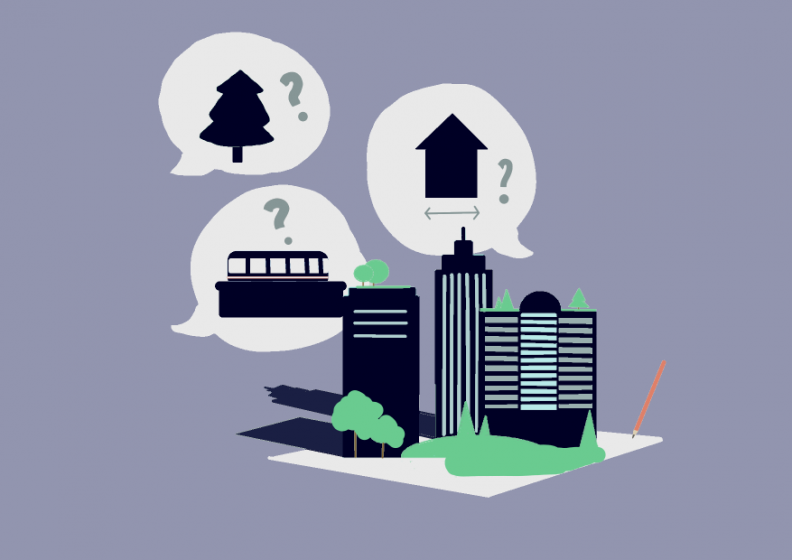
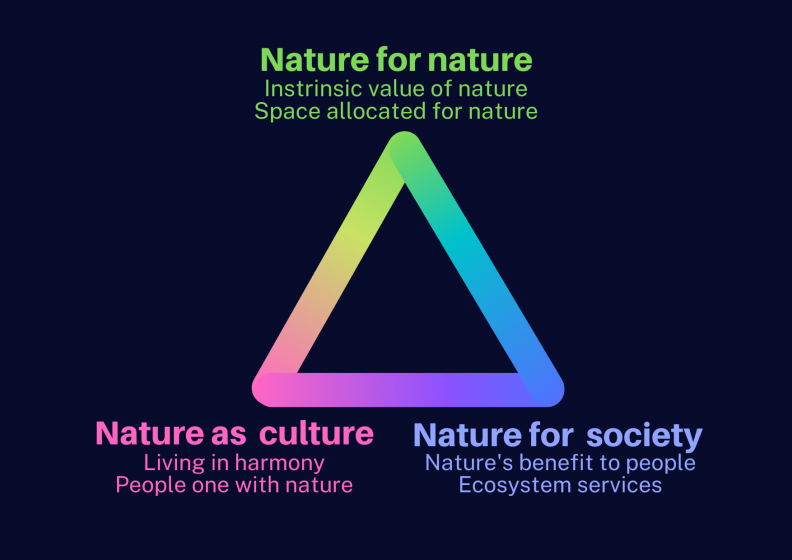




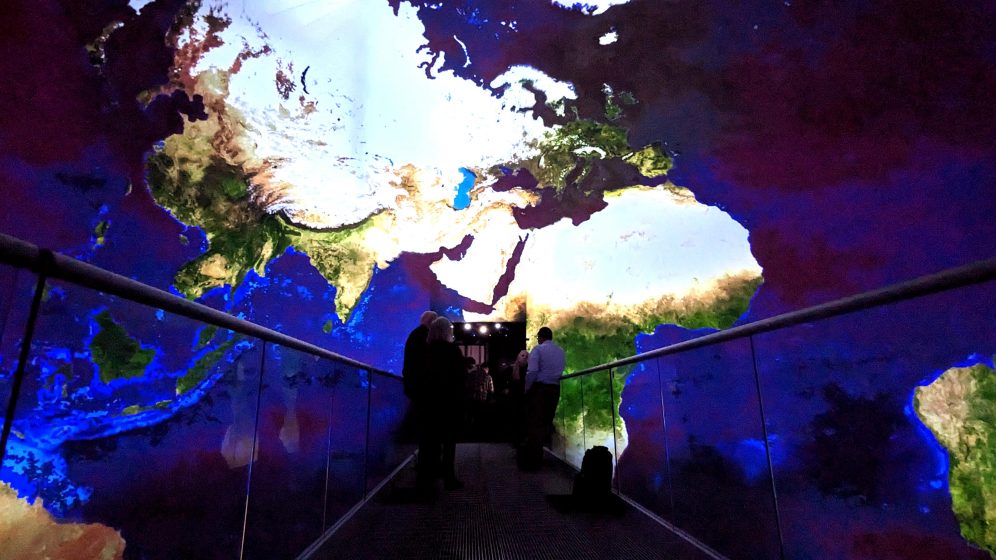

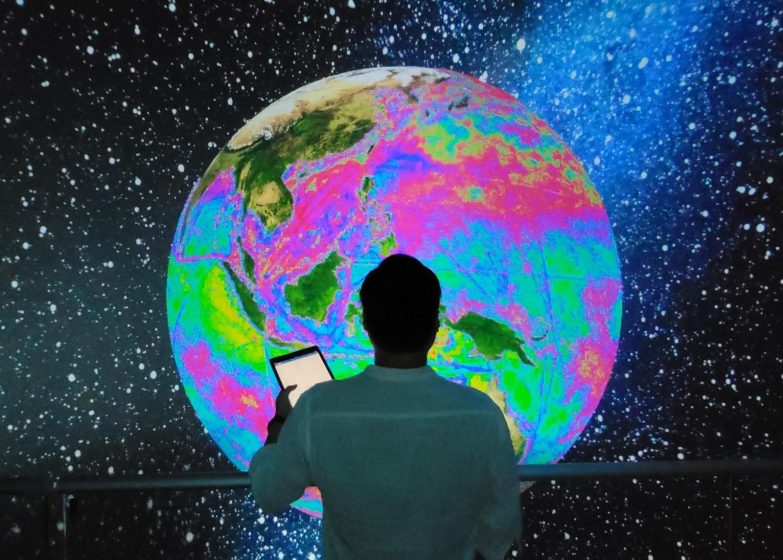
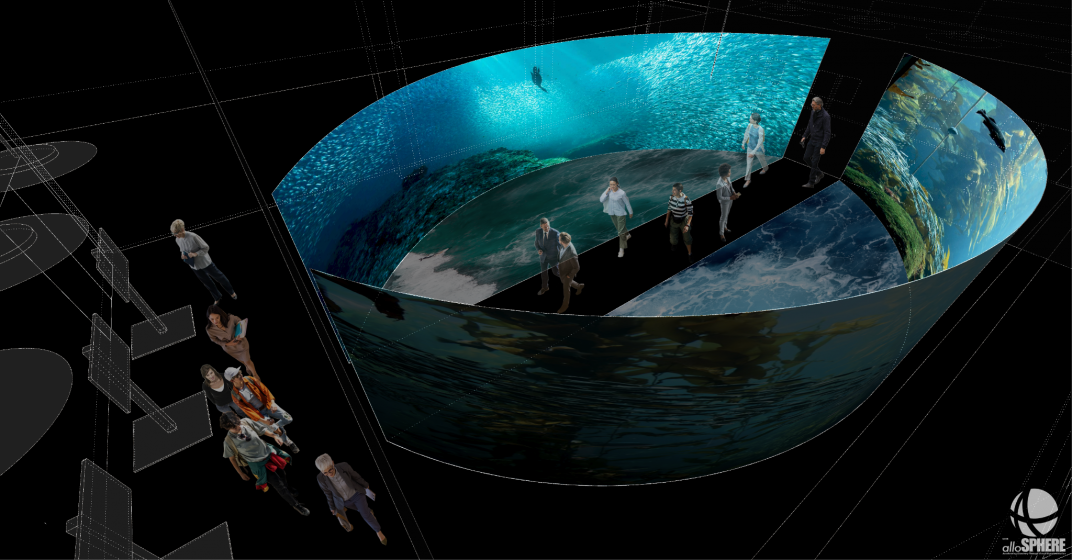
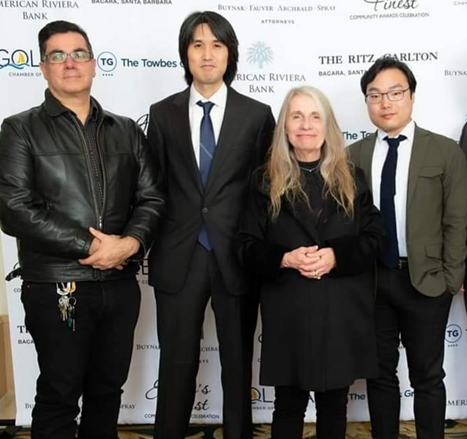

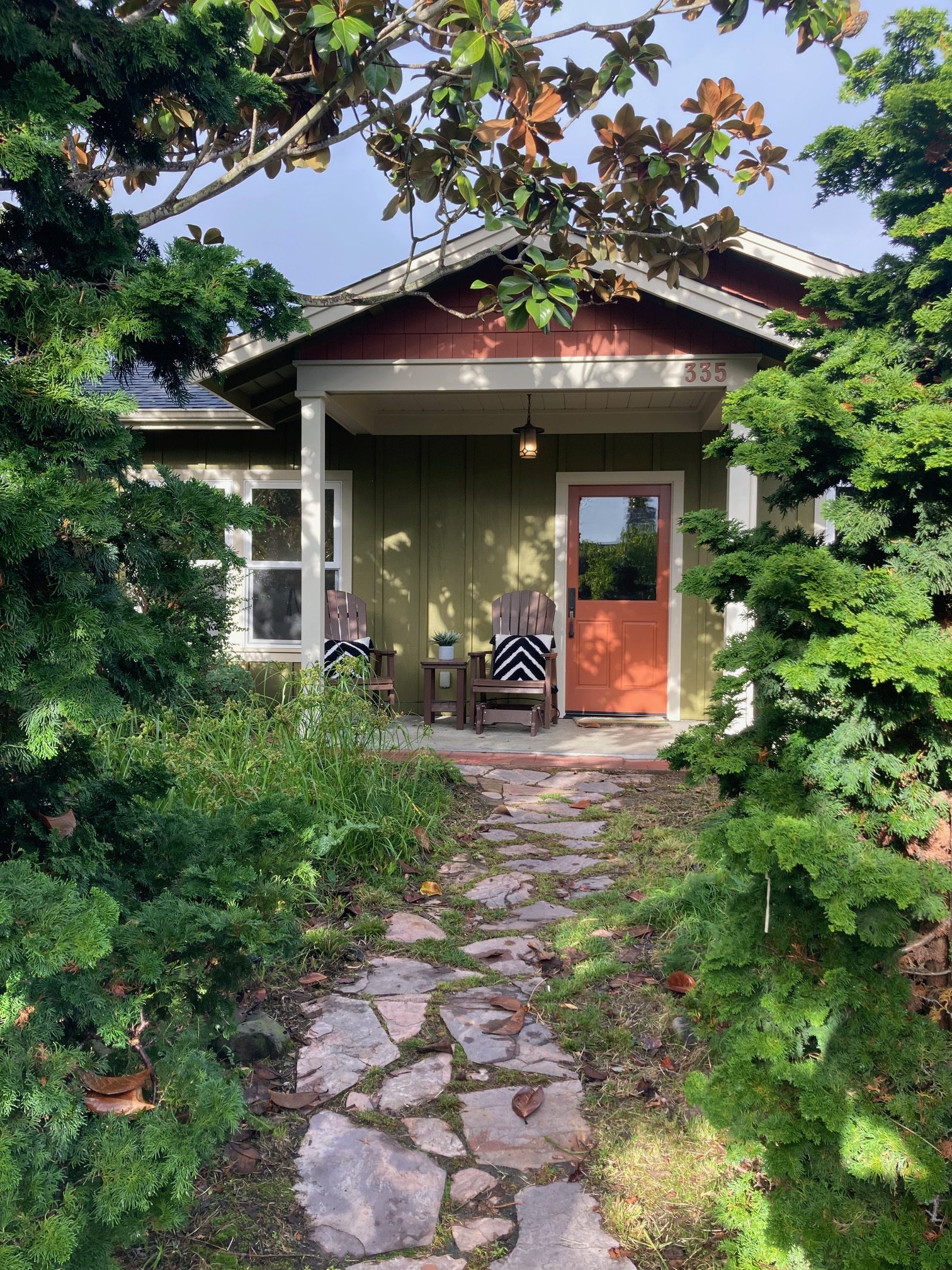



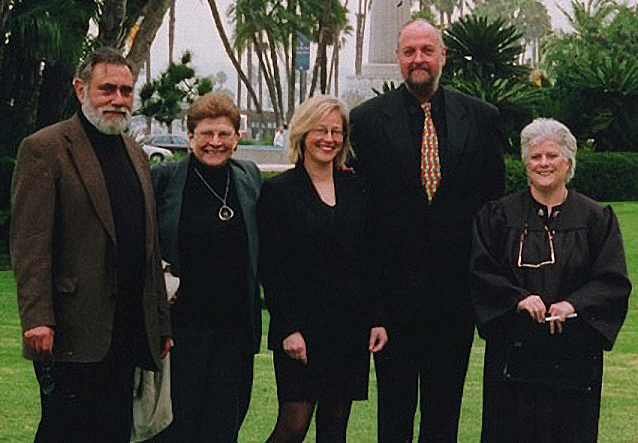
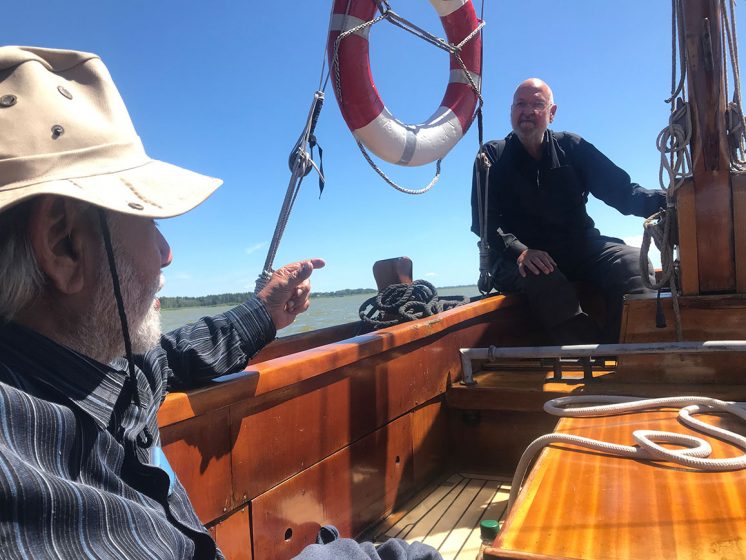
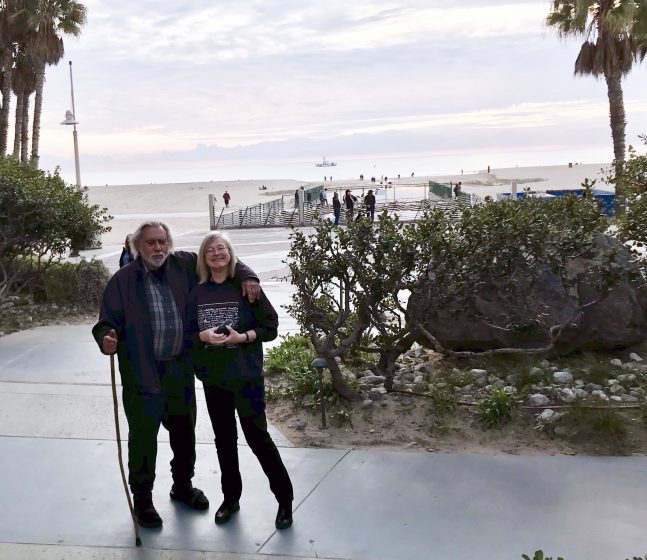



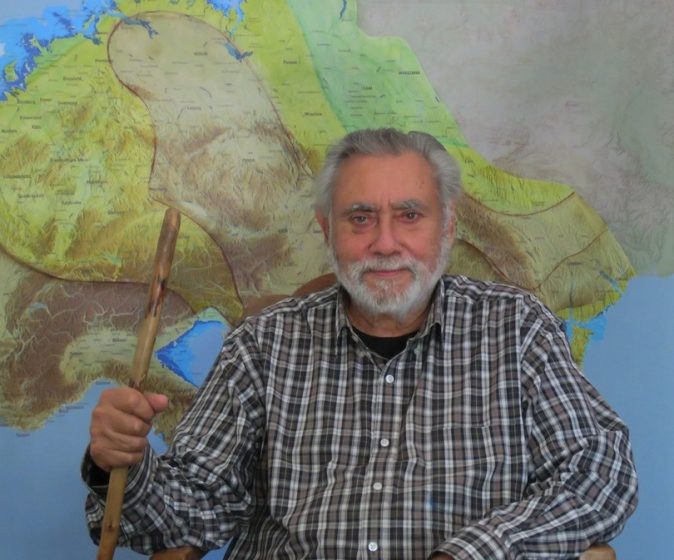
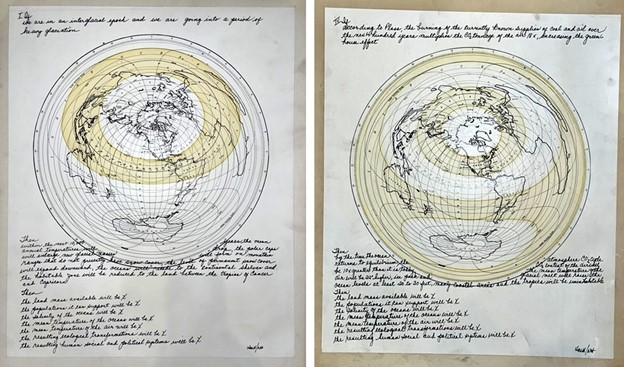

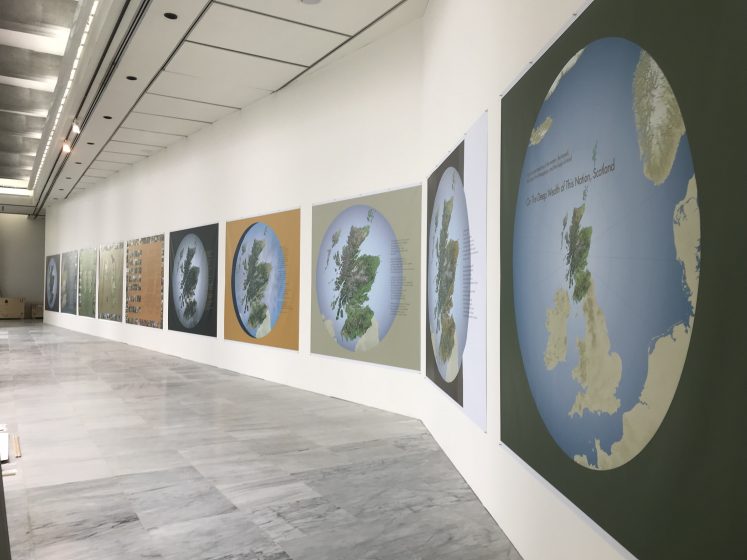
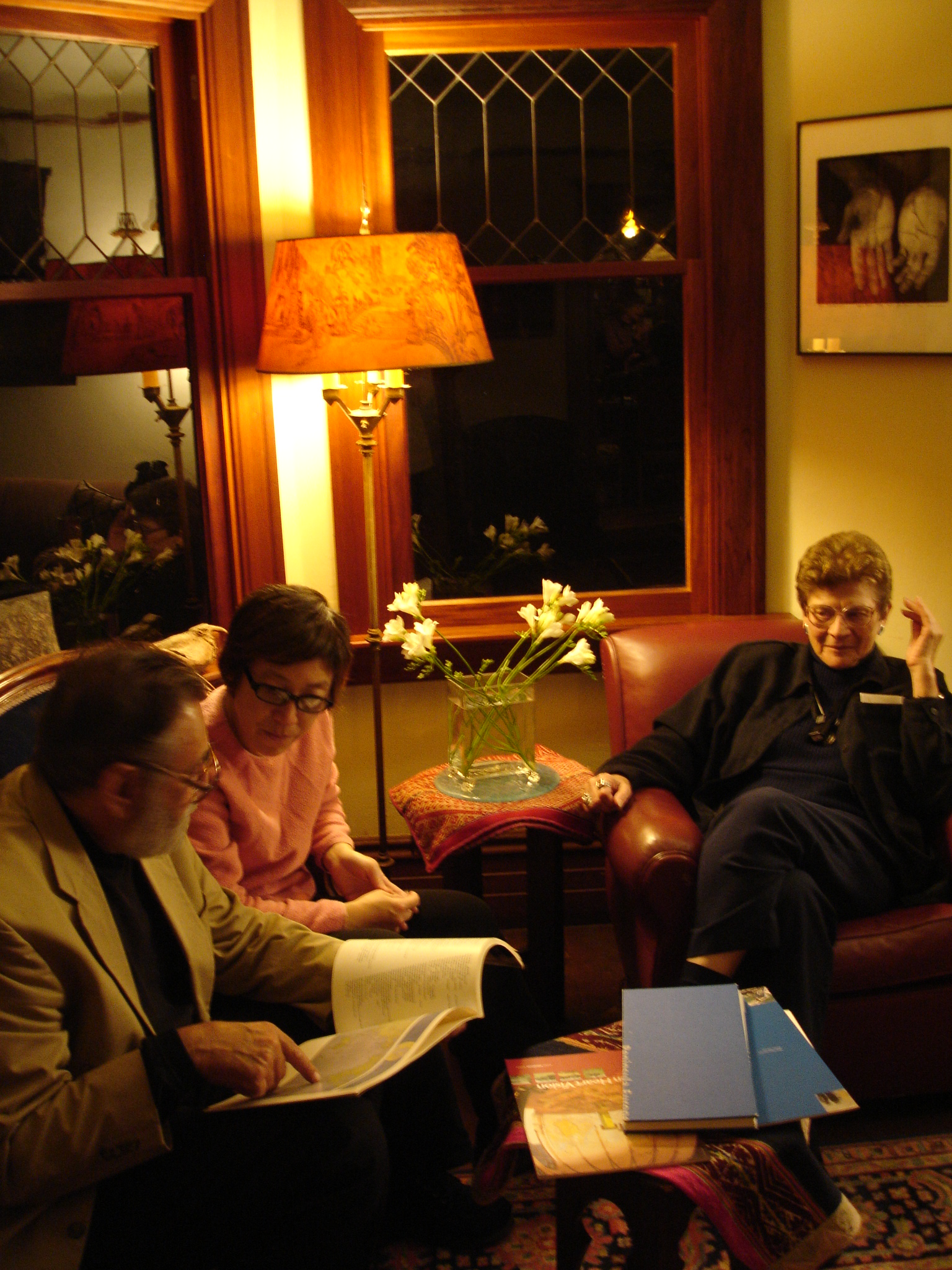



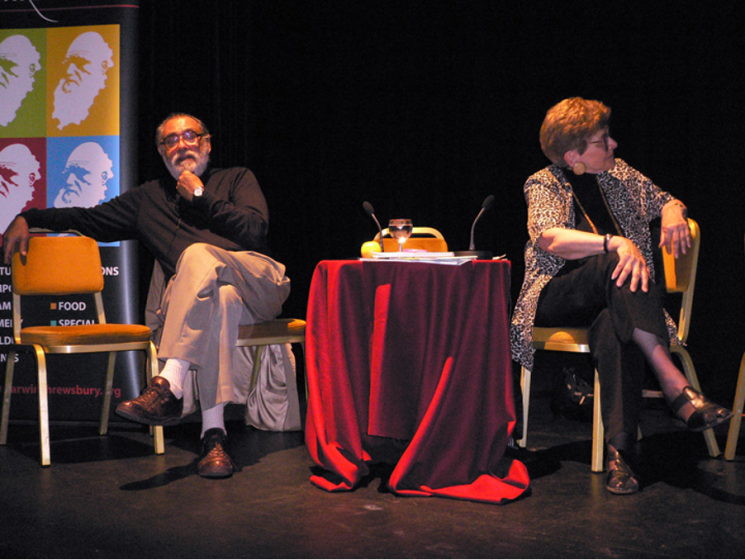
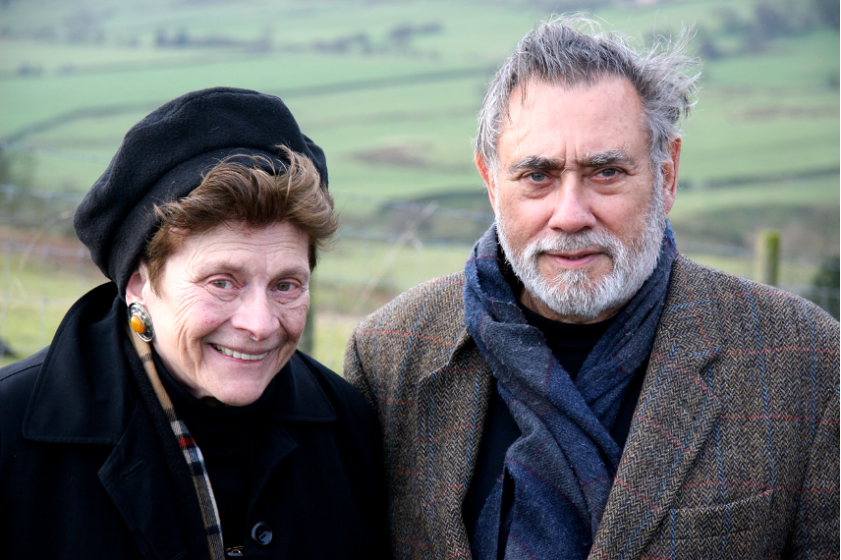




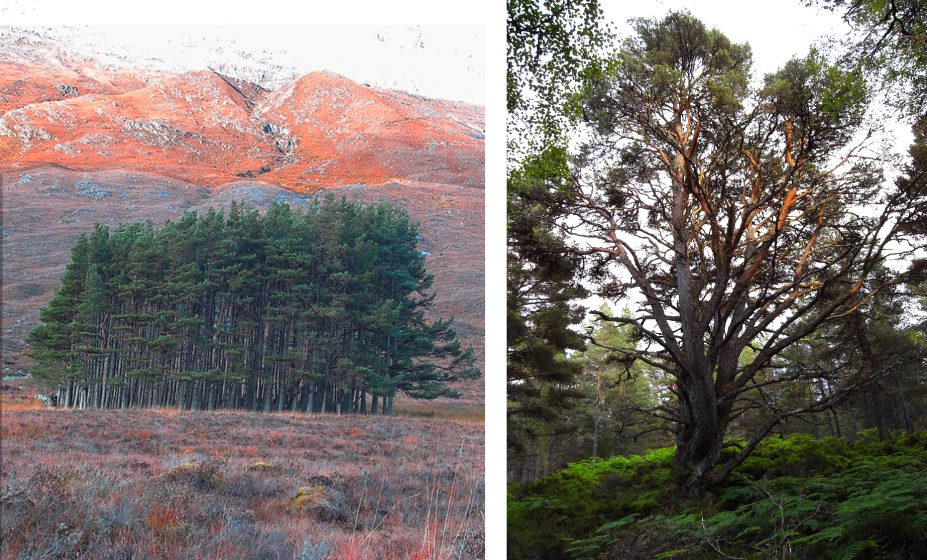


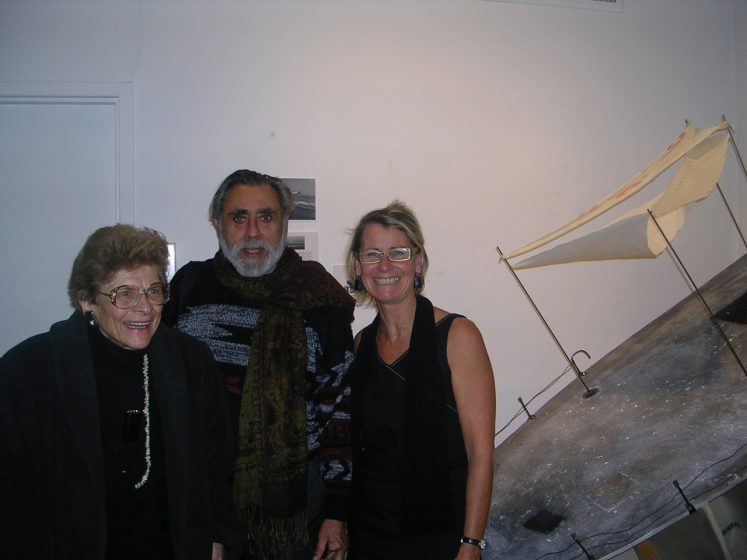
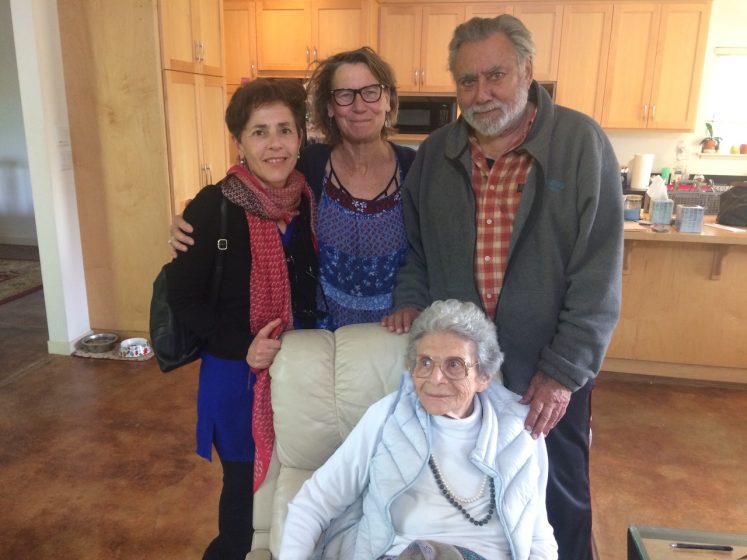

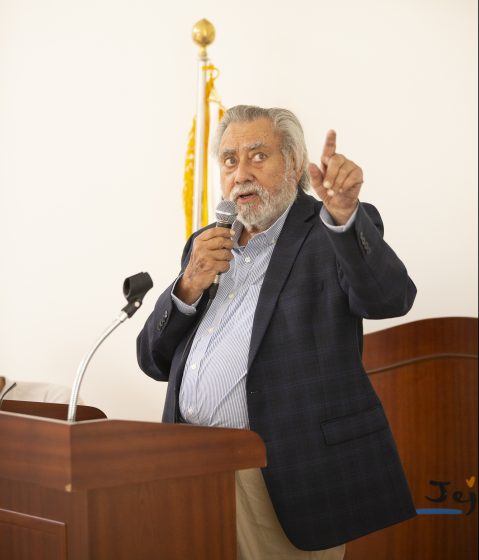
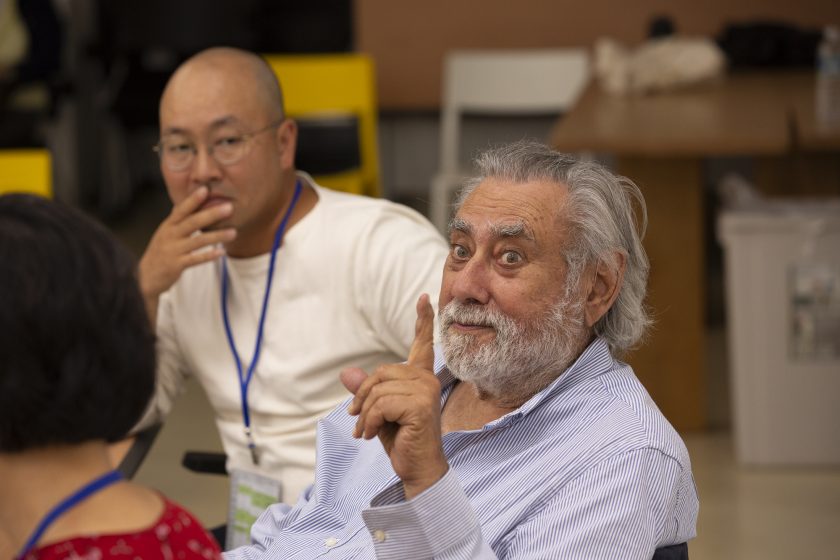
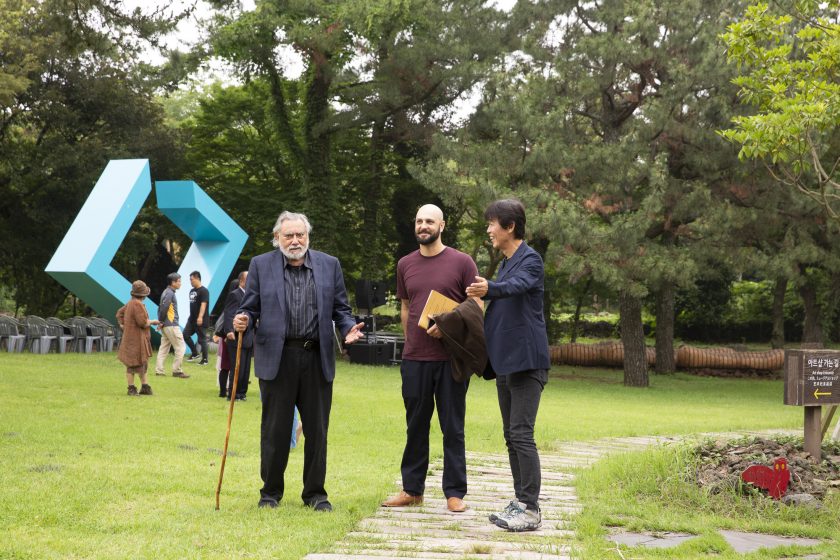
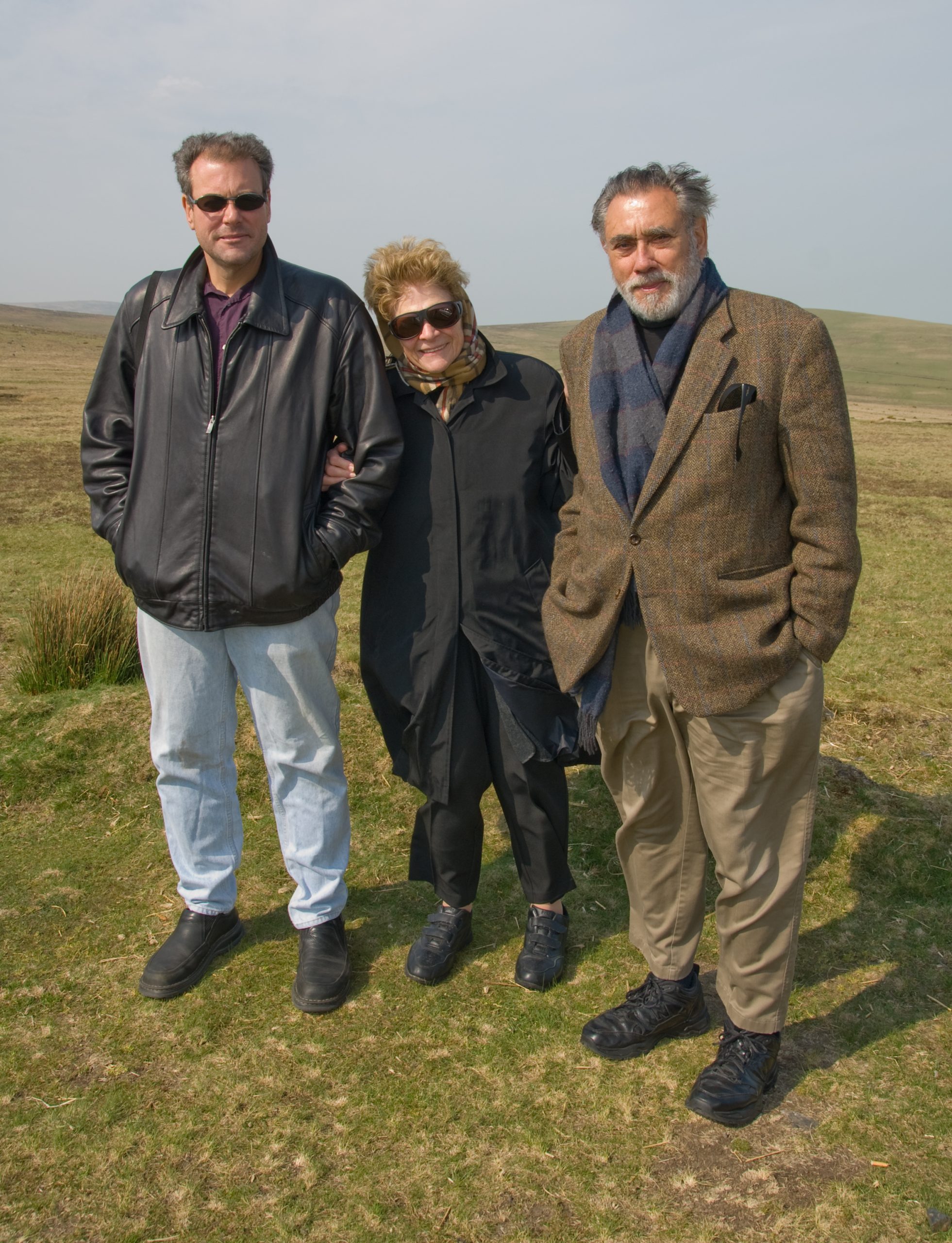

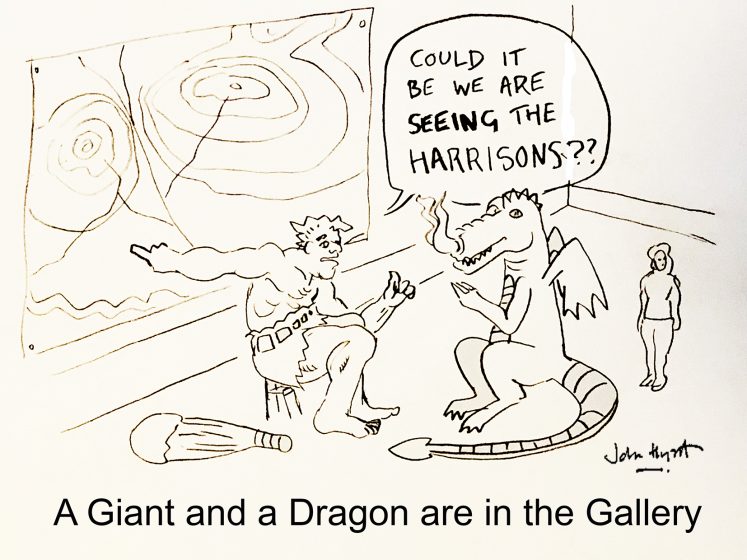


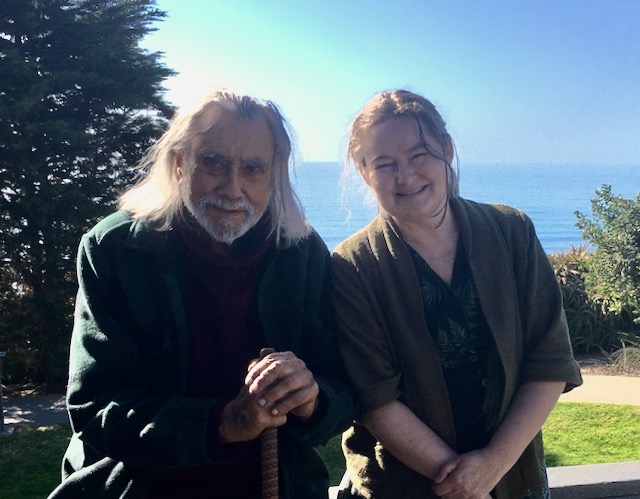

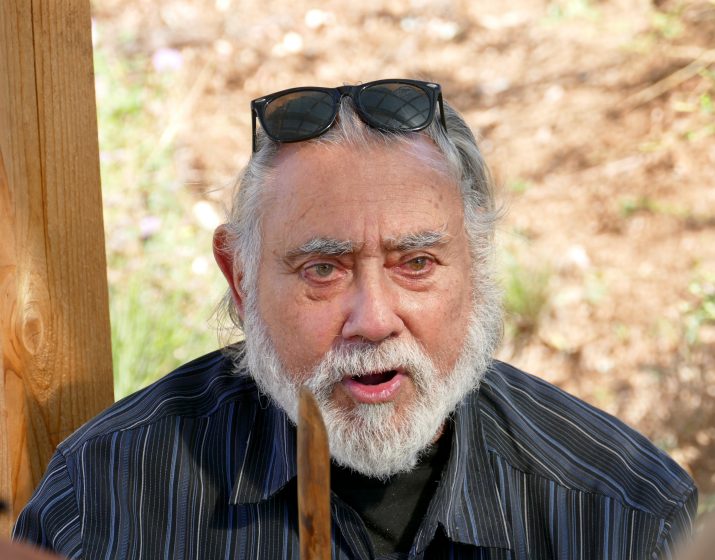

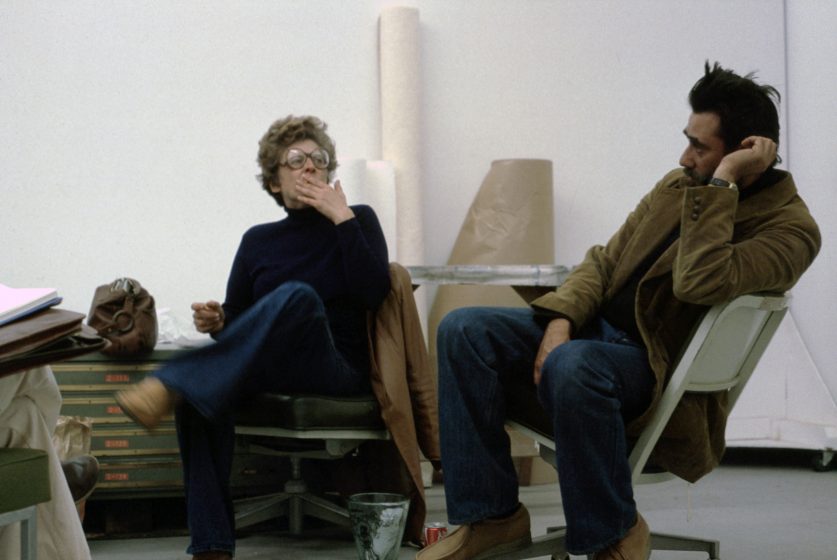
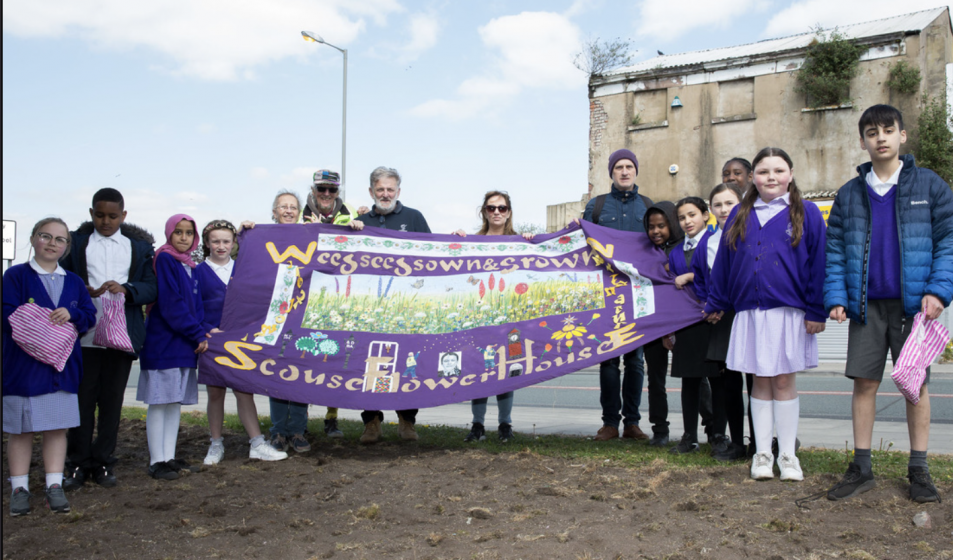
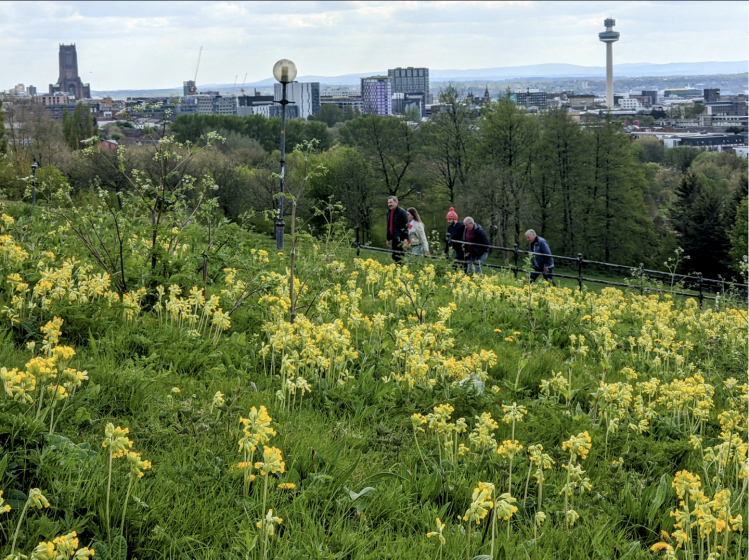
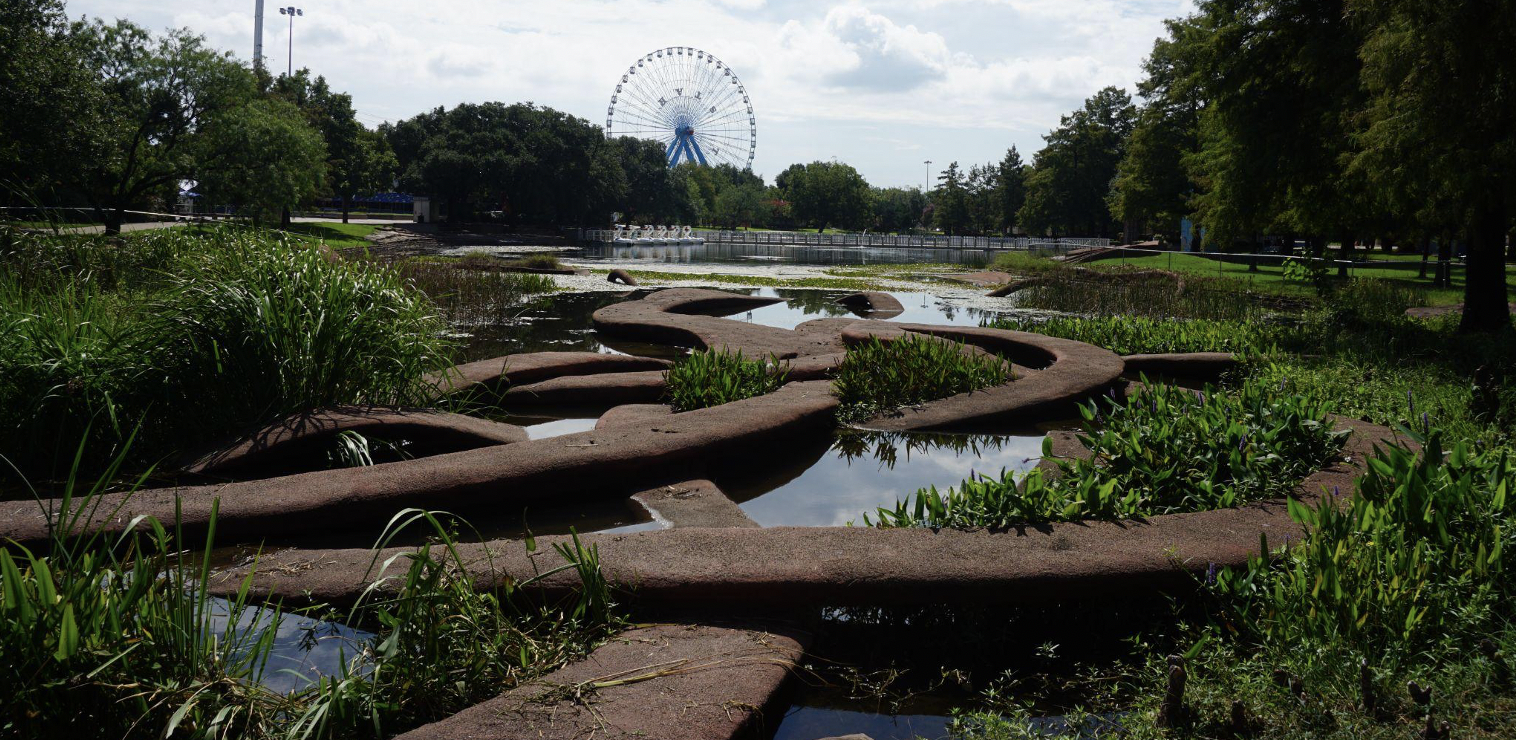
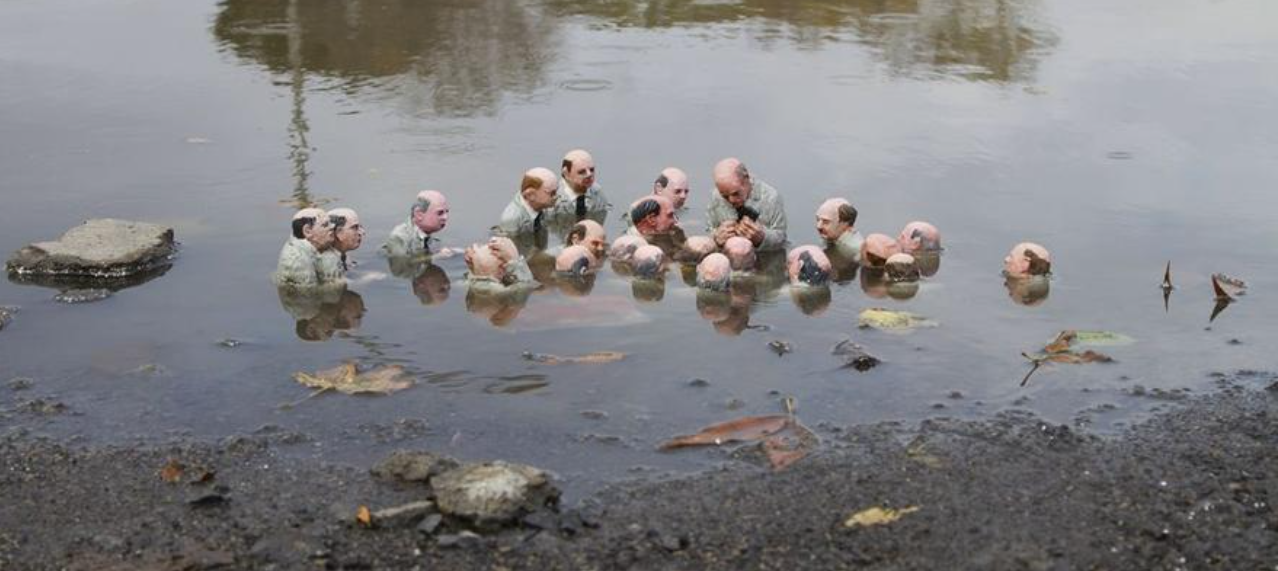
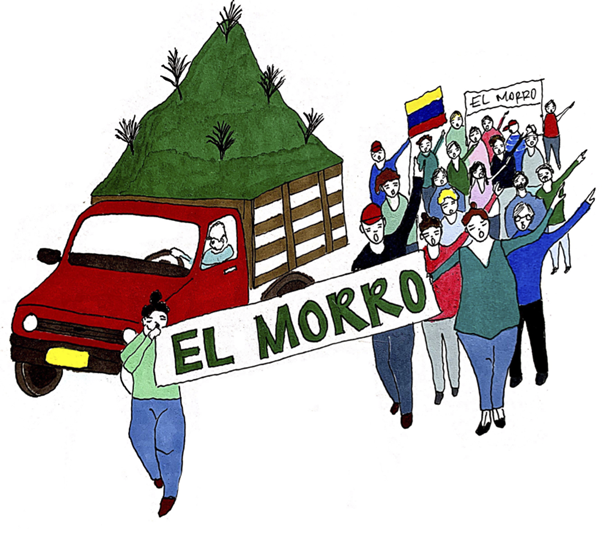
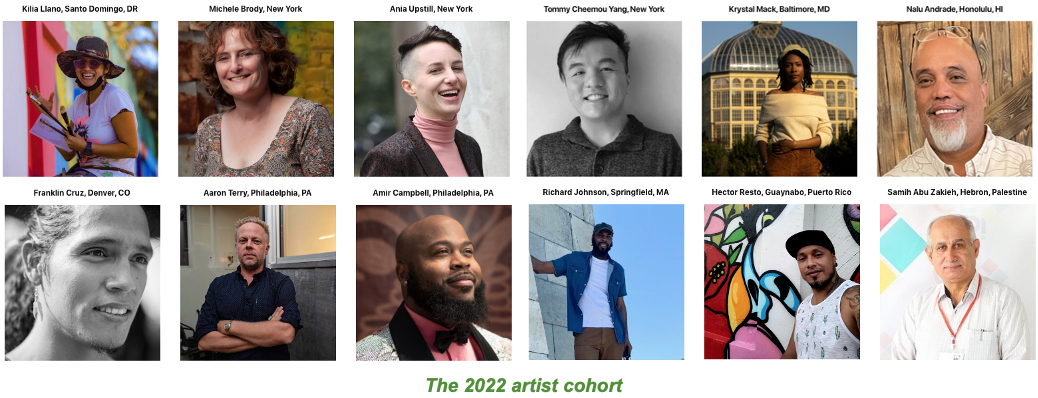
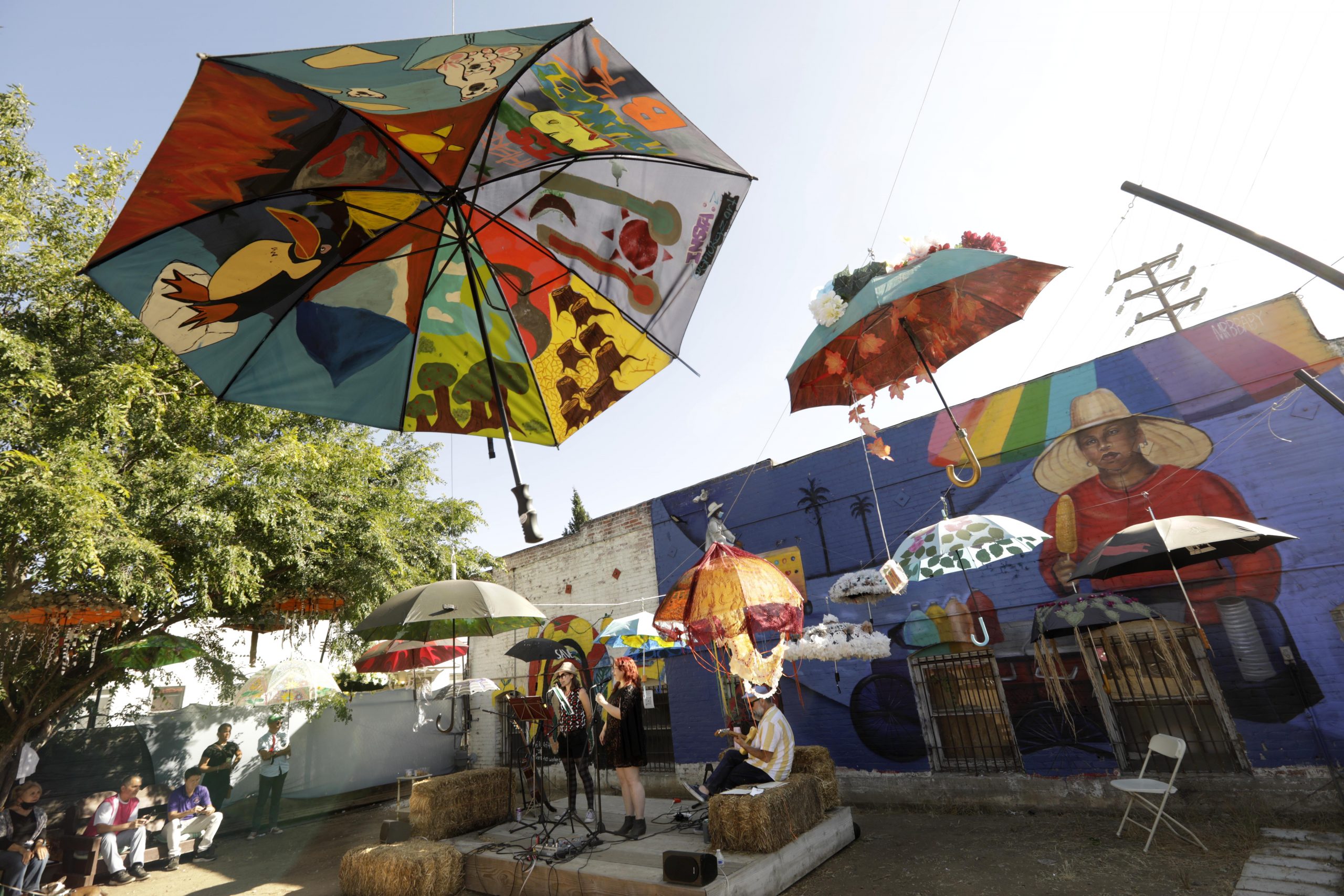
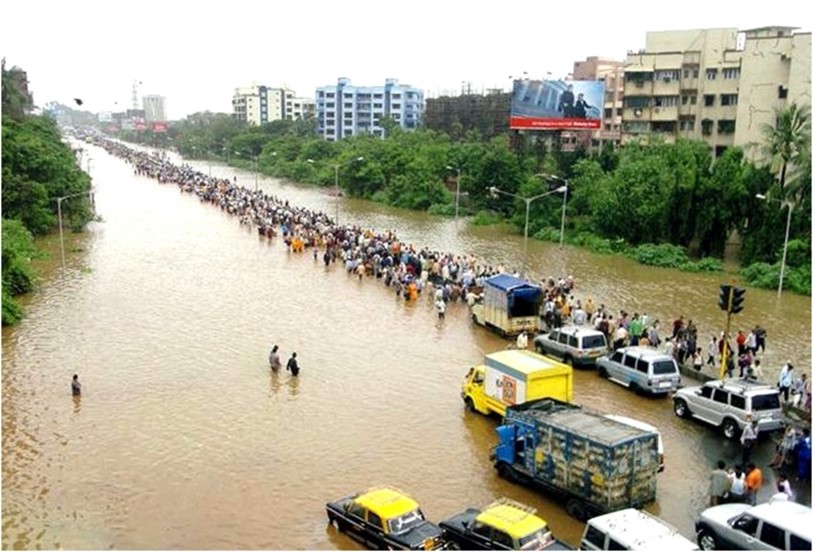
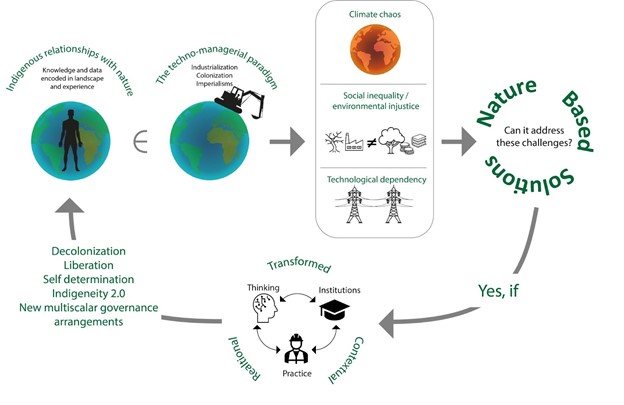
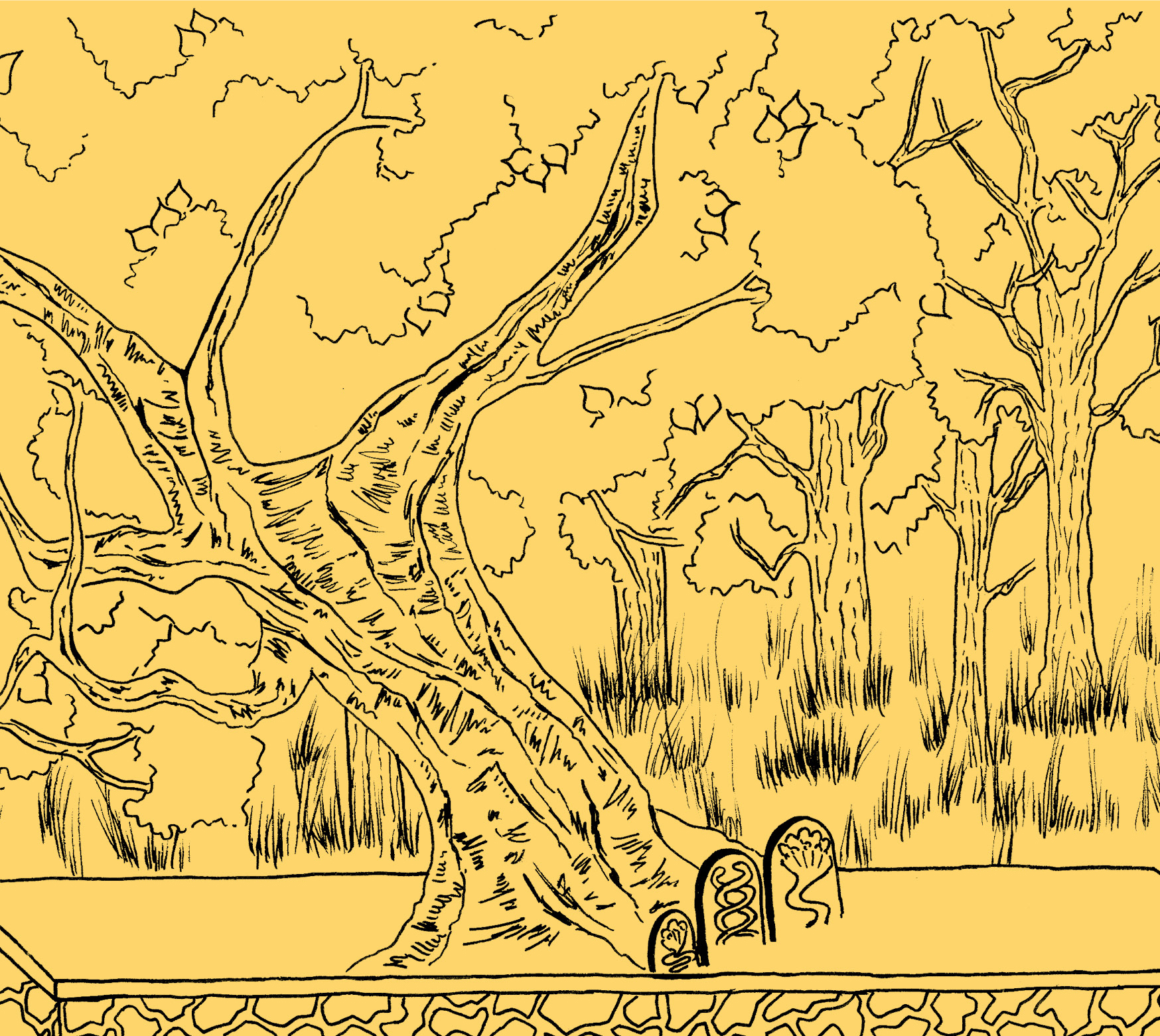
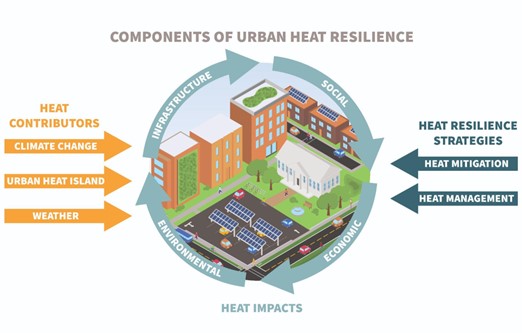

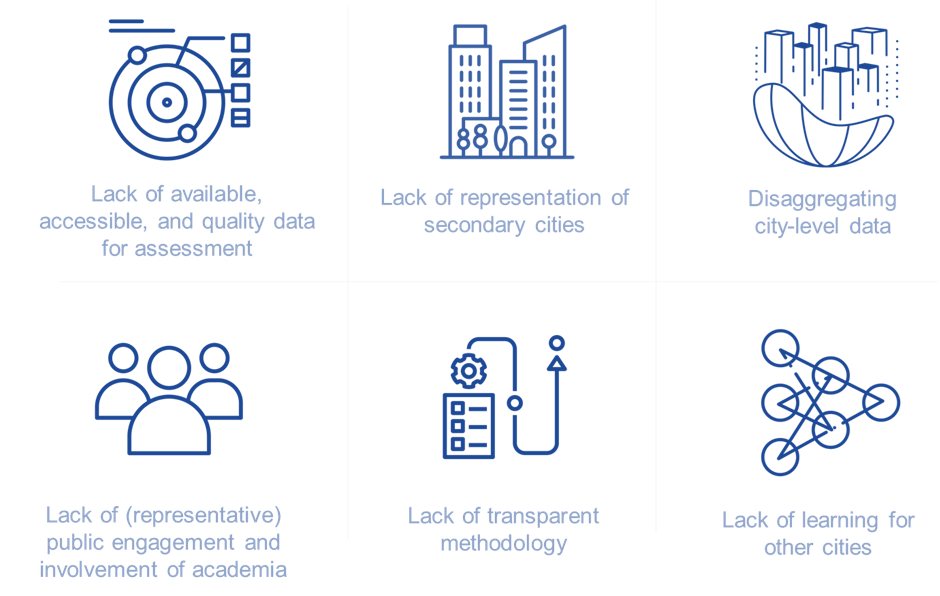
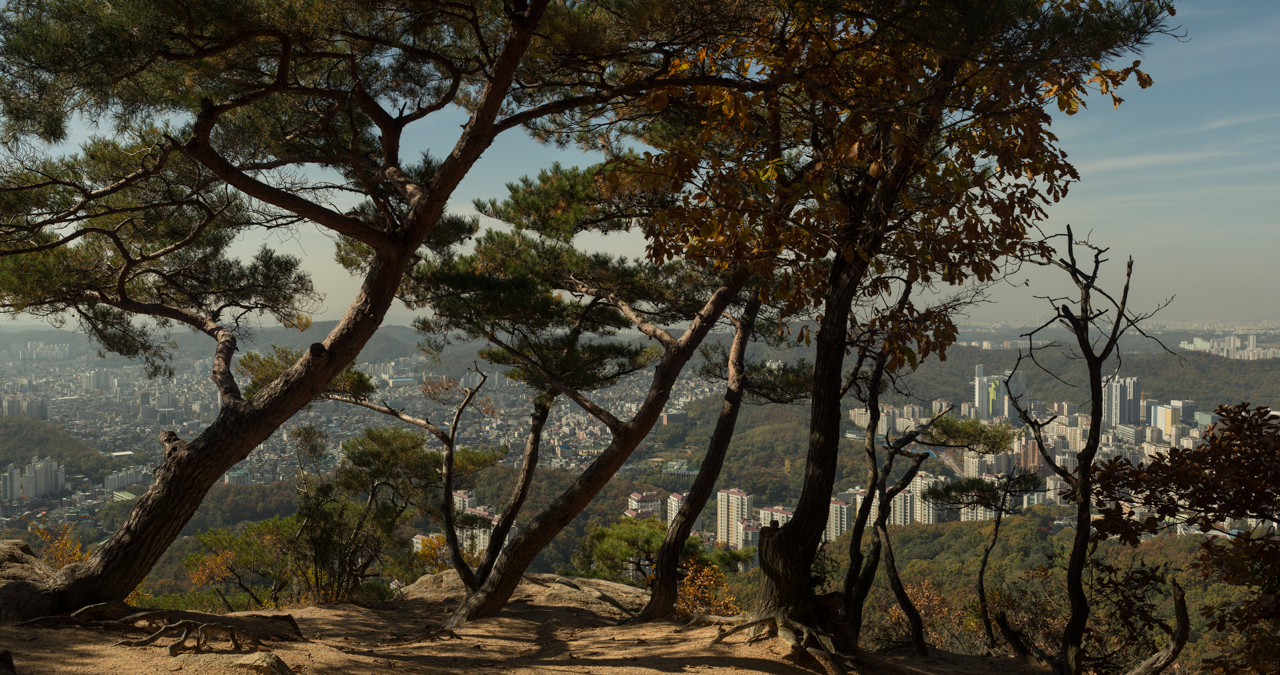
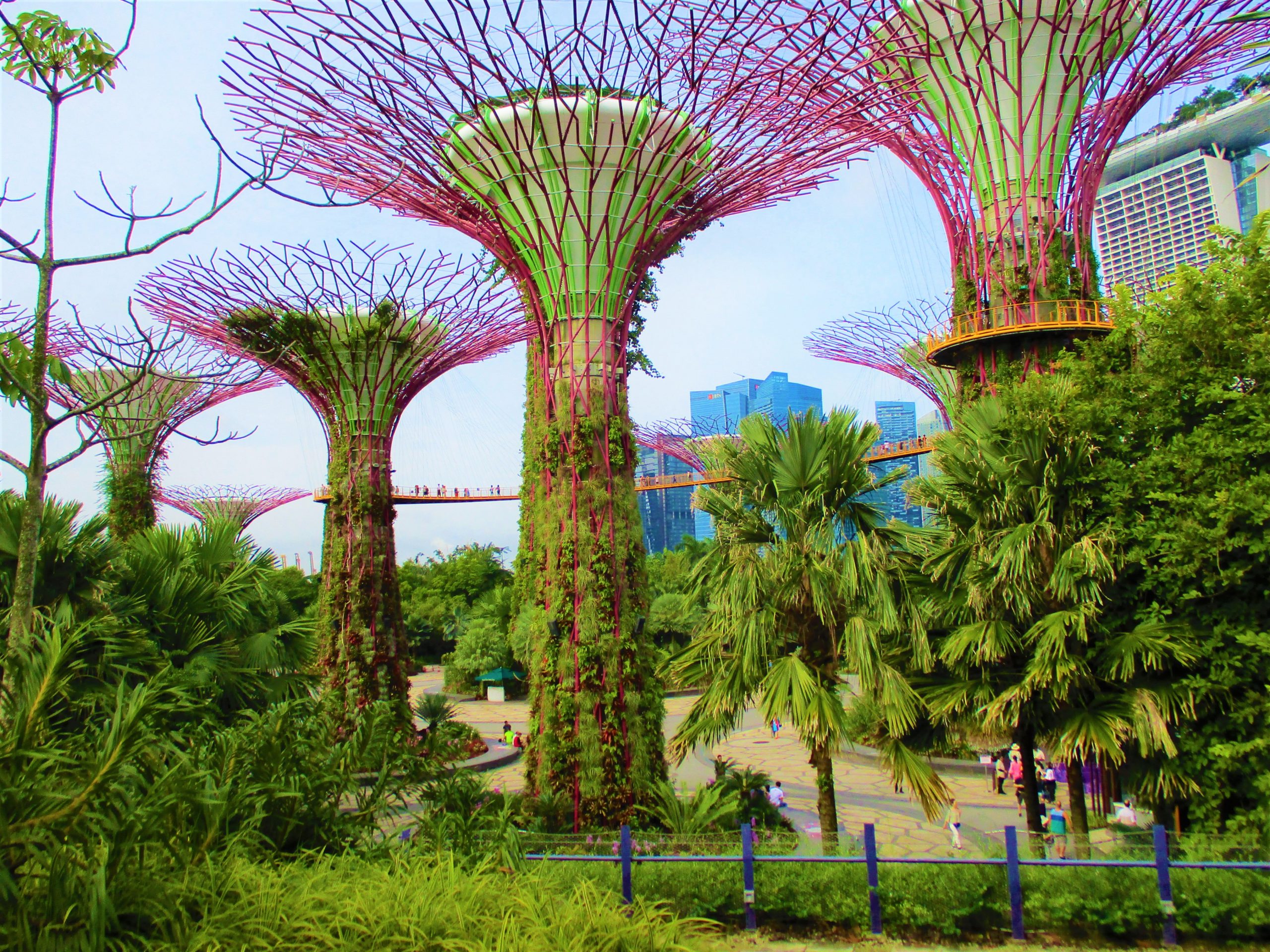
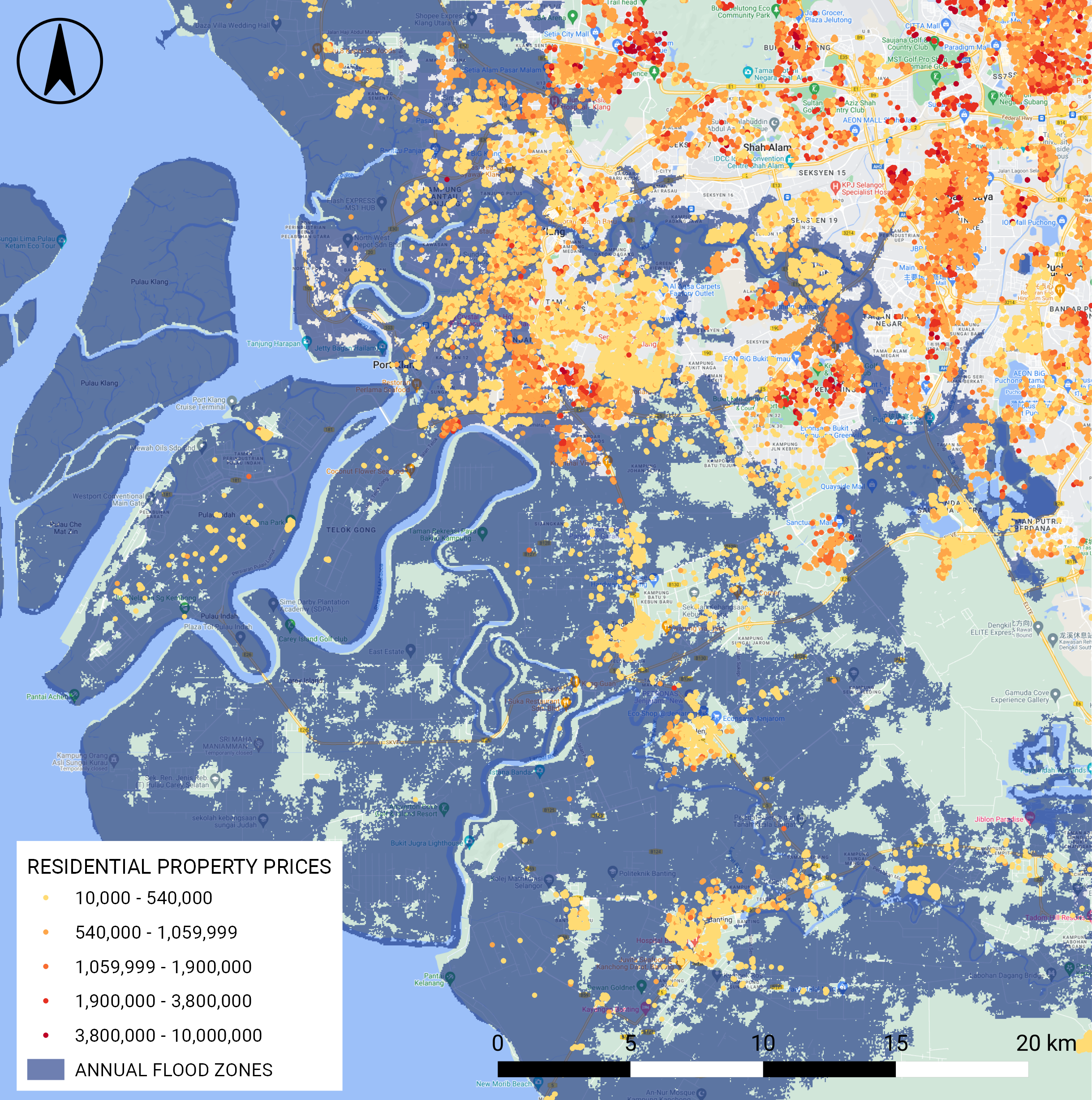
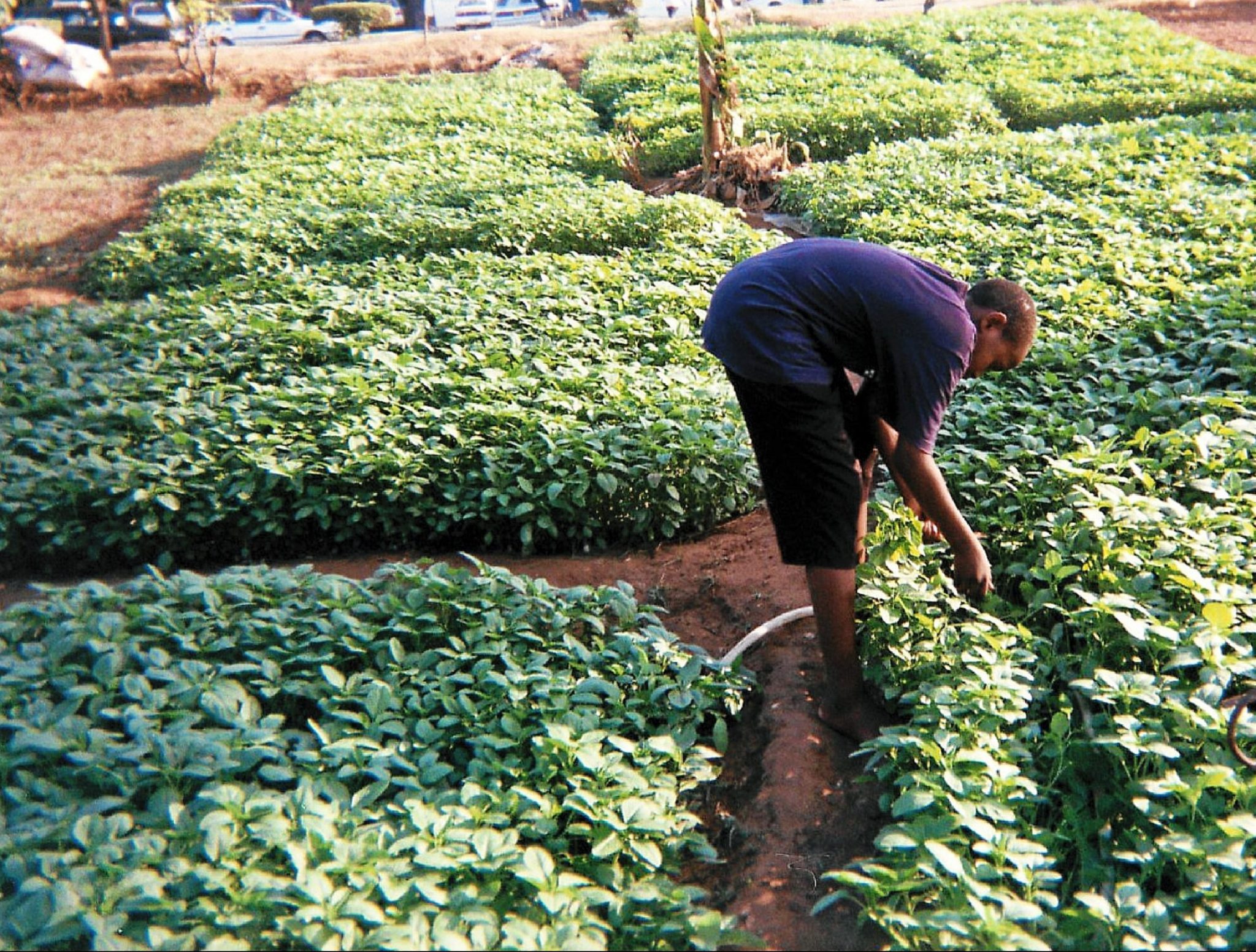
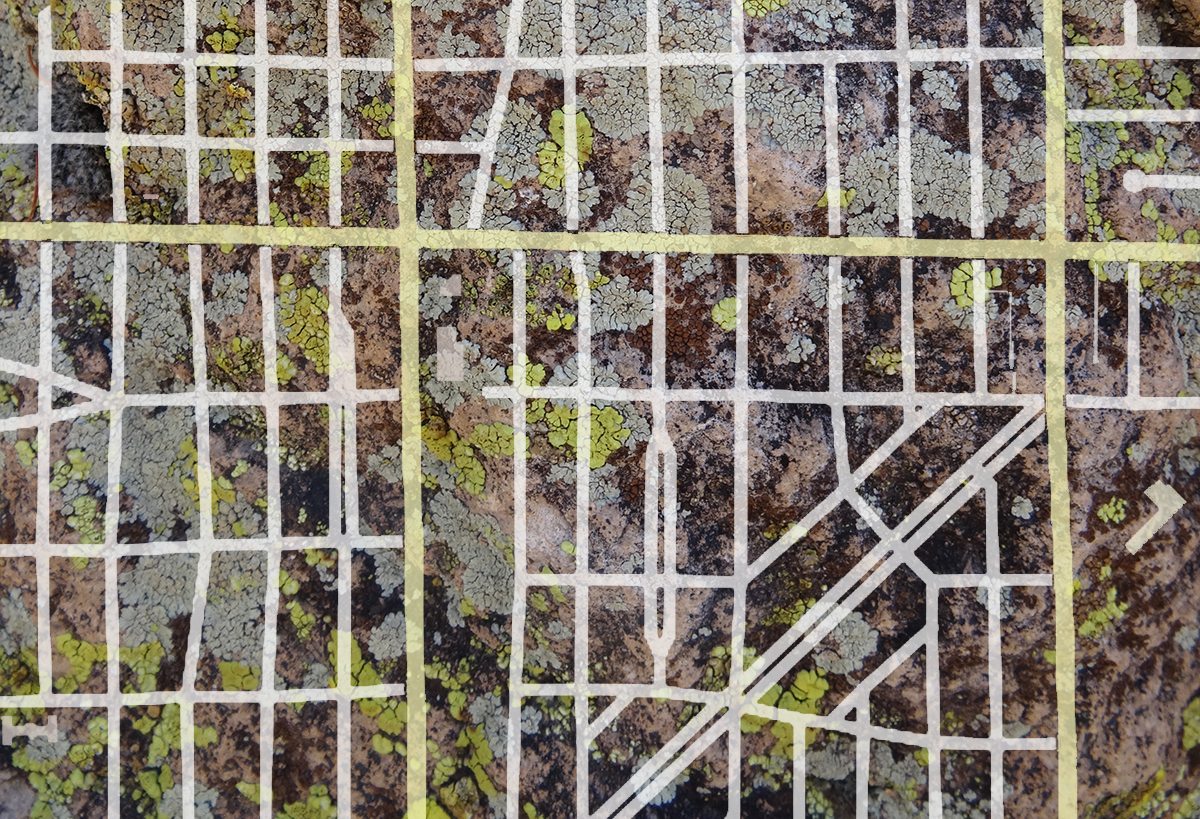
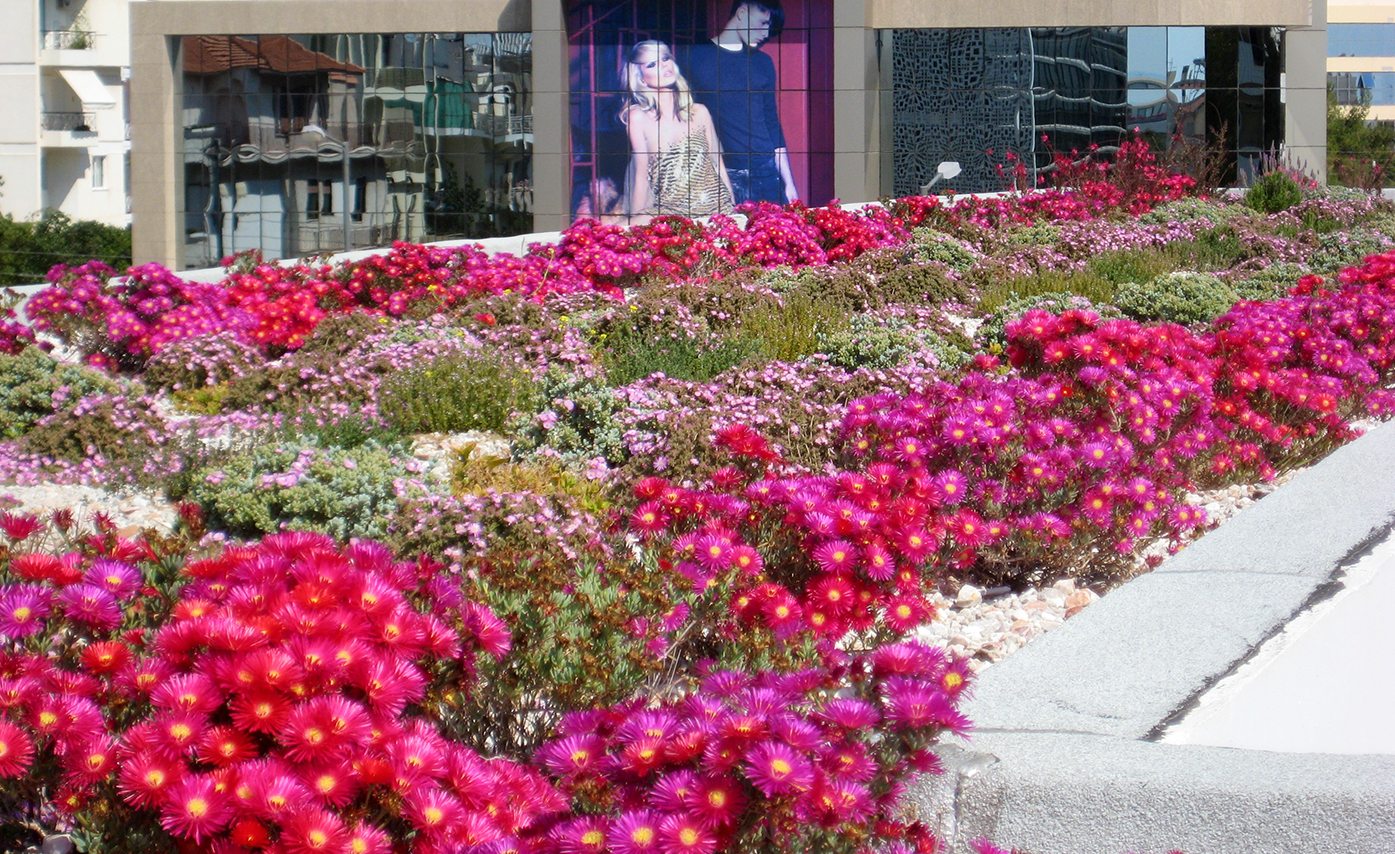
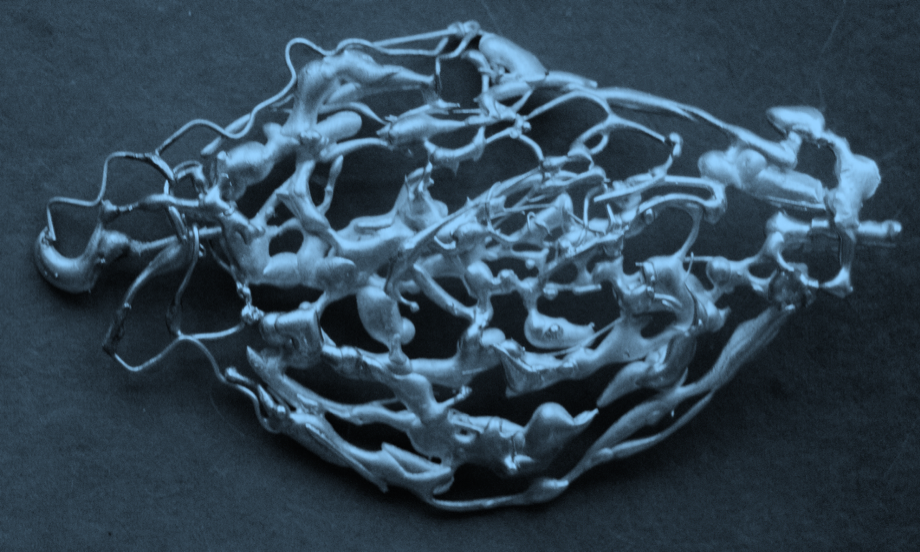
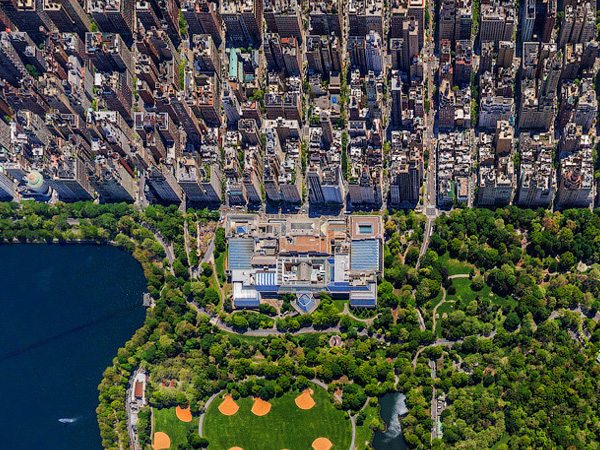
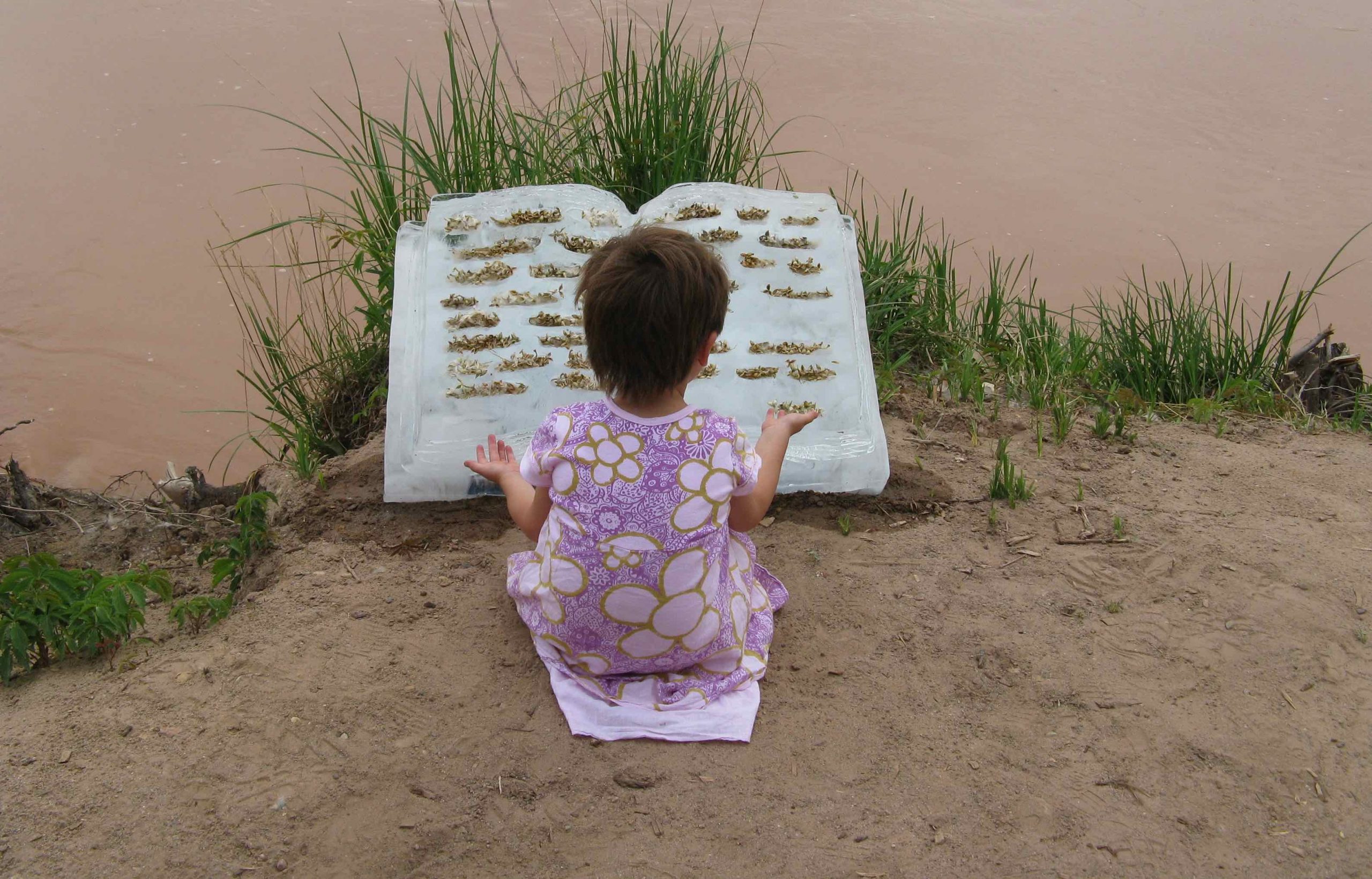
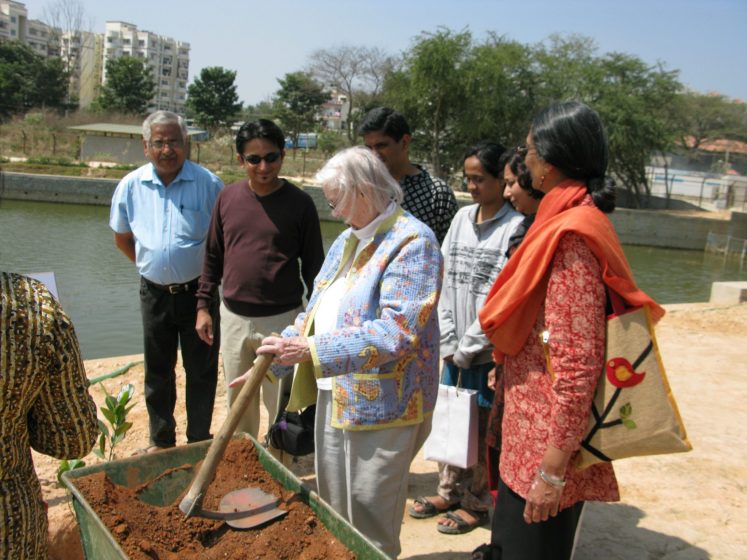
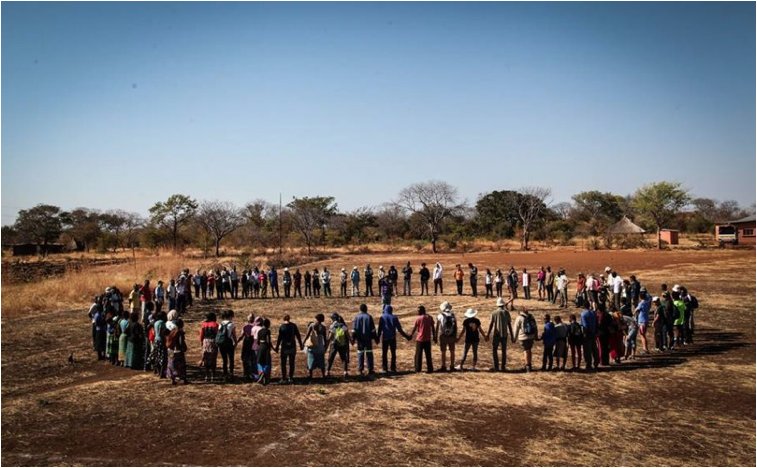
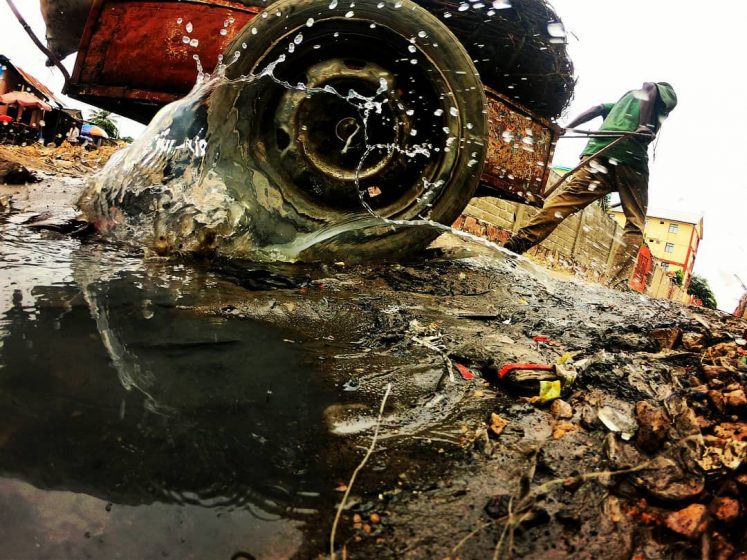
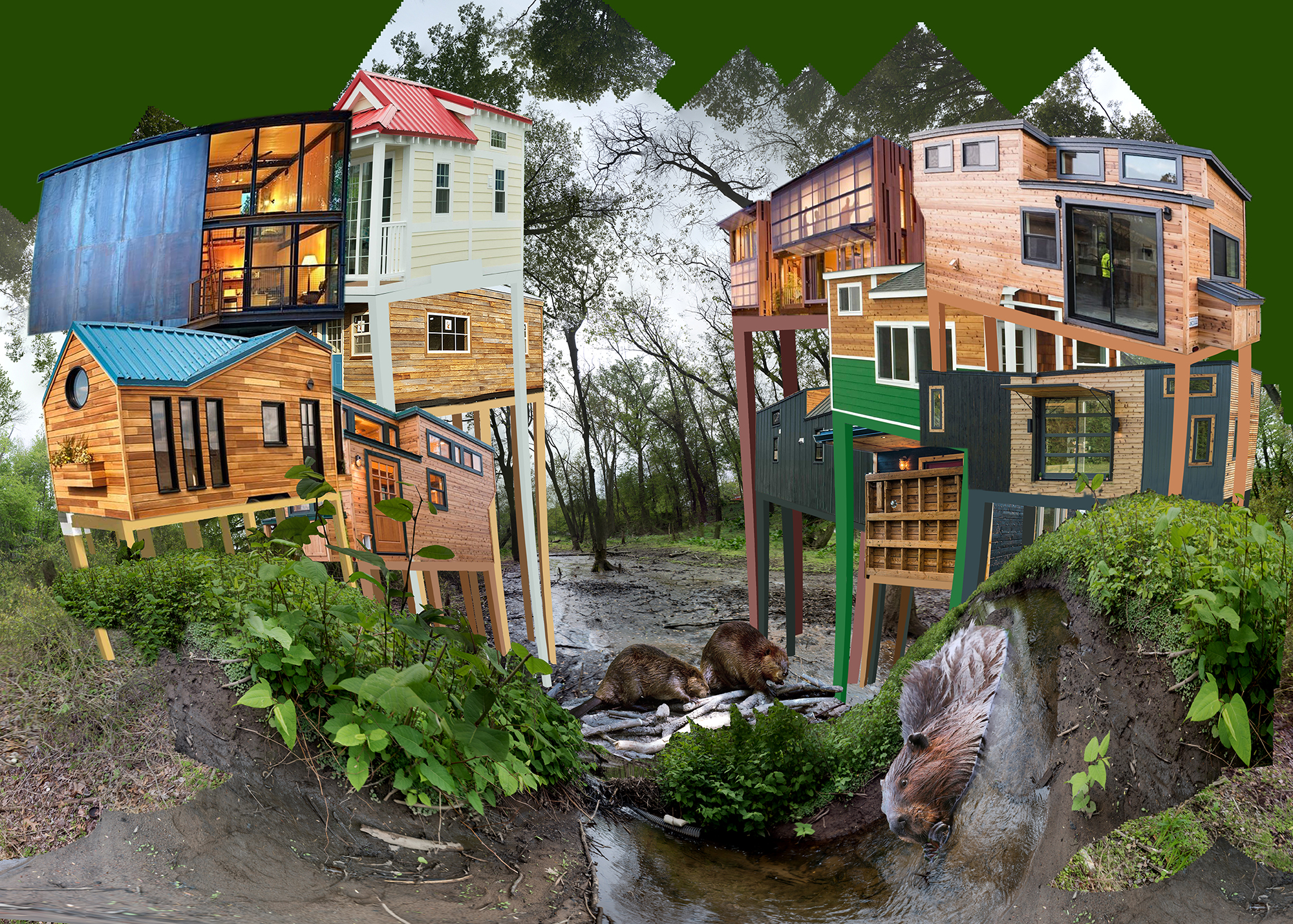

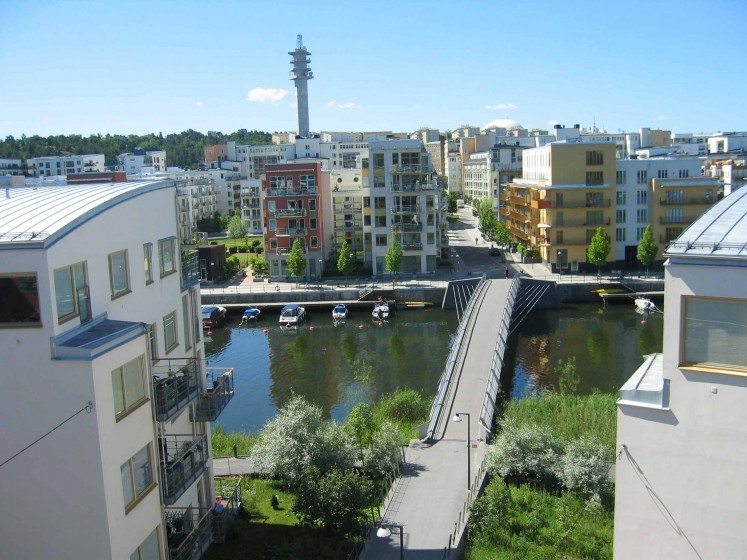
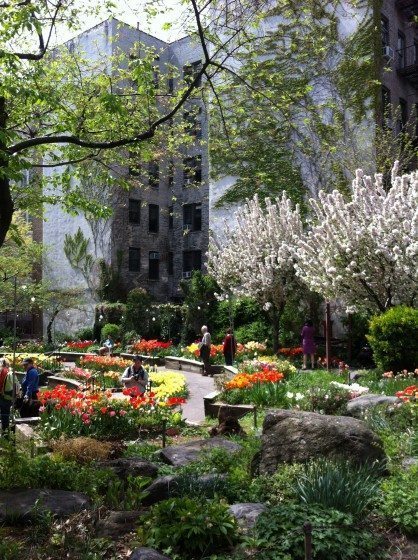
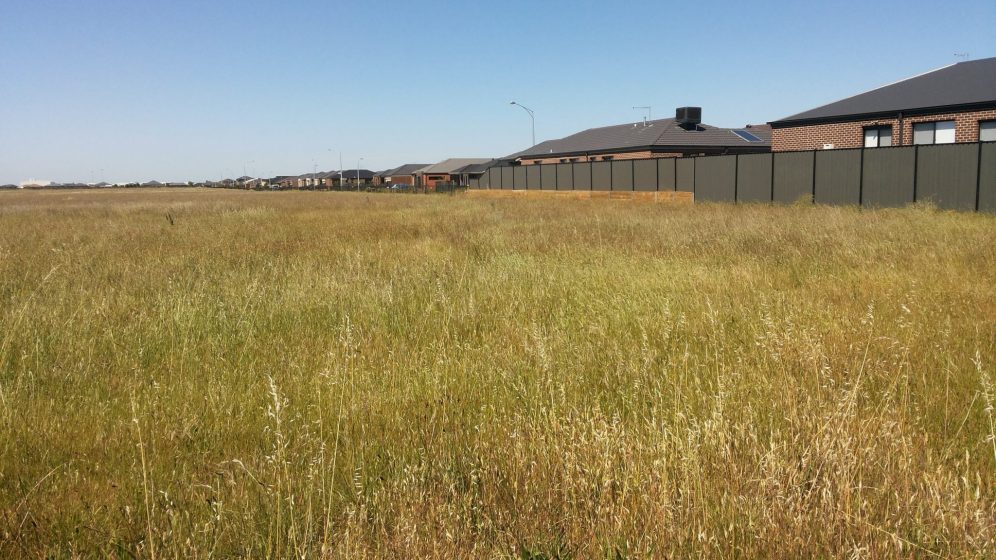
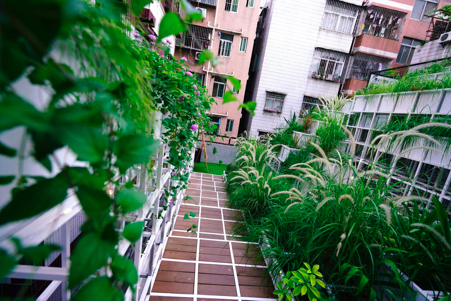
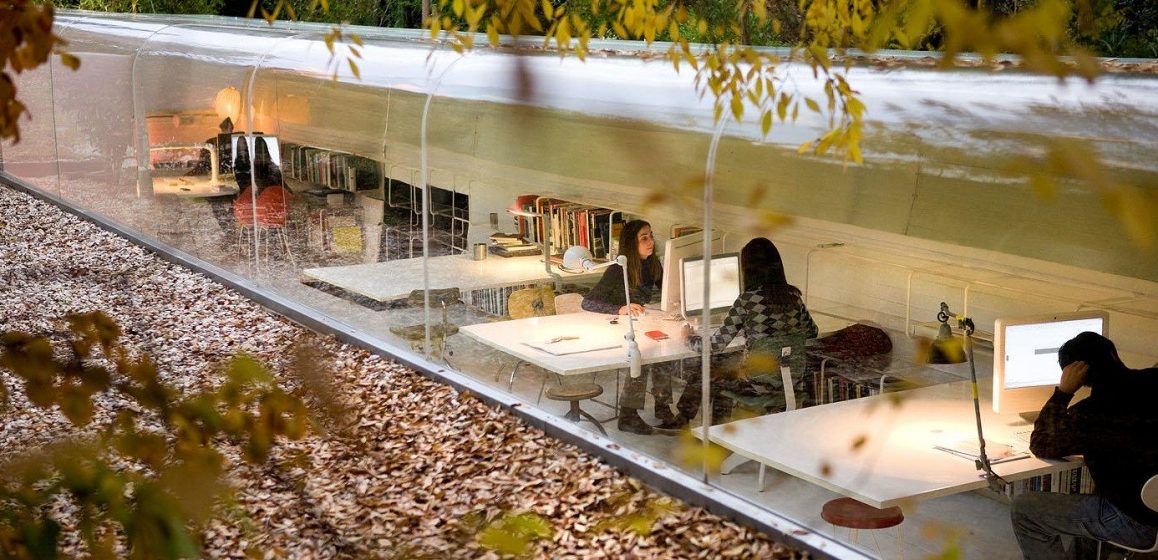
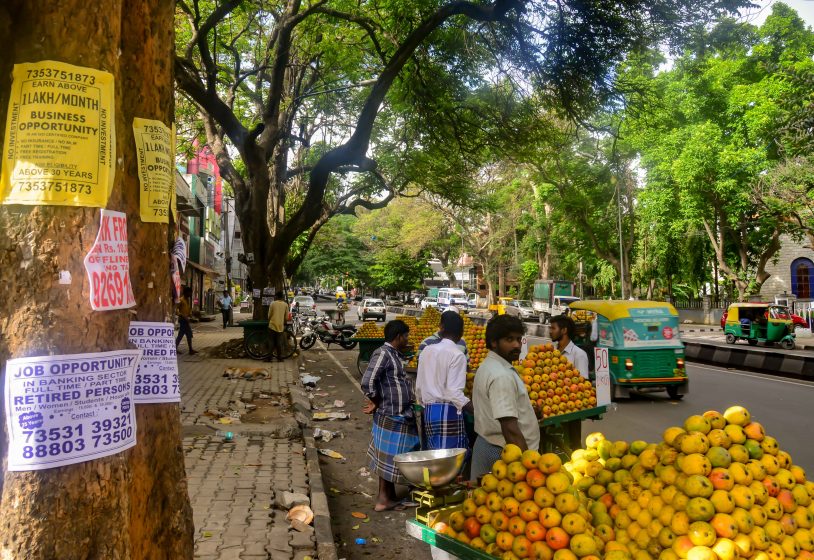
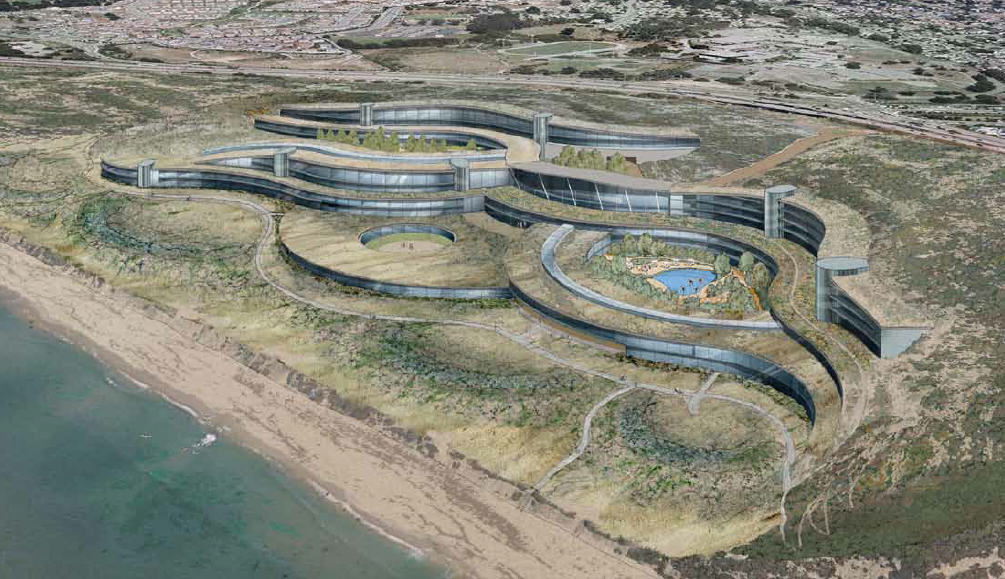
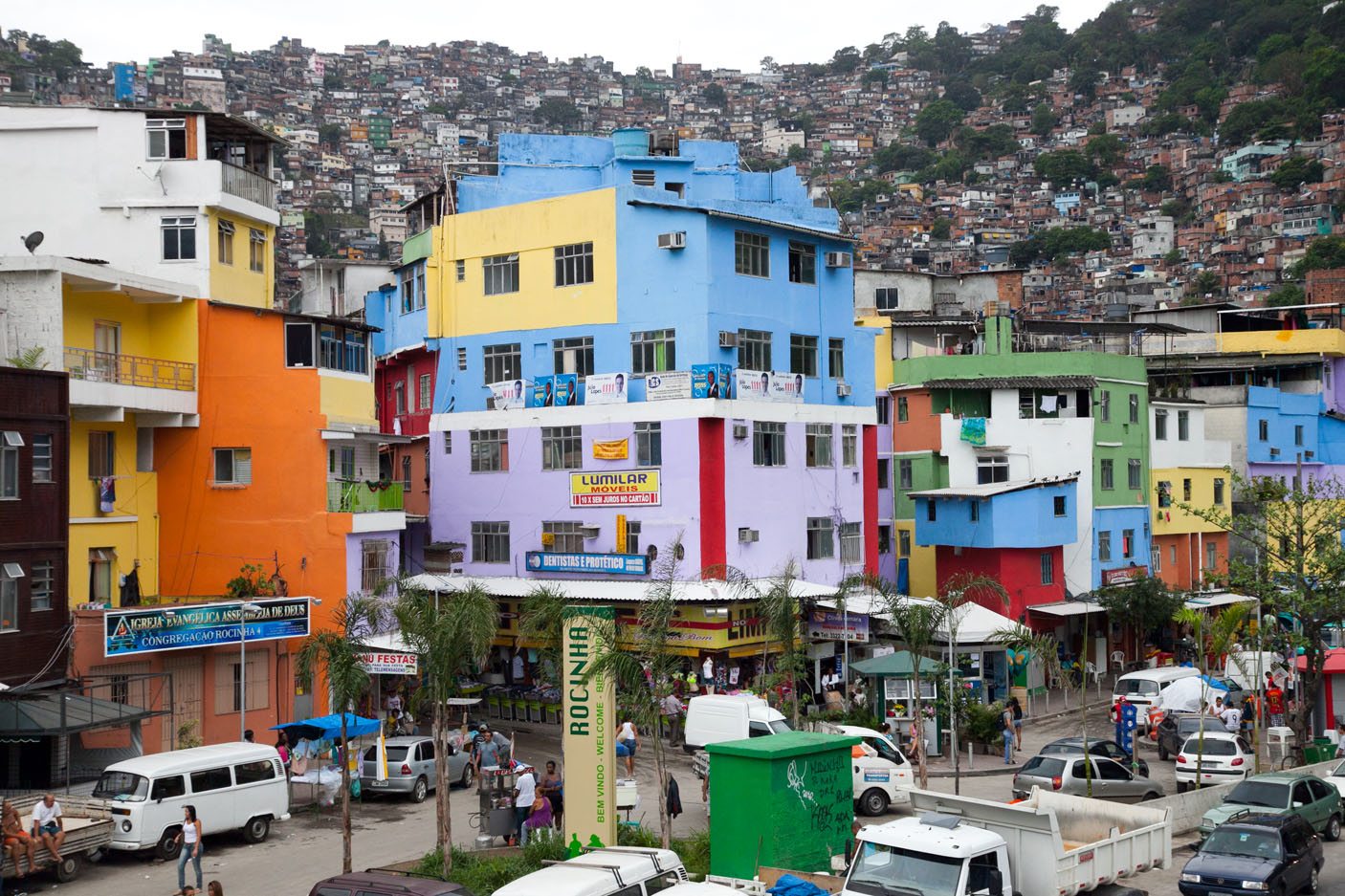
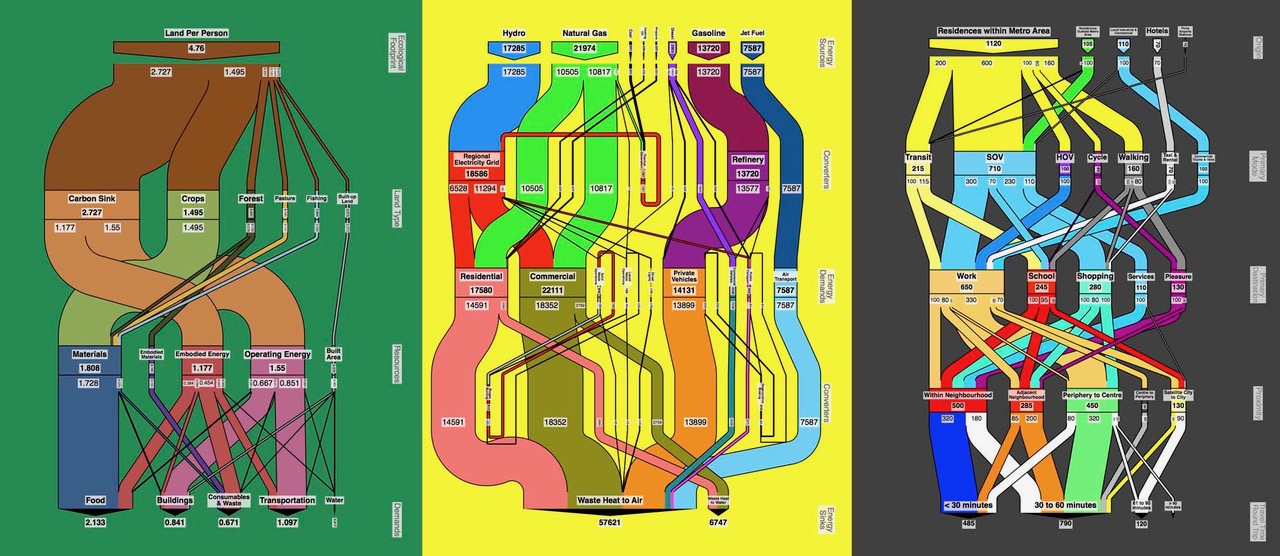
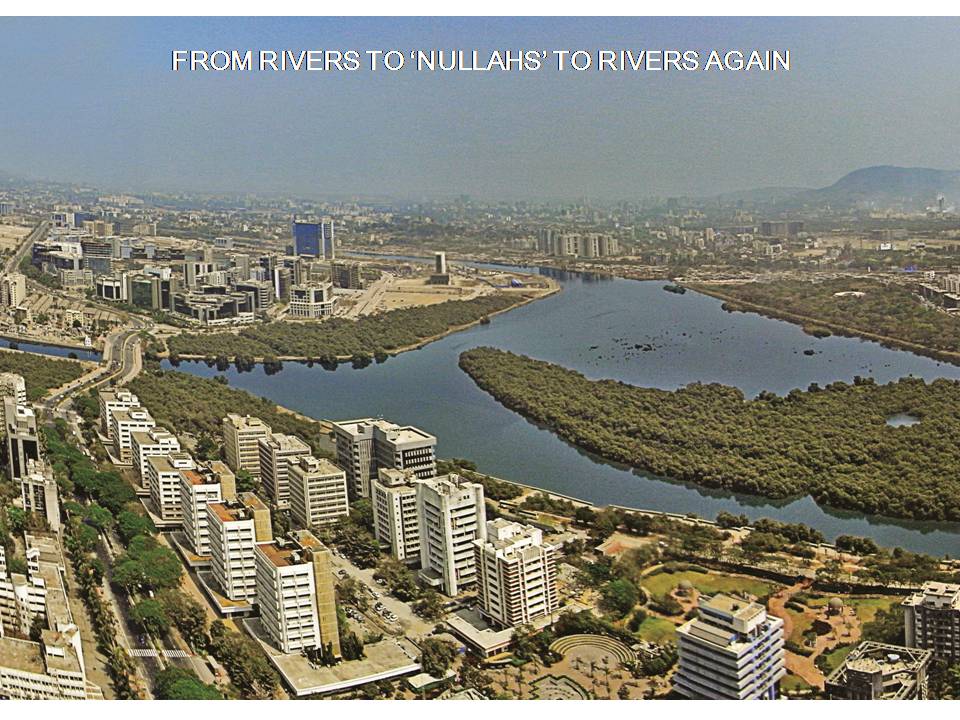
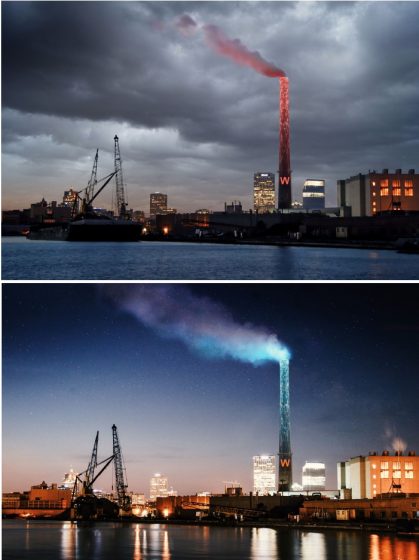
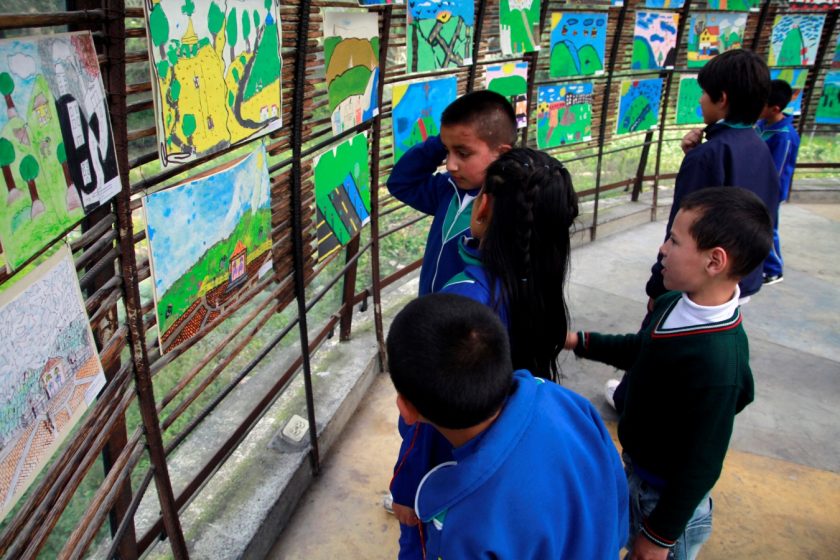
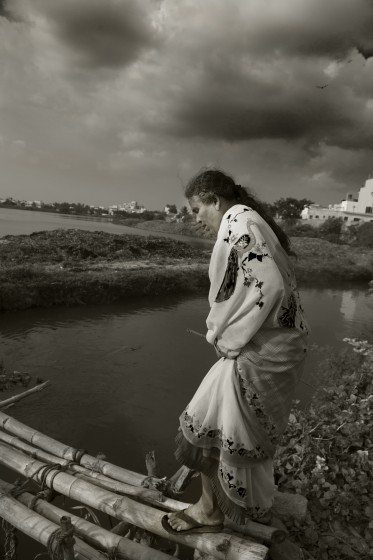
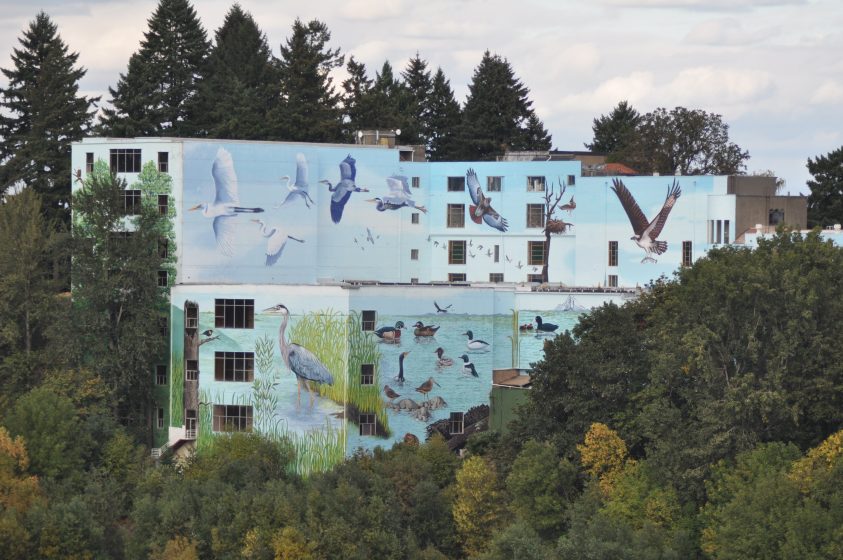
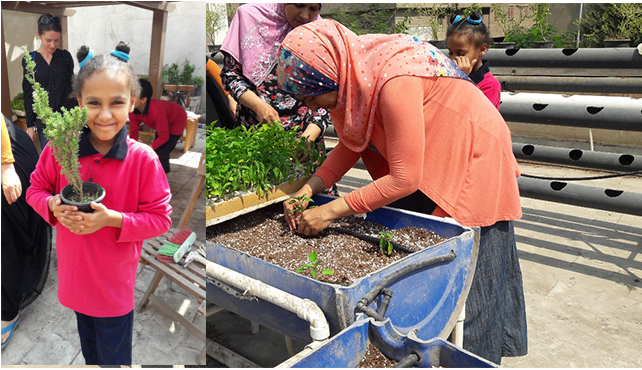
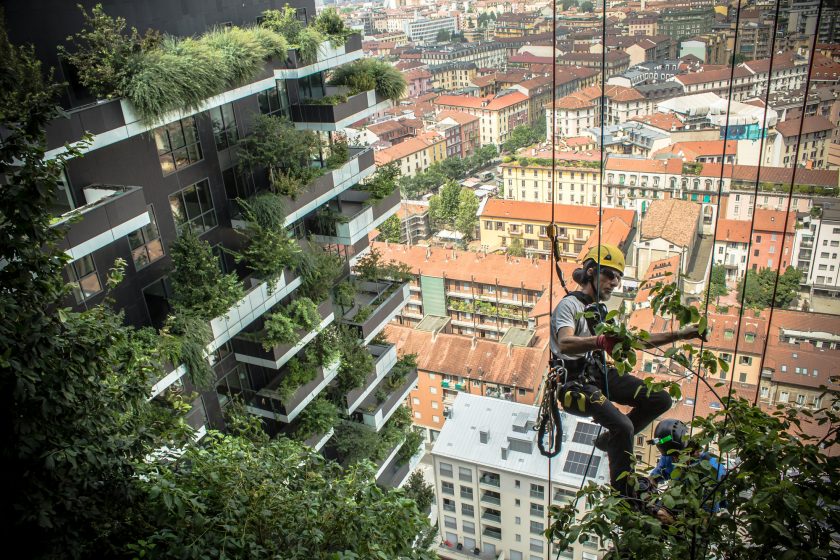

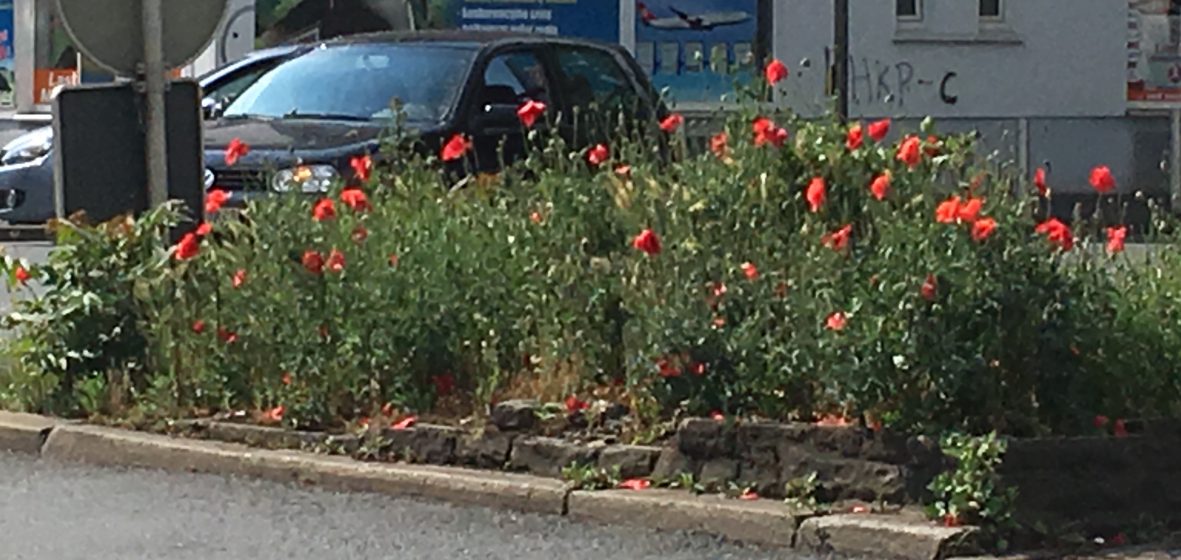
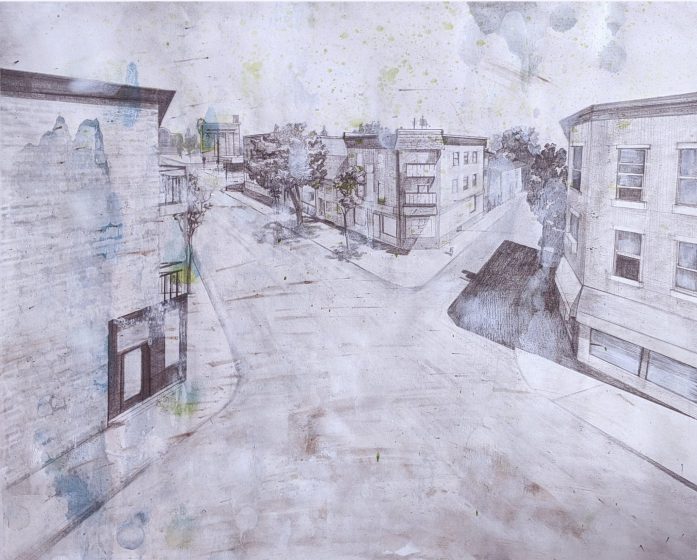
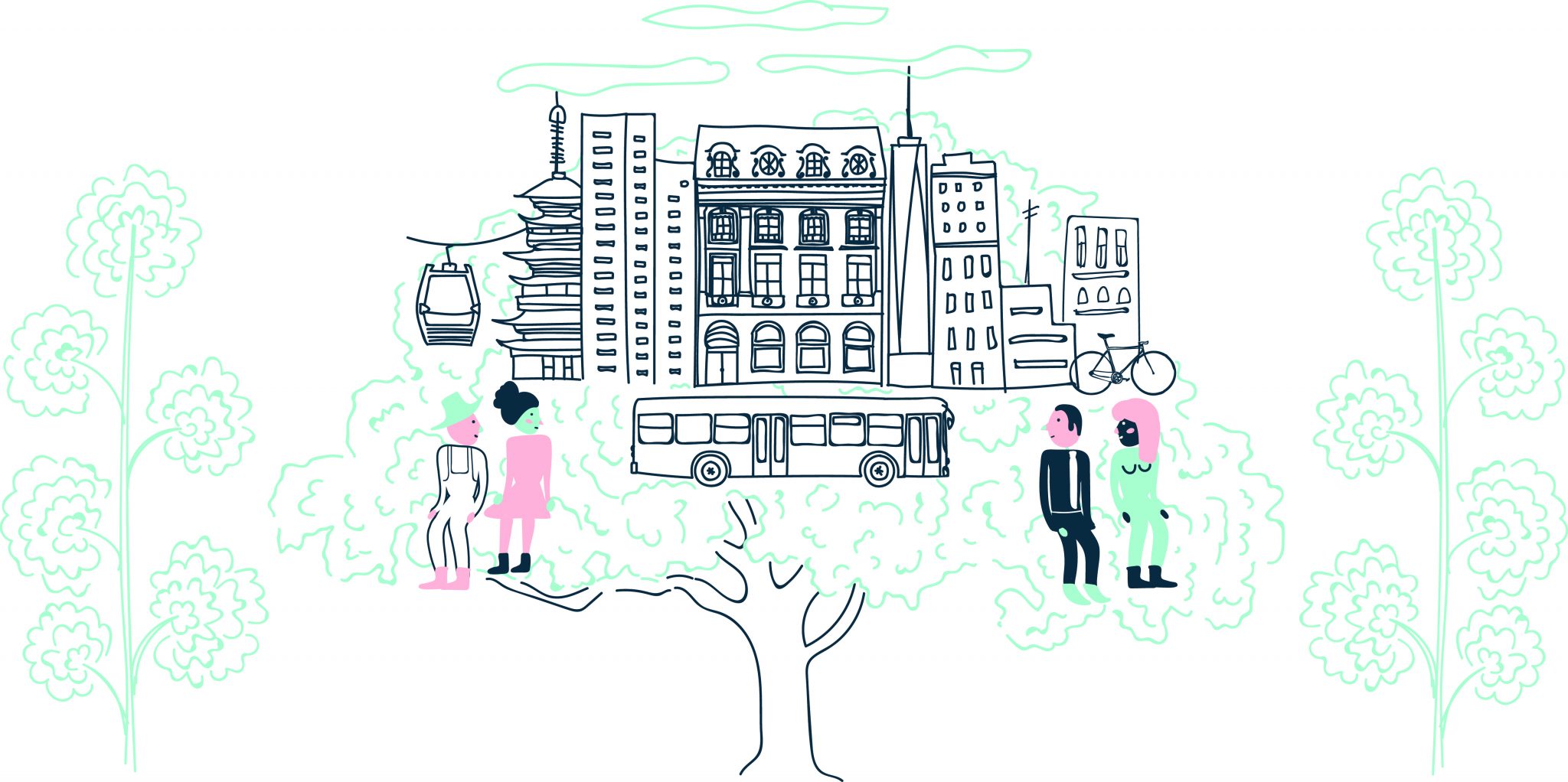


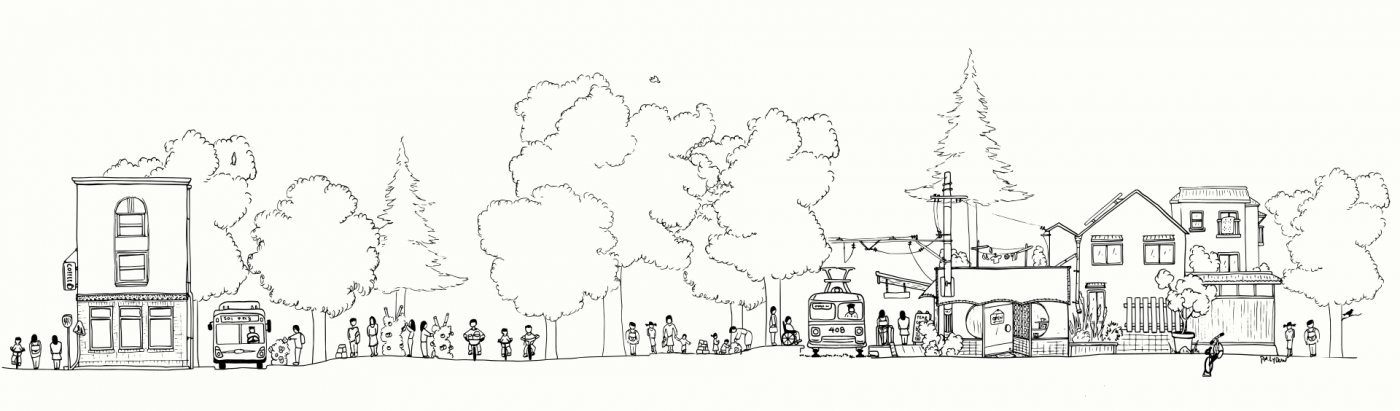














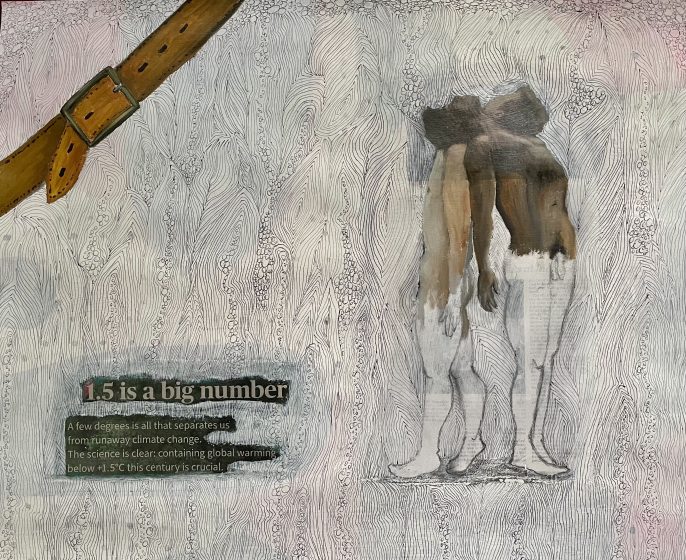
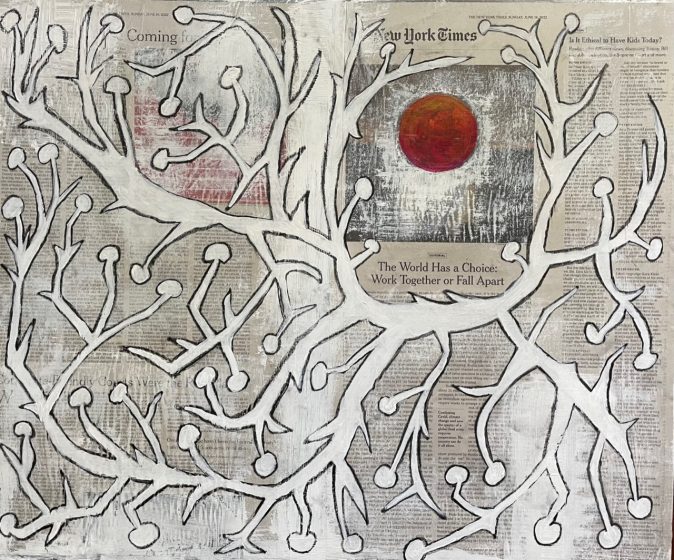


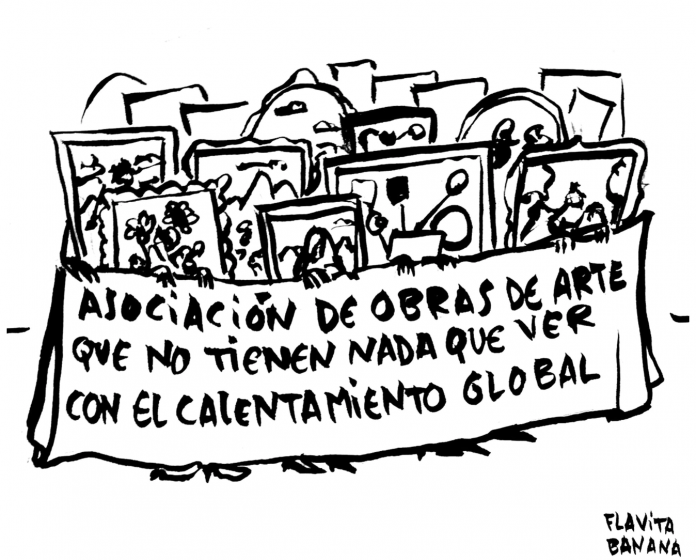 And it is at this point that I ask myself, why is it that, instead of going against art, we use it as an ally to protest and raise awareness about the impact of climate change?






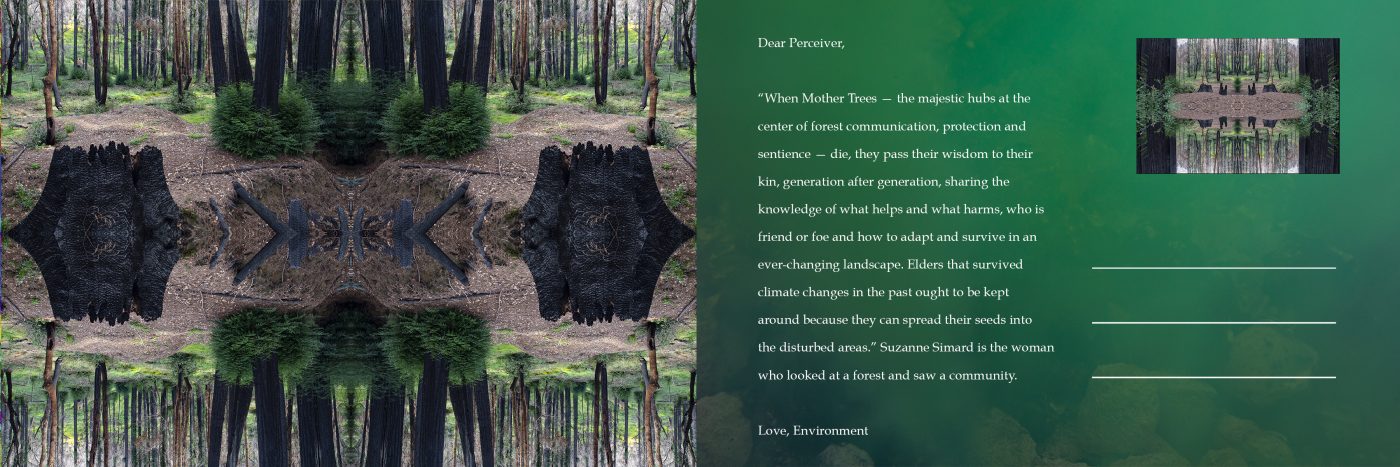
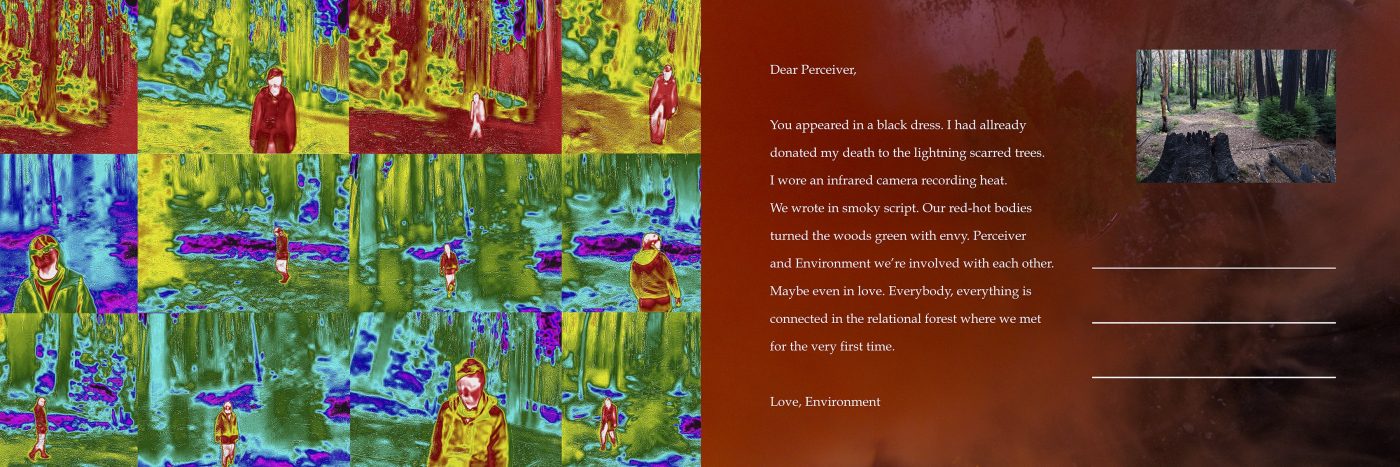


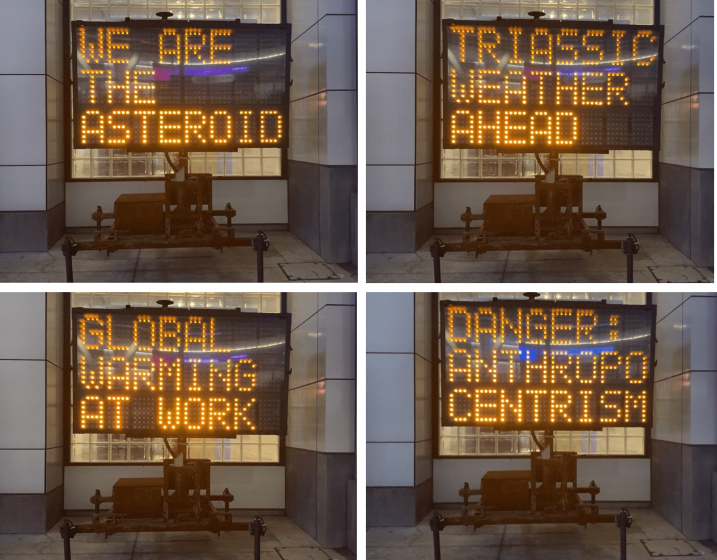

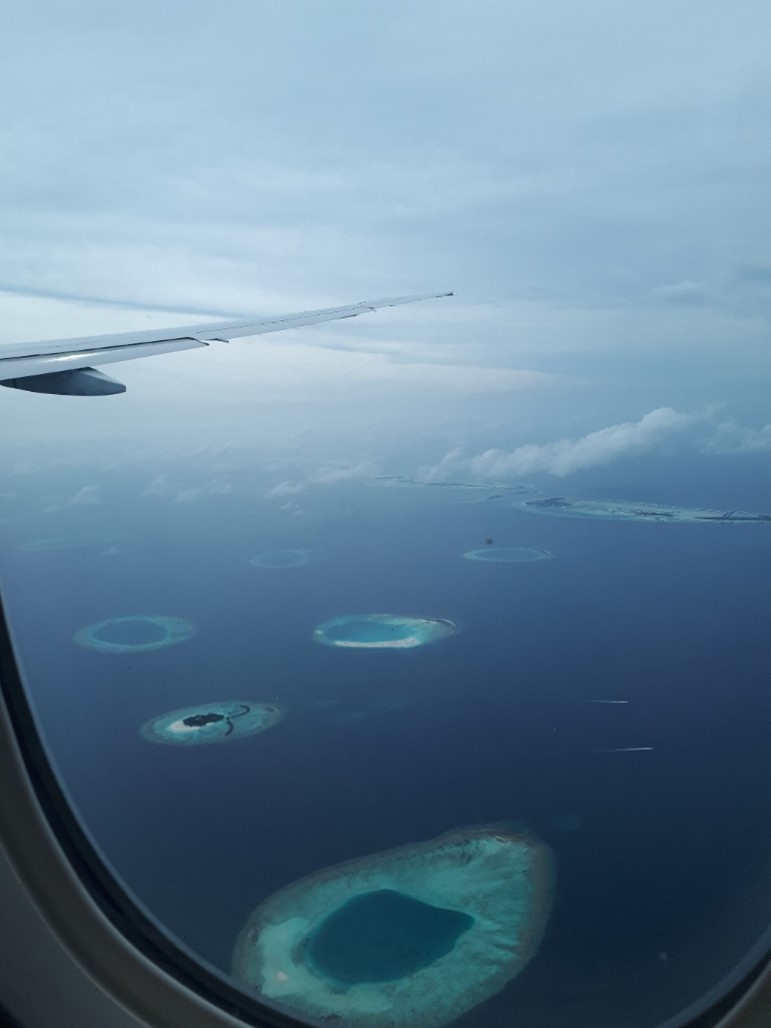
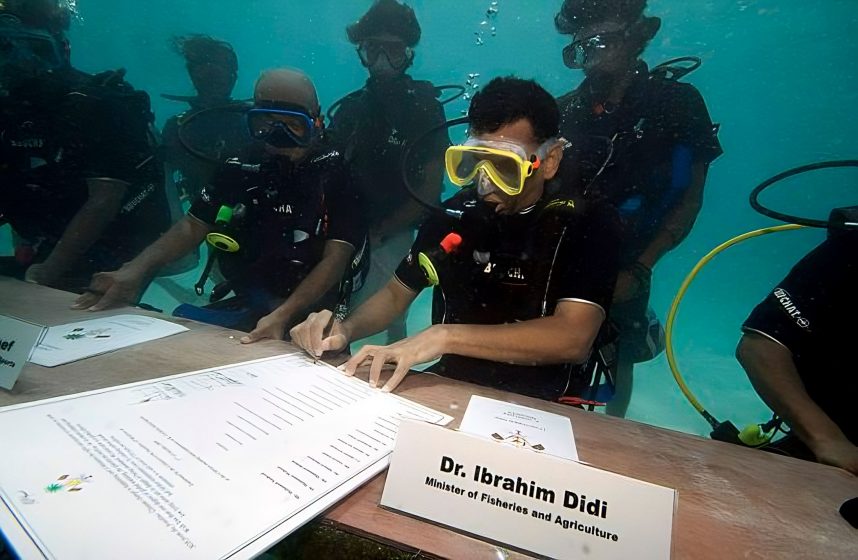
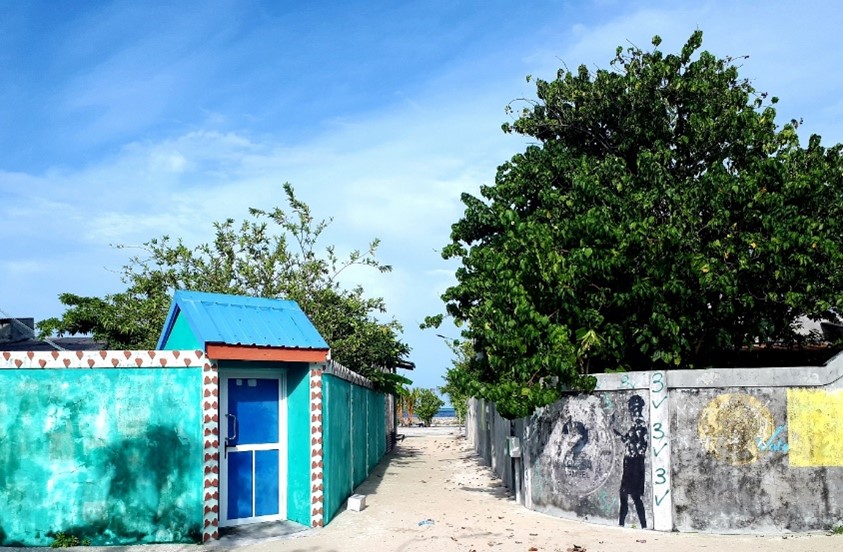
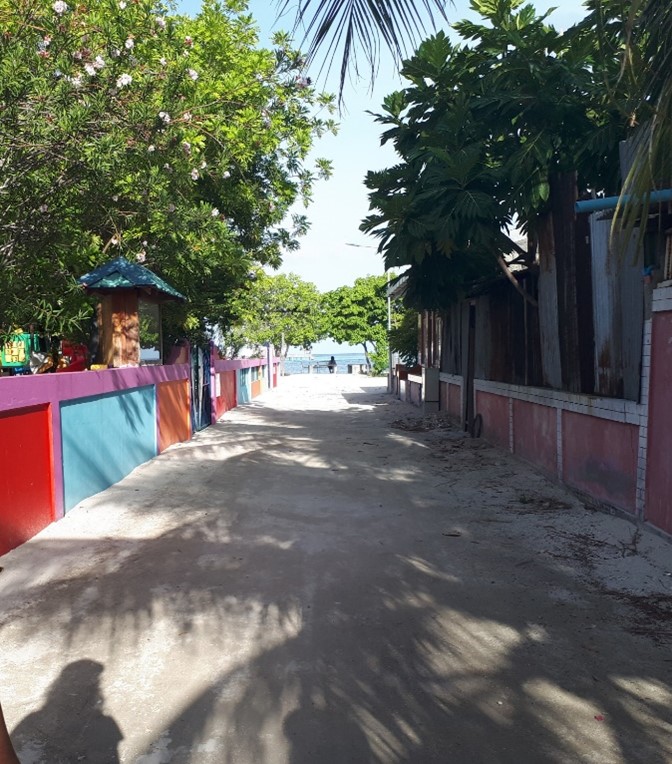










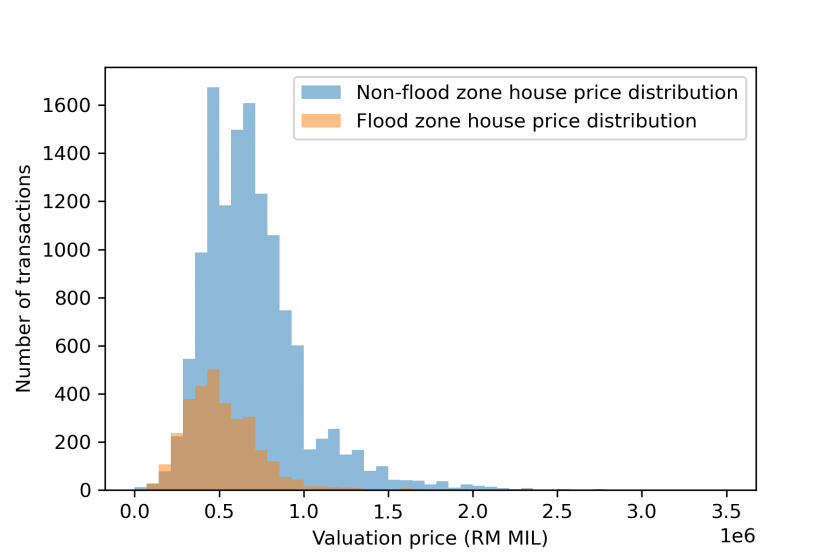


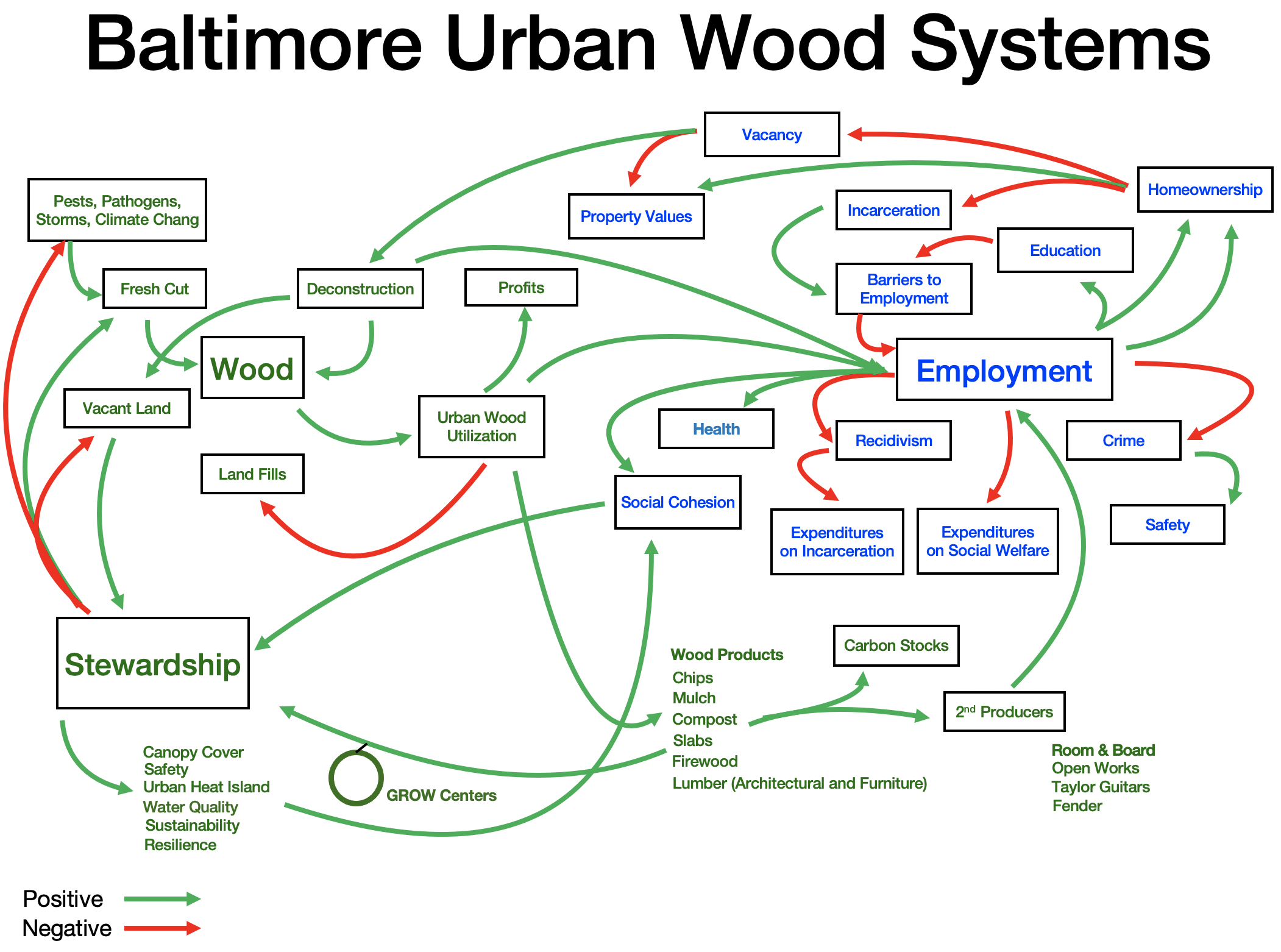



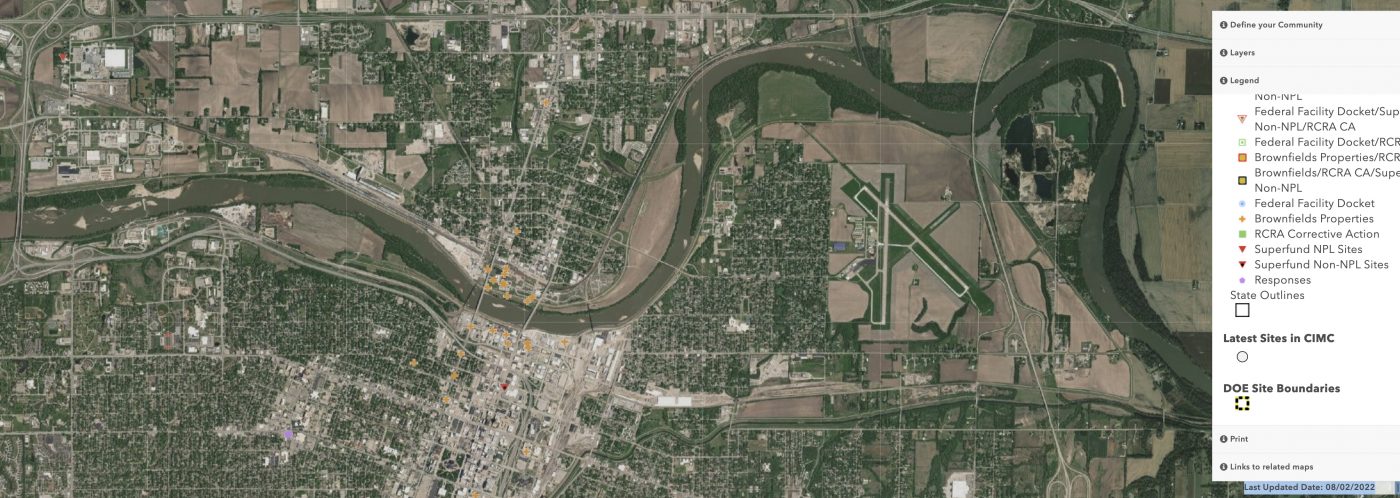

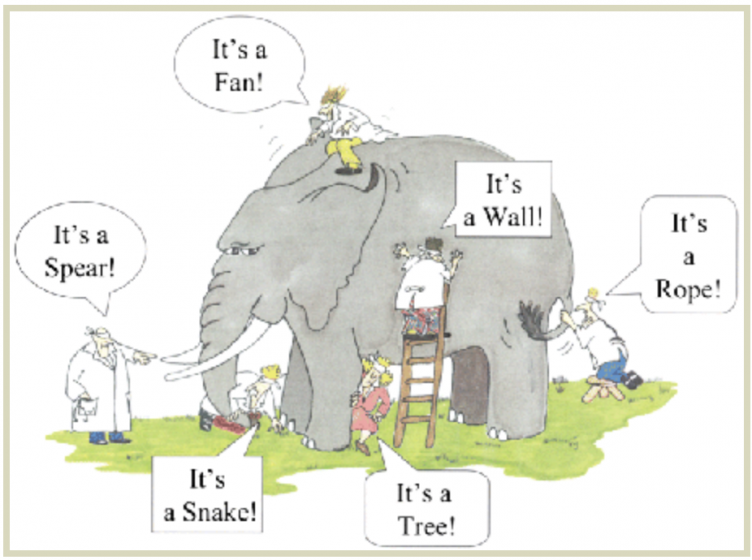
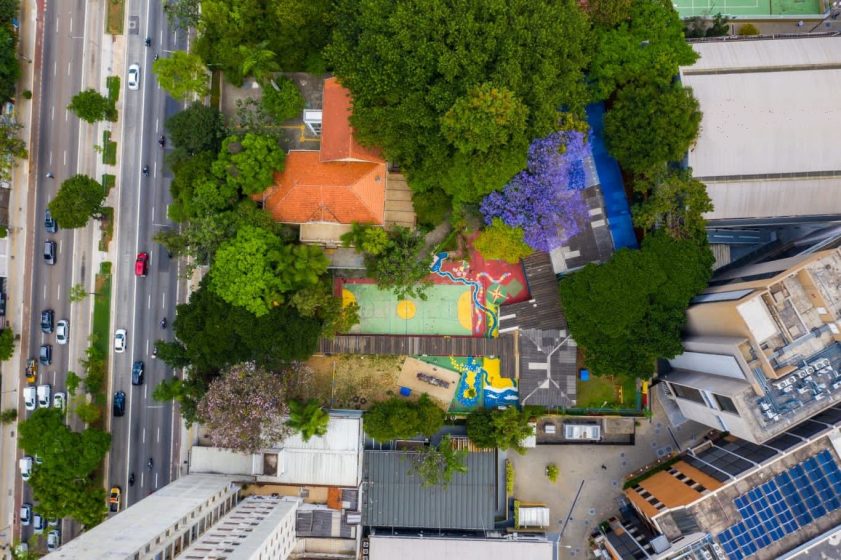
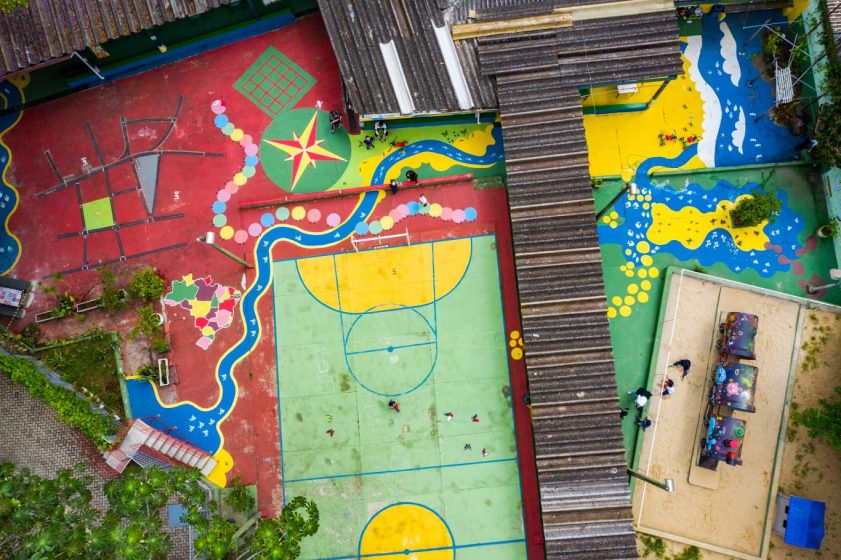

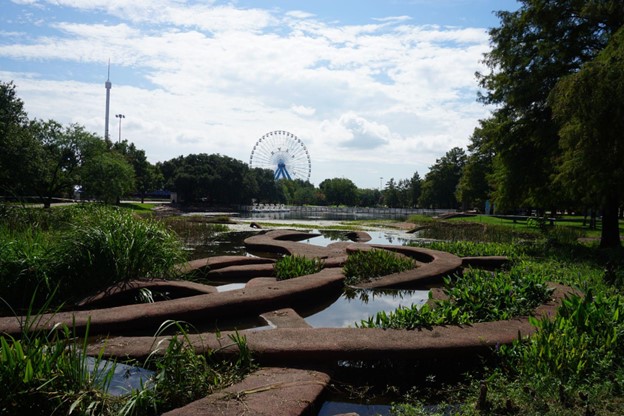
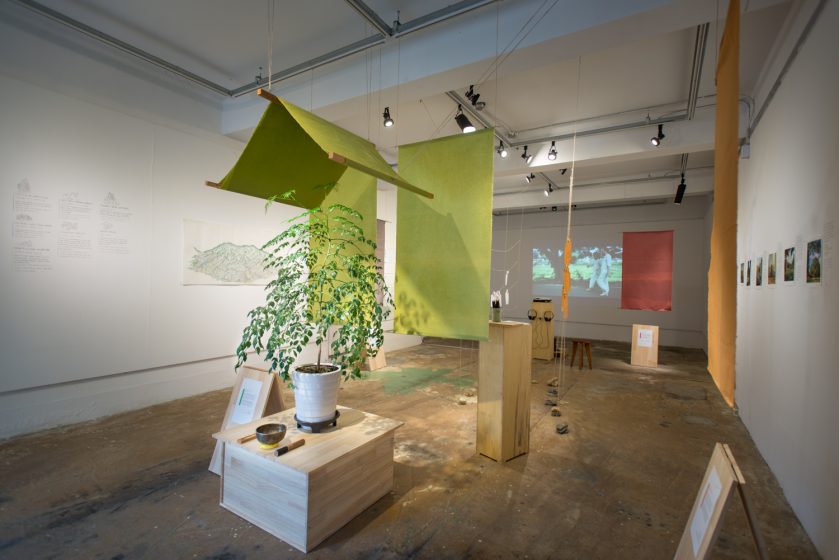
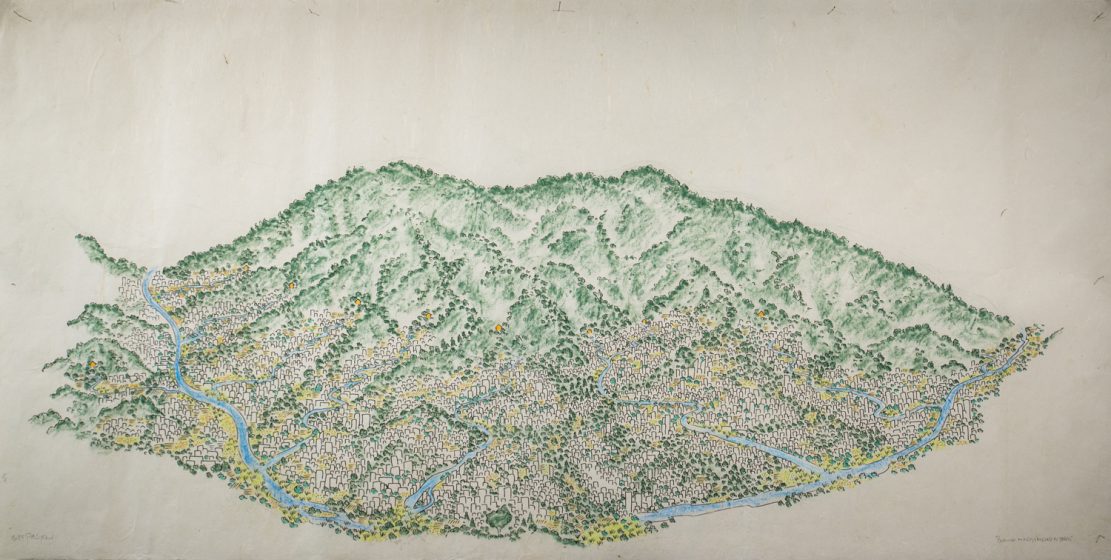
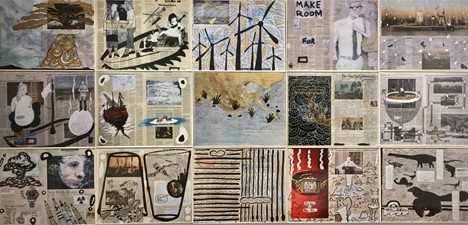


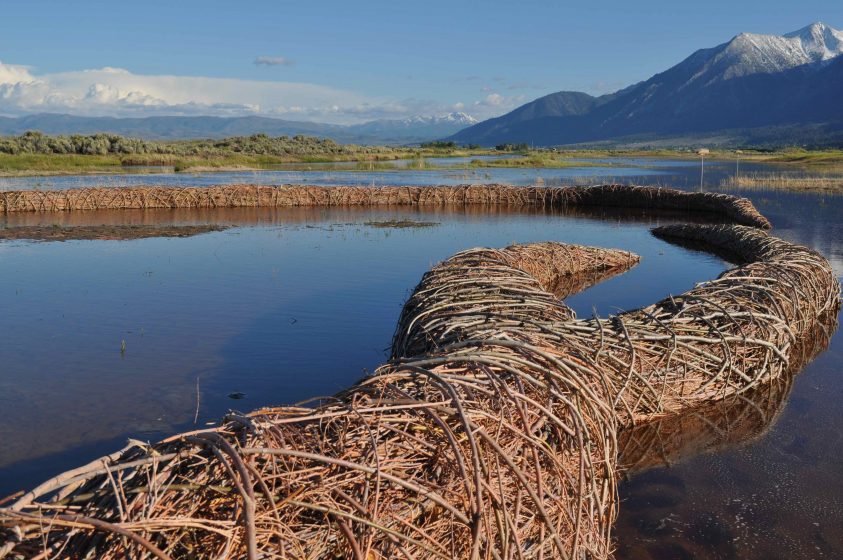
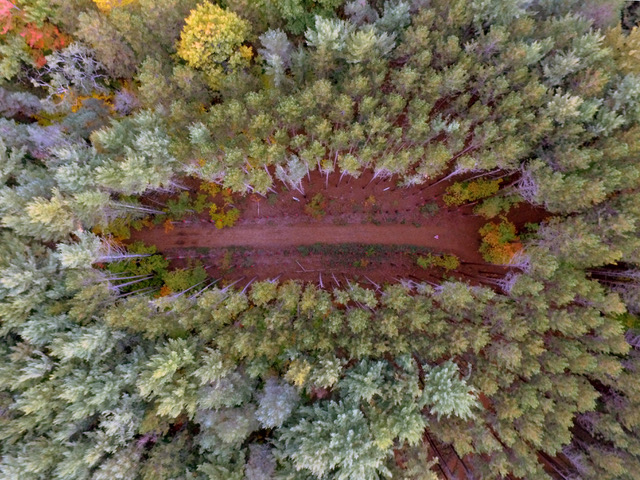




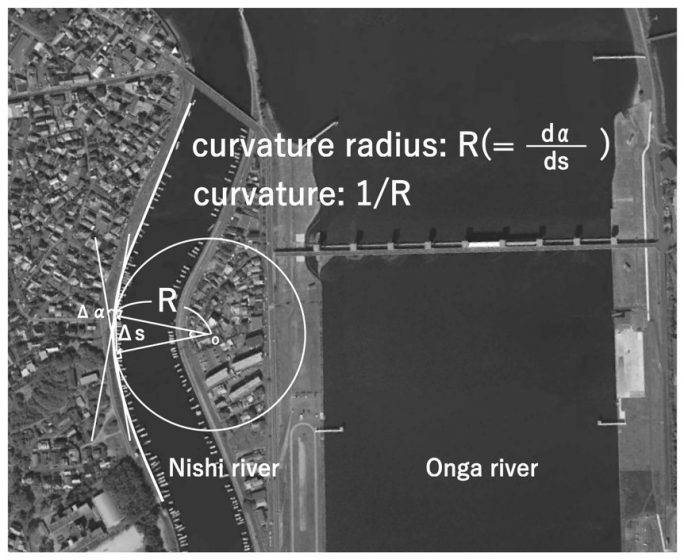
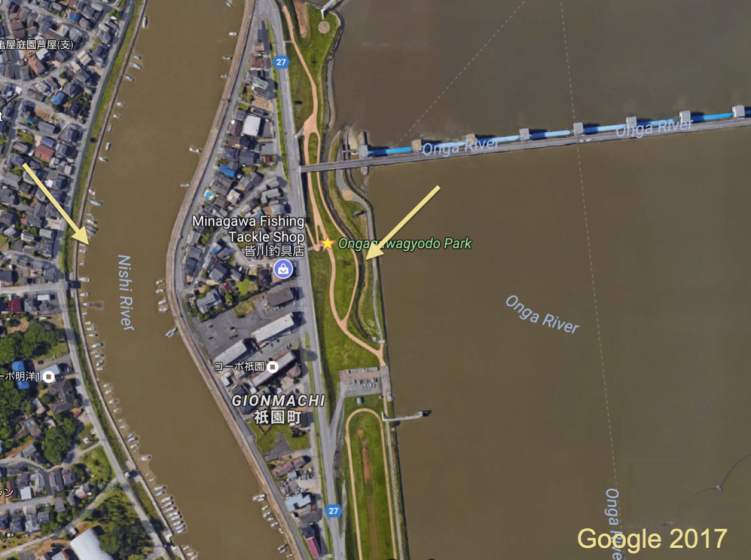

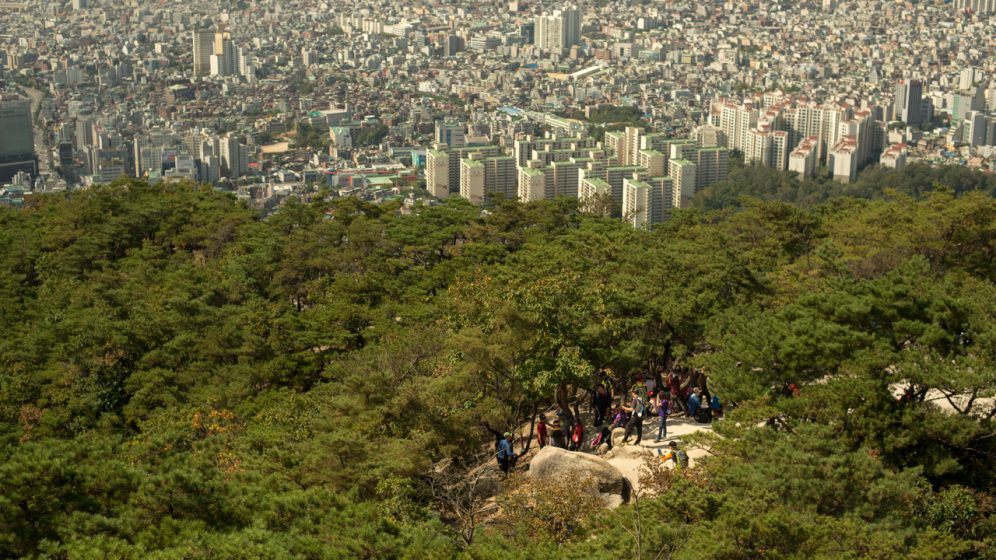
 a) City ranking producers
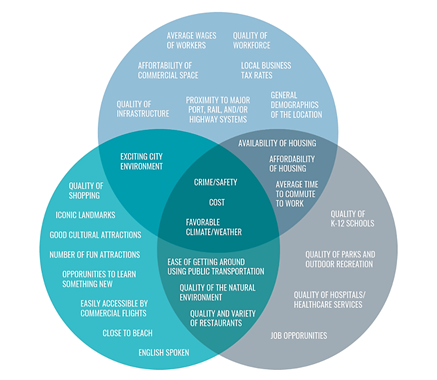

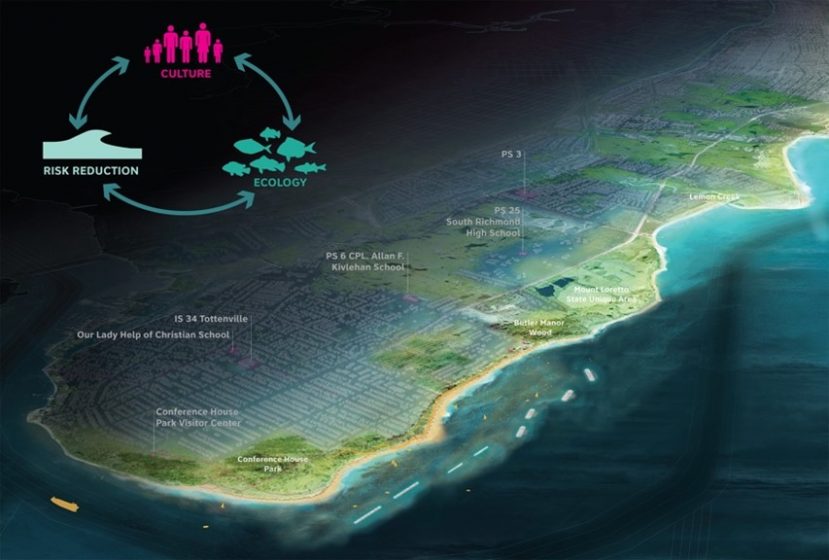
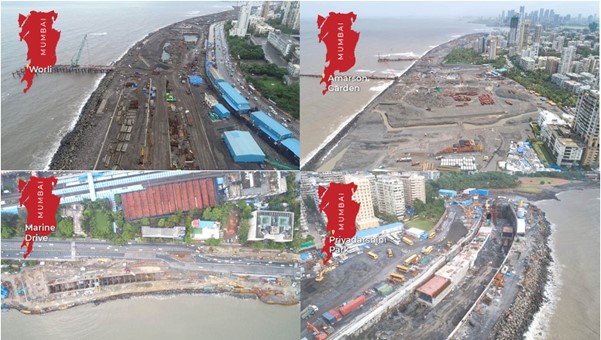
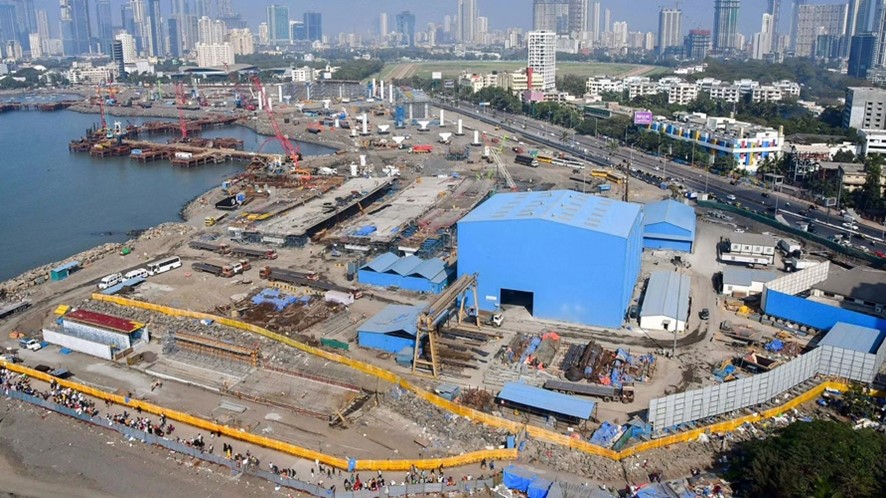
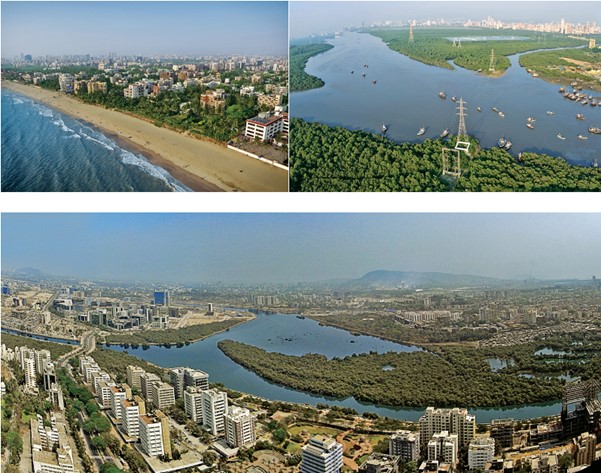


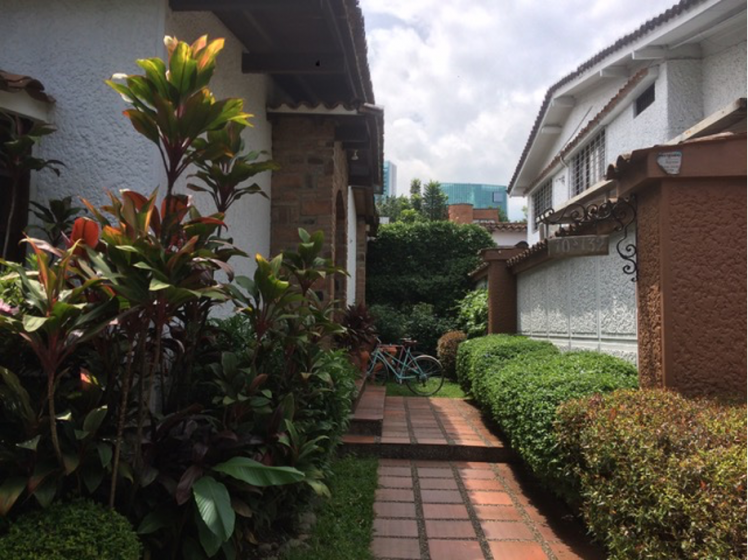
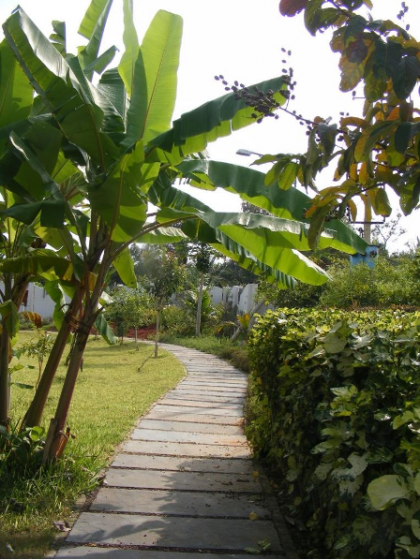


 LALI comes as a declaration of fundamental ethical principles to promote the recognition, valuation, protection, management, and sustainable planning/design of Latin American landscapes through the adoption of agreements that recognize local, regional, and national diversity and values, tangible so much as intangible, of landscape, as well as principles and processes to safeguard it.
 LALI work through clusters, which translates itself as a network, a system that is nourished by cooperation, cocreation, pacts, and the charitable work of key people in Latin America. It grows and becomes stronger through its Clusters. The Ancestral Landscapes Cluster is one of those which aims to recognize, recover, and disseminate the values -tangible and intangible- of ancestral communities/landscapes, inhabited and given meaning by the different native peoples of Latin America, to contribute to their appreciation, understanding, and protection.







 What do tulips and daffodils do for our urban ecosystem? What relationships do they support besides being eye candy for people? What is the carbon footprint of growing and transporting ornamental bulbs? Confession: I like tulips. But we can no longer devote public money and public lands to single-function plants. We cannot limit native understory species to natural areas. All New Yorkers should have everyday exposure to plant biodiversity. Let’s plant native early spring bloomers–trout lily, spring beauty, mayapple. To those who might argue that certain species cannot thrive in certain urban environments, I do not accept these limits, and neither should you. I have seen native species growing in “unlikely” places. We should redesign and manage our cities to support more nature and greater ecological function everywhere.